National Preparedness Month: Prepare now for disasters

By Eilene Guy, American Red Cross volunteer

September is National Preparedness Month and one of the pillars of the American Red Cross is helping us prepare for emergencies. Disasters. The unexpected!

Here in northern Ohio, we’re used to seasonal threats: snow and ice storms, thunderstorms and flooding, the occasional tornado alert and rogue straight-line winds that seem to come out of nowhere. Even extreme heat and power outages.

And, of course, home fires. About 90 percent of the emergencies that Red Cross volunteers respond to are home fires.
During the 12 months ending June 30, across northern Ohio alone, we responded to 1,123 disasters, helped 4,428 children and adults, and provided $1.2 million in financial assistance.

Sadly, three of those events were manmade disasters, in quiet residential neighborhoods. Remember the small plane that crashed into a house in Akron back in May? That house burned to the ground.

Or how about the gas line explosion that destroyed three homes and displaced 15 families in Twinsburg in July?

“I’m on the second floor and all my windows blew out. All I have is my phone, and myself,” a resident told a TV reporter in the aftermath. Red Crossers stepped in to help with shelter arrangements and funds for immediate needs in that neighborhood.

For years, the Red Cross has urged everyone to “Make a kit. Have a plan. Be informed.”
All sound advice, but there’s one thing we can all do right now that’s easier, quicker and cheaper: Download the free Red Cross Emergency App to your mobile phone. This resource links you to weather alerts, preparedness tips, even the location of shelters should that be needed.

The app even lets you send an “I’m safe” message to anyone you want to reassure if you happen to be in the vicinity of a disaster.

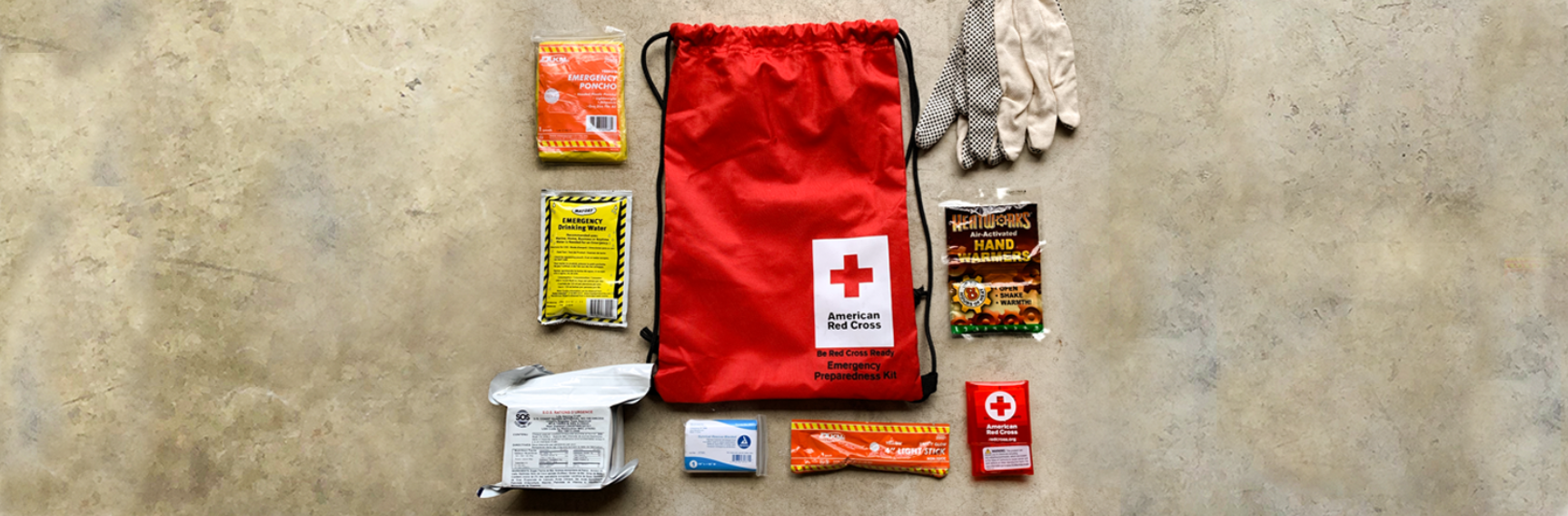
Put together a go bag” of supplies you’d need if you had to shelter in place or evacuate on short notice: bottled water, non-perishable food items, flashlight and extra batteries, first aid kit and seven-day supply of medications (or at least copies of your prescriptions).

This is just for starters. Find a complete list at redcross.org.

And don’t forget items for anyone in the household with special needs, like a baby, or a pet!

Make a plan with your family. Does everybody know how to get out of the house in case of fire, for example? And can they do it in three minutes or less? Agree on a place to meet outside the home, so firefighters don’t have to go looking for someone inside. While you’re at it, be sure everyone in the household has family or friend phone numbers in their mobile phone; and be sure children know a parent or guardian’s phone number.

Be informed. Learn the location of storm shelters you can get to if a tornado threatens. Download free emergency alerts from your local law enforcement and Emergency Management Agency. They’ll be the first to let you know about everything from a road closure to a catastrophic event.

And take first aid and CPR/AED classes from your local Red Cross, so you’ll know how to save a life at home or on the go.

My husband says failing to plan is the same as planning to fail. Planning to deal with an emergency isn’t the same as wishing for one to happen. Planning is preparedness, and there’s no better time to do it than NOW!

For more preparedness tips, go to redcross.org and search the key words “disaster preparedness.”

Edited by Glenda Bogar, American Red Cross volunteer
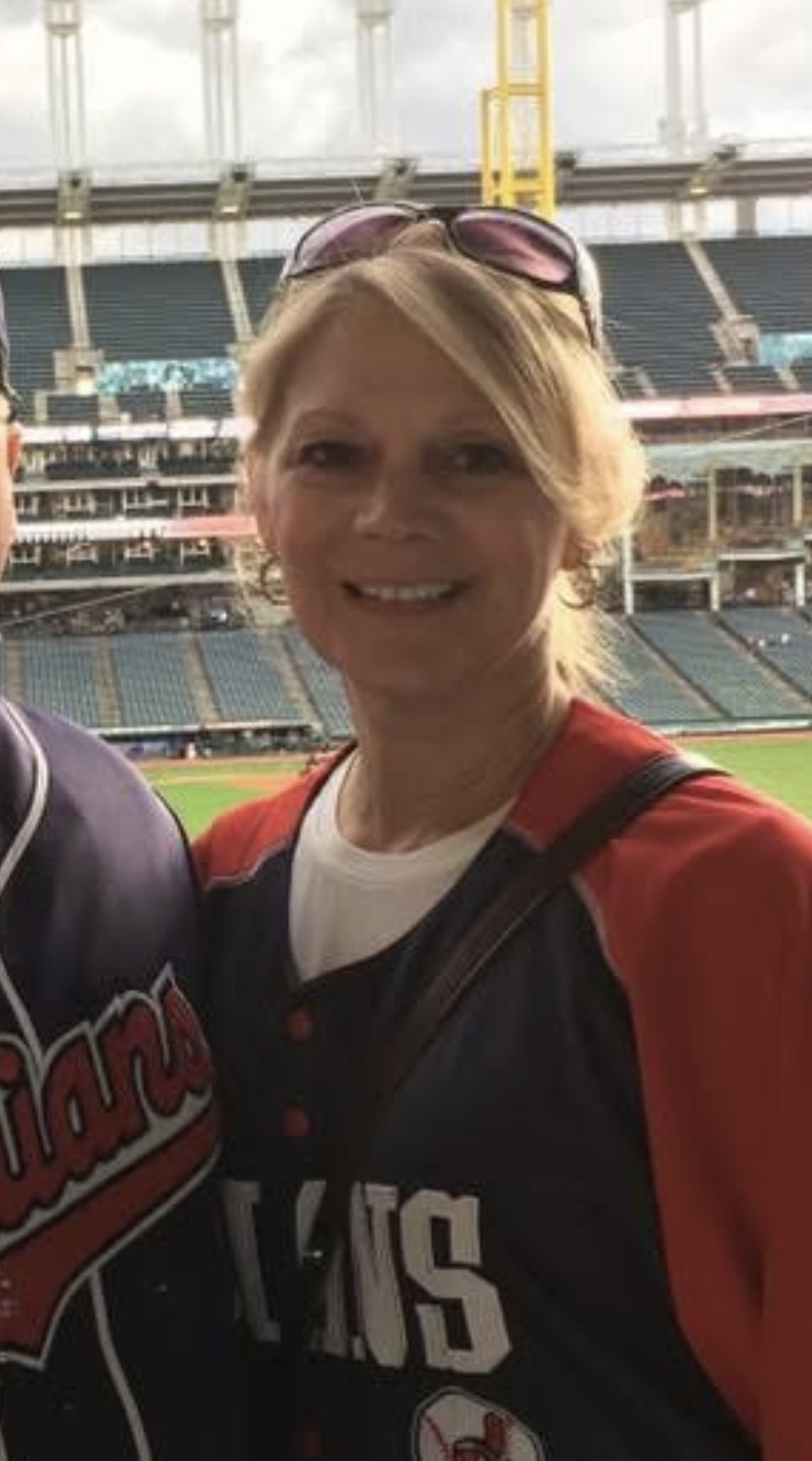
Red Cross instructor and phlebotomist Linda King embraces her mom role

By Tim Poe, American Red Cross volunteer

Among the cots and bustle of an American Red Cross blood drive, Linda King assisted donors and a newer phlebotomist when a long-time donor waved her over. When Linda approached the donor, whom she had known for years, the lady smiled and said, “You’re the mom. You’re such a mom.” Linda replied, “I know.”

Linda King, American Red Cross

Linda is happy to take on the role as “mom” to the many blood collectors she has helped over her 23+ years with the Red Cross as an on-the-job instructor and phlebotomist. “I love seeing new staff gain competence and flourish,” Linda said. She has also developed friendships with many donors, volunteers and others.

“I love it. I have the best job at the Red Cross,” Linda said.

As the Red Cross collects about 40% of the nation’s blood supply, blood collectors are vitally important to our mission. They take part in about 500 blood drives across the U.S. each day, helping ensure blood products are available whenever and wherever they are needed.

To help commemorate Blood Collectors Week, September 6-12,
I spoke to Linda about her experience at the forefront of one of the Red Cross’s core missions.

Linda’s Red Cross career began with a blood donor’s suggestion. “I was fresh out of classes when a friend who donated blood recommended I consider the Red Cross,” Linda said. Even while undergoing training, Linda knew she wanted to teach. Once she had five years’ experience as a phlebotomist, she also became an instructor.

Linda speaks highly of the many wonderful people she has met, including fellow Red Cross staff members, volunteers, blood donors and those she has met through travels to blood drives and Red Cross facilities. “It’s how I met my husband,” Linda said. They met when Linda was traveling to teach in Cleveland. He is also a blood donor.

Linda especially loves seeing those she trained take flight and continue their careers.

I asked Linda about her experience during blood emergencies. “The recent emergency was very well managed,” Linda said. “We saw a lot of new donors as well as the return of many who hadn’t donated for years.”

Linda also said that, in a blood emergency, she often sees nurses and blood bank staff members donating blood. “They see the effects of a blood emergency firsthand, like surgeries being postponed because there isn’t enough blood,” Linda said.

I asked Linda what she tells those interested in a blood collector career with the Red Cross. She said, “It’s a great job. As I say, I have the best job here. You get to travel, meet people, go to awesome places and meet a lot of repeat donors. The job has been wonderful.”

To those considering donating, Linda said, “Definitely give it a chance. It is so streamlined now, donors can answer the required questions at home and taking vitals is much quicker.” She also said that each day, a donor who hasn’t donated in a while expresses happiness that the finger prick for a hemoglobin check is no longer needed. “About 90% said it was the worst part,” she said.

Linda and her husband also enjoy camping, and traveling throughout our region helps them discover interesting towns and places. She is also an avid reader.

To schedule a blood donation, please visit RedCrossBlood.org.

To learn more about joining the American Red Cross in blood collection or other lines of service, visit RedCross.org.

Edited by Glenda Bogar, American Red Cross volunteer
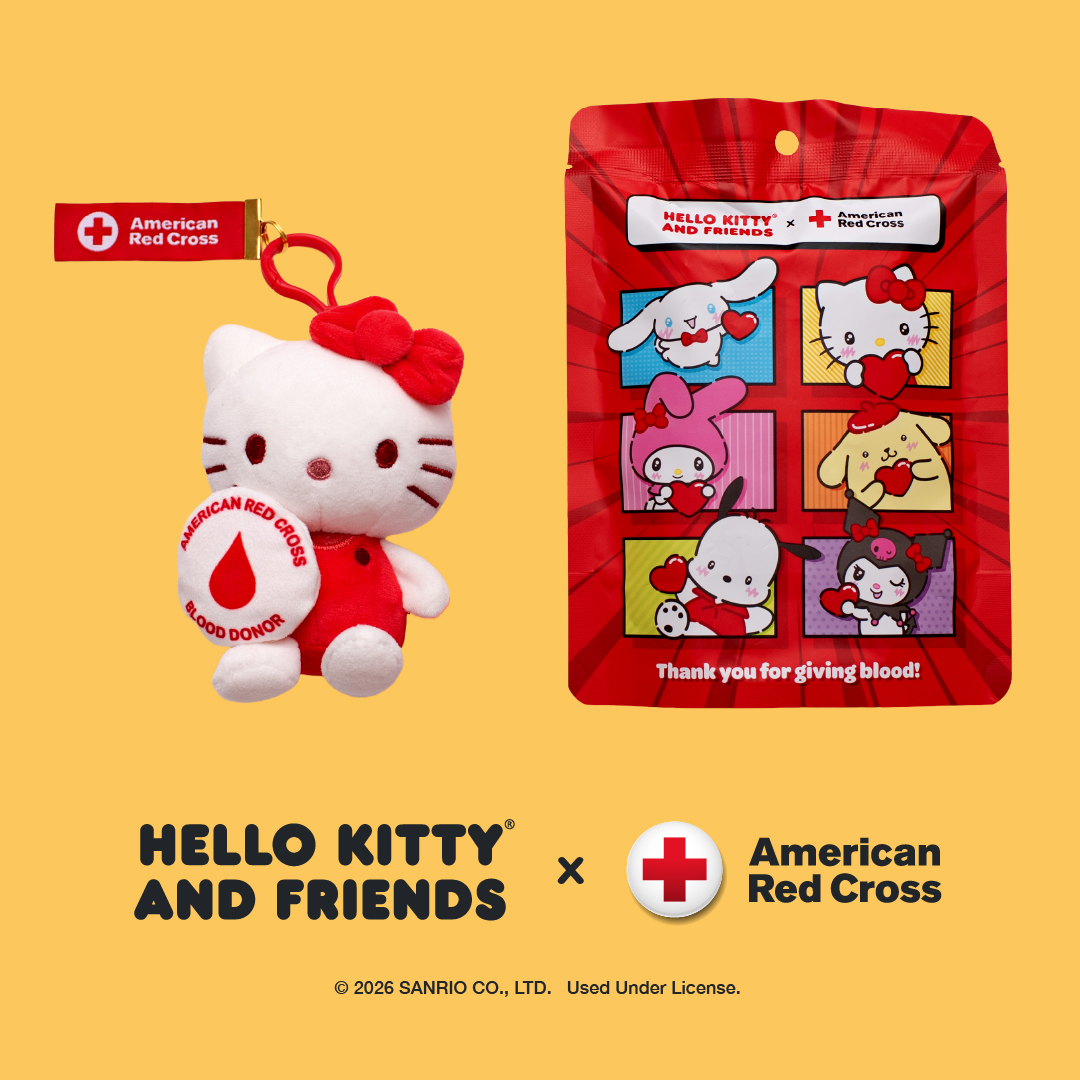
Join the kindness adventure with Hello Kitty® x Red Cross

By Kathryn Dean, American Red Cross volunteer
Attention all Millennials & Gen Xers, Hello Kitty is back! Nostalgia is hitting younger generations, and Hello Kitty has become a viral sensation. Before you rummage through your home for old collectibles to sell online, consider making an appointment with the American Red Cross to give blood this September.

Thanks to the kindness and generosity of donors who stepped up in recent months, the summer blood crisis is over. However, the need for blood is constant.  With hurricane season fast approaching and the recent flooding disasters overseas, the Red Cross wants to keep a steady blood supply on hand in preparation of emergencies.

To show our appreciation, the Red Cross and Hello Kitty® and Friends are partnering this September to bring you an exclusive collectible! When you come in to donate blood between Sept. 1-20, you will receive a Red Cross × Hello Kitty® plush mascot clip and surprise sticker pack, while supplies last! 

Remember:

  • One donation of whole blood can help save up to three people’s lives.
  • Every two seconds, someone in the U.S. requires a blood product.
  • 62% of people in the U.S. meet eligibility requirements to donate, yet only around 3% actually do.

One small act of kindness can make a world of difference in someone’s life.  Help care for your community by donating a renewable resource that you carry around every day: your blood. For more details regarding this special promotion, visit RedCrossBlood.org/ HelloKitty.

Edited by Glenda Bogar, Red Cross volunteer

Northern Ohio Tiffany Circle members trace Clara Barton’s footsteps at first Red Cross chapter

By Eilene Guy, American Red Cross volunteer
Clara Barton, founder of the American Red Cross, was known for many things, among them her outstanding leadership skills.

To this day, her Red Cross cultivates leadership across its paid and volunteer staff as well as among its supporters.

The Tiffany Circle is one example of that leadership. Members of Tiffany Circles across the country, all women, provide significant financial support to the Red Cross, deepen their understanding of Red Cross services and impact, and spearhead mission-related activities.

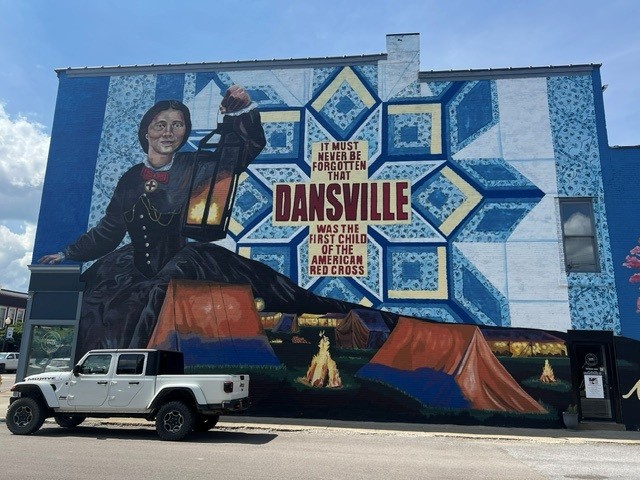
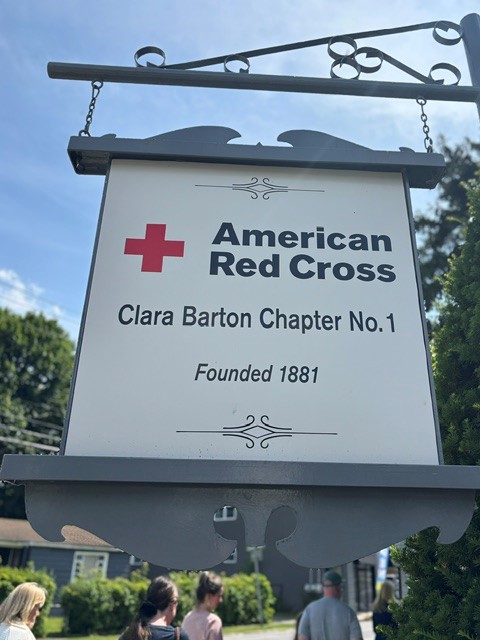
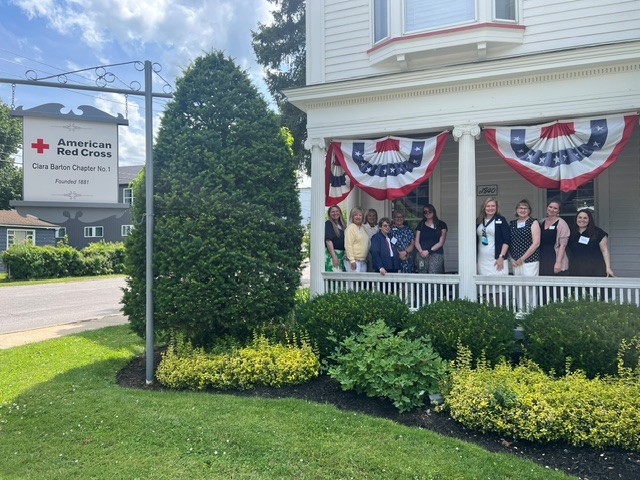
Recently, members of the Northern Ohio Tiffany Circle visited “ground zero” of the Red Cross – Dansville, New York – where Barton established the very first local chapter of her fledgling organization on Aug. 22, 1881.

“It was like taking a step back 145 years, to walk through the lovely house where Clara Barton launched her first disaster relief operation,” said Jill Patterson, Red Cross liaison to the Northern Ohio Circle. “In September 1881, Clara appealed to the public for money and clothes for thousands of people left homeless by wildfires in Michigan.

“The little town of Dansville in western New York is obviously proud to be the site of the very first local chapter in what has become a nationwide organization.”

Tiffany Circle members from northern Ohio and western New York enjoyed a guided tour and luncheon in the recently-restored home – now designated a National Historic Site by the National Park Service – followed by a walking tour of the community that backed Clara’s humanitarian vision.

They also heard from Tiffany Circle members Patricia Horvath and Kathy Coleman. They shared their experiences with the Clara Barton Competition, which focuses on international humanitarian law, and the Clara Barton Study Tours, which connect the organization’s rich history with present-day volunteerism and leadership.

The trip was particularly significant for Northern Ohio Tiffany Circle member Noelle Sayles, and her husband, Nick Noyes, a relative of Clara’s friend Emma Noyes, whose family donated the house to the Red Cross in 1949.

“Together, the day honored Clara Barton’s legacy while strengthening our shared commitment to the Red Cross mission, ‘to prevent and alleviate human suffering in the face of emergencies by mobilizing the power of volunteers and the generosity of donors’,” Jill said.

If you’re interested in more information about the Northern Ohio Tiffany Circle, you can reach Jill Patterson at 330-618-0523.

Or, if you’d like to find out more about the many humanitarian services of the Red Cross and its leadership opportunities, go to redcross.org.

What is the International Red Cross and Red Crescent Movement

By Sharon Nicastro, American Red Cross volunteer

The largest and one of the oldest humanitarian organizations in the world began with the vision of one man.


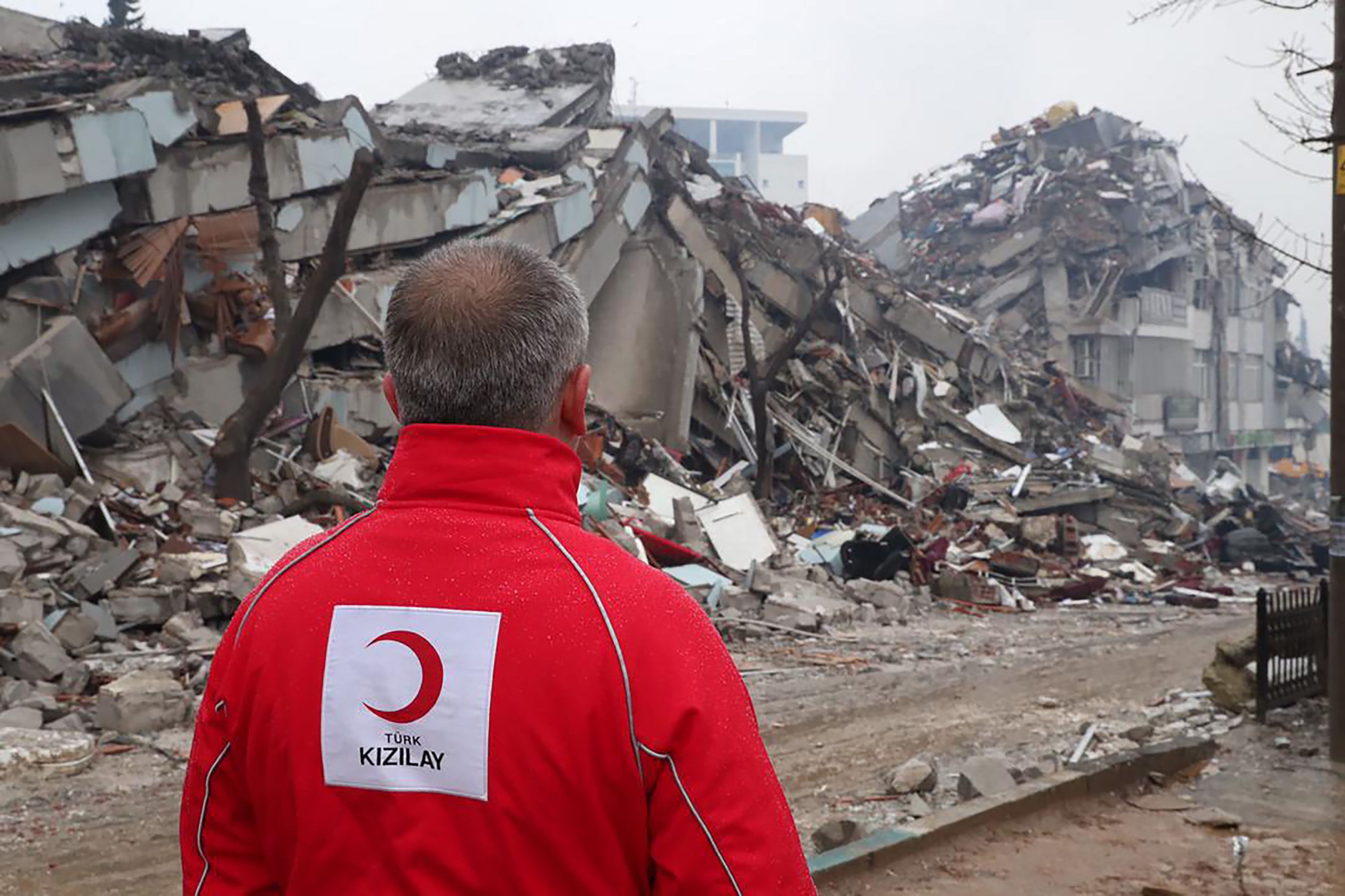
February 11, 2023. Türkiye.
Following the devastating earthquake that stroke Turkey and Syria on 6 Feb 2023, Turkish Red Crescent has deployed more than 4,000 staff and volunteers to respond to the urgent needs of the affected people.
Photo by Turkish Red Crescent

Jean-Henri “Henri” Dunant was a Swiss businessman who was traveling through Italy to secure land and water and concessions from Napoleon III when he came across the aftermath of the Battle of Solferino during the Second War for Italian Independence.  He saw the battlefield covered with men dying for lack of medical care.  He rallied the women from surrounding villages, and they transported the men to the cathedral at Castiglione.  Their motto was “tutti fratelli” (all brothers) as they cared for the men without consideration for the side they fought on.

In A Memory of Solferino, Dunant wrote, “Would it not be possible, in time of peace and quiet, to form relief societies for the purpose of having care given to the wounded in wartime by zealous, devoted and thoroughly qualified volunteers?”  Gustave Moynier, the Chairman of the Geneva Public Welfare Society, pursued the idea by forming a committee of five men.  The International Committee for Relief to the wounded was born and soon became the International Committee of the Red Cross (ICRC).

The ICRC convened a conference of European governments in Geneva, Switzerland, to study ways that volunteers from national societies could assist military medical services.  The volunteers wore an emblem to distinguish them from ordinary civilians.  A red cross on a white background, the reverse of the Swiss flag, was selected as the emblem (the Red Crescent and Red Crystal were added later).  The original Geneva Convention resulted from the conference and went into effect in 1863 after receiving the approval of twelve European nations.  The Convention had ten articles, which all pertained to relief for the wounded. Today there are four Geneva Conventions with hundreds of articles that protect soldiers, sailors, prisoners of war, and civilians during armed conflicts.

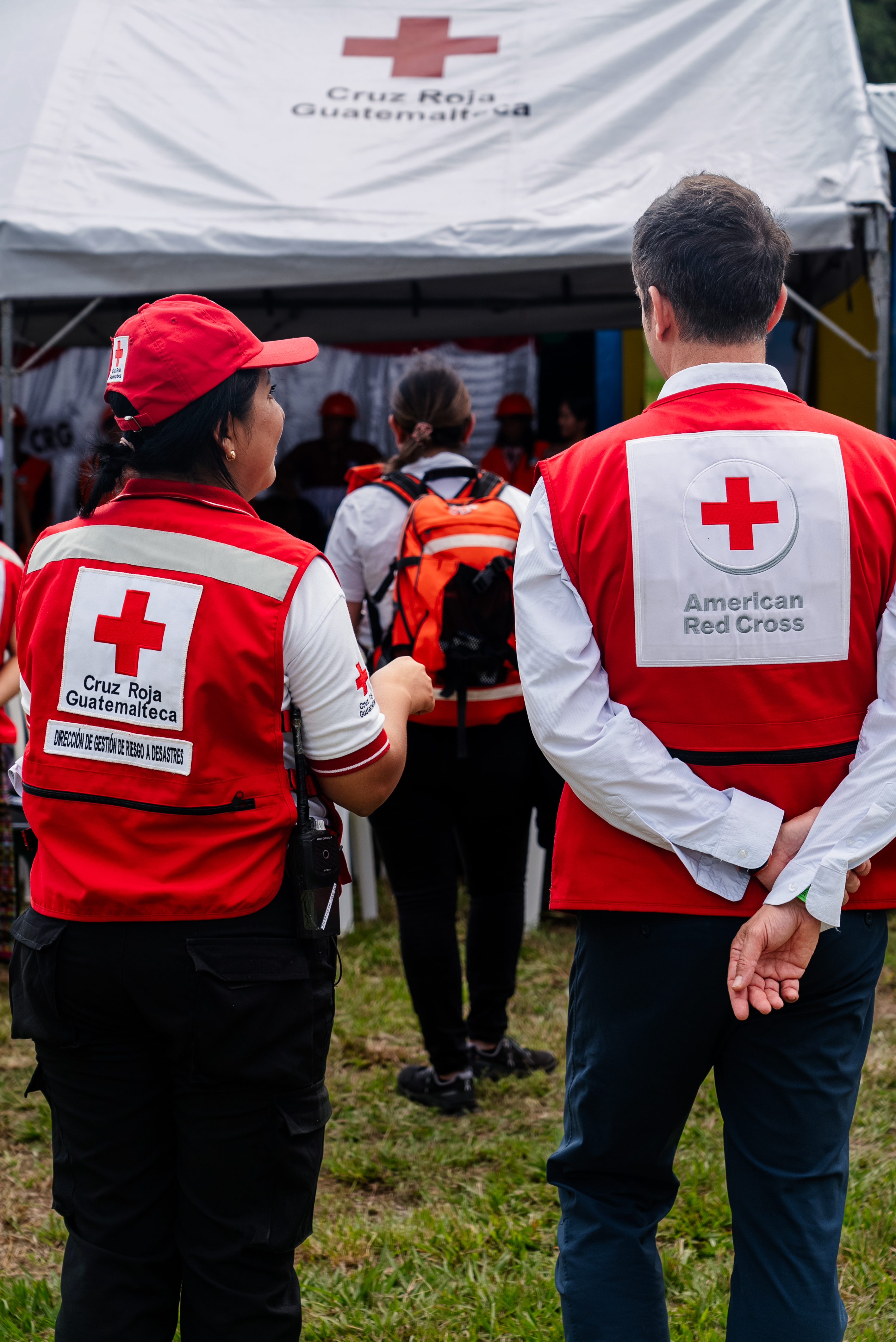
October 25, 2024. Chumixquin, Quiche, Guatemala. Students, school leadership and the women-led Local Coordinators for Disaster Risk Reduction (COLRED) team in Chumixquin present a cultural activity and conduct an emergency drill, in coordination with the Red Cross. Guatemala Red Cross teams are working to improve the preparedness capacity of vulnerable communities located in high-risk disaster areas with cost-effective approaches. Over the past two years, together with the school district and community leaders in Chumixquin, they have created response and evacuation plans, gained a better understanding of external resources available during and after disasters, and identified tools to improve the community’s response efficiency, such as early warning systems and communication plans. Around the globe, the American Red Cross is working together with local Red Cross and Red Crescent societies to foster a culture of preparedness that reduces vulnerability to disasters, inspires resilience, and carries the promise of reducing both disaster costs and human suffering. By supporting national society partners through technical expertise and funding for projects they identify as crucial to serving their most vulnerable communities, the Red Cross is helping to build safer, healthier and more resilient communities worldwide. Photo by Marquis Powell/American Red Cross

Two other branches of service have been added to the International Committee of the Red Cross.  The first of the National Societies that Dunant proposed in his vision was Wűrttemberg (now Germany) in 1863.  Today almost every country in the world has a national society.  The American Red Cross was started in 1881 after nearly twenty years of lobbying by Clara Barton.

The third branch of the movement was proposed by American Henry Davison, President of the American Red Cross War Committee, after World War I.  He suggested that volunteers who acquired expertise and experience during wartime could help people during peacetime disasters and public health emergencies. The International Federation of Red Cross and Red Crescent Societies (IFRC) was born in 1919 in Paris to coordinate the efforts of the National Societies.

Today, the American Red Cross and other National Societies around the world continue the work of Henri Dunant by educating the American public about International Humanitarian Law, the rules that seek to keep humanity in war.  Please contact Sharon.Nicastro2@redcross.org for more information.

Red Cross donation insights help bolster community health

By Eilene Guy, American Red Cross volunteer
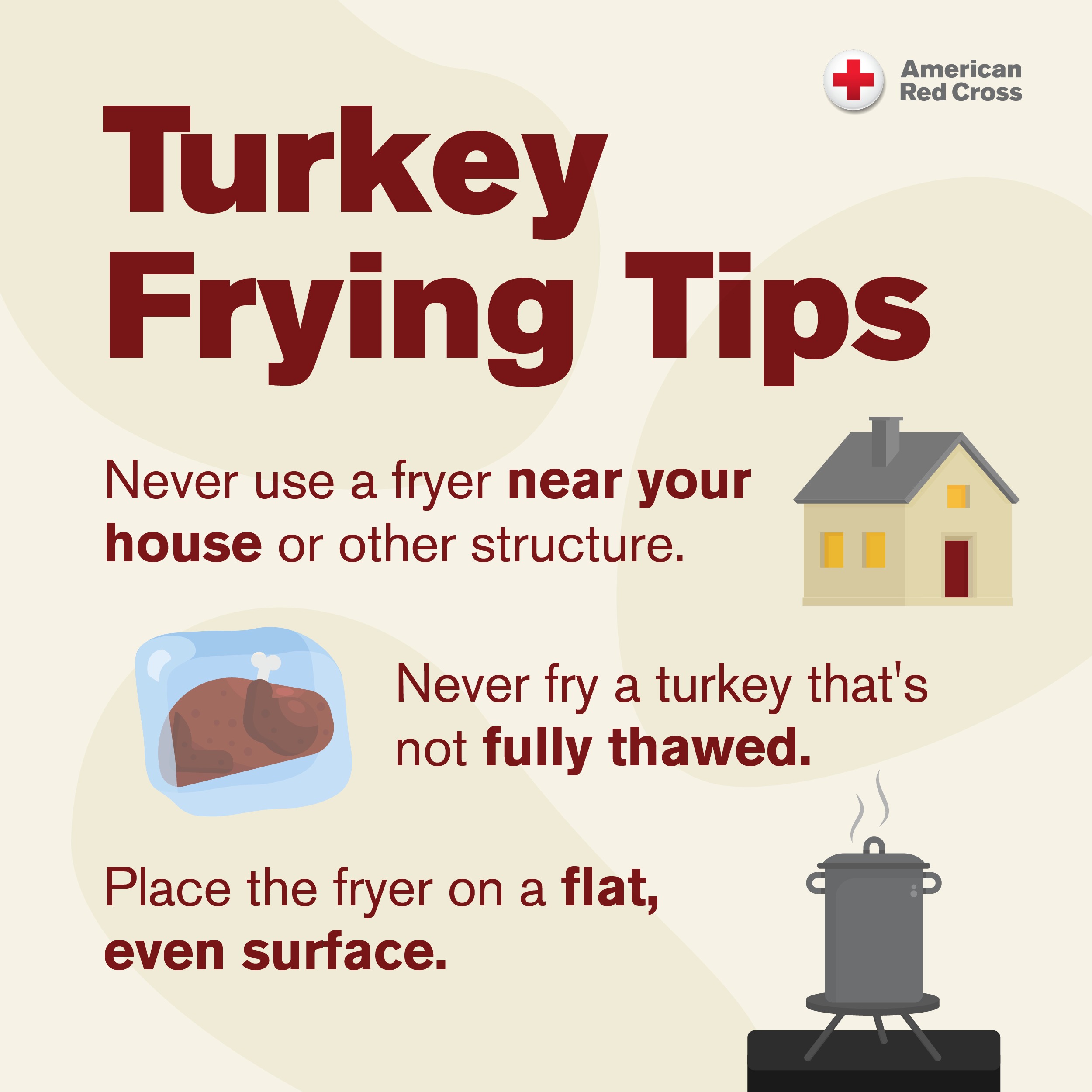
The American Red Cross provides some 40 percent of the nation’s blood supply. In the process of collecting, processing and distributing that vital fluid, the Red Cross plays an important role in many facets of community health.

Most of us know someone who’s received a lifesaving blood transfusion during surgery, trauma treatment or cancer care.

We all know that despite medical miracles, there’s no artificial substitute for the real thing: Blood from another living person.

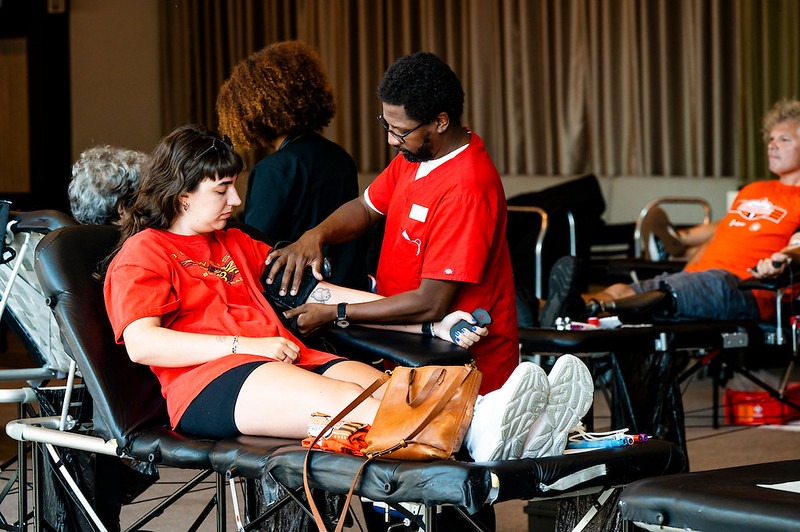
Red Cross phlebotomists who screen us before drawing blood can pick up on blood pressure or iron deficiency issues. Lab professionals who test our blood for infectious diseases and compatibility can also identify pre-diabetes (A1c levels) before symptoms show up, among a host of other conditions.

And, incidentally, later this month is Medical Laboratory Professionals Week, so kudos to our 500 lab techs who keep the blood supply safe and identify the dozens of blood components that make hospital treatments and cell and gene therapies more effective.

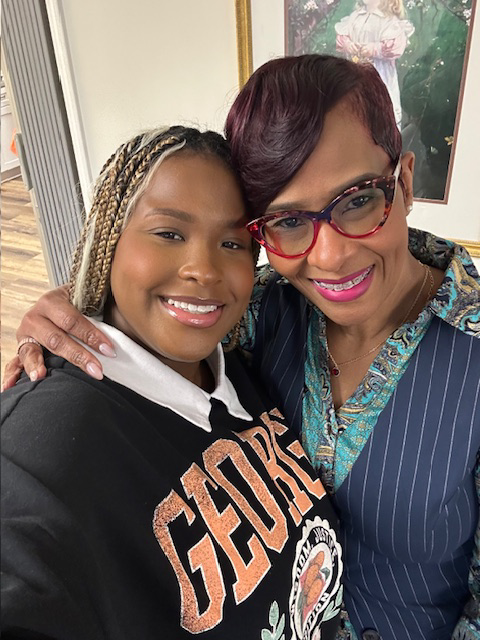
Makenzie and Demeatrice Nance

Clevelander Makenzie Nance relies on that expertise. She’s one of more than 100,000 people in the United States living with sickle cell disease (SCD), most – but not all – of them Black or African Americans.

To alleviate acute pain “crises” and forestall organ damage, those sufferers may need as many as 100 units of blood every year – blood that Red Cross technicians process to be sure it has the unique antigens from donors of the same ethnic groups as SCD patients.

Makenzie is a sickle cell warrior who advocates for blood donation while her mom Demeatrice partners with the Red Cross to organize blood drives. “It could be my day today, or it could be your day tomorrow,” Demeatrice says.

Kristin Gype and her daughter

Dr. Kristin Gype wasn’t expecting it to be “her day” to receive blood as she prepared for the birth of her second child, but an emergency C-section delivery led to uncontrolled bleeding and an immediate hysterectomy.

During her struggle for life, Kristin received a whopping 52 units of blood! To put that into perspective, the average human body holds about 10 pints or “units” of blood.

Kristin, a nurse anesthetist, estimates it took up to 83 donors to produce all the blood products she needed that day.

“Those people had a ripple effect. They kept me alive, kept these two babies’ mommy alive. I get to go to work and take care of people and keep them alive,” she says.

Blood products have a short shelf-life, so the supply has to be constantly replenished. Elaine Rettig in Findlay is grateful blood was “on the shelf” when she needed seven units as she was giving birth.

“While the dreaded jab of a needle is not like a kiss from your sweetheart,” she says, “knowing you’ll be helping someone through a rough time in their life is an extra reward.”

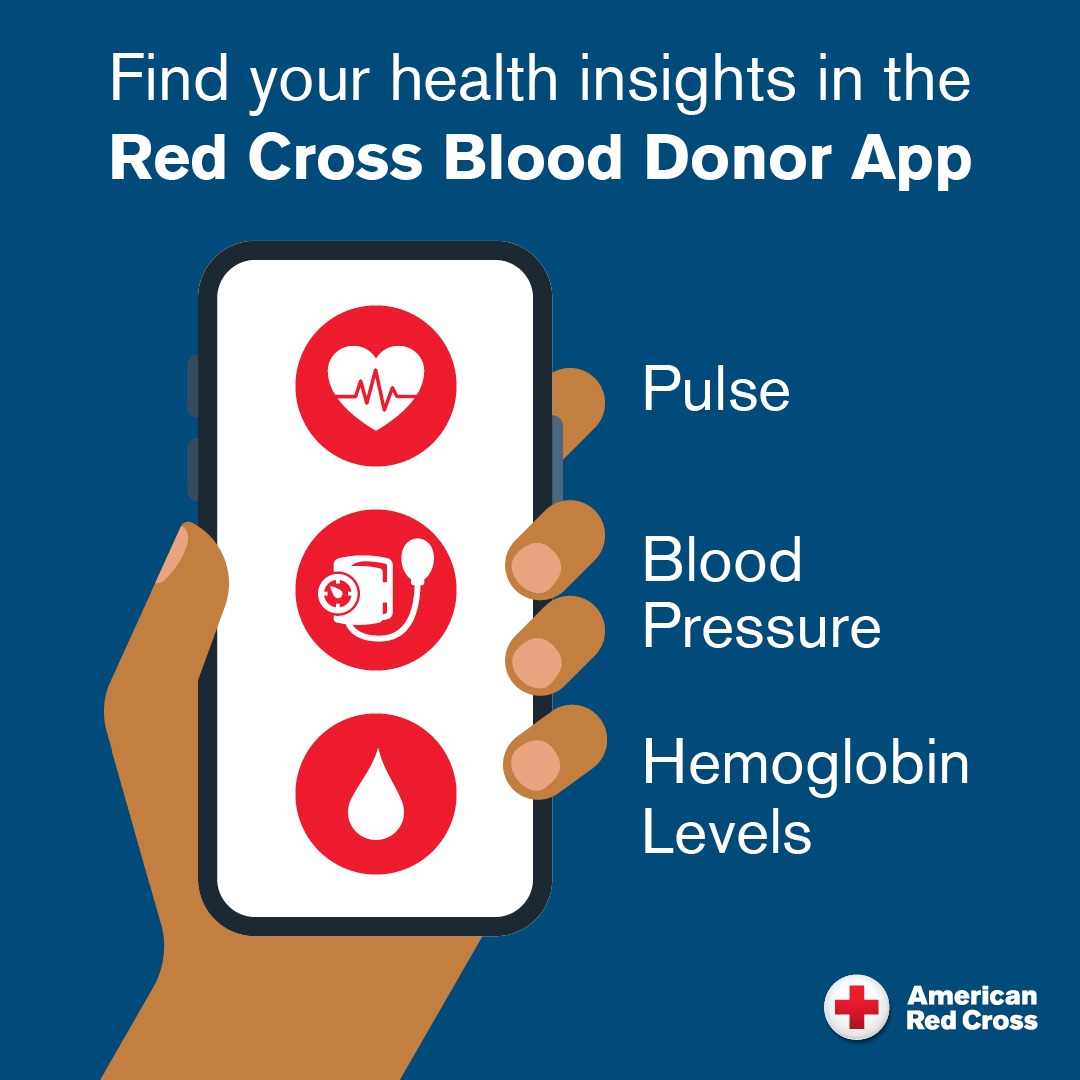
The Red Cross is constantly working to make the donation process easier.  You can save time by using the RapidPass online health history tool on the day of your appointment, and many donation sites now use a transdermal device to check blood iron levels. No more finger sticks! The Red Cross operates dozens of blood drives across northern Ohio, as well as five dedicated collection sites for platelets and plasma, always in demand for treating traumatic injuries. To find a location near you, go to RedCrossBlood.org or download the free Red Cross blood donor app.

Meet the phlebotomist behind the lifesaving mission

By Kathryn Dean, American Red Cross volunteer

During Phlebotomist Recognition Week, the American Red Cross of Northern Ohio is proud to spotlight Katie Currenti, who has dedicated 29 years to serving as a Red Cross phlebotomist.

Katie first started working at the Red Cross after moving to the U.S. from Ukraine and studying to become a medical assistant.  Before moving here, she had previously worked as a speech pathologist and held a nursing degree back at home.

Katie Currenti, Red Cross phlebotomist, at the newly opened Willoughby Blood Donation Center

 “When I arrived here in this country, I wanted to continue to help people in the medical field,“ Katie explained, “so I went to school for medical assistance and started my career with the Red Cross, because what better way to continue helping others than making sure lifesaving blood products are available for patients in hospitals.”

Phlebotomists play a vital role in the blood donation process. Specially trained to collect lifesaving blood donations, they ensure each unit is safely prepared for patients in hospitals across the region. Their work extends beyond just basic blood collection as they also comfort and educate donors who come in, greeting them with a smile and providing a friendly, familiar face for repeat donors.

“What keeps me and has kept me here is my (Red Cross) family, which includes staff and, most of all, donors and volunteers.” Katie reflected, “I have come to know so many who have walked through these doors and continue to make new ones.  I feel privileged that what I do truly matters to so many and know that all of us together have saved millions upon millions of lives in 29 years!”

Katie primarily works at the Red Cross Blood Donation Center in Parma, Ohio, and also supports the newest Northern Ohio blood donation center in Willoughby.

This Phlebotomist Recognition Week, help honor Katie and other Red Cross blood donation heroes by scheduling an appointment to give blood.  Donors who give between now and February 28, 2026, will receive a $20 e-gift card to a merchant of their choice. Visit  RedCrossBlood.org to find a blood drive or blood donation center near you.

Turkey day hazards: Don’t let your holiday meal go up in smoke

By Kathryn Dean, American Red Cross volunteer

Juicy, flavorful, and tender meat.  Crispy, golden-brown skin.  For a perfect holiday centerpiece that cooks in under an hour, the deep-fried turkey seemed like a miracle.  If you lived through the 1990s, you probably remember the phenomenon that spread through the country like wildfire. 

Triggered in part by Martha Stewart featuring this Cajun method of cooking on her television show and in her magazine, it sparked a craze amongst Americans who were looking for easier ways to cook their Thanksgiving turkeys. 

Unfortunately, this method came with a steep price.  An increase in fires and injuries resulted from improper use of this technique, and many homes burned down as a result.  If you’ve never seen a video of a turkey fryer quickly going up in flames, do yourself a favor and Google it now. 

But the danger isn’t limited to outdoor frying.  In the United States, Thanksgiving Day and the day before are the top two most likely days for cooking fires to happen in the home.  44% of all house fires in the U.S. can be attributed to cooking fires, making it the leading cause of home fires and home fire injuries.

COOKING SAFETY TIPS: The American Red Cross recommends these cooking safety tips to reduce your risk of fire during this holiday season.

  • Never leave the kitchen unattended when frying, grilling, or broiling food.
  • Keep grills or deep fat fryers at least 10 feet away from home structures while in use.
  • If you are using a turkey fryer, remember that proper safety requires a completely thawed turkey and oil that is at the correct temperature and level.
  • Set a kitchen timer to remind you when the stove is on.
  • Keep children and pets at least three feet away from all cooking appliances and cords.
  • Remove flammable items, like wooden utensils, curtains, potholders, and oven mitts, from the vicinity of the stovetop.
  • Pull up sleeves and avoid loose clothing that can get in the way while cooking.
  • Keep a fire extinguisher near any area where cooking is being performed.  Do not use water to put out a grease fire.
  • Check that all appliances are off before going to bed at night.

Fall is a great time to check that you have working smoke detectors in your home. Test your units monthly, and replace batteries annually (on units that allow you to do so).  Replace any units that are over 10 years old.  If you need help replacing or installing smoke detectors, the Red Cross may be able to help. Click here to find out how to request a free smoke alarm in Northern Ohio. Wishing everyone a wonderful Thanksgiving!

Autumn Elegance Women’s Forum highlights impact of women in philanthropy across Northern Ohio

By Jill Patterson, senior regional philanthropy officer, Tiffany Circle division lead

Earlier this month, the Barrington Country Club in Aurora was filled with warmth, inspiration, and the unmistakable energy of women coming together to create lasting change. The first-ever American Red Cross Women in Philanthropy event, Autumn Elegance Women’s Forum, was more than just an evening gathering. It was a celebration of connection, purpose, and the collective strength of women united by a mission that matters.

The event was hosted by members of the Red Cross of Northern Ohio Tiffany Circle and is part of the organization’s Women in Philanthropy initiative. This elegant forum brought together a dynamic community of women leaders and changemakers to celebrate the transformative power of giving and the profound impact of women in philanthropy. The event welcomed an extraordinary mix of Tiffany Circle members, major donors, business leaders and passionate supporters, all committed to advancing the mission of the Red Cross. Laurie Laidlaw Deacon, Red Cross of Northern Ohio Tiffany Circle chair, led us through the evening as guests were treated to heartfelt stories, meaningful conversations and a renewed sense of purpose. 

Debra Haufler, executive director of strategic planning, real estate services for the Red Cross shared a deeply moving mission moment, recounting her daughter’s journey with leukemia and the critical role Red Cross blood played in her treatment. Her story reminded everyone of the lifesaving impact behind every donation.

Anne McKeough, Red Cross chief development officer, introduced the Women in Philanthropy initiative, emphasizing its importance in empowering women to lead, influence, and champion change through strategic giving and community engagement.                             

Co-chair of the Red Cross Tiffany Circle National council Marilyn McClure-Demers closed the evening with a powerful call to action, inviting each guest to join us on this journey—to lend their voice, their passion and their leadership to a cause that touches lives every day.

The evening was a testament to what happens when women come together with intention. We left feeling inspired, connected, and more deeply committed to building a future shaped by compassion, generosity, and purpose.

From heartfelt conversations to powerful reflections, the event reminded us of the impact we can make when we lead with compassion and purpose. It marked the beginning of a journey—one where women’s voices, leadership, and generosity shape the future of philanthropy.

Thank you to everyone who joined us. Your presence, passion, and belief in our mission made this night unforgettable.

To see more photos from the Autumn Elegance Women’s Forum, tap here.

Red Cross staff detects health issue in longtime blood donor during routine check in

By Sam Pudelski, American Red Cross volunteer

Peggy Hammond has donated blood for over 40 years. As someone with O+ blood, she understands the importance of giving blood. She started giving blood after a friend had a daughter diagnosed with Apert syndrome and needed regular blood infusions. She realized how extremely important it was to donate blood to help people like her friend’s daughter, who rely on blood donations.

Fast forward a few years, and Peggy was at the American Red Cross Michael T. George Blood Donation Center checking in for her routine blood donation. When she was signing in, the nurse noticed a sore on her head and told Peggy, “I think it’s infected.” The supervisor confirmed it was, and Peggy wasn’t able to donate that day. Over Christmas, she contacted her doctor and after sending a picture of the spot in question, she went in to have it evaluated.

Her doctor determined the sore was not just an irritated spot on the head, but was in fact skin cancer, specifically squamous carcinoma. Approximately 2 out of every 10 skin cancers are squamous cell skin cancers, according to the American Cancer Society. Luckily, the cancer was caught early. Peggy had Mohs micrographic surgery to have the cancerous spot removed. The procedure went well, and with the surgical site healed, she was able to resume her regular blood donations.

She returned back to the donation center to begin her regular blood donations again, and of all people volunteering that day, the same nurse who discovered her spot, was there again! “She saved my life,” Peggy said. She was grateful to have the chance to tell her how much her catch that day helped her.

In speaking with Peggy, it’s evident she’s passionate about giving back and grateful that she’s still able to continue to donate to help others in need. If you are interested in donating blood, the Red Cross holds blood drives across Northern Ohio. To find an upcoming blood drive near you, visit redcrossblood.org.

Edited by Glenda Bogar, American Red Cross volunteer