As we make our way through the first couple of weeks of the New Year, our “To Do” lists are no doubt full, maybe some with a few things that we should’ve taken care of in 2025. No judgements – we all have tasks we need to catch up on.
But when we’re making those lists and catching up on our tasks, are we keeping in mind the people who might need us the most?
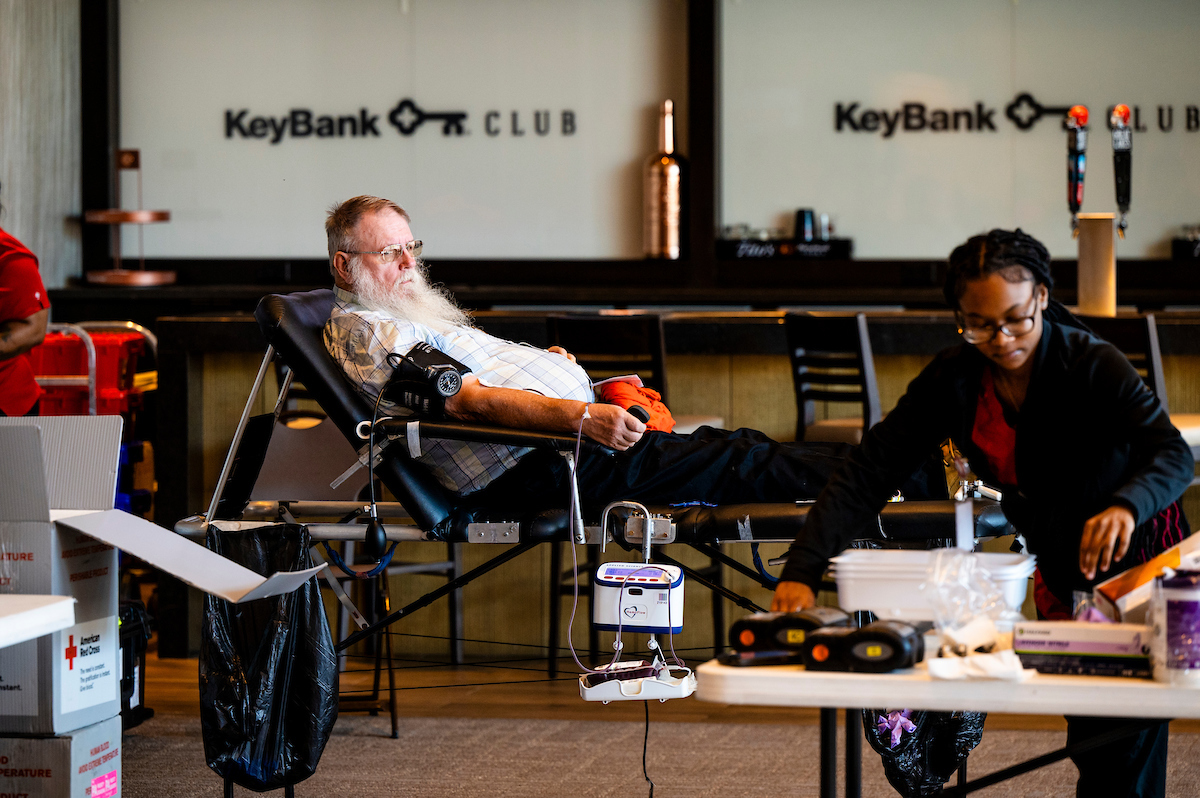
Browns Give Back hosted our annual First and Ten Blood Drive in the KeyBank Club of Cleveland Browns Stadium in partnership with the American Red Cross on July 27, 2024.
Coming off the holiday season, the American Red Cross is teetering on a blood shortage. For the better part of the past two months, we’ve been focusing on time with family and friends, gathering around the dinner tables and the Christmas trees, sharing in all the seasonal joy. For patients who rely on lifesaving blood transfusions, their holidays were likely a little bit different – spent more in hospital beds than around holiday tables.
A blood shortage isn’t just felt on a large scale, but also on a deeply personal level. Patients with conditions such as sickle cell disease, cancer, or chronic anemia depend on regular transfusions. These winter months can delay travel plans or slow down our routines, but they don’t delay clinic visits for patients who rely on these transfusions. Their need is constant, just like the need for blood.
As we settle into 2026, the Red Cross is encouraging donors to schedule a blood donation appointment to ensure the blood supply remains stocked. You can make your appointment by:
1. using the Red Cross Blood Donor App 2. visiting RedCrossBlood.org 3. or calling 1-800-RED-CROSS
And, if you donate blood between now and the end of January, you are automatically entered for a chance to win a trip for two to Super Bowl LX in the San Francisco Bay Area, as our thank you for helping during the critical post-holiday time!
The winner and guest will get to enjoy Super Bowl LX in Santa Clara, CA, access to day-of in-stadium pregame activities, tickets to the official Super Bowl Experience, round-trip airfare, three-night hotel accommodations (Feb. 6-9, 2026), plus a $1,000 gift cardfor expenses.Click here for more details!
I’ve recently discovered a connection between my family and the Red Cross going back to the Johnstown Flood of May 31,1889 when Clara Barton’s Red Cross became a national life-saving organization whose efforts helped my great grandpa’s survival.
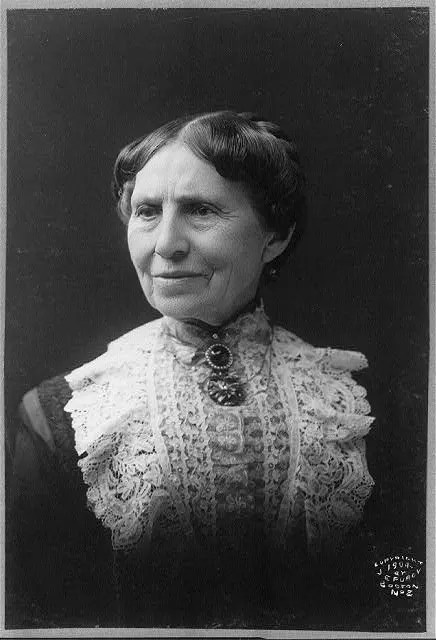
Clara Barton, Library of Congress
I thought my ties with the Red Cross began when I became a lifeguard at 15. My service continued as a young spouse volunteering at an Army clinic on an infantry base in Vilseck, Germany before becoming a part of the Northern Ohio Chapter when my husband retired.
However, the personal link goes back further and has a more profound impact than I realized. Now that we’ve moved back to my childhood hometown, I’ve had more opportunities to research my family’s roots, especially after inheriting ancestral documents, including a memoir
The family account written by my Great Uncle Andrew described life in Johnstown Pennsylvania at the turn of the 20th century and focused quite a bit on his dad, my Great Grandpa Stefan Furst.
Though I heard family stories as a kid, I had vague notions of the immigrant experience during the turn of the 20th century when relatives from all sides of my family left Czechoslovakia.
Like many migrants from Eastern Europe at the time, they first settled in the Appalachian Mountains outside of Pittsburg in Fayette and Cambria Counties. They worked in the coal mines before moving to Cleveland for better pay and working conditions in factories.
My dad also told us kids his grandpa survived the Johnstown Flood and that his mother, Margaret, grew up under the constant threat of a disaster, as there were more floods after 1889.
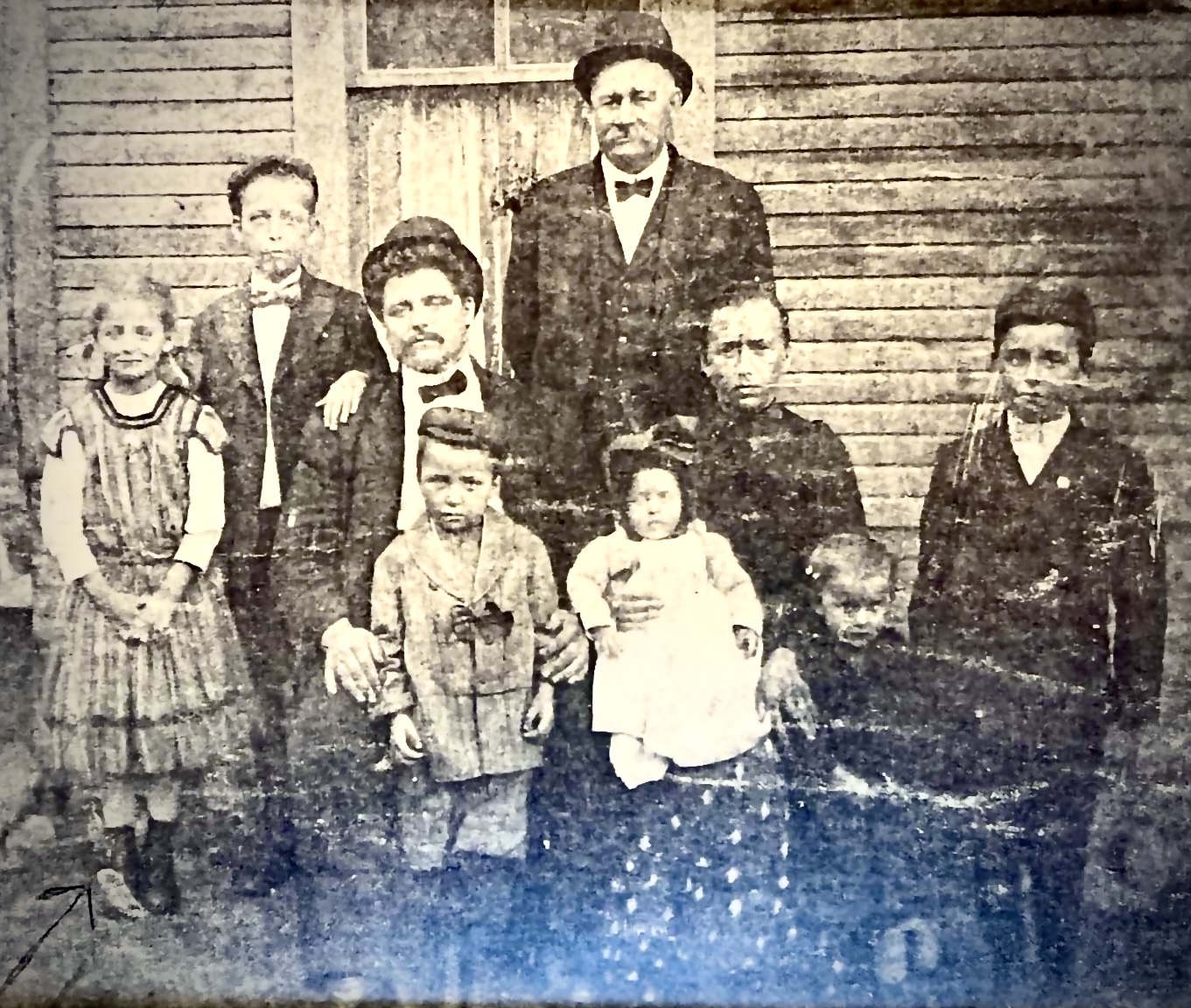
The Furst Family Johnstown, PA Stephen and Elizabeth sitting middle, Maragret and Andrew standing left
In my continued research online, I found out that my great grandpa arrived from Slovakia in 1884, at age seven. However, I couldn’t find records of parents or siblings that might have come with him. So, this summer I went to Appalachia using the paper trail left to me to uncover more information about where my family first lived in America.
My first stop took me to Uniontown’s history room in Fayette County where a researcher pointed out a chair that Clara Barton had used when helping displaced people after the Johnstown Flood in neighboring Cambria County. Historic rains and the breaking of the poorly maintained South Fork Fishing Dam destroyed the city of 30,000, taking more than 2,200 lives.
The “Angel of the Battlefield” from 25 years earlier during the Civil War was in her D.C. office when she learned of the horrific tragedy. At 67 years old, Clara Barton quickly gathered a team of 50 nurses and doctors, and with a load of supplies, arrived in Johnstown five days later.
The Red Cross remained in Johnstown for six months, providing supplies, temporary shelter, medical care, reuniting families, and finding homes for orphans.
My great grandpa was twelve at the time of the flood. If any other family members were with him, there are no indications of survival –just the account of his dad written by Andrew.
In addition, not only were records destroyed, but in the wake of devastation, “journalists” falsely accused immigrants of looting which resulted in vigilante violence and lynchings. From resources I read like David McCullagh’s book, The Johnstown Flood, detailing the immigrant experience in the flood’s aftermath, I imagine my own remaining relative laid low.
Nevertheless, my great grandpa did make it out alive due to the Red Cross and other relief efforts assisting anyone in need, regardless of their ethnic derivation.
As I stood in the Uniontown library this summer, looking at the chair, it dawned on me that my great grandpa likely stood in front of Clara Barton as she sat on that simple wooden seat, providing him food and shelter as she did for 1000’s of other destitute people after that flood.
In the following years, my great grandpa lived in a neighboring town. But once he turned 18, he moved back to Johnstown when he met his wife, Elizabeth, and they went on to have six kids.
Additionally, though he worked in the coal mines for a few years, the citizens of Cambria County elected my great grandpa constable, often times a lifetime position. He then worked for his community until his sudden death in 1916 at the age of 38.
A couple of years later, my Great Grandma Elizabeth remarried a widower and soon after they moved to Cleveland’s Slavic Village with their children. My Grandma Margaret and Great Uncle Andrew also went on to have their own families, with Andrew living to 100 years old.
Although my great grandpa had a short life, he lived through tremendous change and survived devastation with help from people like Clara Barton.
In sum, though my writing involves historical research, this family project has further opened my eyes to the significance of details and numbers when reading old documents, as well as the relief efforts associated with major tragedies.
I not only understand how the Johnstown Flood became the impetus of the Red Cross becoming an international relief organization but have gained a deeper gratitude for all individual relief efforts 136 years ago as they ensured my family’s survival.
I also feel more fortunate to be part of the organization that saved my great grandpa. From working in that little clinic in Germany as a new Army wife to my hometown of Cleveland as part of the Service to Armed Forces, I’m proud to be a Red Cross volunteer.
In 1996, two hurricanes made landfall in North Carolina: Hurricane Bertha, a category 2 storm, followed 8 weeks later by Hurricane Fran, a category 3 storm. The combined damages produced by these storms in North Carolina totaled over 2.5 billion dollars and caused the evacuations of over a million people.
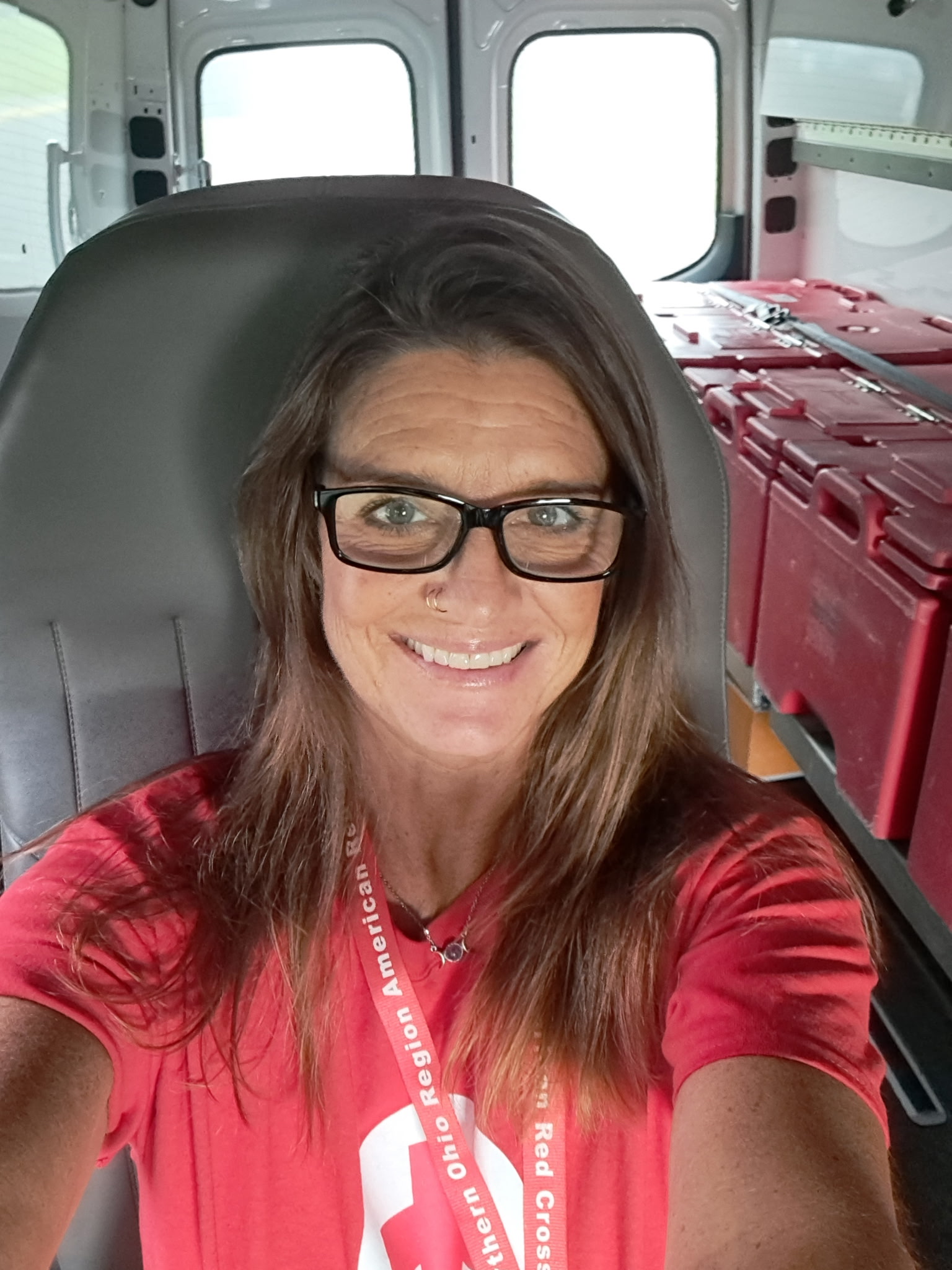
Natalie Whitmer, American Red Cross volunteer
Natalie Whitmer, an American Red Cross volunteer based out of Canton, Ohio, was one of those evacuees. She was living in North Carolina at the time and experienced firsthand being displaced to an evacuation shelter run by the Red Cross.
Following the storms, she and her husband returned home to assess the damage. “We found that the front half of our mobile home was destroyed. That’s where my daughter’s bedroom was, so a lot of their clothing and their bedding and all of that stuff was lost.” Natalie explained.
The Red Cross had also deployed ERV vehicles, or Emergency Response Vehicles, which drove through their neighborhood and provided food and water after the storm.
“They had set up an office, and they just asked the address, where we lived, what happened, what I’m missing, what I need help with, and they gave me a voucher to be able to go and get diapers and clothing for my children, which was amazing…I think it was like six weeks we were without water and electricity.”
Her story came full circle when in 2024, now Red Cross volunteer, she was deployed to another pair of hurricanes, Helene & Milton, that hit within a 2-week timespan. There she manned a Red Cross ERV and supervised an evacuation shelter. Regarding that time, she reflected, “It’s amazing that I’m (now) on this end of it (and) able to do the same.”
Since joining the Red Cross in 2023, Natalie has deployed multiple times to a variety of disasters, assisting in sheltering, feeding, and other vital roles. She also now works as a Casework Supervisor Coordinator for the Northeast Ohio Chapter.
“It’s extremely fulfilling and it’s just so comforting knowing that we have an organization out here that has all of this to offer,” she said. “I never knew Red Cross had so much until I started working with them, and it just blows my mind. It’s just an absolutely beautiful organization, their mission and everything, and the people that run it, all the volunteers.”
This holiday season, consider giving back to others by donating your time as a volunteer. Click HERE to find out more about becoming a Red Cross Volunteer and all of the opportunities available at the Northern Ohio Chapter.
In Northern Ohio, we’ve experienced weather-related school closings, road closures and traffic accidents – and it’s not even mid-December!
As winter approaches, the chance of severe weather can compound an already challenging time for blood donors who are busy with holiday preparations and travel plans. Seasonal illnesses can also keep donors from making or keeping an appointment to give.
That’s why the American Red Cross schedules several highly visible blood drives throughout the region during the month of December – to give busy donors a variety of days, times and locations where they can roll up a sleeve and help bring hope and healing to patients in need.
“People with cancer and so many other conditions could not be treated without the blood they need to have every day,” said Dr. Zaher Otrock of Cleveland Clinic. It’s just one of the many quotes I’ve gathered while visiting blood drives and talking to donors over the past 10 years.
“I was in a car crash in 2006 and needed 15 pints of blood. I’m giving back,” said Christopher Haddock.
“This is my way to give of myself to help someone in need.” – Sylvia Stewart-Lumkin
“I love that I get to save lives and find out my blood type.” – first-time donor Meredith Reinhard
“My mom taught me to give back.” - Bridget Miller
“Christ gave His blood for everyone, the least I can do is help a few.” - Gary Pfeiffer
“It doesn’t take a lot of time and it’s really, really, rewarding.” – Mark Fleischer
There’s still time to help save lives this year. During this season of giving, give something that means something and make an appointment to give blood or platelets by using the Blood Donor App, visiting RedCrossBlood.org or calling 1-800-RED CROSS (1-800-733-2767.)
OR…
Come to one of the following holiday season blood drives:
17th Annual Holiday Blood Drive – Cuyahoga Falls Tuesday, December 16 from 7 a.m. – 7 p.m. Sheraton Akron/Cuyahoga Falls 1989 Front St. Cuyahoga Falls, Ohio 44221
Annual Holiday Blood Drives – Mahoning Valley Monday, December 22 from 9 a.m.- 4 p.m. Packard Music Hall 1703 Mahoning Ave. Warren, Ohio 44483 Tuesday, December 23 from 9 a.m. – 4 p.m. Stambaugh Auditorium 1000 Fifth Ave. Youngstown, Ohio 44504
Juicy, flavorful, and tender meat. Crispy, golden-brown skin. For a perfect holiday centerpiece that cooks in under an hour, the deep-fried turkey seemed like a miracle. If you lived through the 1990s, you probably remember the phenomenon that spread through the country like wildfire.
Triggered in part by Martha Stewart featuring this Cajun method of cooking on her television show and in her magazine, it sparked a craze amongst Americans who were looking for easier ways to cook their Thanksgiving turkeys.
Unfortunately, this method came with a steep price. An increase in fires and injuries resulted from improper use of this technique, and many homes burned down as a result. If you’ve never seen a video of a turkey fryer quickly going up in flames, do yourself a favor and Google it now.
But the danger isn’t limited to outdoor frying. In the United States, Thanksgiving Day and the day before are the top two most likely days for cooking fires to happen in the home. 44% of all house fires in the U.S. can be attributed to cooking fires, making it the leading cause of home fires and home fire injuries.
COOKING SAFETY TIPS: The American Red Cross recommends these cooking safety tips to reduce your risk of fire during this holiday season.
Never leave the kitchen unattended when frying, grilling, or broiling food.
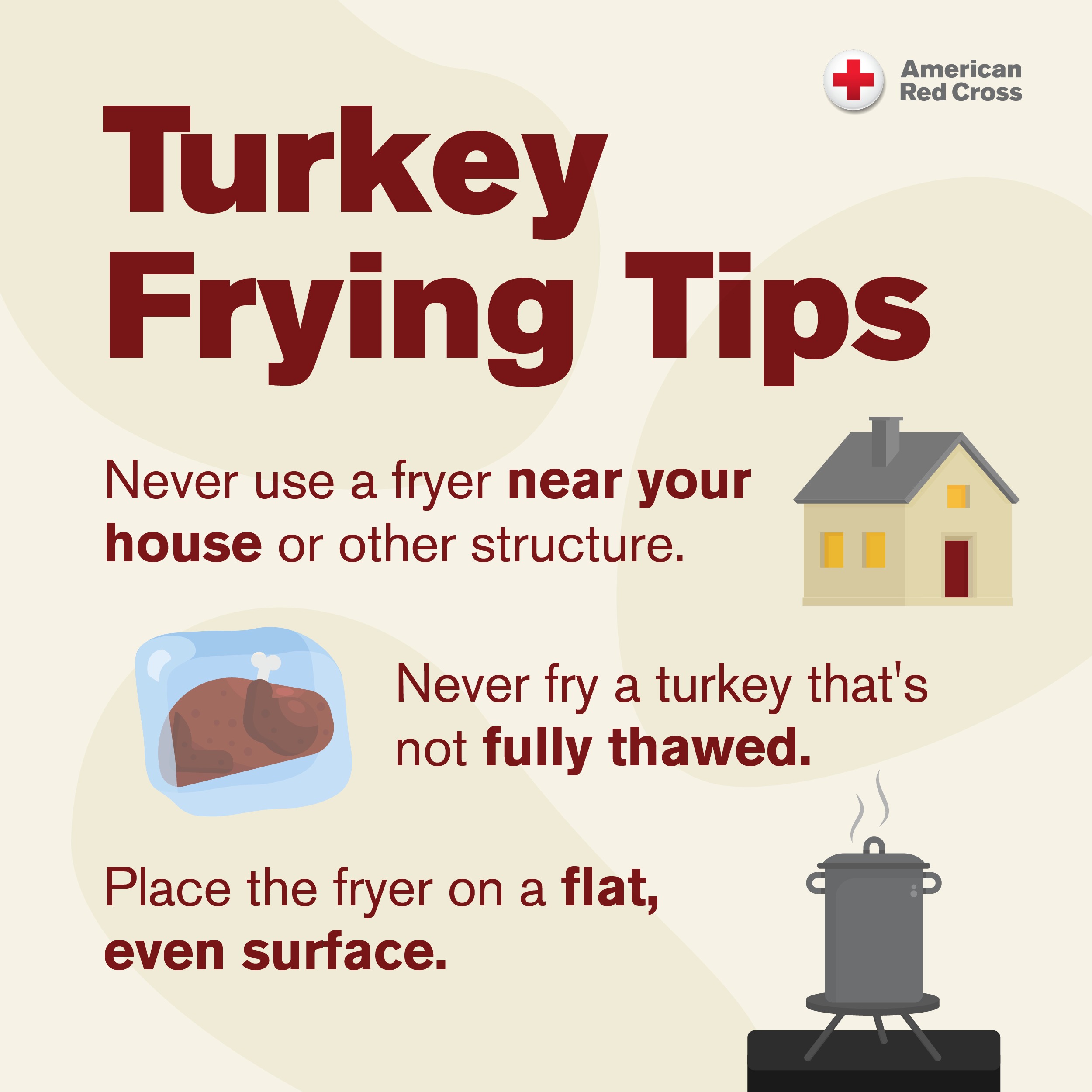
Keep grills or deep fat fryers at least 10 feet away from home structures while in use.
If you are using a turkey fryer, remember that proper safety requires a completely thawed turkey and oil that is at the correct temperature and level.
Set a kitchen timer to remind you when the stove is on.
Keep children and pets at least three feet away from all cooking appliances and cords.
Remove flammable items, like wooden utensils, curtains, potholders, and oven mitts, from the vicinity of the stovetop.
Pull up sleeves and avoid loose clothing that can get in the way while cooking.
Keep a fire extinguisher near any area where cooking is being performed. Do not use water to put out a grease fire.
Check that all appliances are off before going to bed at night.
Fall is a great time to check that you have working smoke detectors in your home. Test your units monthly, and replace batteries annually (on units that allow you to do so). Replace any units that are over 10 years old. If you need help replacing or installing smoke detectors, the Red Cross may be able to help. Click here to find out how to request a free smoke alarm in Northern Ohio. Wishing everyone a wonderful Thanksgiving!
On Friday, October 17, 2025, I said goodbye to my wife and my two young sons before leaving for Alaska for two weeks. As I texted other family and friends about my deployment, there was one response I saw more than any other: “What happened in Alaska?” Of course I knew, it was my job to know, but most of the rest of the world hadn’t heard. Alaska’s story hadn’t been told.
October 19, 2025. Kipnuk, Alaska.
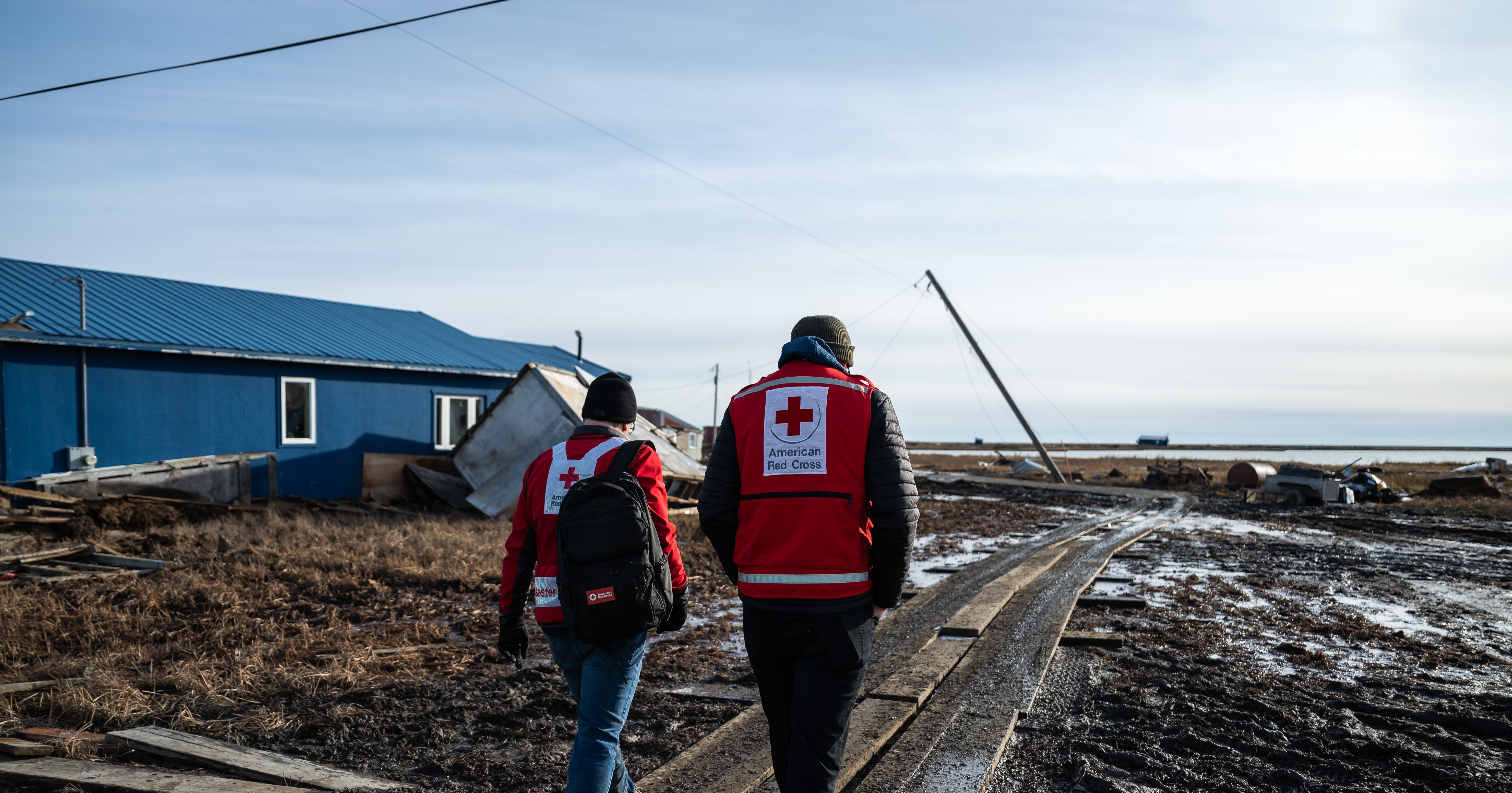
Red Crosser Dale Kunce in the heavily-damaged village of Kipnuk, on Oct. 19, 2025.
The Red Cross is helping in Alaska as officials stage one of the largest airlifts in the states recent history, evacuating entire villages that were left in ruins last weekend by Typhoon Halong. We are working with state, tribal, local officials and partners to support the evacuees who are being flown to shelters in Anchorage, where they will find a safe place to stay, food, emergency relief supplies, emotional support and health services. Hundreds of Red Cross disaster workers from across the country are being deployed to help during what could be a prolonged relief response with access to some villages cut off and others left uninhabitable as Alaskas winter sets in.
Photo by Scott Marder/American Red Cross
The early morning of October 11, 2025, the remnants of Typhoon Halong devastated indigenous villages along the west coast of Alaska. Hundreds of residents, primarily from Kipnuk and Kwigillingok, were evacuated – first airlifted to Bethel, where the U.S. Army National Guard established a transitional shelter, and then flown to Anchorage on a military C-130 plane. Residents left behind their homes, or what was left of their homes, their valuables, mementos, even their pets. They left behind everything.
In Anchorage, the American Red Cross established two shelters – one at the Alaska Airlines Center at the University of Alaska Anchorage (UAA) and another at the William A. Egan Center downtown. Residents of these villages moved into their new temporary homes, uncertain what was next.
“I still can’t believe we lost our place,” said Gilbert Amik, speaking of his home in Kipnuk that was washed away in the storm. “But help is here… We will move forward from here.” For Gilbert, a big part of that help was Red Cross volunteer Deb Blaze, from California. She and Gilbert built a special bond over the time Gilbert and his mother, Carrie, had been staying at the shelter at UAA.
Red Cross volunteer Deb Blaze hugging Gilbert Amik, resident of the village of Kipnuk in Western Alaska, who was evacuated, along with his mother, in the wake of Typhoon Halong. Photo by Ryan Lang/American Red Cross
“It makes me feel good,” Gilbert said, expressing gratitude for the help he and his mother received, specifically from his new friend. Deb said, “It was a special bond. It was like we were supposed to meet.”
Gilbert and Deb’s story was just one of countless inspirational anecdotes that came out of the tragic storm. The people I spoke with during my two-week deployment were resilient, strong, kind, and faithful – both the residents and the Red Crossers.
I met a young girl, just nine-years-old, who despite losing her home brought so much joy to others in the shelter. I met a volunteer from Alaska who carried around a Yup’ik bible with her for days, just so she could get it to a resident who requested it. I met a tribal elder from the village of Kipnuk who spoke to the younger generation about faith, hope, and strength. I met a group of people who made me want to be better, and I’ll continue to tell their story.
Alli’s first Red Cross deployment story
Alli Katterheinrich on her first Red Cross deployment in Anchorage, Alaska, October 2025.
Alli Katterheinrich is a Regional Philanthropy Partner for the Red Cross of Northern Ohio. She deployed to Alaska as part of the Special Public Outreach Team, telling the story of people directly impacted by Typhoon Halong.
“I got the call on a Tuesday and was on a plane the next day,” Alli said. “It was a lot to process,” she said, talking about wrapping her head around her first deployment as a Red Crosser and being thousands of miles away from home.
The time difference was a challenge for Alli, who said sometimes it was difficult to get in a phone call with her husband. The darkness was another challenge. “I’m a morning person and I get up early, but the sun doesn’t come up until 9 a.m. here, so even that was a major adjustment,” she explained.
But it was the residents’ stories that helped, Alli said. “I spoke with so many village residents who took me through their entire experience,” she said, “from being airlifted from their homes to their time in our shelters. I feel very fortunate that they feel comfortable enough to share their stories with me.”
“So much of it was organic,” Alli said. “People would see me sitting, wearing my Red Cross vest, and they would come up and start talking to me and telling their story.” And for Alli, me, and so many others I spoke with, it was those conversations and that storytelling tradition that was so cathartic. And it is the stories that we will carry with us.
A Northern Ohio story
Being thousands of miles away from your home for weeks, sometimes longer, can be hard on a Red Cross volunteer. You miss your family, your bed, your morning routine… You miss a lot. But it’s the friendly faces that make it a lot easier. “There were so many other volunteers from Northern Ohio,” Alli said, “and that helped.”
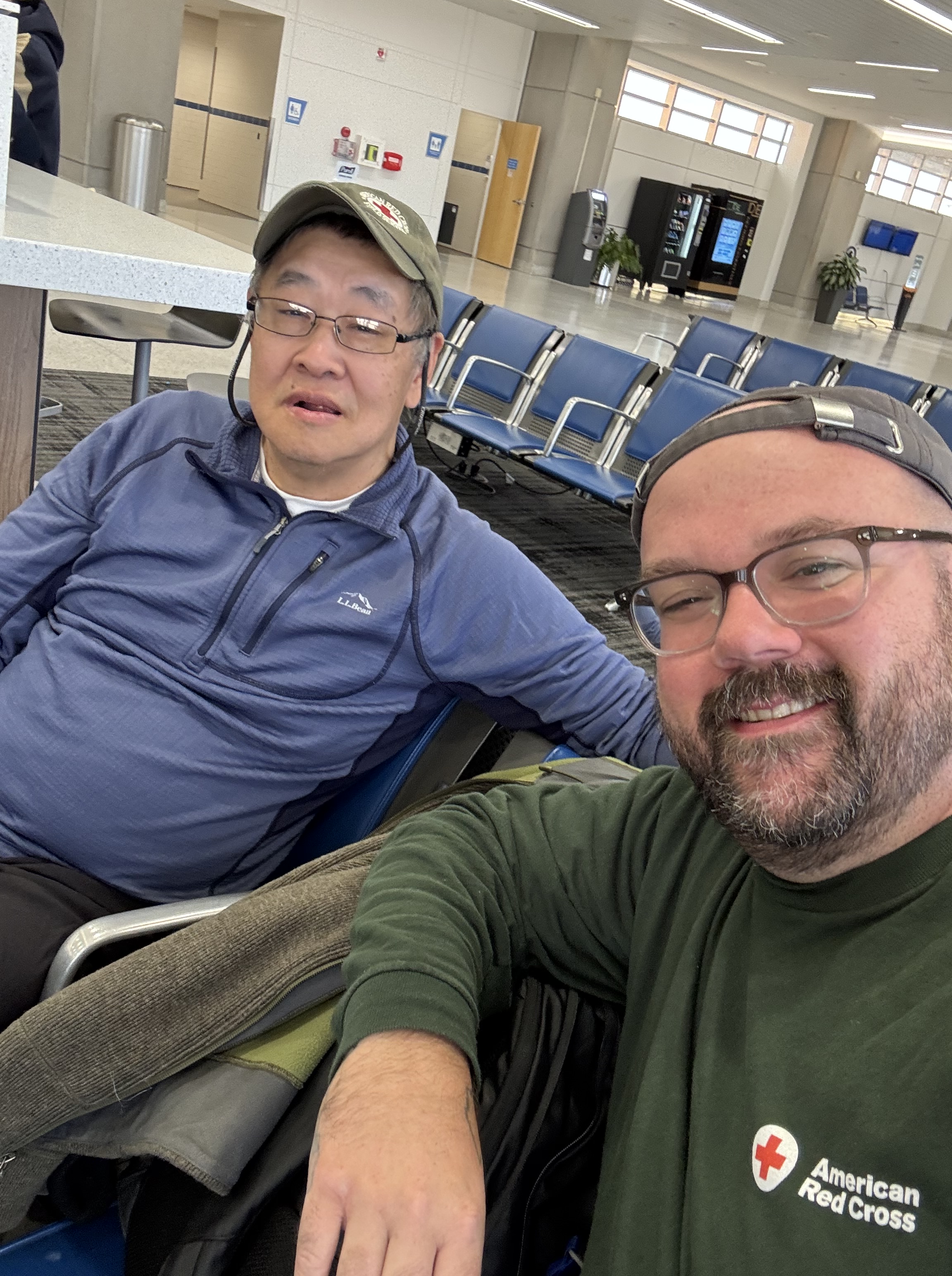
Randy Liang (left) and Ryan Lang at Akron-Canton Airport, waiting to take off to Alaska in response to Typhoon Halong that hit the western coast of Alaska in October 2025.
I met Randy from Cuyahoga Falls at Akron-Canton Airport, waiting to board our flight together. He’s an IT specialist who spent more than a month in Alaska, making sure the Red Cross staff had the connectivity they needed to execute the mission. Treacy from Northeast Ohio worked 12-hour shifts at the shelter for weeks, caring for residents, making sure they had what they needed. Callene, originally from Lorain, met with every volunteer who checked into the operation, helping acclimate them to the Alaska culture. Jeff, from the Heartland, Stark, and Muskingum Lakes chapter, worked tirelessly in the shelters, providing meals and snacks and more. And when it was time for those residents to leave, Jeff helped pack their things, sending them off with a smile and a hug.
The lifesaving mission of the Red Cross is not possible without these people who volunteer so much more than just their time. I’m grateful to be a small part of this group of incredible people, and I will continue to tell their story.
Annually, on November 11th, our nation recognizes Veterans Day, when we honor all those men and women who served in the Armed Forces. I was recently asked the difference between various holidays that honor the military, so I thought I’d share a few thoughts.
Mike Parks, Rear Admiral, United States Coast Guard (Retired), Regional CEO, American Red Cross of Northern Ohio
Armed Forces Day: Celebrated on the third Saturday in May and honors all those currently serving in the Armed Forces.
Memorial Day: Celebrated the last Monday in May and honors all those who lost their lives during military service to our nation. Note: Since this holiday is about commemorating those that have died, it’s not appropriate to wish someone a “Happy Memorial Day.”
Veterans Day: Celebrated the 11th of November and honors all those who have served in the Armed Forces.
I’ve seen it explained this way: Armed Forces Day honors everyone in uniform. Veterans Day honors everyone who wore the uniform. Memorial Day honors those who never had the chance to get out of the uniform.
Although these three significant holidays differ in their recognition, the one thing they most definitely have in common is they all honor the concept of sacrifice. Whether a current Service member, or someone who has previously served, or those that paid the ultimate price—they all sacrificed, or are sacrificing, for their fellow man. That’s what so special about their sacrifice—it’s forgoing something of value to them–often their own freedom of choice as they serve, deploy, and put themselves in harm’s way. Their collective sacrifice is why we have the freedoms we enjoy, and regrettably, often take for granted, today.
Veterans Day (yes—there’s no apostrophe because it honors all Veterans and doesn’t “belong” to them) began as Armistice Day on November 11, 1919, to commemorate the end of World War I. Although it became a legal holiday in 1938 to honor WWI veterans, in 1954 the name was changed to Veterans Day to honor all American veterans who served.
Even though we should never wait to do so, let us not miss the opportunity to fly our American flags, say the Pledge of Allegiance, sing our National Anthem, and recognize a veteran next Tuesday on Veterans Day. It’s the least we can do to honor their sacrifice. Thank you Veterans and God Bless the United States of America!
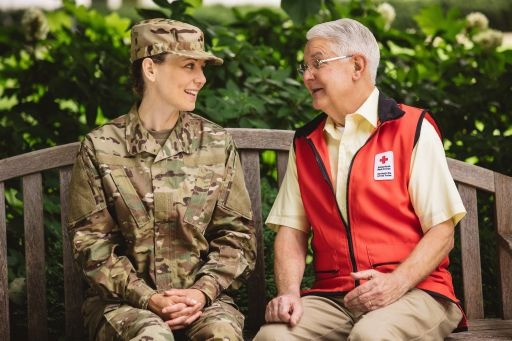
Assisting members of the armed forces, veterans, and their families has been a core tenet of the American Red Cross since its founding. In honoring Veterans Day, November 11th, we wish to highlight our Services to the Armed Forces (SAF) programs. To help do so, I spoke with Nasir Ahmad, Program Specialist with the Red Cross’s SAF & International Services. He is also a US Air Force veteran.
Regional COO Tim O’Toole (left) with Nasir Ahmad (right) after Nasir returned from his six-month deployment in Iraq.
Nasir, who returned from a six-month Iraq deployment earlier this year, has continued the Red Cross mission here in Northern Ohio. Nasir stressed the need for flexibility of adjusting to changes, something he and other military families know well. Nasir said, “When coming back, there are a lot of changes, personally and professionally. You can’t pick up where you left off and not expect things to be different. You have to roll with it, be resilient, and fit back into life, both you and your family. Within a month or so, I was back in a new groove, and I think my military experience helped with that.”
In Bagdad, Nasir and other members of his Red Cross team mainly assisted deployed service members, many of whom were in their early 20s, experiencing their first or second deployment, which reminded Nasir of his experiences as a young service member. Others were at a different stage, sometimes winding down their time in the military. Nasir and his team were there for them, whether they needed a Red Cross service or someone to listen.
“There’s no rank with Red Cross,” Nasir said, “So they can talk more freely. Conversations often go from funny to somber and serious then back to silliness. When it comes to melancholy, they need support. It is wonderful being one of those to make sure they’re okay.” Nasir also said deployments can be especially challenging during the holidays, and everyone responds differently.
“Making sure they’re okay” is an important part of Nasir’s work back home in Northern Ohio, too. “We’re helping people in a different capacity,” Nasir said, “but it’s still very much needed.” Services include Coffee Cart programs near VA hospitals and centers, Family Days, and Yellow Ribbon programs, among others.
This flexibility, humanity, and responsiveness are key to the Red Cross. I asked Nasir what issues are currently most pressing for SAF. A major one is helping ensure military members and their families maintain access to food and necessary services.
International Services is another aspect of Nasir’s role in the Red Cross, which includes the Restoring Family Links program. This service is open to all families who are separated internationally by war, disaster, migration, and other humanitarian crises. With the number of conflicts and crises throughout the world, and the toll they are taking on families, it is desperately needed, and Nasir spoke of how proud he is to help reunite families.
Nasir will help honor Veterans Day by taking part in the parade and festivities in downtown Cleveland. He and other Red Cross members will be at a table at Tower City. Stop by and say hello.
When’s the last time you got to see an honest-to-goodness hero up close and personal? I did recently –eight of them, in fact – plus a bonus humanitarian.
The American Red Cross of North Central Ohio hosted an event featuring video interviews of these men and women recounting episodes that suddenly put them in lifesaving situations.
And then there they were, in person. Some of them trained responders, some of them just like you and me, bystanders who reacted to prevent what could have been tragedy: fire, heart attack, blood shortage, attempted suicide, gunshot and more.
What a privilege it was to applaud these folks and to realize that none of us knows when we might be in a similar situation.
The harrowing story of how three women helped several developmentally disabled adults to safetyin the aftermath of a road rage shooting:
While at the Findlay Art Walk, Mike Woodruff and Officer Nicholas Price stepped in to help when an attendee had a cardiac emergency:
Melissa Roszman shares how she helped an elderly resident escape a fire and went back to extinguish the flames:
Police officer Christofer Perry shares how he intervened to help a man suffering a mental health crisis:
Columbiana Township Fire Chief Ray Anthony hosts regular blood drives that have impacted his community for years and helped save many lives:
I was pleased to see my Red Cross chapter award its first-ever Clara Ayers Award, named for a Red Cross volunteer nurse from Seneca County who lost her life on the way to the battle fields of Europe during World War I.
Retired nurse Pam Oglesbee couldn’t sit home while the Putnam County Board of Health struggled to get folks vaccinated against COVID-19, so she volunteered to schedule and give vaccines at clinics across her rural county. She continues to help with flu shot clinics, teaches CPR and donates blood. A genuine humanitarian:
Heroes are all around us, without capes and crowns. The Red Cross wants to spotlight those folks, wherever they are in northern Ohio, because it’s our mission to alleviate human suffering by mobilizing the power of volunteers. If you’d like to nominate a hero, click here.
By Jill Patterson, senior regional philanthropy officer, Tiffany Circle division lead
Earlier this month, the Barrington Country Club in Aurora was filled with warmth, inspiration, and the unmistakable energy of women coming together to create lasting change. The first-ever American Red Cross Women in Philanthropy event, Autumn Elegance Women’s Forum, was more than just an evening gathering. It was a celebration of connection, purpose, and the collective strength of women united by a mission that matters.
The event was hosted by members of the Red Cross of Northern Ohio Tiffany Circle and is part of the organization’s Women in Philanthropy initiative. This elegant forum brought together a dynamic community of women leaders and changemakers to celebrate the transformative power of giving and the profound impact of women in philanthropy. The event welcomed an extraordinary mix of Tiffany Circle members, major donors, business leaders and passionate supporters, all committed to advancing the mission of the Red Cross. Laurie Laidlaw Deacon, Red Cross of Northern Ohio Tiffany Circle chair, led us through the evening as guests were treated to heartfelt stories, meaningful conversations and a renewed sense of purpose.
Debra Haufler, executive director of strategic planning, real estate services for the Red Cross shared a deeply moving mission moment, recounting her daughter’s journey with leukemia and the critical role Red Cross blood played in her treatment. Her story reminded everyone of the lifesaving impact behind every donation.
Anne McKeough, Red Cross chief development officer, introduced the Women in Philanthropy initiative, emphasizing its importance in empowering women to lead, influence, and champion change through strategic giving and community engagement.
Co-chair of the Red Cross Tiffany Circle National council Marilyn McClure-Demers closed the evening with a powerful call to action, inviting each guest to join us on this journey—to lend their voice, their passion and their leadership to a cause that touches lives every day.
The evening was a testament to what happens when women come together with intention. We left feeling inspired, connected, and more deeply committed to building a future shaped by compassion, generosity, and purpose.
From heartfelt conversations to powerful reflections, the event reminded us of the impact we can make when we lead with compassion and purpose. It marked the beginning of a journey—one where women’s voices, leadership, and generosity shape the future of philanthropy.
Thank you to everyone who joined us. Your presence, passion, and belief in our mission made this night unforgettable.
To see more photos from the Autumn Elegance Women’s Forum, tap here.










 NOHredcross