What is the International Red Cross and Red Crescent Movement

By Sharon Nicastro, American Red Cross volunteer

The largest and one of the oldest humanitarian organizations in the world began with the vision of one man.
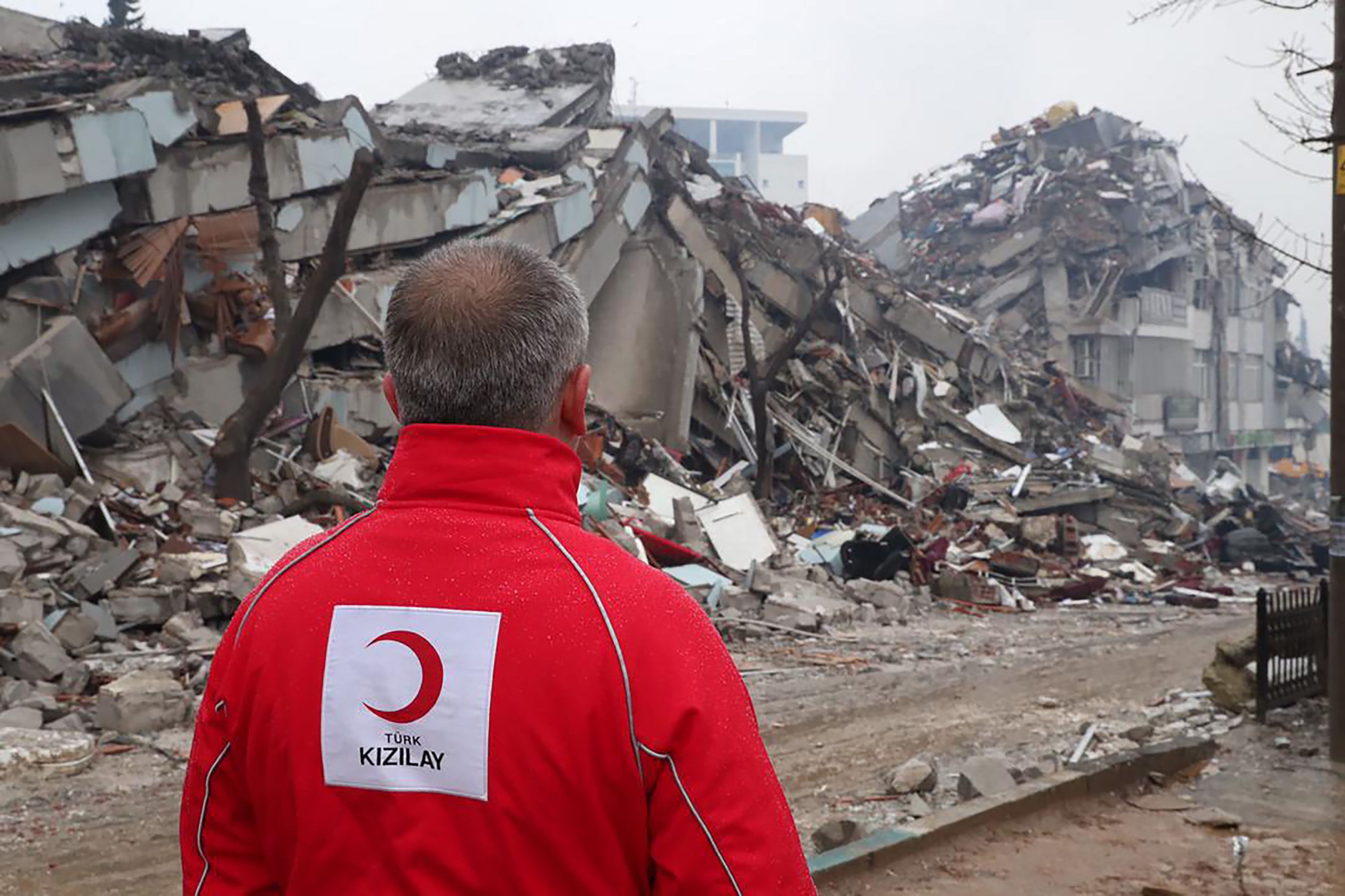

February 11, 2023. Türkiye.
Following the devastating earthquake that stroke Turkey and Syria on 6 Feb 2023, Turkish Red Crescent has deployed more than 4,000 staff and volunteers to respond to the urgent needs of the affected people.
Photo by Turkish Red Crescent

Jean-Henri “Henri” Dunant was a Swiss businessman who was traveling through Italy to secure land and water and concessions from Napoleon III when he came across the aftermath of the Battle of Solferino during the Second War for Italian Independence.  He saw the battlefield covered with men dying for lack of medical care.  He rallied the women from surrounding villages, and they transported the men to the cathedral at Castiglione.  Their motto was “tutti fratelli” (all brothers) as they cared for the men without consideration for the side they fought on.

In A Memory of Solferino, Dunant wrote, “Would it not be possible, in time of peace and quiet, to form relief societies for the purpose of having care given to the wounded in wartime by zealous, devoted and thoroughly qualified volunteers?”  Gustave Moynier, the Chairman of the Geneva Public Welfare Society, pursued the idea by forming a committee of five men.  The International Committee for Relief to the wounded was born and soon became the International Committee of the Red Cross (ICRC).

The ICRC convened a conference of European governments in Geneva, Switzerland, to study ways that volunteers from national societies could assist military medical services.  The volunteers wore an emblem to distinguish them from ordinary civilians.  A red cross on a white background, the reverse of the Swiss flag, was selected as the emblem (the Red Crescent and Red Crystal were added later).  The original Geneva Convention resulted from the conference and went into effect in 1863 after receiving the approval of twelve European nations.  The Convention had ten articles, which all pertained to relief for the wounded. Today there are four Geneva Conventions with hundreds of articles that protect soldiers, sailors, prisoners of war, and civilians during armed conflicts.
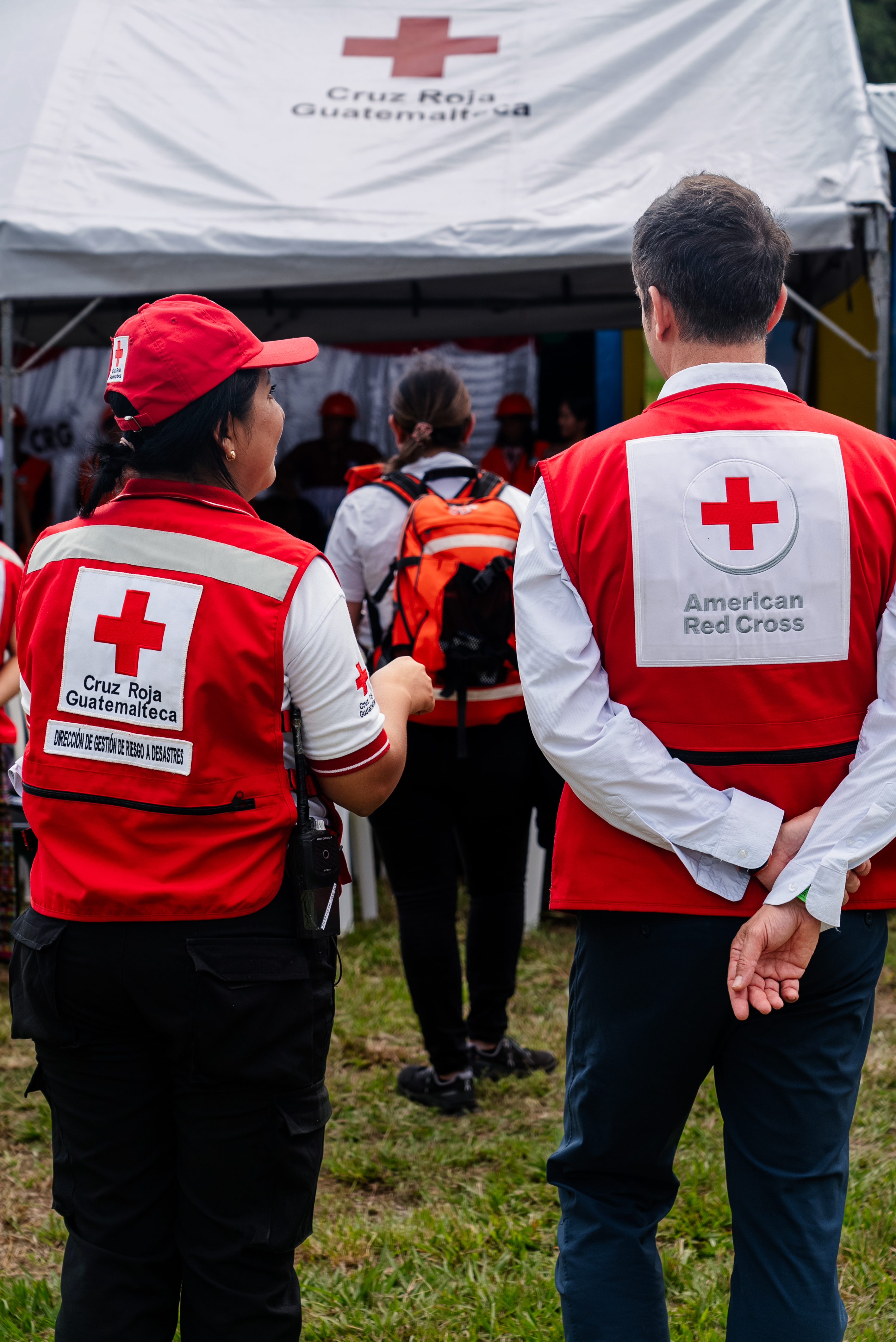
October 25, 2024. Chumixquin, Quiche, Guatemala. Students, school leadership and the women-led Local Coordinators for Disaster Risk Reduction (COLRED) team in Chumixquin present a cultural activity and conduct an emergency drill, in coordination with the Red Cross. Guatemala Red Cross teams are working to improve the preparedness capacity of vulnerable communities located in high-risk disaster areas with cost-effective approaches. Over the past two years, together with the school district and community leaders in Chumixquin, they have created response and evacuation plans, gained a better understanding of external resources available during and after disasters, and identified tools to improve the community’s response efficiency, such as early warning systems and communication plans. Around the globe, the American Red Cross is working together with local Red Cross and Red Crescent societies to foster a culture of preparedness that reduces vulnerability to disasters, inspires resilience, and carries the promise of reducing both disaster costs and human suffering. By supporting national society partners through technical expertise and funding for projects they identify as crucial to serving their most vulnerable communities, the Red Cross is helping to build safer, healthier and more resilient communities worldwide. Photo by Marquis Powell/American Red Cross

Two other branches of service have been added to the International Committee of the Red Cross.  The first of the National Societies that Dunant proposed in his vision was Wűrttemberg (now Germany) in 1863.  Today almost every country in the world has a national society.  The American Red Cross was started in 1881 after nearly twenty years of lobbying by Clara Barton.

The third branch of the movement was proposed by American Henry Davison, President of the American Red Cross War Committee, after World War I.  He suggested that volunteers who acquired expertise and experience during wartime could help people during peacetime disasters and public health emergencies. The International Federation of Red Cross and Red Crescent Societies (IFRC) was born in 1919 in Paris to coordinate the efforts of the National Societies.

Today, the American Red Cross and other National Societies around the world continue the work of Henri Dunant by educating the American public about International Humanitarian Law, the rules that seek to keep humanity in war.  Please contact Sharon.Nicastro2@redcross.org for more information.
In Northeast Ohio, and everywhere, Red Cross committed to helping anyone in need

By Tim Poe, American Red Cross Volunteer

September 18, 2019- In light of reports over the last few months that some may be reluctant to seek help following a disaster or tragic event, we would like to reiterate that, “The Red Cross is committed to delivering help to anyone in need—regardless of race, religion, gender, sexual orientation or citizenship status—and to remain a neutral and impartial party, so we can access and help people on all sides,” as stated in this national press release.

The American Red Cross works to ensure that all people affected by disasters receive care, shelter and hope.

american20red_1539353655751.jpg_58765830_ver1.0


Our commitment to assisting all those in need is reflected daily in Northeast Ohio. Whether a home fire, flood, tornado, storm or other disaster, our teams respond. We do not ask about a person’s beliefs, orientation or citizenship—and we maintain confidentiality.

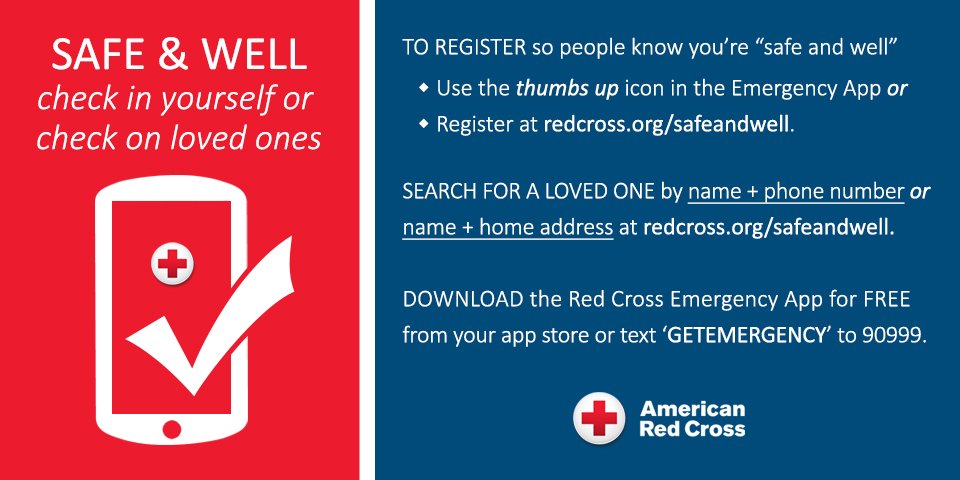
Following a large event, an important resource is the Safe and Well website at https://safeandwell.communityos.org/cms/index.php, in Spanish at https://safeandwell-es.communityos.org/cms/index.php. Following a disaster, those impacted can use the site to mark themselves “safe and well,” provide details and post a brief message, allowing loved ones to search for them.

Cox’s Bazar, Bangladesh – Migration/Refugee Crisis 2019

In addition, the Red Cross has a number of programs to assist migrants, asylum seekers and refugees. These include disaster relief, aid and an international service to reconnect families. An overview of programs is available at: https://www.redcross.org/about-us/news-and-events/news/how-does-the-american-red-cross-help-migrants.html.

In Northeast Ohio, those seeking assistance or information can contact their local chapter. Phone numbers and addresses are available at: https://www.redcross.org/local/ohio/northeast.html. A national Spanish-language site is available at: https://www.redcross.org/cruz-roja.html.

Cox’s Bazar, Bangladesh – Migration/Refugee Crisis 2019

In times of need, please remember that anyone can call on us for assistance. The Red Cross is guided by seven fundamental principles of humanity, impartiality, neutrality, independence, voluntary service, unity and universality. Our mission statement and values can be found at: https://www.redcross.org/about-us/who-we-are/mission-and-values.html.

Edited by Glenda Bogar, American Red Cross Volunteer

Red Cross providing food, shelter along East Coast for residents fleeing Dorian

Also committing an initial $2M to help Bahamas
Bahamas Situation Dire, Damage Hampering Relief Efforts;
Blood Donors Outside Storm Area Asked to Give

September 6, 2019- The American Red Cross has mounted a major response to help people in Hurricane Dorian’s destructive path.

An initial $2 million has been committed to assist in meeting the immediate needs of those affected by Hurricane Dorian in the Bahamas, while continuing to provide shelter and food to thousands of people in the United States.

The storm left unbelievable devastation behind in the Bahamas. Abaco and Grand Bahama were particularly hard hit. Initial aerial assessments show widespread devastation to the islands, from destroyed homes to contaminated water sources.

janelle (2)

Jenelle Eli, director, International Communications for the American Red Cross, has deployed to the area and reports the situation is dire, especially on Abaco. Video footage of Abaco shows total obliteration of portions of the island and large areas completely covered by water. Thousands are in need of food and water.

“Our relief operation is growing, but we are also facing serious challenges in terms of delivering aid,” Eli reports. “These challenges include damaged airports and destroyed telecommunications networks. Even search-and-rescue choppers haven’t been able to reach some people because there’s no place to land. These challenges are affecting everyone.”

A rapid assessment and response team is currently focusing on emergency shelter and urgent needs. Relief supplies to support temporary shelter needs of 1,500 families are in country. Red Cross shelter and other sector specialists are on the ground to provide immediate relief while conducting assessments, and search and rescues is a current priority while the full scope and scale of needs is still being determined. Red Cross volunteers and staff will also distribute meals and food rations to people who may have gone without food in days.

Eli, a native of Northeast Ohio,  continued, “People I spoke to on Abaco today told some pretty horrific stories. Every person I spoke to lost their home. They each had a story about trying to hold their roofs down in the high winds and then running from neighbor’s home to neighbor’s home seeking safety. But each home they sought shelter in got destroyed too. They said that the most damaged areas are decimated.”

Eli reported those she spoke with all echoed this sentiment: “How am I going to start over? This is going to be so hard.” Many of them didn’t know the fate of their loved ones. And they worry that their family members fear them dead since they haven’t been in touch. See more in this video.

The International Federation of the Red Cross has announced an emergency appeal for $3.2 million to support the Bahamas Red Cross as it responds to the storm.

Hurricane Dorian 2019

September 5, 2019. Jacksonville, Florida. American Red Cross nurse Jana Cearlock coaxes hugs and smiles from 2-year old Karmin Nelson, a resident, along with her great-grandmother at the Legends Center evacuation shelter in Jacksonville, Florida.  Photo by Daniel Cima/American Red Cross

On Thursday night, more than 5,600 people stayed in 112 Red Cross and community evacuation shelters in Georgia, South Carolina, North Carolina and Virginia.  To date, the Red Cross and community organizations have provided nearly 37,000 cumulative overnight stays for Hurricane Dorian.

The Red Cross has mobilized more than 2,700 trained responders from all over the country, including 19 volunteers from Northeast Ohio, to assist in hurricane affected areas.

One of the Northeast Ohio disaster volunteers deployed to assist with Hurricane Dorian is Tom Quinn of Wadsworth.

Volunteers constitute 90 percent of the Red Cross workforce. Volunteers make it possible to respond to an average of more than 62,000 disasters every year, most of them home fires. Disaster services volunteers provide food, shelter, comfort and care for families affected by major disasters such as fire, hurricanes and tornadoes.

While deployed to Florida, Tom assisted at an emergency evacuation shelter at Evans High School in Orlando, FL. One day, Tom selflessly took it upon himself to play with and entertain children living in the shelter to help give them a sense of normalcy during the difficult moment.

Volunteer mental health and health services professionals have also provided more than 10,000 contacts to provide support and care to people affected by Hurricane Dorian.

Along with partners and community organizations, the Red Cross has served more than 85,000 meals and snacks.

In advance of Dorian, the Red Cross has also deployed 110 emergency response vehicles (ERVs), including two ERVs from Northeast Ohio, and 104 tractor trailers loaded full of relief supplies, including cots, blankets and 63,000 ready-to-eat meals to help people in the path of Hurricane Dorian.

LOOKING FOR A LOVED ONE?

People concerned about US Citizens traveling in Bahamas should contact the US State Department Office of Overseas Citizens Services at 1-888-407-4747.

HOW YOU CAN HELP

You can make a difference in the lives of people impacted by Hurricane Dorian in both the U.S. and the Bahamas. Visit redcross.org, call 1-800-RED CROSS, or text the word DORIAN to 90999 to make a $10 donation. Donations enable the Red Cross to prepare for, respond to and help people recover from this disaster. In the U.S., this includes providing food, shelter, relief supplies, emotional support, recovery planning and other assistance.

PLEASE GIVE BLOOD

Hurricane Dorian has forced the cancellation of approximately 70 Red Cross blood drives and donation centers in Georgia, South Carolina, North Carolina and Virginia resulting in more than 1,800 uncollected blood and platelet donations. We urge eligible individuals in unaffected areas to give blood or platelets to ensure a sufficient blood supply for patients. The Red Cross currently has an urgent need for blood donations following a summer shortage. In addition to cancelled blood drives, we anticipate low blood donor turnout in and around affected areas due to poor weather conditions this week. Schedule an appointment today by using the Red Cross Blood Donor App, visiting redcrossblood.org or calling 1-800-RED CROSS (1-800-733-2767).

Hyland workers join humanitarian effort by mapping remote African community

Employees work with the local Red Cross on the Missing Maps project

By Jim McIntyre, American Red Cross

July 15, 2019 – Many of us take maps for granted. Nearly every corner of the United States can be found on a map.

Not so for many of the world’s most remote communities. And that can be a big problem when disaster strikes, or a large-scale epidemic or pandemic breaks out. Imagine the difficulty of reaching people affected by a natural disaster or illness when the one paved road leading to their village has been destroyed and no alternate, unpaved roads are shown on any maps.

The Missing Maps project is an effort being undertaken by the American Red Cross, the International Federation of Red Cross and Red Crescent Societies, and many other non-governmental organizations to map the world’s most remote communities. With the help of mapping volunteers, more than 40 million vulnerable people have been put on a map. The hope is to raise that number to 200 million people by the year 2021.

The project got a boost recently from employees at Hyland in Westlake, Ohio. About two dozen workers gathered in a room in the basement of their sprawling campus on a Friday afternoon in July to help map a remote area of Kenya.

Hyland workers mapping a remote area of Kenya

“This activity has real humanitarian value,” said Carolyn Wild, the Red Cross regional philanthropy officer who led the session. “I think the Hyland workers recognize that and totally immersed themselves into the project.”

Other Red Cross staff members assisted in facilitating the project as well, including regional philanthropy officer Jill Patterson, development specialist Staci Thomson, and lead grants specialist Ben Bisbee.

“The Hyland folks are really pumped for the next event,” said Ben. “Some even whispered about wanting to take a team visit to the African community they were mapping for.”

Red Cross workers help facilitate Mapathon at Hyland on July 12, 2019.  From top left:
Staci Thomson, Ben Bisbee, Jill Patterson, Carolyn Wild

“We are excited about helping the people of this remote area in Kenya by mapping their village,” said Tracy Petrakis, community engagement manager at Hyland. “The Mapathon was an important part of Hyland’s Summer of Service, and we’re happy to partner with the Red Cross.”

In all, nearly 3,700 buildings in Bomet County, Kenya, were mapped by the Hyland employees.  See more photos from the Hyland Mapathon here.

If you are interested in hosting a mapping session with your company or group, send the request to contactneo@redcross.org.

Edited by Glenda Bogar, American Red Cross Volunteer