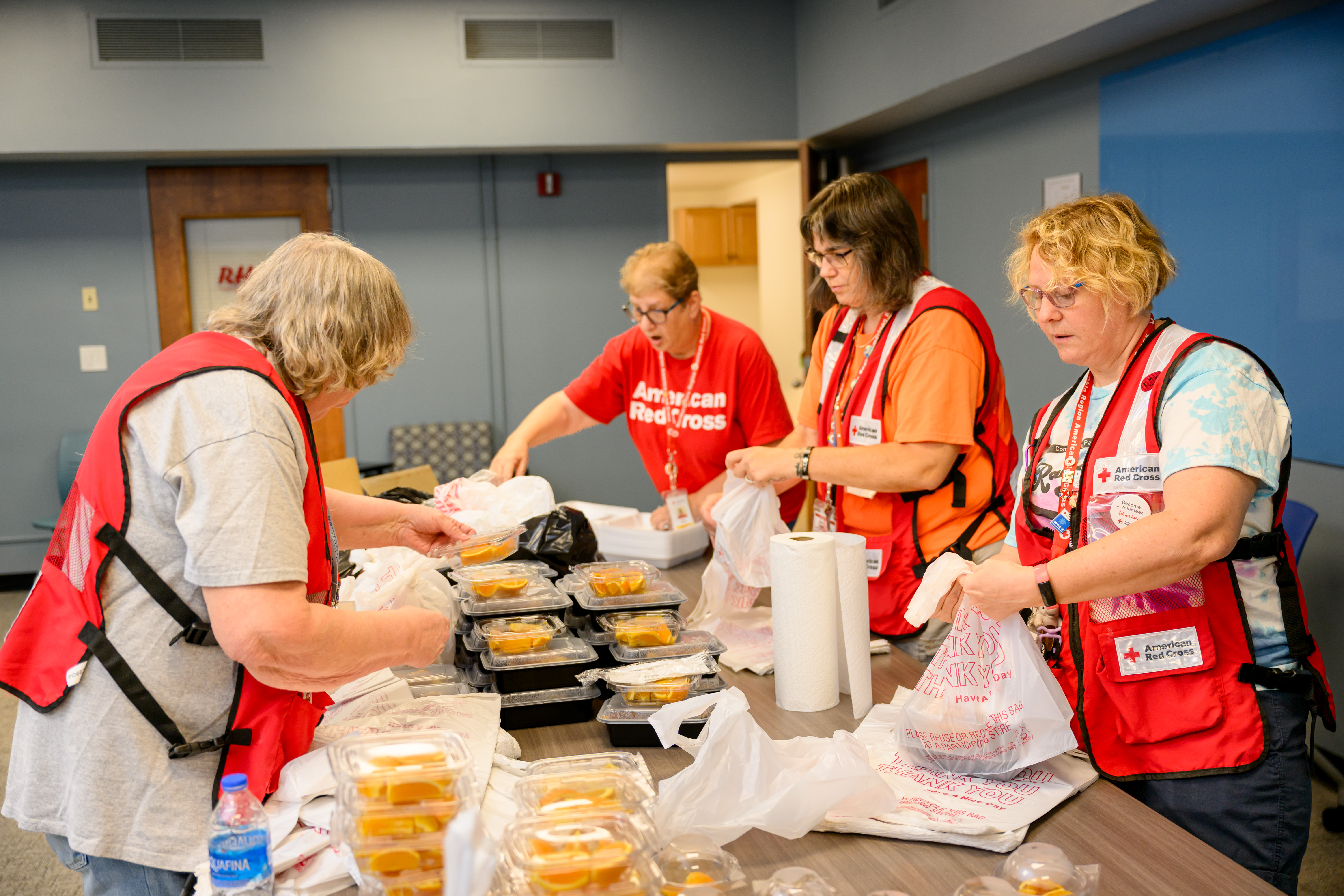
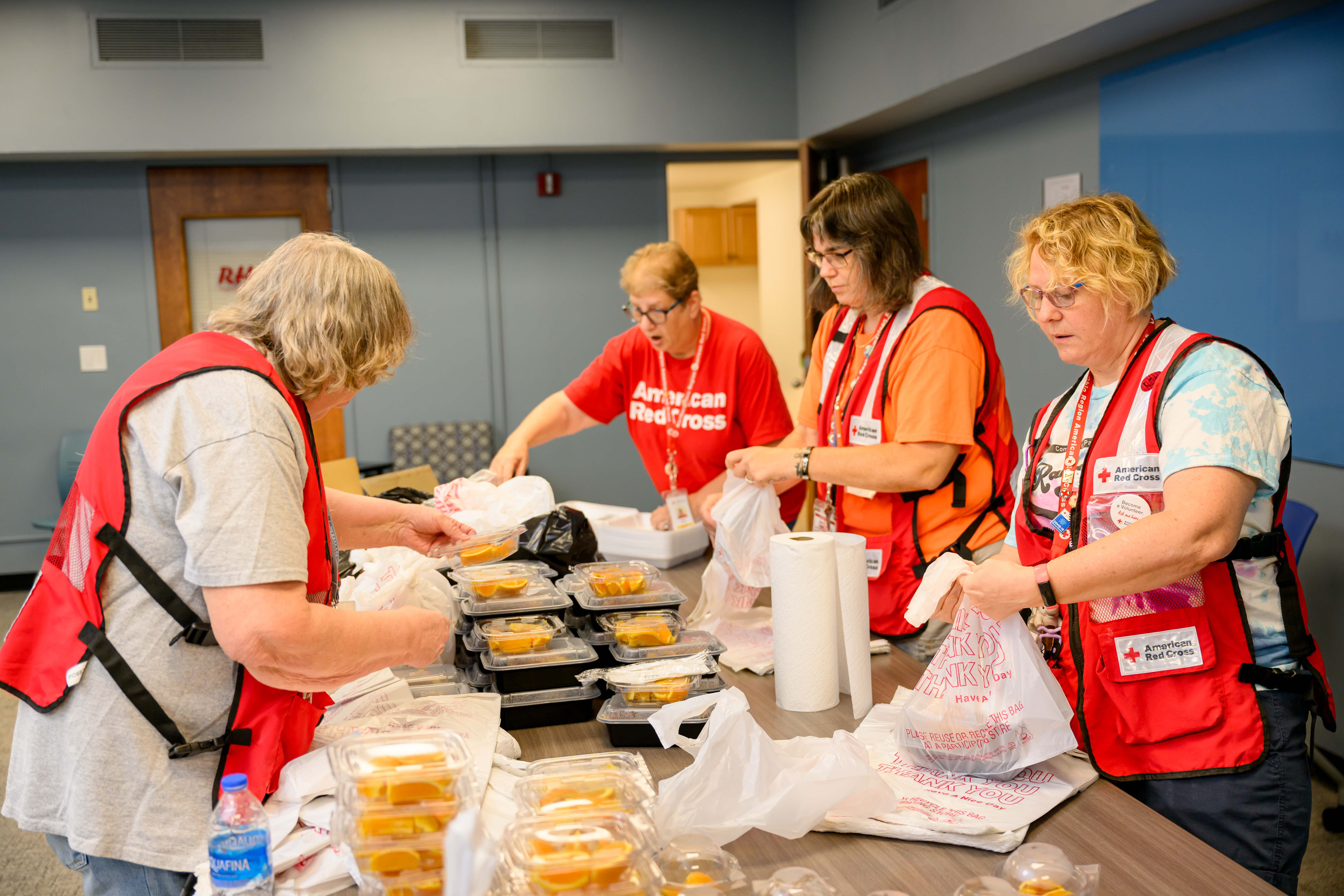
2023 trends: Red Cross responds to growing disaster-driven humanitarian needs

Donate on GivingTuesday or give blood during the holidays to help for future crises

Randy Liang and Monica Bunner, volunteers from Greater Akron and the Mahoning Valley responded to wildfires in Hawaii

In 2023, extreme disasters took a devastating toll on people in the U.S. who turned to the American Red Cross for help coping with a record number of billion-dollar disasters.

So far this year, an all-time high of 25 separate billion-dollar disasters ravaged communities across the country, and more than 170 disaster workers from the Northern Ohio Region responded. They deployed to help people affected by extreme weather disasters such as:
 January tornadoes in Georgia, Alabama and Mississippi
 Flooding caused by an atmospheric river in California in March
 April flooding in Florida
 Tornadoes in Missouri and Arkansas in April
 Typhoon Mawar in Guam in May
 Catastrophic flooding in Vermont in July
 Southern California flooding in the wake of Tropical Storm Hillary in August
 Wildfires fueled by prolonged drought conditions in Hawaii in August
 Hurricane Idalia in Florida in August
 Hurricane Lee in New England in September

Red Cross volunteer Jeff Mann of Heartland, Stark and Muskingum Lakes deployed to Guam in response to Typhoon Mawar in May

Volunteers from Northern Ohio also responded to disasters in our own communities, including:
 The train derailment and chemical burn in East Palestine in February
 The largest shelter operation in Northern Ohio since 2004 following an apartment fire in East Cleveland
 August flooding in several north central Ohio counties
 Multi-family fires in Akron, Uhrichsville, and Maumee

Robert Gee, a resident of East Palestine, stayed in a Red Cross shelter after a train derailment there in February

In addition, families sweltered in the nation’s hottest summer on record. And back-to-back disasters led to a series of blood drive cancellations, which further strained the national Red Cross blood supply that was already dwindling from summer travel and back-to-school activities.

“Increasing extreme disasters are causing more humanitarian needs for families in Northern Ohio and across the country,” Mike Parks, Regional CEO of the Red Cross of Northern Ohio, said. “This holiday season, please remember those who need support in the face of emergencies — and join us to provide care and comfort by making a financial donation or by giving blood or platelets.”

Help on GivingTuesday and during the holidays by visiting redcross.org to make a financial donation or an appointment to give blood or platelets. Individuals can also register for volunteer opportunities.

 Volunteers from Northeast Ohio helped feed and shelter more than 130 residents for six nights after fire forced them to flee their apartment building in East Cleveland

RESPONDING TO ADDITIONAL EMERGING NEEDS Beyond extreme disasters, people stepped up through the Red Cross to address other emerging needs for communities, including:
BLOOD DONATIONS: As the nation’s largest blood supplier, the Red Cross is grateful for the millions of donors who rolled up a sleeve throughout the year for patients in need. To further improve people’s health outcomes, the Red Cross has been working with community partners to introduce blood donation to a new and more diverse generation of blood donors — which is critical to ensuring that a reliable blood supply is available to the 1 in 7 hospital patients who need a lifesaving blood transfusion.
LIFESAVING TRAINING: This year, the Red Cross expanded its training to empower people to act during current-day crises — which is vital considering that nearly half of U.S. adults report being unprepared to respond to a medical emergency. This included launching the new “Until Help Arrives” online training course last spring for opioid overdoses, severe bleeding, cardiac arrest and choking emergencies, and partnering with professional sports leagues through the Smart Heart Sports Coalition to help prevent tragedies among student athletes by offering CPR training and increasing access to AEDs.
MILITARY FAMILIES: Red Cross workers helped service members on U.S. military installations and deployment sites worldwide — including in Europe, the Middle East and Southeast Asia. As part of our support this year, Red Cross volunteers delivered emergency communications messages connecting more than 87,000 service members with their loved ones during times of family need, while also engaging members in morale and wellness activities during deployments.
INTERNATIONAL: As part of the world’s largest humanitarian network, the American Red Cross supported international response efforts to disasters such as this year’s massive earthquakes in Türkiye and Syria, the drought and hunger crisis in Africa, and flooding in Pakistan and Bangladesh. This has included providing millions in cash assistance, food, shelter, basic supplies, medical care and mental health services. As devastating conflicts persist in other areas of the world, the global Red Cross Movement continues to provide aid for people suffering, including those in Ukraine and in Israel and Gaza, as part of its neutral, humanitarian mission.

Visit https://www.redcross.org/local/ohio/northern-ohio/ways-to-donate/local-giving.html for more information about how the Red Cross helped people throughout the Northern Ohio Region in 2023.

About Our Regional Holiday Supporters: 
The Red Cross is grateful for corporate partners who contribute to our Holiday Campaign. They include Westfield. Thanks to their generosity and that of other supporters, the Red Cross is able to bring help and hope to people in need.

Posted by Ryan Lang, Red Cross board member and volunteer

7 Tips To Keep Your Holiday Season Safe, Merry and Bright

By Sam Pudelski, Red Cross volunteer

The holiday season is upon us and for some, decorations are already trimming their homes. While December is known as the most wonderful time of the year, it’s also the peak time for home fires. 

The American Red Cross has put together some simple safety tips to help protect your home and family.

  • Opt for battery-operated candles. If you do use candles, never leave burning candles unattended and keep them away from anything that can burn. Make sure to keep candles out of reach of children and pets.
  • Inspect all holiday light cords to make sure they aren’t broken or frayed. Avoid stringing too many strands of lights together. You should not have more than three light strings per extension cord.
  • Make sure all outdoor decorations are made for outdoor use. Fasten lights securely to your home, trees and bushes. If you’re using any metal fasteners, like hooks or nails, make sure they are insulated to help prevent electrocution or fire hazard.
  • If you have an artificial tree or garland, check for a fire-resistant label. Keep them away from fireplaces, radiators and other sources of heat. Never use electric lights on metallic trees.
  • If you plan to get a live tree, test its needles to make sure it is fresh. Bend the needles on the tree up and down to make sure no needles fall off. Make sure to water the tree regularly to prevent it from drying out.
  • Don’t hang stockings or decorations on the mantel if you plan to light the fireplace.
  • Install smoke alarms on every level of your home and outside each sleeping area. Test your alarms once a month and replace the batteries at least once per year. Additionally, you should practice your two-minute fire safety plan with everyone in your household.

If you cannot afford smoke alarms or aren’t physically able to install one, the Red Cross may be able to help. You can request a smoke alarm from the Northern Ohio Region of the Red Cross here.

Protecting what matters most in Northern Ohio

October 8 – 14 is National Fire Prevention Week

By Doug Bardwell, American Red Cross volunteer

Unless you live near a fire station, you might be surprised by how many fires occur in
Northern Ohio. Where we live in Strongsville, you can usually detect that single
siren driving down Royalton Road as an EMS ambulance. But, if you hear multiple
sirens and the sound of large diesel engines, you know the entire squad is responding
to yet another fire – and they are usually home fires.

The Red Cross works with local fire departments to help prevent home fires

The most common home fires are caused by cooking. Every year, firefighters respond
to more than 170,000 kitchen fires, causing hundreds of deaths, thousands of injuries
and more than $1 billion in damages each year.

Since 2015, would you believe the American Red Cross in Northern Ohio has
responded to more than 11,000 home fires, and assisted nearly 17,000 families?
Despite insurance or Red Cross financial assistance, think of the inconvenience of
being displaced for weeks or months before your home is habitable again after a fire.

Damage caused by fire to a home in East Cleveland in 2022

There’s a better way

Following these simple tips, you and your family can help prevent kitchen fires:

  1. Use a timer to remind yourself that the stove or oven is on.
  2. Keep anything that can catch fire — potholders, oven mitts, wooden utensils,
    paper or plastic bags, food packaging, towels or curtains — away from your
    stove, oven or any other appliance in the kitchen that generates heat.
  3. Always check the kitchen before going to bed or leaving the home to make
    sure all stoves, ovens, and small appliances are turned off.
  4. Install a smoke alarm near your kitchen, on each level of your home, near
    sleeping areas, and inside and outside bedrooms if you sleep with doors closed. Use the test button to check it each month. Replace all batteries at least once a year if your smoke alarm requires it.
  5. Tap here for another half dozen sensible tips to avoid kitchen fires.
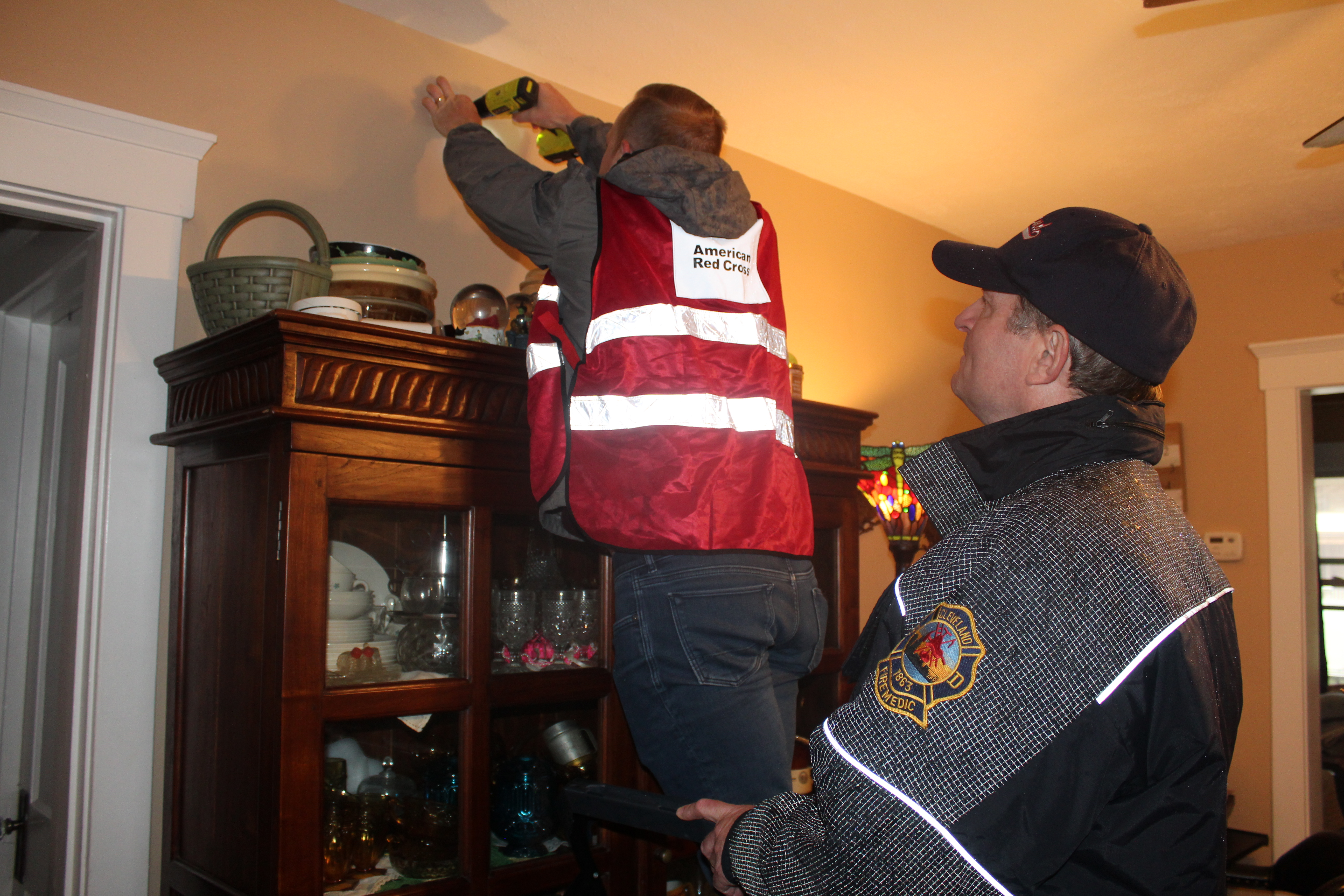
A Red Cross volunteer installs a smoke alarm in a home in Cleveland, with guidance from a firefighter

Smoke alarms are crucial in saving lives

The Northern Ohio region of Red Cross has been installing free smoke alarms for those who need them since 1992. To date, more than 200,000 alarms have been
installed.

Nationally, the Red Cross and partners, through the Home Fire Campaign, have installed 2.6 million alarms in more than 1.1 million households since 2014.

Do they really make that much difference?

Verifiably – yes, they do. As of August 31, 1,928 lives nationwide were documented as
saved due to work done by the Red Cross and partners through the Home Fire
Campaign.

For five more ways you can help the Red Cross continue this valuable practice in Northern Ohio communities, tap here.

If you’d like trained Red Cross volunteers to offer you valuable home fire safety
information to help YOU prevent a fire in your home – and/or to install smoke alarms in
your home, tap here.

Posted by Ryan Lang, Red Cross board member and volunteer

A Hispanic Heritage Month profile: HOLA Ohio partners with Red Cross to assist Hispanic community

By Tim Poe, American Red Cross volunteer

A few years ago, as a member of the American Red Cross’ Disaster Action Team, I responded to a large apartment fire in Painesville. While working with first responders, other Red Cross members and the affected families, many of whom primarily spoke Spanish, two representatives from HOLA Ohio arrived to help, especially with translation.

Since that time, HOLA Ohio has been an important partner with the Red Cross in Northern Ohio. It has been an integral part of fire safety initiatives in Latino communities, as well as assisting Hispanic families impacted by home fires.

During Hispanic Heritage Month (September 15 to October 15), we are highlighting the Northern Ohio Red Cross’ partnership with HOLA Ohio and the importance of reaching the Latino community.

I spoke with Tom Revolinsky, disaster program manager for the Red Cross, Northeast Ohio region. He explained the importance of HOLA Ohio in reaching the Hispanic community, especially following disasters.

“HOLA and the Red Cross routinely partner to help those in the Hispanic community affected by home fires,” said Tim. “HOLA helps identify families in need, provides translation assistance, additional financial assistance and helps overcome cultural barriers.”

A Painesville-based charitable nonprofit, HOLA Ohio was founded in 1999 to provide programs and services to Hispanic workers, families and children. Its services have grown from serving Lake and Ashtabula counties to reaching most of Northern Ohio and beyond.

In May 2022, HOLA Ohio opened its new Hispanic Community Center in Painesville, which contains staff offices, classrooms, a commercial kitchen and meeting spaces. It recently hosted a Health and Wellness Fair at the center, which the Red Cross helped support. Free medical check-ups, health screenings and food were provided.

“HOLA is grateful for our ongoing partnership with the Red Cross to ensure Spanish-speaking people impacted by disasters are provided resources,” said Veronica Isabel Dahlberg, executive director of HOLA Ohio. “Whether a devastating fire or a dangerous power outage during a bitterly cold blizzard, we have seen the Red Cross respond quickly to assist our community. We admire their commitment and dedication.”

The need for the types of assistance HOLA Ohio and the Red Cross provide is growing. According to the Ohio Department of Development and UCLA Latino Policy and Politics Institute, the Latino population in Ohio grew by 112% between 2000 and 2020 to over 505,000, which is 4.2% of the state’s population.

Additionally, the need for Red Cross services is dramatically increasing. Nationally, the Red Cross is responding to nearly twice as many large disasters as it did a decade ago.

Volunteers are needed to help respond to these growing needs, including those fluent in Spanish. For more information, please visit this site.

The Red Cross’s website is available in English and Spanish.

Edited by Glenda Bogar, American Red Cross volunteer

An apprehensive volunteer turned regular blood donor: How Ashley Hopkins discovered just how special her blood is

By Ryan Lang, American Red Cross board member and volunteer

More than 20 years ago, if you’d asked Ashley Hopkins about donating blood, you may have gotten a cringe coupled with a shake of the head. While she’d grown up around blood donors and blood drives (her father was a firefighter, now fire captain), donating herself was never really an option.

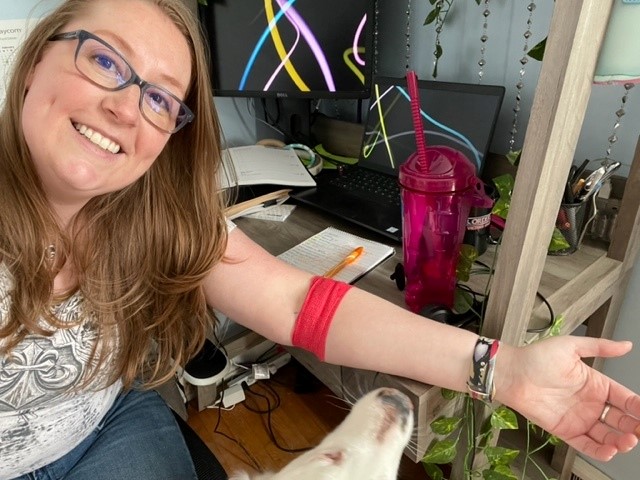
Ashley Hopkins, American Red Cross board member, volunteer and blood donor

“Back then I had a crazy fear of not even needles, but needles taking blood out — it just freaked me out so I never did it,” Ashley said. 

So how did someone with a healthy fear of the blood donation process wind up a volunteer for the American Red Cross Blood Services and a regular donor? 

“I went to volunteermatch.org and put in my zip code, and (blood services) came up as a flexible option with weekend availability.” So despite Ashley’s apprehensions, it was a perfect match, and as she’d soon find out, even more perfect than she’d initially thought. 

Ashley started out working weekend blood drives. “I did a background check and then shadowed someone for a couple of blood drives and then I was on my own,” she said, noting that back in 2012 things were “a little bit different.” 

At one of those blood drives at the Canfield fair (Ashley’s favorite blood drive), she was working a few days in a row with one specific blood rep who asked her why she’d never donated before.

“I don’t know, it just seemed kinda scary,” Ashley replied. But that same day she decided to roll up her sleeve and donate — on the bus at the fair, which Ashley highly recommends. “It is heaven,” she advocated. 

When you donate blood, the Red Cross tests your blood. And that’s when Ashley found out how special hers was. “I did not know that they were testing for a specific allele (genetic information present in your DNA) in your blood that is an antibody.” After donating Ashley got an email saying that her blood was CMV negative, which is quite rare. 

Red Cross board member and volunteer Lou Joseph with Ashley Hopkins
From RedCross.org: CMV is generally harmless to adults but can be fatal to babies. For this reason, babies needing transfusions as part of their medical care should only receive blood from donors who have not been exposed to CMV (CMV negative).

And being O-Positive, Ashley’s blood is even more special, as she’s compatible with roughly 80 percent of people who need blood! Even more of a reason for her to donate regularly — every 56 days, if she can. 

When asked what she’d say to someone who is apprehensive about donating for the first time, especially someone who is nervous or scared, Ashley simply said, “Volunteer at a blood drive!” She said seeing it happen and helping with the process helped her overcome her fear of not just needles, but the whole process.

To find a blood drive near you, CLICK HERE. To learn about volunteer opportunities with the Red Cross, CLICK HERE.

Edited by Glenda Bogar, American Red Cross volunteer

Club Red donates time, talent and treasure

By Eilene E. Guy, American Red Cross volunteer

Never underestimate the power of volunteers. The American Red Cross certainly doesn’t: Harnessing the willingness of volunteers and the generosity of supporters is what we’re all about.

Carol Schemmer

In Ottawa County, Club Red is a million-dollar example of that willingness and generosity. Club Red members focus on four “pillars” of service to the Red Cross: fundraising, support of the military, blood drives and education.

Carol Schemmer serves as the group’s commander, the same rank she held as a U.S. Navy nurse – although she hastens to say she doesn’t “command,” she just coordinates.

With a core of a couple of dozen women, she can call on as many as 60 “ad hoc” participants for specific events: staging fundraisers, packing “boxes from home” for service men and women at Christmas, manning blood drives, teaching citizen CPR and making homes safer with free smoke alarms.

“The Red Cross addresses so many needs,” Carol said. “For us, it comes down to ‘If we don’t do it, who will? If I don’t step up, who will?’”

Club Red began in Ottawa County when one woman, Cindy Amerine, was inspired to raise funds for the Red Cross in the wake of Hurricane Katrina. Her “Sherry and Chocolates” event evolved over the years, featuring home tours, galas and, more recently, a day-long golf and social event that raised more than $50,000!

That put the group’s tally “well north of a million dollars” since its first fundraiser in 2006, said Rachel Hepner, executive director of the Western Lake Erie Chapter of the Red Cross.

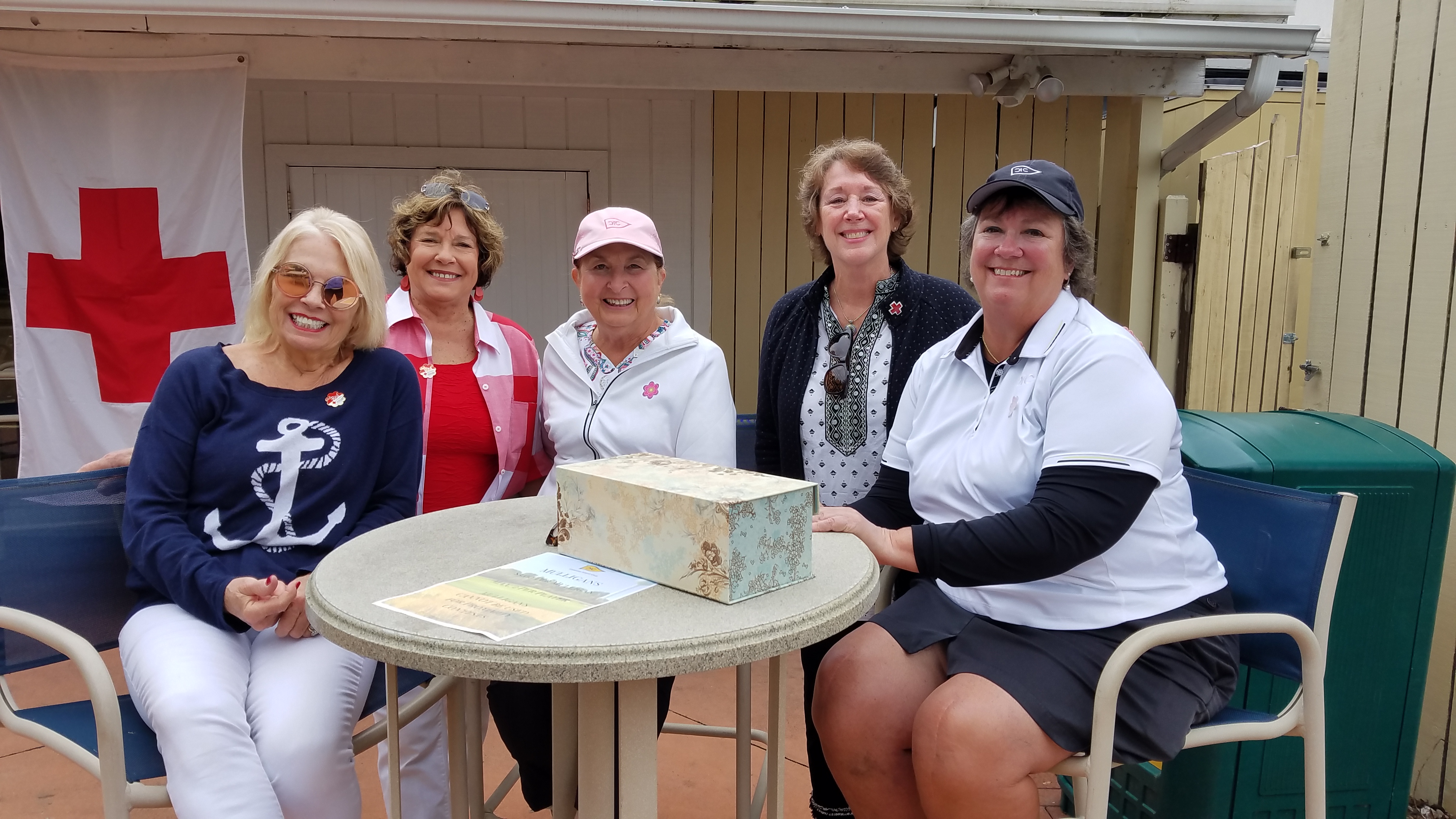
Club Red volunteers staff a registration table at a recent golf outing

“I can’t tell you how fortunate we are to have the support of these wonderful women, who give so generously of their time to these important activities,” Rachel said. “But it’s not just their time and their talents: It’s the influence they have on their community on behalf of the Red Cross.”

Carol said it’s easy to muster support. “People here know the Red Cross. We’re just a conduit for the generosity of the community that supports us.

“We’re connecting the community with the cause.”

If you’d like to get involved with Club Red of Ottawa County, Rachel Hepner at Rachel.hepner@redcross.org can put you in touch with this dynamic group. For volunteer opportunities with the Red Cross elsewhere, go to redcross.org/volunteer.

As Carol said, “If we don’t do it, who will?”

Edited by Glenda Bogar, American Red Cross volunteer

Posted by Ryan Lang, American Red Cross board member and volunteer

Apartment building residents placed in short-term housing

Red Cross sheltering operations cease after six days

Residents of the Terrace Towers apartments in East Cleveland have been relocated to other short-term housing options, and the shelter operated by the American Red Cross has closed.

Red Cross workers preparing meal distribution.  Photo credit: Cuyahoga County Multimedia

More than 130 residents took refuge in the shelter for six nights, after fire forced them to flee on Monday, July 3rd . They took refuge the first two nights at the Salvation Army East Cleveland Corps Community Center. On Wednesday, the shelter was transferred to a dormitory at Case Western Reserve University. The shelter closed on Sunday.

It was the largest sheltering operation in Northern Ohio since 2004.

 Tom Revolinsky, Red Cross disaster program manager, and Alfreda Scott, Terrace Towers resident.  Photo credit:  American Red Cross

“We made a lot of friends,” said Tom Revolinsky, Disaster Program Manager for the Red Cross of Northeast Ohio. “A lot of the residents were understandably upset when they were forced out of their homes on the night before the fourth of July, but by the time they left the shelter on Sunday, we were getting lots of hugs.”

During the six nights of shelter operations, the Red Cross provided:
 525 overnight shelter stays
 2,023 meals
 304 health services
 256 comfort kits (personal hygiene items)
 125 blankets
 Continuous emotional support

Officials with RHM Real Estate Group, the Terrace Towers property management firm, is providing alternative housing options for the residents while repairs to the apartment complex are being made.

“We’re grateful to Terrace Towers property management for working so diligently this week to find alternative lodging for their residents,” said Emily Probst, Regional Disaster Officer for the Red Cross of Northern Ohio. “And we thank the Salvation Army for providing space for the first two nights, and Case Western Reserve University for opening one of their dormitories to these residents.”

Emmanuel Grant, Terrace Towers resident.  Photo credit: American Red Cross

Emmanuel Grant, one of the residents of Terrace Towers who took refuge at the Red Cross shelter, said, “One thing I appreciate about the Red Cross; they follow scripture when it said to extend hospitality, caring for your neighbor. So these things have really been a blessing.”

Alfreda Scott, Terrace Towers resident. Photo credit: American Red Cross

“My experience, believe it or not, has been wonderful,” said shelter resident Alfreda Scott. “It’s just been like a nice community, and everyone’s been hugging and supporting each other, and it’s been wonderful.”

She said once her housing situation stabilizes, she plans to become a Red Cross volunteer.

“I made some new friends.”

You can hear more from Emmanuel and Alfreda in this video here.

See more photos here.

Red Cross and County Emergency Management workers.  Photo credit:  Cuyahoga County Multimedia

The Red Cross received assistance from several organizations, including the Cuyahoga County Office of Emergency Management, and several businesses stepped-up to provide meals, including Bon Appetit, Case Western Reserve University’s food service provider.

“No one organization can carry out such a challenging task alone, and we’re thankful for all the help the residents received,” said Probst. “We’re also indebted to our dedicated volunteer workforce. We could not have provided such valuable assistance without them.”

To learn more about volunteer opportunities with the Red Cross, visit redcross.org/volunteer.

Posted by Ryan Lang, Red Cross board member and volunteer

Corporate leader sees results, lends his time and experience

By Eilene E. Guy, American Red Cross Volunteer

Jim Wilkins has responsibilities 24/7 as senior vice president for health, environment, safety and security at Marathon Petroleum headquarters in Findlay.

So how can he — why does he — carve out time to volunteer for the American Red Cross?

“When (Marathon has) an incident or experiences a natural disaster, my team provides critical assets, expertise and personnel during our response, which can include supporting our employees and their families with food, housing, supplies and fuel,” Jim said. “Some of my most rewarding experiences with the company have been on scene, supporting recovery after (hurricanes) Katrina and Ian.”

He’s seen first-hand what Red Cross does in the wake of disasters, whether natural or human-related. Volunteers rally to provide shelter, food, financial assistance for immediate needs, and health and mental health support.

“Our company has had a close relationship with the Red Cross,” Jim said. “We donate money to the Red Cross. . . . We see the results of what they do.”

Jim volunteers as co-chair of Marathon’s veterans’ network, where he learned how Red Crossers can serve the U.S. military, active and retired, and their families. And, of course, “I always thought of Red Cross as blood.”

During the upswing of the COVID pandemic, he agreed to join the volunteer ranks of the North Central Ohio chapter.

“Jim is a vital member of our board of directors, offering his leadership, guidance and experience to help our team deliver the Red Cross mission,” said the chapter’s executive director Todd James.

“Along with his personal passion for our work, Jim has also helped build on our strong partnership with Marathon Petroleum Corporation, creating even more opportunities for our teams to work together to serve those who need Red Cross services.”

Jim takes any opportunity he can to “tout all the great services offered by Red Cross” But he often finds it’s not necessary “since Red Cross is like Coke: Everybody recognizes the brand. It sells itself.”

The rewards of volunteering have certainly sold themselves to Jim. He’s currently the board vice president and head of the philanthropy committee.

“Our chapter is fortunate to have Jim on our leadership team and we truly appreciate his service,” Todd said.

During National Volunteer Week, the Red Cross salutes its more than 275,000 volunteers who respond to disasters, support our armed forces, teach health, safety and disaster preparedness classes, augment the blood collection staff, and educate youth and adults about International Humanitarian Law.

To explore the many flexible volunteer opportunities Red Cross has to offer, visit redcross.org/volunteer.

Edited by Glenda Bogar, Red Cross volunteer

Posted by Ryan Lang, Red Cross board member and volunteer

Tragedy often inspires charity

By J.D. Brink, American Red Cross volunteer

Pauline Skaff first volunteered for the Red Cross the week of 9/11.

Like many people after that tragically fateful day, she felt the need to do something. And she has been doing it for 22 years now. More impressive than that, she is 94 years old.

Pauline Skaff, Red Cross volunteer, 2008

“People were lined up around the block,” Pauline said, describing the scene at the Red Cross the week following the September 11th terrorist attacks. Obviously, she wasn’t the only person motivated to help her fellow Americans. “But I didn’t know if they were going to let me do it. She really put me through the ringer,” Pauline said of the then manager of Toledo’s Executive Parkway location.

Volunteering is not an automatic process. The Red Cross vigorously screens their volunteers. Being trusted with the public’s blood and private information is a high bar to pass.

Five more volunteers started at the same time she did. And Pauline is the only one still there every week, like clockwork. “I’ve outlasted them all,” she said proudly.

Pauline Skaff works the reception desk every Tuesday, checking people in to donate blood. She gave up her usual Thursday shift to make room for University of Toledo medical students who wanted to volunteer during the COVID-19 pandemic. She stands ready to pick up that slack again, though, whenever they may need her.

And she hasn’t just worked the desk these many years.

“I don’t know how many gallons I’ve given all together.” But Pauline does know that she has pins marking her 2 gallon, 4 gallon, and 8 gallon accomplishments. “My doctor doesn’t want me to give anymore though. I guess being 94, that’s a good idea,” she laughed.

She also had to think about how many jobs she’s retired from. Before becoming a dedicated Red Cross volunteer, she worked at the University of Toledo bookstore for eight years. One day after that, her daughter asked her to temp for one day as a receptionist at the WLQR radio station. She worked there for seven more years. “The last job I retired from was at the Board of Elections,” she said, where she oversaw absentee ballots, especially for overseas military voters. It seems service has always been a part of Pauline Skaff’s life.

Posted by Ryan Lang, Red Cross board member and volunteer

Using her spare time to give back to our community

By Sam Pudelski, American Red Cross volunteer

When Jenn Mayfield found herself with some extra time and a need to complete community service to graduate with her degree in IT, she immediately thought of the American Red Cross. “I know the Red Cross and the reputation of blood services and how [they help] so many people with blood products,” she said.

A little over a year ago, she began volunteering with the Red Cross Northern Ohio Region as a volunteer candidate screener. In this role, screeners speak with people who have signed up to volunteer with the Red Cross to help place them in a role that not only fits the candidate’s interests and skills, but also is a good fit within the organization. It also allows her to volunteer after work in the evenings and on weekends since it is a remote position. Jenn enjoys the role because she loves to volunteer and connect with people. “I know that every time I talk with someone on the phone or answer someone’s question, I feel like I’m contributing in a positive way.”

In addition to her role as a volunteer candidate screener, she decided to start a second role with Red Cross headquarters in the department of public inquiry in July 2022. Not only did it allow her to further her passion for volunteering, but she also learned more about the services the Red Cross provides internationally and here at home. With the public inquiry team, Jenn helps answer questions, inquiries, complaints and comments from the public. Since this role also is remote, she fits in volunteering as her schedule allows.

Jenn looks at her opportunity to volunteer as a way to do something rewarding with some of her free time. In addition to her two permanent volunteer roles, she checks the Red Cross Volunteer Connection portal for other opportunities to give back. In fact, she recently volunteered at the Dominion Preparedness Day on April 1st. It was her first volunteer event, and she brought her fiancée as well. In addition to volunteering, she gives back by donating blood whenever she can.  Jenn truly believes that every little bit can help our communities, “even an hour a day or a couple hours a week can make a big impact.”

To all of those who are thinking of the Red Cross, Jenn can’t recommend it enough. As a part of the volunteer services team, she knows firsthand there are tons of different roles across the system that can fit for various interests and skills. In Northern Ohio, there are plenty of opportunities that allow individuals to volunteer when it fits their schedule, offering both in person or remote roles. “Honestly, there’s something for everybody. There’s a volunteer role for everyone.” To learn more about current volunteer opportunities in Northern Ohio, visit us here.

Posted by Ryan Lang, Red Cross board member and volunteer