Turkey day hazards: Don’t let your holiday meal go up in smoke

By Kathryn Dean, American Red Cross volunteer

Juicy, flavorful, and tender meat.  Crispy, golden-brown skin.  For a perfect holiday centerpiece that cooks in under an hour, the deep-fried turkey seemed like a miracle.  If you lived through the 1990s, you probably remember the phenomenon that spread through the country like wildfire. 

Triggered in part by Martha Stewart featuring this Cajun method of cooking on her television show and in her magazine, it sparked a craze amongst Americans who were looking for easier ways to cook their Thanksgiving turkeys. 

Unfortunately, this method came with a steep price.  An increase in fires and injuries resulted from improper use of this technique, and many homes burned down as a result.  If you’ve never seen a video of a turkey fryer quickly going up in flames, do yourself a favor and Google it now. 

But the danger isn’t limited to outdoor frying.  In the United States, Thanksgiving Day and the day before are the top two most likely days for cooking fires to happen in the home.  44% of all house fires in the U.S. can be attributed to cooking fires, making it the leading cause of home fires and home fire injuries.

COOKING SAFETY TIPS: The American Red Cross recommends these cooking safety tips to reduce your risk of fire during this holiday season.

  • Never leave the kitchen unattended when frying, grilling, or broiling food.
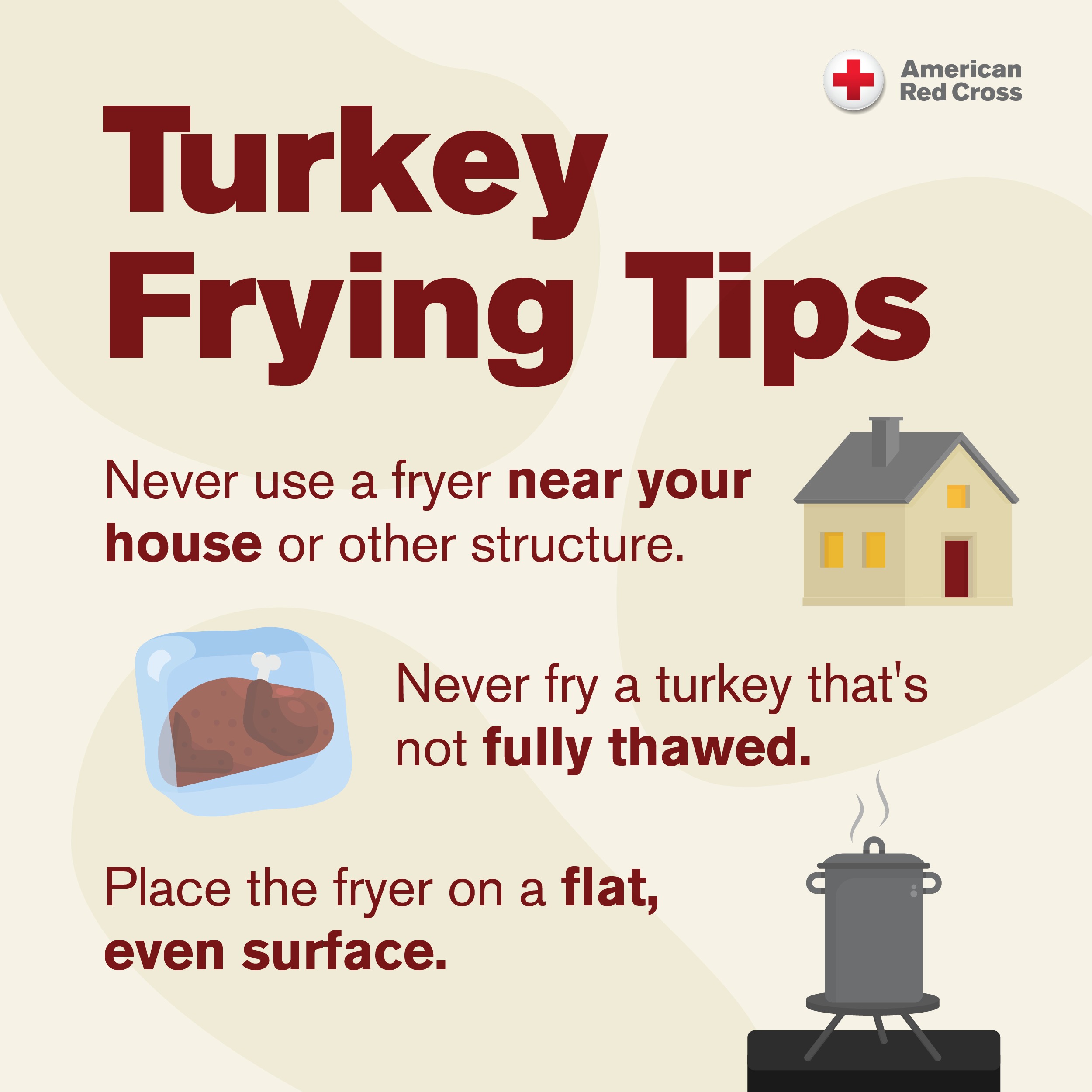
  • Keep grills or deep fat fryers at least 10 feet away from home structures while in use.
  • If you are using a turkey fryer, remember that proper safety requires a completely thawed turkey and oil that is at the correct temperature and level.
  • Set a kitchen timer to remind you when the stove is on.
  • Keep children and pets at least three feet away from all cooking appliances and cords.
  • Remove flammable items, like wooden utensils, curtains, potholders, and oven mitts, from the vicinity of the stovetop.
  • Pull up sleeves and avoid loose clothing that can get in the way while cooking.
  • Keep a fire extinguisher near any area where cooking is being performed.  Do not use water to put out a grease fire.
  • Check that all appliances are off before going to bed at night.

Fall is a great time to check that you have working smoke detectors in your home. Test your units monthly, and replace batteries annually (on units that allow you to do so).  Replace any units that are over 10 years old.  If you need help replacing or installing smoke detectors, the Red Cross may be able to help. Click here to find out how to request a free smoke alarm in Northern Ohio. Wishing everyone a wonderful Thanksgiving!

Autumn Elegance Women’s Forum highlights impact of women in philanthropy across Northern Ohio

By Jill Patterson, senior regional philanthropy officer, Tiffany Circle division lead

Earlier this month, the Barrington Country Club in Aurora was filled with warmth, inspiration, and the unmistakable energy of women coming together to create lasting change. The first-ever American Red Cross Women in Philanthropy event, Autumn Elegance Women’s Forum, was more than just an evening gathering. It was a celebration of connection, purpose, and the collective strength of women united by a mission that matters.

The event was hosted by members of the Red Cross of Northern Ohio Tiffany Circle and is part of the organization’s Women in Philanthropy initiative. This elegant forum brought together a dynamic community of women leaders and changemakers to celebrate the transformative power of giving and the profound impact of women in philanthropy. The event welcomed an extraordinary mix of Tiffany Circle members, major donors, business leaders and passionate supporters, all committed to advancing the mission of the Red Cross. Laurie Laidlaw Deacon, Red Cross of Northern Ohio Tiffany Circle chair, led us through the evening as guests were treated to heartfelt stories, meaningful conversations and a renewed sense of purpose. 

Debra Haufler, executive director of strategic planning, real estate services for the Red Cross shared a deeply moving mission moment, recounting her daughter’s journey with leukemia and the critical role Red Cross blood played in her treatment. Her story reminded everyone of the lifesaving impact behind every donation.

Anne McKeough, Red Cross chief development officer, introduced the Women in Philanthropy initiative, emphasizing its importance in empowering women to lead, influence, and champion change through strategic giving and community engagement.                             

Co-chair of the Red Cross Tiffany Circle National council Marilyn McClure-Demers closed the evening with a powerful call to action, inviting each guest to join us on this journey—to lend their voice, their passion and their leadership to a cause that touches lives every day.

The evening was a testament to what happens when women come together with intention. We left feeling inspired, connected, and more deeply committed to building a future shaped by compassion, generosity, and purpose.

From heartfelt conversations to powerful reflections, the event reminded us of the impact we can make when we lead with compassion and purpose. It marked the beginning of a journey—one where women’s voices, leadership, and generosity shape the future of philanthropy.

Thank you to everyone who joined us. Your presence, passion, and belief in our mission made this night unforgettable.

To see more photos from the Autumn Elegance Women’s Forum, tap here.

Red Cross staff detects health issue in longtime blood donor during routine check in

By Sam Pudelski, American Red Cross volunteer

Peggy Hammond has donated blood for over 40 years. As someone with O+ blood, she understands the importance of giving blood. She started giving blood after a friend had a daughter diagnosed with Apert syndrome and needed regular blood infusions. She realized how extremely important it was to donate blood to help people like her friend’s daughter, who rely on blood donations.

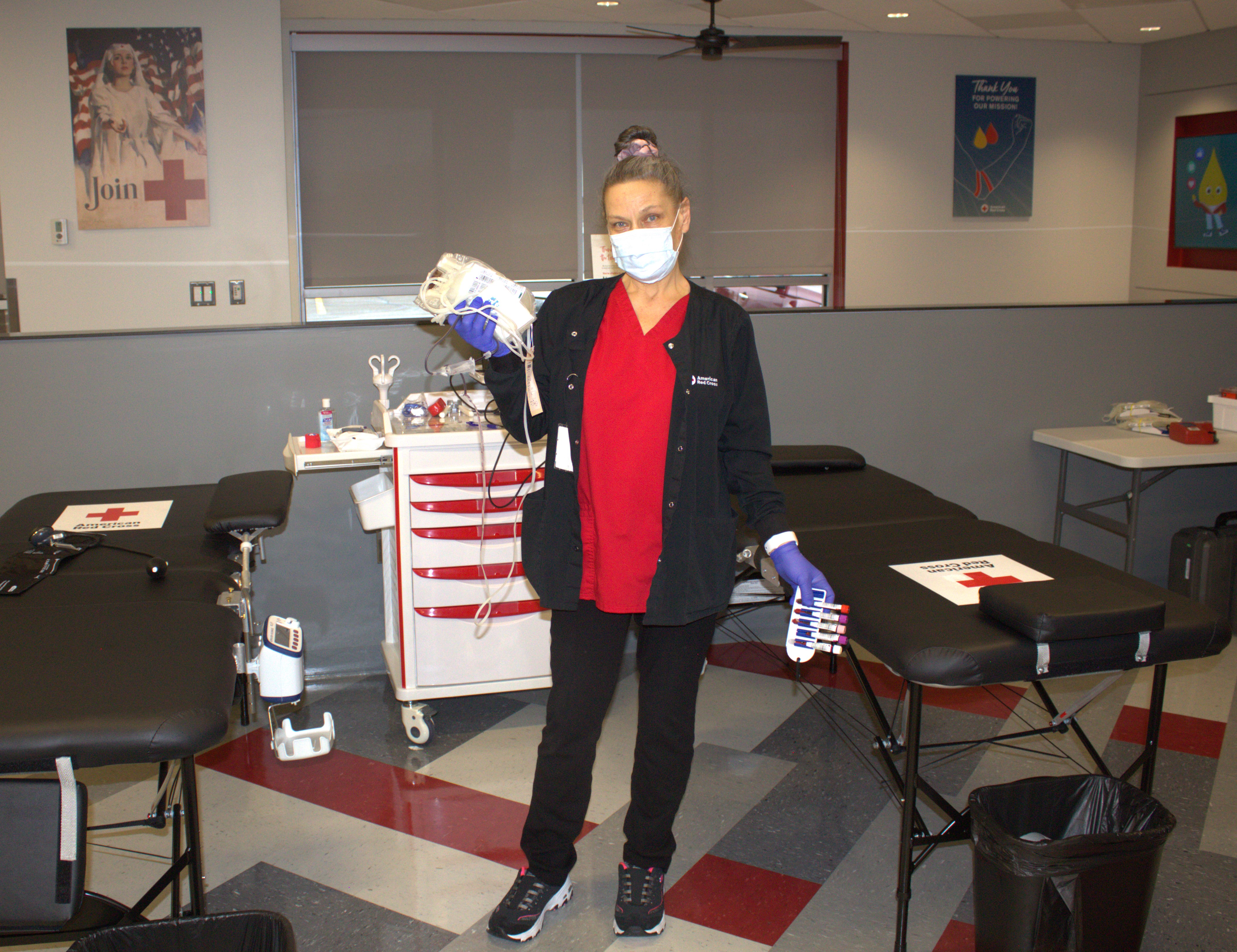
Fast forward a few years, and Peggy was at the American Red Cross Michael T. George Blood Donation Center checking in for her routine blood donation. When she was signing in, the nurse noticed a sore on her head and told Peggy, “I think it’s infected.” The supervisor confirmed it was, and Peggy wasn’t able to donate that day. Over Christmas, she contacted her doctor and after sending a picture of the spot in question, she went in to have it evaluated.

Her doctor determined the sore was not just an irritated spot on the head, but was in fact skin cancer, specifically squamous carcinoma. Approximately 2 out of every 10 skin cancers are squamous cell skin cancers, according to the American Cancer Society. Luckily, the cancer was caught early. Peggy had Mohs micrographic surgery to have the cancerous spot removed. The procedure went well, and with the surgical site healed, she was able to resume her regular blood donations.

She returned back to the donation center to begin her regular blood donations again, and of all people volunteering that day, the same nurse who discovered her spot, was there again! “She saved my life,” Peggy said. She was grateful to have the chance to tell her how much her catch that day helped her.

In speaking with Peggy, it’s evident she’s passionate about giving back and grateful that she’s still able to continue to donate to help others in need. If you are interested in donating blood, the Red Cross holds blood drives across Northern Ohio. To find an upcoming blood drive near you, visit redcrossblood.org.

Edited by Glenda Bogar, American Red Cross volunteer


Keep your kids safe as they head back to school

It’s getting closer… Yes, it is almost time… Time for the kids to go back to school! And while parents all across Northern Ohio collectively exhale that sigh of relief, knowing that their “break” from the summer mayhem is on the horizon, there are still things to think about. Most notably back to school safety! With that, the American Red Cross offers ways to help keep your students safe as they return to school for the upcoming year.

If your student is younger or going to school for the first time, teach them:

  • Their phone number, address, how to get in touch with their parents at work, how to get in touch with another trusted adult and how to dial 911.
  • Not to talk to strangers or accept rides from someone they don’t know.

If your child walks to school, teach them to:

  • Walk on the sidewalk. If no sidewalk is available, walk facing traffic.
  • Stop and look left, then right and left again to see if cars are coming.
  • Cross the street at the corner, obey traffic signals and stay in the crosswalk.
  • Never run out into the street or cross between parked cars.

If your student takes the bus to school, teach them to:

  • Get to their bus stop early and stand away from the curb while waiting for the bus to arrive.
  • Board the bus only after it has come to a complete stop and the driver or attendant has instructed them to get on. And only board their bus, never an alternate one.
  • Stay in clear view of the bus driver and never walk behind the bus.

If your student rides their bike to school, teach them to:

  • Always wear a helmet.
  • Ride on the right in the same direction as the traffic is going.

If you drive your child to school, make sure to:

  • Always use seat belts. Younger children should use car seats or booster seats until the lap-shoulder belt fits properly (typically for children ages 8-12 and over 4’9”), and ride in the back seat until they are at least 13 years old.

If you have a teenager driving to school, make sure they:

  • Use seat belts.
  • Don’t use their cell phone to text or make calls and avoid eating or drinking while driving.

If you are considering getting your student a cell phone:

  • Download the free Red Cross First Aid and Emergency apps to give them access to first aid tips for common emergencies and full weather alerts. Find the apps in smartphone app stores by searching for the American Red Cross or going to redcross.org/apps.

DRIVERS, SLOW DOWN! Drivers should slow down as children head back to school. Know that yellow flashing lights indicate a school bus is getting ready to stop ─ motorists should slow down and be prepared to stop. Red flashing lights and an extended stop sign indicate the bus is stopped and children are getting on or off.

Motorists must stop when they are behind a bus, meeting the bus or approaching an intersection where a bus is stopped. Motorists following or traveling alongside a school bus must also stop until the red lights have stopped flashing, the stop arm is withdrawn, and all children have reached safety. This includes two and four-lane highways. If physical barriers such as grassy medians, guide rails or concrete median barriers separate oncoming traffic from the bus, motorists in the opposing lanes may proceed without stopping. Do not proceed until all the children have reached a place of safety.

Hiring military veterans works for the Red Cross

By Jim McIntyre, American Red Cross volunteer

“A shared commitment to a greater purpose may just be the most significant advantage veterans bring to the American Red Cross…” – Mike Parks, RADM, USCG (Retired), Regional CEO, American Red Cross of Northern Ohio. 

There were nearly 16 million veterans of the armed forces living in the U.S. in 2023, according to usafacts.org. Nearly 3% were unemployed, according to the Bureau of Labor Statistics. To raise awareness of veterans in need of job placement and to show the challenges of transitioning from the military to civilian workforce, July 25th has been named National Hire a Veteran Day

“Veterans bring unmatched dedication, discipline, and leadership to the workplace – skills forged through service and mission-focused training,” according to Dr. Alaina Foster, Regional Program Director for Service to the Armed Forces and International Services at the Red Cross of Northern Ohio. “Hiring a veteran means gaining a teammate who thrives under pressure, adapts quickly, and leads with integrity.” 

Foster is a veteran of the U.S. Air Force, and comes from a military family. On her team is Nasir Ahmad, also a retired Air Force veteran who recently completed an assignment for the Red Cross that took him to Iraq, where he provided Red Cross services for members of the U.S. military on a base in Baghdad.  He said being a veteran gave him a shared connection with members of the military in need of Red Cross services. 

“When people say, ‘thank you for your service,’ it’s appreciated and great to hear, but organizations like the Red Cross put those words into action by making a deliberate effort to hire veterans,” Nasir said, adding, “These organizations welcome people who know how to work on a team and put their own vision and ambitions second to the overall success of the company.  Firms that are willing to hire veterans gain people that are able to thrive in structured settings as well as adapt to free-flowing projects and events.”  

CEO Mike Parks, who calls the Red Cross “the world’s premier humanitarian organization,” said hiring veterans fits in well with the Red Cross ethos.  

Mike Parks,  Regional CEO, American Red Cross of Northern Ohio
Rear Admiral, United States Coast Guard (Retired)

“I’m fond of saying ‘The Red Cross is all about caring.’  Most successful veterans largely became successful by caring.  Sacrificial giving and servant leadership are both hallmarks of veterans who have found a home in the Red Cross after they’ve served their country in uniform.” 

Mike found a home at the Red Cross, leading the Northern Ohio Region since 2015, following a lengthy career with the U.S. Coast Guard. Nasir has called the Red Cross home since 2023. 

“I was unsure what to expect from the Red Cross, but the Northern Ohio team showed me that there’s still a place where I could serve.  And I’m grateful for it.  Maybe that’s all any of us veterans want — a place to still be of service.”    

Veterans excel in every sector of the employment market, but there are numerous job opportunities at the Red Cross, where the experience of having served in the armed forces can add extra value.  See current job opportunities here. And tap here to learn more about how the Red Cross supports military members, veterans and their families.

Get a free pair of shades by goodr when you donate blood or platelets

By Kathryn Dean, American Red Cross Volunteer 

July is finally here, and summer has officially started. For many, this means vacations, cookouts, pool time, and fun with family and friends. For blood banks, this busy season can mean a time of fewer donors and a limited blood supply.   

Every two seconds, someone in the U.S. requires a blood transfusion. This equates to around 29,000 units of blood that are needed every day! Whether it be for cancer patients, accident victims, surgical patients, or new mothers, be a hero for a person in need by donating this precious, lifesaving gift. 

While all potential donors are asked to donate if they can, Type O is urgently needed at this time.   

Type O negative blood, often called the “universal donor,” can be safely transfused to anyone and is commonly used in emergencies when there is no time to determine blood type. With only around 7% of the U.S. population having Type O negative blood, it is often in short supply, even though the need for it is great. 

Special Promotion for donors 

Between July 1-14, consider taking time out of your schedule to donate blood, plasma or platelets, and look cool leaving with a free pair of American Red Cross x goodr “Just My Type” sunglasses, while supplies last! You will also receive a sticker with your blood type to personalize your glasses. Find out more about the promotion by clicking HERE

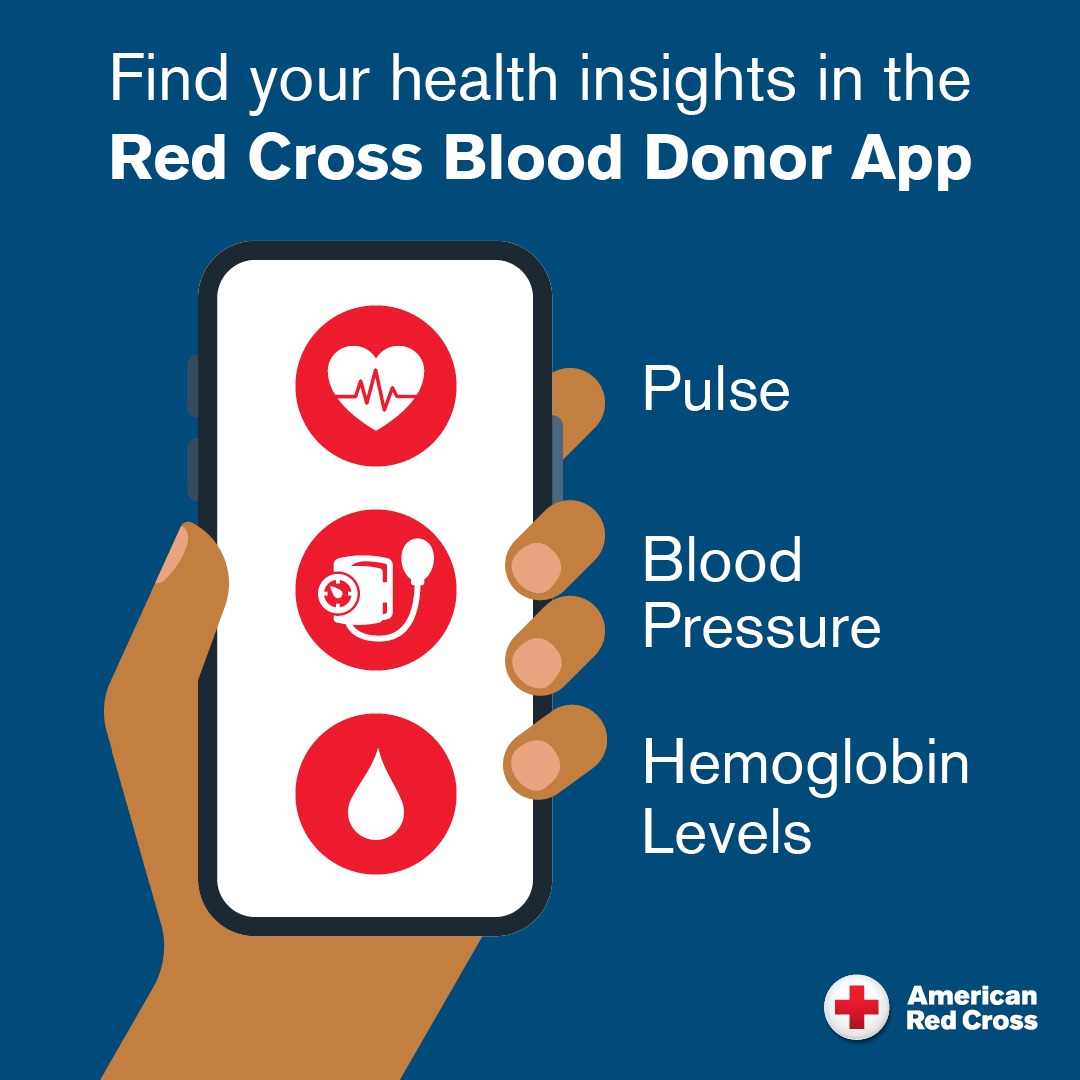
To donate, simply visit RedCrossBlood.org and enter your zip code or download the free Red Cross Blood Donor App by clicking HERE. Save time on the date of your donation by completing your pre-donation forms at RedCrossBlood.org/RapidPass or by using the Blood Donor App. 

Edited by Glenda Bogar, American Red Cross volunteer

Dedicated volunteer was the model of Red Cross caring 

By Eilene E. Guy, American Red Cross volunteer

After a career of more than 50 years in nursing and education, Carol McConnell came to volunteer with the American Red Cross because she wasn’t ready to retire from caring for people. 

Carol McConnell, Red Cross volunteer

Her fellow nurse volunteer, Melissa Seibert, said her friend embodied the compassion of Red Cross founder Clara Barton. 

For years, the two of them staffed first aid stations at Pro Football Hall of Fame events, where Carol’s nursing skills matched her caring personality. “She had beautiful white hair; she wasn’t skinny or hefty, just pleasantly plump. She walked with her shoulders back and her chin up. Her demeanor just said, ‘I care,’ Melissa said. 

“She had a soft touch; she was soft spoken. That put people at ease.”  

But Carol was no one-trick nursing pony. She began her Red Cross volunteer career in 1993 in disaster services. When she wasn’t comforting people displaced by a home fire or other calamity, she was often at the office of the Heartland, Stark and Muskingum Lakes chapter. 

She was always ready to volunteer for an activity related to the Red Cross mission, retired chapter executive director Kim Kroh said. “She loved to do outreach, to talk to people at festivals and health fairs. She was such an active volunteer; she was so kind, a gentle soul. 

“She was very involved with our campaign to install smoke alarms. She would go out every week,” Kim said. “Whenever we had a Sound The Alarm event to canvass neighborhoods to install alarms, she was always involved.”  

Carol was known for being reliable. She never quite got the hang of signing up on line for a project, but, “When she said she’d do something, you knew she’d be there,” Melissa said. 

That’s what alerted her fellow volunteers on the morning of March 26, when Carol didn’t show up for a smoke alarm install activity. Her Red Cross partners called the local fire department to do a welfare check. 

Carol had passed away quietly at home, at the age of 90. 

“I was shocked,” Melissa said. “Last year, she said to me, ‘I can’t wait to work with you again next year (at the Hall of Fame festivities)’… When I read her obituary, I couldn’t believe she was 90! 

“Red Crossers are a family, you know,” she said as she choked back tears. “We were devastated.” 

Carol’s family summed up her personality in her obituary: “She never met a stranger and thoroughly enjoyed getting to know new people.” 

The Red Cross gave Carol an outlet for her caring that never faded with the years. She is truly missed. 

Stay safe this summer when temperatures heat up

By Tim Poe, American Red Cross volunteer

While Northern Ohio hasn’t seen temperatures over 90 degrees Fahrenheit since last year, summer is here, and it is time to prepare for high temperatures. Extreme heat is happening more often and more intensely — 2024 was the hottest year on record globally — and in more places, like Northern Ohio. As extreme heat is a leading cause of weather-related deaths in the U.S., the American Red Cross urges everyone to take critical actions to stay safe. These include: 

Stay hydrated. When temperatures are high, drink a cup of water every hour, even if you aren’t thirsty. Avoid sugary, caffeinated and alcoholic drinks. Remind friends and family members to do the same. Also, babies should be breast- or bottle-fed often. Fewer wet diapers or darker urine can be signs of dehydration. 

Stay cool. Spend time in air-conditioned places. If your home is too hot, go to a mall, library or cooling center. You can also take a cool shower or bath. Please make sure to look out for older neighbors and relatives as well as anyone without air conditioning.  

Outdoor workers and athletes should take breaks in the shade and frequently drink water: a cup every 20 minutes. They should also use a buddy system to check on one another. 

Wear lightweight, loose-fitting clothes in bright colors. 

Never leave a child or pet alone inside a parked car, and make sure pets have access to fresh water and shade. 

Prepare for power outages during heat waves. Be ready to stock an ice-filled cooler with food, water and medicine, so that they don’t spoil. If you need to keep medicine cold or use medical devices that need power, talk to your doctor about a backup plan. Also keep food cold by keeping refrigerator and freezer doors closed as much as possible; eat fresh, perishable foods first; and throw out perishable food that has been warmer than 40 degrees Fahrenheit. More information is available here

Stay connected.  Check on others and ask for help if you need it. Also download the free Red Cross emergency app

Know the signs of heat illness. While some are at higher risk of heat related illness, such as older adults, children, pregnant women and those with medical conditions, anyone can become ill when their body cannot properly cool down. It is critical to act fast, as some types of heat illness can be deadly. 

Heat cramps are signaled by heavy sweating and muscle pain. Stop what you’re doing, rest in a cool place and slowly sip water. Don’t drink if you feel sick, and get medical help if cramps last over an hour or you have heart problems.  

Heat exhaustion is signaled by heavy sweating, weakness, cool and clammy skin, muscle cramps, dizziness, fainting, nausea or vomiting. In addition to the above, loosen your clothes and place a cool wet cloth on your body. Get medical help if you don’t feel better, vomit or have heart problems.  

Heat stroke is a deadly condition signaled by high body temperature, rapid heartbeat, confusion, headache, dizziness, fainting, nausea or vomiting. Call 911. Move to a cooler place, remove extra clothing and use a wet cloth or a cool bath to cool down. Don’t drink anything. 

Learn more tips and download the Red Cross’ Extreme Heat Safety Checklist HERE. 

Edited by Glenda Bogar, American Red Cross volunteer

Mike’s 2025 Memorial Day Message

By Michael N. Parks, Regional CEO, American Red Cross of Northern Ohio
Rear Admiral, United States Coast Guard (Retired)

Hello friends and family of the American Red Cross of Northern Ohio!!  As we head into Memorial Day weekend, also known as the unofficial start of Summer, I’d like to highlight some of the other significant dates we recognize during the month of May which will hopefully help answer the question, “Why is May ‘Military Appreciation Month?”: 

Military Appreciation Month: Observed throughout the month of May. This month-long celebration, established in 1999, is dedicated to honoring and thanking the men and women who have served in the U.S. military.

Month of the Military Caregiver: Observed throughout the month of May, established in 2017, honors more than five million caregivers in the U.S. who support wounded, ill, and injured service members and veterans.

Victory in Europe (VE) Day: Commemorating the end of WWII in Europe on May 8, 1945.

Military Spouse Appreciation Day: The Friday in May before Mother’s Day, first recognized by President Ronald Reagan in 1984, is set aside for us to pause to recognize the military spouses who have the greatest impact on service members and our military communities.

Children of Fallen Patriots Day: Observed on May 13th (selected because it’s also the day Arlington National Cemetery was established in 1864) to show appreciation for the young people whose lives were forever changed in support of their parents’ service to our country.

Armed Forces Day: Observed annually on the third Saturday of May, designated in 1949 and established by proclamation in 1950 by President Truman, is a day to honor and recognize current active-duty service members of all six branches in the U.S. Armed Forces (the Army, Navy, Air Force, Marine Corps, Coast Guard, and Space Force). 

Memorial Day: A federal holiday observed in the United States on the last Monday of May to mourn and honor American military personnel who have died in service to our country, both in peace and in war. It’s a solemn day of remembrance, reflection, and public displays of gratitude for their sacrifice. It was originally called Decoration Day established in 1868 by the Grand Army of the Republic (an organization of Union Veterans) to honor fallen soldiers of the Civil War. It was officially declared a national holiday by Congress in 1968. Congress passed the National Moment of Remembrance in 2000 to designate a time (3:00 pm local time) for quiet reflection and prayer. 

As you can see, there are many opportunities to recognize, honor, and/or celebrate members (past and present) of the Armed Forces, and their families, in the month of May. Please remember, Armed Forces Day specifically honors current, active-duty service members, while Veterans Day (November 11th) recognizes all those who have served.  Memorial Day (this coming Monday, the 26th) honors those who died in service to our country (which is why we shouldn’t wish people “Happy” Memorial Day). I’m repeatedly asked how to greet service members and veterans. I’ve found the most meaningful comment is a simple, “Thank you for your service!”  To those who have lost loved ones, “Thank you for your sacrifice,” is always appropriate. I hope we’re all able to take time this weekend to have a memorable Memorial Day.  Best regards…Mike

National Nurses Week: Spotlight on Cynthia Bell, RN MSN

By Kathryn Dean, American Red Cross Volunteer

National Nurses Week is an annual week of recognition of the hardworking nurses in our community and runs every year from May 6 to May 12.  This year, the American Red Cross of Northern Ohio wants to recognize a local Akron nurse, Cynthia Bell, RN MSN, who has dedicated her life to the profession and continues to serve, even in retirement.

Cynthia Bell

Cynthia was encouraged to start her nursing journey when she was fresh out of high school and trying to determine life’s path.  A chance encounter with an Akron City Hospital administrator at her church changed everything for her.  She was given the opportunity to attend the hospital’s nursing program for free, and she jumped at the chance. 

“I said my parents can’t afford nursing school, and he said, well decide if you want to go, we’ll take care of it.  I said, no brainer.  But did I have any idea what I was getting myself into?“ she recalled. “No clue whatsoever.”

“’You’re going to be responsible for people’s lives’,” Cynthia was told, “and I remember panicking and I was 21 years old.  But I’ve never looked back, I loved every minute of it, it was the best career choice.  It was all in God’s plan because I would never have thought about being a nurse.  It all works for the good.  And I think that’s why I stay in the community, because I know the impact that one person can have on somebody else, and somebody may be having a bad day, and you can just be there for them.” Cynthia reflected.

Cynthia eventually went on to complete her bachelor’s degree at Capital, and then her Masters in psychiatric mental health.  She spent 37 years of her 52-year nursing career at the Cleveland Veterans Administration (VA) Hospital.  “It’s the highlight of my career, I’ve enjoyed every, every minute of being a nurse at the VA,” she beamed. 

At the VA, she was the nurse manager and Assistant Chief of the Homeless Domiciliary.  “We housed 122 veterans, some with mental illness, some with substance abuse, gambling issues, and they could have a combination of those things, and we got them housed and improved their health and set up healthcare for them in the community,“ she explained.  “I just loved being the nurse manager because my nurses ended up giving great care.  You had to be innovative, and compassionate, and tolerant, and it made a difference.”

Now as a retiree, she fills her days with volunteer hours, tutoring students in Akron and working as the President of the Akron Black Nurses, an organization that conducts local health fairs and blood pressure screenings in the community.  She also serves as a Blood Donor Ambassador for the Red Cross, working about 10 blood drives a month. 

Cynthia Bell at a Red Cross blood drive

“I go to the different blood drives, and I greet and help sign in any of the donors that come in, and we often engage in playful or good conversation.  I meet so many different people.  Some have a lot in common and some that have nothing in common.  But we always end up having a good conversation.  It’s a great place to meet people,” Cynthia said.

“I really hope that people continue to see the importance and the need for donating and if they have time, in becoming an ambassador for the Red Cross.  I appreciate the opportunity to serve, and how happy I am being a volunteer.”

Be sure to thank a nurse this National Nurses Week and join me in saying a big thank you to Cynthia for her dedication to nursing and helping her community.  Consider joining other volunteers at the Northern Ohio Region of the Red Cross by clicking HERE to learn about the available opportunities.