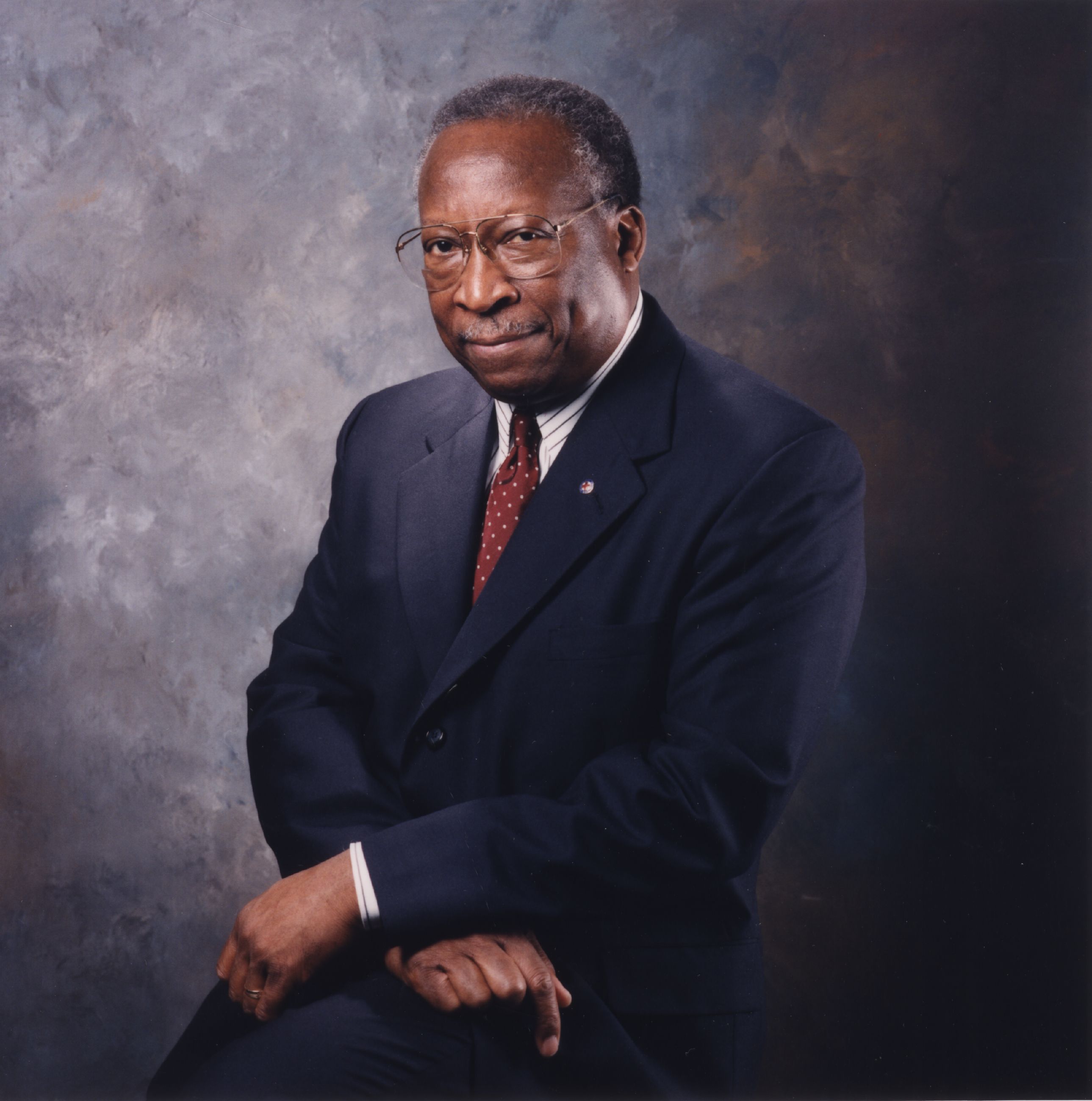
Dedicated volunteer was the model of Red Cross caring 

By Eilene E. Guy, American Red Cross volunteer

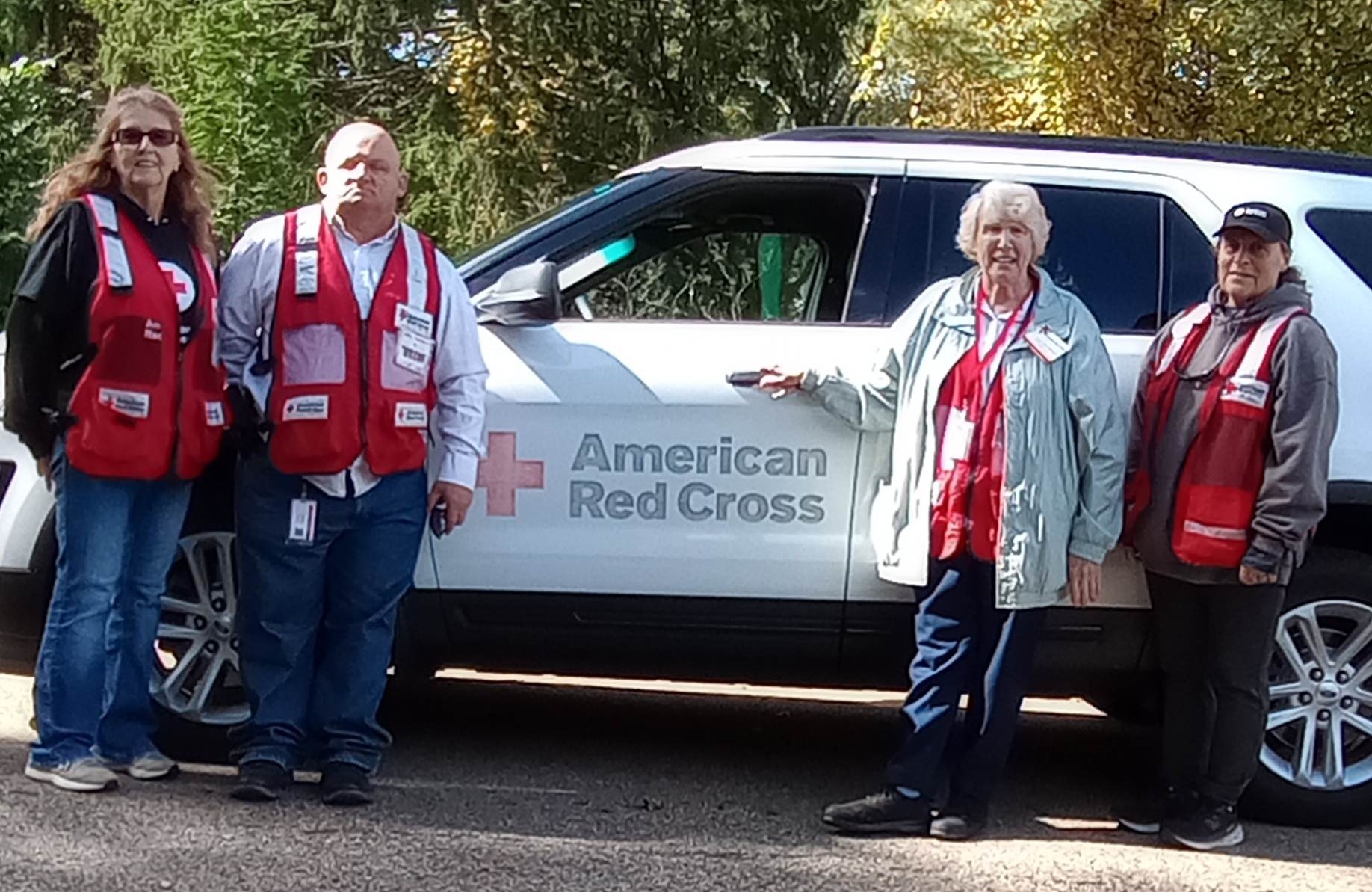
After a career of more than 50 years in nursing and education, Carol McConnell came to volunteer with the American Red Cross because she wasn’t ready to retire from caring for people. 

Carol McConnell, Red Cross volunteer

Her fellow nurse volunteer, Melissa Seibert, said her friend embodied the compassion of Red Cross founder Clara Barton. 

For years, the two of them staffed first aid stations at Pro Football Hall of Fame events, where Carol’s nursing skills matched her caring personality. “She had beautiful white hair; she wasn’t skinny or hefty, just pleasantly plump. She walked with her shoulders back and her chin up. Her demeanor just said, ‘I care,’ Melissa said. 

“She had a soft touch; she was soft spoken. That put people at ease.”  

But Carol was no one-trick nursing pony. She began her Red Cross volunteer career in 1993 in disaster services. When she wasn’t comforting people displaced by a home fire or other calamity, she was often at the office of the Heartland, Stark and Muskingum Lakes chapter. 

She was always ready to volunteer for an activity related to the Red Cross mission, retired chapter executive director Kim Kroh said. “She loved to do outreach, to talk to people at festivals and health fairs. She was such an active volunteer; she was so kind, a gentle soul. 

“She was very involved with our campaign to install smoke alarms. She would go out every week,” Kim said. “Whenever we had a Sound The Alarm event to canvass neighborhoods to install alarms, she was always involved.”  

Carol was known for being reliable. She never quite got the hang of signing up on line for a project, but, “When she said she’d do something, you knew she’d be there,” Melissa said. 

That’s what alerted her fellow volunteers on the morning of March 26, when Carol didn’t show up for a smoke alarm install activity. Her Red Cross partners called the local fire department to do a welfare check. 

Carol had passed away quietly at home, at the age of 90. 

“I was shocked,” Melissa said. “Last year, she said to me, ‘I can’t wait to work with you again next year (at the Hall of Fame festivities)’… When I read her obituary, I couldn’t believe she was 90! 

“Red Crossers are a family, you know,” she said as she choked back tears. “We were devastated.” 

Carol’s family summed up her personality in her obituary: “She never met a stranger and thoroughly enjoyed getting to know new people.” 

The Red Cross gave Carol an outlet for her caring that never faded with the years. She is truly missed. 

American Red Cross remains committed to helping everyone as needs increase

By Tim Poe, American Red Cross volunteer

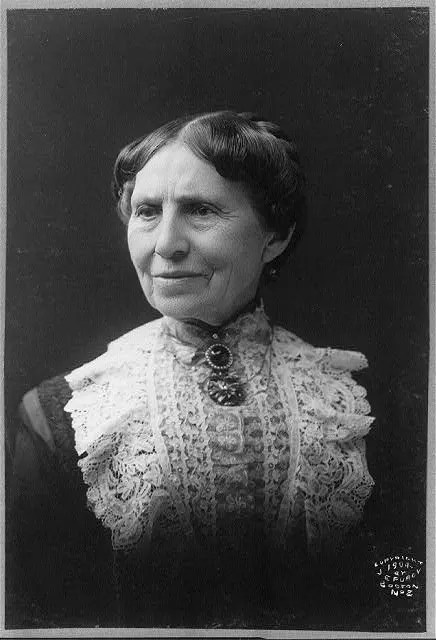
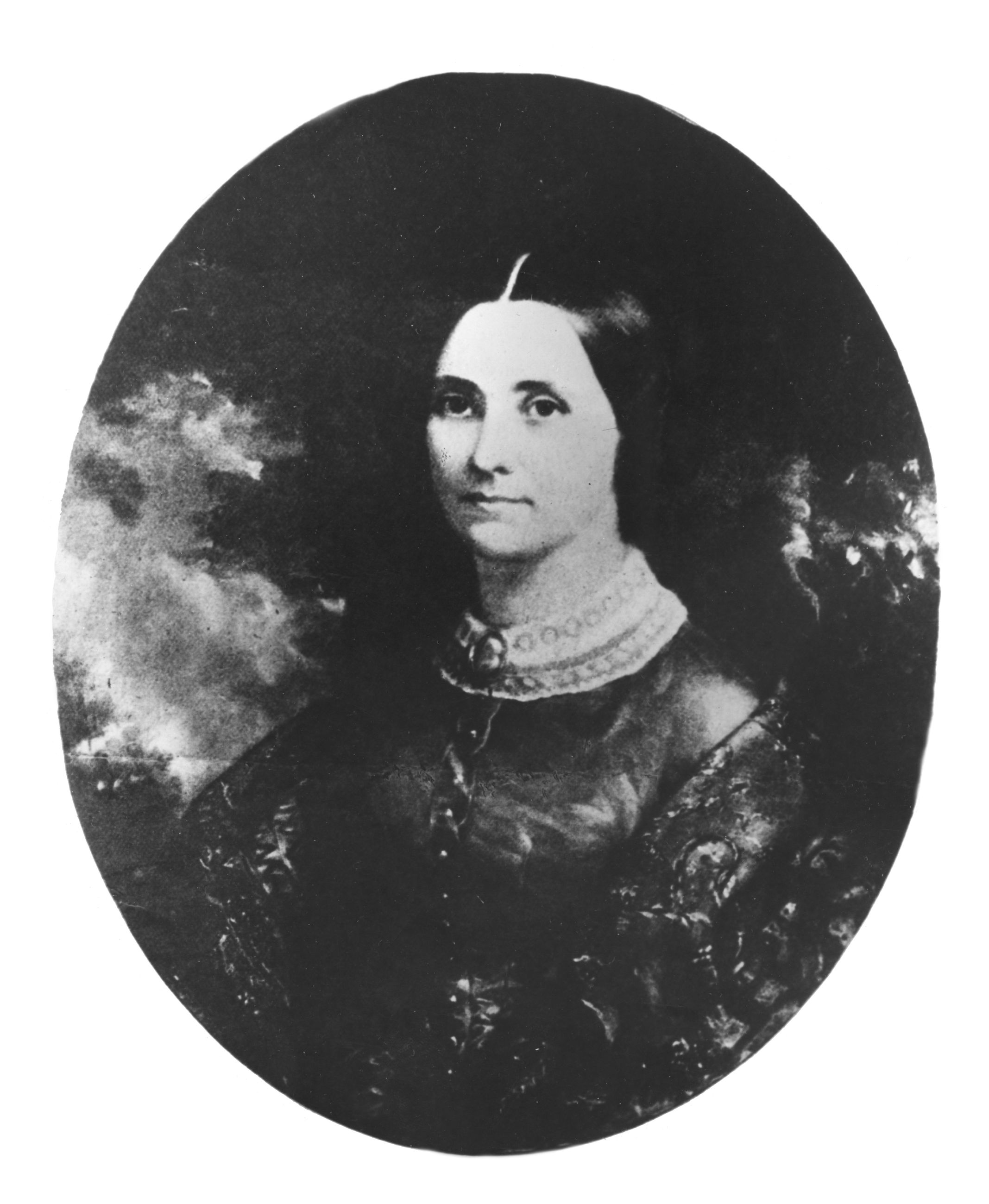
Portrait of Clara Barton, founder of the American Red Cross.

She was bent over, sobbing, frustrated, nearly everything in her family’s apartment destroyed. We sat in an American Red Cross vehicle outside a partially burned apartment complex. It was near the beginning of the school year, and she had recently purchased books, school supplies and clothes for her children. Unfortunately, her neighbor, whom I had helped earlier, had a moment of carelessness. Like most renters I assisted, especially those in lower-income areas, she did not have renter’s insurance. But we were there. One of my favorite moments as a Red Cross volunteer was handing her an aid packet, a lifeline, and seeing her frustration and despair turn to gratitude and resilience. Her family would have a place to stay, would eat, and her children’s clothes and school supplies would be replaced. Her race, gender, legal status, religion, beliefs, class and orientation didn’t matter. She needed help, and the Red Cross provided.

Scenes like this play out an average of three times per day in Northern Ohio, and about 65,000 times per year nationally. Similarly, someone in the U.S. needs blood every two seconds, while U.S. Armed Forces members, veterans and their families receive assistance daily. Our services have never, nor will ever, be contingent on anything other than if someone needs our help.

As March is Red Cross Month, we would like to reiterate that helping everyone has been a core principle since our founding in 1881 and remains central to our Fundamental Values of
humanity, impartiality, neutrality, independence, voluntary service, unity and universality. Clara Barton, who faced discrimination as a woman, believed in “perfectly equal rights–human rights,” and instilled those values in the Red Cross from the outset.

For the past 144 years, the Red Cross remained committed to helping those in need, bringing out the best of humanity in times of crisis.

February 25, 2025. Pike County, Kentucky.
American Red Cross volunteer, Tony Susi, comforts Tina Roberts after she lost her entire home in Eastern Kentucky after devastating floods hit her community just over a week ago.

Red Crossers are on the ground across Kentucky, assessing damage, working with community partners and local emergency management, and providing hot meals, a safe place to stay and other support to residents impacted by flooding.

Photo by Scott Dalton/American Red Cross

The need for Red Cross services and the commitment to help everyone has never been greater. The climate crisis is having a tremendous impact, as the Red Cross is responding to nearly twice as many large disasters as a decade ago, and they are increasing. Additionally, the climate crisis is taking a heavier toll on frontline communities, including low-income families, older adults, communities of color and people with disabilities.

The Red Cross is responding to these challenges through strengthening partner networks;
improving disaster relief capacity; enhancing our engagement with diverse communities, including offering information in Spanish; reaching out to diverse blood donors; continuing our Sickle Cell initiative; and adding health screenings for blood donors at different times throughout the year, currently including screening for Sickle Cell trait and, this month, A1C.

We could use your help. If you can donate blood, give financially or volunteer, your assistance has a tremendous impact. And no matter who you are, please reach out if disaster strikes, as the Red Cross continues its commitment to helping all.

Edited by Glenda Bogar, Red Cross volunteer

Posted by Ryan Lang, Red Cross board member and volunteer

Regional Specialist Bagdad Bound

By Mary Falconer-Williams, American Red Cross volunteer

Since 1898, when Clara Barton sailed to Cuba with supplies for those affected by the Spanish-American War, the American Red Cross and the United States Armed Forces have maintained a unique relationship.

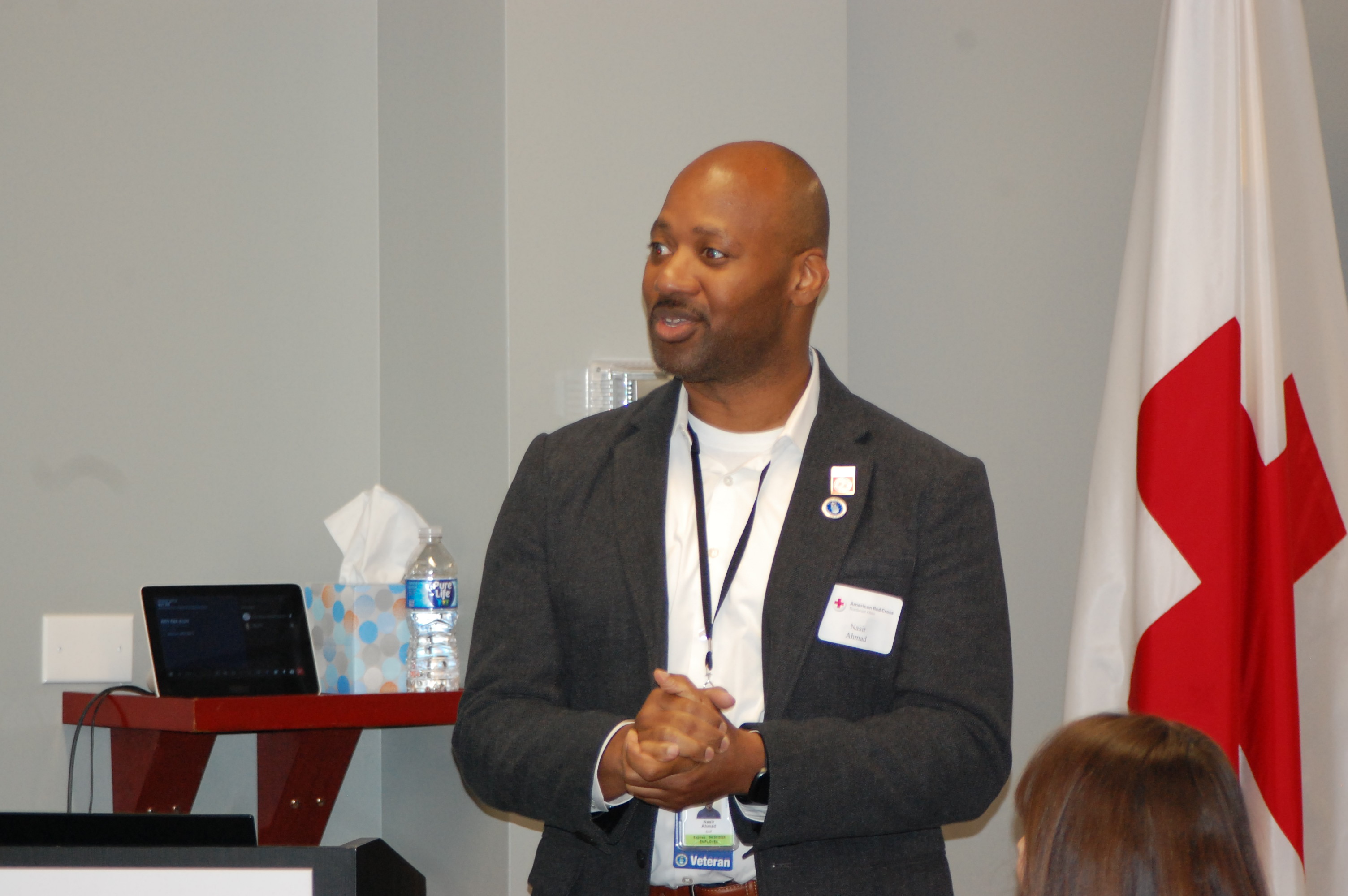
Service to the Armed Forces Program Specialist Nasir Ahmad

Today, that relationship takes the form of one special position, the Service to the Armed Forces Program Specialist—a position which, in Northern Ohio, is held by Nasir Ahmad.

“Nasir has been an invaluable member of the Service to Armed Forces/International Services team in Northern Ohio,” wrote Dr. Alaina Foster, Regional Program Manager for the department. “I’m glad he will have the opportunity to share his passion for connecting service members to the many resources offered through the Red Cross, during his deployment.”

This specialist position was created to assist in the delivery of Red Cross programs and services, in order to meet the needs of military members, veterans, and their families while focusing on supporting the delivery of International Services including:

International Humanitarian Law
Youth Action Campaign
Restoring Family Links

Additionally, Nasir is part of a special workforce required to deploy on short-term assignments. Which means, he is headed to Bagdad, Iraq for six months! During his deployment, he will focus on ensuring Training Services programs like First Aid and CPR are supported and promoted in the jurisdiction, and assist in maintaining a positive and mutually beneficial relationship with local Armed Forces Blood Service Programs.

Nasir Ahmad and Alaina Foster

“I couldn’t be prouder of Nasir as he deploys overseas to provide members of our Armed Forces Red Cross services,” stated Mike Parks, Regional CEO. “As a retired veteran himself, Nasir knows firsthand the value of the support provided by the dedicated members of the Red Cross Service to Armed Forces deployed staff and volunteers. I join our entire Northern Ohio Region in thanking Nasir for his deployment and wishing him a safe return!”

Nasir was born and raised in Cleveland. Shortly after graduating high school, he joined the Air Force where he worked as an aircraft mechanic (Crew Chief), first on the C-130 cargo plane and then on the B-1 bomber. Nasir retired after 21 years of active-duty service and returned home where he attended Cleveland State University and graduated with a business degree.

“The Red Cross was a great fit. In Service to the Armed Forces, the Red Cross’ oldest line of service, I’m able to help veterans in Northern Ohio and stay connected to the military community,” said Nasir. “And now…I’m on my way to Baghdad!”

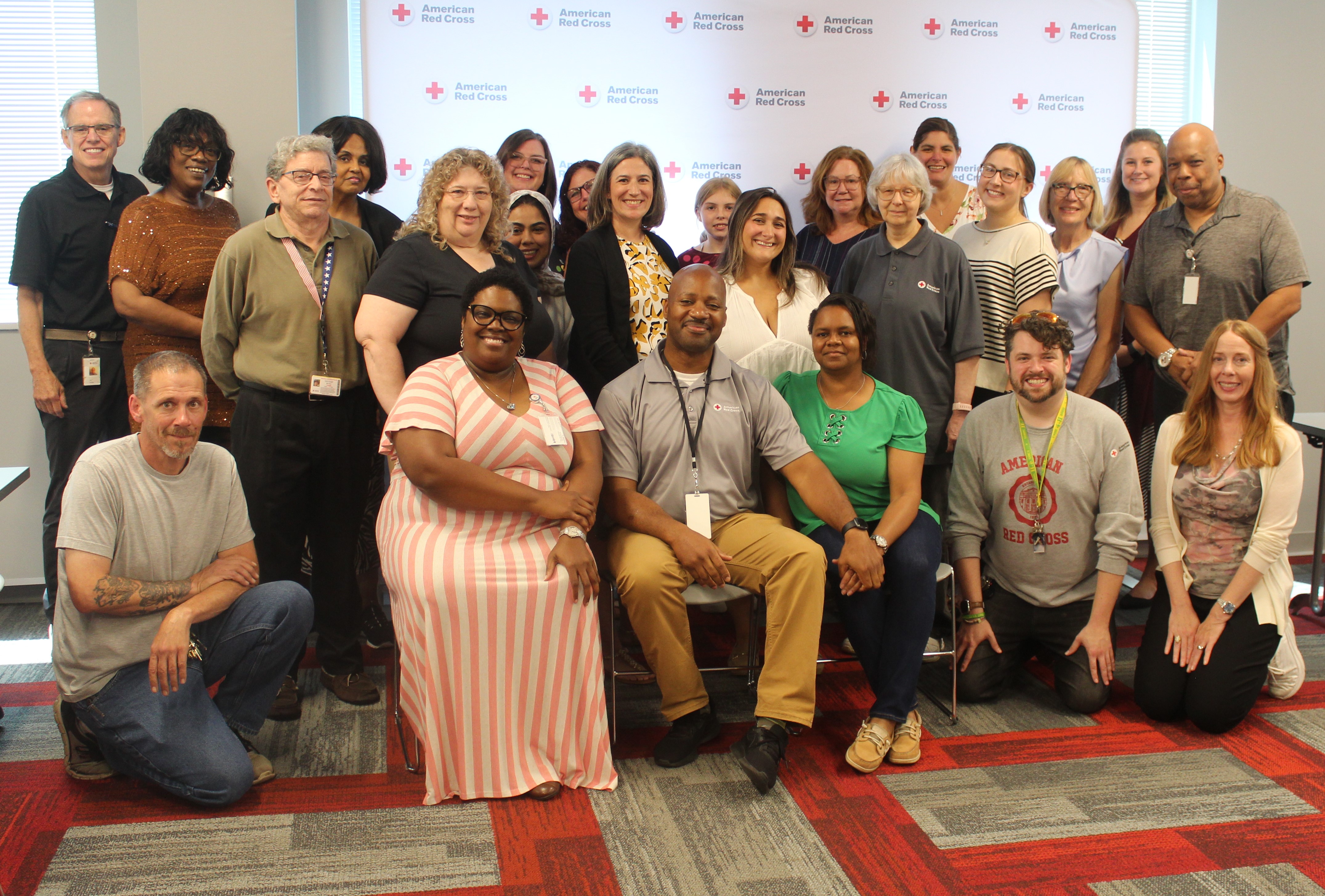
See more photos from the send-off for Nasir here.

Posted by Ryan Lang, Red Cross board member and volunteer

American Red Cross Taps Nursing Pool For New Blood Donor Ambassadors

By Ryan Lang, Red Cross board member and volunteer

Since the Civil War and the earliest days of the American Red Cross, nurses have been some of the biggest supporters of the mission. Red Cross founder Clara Barton was a nurse who risked her life supporting soldiers in the field. It is her legacy that all these years later inspires nursing students from colleges and universities across Northern Ohio to take part in the volunteer blood ambassador program. 

Dr. Mariann Harding of Kent State Tuscarawas is the Regional AS-L Coordinator with Kim Kroh, Executive Director, American Red Cross of Heartland, Stark and Muskingum Lakes

Dr. Mariann Harding, professor of nursing at Kent State University, Tuscarawas Campus, is coordinator for the Academic Service Leadership (ASL) program in Northern Ohio. ASL provides nursing students and nurses returning to college for their bachelor’s degree opportunities to volunteer in the local community.  Currently, about a hundred students participate in the program from Kent State University, both the Kent and Tuscarawas campuses, Case Western Reserve University, and the University of Akron.  

“Students in the Foundations of Nursing class have been volunteering as blood donor ambassadors for several years,” Dr. Harding said. “The donor ambassador experience has been a way to combine service with clinical-based learning.” 

Not only is the ASL program good for the community, Dr. Harding says it is also rewarding and beneficial for her students. “(They) enjoy giving back to the community and find volunteering a meaningful experience. They also learn about the donation process and the safeguards taken to protect the donated blood,” Dr. Harding added. “Many have given blood for the first time during their experience!” 

Kent State University Tuscarawas student, Penelope Cantu is a Red Cross Academic Service-Learning Blood Donor Ambassador volunteer.

Kent State University Tuscarawas student, Penelope Cantu, is a Red Cross ASL Blood Donor Ambassador volunteer. “Having the opportunity to volunteer at Red Cross blood drives has given me insight into how big of an impact blood drives are,” she said. “I had the pleasure of engaging with all kinds of people and listening to why they donate. Their stories helped me realize how much of a difference we all can make when we donate.” 

Find out more on the Blood Ambassador program and other volunteer opportunities here.

Happy birthday, Clara!

By Eilene E. Guy, American Red Cross volunteer

Clara Barton was born on Dec. 25, 1821, 202 years ago today. What a gift she turned out to be!

National Gallery, Washington, DC. Henry Inman’s portrait of Clara Barton.

Clara was a trailblazer throughout her life, but her most impactful legacy is the organization she founded in 1881, the American Red Cross.

Although she never married or had children, her “baby” has moved millions of people to give their time and talents to help even more millions of people prevent, prepare for, respond to, and recover from emergencies.

One of the things I admire about Clara was her ability to adapt. That “semper Gumby” (forever flexible) ethos guides the organization to this day.

In 1882, Clara sent her right-hand man, Julian Hubbell, to assess damage from floods along the Ohio and Mississippi rivers and provide relief. Clara managed fundraising, including $3,000 from the German Red Cross.

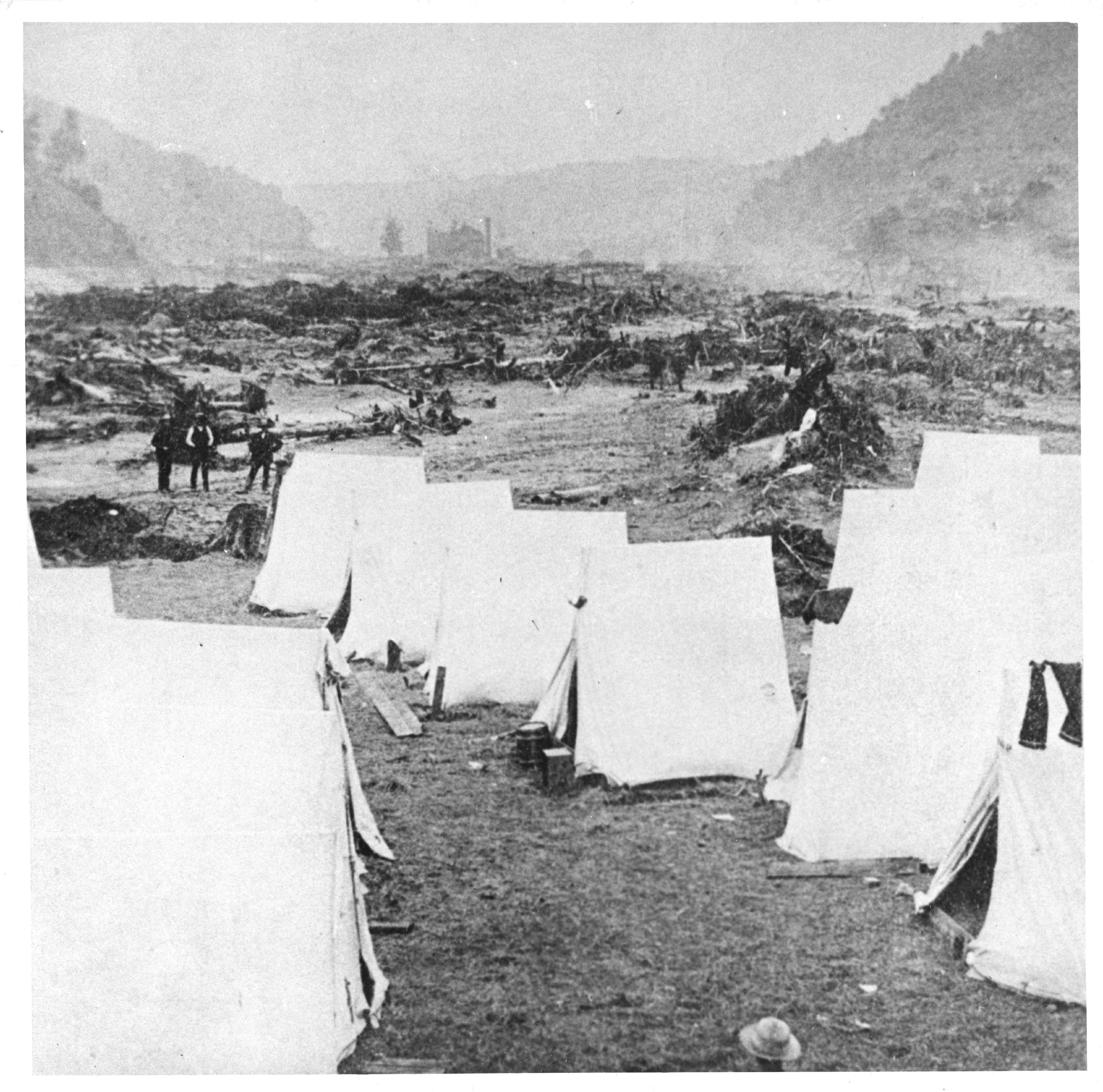
1889. Johnstown, Pennsylvania. Upon her arrival in Johnstown, Miss Barton immediately set up Red Cross headquarters in a tent on Prospect Hill overlooking the stricken valley. Another Red Cross faction, from Philadelphia, headed by a Dr. Pancoast, also arrived and set up hospital facilities in tents.

The flood wasn’t a large-scale disaster, but it did reveal the need for preparedness. Up to that time, Clara had run the Red Cross as a centralized operation, dispatching funds and relief management after emergencies.

Recognizing the need to localize, Clara had Hubbell work with mayors and business owners in Louisville, Cincinnati, and St. Louis to start local chapters, the first of what is now a national network of some 230 chapters recruiting volunteers and financial support.

Within a few decades, Red Cross chapters were popping up all over northern Ohio. In
fact, one of the most influential early supporters of the fledgling Red Cross was
Cleveland-born Mable Boardman, who traveled the country promoting volunteerism.

Across the decades, the Red Cross has followed Clara’s lead, adding programs to meet vital needs across a wide scope of American life:

  • Collecting nearly 40% of the blood needed to sustain trauma victims, support surgery patients and treat people with acute conditions from cancer to sickle cell disease.
  • Training volunteers to help victims of natural and manmade disasters with shelter, food, emergency medical and emotional support as well as guidance to plan their recovery.
  • Teaching lifesaving skills ranging from first aid and CPR to swimming and lifeguarding, to disaster preparation for children and adults. This year, the Red Cross launched a new online course, “Until Help Arrives,” to train bystanders to respond to opioid overdoses, severe bleeding, cardiac arrest and choking emergencies.
  • Installing millions of free smoke alarms in homes across the country to prevent home fire injuries and deaths.
  • Supporting our men and women in the military, and their families, with pre- and post-deployment preparedness, and morale and wellness support stateside and overseas. This year, Red Cross volunteers delivered emergency messages connecting more than 87,000 service members with their loved ones in times of family need.
  • Serving as a vehicle for Americans’ desire to contribute to disaster prevention and response around the world. This year, the American Red Cross helped support the international response to such disasters as earthquakes in Turkey and Syria, drought and hunger crises in Africa and flooding in Pakistan and Bangladesh.

Meanwhile, the organization is taking steps to minimize its environmental impact by shifting to more hybrid and electric vehicles, renewable energy sources and eco-friendly supplies.

Clara Barton recognized the importance of adapting to emerging needs. As such, I see her as one of the most consequential women in American history. She set the template for humanitarian service: During 2022, more than 275,000 people in America stepped up to volunteer.

And she established an organization that continues – more than 133 years later – to adjust to society’s new needs: More than half a million people downloaded Red Cross disaster preparedness apps on their phones during 2022.

If you’d like to learn more about the many ways Red Cross volunteers and donors live out Clara’s vision, visit redcross.org or cruzrojaamericana.org, or visit us on X at @RedCross.

Edited by Glenda Bogar, Red Cross volunteer

Posted by Ryan Lang, Red Cross board member and volunteer

Then and Now: Celebrating Black History Month, recognizing African American contributions to Red Cross

By Doug Bardwell – American Red Cross volunteer

Editor’s note: This article originally posted in February, 2022 to recognize Black History Month.

It’s 1860, and there’s an outcry from voters who can’t accept the results of that year’s election. Abraham Lincoln is declared winner, without carrying a single southern state. Before his inauguration, seven southern states secede from the union, followed by others soon thereafter. Civil war ensues.

As the Civil War concludes in 1865, Clara Barton is commissioned by Abraham Lincoln to locate missing soldiers. She sends 63,000 letters and locates 22,000 missing men. The American Red Cross is founded 16 years later in 1865 in Washington, D.C., and is still in charge of contacting armed service members.

With Lincoln gone, Reconstruction effectively fails, and thousands of freed slaves are forced to return to the plantations and their former owners. Many stayed along the eastern coastline. In 1893, the country’s largest recorded hurricane hit the coastal islands with a storm surge of 10 to -12 feet and 20-foot waves on top of that, killing up to 3,500 inhabitants, 92% of which were Black.

Sea Islands Hurricane – 1893

Clara Barton answered the call to this huge disaster, the biggest to date for the Red Cross. The U.S. Congress refused to provide any aid short of some seeds, tents, and a couple deep-draft boats. All the funds to care for 30,000 displaced persons had to come via requests for donations from Clara, who got newspapers to run the story across the entire eastern half of the U.S.

Frances Reed Elliot Davis

Possibly motivated by Clara’s efforts, 10-year-old Frances Reed Elliott Davis was
growing up in North Carolina and had lived through that storm. Despite being
orphaned, she taught herself to read and write. Wanting to become a nurse, she
entered nursing school in 1910. She was the first African American to pass the
final board exams in Washington, D.C. Eight years later, she became the first
officially recognized African American nurse to be accepted into the Red Cross
Nursing Service.

Frances Reed Elliot Davis

That same year, Red Cross nurses combated the worldwide H1N1 influenza epidemic. With the returning injured troops from World War I, and the raging pandemic, Red Cross volunteers grew to 20 million adults and 11 million junior members.

Later, in Michigan, Davis helped organize the first training school for African American nurses at the Dunbar Hospital. In the 1940s, Davis established a childcare facility that caught the attention of first lady Eleanor Roosevelt, who helped plan for and fund the center.

Mary McLeod Bethune

About this time, Mary McLeod Bethune was serving as an advisor to President
Roosevelt. She became the highest ranking African American woman in government when the president named her director of Negro Affairs of the National Youth Administration, making her the first African American woman to head a federal agency.

Mary McLeod Bethune

Bethune was one of five committee members who made recommendations on the blood plasma project, the use of African American staff in overseas service clubs, the enrollment of African American nurses and the representation of African Americans on local and national Red Cross committees and staff departments.

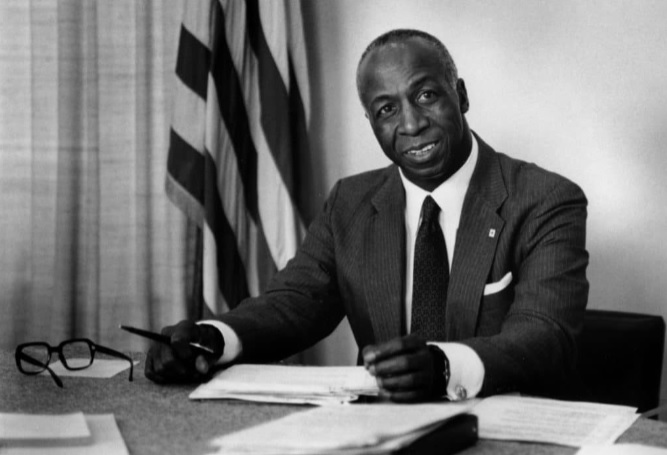
Dr. Jerome Holland

During his time as president of Hampton University in 1964, Dr. Holland became
a member of the American Red Cross Board of Governors. He served as a member until he resigned in 1970 to become the U.S. Ambassador to Sweden. He was the second African American to lead a delegation in any European nation.

Dr. Jerome Holland

Dr. Holland was later appointed by President Jimmy Carter to be the chairman of the American Red Cross Board of Governors in 1979, and was the first African American to hold this position. Because of his commitment to the Red Cross, he was appointed again in 1982.

While serving on the board, Dr. Holland showed a passion for blood research and took the lead in consolidating growing laboratory operations for the Red Cross Blood Services program. He also encouraged Red Cross regions to integrate their volunteers so important services could be extended to the entire community, regardless of a person’s ethnicity or background.

We salute them

History has a way of repeating itself. Whether it was a pandemic flu, a giant, slow-moving hurricane, or the need to improve blood research, the same needs are still being met by the Red Cross today. To contribute to the cause, click here. To volunteer and do your part to help others in need, click here.

Other African American contributions

To read more about the contributions of other African Americans to the American Red Cross, you might like these articles:

Steve Bullock – Acting President of American Red Cross in 1999

Frederick Douglass – Friend of Clara Barton

Gwen T. Jackson – American Red Cross Board of Governors

Dr. Charles Drew – Blood Bank Pioneer

Edited by Glenda Bogar, American Red Cross volunteer

The Woman Who Won – Clara Barton

By Doug Bardwell, Red Cross volunteer

“They don’t make them like they used to” is a well-worn phrase, but it could be true regarding American Red Cross founder, Clara Barton. As we honor her 201st birthday on December 25, it’s fun to take a quick look at several of her achievements.

Wage negotiations – WIN

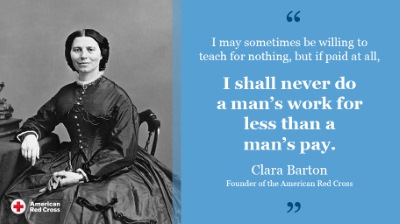
She successfully obtained equal pay as an in-demand teacher during her early career. As she said then, “I may sometimes be willing to teach for nothing, but if paid at all, I shall never do a man’s work for less than a man’s pay.”

Breaking into a man’s world – WIN

After teaching, Clara moved to Washington, D.C., and worked at the U.S. Patent Office, where she was one of the first women to work for the federal government.

First woman granted permission to travel to the frontlines – WIN

Driven by a desire to be helpful and help those in need, she sprang into action when the Civil War broke out, earning the nickname “Angel of the Battlefield” for her work in caring for soldiers on the frontlines. In 1862, Clara was granted the privilege by the U.S. Surgeon General to travel to battlefronts under the guidance of Generals John Pope and James S. Wadsworth. 

Oil Painting of Clara Barton by Mathilde M. Leisenring, 1937.

Founded a reunification program for missing Union soldiers in 1865 – WIN

After the war, Clara began to set up a program to find and gather information about missing Union soldiers to give to the soldiers’ families. 

Founded the American Red Cross in 1881 – WIN

Inspired by her experiences in Europe with the International Red Cross, when Barton returned to this country, she spent years lobbying to establish a similar organization. In 1881, Clara founded the American Red Cross and, the following year, convinced President Garfield and Congress to adopt the Geneva Treaty.  

Your turn…

After all those firsts, how can you help but be inspired? Working for the Red Cross from age 60 until she was 84, it’s impossible to say you’re too old to volunteer – you aren’t.  Sign up here. 

You also can’t say you can’t help our military members – you can. Learn more here.

And if you can only spend an hour or two – you can donate blood.  Dozens of appointments are open here.  

Be like Clara – be a winner with the Red Cross. 

Honoring our commitment during Military Appreciation Month

By Doug Bardwell, Red Cross volunteer

June 20, 2018. Washington, DC. Development SAF Stock Photography Project 2018. Photo by Roy Cox/American Red Cross

In 1776, our founders signed the Declaration of Independence, but without a military to back up our claims, the British Crown could have quickly regained control of our country. Fast forward to 2022, and one needs to look no further than Ukraine to see why our country needs a well- trained, well-equipped, always-prepared military.

Our military guarantees our entire way of life, so we need to do all we can to be there for our fighting men and women, along with their families. That was the original aim of the Red Cross founder, Clara Barton when she began caring for the wounded during the Civil War.

Service to the Armed Forces (SAF)

Since 1881, the American Red Cross has deployed alongside our military in every U.S. conflict since the Spanish-American War. The Red Cross also provides in-person support on more than 100 military installations and deployment sites worldwide, leveraging the services of 14,700 SAF volunteers around the globe.

“Members of the military, veterans, and their family members all make sacrifices,” said Jessica Tischler, Regional Program Director, Service to the Armed Forces and International Services.  “From emotional wellness workshops to emergency communications, our staff of volunteers works hard to help provide valuable service to the armed forces.

Red Cross services for our military and their families include:

Before deployment:

 “Get to know us before you need us” sessions inform the military family about the variety of Red Cross services available to them.

During deployment:

 Delivering verified emergency messages to active-duty personnel worldwide
 Facilitating financial assistance and resources through Military Aid Societies
 Military hospital services – providing comfort and help with therapy
 Coping strategies for families at home
 Mind-body stress reduction workshops

After deployment:

 Assistance at local VA hospitals and facilities
 Hero Care Resource Directory
 Information and referral services to community programs
 Military and Veteran Caregiver Network
 Reconnection workshops
 Assistance with veteran’s assistance appeals

Since 9/11, Red Cross and its volunteers have served more than 1 million military families, providing 24/7 emergency care and communications. Would you like to support military and veteran families in your community? Don’t take your freedoms for granted. Sign up to become a Red Cross volunteer or donate on our Support Military Families webpage.

Edited by Glenda Bogar, Red Cross volunteer

Celebrating a milestone

140 years of service, innovation, and hope

By Eilene E. Guy, American Red Cross volunteer

May 21 marks a milestone in the history of American compassion and generosity: 140 years ago today, Clara Barton organized the American Association of the Red Cross to appeal for clothing and funds for victims of a devastating forest fire in Michigan.

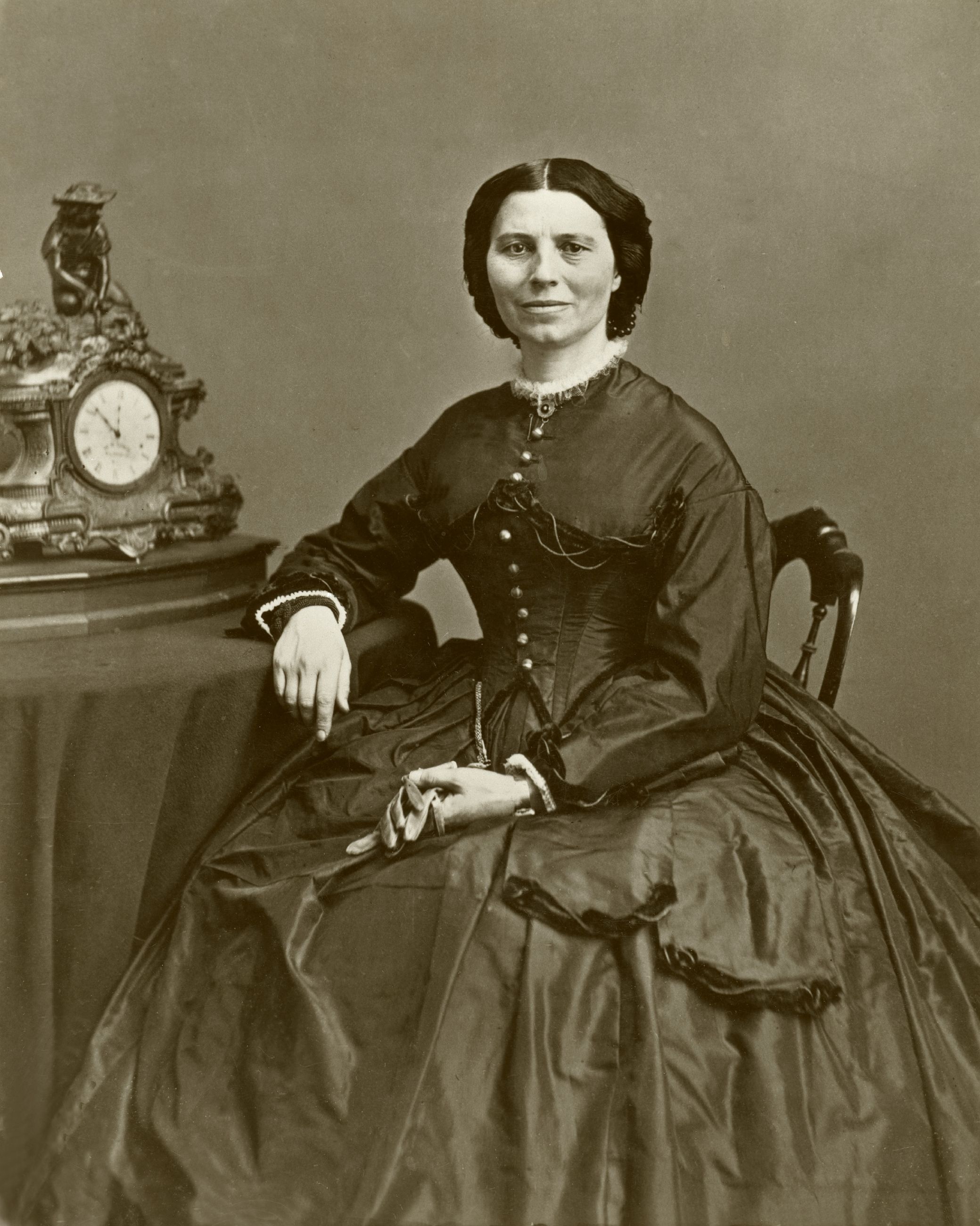
Circa1865. Matthew Brady portrait of Clara Barton.

Her visionary leadership laid the groundwork for future generations to transform the Red Cross into a leading humanitarian organization. It brings together the power of volunteers and the generosity of donors to prevent emergencies and alleviate suffering across our country and around the world.

This video provides a brief history of the Red Cross.

Throughout the 1880s, Clara and her corps of a few hundred volunteers mobilized to help survivors of floods and famines, storms and outbreaks of disease. During the Spanish-American War, she led support activities for U.S. military forces in Cuba.

By 1904, the organization had taken on such crucial roles that it received a charter from the U.S. Congress, giving it official duties to support American armed forces and to provide disaster relief.

Cleveland-born Mable Thorp Boardman took over leadership of the American Red Cross in 1905 and a local chapter was founded in her home town. During her 44 years of involvement, Mabel was credited as being the “administrative genius” who presided over exponential growth of the organization and expanded its range of prevention and response activities.

As World War I spread across Europe, readiness-minded folks in Lorain, Elyria, Toledo and Erie and Wood counties formed chapters in 1916; the following year, chapters sprang up in Medina, Summit, Stark, Wayne, Trumbull, Mahoning, Portage, Ottawa, Sandusky, Huron, Hancock counties and the Muskingum Lakes area!

Late in the 20th century, Cleveland again provided leadership to the Red Cross – Steve Bullock. After 16 years as CEO of the greater Cleveland chapter, Bullock was tapped to serve as interim president of the American National Red Cross during 1998-99. He brought a wealth of experience to national headquarters, having worked for the Red Cross in military installations in the U.S., Europe and Southeast Asia as well as being executive director of the St. Paul, Minn., chapter.

Steve Bullock
Photo credit: Daniel Cima/American rRed Cross

Steve quickly outlined his “100-day plan” to enhance the organization’s strengths, support local chapters, strengthen international relationships and address problems in the blood services division. “It’s a matter of making sure we’re performing at an excellent level,” he said.

Local and global impact

As we mark this anniversary, the Northern Ohio Region of the Red Cross serves 5.3 million residents in 31 counties, where trained responders provide comfort, essentials like food and shelter, and support for folks to rebuild their lives after crises of all kinds – more than three times every 24 hours.

This video recaps 140 years of disaster responses.

Meanwhile, we’re collecting, testing and distributing blood and blood products for accident victims, surgery patients and those undergoing treatment for chronic conditions and life-threatening diseases. Most recently, we began free COVID-19 antibody testing on all blood donations.

Men and women in our armed forces, veterans, and their families and caregivers can turn to the Red Cross for emergency communications, mental wellness courses, deployment readiness briefings and  morale-boosting activities in military medical facilities here and abroad.

Through a diverse portfolio of classes, more than 4.5 million people a year receive Red Cross training in first aid, water safety, nurse assistant training and testing, along with other lifesaving skills. The Red Cross also offers free mobile apps that about 2 million people download each year, including our First Aid, Pet First Aid and Swim apps. 

And as part of the world’s largest humanitarian network, the Red Cross is one of 192 Red Cross and Red Crescent societies across the globe that respond to disasters, help families search for loved ones missing as a result of war, natural disaster or civil unrest, and work to prevent the spread of infectious diseases.

How you can make a difference

American Red Cross humanitarian activities are only possible through the generosity of donors and volunteers, who comprise more than 90% of our workforce. Visit redcross.org to get involved by making a financial donation, volunteering, giving blood or taking a class to learn lifesaving skills.

Northeast Ohio’s Mabel Boardman built strong foundation for today’s Red Cross

Women’s History Month profile of Clara Barton’s successor

By: Olivia Wyles, American Red Cross Volunteer

March is recognized not only as Red Cross Month, but also as Women’s History Month, and the Red Cross has a powerhouse of a woman to recognize. One of Northeast Ohio’s very own, Mabel Boardman, was born in Cleveland, Ohio, in 1860 and passed away from coronary thrombosis in 1946. During her 86 years of life, Mabel lived an exciting and innovative life, with much of the fruits of her labor being the development of the sturdy framework that the Red Cross has today.

Mabel Boardman served with numerous social philanthropies throughout her life, one of which was serving on the executive committee of the Red Cross. After Clara Barton’s resignation in 1904, the Red Cross received a formal federal charter under President Woodrow Wilson, and although Boardman’s name was listed on the list of incorporators, she claims to have never given her consent. She was commonly referred to as the “administrative genius” of the Red Cross and was the acting leader of the organization, but she humbly refused any formal recognitions because of her fear that having a woman as a leader would harm the public’s confidence in the organization and diminish its credibility.

Mabel Boardman

The achievements that Boardman spearheaded for the Red Cross are numerous, but one of the most notable is that she was able to establish a large, permanent endowment fund for the organization that would give it a strong, reliable financial foundation for the future. In addition, she established Red Cross branches across the country, which directly impacted the global presence that the organization would come to have. Boardman established cooperation with other groups, like the American Nursing Association, that resulted in improved services, and she also developed the readiness of the Red Cross to respond quickly to disasters. Boardman organized the Volunteer Special Services division and served as the director in 1923 and retired 17 years later in 1940 after the membership roll in Volunteer Services reached 2.72 million.

Much of the Red Cross’ successes and developments can be traced back to Boardman and her ability to transform a 300-member society into an innovative and flourishing institution with over 29 million junior and senior members. She received the first Distinguished Service Medal ever awarded by the Red Cross. She definitely wins our vote to be recognized as a notable Northeast Ohio woman this Women’s History Month.

Edited by: Glenda Bogar, American Red Cross Volunteer