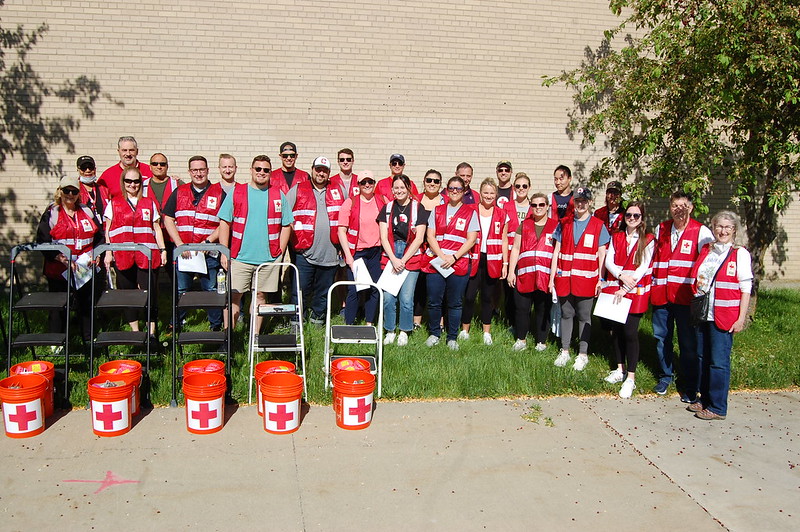
One of the greatest gifts you can give is your time – Resolve to volunteer today

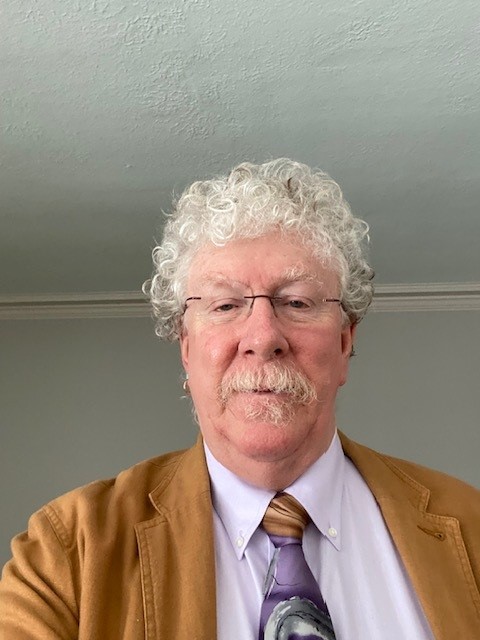
Jack Higley has been volunteering for more than 60 years

By Eilene E. Guy, American Red Cross volunteer

Still looking for a last-minute gift in honor of that hard-to-please person? Or thinking ahead to a New Year’s resolution that will really mean something?

How about something only you can give? How about the gift of your time?

American Red Cross volunteers give their precious time every time they help a family displaced by a home fire, donate blood or take a Red Cross first aid/CPR/AED course so they can save a life in an emergency.

Jack Higley, American Red Cross volunteer

Jack Higley of Aurora, Ohio, has racked up an uncountable number of hours over the span of 60-some years of volunteering with the Red Cross. He first stepped up when a fraternity brother was in a serious accident and urgently needed blood. “Back then, it was direct donation,” he recalled. “They took it out of my arm and right into him.” The experience inspired his fraternity to start scheduling regular blood drives.

Four years later, he started teaching Red Cross life guarding classes at a YMCA. Then, he went to donate blood in Madison, where he taught high school government. W; when the staff learned he had experience organizing blood drives, they asked for his help. He’s been at it ever since: he’s credited with donating just shy of 40 gallons of life-saving blood and for organizing countless drives.

“It makes me feel good,” he said, adding, “There’s always a need. My dad had 17 heart attacks and he used a lot of blood for the surgeries he had – stents, by-passes.

“People live because somebody donated.”

Although Jack can no longer donate because of health conditions, he enjoys staffing blood drives as a blood donor ambassador. “I like to be around the canteen (the refreshment area where blood donors are invited to enjoy juice, water and cookies immediately following their donation). I can relate to the people, talk to them. Some of them donate faithfully every two months. They’re my people.

“Jack’s Red Cross experience is an example of the generosity of spirit our volunteers show every day,” said Susan Gordos, who coordinates volunteers in support of blood drives and blood services across Ohio. “We have so many opportunities for people to give the gift of their time, to be sure life-saving blood is there when it’s needed.”

So, how about giving the gift of your time? The Red Cross of northern Ohio is always looking for blood donor ambassadors and blood transportation specialists.

As an ambassador, you’re the friendly face that greets donors, helps them sign in , and answers questions. You might even staff the canteen, like Jack, to chat with donors after they give blood.

Watch this video to hear from others about why they’ve volunteered in this role. Training is free, but the hospitality you provide is priceless.

Or you might find that being a blood transportation specialist is a good fit. These folks are a critical link, driving blood products to hospitals.

If you have a valid state driver’s license and at least three years of licensed driving experience, you are eligible to volunteer as a blood transportation specialist. You can choose regular routes, stand-by emergency deliveries or both. It’s a great opportunity for couples, friends or family members.

As Jack said, “Many of us are going to need blood, unfortunately. If you need it, the Red Cross has it, but everybody has to work together to make it happen.”

To take the first step of giving the gift of time, visit www.redcross.org/volunteertoday.

Have a happy, healthy holiday season. And may you have a rewarding 2023 – perhaps as a new Red Cross volunteer.

Edited by Glenda Bogar, Red Cross volunteer

Posted by Ryan Lang, Red Cross board member and volunteer

On Veterans Day and every day, Red Cross helps active-duty military, veterans and families cope

By Eilene E. Guy, American Red Cross volunteer

Today is Veterans Day, when we honor those who have served in our military. But tomorrow and every day after this national holiday passes, the American Red Cross will continue to honor and support veterans, military members and their families. For more than 100 years, the Red Cross has been helping active-duty men and women in uniform, their families and veterans deal with the unique challenges of military service.

It’s no secret that military life is stressful. Those of us in civilian life can only imagine the toll it takes to be in combat or challenged with heavy responsibilities, leaving and reuniting with family and home, being uprooted, adjusting to assignment after assignment.

Red Cross Service to the Armed Forces has a whole catalogue of programs to ease those burdens – everything from a reassuring presence on battlefields, deployment stations and military hospitals across the globe to reunification and readjustment workshops here on the home front.

There are even Red Cross programs designed specifically for children who have to deal with the unique social and emotional challenges of military life.

Northern Ohio Region Red Cross volunteer Tom Adams of Cleveland uses his education, training and skills as a clinical social worker to facilitate free, confidential resiliency
workshops on bases around the country. He recently returned from Texas, where he has done sessions at Fort Bliss, Fort Hood and Fort Tyler. Some of the highlights of his assignments over more than a dozen years include assisting service members at Fort Pickett in Virginia, Orlando, Fla. and Wright-Patterson here in Ohio.

Tom sees genuine gratitude in the people he works with. Explaining why he volunteers he said, “I can give up a weekend without pay to give them a thumbnail sketch of how to handle what life throws at them. I find it really humbling to be able to do this.”

Tom structures his small-group workshops as conversations, encouraging participants to share the challenges they face in a safe space. “Then I suggest options for handling these situations,” Tom said. “I’m not there to ‘teach.’ My goal is to give them tools they can use, when they need them.”

Here in northern Ohio, the Red Cross is also active with National Guard and Reserve units, conducting workshops to help ease the transitions of deployment and reconnection after active duty.

Jessica Tischler, regional director of Service to the Armed Forces for the Northern Ohio Red Cross recruits and trains volunteers with certification in mental health and social work fields for that program.

“I have the privilege of interacting with veterans every day and hearing their stories of service and sacrifice,” she said. “It’s gratifying every Veterans Day to see the American public come together as a community to thank the men and women who served our country.”

The Red Cross is a nonprofit organization that depends on volunteers and the generosity of the public. Our support for the U.S. military dates back to World War I, and we’re proud to maintain our founders’ commitment to the men and women who have served or continue to serve.

For more information or to volunteer or donate to support the Red Cross mission of helping active and retired military members, visit redcross.org or our Spanish site, CruzRojaAmericana.org, or follow us on Twitter at @RedCross.

Edited by Glenda Bogar, American Red Cross volunteer

Posted by Ryan Lang, American Red Cross board member and volunteer

Disaster aid stations provide much needed supplies, snacks and meals for families recovering from Hurricane Ian

By Mandy McMahon, American Red Cross

Three weeks after Hurricane Ian made landfall along Florida’s Gulf coast, the American Red Cross continues to serve communities throughout Southwest and Central Florida. Hundreds of people are still relying on shelters and support following the storm.  

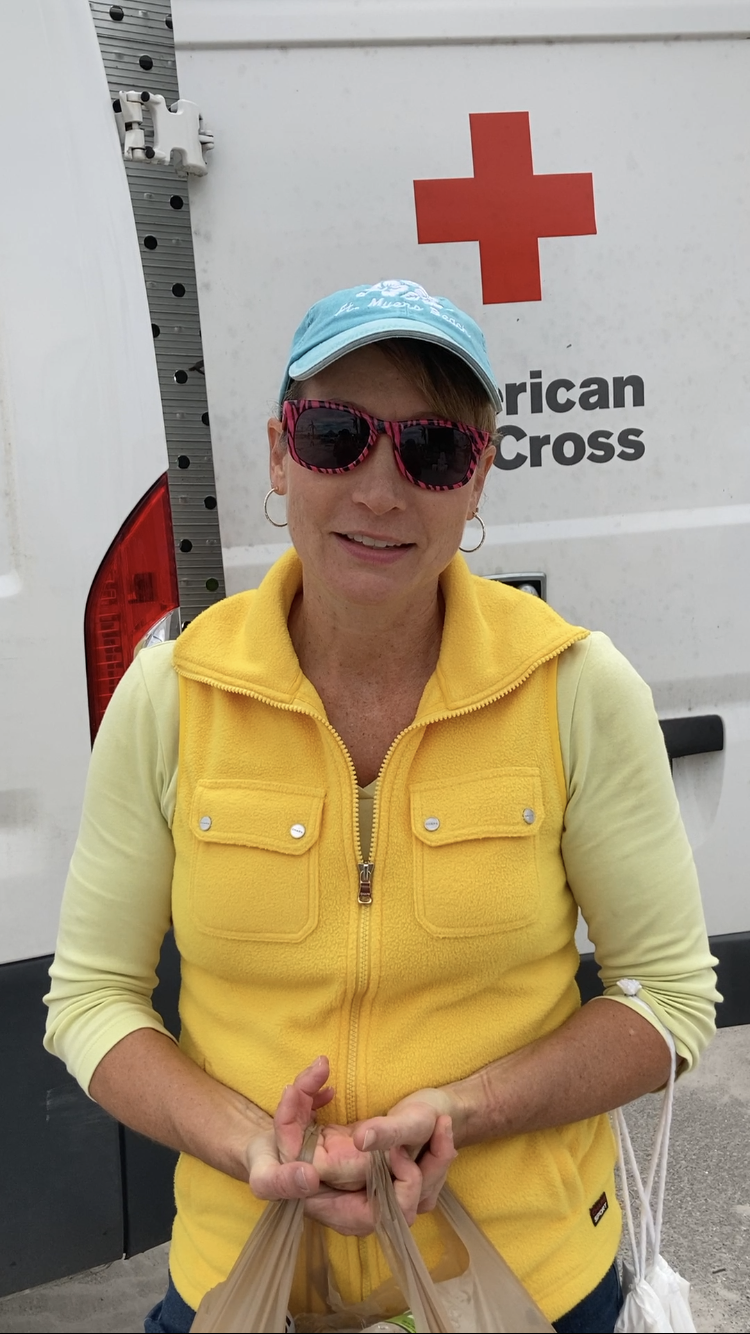
Stow resident Christina Krieger

“We have a long journey ahead. It’s just begun. Even after three weeks there’s still a major amount of devastation. I think it’s going to be a two-year journey,” said Christina Krieger from Stow, Ohio who came to Fort Myers Beach to help her mother pick up the pieces after her home of 22 years was flooded by the hurricane. “All her belongings are laying outside. We have to clean off all the muck and salt just to prepare it for storage while the home is rebuilt inside. It’s really hard – it’s devastating.” 

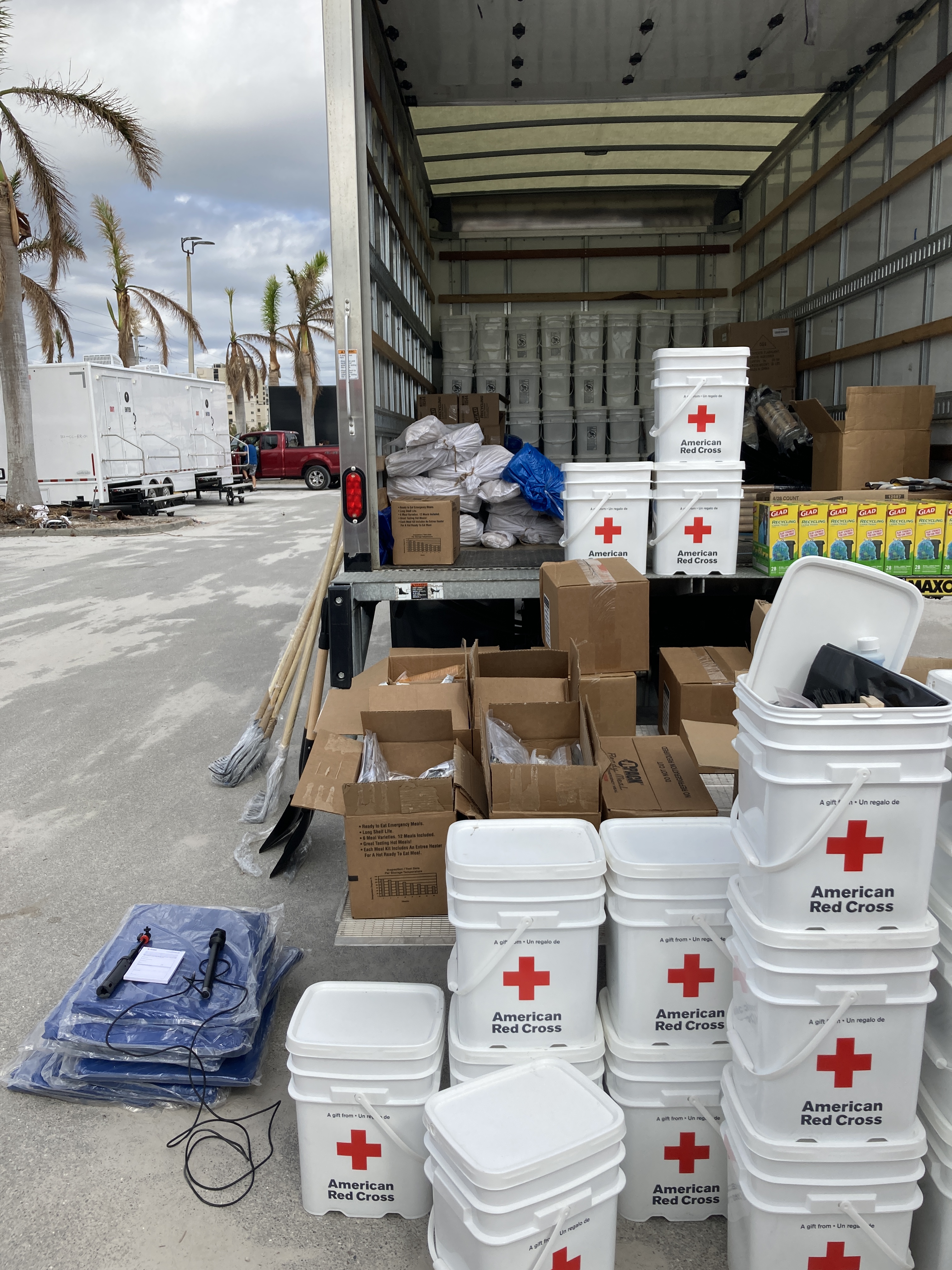
Christina came to the Disaster Aid Station on Fort Myers Beach on Thursday looking for a meal while she and her mother work through the wreckage searching for salvageable items. At Disaster Aid Stations, the American Red Cross offers mobile feeding and emergency supply distribution, alongside other organizations providing essential services such as laundry and bathroom facilities for Fort Myers Beach residents where water and power utilizes are still not operational.  

Residents waiting in line for a hot meal from the Red Cross Emergency Response Vehicle express the struggle of cleaning up an overwhelming amount of destruction caused by high winds and more than seven feet of storm surge.  

“We’ve been working 18-hour days to accomplish what we can before we go back home. What the Red Cross offers for meals and extra supplies is so helpful – it’s one less thing we have to think about. We’ll try to come back in a month when maybe the electricity will be back on,” Christina describes the daunting task of helping her mother down the path to recovery. “Thank you to the American Red Cross for being here, and to everyone else along the beach who’s providing free meals. Don’t forget about us – please stay.” 

Christina hopes that she can come back someday and see the Fort Myers Beach she remembers as a place of fun and relaxation. Residents seeking help at the Disaster Aid Station expressed their hope that vacationers will come back and help the island recover.  

“You can see things on TV, but until you experience it firsthand and feel it, you have no idea what it’s like. We did evacuate, but when we came back, we just cried,” said Cheryl McAllister, describing her reaction to seeing the devastation to her home and community. “Everybody that sees the destruction cries because they’ve been here before and they know what it was, but we will come back. Fort Myers Beach will come back; it just takes time.” 

Like so many other Floridians impacted by the storm, Cheryl calls herself fortunate despite losing her possessions that were either washed out or mangled by flood waters. Her home is still standing.  

Red Cross Disaster Aid Station after Hurricane Ian at Fort Myers Beach, Florida

Red Cross has been amazing. They’re so nice – they stop and ask if you’re ok and make you feel better. They’ve given us food and water,” Cheryl said as she holds hot meals to take back to her home. “We’ve been here a couple of days without any electricity, water or sewage. We come here to get lunch – we usually only eat one meal a day, which is this one.” 

To date, the American Red Cross has provided nearly 1.5 million meals and snacks with the help of our partners. Additionally, more than 350,000 relief items, including comfort kits and other supplies have been provided to people in need serving more than 20,000 total households. 

“We appreciate everything the American Red Cross does and every other organization that’s here helping. I thank everybody who’s helping, volunteering, who cares about us,” said Cheryl. “We’re off the news, but it’s still new and it’s still raw. It’s nice not to be forgotten.” 

Posted by Ryan Lang, Red Cross board member and volunteer

As many students head back to school, Red Cross offers important safety tips

By Christy Peters, American Red Cross Regional Communications Manager

If you’re out this weekend, making a quick Target or Wal-Mart run, be prepared to witness a strange phenomenon – the panicked, school supplies shopping parent. We’ll be wide eyed and shaky, searching for a plastic folder, with three holes but no prongs, in a specific color that 500 other parents have also been looking for since school supply lists came out. That’s right folks, it’s back to school time!

My son will be in first grade this year, so I’m slightly less nervous than I was when he started his academic journey last year as a kindergartener. Of all my fears (and there were many) one of the biggest was him riding the bus. Watching him climb on and sit in that huge seat was enough to send me into a full-on panic attack. Unfortunately, so was watching the many drivers who sped past the bus as it was slowing down to get him or didn’t stop at all.

The American Red Cross Northern Ohio Region wants everyone to stay safe as students head back to school. Below are several reminders for riders, walkers and those of us sharing the roads and sidewalks with them. Take a moment to review these important tips and go over them with your kids returning to school.

CELL PHONES A DISTRACTION The National Safety Council (NSC) reports distracted walking can be dangerous, even deadly. Teach your students the following:
– Don’t text or talk on your phone while walking. If you must text, move out of the way of others and stop on the sidewalk.
– Never cross the street while using an electronic device.
– Do not walk with headphones in your ears.
Drivers can be distracted too. Never use a phone while driving. Help keep children
safe by eliminating all distractions.

TAKING THE BUS
– Students should get to their bus stop early and stand away from the curb while waiting for the bus to arrive. Young children should be supervised.
– Board the bus only after it has come to a complete stop and the driver or attendant instructs them to get on. They should only board their bus, never an alternate one.
– All students should stay in clear view of the bus driver and never walk behind the bus.

WALKING TO SCHOOL
– Cross the street at the corner, obeying traffic signals and staying in the crosswalk.
– Never run out into the street or cross between parked cars.
– Use a route along which the school has placed crossing guards.
– Parents, walk with young children and those taking new routes or attending new schools, for the first week to ensure they know how to get there safely. Arrange for the kids to walk to school with a friend or classmate.

GOING BY CAR
– Everyone should always wear a seat belt.
– Younger children should use car seats or booster seats until the lap-shoulder belt fits properly (typically for children ages 8-12 and over 4’9”), and ride in the back seat until they are at least 13 years old.
– If a teenager is going to drive to school, parents should mandate that they use seat
belts.

RIDING A BIKE There may be more young people on bikes as the school bells ring. They should:
– Wear a properly fitted helmet and bright clothing.
– Ride on the right side of the road, with traffic, in a single file.
– Come to a complete stop before crossing the street; walk bikes across the street.
– Stay alert and avoid distracted riding.

SLOW DOWN Drivers should slow down, especially in residential areas and school zones, and know what the yellow and red bus signals mean. Yellow flashing lights indicate the bus is getting ready to stop, that motorists should slow down and be prepared to stop. Red flashing lights and an extended stop sign indicate the bus is stopped and children are getting on or off.

Motorists must stop when they are behind a bus, meeting the bus or approaching an intersection where a bus is stopped. Motorists following or traveling alongside a school bus must also stop until the red lights have stopped flashing, the stop arm is withdrawn, and all children have reached safety. This includes two and four-lane highways. If physical barriers such as grassy medians, guide rails or concrete median barriers separate oncoming traffic from the bus, motorists in the opposing lanes may proceed without stopping.

KEEP LITTLE ONES SAFE Keeping all students safe is the primary concern for everyone, but there are special steps for parents of younger kids and those going to school for the first time:
– Make sure the child knows their phone number, address, how to get in touch with their
parents at work, how to get in touch with another trusted adult and how to call 911.
– Teach children not to talk to strangers or accept rides from someone they don’t know.

Finally, download the free Red Cross First Aid app for instant access to information on handling the most common first aid emergencies. You can find it by searching for ‘American Red Cross’ in your app store or at redcross.org/apps. Learn and practice First Aid and CPR/AED skills by taking a course (redcross.org/takeaclass) so you can help save a life.

Posted by Ryan Lang, American Red Cross Volunteer


“Tattoos!” A story and reminder about blood donation and tattoos for National Tattoo Day

By Christy Peters, American Red Cross Regional Communications Manager

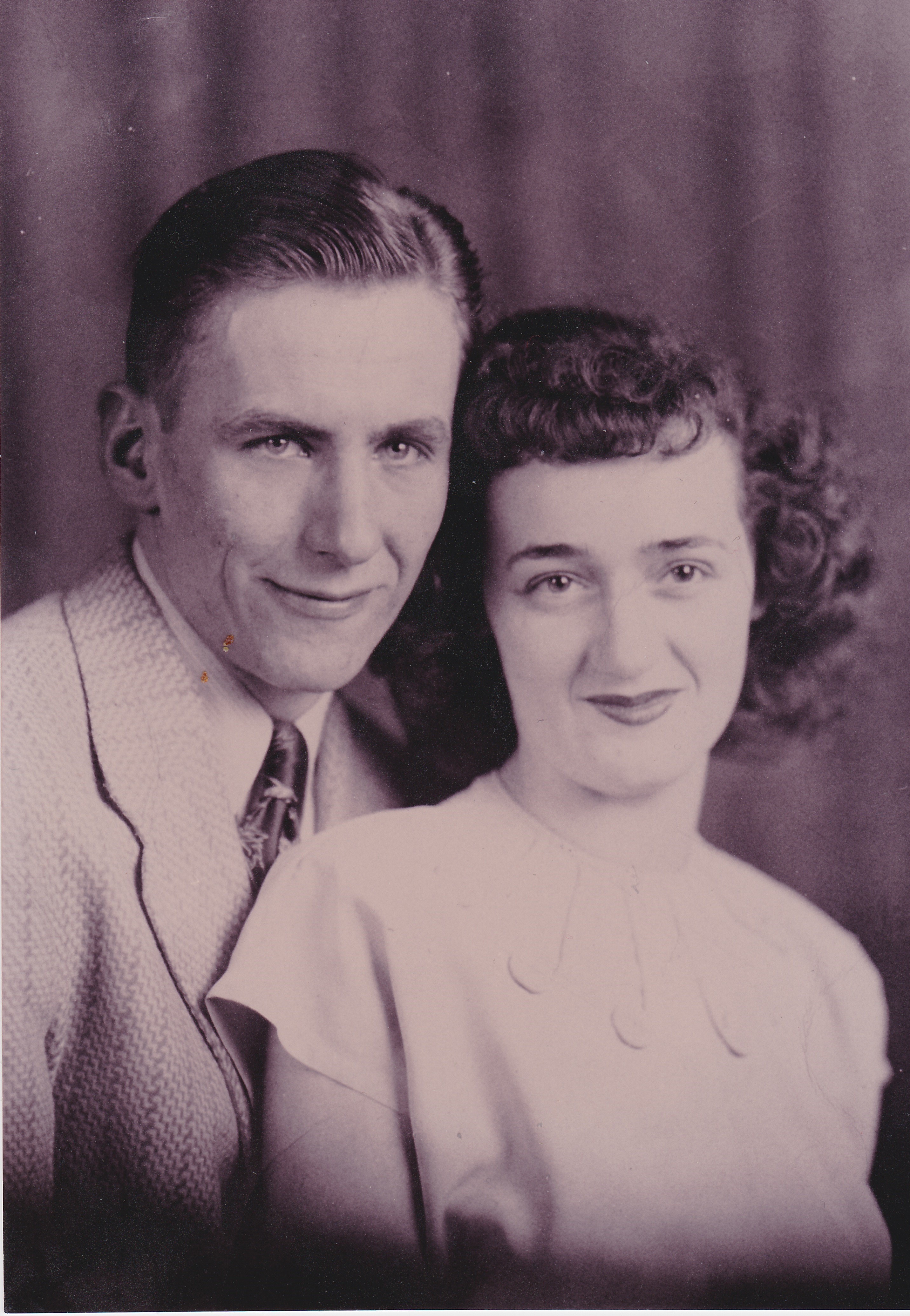
1947 – Grandma & Grandpa’s engagement picture – photo courtesy of Christy Peters

One of my favorite stories about my grandparents happened on one of their early dates. They both lived in Canton and had recently started dating. One night, when my grandfather was driving my grandmother home, they had car trouble. Luckily for both of them, my grandfather worked as a mechanic. He pulled the car over to the side of the road and got out to inspect under the hood.

Grandma got out with him and once the hood was open, Grandpa began rolling up his sleeves to get to work. Suddenly he heard my grandmother scream, “TATTOOS!” Apparently, in all their time together, Grandpa had always worn long sleeves and had not revealed his two very prominent arm tattoos, courtesy of his time in the Army during World War II.

Grandma was shocked but I think most of her reaction had to do with what her parents, my great grandparents, were going to say when they found out she was dating a man with tattoos. Thankfully, everyone got over the scandalous tattoos and my grandparents went on to be married for 70 years until my grandmother passed away in 2019.

You’re probably thinking, “Great story but what does it have to do with the American Red Cross?” Well, if you didn’t know, July 17 is National Tattoo Day, a day that “recognizes the history, culture, and artists dedicated to etching ink permanently on the skin.” Unfortunately, many people think the Red Cross is just as shocked by tattoos as my grandmother was that night many years ago. People often tell me they can’t donate blood because they have a tattoo, or that they recently got a tattoo and think they must wait years before giving again.

Grandpa and his tattoos in 1952 – photo courtesy of Christy Peters

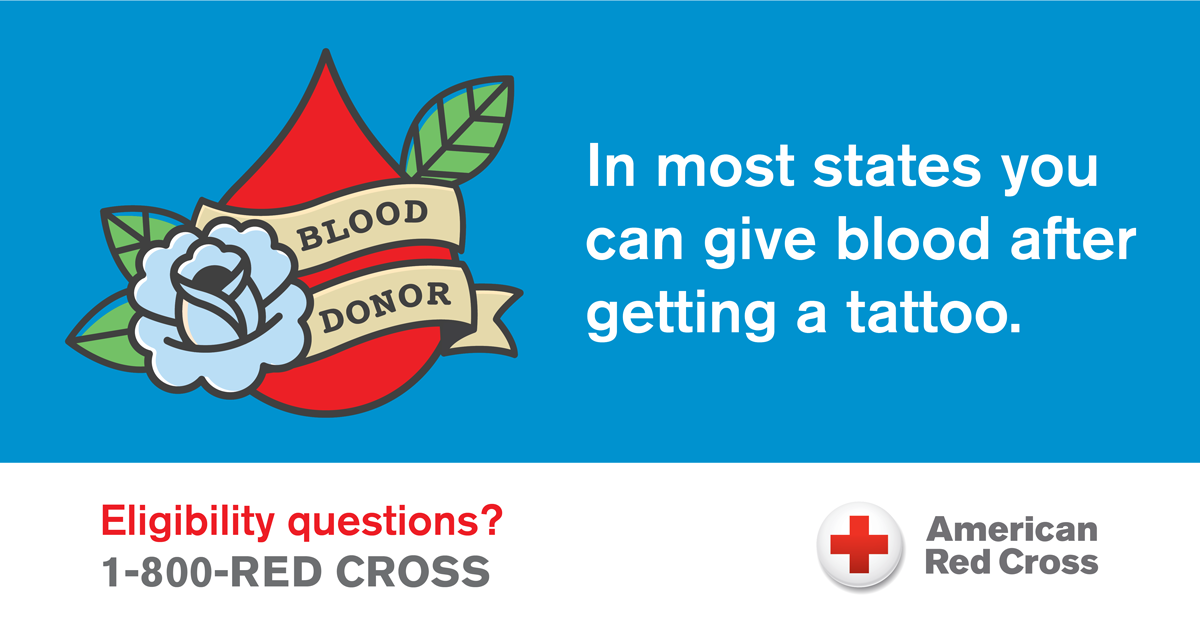
I’m writing this blog to let all of you with gorgeous ink know that none of that is true! In Ohio, there isn’t a deferral if your tattoo was applied with a sterile needle and fresh ink in a state regulated facility. If you received your tattoo in a different state, you can find out if that state requires you to wait to give here. And, even if you do have to wait, the deferral period is only three months, not years.

If you’ve not been donating because of tattoos, now is the perfect time to begin. During the month of June, the Northern Ohio Region collected nearly 2,000 fewer donations than needed to help meet patient needs. Your donation now will help us avoid a summer shortage. So, just like my grandpa did on that date, roll up those sleeves proudly and show off your tattoos while you help save lives! Find a drive near you and make an appointment today!

Posted by Ryan Lang, American Red Cross volunteer and board member

Edited by Glenda Bogar, American Red Cross volunteer

Students can develop skills and help communities over summer break

By Tim Poe, American Red Cross volunteer

On this blog, we have been fortunate to share the achievements and life stories of several extraordinary individuals in Northern Ohio. These include several young people who have applied life-saving skills learned from the American Red Cross, like Alexis Starnes and Travis Shrout, organized a blood drive, like Andrew Lazowski, and worked as advocates, like Makenzie Nance. There are many others who have assisted their communities, helped save lives, developed skills that will help them throughout their lives and careers, and built lasting friendships.

If you are a student, recent graduate, or parent searching for activities during the summer break, the Red Cross offers an array of classes and volunteer opportunities.

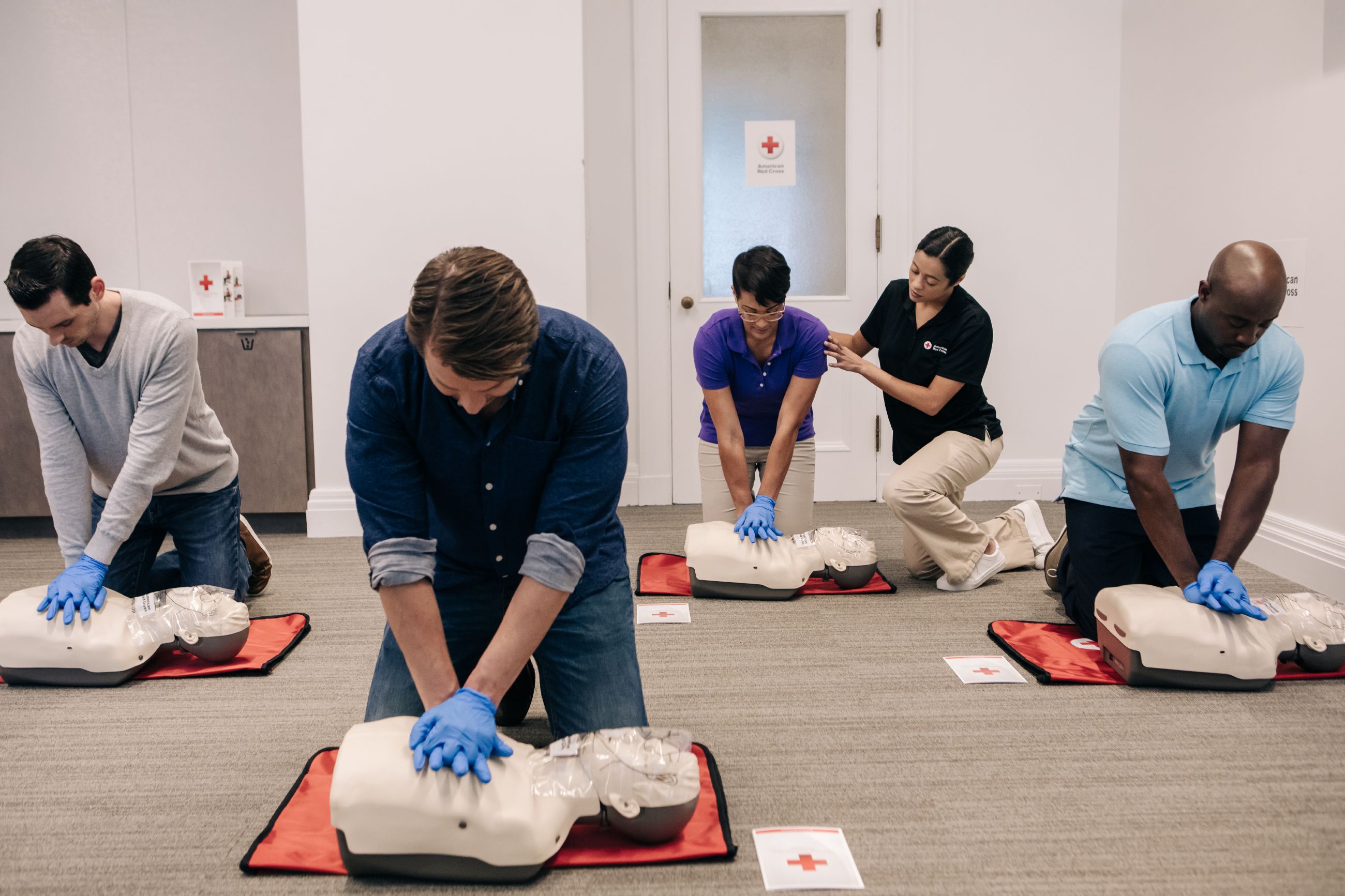
Red Cross classes are offered throughout the summer in online, in-person, and blended formats. The Red Cross encourages everyone to learn first aid, CPR, and how to use an AED. Time is critical during a cardiac arrest; chances of survival double or triple if CPR is administered or an AED is used within the first few minutes.

June 22, 2018. Washington, DC. CPR stock photos by Roy Cox for the American Red Cross.

In addition, the Red Cross offers Babysitting Training for students between 11 and 15 years of age. Advanced Child Care courses are available for students 16 years and older. The babysitting classes feature topics such as choosing age-appropriate activities, basic child care (including bottle feeding), child behavior, leadership, professionalism, safety, starting a babysitting business, and more. These courses also cover emergency and first aid skills such as bee stings, allergic reactions, asthma, burns and choking. Advanced Child Care course participants learn the most common child care routines and behavior along with safety inside and outside the home, including driving with children and water safety.

For those seeking to volunteer, opportunities are available depending on age, such as assisting or organizing blood drives, participating in Red Cross Clubs, even streaming to help support Red Cross disaster relief efforts.

Northern Ohio volunteer opportunities are here. Blood Donor Ambassadors are especially needed.

If you are interested in organizing a blood drive, and possibly earning a scholarship, please see the Leaders Save Lives page.

Additional information is available on the Red Cross Youth page.

Blood donors are also needed. If you are 17 or older (16 with parental/guardian consent in some cases), please consider donating. Information for teen donors is here.

My first experience with the Red Cross was assisting a blood drive at my high school and learning CPR. While that was decades ago, the experience and skills have had a positive influence ever since, helping instill a desire to assist others and leading to volunteering as an adult. I have also been fortunate to work alongside many dedicated, caring people. It began with a Red Cross sign-up sheet (I predate the internet) and a willingness to learn and help.

Posted by Ryan Lang, American Red Cross volunteer and board member
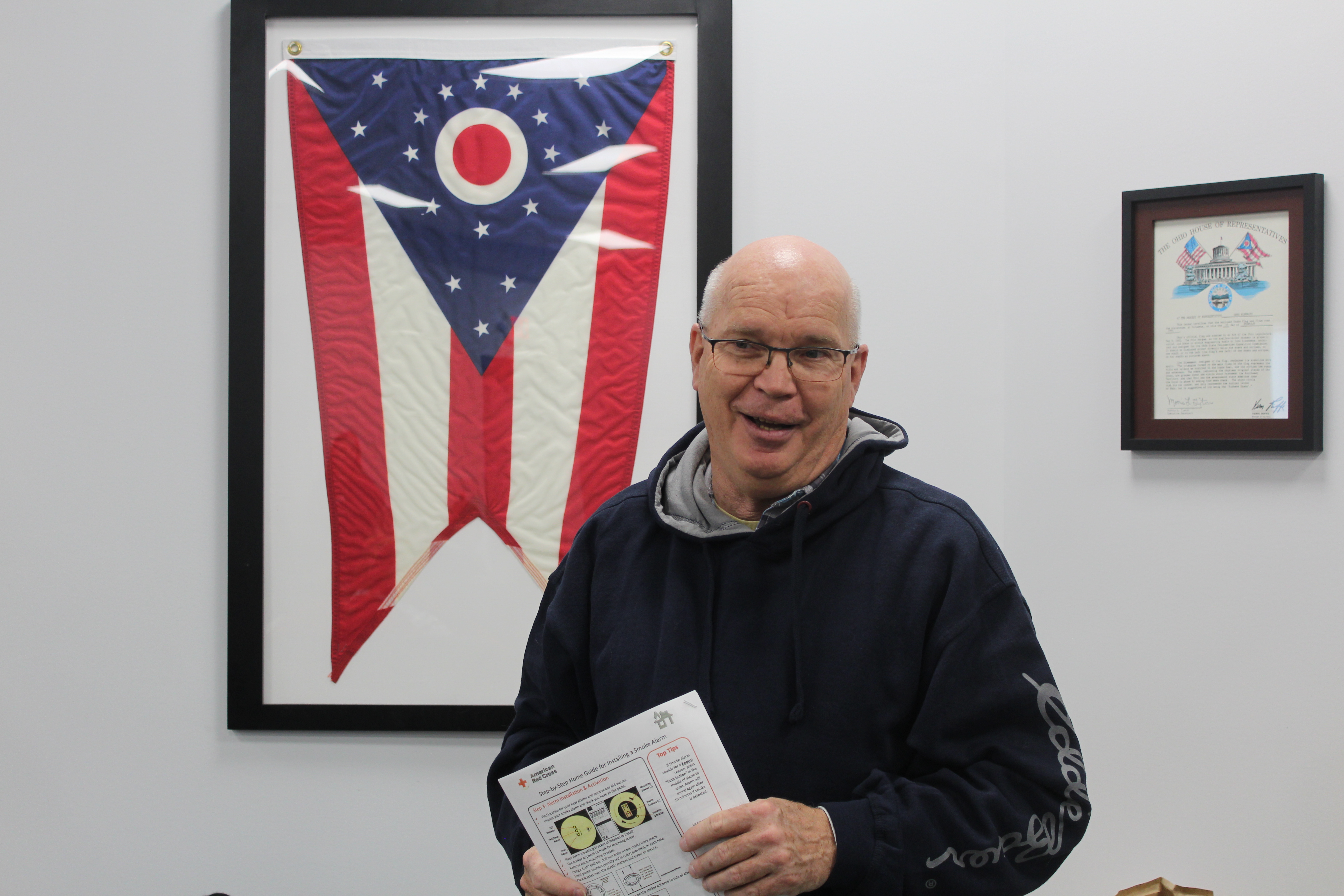
A lesson from childhood “Sounded the Alarm” for this Red Cross volunteer

By Sue Wilson, American Red Cross volunteer

American Red Cross volunteers come from many backgrounds, professions, and demographics and show up ready to work with different motivations. Whether it is the desire to make a difference, a way to network and socialize, or to stay active in retirement, a day in the field helping the Red Cross fulfill its mission with one of its many programs is a day well spent.

Elizabeth Sullivan (right), Red Cross Volunteer

Elizabeth Sullivan got involved this past May after a colleague suggested they partner with the Sound the Alarm campaign as part of their Yale Alumni Service activities. Sound the Alarm is part of the Red Cross home fire campaign, established in 2014 to help prevent fire-related fatalities. A similar program began in Cleveland in 1992, when the Red Cross partnered with the Cleveland Division of Fire to reduce fire fatalities by installing smoke alarms in homes and teaching fire safety.

Elizabeth, the director of opinion for cleveland.com, and previous editor of the editorial pages of The Plain Dealer, along with her team and others, installed 175 smoke alarms in 60 homes in Cleveland ‘s Old Brooklyn neighborhood on May 14. For her, the project took on a deeper meaning.

“My father survived a house fire as a child because his older sister came into the room at night with a wet towel, and they put it over their mouths and they crawled along the floor to safely escape,” said Elizabeth.

That experience prompted her father to do annual fire drills with their family when Elizabeth was a child. “We were taught basic fire safety tips, like touch the door before you open it to make sure it’s not hot and to go out the window.”  While she and her siblings had fun climbing out on the roof, the importance of those drills stuck with her.

Red Cross volunteers, Elizabeth Sullivan (far right)

Covid paused this important program over the last two years, but this spring, Red Cross staff members and volunteers like Elizabeth installed 2,374 smoke alarms throughout Northern Ohio, making 929 homes safer.

Home fires claim lives every day, but having working smoke alarms can cut the risk of death by half. The good news? You don’t have to wait until the next Sound the Alarm campaign, the Red Cross installs smoke alarms throughout the year.

If you or someone you know may need a smoke alarm, click here to request a home safety visit and smoke alarm installation. And if Elizabeth’s story encouraged you to want to volunteer, find more information here.

Edited by Glenda Bogar, American Red Cross volunteer
Posted by Ryan Lang, American Red Cross volunteer and board member

Red Cross training in action: A lifesaving moment

By Ryan Lang, American Red Cross volunteer and board member

Anyone who’s received CPR and AED training through the American Red Cross will tell you they hope to never have to use it, but knowing it’s there just in case is comforting.

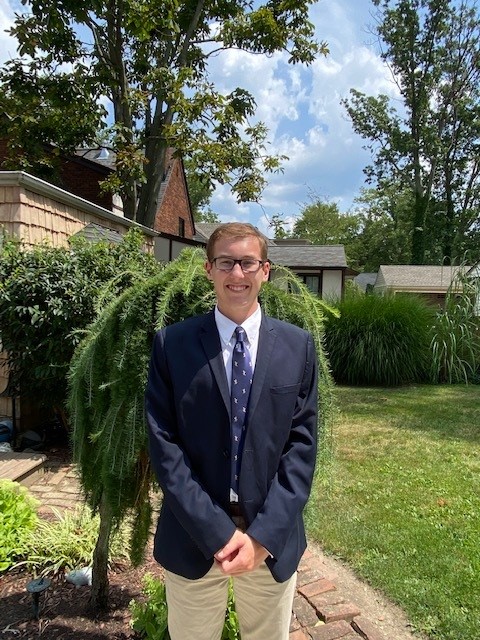
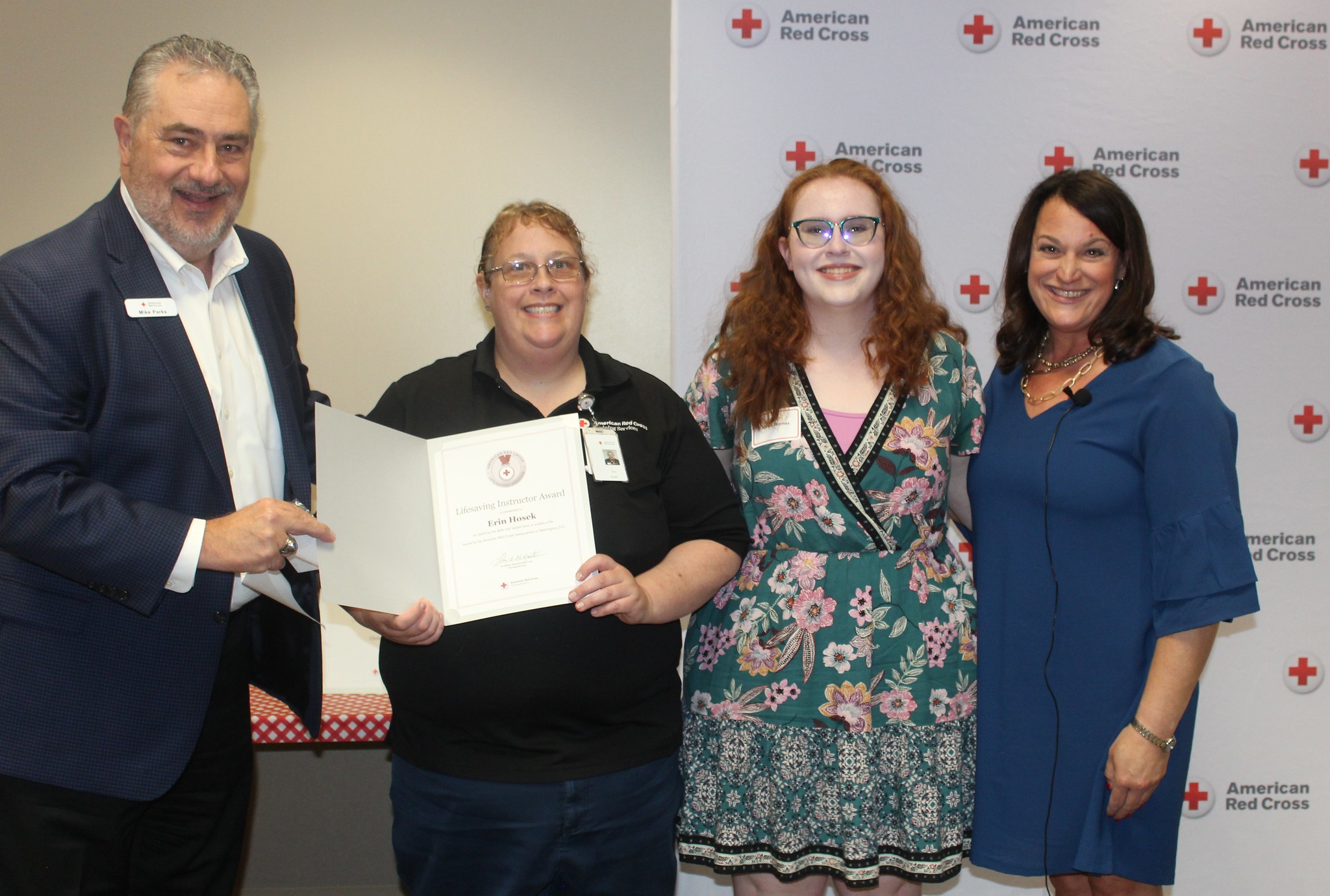
Michael Parks, Regional Executive of the Northeast Ohio Region of the American Red Cross, Alexis Starnes, Rachel D’Attoma, Executive Director of the American Red Cross of Greater Akron and the Mahoning Valley

Stow-Munroe Falls High School graduate Alexis Starnes would tell you that she’s grateful for the knowledge and training she received during her time as a Girl Scout and on December 30th, 2021 that training helped save the life of a small child.

That day, Alexis was working at the Small Steps Big Strides Childcare center in Stow as part of a real world work experience program through her school. She was feeding a 7-month-old girl baby food when the child stopped responding. “She stopped making noise and she wasn’t moving,” Alexis recalled during a recent interview with American Red Cross Regional Communications Director Jim McIntyre. Thanks to her Red Cross training, Alexis immediately recognized that these were signs that the child was choking. That’s when she unstrapped the child from her chair and began administering back blows, just like she learned in training.

Alexis was able to dislodge the food that was obstructing the baby’s airway. She saved the child’s life – something Alexis says she could have never done without her CPR and AED training from the Red Cross.

On June 8th, 2022, during the Lifesaving Award Program, Alexis was honored with the Certificate of Merit – the highest honor given by the Red Cross that is signed by the President of the United States. The award is given to someone who embodies the spirit of the Red Cross by using action to help alleviate human suffering in the face of an emergency. On that day, December 30th, 2021, that is exactly what Alexis did.

Michael Parks, Regional Executive of the Northeast Ohio Region of the American Red Cross, Erin Hosek, American Red Cross Instructor for the Girl Scouts of America, Alexis Starnes, Rachel D’Attoma, Executive Director of the American Red Cross of Greater Akron and the Mahoning Valley

Red Cross CPR and AED instructor and Girl Scout troop leader Erin Hosek, who taught Alexis her lifesaving skills, was also awarded the Lifesaving Instructor Award. After receiving her award, Erin pointed out that of her entire graduating Girl Scout troop, Alexis was the only one who chose to renew her certification two years after she had received her initial training. “And I’m glad she did,” Erin said, adding how proud she is of Alexis for using those lifesaving skills that day.

Alexis is continuing her education at Stark State University in the fall and will pursue a career in childcare. As for the young child Alexis saved, she says the girl still regularly attends the childcare facility in Stow and is a very happy and healthy baby.

Red Cross salutes volunteer leadership

By Eilene E. Guy, American Red Cross volunteer

Sally Carter has made a career of volunteer leadership.

No matter where she’s lived – and she’s moved a lot – Sally has found needs to fill in her community.

She helped found a children’s theater company and organized volunteers for a third grade “reading buddies” program. PTO and PTA, classroom volunteer, juvenile vision screening, United Way, Newcomers Club, Chamber of Commerce, Learning Disabilities Association – Sally has grown and shared her volunteer “chops” with infectious enthusiasm.

The American Red Cross is lucky to have her.

Sally Carter, Red Cross volunteer

Sally was living in Ogden, Utah, when she saw a newspaper ad for a front -desk volunteer at the local Red Cross chapter.

“It was two weeks before (Hurricane) Katrina hit,” she recalled with a chuckle. Needless to say, that was an extraordinarily challenging moment to be manning the phones, answering a myriad of questions about Red Cross services, volunteer needs and financial donations.

But Sally found her niche. “I was hooked instantly. We were just a family. After that first rush of hurricane response, I got promoted: We did workshops and forums; I started a newsletter, and we did fundraisers.

“I watched all the wheels turning. Red Cross was helping people with house fires, hurricanes; when a semi overturned on the highway, we were feeding the firefighters. Earthquakes, avalanches, mudslides – I didn’t even know about mudslides,” she said, reflecting on the variety of hazards Americans face.

When Sally and her husband Lee moved back to Sandusky to be near family, we crossed paths; she and I had worked together decades before. As we caught up, she mentioned her Red Cross experience and I pounced: “Join us on the chapter board!”

And of course, she did.

“I love working with Sally as a member of our board of directors and as the leader of our Community Outreach team because her passion for the mission of the Red Cross shines through in everything she does,” said Todd James, executive director of the North Central Ohio chapter.

Sally has organized a pool of volunteers to attend community events, to spread the word about the many things the Red Cross does – disaster prevention, preparedness and response, blood collection, health and safety education – as well as the many ways the public can get involved, – as volunteers, blood donors or financial supporters.

She also edits the chapter newsletter, Chapter Chatter.

“You get so hooked,” Sally said. “It’s almost a selfish thing: I may have done some good as a volunteer, but I got back 20 times over.”

Sally’s dedication to volunteerism is a family thing. Her parents were committed volunteers and she laughingly said she’s “volun-towed” her husband Lee, a retired newspaper executive, into a variety of activities. “I’m hoping I’ve instilled it in my sons,” she added.

Sally is a sterling example of the tens of thousands of volunteers who make it possible for the Red Cross to fulfill its mission to “prevent and alleviate human suffering in the face of emergencies by mobilizing the power of volunteers and the generosity of donors.”​

Edited by Glenda Bogar, American Red Cross volunteer

Northern Ohio Red Cross volunteer finds the path to yes, no matter the challenge

The first in a series of volunteer profiles during National Volunteer Week

By Tim Poe, American Red Cross volunteer

Deb Day, Red Cross volunteer and Toby

The American Red Cross has many outstanding volunteers in Northern Ohio, and we
are proud to profile a few for Volunteer Week. Today we are featuring Deb Day, a
community volunteer leader in the Heartland, Stark and Muskingum Lakes (HSML)
chapter.

Since joining the Red Cross in 2017, Deb has helped a tremendous number of people recover from disasters—both in Ohio and throughout the U.S. She frequently assists during blood drives and has taken a key role in several Red Cross initiatives.

Deb Day, Red Cross volunteer

Deb brings a lifetime of learning and experience to the Red Cross. She retired from a public education career almost seven years ago, where she coached, taught and served as a guidance counselor. Her interests and hobbies include the outdoors, travelling , and sports. Deb has always loved helping others and seeking adventure.

“Now that I have the time to volunteer,” she said, “I truly enjoy helping out whether it is deploying to disasters, working as a blood donor ambassador, or working at the local food pantry.”

Deb first joined in 2017, after seeing a Red Cross call for volunteers during coverage of Hurricane Harvey.

Deb was soon assisting those impacted by the hurricane. She said her deployment started with “hurry up and wait” but soon changed to needing to be flexible, avoiding frustration, and getting the job done. Deb served in an Emergency Response Vehicle (ERV), feeding those in a community about 45 minutes away from the kitchen in Sugar Land. “We were the first to leave and the last to come home,” she said.

Deb also saw the best of humanity. “Amidst all the destruction was hope and determination,” she said. “A community came together to look out for one another. It was a time when I could provide food, hugs, words of comfort, and a shoulder to cry on. It was remarkable!” She also spoke of the warm, welcoming the Southern Baptist kitchen volunteers and how “Red Cross deployments create families whose members stay in touch for life.”

Antique Day Parade, 10-10-21

Of course, most of Deb’s work is in her home chapter. In addition to helping with daily responses and initiatives, she assisted following the tornado in Shelby and flooding in the Wooster area. Speaking very highly of her fellow volunteers and staff members, Deb remarked how everyone in their small but mighty group pitched in and served the needs of the community, something which they consistently achieve.

“I truly appreciate everyone’s dedication to their community and the Red Cross,” Deb said. Whether Sound the Alarm, community assistance, disaster response, training, or meetings, “volunteers and staff find the path to ‘YES’ no matter the challenge.” And while the pandemic has been difficult, the Red Cross has not wavered in its humanitarian commitment to those in need.

“I am amazed and so thankful for everyone affiliated with the Red Cross,” she said.

Edited by Glenda Bogar, American Red Cross volunteer