“A shared commitment to a greater purpose may just be the most significant advantage veterans bring to the American Red Cross…” – Mike Parks, RADM, USCG (Retired), Regional CEO, American Red Cross of Northern Ohio.
There were nearly 16 million veterans of the armed forces living in the U.S. in 2023, according to usafacts.org. Nearly 3% were unemployed, according to the Bureau of Labor Statistics. To raise awareness of veterans in need of job placement and to show the challenges of transitioning from the military to civilian workforce, July 25th has been named National Hire a Veteran Day.
“Veterans bring unmatched dedication, discipline, and leadership to the workplace – skills forged through service and mission-focused training,” according to Dr. Alaina Foster, Regional Program Director for Service to the Armed Forces and International Services at the Red Cross of Northern Ohio. “Hiring a veteran means gaining a teammate who thrives under pressure, adapts quickly, and leads with integrity.”
“When people say, ‘thank you for your service,’ it’s appreciated and great to hear, but organizations like the Red Cross put those words into action by making a deliberate effort to hire veterans,” Nasir said, adding, “These organizations welcome people who know how to work on a team and put their own vision and ambitions second to the overall success of the company. Firms that are willing to hire veterans gain people that are able to thrive in structured settings as well as adapt to free-flowing projects and events.”
CEO Mike Parks, who calls the Red Cross “the world’s premier humanitarian organization,” said hiring veterans fits in well with the Red Cross ethos.
Mike Parks, Regional CEO, American Red Cross of Northern Ohio Rear Admiral, United States Coast Guard (Retired)
“I’m fond of saying ‘The Red Cross is all about caring.’ Most successful veterans largely became successful by caring. Sacrificial giving and servant leadership are both hallmarks of veterans who have found a home in the Red Cross after they’ve served their country in uniform.”
Mike found a home at the Red Cross, leading the Northern Ohio Region since 2015, following a lengthy career with the U.S. Coast Guard. Nasir has called the Red Cross home since 2023.
“I was unsure what to expect from the Red Cross, but the Northern Ohio team showed me that there’s still a place where I could serve. And I’m grateful for it. Maybe that’s all any of us veterans want — a place to still be of service.”
Veterans excel in every sector of the employment market, but there are numerous job opportunities at the Red Cross, where the experience of having served in the armed forces can add extra value. See current job opportunities here. And tap here to learn more about how the Red Cross supports military members, veterans and their families.
July 17 is National Tattoo Day, a day to “recognize the history, culture, and artists dedicated to etching ink permanently on the skin.” We also think it’s a fantastic time to schedule a blood donation as, despite some myths, having tattoos does not prevent you from donating blood.
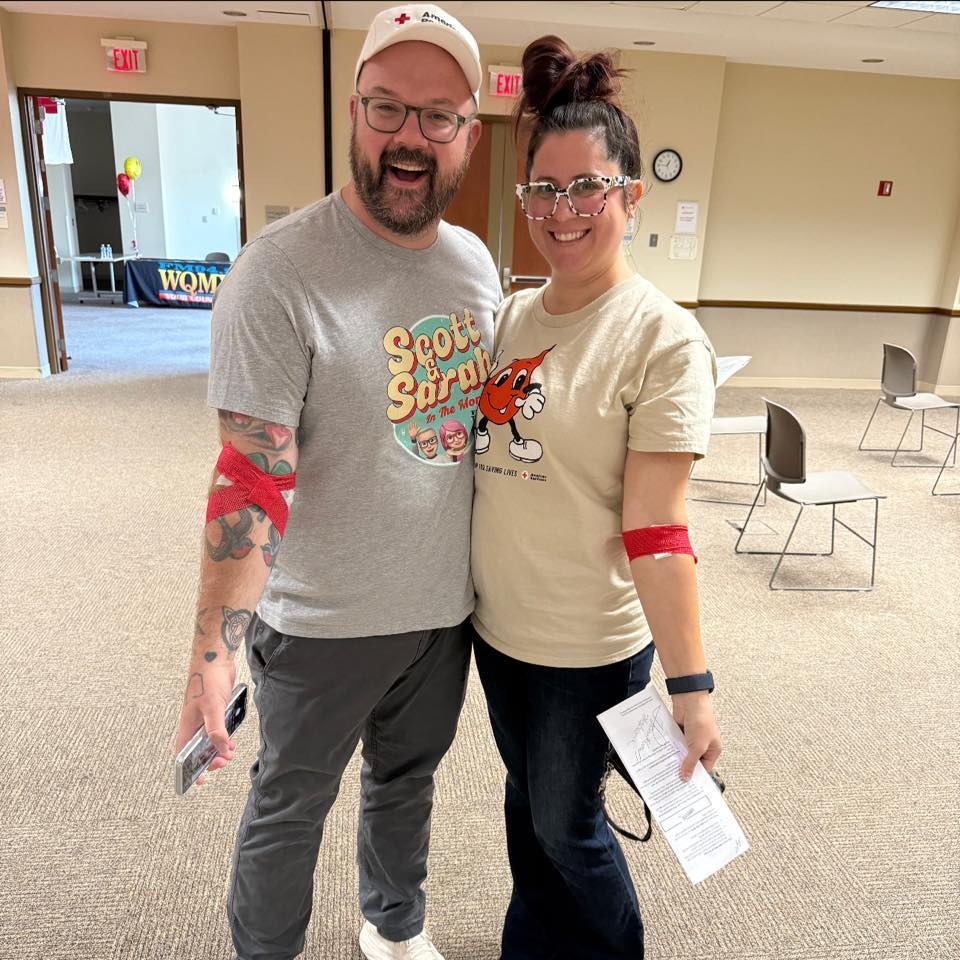
Ryan and Megan Lang, tattooed blood donors
Even if you do not have a tattoo, you’ve likely pondered possibilities. I am. Should I get an American Red Cross logo to commemorate my 7.5 years as a volunteer? Possibly. Or a fountain pin nib, for my love of writing? Granted, I mainly write on a laptop, but we need some artistic license. The pen could also be writing something, like a schwa! Yeah! Or a treble and bass clef, even a grand staff, to celebrate my love of music? That could mask some scars, too! Groovetastic! How about mascots of universities I attended? You have to admit, an Eagle-Penguin-Viking combo could be epic! Logos of previous employers? No, definitely not, especially the one with the common word ending. I’ve got it! All of them, being juggled by a jester!
Now to bust a myth. Even if I went out and got these tattoos today, I could immediately donate blood if the tattoos were done at a state-regulated, licensed facility in Ohio or most other states. If done in one of the few states that do not regulate tattoo facilities, or by an unlicensed person, I’d only need to wait three months to ensure blood safety. (All blood donations are tested for hepatitis B and hepatitis C, but it is still important for people who may be infected with hepatitis viruses to not donate blood.) More about blood donor eligibility is available here.
Whether you have tattoos or not, enjoy celebrating them today, and consider scheduling a blood donation at RedCrossBlood.org or download the free blood donor app. After all, if you’re tattooed you don’t have a problem with needles. And a fun observation: many of the phlebotomists I’ve met have tattoos. Finally, please also read Christy Peters’ excellent post about her grandfather’s tattoos.
July is finally here, and summer has officially started. For many, this means vacations, cookouts, pool time, and fun with family and friends. For blood banks, this busy season can mean a time of fewer donors and a limited blood supply.
Every two seconds, someone in the U.S. requires a blood transfusion. This equates to around 29,000 units of blood that are needed every day! Whether it be for cancer patients, accident victims, surgical patients, or new mothers, be a hero for a person in need by donating this precious, lifesaving gift.
While all potential donors are asked to donate if they can, Type O is urgently needed at this time.
Type O negative blood, often called the “universal donor,” can be safely transfused to anyone and is commonly used in emergencies when there is no time to determine blood type. With only around 7% of the U.S. population having Type O negative blood, it is often in short supply, even though the need for it is great.
Special Promotion for donors
Between July 1-14, consider taking time out of your schedule to donate blood, plasma or platelets, and look cool leaving with a free pair of American Red Cross x goodr “Just My Type” sunglasses, while supplies last! You will also receive a sticker with your blood type to personalize your glasses. Find out more about the promotion by clicking HERE.
To donate, simply visit RedCrossBlood.org and enter your zip code or download the free Red Cross Blood Donor App by clicking HERE. Save time on the date of your donation by completing your pre-donation forms at RedCrossBlood.org/RapidPass or by using the Blood Donor App.
Edited by Glenda Bogar, American Red Cross volunteer
The Fourth of July weekend is upon us and the Red Cross is reminding residents of Northern Ohio and beyond to play it safe, especially when it comes to fireworks. Generally, we advise to leave the fancy fireworks displays to the professionals – it’s the best way to ensure everyone has a safe and enjoyable time celebrating Independence Day.
If you are planning a home fireworks display, here are a few tips:
Never give fireworks to small children, and never throw or point a firework toward people, animals, vehicles, structures or flammable materials.
Always follow the instructions on the packaging.
Keep a supply of water close by.
Make sure the person lighting fireworks always wears eye protection.
Light only one firework at a time and never attempt to relight “a dud.”
Store fireworks in a cool, dry place away from children and pets.
Never use fireworks around pets, keep pets indoors. Exposure to lit fireworks can potentially result in severe burns or trauma, and many pets are also fearful of loud noises and can become lost, scared or disoriented.
In addition to fireworks safety, water safety is a top priority during the holiday and throughout the summer. Between trips the pool, the beach, the lake, etc., water safety is important for the entire family, especially when kids are involved. Here are a few water safety tips for you and your family:
Everyone should learn to swim. Classes are available for both children and adults.
Prevent unsupervised access to water. Always designate a “water watcher” to keep a close, constant eye on everyone in and around the water until the next water watcher takes over.
Avoid distractions when supervising children. If a child is missing, check the water first. Drowning behavior is typically fast and silent. Unless rescued, a drowning person will last only 20 to 60 seconds before submerging.
Reach or throw, don’t go! In the event of an emergency, reach or throw an object out to the person in trouble and tell them to grab on. Don’t go in! You could become a victim yourself. Without putting yourself in danger, rescue and remove the person from the water. Have someone call 911 if needed.
Download the Red Cross Swim app for safety tips, kid-friendly videos and activities, and take the free Water Safety for Parents and Caregivers online course.
After a career of more than 50 years in nursing and education, Carol McConnell came to volunteer with the American Red Cross because she wasn’t ready to retire from caring for people.
Carol McConnell, Red Cross volunteer
Her fellow nurse volunteer, Melissa Seibert, said her friend embodied the compassion of Red Cross founder Clara Barton.
For years, the two of them staffed first aid stations at Pro Football Hall of Fame events, where Carol’s nursing skills matched her caring personality. “She had beautiful white hair; she wasn’t skinny or hefty, just pleasantly plump. She walked with her shoulders back and her chin up. Her demeanor just said, ‘I care,’ Melissa said.
“She had a soft touch; she was soft spoken. That put people at ease.”
But Carol was no one-trick nursing pony. She began her Red Cross volunteer career in 1993 in disaster services. When she wasn’t comforting people displaced by a home fire or other calamity, she was often at the office of the Heartland, Stark and Muskingum Lakes chapter.
She was always ready to volunteer for an activity related to the Red Cross mission, retired chapter executive director Kim Kroh said. “She loved to do outreach, to talk to people at festivals and health fairs. She was such an active volunteer; she was so kind, a gentle soul.
“She was very involved with our campaign to install smoke alarms. She would go out every week,” Kim said. “Whenever we had a Sound The Alarm event to canvass neighborhoods to install alarms, she was always involved.”
Carol was known for being reliable. She never quite got the hang of signing up on line for a project, but, “When she said she’d do something, you knew she’d be there,” Melissa said.
That’s what alerted her fellow volunteers on the morning of March 26, when Carol didn’t show up for a smoke alarm install activity. Her Red Cross partners called the local fire department to do a welfare check.
Carol had passed away quietly at home, at the age of 90.
“I was shocked,” Melissa said. “Last year, she said to me, ‘I can’t wait to work with you again next year (at the Hall of Fame festivities)’… When I read her obituary, I couldn’t believe she was 90!
“Red Crossers are a family, you know,” she said as she choked back tears. “We were devastated.”
Carol’s family summed up her personality in her obituary: “She never met a stranger and thoroughly enjoyed getting to know new people.”
The Red Cross gave Carol an outlet for her caring that never faded with the years. She is truly missed.
Sickle cell disease affects more than 100,000 people in the United States. One out of every 365 Black or African American births is affected by sickle cell. People living with sickle cell disease may need as many as 100 units of blood each year. These are all statistics that Demeatrice Nance was unaware of prior to October 2003, when her daughter Makenzie was born.
Makenzie Nance, sickle cell warrior
“There were some abnormalities in her newborn screening and the doctor wanted us to come in to talk about it,” Demeatrice said. “That was when they told us that Makenzie had sickle cell disease.”
Demeatrice and her husband were devastated, mostly, she said, because they didn’t know where to start getting the best help for their daughter.
From that point on, Demeatrice was on a fact-finding mission – a quest for knowledge about sickle cell disease. “We did a lot of online research and had a lot of conversations with the doctors. We were also referred to a local sickle cell outreach group that provided a lot of resources for Makenzie and our family,” Demeatrice said.
As Demeatrice delved more deeply into the world of sickle cell disease, she quickly discovered how important blood donors, especially Black blood donors, would be in Makenzie’s life.
Fast forward just two and a half years and Makenzie needed her first blood transfusion. “The doctor told us her hemoglobin had dropped, and it was at a crucial state, and Makenzie needed a blood transfusion,” Demeatrice explained. Then she and her husband got word from the doctor that there was a blood shortage, specifically from African American donors, which was what Makenzie and most all sickle cell patients need.
“The doctor said we’re just gonna try and wait it out and try and locate blood for her,” Demeatrice said. And while it was only about a day before they did locate blood for Makenzie, Demeatrice said it felt like a year. “From that time, donating blood has been a priority to me and educating people about the importance and the reason to donate blood. It’s important that our sickle cell warriors have the blood supply when it’s needed.”
Makenzie and Demeatrice Nance
For the past 15-plus years Demeatrice and her family have been advocating and educating. Advocating for her own sickle cell warrior, Makenzie, and all of the sickle cell warriors who desperately need blood. And educating the public about why they need blood and why the blood supply needs to be maintained through regular donations.
“My first blood drive was small,” Demeatrice said, “but when I shared my story and explained the importance of donating, not just for sickle cell patients, but for cancer patients and trauma victims and others, the numbers started growing.” Demeatrice says she always tells people, “It could by my day today, or it could be your day tomorrow,” which is why she encourages everyone she meets to donate blood.
As for Makenzie, she’s just graduated with an associate’s degree in health science and is starting her nursing clinicals in the next couple of months. “Sickle cell patients are often told they can’t do a lot of things, but over the past 21 years Makenzie’s done more things than a lot of people ever thought she could do,” Demeatrice said, beaming with pride for her sickle cell warrior.
Click here to hear more of Demeatrice’s story about her journey with Makenzie and sickle cell disease.
To schedule your appointment to donate today, visit redcrossblood.org.
While Northern Ohio hasn’t seen temperatures over 90 degrees Fahrenheit since last year, summer is here, and it is time to prepare for high temperatures. Extreme heat is happening more often and more intensely — 2024 was the hottest year on record globally — and in more places, like Northern Ohio. As extreme heat is a leading cause of weather-related deaths in the U.S., the American Red Cross urges everyone to take critical actions to stay safe. These include:
Stay hydrated. When temperatures are high, drink a cup of water every hour, even if you aren’t thirsty. Avoid sugary, caffeinated and alcoholic drinks. Remind friends and family members to do the same. Also, babies should be breast- or bottle-fed often. Fewer wet diapers or darker urine can be signs of dehydration.
Stay cool. Spend time in air-conditioned places. If your home is too hot, go to a mall, library or cooling center. You can also take a cool shower or bath. Please make sure to look out for older neighbors and relatives as well as anyone without air conditioning.
Outdoor workers and athletes should take breaks in the shade and frequently drink water: a cup every 20 minutes. They should also use a buddy system to check on one another.
Wear lightweight, loose-fitting clothes in bright colors.
Never leave a child or pet alone inside a parked car, and make sure pets have access to fresh water and shade.
Prepare for power outages during heat waves. Be ready to stock an ice-filled cooler with food, water and medicine, so that they don’t spoil. If you need to keep medicine cold or use medical devices that need power, talk to your doctor about a backup plan. Also keep food cold by keeping refrigerator and freezer doors closed as much as possible; eat fresh, perishable foods first; and throw out perishable food that has been warmer than 40 degrees Fahrenheit. More information is available here.
Know the signs of heat illness. While some are at higher risk of heat related illness, such as older adults, children, pregnant women and those with medical conditions, anyone can become ill when their body cannot properly cool down. It is critical to act fast, as some types of heat illness can be deadly.
Heat cramps are signaled by heavy sweating and muscle pain. Stop what you’re doing, rest in a cool place and slowly sip water. Don’t drink if you feel sick, and get medical help if cramps last over an hour or you have heart problems.
Heat exhaustion is signaled by heavy sweating, weakness, cool and clammy skin, muscle cramps, dizziness, fainting, nausea or vomiting. In addition to the above, loosen your clothes and place a cool wet cloth on your body. Get medical help if you don’t feel better, vomit or have heart problems.
Heat stroke is a deadly condition signaled by high body temperature, rapid heartbeat, confusion, headache, dizziness, fainting, nausea or vomiting. Call 911. Move to a cooler place, remove extra clothing and use a wet cloth or a cool bath to cool down. Don’t drink anything.
Learn more tips and download the Red Cross’ Extreme Heat Safety Checklist HERE.
Edited by Glenda Bogar, American Red Cross volunteer
Honoring members of our community, our military, and first responders who stepped up when someone else needed them to.
By Ryan Lang, American Red Cross
Thursday, June 5, the American Red Cross of Northern Ohio celebrated the 2025 Northeast Ohio Hero Awards at the Cleveland Marriot Downtown. It was a wonderful morning spent honoring everyday heroes who stepped up to do extraordinary things and, in some cases, save lives.
This year’s event featured 15 heroes whose stories you can read below:
Christi Paul, Izzy Abdallah, Mike Parks
Izzat “Izzy” Abdallah (Cuyahoga County): Twinsburg Firefighter Izzy Abdallah saved the life of a motorist who had a medical emergency and crashed into his car. Off duty at the time, Abdallah discovered the driver in cardiac arrest and immediately started CPR, directing his neighbor to call 911. Thanks to his quick actions, the patient regained a pulse and was taken to the hospital, later released in stable condition. Watch Izzy’s story here.
Dorian Pace and wife
Dorian Pace (Cuyahoga County): School bus driver Dorian Pace saved students from a burning bus in Cleveland Heights. After hearing loud booms and seeing smoke and flames, Pace swiftly evacuated the students, ensuring their safety moments before the bus was engulfed in flames. His quick thinking and selfless actions earned him recognition from the city and Governor Mike DeWine. Watch Dorian’s story here.
Christi Paul, Ralph Gamber, Megan Dwyer, Meredith Homerick, Mike Parks
Meredith Homerick, Meggan Dwyer, Janel Micsky, Ralph Gamber, Shaun Laubis, Jessica Pressley (Lake County): These everyday heroes saved a man from a burning car on Interstate 90. Witnessing the accident, they quickly dragged the driver away from the fire, provided medical assistance, and ensured his safety until emergency services arrived. Their selfless actions prevented a potentially tragic outcome. Watch this heroic story here.
Christi Paul, Matthew Certain, Mike Parks
Matthew Certain (Lake County): Uber driver Matthew Certain rescued an elderly woman from a house fire in Mentor. Noticing flames coming from a garage, he parked his car and alerted the resident, ensuring her safe escape. His timely intervention likely prevented a tragic outcome, and he stayed with the woman until emergency services arrived. Watch Matthew’s story here.
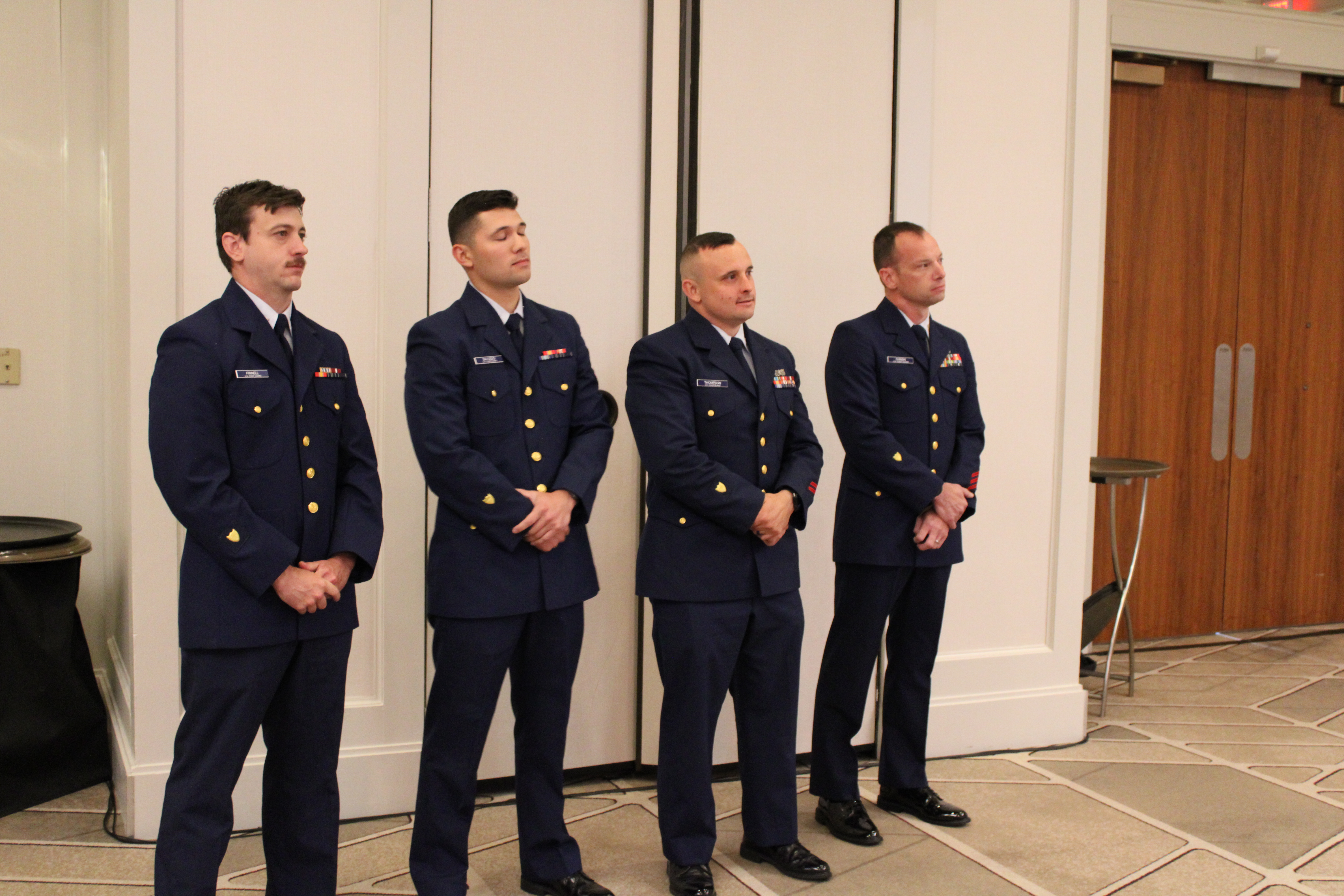
BM2 Luke A. Finnel, MK3 Hector Salcedo Jr., BM3 T. Dylan W. Thompson, BM1 Adam R. Chinski
BM1 Adam R. Chinski, BM3 T. Dylan W. Thompson, BM2 Luke A. Finnel, MK3 Hector Salcedo Jr. (Lake Erie off Avon Point): Coast Guard members conducted a daring rescue in 8-foot seas on Lake Erie. They safely transported the master of a disabled sailing vessel caught in severe thunderstorms, ensuring his safety and planning to recover the vessel once weather conditions improved. Watch our Coast Guard story here.
Blood Hero Award Winners 2025
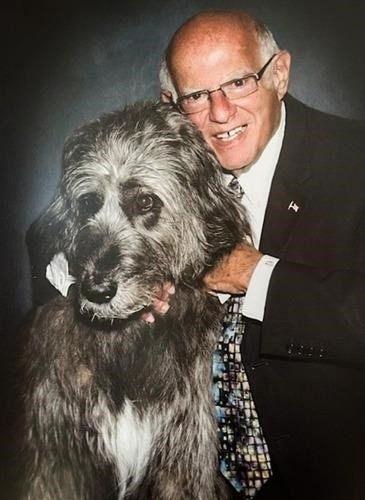
Harlan Diamond
Harlan Diamond, of blessed memory | 1934-2025 (Cuyahoga County): Harlan Diamond was a significant supporter of the Red Cross, hosting large annual blood drives at his venue, Landerhaven. His dedication to supporting the Red Cross included providing food and facilities for donors and staff, and his legacy continues to be honored posthumously.
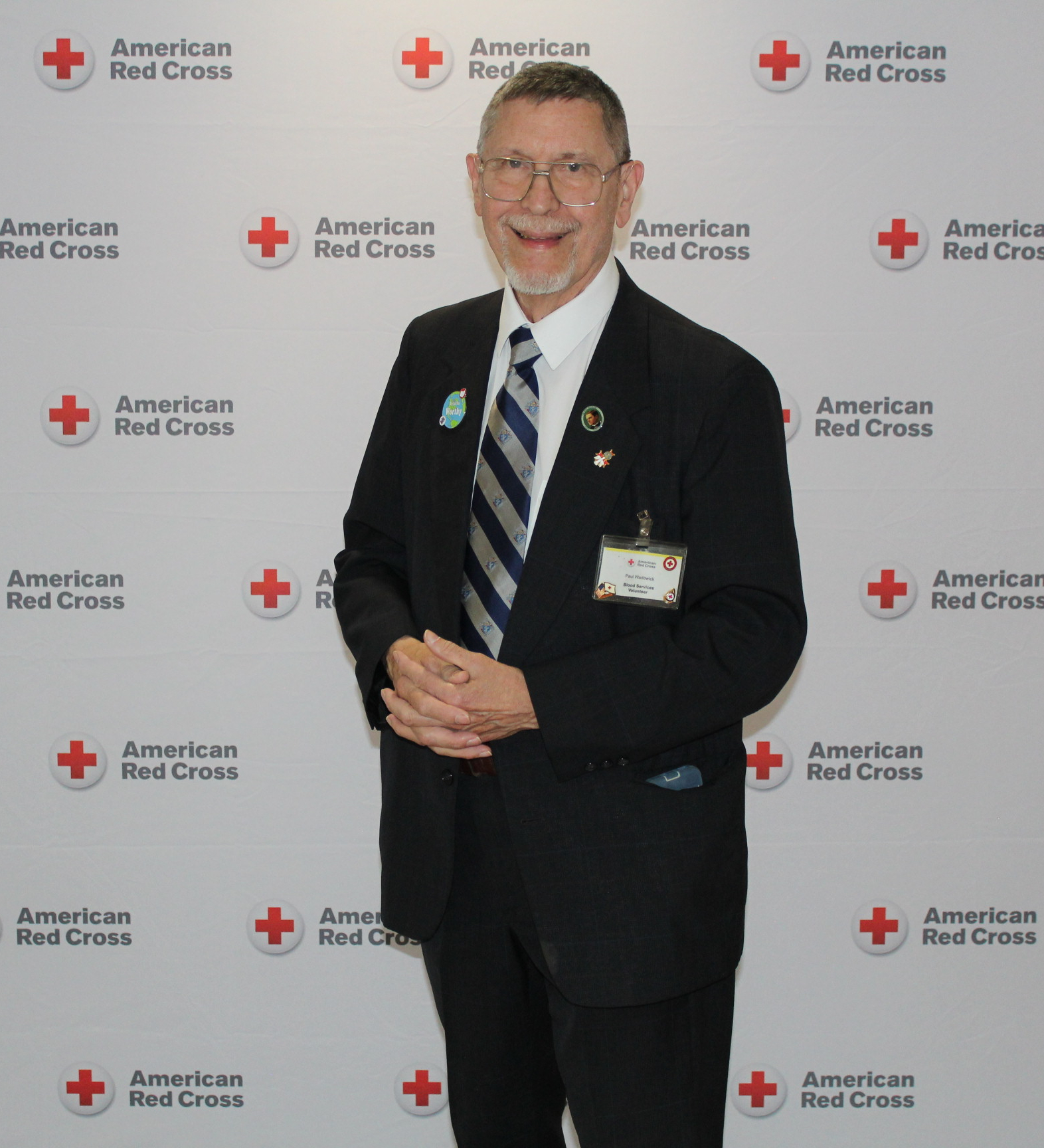
Paul Wadowick
Paul Wadowick (Ashtabula County): Paul Wadowick, a long-time volunteer and blood donor ambassador, continues to champion blood donation while battling cancer. He has been instrumental in running successful blood drives through his Knights of Columbus role in Geneva, encouraging new donors with his story and dedication. Watch Paul’s story here.
Additionally, the Red Cross presented the 2025 Clara Barton Mission Award to Linda Uveges and the inaugural Lorainne Dodero Community Leader Award to Higley Construction. Read their stories below:
Christi Paul, Linda Uveges, Mike Parks
Linda Uveges, Chief Executive Officer of The City Mission has dedicated her life and career to serving Christ by loving and advocating for those who are hurting and underserved. She believes that every person is made in the image of God and is passionate about extending His love to men, women, and children experiencing homelessness in Cleveland. More than just leadership, her work is a calling—to bring hope, restoration, and the truth of the gospel to those in need.
Her journey with The City Mission began in 2003 as a volunteer, simply seeking to serve as Christ calls His people to do. That step of obedience grew into a lifelong mission, and she officially joined the staff in 2005. Over the years, she has had the privilege of serving in multiple roles, including Security Staff Supervisor, Laura’s Home Program Manager, and Chief Operating Officer. In 2021, she became CEO, where she now leads with a commitment to honoring Christ in all aspects of the Mission’s work, stewarding resources well, and ensuring that every person who walks through the doors encounters His love and grace.
Linda holds a Bachelor of Arts in Nonprofit Administration and Master of Arts in Nonprofit Administration and Leadership from Cleveland State University, equipping her with the strategic and organizational expertise to lead with wisdom and purpose.
She is a graduate of Leadership Cleveland, and the recipient of various awards including the 2023 Northeast Ohio Smart 50 Top Executive Award, 2023 Crain’s Smart 50 Awards Class Honoree, 2023 Smart 50 Impact Award, 2022 Smart Women Awards Honoree, and 2021 Medical Mutual Pillar Award for Nonprofit Executive of the Year.
ABOUT THE CITY MISSION
Serving Cleveland since 1910, The City Mission has provided vital resources to those who need it most. The City Mission actively meets the needs of those experiencing homelessness and goes even further by supplying resources, support programs, and mental health services to take a family in crisis to one with hope and a brighter future.
Crossroads Men’s Crisis Center and Laura’s Home Women’s Crisis Center go beyond a place to sleep and three meals a day. When a man, woman or child in crisis enters their doors, each receives an entire support system. With individualized, Christ-centered, compassionate care to heal from trauma, identify the root causes that led them to poverty, and access to supportive and educational resources, men and women who graduate from these programs achieve stable income and housing, thus breaking the cycle of poverty for their families.
By compassionately restoring individuals in crisis, The City Mission strives to be a catalyst for positive change in Cleveland resulting in the radical transformation of individuals and communities for generations to come.
Since its founding 100 years ago by Albert M. Higley, Sr., Higley Construction has built a legacy of excellence. Established in 1925, Higley Construction quickly gained recognition in the industry, completing significant science and research facilities for institutions like the Case School of Applied Science and Hiram College. By the 1930s, the company expanded beyond Ohio, undertaking projects from Buffalo to Indianapolis. During World War II, Higley Construction played a pivotal role in the war effort, constructing key defense projects, including the region’s largest wartime facility for Cleveland Pneumatic Aerol and the U.S. Coast Guard Cleveland Station. Today, Higley Construction operates from offices in Cleveland, OH; Akron, OH; Detroit, MI; Pittsburgh, PA; and Morristown, NJ.
Higley Construction’s legacy extends beyond construction through a deep-rooted commitment to philanthropy. Founder Albert M. Higley, Sr. was an active leader in Cleveland’s civic and business community, serving on various boards such as the Cleveland Chamber of Commerce and the Greater Cleveland Chapter of the American Red Cross. His son, Albert M. Higley, Jr., carried this tradition forward, leading the company from 1967 and alongside his wife Beverly, established the Higley Fund in 1994 to support local organizations. A third generation of Higley leadership, Bruce Higley, was instrumental in shaping the company’s modern era, all while upholding the long standing Higley family commitment to community engagement.
Today, the Higley family’s philanthropic legacy continues through Sharon Higley Watts, a member of the Red Cross Tiffany Circle, and the Higley Fund. The family foundation is a Chairman’s Council member, recognizing their significant contributions of over $1,000,000 in cumulative giving. Separately, Higley Construction remains committed to supporting community initiatives, including the Red Cross Cup and the Hero Awards, with leadership from Executive Vice President Dan Sehlhorst.
By Michael N. Parks, Regional CEO, American Red Cross of Northern Ohio Rear Admiral, United States Coast Guard (Retired)
Hello friends and family of the American Red Cross of Northern Ohio!! As we head into Memorial Day weekend, also known as the unofficial start of Summer, I’d like to highlight some of the other significant dates we recognize during the month of May which will hopefully help answer the question, “Why is May ‘Military Appreciation Month?”:
Military Appreciation Month: Observed throughout the month of May. This month-long celebration, established in 1999, is dedicated to honoring and thanking the men and women who have served in the U.S. military.
Month of the Military Caregiver: Observed throughout the month of May, established in 2017, honors more than five million caregivers in the U.S. who support wounded, ill, and injured service members and veterans.
Victory in Europe (VE) Day: Commemorating the end of WWII in Europe on May 8, 1945.
Military Spouse Appreciation Day: The Friday in May before Mother’s Day, first recognized by President Ronald Reagan in 1984, is set aside for us to pause to recognize the military spouses who have the greatest impact on service members and our military communities.
Children of Fallen Patriots Day: Observed on May 13th (selected because it’s also the day Arlington National Cemetery was established in 1864) to show appreciation for the young people whose lives were forever changed in support of their parents’ service to our country.
Armed Forces Day: Observed annually on the third Saturday of May, designated in 1949 and established by proclamation in 1950 by President Truman, is a day to honor and recognize current active-duty service members of all six branches in the U.S. Armed Forces (the Army, Navy, Air Force, Marine Corps, Coast Guard, and Space Force).
Memorial Day: A federal holiday observed in the United States on the last Monday of May to mourn and honor American military personnel who have died in service to our country, both in peace and in war. It’s a solemn day of remembrance, reflection, and public displays of gratitude for their sacrifice. It was originally called Decoration Day established in 1868 by the Grand Army of the Republic (an organization of Union Veterans) to honor fallen soldiers of the Civil War. It was officially declared a national holiday by Congress in 1968. Congress passed the National Moment of Remembrance in 2000 to designate a time (3:00 pm local time) for quiet reflection and prayer.
As you can see, there are many opportunities to recognize, honor, and/or celebrate members (past and present) of the Armed Forces, and their families, in the month of May. Please remember, Armed Forces Day specifically honors current, active-duty service members, while Veterans Day (November 11th) recognizes all those who have served. Memorial Day (this coming Monday, the 26th) honors those who died in service to our country (which is why we shouldn’t wish people “Happy” Memorial Day). I’m repeatedly asked how to greet service members and veterans. I’ve found the most meaningful comment is a simple, “Thank you for your service!” To those who have lost loved ones, “Thank you for your sacrifice,” is always appropriate. I hope we’re all able to take time this weekend to have a memorable Memorial Day. Best regards…Mike
For Nasir Ahmad, deployment was nothing new. As a retired member of the United States Air Force, Nasir had been on multiple deployments. But his most recent trip overseas with the American Red Cross Service to the Armed Forces was new territory. Previously, Nasir was carrying out his mission as a service member. This time, he’d be providing a service to other service members along with his Red Cross team.
Nasir Ahmad, Service to the Armed Forces
The Service to the Armed Forces (SAF) branch of the Red Cross focuses on active service members, veterans, and their families, providing various humanitarian services and resources. Nasir explains that his primary focus is on emergency communication, which looks different in Northern Ohio compared to in Iraq, where Nasir was recently deployed for six months.
“You become directly involved in the process (of emergency communication) when you’re overseas,” Nasir said. At home, in the Northern Ohio Region, most of the work Nasir and the SAF team does is over the phone, whereas in Iraq, it’s often face to face. “It’s just different when your overseas and the service member has a conversation with you,” Nasir explained. He spoke of one example where a female service member was having a personal emergency, on the base, at 9 o’clock one night. As he and the rest of the team were settling down for the evening, there was someone who needed direct care. That is the work of SAF in action.
“When I was in the Air Force,” Nasir, who was an aircraft mechanic, said, “we had that mission, that focus, and when you go with your squadron, there’s nothing else. Now, with the Red Cross, I get to focus on the service member and assisting them and being there for them, and I’m really enjoying this mission.”
When asked whether his experience in the Air Force prepared him for deployment with the Red Cross, Nasir said it did because of his shared connection with the service members he is there to help. “But don’t feel like you have to be a service member of former service member to do this,” Nasir said. “It’s really a beautiful thing to not have that connection and still be willing to go over there and assist and be there and support our service members.”
There are all types of SAF volunteers. Many who have prior military backgrounds, others who have family members who have served, but also there are those who have no background or personal connection to the military. “I’ve seen some volunteers who deploy with no connection,” Nasir said. “That’s why I commend them so highly because at least I had my buddies with me.”
But in preparing for a deployment with the Red Cross SAF team, Nasir explains that is when relationships are built and friendships are formed, often life-long friendships. “We form our own team,” Nasir said, “and it reminded me of going with my unit.”
The team Nasir deployed with, “Team 55,” had only met online prior to their case work and other Red Cross training at Camp Atterbury, in Edinburgh, Indiana. “In the same room it was different,” Nasir said. “We had Red Crossers who had deployed before… and they were absolutely essential.” Even with his previous military experience, specifically deploying overseas, Nasir said he approached his training as a first timer. “They were so valuable to my experience. It being my first time overseas with the Red Cross… I leaned on the Red Crossers who had done this before. Those were the ones who were leading the way.”














 NOHredcross