Turkey day hazards: Don’t let your holiday meal go up in smoke

By Kathryn Dean, American Red Cross volunteer

Juicy, flavorful, and tender meat.  Crispy, golden-brown skin.  For a perfect holiday centerpiece that cooks in under an hour, the deep-fried turkey seemed like a miracle.  If you lived through the 1990s, you probably remember the phenomenon that spread through the country like wildfire. 

Triggered in part by Martha Stewart featuring this Cajun method of cooking on her television show and in her magazine, it sparked a craze amongst Americans who were looking for easier ways to cook their Thanksgiving turkeys. 

Unfortunately, this method came with a steep price.  An increase in fires and injuries resulted from improper use of this technique, and many homes burned down as a result.  If you’ve never seen a video of a turkey fryer quickly going up in flames, do yourself a favor and Google it now. 

But the danger isn’t limited to outdoor frying.  In the United States, Thanksgiving Day and the day before are the top two most likely days for cooking fires to happen in the home.  44% of all house fires in the U.S. can be attributed to cooking fires, making it the leading cause of home fires and home fire injuries.
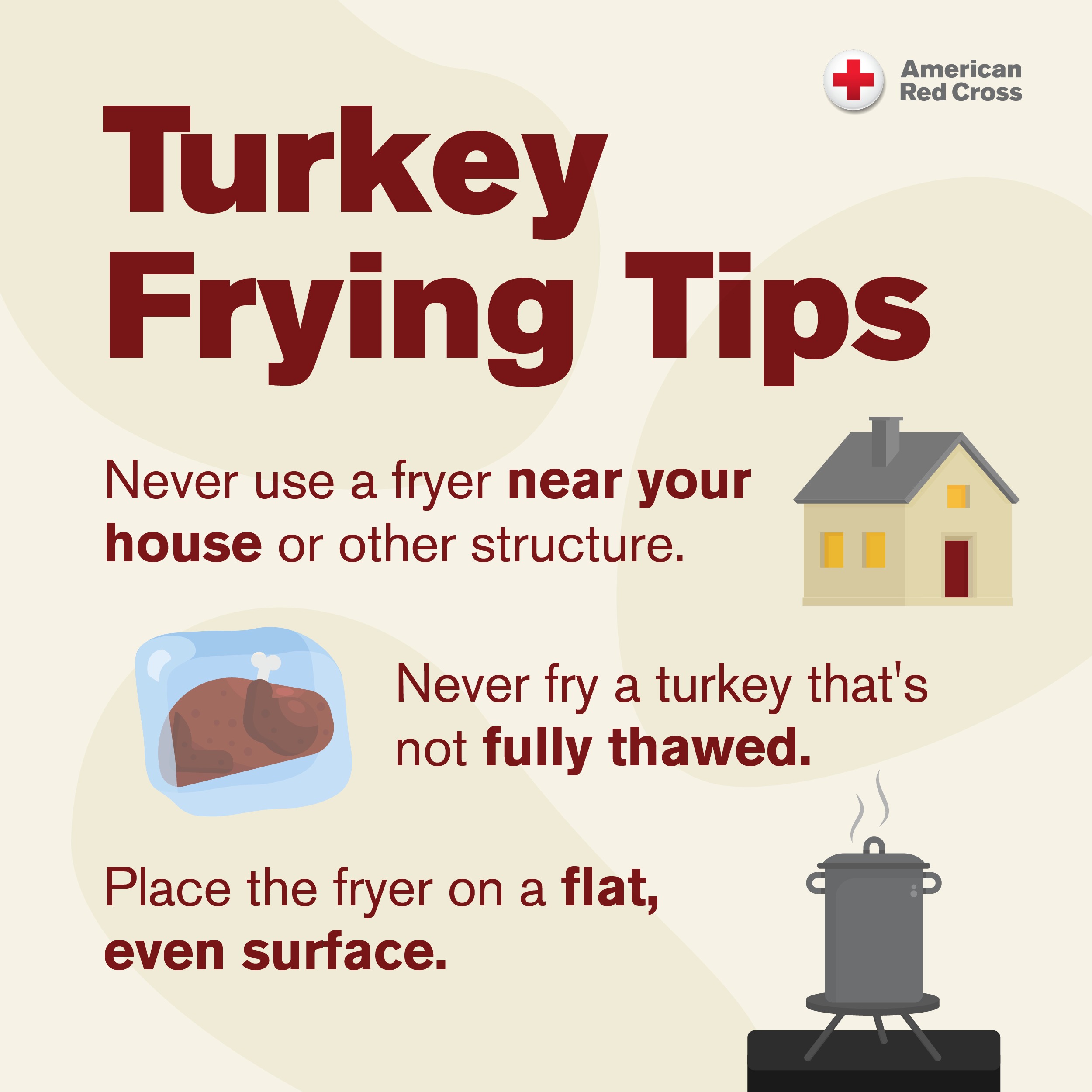
COOKING SAFETY TIPS: The American Red Cross recommends these cooking safety tips to reduce your risk of fire during this holiday season.

  • Never leave the kitchen unattended when frying, grilling, or broiling food.
  • Keep grills or deep fat fryers at least 10 feet away from home structures while in use.
  • If you are using a turkey fryer, remember that proper safety requires a completely thawed turkey and oil that is at the correct temperature and level.
  • Set a kitchen timer to remind you when the stove is on.
  • Keep children and pets at least three feet away from all cooking appliances and cords.
  • Remove flammable items, like wooden utensils, curtains, potholders, and oven mitts, from the vicinity of the stovetop.
  • Pull up sleeves and avoid loose clothing that can get in the way while cooking.
  • Keep a fire extinguisher near any area where cooking is being performed.  Do not use water to put out a grease fire.
  • Check that all appliances are off before going to bed at night.

Fall is a great time to check that you have working smoke detectors in your home. Test your units monthly, and replace batteries annually (on units that allow you to do so).  Replace any units that are over 10 years old.  If you need help replacing or installing smoke detectors, the Red Cross may be able to help. Click here to find out how to request a free smoke alarm in Northern Ohio. Wishing everyone a wonderful Thanksgiving!

Preparedness starts at home: Urging Northern Ohio residents to prepare for emergencies now

September is National Preparedness Month, and the American Red Cross Northern Ohio Region is urging everyone to protect their loved ones and their homes by getting ready now.

Most people may not realize it, but the nation’s number one disaster is home fires. On average, the Northern Ohio Region responds to 3 home fires every 24 hours. Last fiscal year, the Red Cross responded to over 1,000 home fires in the region, issuing more than $1.1 million in direct financial assistance to impacted residents. Help your family prepare by testing your smoke alarms each month and practicing your escape.

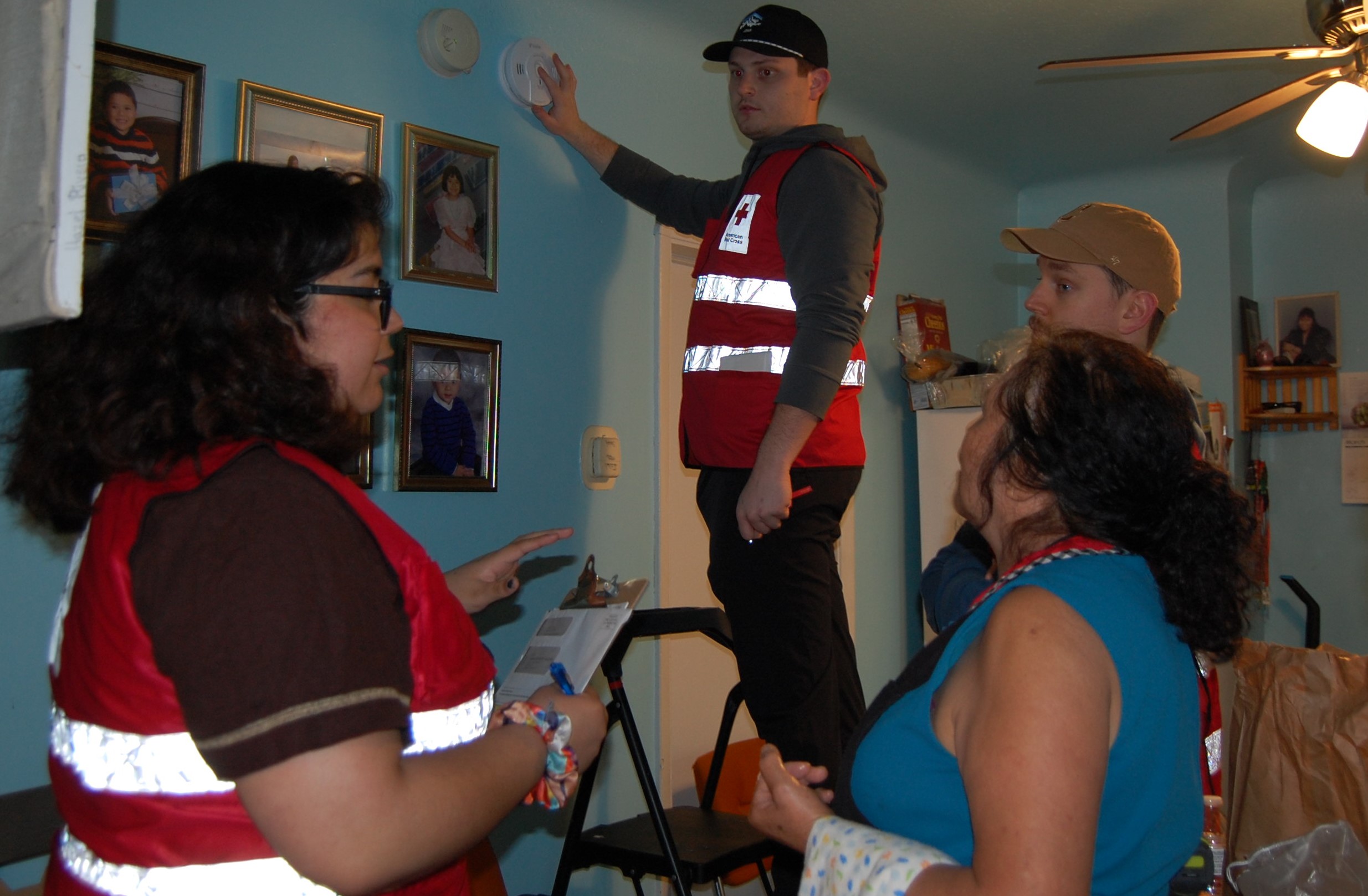
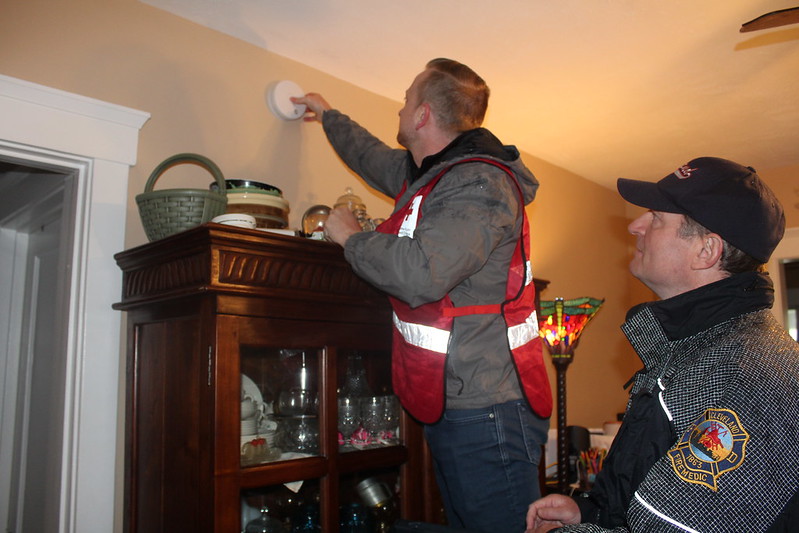
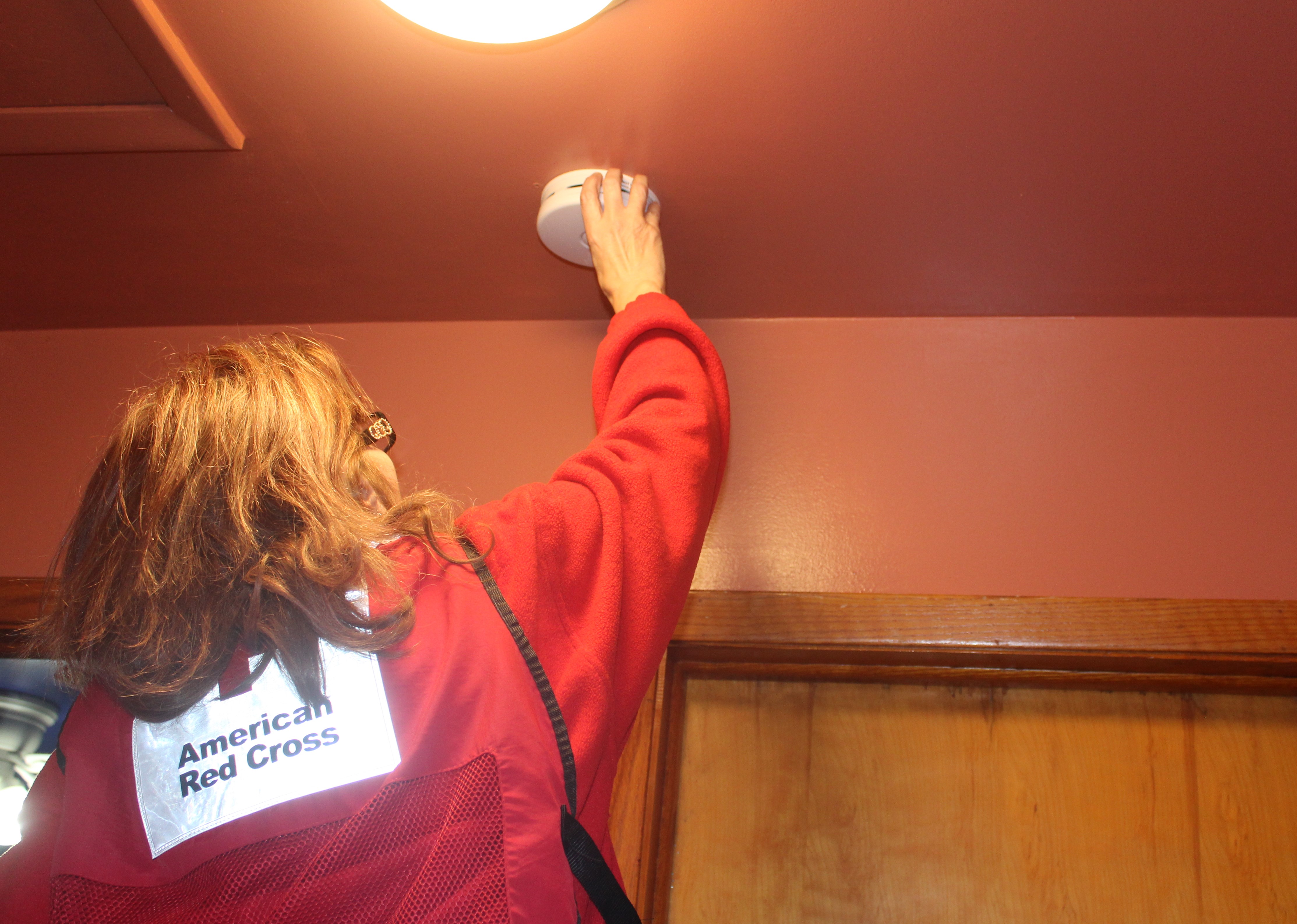
Red Cross volunteers installing a smoke alarm inside a home in Cleveland.

“National Preparedness Month is a great time to ask whether your family would be ready if something unexpected happened tomorrow,” said Mike Parks, Regional CEO, Red Cross of Northern Ohio. “It’s not about being scared; it’s about being smart and looking out for the people you love. Taking a few simple steps now so that you have a plan can make all the difference when it matters most.”

HOW TO GET READY Disasters don’t wait for the “right time” — they can happen in the middle of the night, during your commute or while your kids are at school. Protect your family by making a plan to stay safe, gathering important supplies and knowing how you’ll stay connected by taking these steps:

  • Depending on the emergency, you may need to stay where you are or go somewhere else to stay safe. If you may need to leave, think about where you’ll go, how you’ll get there, where you’ll stay and what you’ll take with you. Plan well in advance if you’ll need help leaving or use public transportation.
  • Next, gather and organize critical supplies — like food, water and medicine — into a go-kit and a stay-at-home kit. Make sure to include backup batteries and chargers for your devices (cell phone, CPAP, wheelchair, etc.), a battery-powered or hand-crank radio, and critical personal records.
  • Your go-kit should include three days of supplies that you can take with you. Your stay-at-home kit should have two weeks of food and water, and a one-month supply of medications, if possible.
  • Customize your kit to meet your household’s specific needs. If you have young children, don’t forget formula and diapers. If you have pets, include leashes, carriers, food, bowls, litter and a litterbox.
  • Finally, make a plan to reconnect with loved ones if you are separated or if the phone or internet is down. Write down important phone numbers on a contact card and carry it with you.

Download the free Red Cross Emergency app for weather alerts, safety steps for different emergencies and expert advice in both English and Spanish. Don’t forget to sign up for local government emergency alerts to get critical local information — like evacuation notices — during an emergency.

People can also help their community be better prepared for disasters by giving bloodtaking a class in lifesaving skills like CPR, or becoming a Red Cross volunteer. Visit redcross.org or call 800-RED CROSS (800-733-2767) to learn more today.

“Whether it’s a fire in someone’s home or a storm that destroys an entire town, disasters can happen anywhere, at any time,” Parks said. “Taking a few minutes now to get ready will help you protect your loved ones if the worst happens.”

Fire Prevention Week: Fires can happen anywhere, anytime

By Kathryn Dean, Red Cross Volunteer

On a snowy, February day in the late 1990s in Northern Ohio, I was riding in the backseat of my family’s car looking out of the window. It was Super Bowl Sunday, and we were heading to a relative’s house to enjoy an afternoon of food, football (and commercials).

As we wound our way through the neighborhood, I noticed a home’s chimney engulfed in flames! I yelled to my father, who promptly stopped the car and ran to the front door. The homeowner was shocked and extremely grateful, as there were no signs of the fire inside the home. Luckily, it had not yet spread to the roof.

Fires like these can happen suddenly and without warning, and time is of the essence when it comes to recognizing the danger and escaping. Experts say you may have only two minutes or less to get to safety in the event of a fire.

That’s why this year during Fire Prevention Week (October 6-12), the American Red Cross Northern Ohio Region wants you to prepare for the unexpected by creating a fire escape plan for your family and ensuring that your home has working smoke alarms.

Home fire escape plan tips:

  • Identify two escape routes for each room in the home, and make sure everyone in the house knows them.
  • Smoke inhalation is dangerous. Stay below the smoke. Get low and go!
  • Agree on a meeting place outside, away from the home, such as a tree or flagpole. Make sure everyone knows where to meet.
  • Get out and stay out. Never go back inside for people, pets, or possessions.
  • Talk to your children about fire safety and show them what fire alarms sound like.

Smoke Alarm Safety:

  • Install smoke alarms on every level of your home, including inside and outside bedrooms and the basement. Information for requesting a FREE smoke detector can be found HERE.
  • Test smoke alarms monthly and replace the batteries at least yearly.
  • Replace smoke alarms that are over 10 years old.
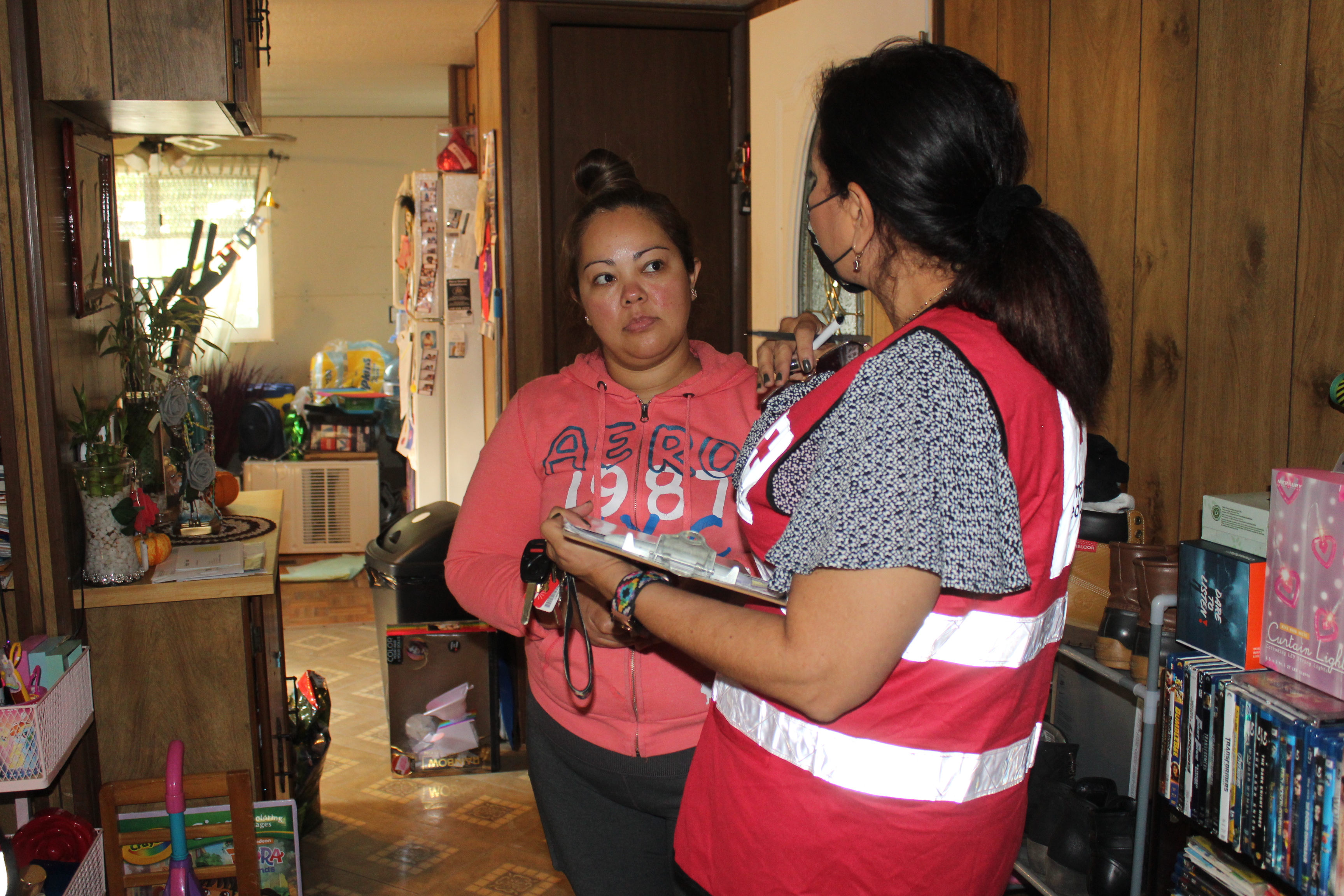
Red Cross volunteers install smoke alarms and share home fire safety information with a resident on Cleveland’s west side.

Speak to your children about fire safety: Have you met Pedro the Penguin yet? Pedro teaches children in grades K-2 how to be safe in emergencies, including home fires and other local hazards. There are numerous, multi-language resources available online, including storybooks and printables at the link above. Virtual and local in-person, 30-45-minute educational presentations are also available.

Check out the list below for upcoming Pedro and other fire safety events, including Sound the Alarm events in the local area during Fire Safety Week.

Northern Ohio Red Cross – Fire Safety Week local events:

Northeast Ohio Chapter:
North Royalton Elementary School – Prepare with Pedro Presentations October 7 & 8

Western Lake Erie Chapter:
Partnering with Toledo Fire to do a large neighborhood installation on Monday, October 7th.
Tuesday, October 8th we are participating in the Milan, MI Fire Department open house.
Saturday, October 12th we are participating in the Fallen Timbers, Maumee Safety Fair Truck or Treat.

Greater Akron and the Mahoning Valley Chapter:
Brunswick Elementary – Prepare with Pedro Presentation Oct. 10

Heartland, Stark and Muskingum Lakes Chapter:

Malone University Health & Wellness Fair – Wednesday, Oct. 9
New Philadelphia Fire Department open house – Thursday, Oct. 10, 5p-7 p.m. – Station 21 (134 Front St. SE, New Philadelphia, OH 44663)

North Central Ohio Chapter:
Home fire safety visits at Pheasant Run in LaGrange October 12. Smoke alarm installations by appointment.

Edited by Glenda Bogar, Red Cross volunteer

Posted by Ryan Lang, Red Cross board member and volunteer

National Volunteer Week Profile: Monica Bunner

Giving those in need “a hug, a smile, and some hope

By Jim McIntyre, Regional Communications Director

Monica Bunner describes herself as “something of an adrenaline junkie.”

That’s a reasonable explanation for her willingness to go anywhere the American Red Cross is needed following a disaster. She said she’s not a “sit at the desk type of gal,” but needs to be physically involved.

Monica’s volunteer career with the Red Cross began in 2017. She was watching Hurricane Harvey unfold and felt she had to do something. She deployed to Houston to help, but not with the Red Cross. Not that time.

“A cause I already supported also needed help,” she said. That cause was Best Friends Animal Sanctuary. She was stationed at NRG Center, taking care of pets when she saw Red Cross workers helping people who needed shelter, and thought, “If I’m not doing the animals, maybe I can do the people thing.”

When she returned to Northeast Ohio, Monica began training to become a Red Cross disaster responder. She has helped people following home fires, installed smoke alarms, and assisted at fundraising events. And she began to deploy to help people who needed shelter following major disasters, such as flooding in southern Ohio, Hurricane Ian in Florida, and the devastating Maui wildfires in Hawaii.

Red cross volunteers Randy Liang and Monica Bunner in Maui, Hawaii

“I always wanted to make a difference, to work with communities, to give people some direction, a hug and a smile, and some hope.”

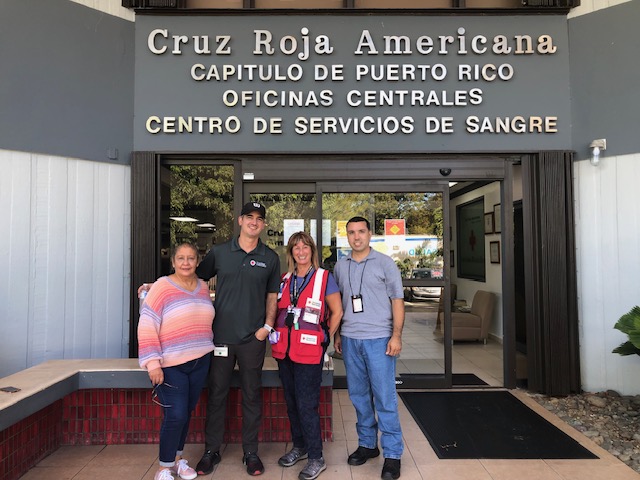
Monica has continued training to expand her skills, and now works primarily with community engagement and partnerships, helping the Red Cross connect with other resources to assist people who have been impacted by disasters. She also helps reunite families who are separated during disasters, and she helped establish Red Cross disaster communications in Puerto Rico.

Fluent in Spanish, Monica was born in Buenos Aires, Argentina, and emigrated to the U.S. with her family when she was a child. She worked at NASA’s Lewis Research Center in Cleveland, helping recruit and train women in non-traditional fields like science and engineering, and was on the team that recruited the first female U. S. astronauts.

Following her NASA career, Monica opened a real estate brokerage and a home rehabilitation business, noting how she was one of the first “female flippers.” And she has traveled to El Salvador with a church group to help build homes there.

Monica plans to continue connecting with and helping people in need through the Red Cross for the immediate future but admits the time will come to slow her frenetic pace. “This work is very physically, mentally and spiritually demanding,” she said. But it’s also rewarding. “I love the feeling of just connecting with people,” she said.

The Red Cross relies on more than 265,000 volunteers like Monica Bunner to fulfil its mission, and if you’d like to learn more, visit redcross.org/volunteer.

Posted by Ryan Lang, American Red Cross board member and volunteer

Number of lives saved tops 2,000

Through the work of our dedicated American Red Cross volunteers and partners, we have now saved more than 2,000 lives through our Home Fire Campaign. More than one-third of those are children.

Home fires are this country’s deadliest and most frequent type of disaster. Seven people in the U.S. lose their lives to a fire in their home every day.

Because of these tragic statistics, the Red Cross launched its Home Fire Campaign to reduce home fire- related deaths and injuries. Since its start in 2014, the campaign is credited with helping save 2,002 lives as of the end of November, 2023.

As part of the Home Fire Campaign, the Red Cross works with local partners to install free smoke alarms and share fire safety information with families. Through the support of our community partners and dedicated volunteers, the campaign has installed 2.7 million smoke alarms and helped to make 1.1 million homes safer.

Long before the launch of the national home fire campaign, the Northern Ohio Region was installing smoke alarms in homes locally. The effort began in the city of Cleveland in 1992, when businessperson and philanthropist Sam Miller joined with other civic leaders, the Cleveland Fire Department, and the Red Cross to reduce fire fatalities through installing smoke alarms and teaching fire safety.

More than 225,000 smoke alarms have been installed by the Red Cross and its partners in Northern Ohio, and 21 of the 2,002 lives that have been saved were in this region.

If you need smoke alarms in your home, visit our regional Home Fire Campaign page.

Posted by Ryan Lang, Red Cross board member and volunteer

7 Tips To Keep Your Holiday Season Safe, Merry and Bright

By Sam Pudelski, Red Cross volunteer

The holiday season is upon us and for some, decorations are already trimming their homes. While December is known as the most wonderful time of the year, it’s also the peak time for home fires. 

The American Red Cross has put together some simple safety tips to help protect your home and family.

  • Opt for battery-operated candles. If you do use candles, never leave burning candles unattended and keep them away from anything that can burn. Make sure to keep candles out of reach of children and pets.
  • Inspect all holiday light cords to make sure they aren’t broken or frayed. Avoid stringing too many strands of lights together. You should not have more than three light strings per extension cord.
  • Make sure all outdoor decorations are made for outdoor use. Fasten lights securely to your home, trees and bushes. If you’re using any metal fasteners, like hooks or nails, make sure they are insulated to help prevent electrocution or fire hazard.
  • If you have an artificial tree or garland, check for a fire-resistant label. Keep them away from fireplaces, radiators and other sources of heat. Never use electric lights on metallic trees.
  • If you plan to get a live tree, test its needles to make sure it is fresh. Bend the needles on the tree up and down to make sure no needles fall off. Make sure to water the tree regularly to prevent it from drying out.
  • Don’t hang stockings or decorations on the mantel if you plan to light the fireplace.
  • Install smoke alarms on every level of your home and outside each sleeping area. Test your alarms once a month and replace the batteries at least once per year. Additionally, you should practice your two-minute fire safety plan with everyone in your household.

If you cannot afford smoke alarms or aren’t physically able to install one, the Red Cross may be able to help. You can request a smoke alarm from the Northern Ohio Region of the Red Cross here.

Protecting what matters most in Northern Ohio

October 8 – 14 is National Fire Prevention Week

By Doug Bardwell, American Red Cross volunteer

Unless you live near a fire station, you might be surprised by how many fires occur in
Northern Ohio. Where we live in Strongsville, you can usually detect that single
siren driving down Royalton Road as an EMS ambulance. But, if you hear multiple
sirens and the sound of large diesel engines, you know the entire squad is responding
to yet another fire – and they are usually home fires.

The Red Cross works with local fire departments to help prevent home fires

The most common home fires are caused by cooking. Every year, firefighters respond
to more than 170,000 kitchen fires, causing hundreds of deaths, thousands of injuries
and more than $1 billion in damages each year.

Since 2015, would you believe the American Red Cross in Northern Ohio has
responded to more than 11,000 home fires, and assisted nearly 17,000 families?
Despite insurance or Red Cross financial assistance, think of the inconvenience of
being displaced for weeks or months before your home is habitable again after a fire.

Damage caused by fire to a home in East Cleveland in 2022

There’s a better way

Following these simple tips, you and your family can help prevent kitchen fires:

  1. Use a timer to remind yourself that the stove or oven is on.
  2. Keep anything that can catch fire — potholders, oven mitts, wooden utensils,
    paper or plastic bags, food packaging, towels or curtains — away from your
    stove, oven or any other appliance in the kitchen that generates heat.
  3. Always check the kitchen before going to bed or leaving the home to make
    sure all stoves, ovens, and small appliances are turned off.
  4. Install a smoke alarm near your kitchen, on each level of your home, near
    sleeping areas, and inside and outside bedrooms if you sleep with doors closed. Use the test button to check it each month. Replace all batteries at least once a year if your smoke alarm requires it.
  5. Tap here for another half dozen sensible tips to avoid kitchen fires.
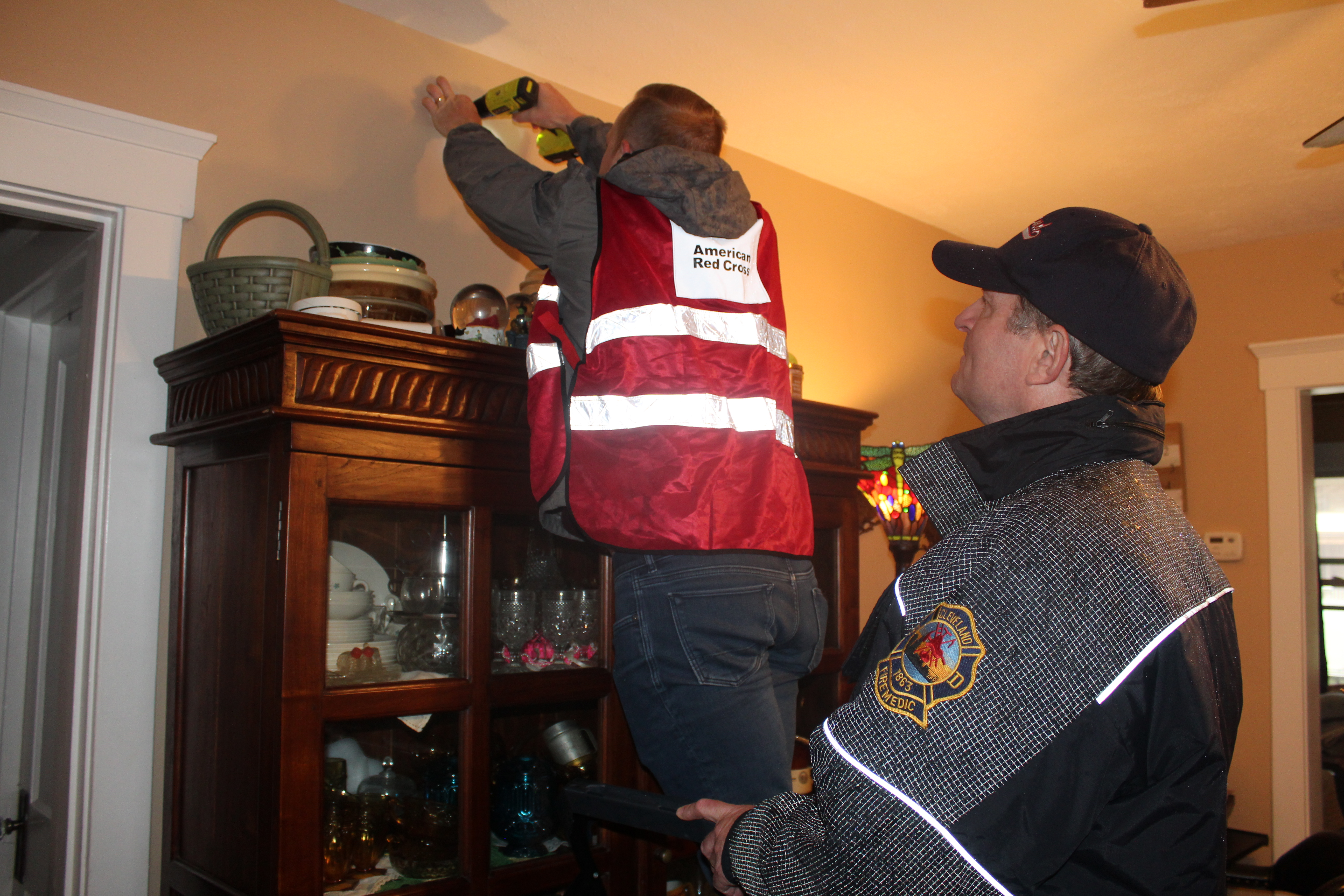
A Red Cross volunteer installs a smoke alarm in a home in Cleveland, with guidance from a firefighter

Smoke alarms are crucial in saving lives

The Northern Ohio region of Red Cross has been installing free smoke alarms for those who need them since 1992. To date, more than 200,000 alarms have been
installed.

Nationally, the Red Cross and partners, through the Home Fire Campaign, have installed 2.6 million alarms in more than 1.1 million households since 2014.

Do they really make that much difference?

Verifiably – yes, they do. As of August 31, 1,928 lives nationwide were documented as
saved due to work done by the Red Cross and partners through the Home Fire
Campaign.

For five more ways you can help the Red Cross continue this valuable practice in Northern Ohio communities, tap here.

If you’d like trained Red Cross volunteers to offer you valuable home fire safety
information to help YOU prevent a fire in your home – and/or to install smoke alarms in
your home, tap here.

Posted by Ryan Lang, Red Cross board member and volunteer

A Hispanic Heritage Month profile: HOLA Ohio partners with Red Cross to assist Hispanic community

By Tim Poe, American Red Cross volunteer

A few years ago, as a member of the American Red Cross’ Disaster Action Team, I responded to a large apartment fire in Painesville. While working with first responders, other Red Cross members and the affected families, many of whom primarily spoke Spanish, two representatives from HOLA Ohio arrived to help, especially with translation.

Since that time, HOLA Ohio has been an important partner with the Red Cross in Northern Ohio. It has been an integral part of fire safety initiatives in Latino communities, as well as assisting Hispanic families impacted by home fires.

During Hispanic Heritage Month (September 15 to October 15), we are highlighting the Northern Ohio Red Cross’ partnership with HOLA Ohio and the importance of reaching the Latino community.

I spoke with Tom Revolinsky, disaster program manager for the Red Cross, Northeast Ohio region. He explained the importance of HOLA Ohio in reaching the Hispanic community, especially following disasters.

“HOLA and the Red Cross routinely partner to help those in the Hispanic community affected by home fires,” said Tim. “HOLA helps identify families in need, provides translation assistance, additional financial assistance and helps overcome cultural barriers.”

A Painesville-based charitable nonprofit, HOLA Ohio was founded in 1999 to provide programs and services to Hispanic workers, families and children. Its services have grown from serving Lake and Ashtabula counties to reaching most of Northern Ohio and beyond.

In May 2022, HOLA Ohio opened its new Hispanic Community Center in Painesville, which contains staff offices, classrooms, a commercial kitchen and meeting spaces. It recently hosted a Health and Wellness Fair at the center, which the Red Cross helped support. Free medical check-ups, health screenings and food were provided.

“HOLA is grateful for our ongoing partnership with the Red Cross to ensure Spanish-speaking people impacted by disasters are provided resources,” said Veronica Isabel Dahlberg, executive director of HOLA Ohio. “Whether a devastating fire or a dangerous power outage during a bitterly cold blizzard, we have seen the Red Cross respond quickly to assist our community. We admire their commitment and dedication.”

The need for the types of assistance HOLA Ohio and the Red Cross provide is growing. According to the Ohio Department of Development and UCLA Latino Policy and Politics Institute, the Latino population in Ohio grew by 112% between 2000 and 2020 to over 505,000, which is 4.2% of the state’s population.

Additionally, the need for Red Cross services is dramatically increasing. Nationally, the Red Cross is responding to nearly twice as many large disasters as it did a decade ago.

Volunteers are needed to help respond to these growing needs, including those fluent in Spanish. For more information, please visit this site.

The Red Cross’s website is available in English and Spanish.

Edited by Glenda Bogar, American Red Cross volunteer

Sound the Alarm campaign installs more than 1,500 free smoke alarms in Northern Ohio

When people think of the American Red Cross responding to disasters, they often imagine the aftermath of a massive hurricane or deadly tornado. Trees uprooted and tossed aside, homes with missing roofs or destroyed by floodwaters. But it’s not the large-scale disasters that keep Red Cross volunteers busy day in and day out. Home fires are the most frequent disaster in the country, claiming seven lives every day in the U.S. In Northern Ohio, the Red Cross responds to more than three home fires, on average, every 24 hours.

As part of the national Sound the Alarm campaign, Red Cross staff, volunteers and community partners set aside specific weeks throughout the year to focus on educating residents about home fire safety and installing free smoke alarms where they are needed. From April 22 to May 12 staff and volunteers in northern Ohio, in partnership with local fire departments, held Sound the Alarm events in 11 communities across the region. They included:

  • Sandusky
  • Uhrichsville
  • Cleveland
  • Medina
  • Hubbard
  • Warrensville
  • Toledo
  • Findlay
  • Henry County
  • Newcomerstown
  • Willoughby Hills

During these events, volunteers met with local families to install free smoke alarms, helped them create a two-minute fire escape plan and shared safety information on home fires and other local disaster risks. In Northern Ohio, more than 600 homes were made safer, with over 1,500 smoke alarms installed.

For those who do have smoke alarms, the Red Cross recommends testing smoke alarms each month and practicing your escape plan until everyone can get out in less than two minutes. It’s also important to teach children what smoke alarms sound like and what to do in an emergency.

While certain weeks of the year are designated as Sound the Alarm events, the Red Cross is working every day to help prepare communities for disasters like home fires.  If you or someone you know needs smoke alarms, visit the Sound the Alarm page to find out how to request an appointment with one of our teams. You can partner with the Red Cross and donate to this lifesaving work. Without the financial support of generous donors, the Sound the Alarm campaign would not be possible.

Check out more photos from our Sound the Alarm events on Flickr. Thank you to everyone who joined us this year and we look forward to seeing you all again soon at a Sound the Alarm event near you!

Red Cross Home Fire Campaign reaches goal of installing 2.5 million free smoke alarms nationwide

Since October 2014, the campaign has saved at least 17 lives in Northern Ohio

The American Red Cross Home Fire Campaign with the support of community partners has achieved its goal of installing 2.5 million free smoke alarms and making 1 million households safer across the country.

Since launching in October 2014, the campaign has saved at least 1,583 lives nationwide — including 17 people in Northern Ohio — from the threat of home fires, which claim seven lives every day in the U.S. Most often, these tragedies occur in homes without working smoke alarms.

“We are proud of our incredible work with community partners to help save lives by providing free smoke alarms in Northern Ohio as part of the national Home Fire Campaign,” said John Gareis, Regional Preparedness Manager. “And we take special pride in knowing that the smoke alarm program we started more than 30 years ago in Cleveland served as a model for the current Red Cross Home Fire Campaign.” Watch a video of the history of the Home Fire Campaign in Cleveland. 

In Northern Ohio since the start of the Home Fire Campaign in 2014, Red Cross volunteers and partners have:
 Installed more than 100,000 free smoke alarms
 Made 37,400 households safer
 Educated more than 31,000 children through youth preparedness programs

FREE HOME FIRE SERVICES TO CONTINUE Because home fires remain a daily threat and the campaign has made a lifesaving difference, the Red Cross will be continuing the program with community partners as part of its standard services, including Sound the Alarm events in communities throughout the region this spring to install free smoke alarms.

Visit soundthealarm.org/noh for a home fire safety visit if you need assistance, or to volunteer. No prior experience is needed. Training will be provided before volunteer teams visit area homes to install smoke alarms and share fire safety information. During the Sound the Alarm appointments, volunteers will install free smoke alarms, and will share information on the causes of home fires, how to prevent them, what to do if a fire starts and how to create an escape plan.

In addition, the campaign’s other services will continue, such as teaching children about the threat of home fires and what to do through youth preparedness programs, installing accessible fire safety equipment like bedshaker alarms and strobe light smoke alarms for residents who are deaf or hard of hearing, and providing home fire
safety resources in American Sign Language.

Home fires account for most of the more than 60,000 disasters that the Red Cross responds to annually in the Northern Ohio Region and across the country. So far in 2023, Red Cross volunteers have helped nearly 400 people affected by nearly 200 home fires in the Northern Ohio Region by providing emergency lodging, financial
assistance for urgent needs like food and clothing, and one-on-one recovery support for navigating next steps and connecting with community resources.

ONE HOME FIRE SURVIVOR’S STORY: Akron grandfather Shawn Spaulding had just returned home after a long day at work when fire broke out in his home. Read about his escape here.

Read more stories and see the campaign’s national impact at redcross.org/HomeFireStories.

HOW TO GET INVOLVED Help save lives through the campaign by becoming a volunteer or making a financial donation to prepare, respond and help families recover from home fires. Learn more at redcross.org/noh.

You can also help your family by testing your smoke alarms monthly and practicing your two-minute home fire escape plan. Additional safety tips are available at redcross.org/fire and on the free Red Cross Emergency app (search “American Red Cross” in mobile app stores).

Posted by Ryan Lang, Red Cross board member and volunteer