National Preparedness Month: Prepare now for disasters

By Eilene Guy, American Red Cross volunteer

September is National Preparedness Month and one of the pillars of the American Red Cross is helping us prepare for emergencies. Disasters. The unexpected!

Here in northern Ohio, we’re used to seasonal threats: snow and ice storms, thunderstorms and flooding, the occasional tornado alert and rogue straight-line winds that seem to come out of nowhere. Even extreme heat and power outages.

And, of course, home fires. About 90 percent of the emergencies that Red Cross volunteers respond to are home fires.

During the 12 months ending June 30, across northern Ohio alone, we responded to 1,123 disasters, helped 4,428 children and adults, and provided $1.2 million in financial assistance.

Sadly, three of those events were manmade disasters, in quiet residential neighborhoods. Remember the small plane that crashed into a house in Akron back in May? That house burned to the ground.

Or how about the gas line explosion that destroyed three homes and displaced 15 families in Twinsburg in July?

“I’m on the second floor and all my windows blew out. All I have is my phone, and myself,” a resident told a TV reporter in the aftermath. Red Crossers stepped in to help with shelter arrangements and funds for immediate needs in that neighborhood.

For years, the Red Cross has urged everyone to “Make a kit. Have a plan. Be informed.”
All sound advice, but there’s one thing we can all do right now that’s easier, quicker and cheaper: Download the free Red Cross Emergency App to your mobile phone. This resource links you to weather alerts, preparedness tips, even the location of shelters should that be needed.

The app even lets you send an “I’m safe” message to anyone you want to reassure if you happen to be in the vicinity of a disaster.

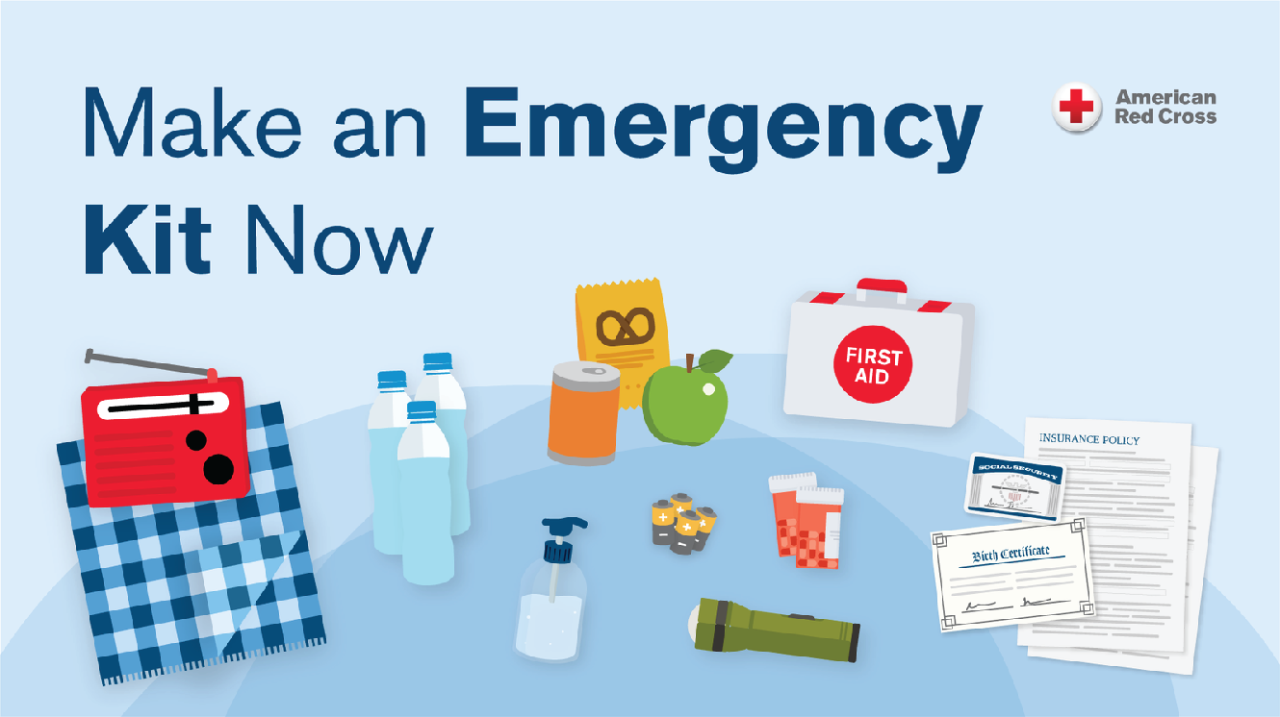
Put together a “go bag” of supplies you’d need if you had to shelter in place or evacuate on short notice: bottled water, non-perishable food items, flashlight and extra batteries, first aid kit and seven-day supply of medications (or at least copies of your prescriptions).

This is just for starters. Find a complete list at redcross.org.

And don’t forget items for anyone in the household with special needs, like a baby, or a pet!

Make a plan with your family. Does everybody know how to get out of the house in case of fire, for example? And can they do it in three minutes or less? Agree on a place to meet outside the home, so firefighters don’t have to go looking for someone inside. While you’re at it, be sure everyone in the household has family or friend phone numbers in their mobile phone; and be sure children know a parent or guardian’s phone number.

Be informed. Learn the location of storm shelters you can get to if a tornado threatens. Download free emergency alerts from your local law enforcement and Emergency Management Agency. They’ll be the first to let you know about everything from a road closure to a catastrophic event.

And take first aid and CPR/AED classes from your local Red Cross, so you’ll know how to save a life at home or on the go.

My husband says failing to plan is the same as planning to fail. Planning to deal with an emergency isn’t the same as wishing for one to happen. Planning is preparedness, and there’s no better time to do it than NOW!

For more preparedness tips, go to redcross.org and search the key words “disaster preparedness.”

Edited by Glenda Bogar, American Red Cross volunteer

Planning ahead for National Preparedness Month

By Ryan Lang, Red Cross volunteer

January 17, 2022 (MLK Day): Walking into the office, stomping my feet to get the snow and the slush and the slop off of my boots, I thought to myself, That’s the worst commute to work I’ve ever experienced. What normally takes 25 minutes took roughly an hour and a half through the driving snow and treacherous road conditions. 

February 2, 2022: After spending more than an hour shoveling more than a foot of snow from my driveway at 2 in the morning, I tried to drive to work. Didn’t make it. In fact, I only made it to the end of my driveway before my vehicle became stuck in the street. Thanks to the help of New Franklin Police Officer Shearer, I was safely guided back into my driveway, but there I stayed. There was no way I was making it to the office. 

Two of the largest winter storms I can remember hit Northeast Ohio in a matter of two weeks, and both had me feeling less prepared than I’d ever felt before. 

From that point on I vowed to take preparedness more seriously, and not just for the winter season. After all, I’m a dad now – what better reason?

As we’ve seen countless times in Northern Ohio, across the country, and around the world, storms can affect our lives very quickly and very seriously. That is why the American Red Cross is urging you to prepare for emergencies, right now, during National Preparedness Month all September long.

HOW TO GET READY FOR A DISASTER

It takes just three simple steps to help prepare your household for potential disasters –

1) Get a Kit – First, build your emergency kit with a gallon of water per person, per day, non-perishable food, a flashlight and a battery-powered radio. Also include a first aid kit, medications, supplies for infants or pets, a multi-purpose tool and personal hygiene items. And don’t forget to add copies of important papers, cell phone chargers, blankets, maps of the area and emergency contact information.

2) Make a Plan – Next, plan what to do in case you are separated from your family during an emergency and what to do if you have to evacuate. Make sure to coordinate your plan with your child’s school, your work and your community’s emergency plans. Include your pets in your emergency plans. Remember, if you and your family need to evacuate, so does your pet.

3) Be Informed – Finally, stay informed by finding out what emergency situations may occur where you live, work and go to school, how local officials will contact you during a disaster and how you will get important information, such as evacuation orders.

Depending on the people in your household, there might be additional considerations to take into account as part of your emergency planning. Older adults or people with mobility, hearing, learning or seeing disabilities may need to create a support network of people that can help during an emergency. Create a plan tailored to their capabilities, any help they may need and who can provide it, especially if they need to evacuate or if the power goes out for several days.

Disasters can be scary for children. Take time to talk with your kids about preparing for common emergencies, how to stay safe and what to expect. The Red Cross has free programs and tools to help, visit redcross.org/YouthPrep for more information.

HELP GET YOUR COMMUNITY PREPARED

You can help ensure your community is ready for an emergency by volunteering, donating blood or learning lifesaving skills. Visit redcross.org to learn more.

Red Cross volunteers play critical roles in their local communities, including helping families affected by home fires and other disasters get back on their feet. Join us as a Disaster Action Team volunteer to help make sure that families don’t have to face tough times alone.

Learn lifesaving skills so you can help people in a crisis until medical professionals arrive. Sign up for first aid, CPR or other classes available online or in-person. 

A strong blood supply is key to preparedness for disasters and medical emergencies, and donors can ensure blood is on the shelves the moment it’s needed. As a thank-you, all who come to give Sept. 1-18 will get a limited-edition Red Cross T-shirt, while supplies last. Plus, those who race to give Sept. 1-30 will automatically be entered for a chance to win a VIP NASCAR experience, including two tickets to a 2023 race, and will also receive a coupon for a free haircut by email, all thanks to Sport Clips Haircuts.* Donors can schedule an appointment to donate using the Red Cross Blood Donor App, by visiting RedCrossBlood.org or by calling 1-800-RED CROSS (1-800-733-2767). If you are unable to give blood you can volunteer to support blood collections. Visit redcross.org/volunteer to learn more.


Nine fine tornado tips most people don’t know

By Doug Bardwell, American Red Cross volunteer

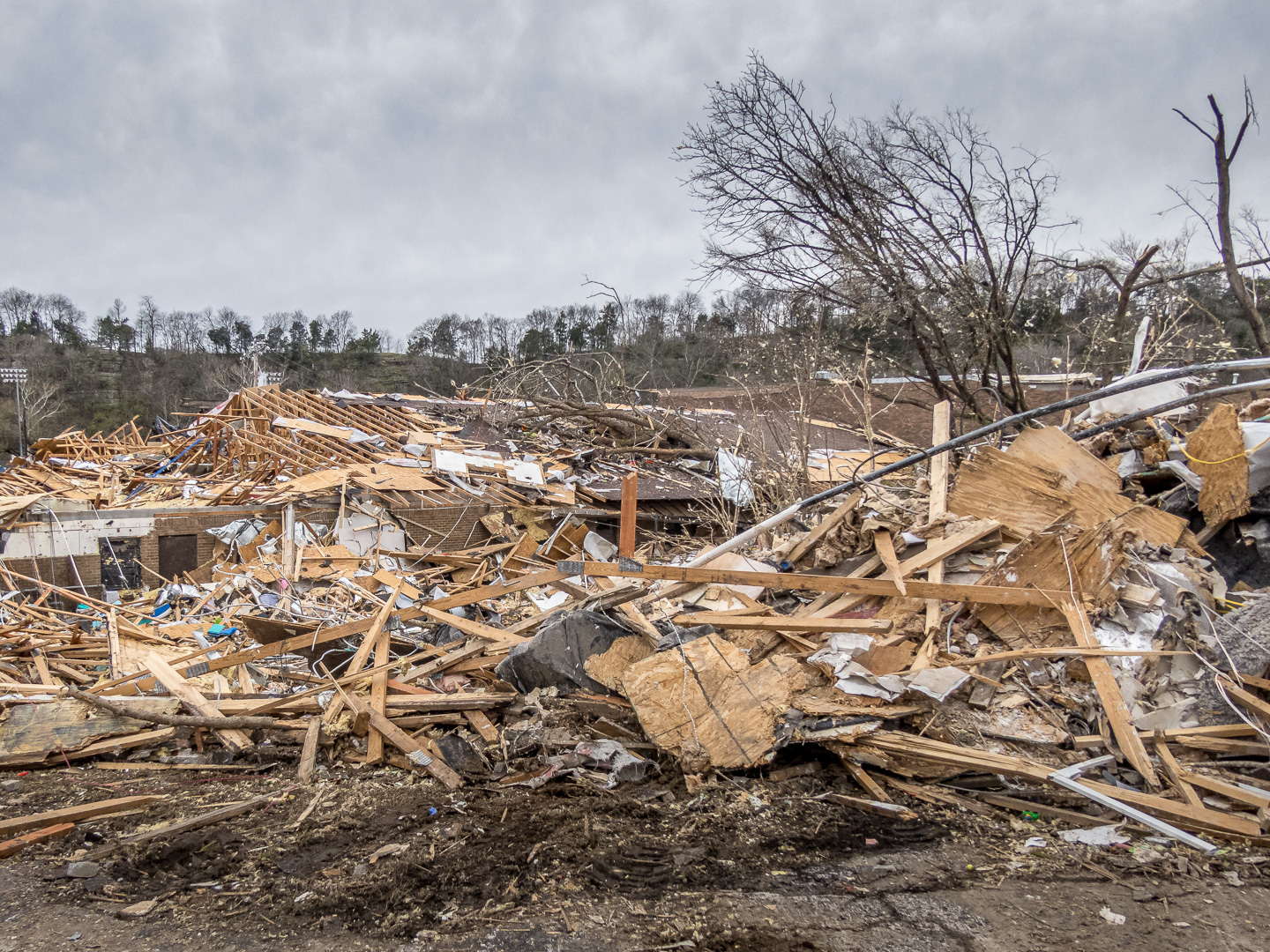
As tornadoes began touching down around my son’s home in Nashville again this year, my mind wandered back to the massive spring tornado damage I saw there last year. It also made me start thinking more about tornado preparedness for Northern Ohio.

Photo credit: Doug Bardwell, American Red Cross

We live in a development of all frame homes, built on concrete slabs, with no basements. If you had asked me where I would head in case of a tornado, my answer for years would have been our interior master bathroom.

WRONG –and since I’ve started researching it, I’ve compiled a list of myths and mistakes most people make about tornadoes.

  1. Huddle in the southwest corner of your basement because most tornadoes come from that direction.  Actually, tornadoes can come from any direction, including circling back on themselves.
  2. Basements are the safest places to be. Generally true, but consider this: when picking a location in the basement, don’t let it be under something huge on the first floor, like a piano, refrigerator or giant entertainment center which could crush you. I saw lots of homes in Tennessee where everything that didn’t blow away went straight down to the basement.
  3. Open your windows to equalize the pressure. Wrong. Scientists suggest that just isn’t the case. Rather, it can allow more wind inside causing even more damage. Better to spend your time dragging a mattress to put over you wherever you decide to hunker down. Bicycle or motorcycle helmets are also great protection.
  4. The average tornado warning gives you just 13 minutes to prepare. Surprisingly, that’s the best-case scenario. In Tennessee, the massive EF4 tornado hit those homes about 60 seconds after the sirens began to blare.
  5. I don’t need a NOAA weather radio because I’ll hear the sirens. Many people have reported not hearing the sirens at all due to  thunder and strong winds blowing the opposite direction, pushing the sound away from their homes.
  6. A great safe spot is your interior bathroom with no windows.  That’s what I thought until I inspected it more closely. We have a counter-to-ceiling, eight-foot-wide mirror above our vanity that could become  one giant guillotine if that wall were to buckle in a tornado. Secondly, we have two glass sliding doors on a walk-in shower. Bad location.
  7. Packing candles in your emergency bag since batteries can die of old age. Bad for two reasons. Should your house get hit by a tornado, there’s a good chance that the gas lines in your home have been compromised and you don’t want to chance an explosion. Secondly, a wind-up NOAA Alert radio/flashlight/cellphone charger like this or this, is much more useful.
  8. Many people keep their emergency kit in the garage near their cars.  A better place might be to keep the bag in your designated safe spot since you’ll probably have less time to leave in case of a tornado than you would a pending flood or wildfire.
  9. First thing to do in your safe spot is crouch under something heavy and cover your head.  Absolutely a great idea, but first, text a loved one with your exact location in the home, so should your home be hit, they could tell first responders exactly where to look for you.

So, here’s to hopefully never needing these safety tips, but just to be safe, send this link to your friends, and read more tips for taking care of your older friends and family here.  Last suggestion, read more about preparing for all emergencies with the American Red Cross apps.

NEO Holds 2nd Annual Training Institute

“You can’t have confidence unless you are prepared. Failure to prepare is preparing to fail.” – John Wooden, legendary UCLA Men’s Basketball Coach


Aloha i ka mokupuni o ka hoʻonaʻauao. Welcome to the island of learning.

2017 NEOTI

Preparedness is a key goal for the Red Cross. We are constantly striving to prepare our communities, our homes, and our staff to respond to emergencies.

We, as an organization, expect our volunteers to be ready to heed the call to action! That means education before an event occurs.

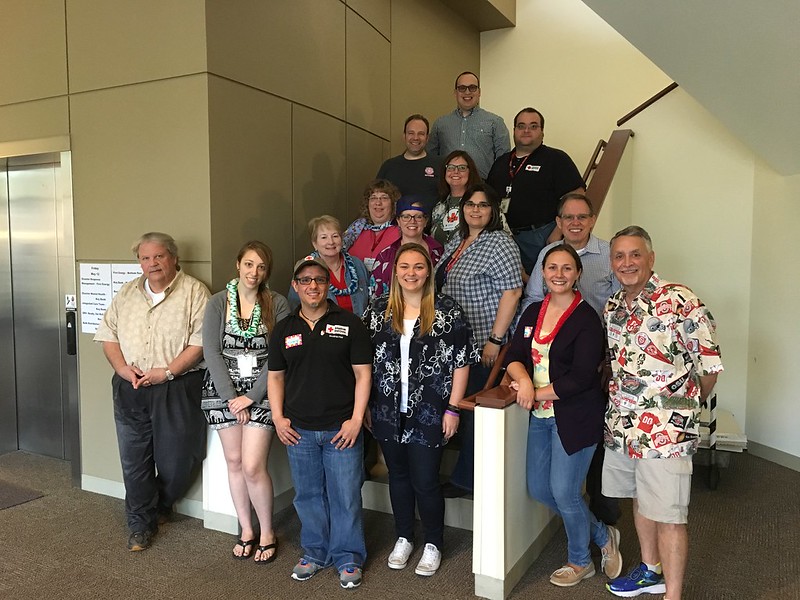
From Wednesday, May 10 through Saturday, May 13 over 125 individuals from all over Ohio and West Virginia gathered at the second annual Northeast Ohio Training Institute (NEOTI) at the Akron office. The theme of this year’s institute was Aloha, or “welcome” in Hawaiian.

The institute gives us the chance to offer key leadership courses that may not be available during the year, as well as basic courses for those new to the organization.

This year’s course offerings included: Shelter Fundamentals, Disaster Assessment Fundamentals, Client Casework Workshop, Disaster Mental Health Fundamentals, Psychological First Aid, Disaster Response Management Simulation, a class on driving the large Red Cross Emergency Trucks, and Everyone’s Welcome (a course highlighting our commitment to diverse populations).

By Saturday, 317 certificates were issued to those who attended.

If you would like to learn more about volunteering with the Red Cross in northeast Ohio, visit www.redcross.org/neo and click on VOLUNTEER.

Click below to see our 2017 NEOTI photo album.NEOTI 2017

Red Cross, Partners Help Euclid Residents Prepare for and Prevent Home Fires

Lincoln Electric Volunteers, Euclid Fire Department Personnel Participate in Fire Safety Walk

Nearly 100 homes in Euclid now have working smoke alarms, following one of the largest Fire Safety Walks ever held in Northeast Ohio.  283 smoke alarms were installed on Saturday, August 6, 2016, with the enthusiastic help of volunteers from Lincoln Electric and our partners at the Euclid Fire Department.

“We were able to get into 95 homes and install 283 alarms. That is approximately 3 per home,” said John Gareis, Regional Manager of Preparedness and Community Planning in Northeast Ohio.

install1Combined with a similar effort last summer involving Lincoln Electric volunteers and the Euclid Fire Department, almost 650 smoke alarms have been installed in that Euclid neighborhood as part of Operation Save-A-Life, the American Red Cross initiative in Northeast Ohio to reduce the number of casualties in home fires by 25%.  John Gareis continued, “While the total number of alarms is less than last summer, our targeted area has far fewer homes in them – making this install more efficient overall!”
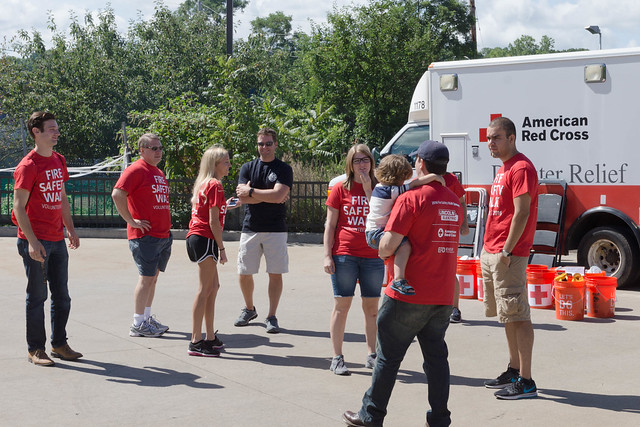
As was the case last summer, Lincoln Electric CEO Chris Mapes worked alongside employees to install the smoke alarms, and to provide residents with valuable fire safety information.  And Mike Parks, Regional CEO of the Red Cross in Northeast Ohio contributed to the effort, along with Red Cross volunteers and staff.

ParksMapesGareis

Mike Parks, Chris Mapes and John Gareis

“The partnership between Lincoln Electric, Euclid Fire, and the American Red Cross is a winner to be sure and a model for others, not only in the Region but throughout the country,” Parks said.  “I know the event had an extremely positive impact, and will help prevent the loss of life due to home fires.”

Last year, more than 100 lives across the country were saved after smoke alarms were installed by the Red Cross and our partners.

Home fires remain the biggest disaster threat to individuals and families in the United States. There are three home fires, on average, in Northeast Ohio every night. Operation Save-A-Life, part of the national Red Cross Home Fire Campaign is in direct response to that dire threat, with the Red Cross committing to install 2.5 million free smoke alarms in neighborhoods at high risk for fires, and to educate those residents about fire prevention and preparedness.

More than 12,500 smoke alarms were installed in homes in Northeast Ohio last year.

If you would like a free fire safety inspection of your home, and free installation of smoke alarms, log onto redcross.org/neoosal.  You can also visit redcross.org/homefires to find out more about how to protect you and your family from fire. You can also become a Red Cross volunteer. And you can help by donating to Red Cross Disaster Relief by visiting redcross.org, calling 1-800-RED CROSS or texting the word REDCROSS to 90999 to make a $10 donation. Donations to Disaster Relief will be used to prepare for, respond to and help people recover from disasters big and small.

Euclid - Lincoln Fire Walk 2016

Click on the photo to see a gallery of pictures taken during the Euclid Fire Safety Walk.

Photo credit: Cal Pusateri, American Red Cross Communications Volunteer

NEO Region Far Surpasses Goal for Number of Smoke Alarms Installed

A National Leader in Number of Smoke Alarms Installed

dsc00890jpg_26695618336_o

Volunteers from Global Prairie and the Maple Heights Fire Department helped install more than 100 smoke alarms on Thursday, April 28, 2016.  Photo credit:  Cal Pusateri/American Red Cross Volunteer

Thousands of residents in Northeast Ohio are better protected from home fires, as the American Red Cross Northeast Ohio Region has surpassed its goal of installing 10,000 smoke alarms during fiscal year 2016.

More than 12,500 smoke alarms had been installed in the homes of residents in the 22 counties served by the Northeast Ohio Region in fiscal year 2016.

“This was truly a team effort in all five chapters, and reflects the efforts of the entire staff, our dedicated volunteers, and our valuable community partners,” said Mike Parks, Regional CEO.  “Northeast Ohio is one of the top three leaders in smoke alarm installations in the nation, which is only fitting, since this life-saving program started in Cleveland almost 25 years ago.”

The American Red Cross Home Fire Preparedness Campaign was modeled after “Operation Save-A-Life,” an initiative between the Red Cross Greater Cleveland Chapter and the City of Cleveland Division of Fire.  Through the program, valuable fire safety information is shared with residents, including how to develop an escape plan.  The installation of free smoke alarms is also offered.

The goal of the initiative is to reduce the number of fire deaths and injuries in the U. S. by 25% within five years.

Dozens of people are alive today after smoke alarms installed through the Red Cross Home Fire Preparedness Campaign, including a family of 12 from Lorain, Ohio.

Residents in Northeast Ohio can learn more about the campaign, and can request a free fire safety inspection and free smoke alarm installation by logging onto redcross.org/neoosal.

See more photos from the Fire Safety Walk in Maple Heights with our partners from Global Prairie on our Facebook Page.  And read about recent smoke alarm installation events in Akron and Madison Township on our blog.

Want to get our blog posts emailed to you directly each time one is posted? It’s simple to subscribe by email – just enter your email address on the left side of our home page, www.neoredcross.org!

Prevent and Alleviate: Providing Fire Safety Education to Everyone

You may think that preventing and alleviating human suffering in the face of emergencies – the two actions our mission charges us to do – is a tall order.

With over 4.5 million residents to educate and assist, it can be a little overwhelming.

And yet, when eating an elephant – take one bite at a time.

The first bite: teaching our young community members more about how to keep themselves (and their families) safe before, during and following a disaster.

We are proud to announce that we have hit our annual goal by teaching the pillowcase project, sponsored by Disney, to 2,892 local school-aged children!

The pillowcase project teaches kids about disasters that can happen here in Northeast Ohio, and what they and their families can do to prepare for and respond during an event. Home fire education is the most prevalent piece of this program, as we respond to an average of three home fires across Northeast Ohio each night.

During the program kids are taught about smoke alarms, what to do when a smoke alarm sounds, knowing exit strategies for each room, creating a family meeting spot and so much more.

But this education isn’t just for the children of our community.

We are dedicated to sharing these safety tips with everyone. That’s the second bite of the elephant.

Through Operation Save-A-Life we are helping families learn more about fire safety as well as providing the tools necessary to put that education into practice, should the time come.

As of March, 2016, we have installed over 8,844 smoke alarms in homes throughout Northeast Ohio.

That’s just 1,156 off from the stretch goal we gave ourselves in June, 2015. Our region currently leads the nation in number of smoke alarms installed.

We are very proud of what we have accomplished. And our dedicated work and planning is paying off. We see it in the success stories of families like this one from last summer, and this one from December.

Thank you, from the bottom of our hearts, to the Red Cross workforce who made those numbers happen. Thank you to those who continue to educate, install and provide hope to families and individuals in each of the communities that we serve.

You can eat an elephant – one bite at a time.

Thank you!!

We LOVE Our Volunteers

When a family loses their home due to fire and the Red Cross responds, it’s more than likely a volunteer who helps that family find food, lodging and other immediate assistance.

More than 90% of the American Red Cross workforce is comprised of volunteers, people who donate their time and talent to help people in need every day.

Many volunteers have been with the Red Cross for years, in some cases, decades…providing disaster services, collecting blood, teaching CPR and First Aid, even answering phones.  We honor everyone who donates their time at various Volunteer Recognition Ceremonies throughout the region.

Volunteers from the Lake Erie /Heartland Chapter were honored during a ceremony in September.  Look for future articles on honoring volunteers from the Summit, Portage and Medina Counties Chapter and Lake to River, which covers Ashtabula, Trumbull, Mahoning, Columbiana and Jefferson Counties.

Feel the Heat, 2015

Working With the Military on a Disaster Drill

The firefighting abilities of the 910th Airlift Wing Fire Department were on full display at the Youngstown Air Reserve Station on Thursday, October 22, 2015, as were the services provided by the American Red Cross during times of disaster.

Video credit: Cal Pusateri/American Red Cross Volunteer

The second annual “Feel the Heat” exercise involved a simulated airplane crash, to demonstrate the response of firefighters and Red Cross staff and volunteers.  The drill also showcased how the Red Cross cooperates with the military to respond to the needs of family members and others.

This slideshow requires JavaScript.

Photo credit/Jim McIntyre, American Red Cross

As flames shot from the hull of the simulated wreckage, members of the 910th Civil Engineer Fire Department raced to the scene, fought the fire and searched for “survivors.”  It is those survivors and their loved ones who the Red Cross serves in the event of an aviation disaster.  The American Red Cross is responsible for tracking victims and their families, and providing them with counselling and support.  Staff members and volunteers would be activated to set-up necessary shelters, coordinate family and childcare facilities, arrange suitable non-denominational services, and make referrals to mental health professionals and support groups.

The American Red Cross responds to more than 70,000 disasters every year, big and small.  Most are home fires.  Victims are given emergency financial assistance, food, shelter, clothing and assistance with medicines, eyeglasses, even dentures they may have lost in a disaster.

It takes the power of volunteers and the generosity of donors to help the victims of disasters.  You can learn more about volunteering, and make a donation at redcross.org, or by calling 1-800-RED CROSS.  You can also text the words “Red Cross” to 90999 to make a $10.00 donation.

The American Red Cross also serves members of the military and their families through the Service to Armed Forces program.  Learn more about the ways in which the Red Cross is committed to helping the U. S. Military here.

Protecting every member of your family with your 72-hour kit

FamilyThere is nothing more frustrating (or hilarious, depending on how you view it) than going through your 72-hour kit and seeing a huge pack of newborn diapers intended to fit your 15-month-old toddler.

That teensy, tiny diaper simply isn’t going to cut it.

If you are the parent or care-giver to an infant or toddler, you will need to go through your 72-hour emergency kit quarterly to keep up with your ever growing child.

For those who haven’t built a 72-hour kit, yet, here are some items you will need in addition to your family’s regular kit:

  • 96 oz of water (about ¾ of a gallon) will cover a 72-hour span. Keep in mind, infants may drink up 32 oz a day when mixed with formula. If you are breastfeeding, keep more on hand for you to drink to in order to keep up your supply.
  • POWDERED Formula. Make sure that you have enough to cover the number of bottles and ounces that your baby drinks during the day, times three.
  • Bottles and nipples (make sure they are the right size of nipple for your child!) The more you have in your kit, the less washing and sterilizing you will have to do.
  • A large pack of diapers.
  • Baby wipes.
  • Diaper rash ointment.
  • Re-sealable gallon bags (for soiled clothes and diapers).
  • Clothing:
    • 3-5 onsies.
    • 3-5 footed pajamas.
    • 6-10 pairs of socks.
  • Burp cloths.
  • 3-5 receiving blankets.
  • 1-2 fleece (or heavier) blankets.
  • Toys, teething rings or other items to occupy attention.
  • Copy of Immunization Record in the family files.
  • Add to the first aid kit:
    • Teething gel.
    • Infant acetaminophen.
    • Infant ibuprofen.
    • Bulb syringe.
    • Hand sanitizer.

When you go through your kit (quarterly!) be sure to pay attention to your diaper sizes, clothing sizes, nipple sizes and amount of formula on hand (if needed).

Don’t forget about your pets! In the event of a disaster they will have supply needs as well. Here are some tips to keep your four-legged family members safe during a disaster:

  • Store extra food, water, bowls, litter box, medicine, first aid supplies and health records for each animal with your 72-hour kit.
  • Leashes and pet carriers should be together and accessible.
  • Before disaster strikes, identify pet-friendly places to stay within a 50-mile radius. Keep your pet with you if at all possible during a disaster.
  • Have current health/vaccination records, proof of ownership and brand or microchip identification.

To ensure that all members of your family are safe during a disaster, download the Red Cross First Aid apps available for people or pets. For more information on building a 72-hour kit, check out redcross.org!