Volunteering: The gift of your time

By Sue Wilson Cordle, American Red Cross volunteer

November 13, 2019- The holidays are almost upon us and as you look ahead to the busy time from just before Thanksgiving through New Year’s Day, many of us feel a mix of expectation and trepidation. The expectation is for a joyful season with family and friends—but the reality for many who are struggling financially or emotionally, is that this time of year can be stressful. There are experts galore with suggestions for getting through the season, But one consistent theme: Giving to others can improve your own mental health.

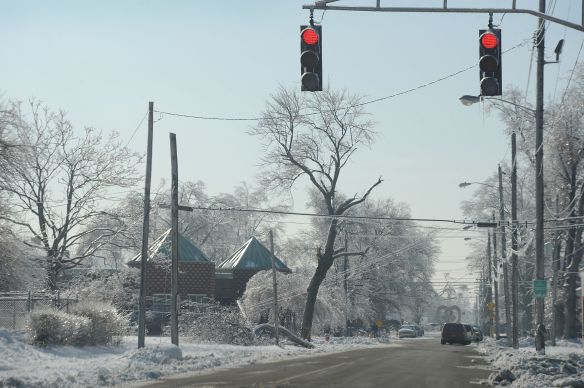
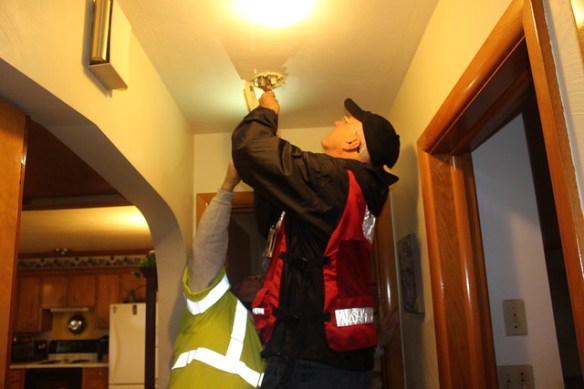
Winter DAT workers

But wait—doesn’t giving to others add to the stress?

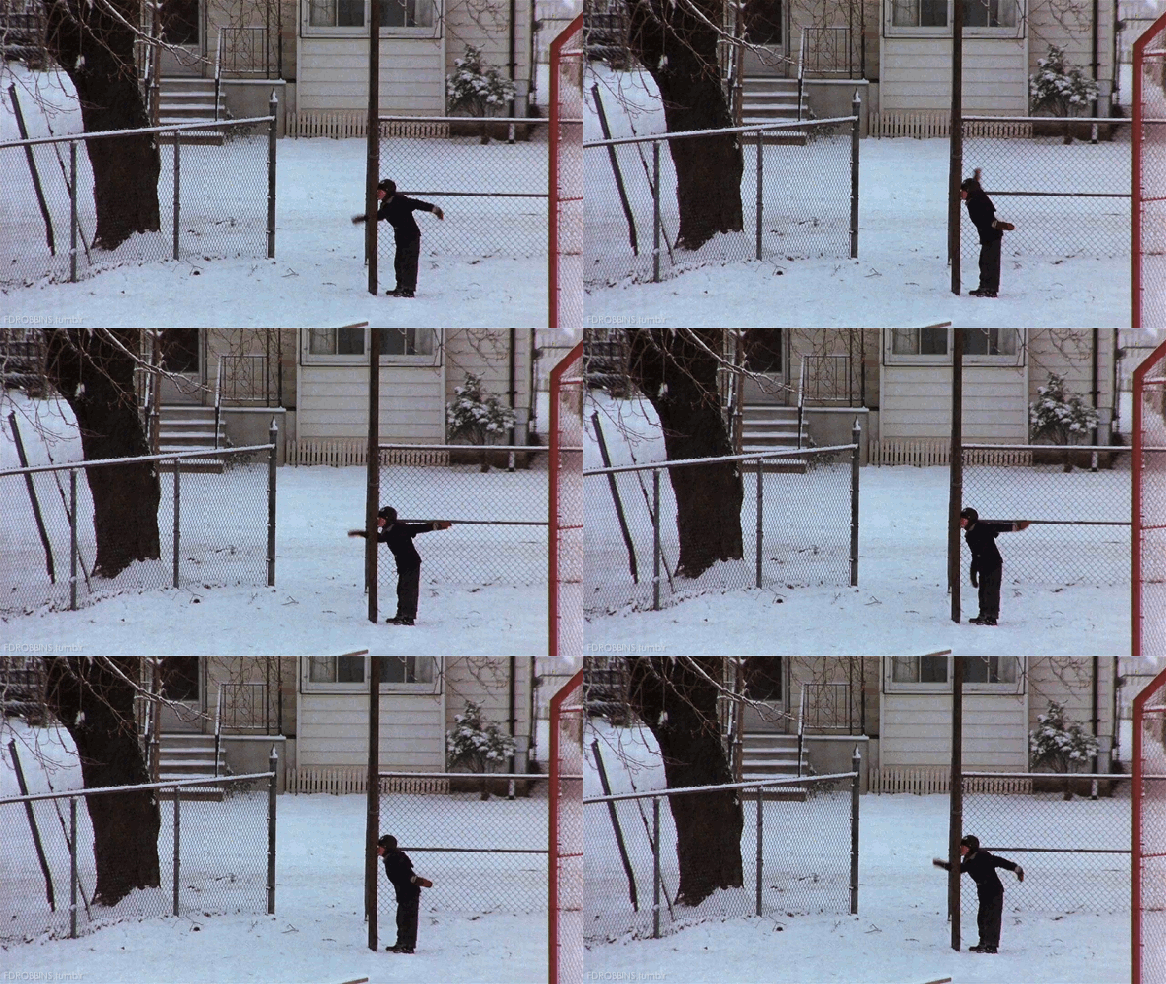
Remember the holiday classic “A Christmas Story,” when Schwartz took the double-dog dare and got his tongue stuck on the metal pole? How about this holiday challenge that doesn’t involve losing any skin? Ask yourself this question: Can you think of any of the gifts you received last year? Now think about how many you bought for family, friends and co-workers. If you’re honest with yourself, you probably remember very few (if any) but you do remember you had to make payments on your credit card long after that last Amazon delivery.

Flick-s-tongue-stuck-to-pole-A-Christmas-Story-gif-thecountess-40069078-600-338

This year make the holiday season LESS about consumerism and MORE about people. How?

Become a volunteer. According to this recent article written by Jeanne Segal, Ph.D., and Lawrence Robinson, volunteering has surprising health benefits. It can reduce stress, combat depression, keep you mentally stimulated and provide a sense of purpose. And if you think your income level, age, or even a disability prevents you from volunteering, research shows that people with disabilities or health conditions ranging from hearing and vision loss to heart disease, diabetes or digestive disorders all show improvement after volunteering.

The American Red Cross has a number of ways you can donate your time and talent. You can take a quiz that will match your skill set, age, interests or goals to find a volunteer opportunity that is right for you. From 18 to 80 (and beyond), there is something you can do to help the Red Cross in its mission to alleviate suffering in your own backyard or around the world.

Development SAF Stock Photography Project 2018

Right now, the Red Cross has three specific needs that are high priority volunteer positions: a blood donor ambassador, a blood transportation specialist and a disaster action team member. It is volunteers in priority positions like these, or in any number of roles, who carry out 90 percent of the humanitarian work of the Red Cross.

Your favorite memories surrounding the holidays or about life in general probably don’t involve gifts at all. They involve rituals and traditions, feelings and emotions—all involving quality time spent doing something important, whether with loved ones or a community of strangers that can become friends with purpose in the world of volunteering.

Carrollton STA

This year, give something that means something. Give the gift of your time and become a volunteer. Do it alone or team up with a friend or family member. It will be a gift that is far more valuable than anything money can buy. It will be a gift you’ll remember forever.

To explore opportunities to share your gift of time, visit Redcross.org.

Edited by Glenda Bogar, American Red Cross volunteer

Serving country and community: Dave Riegler, U.S. Army veteran and Red Cross volunteer

A Veterans Day volunteer profile

By Tim Poe, American Red Cross volunteer

Editor’s note: Regional CEO Mike Parks’ Veterans Day message follows this profile of a volunteer and a veteran.

On Veterans Day, we honor, celebrate, and thank all who served in the United States armed forces, and we at the American Red Cross Northeast Ohio Region are especially proud and thankful for the many veterans who continue to serve our communities as Red Cross volunteers. Dave Riegler, a retired U.S. Army lieutenant colonel and volunteer based at the Summit, Portage, and Medina Counties Chapter, is one of these extraordinary individuals.

Dave RieglerDave began volunteering with the Red Cross in 2005. While recovering from a major surgery, he saw the coverage and call for volunteers after Hurricane Katrina and knew he could help.

And his help has been extraordinary. After serving at a call center in Washington, DC following Katrina, Dave has taken on a number of critical roles and responsibilities over the last 14 years. Dave estimates he has deployed about a dozen times to major disasters and regularly assists in our region. His responsibilities include logistics, warehousing, and database operations, and he often uses his skills to locate and procure needed resources.

Dave’s assistance is greatly appreciated. Rachel Telegdy, Executive Director for the Summit, Portage, and Medina Counties Chapter, stated, “Dave is the type of volunteer that will always step in to help in any way. No matter the day or time I know I can call Dave and never worry about the job getting done. His get it done attitude is commendable and his smile is contagious!”

Dave’s military and private sector accomplishments are also exceptional. He served in the U.S. Army for more than 28 years, reaching the rank of lieutenant colonel. In addition, Dave had a 40-year career at Goodyear. He began as a machinist and, after earning his engineering degree, moved to corporate engineering. He retired from both the Army and Goodyear in 1997.

Dave is also involved with a number of veterans’ and service organizations, including the Mogadore Lions Club, VFW, a retired military officers’ group, and is a 4th Degree member of the Knights of Columbus. He has a busy Veterans Day and week ahead.

During the interview, Dave’s giving nature was apparent. When asked what he most enjoys about volunteering with the Red Cross, Dave replied meeting people within the organization and helping those in need. He also mentioned that, over the years, he has given blood every time he could. Helping was the major theme in our discussion.

Dave noted how the military and the Red Cross share a commitment to training. When he deploys to a disaster, for instance, the Red Cross ensures everyone has the needed skills.

And he expressed how serving helps instill a sense of personal satisfaction, as well as providing perspective and understanding. For instance, Dave mentioned that there are things in life where we may ask why we’re even bothering. While working with the Red Cross, he sees why.

Finally, Dave said he appreciates being thanked when someone learns he is a veteran. He is sure to thank fellow veterans as well. To Dave and all veterans, on behalf of all of us in the Red Cross Northeast Ohio Region, thank you.


CEO’s Veterans Day message                                                                                     By Mike Parks, American Red Cross

Memorial Day Blog

Greetings to our Northeast Ohio Red Cross Family:  Today, Veterans Day, we have the privilege to honor those members of our armed forces who have faithfully served our great nation.  I use the word “privilege” intentionally because I recently had the “privilege” to attend the funeral of the last remaining World War II Coast Guard POW in Buffalo, NY when the Coast Guard and the community honored this fallen hero whose remains were finally returned home after 77 years.  LT Thomas James Eugene “Jimmy” Crotty was the youngest of five boys and a girl born to Irish immigrants in Buffalo’s old Fifth Ward in 1912.  He also was the captain of the Coast Guard Academy’s football team, president of his graduating class, and a gifted young officer who was sent to rescue passengers off the burning liner Morro Castle and later served as a special deputy on the Bering Sea Patrol.  He was a hero of Corregidor and a survivor of the Bataan Death March.  And on July 19, 1942, Crotty, was dying of diphtheria in the squalid Cabanatuan Prisoner of War Camp, soon to be given last rites at the edge of a mass grave and lost to his countrymen for 77 years.  I was humbled to be in attendance as Coast Guard paid tribute to LT Jimmy Crotty and his family for their sacrifice.  It was a sobering reminder of all those men and women who have worn the uniform of this country, serving with distinction and humility, so we can all enjoy the freedoms we so often take for granted.  The link below is a short clip of the service honoring LT Crotty.

https://www.bing.com/videos/search?q=lt+james+crotty+pow&qpvt=lt+james+crotty+pow&view=detail&mid=BB19DF23AE7D12EB7805BB19DF23AE7D12EB7805&&FORM=VRDGAR

 A bit closer to home, our own Cleveland Cavaliers honored service members at a recent home game.  I’ve included a clip of the moving halftime ceremony featuring our Greater Cleveland Chapter board member, Nic Barlage of the Cavs, recognizing the commitment and dedication of a service members.

https://www.nba.com/cavaliers/video/teams/cavaliers/2019/11/06/2871694/1573003408385-19-20-salute-service-halftime-2871694

Within less than a week, I was privileged (there’s that word again) to observe two moving and meaningful tributes honoring members who served in our armed forces.  I remain moved and humbled by their sacrifices and by those of so many other soldiers, sailors, airmen, Marines, and Coast Guardsmen. On this Veterans Day, we all will have the opportunity and privilege, should we choose to seize upon them, to thank and honor those who have served, or are serving our nation, in uniform—please do!  To all of you reading this who have served in the armed forces—thank you for your service and for your sacrifice!  I often come across people who express their regret in having not served in the military.  I always tell them they can still serve now by supporting our military and their families in any number of ways.  November marks Military Family Appreciation Month—I would like to take a moment to thank every spouse, parent, sibling, child, and loved one who supports our men and women of the armed forces—as the above video clips confirm—families make great sacrifices as well. 

 In closing, I hope you share my sincere gratitude in serving in the world’s premier humanitarian organization that traces its roots back to supporting those on the battlefields and continues to serve our armed forces each and every day.  Stay well, stay safe, and remember to thank a veteran and their family!!  Best regards…Mike

Michael N. Parks
Rear Admiral, U.S. Coast Guard (Retired)
Chief Executive Officer
American Red Cross Northeast Ohio Region

Red Cross internship offers unique perspective and community-building skills for local social work students

By Jason Copsey, American Red Cross volunteer

November 8, 2019 – When Jessi Graber, a senior in Cleveland State University’s School of Social Work was considering internship opportunities, she was surprised to see ‘American Red Cross Disaster Relief’ as an option.

“I thought it was interesting because I knew about the Red Cross blood blood drives, but I never considered the Red Cross for case work,” said Jessi. “I got excited when I learned how much the Red Cross helps families and supports the community.”Jessi

Jessi applied to become a Red Cross Disaster Relief intern through her program at CSU. The American Red Cross of Northeast Ohio partners with Cleveland State University to place students in internship programs, a requirement for graduates of its School of Social Work.

                    Jessi Graber

“The internship program is a great opportunity for students to experience a unique side of social work,” said Ben Bellucci, Disaster Program Manager, American Red Cross of Greater Cleveland.

Out of more than a dozen applicants each year, five CSU students become interns in the Red Cross Disaster Services office. Interns work at the Red Cross between 13 and 18 hours per week supporting the recovery side of the Red Cross Disaster Program. They assist individuals and families displaced by man-made or natural disasters. A number of CSU students have also taken on support of the complete cycle of disaster services, including preparedness, response and recovery.

“We start each internship by building a plan for continual development,” said Ben. “Each week students provide their own assessment of themselves, how they did for the week and how they feel they are progressing in the internship. I add input as a supervisor on their progress toward achieving goals.”

Red Cross interns work for two semesters, beginning in August and ending in May. The program is structured to establish a baseline through the first semester and develop leadership and management skills during the second. Case work often adds context to class work for Red Cross interns.

“The social work competencies can be very academic in a classroom setting,” said Jessi. “But they come to life in the internship. I get to refer back to the things I’m learning, and it is a completely different perspective.”

Jessi2

One of the strongest benefits of the Red Cross Disaster Relief internship is the unique pace. At the state and county levels, it is not uncommon for case workers to follow clients for a year or more. At the Red Cross, clients cycle through in 35 days, on average.

“Because it is such a fast environment, building a relationship quickly is important,” explained Ben. “Our interns become extremely detail-oriented and learn to make connections quickly. By the time they graduate, they are able to identify gaps and recovery roadblocks immediately and know how to work around them.”

For Jessi, the best part about the experience so far has been building relationships with clients and seeing a different side of the community. She spends time each day checking in with clients via phone, email or in person, ensuring their needs are being met and that progress is made.

“No two days are alike, because no two clients are alike,” said Jessi. “Being able to help families who have experienced significant trauma is why I became interested in case work in the first place.”

For more information on internships with the Red Cross, visit our website.

Edited by Glenda Bogar, American Red Cross volunteer

Be prepared for the snow and cold

By Renee Palagyi, Senior Disaster Program ManagerPalagyi, Renee

Editor’s note: Renee sends a message to the Northeast Ohio regional staff every day, to accompany the daily report on disaster responses.  Here, we are sharing today’s message.


Not really a surprise but it appears we may be moving in to the winter season. Watch out for the “s” word in the forecast in the next few days and follow our tips to stay safe.

Beforehand:

  • Talk with your family about what to do if a winter storm watch or warning is issued. Discussing winter storms ahead of time helps reduce fear, particularly for young children.
  • Have your vehicle winterized before the winter storm season to decrease your chance of being stranded in cold weather.
  • Have a mechanic check your battery, antifreeze, wipers and windshield washer fluid, ignition system, thermostat, lights, flashing hazard lights, exhaust system, heater, brakes, defroster, and oil.
  • Install good winter tires with adequate tread. All-weather radials are usually adequate but some jurisdictions require vehicles to be equipped with chains or snow tires with studs.
  • Keep in your vehicle: – A windshield scraper and small broom – A small sack of sand for generating traction under wheels and a set of tire chains or traction mats – Matches in a waterproof container – A brightly colored (preferably red) cloth to tie to the antenna – An emergency supply kit, including warm clothing.
  • Keep your vehicle’s gas tank full so you can leave right away in an emergency and to keep the fuel line from freezing.
  • Keep a supply of non-clumping kitty litter to make walkways and steps less slippery.
  • Service snow removal equipment before the winter storm season and maintain it in good working order.
  • Keep handy a warm coat, gloves or mittens, hat, water-resistant boots, and extra blankets and warm clothing for each member of the household.

Plow

There’s lots more to be found at:    https://www.redcross.org/get-help/how-to-prepare-for-emergencies/types-of-emergencies/winter-storm.html


Home fires keep NEO disaster responders busy

Weekend disaster report, November 1-3, 2019

More than three-dozen people in Northeast Ohio were chased from their homes by fire over the weekend.  They received comfort and care from trained Red Cross disaster responders, volunteers who, in some cases, traveled far from their homes to help those in need.2019 Euclid fire response

“Our volunteers worked long and hard this weekend to make sure people in need received immediate assistance,” said Renee Palagyi, senior regional disaster program manager. “Some drove an hour-and-a-half to get help to the people who needed it.  Some stayed after their shift was scheduled to end; some started before they were scheduled to start.  I can’t say enough about the dedication of our volunteers.”

Disaster Action Team (DAT) members are on-call during scheduled shifts, and when a call comes to the Red Cross from a fire department, a neighbor, or another source, the volunteers on-call respond.  They provide immediate financial assistance, comfort kits filled with toiletries and other necessary supplies, and other help for those affected by fire.

This weekend, Red Cross disaster responders distributed nearly $8,200 to folks affected by home fires in 11 separate cases, impacting residents in Cleveland, Canton, Youngstown, Sandusky, Ashtabula Chesterland, Lisbon and East Liverpool.

There is always a need for trained disaster responders to help people during their darkest hours.  Visit redcross.org/volunteer to learn more, and to apply to become part of the regional Red Cross workforce in Northeast Ohio.

Northeast Ohio American Red Cross volunteer deploys to assist with California wildfires

By Eric Alves, Regional Communications Specialist, American Red Cross of Northeast Ohio

November 1, 2019- As critical wildfire weather conditions continue to plague residents of California, the American Red Cross of Northeast Ohio is deploying a local volunteer to assist with the Red Cross’ relief efforts.

Tom Quinn of Wadsworth is one of more than 500 Red Cross volunteers supporting evacuation centers to provide safe refuge for individuals impacted by the devastating fires. Quinn recently deployed in September to assist with the Hurricane Dorian relief efforts in Florida.

thumbnail_image016

Meritt Dahlgren (right) overjoyed when he found his home still standing despite perimeter being destroyed

In northern California, the Kincade Fire has scorched more than 77,700 acres and is about 65 percent contained.

In southern California, the Hillside Fire near San Bernadino and Easy Fire in the Simi Valley, along with the Getty Fire continue to burn near Los Angeles.

thumbnail_image011

The Maria Fire, which broke out Thursday, has grown to as many as 8,000 acres in Ventura County, prompting new evacuation orders.

While some evacuations have been lifted, there were still more than 180 people in 8 Red Cross and community shelters overnight. With partners, the Red Cross has served more than 40,500 meals and snacks, provided more than 2,500 relief items and made more than 2,400 individual care contacts.

thumbnail_image014

“The Red Cross was very prepared for this catastrophe. My friends and neighbors are grateful for all the support the Red Cross has shown our community,” said Meritt Dahlgren, Heldsburg resident who was overjoyed to find his home still standing, despite the perimeter being destroyed.

All are welcome at all Red Cross shelters. The Red Cross delivers help to anyone regardless of race, religion, sexual orientation or citizenship status. People who have disaster-caused needs do not need to be American citizens to access Red Cross services.

thumbnail_image009

You can help people affected by disasters like wildfires and countless other crises by making a gift to Red Cross Disaster Relief. Your gift enables the Red Cross to prepare for, respond to and help people recover from disasters big and small.

Visit redcross.org, call 1-800-RED CROSS, or text the word REDCROSS to 90999 to make a $10 donation.

Mahoning Valley residents and volunteers “Feel the Heat” during emergency response tour

By Mark Sitch, American Red Cross volunteer

October 30, 2019- The American Red Cross partners with many organizations to create a network of volunteers and highly skilled professionals who are prepared when emergencies arise. The Youngstown Air Reserve Station (YARS) has served proudly since 1955 as a community jewel and thirdlargest employer of the Mahoning Valley—ready to serve our region and beyond in multiple ways.

On October 22 the Red Cross community was invited to Feel the Heat, a learning tour of facilities and tools used by the valley’s bravest to serve our region and nation. Nearly 1,900 military personnel efficiently operate this 321-acre federal facility in Trumbull County, where our assignment began.

48943605903_23f15a0a99_c

Karen Conklin, Executive Director of the Red Cross of Lake to River, and chapter board member Lou Joseph of Home Savings and Loan of Youngstown

We were greeted with opening remarks at the Community Activities Center (CAC) by Colonel Don Wren, 910th Air Wing Mission Group Support Commander. Joe Mersol, Lake to River chapter co-events chair, addressed attendees during refreshments. After Mike Parks, Red Cross regional executive, introduced Air Force Fire Chief John Lewis, we were divided into three squadrons and briefed with instructions for our nearly two-hour tour.

Our second stop was at the Family Assistance Center, where we learned training and drills that can help families in any YARS related event or disaster, with a staff  ready to provide counseling, food, first aid, shelter and specialized services.

48943615653_f843325853_c

Red Cross Regional CEO Mike Parks, a U. S. Coast Guard Rear Admiral (Retired) speaks with Air Force Reserve Col. Don Wren,  Commander, 910th Mission Support Group

Our next adventure was reporting to the Smoke House for a simulated smoke demonstration. This illustrated how difficult it is to see in a fire. We learned the importance of staying low to the ground and other safety tips. Outside, we “felt the heat” at the next demonstration by witnessing a propane- fueled metal training jet set ablaze as Chief Lewis outlined the challenges of fighting such a fire.

“It’s our opportunity to work with our amazing 910th Airlift Wing on an exercise where we simulate a plane has gone down,” said Karen Conklin, Lake to River Chapter executive director.

48944161206_f9468f3637_c

They also demonstrated the powerful “jaws of life” and other tools used to extract victims of car accidents. The chief noted that they assist various area fire departments in the region, as was supported by the presence of Youngstown Fire Chief Barry Findley and Mayor Tito Brown.

Our last stop was at the Emergency Operations Center. This “situation room” with the latest technology helps federal, state and local responders coordinate emergency efforts and monitor events such as air shows hosted by YARS.

48944156906_3365b156d8_c

It was an informative and pride-filled day that helped show the community the value of this facility as a Red Cross trusted ally.

Our thanks to Lake to River chapter board chair Deborah Grinstein for coordinating the event; 910th Airlift Wing Commander Colonel Joseph D. Janik; and Master Sgt. Bob Bartko Jr. for allowing us to observe impressive team efforts and for planning this exciting event.

48943609108_00243c4ed5_c

Col. Wren with Red Cross AmeriCorps workers Carrie Schultz, left, and Teresa Greenlief

Visit www.youngstown.afrc.af.mil to learn more about this Mahoning Valley gem.

To see more photos from the Feel the Heat event, click here to visit our Flickr page.

Edited by Glenda Bogar, American Red Cross volunteer

International adventures with a former Red Cross staff member

By Beth Bracale, American Red Cross volunteer

October 28, 2019- Betty Lou Sobotincic started working for the American Red Cross right out of high school. Her friend’s mother catered luncheon meetings at the headquarters in Erie, Pennsylvania, and she told director Harry Ringer about Betty Lou. Ringer was known for overseeing all of the Red Cross during World War II and having worked with President Dwight D. Eisenhower.

The Erie branch was short-staffed, and Ringer hired Betty Lou as secretary to the First Aid, Water Safety and Disaster Response departments. She soon discovered that she and a college student from Gannon University had two weeks to prepare for the “Teach Johnny to Swim” program that summer – for 2,000 students! They managed to pull it off.

BLC wave

During Betty Lou’s time in Erie, President John F. Kennedy was assassinated. One of her jobs was to raise the flag. When Ringer told her to put the flag at half-mast that day, she asked him what that meant. “He gave me a look. When Harry told you to do something, you just did it. So I went outside and figured out how to hang a flag at half-mast.”

After a couple of years, Betty was getting restless and she had reached the cap of the pay range. Ringer called the Red Cross office in Washington, D.C., and opened the door for them to hire her for overseas duty. She traveled to D.C. and stayed at the famous Willard Hotel. Both the hotel and the Red Cross headquarters were quite impressive to a 19-year-old from Ashtabula, Ohio.

BLC Heidelberg, patient

Betty Lou’s first assignment was at the Far Eastern Area Headquarters of the Red Cross in Tokyo, Japan, during the build up to the Vietnam War. When she arrived, there were between eight and 15 personnel in Vietnam. By the time she left two years later, there were 250, and a substation had been created in Saigon. As secretary, and the youngest staff member by far, Betty Lou was in charge of payroll, processing transfers and keeping track of everyone’s location. She was tasked with going to embassies for the Southeast Asian countries and procuring visas for transferring workers. Finding her way around Tokyo was no easy task. Eventually she bought a car and drove herself wherever she needed to go.

At 21, Betty Lou was transferred to Heidelberg Hospital in Germany, again serving as secretary with a high-level security clearance, which was necessary due to her knowledge of troop movement. Her duties included sending messages to families of soldiers who had been killed and assisting families who came to visit those who had been severely wounded. While this job wasn’t as challenging as the one in Japan, it was emotionally draining.

BLC mag cover

Sometimes Red Cross personnel from Washington and other locations came to the hospital and were hosted by the director. One of those guests was Al Cherry , who Betty Lou met at a Red Cross gathering. Six weeks later the two were married in Switzerland! Eventually they moved to Ashtabula, Ohio, to raise a family.

Betty Lou served the Red Cross in Northeast Ohio during a number of local disasters, such as the tornadoes in Xenia, Ohio, and the surrounding area. In more recent years, Betty Lou and Al have been consistent contributors to the Red Cross, with a special focus on family needs following house fires. Betty Lou still stays in touch with people she met through her work, both here and abroad. The Red Cross holds a special place in her heart.

Edited by Glenda Bogar, American Red Cross volunteer

Safety advice for Halloween

Trick-or-treaters will be out tonight in some communities

Halloween is just days away! Masses of kids will be out in our neighborhoods, dressed as super heroes, cartoon and television characters for trick or treat fun. The American Red Cross has complied a list tips parents can follow to help keep the kids safe while enjoying the festivities.

California Wildfires 2017

  1. Trick-or-treaters need to see and be seen.
    – Use face makeup instead of masks which make seeing difficult.
    – Give trick-or-treaters a flashlight to light their way.
    – Add reflective tape to costumes and trick-or-treat bags.
    – Have everyone wear light-colored clothing.
  2. Use flame-resistant costumes.
  3. Make sure adults know where the kids are going. A parent or responsible adult should accompany young children door-to-door.
  4. Be cautious around animals, especially dogs.
  5. Walk, don’t run.
  6. Only visit homes that have a porch light on. Accept treats at the door – never go Superstorm Sandy 2012inside.
  7. Walk only on the sidewalks, not in the street.
    – If no sidewalk is available, walk at the edge of the roadway, facing traffic.
    – Look both ways before crossing the street, and cross only at the corner.
    – Don’t cut across yards or use alleys.
    – Don’t cross between parked cars.
    – Drivers – use extra caution. The youngsters may forget to look both ways before crossing.
  8. A grown-up should check the goodies before eating.
    – Make sure to remove loose candy, open packages and choking hazards.
    – Discard any items with brand names that you are not familiar with.

If you are planning to welcome trick-or-treaters to your home, follow these safety steps:

  1. Light the area well so young visitors can see.
  1. Sweep leaves from your sidewalks and steps. Clear your porch or front yard of obstacles someone could trip over. If your steps or walkways are ice covered, make sure to lay down salt- this is Northeast Ohio after all!

Superstorm Sandy 2012

Trick or treat times vary; many communities have established tonight as the night for trick or treating, including Akron, Cuyahoga Falls and Ravenna. Visit your city’s website for exact dates and times, or visit this for a pretty extensive list.

Superstorm Sandy 2012

Download the free Red Cross First Aid App for instant access to expert first aid advice right at your fingertips. Use the free app Emergency for weather alerts and to let others know you are safe if severe weather occurs. Find these and all of the Red Cross apps in smartphone app stores by searching for the American Red Cross or going to redcross.org/apps.

Smoke alarm helps save lives in Wooster

By Samantha Pudelski, American Red Cross Volunteer

October 25, 2019- Did you know that if a fire starts in your home, you might have as little as two minutes to escape? Something as simple as a smoke alarm can alert those inside of a fire in its early stages, providing critical time to vacate the home and call for help. Unfortunately, there are many who don’t have working smoke alarms, or don’t have enough devices within their home.

One American Red Cross volunteer, Barbara Buchwalter, experienced first-hand how powerful a simple device like a smoke alarm can be.

33882105078_6646b24feb_c

Joe Kiefer

“I was given a business card at a senior event,” said Barbara. “We knew we didn’t have enough smoke alarms for the size of our home. A fireman came and installed several alarms. Within the same week, our stove caught fire and the smoke alarm went off.  The fireman that installed the alarms also responded to the fire that afternoon. I believe my husband and I were saved, because we had our old alarms replaced.”

47706530702_b58007362e_c (1)

Lieutenant Joe Kiefer was the Wooster firefighter who provided the services that saved the lives of Barbara and her husband. He said that the smoke alarm not only saved lives that day, but it minimized the damage the fire caused. With the fast actions of the homeowners, Joe and his fellow firefighters were able to quickly respond and put out the fire before it spread to other areas of the home.

Joe was recently named Wooster firefighter of the year, and his work with the Red Cross Home Fire Campaign was mentioned as one of the reasons for his nomination.

The Buchwalters are among the 642 people whose lives have been saved after smoke alarms installed by the Red Cross and its partners alerted them to the danger in their homes. In Northeast Ohio, the Red Cross and its partners have installed over 42,000 smoke alarms through its Home Fire Campaign.

Kiefers

Joe Kiefer with his wife Lara Kiefer, executive director of the Lake Erie/Heartland Chapter

Smoke alarm installations are available to any community member through their local chapter of the Red Cross. Many fire departments, like the Wooster Fire Department partner with the Red Cross to install smoke alarms the Red Cross provides. Fifteen to 30 minutes is all it takes to install smoke alarms in a home. Joe said that it also provides the firefighters an opportunity to answer any questions the homeowners may have, and to point out any potential fire hazards within the home.

33882104578_9636739437_c

Joe Kiefer with Ashland mayor Matt Miller

“It’s a great way to get [firefighters] face-to-face with their community members,” Joe said.

“It’s a simple thing people can do—there’s no reason not to have smoke alarms,” according to Joe. To learn more about how you can prepare your home in case of a fire, visit the Red Cross Home Fire Safety page.

Edited by Glenda Bogar, American Red Cross volunteer