Bringing help and hope: Volunteer nurses find sharing their skills rewarding

Honoring professional healthcare volunteers during National Nurses Week

By: Kelly C. McClure, MLS, BSN, RN, American Red Cross volunteer

What does a disaster look like? There’s no rough blueprint or an all-encompassing definition for the word, but for those who have lost everything in a fire, flood, earthquake, or hurricane, it can look like complete despair. In the United States alone, a disaster occurs approximately every eight minutes. Stretched out, that’s more than 60,000 disasters each year that the American Red Cross will deploy volunteers to help victims by supplying clean water, food and shelter. But what happens when there are physical injuries, wounds or medical conditions that need immediate attention? The Red Cross’ team of volunteer nurses are there to help.
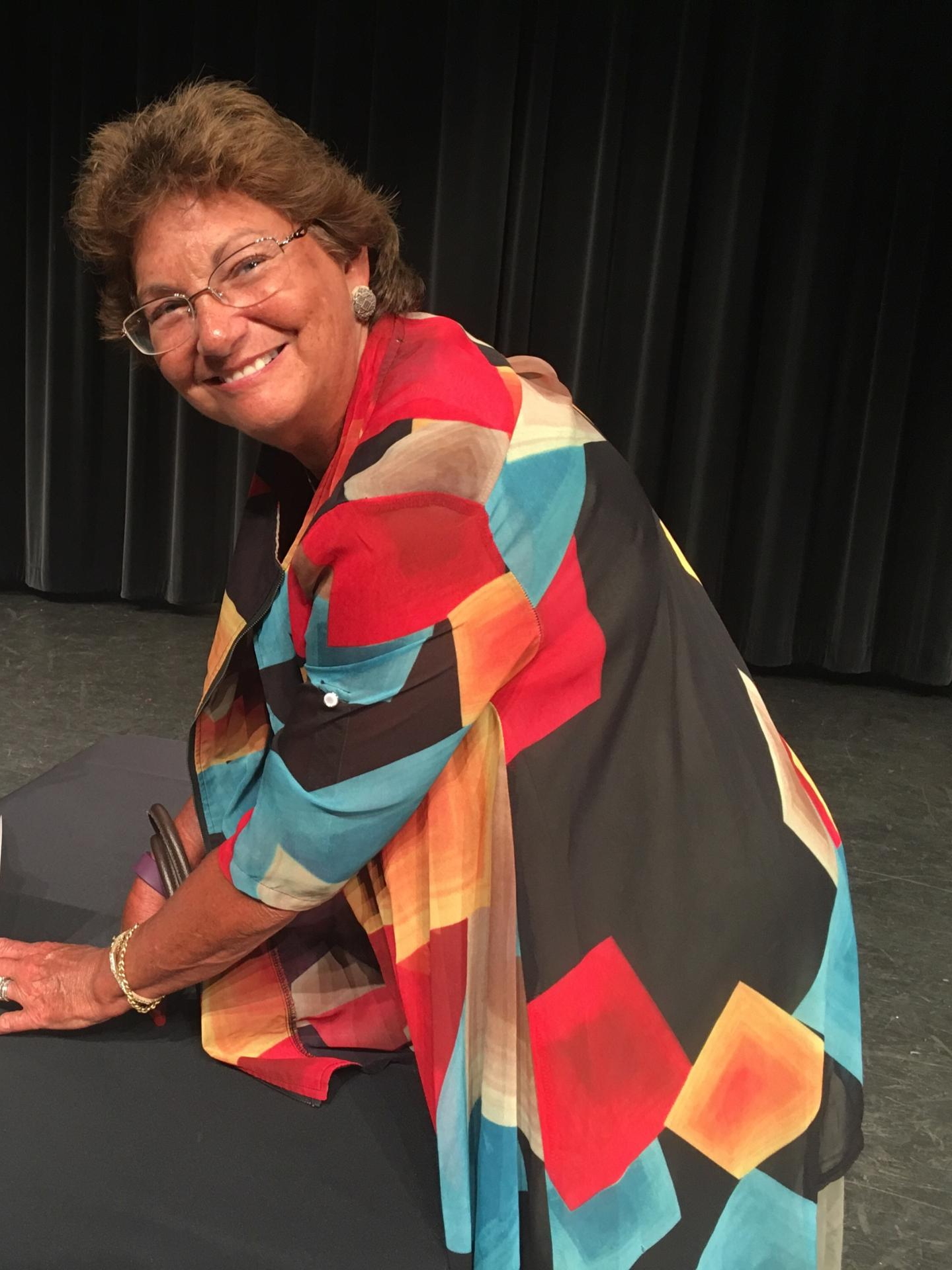
Beth Kartman-Orgel, RN, Red Cross volunteer

The volunteer nurse corps for the Red Cross include an amazing team of registered nurses (RNs), licensed practical nurses (LPNs), licensed vocational nurses (LVNs) and nurse practitioners (NPs) who undergo many hours of training to become Service Associates (SAs) with the Red Cross’ Disaster Health Services. In addition to learning first aid, providing care at a shelter, psychological first aid, mass casualty education and deployment training, they also learn how to reunify families that have been separated. Once deployed, they not only provide physical assessments of injured victims who may need to be transported to a hospital for a higher level of care but also provide valuable health care education to victims.

One of the many dedicated nurses in the volunteer nurse corps is registered
nurse, Beth Kartman-Orgel, who has been a nurse for 46 years and a volunteer nurse with the Red Cross for six. During this time, she has deployed to many disaster sites including several in Florida after hurricanes and some in California during wildfires.

“Being deployed is a whole lot different than being a regular nurse,” Beth said. “You need to be able to think on your feet, make do with little to no equipment or support and, at times, without electricity, running water or supervisors because there is no internet or phone service.”

Any nurse will tell you that each day brings with it a whole new set of challenges. However, as a volunteer nurse in the Red Cross, those challenges look somewhat different.

“I love the challenges we face on deployments — the different ethnicities,
languages, and belief systems among staff and clients,” she explained. “I always loved camping, so showering in a truck, washing at a sink with bottled water, if need be, using flashlights to make rounds or give meds or change dressings is all in a day’s work.” Undoubtedly, Beth loves what she does for the Red Cross and has also completed Disaster Health Services supervisor training, which she hopes to utilize on her next deployment.

Deploying to a disaster area after a hurricane or wildfire isn’t the only way nurses can be involved with the Red Cross. Registered nurse, Cindy Russo, has been a volunteer with the Red Cross for 30 years and began her journey in Blood Donor Services at blood drives. Here, she completed donor registrations and medical histories and obtained blood pressure and hemoglobin tests before blood donation. In more recent years, Cindy has predominantly worked in Disaster Health Services, assisting victims after home fires to obtain new prescriptions for their medications and necessary medical equipment like wheelchairs, walkers and oxygen machines. In the past, Cindy has also deployed to regions affected by hurricanes and has even helped install smoke alarms in local homes. After 30 years of volunteering, she has found the work to be extremely rewarding.

“Helping those in a time of need is the most rewarding part,” she said. “It is a great extension of what many nurses do every day and is a way to use their skills and talents to help others.”

If you’re a nurse and want to volunteer with the Red Cross, browse through the listings of volunteer opportunities and complete an online volunteer application.

Edited by Glenda Bogar, Red Cross volunteer
Posted by Ryan Lang, Red Cross board member and volunteer
Severe weather safety tips to help you stay safe

By Samantha Pudelski, American Red Cross volunteer

Warmer weather will be arriving in Northern Ohio…eventually! We’ll be swapping snowstorms for thunderstorms and rain. While our region doesn’t experience hurricanes (this is the beginning of hurricane preparedness week), our area does experience severe storms that can bring tornadoes or flash flooding. Before severe weather strikes, refresh your severe safety knowledge with these tips from the American Red Cross.

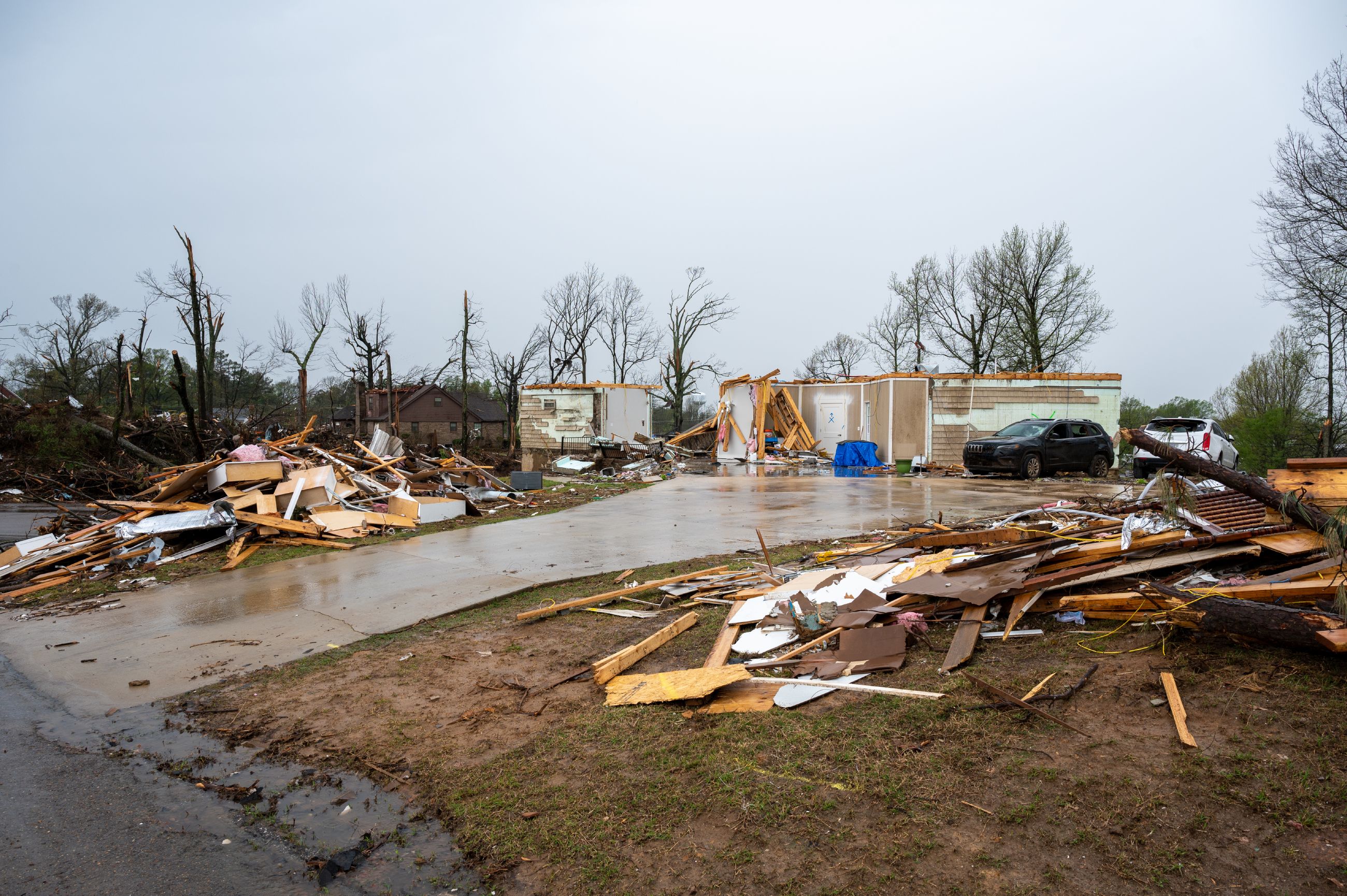
April 5, 2023. Wynne, Arkansas. The tornado that struck Wynne, caused extensive damage to scores of homes in the town. Photo by Kevin Suttlehan/American Red Cross

Before Storms Strike:

  • Identify a sturdy building that you can take shelter in. A sturdy building has walls and a foundation.
  • Ideally, the building should have a basement, or a small, interior room without windows on the lowest level of the building.
  • Mobile, manufactured, trailer homes and recreational vehicles (RVs) are not safe in high winds.
  • If you reside in one of these structures, make sure to identify a building nearby that you can take shelter in quickly.
  • Hold practice drills with everyone in your household to make sure everyone knows what to do and where to go before a storm hits.
  • Sign up for free emergency weather alerts from your local government or weather service.
  • In case there is a power outage, make sure to have a backup battery to charge your cell phone and a battery-powered radio.
  • Know the different types of weather alerts:
    Severe thunderstorm watch: Means severe weather is possible in the area. Be prepared to act fast.
    Severe thunderstorm warning: Means a severe thunderstorm is in the area and to take action to get to safety.
    Tornado watch: Means tornadoes are possible in the area. Be prepared to act fast.
    Tornado warning: Means a tornado is near, and you must take immediate action to get to a safe location.
    Flood watch: Means that flooding is possible in the area.
    Flood warning: Means flooding is forthcoming or currently happening in the warning area.
    Flash floods warning: Means that a flash flood is imminent or currently happening. It is even possible that a flash flood can occur in an area not immediately receiving rain.


When Storms Are Predicted in Your Area or Currently Happening

  • Look for storm signs such as darkening skies, lightning flashes and windy conditions. If you hear thunder, head indoors. Once you can hear thunder, the storm is close enough to be in danger of lightning strikes.
  • If a severe thunderstorm warning is issued in the area, take shelter in a substantial building.
  • Mobile homes can blow over in high winds.
  • Keep away from windows.
  • Don’t take a bath, shower or use plumbing.
  • Avoid using electrical equipment and telephones.
  • If you are driving, try to find a way to safely pull off the road and park. Stay in your vehicle until the heavy rain ends. Turn on your emergency flashers so other vehicles can see you.
  • If you are outside and are not able to seek shelter in a building or car, avoid high ground, water, tall or isolated trees and metal objects. Sheds, picnic shelters, dugouts and metal objects, like bleachers, are not safe places to seek shelter.
  • If someone is struck by lightning, call 911 immediately. If someone sustains a lightning strike they need professional medical care. Check the individual for burns and other injuries. If they stop breathing, begin CPR immediately. It’s safe to touch them, as individuals struck by lightning do not retain an electrical charge.
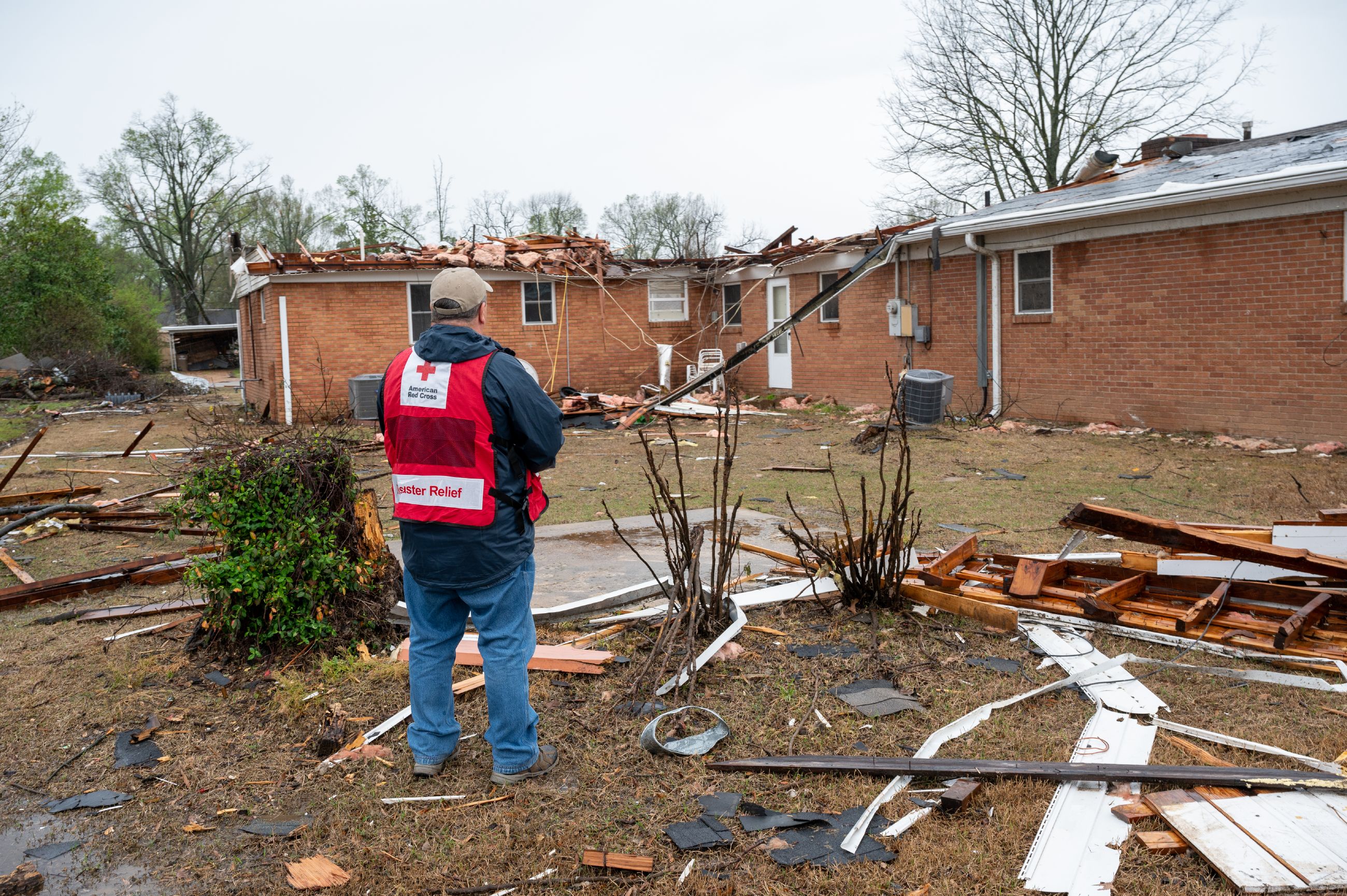
April 5, 2023. Wynne, Arkansas. Red Cross volunteer Don Baker surveys tornado damage to homes in Wynne, AR. Photo by Kevin Suttlehan/American Red Cross

Tornado Safety

If a tornado warning is announced for the area you are in:

  • Move to the lowest level of your home or a sturdy building, ideally a basement. If you aren’t able to move to a lower level, find a small interior room with no windows.
  • Mobile, manufacturer, trailer homes and RVs are not safe in the event of a tornado or high winds.
  • Monitor local weather and news on your phone or radio.

    When Flooding is Predicted or Seen
  • Turn around, don’t drown! Stay off the roads and do not attempt to drive through a flooded portion of the road. Just six inches of fast-moving water can knock you over, and most vehicles can be swept away by less than two feet of water.
  • If you are caught on a flooded road and the waters are rising around you, get out of the car quickly and move to higher ground.
  • Tune in to your local radio or news for the latest weather updates.
  • If your area is a risk flood area, prepare to evacuate quickly in the case it becomes necessary.
  • Follow your local officials direction if you are asked to evacuate.
  • Stay away from flooded areas, as they may contain snakes, insects and other animals. Keep children and pets away from these areas.

    For more information on weather safety and about volunteer opportunities to help those affected by severe weather, visit https://www.redcross.org/local/ohio/northern-ohio.html.

    Edited by Glenda Bogar, Red Cross volunteer
    Posted by Ryan Lang, Red Cross board member and volunteer
Saluting lab techs – vital in blood supply chain

By Eilene E. Guy, American Red Cross volunteer

Patient safety is the number one priority for the blood services arm (no pun intended) of the American Red Cross.

The Red Cross collects about 40% of our nation’s blood supply from donors like me – and you, I hope. We give this lifesaving liquid freely, so it’s available as soon as someone – usually someone we don’t even know – needs it to treat an illness or traumatic injury, or for replacement during surgery.

Blood that’s meant for transfusion must be free from anything that could harm a patient. That includes a host of foreign substances like viruses, bacteria or parasites.

Celeste Dean-El, who heads the Red Cross Immunohematology Reference Lab (IRL) in Cleveland, said blood also has inherited characteristics that could trigger a bad reaction, or enhance its benefit, in a recipient.

That’s where laboratory technicians come in, she said. Lab techs test every unit of donated blood, to be sure it’s wholesome and robust, and to identify unique components that will make a given unit a match for a transfusion recipient.

Most of us know our inherited blood group: A, B or O, positive or negative. Getting the wrong ABO match could kill a patient, Celeste said. But our blood also has what’s called an Rh protein; getting that match wrong could make a patient very, very sick.

Lab technician Paul Kopin and Celeste Dean-El, Director of the Immunohematology Reference Lab for the Red Cross of Northern Ohio

Lab technicians also perform specialized tests to unearth even more unique inherited characteristics that – if properly matched – will enhance the benefit and safety of a transfusion.

Celeste offered an example: A man from Ohio’s Amish community needed treatment recently after a serious injury. Lab techs isolated an antibody in his blood that made his type so rare that compatible units would only be found in others of his community. Based on that information, the Red Cross recruited donors from that group to find “matches” that would boost his recovery.

“Transfusions are the most important and most common treatments in hospitals,” Celeste said, listing things like leukemia and lymphoma – diseases that can cause very low blood counts in patients.

Or take sickle cell disease, an inherited blood disorder. A patient – typically someone of African descent – will need regular transfusions of the blood component hemoglobin to supplement her blood’s ability to carry oxygen. Lab techs can test for antigens in each patient’s blood to make the transfusion impact as strong as possible or, in some cases, avoid life-threatening transfusion reactions.

Lab technicians are positioned at a critical point in the blood supply chain, so their training and certification is demanding: two to four years of specialized education and internship. “Experience in the lab is vital,” Celeste said. To work in her IRL takes another one to two years of highly complex training.

The Red Cross salutes Medical Laboratory Professionals Week, April 23 through 29, to recognize the vital work lab techs perform for our blood supply.

“Everything we do is for the safety of the recipients,” Celeste said.

To be part of this lifesaving service, sign up to donate blood at redcrossblood.org. Because “help can’t wait.”

Corporate leader sees results, lends his time and experience

By Eilene E. Guy, American Red Cross Volunteer

Jim Wilkins has responsibilities 24/7 as senior vice president for health, environment, safety and security at Marathon Petroleum headquarters in Findlay.

So how can he — why does he — carve out time to volunteer for the American Red Cross?

“When (Marathon has) an incident or experiences a natural disaster, my team provides critical assets, expertise and personnel during our response, which can include supporting our employees and their families with food, housing, supplies and fuel,” Jim said. “Some of my most rewarding experiences with the company have been on scene, supporting recovery after (hurricanes) Katrina and Ian.”

He’s seen first-hand what Red Cross does in the wake of disasters, whether natural or human-related. Volunteers rally to provide shelter, food, financial assistance for immediate needs, and health and mental health support.

“Our company has had a close relationship with the Red Cross,” Jim said. “We donate money to the Red Cross. . . . We see the results of what they do.”

Jim volunteers as co-chair of Marathon’s veterans’ network, where he learned how Red Crossers can serve the U.S. military, active and retired, and their families. And, of course, “I always thought of Red Cross as blood.”

During the upswing of the COVID pandemic, he agreed to join the volunteer ranks of the North Central Ohio chapter.

“Jim is a vital member of our board of directors, offering his leadership, guidance and experience to help our team deliver the Red Cross mission,” said the chapter’s executive director Todd James.

“Along with his personal passion for our work, Jim has also helped build on our strong partnership with Marathon Petroleum Corporation, creating even more opportunities for our teams to work together to serve those who need Red Cross services.”

Jim takes any opportunity he can to “tout all the great services offered by Red Cross” But he often finds it’s not necessary “since Red Cross is like Coke: Everybody recognizes the brand. It sells itself.”

The rewards of volunteering have certainly sold themselves to Jim. He’s currently the board vice president and head of the philanthropy committee.

“Our chapter is fortunate to have Jim on our leadership team and we truly appreciate his service,” Todd said.

During National Volunteer Week, the Red Cross salutes its more than 275,000 volunteers who respond to disasters, support our armed forces, teach health, safety and disaster preparedness classes, augment the blood collection staff, and educate youth and adults about International Humanitarian Law.

To explore the many flexible volunteer opportunities Red Cross has to offer, visit redcross.org/volunteer.

Edited by Glenda Bogar, Red Cross volunteer

Posted by Ryan Lang, Red Cross board member and volunteer

Tragedy often inspires charity

By J.D. Brink, American Red Cross volunteer

Pauline Skaff first volunteered for the Red Cross the week of 9/11.

Like many people after that tragically fateful day, she felt the need to do something. And she has been doing it for 22 years now. More impressive than that, she is 94 years old.

Pauline Skaff, Red Cross volunteer, 2008

“People were lined up around the block,” Pauline said, describing the scene at the Red Cross the week following the September 11th terrorist attacks. Obviously, she wasn’t the only person motivated to help her fellow Americans. “But I didn’t know if they were going to let me do it. She really put me through the ringer,” Pauline said of the then manager of Toledo’s Executive Parkway location.

Volunteering is not an automatic process. The Red Cross vigorously screens their volunteers. Being trusted with the public’s blood and private information is a high bar to pass.

Five more volunteers started at the same time she did. And Pauline is the only one still there every week, like clockwork. “I’ve outlasted them all,” she said proudly.

Pauline Skaff works the reception desk every Tuesday, checking people in to donate blood. She gave up her usual Thursday shift to make room for University of Toledo medical students who wanted to volunteer during the COVID-19 pandemic. She stands ready to pick up that slack again, though, whenever they may need her.

And she hasn’t just worked the desk these many years.

“I don’t know how many gallons I’ve given all together.” But Pauline does know that she has pins marking her 2 gallon, 4 gallon, and 8 gallon accomplishments. “My doctor doesn’t want me to give anymore though. I guess being 94, that’s a good idea,” she laughed.

She also had to think about how many jobs she’s retired from. Before becoming a dedicated Red Cross volunteer, she worked at the University of Toledo bookstore for eight years. One day after that, her daughter asked her to temp for one day as a receptionist at the WLQR radio station. She worked there for seven more years. “The last job I retired from was at the Board of Elections,” she said, where she oversaw absentee ballots, especially for overseas military voters. It seems service has always been a part of Pauline Skaff’s life.

Posted by Ryan Lang, Red Cross board member and volunteer

Using her spare time to give back to our community

By Sam Pudelski, American Red Cross volunteer

When Jenn Mayfield found herself with some extra time and a need to complete community service to graduate with her degree in IT, she immediately thought of the American Red Cross. “I know the Red Cross and the reputation of blood services and how [they help] so many people with blood products,” she said.

A little over a year ago, she began volunteering with the Red Cross Northern Ohio Region as a volunteer candidate screener. In this role, screeners speak with people who have signed up to volunteer with the Red Cross to help place them in a role that not only fits the candidate’s interests and skills, but also is a good fit within the organization. It also allows her to volunteer after work in the evenings and on weekends since it is a remote position. Jenn enjoys the role because she loves to volunteer and connect with people. “I know that every time I talk with someone on the phone or answer someone’s question, I feel like I’m contributing in a positive way.”

In addition to her role as a volunteer candidate screener, she decided to start a second role with Red Cross headquarters in the department of public inquiry in July 2022. Not only did it allow her to further her passion for volunteering, but she also learned more about the services the Red Cross provides internationally and here at home. With the public inquiry team, Jenn helps answer questions, inquiries, complaints and comments from the public. Since this role also is remote, she fits in volunteering as her schedule allows.

Jenn looks at her opportunity to volunteer as a way to do something rewarding with some of her free time. In addition to her two permanent volunteer roles, she checks the Red Cross Volunteer Connection portal for other opportunities to give back. In fact, she recently volunteered at the Dominion Preparedness Day on April 1st. It was her first volunteer event, and she brought her fiancée as well. In addition to volunteering, she gives back by donating blood whenever she can.  Jenn truly believes that every little bit can help our communities, “even an hour a day or a couple hours a week can make a big impact.”

To all of those who are thinking of the Red Cross, Jenn can’t recommend it enough. As a part of the volunteer services team, she knows firsthand there are tons of different roles across the system that can fit for various interests and skills. In Northern Ohio, there are plenty of opportunities that allow individuals to volunteer when it fits their schedule, offering both in person or remote roles. “Honestly, there’s something for everybody. There’s a volunteer role for everyone.” To learn more about current volunteer opportunities in Northern Ohio, visit us here.

Posted by Ryan Lang, Red Cross board member and volunteer

With the U.S. Air Force and Red Cross, Cynthia Skidmore knows the power of being part of a team

By Tim Poe, American Red Cross volunteer

Cynthia Skidmore climbed on a tank and felt at home. A U.S. Air Force veteran and military family member, Cynthia had recently volunteered with the American Red Cross as a member of the Service to the Armed Forces (SAF) team. While assisting at a military family picnic, she climbed the tank, saw the families, remembered the times she and her husband served when their children were young, and thought, “This is awesome!” She wanted to keep helping, to reach as many as possible, and knew the effectiveness of the Red Cross’ SAF team in assisting military service members, veterans and their families.

Cynthia Skidmore, Red Cross volunteer

After an exceptional Air Force career, Cynthia left in 2007 to focus on raising their five children while her husband, who was deployed in Saudi Arabia during 9/11, continued to serve. He retired from the Air Force in 2018 after 25 years, and her son Josh joined about the same time. Following the pandemic and her children becoming young adults, Cynthia, who has always been driven and full of purpose —“Going 90 MPH with [her] hair on fire”— found the house empty, felt lost and wanted to help others.

The Red Cross came to mind. Cynthia knew the tremendous feats a dedicated team can accomplish and the feeling of doing something bigger than oneself. She began volunteering with the Greater Akron and the Mahoning Valley chapter in 2022 and quickly made an impact.

Cynthia brings extraordinary skills and experience to the Red Cross. Having taught chemical warfare classes and focusing on disaster management while in the Air Force, she is skilled in public speaking and understands many elements of being in an armed forces family, as a veteran, spouse, mother, daughter and granddaughter.

Cynthia’s father, who recently passed away, helped inspire her sense of purpose and drive. A U.S. Navy veteran who served during Vietnam, Cynthia’s father was giving and deeply caring, often helping others, and loved Cynthia’s work with the Red Cross, both as a volunteer and blood donor. Her grandfather was also a Navy veteran. Thus, Cynthia continues her family’s tradition of giving.

In our conversation, Cynthia spoke highly of her Red Cross team and how much can be accomplished when people work together to help others. She enjoys being part of such a team and getting things done.

When asked about her favorite volunteer experiences, she said she has many. One that stood out was assisting at a deployment briefing when several volunteers brought in dogs. Cynthia, whose family has four dogs, said the service members’ children lit up upon seeing them. The dogs helped dispel fear, brought peace, normalcy and joy.

Cynthia Skidmore at a Summit County Veterans Stand Down event

Another favorite event is the Summit County Veterans Stand Down, where homeless and displaced veterans interview for jobs, receive haircuts, medical assistance, food, clothing and additional assistance. It is a tremendous help to those who have served and currently need assistance, and Cynthia is looking forward to the next one.

Cynthia also enjoys her regular volunteer work and being able to help, whether in person or being a compassionate voice on a telephone line.

For any veterans considering joining the Red Cross, Cynthia says volunteering is exceptionally rewarding and presents the opportunity to serve others in ways you never imagined. “It’s the next best thing to wearing a uniform,” she said.

For more information on the Red Cross’ Service to the Armed Forces or to volunteer, please visit this link.

Edited by Glenda Bogar, Red Cross volunteer

Posted by Ryan Lang, Red Cross board member and volunteer

This volunteer donates time, talent and treasure

By Chris Chmura, American Red Cross volunteer

The American Red Cross celebrates the work and support of the hundreds of thousands of volunteers during National Volunteer Week. Red Cross volunteers fulfill many roles from coordinating blood drives, to responding to home fires in the middle of the night, to serving as board members and many more.

Betsy Sterling, left, and Kim Kroh

Betsy Sterling volunteers with the Red Cross of Heartland, Stark and Muskingum Lakes. Betsy met chapter Executive Director Kim Kroh years ago at a charity event called Day of Caring and they have supported each other ever since. 

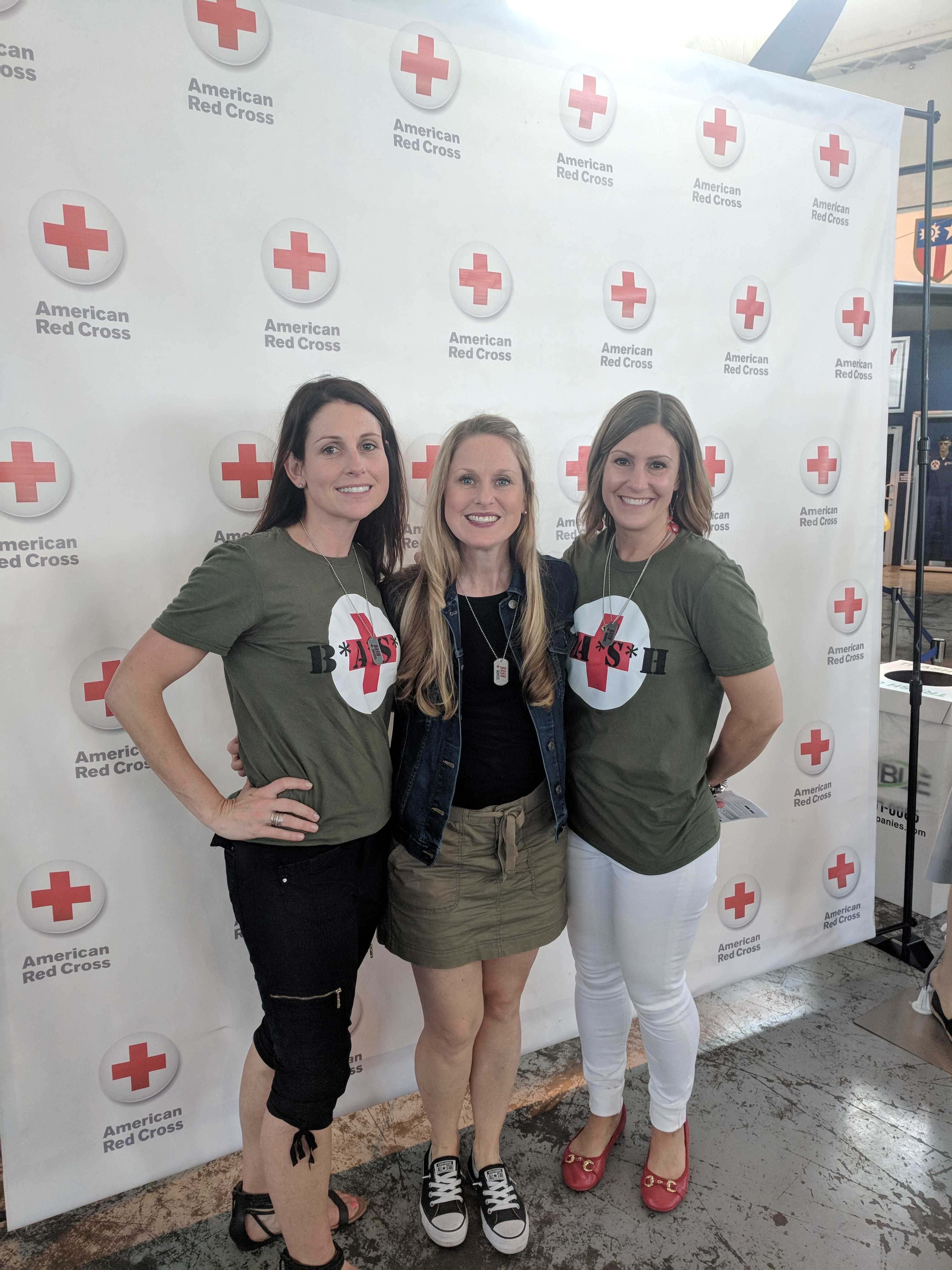
Betsy is a Tiffany Circle member, current board chair (past 9 years), an every 56-day blood donor, hosts regular blood drives at her company, and a former BASH co-chair (two years in a row).  BASH is an annual fundraiser for the chapter which raised $80,000 in 2022.  Monies raised by this event are used to support the chapter’s work in the local community:

  • Installing free, life-saving smoke alarms
  • Saving lives through health and safety training in CPR/First id/AED & Aquatics Training
  • Providing shelter, clothing, food, comfort & hope to families devastated by home fires
  • Supporting U.S. service men and women during an emergency
  • Supplying critical blood, platelets, and plasma to patients in area hospitals

In 2023, the chapter is combining the BASH fund raiser with the annual Festival of Trees to create a unique event!  https://www.redcross.org/local/ohio/northern-ohio/about-us/news-and-events/events/festival-of-trees.html  

The Tiffany Circle is a close group of people that donates their own personal funds to support the Red Cross.   

Betsy and her family are true believers in giving back to their community.  She is a third-generation member of the Sterling family Beaver Excavating Company.  Community service has played a key role in shaping the long history of community involvement that Beaver Excavating’s ownership and employees have created. Contributions not only include personal time and money, but also have included many donations of construction services, labor, and materials.  

Nationally, the Red Cross has more than 200,000 volunteers, which makes up more than 90 percent of the workforce.  The Heartland, Stark and Muskingum Lakes Chapter is thankful to have humble volunteers like Betsy Sterling.  Her time is extremely valuable because she works in her family business, takes time to volunteer for several charities, and perhaps most importantly is a mom.  

Posted by Ryan Lang, Red Cross board member and volunteer

From disaster volunteer to engagement coordinator to mascot

Chris Gearig takes on a multifaceted role in her chapter

By Doug Bardwell, Red Cross volunteer

Christine Gearig hails from Wauseon, Ohio, about 45 minutes due west of the Toledo
office of the American Red Cross’ Western Lake Erie Chapter (WLE). Having lived there
for 30 years, she’s used to the driving to the Toledo office, where she goes at least
twice a week.

Christine Gearig, Red Cross volunteer

She and a partner take turns as Disaster Action Team (DAT) supervisor and associate (SV and SA) responding to calls from fire departments for seriously damaged homes.

“One case always sticks out from the many cases we’ve been called to. It was a totally devastated home, and we were talking to this huge man, who had lost everything,” recalled Chris. “The more we talked, the more the realization crept in that he had lost it all, and tears began to well up in his eyes. I’d never seen such a large man in tears before, but we realized everyone handles grief differently.”

Chris also serves as the chapter’s Disaster Workforce Engagement (DWE) coordinator. She has created a newsletter for updates on training, recognition, and whatever else is timely for the month.

Apart from the Red Cross, Chris keeps active with two grown daughters, five
grandchildren, and one great-grandson. Add one cat, and they all keep her young.

After retiring, while watching TV, she looked at coverage of a national disaster and saw
Red Cross volunteers comforting the victims amid the destruction. She thought to
herself, “Well, I could do that. I love talking to people and being with people, so it
seemed like it would be the perfect match.” She went online, where to sign up,
and completed her application.

Chris Gearig distributing gifts

“Chris has been an invaluable asset to the WLE chapter,” said Deb Pressley, Disaster
Program manager. “She has taken on various roles for us, including DAT SV, DWE
coordinator, Mass Care Sheltering SA – and has most recently agreed to be our Pedro
the Penguin mascot! When Chris commits to something, I know I can depend on her
to do it thoroughly. She is dedicated, even committing to her duties while out of
town. She asks good questions and brings new ideas, especially to her role as DWE
coordinator. I really appreciate Chris and all that she brings to our team!”

When asked what she would tell someone looking for volunteer work, Chris said, “I
would tell them just to come aboard; it’s not like a permanent commitment, but just try it
out. A good friend, who is also retired, said she didn’t want to commit as much time as I
did, but she came aboard and is now a Blood Drive ambassador, working occasional
drives.”

To explore all the ways Red Cross enables you to help others, start your volunteer
exploration by clicking here
.

Edited by Glenda Bogar, American Red Cross volunteer

Posted by Ryan Lang, American Red Cross board member and volunteer

The family disaster that launched one volunteer into action

By Ryan Lang, Red Cross Board Member and volunteer

Brian Glasscock, Red Cross volunteer

“Being able to see the immediate impact the Red Cross can have when someone’s going through one of their worst experiences – that’s what’s kept me going for the past six years.”

For Brian Glasscock, it was personal when he started volunteering for the American Red Cross. He was still living in California and his family was forced to evacuate their home due to a wildfire. That was the moment Brian decided he wanted to help people in similar situations.

Brian’s been a part of the Disaster Action Team since he began volunteering six years ago. He’s moved up to Coordinator for Summit, Portage, and Medina Counties and serves as the Disaster Response Supervisor for the region.

“When the Red Cross shows up, something is going really quite wrong in someone’s life,” Brian said. He knows – he’s been there and he’s seen the impact the Red Cross can immediately have in those moments. It’s why he does it.

Brian has since found many other perks in his volunteer work. “Being a disaster volunteer with the Red Cross has helped me learn to communicate with diverse groups of people. It has exposed me to the richness of Northeast Ohio,” he said. “Volunteering for the Red Cross has opened up a whole new lens to the community I live in.”

But like many Red Cross volunteers, Brian has a full-time job – one that requires him to travel quite a bit. How can he fit in volunteering on top of everything else? “You can do a shift every weekend, or even every other weekend,” Brian explains. “With the Disaster Action Team, you can do both – have a career and give back to the community by volunteering with the Red Cross.”

To find out how you can volunteer with the Red Cross or other ways to help, click here!