Mike’s Louisiana Report #1

Greetings…I’ve been in Baton Rouge since last Friday responding to DR063-17–a flooding incident that is the worst natural disaster since Superstorm Sandy in 2012 with more than 60,000 homes and 7,000 businesses destroyed. I am assigned to a new pilot concept in Louisiana called the Red Cross Liaison Network along with other Regional Executives and Executive Directors from around the country to provide dedicated support to specific Parish Government and community leaders. This focused-care approach has enabled the relief operation to better understand and better meet community-specific needs, especially those arising on short or no notice.

IMG_4237

Photo Credit: Mike Parks/American Red Cross

I’ve been assigned to Livingston Parish, one of the hardest hit regions–the devastation of homes and business that I’ve witnessed first hand has been incredible. One of my responsibilities is to check in on our shelter operations–there are currently three Red Cross shelters operating in Livingston Parish. Imagine my surprise when I rolled into one shelter and ran into two volunteers (Jeff and Tom) from Canton, who had just arrived to support the operation. It was a treat to see fellow Northeast Ohio teammates engaged in supporting these folks who have lost so much, and in many cases, everything. It’s a privilege to serve alongside such dedicated Red Cross volunteers.

The Red Cross’ work here is far from done and will require many more volunteers and resources. I’d like to thank all those from Northeast Ohio who have already deployed to help with this disaster. And for those who are considering doing so, be forewarned that it’s hard work, but it’s incredibly meaningful and rewarding when you can be on the ground helping those in such desperate need–doing what the Red Cross has done since its founding 135 years ago–caring for and helping those in need. I appreciate everyone’s support back home in Northeast Ohio. The Red Cross is still facing the need for tremendous resources to respond to this disaster, and everyone’s support is greatly appreciated.

Michael N. Parks

Ring! Ring! Goes the Bell – Back to School Safety Tips

It’s almost time for the school bells to ring again and the American Red Cross has steps everyone can follow to help make the trip back to the classroom a safe one.

“Safety should be the top priority for all students, especially younger children and those heading to school for the first time,” said Tim O’Toole, Regional Disaster Officer for the region. “Whether riding, biking or walking to school, we want everyone to arrive and then return home safely.” 

Back to school_stop for bus tip.png

SCHOOL BUS SAFETY If children ride a bus to school, they should plan to get to their bus stop early and stand back from the curb while waiting for the bus to arrive. Other safety steps include:

  • Wait to board the bus until it has come to a complete stop and the driver or attendant has signaled to get on.
  • Tell children they should only board their bus – never an alternate one.
  • Always stay in clear view of the bus driver and never walk behind the bus.
  • Cross the street at the corner, obey traffic signals and stay in the crosswalk.
  • Never dart out into the street, or cross between parked cars.


GET TO SCHOOL SAFELY If children ride in a car to get to school, they should always wear a seat belt.

  • Younger children should use car seats or booster seats until the lap-shoulder belt fits properly (typically for children ages 8-12 and over 4’9”) and ride in the back seat until they are at least 13 years old.
  • If a teenager is driving to school, parents should mandate that he or she use seat belts. Drivers should not use their cell phone to text or make calls, and should avoid eating or drinking while driving.
  • Some students ride their bike to school. They should always wear a helmet and ride on the right in the same direction as the traffic is going.
  • When students are walking to school, they should only cross the street at an intersection. If possible, use a route with crossing guards.
  • Parents should walk young children to school, along with children taking new routes or attending new schools, at least for the first week to ensure they know how to get there safely. Arrange for the kids to walk to school with a friend or classmate.


WHAT DRIVERS SHOULD KNOW Drivers should know what the yellow and red bus signals mean and be aware that children are out walking or biking to school and slow down – especially in residential areas and school zones. Yellow flashing lights indicate the bus is getting ready to stop and motorists should slow down and be prepared to stop. Red flashing lights and an extended stop sign indicate the bus is stopped and children are getting on or off. Drivers in both directions must stop their vehicles and wait until the lights go off, the stop sign is back in place and the bus is moving before they can start driving again.

Parents should also make sure the child knows their phone number, address, how to get in touch with their parents at work, how to get in touch with another trusted adult and how to dial 9-1-1. They should also teach children not to talk to strangers or accept rides from someone they don’t know.

TAKE A FIRST AID CLASS Red Cross training can give someone the confidence and skills to help with everyday emergencies from paper cuts to school sports injuries. A variety of online and in-class courses are available at redcross.org/takeaclass. People can download the free Red Cross First Aid App (redcross.org/apps) for instant access to expert advice whenever and wherever needed.

Two Tips for Keeping Your Child’s Commute Safer this Week

This week is heating up in Northeast Ohio and that means hot-hot-hot! vehicles.

Here’s two tips for keeping your child’s commute safer during these steaming days:

For more reading, check out Sarah’s post on Red Cross Chat.

(And a special “Thank you” to Lt. Rick Edwards of the Akron Police Department for stopping by to talk with us.)

Video created and produced by Ryan McDivitt, American Red Cross Volunteer

More Local Red Cross Workers Respond to West Virginia Flooding

Resources Include Personnel, Equipment

Nearly 500 American Red Cross volunteers have responded to the call for help in West Virginia, where heavy rain last week caused widespread flooding.  Seven volunteers are from Northeast Ohio.  In addition, Regional CEO Mike Parks is there to offer his assistance.

“It’s extremely rewarding to see American Red Cross volunteers and staff from across the country descend on the devastated communities of West Virginia,” said Parks. “It makes me proud to be part of this humanitarian organization.”

23 fatalities are being attributed to the flooding.  Preliminary reports indicate upwards of 2,000 homes could have been damaged or destroyed.  Thousands of people are still without power and gas service. Many areas are still inaccessible due to flood damage, and the number of affected homes is likely to change.

Red Cross workers, including those from Northeast Ohio, continue to support shelter operations. Workers are also providing meals, relief supplies and other assistance to those affected.

By the numbers:

-More than 1,900 overnight stays in emergency shelters

-More than 40,000 meals and snacks distributed

-Over 61,000 relief items like cleaning supplies and comfort kits distributed

Red Cross disaster mental health workers are helping people cope with the loss of their homes. Health workers are helping to replace needed items like prescription medications and eyeglasses. The Red Cross is working with state and local officials and with partners like the Southern Baptist Convention and AmeriCorps to help ensure people get the help they need.

In addition to the Red Cross personnel deployed, the Northeast Ohio Region is also contributing 3 emergency response vehicles and 2 passenger vans to the response and recovery effort in West Virginia.

This is a large relief response and the Red Cross needs the public’s support. Entire families have lost their homes and everything they own. We need your support now to help people affected by disasters big and small.

  • People can help by donating to Red Cross Disaster Relief to support disasters big and small by visiting redcross.org, calling 1-800-RED CROSS or texting the word REDCROSS to 90999 to make a $10 donation.
  • Donations to Disaster Relief will be used to prepare for, respond to and help people recover from disasters big and small.

 Financial donations are the quickest and best way to get help to the people who need it most.

FLOOD SAFETY

Download the free Red Cross Emergency App to have safety information and shelter locations available on your mobile device.

  • The Emergency App features emergency weather alerts to help keep the user safe, and provides information about what to do in case of floods as well as the locations of open shelters.
  • Red Cross apps are available in smartphone app stores by searching for the American Red Cross or going to redcross.org/apps.


Lake to River Celebrates Volunteers

We love our volunteers!

Thank you so much to those who volunteer their time and heart to the Red Cross. Thank you to those who answer calls from people in our community in an effort to prevent and alleviate human suffering in the face of an emergency!

volunteer Appreciation 2016 08

On Thursday, April 21 the Lake to River chapter held a luau for their local volunteers. We want to thank and congratulation Jay Rosenthal (53 years) and Tab Alden (48 years) of service.  Nearly 50 volunteers, their guests and staff members attended the celebration.

volunteer Appreciation 2016 04

volunteer Appreciation 2016 12

volunteer Appreciation 2016 16

Volunteer Appreciation 2016 22

The Lake to River Chapter, which serves Ashtabula, Columbiana, Jefferson, Mahoning, and Trumbull Counties, has 225 volunteers.

If you are interested in volunteering with the Red Cross, visit www.redcross.com/neo and click on “Volunteer”.

226 Smoke Alarms Installed in Madison Township

98 homes

228 residents

24 volunteers

226 smoke alarms

Those are the numbers associated with last week’s Fire Safety Walk in Madison Township, near Mansfield.  The Operation Save-A-Life event was part of a nationwide effort to reduce deaths from home fires 25% by 2019.

Red Cross staff and volunteers partnered with the Madison Township Fire Department and Target employees to enter 88 homes, share fire safety tips with 228 residents, and install 226 smoke alarms.

“Each home should have a smoke alarm on every floor,” said Lara Kiefer, Executive Director of the Lake Erie/Heartland  Chapter.  “We appreciate the help we received from the Madison Township Fire Department and the local Target store to reduce the chances of fire fatalities in our community.”

There is no charge for the smoke alarms or for their installation.  Residents throughout Northeast Ohio are encouraged to log onto the Operation Save-A-Life  page at redcross.org/neoosal to schedule an appointment for a free fire safety inspection and free smoke alarm installation.


Akron Mayor Helps Launch Operation Save-A-Life Partnership

One more family in Akron is now better protected from the dangers of a home fire.

Amy&Declan

Akron Mayor Dan Horrigan and several members of the Akron Fire Department were joined by Rachel D’Attoma, Executive Director of the Summit, Portage and Medina Counties Chapter of the American Red Cross on Thursday, April 21st to install smoke alarms in the home of  Amy Villagomez and her family.

The installation marked the official start of Operation Save-A-Life, a new partnership between the Red Cross and the Akron Fire Department, designed to offer Akron residents free smoke alarms and valuable fire safety information.  Interested residents are encouraged to call the Red Cross Smoke Alarm Hotline at 330-535-2030.

The Villagomez family was grateful for the new smoke alarms.  The alarms that had been previously installed in their home expired in 2009.

“I had no idea smoke alarms have an expiration date,” said Amy Villagomez, who lives in the home with husband Steve and their two children.

Declan&OldAlarm

Smoke alarms have a 10 year lifespan.

Rachelalarm

Mayor Horrigan installed two smoke alarms in the Villagomez home.  One, supplied by the Akron Fire Department, is designed for hearing impaired residents.  It was installed on a wall in the bedroom of one of the children, who has a hearing impairment.  The alarm includes a strobe light when activated.

The mayor also installed a more traditional smoke alarm in a hallway of the home, supplied by the Red Cross.  The alarm has a lithium battery designed to last 10 years.

“The importance of having smoke detectors in all of our residents’ homes is vital to safety,” said mayor Horrigan, who was joined by Marilyn Keith, President of Akron City Council and Ward 8 representative.  The Villagomez family lives in Ward 8.

Keith Declan Horrigan

Prior to the smoke alarm installations, Mrs. Villagomez was given important fire safety information and assistance in designing a fire escape plan.

“A recent Red Cross study found that many people think they have up to 10 minutes to escape from a burning home,” according to Rachel.  “It is closer to two minutes. Smoke alarms save lives.”

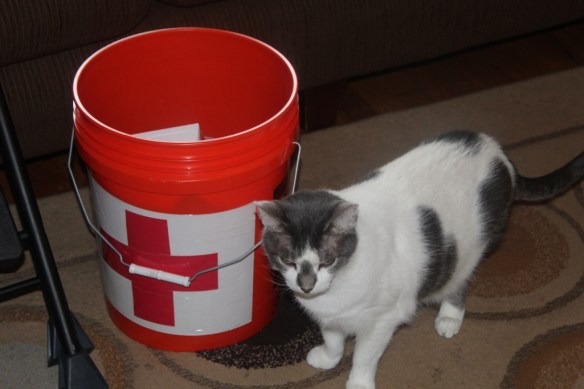
Red Cross Cat

Operation Save-A-Life is part of the Red Cross Home Fire Preparedness Campaign, designed to reduce the number of fatalities from home fires by 25% in a five-year time span.  Residents in other parts of Northeast Ohio can learn how to obtain free smoke alarms in their counties by logging onto redcross.org/neoosal.

Photo credits: Jim McIntyre/American Red Cross, and Bruce Ford/ City of Akron (with permission)


The “Be Attitudes” of Our Volunteer Beata

By: Beata T. Bogyor, Volunteer

imageTruthfully to volunteer at the Red Cross helps me maintain a lifestyle that I enjoy.  I have been in several different departments and, by far, being a part of Volunteer Services helps me give back to the community and keeps me productive and interested in getting up in the morning.  Have met wonderful people and worked with a variety of personalities which is wonderful in itself.

I am a lucky person to be accepted by the Red Cross organization and I try to reach out when necessary or needed.


A Report on the Flooding in Louisiana

By: Pam Williams, volunteer


Since the flooding in the south began three weeks ago, nearly 2,000 Red Crossers working alongside partners have provided 4,700 overnight stays in 60 shelters; served 290,000 meals and snacks; distributed more than 119,000 relief items including comfort kits and cleaning supplies; and provided nearly 9,000 health and mental health consultation.

I deployed to Louisiana as part of the External Relations team. As a Government Operations Lead, I helped coordinate necessary services and activities with local, state, federal and Tribal government partners and worked with our Community Partner Services volunteers who identify non-government partners, private agencies and/or organizations and members of the affected communities to assist those affected by the disaster.

This was my 22nd deployment and several of them have been in response to floods. My friends think I’m off to see the country, and I suppose they’re right, but I’m seeing it in pain. However, while each disaster and each response is different I have found one constant – I am seeing people at their best. Whether it is Red Cross volunteers who leave their lives and families to respond, community groups who step up to help their neighbors or those affected by the disaster who are amazingly resilient there is a spirit that moves people forward.

Since returning to Northeast Ohio, here are some of the things I have learned about the response in Louisiana:

  • This is the largest sheltering operation for the Red Cross in Louisiana since Hurricane Gustav and Ike in 2008, and Hurricane Isaac in 2012.
  • As many as 12,000 people have been impacted by the flooding across the state with hundreds of residences either destroyed or receiving major damage.
  • The Red Cross estimates that we will spend between $8.5 million and $11.5 million helping people affected by spring floods and storms across Texas, Mississippi, Louisiana and Tennessee – and we haven’t raised anywhere near the millions of dollars we’re spending to provide the relief needed.
  • Since the flooding began, the Red Cross and our partners have provided more than 3,000 overnight stays in 30 shelters; served 216,000 meals and snacks; distributed 53,000 relief items including comfort kits and cleaning supplies; and provided 3,800 health and mental health consultations in Louisiana alone. Over three weeks into this response operation we are still sheltering affected residents and pockets of previously unidentified people are popping up everyday. There are over 430 areas that continue to be marked as inaccessible so our Disaster Assessment teams can’t yet get in to see how badly the homes have been affected.

The Red Cross has also deployed hundreds of volunteers (like me) to staff these disasters–and we are appealing for additional Red Cross volunteers now. The time and talent of every volunteer makes a real difference in people’s lives. Go to redcross.org/volunteer today to learn more about volunteer opportunities and how to submit a volunteer application.

Louisiana Floods 2016

Sunday March 13, 2016. Rayville, Louisiana. Bobby Ray Griffin and Mildred Means took on more than a foot of water in their Rayville, Louisiana, home. They had already spent much of the day removing flood-damaged furniture from their home when Red Cross volunteers came through their neighborhood with snacks and water. Photo by Daniel Cima/American Red Cross

Louisiana Floods 2016

March 14, 2016. Monroe, Louisiana. At 9-months-old, Jakenzie Bradford is one of the youngest staying at this Monroe, Louisiana, Red Cross shelter. She and her family where displaced when floodwaters entered their home nearly a week ago. The Red Cross provides a safe place where children and families can feel comfortable and secure as they begin the road to recovery after disasters like floods. Photo by Daniel Cima/American Red Cross

Prevent and Alleviate: Providing Fire Safety Education to Everyone

You may think that preventing and alleviating human suffering in the face of emergencies – the two actions our mission charges us to do – is a tall order.

With over 4.5 million residents to educate and assist, it can be a little overwhelming.

And yet, when eating an elephant – take one bite at a time.

The first bite: teaching our young community members more about how to keep themselves (and their families) safe before, during and following a disaster.

We are proud to announce that we have hit our annual goal by teaching the pillowcase project, sponsored by Disney, to 2,892 local school-aged children!

The pillowcase project teaches kids about disasters that can happen here in Northeast Ohio, and what they and their families can do to prepare for and respond during an event. Home fire education is the most prevalent piece of this program, as we respond to an average of three home fires across Northeast Ohio each night.

During the program kids are taught about smoke alarms, what to do when a smoke alarm sounds, knowing exit strategies for each room, creating a family meeting spot and so much more.

But this education isn’t just for the children of our community.

We are dedicated to sharing these safety tips with everyone. That’s the second bite of the elephant.

Through Operation Save-A-Life we are helping families learn more about fire safety as well as providing the tools necessary to put that education into practice, should the time come.

As of March, 2016, we have installed over 8,844 smoke alarms in homes throughout Northeast Ohio.

That’s just 1,156 off from the stretch goal we gave ourselves in June, 2015. Our region currently leads the nation in number of smoke alarms installed.

We are very proud of what we have accomplished. And our dedicated work and planning is paying off. We see it in the success stories of families like this one from last summer, and this one from December.

Thank you, from the bottom of our hearts, to the Red Cross workforce who made those numbers happen. Thank you to those who continue to educate, install and provide hope to families and individuals in each of the communities that we serve.

You can eat an elephant – one bite at a time.

Thank you!!