Turkey day hazards: Don’t let your holiday meal go up in smoke

By Kathryn Dean, American Red Cross volunteer

Juicy, flavorful, and tender meat.  Crispy, golden-brown skin.  For a perfect holiday centerpiece that cooks in under an hour, the deep-fried turkey seemed like a miracle.  If you lived through the 1990s, you probably remember the phenomenon that spread through the country like wildfire. 

Triggered in part by Martha Stewart featuring this Cajun method of cooking on her television show and in her magazine, it sparked a craze amongst Americans who were looking for easier ways to cook their Thanksgiving turkeys. 

Unfortunately, this method came with a steep price.  An increase in fires and injuries resulted from improper use of this technique, and many homes burned down as a result.  If you’ve never seen a video of a turkey fryer quickly going up in flames, do yourself a favor and Google it now. 

But the danger isn’t limited to outdoor frying.  In the United States, Thanksgiving Day and the day before are the top two most likely days for cooking fires to happen in the home.  44% of all house fires in the U.S. can be attributed to cooking fires, making it the leading cause of home fires and home fire injuries.
COOKING SAFETY TIPS: The American Red Cross recommends these cooking safety tips to reduce your risk of fire during this holiday season.

  • Never leave the kitchen unattended when frying, grilling, or broiling food.
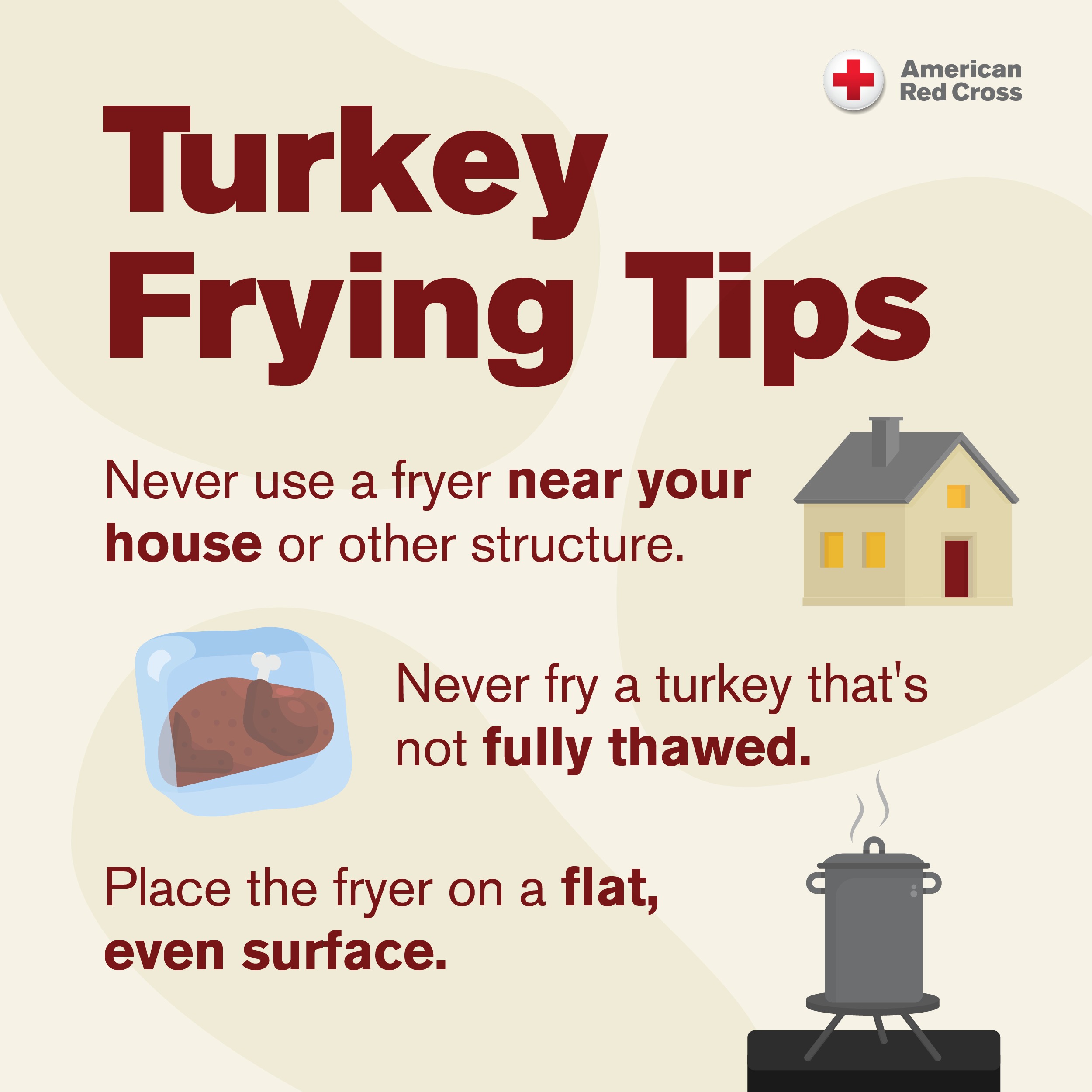
  • Keep grills or deep fat fryers at least 10 feet away from home structures while in use.
  • If you are using a turkey fryer, remember that proper safety requires a completely thawed turkey and oil that is at the correct temperature and level.
  • Set a kitchen timer to remind you when the stove is on.
  • Keep children and pets at least three feet away from all cooking appliances and cords.
  • Remove flammable items, like wooden utensils, curtains, potholders, and oven mitts, from the vicinity of the stovetop.
  • Pull up sleeves and avoid loose clothing that can get in the way while cooking.
  • Keep a fire extinguisher near any area where cooking is being performed.  Do not use water to put out a grease fire.
  • Check that all appliances are off before going to bed at night.

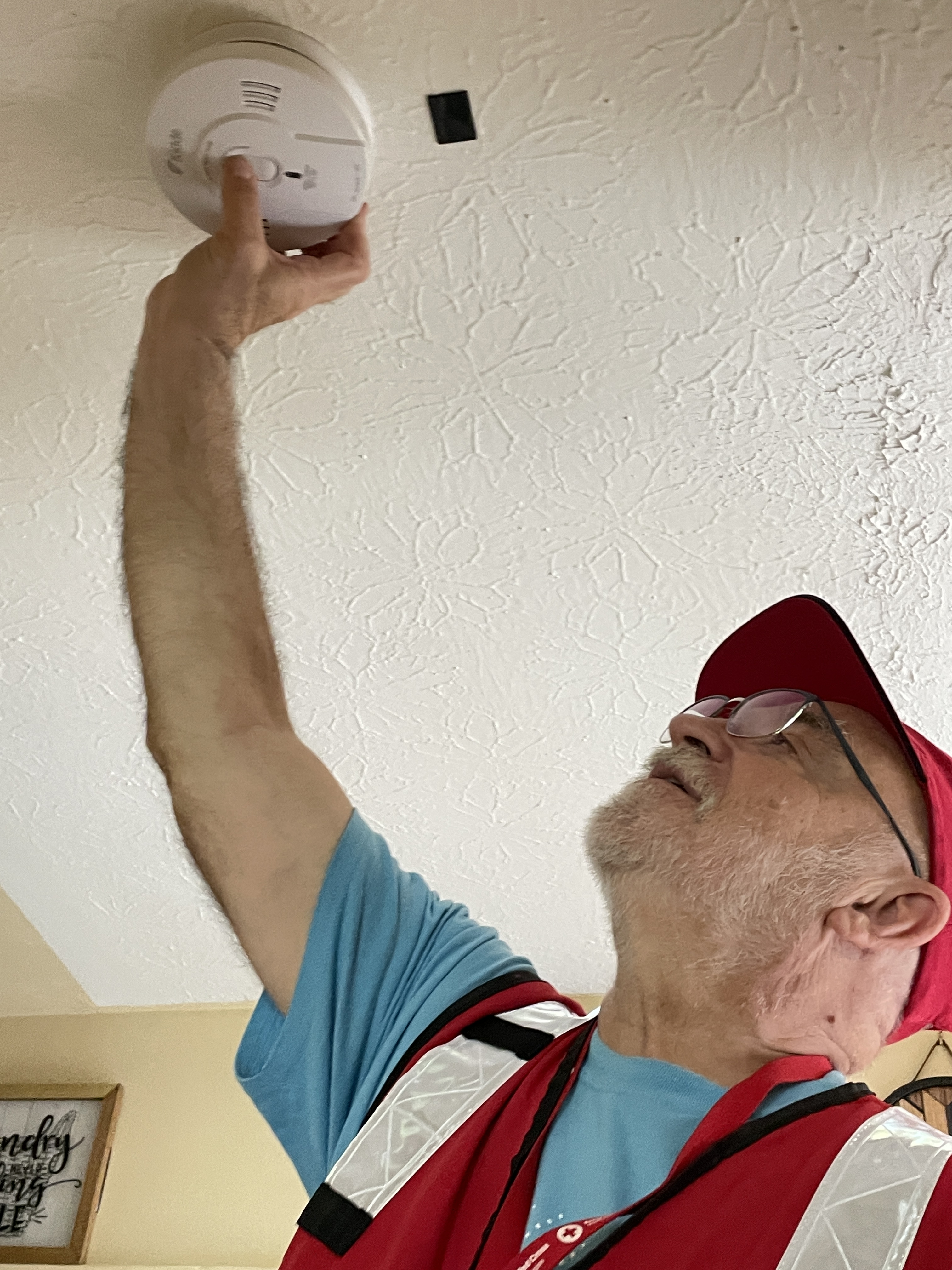
Fall is a great time to check that you have working smoke detectors in your home. Test your units monthly, and replace batteries annually (on units that allow you to do so).  Replace any units that are over 10 years old.  If you need help replacing or installing smoke detectors, the Red Cross may be able to help. Click here to find out how to request a free smoke alarm in Northern Ohio. Wishing everyone a wonderful Thanksgiving!

Fire Prevention Week: Making Northern Ohio communities safer

By Eilene E. Guy, American Red Cross volunteer 

Full confession: More than once in my life, I’ve walked into the kitchen and found my teakettle boiled dry, glowing red hot on the stove. I’d neglected to turn the burner off before I left the room.  A-a-a-a-ck! 

Lucky for me, I took action before my kitchen caught fire. But every year, more than 330,000 homes across America are hit by fires – some minor and some devastating – according to the National Fire Protection Association. 

In northern Ohio alone, the American Red Cross responded to nearly 1,050 home fires between June 30, 2024, and July 1 of this year. Those alarms involved more than 4,600 people. Tragically, 25 adults and 11 children lost their lives. 

Nobody should become that kind of a statistic.  

As we slide toward the colder months, National Fire Prevention Week is a good time to review common sense prevention tips: 

  • Be sure anything that gets hot, like a portable heater, is at least three feet from furniture or curtains. 
  • Do not smoke in bed or on the sofa or stuffed furniture. 
  • Never leave candles unattended. 
  • Don’t leave the kitchen with pots, pans, skillets or teakettles on the stove, like I did! 
  • Keep matches and lighters out of reach of youngsters and teach them not to play with fire. 
  • Test smoke alarms monthly and practice a home escape plan twice a year. 
  • Identify devices in your home that have lithium-ion batteries: cell phones, laptops, tablets, eReaders, game controllers, digital cameras and tools, among other things. Learn how to buy, charge, store and recycle them safely.  

Red Cross volunteers are ready to respond to home fires and other emergencies 24/7, but we’re also active with our home fire campaign year-round. It’s a life-and-death mission to cut that 330,000 fires number as “low as you can go.” (Remember limbo?) And to cut the fire-related deaths number to zero! 

Fire safety experts have four solid recommendations: 

  • Have smoke alarms on every level of your home, inside bedrooms and outside sleeping areas. 
  • Test smoke alarms every month and if they’re not working, change the batteries. If your alarm is more than 10 years old, replace it; smoke detection elements only last 10 years. 
  • Talk with all family members about at least two ways to get out of the home in case of a fire, and practice that escape at least twice a year. Remember, you have just two minutes to get out of your home in case of fire. 
  • If a fire does occur, Get Out, Stay Out, and Call for Help! Be sure all children in the home know those important actions. No stop, drop and roll; no hiding from the alarm; no going back inside for a pet or a favorite toy. GET OUT, STAY OUT and CALL FOR HELP! 

The Red Cross home fire campaign, which we call Sound The Alarm, pulls together volunteers, fire departments and local partners to go door-to-door to install free smoke alarms and to help residents draw up fire escape plans for their home.  

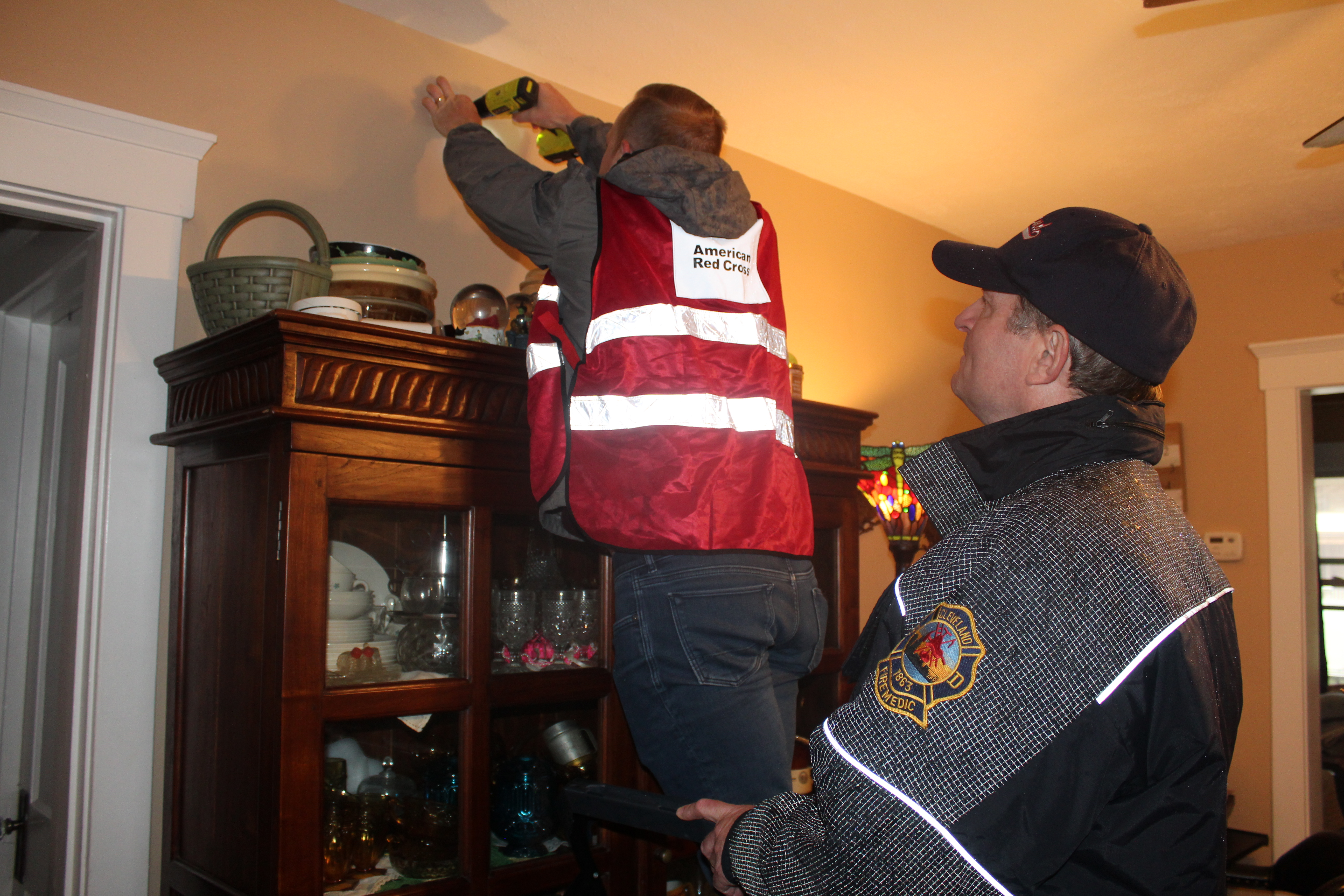
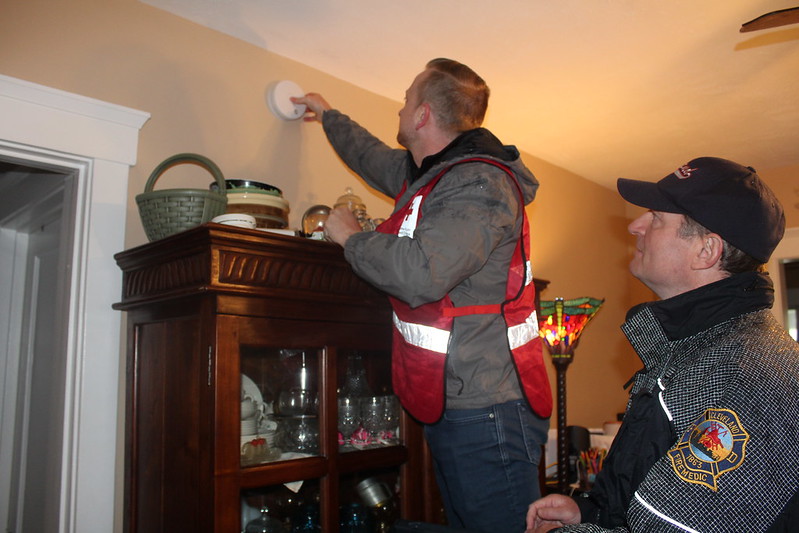
Volunteers installing a smoke alarm in an Akron, Ohio resident’s home during a May 2025 Sound the Alarm event

In fiscal 2025, that campaign made some 9,200 residents of northern Ohio safer. Meanwhile, volunteers presented our Prepare with Pedro home fire safety programs to more than 3,800 children.  

And this is saving lives! Since Sound The Alarm began at the national level 11 years ago, we’ve confirmed 2,489 lives have been saved specifically by our alarms and safety plans nationwide. Some 31% of those lives saved were children and teens under the age of 18. 

All services provided by the Red Cross are free, made possible by the generosity of the American people. If you’d like to volunteer your time, take a class or make a financial donation to help people prevent, prepare for and respond to an emergency – from a home fire to a medical emergency to a natural disaster – please go to www.redcross.org. 

Red Crossers: Humanitarians every day and everywhere

Recognizing Red Cross heroes on World Humanitarian Day

By EILENE E. GUY, American Red Cross volunteer

What is a humanitarian?

According to the dictionary, a humanitarian is someone “involved with improving people’s lives and reducing suffering.”

So, on this World Humanitarian Day, I’m lifting up the American Red Cross for being one of the foremost humanitarian organizations in the world. And saluting its roughly 285,000 volunteers and paid staff for being humanitarians of the first order.

The Red Cross mission statement is to “prevent and alleviate human suffering in the face of emergencies by mobilizing the power of volunteers and the generosity of donors.”

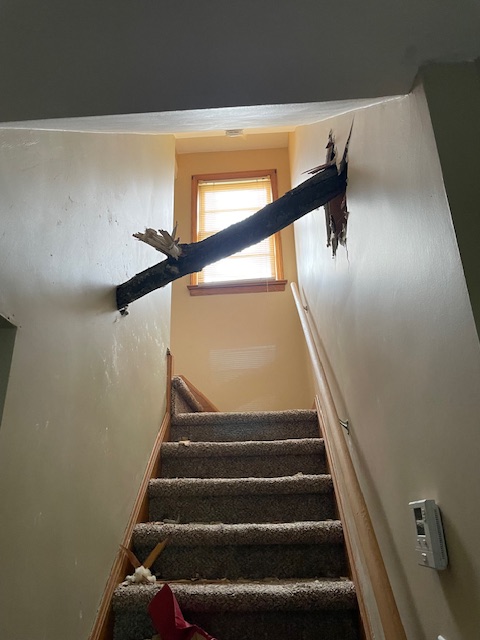
Damage done by recent tornadoes in Greater Cleveland and Red Cross responders

Maybe you recognize the iconic red vests on responders at natural disasters – everything from biggies like hurricanes and wildfires, to smaller, localized disasters like the tornadoes, power outages and flooding that hit the Cleveland area this month. Nearly 200 individuals received financial assistance to cover emergency needs in the aftermath of those storms. Some of the Red Crossers were without power in their own homes, but they answered the call to “reduce suffering. ”Or how about manmade disasters, such as bridge collapses, mass casualty events and plane crashes? (Remember the Red Crossers in the movie “Sully,” with blankets and hot drinks for passengers from the airliner that landed on the Hudson River? Those weren’t actors!)

For more than 80 years, the Red Cross has been collecting blood to “reduce suffering.” It began during World War II, first for English war victims and then for our military on the battlefields of Europe, Africa and the Pacific. To this day, paid Red Cross staff (such as phlebotomists and quality assurance lab techs) as well as volunteer donor ambassadors and transportation specialists work to ensure about 40% of the nation’s blood supply for trauma victims, surgery patients and folks who need treatment for cancer, sickle cell disease and other conditions.

Did I mention “improving people’s lives?” The Red Cross trains lifeguards and babysitters; teaches first aid skills and how to save lives with CPR and an AED; and prepares children and their families to cope with sudden emergencies. It’s installed more than 2.5 million free smoke alarms to make households safer from the most common cause of disasters in our country: home fires.

The Red Cross commitment to the American armed forces goes back to our founder, Clara Barton, who earned the nickname “Angel of the Battlefield” for her compassionate service during the American Civil War as well as the Franco-Prussian War in Europe and in Cuba during the Spanish-American War. Every day, the Red Cross provides some 1,400 emergency communications and critical community services to members of the military, veterans and their families at home and abroad.

Speaking of abroad, the American Red Cross is a partner with national Red Cross and Red Crescent societies in 191 countries, where we share expertise and guidance in disaster and crisis response and recovery; disease prevention and control; and environmental resilience. Our Red Cross is active in the global Restoring Family Links program that helps people separated by conflict or disaster reconnect with their loved ones. (I know: We helped a teenage Haitian adoptee in Berlin Heights find his half-sister who had been adopted in France. Small world!)

Today, every Red Crosser can be proud to call herself/himself a “world humanitarian.” If you’d like to explore volunteer opportunities on this team, please visit NEOvolunteer@redcross.org or call 216-431-3328.

Edited by Glenda Bogar, American Red Cross volunteer

Number of lives saved tops 2,000

Through the work of our dedicated American Red Cross volunteers and partners, we have now saved more than 2,000 lives through our Home Fire Campaign. More than one-third of those are children.

Home fires are this country’s deadliest and most frequent type of disaster. Seven people in the U.S. lose their lives to a fire in their home every day.

Because of these tragic statistics, the Red Cross launched its Home Fire Campaign to reduce home fire- related deaths and injuries. Since its start in 2014, the campaign is credited with helping save 2,002 lives as of the end of November, 2023.

As part of the Home Fire Campaign, the Red Cross works with local partners to install free smoke alarms and share fire safety information with families. Through the support of our community partners and dedicated volunteers, the campaign has installed 2.7 million smoke alarms and helped to make 1.1 million homes safer.

Long before the launch of the national home fire campaign, the Northern Ohio Region was installing smoke alarms in homes locally. The effort began in the city of Cleveland in 1992, when businessperson and philanthropist Sam Miller joined with other civic leaders, the Cleveland Fire Department, and the Red Cross to reduce fire fatalities through installing smoke alarms and teaching fire safety.

More than 225,000 smoke alarms have been installed by the Red Cross and its partners in Northern Ohio, and 21 of the 2,002 lives that have been saved were in this region.

If you need smoke alarms in your home, visit our regional Home Fire Campaign page.

Posted by Ryan Lang, Red Cross board member and volunteer

7 Tips To Keep Your Holiday Season Safe, Merry and Bright

By Sam Pudelski, Red Cross volunteer

The holiday season is upon us and for some, decorations are already trimming their homes. While December is known as the most wonderful time of the year, it’s also the peak time for home fires. 

The American Red Cross has put together some simple safety tips to help protect your home and family.

  • Opt for battery-operated candles. If you do use candles, never leave burning candles unattended and keep them away from anything that can burn. Make sure to keep candles out of reach of children and pets.
  • Inspect all holiday light cords to make sure they aren’t broken or frayed. Avoid stringing too many strands of lights together. You should not have more than three light strings per extension cord.
  • Make sure all outdoor decorations are made for outdoor use. Fasten lights securely to your home, trees and bushes. If you’re using any metal fasteners, like hooks or nails, make sure they are insulated to help prevent electrocution or fire hazard.
  • If you have an artificial tree or garland, check for a fire-resistant label. Keep them away from fireplaces, radiators and other sources of heat. Never use electric lights on metallic trees.
  • If you plan to get a live tree, test its needles to make sure it is fresh. Bend the needles on the tree up and down to make sure no needles fall off. Make sure to water the tree regularly to prevent it from drying out.
  • Don’t hang stockings or decorations on the mantel if you plan to light the fireplace.
  • Install smoke alarms on every level of your home and outside each sleeping area. Test your alarms once a month and replace the batteries at least once per year. Additionally, you should practice your two-minute fire safety plan with everyone in your household.

If you cannot afford smoke alarms or aren’t physically able to install one, the Red Cross may be able to help. You can request a smoke alarm from the Northern Ohio Region of the Red Cross here.

Red Cross serves up holiday safety tips to keep you thankful

By Eilene E. Guy, American Red Cross volunteer

While preparing the Thanksgiving feast, has anyone in your family ever burned something on the stove, setting off the smoke alarm and forcing you to open windows to the chilly November air?

My family has!

Have you every grabbed a potholder to pull a dish out of the oven, only to discover someone left it wet and the steam instantly scalded your hand?

I have!

These kitchen mishaps are not uncommon. But sadly, some holiday accidents turn disastrous: Thanksgiving and the day before are the top two days for home fires in this country.

Cooking is the leading cause of home fires and home fire injuries, and the second leading cause of home fire deaths. Most cooking fires happen because people leave cooking food unattended. (In my family, it was scorched green beans. I’m thankful the damage was just smoke.)

The American Red Cross urges everyone to keep safety top of mind throughout the hectic holiday season (and beyond):

Stay in the kitchen, especially when you’re frying or broiling food. If you have to leave the kitchen for even a short time, turn off the stove.

The same goes for a grill or turkey fryer outside. Don’t leave them unattended.

Use a timer to remind yourself that the stove or oven is on.

Don’t wear loose clothing or dangling sleeves while cooking.

Keep kids and pets at least three feet away from cooking areas.

Keep anything that can catch fire — potholders, oven mitts, wooden utensils, paper or plastic bags, food packaging, towels or curtains — away from your stove top and oven, or any other appliance that generates heat.

Clean cooking surfaces regularly to prevent grease buildup.

Consider getting a fire extinguisher to keep in the kitchen.

Always check the kitchen before leaving home or going to bed to be sure all stoves, ovens and small appliances are turned off.

Remember my smoke alarm? Smoke alarms save lives. Install a smoke alarm near (but not in) your kitchen, on each level of your home, near sleeping areas, and inside and outside bedrooms if you sleep with doors closed. Use the test button to check them once a month. Replace all batteries at least once a year (unless you have newer alarms with 10-year batteries).

If you can’t afford to buy smoke alarms or you’re physically unable to install them, the Red Cross may be able to help. Contact your local Red Cross for more information.

One more thing: Does everyone in your family know what to do if you do, in fact, have a home fire? Visit redcross.org/fire for more safety information, including a fire escape plan to practice with your family.

Since October 2014, the Red Cross Home Fire Campaign, working with community partners, has saved at least 1,994 lives by educating families about fire safety, helping them create escape plans and installing free smoke alarms in high-risk areas across the country. To learn more about the campaign and how you can get involved, visit redcross.org/homefires.

Posted by Ryan Lang, Red Cross board member and volunteer

Edited by Glenda Bogar, Red Cross volunteer

Sound the Alarm campaign installs more than 1,500 free smoke alarms in Northern Ohio

When people think of the American Red Cross responding to disasters, they often imagine the aftermath of a massive hurricane or deadly tornado. Trees uprooted and tossed aside, homes with missing roofs or destroyed by floodwaters. But it’s not the large-scale disasters that keep Red Cross volunteers busy day in and day out. Home fires are the most frequent disaster in the country, claiming seven lives every day in the U.S. In Northern Ohio, the Red Cross responds to more than three home fires, on average, every 24 hours.

As part of the national Sound the Alarm campaign, Red Cross staff, volunteers and community partners set aside specific weeks throughout the year to focus on educating residents about home fire safety and installing free smoke alarms where they are needed. From April 22 to May 12 staff and volunteers in northern Ohio, in partnership with local fire departments, held Sound the Alarm events in 11 communities across the region. They included:

  • Sandusky
  • Uhrichsville
  • Cleveland
  • Medina
  • Hubbard
  • Warrensville
  • Toledo
  • Findlay
  • Henry County
  • Newcomerstown
  • Willoughby Hills

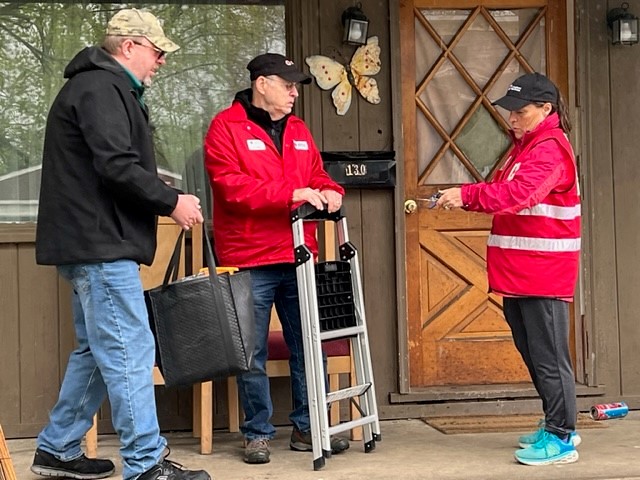
During these events, volunteers met with local families to install free smoke alarms, helped them create a two-minute fire escape plan and shared safety information on home fires and other local disaster risks. In Northern Ohio, more than 600 homes were made safer, with over 1,500 smoke alarms installed.

For those who do have smoke alarms, the Red Cross recommends testing smoke alarms each month and practicing your escape plan until everyone can get out in less than two minutes. It’s also important to teach children what smoke alarms sound like and what to do in an emergency.

While certain weeks of the year are designated as Sound the Alarm events, the Red Cross is working every day to help prepare communities for disasters like home fires.  If you or someone you know needs smoke alarms, visit the Sound the Alarm page to find out how to request an appointment with one of our teams. You can partner with the Red Cross and donate to this lifesaving work. Without the financial support of generous donors, the Sound the Alarm campaign would not be possible.

Check out more photos from our Sound the Alarm events on Flickr. Thank you to everyone who joined us this year and we look forward to seeing you all again soon at a Sound the Alarm event near you!

Day of service in Newcomerstown

Neighborhood where family perished in home fire made safer

Dozens of residents in Newcomerstown, Ohio are safer in their homes, after Red Cross and community volunteers banded together on Saturday to install free smoke alarms and share home fire safety information.

The effort targeted the neighborhood where six people died – four children and their parents – in a fire on the day after Christmas. Investigators found no evidence of smoke alarms in the home.

Newcomerstown Mayor Patrick Cadle and five village council members gathered with about two dozen Red Cross volunteers, some coming from as far away as Cleveland, for a brief training session prior to splitting into teams of three or four and going door to door on several streets in the neighborhood.

Newcomerstown Mayor Patrick Cadle

“I was unaware that the Red Cross did this,” said Mayor Cadle, referring to the Red Cross Home Fire Campaign, which includes making homes safer with the installation of free smoke alarms.

“If I had known they didn’t have smoke alarms I would have contacted you for them,” said Kitty Clay, who lives on Spaulding Avenue, next door to the home that burned. She said she and other neighbors were outside for several hours, watching firefighters battle the blaze. “There was nothing we could do,” she said.

Village Councilmember Michael Wise shares home fire safety information with Spaulding Avenue resident Kitty Clay

Village Council member Michael Wise was on the team that inspected Kitty’s home on Saturday. He made sure there was a working smoke alarm on every level of the home. It was one of 52 homes made safer that day, as 136 smoke alarms were installed.

“We’re not stopping there,” said Tim O’Toole, Regional Disaster Officer for the Red Cross of Northern Ohio. “We plan to come back in April, when we include Newcomerstown as part of our Sound the Alarm event,” he said. Sound the Alarm is an annual campaign that targets neighborhoods at high risk for home fires nationwide for home fire safety visits and smoke alarm installations.

“This is just the beginning,” said Elizabeth Cante, Disaster Program Specialist with the Heartland, Stark and Muskingum Lakes Chapter. “We will also be helping students at the elementary school whose classmates lost their friends with preparedness education. Our job has only just begun.”

See more photos from the day of service in Newcomerstown here.

Visit soundthealarm.org/noh for more information on how to make your home safer, and to request free smoke alarms.

The 8-year-old veteran and other tales

Lighthearted anecdotes for National Tell a Joke Day

By Tim Poe, American Red Cross volunteer

“M-O-U-S-E!” An 8-year-old sang, making the toy I had given him dance on the table. His grandmother, whose apartment was one of several impacted by a fire the previous night, stood next to me. Two other American Red Cross members and I had spent the day in the building, assisting those affected by the disaster.

American Red Cross volunteer Tim Poe at the annual toy giveaway for families that experienced a home fire

As part of our assistance, I asked the grandmother questions that help us find resources for those impacted by a disaster. With each question, the child paused the doll’s dance to tell me how to spell names and something about the person.

“Are you or any member of your family a veteran?” I asked the grandmother. As she shook her head no, the child looked up, wide eyed, and shouted, “I’m a veteran!”

“No, you’re not, dear,” the grandmother said, patting his shoulder.

“Am too!” he shouted. “I don’t even like meat!”

The moment was a delight and much needed by all of us in the room.

In my various roles volunteering with the Red Cross, there have been many such lighthearted, fun moments. Today is National Tell a Joke Day, and while the Red Cross and its services are no joke, fun moments do happen. Here are a few.

American Red Cross volunteer Tim Poe at the annual toy giveaway for families that experienced a home fire

Before the pandemic, I took part in distributing toys for the holiday season for children whose families had been affected by disasters. Several tables were filled with toys, and we would help families pick something out. One child excitedly ran to all the tables, looking, but not selecting anything. He turned to me and asked, “Where are the drones?” The parents, alarmed, standing behind, subtly shook their heads but appeared relieved when I explained we didn’t have anything quite so fancy. After his initial disappointment, he seemed thrilled with a toy truck and crayon set.

One of the many benefits of being a Red Cross volunteer is working alongside unique, caring people with differing perspectives. Stories such as Christy Peters’ grandparents and tattoos emerge from our communications meetings.

This makes it a continuous learning experience, even about communicating. After a particularly strange sequence of events, and a fellow volunteer and I finished up and returned to a Red Cross vehicle. As I searched for words to begin processing the roller-coaster ride we had taken, she summed it up.

“Dude!” she said.

I can be verbose, but sometimes a single word is all that’s needed.

On another call, to an apartment where the fire was fortunately contained to a single unit and no one was hurt, an elderly lady emerged from her apartment, saw us, and stopped. “Mm hmm,” she said, pointing to a door. “That’s the one you want. And tell them never leave a candle burning and go out for a sandwich! Could’ve killed us all!” While to my knowledge the Red Cross has not offered this specific fire prevention tip, it’s good advice.

Edited by Glenda Bogar, American Red Cross volunteer
Posted by Ryan Lang, American Red Cross volunteer

Red Cross disaster response teams active in early April

One-hundred residents of Northern Ohio received Red Cross assistance during the past week, April 4-10, as volunteers responded to two-dozen home fires.

Five of the fires affected multiple-family homes.

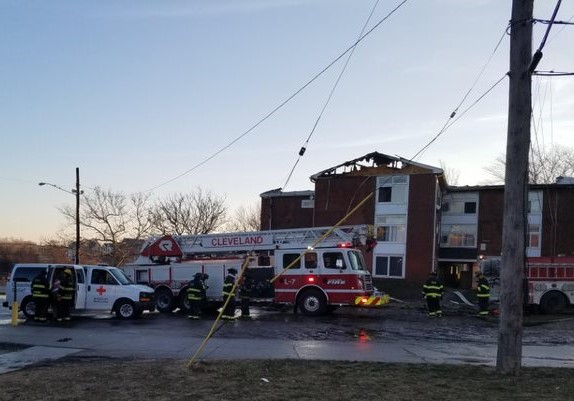
Cleveland Fire

“Our volunteer disaster responders have been very busy, and we are grateful that they answer the call, no matter when or where it happens,” said Tim O’Toole, Regional Disaster Officer. “They are true humanitarians. We could not respond to the needs of people in crisis without our volunteers.”

Immediate financial assistance totaling more than $22,700 was given to the affected residents. The money can be used for a hotel room, to replace clothing or other lost items, for meals or for whatever each resident prioritizes as a need.

In addition, Red Cross volunteer caseworkers reach out to the affected families to connect residents with additional community resources, as they try to move forward with their lives following the loss of their homes and possessions.

And if needed, Red Cross health and mental health volunteers are available to provide assistance as well.

The Red Cross never requires payment for the services provided to people who have experienced a disaster like a home fire. Such assistance is made possible through the generous donations of supporters. To help the next family that is forced by fire to flee their home, visit redcross.org/donate. You can also text REDCROSS to 90999 to make a $10 donation, or call 1-800-HELP NOW (1-800-435-7669) to make a donation on the phone.