As disasters increase, mental health support is critical

On World Mental Health Day please consider volunteering with the Red Cross

By Tim Poe, American Red Cross volunteer

October 10th is World Mental Health Day, which seeks to raise awareness of mental health issues around the world and to mobilize efforts in its support. This year’s theme is, “Make mental health and well-being for all a global priority.” This universality and humanity are part of the American Red Cross’s mission, and in my various capacities as a volunteer, I have glimpsed how needed and effective Red Cross mental health services are.

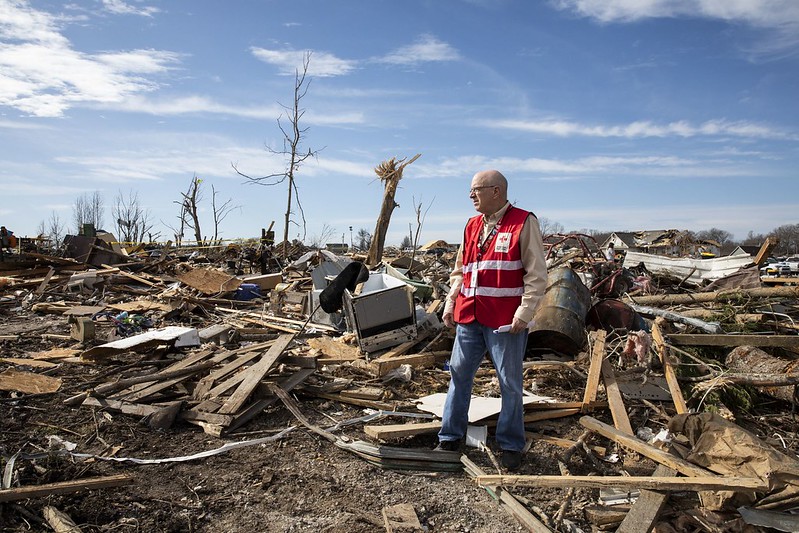
September 18, 2001. Arlington, Virginia. The Pentagon. Photo by Hector Emanuel/American Red Cross

As we deal with climate change, disasters of increasing frequency and severity, public health emergencies, and other issues, mental health is vital. And professional mental health is especially effective after a major disaster, as we are currently seeing in the aftermath of
Hurricanes Ian and Fiona.

Following a major disaster, Red Cross disaster mental health workers work in shelters and the community to help promote resiliency and good coping skills. They meet with people in need of short-term psychological care to help reduce stress and provide tools to cope. They can also help connect people with resources in the community for longer-term care when needed. Additional mental health professionals provide on-call phone support to those impacted as well as first responders.

Using Hurricane Ian as a recent example, on October 4th, a week after the hurricane made landfall, more than 2,000 people sought refuge in nearly 20 Red Cross and partner shelters across Florida. And to give scope of the tens of thousands in need of assistance, 142,000 meals were provided that day. Mental health professionals are part of a Red Cross team of over 1,500 currently supporting relief efforts in the area.
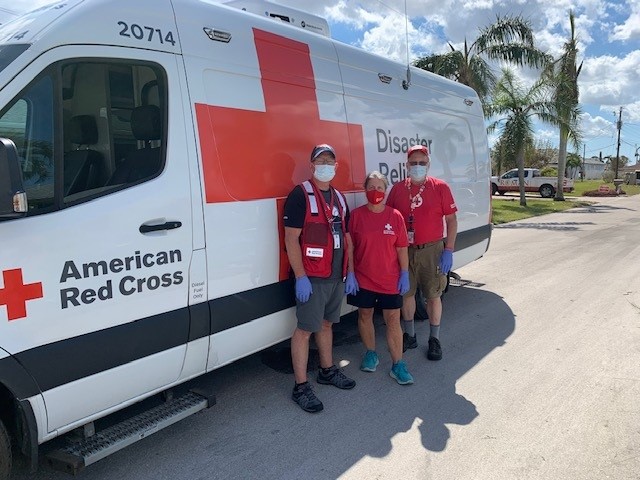
Northern Ohio volunteers Arden Tohill and Deb Day delivered hot meals yesterday in Cape Coral, FLA. They are traveling with Colorado volunteer Larry Ralston in the Emergency Response Vehicle that is normally used to respond to disasters in the Akron area. It’s one of nearly 120 ERVs being used to deliver food, water and relief supplies to the residents who have lost so much because of Hurricane Ian. 112,000 meals were provided yesterday alone, thanks to our partners with Southern Baptist Disaster Relief.

Other disasters, like home fires, also seriously impact mental health. Each day, the Northern Ohio Disaster Response team assists with comfort and caring as well as ensuring those aided have food, shelter, and medicine. When further mental health assistance is needed, they work to provide it, and mental health professionals are a key part of the team.

As we reported last month, additional mental health volunteers are needed. Those eligible include currently licensed mental health professionals, current school psychologists and school counselors, current psychiatric nurses, and retired mental health professionals.

Gail Wernick, Regional Volunteer Services Officer, shared the need for mental health
professionals to volunteer with the Red Cross in Northern Ohio, “Every day, the Red Cross sees the heartbreak of people coping with the effects of natural disasters. The need for compassionate volunteers has never been greater. This October, in recognition of World Mental Health Day, we invite licensed mental health providers to join us to volunteer. You will use your professional skills to deliver mental health support, so others don’t have to face tough times alone.” To get started, visit www.redcross.org/volunteer.

The World Health Organization has more on World Mental Health Day here.

The Northern Ohio regional Red Cross site has links to explore volunteer opportunities, provide financial support, and give blood.

Celebrating Hispanic Heritage

National Hispanic Heritage Month runs through October 15

By Chris Chmura, American Red Cross volunteer

Our weather has started to cool in northern Ohio as we to shift from summer to fall. One of my favorite months is October, with its dramatic changes in weather, kids back in school, and the holiday season beginning to ramp up.

The American Red Cross celebrates this important time by acknowledging our strong relationship with the Latino community in recognizing National Hispanic Heritage month.

Last year, I was fortune enough to write about the American Red Cross’ Northern Ohio Latino initiative, explain why we need to focus on this cultural group and share ways to get involved. The fundamental principles of the Red Cross instruct us to help all people in times of need.

Latino initiative

The Northern Ohio Latino initiative’s mission is to deepen our relationship with this diverse community, provide education about services we can provide, offer tools and support regionally, and partner with local groups to bridge trust.

Why?  The short answer is that the growing Latino community has varying levels of connectivity to Red Cross services. One gap we discovered is the large percentage of Spanish-only speaking people who are disconnected from the Red Cross based on language barriers.

One way we continue to build on our momentum is to have strong partnerships with groups like HOLA Ohio, with their incredible leaders and strong members.

HOLA was founded in late 1999 as an informal group of Hispanic women in Lake County who wanted to help the growing Latino community, comprised of Mexican immigrant workers employed by area nurseries and their families. Few services were accessible to this demographic, and HOLA worked to bridge gaps. Today, HOLA is an award-winning, 501c3 charitable nonprofit organization which works with families across the state. HOLA is currently developing a Commercial Kitchen Incubator and Hispanic Community Center in Painesville.

HOLA’s work has been spotlighted in the Los Angeles Times, Washington Post and Telemundo, and has been recognized with numerous awards, including a Torchlight Prize, a prestigious national award honoring community-driven work that empowers the Latino community. Recently, founding executive director of HOLA Ohio and the HOLA Hispanic Community Center Veronica Isabel Dahlberg was named a 2019 Crain’s Cleveland Business Woman of Note.

HOLA’s work in the community

HOLA and volunteers and employees with the Red Cross of Northeast Ohio have partnered in the past to install smoke alarms in the Latino community.

“HOLA is a key partner in helping us provide assistance to Hispanic residents who have been affected by home fires,” said Tom Revolinsky, Disaster Program Manager for the Red Cross of Northeast Ohio. “They help us with translation, give additional financial assistance and help overcome any cultural barriers to recovery.”

In October 2021, working with HOLA and the Painesville Fire Department, the Red Cross installed 62 smoke alarms in 25 homes in a largely Latino neighborhood.   Fire safety information was shared in Spanish and, according to Tom, was very well received by the community.

“HOLA is very grateful for our partnership with the Red Cross,” said Veronica Isabel Dahlberg, Executive Director HOLA Ohio and the HOLA Hispanic Community Center. “Working together, we have been able to assist Hispanic families in crisis, and also help with fire safety education and prevention, such as the installation of smoke alarms in the homes of Spanish-speaking families. There is no doubt that our combined efforts will save lives.”

Seeking Latino volunteers

The Red Cross of Northern Ohio has a need for Latino volunteers to help us grow our mission in their communities.

You can learn about being a volunteer here.

Web resources

Did you know that the American Red Cross has a Spanish language website? You can access it here.

Posted by Ryan Lang, Red Cross board member and volunteer

Needed: Health and Mental Health Professionals to Volunteer

By Eilene E. Guy, American Red Cross Volunteer

Home fires, floods, hurricanes, wildfires. When American Red Cross volunteers respond to these disasters, they offer shelter, food and compassion — as well as health and mental health attention.

The public generally doesn’t see the health and mental health services. For the most part, they don’t show up in coverage of urgent disaster responses. But they’re critical in the first hours and days of helping victims cope with their new reality.

Lost medications, destroyed medical equipment, missed doctor’s appointments, emerging conditions such as COVID or the flu. These are all pressing needs that trained medical professionals know how to meet. And they can administer first aid for victims as well as disaster workers.

Meanwhile, licensed mental health professionals address the emotional side of a disaster, triaging who needs a few sessions with a skilled listener and who needs to be referred to local mental health resources for extended care.

Faced with an almost unprecedented number of natural and human-caused disasters, the Red Cross has launched a targeted recruitment drive: Be One, Bring One. The goal is to enlist volunteers from the medical and mental health fields. Trisha Horvath, RN MSN, from Kirtland, Ohio, is one of the leaders of this drive.

Trisha Horvath, Red Cross Volunteer, RN MSN, from Kirtland, Ohio

“I think all nurses are humanitarians,” Trisha said. “That’s why they do what they do, to alleviate suffering.”

The reality is, the vast majority of licensed medical and mental health professionals don’t have flexibility in their work schedules to volunteer for disaster response, much as they might like to, she said.

So Trisha is helping the Red Cross “think outside the box.” They’re emphasizing the opportunities for virtual “deployments” and the rewards to volunteers in the form of resilience training and CEUs — not to mention the personal satisfaction of helping people in their most vulnerable situations.

The Red Cross is approaching graduate school students and faculty as well as non-traditional workplaces where health and mental health professionals are found, such as insurance companies. Many of these folks already work virtually, so they know how to engage with people remotely.

Gail Wernick, the Red Cross Northern Ohio regional volunteer services officer, emphasizes that volunteer shift scheduling is flexible for on-call and scheduled commitments. Typically, volunteers are expected to be available, as needed, for two weeks every three months.

Gail Wernick, Red Cross Northern Ohio Regional Volunteer Services Officer

Gail’s goal is to have a roster of 21 trained disaster health volunteers with active and unencumbered licenses: RNs, LPNs, Licensed Vocational Nurses, Nurse Practitioners, Advance Practice Nurses, Medical Doctors, Doctors of Osteopathy or Physician Assistants. Tap here for more information or to apply.

Trisha is particularly concerned about what she calls the “dearth of mental health volunteers.” There are currently half of the goal of 17 such volunteers on the Northern Ohio team.

The Be One, Bring One campaign is aimed at currently licensed mental health professionals holding a master’s degree as well as retired mental health professionals who were in good standing when they retired and held a license within five years of onboarding as a Disaster Mental Health volunteer. Tap here for more information and to apply.

“We really appreciate the generosity of our health services and mental health volunteers. Needless to say, when people are struggling to cope with a disaster — – anything from a home fire to a flood or tornado — – immediate health and mental health support can be just as essential as food and shelter,” said Barb Thomas, Northern Ohio regional recovery manager for the Red Cross.

If you’re someone who’d like to help turn tragedy into hope in a rewarding opportunity to share your time and talents, visit redcross.org/volunteer to explore the wide variety of roles you can play, at home or away. And thank you!

National Senior Citizen Day: Why should you care?

By Doug Bardwell, Red Cross volunteer

What, you’re not a senior citizen? Stay with me, as I bet you know one . . . or two.

When President Reagan signed Proclamation 5847 in 1988, he set the date as August 21 to be celebrated as National Senior Citizen Day. He proclaimed the date to raise awareness of issues that affect senior citizens, including quality of life.

One of the best things you can do for a senior is to make sure they stay busy. Tests have shown that the more a person stretches their mind to learn new tasks or talents, the sharper they will be in their later years. It’s also a known fact that social interaction is important to seniors— especially if they live alone.

Wouldn’t you know it – the American Red Cross has the perfect solution for both recommended strategies. Volunteers are needed in all sorts of fields, and the Red Cross will be happy to train seniors in anything they choose to take part in. There are opportunities to go out and about the community as well as those that can be done by someone homebound.

Red Cross Volunteer Doug Bardwell – Tennessee

Interested in sitting and chatting with new people?

The Blood Ambassador position could be a perfect fit. You could be engaging with the community at a registration table at a local blood drive. There are dozens of blood drives every day in different neighborhoods, so there’s likely one a few minutes from their home. Volunteer as many days as you like. Watch video to learn more.

Interested in driving?

The Red Cross could use your past professional training to help teach life-saving skills or deliver medical or spiritual care to those in need.

Interested in humanitarian assistance?

You hit the bonanza here. Opportunities abound to:

  • Drive to local neighborhoods to provide financial assistance to those who’ve experienced a home fire. (Don’t worry about the money. The Red Cross provides that – you just hand it out.) Watch video.
  • Help pass out water and snack at large community events or to first responders at disaster events.
  • Make phone calls as a caseworker to provide follow-up care to those who are trying to pull their lives back together after a fire or other disaster.
  • Help assemble self-help pamphlets and toiletry kits for disaster victims.
  • Teach fire safety at local schools with the Pillowcase Project for third through fifth graders. Learn more.
  • Assist at a disaster shelter or warming center, serving any of three meals a day to those without shelter. Watch video.
  • From home, help families reconnect during natural disasters by working with the Red Cross Family Reunification Network. Watch video.

Actually, there are so many more opportunities beyond the ones mentioned above. How about a quiz to see what’s available near you? Take quiz. Then, start the volunteer process here and make being a senior citizen both rewarding and life-changing for the better.

Edited by Glenda Bogar, Red Cross volunteer

Posted by Ryan Lang, Red Cross volunteer

Five ways you can give back this World Humanitarian Day

By Samantha Pudelski, American Red Cross volunteer

August 4, 2022. Fleming-Neon, Kentucky. American Red Cross volunteer Angela Daniel distributes a hot meal to those affected by the Kentucky flooding disaster. Emergency Response Vehicle make their way to various locations, bringing nourishing food and a word of encouragement to communities as they begin to recover. Photo by Kevin Suttlehan/American Red Cross

World Humanitarian Day is a day when we are all encouraged to come together and advocate for the well-being, survival and dignity of people who have experienced or are experiencing crisis around the world. This year’s theme from the United Nations is “It Takes A Village”—reminding us that whenever there are people in crisis, there are others who are there to help them. This year, they shine a light on the hundreds of thousands of volunteers, professionals and crisis-affected people who deliver urgent health care, shelter, food, protection, water and much more.

It’s a perfect day to recognize the thousands of dedicated volunteers and workers of the American Red Cross. They deliver lifesaving assistance every hour of every day, responding to an average of more than 60,000 disasters every year.

As we reflect on the meaning of this day, we are also encouraged to take action as humanitarians ourselves. This World Humanitarian Day, the Northern Ohio Region of the Red Cross has five ways you can give back and help to make the world a better place.

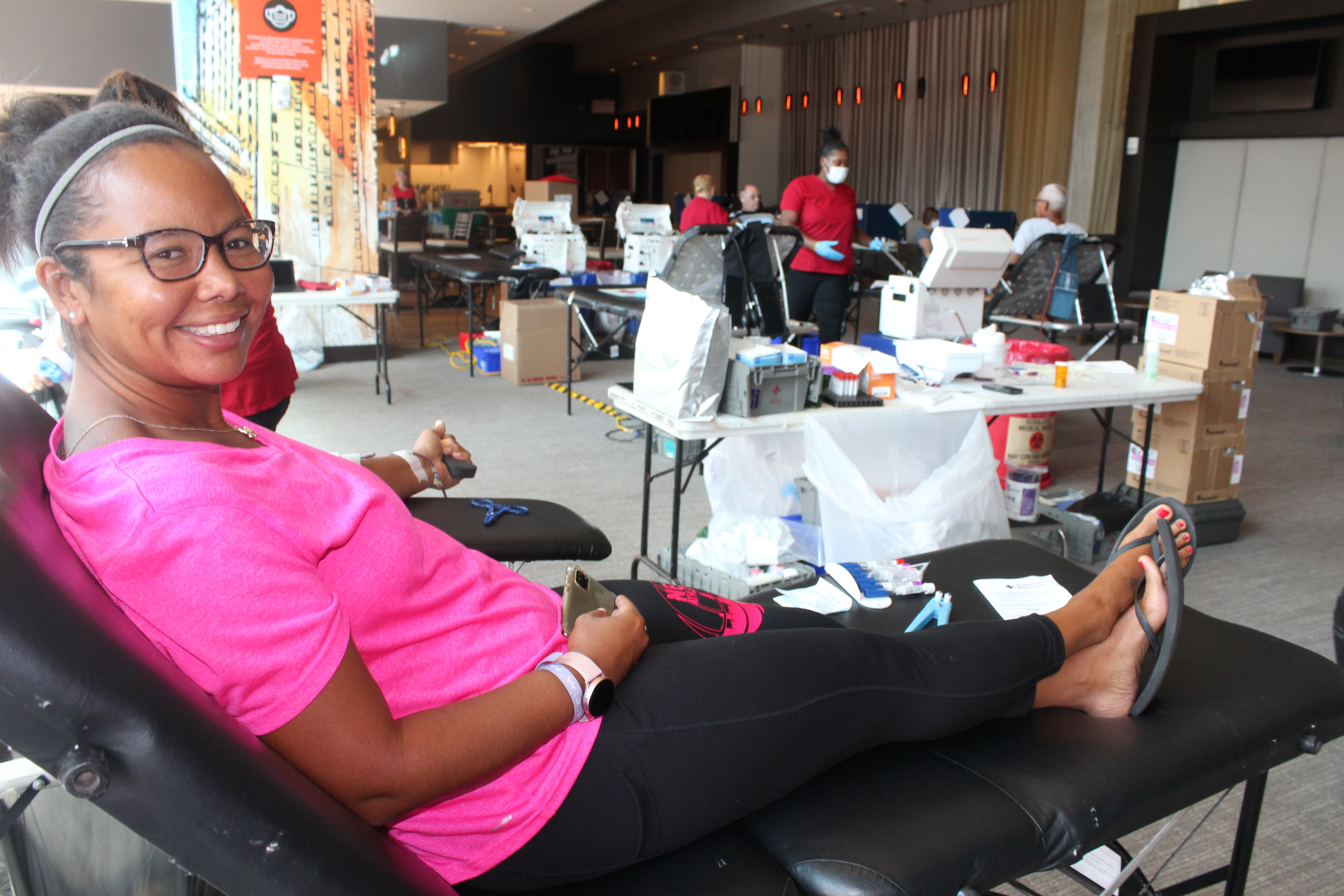
A blood donor giving blood at the 2022 Cleveland Browns blood drive in July

Donate Blood
Did you know that every two seconds someone in the U.S. needs blood or platelets? Giving back by donating blood can help ensure those who are in need of blood transfusions, including individuals undergoing surgery, cancer treatment, treatment for chronic illness and traumatic injuries.

If you are able to donate blood, it is a relatively easy process –
It only takes about one hour and 15 minutes, with the actual donation of whole
blood taking approximately eight to ten minutes.
Individuals can donate blood more than once per year. you can donate every
In most states, donors can start donating at age 17 and some states allowing
16-year-olds to donate with a signed parental consent form. You also must be
at least 110 pounds and be in good health.
Blood donor drives are held at locations throughout Northern Ohio. To find an
upcoming blood drive near you, click here.

Volunteer
Volunteering your time for a cause you believe in can have a huge impact on your community and the world. The Red Cross offers a variety of ways that you can give back depending on your skills, interests and time available. In fact, 90% of the Red Cross workforce are volunteers. They support areas such as blood drives, blood donation transports, health, mental health and spiritual needs, administrative support roles, supporting our armed forces and working with those who affected by natural disasters.

Make a Donation
Many non-profit organizations rely on generous donations from supporters. For many organizations, every dollar donated makes a difference. Some organizations, like the Red Cross, provide other ways for individuals to donate in addition to financial contributions.

June 22, 2018. Washington, DC. CPR stock photos by Roy Cox for the American Red Cross.

Learn a Lifesaving Skill
The Red Cross has been teaching emergency and safety training for more than a century. You can learn first aid, be trained in administering CPR or using an AED, to be prepared for when a need for these skills arises. You can review and sign up for a class here.

Advocate
Advocacy is an important way you can be a humanitarian. In order to advocate, it is equally important to educate yourself on the topics, organizations or causes you would like to advance. Here are a few simple ways you can get started.

Follow organizations on social media. For example, you can follow the Red Cross and the Northern Ohio Region of the Red Cross on Facebook, Instagram, Twitter, LinkedIn and TikTok just to name a few. Not only do they post facts and updates about the work that they are doing, but they also provide links for more information.
Participate in events like Turn and Test and other events that help to spread the word about a particular cause. Share information with friends and family and learn about causes that they are passionate about.

Read about the work of three Red Cross humanitarians here.

Edited by Glenda Bogar, Red Cross Volunteer

Posted by Ryan Lang, Red Cross Volunteer


People in Eastern Kentucky are really hurting

People from Northern Ohio are really helping

They are working in shelters; they are distributing food and water; they are arranging logistics and they are establishing communications.  10 American Red Cross volunteers from Northern Ohio are playing crucial roles in the massive effort to bring comfort and care to people in eastern Kentucky, following deadly flooding last week. Our thoughts are with everyone who has been affected by the flooding that has upturned lives and destroyed homes across at least nine counties in the state.

Photo credit: Mike Parks, American Red Cross

Nearly 250 trained Red Cross disaster workers are on the ground, and more help is on the way.  Sunday night, almost 640 residents took refuge in one of the many shelters being supported by the Red Cross and other partners. The Red Cross is providing a safe place to stay, food to eat, emotional support for those affected by this tragedy, and is helping with replacing prescription medications, eyeglasses or critical medical equipment that were left behind in the rush to get to safety.

Northern Ohio volunteers: Al Irwin and Arden Tohill drove an emergency response vehicle to Kentucky on Saturday. Mahogany Coward is helping with logistics from the University of Kentucky.

More than 15,400 people are without power, and as many as 60,000 are either without water or under a boil advisory.

This deadly flooding — along with the recent heavy rainfall in Missouri, explosive wildfires in California and the ongoing Northwest heatwave — are clear examples of how more intense climate-related disasters are happening more often. Over the last two years, on average, the Red Cross responded a new, major disaster every 10 days. We see firsthand how families and communities are suffering and depending on us for help – with our volunteers continuously on the ground, setting up shelters, arranging for hot meals and offering comfort for people forced from their homes.

You can help people affected by disasters like floods, fires and countless other crises by making a gift to Red Cross Disaster Relief. Your gift is a commitment to helping people in need, and every single donation matters.

Donations enable the Red Cross to prepare for, respond to and help people recover from disasters big and small. Visit redcross.org, call 1-800-RED CROSS, or text the word REDCROSS to 90999 to make a $10 donation.

A lesson from childhood “Sounded the Alarm” for this Red Cross volunteer

By Sue Wilson, American Red Cross volunteer

American Red Cross volunteers come from many backgrounds, professions, and demographics and show up ready to work with different motivations. Whether it is the desire to make a difference, a way to network and socialize, or to stay active in retirement, a day in the field helping the Red Cross fulfill its mission with one of its many programs is a day well spent.

Elizabeth Sullivan (right), Red Cross Volunteer

Elizabeth Sullivan got involved this past May after a colleague suggested they partner with the Sound the Alarm campaign as part of their Yale Alumni Service activities. Sound the Alarm is part of the Red Cross home fire campaign, established in 2014 to help prevent fire-related fatalities. A similar program began in Cleveland in 1992, when the Red Cross partnered with the Cleveland Division of Fire to reduce fire fatalities by installing smoke alarms in homes and teaching fire safety.

Elizabeth, the director of opinion for cleveland.com, and previous editor of the editorial pages of The Plain Dealer, along with her team and others, installed 175 smoke alarms in 60 homes in Cleveland ‘s Old Brooklyn neighborhood on May 14. For her, the project took on a deeper meaning.

“My father survived a house fire as a child because his older sister came into the room at night with a wet towel, and they put it over their mouths and they crawled along the floor to safely escape,” said Elizabeth.

That experience prompted her father to do annual fire drills with their family when Elizabeth was a child. “We were taught basic fire safety tips, like touch the door before you open it to make sure it’s not hot and to go out the window.”  While she and her siblings had fun climbing out on the roof, the importance of those drills stuck with her.

Red Cross volunteers, Elizabeth Sullivan (far right)

Covid paused this important program over the last two years, but this spring, Red Cross staff members and volunteers like Elizabeth installed 2,374 smoke alarms throughout Northern Ohio, making 929 homes safer.

Home fires claim lives every day, but having working smoke alarms can cut the risk of death by half. The good news? You don’t have to wait until the next Sound the Alarm campaign, the Red Cross installs smoke alarms throughout the year.

If you or someone you know may need a smoke alarm, click here to request a home safety visit and smoke alarm installation. And if Elizabeth’s story encouraged you to want to volunteer, find more information here.

Edited by Glenda Bogar, American Red Cross volunteer
Posted by Ryan Lang, American Red Cross volunteer and board member

Helping those in need after a disaster is challenging but rewarding

By Mike Arthur, Regional Mass Care & Logistics Manager, American Red Cross of Northern Ohio

I’m grateful to live in northern Ohio, one of the safest areas of the country from a weather-related disaster standpoint. We don’t have to worry about a hurricane coming and wiping our homes away. We are unlikely to walk out our front doors and have trouble breathing due to smoke from a nearby wildfire.

I have never worried about the fate of my family and myself, where we would live and work after a disaster destroyed my home and place of work. I have never had to make a decision about which of my hard-earned belongings I need to take with me when I evacuate. I have never had my community devastated. Every year thousands of families have their lives changed drastically when their homes and communities are affected by disasters large and small.

Mike Arthur, during the Red Cross response to hurricane Harvey in Houston, Texas in 2017
 

I’m also grateful that I get the opportunity to help people in need. As a Regional Mass Care & Logistics Manager, I get to put the skills and talents learned over the course of my life to good use leading and supporting the American Red Cross workforce in meeting the needs of our clients locally and nationally.

I get to deploy for a few weeks each year making an immediate difference in someone’s life. Deployments to large disasters are tough but incredibly rewarding. The hours can be long. The food is not always five star. I sometimes sleep on a cot in a staff shelter with my fellow workers. It can be stressful. Compassion fatigue is a risk.

Residents wait to receive clean up supplies from the Red Cross after hurricane Harvey in 2017.

I look forward to each deployment and go as often as I can. I feel like I make a difference. I have made incredible friends across the country. I have great stories to tell. I get to bring hope to those in need. I help provide a safe place to sleep and food in bellies, and sometimes, most importantly I can provide a warm hug, bright smile and a sympathetic ear. My life is fuller because of my deployment experiences. I hope you will take to opportunity to join me out in the field this year and experience the magic of helping.

Help those in need when they need it most by becoming a volunteer with the Red Cross. To find a volunteer opportunity that’s right for you, visit redcross.org/volunteer.

Edited by Glenda Bogar, Red Cross volunteer

929 Northern Ohio homes made safer through Sound the Alarm

By Tim Poe, American Red Cross volunteer

Volunteers at the Sound the Alarm event in Garfield Heights – 5/13/22

Over the last few weeks, Red Cross volunteers and staff installed 2,374 smoke alarms throughout Northern Ohio, making 929 homes safer. Focus areas for this year’s initiative—the 30th anniversary of a program started in Cleveland—were Cleveland’s Collinwood and Old Brooklyn neighborhoods, Garfield Heights, Akron, Lorain, Wooster Township, Chippewa Township, Napoleon, Ohio, Fostoria, Ohio, and Monroe, Michigan (part of the Red Cross’s Northern Ohio Region.)

“This was my first time participating in a Sound the Alarm installation event, and it was a fantastic experience,” said Christy Peters, regional communications manager. “The residents we spoke with were so thankful for our help, and I left knowing the work we did could mean the difference between life and death for a family, should a home fire occur.”

The 30th anniversary of a partnership with the Cleveland Division of Fire was celebrated on 5/12/22

As I wrote earlier, Sound the Alarm and the Home Fire Campaign grew out of “Operation Save-A-Life,” an initiative begun in Cleveland in 1992, when businessperson and philanthropist Sam Miller joined with other civic leaders, the Cleveland Fire Department, and the Red Cross to reduce fire fatalities through installing smoke alarms and teaching fire safety. It has been remarkably successful, helping keep annual fire fatalities in Cleveland below the 1992 level. The Home Fire Campaign, which includes Sound the Alarm, became a national Red Cross program in 2014.

While Sound the Alarm occurs each May, the Red Cross helps make homes safer year-round. Since July 1, 2021—the beginning of the Red Cross’s fiscal year—5,495 smoke alarms have been installed in Northern Ohio, and 2,102 homes have been made safer.

Fire safety initiatives such as this are vitally important, as we may have just two minutes to escape a home fire. Having working smoke alarms can cut the risk of death in such an event by half.

Volunteer Dick Kincaid tests an alarm he installed in a home in Wooster Township on 5/22/22

Since 2014, the Home Fire campaign has documented saving 21 lives in Northern Ohio, 1,275 nationally. Thanks to this month’s efforts, families in 929 homes throughout our region are now better protected.

For more information on the Home Fire Campaign, including tips on making your home safer, please visit this website.

Photos from this year’s Sound the Alarm and other local events can be viewed here.

Red Cross salutes nurses, ‘angels’ of its mercy mission

By Eilene E. Guy, American Red Cross volunteer

Nurses are vital to delivering the lifesaving services of the American Red Cross – an organization founded by Clara Barton, whose own nursing during the Civil War earned her the title “Angel of the Battlefield.”

“Nurses fill so many roles in the Red Cross. We couldn’t function without them,” said Barb Thomas, recovery manager for the Red Cross Northern Ohio Region.

Nationwide, more than 20,000 Red Cross nurses – both paid and volunteer – do everything from caring for disaster victims to working in military hospitals to collecting lifesaving blood. They teach CPR/first aid and disaster preparedness, and even serve in the management and governance of the Red Cross itself.

“Nurses are integral to what we do at the Red Cross, so we try to keep them engaged and be sure they know how much we appreciate them,” Barb said. “We don’t just salute them during National Nurses Week (starting today), but all year long.”

Barb introduced me to two of the dozens of nurses in northern Ohio who apply their time and skills to those who need them, near and far.

Phyllis Esposito of Massillon, Ohio, is enthusiastic about her role in Red Cross disaster health services.

Phyllis Esposito, Red Cross volunteer, with Tim Reichel, Disaster Program Manager, Heartland, Stark and Muskingum Lakes Chapter

“I can honestly say, I talk up the Red Cross every time I can,” she said. “It’s such a rewarding thing. My only regret is, why didn’t I do this 10 years earlier?”

After more than 50 years as an emergency room nurse, Phyllis understands how stressed people can be in the wake of an emergency. She knows how to help calm them, assess their health-related needs and – most importantly – fill those needs.

That can range from getting glasses, dentures or refills for medications lost in a fire evacuation to replacing a child’s aerosol machine or a continuous positive airway pressure (CPAP) machine destroyed by a tornado or flood.

Early in her Red Cross “career,” Phyllis was glad to travel to disaster sites, to look after the medical needs of home fire victims, shelter residents or even Red Cross volunteers. But she said as she’s gotten older, she’s glad to be able to serve virtually, reaching out by phone all the way to victims of a hurricane in Louisiana, for example.

This kind of long-distance service is a vital and efficient way for the Red Cross to help local disaster survivors or even a whole community where medical resources are overwhelmed.

“Phyllis is a disaster health service star,” Barb said. “She’s eager to learn as we evolve our ways of helping people, especially as we adjusted to COVID. And her personality just lets people know, there’s light at the end of this dark tunnel they’re in, after a disaster.”

Jennifer Dremann of Deerfield, Ohio, has a special rapport with those who’ve experienced tragedy in the course of a disaster.

Jennifer Dremann, Red Cross volunteer

“I lost my brother in a house fire in 1996; he was 19 years old” when he succumbed to smoke inhalation and carbon monoxide, she said. “He’s why I became a nurse.”

When Jennifer heard about what the Red Cross does, particularly for home fire victims, she knew this was a fit for her. “I’ve lived it; I’ve lost somebody. I’ve done several cases where somebody has passed. It’s got to be the absolute worst nightmare, especially when a child has perished.”

She’s also moved by cases involving an elderly adult who doesn’t have family or social support nearby.

Like Phyllis, she works with folks by phone, day or night, finding out what their disaster-related medical needs are and helping them replace prescriptions and/or medical equipment, navigating insurance and then dipping into Red Cross funds if necessary.

But perhaps the most important help she can give is to listen, not just to survivors’ physical needs but to their emotional wounds. “People are like, ‘You volunteer to do this?’ she said. “I don’t think most people realize what the Red Cross does, and how rewarding it is.”

The Red Cross is proud to have tens of thousands of skilled, compassionate nurses like Phyllis and Jennifer on the team, ready across the country and around the clock to help people prepare for, respond to and recover from disasters.

To learn more about the many services of the Red Cross and how you can be involved as a volunteer, financial supporter or blood donor, go to redcross.org.

Edited by Glenda Bogar, American Red Cross volunteer