Carol O’Brien is approaching her 25th anniversary as an American Red Cross Blood Donor Ambassador, a volunteer role she relishes with the same enthusiasm she had when she started her Red Cross career in the year 2000.
Shortly after retiring from her position with an insurance firm, Carol said she decided to donate blood for the first time. That’s how she became familiar with the volunteer Blood Donor Ambassador position.
“It looked like it would be fun to do a couple of times a month,” she said. At one point, Carol was volunteering at up to six blood drives each month, registering donors and helping them through the donation process. “Now, I just work four shifts a month,” she said, with no plans to cut back anytime soon.
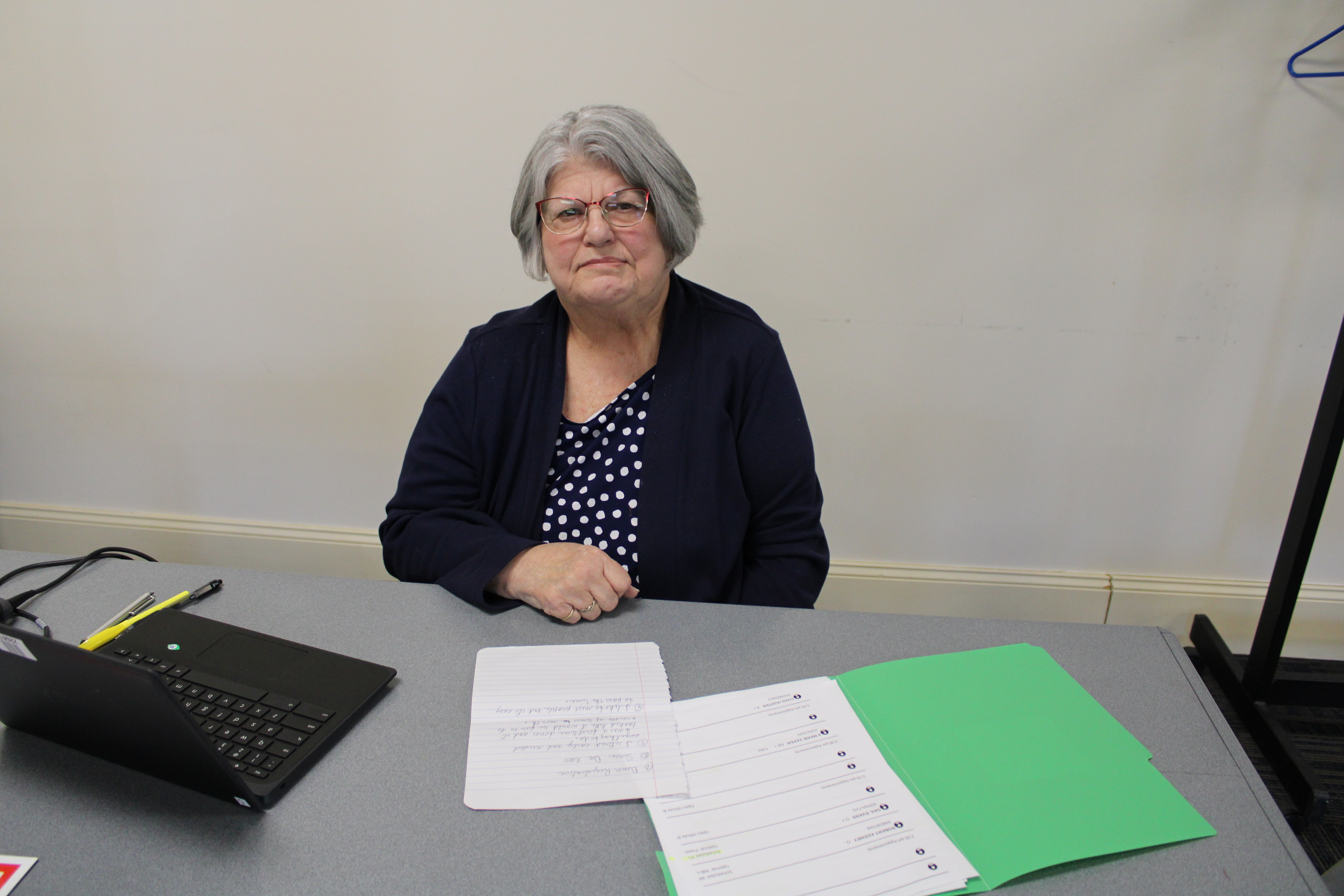
Because she volunteers so frequently, Carol said she has learned the names of many repeat blood donors.“ I like to meet people, and it’s easy to pass the time,” she said while staffing the registration table at a recent blood drive in Mayfield Village.
Carol also keeps an eye on the refreshment area, making sure snacks and beverages are available following each donor’s generous gift of blood. To learn more about the Blood Donor Ambassador position, visit here.
Red Cross volunteers are also needed to transport blood donations from blood drives to the biomedical services lab in Cleveland, and from the lab to area hospitals to help patients in need. Visit here to learn more about the opportunity to pick-up and deliver lifesaving blood..
Edited by Glenda Bogar. American Red Cross volunteer
The American Red Cross would not operate at the level it does without its incredible volunteers. In fact, 90% of the Red Cross mission is accomplished by volunteers, many of whom are utilizing their skills across multiple lines of service.
Nikole Goncalves, Red Cross volunteer
Nikole Goncalves is only a couple of years into her Red Cross journey and already she is exploring all the different volunteer opportunities available to her.
“A little more than two years ago I started as a Blood Services Donor Ambassador after I donated blood for the first time,” Nikole said. She saw what they did for her when she went to donate and thought, “Oh this is cool,” and she signed up.
“I enjoy putting a smile on donors’ faces when they walk in the door,” Nikole said, adding that she feels like she’s doing a lot for her community while working as a Blood Donor Ambassador.
Now, Nikole is doing even more for her community as a part of the Sound the Alarm program. “I didn’t realize the Red Cross installed smoke alarms in homes,” Nikole said after seeing photos from previous Sound the Alarm events. With her photography background (she studied photography in college) Nikole thought this was a perfect opportunity to utilize her particular skillset as a volunteer.
Photo credit: Nikole Goncalves, American Red Cross
Photo credit: Nikole Goncalves, American Red Cross
So, Nikole started volunteering as a staff photographer for Sound the Alarm events, taking photographs of other volunteers and Red Cross staffers installing smoke alarms in homes around Toledo and Lorain, where she’s originally from.
“I feel like the photos I take of these installations can really tell the story and give the look of the Red Cross mission.” And Nikole says she’s learned so much about that mission while going out for Sound the Alarm events.
“My outgoing personality makes people feel comfortable,” Nikole said. And whether that’s a first time blood donor walking up to her table or someone she’s taking a picture of at a Sound the Alarm event, the Red Cross sure is grateful for volunteers like her.
If you’d like to join Nikole and the thousands of other volunteers utilizing your skills while carrying out the Red Cross mission, click here.
Teresa Greenlief considers herself a hard-core American Red Cross volunteer. Retired on disability after 15 years as a firefighter/EMT, she spends as much as 30 hours a week on activities with the Greater Akron and Mahoning Valley chapter. “I do everything I can,” she says proudly.
Teresa, who calls Cuyahoga Falls home, manages the chapter’s vehicle fleet and is trained to do mass care and feeding, disaster damage assessment, family reunification and local disaster response. She actively leads the chapter’s campaign to prevent home fires. “We’re focused on prevention, installing free smoke alarms and education.”
When she’s not at the chapter — “The chapter feels like home” — she’s eager to spread the word about the Red Cross. “I wear my ‘merch ’even when I’m not working,” she says warmly. People approach her when they see the iconic red cross on her jacket or T-shirt.
“My most asked question is, ‘where do I donate blood? ’The Red Cross is so much more than collecting blood, but that one’s a lifesaver.”
The Red Cross provides a framework for Teresa, and more than 300,000 volunteers across the country, to show their compassion for their fellow man. “It takes empathy and humility,” she says. “We all need it.”
During National Volunteer Week especially, we salute all the volunteers, like Teresa, who put on the red vest and give their time and talents to help prevent, prepare for and respond to disasters. They make up more than 90% of the Red Cross workforce that:
teaches 4.5 million people a year first aid, CPR and AED,
provides more than 480,000 services to the men and women in our armed services, at home and abroad,
prepares to respond to an average 65,000 local disasters each year, most of them home fires,
continues to install free smoke alarms (2.6 million alarms installed and counting!) and help families make home safety plans (saving more than 2,300 lives in 19,560 towns across the country),
supports Red Cross operations in office settings and virtually,
and more!
“There is such a need for the Red Cross,” Teresa says with emphasis. “You have to have empathy for people and be a team player, but the rewards will come back to you ten-fold.”
Just like the people it serves, the Red Cross welcomes people from a wide array of cultures, lifestyles, ages, backgrounds and beliefs. Come join us! Begin at redcross.org/volunteer.
Edited by Glenda Bogar, American Red Cross volunteer
“…and I knew from that point on, even as young as I was…I said to myself, ‘when I’m old, I’m going to volunteer for the Red Cross,” said Linda Consolo of Stow.
A pivotal moment in Linda’s young life changed her trajectory and mindset. At the tender age of 18, just out of high school and newly engaged, her life was turned upside down. Her fiancé was drafted and sent to Vietnam, where he was wounded and sent to a field hospital. When he was well enough for transport and moved to a hospital in Japan, the army reached out to his parents, allowing only them the opportunity to visit.
Unfortunately, the cost of travel was too much for the family, and they worried if they would ever see their son again. That’s when the American Red Cross stepped in to help. They covered the costs, and his parents were able to spend the last few weeks of his life with him. This was something that Linda never forgot, and she knew one day she would volunteer for the Red Cross.
Now, nearly 55 years later, she is living that reality and has dedicated a large portion of her retirement to volunteering with the Red Cross. She has found her niche in the role of Blood Donor Ambassador, a position that she really enjoys, working sometimes up to four days per week at blood drives.
“It’s my way of giving back to them because they did something special for somebody for me. Because having his parents there for his last month or two was amazing,” she reflected.
Not only does she volunteer at blood drives, but she is also a blood donor. “I’ve given 16 gallons and one pint in my lifetime,” she proudly states. Quite an achievement, considering that eight donations equate to one gallon of blood.
“I started when I worked at Goodyear,” she explained. “Goodyear always had blood drives, and I started giving blood there because we were allowed to leave our desk and go across the street to Goodyear hall, give blood and have something to eat. We didn’t have to take time off from work. Goodyear made it easy for us to donate blood.”
“Donating blood is probably more important to me than volunteering,” she said, “but I do them in tandem. I do it every 56 days or as close to it as I can.”
Despite her busy schedule, she also finds time to bake for the workers at the blood drives, earning her the affectionate moniker, ‘the muffin lady.’
As a retiree, Linda said that she appreciates the opportunity to stay active and social and meet new people. “Now it’s time for me to give back,” she said. “It’s the thing to do. It makes your heart feel good that you’re giving back to the world. I’m doing my part and trying to give my best.”
The Red Cross is always looking for new volunteers. If you would like to learn more about this vital volunteer role or any of the other available opportunities, visit www.redcross.org/noh and click the Volunteer tab or call 1-800-RED CROSS.
Edited by Glenda Bogar, American Red Cross volunteer
Our lives can change in a moment, posing difficulties, presenting challenges. In many of these instances, the American Red Cross is there to help, including providing life-saving blood when a transfusion is needed. Such was the case for Paul Wadowick of Ashtabula County. After he was diagnosed with blood cancer in the spring of 2021, Paul went from being a lifelong blood donor to being a blood recipient. Paul, who is also a Red Cross volunteer, was gracious enough to speak with me about his background and experience.
Paul Wadowick
Paul has dedicated himself to assisting others throughout his life, and his parents were an early inspiration. Paul became aware of blood donations in the 1950s when his father, a universal donor, had a capability test for another person’s open-heart surgery. His mother was also a donor. Paul followed suit, and from 1968 until 2021, donated 137 units (17 gallons + 1 unit) of blood, helping to save many lives in the process.
While donating blood in 2021, he became aware of a problem. As part of our services, Red Cross blood donors receive a mini-health screening, including a hemoglobin test. Paul’s iron level had dropped dramatically. Shortly thereafter, he was working as a Blood Donor Ambassador at another blood drive, took the hemoglobin test again, and knew he had to see doctors. He learned he had blood cancer and began undergoing chemotherapy.
In October 2021, Paul received a “High Chemo” 15-day treatment, where he received two units of platelets, which are a component of blood. He recalled hearing how a donor of whole blood can save many lives. It then hit him that his was now one of those lives.
Thankfully, Paul’s cancer is in remission, and he continues his volunteer work with the Red Cross, mainly as a Blood Donor Ambassador, in addition to other community service.
Paul’s sense of responsibility and service is lifelong. As the third oldest in a family of 10, he assisted in the care of younger siblings and household chores. He was also class “dean” in his high-school seminary, volunteered in a long-term hospital, and found his calling in social work. After earning his degree and certification, Paul spent decades as a social worker, mostly at a long-term-care facility, while continuing his community service, including with the Boy Scouts. Paul and his wife, Denise, raised two sons.
After retiring in November 2015, Paul became a Red Cross volunteer in January 2016. He is also a member of the Knights of Columbus and credits his faith for his perseverance, gifts, and outlook.
Melissa Papini, a Red Cross Blood Services Account Manager, pointed out that Paul has been a Blood Program Leader with the Knights of Columbus for almost four years, recruiting over 400 donors and collecting 382 units of lifesaving blood.
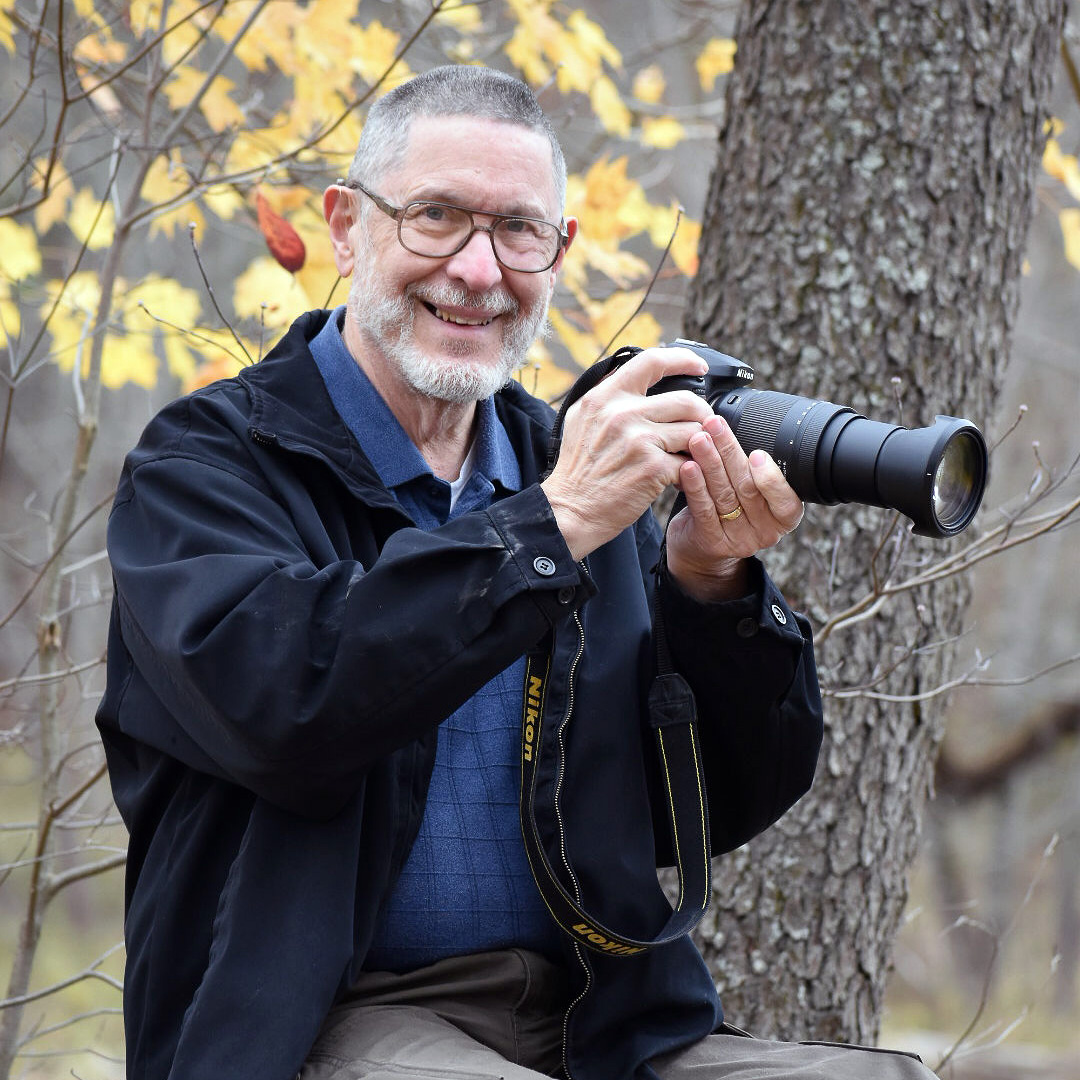
Paul cited several favorite experiences as a Red Cross volunteer, especially photographing volunteer recognition celebrations, smoke alarm installations, and blood drive events in ways that tell a story. He also enjoys coaching and easing blood donors through the process and sending them home with a “Thank You.” And while he can no longer donate blood, he is happy to help recruit, organize, and bring in donations from others.
For anyone considering donating blood, Paul asks, “What would you do if you needed blood?” and reminds us that we may find ourselves, like he did, in a position where we or a loved one need it.
Volunteers are the lifeblood of the American Red Cross. And by extension, volunteers provide lifesaving blood and blood products to millions of people across the nation every year.
This chain of generosity begins at the local level, at an average of 500 blood drives and blood center collections every day. Last year, the Red Cross sent more than 6.3 million blood products to some 2,500 hospitals and other health care facilities.
But in the past two decades, the number of Red Cross blood donors has fallen by about 40%, with a significant drop among those between 16 and 22. As our national population ages and becomes more diverse, building the next generation of donors is critical.
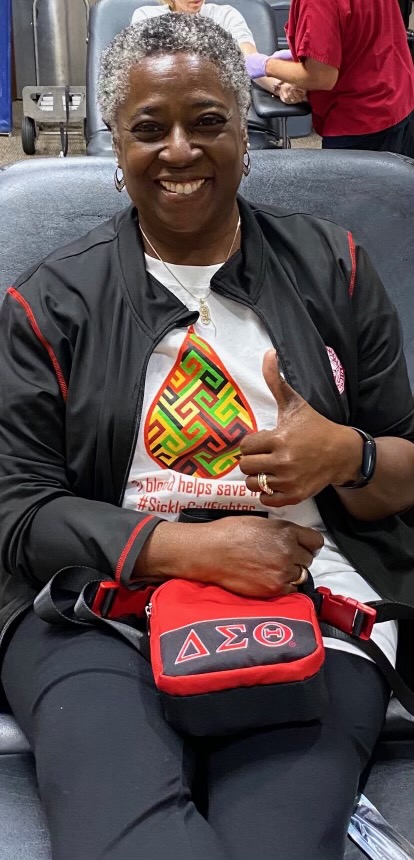
The University of Akron alumni chapter of Delta Sigma Theta, a sorority of scores of African American women, is helping meet that need by sponsoring blood drives.
Earlier this month, their event netted 30 units of blood, which will go to treat as many as 90 patients.
Drives like these are vital to maintain a stable supply of blood for trauma victims, surgery and cancer patients, fragile newborns and those with medical conditions such as Sickle Cell Disease (SCD). This hereditary condition can be life threatening: It leads to anemia (shortage of red blood cells), causing fatigue, organ damage and periodic severe pain, known as a sickle cell crisis.
Blood transfusions from donors of the same or similar ethnicity and blood type are the most effective way to treat a sickle cell crisis. Since most people with SCD are of African descent, blood from Black donors is the gold standard for treatment. In fact, one in three African American blood donors is a match for a patient with sickle cell disease.
As a northern Ohio district manager for Red Cross blood services, Sabrina Spikes works to recruit and educate a larger, broader base of blood donors, including the Black and African American, Latino and LGBTQ+ communities.
“It’s a testament to the work of Delta Sigma Theta that they sponsor at the University of Akron,” she told me. “We need to have diverse partners, to do more education.”
Education is two-pronged:
Reaching more people from all racial and ethnic groups to explain the importance of a diverse blood supply. “We know the number one reason people don’t donate blood is that they haven’t been asked,” she said. “We need to explain why a diverse blood supply is important.”
Preparing potential donors to have a successful donation experience, by getting them to drink plenty of water and eat iron-rich foods. “Cutting down on caffeinated beverages that slow the absorption of iron – coffee, tea, sodas – helps cut the deferral rate of donors, especially African American women,” she explained.
To learn more about why a diverse blood supply is so important, tap here. And, to find where you can donate and to make an appointment, go to redcrossblood.org. Someone needs you!
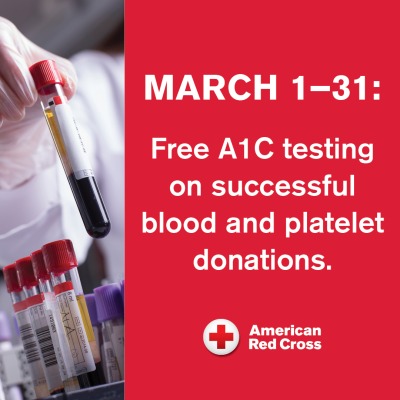
The American Red Cross of Northern Ohio is helping to bridge access to health care for blood donors by providing free A1C testing, commonly used to screen for diabetes and prediabetes, on all successful blood, platelet and plasma donations in March.
One-third of people lack access to regular primary care in the U.S., where diabetes affects 1 in 10 people and nearly a quarter of those living with it have been undiagnosed, according to the Centers for Disease Control and Prevention (CDC). The free A1C screening aims to help address this gap by empowering blood donors with valuable information to maintain their health and well-being.
What is the hemoglobin A1C test? This is a common laboratory blood test that doctors use to help diagnose diabetes or prediabetes. Unlike a blood glucose test (or blood sugar test) which provides an instant snapshot of your current blood sugar levels, A1C reflects the average blood sugar levels of an individual over the past 3 months. This gives doctors a better idea of where your blood sugar typically lies, outside of the daily fluctuations.
Why is this important for me? It is estimated that there are over 8.7 million people in the U.S. living with undiagnosed prediabetes or diabetes. Type 2 diabetes accounts for over 90% of all cases and often remains symptomless until damage has been done. Untreated diabetes can lead to plaque build-up in the blood vessels which in turn puts you at greater risk for a stroke or heart attack. The eyes, kidneys, nerves, and skin are particularly vulnerable to the effects of decreased blood flow due to high glucose levels in the blood. Fortunately, prediabetes is reversible with lifestyle changes, so early detection is key.
Blood donor, Audrey Savage Photo by Michelle Frankfurter for the American Red Cross
How should I prepare for my donation? No fasting is required for the A1C test or any other special preparation. Just be sure you are feeling well on the day of donation by getting enough rest, staying hydrated, and eating a well-balanced meal.
When will I get my results? You can expect your results within one to two weeks of your donation. Results will be posted on the Red Cross Donor App or through your donor’s account at RedCrossBlood.org.
What do my results mean? An A1C test result of 5.7% or above will require follow-up with your primary care physician. Your doctor will be able to diagnose and guide you through an appropriate treatment plan.
To learn more about the A1C test, pre-diabetes and diabetes, check out this informational page at the Red Cross website HERE. Download the Red Cross Blood Donor App HERE to schedule your next donation and view your donation history and test results.
By Gail Wernick, Regional Volunteer Services Officer, American Red Cross of Northern Ohio
As I begin my 15th year with the American Red Cross, I would like to share a message of appreciation to the truly special Red Cross team and volunteers with whom I have had the privilege of working to deliver our mission.
This fall I deployed for the first time in-person to be a part of the Hurricane Helene Disaster Relief Operation in Asheville, North Carolina. On deployment, I joined a team of dedicated Red Crossers to share volunteer opportunities with surrounding communities. Due to intermittent internet availability, the team often connected with new volunteers personally to complete volunteer intake to begin volunteering as soon as possible! The Disaster Event Based and Local Community Volunteer teams supported volunteer scheduling, with more than 200 calls/texts to coordinate and prepare for the volunteers’ engagement. The team created volunteer recognition messaging and unique ways to say THANK YOU! Each day, some more than 12 hours, was filled with new experiences, learning quickly, and adjusting to the evolving needs of the disaster operation. I will always remember my Red Cross deployment experience and the kind people I met, who inspired me and helped make a meaningful difference each day.
Thank you for delivering service in the community to help your neighbors when needed most. Your efforts are greatly appreciated, and we are most grateful for your service as a Red Cross Disaster volunteer.
Featured in the photo above, Red Cross volunteer deployment team members, disaster event based and local community volunteers from Asheville, North Carolina.
Glen McCandless, a disaster event based volunteer, featured on the far right in the photo above, volunteered at the AG Center every day for two weeks consecutively. He said, “Volunteering at the shelter and helping others in the midst of so much devastation is like salve for the soul.”
The Red Cross shelter supervisors we met extended their sincere appreciation for the dedicated disaster volunteers from the local community who tirelessly volunteered, many whose own lives and homes have been impacted by the disaster, to prepare and serve meals and offer support. Whether a volunteer gave two hours or several days of their time to help, we are grateful to them for helping deliver the Red Cross mission!
More than 1,400 Disaster Event Based Volunteers joined the Red Cross in North & South Carolina this October and November, engaging in more than 640 volunteer commitments to provide comfort, care and hope by assembling and distributing emergency supplies, preparing and serving meals, setting up and cleaning up and supporting residents impacted by Hurricane Helene.
The Red Cross is here to help make your volunteer experience the best it can be! Please continue to volunteer with us and encourage your friends and family to join you. Thank you for exploring and sharing our most-needed ongoing volunteer opportunities at www.redcross.org/volunteer. We are working hard to prepare for, respond to and help communities recover from disaster. Become a part of the Red Cross Disaster Action Team at www.redcross.org/dat.
Husband and wife team-up to respond to storms far from home
By EILENE E. GUY, American Red Cross volunteer
Jeff and Laura Mann were on what you would call a “mission of mercy” when I reached them by phone, headed for the hospital in flood-ravaged Asheville, N.C., to pick up specialized medical equipment for a baby in an American Red Cross shelter in Burnsville, another hour away.
Jeff Mann, inside the Red Cross disaster vehicle, hands supplies to wife Laura in Burnsville, North Carolina
The couple are what the Red Cross calls a “fulfillment team.” Jeff says they’re “a store on wheels.”
They deliver consumables like toilet tissue, paper towels and baby formula as well as essentials like pillows, blankets, and special need items to shelters in northwestern North Carolina, where the number of storm refugees continued to grow.
When we talked, a week after Hurricane Helene swept from the Gulf to the East Coast, the Manns were still seeing helicopters – some ferrying evacuees to shelters and others airlifting food and water to isolated communities.
Jeff, a retired YMCA executive director, is a veteran disaster responder. “This is my 15th, 16th (response) – I don’t know,” he told me with a chuckle. He’s served in evacuation shelters, warehouses, supply units. “I’m quite a rover… wherever I’m needed.”
Jeff Mann was interviewed by news reporters at the Akron Canton Airport before his deployment to Guam in response to Typhoon Mawar 2023
Laura, on the other hand, is on her first deployment. She’s been on the board of the Heartland, Stark, Muskingum Lakes chapter of the Red Cross for years and taken lots of disaster response training. But this is the first time her work as a CPA has allowed her to take off for two weeks.
She’s excited to be helping bring relief to a region devastated by hurricane winds and unprecedented flooding. It’s a plus that she’s working with her husband.
“Laura and I are bonding,” Jeff offered. “It’s our 39th anniversary this week,” Laura explained. “This is a good marriage test.” They both laughed comfortably.
The couple, who call Louisville, Ohio, in Stark County home, are finding conditions in mountainous North Carolina challenging. Many roads, even if passable, are one lane where downed trees have been hacked back just enough so Jeff can squeeze his box truck through. Cell phone service and GPS are spotty.
“We were headed for the hospital in Asheville the first time and GPS died at the edge of town,” Laura recalled. “There were no streetlights and we didn’t have a clue. We just had to figure it out.”
Laura Mann at a Red Cross warehouse
A typical day has them at a Red Cross warehouse in Greenville, S.C., at 7 in the morning to load up, with a list of special orders to be picked up at local big-box stores. Then they head north to Asheville and on to shelters as far as Boone, another two hours away.
“We go up one side of the (Blue Ridge) mountains and back down the other,” Laura said. They were still in the truck, on the way back to Greenville, when we chatted at 9 o’clock in the evening last week.
The Manns are among the more than 2,000 trained Red Cross disaster responders providing shelter, food, emotional support, replacement medical devices and prescriptions, and other urgent needs to storm victims across five states. At the same time, some 200 Red Cross reunification staff have fielded thousands of requests for help locating loved ones.
Red Crossers and our partners have given out nearly 480,000 meals and snacks in shelters and from mobile feeding trucks. With partner organizations, they’ve provided more than 35,000 overnight stays.
None of this disaster response, which will go on for months as the Red Cross helps individuals and families plan the next steps in their recovery, would be possible without the generosity of the American people. Please consider making a financial donation by going to redcross.org, calling 1-800-RED-CROSS.
If you’d like to get trained and become part of the hands-on relief effort, as Jeff and Laura Mann are doing, visit NEOvolunteer@redcross.org or call 216-431-3328 to learn about all the different roles that might interest you.










 NOHredcross