American Red Cross remains committed to helping everyone as needs increase

By Tim Poe, American Red Cross volunteer

Portrait of Clara Barton, founder of the American Red Cross.

She was bent over, sobbing, frustrated, nearly everything in her family’s apartment destroyed. We sat in an American Red Cross vehicle outside a partially burned apartment complex. It was near the beginning of the school year, and she had recently purchased books, school supplies and clothes for her children. Unfortunately, her neighbor, whom I had helped earlier, had a moment of carelessness. Like most renters I assisted, especially those in lower-income areas, she did not have renter’s insurance. But we were there. One of my favorite moments as a Red Cross volunteer was handing her an aid packet, a lifeline, and seeing her frustration and despair turn to gratitude and resilience. Her family would have a place to stay, would eat, and her children’s clothes and school supplies would be replaced. Her race, gender, legal status, religion, beliefs, class and orientation didn’t matter. She needed help, and the Red Cross provided.

Scenes like this play out an average of three times per day in Northern Ohio, and about 65,000 times per year nationally. Similarly, someone in the U.S. needs blood every two seconds, while U.S. Armed Forces members, veterans and their families receive assistance daily. Our services have never, nor will ever, be contingent on anything other than if someone needs our help.

As March is Red Cross Month, we would like to reiterate that helping everyone has been a core principle since our founding in 1881 and remains central to our Fundamental Values of
humanity, impartiality, neutrality, independence, voluntary service, unity and universality. Clara Barton, who faced discrimination as a woman, believed in “perfectly equal rights–human rights,” and instilled those values in the Red Cross from the outset.

For the past 144 years, the Red Cross remained committed to helping those in need, bringing out the best of humanity in times of crisis.

February 25, 2025. Pike County, Kentucky.
American Red Cross volunteer, Tony Susi, comforts Tina Roberts after she lost her entire home in Eastern Kentucky after devastating floods hit her community just over a week ago.

Red Crossers are on the ground across Kentucky, assessing damage, working with community partners and local emergency management, and providing hot meals, a safe place to stay and other support to residents impacted by flooding.

Photo by Scott Dalton/American Red Cross

The need for Red Cross services and the commitment to help everyone has never been greater. The climate crisis is having a tremendous impact, as the Red Cross is responding to nearly twice as many large disasters as a decade ago, and they are increasing. Additionally, the climate crisis is taking a heavier toll on frontline communities, including low-income families, older adults, communities of color and people with disabilities.

The Red Cross is responding to these challenges through strengthening partner networks;
improving disaster relief capacity; enhancing our engagement with diverse communities, including offering information in Spanish; reaching out to diverse blood donors; continuing our Sickle Cell initiative; and adding health screenings for blood donors at different times throughout the year, currently including screening for Sickle Cell trait and, this month, A1C.

We could use your help. If you can donate blood, give financially or volunteer, your assistance has a tremendous impact. And no matter who you are, please reach out if disaster strikes, as the Red Cross continues its commitment to helping all.

Edited by Glenda Bogar, Red Cross volunteer

Posted by Ryan Lang, Red Cross board member and volunteer

Non-stop disasters – non-stop responses

Regional Red Cross executive reflects on most recent deployment

By Todd James, Executive Director, American Red Cross of North Central Ohio

Todd James in Iowa, June, 2024

I recently returned from a disaster relief operation in southwest Iowa, an area devastated by massive flooding in June. You’re probably trying to remember if you had heard about flooding in Iowa. You probably did, it was big news for a few days. But as is always the case, something else happened and the news moved on to cover the story of the day. Well, the cameras and reporters may have moved on, but for the people of Siouxland, as they call the region, moving on will be a long, hard process. I am so proud of the American Red Cross responders who left their own homes, jobs and families to rush into the devastation to offer shelter, comfort and hope, and I am honored that I had the opportunity to serve with them.

A month after the flood waters receded, with the help of the Red Cross, the community was able to focus on long-term recovery. What does that look like? It’s different for every family but all will need the help of many partners, non-profits, governmental agencies and the business community, working together. Our Red Cross long-term recovery team will continue to collaborate with these partners, helping and guiding them on how to come together to best serve those on the road to recovery.

The Red Cross is responding to nearly twice as many large disasters as we did a decade ago to help families and communities struggling with more frequent and intense disasters. In 2023 alone, the U.S. experienced an all-time high of 28 billion-dollar plus disasters that ravaged communities and forced hundreds of thousands of people to flee from severe storms, floods and wildfires.

This was my 41st disaster deployment and I have seen first-hand how disasters are happening more frequently and causing more damage. There is no more down time between big disasters, time when our responders can catch their breath, come home and focus on the great work the Red Cross is doing in their community. Now we are constantly responding to these large-scale disasters, as well as the thousands of home fires, storms and other disasters that happen every day but don’t make the headlines.

To equitably meet the growing and unique needs of disaster-affected families and communities, the Red Cross is enhancing our large-scale disaster response and recovery services, expanding financial assistance, strengthening local partner networks, and growing our disaster workforce. This effort includes fortifying the critical infrastructure and technology that enables 24/7 response to disasters across the country.

The need to help during disasters has never been greater. Please, join us to provide
relief and hope when it matters most. Help people affected by disasters big and small,
including climate-driven crises, by making a gift to Red Cross Disaster Relief at
redcross.org or by calling 1-800-RED CROSS (800-733-2767). Our volunteers are at the heart of our mission and represent 90% of our workforce. Click here to sign up for opportunities to help. To help make sure your family and community are ready for a disaster before it happens, click here.

Posted by Ryan Lang, Red Cross board member and volunteer

Severe weather safety tips to help you stay safe

By Samantha Pudelski, American Red Cross volunteer

Warmer weather will be arriving in Northern Ohio…eventually! We’ll be swapping snowstorms for thunderstorms and rain. While our region doesn’t experience hurricanes (this is the beginning of hurricane preparedness week), our area does experience severe storms that can bring tornadoes or flash flooding. Before severe weather strikes, refresh your severe safety knowledge with these tips from the American Red Cross.

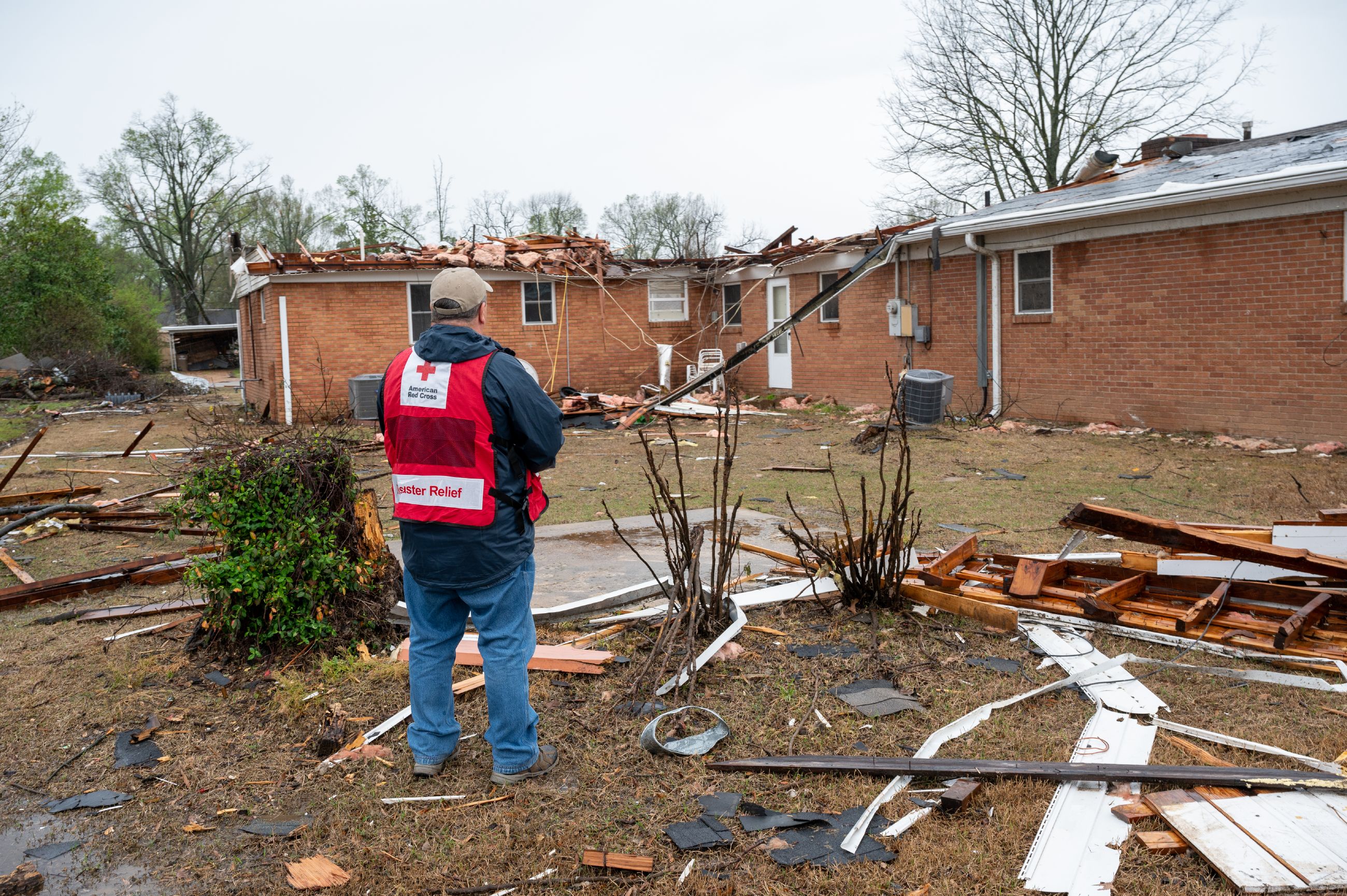
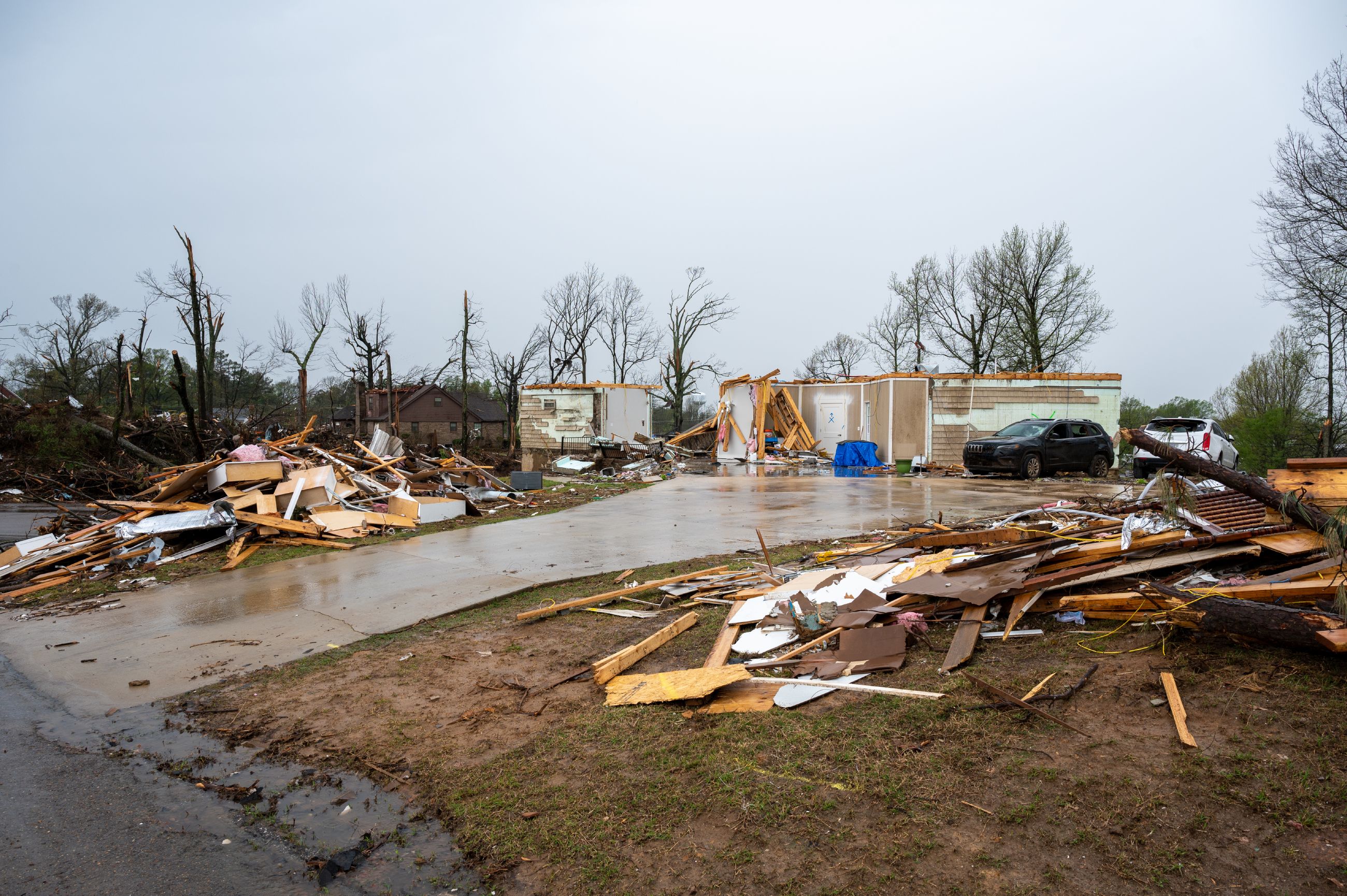
April 5, 2023. Wynne, Arkansas. The tornado that struck Wynne, caused extensive damage to scores of homes in the town. Photo by Kevin Suttlehan/American Red Cross

Before Storms Strike:

  • Identify a sturdy building that you can take shelter in. A sturdy building has walls and a foundation.
  • Ideally, the building should have a basement, or a small, interior room without windows on the lowest level of the building.
  • Mobile, manufactured, trailer homes and recreational vehicles (RVs) are not safe in high winds.
  • If you reside in one of these structures, make sure to identify a building nearby that you can take shelter in quickly.
  • Hold practice drills with everyone in your household to make sure everyone knows what to do and where to go before a storm hits.
  • Sign up for free emergency weather alerts from your local government or weather service.
  • In case there is a power outage, make sure to have a backup battery to charge your cell phone and a battery-powered radio.
  • Know the different types of weather alerts:
    Severe thunderstorm watch: Means severe weather is possible in the area. Be prepared to act fast.
    Severe thunderstorm warning: Means a severe thunderstorm is in the area and to take action to get to safety.
    Tornado watch: Means tornadoes are possible in the area. Be prepared to act fast.
    Tornado warning: Means a tornado is near, and you must take immediate action to get to a safe location.
    Flood watch: Means that flooding is possible in the area.
    Flood warning: Means flooding is forthcoming or currently happening in the warning area.
    Flash floods warning: Means that a flash flood is imminent or currently happening. It is even possible that a flash flood can occur in an area not immediately receiving rain.


When Storms Are Predicted in Your Area or Currently Happening

  • Look for storm signs such as darkening skies, lightning flashes and windy conditions. If you hear thunder, head indoors. Once you can hear thunder, the storm is close enough to be in danger of lightning strikes.
  • If a severe thunderstorm warning is issued in the area, take shelter in a substantial building.
  • Mobile homes can blow over in high winds.
  • Keep away from windows.
  • Don’t take a bath, shower or use plumbing.
  • Avoid using electrical equipment and telephones.
  • If you are driving, try to find a way to safely pull off the road and park. Stay in your vehicle until the heavy rain ends. Turn on your emergency flashers so other vehicles can see you.
  • If you are outside and are not able to seek shelter in a building or car, avoid high ground, water, tall or isolated trees and metal objects. Sheds, picnic shelters, dugouts and metal objects, like bleachers, are not safe places to seek shelter.
  • If someone is struck by lightning, call 911 immediately. If someone sustains a lightning strike they need professional medical care. Check the individual for burns and other injuries. If they stop breathing, begin CPR immediately. It’s safe to touch them, as individuals struck by lightning do not retain an electrical charge.
April 5, 2023. Wynne, Arkansas. Red Cross volunteer Don Baker surveys tornado damage to homes in Wynne, AR. Photo by Kevin Suttlehan/American Red Cross

Tornado Safety

If a tornado warning is announced for the area you are in:

  • Move to the lowest level of your home or a sturdy building, ideally a basement. If you aren’t able to move to a lower level, find a small interior room with no windows.
  • Mobile, manufacturer, trailer homes and RVs are not safe in the event of a tornado or high winds.
  • Monitor local weather and news on your phone or radio.

    When Flooding is Predicted or Seen
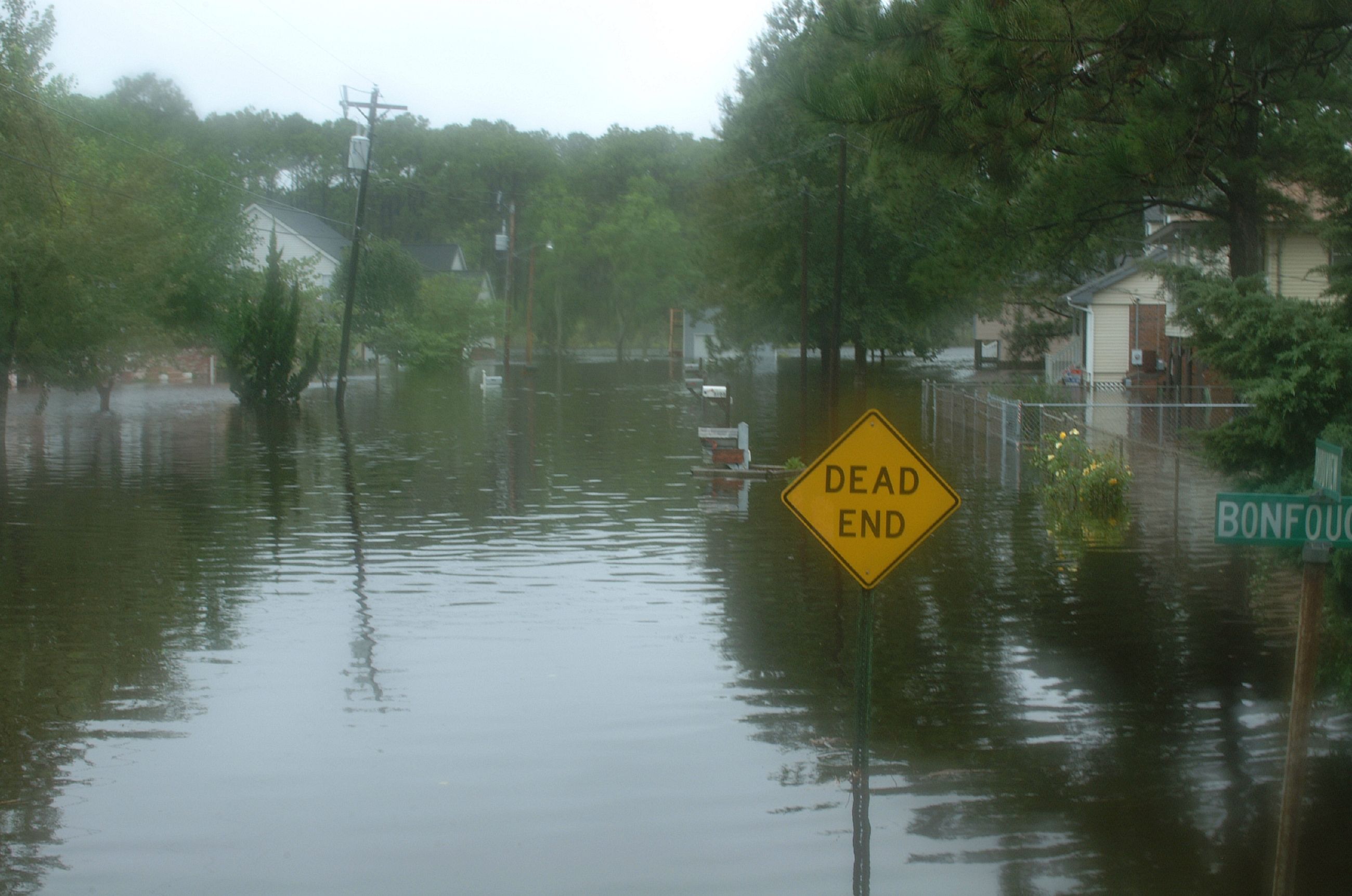
  • Turn around, don’t drown! Stay off the roads and do not attempt to drive through a flooded portion of the road. Just six inches of fast-moving water can knock you over, and most vehicles can be swept away by less than two feet of water.
  • If you are caught on a flooded road and the waters are rising around you, get out of the car quickly and move to higher ground.
  • Tune in to your local radio or news for the latest weather updates.
  • If your area is a risk flood area, prepare to evacuate quickly in the case it becomes necessary.
  • Follow your local officials direction if you are asked to evacuate.
  • Stay away from flooded areas, as they may contain snakes, insects and other animals. Keep children and pets away from these areas.

    For more information on weather safety and about volunteer opportunities to help those affected by severe weather, visit https://www.redcross.org/local/ohio/northern-ohio.html.

    Edited by Glenda Bogar, Red Cross volunteer
    Posted by Ryan Lang, Red Cross board member and volunteer
Storm season in Northeast Ohio: Powerful storm teaches lesson in preparedness

By Ryan Lang, American Red Cross volunteer

“The sky would get this grayish, purplish tint to it… And that’s when I’d go out to the front porch to watch the storm.”

That’s how Meghan Fiorina recalled storm season growing up in Northeast Ohio. That distinct smell that came with a rainstorm. The lingering feeling after the clouds rolled through. Soggy lawns. Downed branches. And sometimes worse.

Ryan Lang and Meghan Lang Fiorina

Full disclosure: Meghan is my sister, and as I started writing this story I called her to see if she remembered that one storm. The storm that took down one of those two massive trees in our backyard that then came crashing down right on top of our back porch. It was an unstoppable force that took out what we thought was an immovable object, and we watched it happen from the back family room of our home.

We were scared, but more in awe than anything else. As young children we hadn’t seen anything quite like it. Our grandfather, who was with us at the time, had some experience with Ohio storms and how quickly they can escalate, and he kept us safe. That day was an important lesson on taking inclement weather seriously, but also a lesson in preparedness.

Now, as an American Red Cross volunteer, I’m even more aware of just how prepared I should be for myself and for my family once storm season rolls around.

Photo credit: Doug Bardwell, American Red Cross volunteer

First, knowing the difference between a storm watch and a storm warning is key. A watch essentially means that there is a good possibility of a storm near the area the
alert is being broadcast. A warning, however, means that a storm has been spotted, by either radar or storm spotters, and is on the way. In the case of a warning, it’s time to take action to ensure your safety.

With storms often comes the possibility of flooding, especially in low-lying areas or areas near other bodies of water like creeks, rivers and more. Floods are the most frequent and the most costly natural disasters, as there are a number of things that can cause flooding. In terms of warnings, the same standard applies: a watch means the possibility of flooding exists, while a warning means flash flooding is happening nearby and you should proceed with extreme caution.

Power outages are another residual effect of strong storms. Knowing how to navigate through an outage both inside and outside your home, is crucial information. Have a flashlight and extra batteries, extra cell phone chargers that are fully charged, and more. These small steps can come up big in the event your power is out.

Tornadoes are another very real threat in Ohio. While they are less likely to occur in the Buckeye State than in other parts of the country, it is still very important to be prepared in case the threat of a tornado is imminent. The best way to prepare for a tornado is to have a predetermined safe place inside your home, preferably the basement or an interior room with no windows and thick walls.

Again, while they happen less in Ohio (the state typically sees around 19 tornadoes, on average, per year), forecasters with the National Weather Service are actually calling for a busier-than-normal tornado season in Ohio this year.

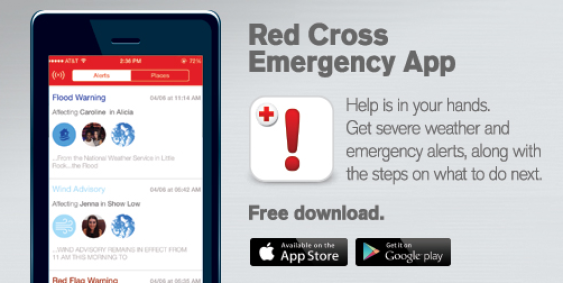
In the case of any storm or natural disaster event, it is important to have every tool at your disposal to keep you and your family safe. Download the Red Cross Emergency App FREE from your app store today.

Edited by Glenda Bogar, American Red Cross volunteer

How to keep safe this severe weather season

By Sam Pudelski, Red Cross volunteer

Now that it’s spring, the storms that come along with the season and summer months also arrive. While many rainy days are part of the season, Northeast Ohio usually experiences several severe weather events throughout the year. The American Red Cross has tips to help keep you and your loved ones safe when severe weather strikes.

Severe Weather Safety

If thunderstorms are likely to occur, postpone outdoor activities. Many people who are struck by lightning aren’t in the area of a storm where it is raining.

Watch for storm signs – these can include darkening skies, lightning and increasing wind. If thunder roars, head indoors! If you can hear thunder, you are close enough to be in danger of being stuck by lightning.

If a severe thunderstorm warning is issued for your area and arrives:
– Take shelter in a substantial building. If you aren’t near a building, shelter in a vehicle with the windows closed. Make sure to get out of mobile homes, as they can blow over in high winds.
– If you’re driving, make your way to safely exit the road and park. Stay in your vehicle and turn on the emergency flashers so other cars on the road can see you until any heavy rain ends.
If you are outside and are unable to seek shelter inside of a safe building or vehicle, avoid high ground, water, tall or isolated trees and metal objects, such as fences and bleachers. Picnic shelters, dugouts, sheds and pavilions are not considered safe shelters.
Keep away from windows.
Don’t take a bath, shower, wash dishes or use plumbing.

If a tornado warning is issued for your area:
– Move to an underground shelter, basement or safe room. If none of these are available to you, moving to a small, windowless interior room or hallway on the lowest level of a sturdy building is the safest alternative.
Note: No area of a mobile home is safe during a tornado. If you have access to a sturdy shelter or a vehicle, move to this immediately.
– If you are able to, go to the nearest local emergency shelter.

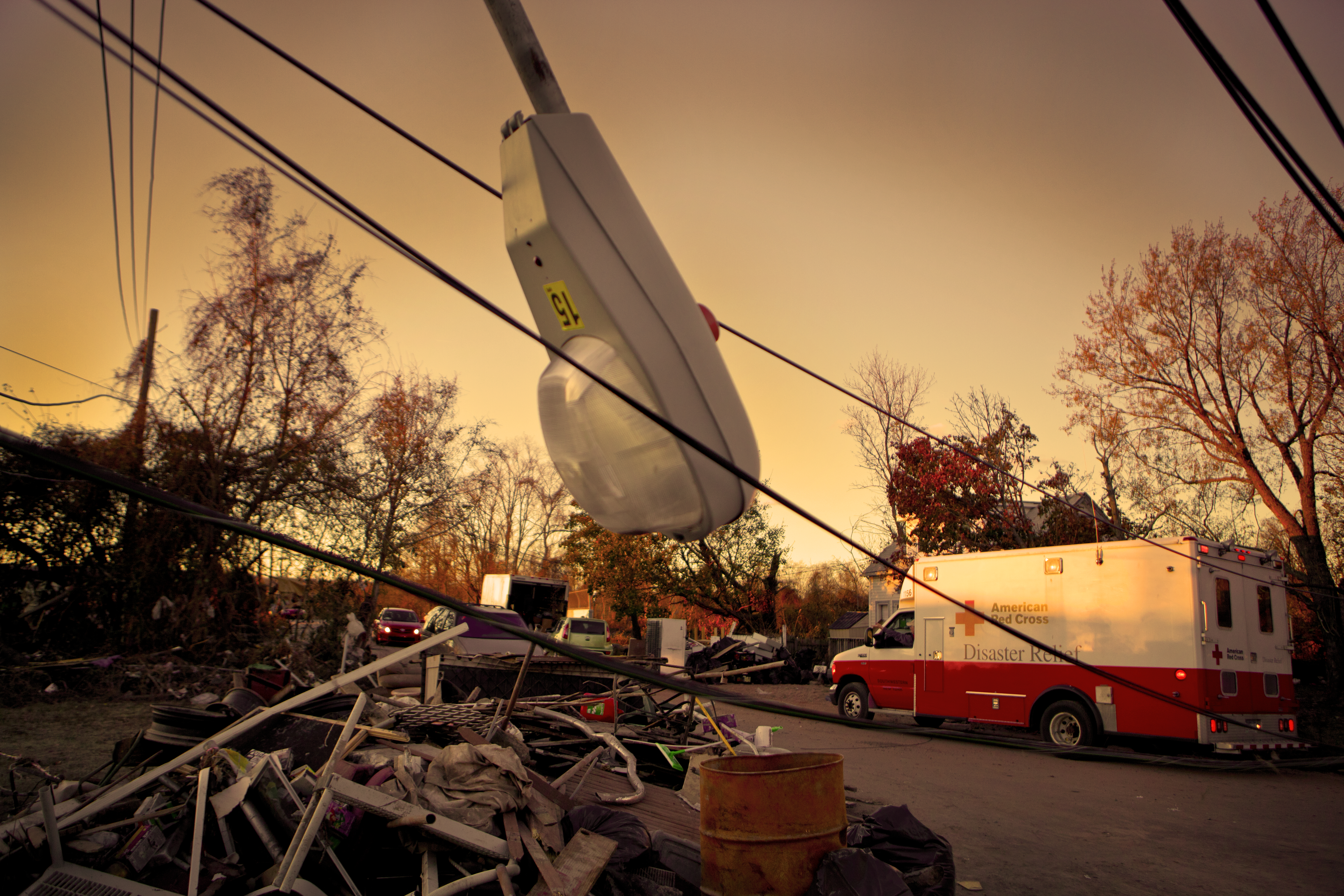
Superstorm Sandy 2012 November 5, 2012. Photo by Talia Frenkel/American Red Cross

If someone is struck by lightning:
– Call for help immediately. Call 9-1-1 or your local emergency number. Anyone who has been struck by lightning requires professional medical care. Check the person for burns and other inquiries.
– If the person has stopped breathing, call 9-1-1 and begin CPR. If the person is breathing normally, look for other possible injuries and care for them as necessary.
– People who have been struck by lightning do not retain an electrical charge in their body.

Flooding Safety
Flooding often occurs following a hurricane, thawing snow or several days of sustained rain. Flash floods, on the other hand, occur suddenly due to rapidly rising water along a stream, body of water or low-lying area.

If there is a flood risk in your area:
– Listen to local radio, NOAA or TV news stations for the latest updates and information about weather in your area.
– Be prepared to evacuate quickly if you need to evacuate. Know your routes and destinations ahead of time. Find a local emergency shelter.
– Check your emergency kit and replenish any items missing or that are in short supply, such as medical supplies and medications.

If you have pets or livestock:

  • Consider a precautionary evacuation of your animals, especially any
    large or numerous animals. Waiting until the last minute could be
    fatal for them and dangerous for you.
  • Where possible, move livestock to higher ground. If using a horse or
    other trailer to evacuate your animals, move sooner rather than later.
  • Bring your companion animals indoors and maintain direct control of
    them. Be sure that your pet emergency kit is ready to go in case of
    evacuation.

For more information on how to prepare and respond in a severe weather emergency, visit redcross.org.

Edited by Glenda Bogar, Red Cross volunteer

Weekend disaster responses include helping people affected by flooding

Jewett Flooding

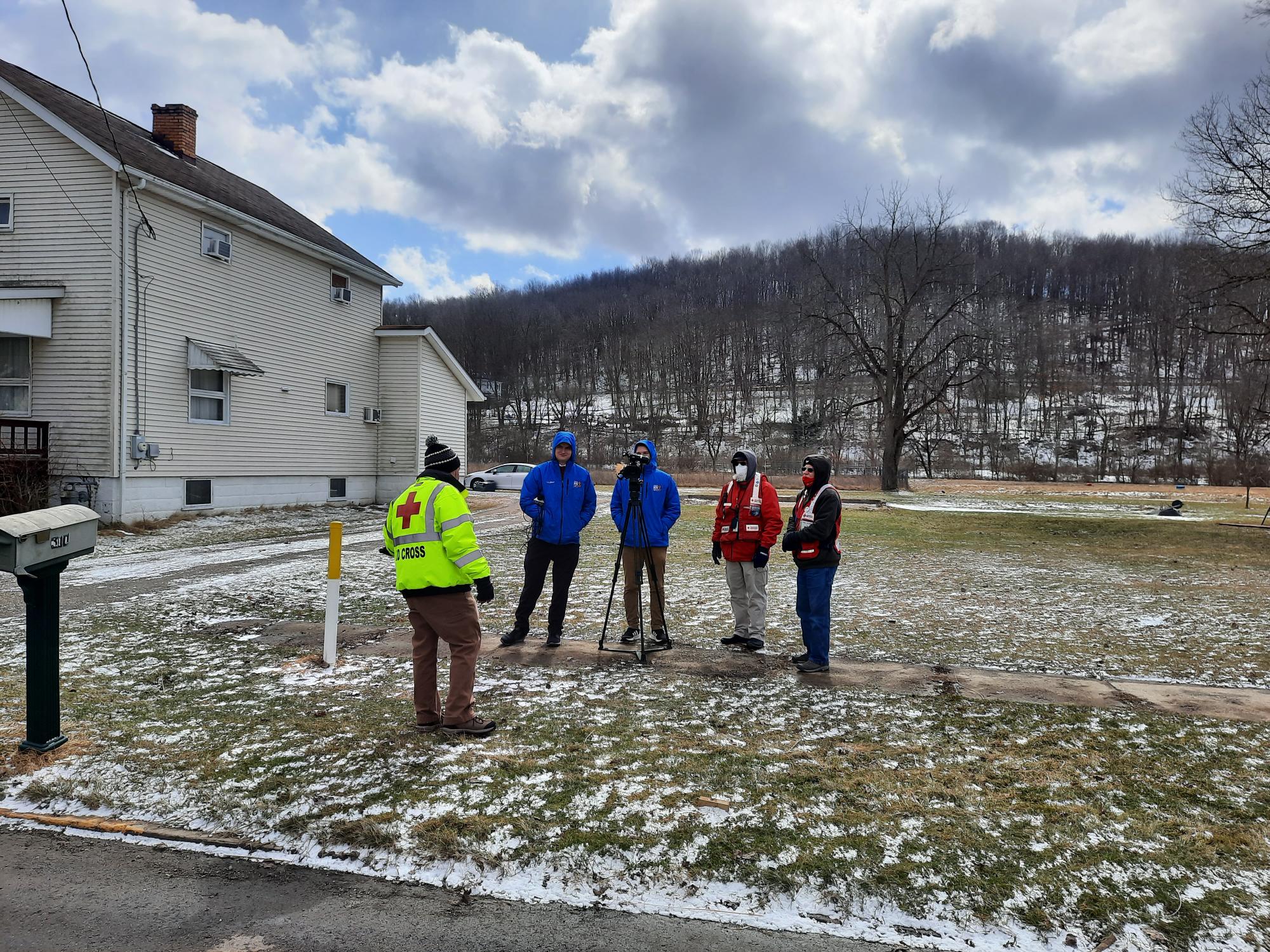
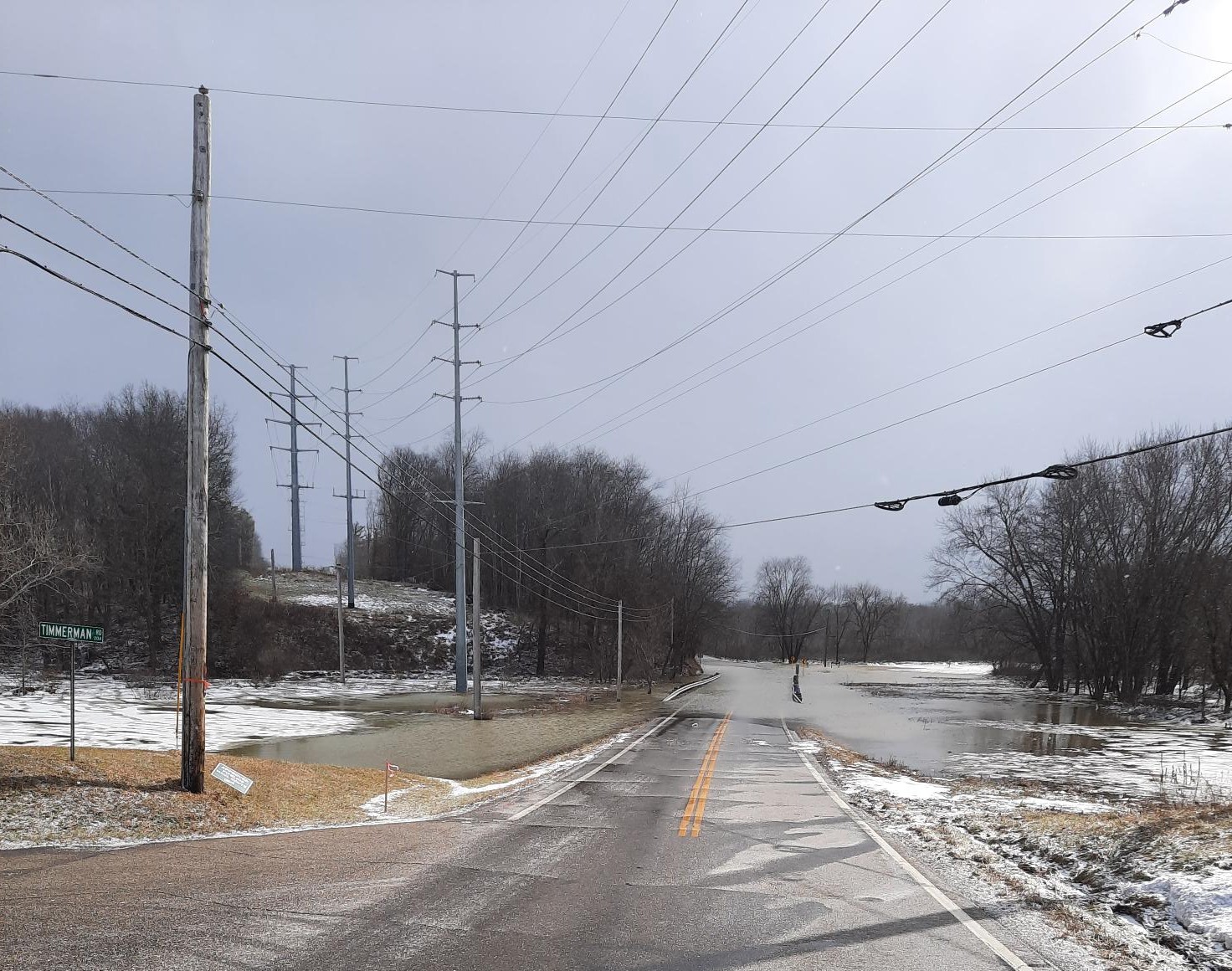
Flooding during the President’s Day weekend kept some Red Cross disaster workers busy across the Northern Ohio Region. Heavy rains in some parts of the region, along with melting snow caused flood damage that brought a Red Cross response to Lorain, Stark, Wayne and Harrison counties.

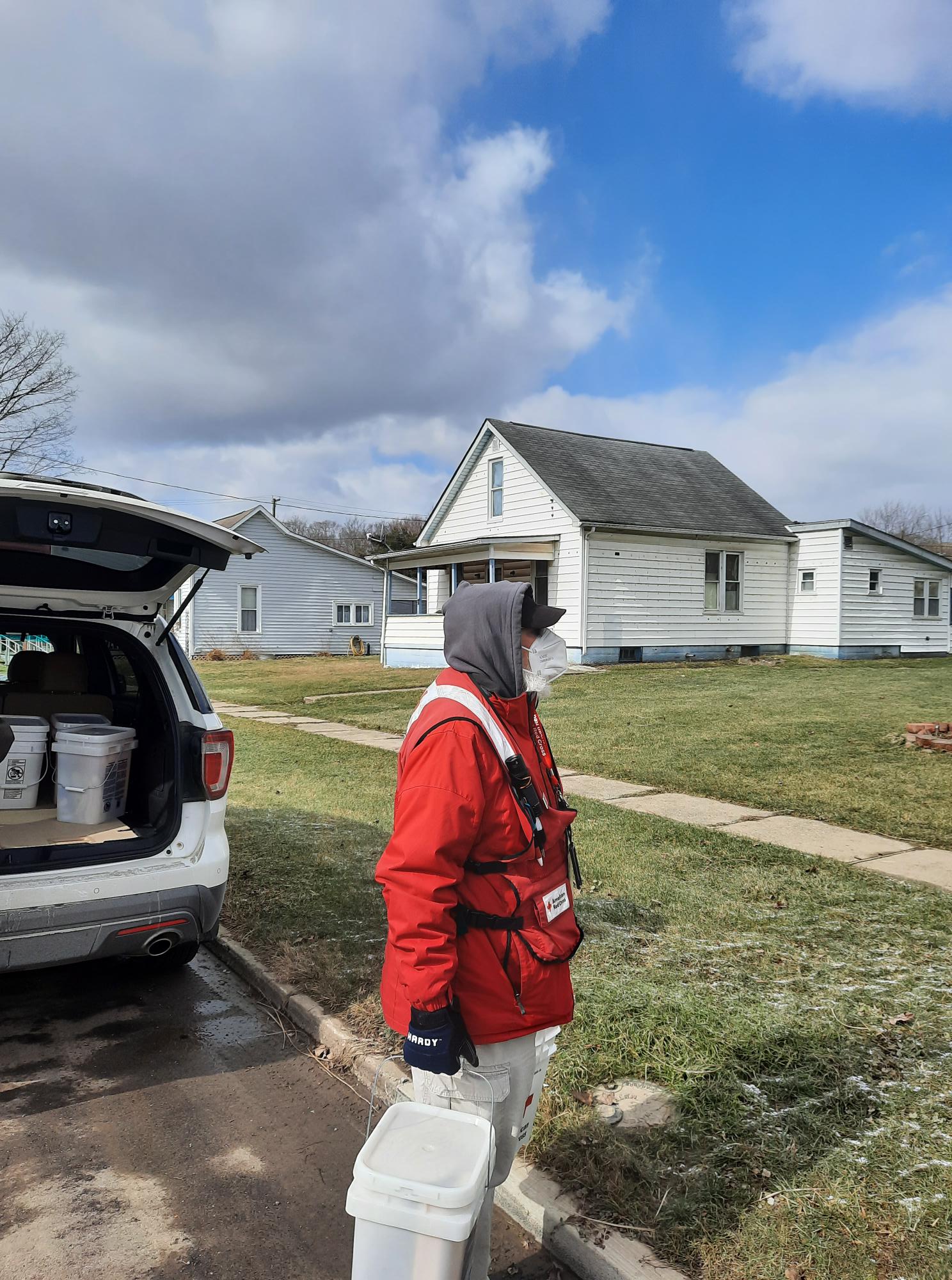
The village of Jewett in Harrison County was especially hard hit. Red Cross disaster program managers Tim Reichel and Mike Arthur were accompanied by volunteers Dan Best and Arden Tohill on Saturday, when they distributed clean-up kits to nearly two-dozen affected residences.

Jewett Flooding

“Those buckets have everything they need to get a good start,” Tim said during an interview with WTOV 9 news. “They’ve come out of their homes, they’ve welcomed us, we’ve gotten a few hugs along the way,” Tim continued. “It’s what we do and it’s a pleasure to do it.”

Weekend responses also included home fires in Cleveland, Akron, Wooster, and Masury, Ohio in Trumbull County. More than 60 children and adults received Red Cross assistance throughout Northern Ohio.

February has been a very busy month for Red Cross Disaster Action Teams. Responses are up more than 30% over February of 2021, and Red Cross caseworkers are continuing to help hundreds of people find a path to recovery.

While President’s Day is a federal holiday, the Red Cross remains ready to respond to emergencies, today and every day of the year.

“While many will be relaxing with family and friends, our teams remain vigilant,” said Tim O’Toole, Regional Disaster Officer.

Jewett Flooding

If you’d like to help neighbors in need following a home fire, flooding or some other disaster, visit redcross.org/volunteer to apply for a spot on our Disaster Action Teams. The Red Cross is also in need of trained medical and mental health professionals to assist people following disasters big and small. A virtual information session for licensed healthcare and mental healthcare providers will be held this Thursday, February 24, from 12:00 to 1:00 pm. To RSVP for this event, email neovolunteer@redcross.org, or call 216-431-3328. A Microsoft Teams meeting link will be emailed to you prior to the event. A conference call option will also be available.

First day of Fall brings heavy rain, a good time to brush up on flood safety

Red Cross offers important tips to prepare for and stay safe in a flood

In case you couldn’t tell by the gray skies and falling temperatures, today is the first day of Fall! And, in typical Northeast Ohio fashion, Fall is kicking off with predictions of heavy rainfall and damaging winds over the next few days. While our area is often protected from some of the most severe natural disasters, such as hurricanes and wildfires, flooding is a disaster everyone should be aware of and prepare for. Many people don’t realize, floods are among the most frequent and costly natural disasters.

As with any emergency, being prepared before disaster strikes is the most important step.  Assemble an emergency preparedness kit, create a household evacuation plan that includes your pets, stay informed about your community’s risk and response plans and ensure your family members know how to get back in touch if you are separated during an emergency. We also recommend downloading the American Red Cross emergency app which lets you monitor more than 35 different severe weather and emergency alerts.

When it comes to flooding, it’s also important to make sure you have access to a NOAA radio broadcast. These are available online or through apps you can access in the Apple Store or Google Play. You can also purchase a battery-powered or hand-crank NOAA radio in the Red Cross Store. It’s also important to find out about the area you live in and how it can be affected by flooding, specifically related to flood insurance. If where you live is prone to flooding, there are also steps you can take to protect your physical home.

When flooding is predicted, it’s also important to understand the warnings that officials share. A flood/flash flood WATCH means a flood or flash flood is possible. A flood/flash flood WARNING means flooding or flash flooding is already occurring or will occur soon and you should take immediate precautions. Once flooding has begun, the Red Cross recommends the following steps to ensure you and your family stay safe.

  • Even a small amount of water is enough to sweep you off your feet or your vehicle off the road. If you come across a flooded area, turn around and go another way.
  • Identify at least two safe ways out of your neighborhood, should you need to evacuate. When a flood or flash flood warning is issued for your area, head for higher ground and stay there.
  • Return home only when officials have declared the area safe. Do not use water that could be contaminated to wash dishes, brush teeth, prepare food, wash hands, make ice or make baby formula.
  • Never use a generator, grill, camp stove or other gasoline, propane, natural gas or charcoal-burning devices inside a home, garage, basement, crawlspace or any partially enclosed area. Locate unit away from doors, windows and vents that could allow carbon monoxide to come indoors.

When a flood occurs, the Red Cross is there to help with shelter, food and comfort. If you would like to help those affected by floods and other disasters, consider becoming a volunteer or making a financial donation.

Back-to-back disasters require nationwide Red Cross response

More than a thousand volunteers deploy to help those affected by wildfires, Hurricane Ida and flooding

Back-to-back massive disasters have more than 1,200 American Red Cross volunteers, including 32 from Northern Ohio, working tirelessly from coast to coast right now providing food, shelter and comfort to thousands of people in need. We are working around the clock with our partners to provide help to people struggling with the heartbreaking damage left behind by Hurricane Ida.

The Red Cross is working to provide help to people struggling with the massive flooding caused by the remnants of Hurricane Ida. Wednesday night, some 430 people sought refuge in 13 Red Cross and community shelters across Virginia, Maryland, Pennsylvania, New Jersey and New York. Some 130 trained Red Cross workers are on the ground now to support relief efforts. The Red Cross and its partners have already provided some 1,300 meals and snacks and distributed more than 100 relief items. Trained Red Cross volunteers have already made nearly 100 contacts providing emotional support, health services and spiritual care for people who’ve been evacuated.

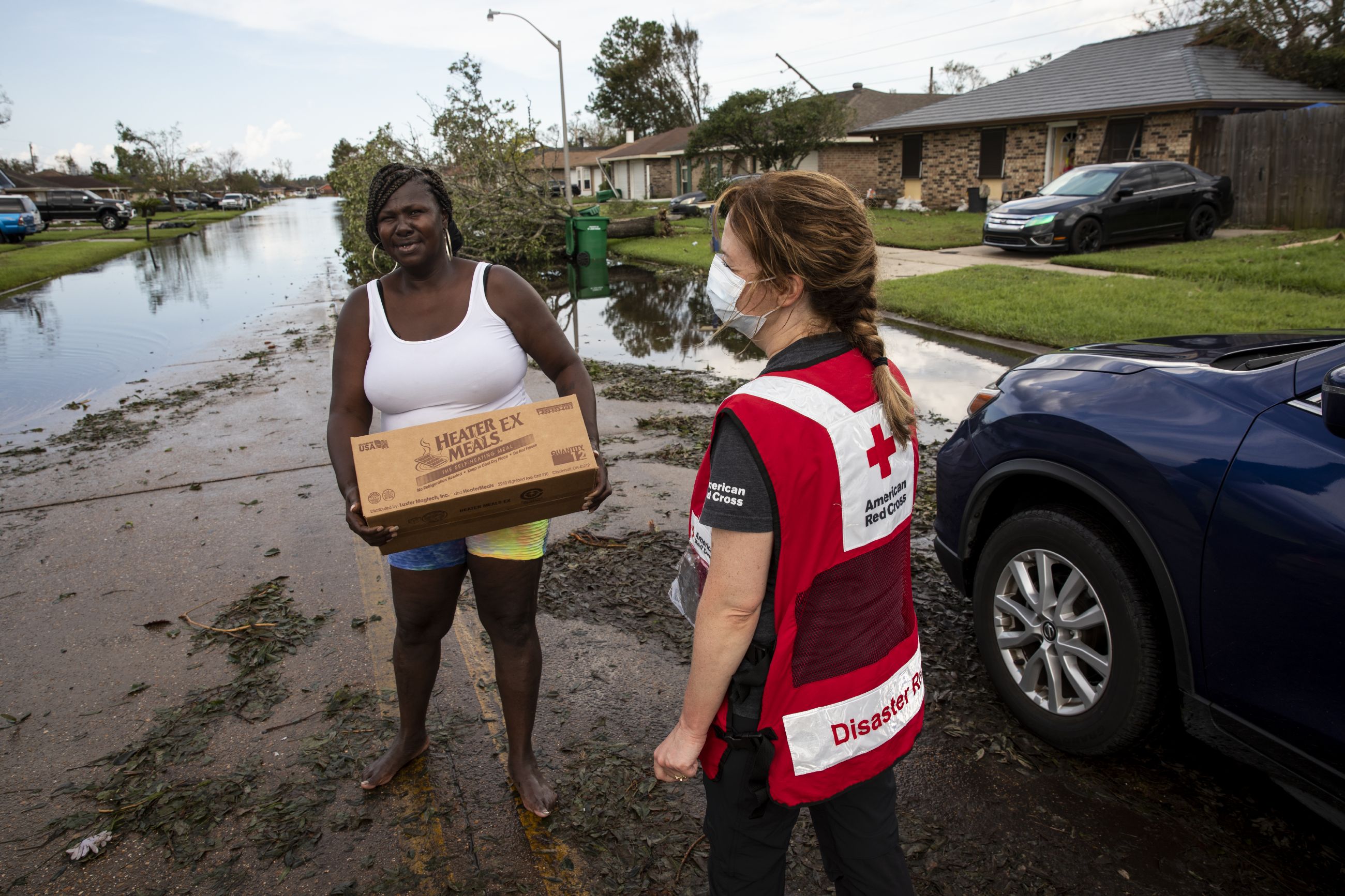
Wendy Halsey of the American Red Cross hands boxes of Meals Ready to Eat (MRE) to Cassandra Simon in LaPace, LA, one of the areas of Louisiana which suffered extreme damage from Hurricane Ida. Photo by Scott Dalton/American Red Cross

While massive flooding affected many states in the northern U.S., many southern states continue to deal with the aftermath Ida. Nearly 900 trained Red Cross workers are on the ground now to support relief efforts. The Red Cross and our partners have provided nearly 51,000 meals and snacks and distributed more than 16,000 relief items to people in need.

And, in the midst of responding to Hurricane Ida, the Red Cross continues to help people in California where tens of thousands of people are under evacuation orders as massive wildfires continue to spread. Red Cross workers have been on the ground since June helping evacuees find a safe place to stay, food to eat and emotional support during this heartbreaking time.

Red Cross volunteer Dave Wagner looks over damage from the Dixie Fire in Greenville, CA, a small town that was devastated by the fire on Saturday, August 7, 2021. Photo by Scott Dalton/American Red Cross

The Red Cross expects to respond to more disasters in the coming months, as the season is only beginning. Financial donations enable the Red Cross to prepare for, respond to and help people recover from disasters. To give, visit redcross.org or call 1-800-RED CROSS.

Individuals in unaffected areas of the country are urged to make an appointment to give blood to ensure a sufficient blood supply remains available for patients. Schedule a blood or platelet donation appointment by using the Red Cross Blood Donor app, visiting RedCrossBlood.org or calling 1-800-RED CROSS (800-733- 2767).

The Red Cross needs more volunteers now. If you have the time, you can make a significant impact. Review our most urgently needed volunteer positions at redcross.org/volunteertoday.

Northern Ohio Region weekend disaster response report: July 17-18, 2021

Over the weekend, the American Red Cross was once again very active responding to calls across Northern Ohio and assisting residents who have suffered a local disaster.

IMG_5580

During the weekend of July 17-18, the Red Cross responded to 9 incidents across the region, including home fires and flooding. The disaster team assisted 15 adults and 11 children, and provided more than $5,5000 in immediate financial assistance.

While many of us hear “disaster” and think of large events like wildfires and hurricanes, local disasters are where much of our response happens. In fact, every 24 hours, on average, the Northern Ohio Red Cross responds to three home fires, as well as floods and severe storms. Red Cross volunteers are on call and ready to respond 24/7 when a disaster strikes. After emergency personnel, these individuals are often some of the first people to be on scene at a disaster. They assess the victims’ needs and ensure they have food, clothing, shelter and other services to help take the first steps to recovery.

The Red Cross is committed to helping our community prepare for, respond to, and recover from emergencies. We are able to make a difference in our local communities because of the generosity of our donors and support of our volunteers.

If you would like to provide a financial donation to assist the Red Cross’ efforts to support the residents of Northern Ohio, visit redcross.org/donate, call 1-800-RED CROSS or text REDCROSS to 90999 to make a $10 donation. If you cannot support the Red Cross monetarily but you are interested in making an impact in your local community, the Red Cross is always looking for volunteers. To volunteer, visit redcross.org/volunteer to learn more and sign up.

Former stay-at-home mom now leaves home to help others

A volunteer profile will post here each day during National Volunteer Week

By Jim McIntyre, American Red Cross of Northeast Ohio

April 10, 2019 – Barb Thomas has left her home in Canton to help with disaster relief operations four times since joining the American Red Cross as a volunteer in 2016.

Barb Thomas III

Barb Thomas, on assignment in during the Hurricane Florence relief operation in North Carolina in 2018

“The kids are grown now, and I have the time,” Barb said, shortly after returning from her latest deployment in Mississippi, where she served as staff services supervisor for Red Cross workers assigned to help flood victims.

“We were responsible for the ‘good hello and good goodbye’ for the volunteers and staff who participated in the deployment, and for keeping track of all the members on deployment,” she said.

barb thomas

En route to Mississippi, 2019

Barb has deployed to southern Ohio, where flooding occurred last winter. She also left last fall to help with the relief effort following Hurricane Florence in North Carolina. A year before that, she responded to Hurricane Irma in Georgia.

The bulk of Barb’s volunteer work occurs closer to home, where she helps administer all facets of disaster cycle services. “I have assisted in a presentation to get people signed up for smoke alarms and have installed smoke alarms in homes,” which covers preparedness.  Response-wise, “I have been to numerous home fires, supported the fire department by providing canteening services, and worked in a shelter,” she said. “And I assisted in recovery with casework.”

But the time she has spent in other parts of the country to help those affected by disaster has made an impression on the former Human Resources professional.

“I have met some incredible people who have an amazing dedication to volunteering with the Red Cross,” she said. “They are client-focused and willing to pitch in wherever and whenever necessary.”

“Barb Thomas is a breath of fresh air, adding positive energy to our chapter,” said Kim Kroh, executive director of the Stark and Muskingum Lakes Chapter. “She is a true leader who is valued greatly by the staff and by other volunteers.”

When asked what she would say to encourage others to volunteer for the Red Cross, Barb said, “If you are interested in positively impacting individuals and your community, the Red Cross is an excellent organization. I have had direct contact with the public and individuals in need.”

She added, “It feels good to be part of an organization that supports the community on such a personal level.”

Barb Thomas IV

Red Cross workers headed to Georgia in response to Hurricane Irma in 2017.  From left: John Muni, Barb Thomas, Tim Reichel, Craig Hitchcock, and Mark Behlke

To become a Red Cross volunteer, visit redcross.org/volunteer or call 216-431-3328.

Edited by Glenda Bogar, American Red Cross volunteer