Residents still recovering after back-to-back July storms

By Jim McIntyre, American Red Cross volunteer

Early afternoon, July 5, 2026: Canfield Township in Mahoning County is hit with a powerful one-two weather punch – first, a tornado with estimated peak winds reaching 95 miles per hour. Then, as the National Weather Service website states, “As the tornado cycled out across the region, a significant rear flank downdraft formed and increased in intensity, causing substantial straight-line wind damage across a larger portion of Mahoning County. Winds up to 90 mph caused extensive tree, power pole, and power line damage…”
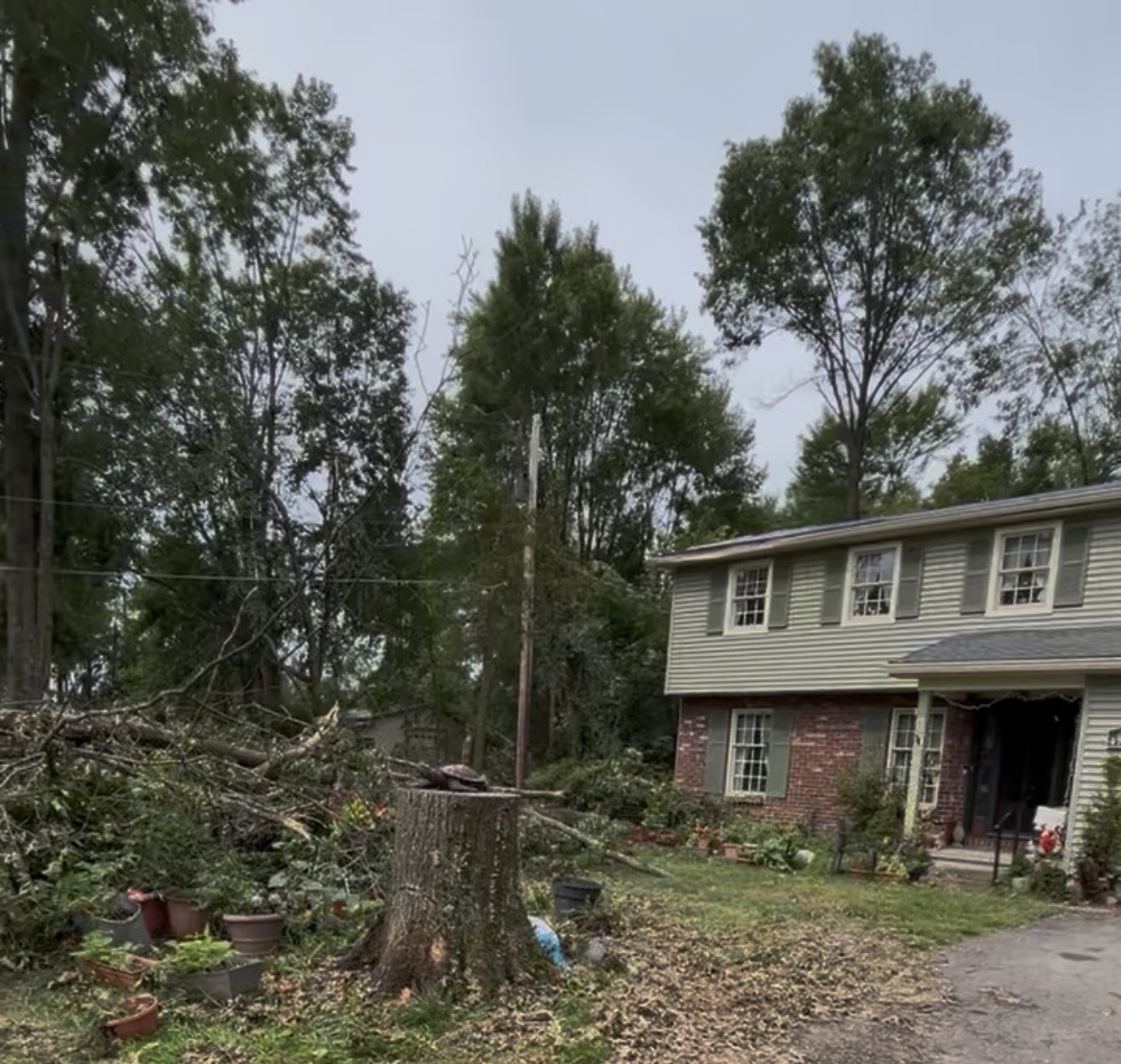
The NWS labeled this storm a macroburst.

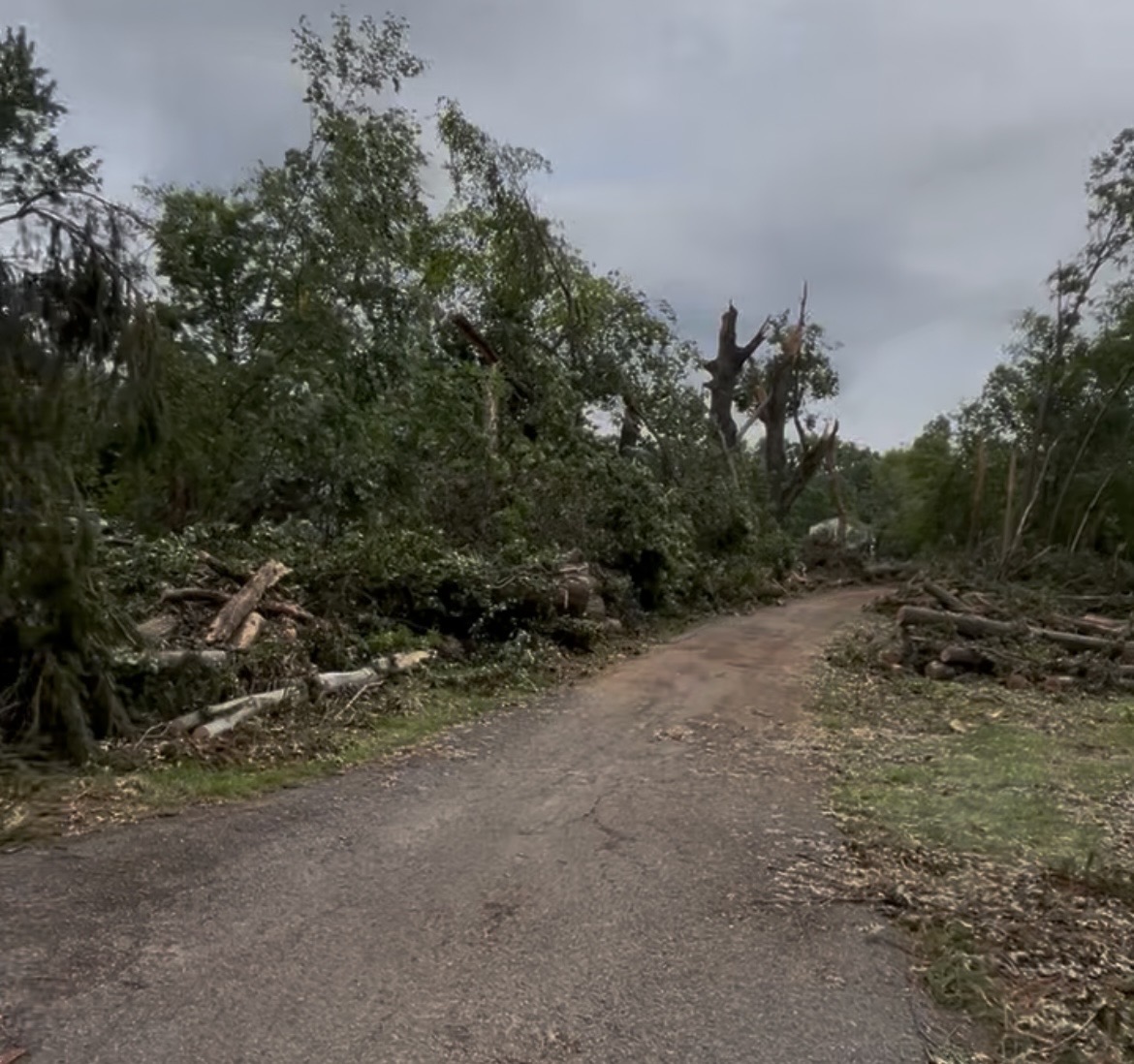
While the initial tornado is described as short-lived, having spent about a minute on the ground, the powerful straight-line winds that immediately followed lasted more than thirty minutes, and toppled nearly a thousand trees, according to the NWS estimate.

At least two-dozen of those trees fell on and around the home of Thomas and Sandra Treleven.
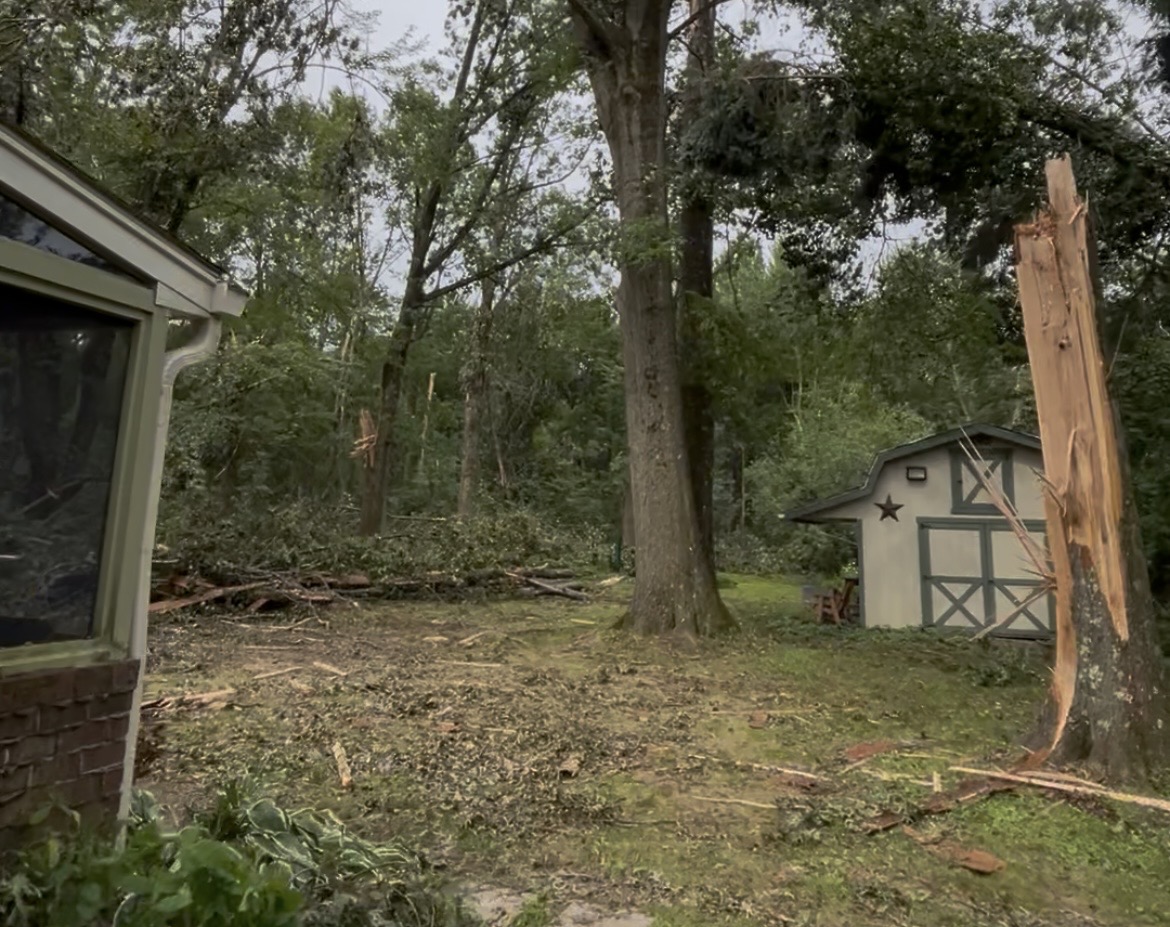
“Every tree was down. It was just unbelievable,” according to Lisa Friend-Timko, an American Red Cross disaster responder who showed up the next day to offer help to residents who were affected by the storm.

And no one needed more help than the Trelevens. 

Fallen trees blocked access to the house and driveway, and while the storm damage created chaos outside, there was another crisis inside the Treleven home; Thomas had suffered a seizure the day before the storm, and was unresponsive. 

“I was like a walking zombie,” said Sandra. 
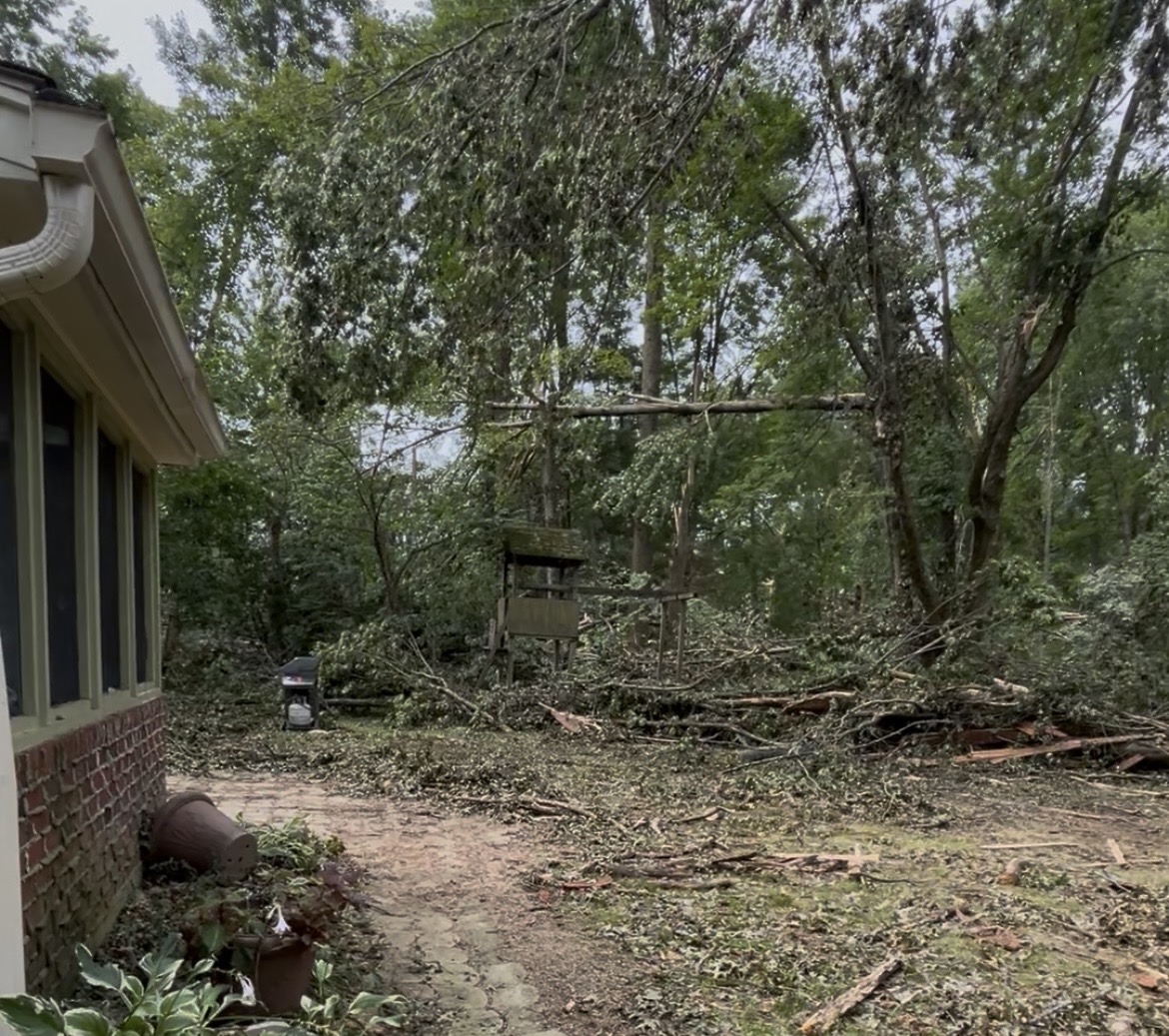
Lisa credits community mobilization for helping the Trelevens and others who were affected by the storm.  She said volunteers with Southern Baptist Disaster Relief worked with the Mahoning County Emergency Management Agency to cut and carry away the fallen trees.

“It was astounding, what they did,” she said, noting how volunteers worked continuously in blistering heat. She said Catholic Charities, the United Way and Team Rubicon also offered assistance, in addition to the financial help provided by the Red Cross. 

More than two months after the storm, the Trelevens are still trying to repair the roof damaged by one of the trees that fell on the home they built 54 years ago. And Sandra is saddened, seeing stumps where so many old, healthy trees once provided shade and beauty in their yard.  But her outlook remains positive. She said her husband regained consciousness the day after the storm.
“Everything will be alright,” she said.

The Red Cross in Northern Ohio responds to more than 1,000 disasters annually, thanks to generous volunteers and donors, who provide the funding to help people like the Trelevens.

Click here to learn more about Red Cross disaster response, and how you can help.

National Preparedness Month: Prepare now for disasters

By Eilene Guy, American Red Cross volunteer

September is National Preparedness Month and one of the pillars of the American Red Cross is helping us prepare for emergencies. Disasters. The unexpected!

Here in northern Ohio, we’re used to seasonal threats: snow and ice storms, thunderstorms and flooding, the occasional tornado alert and rogue straight-line winds that seem to come out of nowhere. Even extreme heat and power outages.

And, of course, home fires. About 90 percent of the emergencies that Red Cross volunteers respond to are home fires.

During the 12 months ending June 30, across northern Ohio alone, we responded to 1,123 disasters, helped 4,428 children and adults, and provided $1.2 million in financial assistance.

Sadly, three of those events were manmade disasters, in quiet residential neighborhoods. Remember the small plane that crashed into a house in Akron back in May? That house burned to the ground.

Or how about the gas line explosion that destroyed three homes and displaced 15 families in Twinsburg in July?

“I’m on the second floor and all my windows blew out. All I have is my phone, and myself,” a resident told a TV reporter in the aftermath. Red Crossers stepped in to help with shelter arrangements and funds for immediate needs in that neighborhood.

For years, the Red Cross has urged everyone to “Make a kit. Have a plan. Be informed.”

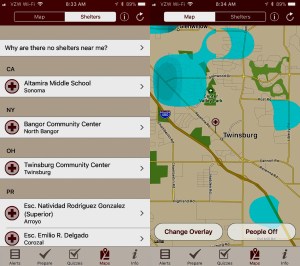
All sound advice, but there’s one thing we can all do right now that’s easier, quicker and cheaper: Download the free Red Cross Emergency App to your mobile phone. This resource links you to weather alerts, preparedness tips, even the location of shelters should that be needed.

The app even lets you send an “I’m safe” message to anyone you want to reassure if you happen to be in the vicinity of a disaster.

Put together a “go bag” of supplies you’d need if you had to shelter in place or evacuate on short notice: bottled water, non-perishable food items, flashlight and extra batteries, first aid kit and seven-day supply of medications (or at least copies of your prescriptions).

This is just for starters. Find a complete list at redcross.org.

And don’t forget items for anyone in the household with special needs, like a baby, or a pet!

Make a plan with your family. Does everybody know how to get out of the house in case of fire, for example? And can they do it in three minutes or less? Agree on a place to meet outside the home, so firefighters don’t have to go looking for someone inside. While you’re at it, be sure everyone in the household has family or friend phone numbers in their mobile phone; and be sure children know a parent or guardian’s phone number.

Be informed. Learn the location of storm shelters you can get to if a tornado threatens. Download free emergency alerts from your local law enforcement and Emergency Management Agency. They’ll be the first to let you know about everything from a road closure to a catastrophic event.

And take first aid and CPR/AED classes from your local Red Cross, so you’ll know how to save a life at home or on the go.

My husband says failing to plan is the same as planning to fail. Planning to deal with an emergency isn’t the same as wishing for one to happen. Planning is preparedness, and there’s no better time to do it than NOW!

For more preparedness tips, go to redcross.org and search the key words “disaster preparedness.”

Edited by Glenda Bogar, American Red Cross volunteer

Non-stop disasters – non-stop responses

Regional Red Cross executive reflects on most recent deployment

By Todd James, Executive Director, American Red Cross of North Central Ohio

Todd James in Iowa, June, 2024

I recently returned from a disaster relief operation in southwest Iowa, an area devastated by massive flooding in June. You’re probably trying to remember if you had heard about flooding in Iowa. You probably did, it was big news for a few days. But as is always the case, something else happened and the news moved on to cover the story of the day. Well, the cameras and reporters may have moved on, but for the people of Siouxland, as they call the region, moving on will be a long, hard process. I am so proud of the American Red Cross responders who left their own homes, jobs and families to rush into the devastation to offer shelter, comfort and hope, and I am honored that I had the opportunity to serve with them.

A month after the flood waters receded, with the help of the Red Cross, the community was able to focus on long-term recovery. What does that look like? It’s different for every family but all will need the help of many partners, non-profits, governmental agencies and the business community, working together. Our Red Cross long-term recovery team will continue to collaborate with these partners, helping and guiding them on how to come together to best serve those on the road to recovery.

The Red Cross is responding to nearly twice as many large disasters as we did a decade ago to help families and communities struggling with more frequent and intense disasters. In 2023 alone, the U.S. experienced an all-time high of 28 billion-dollar plus disasters that ravaged communities and forced hundreds of thousands of people to flee from severe storms, floods and wildfires.

This was my 41st disaster deployment and I have seen first-hand how disasters are happening more frequently and causing more damage. There is no more down time between big disasters, time when our responders can catch their breath, come home and focus on the great work the Red Cross is doing in their community. Now we are constantly responding to these large-scale disasters, as well as the thousands of home fires, storms and other disasters that happen every day but don’t make the headlines.

To equitably meet the growing and unique needs of disaster-affected families and communities, the Red Cross is enhancing our large-scale disaster response and recovery services, expanding financial assistance, strengthening local partner networks, and growing our disaster workforce. This effort includes fortifying the critical infrastructure and technology that enables 24/7 response to disasters across the country.

The need to help during disasters has never been greater. Please, join us to provide
relief and hope when it matters most. Help people affected by disasters big and small,
including climate-driven crises, by making a gift to Red Cross Disaster Relief at
redcross.org or by calling 1-800-RED CROSS (800-733-2767). Our volunteers are at the heart of our mission and represent 90% of our workforce. Click here to sign up for opportunities to help. To help make sure your family and community are ready for a disaster before it happens, click here.

Posted by Ryan Lang, Red Cross board member and volunteer

“I Never Thought I’d Be the One”

By Doug Bardwell, American Red Cross volunteer

Maybe it wasn’t a tornado, but the damage done in Twinsburg by random microbursts looked almost as devastating.  The most troublesome of all was the strike which knocked down a 30,000-volt power line on Liberty Road, along with six transmission poles.  4,000 Homes were plunged into darkness during the storm.

Upon hearing that First Energy estimated power wouldn’t be fully restored for three or four days, a Red Cross shelter was quickly established at the Twinsburg Community Center.  Cots were set up, snacks and warm drinks were available and best of all, it offered a place to warm up, as temperatures began to dip into the 20’s and 30’s.twinsburg shelter

“This is rather remarkable,” related one woman.  “I’ve been contributing to the Red Cross for years, assuming that the money would go to assist people; but now, seeing what you all are doing here, now I know for sure that my donations have been well spent.”

“Are you employees or volunteers?” That was a recurring question from many of those staying at the shelter.  When they found out that 90% of us were volunteers, the usual response was something akin to “Well, God bless you for all that you are doing.”

Carrying in two trays of sub sandwiches donated by the local Subway shop in Twinsburg, many people were pleasantly surprised to find that there was no charge for the meals served three times a day. And on hearing that Subway had graciously donated that meal, I’m certain that Subway is going to have a number of appreciative new customers in return.Shelter app

“I never thought I’d be the one receiving help from Red Cross,” said another. “I watched the big disasters in Texas and Puerto Rico unfold on TV; but never in my wildest dreams did I ever think I’d be spending a night in a Red Cross shelter. Thank you so much be being available and ready wherever you are needed.”

If you ever find yourself in a weather-related power outage, it’s easy to find the closest shelter to you by checking the Red Cross Emergency app available for iOS and Android phones.