The Red Cross and the Johnstown Flood 

A family story of survival 

By Liz Aslakson, American Red Cross volunteer

I’ve recently discovered a connection between my family and the Red Cross going back to the Johnstown Flood of May 31,1889 when Clara Barton’s Red Cross became a national life-saving organization whose efforts helped my great grandpa’s survival.  
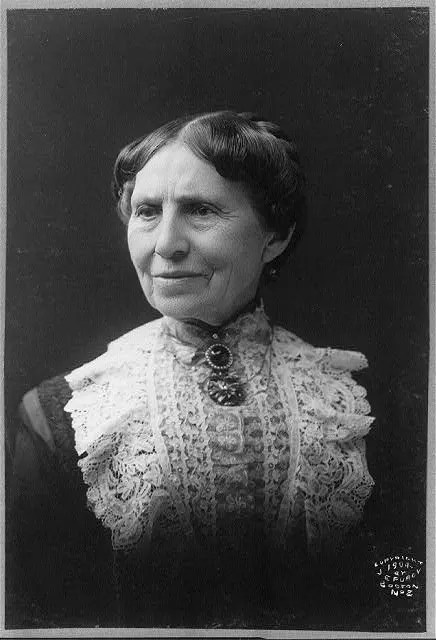
Clara Barton, Library of Congress

I thought my ties with the Red Cross began when I became a lifeguard at 15. My service continued as a young spouse volunteering at an Army clinic on an infantry base in Vilseck, Germany before becoming a part of the Northern Ohio Chapter when my husband retired.  

However, the personal link goes back further and has a more profound impact than I realized. Now that we’ve moved back to my childhood hometown, I’ve had more opportunities to research my family’s roots, especially after inheriting ancestral documents, including a memoir 

The family account written by my Great Uncle Andrew described life in Johnstown Pennsylvania at the turn of the 20th century and focused quite a bit on his dad, my Great Grandpa Stefan Furst. 

Though I heard family stories as a kid, I had vague notions of the immigrant experience during the turn of the 20th century when relatives from all sides of my family left Czechoslovakia.  

Like many migrants from Eastern Europe at the time, they first settled in the Appalachian Mountains outside of Pittsburg in Fayette and Cambria Counties. They worked in the coal mines before moving to Cleveland for better pay and working conditions in factories.  

My dad also told us kids his grandpa survived the Johnstown Flood and that his mother, Margaret, grew up under the constant threat of a disaster, as there were more floods after 1889.  
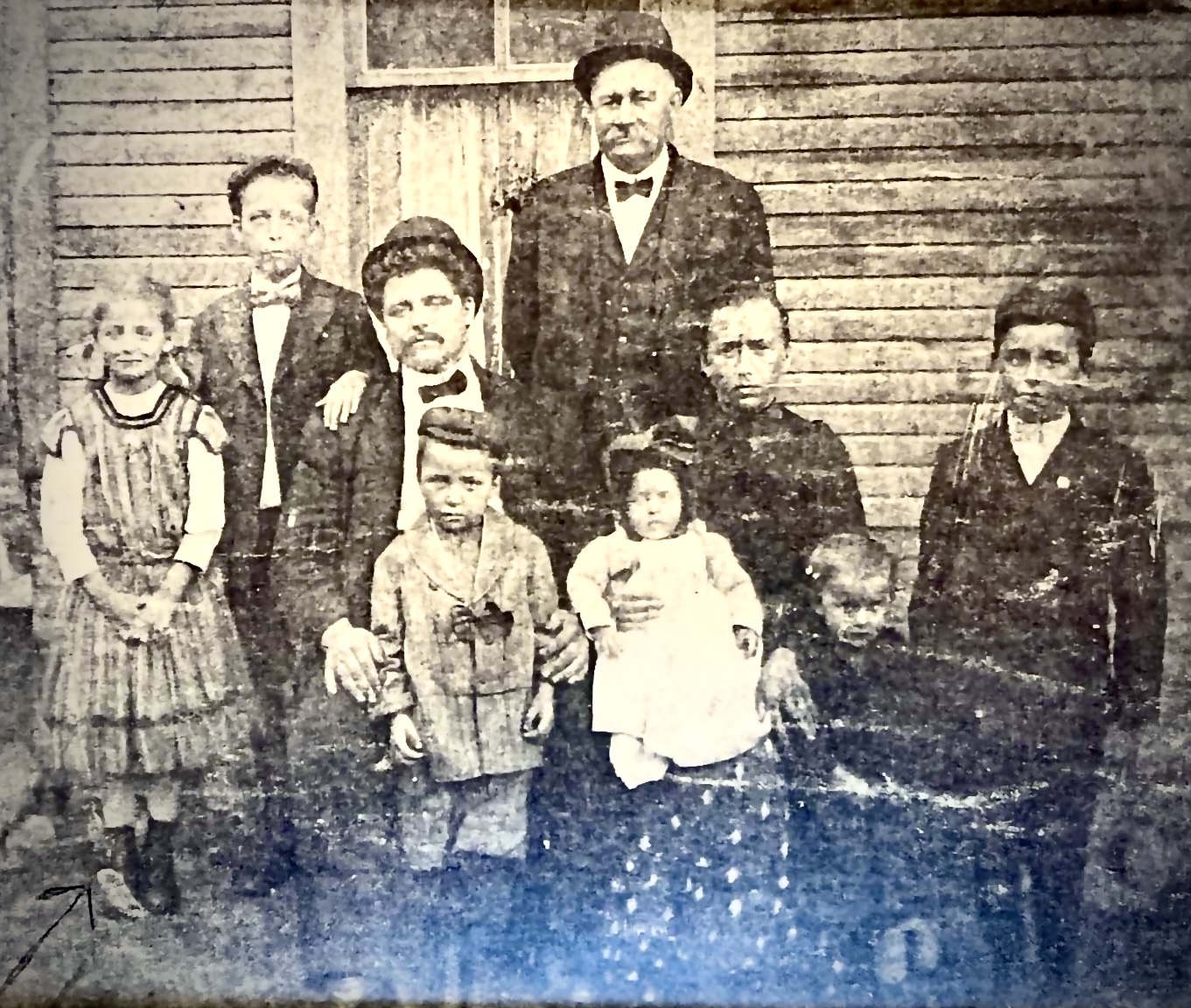
The Furst Family Johnstown, PA Stephen and Elizabeth sitting middle, Maragret and Andrew standing left

In my continued research online, I found out that my great grandpa arrived from Slovakia in 1884, at age seven. However, I couldn’t find records of parents or siblings that might have come with him. So, this summer I went to Appalachia using the paper trail left to me to uncover more information about where my family first lived in America. 

My first stop took me to Uniontown’s history room in Fayette County where a researcher pointed out a chair that Clara Barton had used when helping displaced people after the Johnstown Flood in neighboring Cambria County. Historic rains and the breaking of the poorly maintained South Fork Fishing Dam destroyed the city of 30,000, taking more than 2,200 lives. 

The “Angel of the Battlefield” from 25 years earlier during the Civil War was in her D.C. office when she learned of the horrific tragedy. At 67 years old, Clara Barton quickly gathered a team of 50 nurses and doctors, and with a load of supplies, arrived in Johnstown five days later. 

The Red Cross remained in Johnstown for six months, providing supplies, temporary shelter, medical care, reuniting families, and finding homes for orphans.  

My great grandpa was twelve at the time of the flood. If any other family members were with him, there are no indications of survival –just the account of his dad written by Andrew. 

In addition, not only were records destroyed, but in the wake of devastation, “journalists” falsely accused immigrants of looting which resulted in vigilante violence and lynchings. From resources I read like David McCullagh’s book, The Johnstown Flooddetailing the immigrant experience in the flood’s aftermath, I imagine my own remaining relative laid low.  

Nevertheless, my great grandpa did make it out alive due to the Red Cross and other relief efforts assisting anyone in need, regardless of their ethnic derivation.  

As I stood in the Uniontown library this summer, looking at the chair, it dawned on me that my great grandpa likely stood in front of Clara Barton as she sat on that simple wooden seat, providing him food and shelter as she did for 1000’s of other destitute people after that flood. 

In the following years, my great grandpa lived in a neighboring town. But once he turned 18, he moved back to Johnstown when he met his wife, Elizabeth, and they went on to have six kids. 

Additionally, though he worked in the coal mines for a few years, the citizens of Cambria County elected my great grandpa constable, often times a lifetime position. He then worked for his community until his sudden death in 1916 at the age of 38.  

A couple of years later, my Great Grandma Elizabeth remarried a widower and soon after they moved to Cleveland’s Slavic Village with their children. My Grandma Margaret and Great Uncle Andrew also went on to have their own families, with Andrew living to 100 years old. 

Although my great grandpa had a short life, he lived through tremendous change and survived devastation with help from people like Clara Barton. 

In sum, though my writing involves historical research, this family project has further opened my eyes to the significance of details and numbers when reading old documents, as well as the relief efforts associated with major tragedies.  

I not only understand how the Johnstown Flood became the impetus of the Red Cross becoming an international relief organization but have gained a deeper gratitude for all individual relief efforts 136 years ago as they ensured my family’s survival. 

I also feel more fortunate to be part of the organization that saved my great grandpa. From working in that little clinic in Germany as a new Army wife to my hometown of Cleveland as part of the Service to Armed Forces, I’m proud to be a Red Cross volunteer.  
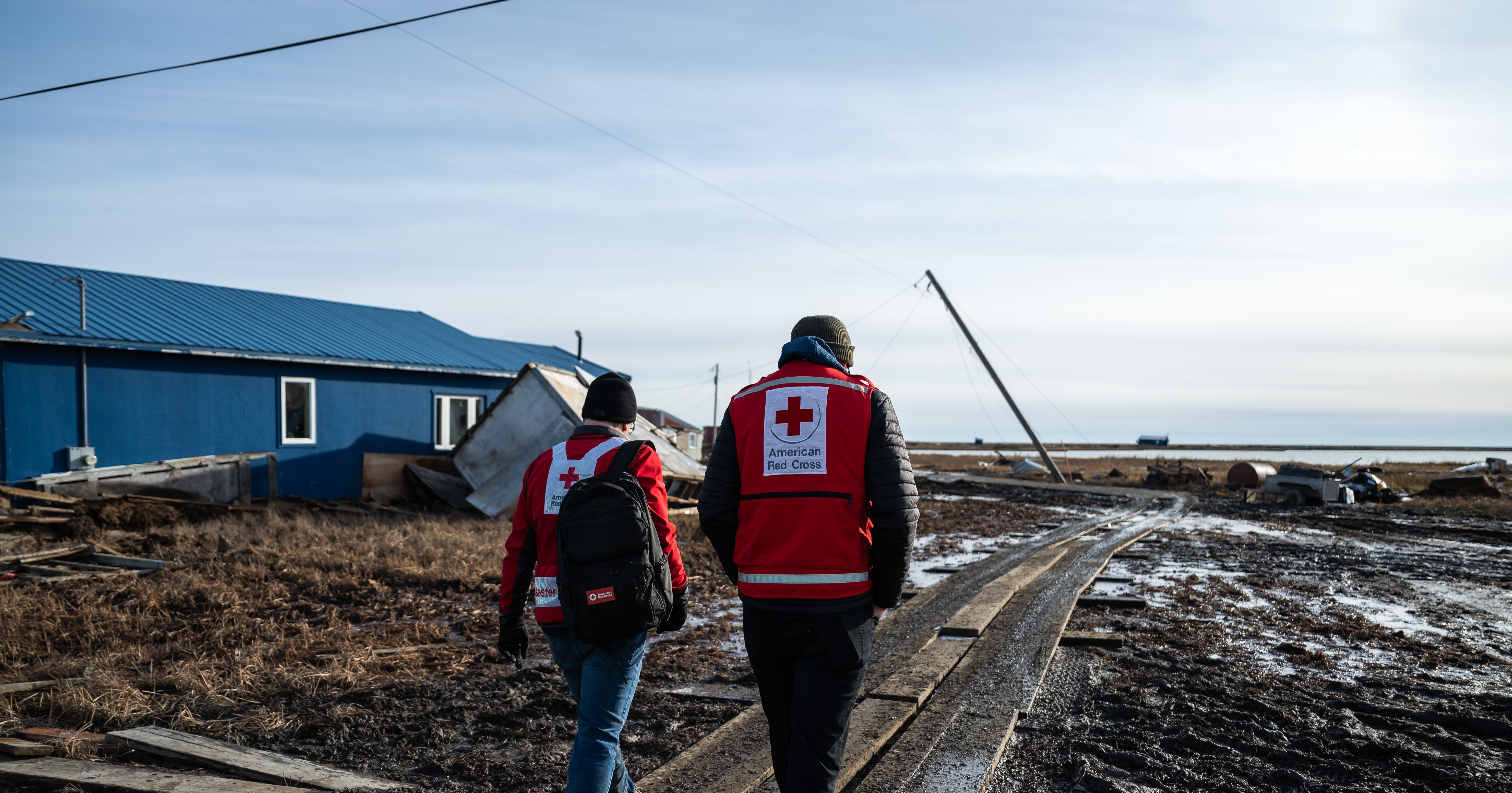
Typhoon Halong: Alaska’s untold story

By Ryan Lang, American Red Cross

Telling Alaska’s story

On Friday, October 17, 2025, I said goodbye to my wife and my two young sons before leaving for Alaska for two weeks. As I texted other family and friends about my deployment, there was one response I saw more than any other: “What happened in Alaska?” Of course I knew, it was my job to know, but most of the rest of the world hadn’t heard. Alaska’s story hadn’t been told.

October 19, 2025. Kipnuk, Alaska. Red Crosser Dale Kunce in the heavily-damaged village of Kipnuk, on Oct. 19, 2025. The Red Cross is helping in Alaska as officials stage one of the largest airlifts in the state’s recent history, evacuating entire villages that were left in ruins last weekend by Typhoon Halong. We are working with state, tribal, local officials and partners to support the evacuees who are being flown to shelters in Anchorage, where they will find a safe place to stay, food, emergency relief supplies, emotional support and health services. Hundreds of Red Cross disaster workers from across the country are being deployed to help during what could be a prolonged relief response with access to some villages cut off and others left uninhabitable as Alaska’s winter sets in. Photo by Scott Marder/American Red Cross

The early morning of October 11, 2025, the remnants of Typhoon Halong devastated indigenous villages along the west coast of Alaska. Hundreds of residents, primarily from Kipnuk and Kwigillingok, were evacuated – first airlifted to Bethel, where the U.S. Army National Guard established a transitional shelter, and then flown to Anchorage on a military C-130 plane. Residents left behind their homes, or what was left of their homes, their valuables, mementos, even their pets. They left behind everything.

In Anchorage, the American Red Cross established two shelters – one at the Alaska Airlines Center at the University of Alaska Anchorage (UAA) and another at the William A. Egan Center downtown. Residents of these villages moved into their new temporary homes, uncertain what was next.

“I still can’t believe we lost our place,” said Gilbert Amik, speaking of his home in Kipnuk that was washed away in the storm. “But help is here… We will move forward from here.” For Gilbert, a big part of that help was Red Cross volunteer Deb Blaze, from California. She and Gilbert built a special bond over the time Gilbert and his mother, Carrie, had been staying at the shelter at UAA.

Red Cross volunteer Deb Blaze hugging Gilbert Amik, resident of the village of Kipnuk in Western Alaska, who was evacuated, along with his mother, in the wake of Typhoon Halong. Photo by Ryan Lang/American Red Cross

“It makes me feel good,” Gilbert said, expressing gratitude for the help he and his mother received, specifically from his new friend. Deb said, “It was a special bond. It was like we were supposed to meet.”

Gilbert and Deb’s story was just one of countless inspirational anecdotes that came out of the tragic storm. The people I spoke with during my two-week deployment were resilient, strong, kind, and faithful – both the residents and the Red Crossers.

I met a young girl, just nine-years-old, who despite losing her home brought so much joy to others in the shelter. I met a volunteer from Alaska who carried around a Yup’ik bible with her for days, just so she could get it to a resident who requested it. I met a tribal elder from the village of Kipnuk who spoke to the younger generation about faith, hope, and strength. I met a group of people who made me want to be better, and I’ll continue to tell their story.  

Alli’s first Red Cross deployment story

Alli Katterheinrich on her first Red Cross deployment in Anchorage, Alaska, October 2025.

Alli Katterheinrich is a Regional Philanthropy Partner for the Red Cross of Northern Ohio. She deployed to Alaska as part of the Special Public Outreach Team, telling the story of people directly impacted by Typhoon Halong.

“I got the call on a Tuesday and was on a plane the next day,” Alli said. “It was a lot to process,” she said, talking about wrapping her head around her first deployment as a Red Crosser and being thousands of miles away from home.

The time difference was a challenge for Alli, who said sometimes it was difficult to get in a phone call with her husband. The darkness was another challenge. “I’m a morning person and I get up early, but the sun doesn’t come up until 9 a.m. here, so even that was a major adjustment,” she explained.

But it was the residents’ stories that helped, Alli said. “I spoke with so many village residents who took me through their entire experience,” she said, “from being airlifted from their homes to their time in our shelters. I feel very fortunate that they feel comfortable enough to share their stories with me.”

“So much of it was organic,” Alli said. “People would see me sitting, wearing my Red Cross vest, and they would come up and start talking to me and telling their story.” And for Alli, me, and so many others I spoke with, it was those conversations and that storytelling tradition that was so cathartic. And it is the stories that we will carry with us.

A Northern Ohio story

Being thousands of miles away from your home for weeks, sometimes longer, can be hard on a Red Cross volunteer. You miss your family, your bed, your morning routine… You miss a lot. But it’s the friendly faces that make it a lot easier. “There were so many other volunteers from Northern Ohio,” Alli said, “and that helped.”
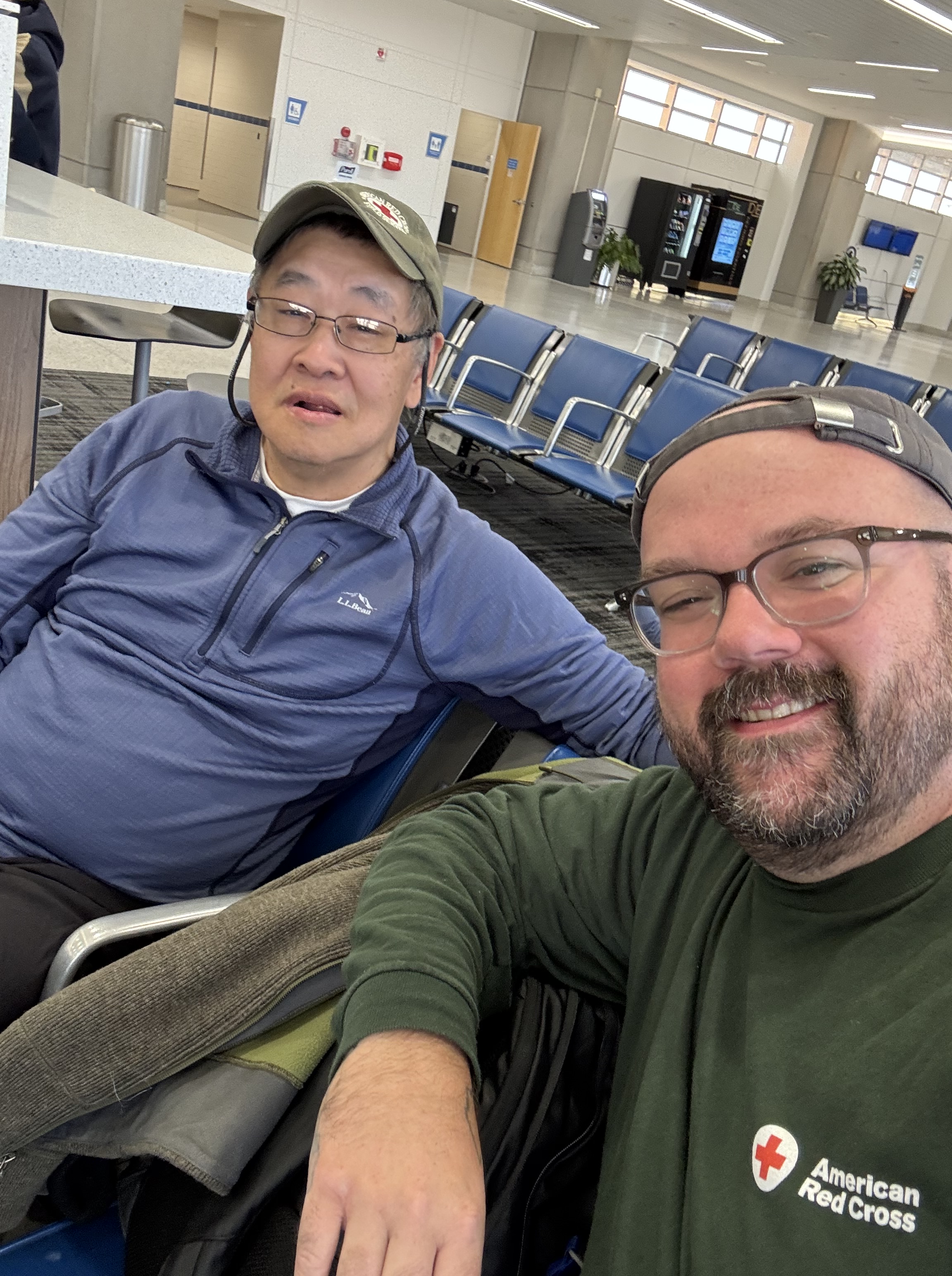
Randy Liang (left) and Ryan Lang at Akron-Canton Airport, waiting to take off to Alaska in response to Typhoon Halong that hit the western coast of Alaska in October 2025.

I met Randy from Cuyahoga Falls at Akron-Canton Airport, waiting to board our flight together. He’s an IT specialist who spent more than a month in Alaska, making sure the Red Cross staff had the connectivity they needed to execute the mission. Treacy from Northeast Ohio worked 12-hour shifts at the shelter for weeks, caring for residents, making sure they had what they needed. Callene, originally from Lorain, met with every volunteer who checked into the operation, helping acclimate them to the Alaska culture. Jeff, from the Heartland, Stark, and Muskingum Lakes chapter, worked tirelessly in the shelters, providing meals and snacks and more. And when it was time for those residents to leave, Jeff helped pack their things, sending them off with a smile and a hug.

The lifesaving mission of the Red Cross is not possible without these people who volunteer so much more than just their time. I’m grateful to be a small part of this group of incredible people, and I will continue to tell their story.     

Non-stop disasters – non-stop responses

Regional Red Cross executive reflects on most recent deployment

By Todd James, Executive Director, American Red Cross of North Central Ohio

Todd James in Iowa, June, 2024

I recently returned from a disaster relief operation in southwest Iowa, an area devastated by massive flooding in June. You’re probably trying to remember if you had heard about flooding in Iowa. You probably did, it was big news for a few days. But as is always the case, something else happened and the news moved on to cover the story of the day. Well, the cameras and reporters may have moved on, but for the people of Siouxland, as they call the region, moving on will be a long, hard process. I am so proud of the American Red Cross responders who left their own homes, jobs and families to rush into the devastation to offer shelter, comfort and hope, and I am honored that I had the opportunity to serve with them.

A month after the flood waters receded, with the help of the Red Cross, the community was able to focus on long-term recovery. What does that look like? It’s different for every family but all will need the help of many partners, non-profits, governmental agencies and the business community, working together. Our Red Cross long-term recovery team will continue to collaborate with these partners, helping and guiding them on how to come together to best serve those on the road to recovery.

The Red Cross is responding to nearly twice as many large disasters as we did a decade ago to help families and communities struggling with more frequent and intense disasters. In 2023 alone, the U.S. experienced an all-time high of 28 billion-dollar plus disasters that ravaged communities and forced hundreds of thousands of people to flee from severe storms, floods and wildfires.

This was my 41st disaster deployment and I have seen first-hand how disasters are happening more frequently and causing more damage. There is no more down time between big disasters, time when our responders can catch their breath, come home and focus on the great work the Red Cross is doing in their community. Now we are constantly responding to these large-scale disasters, as well as the thousands of home fires, storms and other disasters that happen every day but don’t make the headlines.

To equitably meet the growing and unique needs of disaster-affected families and communities, the Red Cross is enhancing our large-scale disaster response and recovery services, expanding financial assistance, strengthening local partner networks, and growing our disaster workforce. This effort includes fortifying the critical infrastructure and technology that enables 24/7 response to disasters across the country.

The need to help during disasters has never been greater. Please, join us to provide
relief and hope when it matters most. Help people affected by disasters big and small,
including climate-driven crises, by making a gift to Red Cross Disaster Relief at
redcross.org or by calling 1-800-RED CROSS (800-733-2767). Our volunteers are at the heart of our mission and represent 90% of our workforce. Click here to sign up for opportunities to help. To help make sure your family and community are ready for a disaster before it happens, click here.

Posted by Ryan Lang, Red Cross board member and volunteer

From home fires to large scale disasters, organizations help Red Cross respond

The J.M. Smucker Company, Marathon Petroleum Foundation, Inc., and FirstEnergy Corporation aid through Annual Disaster Giving Program

By Tim Poe, American Red Cross volunteer

One of the many memorable experiences as an American Red Cross volunteer came soon after first joining. I had spent two days assisting families and first responders during and after a large condominium fire in one of Cleveland’s western suburbs. While packing up as evening fell, I received a call. A large apartment building in an eastern suburb was now burning. I stopped by the Red Cross’ Cleveland office, resupplied a response vehicle, and headed off to meet the volunteers and staff already on the scene.

It was comforting to know that, even with the high number of people needing aid, we were able to provide it. No one impacted would have to wait for financial assistance, for a place to stay, for food and water. Such immediacy is critical in a disaster, as the Red Cross has emphasized that #HelpCantWait.

Our ability to quickly respond is due to generous donations, whether from individuals or large organizations like those taking part in the Annual Disaster Giving Program (ADGP). Such support is critical, as locally and nationally, disasters are increasing.

This national Red Cross news release celebrates the 130+ corporate and organizational members of the ADGP. Three of them, The J.M. Smucker Company, Marathon Petroleum Foundation, Inc., and FirstEnergy Corporation assist the Northern Ohio region.

As The J.M. Smucker Company reports, it became a Red Cross Disaster Responder in 2017 and went on to become an ADGP supporter in 2019. It currently contributes at the $500,000 level. Community involvement is important to the company, including Disaster Relief. It states, “Major tragedies are a heartbreaking reality, and it is critical our communities have the resources to recover and rebuild. Through our partnerships, including with the Red Cross, United Way and Habitat for Humanity, we have helped support these efforts with product and financial donations. Our employees have also stepped up, volunteering time and effort to help their neighbors in need.”

As I reported in 2020, Marathon Petroleum Foundation, Inc., became an ADGP supporter and currently contributes at the $250,000 level. As the organization writes on its community investment page, “We provide funding, equipment and support to first responders, government agencies and community- based organizations to increase the overall safety of the communities where we operate. Preference is given to projects and organizations that help communities better prepare for, mitigate the risks of and respond to disasters, hazards and emergencies.”

FirstEnergy is also an ADGP supporter at the $250,000 level. Through the FirstEnergy Foundation’s Investing with Purpose initiative, the organization has given more than $3.43 million to support “nonprofit organizations that advance health and safety, workforce development, educational and social justice initiatives.”

Preparation and education are also vital parts of the ADGP program, and September is National Preparedness Month.

Thanks to ADGP members and other donors, the Red Cross has the resources, personnel and training to respond, whether to the three-per-day home fires we average in Northern Ohio, or a large-scale disaster. Our Regional Disaster Officer Tim O’Toole explained, “Without the generosity of our donors we would not be able to assist the nearly 1,800 families we have in the past year. These resources are critical to many families being able to begin their pathway to recovery after these life-altering events.”

Edited by Glenda Bogar, Red Cross volunteer

Posted by Ryan Lang, Red Cross board member and volunteer

Northern Ohio disaster workers continue to deploy to several relief efforts

9 working virtually; 18 have physically deployed

By Eric Alves, American Red Cross of Northern Ohio

September 14, 2020- With Hurricane Sally approaching the Gulf Coast and expected to make landfall on Tuesday, the American Red Cross continues to respond to the California and Oregon wildfires, as well as the Hurricane Laura relief efforts in Louisiana and Texas.

Currently from Northern Ohio, one disaster worker has deployed to California, while nine have deployed to help with the Oregon wildfires.

In addition, 17 workers are continuing to assist people affected by Hurricane Laura, including three responding in Texas and 14 in Louisiana.

Northern Ohio Region leadership members Mike Parks, CEO and Tim O’Toole, Regional Disaster Officer, are among the disaster workers assigned to assist with the disaster responses. Mike has deployed to the Hurricane Laura response, while Tim was assigned to respond to the wildfire in Oregon. Both are working virtually currently.

To date, as part of the Hurricane Laura and the west coast wildfires disaster relief efforts, the Red Cross has provided emergency lodging to more than 29,600 residents, and with the help of partners, the Red Cross has also served more than 769,000 meals and snacks and distributed more than 174,000 relief items.

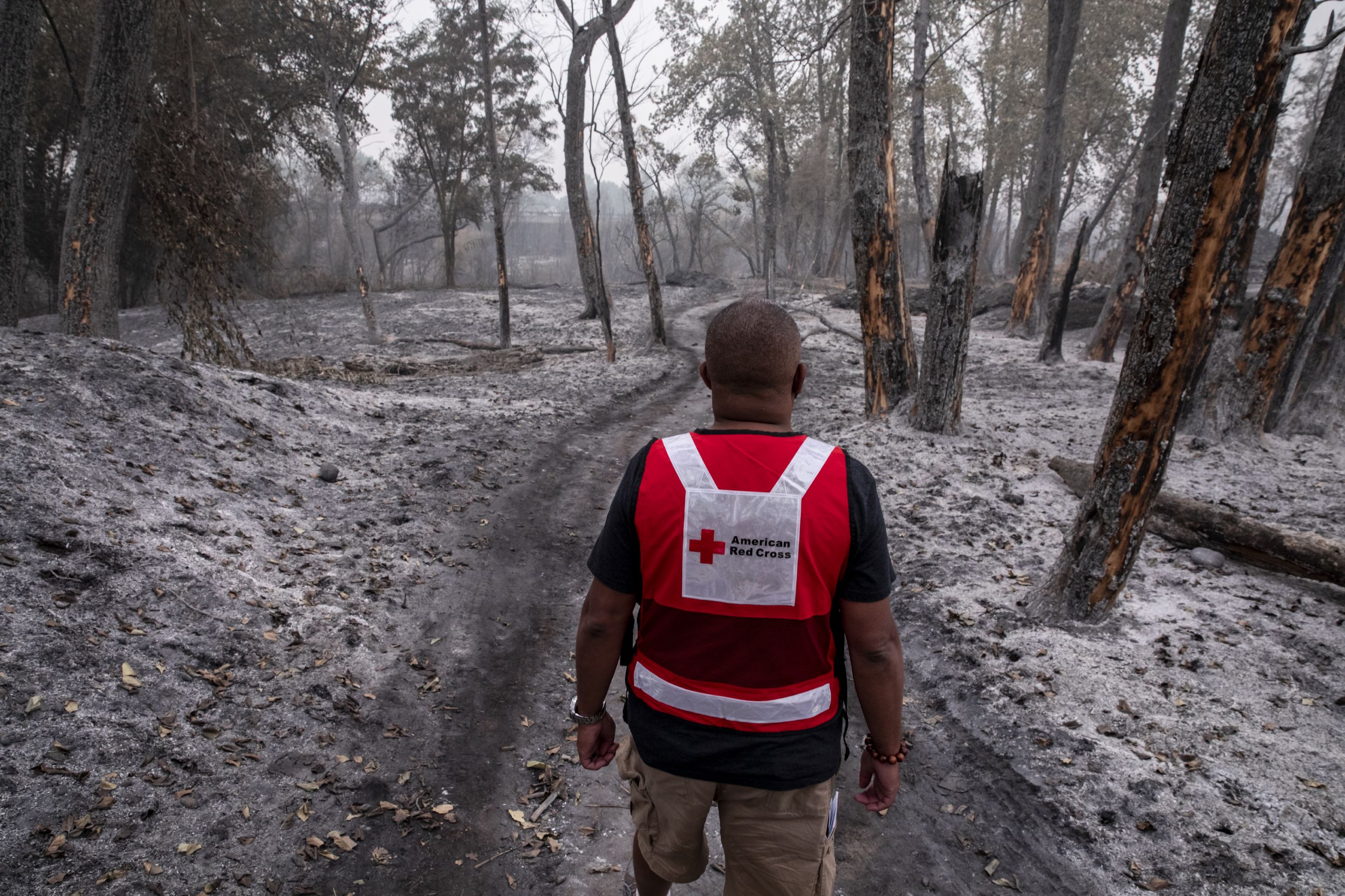
September 13, 2020. Central Point, Oregon. Patty Albin of the American Red Cross checks on Travis Wagner as he rests at the Jackson County Expo and Fairgrounds shelter after fleeing the wildfires in Central Point, OR on Sunday, September 13, 2020. Photo by Scott Dalton/American Red Cross

Additional volunteers are needed to train for disaster responses, specifically to respond to home fires locally and to staff shelters during national disaster responses. Licensed health care professionals are also needed to help people in disaster shelters.

If you are in good health and you are willing and able to receive free Red Cross training and can deploy, you are invited to attend one of the upcoming virtual volunteer information session on Friday, September 18 or Saturday, September 19. Both sessions will be held from 10 to 11 a.m. For more information and to register, email Melanie Collins at melanie.collins4@redcross.org or call 330-204-6615.

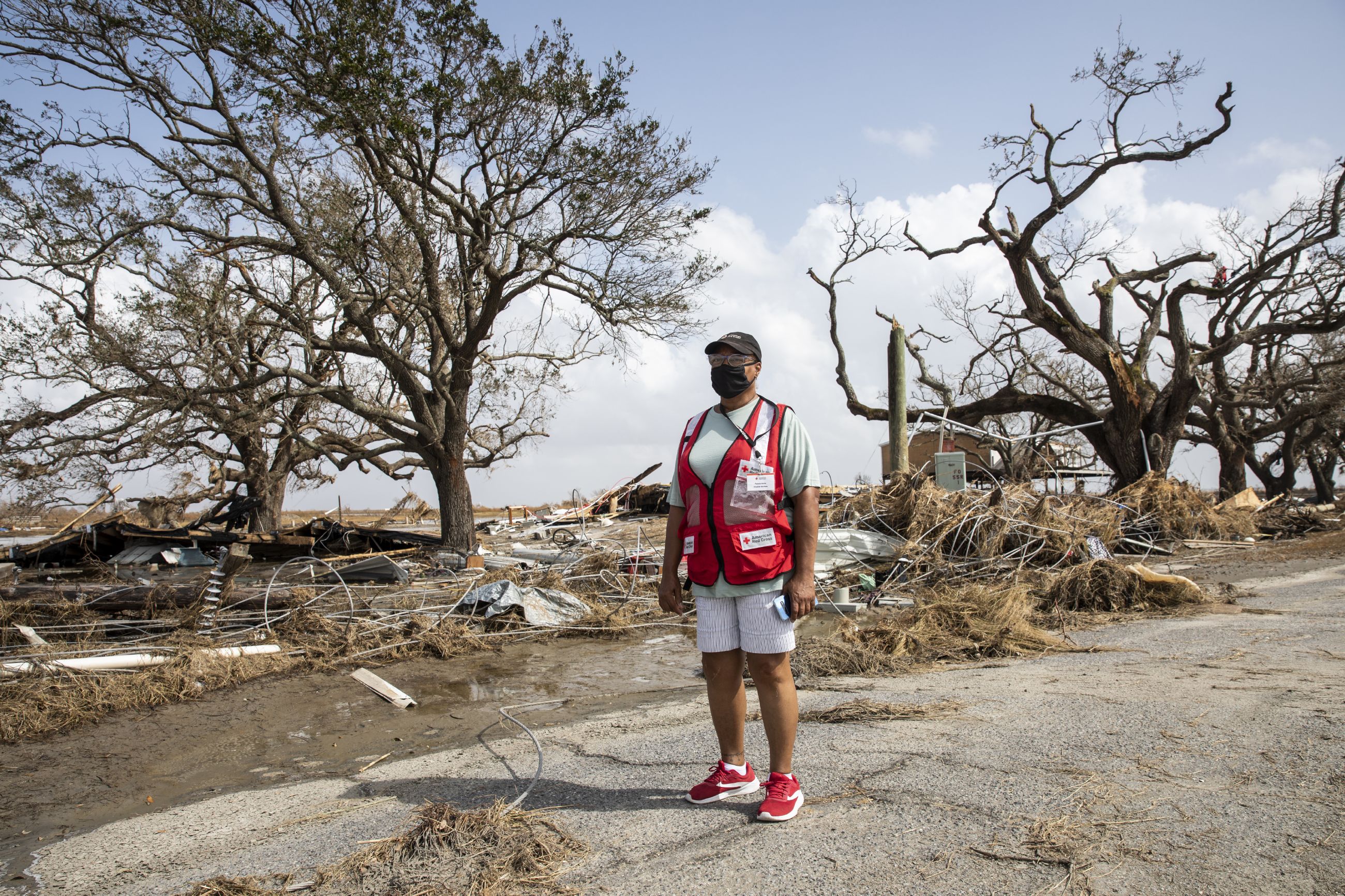
August 31, 2020. Sulphur, Louisiana Pamela Harris of the American Red Cross looks out on damage caused by Hurricane Laura, in Sulphur, LA on Monday, August 31, 2020. Photo by Scott Dalton/American Red Cross

If you are unable to deploy but you would like to support the Red Cross’ disaster relief efforts, donate by visiting redcross.org, calling 800-RED CROSS or texting the word REDCROSS to 90999 to make a $10 donation

Snapshots: Moments from disaster response

By Tim Poe, American Red Cross volunteer

August 12, 2019- I have been a part of the American Red Cross’ Disaster Relief team for 18 months, which has been exceptionally challenging and rewarding. Here are a few of the many moments lingering in my memory:

Tim Poe

Tim Poe

I hand an information packet and financial assistance card to a woman in tears. I see astonishment followed by relief on her face as I explain what it is. She looks out the window, breathes deeply and begins planning her family’s recovery.

An enormous, isolated tree stands in a field. Near the top, a remnant of a house is embedded in twisted limbs. Other pieces of homes and people’s belongings lie scattered across the field as people work to clean up and recover.

Assisting a large number of clients after a major fire, people from the community come in throughout the day, bringing supplies, offering comfort, asking how they can donate, finding ways to help.

In an ER, a woman lifts her oxygen mask, says it’s her birthday, and asks for cake.

Interviewing a client as her grandson plays with a stuffed toy, I ask if she’s a veteran and the grandchild declares he is. “No you’re not, sweetheart,” she says. He answers, “I am too. I don’t even like meat.”

On Christmas Eve, standing on the porch of what remains of a house, helping a family plan their recovery, the mother makes a joke and laughter warms the winter air. I feel the mood lighten as they look to the future.

2019 Euclid fire responseAt a community event with the Emergency Response Vehicle, I let children use the public-address system. Some shyly say, “hi,” others say their names and a few words. One yells, “Pizza! Pizza! Pizza! … and ice cream!” Nearly all smile as their voices amplify.

Standing in the rain, clearing the scene of a very large fire, the family’s father grasps my hand, holds on, begins to say something, then simply nods.

Leaving a scene, a three-year-old child runs up and gives me a hug.

Volunteers like me  carry out 90 percent of the humanitarian work of the Red Cross. Whether helping displaced families or teaching others how to respond in emergencies, the time and talents of volunteers can make a real difference. Explore the Red Cross’ many volunteer opportunities here.

Edited by Glenda Bogar, American Red Cross volunteer

Red Cross provides support to help residents escape cold, wind following weekend storm

By Eric Alves, Regional Communications Specialist, American Red Cross of Northeast Ohio

February 26, 2019 –  “Since 1:30 p.m. Sunday, we had no power, no heat and no water. We could see our breath and we had nowhere else to go. This warming center mean a lot. IMG_5958Not only were we given a place to warm up and enjoy food and refreshments, but we were given great support from everyone here,” said Bill and Diane Harasyn, Chardon residents who escaped the cold by visiting an American Red Cross-supported warming center.
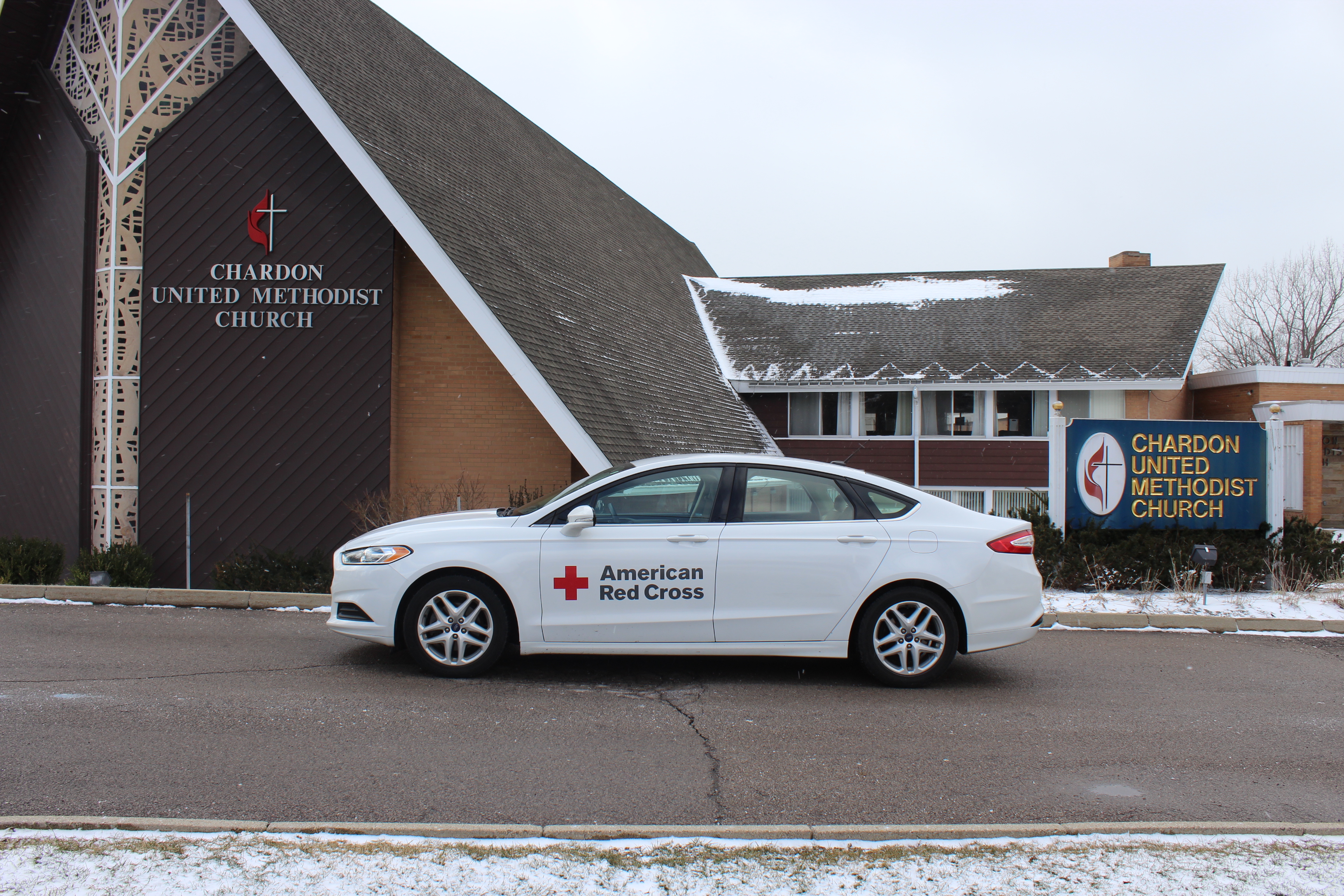
Bill and Diane were not alone. As wind gusts reached as high as 60 miles an hour and temperatures plummeted across Northeast Ohio this weekend,  thousands of residents lost power and heat in their homes. Throughout the weekend, the Red Cross of Northeast Ohio disaster team monitored the damage and power outage throughout the region. The disaster team also remained in contact with local emergency representatives to determine the need for Red Cross support for warming centers and shelters.

The Red Cross helped support an overnight warming center at the Chardon United Methodist Church on 515 North Street, providing blankets, cots and other materials needed to support residents spending time at the center.IMG_5974

The shelter workers in Chardon also received Red Cross training to help them properly operate an overnight shelter. “While we have operated a warming center three times, this was the first time we operated an overnight shelter,” stated shelter workers Vern and Lynn Kempf. “The Red Cross training we received helped prepare us for what we might expect as well as providing support for overnight residents.”

The Chardon warming center remained open Monday night to provide residents relief from the cold.

The Red Cross is also supporting a warming center at the Solon Community Center on 35000 Portz Parkway, by providing cots and blankets.

The Red Cross also opened and operated an overnight shelter Monday at the Salvation Army on 809 Emmet Avenue NW in New Philadelphia, and at the North Canton United Church of Christ.  No residents spent the night in either shelter.

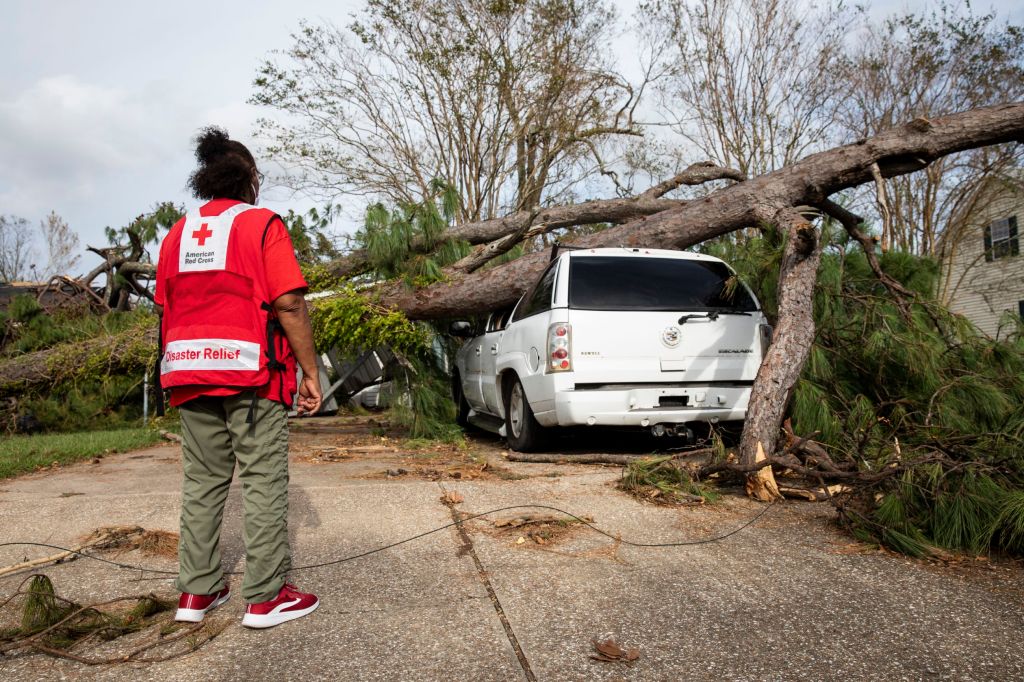
Additionally, the Red Cross responded to several cases regarding to storm-related damage, including the wind damaging and removing the roof of an apartment building in Woodmere and a tree falling on a home in Painesville. Below are photos from the additional response.

You can support our efforts to train volunteers as shelter workers, and to purchase supplies like cots and blankets by making a donation here, or by calling 1-800 RED CROSS.

Red Cross continues response to disasters in Northeast Ohio, even with ongoing relief efforts around the world

Weekend disasters affect dozens of residents in all 5 Northeast Ohio Chapters


By Eric Alves, Regional Communications Specialist, American Red Cross of Northeast Ohio

The American Red Cross continues to respond to disaster relief efforts around the world, including responding to the California wildfires and Saipan following Super Typhoon Yutu.  Even with relief efforts underway far and wide, the Red Cross continues to respond to needs of residents right here in Northeast Ohio.

41870691712_5b3ee65587_zOver the weekend, the Red Cross responded to 17 incidents in all five chapters in Northeast Ohio, assisting 64 residents, and distributing more than $12,300 in immediate financial assistance to help people in their darkest hours.
 

The Lake to River Chapter was particularly hit hard.

Disaster workers in the Lake to River Chapter, which serves Ashtabula, Columbiana, Jefferson, Mahoning and Trumbull Counties, responded to seven incidents ranging from home fires to power outages, provided more than $4,700 in aid and opened a shelter for two-nights in Columbiana County for residents displaced from last week’s winter storms.

One particular case in Mahoning County, involving a grandmother, a mother and her five children, highlights the commitment the Red Cross has to serving the needs of residents in Northeast Ohio. As Karen Conklin, executive director of the Lake to River Chapter states, “What we do to help people in our community and the difference we make every day is amazing. Over the weekend, a fire started in the attic while the family was at church. Two adults and five children lost everything. While the family has a hard road to recovery, we responded with much more than a debit card. We gave them kindness, respect and hope. It was another mission moment I won’t soon forget. Because of the Red Cross and our volunteers, this family has begun the road to recovery. Without us they would be alone at their burned-out residence as the fire department rolls up their hoses and drives away. We are the difference.” IMG_5580

The Northeast Ohio Region of the Red Cross is prepared 24 hours per day and seven days a week to prevent, prepare for and respond to emergencies. However, we are unable to serve the 22 counties and 4.5 million residents of Northeast Ohio without the tremendous dedication of our volunteers, which make up 90 percent of our workforce. Our volunteers are truly the face of the Red Cross. If you are interested in making an impact in local communities, the Red Cross is always looking for volunteers. To volunteer, visit redcross.org/volunteer or contact our Volunteer Services Department directly at 216-431-3328 or NEOvolunteer@redcross.org.

We also rely on the generosity of Northeast Ohio residents to continue to offer disaster relief and to provide support in a time of need. If you would like to provide a monetary donation, visit redcross.org/donate, call 1-800-RED CROSS or text REDCROSS to 90999 to make a $10 donation.

Disaster Relief Takes Flight

By: Debbie Chitester, Disaster Program Manager Summit, Portage, and Medina Counties

A few months ago an email came across my computer asking if I would be interested in partnering with the National Inventors Hall of Fame STEM High School.  Curious, I asked for more information.  The computer science class conducts problem based learning. The problem they were trying to solve was delivering disaster relief to people in hard-to-reach areas, a real world issue that they had seen on TV due to the 2017 hurricanes. They were starting to work with drones in the class and the teaching staff wanted a real world scenario so learners could relate the problem/solution process to something in real life.

Jorge Cropped

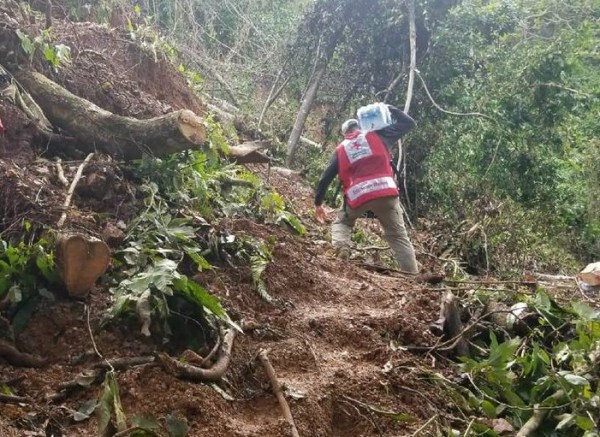
At first I was unsure if this was something we could do, but I was inspired by a photo of our Regional COO, Jorge Martinez,  hiking up the side of a mud covered hill in Puerto Rico to get water to a family following Hurricane Maria.

A task just perfect for a drone!  I agreed, and was scheduled to talk to the class about Disaster Cycle Services, what we do, and how we deliver service.

On a cold January day, I presented the “problem” to the learners.  I showed photos of Emergency Response Vehicles, clients walking through knee deep water to get to supplies, and Red Cross volunteers on one side of a river while the clients were on the other with no easy way to get supplies to them.  The learners were interested in the services we provide and asked good questions.  The coach (their term for the teacher) and I expressed the need and how this can save lives.  The problem demonstrated that drones could be used for more than having fun with friends, and could actually make a difference.

Their task was to create a flight plan, write code for the drone and write an essay about the experience.

On January 31, the class presented their projects.  The learners were ready to fly their drones and demonstrate how they could deliver supplies to multiple locations.  The gymnasium was set with three “landing depots”, the closer to center the better and the more points received.  The points represented the numbers of lives saved at each landing depot.  (They also received “style points” if they performed a flip between depots.) Each team had the opportunity for 2 “flights”.

That morning I was excited as I witnessed amazing young adults using math, geometry and trigonometry to program their flights, and loving what they were doing!

As I sat on the sidelines watching and encouraging the learners, I overheard one say to his teammate, who was upset by their results, “well we did not get the center, but we still saved lives.”

I thought he was being sarcastic, so I looked over at him. But no, it showed on their faces that they truly understood why they were doing this.

While some teams were more successful than others with their flights, every single team tried their hardest and learned that technology can save lives.

This partnership is something that was a first for both of us, and I look forward to solving other “problems” with them in the future.


To view a short video of a flight, visit https://twitter.com/NIHFHS/status/958742381557420032.


Genuine Generosity Grows in Northeast Ohio

By Doug Bardwell, American Red Cross Volunteer

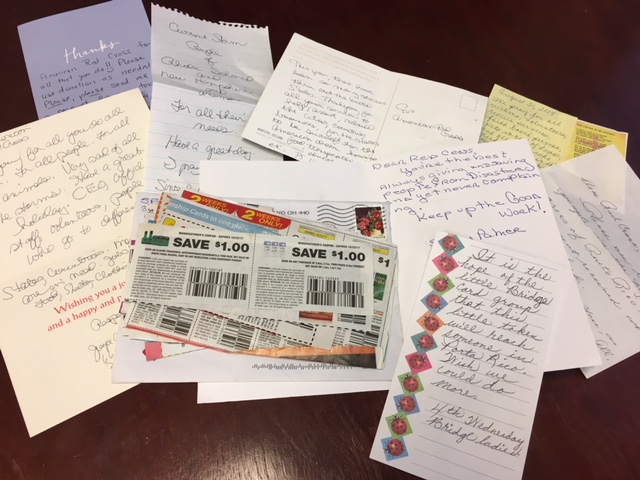
During disasters, we often see the best in our neighbors – caring, volunteering and donating to help alleviate human suffering. Northeast Ohio has long been noted for its generosity, and during the recent spate of disasters, the Greater Cleveland Chapter has the cards and letters to prove it.

Donation letters

Ever since Hurricane Harvey hit Texas, one woman has sent in an envelope each and every day with one dollar and a personal note. Some are marked for Harvey, while others are for the California fires.  Each note offers thanks to the Red Cross for the services we offer and asks for prayers for the victims, the first responders as well as for her own full-time employment search.

Another woman, moved with compassion, but without the means to contribute, assembled an envelope full of coupons she had collected. She mailed those into our office, with a request to pass them on to any of the victims trying to get back on their feet.

In October, a woman called, wanting directions to our office. She had a cash donation and wanted to make sure it got into the right hands to aid in general disaster relief.  Neither she nor her husband appeared to be people of means, but they felt compelled to help and had withdrawn $800 from her husband’s postal service retirement account.

And last month, yet one more example of how our community comes together to help others in need. The ladies of the Fourth Wednesday Bridge Group wanted to help and sent in a collective donation from all their members to aid the people of Puerto Rico.

There’s no donation too small. As Giving Tuesday approaches, log on to https://www.redcross.org/donate/donation to make a one-time or monthly donation.