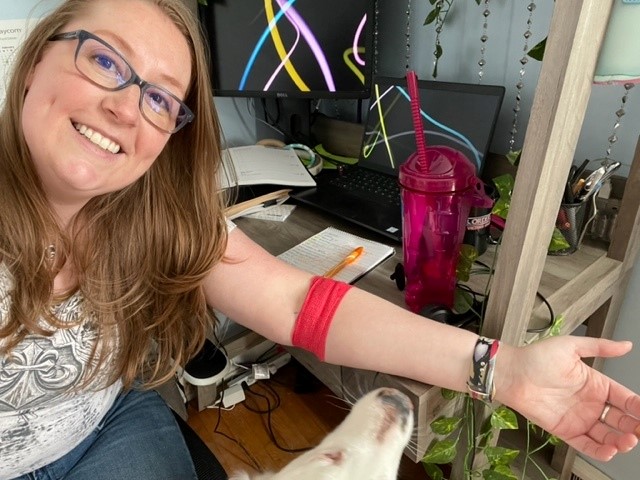
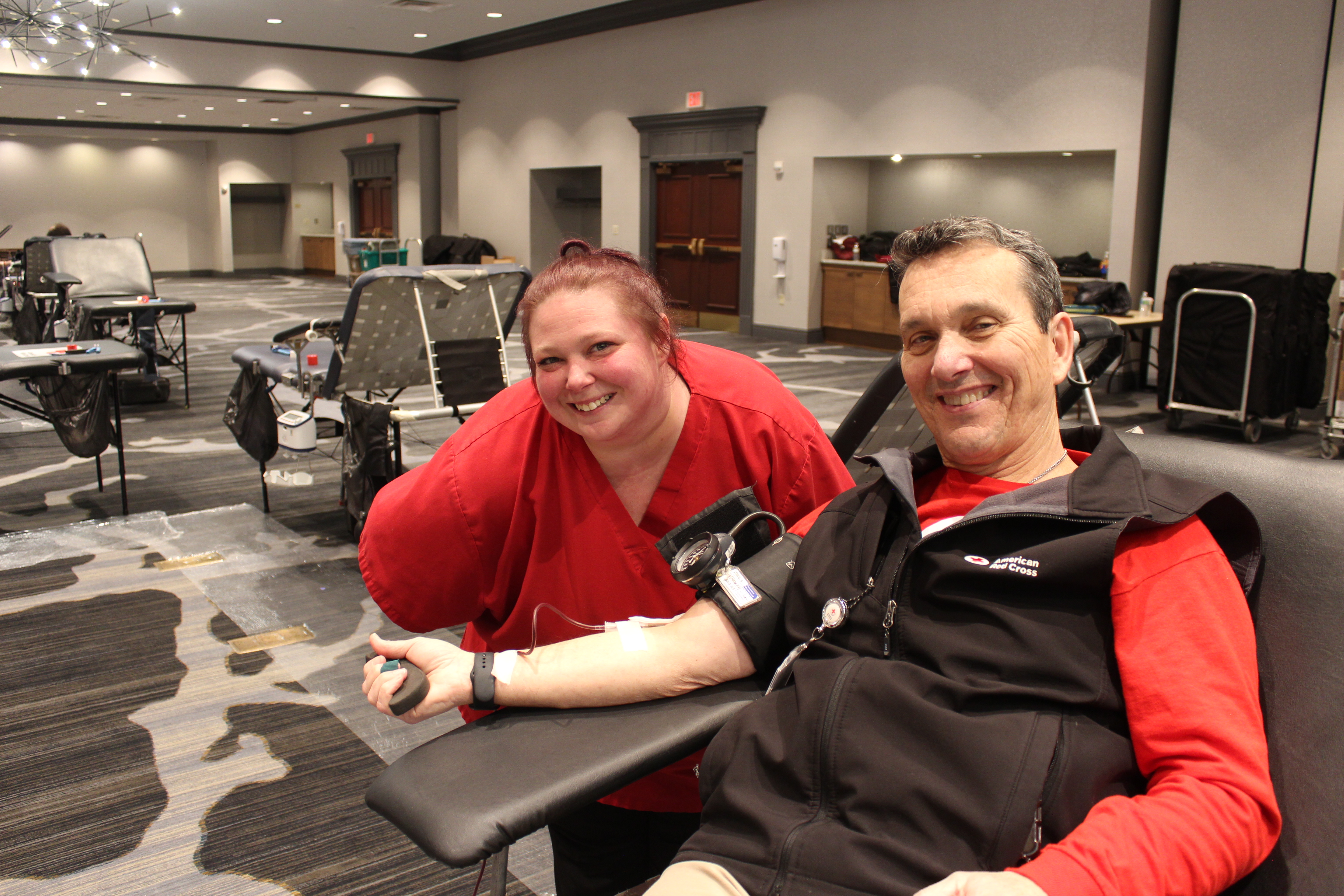
An apprehensive volunteer turned regular blood donor: How Ashley Hopkins discovered just how special her blood is

By Ryan Lang, American Red Cross board member and volunteer

More than 20 years ago, if you’d asked Ashley Hopkins about donating blood, you may have gotten a cringe coupled with a shake of the head. While she’d grown up around blood donors and blood drives (her father was a firefighter, now fire captain), donating herself was never really an option.

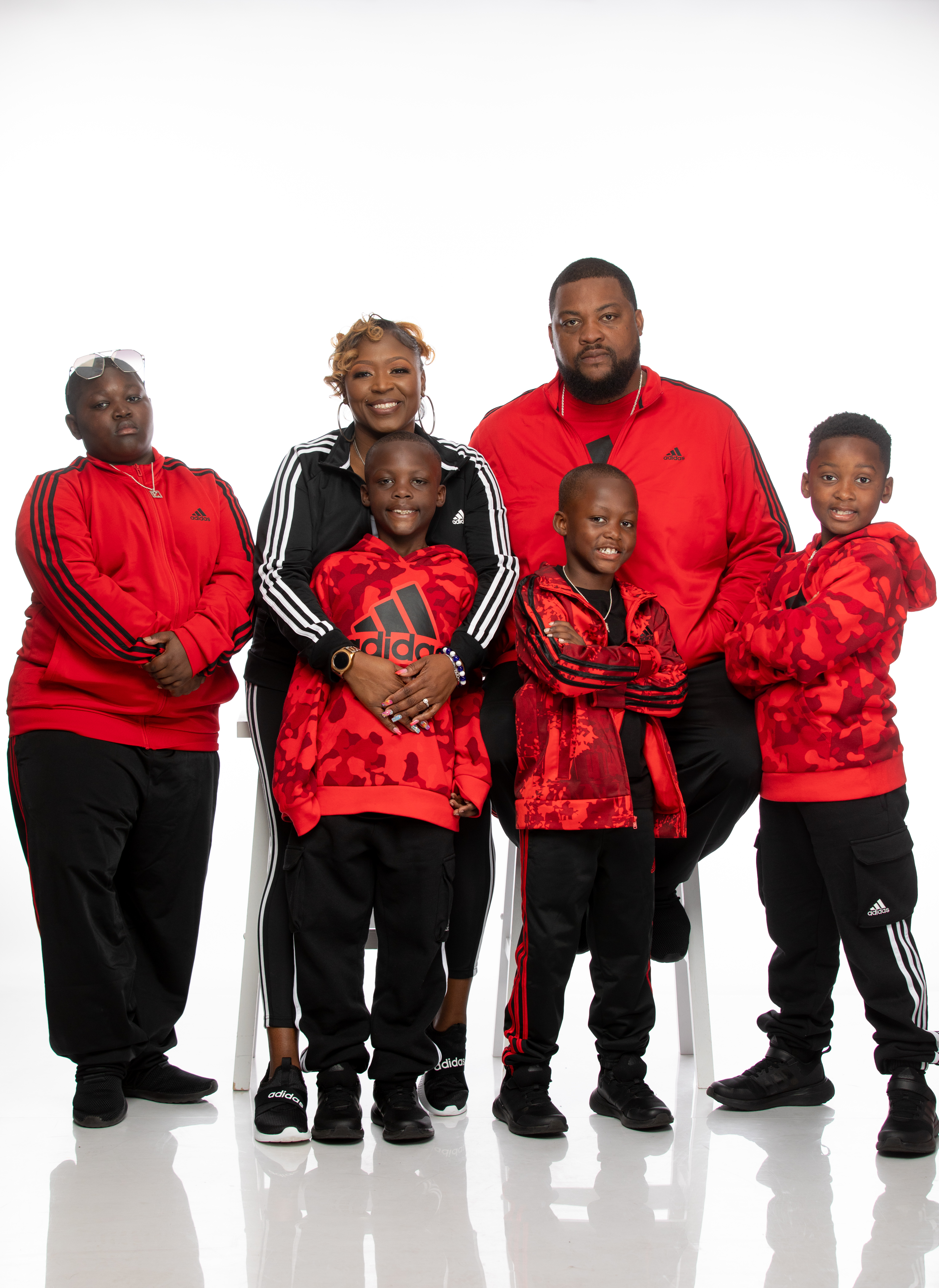
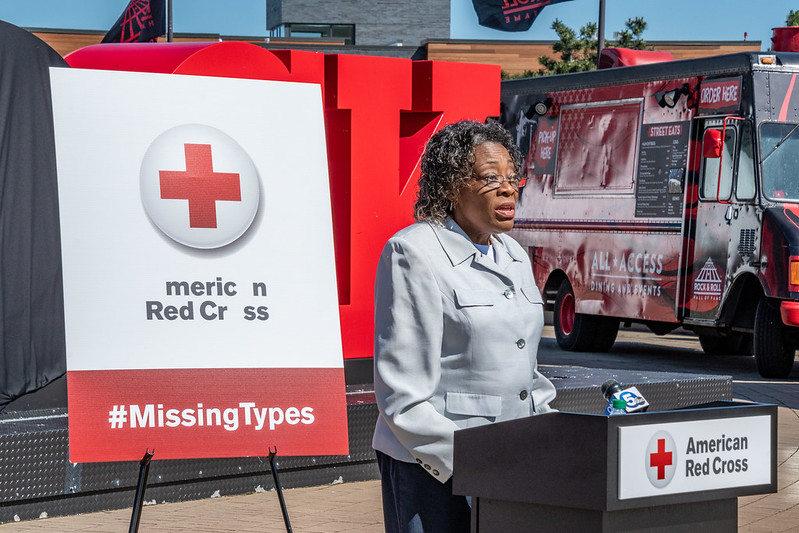
Ashley Hopkins, American Red Cross board member, volunteer and blood donor

“Back then I had a crazy fear of not even needles, but needles taking blood out — it just freaked me out so I never did it,” Ashley said. 

So how did someone with a healthy fear of the blood donation process wind up a volunteer for the American Red Cross Blood Services and a regular donor? 

“I went to volunteermatch.org and put in my zip code, and (blood services) came up as a flexible option with weekend availability.” So despite Ashley’s apprehensions, it was a perfect match, and as she’d soon find out, even more perfect than she’d initially thought. 

Ashley started out working weekend blood drives. “I did a background check and then shadowed someone for a couple of blood drives and then I was on my own,” she said, noting that back in 2012 things were “a little bit different.” 

At one of those blood drives at the Canfield fair (Ashley’s favorite blood drive), she was working a few days in a row with one specific blood rep who asked her why she’d never donated before.

“I don’t know, it just seemed kinda scary,” Ashley replied. But that same day she decided to roll up her sleeve and donate — on the bus at the fair, which Ashley highly recommends. “It is heaven,” she advocated. 

When you donate blood, the Red Cross tests your blood. And that’s when Ashley found out how special hers was. “I did not know that they were testing for a specific allele (genetic information present in your DNA) in your blood that is an antibody.” After donating Ashley got an email saying that her blood was CMV negative, which is quite rare. 

Red Cross board member and volunteer Lou Joseph with Ashley Hopkins

From RedCross.org: CMV is generally harmless to adults but can be fatal to babies. For this reason, babies needing transfusions as part of their medical care should only receive blood from donors who have not been exposed to CMV (CMV negative).

And being O-Positive, Ashley’s blood is even more special, as she’s compatible with roughly 80 percent of people who need blood! Even more of a reason for her to donate regularly — every 56 days, if she can. 

When asked what she’d say to someone who is apprehensive about donating for the first time, especially someone who is nervous or scared, Ashley simply said, “Volunteer at a blood drive!” She said seeing it happen and helping with the process helped her overcome her fear of not just needles, but the whole process.

To find a blood drive near you, CLICK HERE. To learn about volunteer opportunities with the Red Cross, CLICK HERE.

Edited by Glenda Bogar, American Red Cross volunteer

Apartment building residents placed in short-term housing

Red Cross sheltering operations cease after six days

Residents of the Terrace Towers apartments in East Cleveland have been relocated to other short-term housing options, and the shelter operated by the American Red Cross has closed.

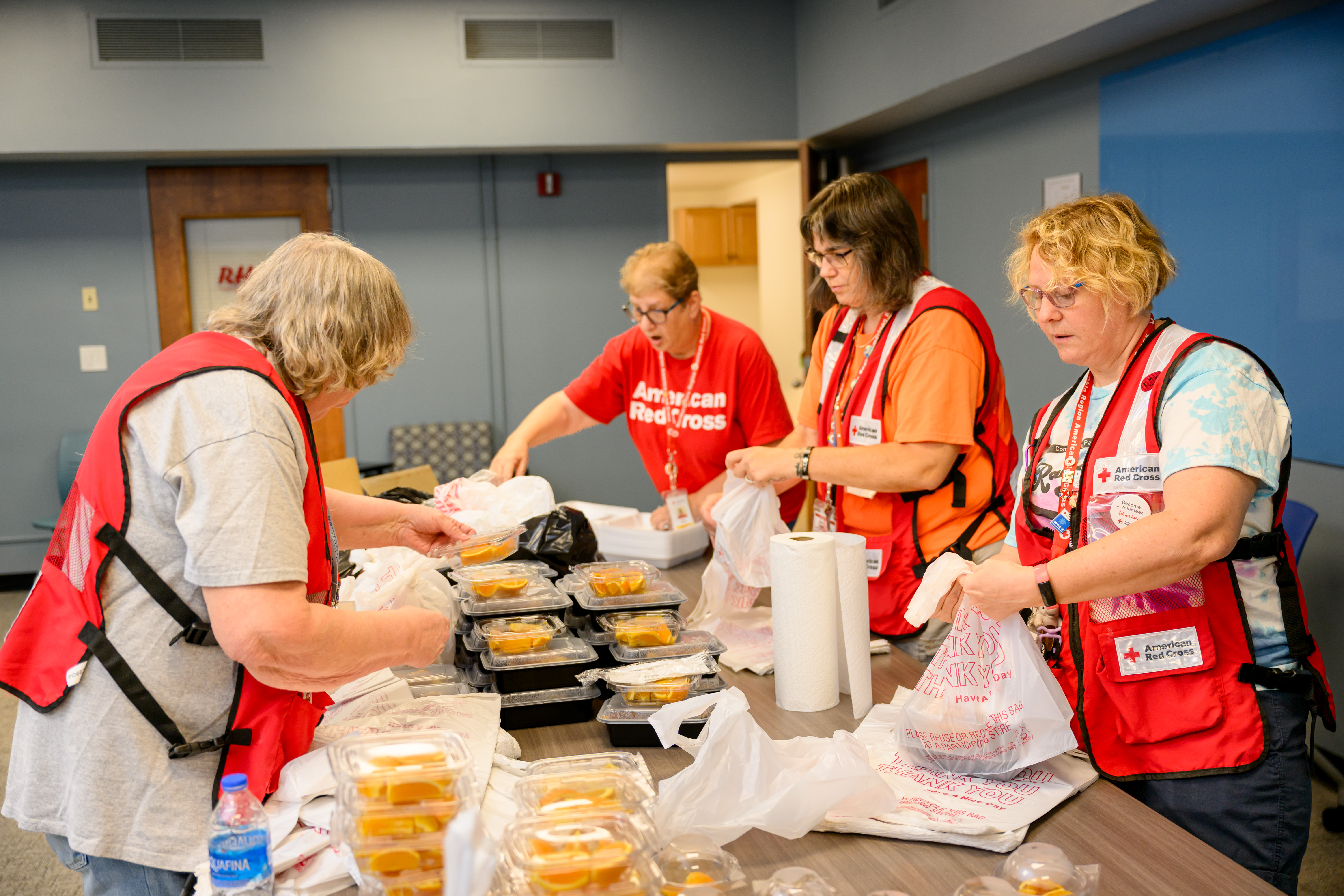
Red Cross workers preparing meal distribution.  Photo credit: Cuyahoga County Multimedia

More than 130 residents took refuge in the shelter for six nights, after fire forced them to flee on Monday, July 3rd . They took refuge the first two nights at the Salvation Army East Cleveland Corps Community Center. On Wednesday, the shelter was transferred to a dormitory at Case Western Reserve University. The shelter closed on Sunday.

It was the largest sheltering operation in Northern Ohio since 2004.

 Tom Revolinsky, Red Cross disaster program manager, and Alfreda Scott, Terrace Towers resident.  Photo credit:  American Red Cross

“We made a lot of friends,” said Tom Revolinsky, Disaster Program Manager for the Red Cross of Northeast Ohio. “A lot of the residents were understandably upset when they were forced out of their homes on the night before the fourth of July, but by the time they left the shelter on Sunday, we were getting lots of hugs.”

During the six nights of shelter operations, the Red Cross provided:
 525 overnight shelter stays
 2,023 meals
 304 health services
 256 comfort kits (personal hygiene items)
 125 blankets
 Continuous emotional support

Officials with RHM Real Estate Group, the Terrace Towers property management firm, is providing alternative housing options for the residents while repairs to the apartment complex are being made.

“We’re grateful to Terrace Towers property management for working so diligently this week to find alternative lodging for their residents,” said Emily Probst, Regional Disaster Officer for the Red Cross of Northern Ohio. “And we thank the Salvation Army for providing space for the first two nights, and Case Western Reserve University for opening one of their dormitories to these residents.”

Emmanuel Grant, Terrace Towers resident.  Photo credit: American Red Cross

Emmanuel Grant, one of the residents of Terrace Towers who took refuge at the Red Cross shelter, said, “One thing I appreciate about the Red Cross; they follow scripture when it said to extend hospitality, caring for your neighbor. So these things have really been a blessing.”

Alfreda Scott, Terrace Towers resident. Photo credit: American Red Cross

“My experience, believe it or not, has been wonderful,” said shelter resident Alfreda Scott. “It’s just been like a nice community, and everyone’s been hugging and supporting each other, and it’s been wonderful.”

She said once her housing situation stabilizes, she plans to become a Red Cross volunteer.

“I made some new friends.”

You can hear more from Emmanuel and Alfreda in this video here.

See more photos here.

Red Cross and County Emergency Management workers.  Photo credit:  Cuyahoga County Multimedia

The Red Cross received assistance from several organizations, including the Cuyahoga County Office of Emergency Management, and several businesses stepped-up to provide meals, including Bon Appetit, Case Western Reserve University’s food service provider.

“No one organization can carry out such a challenging task alone, and we’re thankful for all the help the residents received,” said Probst. “We’re also indebted to our dedicated volunteer workforce. We could not have provided such valuable assistance without them.”

To learn more about volunteer opportunities with the Red Cross, visit redcross.org/volunteer.

Posted by Ryan Lang, Red Cross board member and volunteer

World Sickle Cell Day

By Eilene E. Guy, American Red Cross Volunteer

What do Juneteenth (today) and World Sickle Cell Day (also today) have in common? Both of these events focus on African Americans.

Glinda Dames-Fincher is a member of the American Red Cross Sickle Cell Sub-committee in northern Ohio. She’s a proud, outspoken “sickle cell warrior” calling for more Black blood donors.

Glinda Dames-Fincher

“Over 80 percent of Americans with Sickle Cell Anemia are of African descent, and ethnicity matters with blood transfusion,” she said. Many individuals who are Black have unique structures on their red blood cells that make their donations the most compatible to help patients with sickle cell disease. Glinda likes to think of it as “special sauce.”

“So please, African Americans, roll up your sleeves and help sickle cell warriors like me fight their battle!”

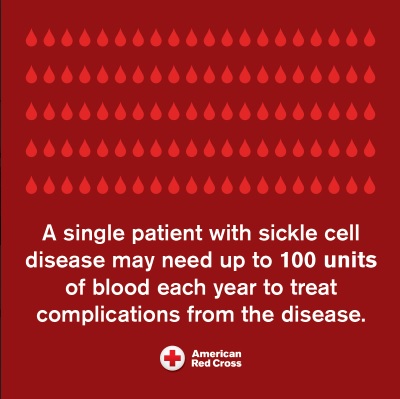
For Glinda, the need is personal. In order to combat the many effects of sickle cell (SCD) on her body, she gets two units of red blood cells every month; the procedure involves withdrawing one unit of her damaged blood each time and then transfusing in two units of healthy red cells.

She figures she’s received more than 600 units of red cells, between regular transfusions and the many surgeries she’s undergone to repair organs damaged by oxygen deprivation.

Glinda is a wealth of knowledge about sickle cell:

 This inherited disorder makes red blood cells sticky, rigid and curl into a C “sickle” shape, limiting their ability to carry oxygen into every tissue in the body. The misshapen cells also tend to clump, leading to various complications. “For many pediatrics, a stroke is their first major sickle cell event,” she said.

 When tissues are starved of oxygen, something as simple as a change in the weather can trigger excruciating pain – called a sickle cell crisis – lasting from hours to days or even weeks. That often sends sickle cell sufferers to emergency rooms for treatment, including pain killers and blood transfusions.

 Sickled red blood cells also die prematurely: The distorted cells die within 10 to 20 days, compared to normal red blood cells that typically last 100 to 120 days. That leads to a shortage of red blood cells, a type of anemia. Here again, transfusions are crucial.

 Glinda is 64. “When I was born, life expectancy for a sickle cell patient was 18 years. Now it’s 40 to 60 years, thanks to medications and research,” she said. However, over time, patients may be subject to persistent infections, and damage to kidneys, heart, lungs and other organs.

 SCD affects more than 100,000 people in the United States. Eight out of 10 of them are of African descent; the rest are Hispanic or trace their ancestry to south Asia (such as India), southern Europe (Greece and Italy) or the Middle East (such as Saudi Arabia and Lebanon).

 SCD testing is part of the routine blood tests for newborns in the United States. Additionally, the Red Cross provides sickle cell trait testing for all blood donors who identify themselves as Black or African American. Those with the “trait” inherited a sickle cell gene from one parent; those who got a sickle cell gene from both parents are born with the disease.

Since the best blood match for a patient receiving ongoing transfusions comes from donors of the same genetic background, the Red Cross is urging people of all ethnicities to give blood and help increase the number of diverse donors, so we can find the best match for all patients.

Watch this video that documents Glinda’s ongoing struggle with sickle cell disease.

In honor of Juneteenth, learn more about SCD and please make an appointment to donate blood at RedCrossBlood.org/SickleCell.

Posted by Ryan Lang, American Red Cross board member and volunteer

Committed to helping those who serve

May is Military Appreciation Month

By Tim Poe, American Red Cross volunteer

As American Red Cross volunteers and staff members, we have been honored to work alongside several veterans, some of whom we have had the honor of featuring on this blog. In addition to the values of service, commitment, and being part of an effective team, they speak of the importance of Red Cross Service to the Armed Forces (SAF). SAF has been vital during their military careers and as veterans, often leading them to join the Red Cross themselves.

Contributing authors and those profiled include Cynthia Skidmore, Brinton Lincoln, Chiane Martin, Dave Riegler, Brook Harless, Sally Falasca, Paul Svasta and of course the CEO of the American Red Cross Northern Ohio Region and Rear Admiral, US Coast Guard (Retired), Mike Parks.

May is Military Appreciation Month and May 20th is Armed Forces Day. The Red Cross has been committed to assisting military members, veterans, and their families since its inception in 1881. Services include emergency financial assistance, counseling, and support for veterans.

One of the most important roles is providing emergency communication services. Whether a natural disaster, family illness, or other crises, members of the Red Cross help connect military families. Speaking personally as a member of an extended military family, I have often seen the effectiveness of these services in bringing relatives home when needed.

Pre-deployment event at Youngstown Air Reserve Station

Military families receive support to help cope with the challenges of military life, such as frequent moves, deployments, and separations. One very popular program is animal visitation.

Additional Red Cross services help improve the well-being of service members, veterans, and military families. These include reconnection workshops to help adjust to post-deployment life, and military hospital programs to provide comfort and support to wounded service members and their families.

For Military Appreciation Month, please join us in thanking military members, veterans, and military families for their service. Please also consider helping support them through volunteering with the Red Cross or providing a donation.

SAF volunteer roles include:

  • Delivering critical emergency messages through the Red Cross Hero Care Network.
  • For both medical and non-medical volunteers, providing patient comfort and care for injured service members and their families.
  • For mental health professionals, leading free resiliency workshops for military families in need.

You can get more information about how you can volunteer to help members of the military, veterans and their families here.

Posted by Ryan Lang, Red Cross board member and volunteer


Using her spare time to give back to our community

By Sam Pudelski, American Red Cross volunteer

When Jenn Mayfield found herself with some extra time and a need to complete community service to graduate with her degree in IT, she immediately thought of the American Red Cross. “I know the Red Cross and the reputation of blood services and how [they help] so many people with blood products,” she said.

A little over a year ago, she began volunteering with the Red Cross Northern Ohio Region as a volunteer candidate screener. In this role, screeners speak with people who have signed up to volunteer with the Red Cross to help place them in a role that not only fits the candidate’s interests and skills, but also is a good fit within the organization. It also allows her to volunteer after work in the evenings and on weekends since it is a remote position. Jenn enjoys the role because she loves to volunteer and connect with people. “I know that every time I talk with someone on the phone or answer someone’s question, I feel like I’m contributing in a positive way.”

In addition to her role as a volunteer candidate screener, she decided to start a second role with Red Cross headquarters in the department of public inquiry in July 2022. Not only did it allow her to further her passion for volunteering, but she also learned more about the services the Red Cross provides internationally and here at home. With the public inquiry team, Jenn helps answer questions, inquiries, complaints and comments from the public. Since this role also is remote, she fits in volunteering as her schedule allows.

Jenn looks at her opportunity to volunteer as a way to do something rewarding with some of her free time. In addition to her two permanent volunteer roles, she checks the Red Cross Volunteer Connection portal for other opportunities to give back. In fact, she recently volunteered at the Dominion Preparedness Day on April 1st. It was her first volunteer event, and she brought her fiancée as well. In addition to volunteering, she gives back by donating blood whenever she can.  Jenn truly believes that every little bit can help our communities, “even an hour a day or a couple hours a week can make a big impact.”

To all of those who are thinking of the Red Cross, Jenn can’t recommend it enough. As a part of the volunteer services team, she knows firsthand there are tons of different roles across the system that can fit for various interests and skills. In Northern Ohio, there are plenty of opportunities that allow individuals to volunteer when it fits their schedule, offering both in person or remote roles. “Honestly, there’s something for everybody. There’s a volunteer role for everyone.” To learn more about current volunteer opportunities in Northern Ohio, visit us here.

Posted by Ryan Lang, Red Cross board member and volunteer

With the U.S. Air Force and Red Cross, Cynthia Skidmore knows the power of being part of a team

By Tim Poe, American Red Cross volunteer

Cynthia Skidmore climbed on a tank and felt at home. A U.S. Air Force veteran and military family member, Cynthia had recently volunteered with the American Red Cross as a member of the Service to the Armed Forces (SAF) team. While assisting at a military family picnic, she climbed the tank, saw the families, remembered the times she and her husband served when their children were young, and thought, “This is awesome!” She wanted to keep helping, to reach as many as possible, and knew the effectiveness of the Red Cross’ SAF team in assisting military service members, veterans and their families.

Cynthia Skidmore, Red Cross volunteer

After an exceptional Air Force career, Cynthia left in 2007 to focus on raising their five children while her husband, who was deployed in Saudi Arabia during 9/11, continued to serve. He retired from the Air Force in 2018 after 25 years, and her son Josh joined about the same time. Following the pandemic and her children becoming young adults, Cynthia, who has always been driven and full of purpose —“Going 90 MPH with [her] hair on fire”— found the house empty, felt lost and wanted to help others.

The Red Cross came to mind. Cynthia knew the tremendous feats a dedicated team can accomplish and the feeling of doing something bigger than oneself. She began volunteering with the Greater Akron and the Mahoning Valley chapter in 2022 and quickly made an impact.

Cynthia brings extraordinary skills and experience to the Red Cross. Having taught chemical warfare classes and focusing on disaster management while in the Air Force, she is skilled in public speaking and understands many elements of being in an armed forces family, as a veteran, spouse, mother, daughter and granddaughter.

Cynthia’s father, who recently passed away, helped inspire her sense of purpose and drive. A U.S. Navy veteran who served during Vietnam, Cynthia’s father was giving and deeply caring, often helping others, and loved Cynthia’s work with the Red Cross, both as a volunteer and blood donor. Her grandfather was also a Navy veteran. Thus, Cynthia continues her family’s tradition of giving.

In our conversation, Cynthia spoke highly of her Red Cross team and how much can be accomplished when people work together to help others. She enjoys being part of such a team and getting things done.

When asked about her favorite volunteer experiences, she said she has many. One that stood out was assisting at a deployment briefing when several volunteers brought in dogs. Cynthia, whose family has four dogs, said the service members’ children lit up upon seeing them. The dogs helped dispel fear, brought peace, normalcy and joy.

Cynthia Skidmore at a Summit County Veterans Stand Down event

Another favorite event is the Summit County Veterans Stand Down, where homeless and displaced veterans interview for jobs, receive haircuts, medical assistance, food, clothing and additional assistance. It is a tremendous help to those who have served and currently need assistance, and Cynthia is looking forward to the next one.

Cynthia also enjoys her regular volunteer work and being able to help, whether in person or being a compassionate voice on a telephone line.

For any veterans considering joining the Red Cross, Cynthia says volunteering is exceptionally rewarding and presents the opportunity to serve others in ways you never imagined. “It’s the next best thing to wearing a uniform,” she said.

For more information on the Red Cross’ Service to the Armed Forces or to volunteer, please visit this link.

Edited by Glenda Bogar, Red Cross volunteer

Posted by Ryan Lang, Red Cross board member and volunteer
International Women’s Day: Women and the Red Cross

By Eilene Guy, American Red Cross volunteer

March 8 is International Women’s Day, when we focus on the leadership, expertise, nurturing and down-and-dirty sweat labor that women contribute around the world, 365 days a year.

Coincidentally, Women’s Day falls in March – Red Cross Month – when we focus on the wide range of humanitarian services that Red Crossers contribute around the world, 12 months a year.

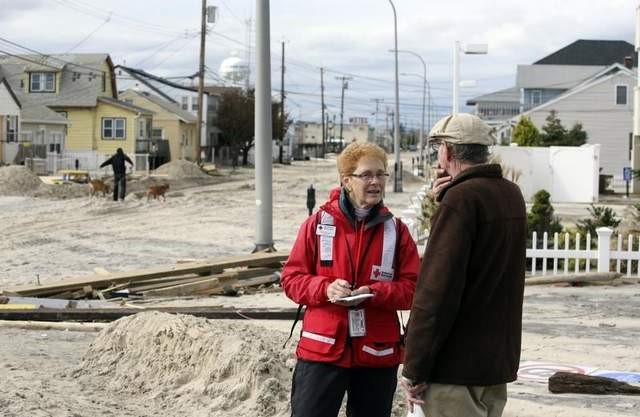
Red Cross volunteer Eilene Guy speaks with a resident of seaside Heights, New Jersey who refused to evacuate during Superstorm Sandy in 2012.

I’m proud to be part of the American Red Cross, which was launched by a woman, is headed by women, and values the talents and dedication of women at every level.

Women like my friend, Red Crosser extraordinaire Winnie Romeril. A volunteer for nearly 30 years, she has taught first aid and CPR, coached International Humanitarian Law classes, and served as a bilingual communicator at disasters all over the United States and across the world:

Sri Lanka and the Maldives; Peru; Haiti, carrying cash from the Red Cross to kick-start earthquake relief efforts with the Haitian Red Cross; the Philippines, where she even helped build a hanging bridge to get relief supplies to a remote village; Canada; Puerto Rico after Hurricane Maria.

She’s been posted to the International Federation of Red Cross and Red Crescent Societies in Geneva, Switzerland, to tell how the Red Cross brings hope across the world, and to Sierra Leone in Africa at the height of the Ebola outbreak, representing the World Health Organization.

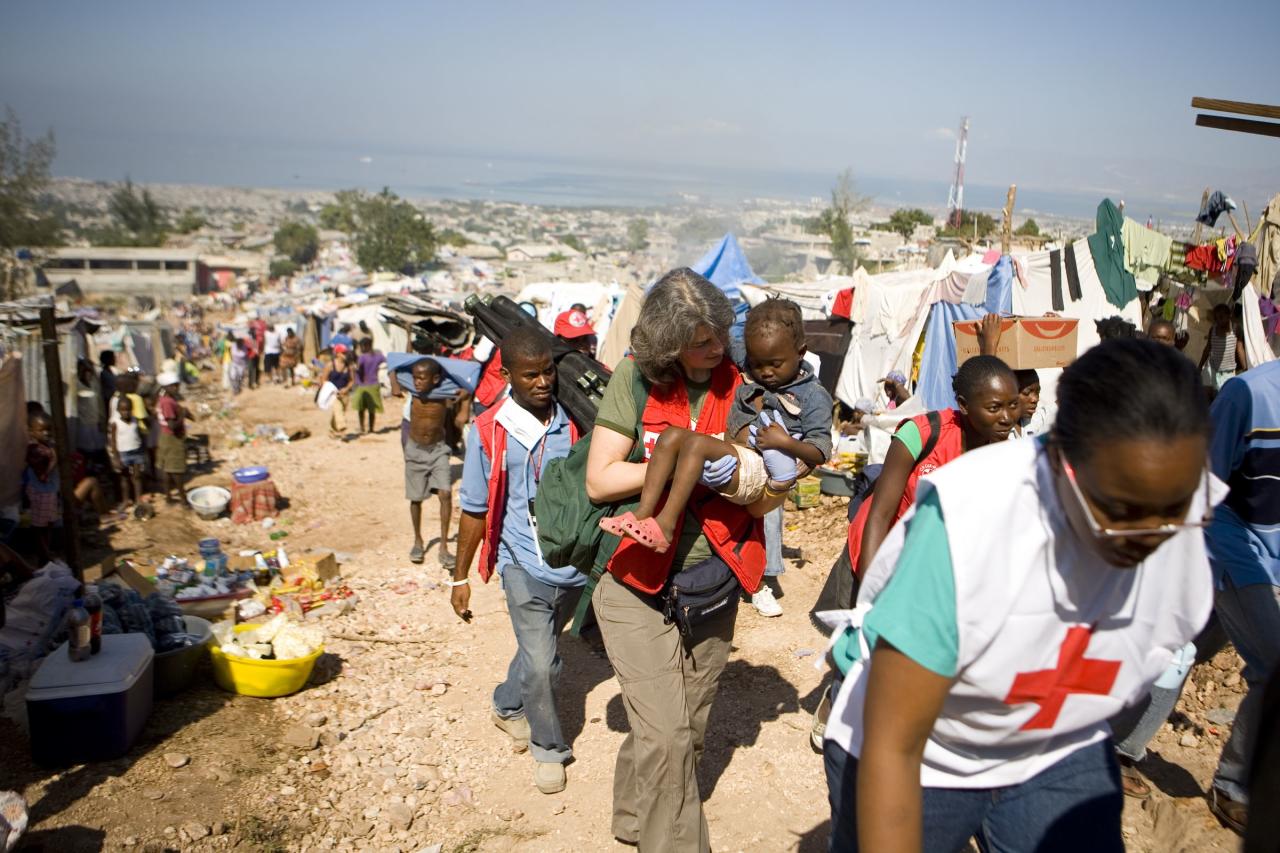
Winnie Romeril, a Red Cross disaster response volunteer, carries a child in Croix Desprez towards a First Aid Post.

Winnie’s courage and skill reminds me of Clara Barton, who started out as a teacher, became one of the first women to work in the U.S. Patent Office, and then took to the battlefields of the Civil War, ministering to the wounded and suffering on both sides of the conflict.

After attending to civilians during the Franco-Prussian War in Europe, she returned to the United States to found the Red Cross, which for more than 130 years has mobilized women – and men – to help prepare for, prevent and respond to emergencies.

Currently, two-thirds of our Red Cross volunteers are women, nearly 70 percent of the paid workforce is women and nearly half of the executive ranks are women.

Bonnie McElveen-Hunter, chairman of the board, and Gail McGovern, president and CEO, top the leadership team.

It’s no small job to head a $2.65 billion organization that Americans rely on to respond to more than 60,000 natural and human-caused disasters a year; collect and test some 40 percent of the nation’s lifesaving blood supply; train millions of people in first aid, CPR, AED, water safety and youth preparedness; and provide more than half a million services to our men and women in the armed forces.

People like me are the hands and heart of the Red Cross too: donating blood, responding to disasters, helping install smoke alarms to make neighborhoods safer, providing leadership at the chapter level and keeping my first aid, CPR and AED skills up to date.

I’m happy to celebrate International Women’s Day by focusing on women – past and present – who provide vital services. I know it happens all over the world every day, in actions big and small.

To investigate what you – woman or man! – can do, please check out redcross.org during Red Cross Month.

Posted by Ryan Lang, Red Cross Board Member and volunteer


Celebrating our Volunteers and Supporters this Red Cross Month

By Samantha Puselski, American Red Cross communications volunteer

For 80 years, March has been declared American Red Cross Month with a presidential proclamation. The tradition started in 1943 with President Franklin D. Roosevelt to recognize all those who have answered the call to help others through the American Red Cross.

This Red Cross Month, we celebrate the work of the Northern Ohio Red Cross volunteers – who make up over 90 percent of the Red Cross’s workforce. We also celebrate the supporters – those who have donated blood, donated funds, taken a course, shared their story or contributed to the mission in other ways. The work of the Red Cross is not possible without those who volunteer, work and provide support.

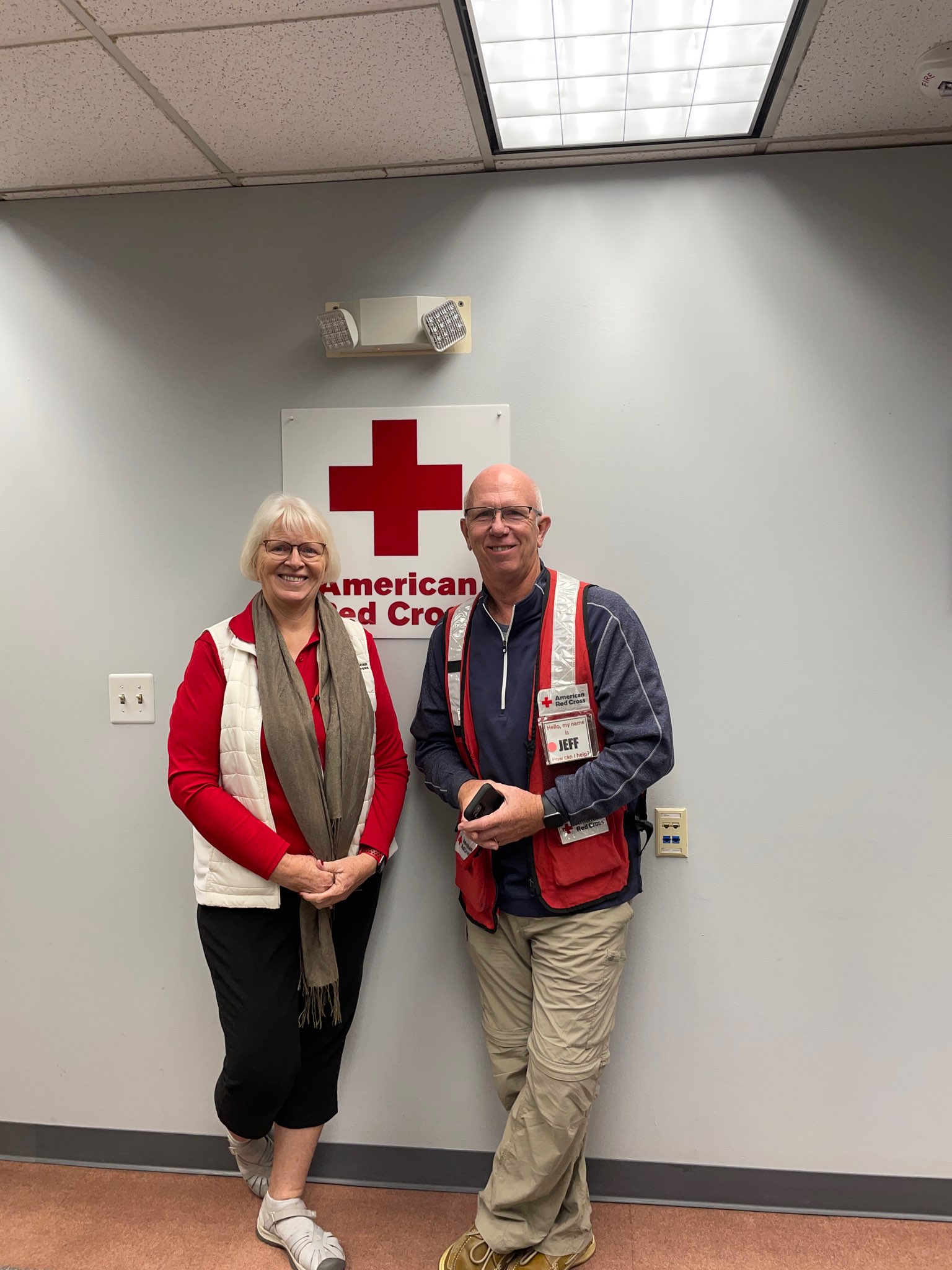
American Red Cross volunteers Callene Derrick and Jeff Mann

While the Red Cross is a national and international organization, they also have a profound impact locally every single day. Here are just a few facts that represent the history and magnitude of the work that has been done thanks to the support our communities and partners provide:

 The Red Cross and our partners have installed more than 100,000 smoke alarms and helped create more than 37,400 escape plans in Northern Ohio households through the Sound the Alarm campaign.
 The Red Cross responds to disasters providing support to those affected. Most recently the Red Cross provided more than 100 overnight stays and nearly 400 meals to those in East Palestine, Ohio.
 The Red Cross helped survivors of the Titanic.
 Service members in every U.S. conflict since the Spanish-American War have been supported by the Red Cross.
 International Committee of the Red Cross was won the most Nobel Peace Prizes.
 The Red Cross has responded to 3 million U.S. disasters since 1881.

Take Action this Red Cross Month

There are many ways you can support the Red Cross. Celebrate Red Cross Month by supporting your community through one or more of these activities:

 Donate Blood. About 40% of the nation’s blood supply comes from Red Cross blood donors. Blood drives are held every week in locations across Northern Ohio. Find an upcoming drive.
 Become a volunteer. The Red Cross offers many different opportunities to volunteer in Northern Ohio. These roles include administrative support, clinical support, disaster response, IT support, blood donor ambassadors and more.
– Interested in becoming a volunteer? Join the upcoming volunteer information session
on March 10th
.
 Make a Financial Donation. Donations of any amount can make a difference. The Red Cross offers several different ways that you can make a financial contribution.
 Take a Class. Get trained and certified in a lifesaving skill. Find a class.

Posted by Ryan Lang, American Red Cross Board Member and communications volunteer


No more donor deferrals related to ‘mad cow’ concerns

John Dowell, blood donor

By EILENE E. GUY, American Red Cross volunteer

During this National Blood Donor Month, I’d like to salute American Red Cross blood donor John Dowell, even though he out-ranks me.

John, who makes his home in Lakewood, finished his service in the U.S. Air Force as a senior airman/sergeant. When he returned to civilian life, he tried to donate blood but couldn’t because he had been at RAF Upper Heyford near Oxford, England, from March 1981 to March 1983.

For decades, the U.S. Food and Drug Administration banned blood donations from folks who had spent time in certain European countries during the 1980s and ‘90s, to prevent transmission of a deadly brain infection commonly known as “mad cow disease.”

The Red Cross, of course, respected that ban, which meant turning away potentially hundreds of thousands of donors, including many in the military community who had served overseas.

Last year, the FDA lifted the final section of its “mad cow” ban after finding there had been no reported cases of the brain disease associated with time spent in the United Kingdom, France and Ireland.

“As soon as I heard about it (lifting of the ban), I was right down there to donate the next day,” John said.

John comes from a family of dedicated blood donors – mom, dad and sister – so he started donating when he was in high school. “I was just a couple of pints short of a gallon when I went into the air force,” he said.

John Dowell donating blood 2022

“I believe in it. It’s important to have that spare blood on the shelf,” he said. “I don’t try to recruit people – if you want to donate, fine. If not, I’ve got your back,” he added with a chuckle.

But John is active in a couple of Facebook groups populated by the military community. When he posted about the lifting of the “mad cow” donor ban, “I got a big response, an overwhelming response. ‘Hey, that’s great to know. Thanks for putting out the word’,” his Facebook friends replied.

So, I want to salute Sgt. John Dowell for his service, in uniform and as a civilian, doing his bit to be sure there’s “blood on the shelf” for those who need a lifesaving transfusion.

If you, or someone you know – military or civilian – has been deferred from giving blood because of the “mad cow” (variant Creutzfeldt-Jakob Disease) criteria, you can contact the Red Cross Donor and Client Support Center at 1-866-236-3276 for more information.

During National Blood Donor Month, please consider joining the ranks of folks, young and old, who serve their country in a profound way. I salute you.

To find a blood drive near you, go to http://www.redcrossblood.org or call 1-800-REDCROSS.

Posted by Ryan Lang, American Red Cross volunteer and board member

Day of service in Newcomerstown

Neighborhood where family perished in home fire made safer

Dozens of residents in Newcomerstown, Ohio are safer in their homes, after Red Cross and community volunteers banded together on Saturday to install free smoke alarms and share home fire safety information.

The effort targeted the neighborhood where six people died – four children and their parents – in a fire on the day after Christmas. Investigators found no evidence of smoke alarms in the home.

Newcomerstown Mayor Patrick Cadle and five village council members gathered with about two dozen Red Cross volunteers, some coming from as far away as Cleveland, for a brief training session prior to splitting into teams of three or four and going door to door on several streets in the neighborhood.

Newcomerstown Mayor Patrick Cadle

“I was unaware that the Red Cross did this,” said Mayor Cadle, referring to the Red Cross Home Fire Campaign, which includes making homes safer with the installation of free smoke alarms.

“If I had known they didn’t have smoke alarms I would have contacted you for them,” said Kitty Clay, who lives on Spaulding Avenue, next door to the home that burned. She said she and other neighbors were outside for several hours, watching firefighters battle the blaze. “There was nothing we could do,” she said.

Village Councilmember Michael Wise shares home fire safety information with Spaulding Avenue resident Kitty Clay

Village Council member Michael Wise was on the team that inspected Kitty’s home on Saturday. He made sure there was a working smoke alarm on every level of the home. It was one of 52 homes made safer that day, as 136 smoke alarms were installed.

“We’re not stopping there,” said Tim O’Toole, Regional Disaster Officer for the Red Cross of Northern Ohio. “We plan to come back in April, when we include Newcomerstown as part of our Sound the Alarm event,” he said. Sound the Alarm is an annual campaign that targets neighborhoods at high risk for home fires nationwide for home fire safety visits and smoke alarm installations.

“This is just the beginning,” said Elizabeth Cante, Disaster Program Specialist with the Heartland, Stark and Muskingum Lakes Chapter. “We will also be helping students at the elementary school whose classmates lost their friends with preparedness education. Our job has only just begun.”

See more photos from the day of service in Newcomerstown here.

Visit soundthealarm.org/noh for more information on how to make your home safer, and to request free smoke alarms.