In Northeast Ohio, and everywhere, Red Cross committed to helping anyone in need

By Tim Poe, American Red Cross Volunteer

September 18, 2019- In light of reports over the last few months that some may be reluctant to seek help following a disaster or tragic event, we would like to reiterate that, “The Red Cross is committed to delivering help to anyone in need—regardless of race, religion, gender, sexual orientation or citizenship status—and to remain a neutral and impartial party, so we can access and help people on all sides,” as stated in this national press release.

The American Red Cross works to ensure that all people affected by disasters receive care, shelter and hope.

american20red_1539353655751.jpg_58765830_ver1.0


Our commitment to assisting all those in need is reflected daily in Northeast Ohio. Whether a home fire, flood, tornado, storm or other disaster, our teams respond. We do not ask about a person’s beliefs, orientation or citizenship—and we maintain confidentiality.

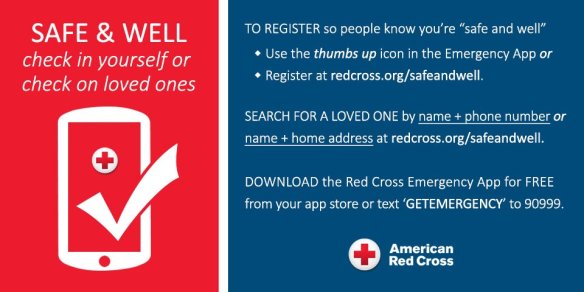
Following a large event, an important resource is the Safe and Well website at https://safeandwell.communityos.org/cms/index.php, in Spanish at https://safeandwell-es.communityos.org/cms/index.php. Following a disaster, those impacted can use the site to mark themselves “safe and well,” provide details and post a brief message, allowing loved ones to search for them.

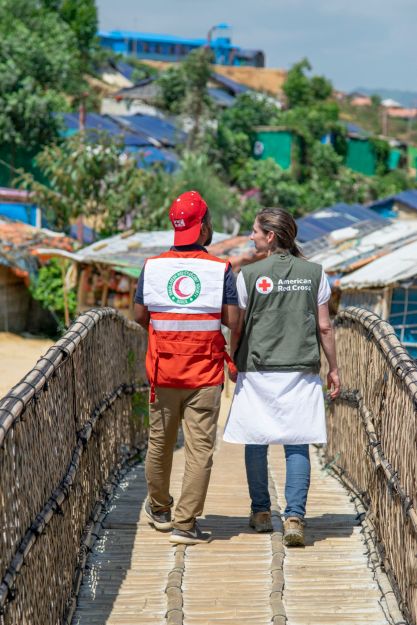
Cox’s Bazar, Bangladesh – Migration/Refugee Crisis 2019

In addition, the Red Cross has a number of programs to assist migrants, asylum seekers and refugees. These include disaster relief, aid and an international service to reconnect families. An overview of programs is available at: https://www.redcross.org/about-us/news-and-events/news/how-does-the-american-red-cross-help-migrants.html.

In Northeast Ohio, those seeking assistance or information can contact their local chapter. Phone numbers and addresses are available at: https://www.redcross.org/local/ohio/northeast.html. A national Spanish-language site is available at: https://www.redcross.org/cruz-roja.html.

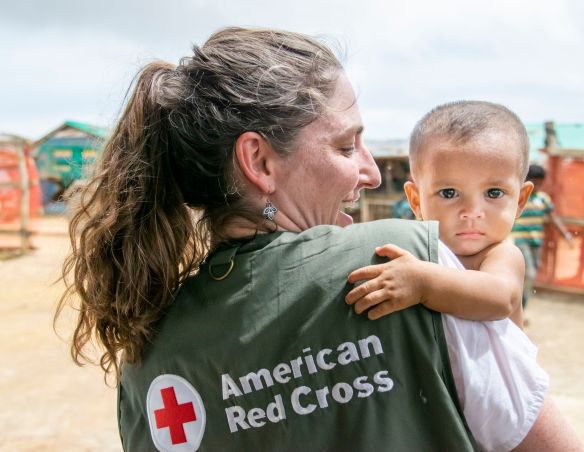
Cox’s Bazar, Bangladesh – Migration/Refugee Crisis 2019

In times of need, please remember that anyone can call on us for assistance. The Red Cross is guided by seven fundamental principles of humanity, impartiality, neutrality, independence, voluntary service, unity and universality. Our mission statement and values can be found at: https://www.redcross.org/about-us/who-we-are/mission-and-values.html.

Edited by Glenda Bogar, American Red Cross Volunteer

Connect with neighbors to plan ahead

By Beth Bracale, American Red Cross Volunteer

September 16, 2019- Last year, our friends watched their barn burn to the ground in the middle of the night. They were unable to save their animals, the horror of which they are unable to forget. This summer, another friend went to get gas for his mower and came home to find it floating down the road, along with his shed. Eric Alves, regional communications specialist for the American Red Cross of Northeast Ohio, reports that this past July, flash flooding in Apple Creek, Ohio, caused residents to have to shelter overnight at Grace Church. That same weekend, a road washed out in Kinsman. Residents who were trapped in their homes had to be rescued by boat.

Eilene Guy photo

We have no idea when disaster will strike or how quickly we’ll need to respond. We’ve all been alerted numerous times to have a plan in case our families need to escape and to have supplies ready to grab on the way out the door. Many residents in Northeast Ohio live near the Perry nuclear power plant, where evacuation plans are printed in the local telephone books. People often say they’ll worry about it when the time comes. But in the panicked moment when you have to act, will you be thinking clearly enough to protect your family and get them to safety?

Kinsman1

Part of preparing your family for an emergency includes preparing as a community. Who in your neighborhood would need help in an emergency? An older couple, perhaps? A single mom or a neighbor confined to a wheelchair? What about your animals – is there a safe place in the area to take them if you have to leave your home? What resources are nearby in case there is no power, no water and/or limited lines of communication?

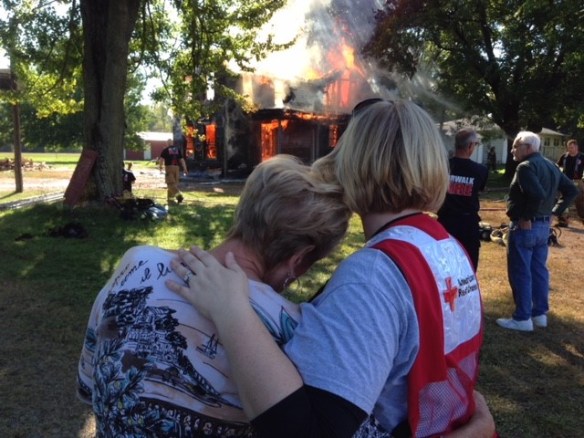
Sound the Alarm Event in Capitol Heights, Maryland 2019

In the farming community where I live, families talk together about how they might support each other during a disaster. When the rising waters of Lake Erie threatened to shut down the public water system, we knew which farms had natural springs that could be relied on for ourselves and our animals. If an ice storm leaves us in a blackout, Anna and Joe who heat their house with electricity know they can take their small children to Jill and Trevor’s farm a mile down the road and stay warm near the wood stove. We know to call Jim and Matt when a tree comes down, for example. Or that Patti will drop everything to watch our children if we’re rushed to the hospital.

We all need help sometimes, and we are each able to help, even in small ways. Talk to your neighbors about how you might support each other in times of need. Community building can be fun. Have a potluck or a block party and get to know each other!

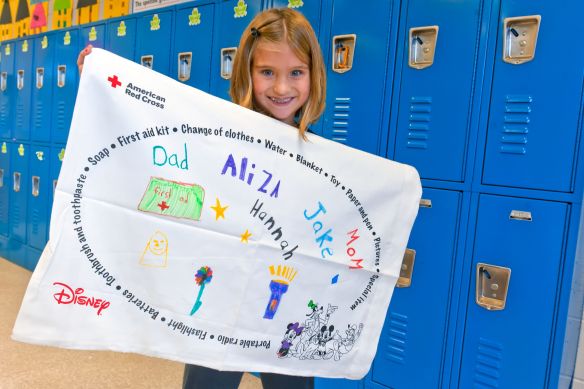
The Pillowcase Project, New York 2013

The Red Cross website provides a wealth of information to help you prepare for emergencies: https://www.redcross.org/get-help/how-to-prepare-for-emergencies/types-of-emergencies.html. Don’t wait until it’s too late!

Edited by Glenda Bogar, American Red Cross Volunteer

Canton South High School teacher awarded American Red Cross Certificate of Merit

By Tim Poe, American Red Cross Volunteer

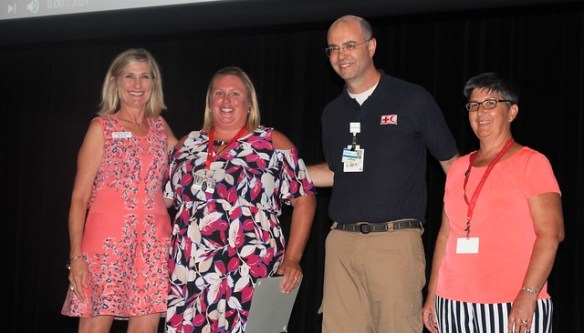
September 13, 2019- For Canton South High School, the new school year began with a celebration of heroism and life.  At the school’s first staff meeting, the American Red Cross presented Kristen Smith, one of the school’s teachers, with its Certificate of Merit. It is the highest award given by the Red Cross to an individual or team of individuals who saves or sustains a life by using skills and knowledge learned in a Red Cross Training Services course.

48593467527_fef36b00b1_z

The award was given to Kristen for her efforts that helped save a fellow teacher’s life. Last January, Kristen—who is trained in Red Cross First Aid/CPR/AED—recognized the signs when a colleague began to choke during lunch. She quickly reacted, confirmed that the teacher was indeed choking, and performed abdominal thrusts until food was dislodged from her colleague’s airway.

Kristen’s colleagues nominated her for the Certificate of Merit over summer break, worked with Red Cross representatives to verify her remarkable actions, and helped plan for the award’s presentation. At the school’s first staff meeting, Kristen was surprised with the award.

48593470272_13f968d57c_z

Kimberly Kroh, executive director of the American Red Cross’ Stark & Muskingum Lakes Chapter, presented the award. “It was such an honor to present Kristen Smith with the Certificate of Merit, one of the highest awards given by the American Red Cross,” she said. “It amazes me how one second can change someone’s life, and Kristen did just that when she saved the life of a fellow teacher.”

Jeff Moore, principal of Canton South High School, said, “Kristen exemplifies what we want all of our staff and students to be, someone who takes their education/training and uses those for the betterment of others, someone who is caring and is not afraid to be involved. We could not be more proud of Kristen and all she represents in Wildcat Nation.”

48593330826_6a45b83b42_z

The Northeast Ohio Region of the American Red Cross is proud to have been part of the presentation and to have prepared Kristen for her heroic actions. The skills she learned certainly helped her save a life.

The American Red Cross offers a number of First Aid, CPR, AED and other classes throughout the year. If you would like information, visit https://www.redcross.org/take-a-class.

48593469877_222c4593f6_z

If you wish to nominate someone for a lifesaving award, visit https://www.redcross.org/take-a-class/lifesaving.

Click here to visit our Flickr account to see more photos from Kristen’s award presentation.

Edited by Glenda Bogar, American Red Cross Volunteer

Reflections from Sept. 11: Experiencing New Yorkers’ outpouring of volunteerism

By Debbie Chitester, Disaster Program Manager, Summit, Portage, and Medina Counties Chapter

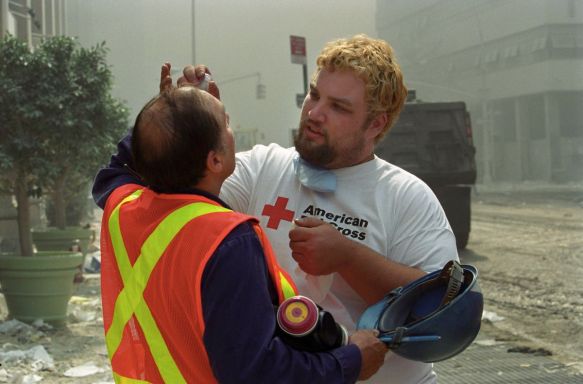
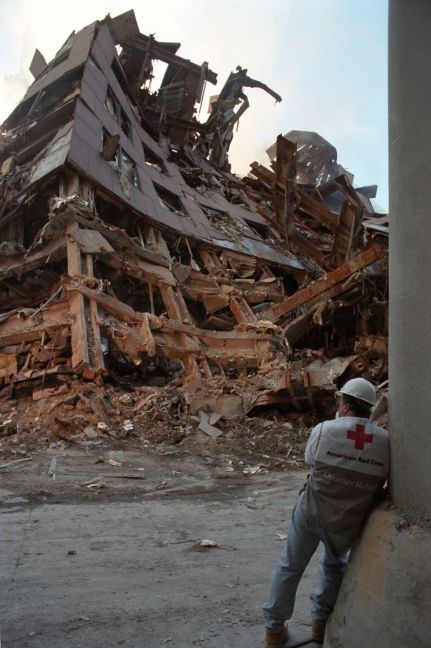
September 11, 2019- This year marks 18 years since the tragedies of Sept. 11 occurred. Each year I reflect upon that time and remember those who were lost, but also the good work of people that rushed to the Twin Towers, the Pentagon and Shanksville, Pennsylvania, to help. I remember the support that was given to everyone affected, either directly or those coming to help the ones in need. The following is what I wrote after I returned from three weeks working in New York City. I still reflect upon it often.

2001 Terrorism NYC

I have witnessed probably the largest outpouring of volunteerism in my lifetime. In New York City, the American Red Cross processed 21,000 volunteers by Oct. 11, 2001, one month after the tragedy.

2001 Terrorism NYC

The local volunteers came out in spontaneous droves — literally 24 hours a day — giving truth to the phrase “New York: The City that Never Sleeps.” People of all races, creeds and religions came out to help. From caterers to computer operators, from men in suits to women in hard hats, flight attendants, retired phone operators, out-of-work actors, working actors, college students, musicians, nurses, doctors, psychologists, rabbis and even a medium — socioeconomic status did not matter. This city joined together to heal itself.

2001 Terrorism NYC

And that is how we viewed this . . . a healing process for the residents of the New York metro area. Most did not care what they did, just so they could help. They were drivers, data entry specialists, family services and respite center workers, cooks and greeters. No job was too small.

2001 Terrorism NYC

On the corners were groups of people with large signs saying, “THANK YOU” and cheering. At first I thought, “Well they must think we are firefighters or police.” Then we stopped at the corner and they saw the Red Cross and they said, “Thank you, Red Cross!” Driving through checkpoints late at night after a VERY LONG and stressful day, the police officer that checked IDs said, “Hey Red Cross, thanks, you are doing a great job!” That made us all feel good. This was not only at the beginning of my journey; I saw those signs when I left three weeks later.

2001 Terrorism NYC

It was difficult to leave this operation. Usually when I leave, the job is coming to an end, and I transition to the local chapter to carry on the job of recognition and follow-up. Not this time. We knew that the work was not done, and we needed to go home to our other “families.” But there was a feeling of accomplishment knowing that so many New Yorkers helped their community.

Edited by Glenda Bogar, American Red Cross Volunteer

Red Cross providing food, shelter along East Coast for residents fleeing Dorian

Also committing an initial $2M to help Bahamas
Bahamas Situation Dire, Damage Hampering Relief Efforts;
Blood Donors Outside Storm Area Asked to Give

September 6, 2019- The American Red Cross has mounted a major response to help people in Hurricane Dorian’s destructive path.

An initial $2 million has been committed to assist in meeting the immediate needs of those affected by Hurricane Dorian in the Bahamas, while continuing to provide shelter and food to thousands of people in the United States.

The storm left unbelievable devastation behind in the Bahamas. Abaco and Grand Bahama were particularly hard hit. Initial aerial assessments show widespread devastation to the islands, from destroyed homes to contaminated water sources.
janelle (2)

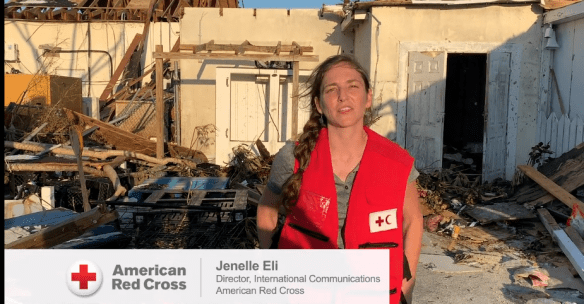
Jenelle Eli, director, International Communications for the American Red Cross, has deployed to the area and reports the situation is dire, especially on Abaco. Video footage of Abaco shows total obliteration of portions of the island and large areas completely covered by water. Thousands are in need of food and water.

“Our relief operation is growing, but we are also facing serious challenges in terms of delivering aid,” Eli reports. “These challenges include damaged airports and destroyed telecommunications networks. Even search-and-rescue choppers haven’t been able to reach some people because there’s no place to land. These challenges are affecting everyone.”

A rapid assessment and response team is currently focusing on emergency shelter and urgent needs. Relief supplies to support temporary shelter needs of 1,500 families are in country. Red Cross shelter and other sector specialists are on the ground to provide immediate relief while conducting assessments, and search and rescues is a current priority while the full scope and scale of needs is still being determined. Red Cross volunteers and staff will also distribute meals and food rations to people who may have gone without food in days.

Eli, a native of Northeast Ohio,  continued, “People I spoke to on Abaco today told some pretty horrific stories. Every person I spoke to lost their home. They each had a story about trying to hold their roofs down in the high winds and then running from neighbor’s home to neighbor’s home seeking safety. But each home they sought shelter in got destroyed too. They said that the most damaged areas are decimated.”

Eli reported those she spoke with all echoed this sentiment: “How am I going to start over? This is going to be so hard.” Many of them didn’t know the fate of their loved ones. And they worry that their family members fear them dead since they haven’t been in touch. See more in this video.

The International Federation of the Red Cross has announced an emergency appeal for $3.2 million to support the Bahamas Red Cross as it responds to the storm.
Hurricane Dorian 2019

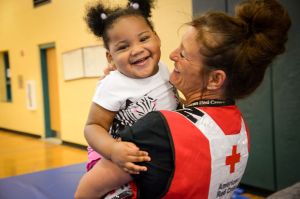
September 5, 2019. Jacksonville, Florida. American Red Cross nurse Jana Cearlock coaxes hugs and smiles from 2-year old Karmin Nelson, a resident, along with her great-grandmother at the Legends Center evacuation shelter in Jacksonville, Florida.  Photo by Daniel Cima/American Red Cross

On Thursday night, more than 5,600 people stayed in 112 Red Cross and community evacuation shelters in Georgia, South Carolina, North Carolina and Virginia.  To date, the Red Cross and community organizations have provided nearly 37,000 cumulative overnight stays for Hurricane Dorian.

The Red Cross has mobilized more than 2,700 trained responders from all over the country, including 19 volunteers from Northeast Ohio, to assist in hurricane affected areas.

One of the Northeast Ohio disaster volunteers deployed to assist with Hurricane Dorian is Tom Quinn of Wadsworth.

Volunteers constitute 90 percent of the Red Cross workforce. Volunteers make it possible to respond to an average of more than 62,000 disasters every year, most of them home fires. Disaster services volunteers provide food, shelter, comfort and care for families affected by major disasters such as fire, hurricanes and tornadoes.

While deployed to Florida, Tom assisted at an emergency evacuation shelter at Evans High School in Orlando, FL. One day, Tom selflessly took it upon himself to play with and entertain children living in the shelter to help give them a sense of normalcy during the difficult moment.

Volunteer mental health and health services professionals have also provided more than 10,000 contacts to provide support and care to people affected by Hurricane Dorian.

Along with partners and community organizations, the Red Cross has served more than 85,000 meals and snacks.

In advance of Dorian, the Red Cross has also deployed 110 emergency response vehicles (ERVs), including two ERVs from Northeast Ohio, and 104 tractor trailers loaded full of relief supplies, including cots, blankets and 63,000 ready-to-eat meals to help people in the path of Hurricane Dorian.

LOOKING FOR A LOVED ONE?

People concerned about US Citizens traveling in Bahamas should contact the US State Department Office of Overseas Citizens Services at 1-888-407-4747.

HOW YOU CAN HELP

You can make a difference in the lives of people impacted by Hurricane Dorian in both the U.S. and the Bahamas. Visit redcross.org, call 1-800-RED CROSS, or text the word DORIAN to 90999 to make a $10 donation. Donations enable the Red Cross to prepare for, respond to and help people recover from this disaster. In the U.S., this includes providing food, shelter, relief supplies, emotional support, recovery planning and other assistance.

PLEASE GIVE BLOOD

Hurricane Dorian has forced the cancellation of approximately 70 Red Cross blood drives and donation centers in Georgia, South Carolina, North Carolina and Virginia resulting in more than 1,800 uncollected blood and platelet donations. We urge eligible individuals in unaffected areas to give blood or platelets to ensure a sufficient blood supply for patients. The Red Cross currently has an urgent need for blood donations following a summer shortage. In addition to cancelled blood drives, we anticipate low blood donor turnout in and around affected areas due to poor weather conditions this week. Schedule an appointment today by using the Red Cross Blood Donor App, visiting redcrossblood.org or calling 1-800-RED CROSS (1-800-733-2767).

Interested in assisting those in a hurricane-affected area? Find out what it takes to help

By Tim Poe, American Red Cross volunteer

September 4, 2019- As the 2019 hurricane season kicks into full gear, the Northeast Ohio Region of the American Red Cross is preparing to respond wherever needed. Each year, our community’s kindness, generosity and fortitude is evident as people seek ways to help, whether through donations, giving blood or deploying to affected areas.

Eilene Guy photo

For those considering deploying to a hurricane or other national disasters as Red Cross volunteers, here is a brief overview of the requirements:

  • Deployment is a two-week (14 consecutive days) minimum commitment.
  • A two-day training session is required prior to deploying.
  • A background check is required.
  • You must be at least 18 years of age.
  • You need to be able to leave within 24-48 hours of notice once training is complete.
  • You will likely be staying in a staff shelter/dormitory-type residence and sleeping on a cot.
  • You must have no significant health limitations.
  • There may be physical requirements for certain tasks.

Canfield Fair

The Red Cross covers travel and training expenses. Please note that there is no guarantee you will be deployed after training is completed. We send volunteers based on the needs of the affected area, which frequently change.

42084271741_ee80c9186c_z (1)

If you are interested or wish to learn more, visit www.redcross.org/volunteer or contact the Volunteer Services department at 216-431-3328 or NEOvolunteer@redcross.org.

Furman Monica Teresa at US Bank distribution

In addition, local disasters such as home fires continue to occur even during national events, and the American Red Cross of Northeast Ohio assists people in our region daily. Volunteer opportunities are available in a number of fields, including Disaster Response. If you would like to explore these opportunities, connect with us using the contact information above or click here for the Northeast Ohio volunteer page.

Edited by Glenda Bogar, American Red Cross volunteer 

Get ready for emergencies during National Preparedness Month

By Doug Bardwell, American Red Cross volunteer

August 30, 2019- Are you ready for an extended power outage? Could you, for example, provide your family with food and water for two weeks if the unthinkable happened?

As Hurricane Dorian approaches the southeast coast of the U.S., with potentially 50,000 people in Florida, Georgia and South Carolina in need of emergency shelter, the importance of getting prepared for any possible emergency is clear.

preparedness month 1

Most Clevelanders don’t expect a hurricane. But do you remember the power grid problems that once plagued us, right here in Northern Ohio?

Think back to August 2003

Eight U.S. states and Ontario, Canada, were left without power for up to two weeks when a power grid failure started outside Cleveland, Ohio, on Aug. 14, 2003. One of the first, dire side effects in Cleveland was that people in higher elevations would only have a three-hour supply of water.

Electric pumps could not deliver replacement water to the municipal water towers. Gas pumps did not work. Elevators did not work. Traffic lights did not work. Cash registers did not work. ATMs did not work. Business came to a halt.

Stores in my neighborhood were sold out of water and batteries in less than three hours; and they only accepted buyers with cash.

It was 14 days before all 55 million affected residents had their power restored. How would you fare if that happened today?

In honor of National Preparedness Month this September, we propose five simple tips to get ready:

  1. We are so dependent on our cellphones that you really need to consider having a backup battery source. Keeping a charged, high-capacity battery pack, like one of these, can recharge your phone multiple times.
  2. Personal emergency lights like the Red Cross Blackout Buddy are always charged and can provide a nightlight option.
  3. Do you know how to open your garage door if the power goes out? Most garage doors are controlled by an automatic garage door opener, which won’t work without electricity. However, just about all have a pull chain or cord that will release the door so you can operate it manually. Learn how it works before the power goes out.
  4. If a power surge hits your home, it could fry your computer’s hard drive and you could lose all your documents and photos. Do you keep copies of important items “in the cloud” on one of the free online storage applications like Dropbox, OneDrive or Google Backup and Sync? Even if your computer is destroyed or lost, those files will always be available at a later date if stored in the cloud.
  5. Portable camp stoves come in a variety of sizes and prices. Having one on hand is great if you need to boil water for baby bottles or to make coffee or oatmeal. Many have multiple burners that can cook entire dinners. Use only outside with good ventilation.

If you’ve read this far – congratulations. To be even better prepared, watch the video, download the   and read more here. The question isn’t, “Could it happen again?” The question is, “When will it happen again?” However, the most important question is, “Will you be ready?”

Edited Glenda Bogar, American Red Cross volunteer

Safety tips to help you enjoy the end of summer fun this Labor Day Weekend

August 28, 2019- Labor Day is considered the unofficial end of the summer in Northeast Ohio, and with that comes a lot of traveling and social gatherings.

Whether you are planning to host family and friends for a cookout, enjoy a day ofCentennial Campaign 2015 swimming at Edgewater Park Beach or driving to attend the Cleveland National Air Show, the American Red Cross has offered the following tips on how to safely enjoy the holiday.

Driving safety: When driving, make sure you are well rested and alert, wear your seat belts, follow the speed limit and rules of the road, make frequent stops, and don’t let your gas tank get low.

  • Pack a first aid kit and emergency preparedness kit in each vehicle.
  • If you plan on drinking alcohol, designate a driver who won’t drink.
  • Give your full attention to the road. Avoid distractions such as cell phones.
  • Use caution in work zones. Don’t follow other vehicles too closely.
  • If you have car trouble, pull as far as possible off the highway.

Water safety: Be water smart. Make sure to have swimming skills and know how to help others.

  • Pay close and constant attention to children you are supervising in or near water.Aquatics Centennial Campaign 2014
  • Prevent unsupervised access to water with adequate barriers for pools and spas.
  • Learn swimming and water survival skills.
  • Children, inexperienced swimmers and all boaters should wear properly fitted U.S. Coast Guard-approved life jackets.
  • Always swim with a buddy in a life-guarded area.

Barbecue safety: Always supervise a barbecue grill when in use. You can also follow these steps:

  • Don’t add charcoal starter fluid when coals have already been ignited.
  • Never grill indoors — not in your house, camper, tent or any enclosed area.
  • Make sure everyone, including pets, stays away from the grill.
  • Keep the grill out in the open, away from the house, the deck, tree branches or anything that could catch fire.
  • Use the long-handled tools especially made for cooking on the grill to keep the chef safe.

Here are a few other suggested steps to take ahead of Labor Day:

  • Learn First Aid and CPR/AED skills so you’ll have the knowledge and skills to act in an emergency until help arrives. Take a class (redcross.org/takeaclass), download the free Red Cross First Aid app and open the Red Cross First Aid Skill for Amazon Alexa-enabled devices.
  • Go to redcross.org/watersafety for a variety of water safety resources and courses. Download the free Red Cross Swim app.App Icon
  • Give blood. The number of people donating blood often drops during the summer when people are on vacation and schools are closed. Visit redcrossblood.org, download the Red Cross Blood app, or enable the Red Cross Blood Skill for more information or to schedule your donation.App Icon

Edited by Glenda Bogar, American Red Cross volunteer

Volunteers create quilts to help give those suffering from a local disaster a sense of home

By Eric Alves, Regional Communications Specialist, American Red Cross of Northeast Ohio

August 26, 2019- Imagine that one day your home, unfortunately, is lost in a home fire. On the darkest day of your life, when you have lost everything you own, you stand there lost, unsure of how you will ever recover.

Now imagine an American Red Cross Disaster Action Team (DAT) member standing next to you providing you comfort and guidance on the many ways the Red Cross could assist you. Then the DAT worker provides you and your family with a handmade quilt, giving you a sense of home and reassurance that you will get back on your feet.

This is the experience of residents in Carroll, Harrison, Stark and Tuscarawas Counties who have been affected by a local disaster.

The quilts are a project of compassion for a group of Stark and Muskingum Lakes Chapter volunteers. Hazel Betz, Dolly Gibas, Carol Krantz, Martha MacLachian, Irene McGill, Pat Mercier, Wilma Nicholson, Donna Phillimore and Jean Phillimore, more affectionately known as the “sewing ladies,” channel their love with each stitch and patch.

IMG_6573

“The impact the sewing ladies have on individuals who are facing the worst day in their lives cannot be understated,” said Kim Kroh, executive director for the Stark and Muskingum Lakes Chapter. “These women show that everyone has a part to play in helping get people back on their feet following a local disaster. The simple act of creating quilts with compassion has a lasting and powerful effect on individuals who have lost everything. They truly are instrumental members of the Stark and Muskingum Lakes Chapter.”

IMG_6568

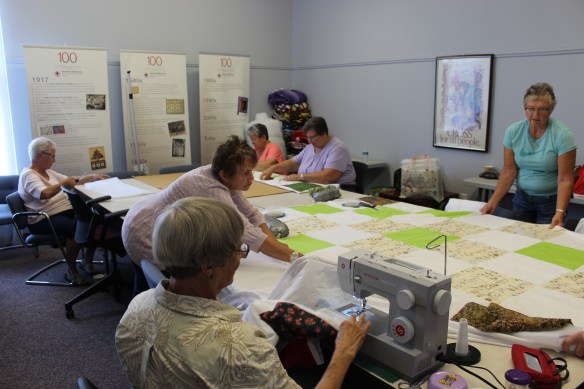
The nine women meet at the chapter’s Canton office. Amid batting and fabric donated by JoAnn Fabrics, the ladies share laughter and friendship, and like an assembly line, the ladies each have a specific task. From organizing fabric to finishing touches, the group takes pride in every detail to let people suffering from a local disaster know that someone cares.

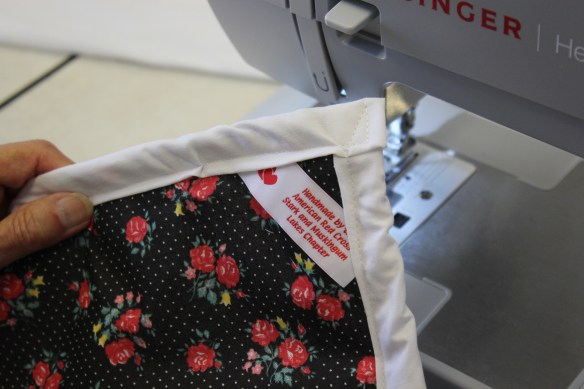
Once the quilts are complete, there is one last detail. Each quilt gets a special tag sewn into a corner. The tag, which has heart symbols, reads “Handmade by the American Red Cross Stark and Muskingum Lakes Chapter.”

IMG_6570

Once they are done, the quilts are placed inside an emergency response vehicle. Each family who suffer a home fire or other local disaster receives one quilt per bed inside the residence.

This year, the sewing ladies of the Stark and Muskingum Lakes Chapter were able to partake in a special honor. During the Crossroad Division meeting in Columbus, in honor of Division Vice President Sue Richter’s 50th anniversary with the Red Cross, Sue was presented with a special quilt, sewn by the women, which featured the Red Cross’ symbol.

IMG_7888

Carol, Dolly, Donna, Hazel, Irene, Jean, Martha, Pat and Wilma exemplify what it means to be a Red Crosser. Not only do they show that there is a volunteer opportunity to fit anyone’s interest, but with each stitch, and every quilt made, these women provide hope and a warm sense of home during someone’s darkest hour.

IMG_6565

If you would like to use your skills and interests to help others and become a Red Cross volunteer like the sewing ladies, please visit redcross.org/volunteer to find opportunities in your area.

Edited by Glenda Bogar, American Red Cross volunteer

Safety tips as Northeast Ohio students get ready to go back to school

August 21, 2019- The school bells will be calling students back to the classroom soon in Northeast Ohio and StayWell PHSS stock photographythe American Red Cross wants to make sure your student is safe as they head back to school for the upcoming year.

SCHOOL BUS SAFETY

  • If children ride a bus to school, they should plan to get to their bus stop early and stand away from the curb while waiting for the bus to arrive. Cross the street at the corner, obey traffic signals and stay in the crosswalk.
  • Never dart out into the street or cross between parked cars.
  • Teach your student to board the bus only after it has come to a complete stop and the driver or attendant has instructed them to get on.
  • Kids should board their bus only, never an alternate one.
  • Make sure your student always stays in clear view of the bus driver and never walks behind the bus.

GETTING TO SCHOOL BY CAR, BIKE, ON FOOT

  • If children go to school in a car, they should always wear a seat belt. Younger Typhoon Haiyan 2015children should use car seats or booster seats until the lap-shoulder belt fits properly (typically for children ages 8-12 and over 4’9”), and ride in the back seat until they are at least 13 years old.

  • If a teenager is going to drive to school, parents should mandate that they use seat belts. Drivers should not text or make calls using their cell phone and should avoid eating or drinking while driving.
  • Some students ride their bike to school. They should always wear a helmet and ride on the right in the same direction as the traffic is going.
  • When children are walking to school, they should only cross the street at an intersection, and use a route along which the school has placed crossing guards. Parents should walk young children to school, along with children taking new routes or attending new schools, at least for the first week to ensure they know how to get there safely. Arrange for the kids to walk to school with a friend or classmate.

DRIVERS, SLOW DOWN!

Drivers should be aware that children are out walking or biking to school and slow down, especially in residential areas and school zones. Motorists should know what the StayWell PHSS stock photographyyellow and red bus signals mean. Yellow flashing lights indicate the bus is getting ready to stop and motorists should slow down and be prepared to stop. Red flashing lights and an extended stop sign indicate the bus is stopped and children are getting on or off.

Motorists must stop when they are behind a bus, meeting the bus or approaching an intersection where a bus is stopped. Motorists following or traveling alongside a school bus must also stop until the red lights have stopped flashing, the stop arm is withdrawn, and all children have reached safety. This includes two and four-lane highways. If physical barriers such as grassy medians, guide rails or concrete median barriers separate oncoming traffic from the bus, motorists in the opposing lanes may proceed without stopping. Do not proceed until all the children have reached a place of safety.

Typhoon Haiyan 2015PREPARE FOR EMERGENCIES Know what the emergency plan is at your child’s school in case a disaster or an unforeseen event occurs. Develop a family emergency plan so everyone will know who to contact and where to go if something happens while children are at school and parents are at work. Details are available at redcross.org/prepare.

TAKE A FIRST AID CLASS The Red Cross First Aid App provides instant access to information on handling the most common first aid emergencies whether it be before, during or after school. Download the app for free by searching for ‘American Red Cross’ in your app store or at redcross.org/apps. Learn and practice First Aid and CPR/AED skills by taking a course (redcross.org/takeaclass) so you can help save a life.