In 1996, two hurricanes made landfall in North Carolina: Hurricane Bertha, a category 2 storm, followed 8 weeks later by Hurricane Fran, a category 3 storm. The combined damages produced by these storms in North Carolina totaled over 2.5 billion dollars and caused the evacuations of over a million people.
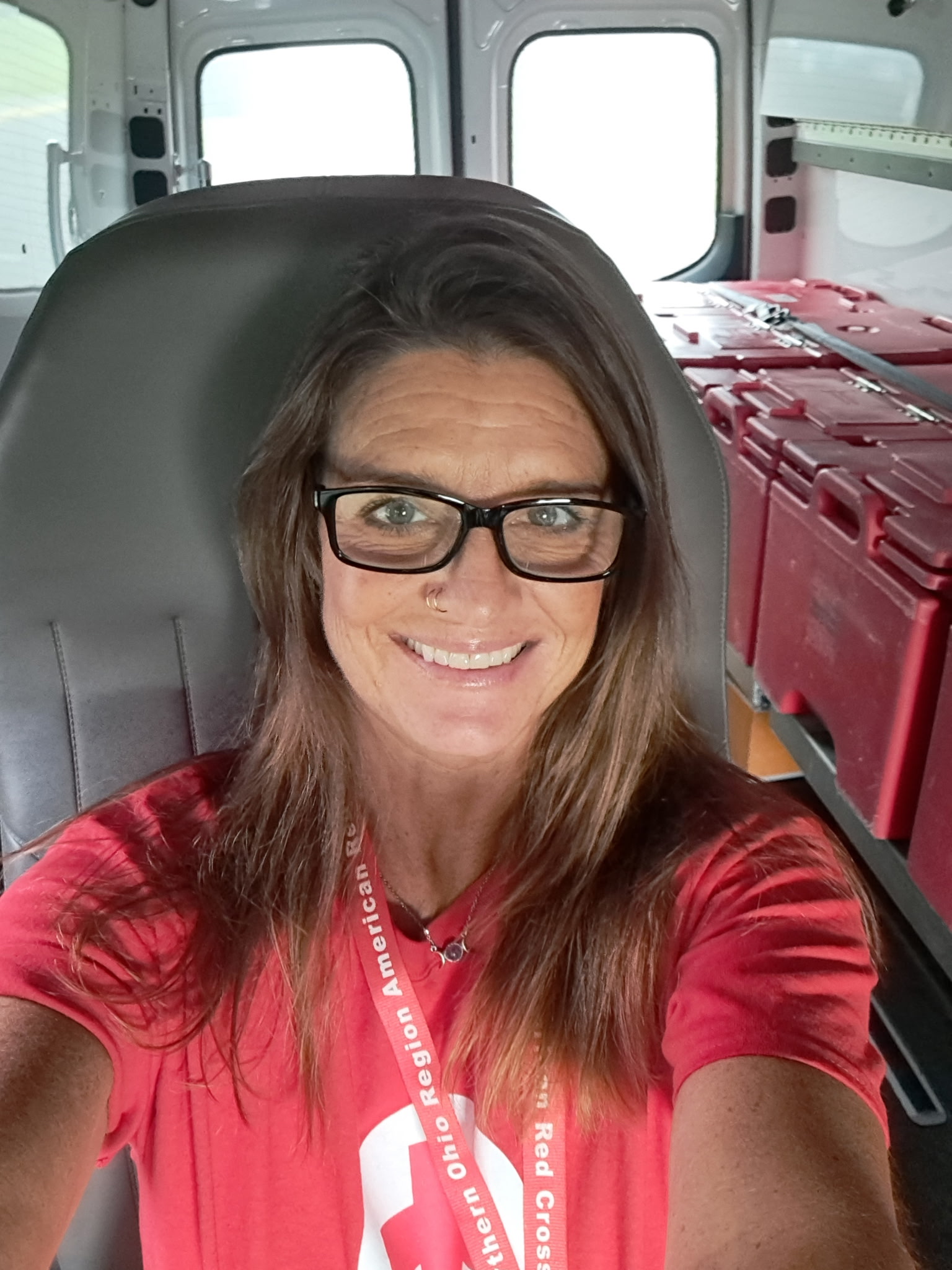
Natalie Whitmer, American Red Cross volunteer
Natalie Whitmer, an American Red Cross volunteer based out of Canton, Ohio, was one of those evacuees. She was living in North Carolina at the time and experienced firsthand being displaced to an evacuation shelter run by the Red Cross.
Following the storms, she and her husband returned home to assess the damage. “We found that the front half of our mobile home was destroyed. That’s where my daughter’s bedroom was, so a lot of their clothing and their bedding and all of that stuff was lost.” Natalie explained.
The Red Cross had also deployed ERV vehicles, or Emergency Response Vehicles, which drove through their neighborhood and provided food and water after the storm.
“They had set up an office, and they just asked the address, where we lived, what happened, what I’m missing, what I need help with, and they gave me a voucher to be able to go and get diapers and clothing for my children, which was amazing…I think it was like six weeks we were without water and electricity.”
Her story came full circle when in 2024, now Red Cross volunteer, she was deployed to another pair of hurricanes, Helene & Milton, that hit within a 2-week timespan. There she manned a Red Cross ERV and supervised an evacuation shelter. Regarding that time, she reflected, “It’s amazing that I’m (now) on this end of it (and) able to do the same.”
Since joining the Red Cross in 2023, Natalie has deployed multiple times to a variety of disasters, assisting in sheltering, feeding, and other vital roles. She also now works as a Casework Supervisor Coordinator for the Northeast Ohio Chapter.
“It’s extremely fulfilling and it’s just so comforting knowing that we have an organization out here that has all of this to offer,” she said. “I never knew Red Cross had so much until I started working with them, and it just blows my mind. It’s just an absolutely beautiful organization, their mission and everything, and the people that run it, all the volunteers.”
This holiday season, consider giving back to others by donating your time as a volunteer. Click HERE to find out more about becoming a Red Cross Volunteer and all of the opportunities available at the Northern Ohio Chapter.
On Friday, October 17, 2025, I said goodbye to my wife and my two young sons before leaving for Alaska for two weeks. As I texted other family and friends about my deployment, there was one response I saw more than any other: “What happened in Alaska?” Of course I knew, it was my job to know, but most of the rest of the world hadn’t heard. Alaska’s story hadn’t been told.
October 19, 2025. Kipnuk, Alaska.
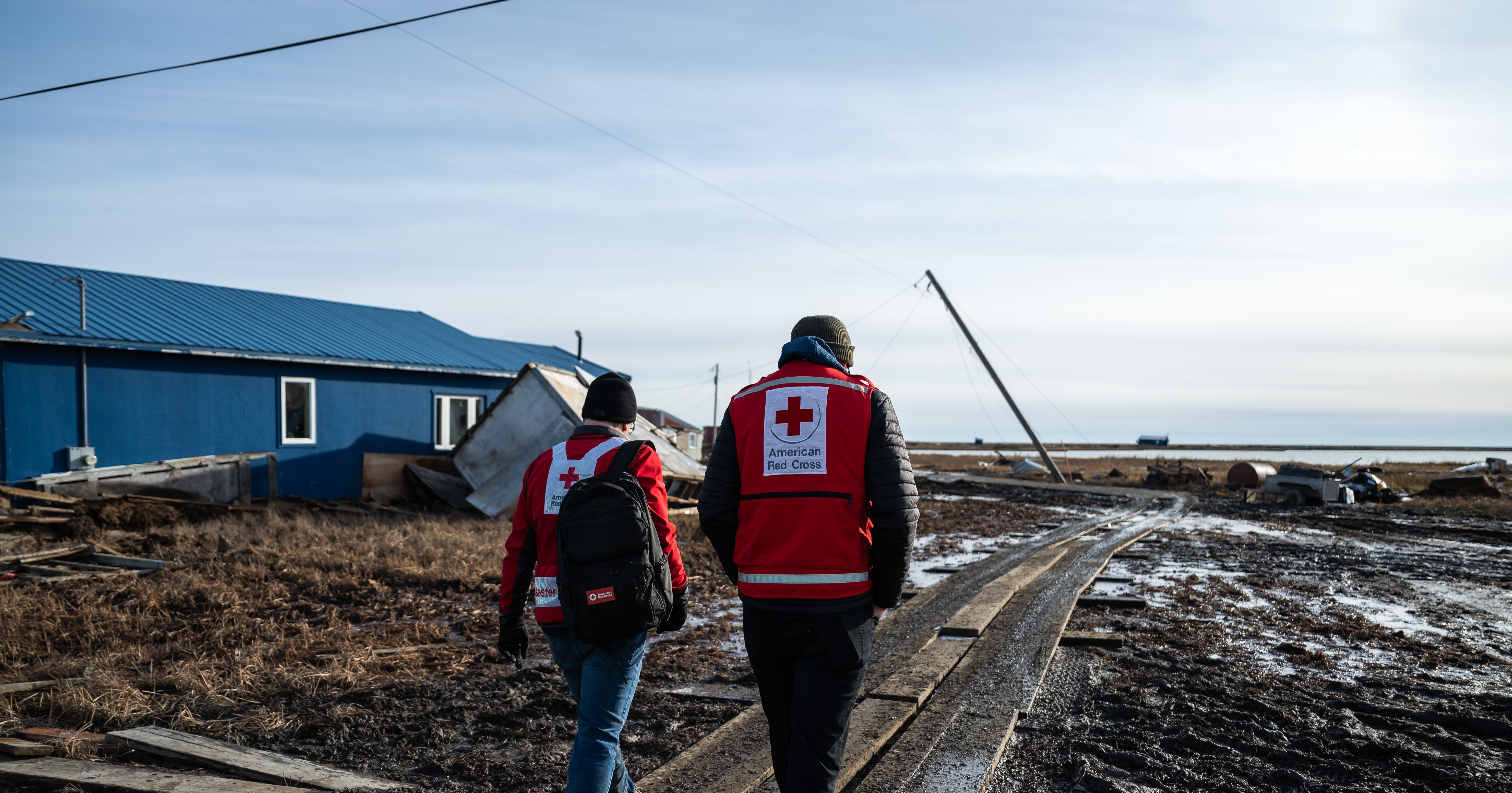
Red Crosser Dale Kunce in the heavily-damaged village of Kipnuk, on Oct. 19, 2025.
The Red Cross is helping in Alaska as officials stage one of the largest airlifts in the states recent history, evacuating entire villages that were left in ruins last weekend by Typhoon Halong. We are working with state, tribal, local officials and partners to support the evacuees who are being flown to shelters in Anchorage, where they will find a safe place to stay, food, emergency relief supplies, emotional support and health services. Hundreds of Red Cross disaster workers from across the country are being deployed to help during what could be a prolonged relief response with access to some villages cut off and others left uninhabitable as Alaskas winter sets in.
Photo by Scott Marder/American Red Cross
The early morning of October 11, 2025, the remnants of Typhoon Halong devastated indigenous villages along the west coast of Alaska. Hundreds of residents, primarily from Kipnuk and Kwigillingok, were evacuated – first airlifted to Bethel, where the U.S. Army National Guard established a transitional shelter, and then flown to Anchorage on a military C-130 plane. Residents left behind their homes, or what was left of their homes, their valuables, mementos, even their pets. They left behind everything.
In Anchorage, the American Red Cross established two shelters – one at the Alaska Airlines Center at the University of Alaska Anchorage (UAA) and another at the William A. Egan Center downtown. Residents of these villages moved into their new temporary homes, uncertain what was next.
“I still can’t believe we lost our place,” said Gilbert Amik, speaking of his home in Kipnuk that was washed away in the storm. “But help is here… We will move forward from here.” For Gilbert, a big part of that help was Red Cross volunteer Deb Blaze, from California. She and Gilbert built a special bond over the time Gilbert and his mother, Carrie, had been staying at the shelter at UAA.
Red Cross volunteer Deb Blaze hugging Gilbert Amik, resident of the village of Kipnuk in Western Alaska, who was evacuated, along with his mother, in the wake of Typhoon Halong. Photo by Ryan Lang/American Red Cross
“It makes me feel good,” Gilbert said, expressing gratitude for the help he and his mother received, specifically from his new friend. Deb said, “It was a special bond. It was like we were supposed to meet.”
Gilbert and Deb’s story was just one of countless inspirational anecdotes that came out of the tragic storm. The people I spoke with during my two-week deployment were resilient, strong, kind, and faithful – both the residents and the Red Crossers.
I met a young girl, just nine-years-old, who despite losing her home brought so much joy to others in the shelter. I met a volunteer from Alaska who carried around a Yup’ik bible with her for days, just so she could get it to a resident who requested it. I met a tribal elder from the village of Kipnuk who spoke to the younger generation about faith, hope, and strength. I met a group of people who made me want to be better, and I’ll continue to tell their story.
Alli’s first Red Cross deployment story
Alli Katterheinrich on her first Red Cross deployment in Anchorage, Alaska, October 2025.
Alli Katterheinrich is a Regional Philanthropy Partner for the Red Cross of Northern Ohio. She deployed to Alaska as part of the Special Public Outreach Team, telling the story of people directly impacted by Typhoon Halong.
“I got the call on a Tuesday and was on a plane the next day,” Alli said. “It was a lot to process,” she said, talking about wrapping her head around her first deployment as a Red Crosser and being thousands of miles away from home.
The time difference was a challenge for Alli, who said sometimes it was difficult to get in a phone call with her husband. The darkness was another challenge. “I’m a morning person and I get up early, but the sun doesn’t come up until 9 a.m. here, so even that was a major adjustment,” she explained.
But it was the residents’ stories that helped, Alli said. “I spoke with so many village residents who took me through their entire experience,” she said, “from being airlifted from their homes to their time in our shelters. I feel very fortunate that they feel comfortable enough to share their stories with me.”
“So much of it was organic,” Alli said. “People would see me sitting, wearing my Red Cross vest, and they would come up and start talking to me and telling their story.” And for Alli, me, and so many others I spoke with, it was those conversations and that storytelling tradition that was so cathartic. And it is the stories that we will carry with us.
A Northern Ohio story
Being thousands of miles away from your home for weeks, sometimes longer, can be hard on a Red Cross volunteer. You miss your family, your bed, your morning routine… You miss a lot. But it’s the friendly faces that make it a lot easier. “There were so many other volunteers from Northern Ohio,” Alli said, “and that helped.”
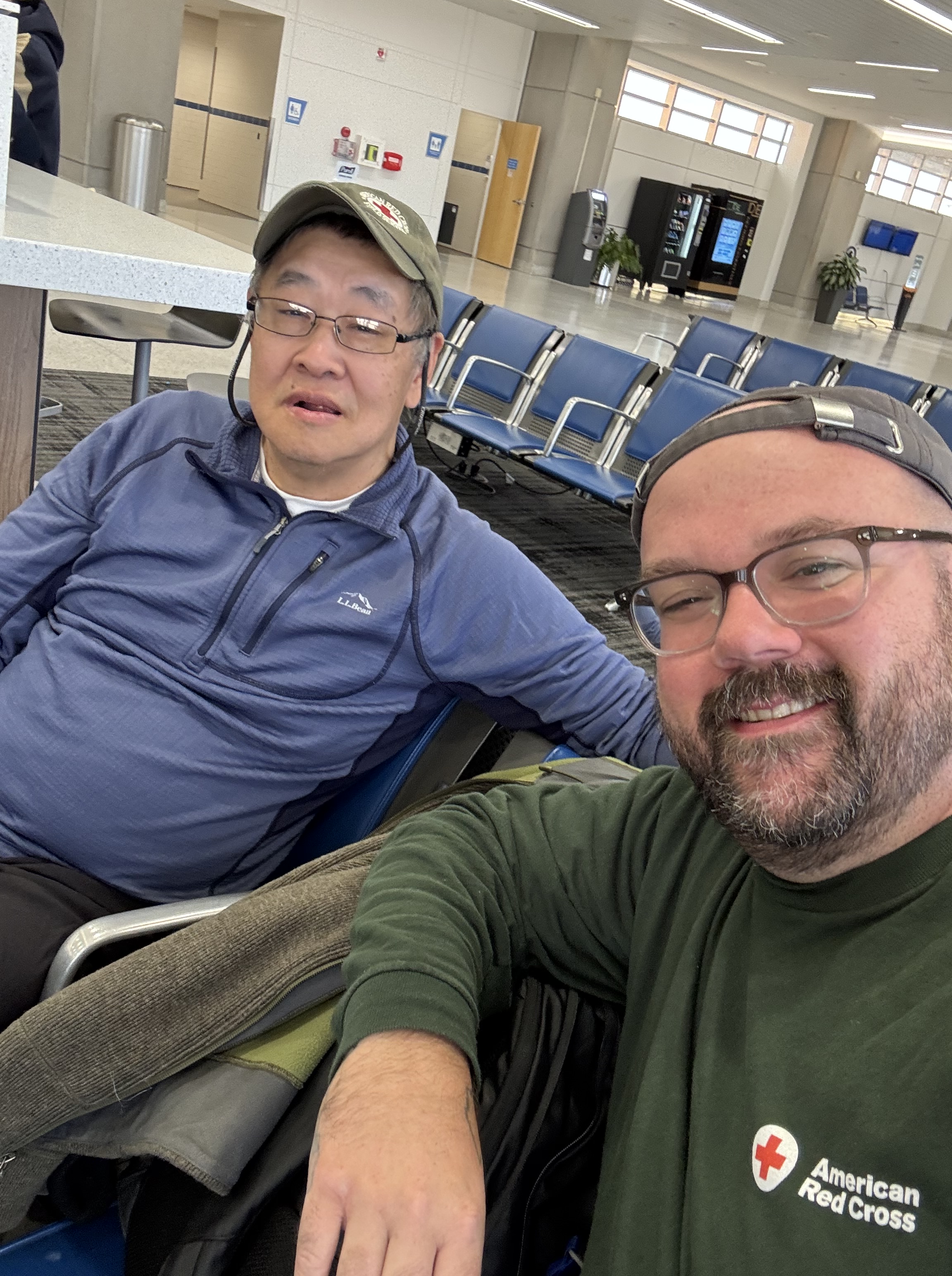
Randy Liang (left) and Ryan Lang at Akron-Canton Airport, waiting to take off to Alaska in response to Typhoon Halong that hit the western coast of Alaska in October 2025.
I met Randy from Cuyahoga Falls at Akron-Canton Airport, waiting to board our flight together. He’s an IT specialist who spent more than a month in Alaska, making sure the Red Cross staff had the connectivity they needed to execute the mission. Treacy from Northeast Ohio worked 12-hour shifts at the shelter for weeks, caring for residents, making sure they had what they needed. Callene, originally from Lorain, met with every volunteer who checked into the operation, helping acclimate them to the Alaska culture. Jeff, from the Heartland, Stark, and Muskingum Lakes chapter, worked tirelessly in the shelters, providing meals and snacks and more. And when it was time for those residents to leave, Jeff helped pack their things, sending them off with a smile and a hug.
The lifesaving mission of the Red Cross is not possible without these people who volunteer so much more than just their time. I’m grateful to be a small part of this group of incredible people, and I will continue to tell their story.
As part of the global Red Cross and Red Crescent movement, national societies often support disaster response in neighboring countries. The American and Canadian Red Cross have a long history of this kind of collaboration, including sending volunteers to support sheltering and other disaster response work.
This summer, the American Red Cross deployed more than 115 trained disaster volunteers to help the Canadian Red Cross’s effort amidst the worst wildfire season in the country in the past 30 years.
Northern Ohio volunteer Paul Hiszem (second from right) with other Red Cross and Canadian Red Cross volunteers providing relief during the Manitoba wildfires, July 2025.
One of those volunteers is Paul Hiszem, from the Northern Ohio Region. Paul’s been a Red Cross volunteer for about five years and has been on nearly a dozen deployments. This one, however, was slightly different.
“We were expecting about 4,000 residents, but we only got about 400,” Paul said of the shelter he was working at in Winnipeg. “Residents of the affected communities were being evacuated by plane.”
Residents from outside Manitoba may not have had damage to their home, but were in mandatory evacuation zones, so they hopped on small planes and were taken to Winnipeg, where Paul and other Canadian Red Cross and American Red Cross volunteers and shelter workers were waiting for them.
“A vast majority of the people we were working with were indigenous,” Paul said. “Some of them didn’t speak English. Emotionally, that was a big challenge because they’d been away from home for so long. We interacted some, trying to keep them apprised of different schedules and things, but it was different, a different setup than a lot of the shelters I’ve worked before.”
With more than 100 volunteers joining the massive relief operation, it marked the largest support effort on behalf of the American Red Cross in Canada. Prior to this summer, in 2016, the American Red Cross supported relief efforts when an Alberta wildfire forced more than 88,000 residents of Fort McMurray and surrounding areas to leave their homes in search of safety.
Canadian Red Cross volunteers are no strangers to supporting disaster relief efforts in the U.S., either. In recent years, 56 Canadian Red Cross volunteers have deployed to disasters across the United States. The American and Canadian Red Cross are two of the 191 Red Cross and Red Crescent Societies that make up the International Federation of Red Cross and Red Crescent Societies (IFRC), the world’s largest humanitarian network. Often referred to as National Societies, their roles differ country by country, but they are all united by our Fundamental Principles and all strive for the good of humanity.
And that’s what Paul is doing as a volunteer – striving for the good of humanity and working to prevent and alleviate human suffering in emergencies. Hear more of Paul’s story on the latest episode of our Be a Hero podcast here. And click here to sign up to be a disaster volunteer.
By Gail Wernick, Regional Volunteer Services Officer, American Red Cross of Northern Ohio
As I begin my 15th year with the American Red Cross, I would like to share a message of appreciation to the truly special Red Cross team and volunteers with whom I have had the privilege of working to deliver our mission.
This fall I deployed for the first time in-person to be a part of the Hurricane Helene Disaster Relief Operation in Asheville, North Carolina. On deployment, I joined a team of dedicated Red Crossers to share volunteer opportunities with surrounding communities. Due to intermittent internet availability, the team often connected with new volunteers personally to complete volunteer intake to begin volunteering as soon as possible! The Disaster Event Based and Local Community Volunteer teams supported volunteer scheduling, with more than 200 calls/texts to coordinate and prepare for the volunteers’ engagement. The team created volunteer recognition messaging and unique ways to say THANK YOU! Each day, some more than 12 hours, was filled with new experiences, learning quickly, and adjusting to the evolving needs of the disaster operation. I will always remember my Red Cross deployment experience and the kind people I met, who inspired me and helped make a meaningful difference each day.
Thank you for delivering service in the community to help your neighbors when needed most. Your efforts are greatly appreciated, and we are most grateful for your service as a Red Cross Disaster volunteer.
Featured in the photo above, Red Cross volunteer deployment team members, disaster event based and local community volunteers from Asheville, North Carolina.
Glen McCandless, a disaster event based volunteer, featured on the far right in the photo above, volunteered at the AG Center every day for two weeks consecutively. He said, “Volunteering at the shelter and helping others in the midst of so much devastation is like salve for the soul.”
The Red Cross shelter supervisors we met extended their sincere appreciation for the dedicated disaster volunteers from the local community who tirelessly volunteered, many whose own lives and homes have been impacted by the disaster, to prepare and serve meals and offer support. Whether a volunteer gave two hours or several days of their time to help, we are grateful to them for helping deliver the Red Cross mission!
More than 1,400 Disaster Event Based Volunteers joined the Red Cross in North & South Carolina this October and November, engaging in more than 640 volunteer commitments to provide comfort, care and hope by assembling and distributing emergency supplies, preparing and serving meals, setting up and cleaning up and supporting residents impacted by Hurricane Helene.
The Red Cross is here to help make your volunteer experience the best it can be! Please continue to volunteer with us and encourage your friends and family to join you. Thank you for exploring and sharing our most-needed ongoing volunteer opportunities at www.redcross.org/volunteer. We are working hard to prepare for, respond to and help communities recover from disaster. Become a part of the Red Cross Disaster Action Team at www.redcross.org/dat.
By Ryan Lang, American Red Cross board member and volunteer
Relief efforts continue throughout the Southeast weeks after Hurricanes Helene and Milton ravaged the Carolinas, Georgia and the Gulf Coast of Florida. The storms left a trail of damage totaling hundreds of billions of dollars and counting. At least 250 people were killed and dozens more are still missing.
American Red Cross workers and volunteers have been on the ground throughout the region since before the storms hit, operating shelters and assisting with cleanup. Those are the Red Crossers you’ve seen. But there are many more you haven’t seen, working tirelessly to reunite family members separated by the storms.
The Red Cross is one of many groups that work behind -the -scenes of a disaster to help reunite loved ones. We support requests for reunification that come in through our national call center including emergency welfare inquiries, family reunification requests and military inquiries.
Emma Banton, Regional Mass Care Manager
As of October 19, more than 11,500 inquiries have been made to help find missing residents in the Southeast. Regional Mass Care Manager for the Red Cross of Northern Ohio, Emma Banton, was assigned to help reunite people who are looking for their missing family members. She says the deployment has been extremely rewarding, but mentally and emotionally difficult at times.
“To be the person who can assist with reconnecting a family with their loved ones has been a tremendous feeling,” Emma said. “Unfortunately, so many lives were lost in this tragic disaster that the work of reunification does not always have the ending we hope for.”
Those cases that wind up working out as intended, with families and friends reuniting, are the reasons Emma and others do what they do. “Thank you for all that you do for the people affected by the hurricane,” one grateful family member wrote. Another person sharing their good news simply wrote, “They are OK,” letting Emma know she’d been in touch with her loved ones.
Monica Bunner, Red Cross disaster volunteer
Monica Bunner is a long-time disaster responder who has assisted with several national disaster relief operations. Monica said of her time as a reunification volunteer, “There is no greater demonstration of (the Red Cross’) commitment than to reunite loved ones who are emotionally struggling after a disaster.”
“It’s also a great opportunity for those who want to deploy but cannot be boots on the ground,” Monica added. “Equally important are the many team members who do the research, talk with the seekers and prepare (each) case virtually.”
To find out more about reunification, or if you need help finding a loved one in the aftermath of a disaster, click here.
Husband and wife team-up to respond to storms far from home
By EILENE E. GUY, American Red Cross volunteer
Jeff and Laura Mann were on what you would call a “mission of mercy” when I reached them by phone, headed for the hospital in flood-ravaged Asheville, N.C., to pick up specialized medical equipment for a baby in an American Red Cross shelter in Burnsville, another hour away.
Jeff Mann, inside the Red Cross disaster vehicle, hands supplies to wife Laura in Burnsville, North Carolina
The couple are what the Red Cross calls a “fulfillment team.” Jeff says they’re “a store on wheels.”
They deliver consumables like toilet tissue, paper towels and baby formula as well as essentials like pillows, blankets, and special need items to shelters in northwestern North Carolina, where the number of storm refugees continued to grow.
When we talked, a week after Hurricane Helene swept from the Gulf to the East Coast, the Manns were still seeing helicopters – some ferrying evacuees to shelters and others airlifting food and water to isolated communities.
Jeff, a retired YMCA executive director, is a veteran disaster responder. “This is my 15th, 16th (response) – I don’t know,” he told me with a chuckle. He’s served in evacuation shelters, warehouses, supply units. “I’m quite a rover… wherever I’m needed.”
Jeff Mann was interviewed by news reporters at the Akron Canton Airport before his deployment to Guam in response to Typhoon Mawar 2023
Laura, on the other hand, is on her first deployment. She’s been on the board of the Heartland, Stark, Muskingum Lakes chapter of the Red Cross for years and taken lots of disaster response training. But this is the first time her work as a CPA has allowed her to take off for two weeks.
She’s excited to be helping bring relief to a region devastated by hurricane winds and unprecedented flooding. It’s a plus that she’s working with her husband.
“Laura and I are bonding,” Jeff offered. “It’s our 39th anniversary this week,” Laura explained. “This is a good marriage test.” They both laughed comfortably.
The couple, who call Louisville, Ohio, in Stark County home, are finding conditions in mountainous North Carolina challenging. Many roads, even if passable, are one lane where downed trees have been hacked back just enough so Jeff can squeeze his box truck through. Cell phone service and GPS are spotty.
“We were headed for the hospital in Asheville the first time and GPS died at the edge of town,” Laura recalled. “There were no streetlights and we didn’t have a clue. We just had to figure it out.”
Laura Mann at a Red Cross warehouse
A typical day has them at a Red Cross warehouse in Greenville, S.C., at 7 in the morning to load up, with a list of special orders to be picked up at local big-box stores. Then they head north to Asheville and on to shelters as far as Boone, another two hours away.
“We go up one side of the (Blue Ridge) mountains and back down the other,” Laura said. They were still in the truck, on the way back to Greenville, when we chatted at 9 o’clock in the evening last week.
The Manns are among the more than 2,000 trained Red Cross disaster responders providing shelter, food, emotional support, replacement medical devices and prescriptions, and other urgent needs to storm victims across five states. At the same time, some 200 Red Cross reunification staff have fielded thousands of requests for help locating loved ones.
Red Crossers and our partners have given out nearly 480,000 meals and snacks in shelters and from mobile feeding trucks. With partner organizations, they’ve provided more than 35,000 overnight stays.
None of this disaster response, which will go on for months as the Red Cross helps individuals and families plan the next steps in their recovery, would be possible without the generosity of the American people. Please consider making a financial donation by going to redcross.org, calling 1-800-RED-CROSS.
If you’d like to get trained and become part of the hands-on relief effort, as Jeff and Laura Mann are doing, visit NEOvolunteer@redcross.org or call 216-431-3328 to learn about all the different roles that might interest you.
Regional Red Cross executive reflects on most recent deployment
By Todd James, Executive Director, American Red Cross of North Central Ohio
Todd James in Iowa, June, 2024
I recently returned from a disaster relief operation in southwest Iowa, an area devastated by massive flooding in June. You’re probably trying to remember if you had heard about flooding in Iowa. You probably did, it was big news for a few days. But as is always the case, something else happened and the news moved on to cover the story of the day. Well, the cameras and reporters may have moved on, but for the people of Siouxland, as they call the region, moving on will be a long, hard process. I am so proud of the American Red Cross responders who left their own homes, jobs and families to rush into the devastation to offer shelter, comfort and hope, and I am honored that I had the opportunity to serve with them.
A month after the flood waters receded, with the help of the Red Cross, the community was able to focus on long-term recovery. What does that look like? It’s different for every family but all will need the help of many partners, non-profits, governmental agencies and the business community, working together. Our Red Cross long-term recovery team will continue to collaborate with these partners, helping and guiding them on how to come together to best serve those on the road to recovery.
The Red Cross is responding to nearly twice as many large disasters as we did a decade ago to help families and communities struggling with more frequent and intense disasters. In 2023 alone, the U.S. experienced an all-time high of 28 billion-dollar plus disasters that ravaged communities and forced hundreds of thousands of people to flee from severe storms, floods and wildfires.
This was my 41st disaster deployment and I have seen first-hand how disasters are happening more frequently and causing more damage. There is no more down time between big disasters, time when our responders can catch their breath, come home and focus on the great work the Red Cross is doing in their community. Now we are constantly responding to these large-scale disasters, as well as the thousands of home fires, storms and other disasters that happen every day but don’t make the headlines.
To equitably meet the growing and unique needs of disaster-affected families and communities, the Red Cross is enhancing our large-scale disaster response and recovery services, expanding financial assistance, strengthening local partner networks, and growing our disaster workforce. This effort includes fortifying the critical infrastructure and technology that enables 24/7 response to disasters across the country.
The need to help during disasters has never been greater. Please, join us to provide relief and hope when it matters most. Help people affected by disasters big and small, including climate-driven crises, by making a gift to Red Cross Disaster Relief at redcross.org or by calling 1-800-RED CROSS (800-733-2767). Our volunteers are at the heart of our mission and represent 90% of our workforce. Click here to sign up for opportunities to help. To help make sure your family and community are ready for a disaster before it happens, click here.
Posted by Ryan Lang, Red Cross board member and volunteer
Recognizing Red Cross heroes on World Humanitarian Day
By EILENE E. GUY, American Red Cross volunteer
What is a humanitarian?
According to the dictionary, a humanitarian is someone “involved with improving people’s lives and reducing suffering.”
So, on this World Humanitarian Day, I’m lifting up the American Red Cross for being one of the foremost humanitarian organizations in the world. And saluting its roughly 285,000 volunteers and paid staff for being humanitarians of the first order.
The Red Cross mission statement is to “prevent and alleviate human suffering in the face of emergencies by mobilizing the power of volunteers and the generosity of donors.”
Damage done by recent tornadoes in Greater Cleveland and Red Cross responders
Maybe you recognize the iconic red vests on responders at natural disasters – everything from biggies like hurricanes and wildfires, to smaller, localized disasters like the tornadoes, power outages and flooding that hit the Cleveland area this month. Nearly 200 individuals received financial assistance to cover emergency needs in the aftermath of those storms. Some of the Red Crossers were without power in their own homes, but they answered the call to “reduce suffering. ”Or how about manmade disasters, such as bridge collapses, mass casualty events and plane crashes? (Remember the Red Crossers in the movie “Sully,” with blankets and hot drinks for passengers from the airliner that landed on the Hudson River? Those weren’t actors!)
For more than 80 years, the Red Cross has been collecting blood to “reduce suffering.” It began during World War II, first for English war victims and then for our military on the battlefields of Europe, Africa and the Pacific. To this day, paid Red Cross staff (such as phlebotomists and quality assurance lab techs) as well as volunteer donor ambassadors and transportation specialists work to ensure about 40% of the nation’s blood supply for trauma victims, surgery patients and folks who need treatment for cancer, sickle cell disease and other conditions.
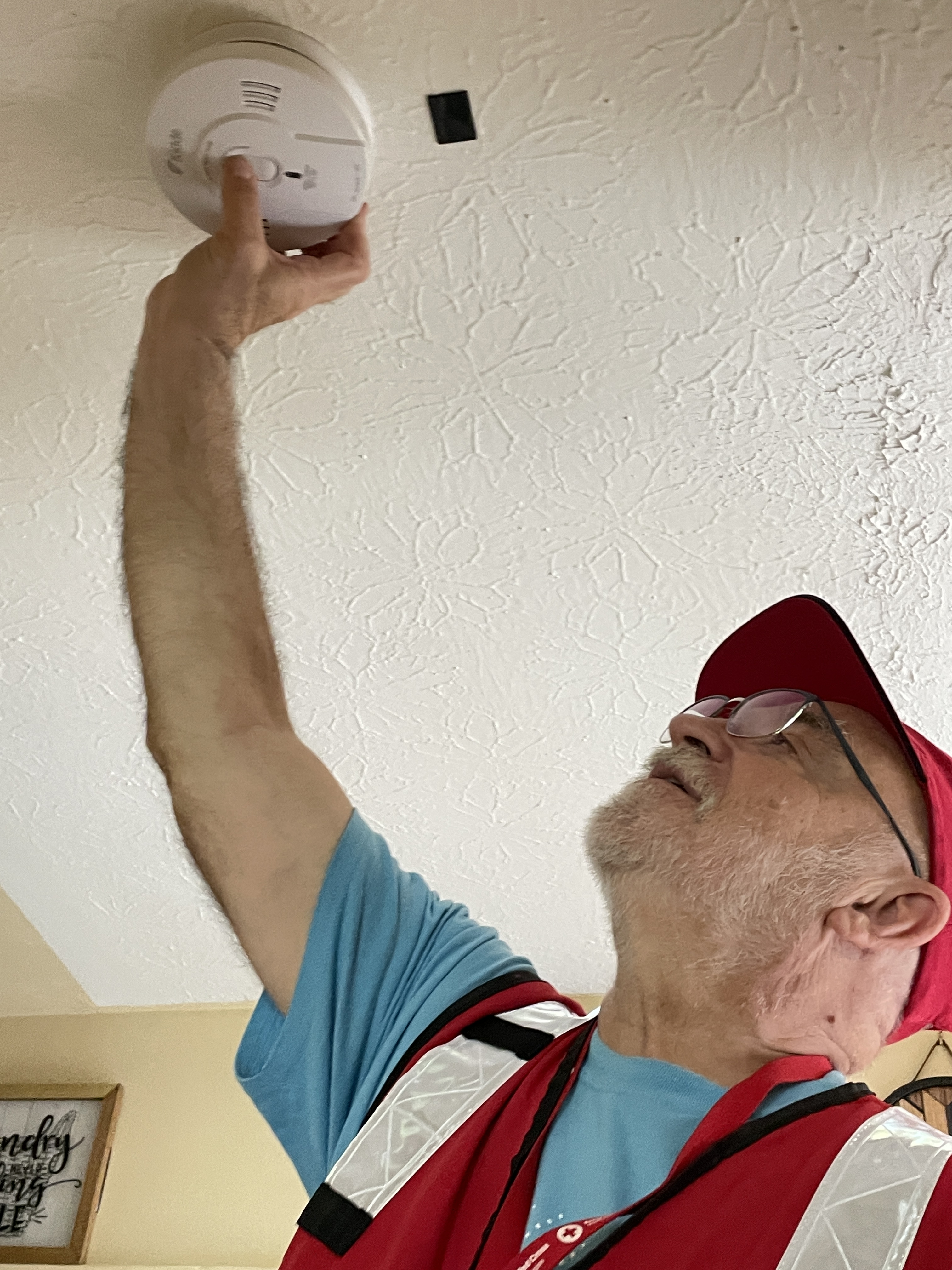
Did I mention “improving people’s lives?” The Red Cross trains lifeguards and babysitters; teaches first aid skills and how to save lives with CPR and an AED; and prepares children and their families to cope with sudden emergencies. It’s installed more than 2.5 million free smoke alarms to make households safer from the most common cause of disasters in our country: home fires.
The Red Cross commitment to the American armed forces goes back to our founder, Clara Barton, who earned the nickname “Angel of the Battlefield” for her compassionate service during the American Civil War as well as the Franco-Prussian War in Europe and in Cuba during the Spanish-American War. Every day, the Red Cross provides some 1,400 emergency communications and critical community services to members of the military, veterans and their families at home and abroad.
Speaking of abroad, the American Red Cross is a partner with national Red Cross and Red Crescent societies in 191 countries, where we share expertise and guidance in disaster and crisis response and recovery; disease prevention and control; and environmental resilience. Our Red Cross is active in the global Restoring Family Links program that helps people separated by conflict or disaster reconnect with their loved ones. (I know: We helped a teenage Haitian adoptee in Berlin Heights find his half-sister who had been adopted in France. Small world!)
Today, every Red Crosser can be proud to call herself/himself a “world humanitarian.” If you’d like to explore volunteer opportunities on this team, please visit NEOvolunteer@redcross.org or call 216-431-3328.
Edited by Glenda Bogar, American Red Cross volunteer
Today, August 8th marks the one-year anniversary of the Maui wildfires, the deadliest U.S. wildfire in over a century. Most of the town of Lahaina was devastated. 3,710 homes were destroyed or made unlivable, and the confirmed death toll is now 102. As always, the American Red Cross quickly responded to the disaster and worked with partner organizations to bring much needed assistance.
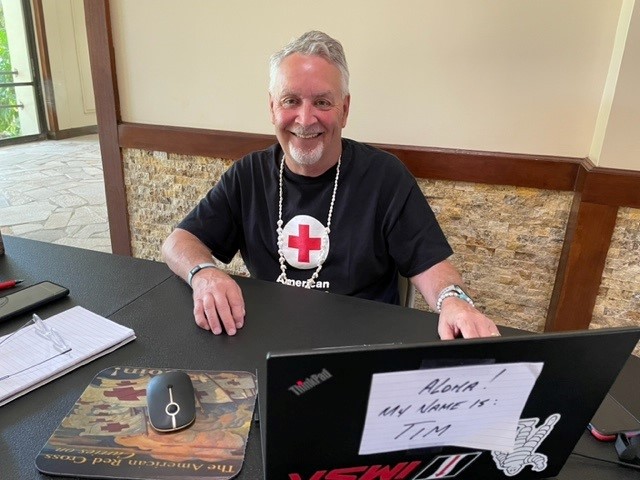
Several workers from the Northern Ohio Region joined the disaster relief operation on Maui, including Regional CEO Mike Parks, Regional Disaster Officer Emily Probst, Disaster Program Manager Tim Reichel, and Regional Communications Director Jim McIntyre. Several regional volunteers deployed as well, including IT specialist Randy Liang and Medina-based volunteer Monica Bunner.
Photos, from top left: Ohio Representative Dave Joyce and Mike Parks, Emily Probst, Tim Reichel, Jim McIntyre and Monica Bunner
For the anniversary, I spoke with Monica, who deployed to Maui for three weeks in late August and early September 2023, serving in the Disaster Recovery Operation headquarters as a Community Engagement and Partnership Manager.
Since she began volunteering with the Red Cross in 2017, Monica has deployed to several national disasters and serves as a disaster responder among other roles here in Ohio. Even with such experience, she had seen nothing quite like the Maui wildfires’ aftermath.
Randy Liang and Monica Bunner
Seeing the area following the disaster was a bittersweet experience for Monica. She had been to Maui several times before, mostly for relaxation, and knew the community. “I felt I really needed to be there to help,” she said.
And help was desperately needed. Monica said that the level of devastation was so widespread, and that the disaster unfolded with such speed that many of those affected were dazed, shocked, confused, and did not know how to proceed.
There was an immediate need for Monica to put her experience and organizational skills to work. Hawaii-based Red Cross personnel worked closely with those deployed from across the U.S., and the Red Cross coordinated with partner relief organizations and community representatives.
Monica said engaging and working with community leaders was critical, as Maui’s population is exceptionally diverse. (Maui County states its cultural heritages include Hawaiian, Japanese, Caucasian, Filipino, Chinese, Korean, Tongan, Samoan, and others.) As some groups were unfamiliar with Red Cross services and the commitment to help everyone following a disaster, Monica said ensuring all those impacted knew they had somewhere to turn for help was important, and she made sure to take time for everyone.
Each day, Monica had a stark reminder of the devastation. The shelter and headquarters were on opposite sides of Lahaina, and with each commute she saw the fire’s remnants and the growing memorials to the many lost lives.
And each day, Monica also saw the importance of Red Cross services. She and other Red Cross personnel took part in helping people find food, shelter, and supplies, locate loved ones, get critical information, receive financial assistance, connect with partner organizations, and find friendly, helpful faces and smiles. And most importantly, through all this, they helped people find hope. Monica said there is, “Definitely hope. Always hope.”
Watch this video on the one-year anniversary of the Red Cross response to the Maui Wildfires:
Finally, disasters occur each day, including Tropical Storm Debby, the current Park Fire, and home fires. Please consider volunteering or supporting the Red Cross.
Editor’s note: Hurricane Debby’s torrential rains are exacerbating the national blood shortage announced by the Red Cross on Monday.
Debby’s devastating flooding, power outages and travel hazards have forced the cancellation of blood drives in the Southeast, causing hundreds of lifesaving blood products to go uncollected when more donations are so desperately needed.
Tuesday’s tornadoes in Northeast Ohio also resulted in cancelled blood drives on Wednesday, resulting in about 130 donations going uncollected.
Even as we work to overcome this blood shortage, the Red Cross is providing food, shelter and comfort to communities affected by the hurricane in the Southeast and wildfires in the West. And disaster workers in Northeast Ohio continue responding to requests for assistance from residents whose homes suffered structural damage.
People urgently need aid now. You can help by making an appointment to give blood or platelets or financial donation by visiting redcross.org or calling 1-800-RED CROSS (800- 733-2767).
Polyrhythms of raindrops drum at the window, accented by rolling bellows of thunder, a severe late May storm approaches. Lights flicker. I am relieved the roof, damaged weeks ago, has finally been repaired. Yet as a Northern Ohio resident I am fortunate, as the region is less prone to natural disasters. Earlier, I watched reports from the latest of this spring’s tornado outbreaks. Amidst the catastrophic scenes, as always, American Red Cross volunteers and staff members are there, ensuring those impacted have food, shelter, care, comfort, and resources to begin recovering.
March 30, 2023. Amory, Mississippi.
Red Crosser Eric Besson examines damage to a home on Thursday in Amory, Miss. As many as 2,000 structures across Mississippi received major damage or were destroyed by tornadoes on March 24. More than 380 trained Red Cross disaster workers are on the ground in Mississippi, Georgia and Alabama, as the nonprofit organization works with partners to make sure everyone has a safe place to stay, meals, emotional support and comfort in the aftermath of deadly tornadoes on March 24.
Photo by Scott Dalton/American Red Cross
As extreme weather events become more frequent and severe–and 2024 is predicted to be an exceptionally active year–the need for Red Cross services is increasing. Already, the Red Cross responds to almost twice as many large disasters than it did a decade ago, and in just the last 10 months, 125 volunteers from Northern Ohio have assisted residents affected by hurricanes and wildfires across the U.S. Four Northern Ohio volunteers are currently deployed to Texas and Iowa.
As eventful as 2023 was, with weather-related disasters forcing an estimated 2.5 million people from their homes, one-third of them for longer than a month, according to the New York Times, 2024 may be even more severe.
The National Oceanic and Atmospheric Administration (NOAA) reports that, as of May 8, 2024, the US has had seven confirmed weather/climate disaster events, each with losses over $1 billion, resulting in the deaths of 70 people. The NOAA also states there were 384 preliminary tornado reports in April, more than double the 1991-2020 average and the second highest April count on record.
March 31, 2023. Rolling Fork, Mississippi. Red Crosser Yolanda Gainwell visits with Karebya Christmas on Friday outside Christmas heavily damaged home in Rolling Fork, Miss. Christmas was home with her three children ranging in age from 2 to 11 years old when the tornado arrived. Just like Christmas grandmother taught her, she brought the family into the bathtub and put a pillow on top of them. No one was injured, but her home suffered major damages, disrupting their lives, as well as the self-owned business she ran from the home. On Friday, Christmas received help at a drive-through distribution center, where the Red Cross and partners distributed rakes, shovels, totes, clean-up kits, flashlights, batteries and more. Displaced, Christmas is staying at a hotel in Ridgeland, Miss. until at least Monday. As she finished talking with Gainwell, Christmas thanked her for coming to talk with her at her home, but with the damage rendering it uninhabitable, she hesitated to call it a home. I dont know what to call it my blessing in disguise, maybe, she said. Photo by Scott Dalton/American Red Cross
As summer approaches, the likelihood of an extremely active hurricane season and above-average wildfire season looms. Jim McIntyre, Regional Communications Director for the American Red Cross, Northern Ohio Region, recently conducted an interview with meteorologist Trent Magill of WEWS News 5. Jim and Trent discussed recent events, the need for planning and Red Cross services, and the outlook for the hurricane and severe storm season. Trent states, “everything we’re seeing shows above average intensity,” and that “it’s going to be a rough season.” Continuing, Trent says “Everyone should have a plan.”
Hopefully, you are wondering what you can do. For one, make sure you are prepared and have a plan. For another, please consider volunteering with the Red Cross. Volunteers account for 90% of the Red Cross workforce and represent a wide array of cultures, backgrounds, ages, gender identities, lifestyles, and beliefs, just like those we serve. Everyone is welcome, and free online training is provided.
April 9, 2023. Little Rock, Arkansas. William Burkey, a member of the Red Cross disaster mental health team, and Jamie Harms, a member of the disaster health services team, work together to bring comfort and hope to Paula Rocha, whose home was damaged by a tornado that struck Little Rock, Arkansas, and several nearby towns. Photo by Kevin Suttlehan/American Red Cross
Three key positions are especially needed: Disaster Action Team volunteers, who help families in need following a disaster; Shelter Services volunteers, who support day-to-day activities in an emergency shelter; and Disaster Health or Mental Health Services volunteers, who use their professional skills as licensed healthcare providers to assist those impacted by a disaster. Please consider joining, as I can personally attest you will work alongside outstanding people and the see difference Red Cross services provide.
Posted by Ryan Lang, American Red Cross board member and volunteer
















 NOHredcross