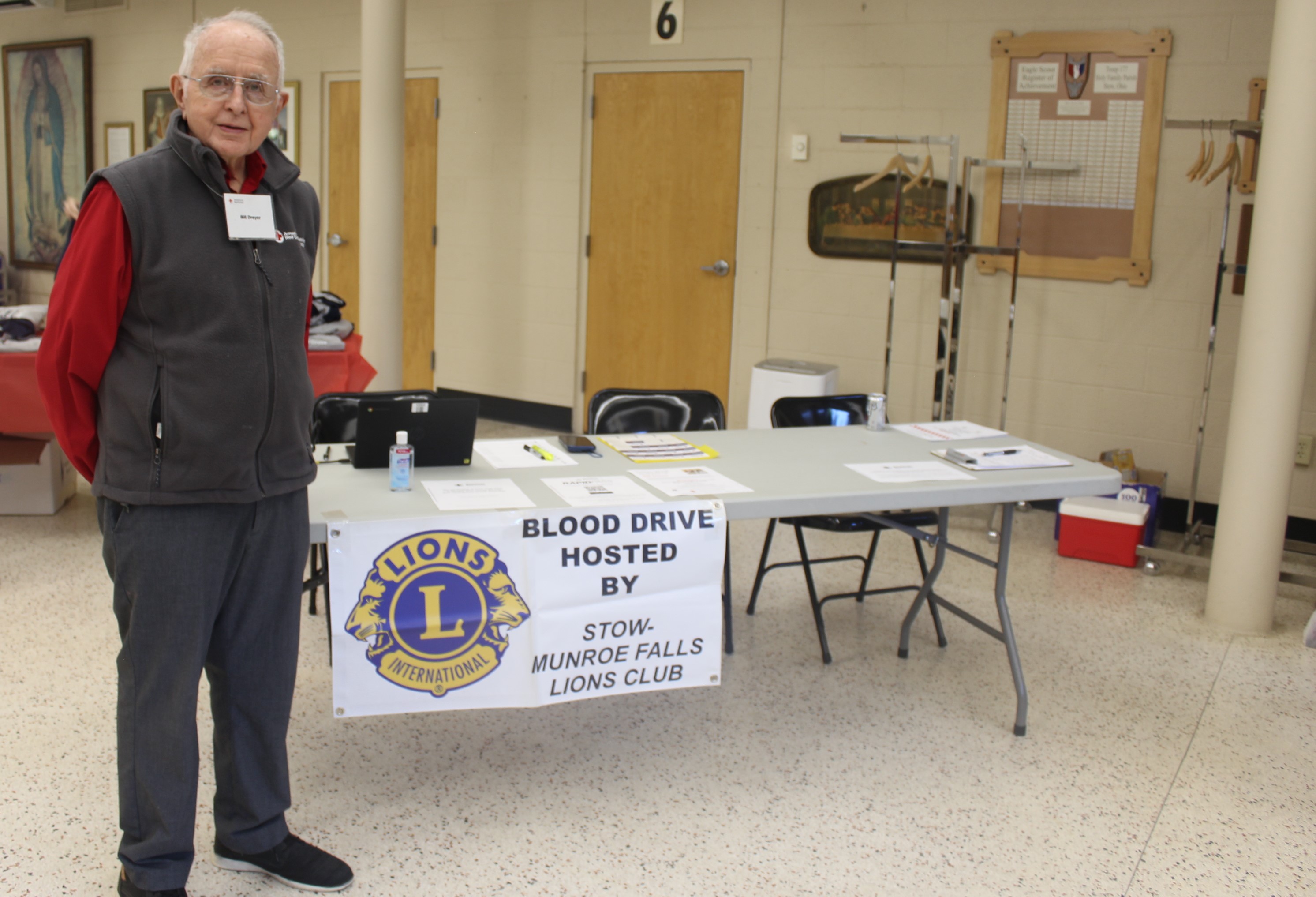
By Mary Falconer-Williams, American Red Cross volunteer
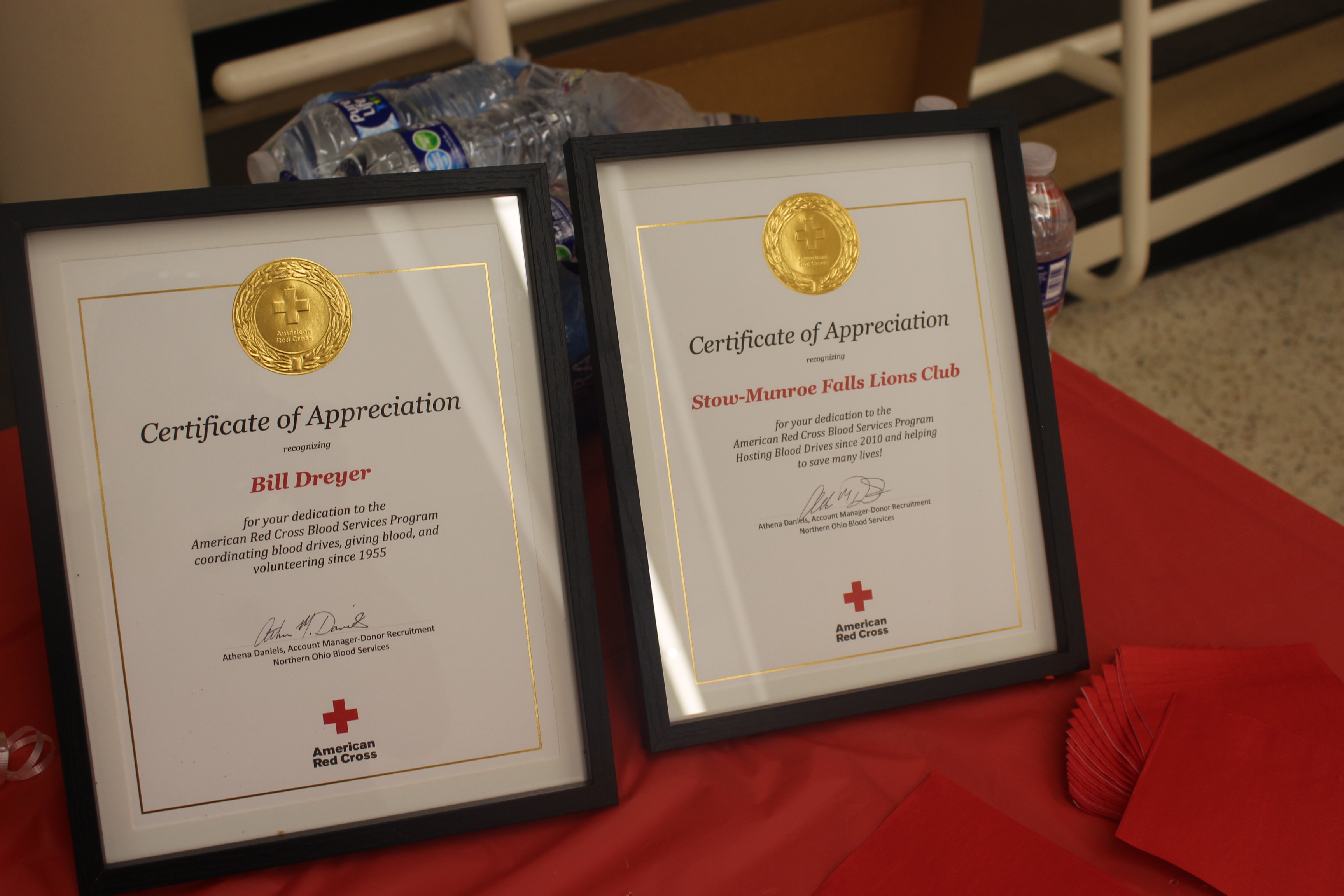
Volunteer Bill Dreyer first spotted the poster announcing that the American Red Cross would be hosting a blood drive on the Kent State University campus in 1955. Bill attended the drive, donated a pint, and from that point on was a firm believer in the power of donating blood, and gave every chance he could.
Bill Dreyer, Red Cross volunteer
“I know that my donations mean so much to those individuals who are fighting an illness or have been in an accident,” Bill states. Individuals like his mother, who received several pints in 1999.
A humanitarian at heart, Bill joined the Stow-Munroe Falls Lions Club in the fall of 2000 and shortly afterward began volunteering with the Red Cross helping in the refreshment area (canteen), at registration, and as a bag labeler. And in 2010 his passions combined when the Lions Club and Holy Family Catholic Church in Stow hosted a blood drive. And Bill has been instrumental in growing the impact of that first drive. The co-sponsored event has hosted drives six times a year, ever since!
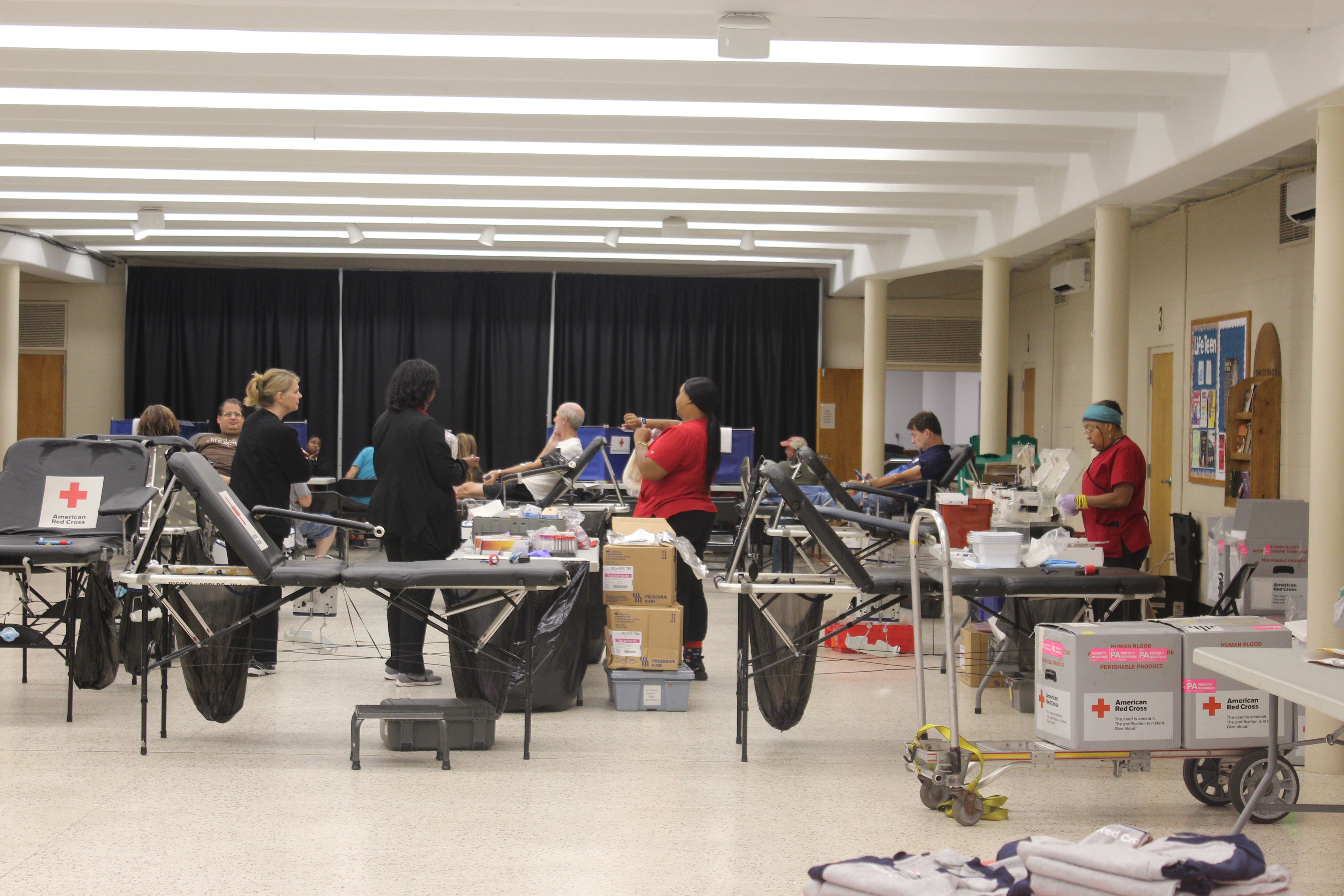
65 pints of lifesaving blood were collected at the drive held on September 3, 2024.
Though he is now unable to donate blood due to medical reasons, Bill proudly notes that he has donated 278 pints of blood throughout his life.
“It’s really not hard, and the staff are gentle. Come in and see us, we’ll show you around,” Bill invites those individuals who haven’t ever donated or haven’t in a while. To find a drive near you, go to redcrossblood.org and tap “find a drive.”
Posted by Ryan Lang, Red Cross board member and volunteer
By Mary Falconer-Williams, American Red Cross volunteer
Since 1898, when Clara Barton sailed to Cuba with supplies for those affected by the Spanish-American War, the American Red Cross and the United States Armed Forces have maintained a unique relationship.
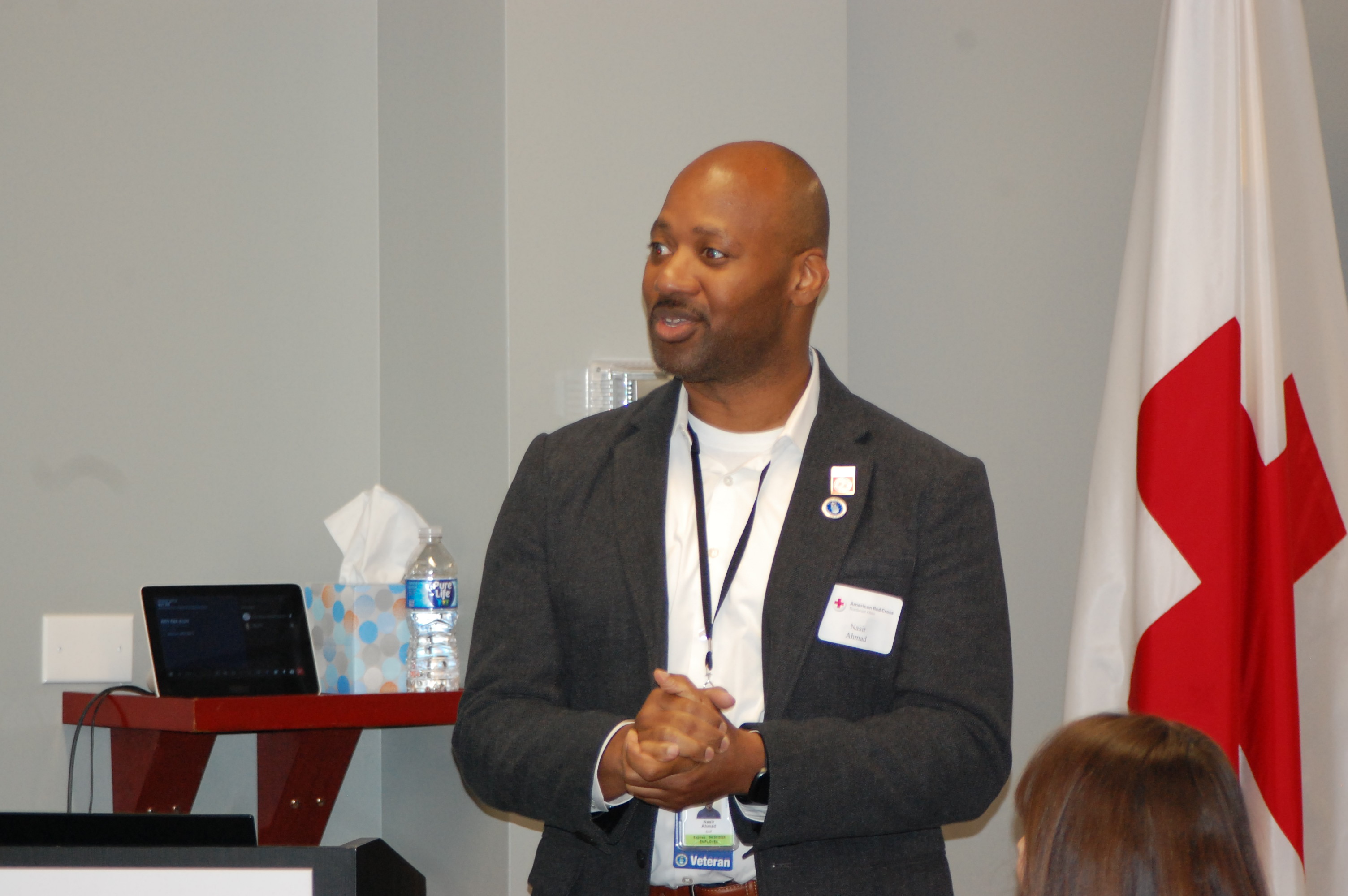
Service to the Armed Forces Program Specialist Nasir Ahmad
Today, that relationship takes the form of one special position, the Service to the Armed Forces Program Specialist—a position which, in Northern Ohio, is held by Nasir Ahmad.
“Nasir has been an invaluable member of the Service to Armed Forces/International Services team in Northern Ohio,” wrote Dr. Alaina Foster, Regional Program Manager for the department. “I’m glad he will have the opportunity to share his passion for connecting service members to the many resources offered through the Red Cross, during his deployment.”
This specialist position was created to assist in the delivery of Red Cross programs and services, in order to meet the needs of military members, veterans, and their families while focusing on supporting the delivery of International Services including:
Additionally, Nasir is part of a special workforce required to deploy on short-term assignments. Which means, he is headed to Bagdad, Iraq for six months! During his deployment, he will focus on ensuring Training Services programs like First Aid and CPR are supported and promoted in the jurisdiction, and assist in maintaining a positive and mutually beneficial relationship with local Armed Forces Blood Service Programs.
Nasir Ahmad and Alaina Foster
“I couldn’t be prouder of Nasir as he deploys overseas to provide members of our Armed Forces Red Cross services,” stated Mike Parks, Regional CEO. “As a retired veteran himself, Nasir knows firsthand the value of the support provided by the dedicated members of the Red Cross Service to Armed Forces deployed staff and volunteers. I join our entire Northern Ohio Region in thanking Nasir for his deployment and wishing him a safe return!”
Nasir was born and raised in Cleveland. Shortly after graduating high school, he joined the Air Force where he worked as an aircraft mechanic (Crew Chief), first on the C-130 cargo plane and then on the B-1 bomber. Nasir retired after 21 years of active-duty service and returned home where he attended Cleveland State University and graduated with a business degree.
“The Red Cross was a great fit. In Service to the Armed Forces, the Red Cross’ oldest line of service, I’m able to help veterans in Northern Ohio and stay connected to the military community,” said Nasir. “And now…I’m on my way to Baghdad!”
During National Nurses Week, May 6-12, the Red Cross wants to recognize the important value that volunteer nurses bring to the mission of the Red Cross.
Since the inception of the American Red Cross in 1881, nurses have been at the heart of the organization. Initially assisting mainly in disaster relief and war support efforts, their role today has greatly expanded to include veteran support, educational services and training, academic support, children’s programs, blood drives and so much more.
I spoke with Patricia Horvath, RN, MSN, who works as the Volunteer Regional Nurse Lead for Northern Ohio. She is responsible for a team of 90 volunteer nurses in Northern Ohio and for the recruitment, retention and recognition of nurse volunteers.
American Red Cross of Northern Ohio Volunteer Regional Nurse Lead Patricia Horvath (right) presents volunteer nurse Rosanne Radziewicz with her Red Cross nurse’s pin.
Her contributions to the role have successfully brought the nurse volunteer numbers back up after a period of loss following COVID-19. However, nurse volunteers are always needed and she wants to encourage any nurse considering volunteering with the Red Cross to do so.
“For National Nurse Week, one of the best opportunities that we can put forward to nurses is to find a way to become a Red Cross nurse volunteer,” she said. “Not only does it give you your own joy to contribute to others — nurses are basically humanitarians, that’s who’s drawn to the profession. Our purpose is to make the community healthy, and the best way to do that is to volunteer through the Red Cross.”
To recognize the service of nurse volunteers, the Red Cross has a tradition of awarding nursing pins to those nurses who have completed at least 20 hours of service.
“We are very keen on making sure that our nurses receive the Red Cross nurse pin,” Patricia explained. “It has a long history in the Red Cross and was originally called ‘The Badge.’ Being awarded the pin is a formal process that we do during volunteer recognition month.”
Each pin is uniquely numbered, registered with that person for life, and logged nationally.
There are other benefits to volunteering. Patricia explained that the Red Cross offers many free continuing education units (CEUs) for nurses, which helps to maintain their requirements for licensure. In addition, Ohio nurses who obtain multi-state nurse licensure have the opportunity to travel outside of the state to respond to domestic disasters.
Nurses bring their unique education, experience and desire to help others to the forefront every day when they volunteer with the Red Cross.
“All lines of business the Red Cross has … everything that we do, there’s a role for a nurse.”
Explore the volunteer opportunities available at the Red Cross here and get started in your volunteer journey. To learn more about the history of nursing at the Red Cross, tap here.
CLEVELAND, April 16, 2024 When John Gareis began his career with the American Red Cross, there were elevator operators in the building that housed the offices in Cleveland. Blood collected from donors was stored in glass bottles – not the plastic pouches used today. “And there were no electronics,” John said, pointing to an old typewriter on display in the lobby of the current Red Cross offices in Cleveland.
John Gareis and wife Emily at a Red Cross fundraiser
If the computer systems that exist today were common then, John may not have been hired.
“I saw a notice posted on a job board at CSU (Cleveland State University),” John said. He was studying business management at the time and needed a part-time job. “They asked me if I had good handwriting. I said, ‘I guess so,’ and I got the job.”
48 years later, John is retiring from the Red Cross, following a storied career that began in the records department, where he was tasked with writing blood donor information by hand.
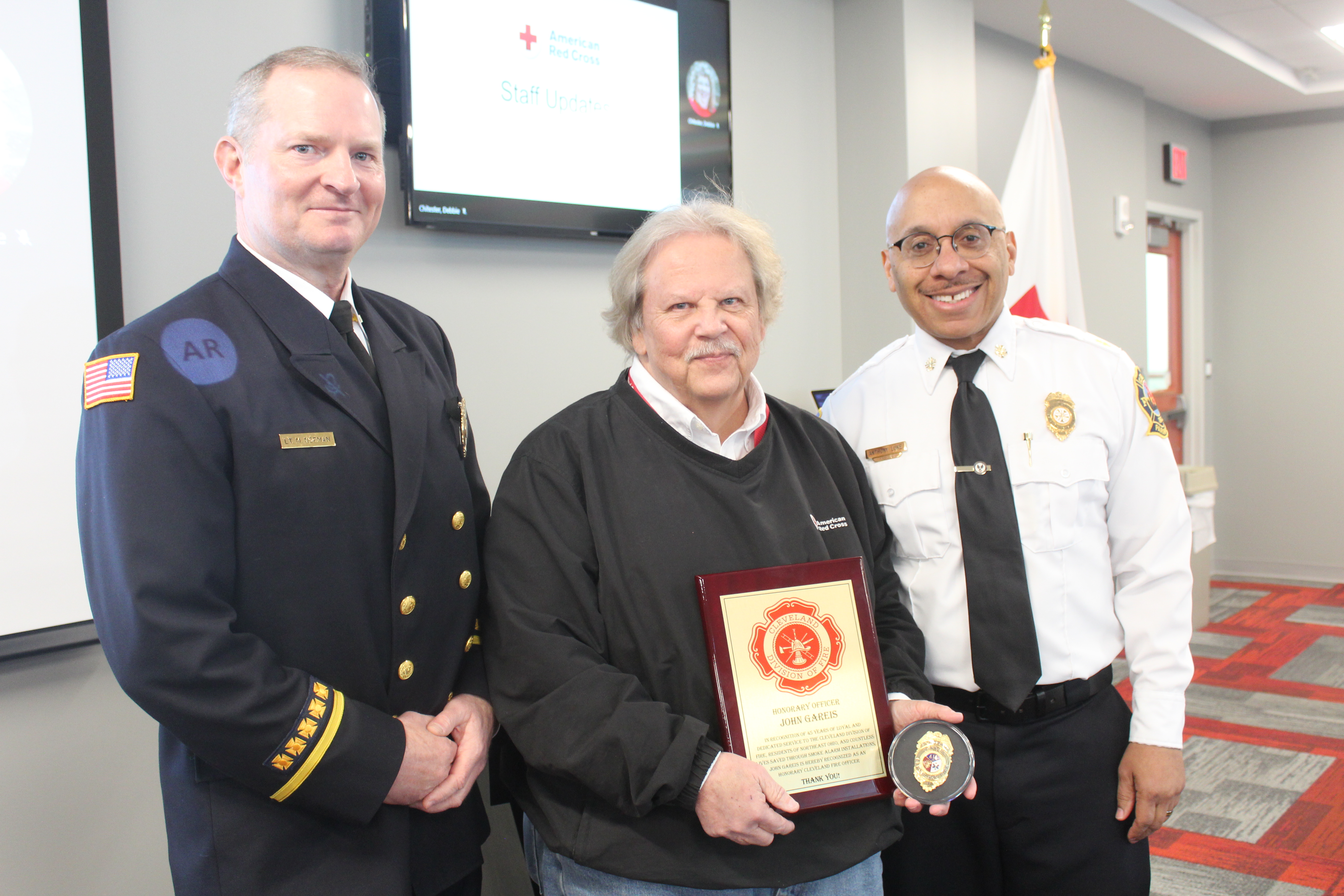
Lt. Mike Norman, left, and Chief Anthony Luke of the Cleveland Division of Fire recently presented John with a plaque and a badge as an honorary officer
“It was only supposed to last a couple of weeks,” he said with a wry grin.
“I met John in December 1986,” said Darlene Morris, the current manufacturing director at the blood laboratory in Cleveland. “I had started at Red Cross the month prior, and he was hosting our Christmas party.! He had a great sense of humor and was fun to be around.”
John eventually transferred from Biomedical Services to Humanitarian Services and led the Wayne County chapter headquartered in Wooster. “Whenever there were any disasters or fires, John was always there to help,” said Greg Long, who served as the chapter chairman of the board. “He always had whatever was needed to assist the families and first responders.”
Greg said John worked hard to create and develop the Festival of Trees, a legacy fundraising event. And he worked with John to help build a new chapter headquarters building in downtown Wooster. “John put together a blue-ribbon campaign committee and we raised the money, 1.8 million dollars, and built the new chapter house.” Construction was completed in 2008.
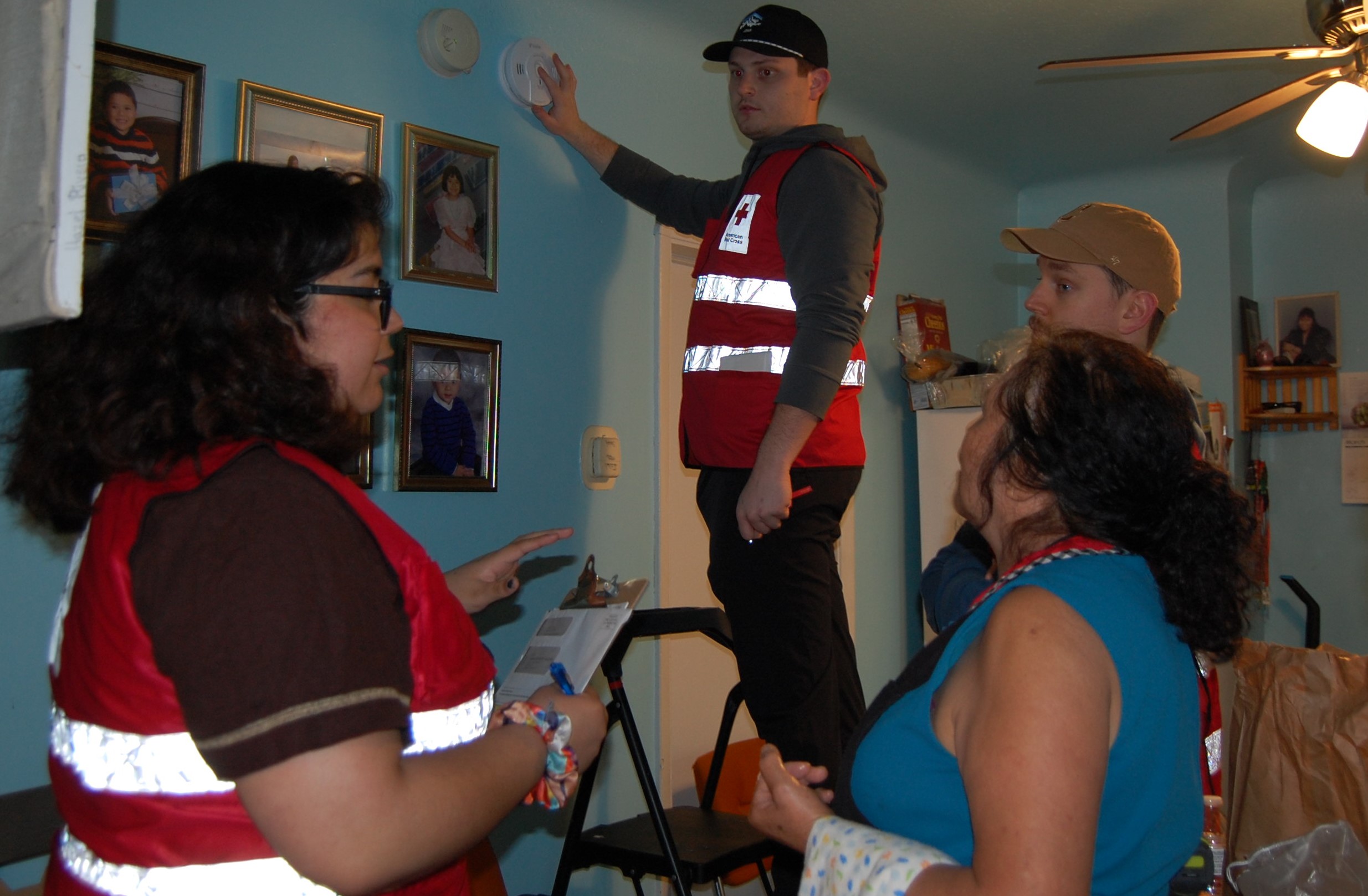
John Gareis providing instructions at a Sound the Alarm event
John has weathered many changes in structure and operation at the Red Cross and is ending his career as the regional preparedness manager. Renee Palagyi, who worked closely with John for several years at regional headquarters in Cleveland, first met John in 2006, when she was a Red Cross volunteer in Ashtabula County. She served on a committee focused on disaster preparedness and response. “I was immediately struck by the wide base of knowledge John had, not just in disaster but in overall chapter function, fundraising, Service to the Armed Forces, and so much more,” she said. “Such an easy-going guy who was willing to share what he knew with the entire group.”
Arguably, John’s most significant contribution to the Red Cross involves the development of Operation Save-a-Life, an initiative to make homes and families safer with free smoke alarms. It began in 1992 in partnership with the Cleveland Division of Fire and served as a model for the national Home Fire Campaign, a highly successful initiative that is credited with saving more than 2,000 lives since being introduced nationwide in 2014.
“The success of the life-saving smoke alarm program is truly a credit to John and his desire to get it done,” said Renee. “For so many years our region was the gold standard in this program and that must be credited to John, who didn’t just lead it; he was out there installing alarms, teaching families how to be safe and pulling together incredible teams across the region for large scale installations.”
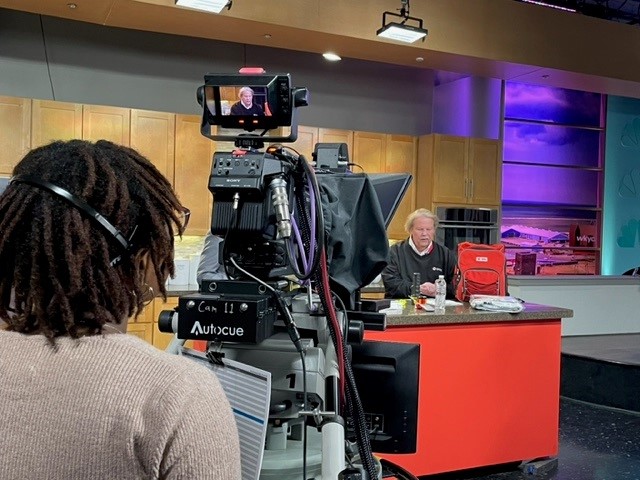
John Gareis at WKYC demonstrating the importance of building a preparedness kit
John is quick to note he wasn’t involved with the creation of the smoke alarm program, but he speaks of it with pride. “We started it. It went national because of the work done by our staff, our volunteers and our partners to make it such a success,” he said. “We wear that as a badge of honor, and we continue to be a national leader every day.”
Regional CEO Mike Parks also shared his high praise for John.
“John’s contribution to the American Red Cross over the past five decades cannot be overstated. His knowledge and expertise, especially when it comes to preparing communities and families for potential disasters, has resulted in a more resilient Northern Ohio,” he said. “His inspiring leadership of the Home Fire Campaign has created safer homes, families, and communities. Thanks to his tireless efforts, the Northern Ohio Region continues to set an example for the rest of the country when it comes to smoke alarm installations and homes made safer.”
Regional CEO Mike Parks recognized John’s contributions at the 30th anniversary celebration of the smoke alarm program
His retirement is not the end of John Gareis’ Red Cross career; he plans to continue sharing his expertise as a volunteer.
“I feel honored to have worked alongside John for the past eight years and look forward to continuing to do so as John moves into a volunteer role supporting our training team,” said Emily Probst, regional disaster officer.
Mike Parks shared a similar sentiment. “I wish John the very best in the future and am comforted in knowing he will continue to provide his valuable service to the Red Cross as a volunteer.”
Edited by Glenda Bogar, American Red Cross volunteer
Posted by Ryan Lang, American Red Cross board member and volunteer
March is Red Cross Month and the American Red Cross wants to encourage everyone to learn the important skills of CPR, first aid and AED usage.
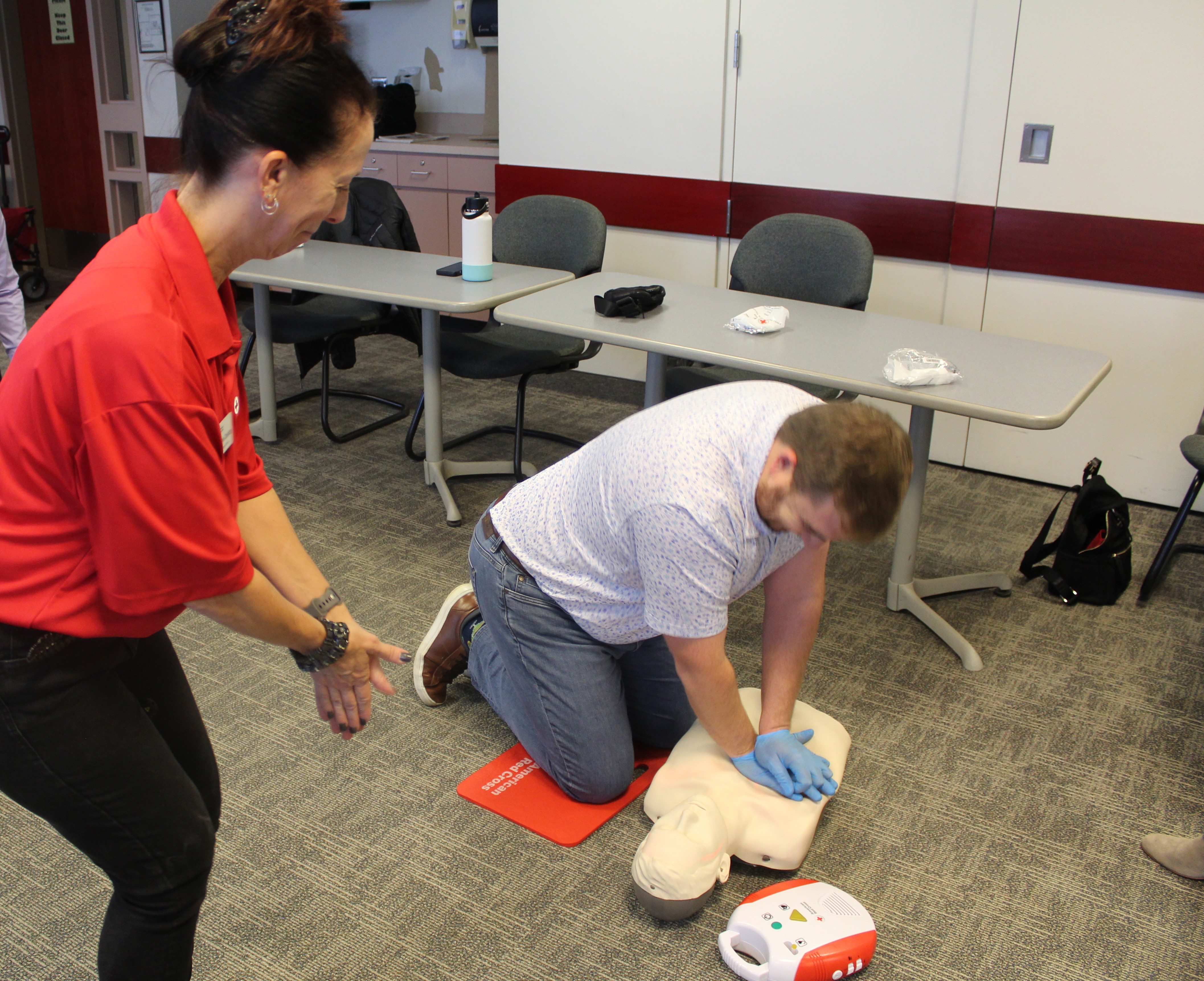
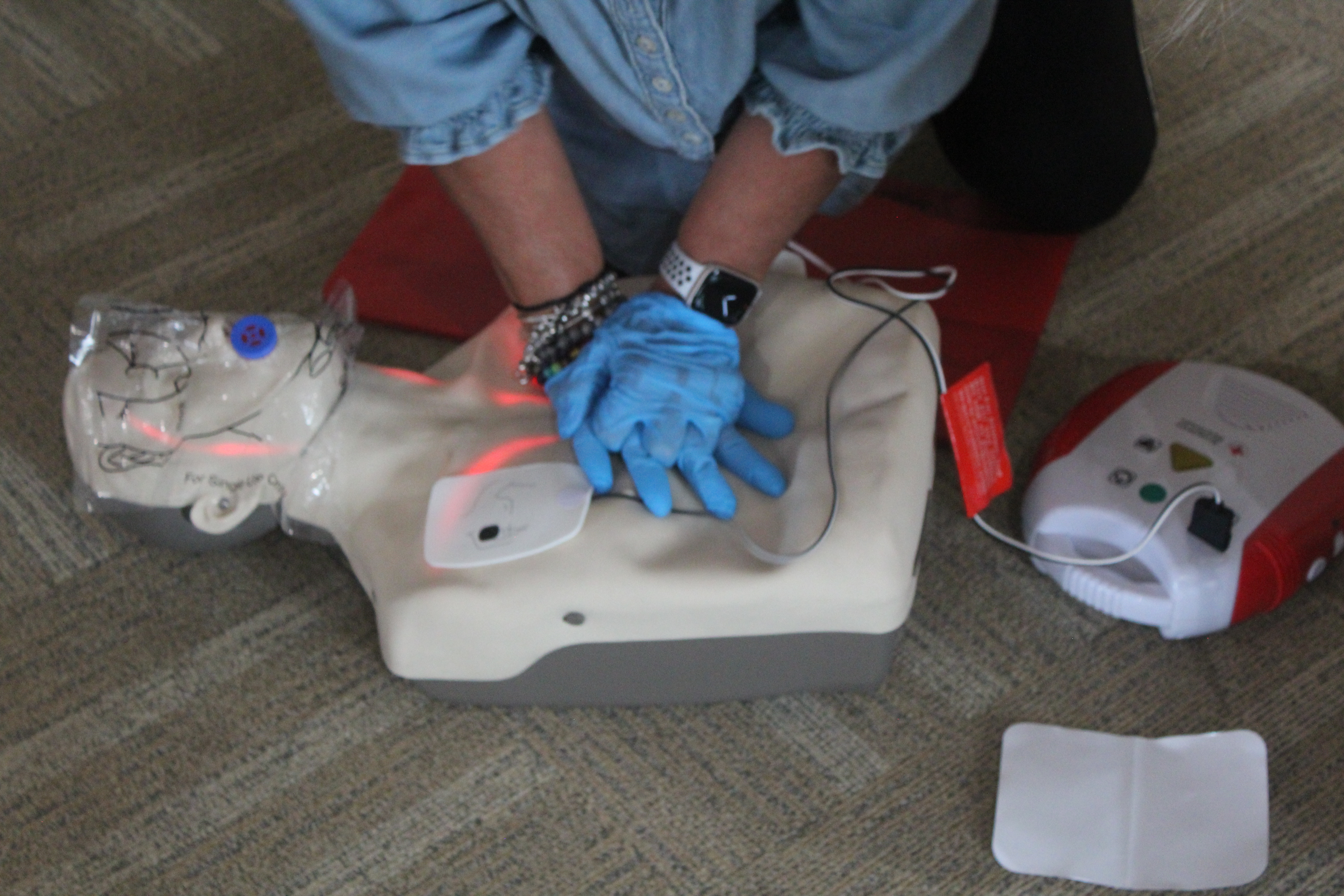
Red Cross instructor Angele Cassiday teaching CPR
Sudden cardiac arrest can happen anywhere. According to the American Heart Association, more than 357,000 cardiac arrests occur outside of the hospital setting each year in the United States, and nearly 90% of those arrests are fatal.
Despite this, survival rates can double or triple for victims of cardiac arrest if CPR is started immediately. That’s why training is vitally important so that prompt medical attention can be given before emergency responders arrive.
What should you do if you see a person suddenly collapse? Assess the scene for safety and check the victim’s pulse and breathing. Call 911. Start CPR. Use an AED.
How do you check a pulse? The easiest way is to place your fingers on the victim’s throat and slide your fingers laterally down into the groove on either side of the esophagus. The wrist can also be used; the pulse is located just below the thumb joint, also in the groove.
CPR, or cardio-pulmonary resuscitation, is the application of chest compressions to keep blood pumping through the body. The Hands-Only CPR method is recommended for bystanders in public settings, meaning the focus is solely on delivering chest compressions, without breaths, until emergency responders arrive.
AED stands for automated external defibrillator. It is an important, lifesaving tool used in sudden cardiac arrest when the heart stops beating or is beating ineffectively. The machine is easy to use and talks you through the steps to deliver effective medical care until help arrives. Anyone can learn to use an AED.
More and more communities are placing AEDs in public areas, such as parks, town centers, grocery stores and workplaces, so lifesaving measures can be started even earlier. The next time you are out and about, note the locations of AED machines in your community. This knowledge may help save someone’s life one day.
Did you know that the Red Cross offers training in CPR, first aid and AED? While CPR and AED training is common among health care workers, child care workers and lifeguards, it is a skill that anyone can and should learn. Be prepared for any situation by visiting https://www.redcross.org/take-a-class and signing up to take an online or in-person class.
Edited by Glenda Bogar, Red Cross volunteer
Posted by Ryan Lang, Red Cross board member and volunteer
Several local community members who performed brave acts of heroism were recently honored at the annual Acts of Courage Awards, presented by the American Red Cross of Greater Akron and the Mahoning Valley.
The annual dinner and award ceremony took place last Thursday at the NEW Center at Northeast Ohio Medical University (NEOMED) in Rootstown. As a special feature of the awards, the Red Cross also presented the H. Peter Burg Community Leader Award to Rick Burke for his lifetime of community leadership and dedication to the Red Cross mission.
Read on to learn more about this year’s winners as well as their heroic acts. View more photos here and watch this special story on the event from Cleveland’s Fox 8 News.
Acts of Courage Award Winners:
Audrey Jokovich, Keenan Orr & Marissa Tyger While in Wooster, Ohio completing an assignment for their nursing class at Kent State University, students Audrey Jokovich, Keenan Orr and Marissa Tyger noticed a man lying in the middle of roadway. As they rushed to help, they realized he was unconscious, aggressively shaking and slamming his head against the ground. While another bystander called 911 the students protected his head and airway and placed him on his side. Finding the man’s cell phone, the students heard his father on the line and he provided much needed medical history and other health information about the individual. Emergency services arrived and transported the man to a local hospital.
Jenna Omar
Seventh graders Jenna Omar and Luciana Kolat, friends since they were four, were sitting at lunch when Luciana began choking on a piece of breaded shrimp. She tried to reach down and pull it out herself but only pushed it down further. Unable to breathe, she started gagging and put her hands to her throat to show she was in distress. Jenna realized the emergency, jumped up and patted her friend on the back. When that didn’t work, she ran behind Luciana and gave her a strong abdominal thrust. Everything came out and Luciana’s airway was cleared.
Deputy Brian Gorham and Don Sedlock
Portage Lakes resident Don Sedlock was driving to the boat dock near his home when he saw that a fire had broken out at his neighbor’s. Stopping at the scene, Don discovered someone trapped inside and rushed in to get him out. Deputy Brian Gorham arrived shortly after and found the side of the house engulfed in flames. He also ran inside where he discovered Don trying to help his neighbor. Brian and Don worked together to carry out the 92-year-old man who was unable to walk and had been trapped in his bedroom. Four other adults and the family dog were able to follow Don and Deputy Gorham to safety while firefighters extinguished the blaze.
Hannah Stein
While running with her dog Boltan on the Cuyahoga Valley National Park Towpath, Hannah Stein heard a cry coming from the river. She ran toward the cries and found a young woman waist deep in the river. The woman had lost her footing, fallen in and was trapped waist-deep in the water, unable to get out. Hannah immediately rushed to the riverbank to help, with Boltan right behind. Removing Boltan’s harness and leash, Hannah passed them to the girl to grab onto. After a couple of strong pulls from Hannah, the young woman was able to lift herself onto the riverbank. The Valley Fire Department was called to check on the young woman.
Tim Graichen
Tim Graichen and a co-worker were traveling home from a business trip in Tennessee when they witnessed a car lose control, flip and roll multiple times, finally landing in the median in front of them. Tim yelled for someone to call 911 as he jumped from the car to help. Tim saw the car engine was on fire and immediately began to work on pulling the driver from the vehicle. Finally freeing him, Tim saw the victim was unresponsive, and he was unable to find a pulse. Tim began performing CPR and worked alone for several minutes until a nurse stopped at the scene and offered to take over chest compressions. The paramedics arrived and transported the man to the hospital, where he arrived breathing and with a pulse.
Terra White
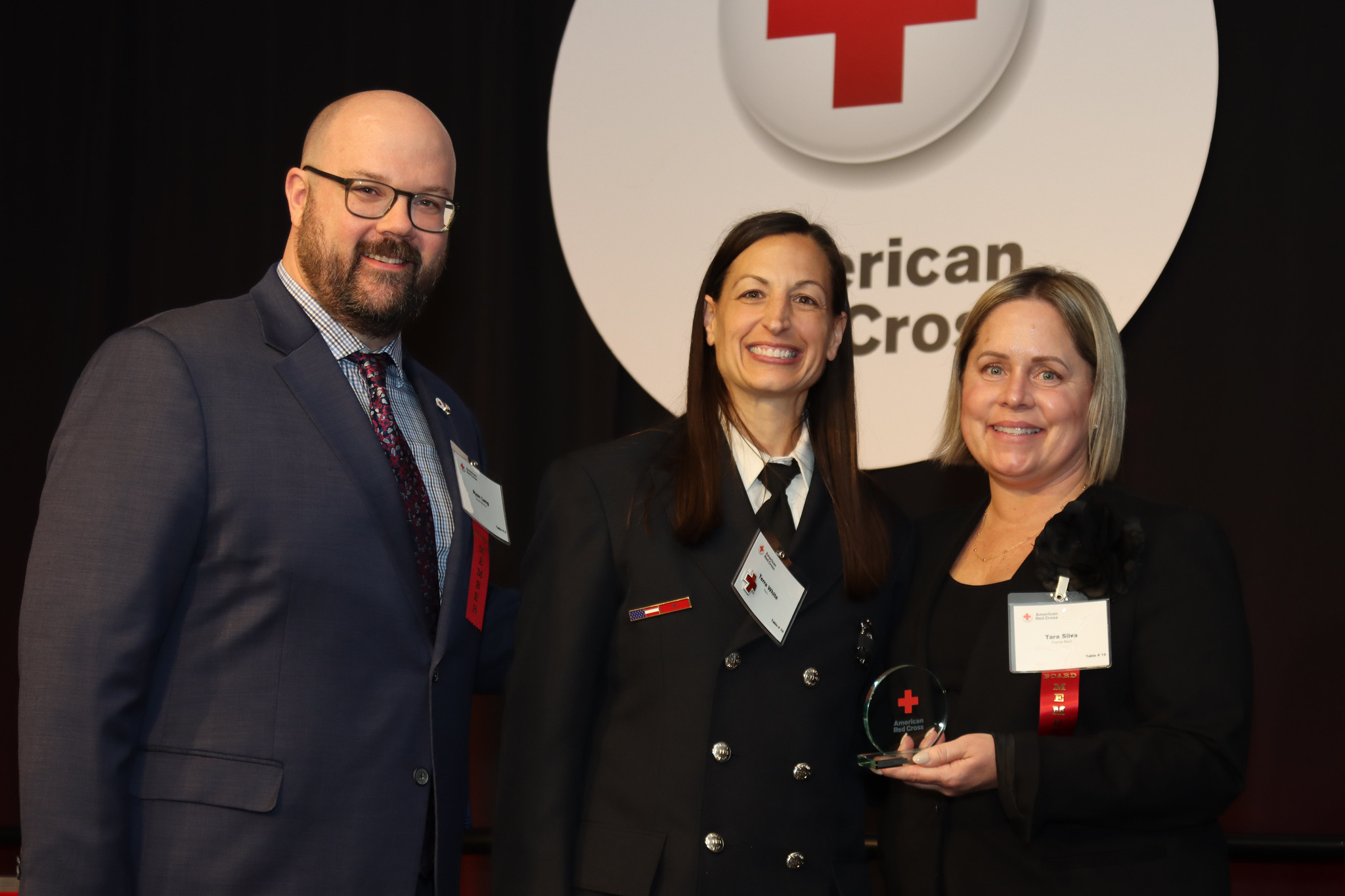
Terra White, a veteran firefighter, was in an ambulance working her first shift with a new partner. As they traveled through Akron, her partner, who was driving, suffered a medical emergency. The ambulance began to swerve, and Terra saw her partner slumped in his seat with his foot on the accelerator. Knowing she had to act quickly, Terra reached over a large computer between them and grabbed the steering wheel. She then maneuvered her way into the driver’s side, removed her partner’s foot from the gas and slammed on the brakes. The vehicle skidded and finally came to a stop in a vacant lot. Terra later discovered the ambulance stopped just a few feet shy of 50 ft. embankment, a drop that would have been fatal had the ambulance not stopped.
Congratulations to all the winners! Do you know someone who acted in an emergency to help save a life? Share their story with us for possible recognition at upcoming Acts of Courage and Hero awards events across the Northern Ohio Region. And make sure you’re prepared to help save a life like these heroes by signing up for a Red Cross training course near you.
By Christy Peters, Regional Communications Manager
After avoiding it for a week and complaining about for much longer, I spent yesterday afternoon taking down and putting away my holiday decorations. It’s one of my least favorite things to do, for multiple reasons. It’s a tedious process because I have a lot of stuff and I can never remember what goes in which box. That leads to a not-so-fun game of decoration box packing Tetris that I never win.
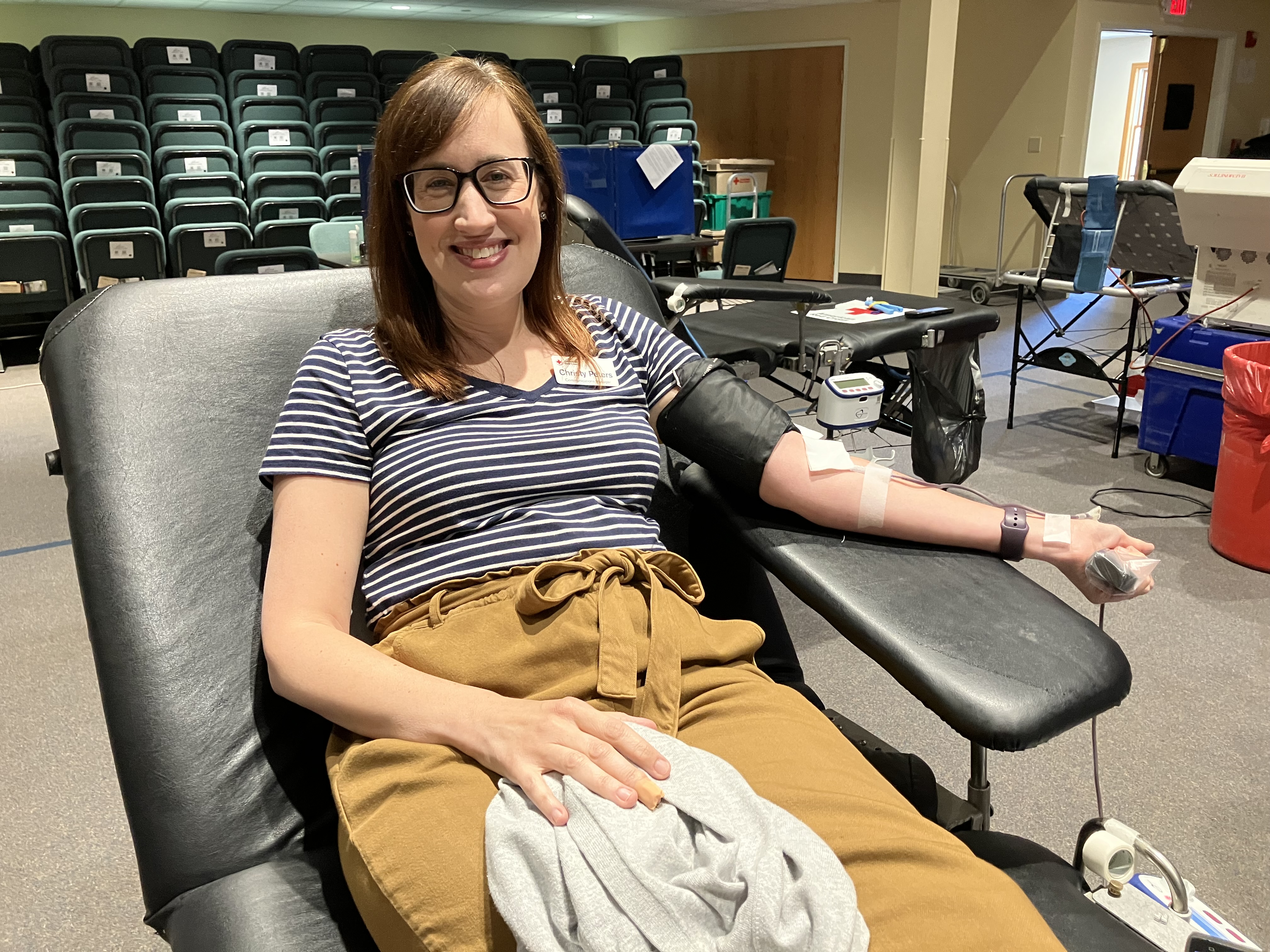
Christy Peters, Red Cross Regional Communications Manager and blood donor
But I mostly put the task off because the first few weeks of January are my least favorite time of the year. I love everything about Christmas and packing everything up reminds me it’s over and I have to get back into a routine…back to work, waking up on time and not eating and drinking everything in sight!
It turns out, I’m not alone. The “January blues” is a legitimate phenomenon felt by many, for almost all the reasons above. But this general malaise extends beyond diehard holiday lovers like me. January is also one of the most difficult times for the Red Cross to collect enough blood for patients. In fact, the organization is experiencing an emergency blood shortage as the nation faces the lowest number of people giving blood in 20 years.
Over the last 20 years, the number of people donating blood to the Red Cross has fallen by about 40%. When fewer people donate blood, even small disruptions to blood donations – such as the nearly 7,000-unit shortfall in blood donations the Red Cross experienced between Christmas and New Year’s Day alone – can have a huge impact on the availability of blood products and dramatic consequences for those in need of emergency blood transfusion.
Blood products are currently going to hospitals faster than blood donations are coming in, and in recent weeks, the Red Cross has had to limit distributions of type O blood products – among the most transfused blood types – to hospitals. In Northern Ohio, more than 500 units of blood are needed every day to meet the needs of patients at more than 70 local hospitals.
The Red Cross is urging eligible donors to make an appointment to give blood now and in the coming weeks to help alleviate the shortage and ensure lifesaving medical procedures are not delayed. By giving blood for the first time, for the first time in a long time or just giving one more time this year than last, you can make a lifesaving impact.
To find a blood drive near you, download the Red Cross Blood Donor App, visit RedCrossBlood.org or call 1-800-RED CROSS (1-800-733-2767). All who come to give blood, platelets or plasma in January will automatically be entered for a chance to win a trip for two to Super Bowl LVIII in Las Vegas. Plus, helping save a life is probably the best antidote for the January blues!
Posted by Ryan Lang, Red Cross board member and volunteer
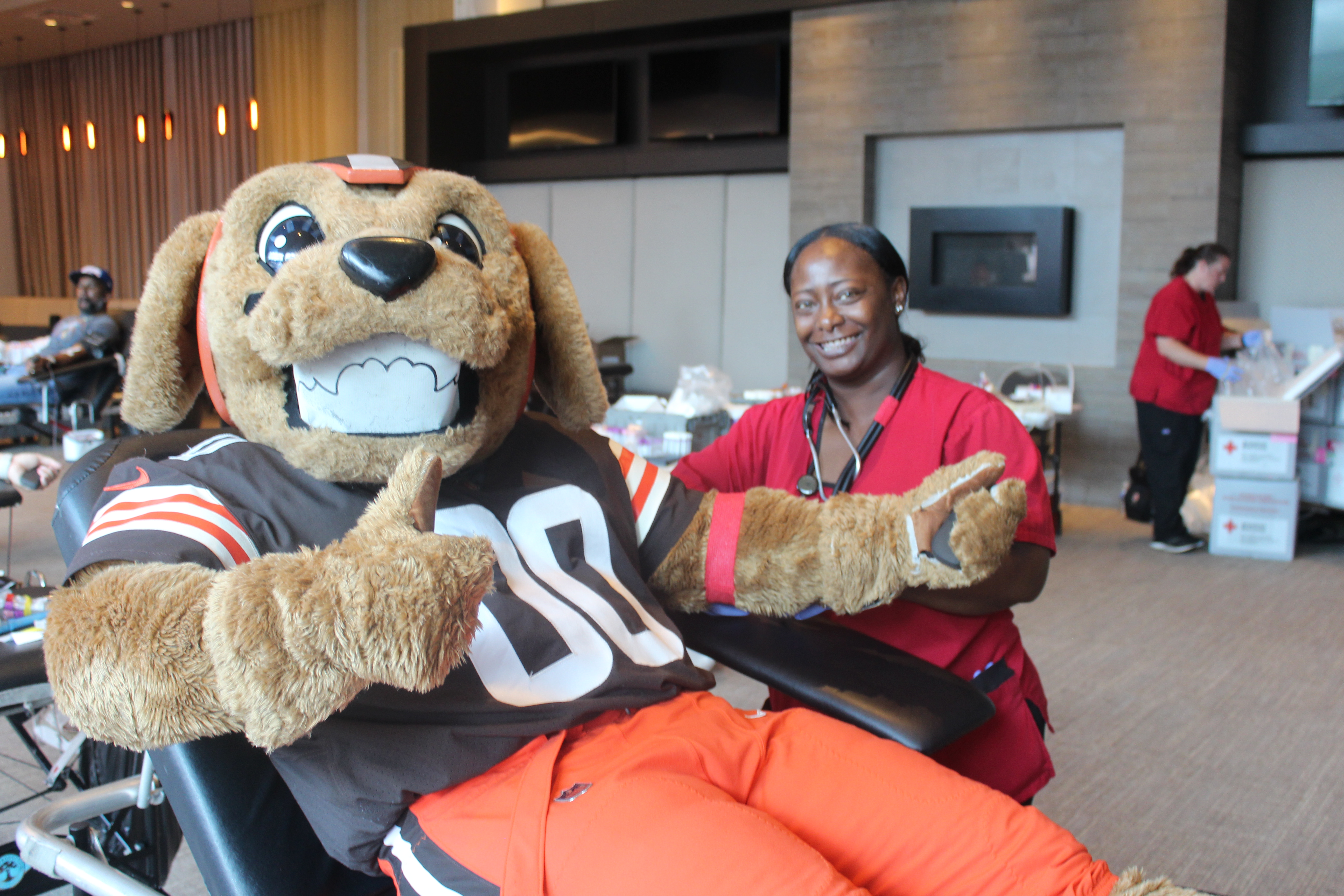
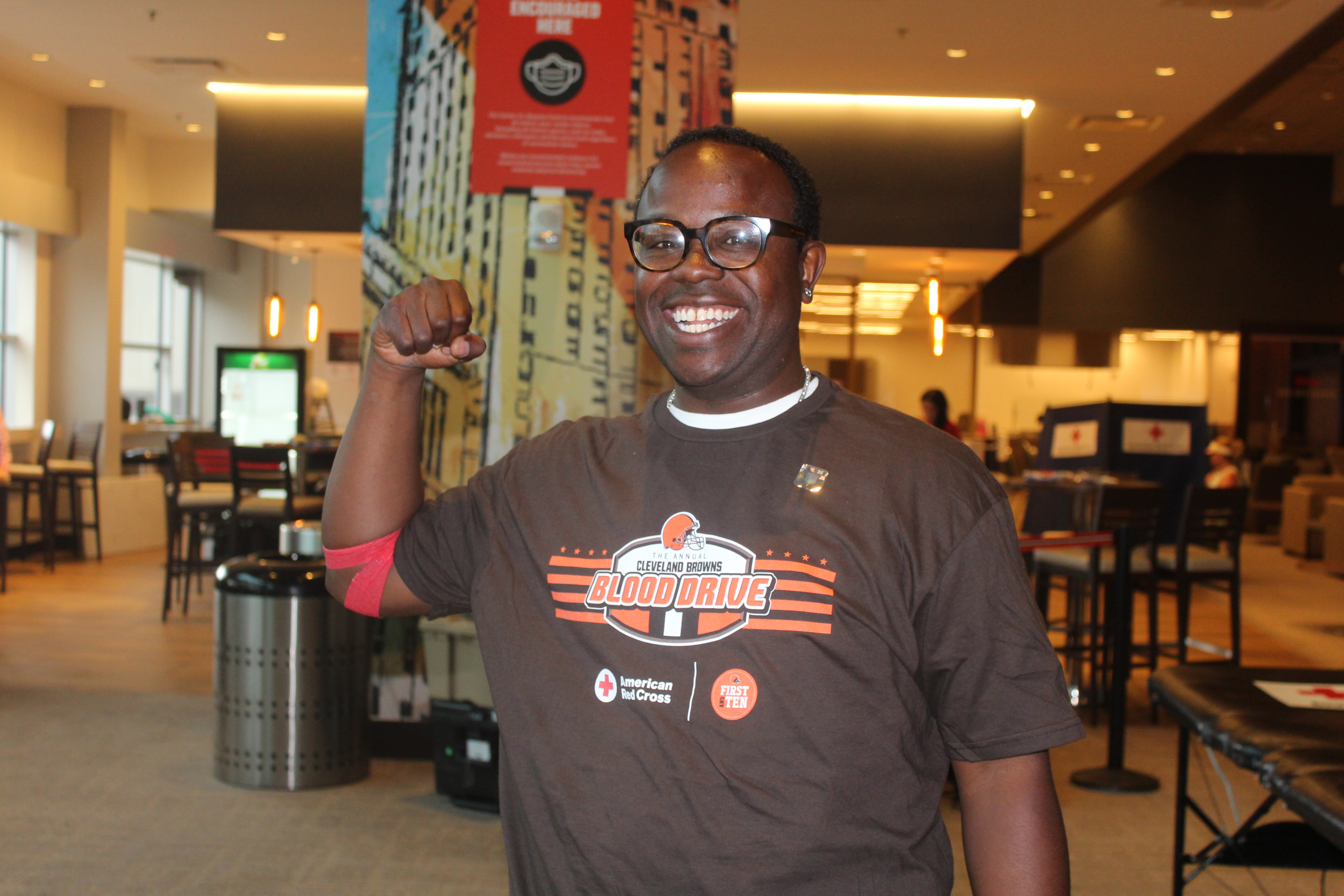
January 5, 20204 – January is National Blood Donor Month and once again the American Red Cross and the National Football League are teaming up to help patients in need by urging individuals to kick off 2024 with a blood or platelet donation.
Those who come to give from January 1-31, 2024, will automatically be entered to win a trip for two to Super Bowl LVIII in Las Vegas to thank you for helping during the critical post-holiday time. The winner and guest will get to enjoy Super Bowl LVIII in Las Vegas, access to day-of in-stadium pre-game activities, tickets to the official Super Bowl Experience, round-trip airfare to Las Vegas, three-night hotel accommodations (February 9-12, 2024), plus a $1,000 gift card for expenses.
And for only the second time since 2002, there’s a chance to see the Cleveland Browns in the Super Bowl.
The Browns clinched a post-season appearance – only the third since 1999 – when they beat the New York Jets to win a wild card spot on Thursday night, December 28. And while post-season football has been a rare occurrence for the Browns, the need for blood is a constant. Every two seconds, someone in this country needs a blood transfusion.
Right now, there is a critical need for all blood types ─ especially type O ─ after the busy holiday season. This time of year is challenging when it comes to collecting enough blood and platelets to meet patient need. Winter weather and an increase in illnesses like the flu can affect blood donor turnout. However, the need for donations still exists. Patients are still counting on blood being available despite these challenges.
Donors are urged to schedule an appointment now. Schedule your next blood, platelet or plasma donation by using the Red Cross Blood DonorApp, visiting RedCrossBlood.org or calling 1-800-RED CROSS (1-800-733-2767).
By Samantha Pudelski, American Red Cross volunteer
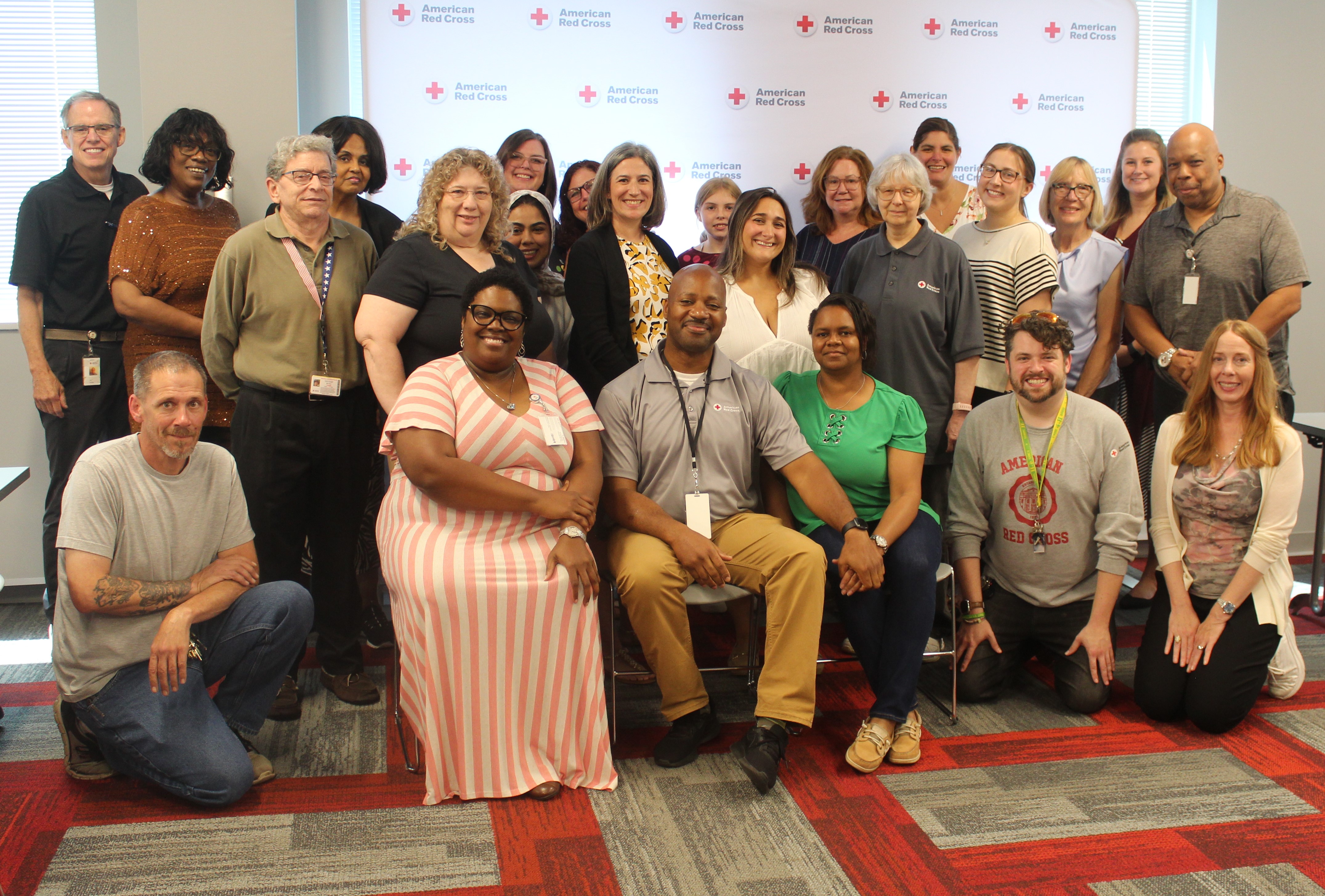
2023 was another successful year for meeting the mission of the American Red Cross in Northern Ohio, and it couldn’t have been done without the support of our volunteers. More than 1,500 volunteers reported contributing 58,000 hours in the Northern Ohio Region and on disaster relief operations since July 1, 2023 (Fiscal Year 2024).
Volunteers and staff at the Red Cross of Greater Akron and the Mahoning Valley
As we reflect on 2023 and look forward to the new year, some of the leaders in the Northern Ohio Region shared their gratitude for our volunteer workforce for giving their time, expertise and talent to help our community this past year.
“The individuals who volunteer for our mission are truly some of the most dedicated people I have ever encountered. They provide so much more than a hug or a handshake. They provide hope to people on truly their darkest day. That is invaluable.” – Rachel D’Attoma, Executive Director, Red Cross of Greater Akron and Mahoning Valley.
“Working alongside our volunteers is one of the greatest privileges of my career. Thank you for all you do to make our mission so impactful!” – Rachel Hepner-Zawodny, Executive Director, Red Cross of Western Lake Erie.
Volunteers Rick McCullough and Al Irwin
“Our volunteer family is the heart and soul of the Red Cross. Every day, they give of themselves to those who need help in our communities. I want to thank every one of our volunteers for the amazing work they do and the compassion they show to those who need our help. It is truly and honor to work beside such amazing men and women.” – Todd James, Executive Director, Red Cross of North Central Ohio.
“The best part of my job is working with our incredible volunteers. It is an honor and privilege to work alongside of them, and because of them, our mission is delivered each and every day!” – Kimberly Kroh, Executive Director, Red Cross of Heartland, Stark and Muskingum Lakes.
“One of the most important things I’ve learned since joining the Red Cross, and has now been firmly ingrained in me, is the critical importance of our volunteers! If it weren’t for our tremendous volunteer workforce, there would be no American Red Cross. Pure and simple—they are the “lifeblood” of the world’s premier humanitarian organization! I am inspired by our Red Cross volunteers each and every day—they are a true blessing!” – Mike Parks, Chief Executive Officer, Red Cross of Northern Ohio.
Volunteers providing meals for residents forced to stay in a shelter last summer
90% of the Red Cross workforce are volunteers and serve in roles at blood drives and our blood donation centers, supporting our regional work, responding to disasters and more. If you are interested in volunteering with the Red Cross, visit our website here.
Clara Barton was born on Dec. 25, 1821, 202 years ago today. What a gift she turned out to be!
National Gallery, Washington, DC. Henry Inman’s portrait of Clara Barton.
Clara was a trailblazer throughout her life, but her most impactful legacy is the organization she founded in 1881, the American Red Cross.
Although she never married or had children, her “baby” has moved millions of people to give their time and talents to help even more millions of people prevent, prepare for, respond to, and recover from emergencies.
One of the things I admire about Clara was her ability to adapt. That “semper Gumby” (forever flexible) ethos guides the organization to this day.
In 1882, Clara sent her right-hand man, Julian Hubbell, to assess damage from floods along the Ohio and Mississippi rivers and provide relief. Clara managed fundraising, including $3,000 from the German Red Cross.
1889. Johnstown, Pennsylvania. Upon her arrival in Johnstown, Miss Barton immediately set up Red Cross headquarters in a tent on Prospect Hill overlooking the stricken valley. Another Red Cross faction, from Philadelphia, headed by a Dr. Pancoast, also arrived and set up hospital facilities in tents.
The flood wasn’t a large-scale disaster, but it did reveal the need for preparedness. Up to that time, Clara had run the Red Cross as a centralized operation, dispatching funds and relief management after emergencies.
Recognizing the need to localize, Clara had Hubbell work with mayors and business owners in Louisville, Cincinnati, and St. Louis to start local chapters, the first of what is now a national network of some 230 chapters recruiting volunteers and financial support.
Within a few decades, Red Cross chapters were popping up all over northern Ohio. In fact, one of the most influential early supporters of the fledgling Red Cross was Cleveland-born Mable Boardman, who traveled the country promoting volunteerism.
Across the decades, the Red Cross has followed Clara’s lead, adding programs to meet vital needs across a wide scope of American life:
Collecting nearly 40% of the blood needed to sustain trauma victims, support surgery patients and treat people with acute conditions from cancer to sickle cell disease.
Training volunteers to help victims of natural and manmade disasters with shelter, food, emergency medical and emotional support as well as guidance to plan their recovery.
Teaching lifesaving skills ranging from first aid and CPR to swimming and lifeguarding, to disaster preparation for children and adults. This year, the Red Cross launched a new online course, “Until Help Arrives,” to train bystanders to respond to opioid overdoses, severe bleeding, cardiac arrest and choking emergencies.
Installing millions of free smoke alarms in homes across the country to prevent home fire injuries and deaths.
Supporting our men and women in the military, and their families, with pre- and post-deployment preparedness, and morale and wellness support stateside and overseas. This year, Red Cross volunteers delivered emergency messages connecting more than 87,000 service members with their loved ones in times of family need.
Serving as a vehicle for Americans’ desire to contribute to disaster prevention and response around the world. This year, the American Red Cross helped support the international response to such disasters as earthquakes in Turkey and Syria, drought and hunger crises in Africa and flooding in Pakistan and Bangladesh.
Meanwhile, the organization is taking steps to minimize its environmental impact by shifting to more hybrid and electric vehicles, renewable energy sources and eco-friendly supplies.
Clara Barton recognized the importance of adapting to emerging needs. As such, I see her as one of the most consequential women in American history. She set the template for humanitarian service: During 2022, more than 275,000 people in America stepped up to volunteer.
And she established an organization that continues – more than 133 years later – to adjust to society’s new needs: More than half a million people downloaded Red Cross disaster preparedness apps on their phones during 2022.
If you’d like to learn more about the many ways Red Cross volunteers and donors live out Clara’s vision, visit redcross.org or cruzrojaamericana.org, or visit us on X at @RedCross.
Edited by Glenda Bogar, Red Cross volunteer
Posted by Ryan Lang, Red Cross board member and volunteer