National Volunteer Week Spotlight: Long-time blood donor ambassador has no plans to slow down

By Jim McIntyre. American Red Cross volunteer

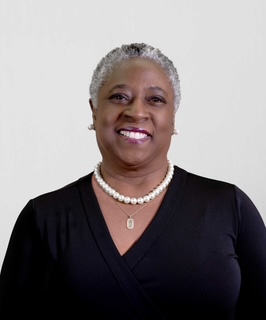
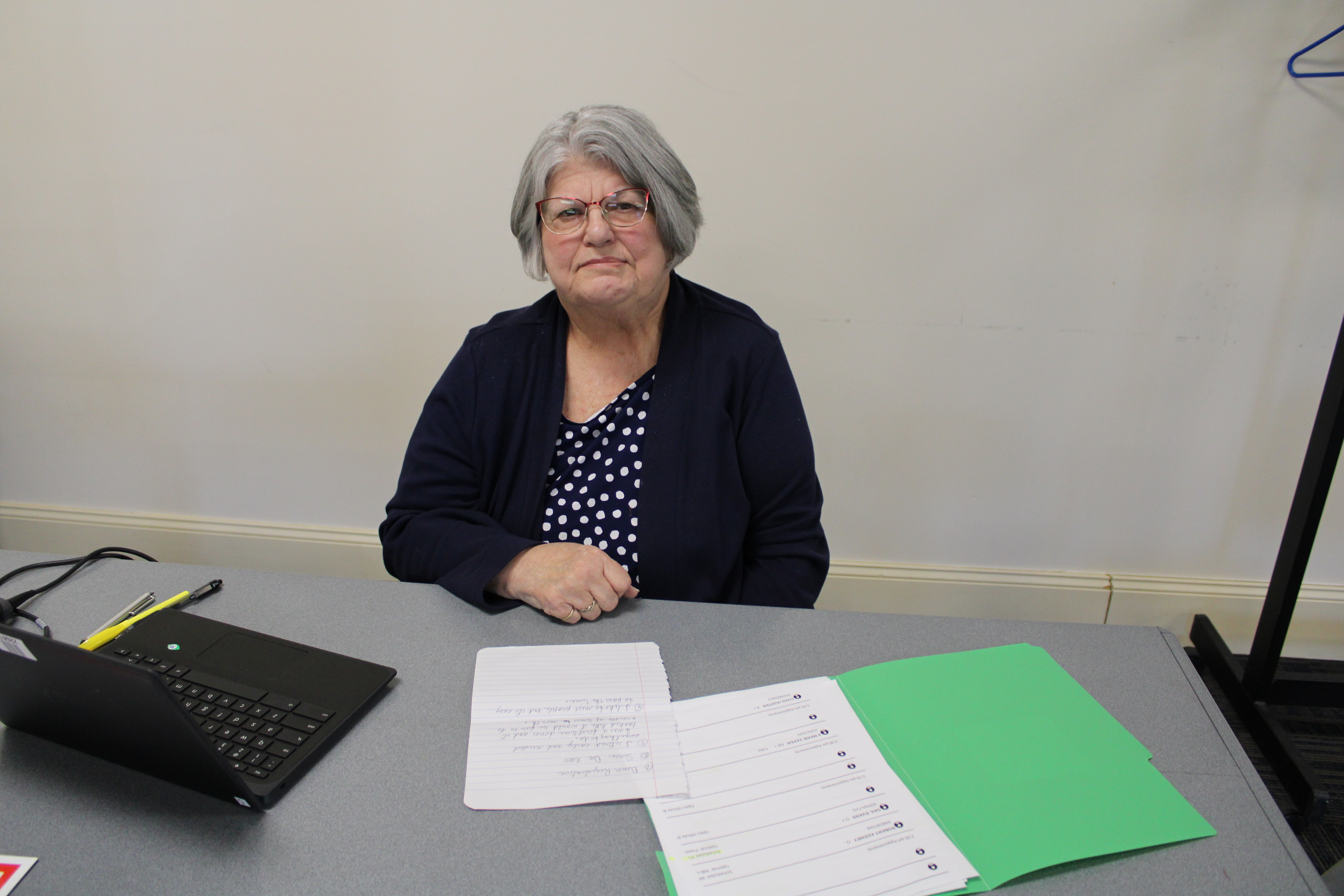
Carol O’Brien is approaching her 25th anniversary as an American Red Cross Blood Donor Ambassador, a volunteer role she relishes with the same enthusiasm she had when she started her Red Cross career in the year 2000.

Shortly after retiring from her position with an insurance firm, Carol said she decided to donate blood for the first time. That’s how she became familiar with the volunteer Blood Donor Ambassador position.

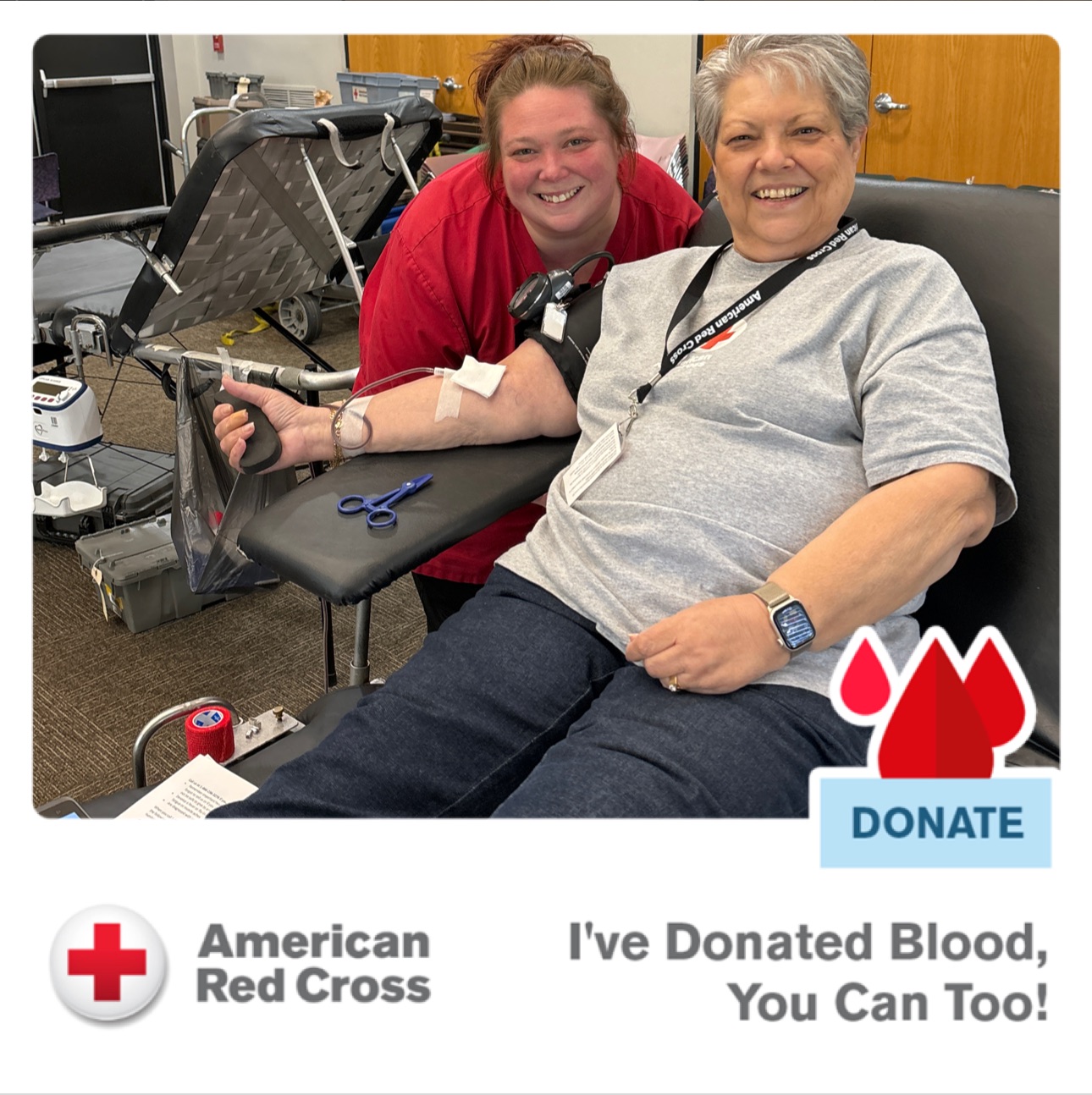
“It looked like it would be fun to do a couple of times a month,” she said. At one point, Carol was volunteering at up to six blood drives each month, registering donors and helping them through the donation process. “Now, I just work four shifts a month,” she said, with no plans to cut back anytime soon.

Because she volunteers so frequently, Carol said she has learned the names of many repeat blood donors.“ I like to meet people, and it’s easy to pass the time,” she said while staffing the registration table at a recent blood drive in Mayfield Village.

Carol also keeps an eye on the refreshment area, making sure snacks and beverages are available following each donor’s generous gift of blood. To learn more about the Blood Donor Ambassador position, visit here.

Red Cross volunteers are also needed to transport blood donations from blood drives to the biomedical services lab in Cleveland, and from the lab to area hospitals to help patients in need. Visit here to learn more about the opportunity to pick-up and deliver lifesaving blood..

Edited by Glenda Bogar. American Red Cross volunteer

National Volunteer Week spotlight: Proud volunteer says Red Cross chapter feels like home

By EILENE E. GUY, American Red Cross volunteer

“There’s a lot of pride in that vest.”

Teresa Greenlief considers herself a hard-core American Red Cross volunteer. Retired on disability after 15 years as a firefighter/EMT, she spends as much as 30 hours a week on activities with the Greater Akron and Mahoning Valley chapter. “I do everything I can,” she says proudly.

Teresa, who calls Cuyahoga Falls home, manages the chapter’s vehicle fleet and is trained to do mass care and feeding, disaster damage assessment, family reunification and local disaster response. She actively leads the chapter’s campaign to prevent home fires. “We’re focused on prevention, installing free smoke alarms and education.”

When she’s not at the chapter — “The chapter feels like home” — she’s eager to spread the word about the Red Cross. “I wear my ‘merch ’even when I’m not working,” she says warmly. People approach her when they see the iconic red cross on her jacket or T-shirt.

“My most asked question is, ‘where do I donate blood? ’The Red Cross is so much more than collecting blood, but that one’s a lifesaver.”

The Red Cross provides a framework for Teresa, and more than 300,000 volunteers across the country, to show their compassion for their fellow man. “It takes empathy and humility,” she says. “We all need it.”

During National Volunteer Week especially, we salute all the volunteers, like Teresa, who put on the red vest and give their time and talents to help prevent, prepare for and respond to disasters. They make up more than 90% of the Red Cross workforce that:

• teaches 4.5 million people a year first aid, CPR and AED,

• provides more than 480,000 services to the men and women in our armed services, at home and abroad,

• prepares to respond to an average 65,000 local disasters each year, most of them home fires,

• continues to install free smoke alarms (2.6 million alarms installed and counting!) and help families make home safety plans (saving more than 2,300 lives in 19,560 towns across the country),

• supports Red Cross operations in office settings and virtually,

• and more!

“There is such a need for the Red Cross,” Teresa says with emphasis. “You have to have empathy for people and be a team player, but the rewards will come back to you ten-fold.”

Just like the people it serves, the Red Cross welcomes people from a wide array of cultures, lifestyles, ages, backgrounds and beliefs. Come join us! Begin at redcross.org/volunteer.

Edited by Glenda Bogar, American Red Cross volunteer

National Volunteer Week Spotlight: Volunteer gives back to Red Cross after it reunited family years ago

By Kathryn Dean, American Red Cross volunteer

“…and I knew from that point on, even as young as I was…I said to myself, ‘when I’m old, I’m going to volunteer for the Red Cross,” said Linda Consolo of Stow.

A pivotal moment in Linda’s young life changed her trajectory and mindset. At the tender age of 18, just out of high school and newly engaged, her life was turned upside down. Her fiancé was drafted and sent to Vietnam, where he was wounded and sent to a field hospital. When he was well enough for transport and moved to a hospital in Japan, the army reached out to his parents, allowing only them the opportunity to visit. 

Unfortunately, the cost of travel was too much for the family, and they worried if they would ever see their son again. That’s when the American Red Cross stepped in to help. They covered the costs, and his parents were able to spend the last few weeks of his life with him. This was something that Linda never forgot, and she knew one day she would volunteer for the Red Cross.

Now, nearly 55 years later, she is living that reality and has dedicated a large portion of her retirement to volunteering with the Red Cross. She has found her niche in the role of Blood Donor Ambassador, a position that she really enjoys, working sometimes up to four days per week at blood drives.

“It’s my way of giving back to them because they did something special for somebody for me. Because having his parents there for his last month or two was amazing,” she reflected.

Not only does she volunteer at blood drives, but she is also a blood donor. “I’ve given 16 gallons and one pint in my lifetime,” she proudly states. Quite an achievement, considering that eight donations equate to one gallon of blood. 

“I started when I worked at Goodyear,” she explained. “Goodyear always had blood drives, and I started giving blood there because we were allowed to leave our desk and go across the street to Goodyear hall, give blood and have something to eat. We didn’t have to take time off from work. Goodyear made it easy for us to donate blood.”

“Donating blood is probably more important to me than volunteering,” she said, “but I do them in tandem. I do it every 56 days or as close to it as I can.”

Despite her busy schedule, she also finds time to bake for the workers at the blood drives, earning her the affectionate moniker, ‘the muffin lady.’ 

As a retiree, Linda said that she appreciates the opportunity to stay active and social and meet new people. “Now it’s time for me to give back,” she said. “It’s the thing to do. It makes your heart feel good that you’re giving back to the world. I’m doing my part and trying to give my best.”

The Red Cross is always looking for new volunteers. If you would like to learn more about this vital volunteer role or any of the other available opportunities, visit www.redcross.org/noh and click the Volunteer tab or call 1-800-RED CROSS.

Edited by Glenda Bogar, American Red Cross volunteer

High winds, heavy rains, crashing trampolines — be prepared for spring storms

By Tim Poe, American Red Cross volunteer.

Early April, a family gathering for an 81st birthday as an early spring storm rattles, patters and howls, not unlike the taps and rumbles at the windows as I write this. A bellowing whoosh and deep crash, a house-shuddering boom. I stand, thinking a tree has fallen, and look out the window to see a black-and-chrome mass fall from the sky, striking cars in a cacophony of shattering glass and bending metal. A family member repeatedly shouts, “What was that?!” I step outside and piece together what has happened. A neighbor’s trampoline, windblown, smashed into and knocked down a portion of fence, rose up, crashed onto the roof, where one of its legs protrudes from the hole it has just made, rose again and plunged onto the cars.

This was the scene last April, turning a birthday celebration into a flurry of activity to ensure everyone was safe, mitigate damage from the compromised roof, assess damage and make plans on how to proceed. Now that spring has returned along with its storms, we must be prepared for whatever they bring, whether high winds, tornadoes, heavy rains, flooding or falling trampolines.

As we have written before, preparation is key. The American Red Cross is responding to an increasing number of disasters and expects this trend will continue. The National Oceanic and Atmospheric Administration also recently reported that Ohio set a record for tornadoes in 2024.

Here are tips for planning and staying safe.

  • Practice drills with everyone in your household.
  • Contact your local office of emergency management to learn what hazards may affect your community. Sign up for free emergency alerts from your local government. Remember, a WATCH alert means be prepared; a WARNING means take action.
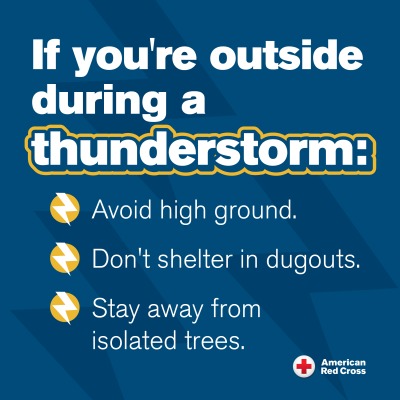
  • Get inside a sturdy building, one with walls and a foundation, before a thunderstorm hits. Plan to shelter in the basement or a small, interior, windowless room on the lowest level to provide additional protection from high winds.
  • If you are in a mobile, manufactured, trailer home or RV, identify a sturdy building you can access quickly.
  • In certain emergencies you may need to travel to safety. Decide where you will go, how to get there and what you will need to take. Make additional plans if assistance or public transportation is needed.
  • Include pets in your plans.
  • Plan to reconnect with loved ones should you become separated or communications are down. Carry a contact card with important phone numbers. Also consider including a list of medications.
  • Plan to stay informed even if the power is out. Backup batteries, devices to charge cell phones and battery-powered or hand-crank radios are helpful.
  • Prepare both stay-at home and go kits. The go-kit should have three-day’s worth of critical supplies, while the stay-at-home kit should have two weeks of food and water and a one-month supply of medications/medical supplies.
  • Keep personal, financial and medical records in a safe, easily accessible place.
  • Make a list of items outside you will need to tie down or put away. (Yes, including trampolines).
  • Learn First Aid and CPR.
  • Download the Red Cross Emergency App.

More information is available here. As always, please prepare and stay safe, and call on the Red Cross if needed.

Edited by Glenda Bogar, American Red Cross volunteer

Three things pet owners should do this April

By Samantha Pudelski, American Red Cross volunteer

Every April we recognize Pet Month, a time for pet owners to celebrate the animals they love in their life. The American Red Cross of Northern Ohio shares three ways people can become better caretakers and bond with their pets this month.

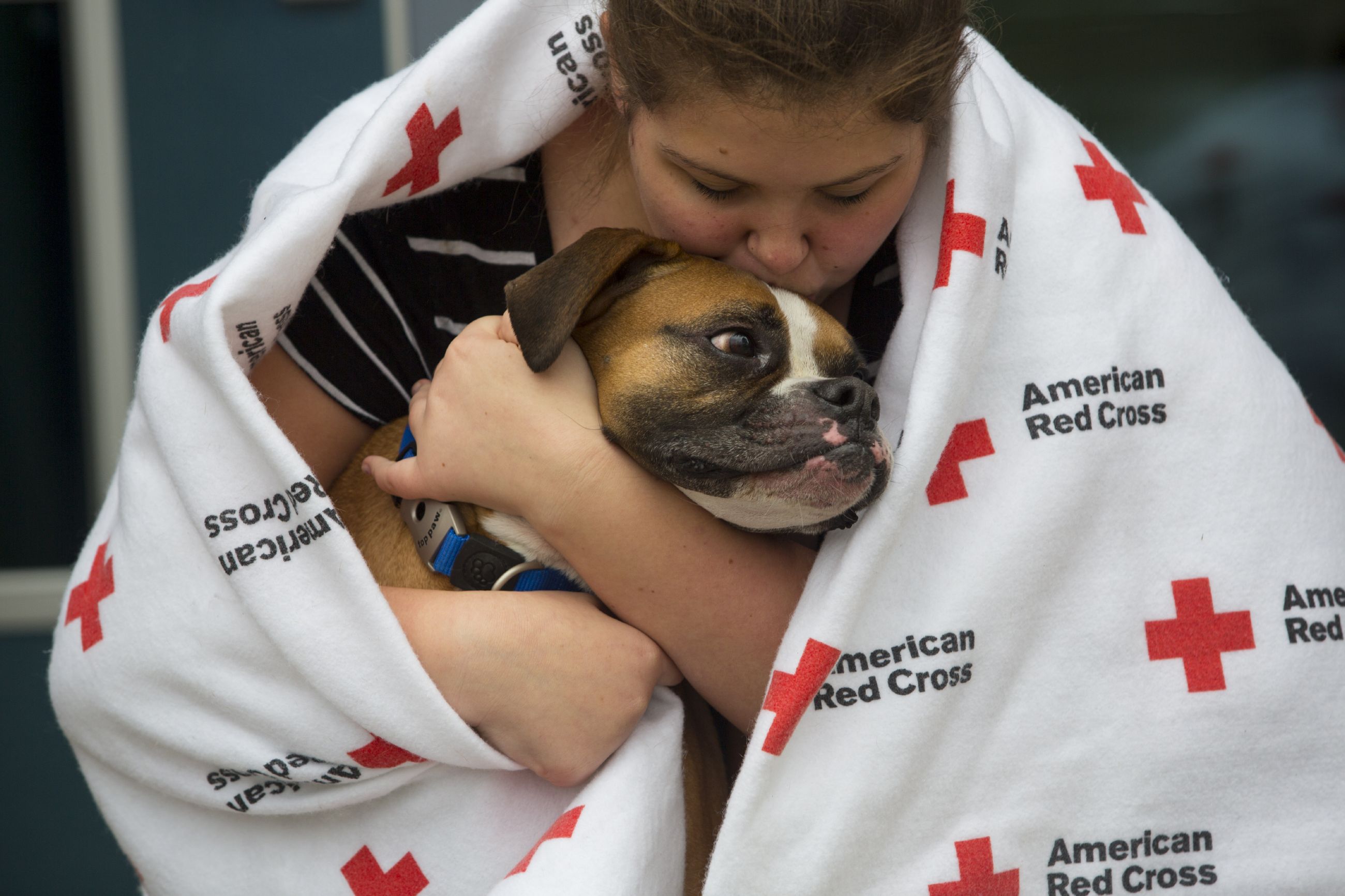
Superstorm Sandy 2012

Kaitlyn Miller and her rescue boxer, Coulton taking refuge in a Red Cross shelter.
Photo by Les Stone/American Red Cross

1. Take a Pet First Aid Class

The Red Cross offers an online course to learn how to understand vital signs, preventive care and caring for pets in critical emergency situations. The 35-minute course provides the basics in caring for cats and dogs, including:

  • Checking pet’s vital signs.
  • Conducting preventive care for your pets.
  • Recognizing and providing first aid for the most severe experiences a pet may experience.

Upon completion of the course, you’ll receive a Red Cross digital certification.  Register here.

2. Learn How to Keep Your Pets Safe During a Disaster

East Palestine, Ohio 2023 This resident of East Palestine, Ohio took refuge with her pet in a Red Cross shelter following a train derailment and chemical spill. Photo credit: Jim McIntyre/American Red Cross

In the event of an emergency, be sure to be prepared with everything your loved ones, including your pets, need to evacuate. The Red Cross has put together some tips to help you keep your pets safe in the event of a disaster.

Please note the tips below are mostly for cats and dogs. For more information on disaster planning for other types of pets and livestock, please visit https://www.ready.gov/pets or Humane Society.

  1. Remember, if it isn’t safe for you to stay in your home during an emergency, it’s not safe for your pets either.
  2. Include supplies your pet needs in your emergency kit, including:
    1. Sturdy leashes/harnesses and/or carriers to transport your pets safely.
    1. Food, water, bowls, and a manual can opener if your pets eat canned food.
    1. Cat litter and a pan for feline friends.
    1. A first aid kit.
    1. Copies of medical records and any medications your pets need in a waterproof container.
    1. Current photos of your pets just in case they get lost.
    1. Information on when your pets eat, medical conditions, any behavioral issues and contact information for your veterinarian in case you have to board or foster your pets.
    1. Pet beds and toys, if possible.
  3. Make an evacuation plan for you and your pets.
    1. Many hotels do not accept animals, other than service animals. Make sure you identify places along your route that will accept pets in an emergency.
    1. Some Red Cross shelters cannot accept pets due to health and safety needs. Service animals for people with disabilities are allowed.

For more tips on preparing for your pets in an emergency, visit the Red Cross page for preparing for emergencies.

3. Have a Dog? Join our April Walking Challenge to Support Disaster Relief

Get outside with your furry friend this spring and help support those impacted by disasters. The Red Cross is hosting a 30 Mile Dog Walk Challenge in the month of April. It’s free to join and you can score a collapsible dog bowl for joining.

Visit the Red Cross website to learn how you can sign up.

Lorain County family continues legacy of Red Cross support

By Carolyn Anderson, Senior Regional Philanthropy Officer American Red Cross of Northern Ohio

Today is American Red Cross Giving Day. This year, the  Red Cross is rallying 30,000 supporters nationwide to make a donation and help deliver aid after disasters. All services provided by the Red Cross after a disaster are free and that is only possible because of the financial support of the public. Here in Northern Ohio, one family has made a lasting impact on the Red Cross mission through their generosity.  

Those who live or work in Lorain County have likely heard of the Norton family.  As pillars of the community and highly respected philanthropists, the Norton name adorns The Ben and Jane Norton Culinary Arts Center on the campus of Lorain County Community College as well as the newly unveiled Ben and Jane Norton Center, part of the Neighborhood Alliance’s Haven Center Emergency Shelter expansion project that includes 19 new rooms for families in crisis.

What many may not know is  the Norton family are also loyal supporters of the Red Cross.  As they have done for many years now, The Norton Family Foundation recently awarded the Red Cross a generous grant to benefit Lorain County residents who have been impacted by disaster, including home fires. 

In fact, the Norton family has been a part of the Red Cross story for decades. For many years, a portrait of Benjamin F. Norton proudly hung in the former Lorain County Chapter office building.  A Korea war veteran and high school principal, Benjamin F. had a passion for the mission of the  Red Cross.   Recently, his son, Benjamin G. Norton, shared more about their family’s involvement with the Red Cross.

Mr. Norton explained  that his father had served in many roles with the  Red Cross for more than 30 years, including as  Chairman of the former Lorain County Chapter Board from 1941-1946 and again in 1968. He even served as the Interim Executive Director of the Chapter in the early 1950s.  Mr. Norton’s father passed away in 1977 but instilled in his children the importance of giving back to their community.  Benjamin G. himself was awarded a Community Hero Award from the Red Cross in 2011. 

Mr. Norton’s wife of 58 years, Jane, whom he affectionately referred to as “Janie,” passed away in 2023.  Both natives of Lorain County, the two had known each other since they were young children. Jane was born into another well-known philanthropic family, the Stockers, and served as the first Executive Director of the Stocker Family Foundation, another great supporter of the Red Cross. The couple have three sons and 10 grandchildren, who are carrying on the legacy of their parents and grandparents by helping those in need. The Red Cross is grateful to the Norton and Stocker families for their many contributions to the organization and for all they have done to serve Lorain County.

Supporting the mission of the Red Cross is not limited to Giving Day and a gift of any size makes a difference when disaster strikes. For example, a donation of $3 can provide a comfort kit with supplies like a toothbrush, comb and shampoo, and a gift of $11 can provide a nutritious meal, snack and drink. To join the Red Cross and deliver aid when help can’t wait, tap here.

Posted by Jim McIntyre, Red Cross volunteer

National Medal of Honor Day and the Red Cross standard

The American Red Cross is celebrating National Medal of Honor Day, recognizing those members of the United States Armed Forces who have earned the highest military decoration in their service to the country. Stephen Bales, who chairs our Service to the Armed Forces Committee for the Northeast Ohio Board, recently gave the following presentation to his fellow board members, correlating the work of the Red Cross to National Medal of Honor recipients.   

“Tuesday, March 25th, is National Medal of Honor Day. On March 25, 1863 the first Medal of Honor was presented to PVT Jacob Pratt, 33rd Ohio Infantry Regiment.  Jacob Pratt was from Fairfield County, Ohio.  I encourage you to read about his story and the other Medal of Honor recipients who were part of Andrews’ Raiders and the Battle of Chattanooga.

The Medal of Honor is the United States’ highest award for valor.  Every Medal of Honor citation begins:  “For conspicuous gallantry and intrepidity at risk of one’s life, above and beyond the call of duty.”

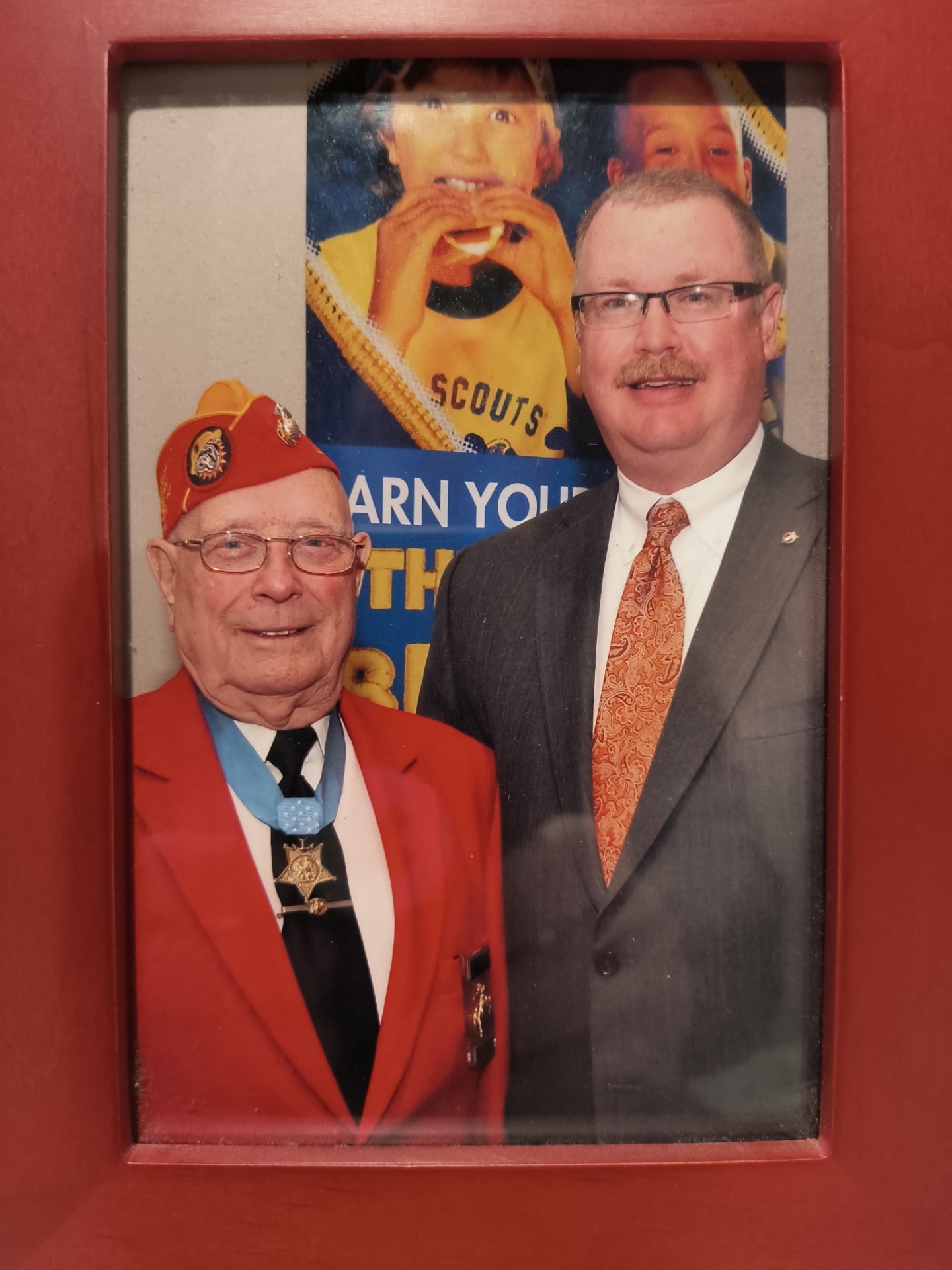
Medal of Honor recipient Hershel W. “Woody” Williams with Stephen Bales, Red Cross board member and volunteer

In 2015, I had the honor of meeting Medal of Honor recipient Hershel Woodrow “Woody” Williams, CWO4 USMC (Ret). At that time, he was the last surviving Medal of Honor recipient for action during the Battle of Iwo Jima.  Mr. Williams passed away in 2022 and was the last surviving Medal of Honor recipient from World War II. What I remember most about meeting Mr. Williams was his extraordinary humility and overall sense of selflessness.

So why, you may ask, is Medal of Honor Day important to the Red Cross? Here are several thoughts that you might consider.

First, the Medal of Honor is, in some respects, about humanity. It is about individuals who, in the face of unimaginable danger, chose to act selflessly to save others. It is about courage, sacrifice, and unwavering commitment to a greater good. These are the same values that drive Red Cross volunteers and staff every day.

A Marine runs into enemy fire to save a comrade.  A Red Cross volunteer wades through flood waters to help a stranded family. While the context is certainly different, the core principle is the same: putting the needs of others above your own.

Second, Medal of Honor Day reminds us of the profound impact of service. It highlights the sacrifices made by those who dedicate their lives to protecting and serving others. Just as Red Cross volunteers dedicated countless hours to disaster relief, blood drives, and community preparedness, Medal of Honor recipients demonstrated extraordinary dedication to their country.

Medal of Honor day offers a chance to reflect on the meaning of service and to inspire others to embrace a spirit of volunteerism and civic responsibility. It’s a reminder that even small acts of kindness and courage can make a difference.

Third, the stories of Medal of Honor recipients are powerful narratives of resilience and hope. These stories serve as a source of inspiration and demonstrate the strength of the human spirit and the ability to overcome adversity. At the Red Cross, we witness resilience every day, as individuals recover and communities rebuild after emergencies and disasters. Recognizing the unwavering resilience of Medal of Honor recipients reinforces the importance of our own work in fostering resilience in the face of hardship.

Whatever the reason might be, Medal of Honor Day is more than just a commemoration. It is a reminder of the values that unite us: courage, sacrifice, service, and resilience. By honoring these values, we reaffirm our commitment to the Red Cross mission and inspire others to embrace a spirit of humanitarianism and service.”

The Red Cross is committed to supporting our military and veteran families through our Service to the Armed Forces line of service. Click here to find out more about how you can support the effort.

Paul Wadowick: from lifelong blood donor to blood transfusion recipient

By Tim Poe, American Red Cross volunteer.

Our lives can change in a moment, posing difficulties, presenting challenges. In many of these instances, the American Red Cross is there to help, including providing life-saving blood when a transfusion is needed. Such was the case for Paul Wadowick of Ashtabula County. After he was diagnosed with blood cancer in the spring of 2021, Paul went from being a lifelong blood donor to being a blood recipient. Paul, who is also a Red Cross volunteer, was gracious enough to speak with me about his background and experience.

Paul Wadowick

Paul has dedicated himself to assisting others throughout his life, and his parents were an early inspiration. Paul became aware of blood donations in the 1950s when his father, a universal donor, had a capability test for another person’s open-heart surgery. His mother was also a donor. Paul followed suit, and from 1968 until 2021, donated 137 units (17 gallons + 1 unit) of blood, helping to save many lives in the process.

While donating blood in 2021, he became aware of a problem. As part of our services, Red Cross blood donors receive a mini-health screening, including a hemoglobin test. Paul’s iron level had dropped dramatically. Shortly thereafter, he was working as a Blood Donor Ambassador at another blood drive, took the hemoglobin test again, and knew he had to see doctors. He learned he had blood cancer and began undergoing chemotherapy.

In October 2021, Paul received a “High Chemo” 15-day treatment, where he received two units of  platelets, which are a component of blood. He recalled hearing how a donor of whole blood can save many lives. It then hit him that his was now one of those lives.

Thankfully, Paul’s cancer is in remission, and he continues his volunteer work with the Red Cross, mainly as a Blood Donor Ambassador, in addition to other community service.

Paul’s sense of responsibility and service is lifelong. As the third oldest in a family of 10, he assisted in the care of younger siblings and household chores. He was also class “dean” in his high-school seminary, volunteered in a long-term hospital, and found his calling in social work. After earning his degree and certification, Paul spent decades as a social worker, mostly at a long-term-care facility, while continuing his community service, including with the Boy Scouts. Paul and his wife, Denise, raised two sons.

After retiring in November 2015, Paul became a Red Cross volunteer in January 2016. He is also a member of the Knights of Columbus and credits his faith for his perseverance, gifts, and outlook.

Melissa Papini, a Red Cross Blood Services Account Manager, pointed out that Paul has been a Blood Program Leader with the Knights of Columbus for almost four years, recruiting over 400 donors and collecting 382 units of lifesaving blood.

Paul cited several favorite experiences as a Red Cross volunteer, especially photographing volunteer recognition celebrations, smoke alarm installations, and blood drive events in ways that tell a story. He also enjoys coaching and easing blood donors through the process and sending them home with a “Thank You.” And while he can no longer donate blood, he is happy to help recruit, organize, and bring in donations from others.

For anyone considering donating blood, Paul asks,  “What would you do if you needed blood?” and reminds us that we may find ourselves, like he did, in a position where we or a loved one need it.

To schedule a donation, please visit www.redcrossblood.org.

Diverse blood supply is more important than ever

By Eilene E. Guy, American Red Cross volunteer

Volunteers are the lifeblood of the American Red Cross. And by extension, volunteers provide lifesaving blood and blood products to millions of people across the nation every year.

This chain of generosity begins at the local level, at an average of 500 blood drives and blood center collections every day. Last year, the Red Cross sent more than 6.3 million blood products to some 2,500 hospitals and other health care facilities.

But in the past two decades, the number of Red Cross blood donors has fallen by about 40%, with a significant drop among those between 16 and 22. As our national population ages and becomes more diverse, building the next generation of donors is critical.  

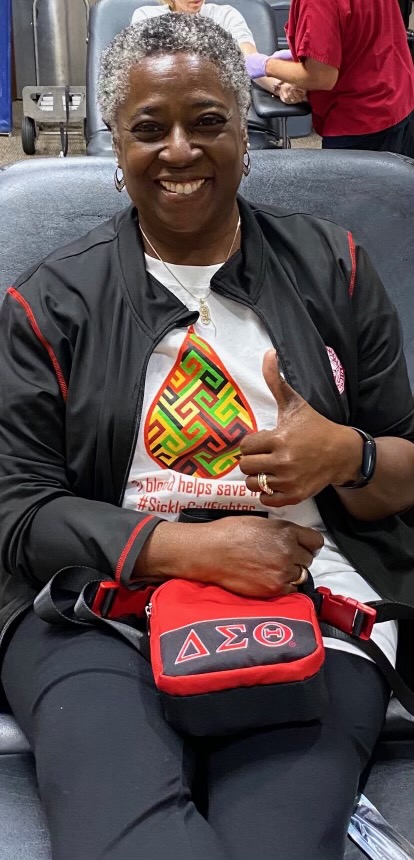
The University of Akron alumni chapter of Delta Sigma Theta, a sorority of scores of African American women, is helping meet that need by sponsoring blood drives.

Earlier this month, their event netted 30 units of blood, which will go to treat as many as 90 patients.

Drives like these are vital to maintain a stable supply of blood for trauma victims, surgery and cancer patients, fragile newborns and those with medical conditions such as Sickle Cell Disease (SCD). This hereditary condition can be life threatening: It leads to anemia (shortage of red blood cells), causing fatigue, organ damage and periodic severe pain, known as a sickle cell crisis.

Blood transfusions from donors of the same or similar ethnicity and blood type are the most effective way to treat a sickle cell crisis. Since most people with SCD are of African descent, blood from Black donors is the gold standard for treatment. In fact, one in three African American blood donors is a match for a patient with sickle cell disease.

As a northern Ohio district manager for Red Cross blood services, Sabrina Spikes works to recruit and educate a larger, broader base of blood donors, including the Black and African American, Latino and LGBTQ+ communities.

“It’s a testament to the work of Delta Sigma Theta that they sponsor at the University of Akron,” she told me. “We need to have diverse partners, to do more education.”

Education is two-pronged:

  • Reaching more people from all racial and ethnic groups to explain the importance of a diverse blood supply. “We know the number one reason people don’t donate blood is that they haven’t been asked,” she said. “We need to explain why a diverse blood supply is important.”
  • Preparing potential donors to have a successful donation experience, by getting them to drink plenty of water and eat iron-rich foods. “Cutting down on caffeinated beverages that slow the absorption of iron – coffee, tea, sodas – helps cut the deferral rate of donors, especially African American women,” she explained.    

To learn more about why a diverse blood supply is so important, tap here. And, to find where you can donate and to make an appointment, go to redcrossblood.org. Someone needs you!

Donate Blood in March and receive a free A1C screening

By: Kathryn Dean, American Red Cross volunteer

The American Red Cross of Northern Ohio is helping to bridge access to health care for blood donors by providing free A1C testing, commonly used to screen for diabetes and prediabetes, on all successful blood, platelet and plasma donations in March.

One-third of people lack access to regular primary care in the U.S., where diabetes affects 1 in 10 people and nearly a quarter of those living with it have been undiagnosed, according to the Centers for Disease Control and Prevention (CDC). The free A1C screening aims to help address this gap by empowering blood donors with valuable information to maintain their health and well-being.

What is the hemoglobin A1C test?  This is a common laboratory blood test that doctors use to help diagnose diabetes or prediabetes. Unlike a blood glucose test (or blood sugar test) which provides an instant snapshot of your current blood sugar levels, A1C reflects the average blood sugar levels of an individual over the past 3 months. This gives doctors a better idea of where your blood sugar typically lies, outside of the daily fluctuations.

Why is this important for me? It is estimated that there are over 8.7 million people in the U.S. living with undiagnosed prediabetes or diabetes. Type 2 diabetes accounts for over 90% of all cases and often remains symptomless until damage has been done. Untreated diabetes can lead to plaque build-up in the blood vessels which in turn puts you at greater risk for a stroke or heart attack. The eyes, kidneys, nerves, and skin are particularly vulnerable to the effects of decreased blood flow due to high glucose levels in the blood.  Fortunately, prediabetes is reversible with lifestyle changes, so early detection is key.

Blood donor, Audrey Savage
Photo by Michelle Frankfurter for the American Red Cross

How should I prepare for my donation?  No fasting is required for the A1C test or any other special preparation. Just be sure you are feeling well on the day of donation by getting enough rest, staying hydrated, and eating a well-balanced meal.

When will I get my results? You can expect your results within one to two weeks of your donation. Results will be posted on the Red Cross Donor App or through your donor’s account at RedCrossBlood.org.

What do my results mean?  An A1C test result of 5.7% or above will require follow-up with your primary care physician. Your doctor will be able to diagnose and guide you through an appropriate treatment plan. 

To learn more about the A1C test, pre-diabetes and diabetes, check out this informational page at the Red Cross website HERE. Download the Red Cross Blood Donor App HERE to schedule your next donation and view your donation history and test results.