Red Crossers working to reunite families after devastating storms

By Ryan Lang, American Red Cross board member and volunteer

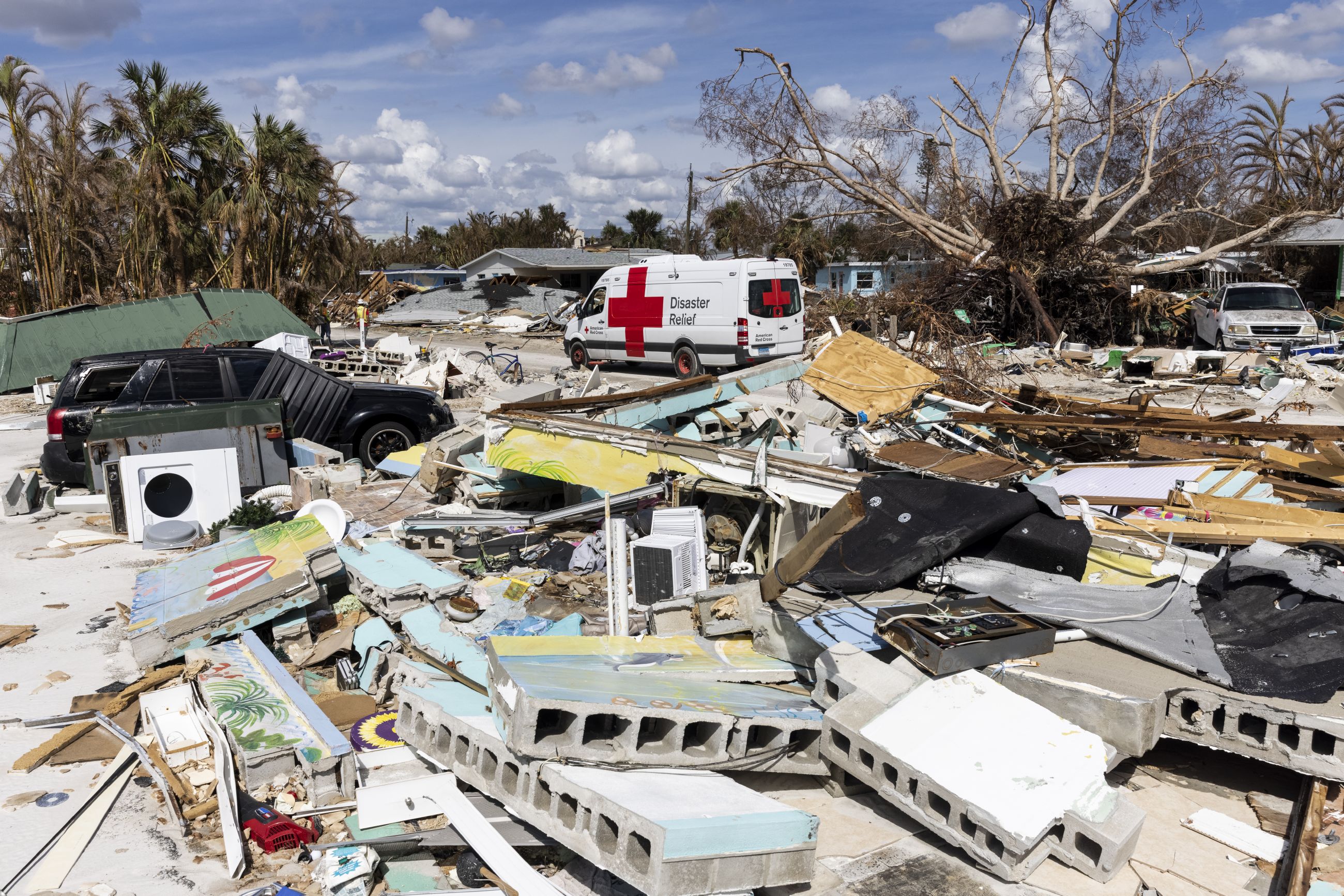
Relief efforts continue throughout the Southeast weeks after Hurricanes Helene and Milton ravaged the Carolinas, Georgia and the Gulf Coast of Florida. The storms left a trail of damage totaling hundreds of billions of dollars and counting. At least 250 people were killed and dozens more are still missing.

American Red Cross workers and volunteers have been on the ground throughout the region since before the storms hit, operating shelters and assisting with cleanup. Those are the Red Crossers you’ve seen. But there are many more you haven’t seen, working tirelessly to reunite family members separated by the storms.

The Red Cross is one of many groups that work behind -the -scenes of a disaster to help reunite loved ones. We support requests for reunification that come in through our national call center including emergency welfare inquiries, family reunification requests and military inquiries.

Emma Banton, Regional Mass Care Manager

As of October 19, more than 11,500 inquiries have been made to help find missing residents in the Southeast. Regional Mass Care Manager for the Red Cross of Northern Ohio, Emma Banton, was assigned to help reunite people who are looking for their missing family members. She says the deployment has been extremely rewarding, but mentally and emotionally difficult at times.

“To be the person who can assist with reconnecting a family with their loved ones has been a tremendous feeling,” Emma said. “Unfortunately, so many lives were lost in this tragic disaster that the work of reunification does not always have the ending we hope for.”

Those cases that wind up working out as intended, with families and friends reuniting, are the reasons Emma and others do what they do. “Thank you for all that you do for the people affected by the hurricane,” one grateful family member wrote. Another person sharing their good news simply wrote, “They are OK,” letting Emma know she’d been in touch with her loved ones.

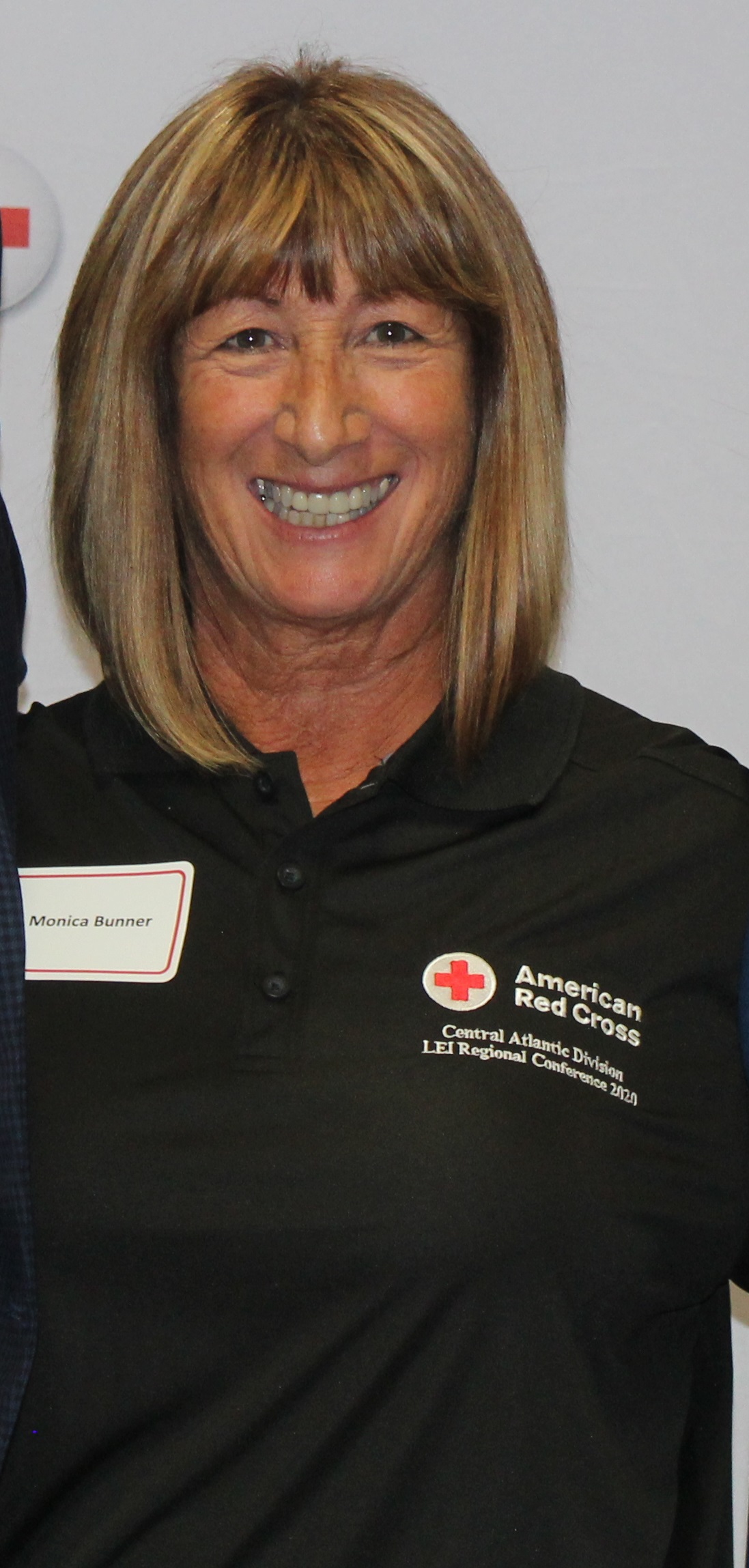
Monica Bunner, Red Cross disaster volunteer

Monica Bunner is a long-time disaster responder who has assisted with several national disaster relief operations. Monica said of her time as a reunification volunteer, “There is no greater demonstration of (the Red Cross’) commitment than to reunite loved ones who are emotionally struggling after a disaster.”

“It’s also a great opportunity for those who want to deploy but cannot be boots on the ground,” Monica added. “Equally important are the many team members who do the research, talk with the seekers and prepare (each) case virtually.”

To find out more about reunification, or if you need help finding a loved one in the aftermath of a disaster, click here.

Edited by Glenda Bogar, Red Cross volunteer

National Volunteer Week Profile: Monica Bunner

Giving those in need “a hug, a smile, and some hope

By Jim McIntyre, Regional Communications Director

Monica Bunner describes herself as “something of an adrenaline junkie.”

That’s a reasonable explanation for her willingness to go anywhere the American Red Cross is needed following a disaster. She said she’s not a “sit at the desk type of gal,” but needs to be physically involved.

Monica’s volunteer career with the Red Cross began in 2017. She was watching Hurricane Harvey unfold and felt she had to do something. She deployed to Houston to help, but not with the Red Cross. Not that time.

“A cause I already supported also needed help,” she said. That cause was Best Friends Animal Sanctuary. She was stationed at NRG Center, taking care of pets when she saw Red Cross workers helping people who needed shelter, and thought, “If I’m not doing the animals, maybe I can do the people thing.”

When she returned to Northeast Ohio, Monica began training to become a Red Cross disaster responder. She has helped people following home fires, installed smoke alarms, and assisted at fundraising events. And she began to deploy to help people who needed shelter following major disasters, such as flooding in southern Ohio, Hurricane Ian in Florida, and the devastating Maui wildfires in Hawaii.

Red cross volunteers Randy Liang and Monica Bunner in Maui, Hawaii

“I always wanted to make a difference, to work with communities, to give people some direction, a hug and a smile, and some hope.”

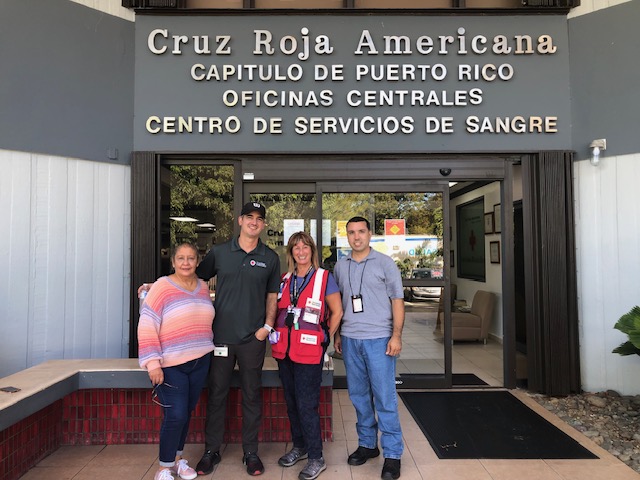
Monica has continued training to expand her skills, and now works primarily with community engagement and partnerships, helping the Red Cross connect with other resources to assist people who have been impacted by disasters. She also helps reunite families who are separated during disasters, and she helped establish Red Cross disaster communications in Puerto Rico.

Fluent in Spanish, Monica was born in Buenos Aires, Argentina, and emigrated to the U.S. with her family when she was a child. She worked at NASA’s Lewis Research Center in Cleveland, helping recruit and train women in non-traditional fields like science and engineering, and was on the team that recruited the first female U. S. astronauts.

Following her NASA career, Monica opened a real estate brokerage and a home rehabilitation business, noting how she was one of the first “female flippers.” And she has traveled to El Salvador with a church group to help build homes there.

Monica plans to continue connecting with and helping people in need through the Red Cross for the immediate future but admits the time will come to slow her frenetic pace. “This work is very physically, mentally and spiritually demanding,” she said. But it’s also rewarding. “I love the feeling of just connecting with people,” she said.

The Red Cross relies on more than 265,000 volunteers like Monica Bunner to fulfil its mission, and if you’d like to learn more, visit redcross.org/volunteer.

Posted by Ryan Lang, American Red Cross board member and volunteer

Monica Bunner finds meaning, adventure, and fuel for the soul as a Red Cross volunteer

By Tim Poe, American Red Cross volunteer

A truck navigates through areas devastated by Hurricane Ian, some previously inaccessible, arriving at a Florida camp. People of all ages and backgrounds wait, others emerge from their homes. Many are migrant workers. American Red Cross personnel, among them Monica Bunner, had worked with community members to ensure those here, like all who needed aid, receive it.

Monica Bunner, American Red Cross volunteer, in Florida after Hurricane Ian

As Monica opens the truck’s doors to distribute supplies from the Red Cross and partner organizations, she notes people’s expressions. Faces convey the realization they have not been forgotten; that people care. Monica describes the feeling as what Red Cross founder Clara Barton must have experienced caring for soldiers—, as fuel for the soul.

This was during Monica Bunner’s third deployment of 2022; her second to Florida after Hurricane Ian. She estimates she has deployed around 20 times since joining the Red Cross in 2017. Based in the Greater Akron and the Mahoning Valley chapter, she also serves in several capacities here in Northern Ohio.

I am often awed by the dedication, caring, competence, and experience of fellow Red Cross volunteers and staff. I recently spoke with Monica, who brings a lifetime of volunteerism, caring, and dedication to her work with the Red Cross.

Monica has volunteered throughout her life. Even before joining the Red Cross, her activities included helping people in women’s shelters, caring for animals, working with national organizations, and serving on local zoning boards. Her work helping animals is what brought her to the Red Cross.

In the aftermath of Hurricane Harvey, Monica was deployed with an animal welfare organization where she worked alongside Red Cross volunteers and decided to join.

Monica Bunner, Red Cross volunteer

Monica has since helped a tremendous number of people in many roles, including the three 2022 deployments. The first was to Puerto Rico in a disaster technology capacity role, where she assisted with flooding and helped prepare for the upcoming hurricane season.

Shortly after Ian, Monica deployed to Florida to supervise family reunification efforts. She spoke of the intensity of helping families reach loved ones, many of whom had medical issues. As several areas were not reachable, she worked with search and rescue personnel, a realtor, and others to help locate people. Monica described connecting the dots and reunifying a family as elating and sharing in the joy.

After taking a short break to celebrate her 32nd wedding anniversary, Monica returned to Florida and worked with community partnerships and engagement, particularly with Latino communities, as she is bilingual. She, her team, and partner organizations worked to reach those in need who may not have realized assistance was available. This deployment was when she brought supplies to the camp.

Monica said adventure has always been part of her approach to life, as well as a love of learning, and the Red Cross offers both. She said her Red Cross work is an opportunity to go out and do good with like-minded and like-hearted people. It also offers the ability to align belief with actions and fuel the soul.

For those interested in volunteering, Monica pointed out there are opportunities for all ages and backgrounds, but to be flexible as each deployment is different, and to “Go for it!” Visit redcross.org/volunteertoday to learn more.

Edited by Glenda Bogar, Red Cross volunteer

Posted by Ryan Lang, Red Cross board member and volunteer

Northern Ohio volunteer delivered supplies and hope in the wake of Hurricane Ian

By Michael deVulpillieres, American Red Cross

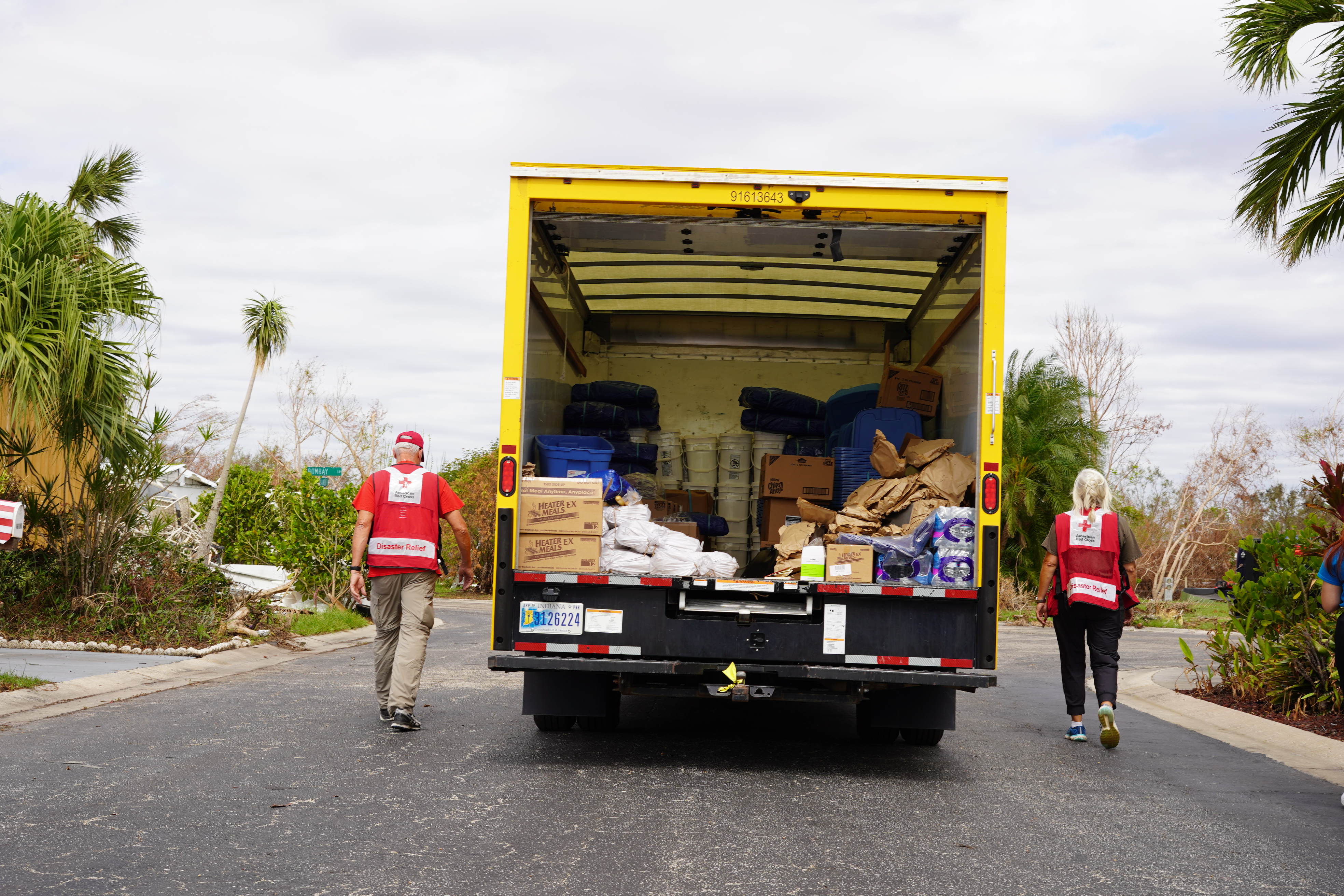
Destruction was everywhere as a large truck with an American Red Cross logo taped to its side made its way slowly through Coastal Estates, a small Fort Myers neighborhood lined with single family homes, most either wiped out entirely or badly damaged by Hurricane Ian.

On one side of the street, a stray cat wandered inside a blown-out manufactured home. A few doors down, the driver paused at the sight of a metal roof wrapped around a palm tree.

“Within 30 minutes, we had five feet of water here,” Reba Fennessy told Red Cross volunteers Lisa Mize and David Tolander. “It was so scary.”

American Red Cross volunteers David Tolander of Iowa and Lisa Mize of Huron, Ohio deliver relief supplies to a small neighborhood in Fort Myers, Florida, hit hard by Hurricane Ian. Photo credit: Michael deVulpillieres, American Red Cross

Mize, who is from Huron, Ohio, and Tolander, from Waterloo, Iowa, first met a week earlier after arriving in Southwest Florida to be part of the hurricane relief efforts. They were assigned to deliver supplies together in some of the hardest hit parts of the state.

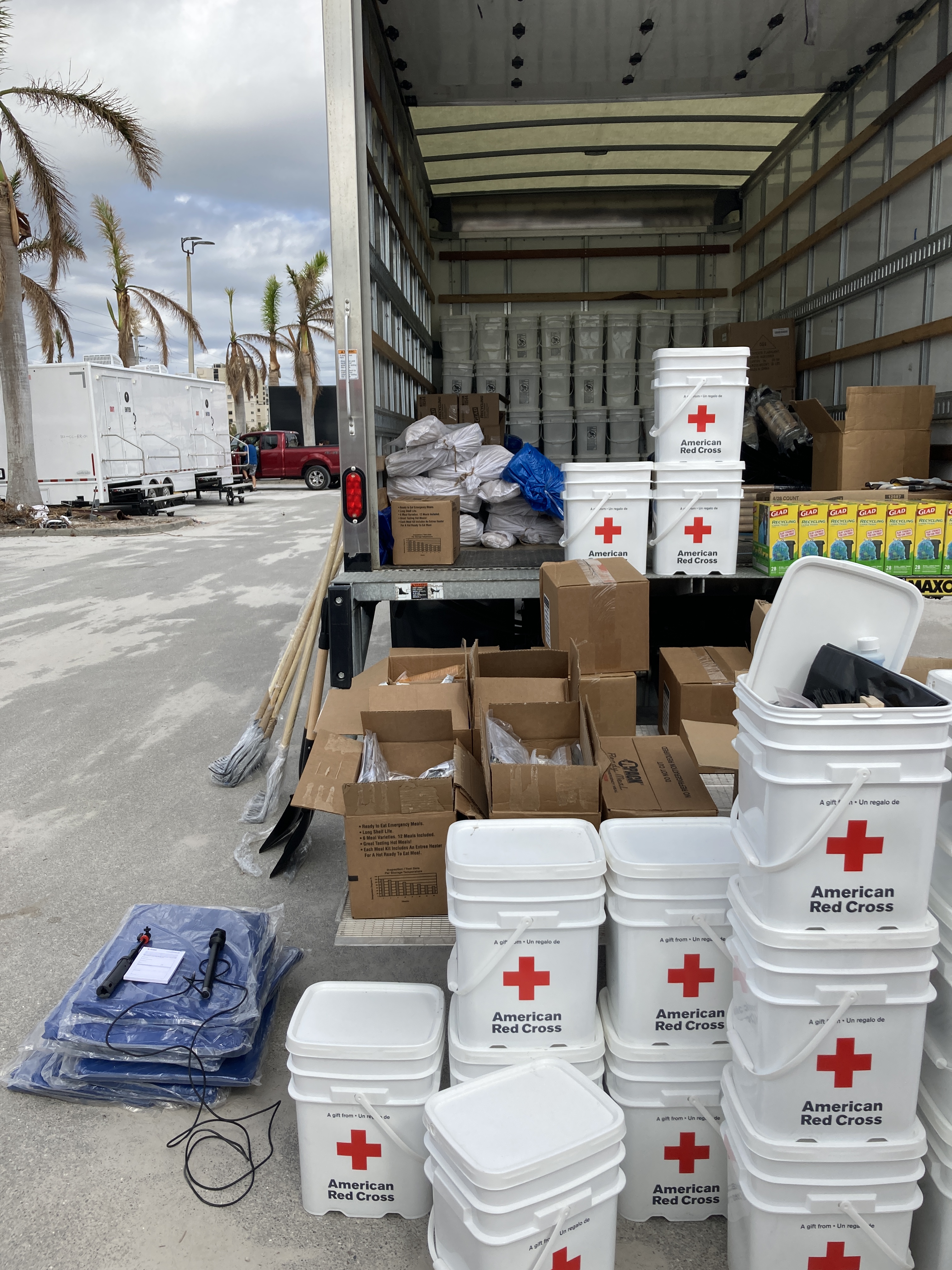
Their presence meant more than the much-needed free relief items like tarps, bins, brooms, rakes, batteries, bleach and trash bags that filled their truck. Mize and Tolander also represented the reassurance that help would continue to be available as long as needed.

“We’re here where the Gulf (of Mexico) meets the Bay (of the Caloosahatchee River), so we got a double whammy,” Catherine Casby said. The storm surge, pushed by 160-mile-an-hour winds, destroyed so many of the homes around hers. Though damaged, her small house is still standing.

Catherine Casby, a resident of Fort Myers, Fla., hit hard by Hurricane Ian, speaks with Red Cross volunteer Lisa Mize. Photo Credit: Michael deVulpillieres, American Red Cross

Casby spends her days clearing debris, cleaning up inside, and keeping an eye on her neighbors. “We look after each other,” she said of her tight-knit community. In fact, the night Ian made landfall, Casby braved the winds and flood waters to check on residents next door, injuring her leg in the process.

While Mize, who works as a nurse back home, was handing out supplies, she asked Casby about her noticeable limp. Casby said she spent a few days in the hospital after the storm and is slowly recovering.

“That’s the hardest part, the stories,” Mize said of the physical and emotional scars left by Ian. Yet during her Red Cross deployment, Mize has learned how to “laugh and smile, even in the worst of it.” Her positive disposition and sense of humor lifted the spirits of those around her.

“The people are so appreciative of seeing anyone here,” Tolander said. “Many told us the Red Cross was the first and only people they’ve seen (helping).”

Fennessy recalled how, a week after landfall, the Red Cross was in Coastal Estates providing warm meals. “It made us feel that someone cared,” she said, her voice breaking up with emotion.

Before accepting some cleanup supplies from the truck, Fennessy looked up at Mize in the back of the vehicle and said, “If I could come up there, I’d give you a hug.” Mize promptly climbed down to share an embrace.

Despite having just met a week earlier, Mize and Tolander talked and joked as if they’d known each other for years. There was a seamlessness about the way they worked together.

“We’ve clicked really well,” said Mize, who recently joined the Red Cross. “This is my first deployment. But Dave has been on a lot, so he’s taught me quite a bit.” She paused. “He taught me that it’s OK to cry sometimes.”

American Red Cross relief is free to anyone with disaster-caused needs, thanks to the generosity of the American people. To become a trained disaster volunteer, like Mize and Tolander, go to redcross.org/volunteer or call 1-800-REDCROSS.

If you would like to support the Hurricane Ian response financially, visit redcross.org or CruzRojaAmericana.org, text the words IAN to 90999 to make a $10 donation, or call 1-800-HELP NOW.

Edited by Eilene Guy, American Red Cross volunteer
Posted by Ryan Lang, American Red Cross board member and volunteer

Former NEO Board member now volunteering in Florida to help neighbors deal with Hurricane Ian aftermath

By Betty Adams, American Red Cross volunteer

After learning that most of his Fort Myers-area neighbors were safe following the storm surge from Hurricane Ian, Brad Roller, a recent transplant from Cleveland, wanted to help the American Red Cross help others wherever he could.

Former Northeast Ohio Chapter board member Brad Roller. Photo Credit: Selena Hardy, American Red Cross

So he signed up as what the Red Cross calls an event-based volunteer, and immediately found himself with a Red Cross feeding team in a vehicle packed with hot food for people in the hard-hit region.

“Today’s my first day on the job,” Roller said. “I’ve never done feeding before, but I’m a very experienced eater.”

“He’s going to be great,” said Katherine Reilly, one of the two regular feeding team volunteers, as they finished securing insulated food containers, water and snacks in the vehicle.

“He’s going to see a lot of people in one of the most devastated areas of Fort Myers,” his new teammate, Travis Lindsay, said. “We’re going to Fort Myers Beach and a lot of folks there are grateful we’re there helping them.

“There’s no other source of food on that island other than us and the World Kitchen. So we’ll be meetin’ and greetin’ those folks and giving them food so they can back to cleaning up their houses.”

Back in Northeast Ohio, Roller was a Red Cross disaster action team member for years as well as a Northeast Ohio Chapter board member. Now living much farther south, he and his family had minimal damage from the storm. “I’ve seen the devastation on TV, and my motivation is to help where I can help,” he said.

Ft. Myers Beach after Hurricane Ida

Roller and his family had prepared for the hurricane. “I sat looking out my sliding glass doors watching things blowing all over the place. We were enough inland that we didn’t feel too threatened, but we were prepared to go into a safe room if our 160-mile-an-hour glass didn’t hold. Fortunately, everything did, and we just had minor damage, but it was pretty ferocious.”

Roller was one of six event-based volunteers scheduled of help with mobile feeding the day he joined the relief effort. The Red Cross welcomes spontaneous local volunteers, who receive a background screening and abbreviated training for tasks across the operation to help those still working to recover from historic wind and water damage across Florida.

To become a trained disaster volunteer, go to redcross.org/volunteer or call 1-800-REDCROSS.

American Red Cross relief is free to anyone with disaster-caused needs, thanks to the generosity of the American people. If you would like to support the Hurricane Ian response financially, visit redcross.org or CruzRojaAmericana.org, text the words IAN to 90999 to make a $10 donation, or call 1-800-HELP NOW.

Disaster aid stations provide much needed supplies, snacks and meals for families recovering from Hurricane Ian

By Mandy McMahon, American Red Cross

Three weeks after Hurricane Ian made landfall along Florida’s Gulf coast, the American Red Cross continues to serve communities throughout Southwest and Central Florida. Hundreds of people are still relying on shelters and support following the storm.  

Stow resident Christina Krieger

“We have a long journey ahead. It’s just begun. Even after three weeks there’s still a major amount of devastation. I think it’s going to be a two-year journey,” said Christina Krieger from Stow, Ohio who came to Fort Myers Beach to help her mother pick up the pieces after her home of 22 years was flooded by the hurricane. “All her belongings are laying outside. We have to clean off all the muck and salt just to prepare it for storage while the home is rebuilt inside. It’s really hard – it’s devastating.” 

Christina came to the Disaster Aid Station on Fort Myers Beach on Thursday looking for a meal while she and her mother work through the wreckage searching for salvageable items. At Disaster Aid Stations, the American Red Cross offers mobile feeding and emergency supply distribution, alongside other organizations providing essential services such as laundry and bathroom facilities for Fort Myers Beach residents where water and power utilizes are still not operational.  

Residents waiting in line for a hot meal from the Red Cross Emergency Response Vehicle express the struggle of cleaning up an overwhelming amount of destruction caused by high winds and more than seven feet of storm surge.  

“We’ve been working 18-hour days to accomplish what we can before we go back home. What the Red Cross offers for meals and extra supplies is so helpful – it’s one less thing we have to think about. We’ll try to come back in a month when maybe the electricity will be back on,” Christina describes the daunting task of helping her mother down the path to recovery. “Thank you to the American Red Cross for being here, and to everyone else along the beach who’s providing free meals. Don’t forget about us – please stay.” 

Christina hopes that she can come back someday and see the Fort Myers Beach she remembers as a place of fun and relaxation. Residents seeking help at the Disaster Aid Station expressed their hope that vacationers will come back and help the island recover.  

“You can see things on TV, but until you experience it firsthand and feel it, you have no idea what it’s like. We did evacuate, but when we came back, we just cried,” said Cheryl McAllister, describing her reaction to seeing the devastation to her home and community. “Everybody that sees the destruction cries because they’ve been here before and they know what it was, but we will come back. Fort Myers Beach will come back; it just takes time.” 

Like so many other Floridians impacted by the storm, Cheryl calls herself fortunate despite losing her possessions that were either washed out or mangled by flood waters. Her home is still standing.  

Red Cross Disaster Aid Station after Hurricane Ian at Fort Myers Beach, Florida

Red Cross has been amazing. They’re so nice – they stop and ask if you’re ok and make you feel better. They’ve given us food and water,” Cheryl said as she holds hot meals to take back to her home. “We’ve been here a couple of days without any electricity, water or sewage. We come here to get lunch – we usually only eat one meal a day, which is this one.” 

To date, the American Red Cross has provided nearly 1.5 million meals and snacks with the help of our partners. Additionally, more than 350,000 relief items, including comfort kits and other supplies have been provided to people in need serving more than 20,000 total households. 

“We appreciate everything the American Red Cross does and every other organization that’s here helping. I thank everybody who’s helping, volunteering, who cares about us,” said Cheryl. “We’re off the news, but it’s still new and it’s still raw. It’s nice not to be forgotten.” 

Posted by Ryan Lang, Red Cross board member and volunteer

Northern Ohio volunteer helps reunite families separated by Hurricane Ian

By Diane Weber, American Red Cross volunteer

“Hello. Red Cross? I can’t reach my parents!” 

The call comes in, and Monica Bunner of Medina and the American Red Cross Reunification Team get to work. They begin with an interview of the missing person’s family. Where do the missing persons live? When did you last hear from them? More questions follow:  Do they know their neighbors?  Do they attend a house of worship? Are they part of an organization such as Knights of Columbus? Are there places they like to frequent?  

Monica Bunner, Red Cross volunteer, Reunification Regional Program Lead

In this case, the parents had recently bought a home in Rotonda West, a golf community on the coast in central Florida. The son did not know the neighbors’ names, and a call to the golf clubhouse did not yield a connection. But Monica and her colleague, Tammy Miner of Maysville, Washington spotted a lead in their interview – the missing couple had just bought a home. A search of public records yielded the name of the realtor. On a hunch that the realtor lived in the area or perhaps remained in contact with the couple, Monica called the realtor. The realtor not only lived within driving distance, but he was also willing to drive to the couple’s home.  

The realtor reported that the couple were doing well but had no electricity or cell service to contact the family. The couple drove to a nearby town and reconnected with a very relieved son. 

Such is the daily experience for reunification workers Monica. Most of these requests are resolved with just a few phone calls.  

She explained the process: 

  • Calls for reunification assistance are typically initiated through the 1-800-RED CROSS portal, although some requests come from people who see the reunification team working in the field and tell them of their own missing persons. 
     
  • The requests are then vetted according to urgency, with priority going to people with medical issues or physical or mental disabilities or veterans. Unaccompanied minors are given immediate priority, as are requests from immediate family members. Friends searching for friends or work acquaintances are coached with suggestions for their own searches.  
     
October 7, 2022. Punta Gorda, Florida. Red Cross disaster relief worker Lynette Nyman gets a hug from darling Ava who evacuated to her grandmother’s home to be safe from Hurricane Ian. Photo by Marko Kokic/American Red Cross
  • If the reunification team decides to open a case for the missing person, more information is gathered, such as the physical appearance of the person and why that person decided to remain in the area and not evacuate. 

    “That information helps us to understand the missing person more fully,” explained Monica. “We find out if the person is afraid to venture out into crowds or if they refused to leave their pets, for example. That will help us in our search for them.” 
  • The reunification team then presses for more information. Is the missing person part of an organization such as Knights of Columbus or American Legion? Does he/she have a favorite site to visit, such as a library or museum or even a favorite store or restaurant? Is he active on social media?  
     
  • If none of the telephone detective work yields the whereabouts of the missing person, the Reunification Field Team heads out to the neighborhood, first to the address of the missing person and then canvasing the neighbors, churches, organizations, and local shelters.  
October 11, 2022. Ft. Myers Beach, Florida. Red Cross volunteers drive through some of the areas in Fort Myers Beach, FL, that were hit hardest by Hurricane Ian’s devastating winds and storm surge. They took their emergency response vehicle into the community to deliver hot meals to residents who have only just begun their cleanup efforts since being let back on the island on Sunday. Photo by Scott Dalton/American Red Cross

Last week, a missing grandmother was located in a Florida shelter. 

“I’m well and happy as a clam,” she told her family when she was found. “I’m sitting in a shelter. I’m well fed, and I’m watching TV with my friends.”  

Another successful case for the reunification team. 

“It is addictive,” cautioned Monica. “When you’re able to tell the family that you have found their family member safe and sound and see the relief on their faces, it is worth all the effort to find them.” 

Edited by: Jim McIntyre, Red Cross Regional Communications Director

Red Cross continues to respond to Hurricane Michael disaster relief

By: Eric Alves, Regional Communication Specialist, American Red Cross of Northeast Ohio

This slideshow requires JavaScript.

The American Red Cross has continued to respond to the Hurricane Michael disaster relief effort, with Northeast Ohio playing a significant role in the support.

On October 11, Hurricane Michael came ashore and made its way across Alabama, Florida and Georgia, leaving a wake of destruction in its path. Hurricane Michael was a Category 4 upon landfall, making it the third-strongest hurricane in U.S. history. It was also the strongest hurricane to hit the U.S. in 50 years. A week since the storm, tens of thousands of people are still dealing with the destruction.

As always, when there is a need for compassion and humanitarian support, the Red Cross has been helping those affected and will remain there as people begin to recover and rebuild. Some people are still living without power, running water and other basic necessities. Many schools and medical facilities are closed, roads are still blocked and several bridges have been damaged.

The Red Cross is working around the clock to get help where it’s most needed. The situation throughout the region remains challenging and staff and volunteers are doing all they can to provide shelter, food, water and relief supplies to people in need.

As of October 18, more than 1,840 people stayed in as many as 16 Red Cross and community evacuation centers across Florida and Georgia. In the week since the storm, the Red Cross and other organizations have provided more than 27,400 overnight stays in emergency shelters in total, with the Red Cross providing about 83 percent of the stays.

Across the three states, more than 1,600 Red Cross disaster workers, including 21 from Northeast Ohio, are on the ground to support relief efforts, such as serving more than 477,800 meals and snacks and distributing more than 36,600 relief items like cleanup kits, rakes, shovels, bleach, garbage bags and much more to help with the massive cleanup effort. In addition, volunteer mental health and health services professionals have provided 6,700 contacts to provide support and care to evacuees.

After two major hurricanes in less than a month, thousands of people are looking for help. If you are interested in assisting those in need, visit redcross.org/volunteer or contact our Volunteer Services Department directly at 216-431-3328 or NEOvolunteer@redcross.org.

If you are unable to provide support during a disaster relief effort, there are other ways you can assist right here in Northeast Ohio. The Red Cross depends on financial donations to fund our relief services. To donate, visit redcross.org/donate, call 1-800-RED CROSS or text REDCROSS to 90999 to make a $10 donation.

The Red Cross also has a critical need for blood and platelet donations to help meet patient needs. The Red Cross provides roughly 40 percent of the nation’s blood supply and Hurricanes Michael and Florence have forced the cancellation of about 250 blood drives, causing approximately 7,600 units of blood to go uncollected. The Red Cross is asking for eligible individuals to make an appointment to donate blood by using the Red Cross Blood Donor App, visiting redcrossblood.org or by calling 1-800-RED CROSS.

Maria Strikes as Our Response to Harvey and Irma Continues

HURRICANE FAST FACTS
September 20, 2017

The American Red Cross has a launched a wide-ranging relief effort to provide safe shelter, food and comfort to people affected by Hurricanes Harvey and Irma, even as Hurricane Maria strikes Puerto Rico and the U.S. Virgin Islands. The Red Cross is part of a large team of agencies and organizations responding to provide help to those in need.

Hurricane Maria

  • Overnight, more than 10,000 people were provided refuge in almost 200 government and Red Cross shelters in Puerto Rico and the U.S. Virgin Islands.
    • On the U.S. Virgin Islands, 145 people took refuge in 6 evacuation shelters.
    • In Puerto Rico, 10,100 people hunkered down in 173 government evacuation shelters.
    • More than 160 Red Cross disaster workers were positioned in Puerto Rico and the USVI, riding out the storm.  Hundreds more are positioned to deploy where they are needed, with supplies, once the storm passes.

 Hurricanes Harvey and Irma

  • In the last three weeks, the Red Cross and community partners have provided more than 955,000 overnight stays in emergency shelters due to hurricanes.
  • Overnight, almost 3,800 people stayed in 21 Red Cross and partner shelters across Texas. To date, there have been more than 400,000 overnight shelter stays provided for Hurricane Harvey.
  • The Red Cross has served more than 3.35 million meals and snacks to people in need.
  • More than 5,800 Red Cross disaster workers and more than 330 emergency response vehicles – nearly our entire vehicle fleet – are on the ground right now, helping thousands of people affected by these storms.
  • More than 76 million hurricane and flood alerts have been issued through Red Cross mobile apps for Hurricanes Harvey and Irma.
  • 65 workers from Northeast Ohio have been deployed to the hurricane relief efforts, and more are expected to respond to Hurricane Maria.


Mexican earthquake

  • Yesterday’s 7.1 magnitude earthquake in Mexico killed hundreds of people.
  • More than 90 ambulances and an urban rescue unit of the Mexican Red Cross are helping search for survivors, transporting the injured to hospitals and providing first aid on the scene.
  • The Mexican Red Cross has deployed dozens of doctors and nurses to help with the response.
  • In all, more than 500 volunteers and staff were activated in the hours immediately following the disaster.
  • 17 urban rescue units, ambulances and logistic units will arrive today with more almost 70 more volunteers and staff.

Volunteer Response from NEO Continues to Grow

Red Cross Relief Operations Continue In Texas and the Southeast

The dual disasters caused by Hurricane Harvey and Hurricane Irma have mobilized thousands of Red Cross workers, including 60 from Northeast Ohio.

Among the volunteers providing assistance to residents of Texas is Manny Andrews of Akron.

IMG_3752

Akron resident and Red Cross volunteer Manny Andrews

Manny can be seen in this video, helping distribute meals to people in neighborhoods near Houston, where the need for help continues to be great, more than three weeks after Hurricane Harvey made landfall.

“They’re just basically cleaning up, and we’re just providing food for them,” said Manny, who  has served with the United States Marine Corps.  “It definitely feels good to know at least I’m doing something.  It’s not a lot, but it’s something they appreciate.”

SMLXVol

Red Cross volunteer Jennifer Hatfield with a hurricane-impacted resident in Brunswick, GA.

Among the Northeast Ohio volunteers helping people affected by Hurricane Irma is Jennifer Hatfield of Ashland.  She is seen in this photo, talking with a woman who was fishing in the Fancy Bluff Creek in Brunswick, Georgia.

It’s the first time the Ohio State Highway Patrol dispatcher has been assigned to a large disaster relief operation.  “We’re helping a lot of Georgia’s impoverished population,” Jennifer said.

The recovery effort is expected to last for months, and the Red Cross is committed to providing the services needed to help people put their lives back together.  But it’s going to take the help of many trained volunteers.  Zero to Hero training sessions continue to be held throughout Northeast Ohio.  Visit redcross.org/neo and click the VOLUNTEER tab to begin the application process.

Here is the latest information on the Red Cross hurricane relief efforts:

Hurricanes Harvey and Irma

  • In the last three weeks, the Red Cross and community partners have provided more than 934,000 overnight stays in emergency shelters due to hurricanes. Shelters were opened in 8 states, Puerto Rico and the U.S. Virgin Islands.
  • The Red Cross has served more than 3 million meals and snacks to people in need.
  • More than 6,400 Red Cross disaster workers and almost 300 emergency response vehicles are on the ground right now, helping thousands of people affected by these storms.
  • More than 73 million hurricane and flood alerts have been issued through Red Cross mobile apps for Hurricanes Harvey and Irma.

Hurricane Harvey

  • Overnight, more than 4,600 people stayed in 25 Red Cross and partner shelters across Texas and Louisiana. To date, there have been nearly 394,000 overnight shelter stays provided for Hurricane Harvey.
  • Along with our partners, we have served more than 2.3 million meals and snacks in Texas and Louisiana.
  • More than 3,500 Red Cross disaster workers are on the ground in Texas and Louisiana, with almost 280 more on the way.
  • More than 170 emergency response vehicles have been activated to help deliver meals and relief supplies across the hardest hit areas of Texas and Louisiana.
  • Mental health and health services professionals have provided nearly 76,000 contacts to provide support and care to people in Texas and Louisiana.
  • We’ve distributed nearly 655,000 relief items like diapers, bug spray, cleaning supplies, coolers, and comfort kits containing deodorant, toothbrushes, toothpaste and other hygiene items, in Texas and Louisiana.
  • The Red Cross has already distributed $45 million in financial assistance to more than 100,000 qualified households who needed immediate help. This assistance has helped more than 365,000 people including more than 10,000 households headed by military veterans.

Hurricane Irma

  • Overnight, almost 3,600 people were provided refuge in 55 government and Red Cross shelters across Florida, Georgia, Puerto Rico and the U.S. Virgin Islands. This includes:
    • In Florida, more than 3,200 people in 47evacuation shelters.
    • In Georgia, 24 people in one shelter.
    • On the U.S. Virgin Islands, 162 people in four evacuation shelters.
    • In Puerto Rico, more than 182 people in three evacuation shelters.
  • To date, evacuation centers have provided more than half a million (541,000) overnight stays to people needing a safe place to go.
  • Along with our partners, we have served more than 747,000 meals and snacks across six states, Puerto Rico and the U.S. Virgin Islands.
  • We’ve distributed more than 88,000 relief items like diapers, bug spray, cleaning supplies, coolers, and comfort kits containing deodorant, toothbrushes, toothpaste and other hygiene items across six states, Puerto Rico and the U.S. Virgin Islands.
  • Mental health and health services professionals have provided more than 16,000 contacts to provide support and care to those affected across six states and the U.S. Virgin Islands.
  • Nearly 3,000 Red Cross workers are responding to Irma now, with more than 300 more volunteers on the way.
  • More than 120 emergency response vehicles have been activated to help.