Peggy Hammond has donated blood for over 40 years. As someone with O+ blood, she understands the importance of giving blood. She started giving blood after a friend had a daughter diagnosed with Apert syndrome and needed regular blood infusions. She realized how extremely important it was to donate blood to help people like her friend’s daughter, who rely on blood donations.
Fast forward a few years, and Peggy was at the American Red Cross Michael T. George Blood Donation Center checking in for her routine blood donation. When she was signing in, the nurse noticed a sore on her head and told Peggy, “I think it’s infected.” The supervisor confirmed it was, and Peggy wasn’t able to donate that day. Over Christmas, she contacted her doctor and after sending a picture of the spot in question, she went in to have it evaluated.
Her doctor determined the sore was not just an irritated spot on the head, but was in fact skin cancer, specifically squamous carcinoma. Approximately 2 out of every 10 skin cancers are squamous cell skin cancers, according to the American Cancer Society. Luckily, the cancer was caught early. Peggy had Mohs micrographic surgery to have the cancerous spot removed. The procedure went well, and with the surgical site healed, she was able to resume her regular blood donations.
She returned back to the donation center to begin her regular blood donations again, and of all people volunteering that day, the same nurse who discovered her spot, was there again! “She saved my life,” Peggy said. She was grateful to have the chance to tell her how much her catch that day helped her.
In speaking with Peggy, it’s evident she’s passionate about giving back and grateful that she’s still able to continue to donate to help others in need. If you are interested in donating blood, the Red Cross holds blood drives across Northern Ohio. To find an upcoming blood drive near you, visit redcrossblood.org.
Edited by Glenda Bogar, American Red Cross volunteer
“…and I knew from that point on, even as young as I was…I said to myself, ‘when I’m old, I’m going to volunteer for the Red Cross,” said Linda Consolo of Stow.
A pivotal moment in Linda’s young life changed her trajectory and mindset. At the tender age of 18, just out of high school and newly engaged, her life was turned upside down. Her fiancé was drafted and sent to Vietnam, where he was wounded and sent to a field hospital. When he was well enough for transport and moved to a hospital in Japan, the army reached out to his parents, allowing only them the opportunity to visit.
Unfortunately, the cost of travel was too much for the family, and they worried if they would ever see their son again. That’s when the American Red Cross stepped in to help. They covered the costs, and his parents were able to spend the last few weeks of his life with him. This was something that Linda never forgot, and she knew one day she would volunteer for the Red Cross.
Now, nearly 55 years later, she is living that reality and has dedicated a large portion of her retirement to volunteering with the Red Cross. She has found her niche in the role of Blood Donor Ambassador, a position that she really enjoys, working sometimes up to four days per week at blood drives.
“It’s my way of giving back to them because they did something special for somebody for me. Because having his parents there for his last month or two was amazing,” she reflected.
Not only does she volunteer at blood drives, but she is also a blood donor. “I’ve given 16 gallons and one pint in my lifetime,” she proudly states. Quite an achievement, considering that eight donations equate to one gallon of blood.
“I started when I worked at Goodyear,” she explained. “Goodyear always had blood drives, and I started giving blood there because we were allowed to leave our desk and go across the street to Goodyear hall, give blood and have something to eat. We didn’t have to take time off from work. Goodyear made it easy for us to donate blood.”
“Donating blood is probably more important to me than volunteering,” she said, “but I do them in tandem. I do it every 56 days or as close to it as I can.”
Despite her busy schedule, she also finds time to bake for the workers at the blood drives, earning her the affectionate moniker, ‘the muffin lady.’
As a retiree, Linda said that she appreciates the opportunity to stay active and social and meet new people. “Now it’s time for me to give back,” she said. “It’s the thing to do. It makes your heart feel good that you’re giving back to the world. I’m doing my part and trying to give my best.”
The Red Cross is always looking for new volunteers. If you would like to learn more about this vital volunteer role or any of the other available opportunities, visit www.redcross.org/noh and click the Volunteer tab or call 1-800-RED CROSS.
Edited by Glenda Bogar, American Red Cross volunteer
Our lives can change in a moment, posing difficulties, presenting challenges. In many of these instances, the American Red Cross is there to help, including providing life-saving blood when a transfusion is needed. Such was the case for Paul Wadowick of Ashtabula County. After he was diagnosed with blood cancer in the spring of 2021, Paul went from being a lifelong blood donor to being a blood recipient. Paul, who is also a Red Cross volunteer, was gracious enough to speak with me about his background and experience.
Paul Wadowick
Paul has dedicated himself to assisting others throughout his life, and his parents were an early inspiration. Paul became aware of blood donations in the 1950s when his father, a universal donor, had a capability test for another person’s open-heart surgery. His mother was also a donor. Paul followed suit, and from 1968 until 2021, donated 137 units (17 gallons + 1 unit) of blood, helping to save many lives in the process.
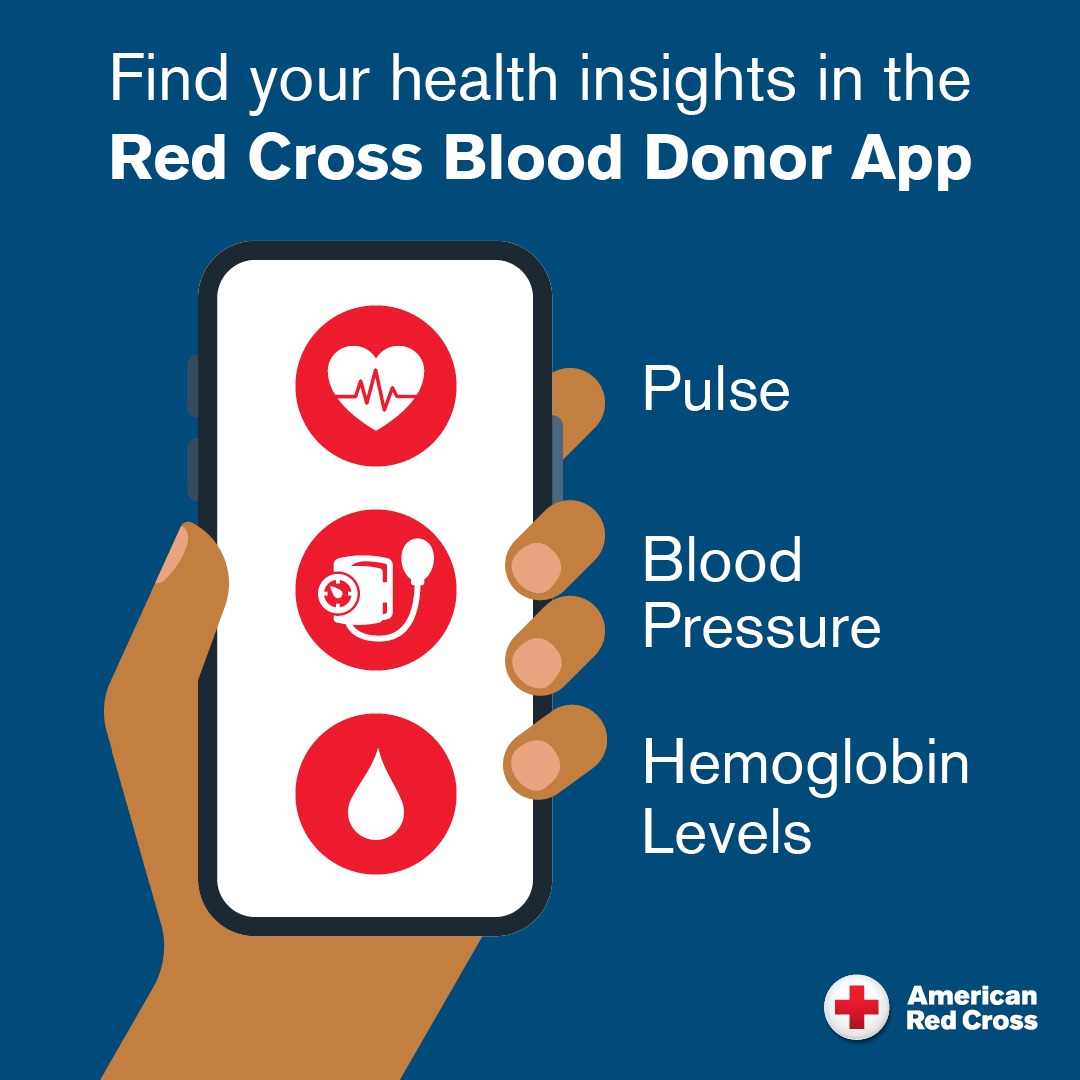
While donating blood in 2021, he became aware of a problem. As part of our services, Red Cross blood donors receive a mini-health screening, including a hemoglobin test. Paul’s iron level had dropped dramatically. Shortly thereafter, he was working as a Blood Donor Ambassador at another blood drive, took the hemoglobin test again, and knew he had to see doctors. He learned he had blood cancer and began undergoing chemotherapy.
In October 2021, Paul received a “High Chemo” 15-day treatment, where he received two units of platelets, which are a component of blood. He recalled hearing how a donor of whole blood can save many lives. It then hit him that his was now one of those lives.
Thankfully, Paul’s cancer is in remission, and he continues his volunteer work with the Red Cross, mainly as a Blood Donor Ambassador, in addition to other community service.
Paul’s sense of responsibility and service is lifelong. As the third oldest in a family of 10, he assisted in the care of younger siblings and household chores. He was also class “dean” in his high-school seminary, volunteered in a long-term hospital, and found his calling in social work. After earning his degree and certification, Paul spent decades as a social worker, mostly at a long-term-care facility, while continuing his community service, including with the Boy Scouts. Paul and his wife, Denise, raised two sons.
After retiring in November 2015, Paul became a Red Cross volunteer in January 2016. He is also a member of the Knights of Columbus and credits his faith for his perseverance, gifts, and outlook.
Melissa Papini, a Red Cross Blood Services Account Manager, pointed out that Paul has been a Blood Program Leader with the Knights of Columbus for almost four years, recruiting over 400 donors and collecting 382 units of lifesaving blood.
Paul cited several favorite experiences as a Red Cross volunteer, especially photographing volunteer recognition celebrations, smoke alarm installations, and blood drive events in ways that tell a story. He also enjoys coaching and easing blood donors through the process and sending them home with a “Thank You.” And while he can no longer donate blood, he is happy to help recruit, organize, and bring in donations from others.
For anyone considering donating blood, Paul asks, “What would you do if you needed blood?” and reminds us that we may find ourselves, like he did, in a position where we or a loved one need it.
Volunteers are the lifeblood of the American Red Cross. And by extension, volunteers provide lifesaving blood and blood products to millions of people across the nation every year.
This chain of generosity begins at the local level, at an average of 500 blood drives and blood center collections every day. Last year, the Red Cross sent more than 6.3 million blood products to some 2,500 hospitals and other health care facilities.
But in the past two decades, the number of Red Cross blood donors has fallen by about 40%, with a significant drop among those between 16 and 22. As our national population ages and becomes more diverse, building the next generation of donors is critical.
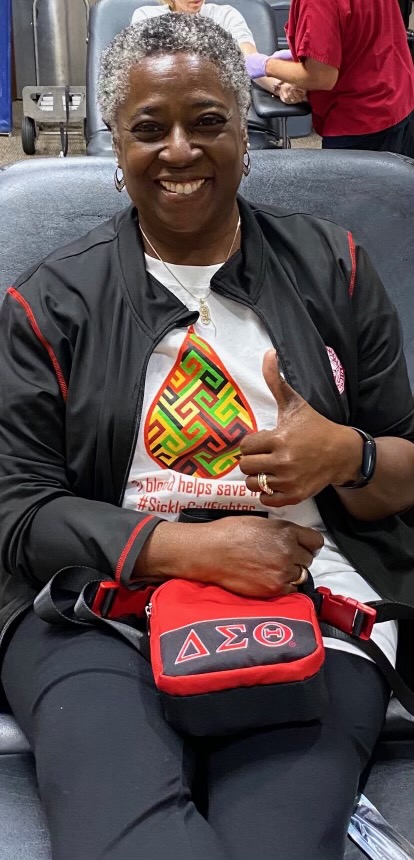
The University of Akron alumni chapter of Delta Sigma Theta, a sorority of scores of African American women, is helping meet that need by sponsoring blood drives.
Earlier this month, their event netted 30 units of blood, which will go to treat as many as 90 patients.
Drives like these are vital to maintain a stable supply of blood for trauma victims, surgery and cancer patients, fragile newborns and those with medical conditions such as Sickle Cell Disease (SCD). This hereditary condition can be life threatening: It leads to anemia (shortage of red blood cells), causing fatigue, organ damage and periodic severe pain, known as a sickle cell crisis.
Blood transfusions from donors of the same or similar ethnicity and blood type are the most effective way to treat a sickle cell crisis. Since most people with SCD are of African descent, blood from Black donors is the gold standard for treatment. In fact, one in three African American blood donors is a match for a patient with sickle cell disease.
As a northern Ohio district manager for Red Cross blood services, Sabrina Spikes works to recruit and educate a larger, broader base of blood donors, including the Black and African American, Latino and LGBTQ+ communities.
“It’s a testament to the work of Delta Sigma Theta that they sponsor at the University of Akron,” she told me. “We need to have diverse partners, to do more education.”
Education is two-pronged:
Reaching more people from all racial and ethnic groups to explain the importance of a diverse blood supply. “We know the number one reason people don’t donate blood is that they haven’t been asked,” she said. “We need to explain why a diverse blood supply is important.”
Preparing potential donors to have a successful donation experience, by getting them to drink plenty of water and eat iron-rich foods. “Cutting down on caffeinated beverages that slow the absorption of iron – coffee, tea, sodas – helps cut the deferral rate of donors, especially African American women,” she explained.
To learn more about why a diverse blood supply is so important, tap here. And, to find where you can donate and to make an appointment, go to redcrossblood.org. Someone needs you!
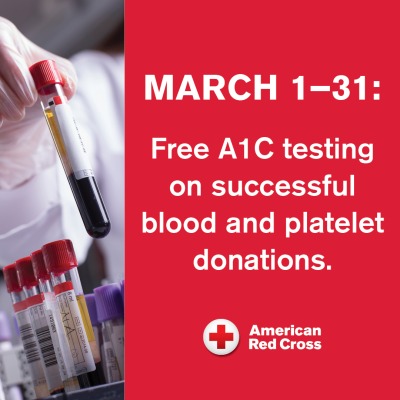
The American Red Cross of Northern Ohio is helping to bridge access to health care for blood donors by providing free A1C testing, commonly used to screen for diabetes and prediabetes, on all successful blood, platelet and plasma donations in March.
One-third of people lack access to regular primary care in the U.S., where diabetes affects 1 in 10 people and nearly a quarter of those living with it have been undiagnosed, according to the Centers for Disease Control and Prevention (CDC). The free A1C screening aims to help address this gap by empowering blood donors with valuable information to maintain their health and well-being.
What is the hemoglobin A1C test? This is a common laboratory blood test that doctors use to help diagnose diabetes or prediabetes. Unlike a blood glucose test (or blood sugar test) which provides an instant snapshot of your current blood sugar levels, A1C reflects the average blood sugar levels of an individual over the past 3 months. This gives doctors a better idea of where your blood sugar typically lies, outside of the daily fluctuations.
Why is this important for me? It is estimated that there are over 8.7 million people in the U.S. living with undiagnosed prediabetes or diabetes. Type 2 diabetes accounts for over 90% of all cases and often remains symptomless until damage has been done. Untreated diabetes can lead to plaque build-up in the blood vessels which in turn puts you at greater risk for a stroke or heart attack. The eyes, kidneys, nerves, and skin are particularly vulnerable to the effects of decreased blood flow due to high glucose levels in the blood. Fortunately, prediabetes is reversible with lifestyle changes, so early detection is key.
Blood donor, Audrey Savage Photo by Michelle Frankfurter for the American Red Cross
How should I prepare for my donation? No fasting is required for the A1C test or any other special preparation. Just be sure you are feeling well on the day of donation by getting enough rest, staying hydrated, and eating a well-balanced meal.
When will I get my results? You can expect your results within one to two weeks of your donation. Results will be posted on the Red Cross Donor App or through your donor’s account at RedCrossBlood.org.
What do my results mean? An A1C test result of 5.7% or above will require follow-up with your primary care physician. Your doctor will be able to diagnose and guide you through an appropriate treatment plan.
To learn more about the A1C test, pre-diabetes and diabetes, check out this informational page at the Red Cross website HERE. Download the Red Cross Blood Donor App HERE to schedule your next donation and view your donation history and test results.
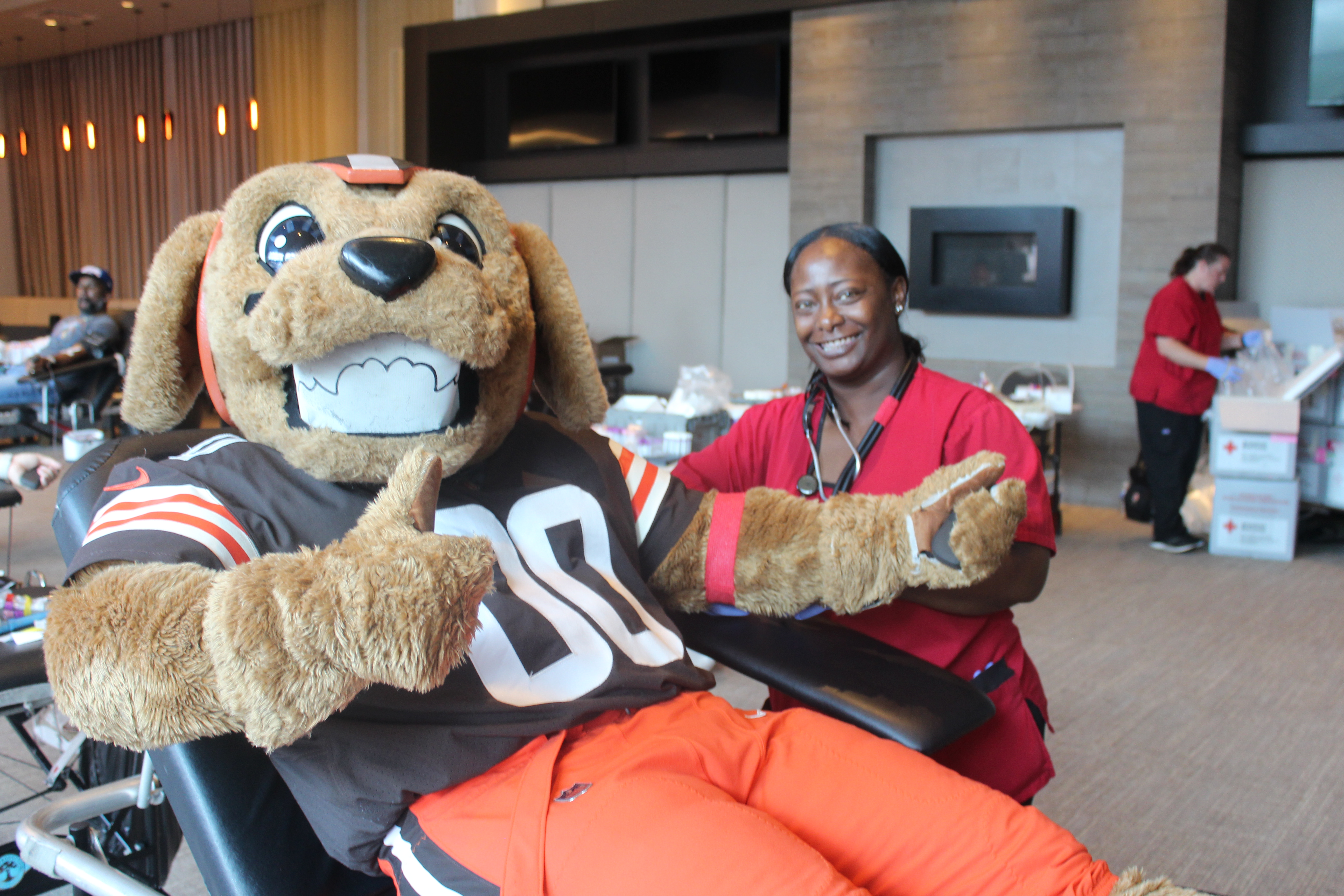
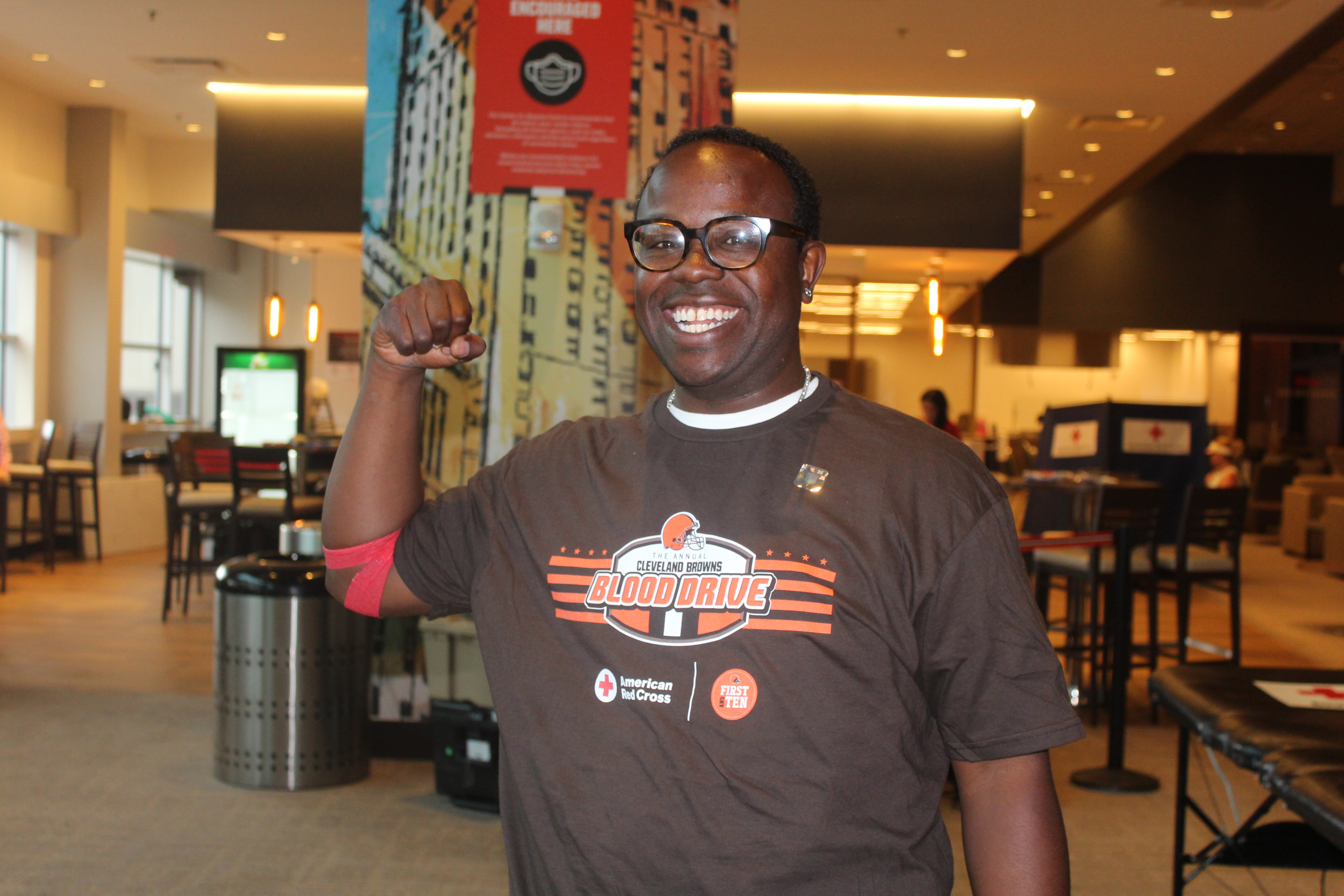
January 5, 20204 – January is National Blood Donor Month and once again the American Red Cross and the National Football League are teaming up to help patients in need by urging individuals to kick off 2024 with a blood or platelet donation.
Those who come to give from January 1-31, 2024, will automatically be entered to win a trip for two to Super Bowl LVIII in Las Vegas to thank you for helping during the critical post-holiday time. The winner and guest will get to enjoy Super Bowl LVIII in Las Vegas, access to day-of in-stadium pre-game activities, tickets to the official Super Bowl Experience, round-trip airfare to Las Vegas, three-night hotel accommodations (February 9-12, 2024), plus a $1,000 gift card for expenses.
And for only the second time since 2002, there’s a chance to see the Cleveland Browns in the Super Bowl.
The Browns clinched a post-season appearance – only the third since 1999 – when they beat the New York Jets to win a wild card spot on Thursday night, December 28. And while post-season football has been a rare occurrence for the Browns, the need for blood is a constant. Every two seconds, someone in this country needs a blood transfusion.
Right now, there is a critical need for all blood types ─ especially type O ─ after the busy holiday season. This time of year is challenging when it comes to collecting enough blood and platelets to meet patient need. Winter weather and an increase in illnesses like the flu can affect blood donor turnout. However, the need for donations still exists. Patients are still counting on blood being available despite these challenges.
Donors are urged to schedule an appointment now. Schedule your next blood, platelet or plasma donation by using the Red Cross Blood DonorApp, visiting RedCrossBlood.org or calling 1-800-RED CROSS (1-800-733-2767).
A personal account of getting through a tough time
By Tim Poe, American Red Cross volunteer
Streams of people, ambulances and occasionally a helicopter. In a parking lot and garage just beyond, cars arrive, depart, circle. Each time I look out the fourth-story window in my dad’s hospital room, I see this scene. Whether in the cerulean predawn, during the intense glow of short December days, or beneath pools of sodium light in long evenings, it continues. Lives impacted, whether through illness, tragedy, or disaster. Crises do not cease. I also watch the many who arrive to help, while others leave, often looking exhausted, and am grateful for them.
Tim Poe, Red Cross volunteer
The last few weeks have been a torrent of emotion, of worry, discussions, activity, seeking information, of varying between bleakness and optimism.
I am especially grateful to the doctors, nurses, and other medical professionals working to identify the cause of and cure my dad’s illness and address the complications that arise. And to the blood donors and blood services personnel who enabled a transfusion to be ready if needed. I take a mental note to schedule a blood donation.
I hear rhythms of footsteps, medical equipment rolling on wheeled carts, voices, a cacophony of whirs and beeps emerging from medical devices, approaching sirens (silenced just before arrival), PA announcements, and occasionally the music-box chime of “Lullaby and Good Night” announcing a new life. I imagine orchestrating all this into a symphony.
I think of the times I have been in that and other ERs and hospitals in the area, as an American Red Cross volunteer, a patient, a friend, and family member. And how grateful I am to have been able to help and receive it when needed.
I have previously written about seeing the results when bringing help to those in need as a Red Cross volunteer. The tears of relief, smiles returning to faces, human resilience being bolstered, people beginning to recover and move forward, and especially gratitude.
Linda, Tim, and Billy Poe
My goal with this article, before my dad’s illness, was to focus on how much your help is needed and the tremendous good it does. As we have recently written, the need for Red Cross services is tremendous and continues to increase, with the climate crisis, global instability, and other factors. We have also written about seeing the impact of your donations, whether through financial support, volunteering time, or donating blood.
But now I wanted to offer another perspective, that of a family member during a time of need. While my dad’s illness is not the result of a disaster—although having a blood transfusion ready was necessary—I am trying to show a little of the intensity and worry felt when in need of help, and the thankfulness and relief when help is received.
My dad is home now. Recovery will take some time, including doses of antibiotics every eight hours, which I am administering via an IV attached to a PICC line. As I write this, we are on day six of 10. Since my formal education is in literature and music, this is far outside my area of expertise. I’m experiencing a fair amount of anxiety and fatigue. My Red Cross experience helps, especially managing in times of crisis, but I have needed and found help, advice, expertise, wisdom, and kindness from medical professionals, friends, family members, and others in the Red Cross. Each instance has helped keep me going, to refocus, to help the optimism win out over the bleakness. And for that I am deeply grateful.
Through all this, my family and I have not done much for the holiday season. I did put up a Christmas tree, and there are a few decorations. I have not been able to attend celebrations, and there won’t be much to wrap and unwrap, but if all continues to improve, the season will be one of the most grateful, thanks to those who helped.
Donate on GivingTuesday or give blood during the holidays to help for future crises
Randy Liang and Monica Bunner, volunteers from Greater Akron and the Mahoning Valley responded to wildfires in Hawaii
In 2023, extreme disasters took a devastating toll on people in the U.S. who turned to the American Red Cross for help coping with a record number of billion-dollar disasters.
So far this year, an all-time high of 25 separate billion-dollar disasters ravaged communities across the country, and more than 170 disaster workers from the Northern Ohio Region responded. They deployed to help people affected by extreme weather disasters such as: January tornadoes in Georgia, Alabama and Mississippi Flooding caused by an atmospheric river in California in March April flooding in Florida Tornadoes in Missouri and Arkansas in April Typhoon Mawar in Guam in May Catastrophic flooding in Vermont in July Southern California flooding in the wake of Tropical Storm Hillary in August Wildfires fueled by prolonged drought conditions in Hawaii in August Hurricane Idalia in Florida in August Hurricane Lee in New England in September
Red Cross volunteer Jeff Mann of Heartland, Stark and Muskingum Lakes deployed to Guam in response to Typhoon Mawar in May
Volunteers from Northern Ohio also responded to disasters in our own communities, including: The train derailment and chemical burn in East Palestine in February The largest shelter operation in Northern Ohio since 2004 following an apartment fire in East Cleveland August flooding in several north central Ohio counties Multi-family fires in Akron, Uhrichsville, and Maumee
Robert Gee, a resident of East Palestine, stayed in a Red Cross shelter after a train derailment there in February
In addition, families sweltered in the nation’s hottest summer on record. And back-to-back disasters led to a series of blood drive cancellations, which further strained the national Red Cross blood supply that was already dwindling from summer travel and back-to-school activities.
“Increasing extreme disasters are causing more humanitarian needs for families in Northern Ohio and across the country,” Mike Parks, Regional CEO of the Red Cross of Northern Ohio, said. “This holiday season, please remember those who need support in the face of emergencies — and join us to provide care and comfort by making a financial donation or by giving blood or platelets.”
Help on GivingTuesday and during the holidays by visiting redcross.org to make a financial donation or an appointment to give blood or platelets. Individuals can also register for volunteer opportunities.
Volunteers from Northeast Ohio helped feed and shelter more than 130 residents for six nights after fire forced them to flee their apartment building in East Cleveland
RESPONDING TO ADDITIONAL EMERGING NEEDS Beyond extreme disasters, people stepped up through the Red Cross to address other emerging needs for communities, including: BLOOD DONATIONS: As the nation’s largest blood supplier, the Red Cross is grateful for the millions of donors who rolled up a sleeve throughout the year for patients in need. To further improve people’s health outcomes, the Red Cross has been working with community partners to introduce blood donation to a new and more diverse generation of blood donors — which is critical to ensuring that a reliable blood supply is available to the 1 in 7 hospital patients who need a lifesaving blood transfusion. LIFESAVING TRAINING: This year, the Red Cross expanded its training to empower people to act during current-day crises — which is vital considering that nearly half of U.S. adults report being unprepared to respond to a medical emergency. This included launching the new “Until Help Arrives” online training course last spring for opioid overdoses, severe bleeding, cardiac arrest and choking emergencies, and partnering with professional sports leagues through the Smart Heart Sports Coalition to help prevent tragedies among student athletes by offering CPR training and increasing access to AEDs. MILITARY FAMILIES: Red Cross workers helped service members on U.S. military installations and deployment sites worldwide — including in Europe, the Middle East and Southeast Asia. As part of our support this year, Red Cross volunteers delivered emergency communications messages connecting more than 87,000 service members with their loved ones during times of family need, while also engaging members in morale and wellness activities during deployments. INTERNATIONAL: As part of the world’s largest humanitarian network, the American Red Cross supported international response efforts to disasters such as this year’s massive earthquakes in Türkiye and Syria, the drought and hunger crisis in Africa, and flooding in Pakistan and Bangladesh. This has included providing millions in cash assistance, food, shelter, basic supplies, medical care and mental health services. As devastating conflicts persist in other areas of the world, the global Red Cross Movement continues to provide aid for people suffering, including those in Ukraine and in Israel and Gaza, as part of its neutral, humanitarian mission.
About Our Regional Holiday Supporters: The Red Cross is grateful for corporate partners who contribute to our Holiday Campaign. They include Westfield. Thanks to their generosity and that of other supporters, the Red Cross is able to bring help and hope to people in need.
Posted by Ryan Lang, Red Cross board member and volunteer
By Christy Peters, Regional Communications Manager
For most of my life, I have been a holiday purist. My family always waited until after Thanksgiving before we did anything related to Christmas. No decorating the house or finding a tree until the last weekend in November. And, of course, only certain foods on certain holidays. Heaven forbid you have turkey on both holidays – turkey on Thanksgiving, ham on Christmas.
My strict expectations even extended into holiday entertainment. Only certain films were true holiday “classics.” For example, there are only two acceptable versions of “A Christmas Carol.” For the kids “A Muppet Christmas Carol” and only George C. Scott as Ebeneezer Scrooge for everyone else. And if you don’t watch “It’s A Wonderful Life,” can it even be Christmas? So, it probably comes as no surprise that when the movie “Elf” debuted, I didn’t see it. I was good with my classics, and it didn’t seem to fit that category at all.
But it seems I missed the memo because “Elf” is celebrating its 20th anniversary this year and has rightly earned classic holiday movie status. As strongly as I feel about George C. Scott, there are probably many more people who see Buddy as the true hero of the holiday season. And for them, I have some fantastic news! When you come to give blood now through Nov. 30, you’ll receive an exclusive pair of “Elf” + American Red Cross socks, while supplies last.
Donations are critical to the blood supply as the holiday season draws near – a time when blood donations often decline. And for traditionalists like me, the Red Cross is encouraging people to add a new tradition as the holiday season begins: Spread cheer with a blood or platelet donation. Donors of all blood types are urged to give, especially type O blood donors and those giving platelets.
Before the holiday rush begins, take an hour out of your day to give blood or platelets and help someone in need. You can find a blood drive near you and make an appointment using the Red Cross Blood Donor App, visiting RedCrossBlood.org or calling 1-800-RED CROSS (1-800-733-2767).
And, in case you were wondering, at the insistence of my husband, I finally watched “Elf” a few years ago…and loved it. It’s now required viewing in our home every year. Even us traditionalists can shake it up every now and then.
Happy Labor Day! This year, the Labor Day holiday coincides with National Blood Collectors Week which is September 3-9. While it may be a coincidence, it is absolutely fitting because this week is a time to celebrate the contributions of blood collection workers in supporting hospital care. Without the more than 5,500 American Red Cross blood and platelet collections team members who work at blood drives and donation centers across the country, lifesaving blood would not be available for patients in need. Each year, Red Cross staff collect blood and platelet donations from nearly 2.5 million volunteer donors.
Here in Northern Ohio, we are fortunate to have wonderful collections staff across the 31 counties we serve. One of those amazing staff members is Danita Craig. Danita has been with the Red Cross for 9 ½ years. Her career has spanned many roles within the organization, from Collections Tech to Charge Staff and now a Team Supervisor in Cleveland.
As a Team Supervisor, Danita is focused on building a strong team, coaching and mentoring new employees and providing great customer service to staff, volunteers, recruitment representatives and blood program leaders. In her role, Danita says she can lead by example, showing her staff how much she loves her job and how exciting it is to help save lives with every pint collected. For Danita, the lifesaving blood she and her team help collect has a special meaning. “I have a relative who has sickle cell disease and receives blood products yearly, sometimes monthly, so this job impacts my life on a personal level,” said Danita. “I love knowing that where I work help saves many lives and helps my family member. I hold the mission close to my heart.”
In addition to her work in Biomedical Services, Danita had the opportunity to go to Florida and help with recovery efforts in the wake of Hurricane Ian. “It was an honor to see people from all over the world come together to help others,” she said. Danita has always had a passion for taking care of people and as a Red Cross employee she has plenty of opportunities to do so. When she’s not working, she enjoys traveling with her family and line dancing with friends.
The Red Cross in Northern Ohio is thankful for Danita and all the collections staff who work so hard to help patients in need. If you’ve never donated blood or it’s been a while, there’s no better way to celebrate Blood Collectors Week than making an appointment to give. And right now, donations are especially needed as Hurricane Idalia caused more than 700 blood and platelet donations to go uncollected in the Southeast last week. Your donation not only helps local patients but allows the Red Cross to help whenever and wherever disaster strikes. Find a blood drive near you at redcrossblood.org.












 NOHredcross