Red Cross biomedical worker reflects on first disaster deployment

By Tracie Endress, American Red Cross Biomedical Services Recruitment Account Specialist

Editor’s note:  Tracie Endress was deployed in September 2018 as a Red Cross disaster volunteer for the first time in support of those affected by Hurricane Florence.

Hurricane Florence 2018

September 26, 2018. Raeford, North Carolina. Lashandra was overjoyed when the Red Cross
truck pulled up to her house. She lives in a home with her seven kids and needed supplies badly.
When asked what she needed she replied, “I’ll take anything you’ve got, I have seven babies!”
Lashandra’s kids, ranging from ages seventeen to four, helped her carry the supplies to the
house. The Red Cross gave the family everything from cleaning supplies to diapers and
everything in between. Lashandra and her kids were all very thankful for the help from the Red
Cross, and hugs were given by first-time Red Cross Disaster Volunteer Tracie Endress. Photo by Daniel Cima/American Red Cross

I donate blood and plasma to the American Red Cross, and knew I wanted to do more so I enrolled as a disaster volunteer. I decided to volunteer because I wanted to make a difference and help people who needed support during this disaster. This was my first disaster deployment. I served in Fayetteville, North Carolina, for two weeks. I was very proud to be a part of this Red Cross disaster response. I met a lot of amazing people who were affected by the disaster and who wanted to give back by volunteering for the Red Cross themselves. It was heartwarming to see how someone who was affected wanted to join the American Red Cross mission to help those in need.

Photo credit: Tracie Endress, American Red Cross

florence 5I worked in the warehouse that packed and distributed the emergency supplies to areas that were affected by the storm. Driving into the disaster areas with 16-foot box trucks to help was very humbling and rewarding. When the people saw us, you could see hope in their eyes, knowing that others cared. People started helping us unpack the trucks and move the items. They would hug me and say, “Thank you for coming.”  The days were long, but we knew we couldn’t stop until all the supplies were dispersed.
While in North Carolina, I met a lot of people who were taking the same journey with me as disaster volunteers. I keep in touch with the volunteers that were there with me. We are family now.  It was a great experience, and I am honored to be a part of the American Red Cross Disaster Volunteer team.

Thousands of American Red Cross workers mounted a massive response to help tens of thousands of people impacted by Hurricane Florence. Read more about the Red Cross response to Hurricane Florence here.

To apply to become a Red Cross volunteer, complete a volunteer application here.

Winter is coming: Tips to protect your home and family this winter

By: Eric Alves, Regional Communications Specialist, American Red Cross of Northeast Ohio

As the calendar turns to November, in Northeast Ohio we know this means winter in coming. With snow and bone-chilling cold just around the corner, it is important to plan ahead to ensure that you are winter ready.

Here are some tips from the American Red Cross to help you prepare before the cold and winter storms arrive:

North Dakota and Minnesota Floods

Protecting your family:

  • Winterize your vehicle before the winter storm season to decrease your chances of being stranded.
  • Have a mechanic check your battery, antifreeze, wipers and windshield washer fluid, ignition system, thermostat, lights, exhaust system, heater, brakes, defroster and oil.
  • Install good winter tires.
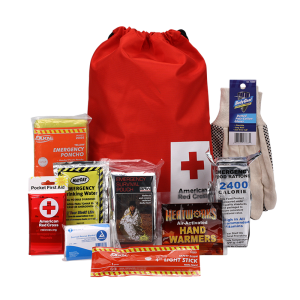
  • Service snow removal equipment before the winter storm season to ensure they are in good working condition.emergency prep kit
  • Items to keep in your vehicle all winter include a windshield scraper and a small broom, a small sack of sand for generating traction under wheels, matches in a waterproof container, a bright colored (preferably red) cloth to tie to the antenna and an emergency supply kit, which includes warm clothing.

Protecting your home:

  • Protect your pipes from freezing. To learn how to protect your pipes, click here.
  • Make sure your home heating sources are installed according to local codes and permit requirements and are clean and in working order.
  • Install storm windows and cover windows with plastic from the inside to provide an extra layer of insulation to keep cold air out.
  • Caulk and weather-strip doors and windowsills to add additional protection from the cold winter air.
  • If you have a fireplace, keep a supply of firewood on hand. Be sure the fireplace is properly vented and in good working order.

Don’t forget your furry friends:

  • Do not leave your companion animals out in the cold, bring them indoors. Ensure you have supplies for cleaning up after your companion animal—large plastic bags, paper towels and extra cat litter.
  • Create a place where your other animals can be comfortable in severe winter weather. Horses and livestock should have a shelter where they can be protected from wind, snow, ice and rain. Grazing animals should have access to a protected supply of food and non-frozen water.
  • Be aware of potential for flooding when snow and ice melt and be sure that your animals have access to high ground that is not impeded by fencing or other barriers.
  • Ensure that any outbuildings that house or shelter animals can withstand wind and heavy snow and ice.

Use the American Red Cross Emergency App for weather alerts and to let others know 10846-005.jpgyou are safe if severe weather occurs. Find this and all of the Red Cross apps in smartphone app stores by searching for the American Red Cross or going to redcross.org/apps.

To learn more about what you should do before, during and after a winter storm to keep you and your family safe, visit redcross.org for additional winter storm safety tips.

10 tips to stay safe this Halloween while trick-or-treating

image (1)

By: Eric Alves, Regional Communications Specialist, American Red Cross of Northeast Ohio

Halloween, one of the country’s most popular holidays, is just days away. Soon neighborhoods across Northeast Ohio will be filled with witches, ghosts, pirates and superheroes.

As you prepare to take to the streets for some trick-or-treating fun, the American Red Cross offers some tips to help keep you and your family safe:

  1. Make sure trick-or-treaters can see and be seen.
    • Use face makeup instead of masks. Masks can make it hard for a child to see clearly.
    • Give kids a flashlight to light their way.
    • Add reflective tape to costumes and trick-or-treat bags.
    • Have everyone wear light-colored clothing to help motorists see your trick-or-treater at night.
  1. Use flame-resistant costumes.
  2. Plan the trick-or-treat route in advance. Make sure adults know where their children are going. A parent or responsible adult should accompany young children door-to-door.
  3. It’s not only vampires and monsters people have to look out for on Halloween. Be cautious around animals, especially dogs.
  4. Walk, don’t run.
  5. Only visit homes that have a porch light on. Accept treats at the door—NEVER go inside.
  6. Walk only on the sidewalks, not in the street.
    • If no sidewalk is available, walk at the edge of the roadway, facing traffic.
    • Look both ways before crossing the street, and cross only at the corner.
    • Don’t cut across yards or use alleys.
    • Don’t cross between parked cars.
    • Use extra caution if driving. Young trick-or-treaters are excited and may forget to look both ways before crossing.
  1. Make sure a grown-up checks the sweet goodies before eating.
    • Make sure to remove loose candy, open packages and choking hazards.
    • Discard any items with brand names that you are not familiar with.

And finally, for those expecting trick-or-treaters at their homes looking for candy, follow these safety steps:

  1. Light the area well so young visitors can see.
  2. Sweep leaves from your sidewalks and steps. Clear your porch or front yard of obstacles someone could trip over.

Download the free Red Cross First Aid App for instant access to expert advice in case your ghost, zombie or werewolf has a mishap. Use the Emergency App for weather alerts and to let others know you are safe if severe weather occurs. Find these and all of the Red Cross apps in smartphone app stores by searching for the American Red Cross or going to redcross.org/apps.

By being prepared and keeping these tips in mind, you and your little ghouls and goblins can have a safe, fun and candy-filled Halloween!

American Red Cross launches first aid for opioid overdoses course

New online training helps people respond to opioid overdoses and save lives

The American Red Cross has launched First Aid for Opioid Overdoses – an online course to teach people how to respond to a known or suspected opioid overdose.

The 45 minute course contains content on how to identify the signs and symptoms of a suspected opioid overdose and the appropriate care to provide based on the responsiveness of the person. Information on how to use several different naloxone products – including a nasal atomizer, Narcan Nasal Spray, and EVZIO – to temporarily reverse the effects of an opioid overdose is also included.

People can register and access the course at https://www.redcross.org/take-a-class/opioidoverdose. Because an opioid overdose can lead to cardiac arrest, people are also encouraged to take a Red Cross CPR/AED course.

“An opioid overdose is a life-threatening emergency,” said Mike Parks, Regional CEO of the Red Cross of Northeast Ohio.  “When you suspect an opioid overdose, it’s important to start providing care immediately.”

Recently, the Red Cross had the opportunity to share its commitment and efforts to help address this public health crisis at a White House opioids event. Learn more about the event, and the involvement of the Red Cross here: https://www.whitehouse.gov/articles/year-historic-action-combat-opioid-crisis/

The Red Cross has also prepared guidance on opioid use and overdose response for those working in the organization’s shelters during disasters. Recently, these efforts empowered a Red Cross volunteer to help save the life of a person in a shelter during Hurricane Florence.

Hurricane Florence 2018

In addition to the new First Aid for Opioid Overdoses online course, this is the first year Red Cross disaster shelters are arming staff and volunteers with information and supplies to help ensure that everyone stays safe in the case of an opioid overdose. During Hurricane Florence, Julian Delgado with Health Services explains to volunteers how to administer these supplies for residents who may need them in shelters. Photo by Daniel Cima/American Red Cross.

“Residents staying at Red Cross shelters often reflect the demographics of the general population,” said Parks, who worked in shelters in North Carolina during the Hurricane Florence disaster relief operation.  “Volunteer shelter workers who are trained to provide treatment when an overdose is suspected will no doubt save more lives in the future.”


Beyond national hurricane relief efforts, the Red Cross continues to respond to local disasters in Northeast Ohio

By: Eric Alves, Regional Communications Specialist, American Red Cross of Northeast Ohio

IMG_2066Currently, the most visible work of the American Red Cross is its response to assist in the relief efforts in the Southeast United States following Hurricanes Florence and Michael. However, even with 23 disaster relief workers deployed from this region to assist with the hurricanes, the Red Cross continues to respond to disasters here in Northeast Ohio.

The Northeast Ohio Region of the Red Cross, which serves 22 counties and 4.5 million dunham ave 2 residents, has continued to be very active responding to calls across local communities. This past weekend, disaster relief workers responded to eight calls from home fires to storm damage in Canton, Cleveland, Fairlawn, Lorain, Sandusky, Sheffield Lake, South Euclid and Willard. They assisted 23 adults and 10 children and provided nearly $8,700 in aid.

IMG_4123The Northeast Ohio Region of the Red Cross is prepared 24 hours per day and seven days a week to prevent, prepare for and respond to emergencies. If you are interested in making an impact in local communities, the Red Cross is always looking for volunteers. We can provide support to our communities thanks to the work of our tremendous volunteers, which make up 90 percent of our workforce. To volunteer, visit redcross.org/volunteer or contact our Volunteer Services Department directly at 216-431-3328 or NEOvolunteer@redcross.orgIMG_1758

We also rely on the generosity of Northeast Ohio residents to continue to offer disaster relief. If you would like to provide a monetary donation, visit redcross.org/donate, call 1-800-RED CROSS or text REDCROSS to 90999 to make a $10 donation.

Red Cross continues to respond to Hurricane Michael disaster relief

By: Eric Alves, Regional Communication Specialist, American Red Cross of Northeast Ohio

This slideshow requires JavaScript.

The American Red Cross has continued to respond to the Hurricane Michael disaster relief effort, with Northeast Ohio playing a significant role in the support.

On October 11, Hurricane Michael came ashore and made its way across Alabama, Florida and Georgia, leaving a wake of destruction in its path. Hurricane Michael was a Category 4 upon landfall, making it the third-strongest hurricane in U.S. history. It was also the strongest hurricane to hit the U.S. in 50 years. A week since the storm, tens of thousands of people are still dealing with the destruction.

As always, when there is a need for compassion and humanitarian support, the Red Cross has been helping those affected and will remain there as people begin to recover and rebuild. Some people are still living without power, running water and other basic necessities. Many schools and medical facilities are closed, roads are still blocked and several bridges have been damaged.

The Red Cross is working around the clock to get help where it’s most needed. The situation throughout the region remains challenging and staff and volunteers are doing all they can to provide shelter, food, water and relief supplies to people in need.

As of October 18, more than 1,840 people stayed in as many as 16 Red Cross and community evacuation centers across Florida and Georgia. In the week since the storm, the Red Cross and other organizations have provided more than 27,400 overnight stays in emergency shelters in total, with the Red Cross providing about 83 percent of the stays.

Across the three states, more than 1,600 Red Cross disaster workers, including 21 from Northeast Ohio, are on the ground to support relief efforts, such as serving more than 477,800 meals and snacks and distributing more than 36,600 relief items like cleanup kits, rakes, shovels, bleach, garbage bags and much more to help with the massive cleanup effort. In addition, volunteer mental health and health services professionals have provided 6,700 contacts to provide support and care to evacuees.

After two major hurricanes in less than a month, thousands of people are looking for help. If you are interested in assisting those in need, visit redcross.org/volunteer or contact our Volunteer Services Department directly at 216-431-3328 or NEOvolunteer@redcross.org.

If you are unable to provide support during a disaster relief effort, there are other ways you can assist right here in Northeast Ohio. The Red Cross depends on financial donations to fund our relief services. To donate, visit redcross.org/donate, call 1-800-RED CROSS or text REDCROSS to 90999 to make a $10 donation.

The Red Cross also has a critical need for blood and platelet donations to help meet patient needs. The Red Cross provides roughly 40 percent of the nation’s blood supply and Hurricanes Michael and Florence have forced the cancellation of about 250 blood drives, causing approximately 7,600 units of blood to go uncollected. The Red Cross is asking for eligible individuals to make an appointment to donate blood by using the Red Cross Blood Donor App, visiting redcrossblood.org or by calling 1-800-RED CROSS.

Add earthquake preparedness to your to-do list, even if you live in Ohio

By Doug Bardwell – American Red Cross Volunteer

Shake out

Held annually on the third Thursday of October, the ShakeOut International Day of Action is set for Thursday, October 18, 2018 at 10:18 a.m. During the self‐led drill, participants practice earthquake preparedness by learning to “Drop, Cover, and Hold On”. Endorsed by emergency officials and first responders, the safe response to an earthquake is to:

  • DROP where you are, onto your hands and knees. This position protects you from being knocked down and allows you to stay low and crawl to shelter if it’s nearby. If you have mobility issues, either lock the wheels of your wheelchair or stay seated, and bend over.
  • COVER your head and neck with one arm and hand. If a sturdy table or desk is nearby, crawl underneath it for shelter. If no shelter is nearby, crawl next to an interior wall, away from windows.
  • HOLD ON until the shaking stops. If you are under a table or desk for shelter, hold onto it with one hand and be ready to move with your shelter if it shifts.

Watch the video

Earthquakes in Ohio – really?  YES – REALLY

“People may say ‘Why do we need to practice earthquake drills in Ohio?’ We practice because Ohio does experience earthquakes,” said Sima Merick, executive director of the Ohio Emergency Management Agency . “Ohio has had four low-scale earthquakes so far this year. It is also good to know earthquake safety in the event you’ve traveled to another state or country where quakes can occur with higher magnitude and frequency.”

In January 1986, a 5.0-magnitude earthquake took place in Lake County, impacting most of northeastern Ohio. This was the first Ohio quake that caused injuries and to occur near a U.S. nuclear power plant. The 1986 quake ranks as the third largest in the state.

Ohio is on the periphery of the New Madrid Seismic Zone, an area in Missouri and adjacent states that was the site of the largest earthquake sequence to occur in U.S. history. Four great quakes were part of a series at New Madrid in 1811 and 1812. These events were felt throughout the eastern part of the country and were strong enough to topple chimneys in Cincinnati. In March of 1937, western Ohio experienced a 5.4-magnitude quake that knocked down or damaged every chimney in Anna (Shelby County). So much damage was caused to the local school that it had to be torn down.

For more information, or to register yourself, your company or your organization, visit the Great Central U.S. ShakeOut website for Ohio.  Two million Ohioans have already registered.

Also, check out the Red Cross Earthquake App where you can monitor relatives out of town and get the latest alerts.  Available for Android and iOS phones. In the app’s toolkit, you can notify relatives that you are safe, and locate open Red Cross shelters.


NEO Volunteers join hundreds of others from across the country to help Hurricane Michael victims

Helping provide shelter, food and hope to those impacted by the storm

Five days after Hurricane Michael slammed into the southeast, thousands of people are living in dire conditions. The American Red Cross is with them, helping people in Florida, Georgia and Alabama as they struggle to get back on their feet.

  • Home after home is destroyed, many people have lost everything. Many areas are still inaccessible.
  • The storm also damaged medical facilities, schools and businesses. Search and rescue efforts continue.
  • Hundreds of thousands have no power as temperatures hover in the high 80s.
  • In many areas, people have no water or sewer service and many that do have service are under boil advisories.


This slideshow requires JavaScript.

The Red Cross is doing all we can to get help to where it’s most needed, and we’re reaching more neighborhoods each day. We’re working around the clock with partners like the National Guard to move volunteers and supplies, and to support dozens of shelters where people can find comfort and refuge.

  • With the magnitude of destruction and many roads impassable, we know that getting help into some areas will be challenging for some time.
  • The Red Cross is providing shelter, food, health services and emotional support during this challenging situation.
  • Some shelters are being relocated to more comfortable and appropriate locations.
  • In some areas, emergency response vehicles are able to get through with meals and relief supplies.

More than 1,300 Red Cross disaster workers have been assigned to the Hurricane Michael disaster relief operation, including 19 volunteers from Northeast Ohio. Visit our YouTube channel to see and hear comments from the volunteers pictured below.

Akron group

Volunteers Harry Pierdomenico, Tom Quinn, Teresa Greenlief and Cameron Fraser  Photo credit: Eric Alves/American Red Cross

  • This is a huge disaster, and the Red Cross is working closely with government and nonprofit partners to provide aid.
  • It will take time and require the resources from a large variety of organizations to help families and communities recover.
  • We are actively recruiting additional volunteers to help respond to disasters like Hurricane Michael, and to the home fires that occur, on average, three times every 24 hours in Northeast Ohio.  You can visit our volunteer page to begin the application process.

After two major hurricanes in less than a month, thousands of people are looking for help. The Red Cross depends on financial donations to fund our relief services. Help people affected by Hurricane Michael by visiting redcross.org, calling 1- 800-RED CROSS or texting the word MICHAEL to 90999 to make a $10 donation.

  • Donations enable the Red Cross to prepare for, respond to and help people recover from this disaster.

The Red Cross has a critical need for blood and platelet donations to help meet patient needs. This fall, Hurricane Michael and Hurricane Florence have forced the cancellation of about 200 blood drives, causing approximately 7,000 units of blood to go uncollected in the Southeast.

  • Low donor turnout is expected to continue in affected areas as communities recover.
  • The Red Cross asks eligible individuals to make an appointment today by using the Red Cross Blood Donor App, visiting org or calling 1-800-RED CROSS.


Volunteers provide disaster relief for hidden concerns

By: Eric Alves, Regional Communications Specialist, American Red Cross of Northeast Ohio

The American Red Cross continues to assist residents affected by hurricanes in the Southeast.  Among the disaster relief workers who are playing a role are mental health volunteers.

Red Cross mental health volunteers are a treasured group of individuals. They are all licensed independent health practitioners: psychiatrists, psychologists, counselors, social workers and psychiatric registered nurses.

California Wildfires 2018

In addition to being licensed professionally, mental health volunteers must take specialized Red Cross training in disaster mental health which, for the most part, is far different than what they do in their daily full-time jobs. The specialized training is based on many years of experience in disaster relief, from those who have lost precious mementos in a home fire to the victims of 9/11 and everyone in between.

Red Cross mental health volunteers provide immediate crisis management. They instruct clients in becoming more resilient and help them cope with the various emotions they may experience following their loss. While mental health volunteers do not do long-term counseling, if they determine a client would benefit from long-term intervention, they will make a referral to a proper mental health specialist. They will not refer the client to themselves or to any other member of the team.

California Wildfires 2017

“Many victims and survivors do not recognize the need for intervention or do not want to be judged or labeled if they are struggling with recovery,” said Renee Palagyi, senior program manager of disaster cycle services for the American Red Cross of Northeast Ohio. “Our disaster mental health volunteers can help them to recognize the normal and destigmatize the need for counseling.”

Northeast Ohio is particularly fortunate to have some of the finest and most experienced mental health volunteers. They never fail to step up as needed even though the majority have full-time positions or time-consuming private practices.

Edgardo Padin, a mental health volunteer from Northeast Ohio, deployed to assist in the 2018 California wildfires. Recently, he discussed his experience assisting individuals who lost their homes with their mental health needs.

Tennessee Wildfires 2016

While it is easy to see the physical damage that a home fire or a hurricane can cause, it is not often as easy to see the internal effects a disaster can have on an individual. On World Mental Health Day, it is important to recognize the disaster mental health volunteers who assist with disaster relief efforts to ensure everyone’s needs are met.

For more information on the Red Cross’ disaster mental health services or to become a volunteer, visit redcross.org/volunteer.

Don’t be a statistic: It’s National Fire Prevention Week

By Doug Bardwell, American Red Cross Volunteer

A home can be rebuilt. Human lives, pets and mementos can’t.

For those with insurance, a home fire a major disruption. For those without insurance, it’s devastating. The good news is that most home fires are preventable.

As a member of the American Red Cross Disaster Action Team, I’ve seen numerous fires that didn’t have to happen:

  • A kitchen fire was caused by unattended grease left in a pan on the burner; another was caused by loose papers left too close to the gas burner; and a third by a plastic highchair overhanging an electrical element.
  • Overloaded electrical outlets and faulty wiring contributed to the loss of a beautiful century home.
  • An unattended burning candle and a young child playing alone in the home displaced two families.

I could go on, but the good news is that no lives were lost. However, with a modicum of prevention, they could have all been avoided.

Here are 10 simple tips to share with members of your family during National Fire Prevention Week:

  1. Make sure to have working smoke alarms and replace the entire unit if it’s more than 10 years old. Even with a good battery, the sensor in an old alarm wears out in 10 years.
  2. Create an escape plan and make sure every child and adult knows that they must be outside within two minutes of hearing the alarm. Practice the plan with your children so they know the official meeting place outside.
  3. Never smoke in bed or when extremely tired or intoxicated.
  4. Keep matches and lighters away from children.
  5. Keep lit candles away from flammables, children and pets.
  6. Take care that nothing can blow over or into your kitchen gas burners.
  7. Keep frying pan handles turned away from the front edge of the stove so they aren’t tipped by children or pets.
  8. Electric space heaters can easily start fires if clothes or newspapers are tossed on top of them.
  9. Keep a working fire extinguisher handy and know how to use it.
  10. Keep gas cans outside if possible; but, never in a basement or near a furnace or water heater.

Calvin Coolidge, 30th president of the United States, recognized the huge loss caused by fires, both to property and human life. To address the problem, he proclaimed the first Fire Prevention Week in 1926, with the hope it would become an annual event.

He wrote:

“While efforts should be made constantly to reduce fire destruction to a minimum, in pursuance of a well-established precedent, one week is set aside each year during which the urgent need of preventing fires is forcibly stressed.

“If every individual will adopt and practice the simple precautionary measures advocated as fire prevention safeguards, fire hazards and their consequences will be materially reduced.”

Make Calvin proud, and use caution to avoid unnecessary fires.

For more resources, visit the American Red Cross Home Fire Safety page for videos, tips and mobile apps to help you safeguard your family.

On October 6, volunteers from the Red Cross, Parma CERT, Hope World Wide Ministries and the Parma Fire Department held a Sound the Alarm home fire safety and smoke alarm installation event. The volunteers installed 171 smoke alarms making 61 home safer.

To view photos from the Parma Sound the Alarm event, visit our Flickr page. Furthermore, to learn more about home fire safety and to request a smoke alarm, visit the American Red Cross Northeast Ohio Home Fire Campaign page.

44422565744_da06a1da48_z

44232526955_9b50d6928c_z