Being prepared is the first step to endure and recover from disaster

By Tim Poe, American Red Cross volunteer

September 1, 2020- September is National Preparedness Month, and this year’s events have underscored the importance of being prepared for a disaster in Northern Ohio as everywhere. The American Red Cross is also focusing on the needs of seniors in disaster preparation, as new research from the Red Cross Scientific Advisory Council and the American Academy of Nursing  finds that, “Older adults are more vulnerable and experience more casualties after a natural disaster compared to other age groups experiencing similar events.”

While Northern Ohio rarely faces large-scale disasters, we do face home fires, flooding, and tornadoes, among other events. In addition, the COVID-19 pandemic has demonstrated that all of us need to be ready.

To discuss preparedness for Northern Ohioans and the needs of seniors, I spoke with John Gareis, the Red Cross’s Regional Manager for Individual Community and Disaster Preparedness for Northern Ohio. John has a wealth of experience in preparing for and recovering from disasters of all types.

Preparation and lessons from COVID-19

John emphasized that in any disaster, including a pandemic, the needs remain the same: food, shelter, clothing, information, and emotional support. “Taking steps to prepare, before any emergency event would happen, is key,” he said. This is especially important for seniors.

John said the COVID-19 pandemic taught us to better prepare for emergencies. He pointed out that many were caught off guard, causing shortages of everyday staples. “People began to hoard and stock up on items taken for granted in everyday life,” he said.

We can learn from this, however. John recommended that every household prepare an emergency kit or supplies based on what is used every day. While having enough for at least three days is good, he said, supplies for one to two weeks is better.

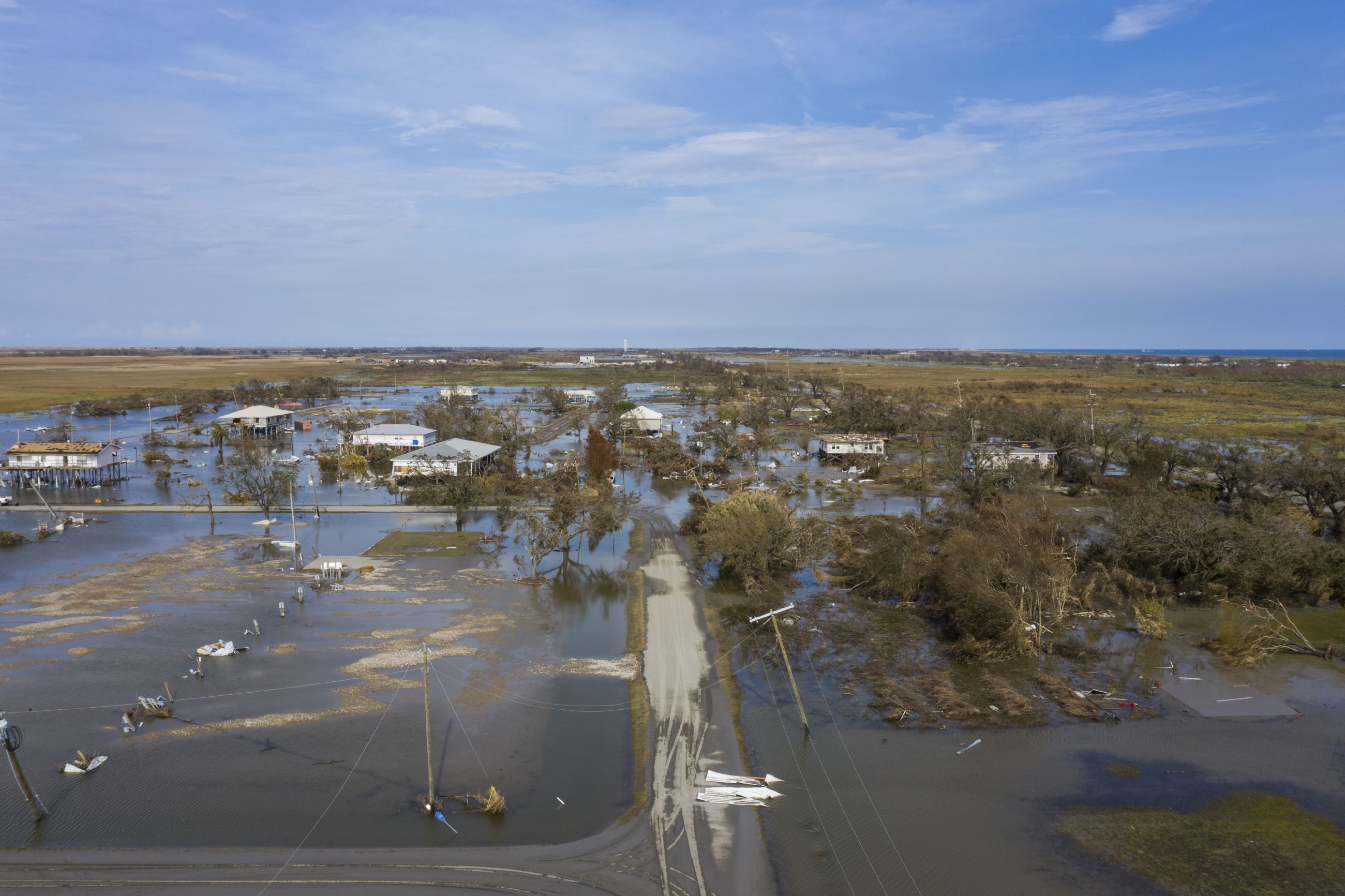
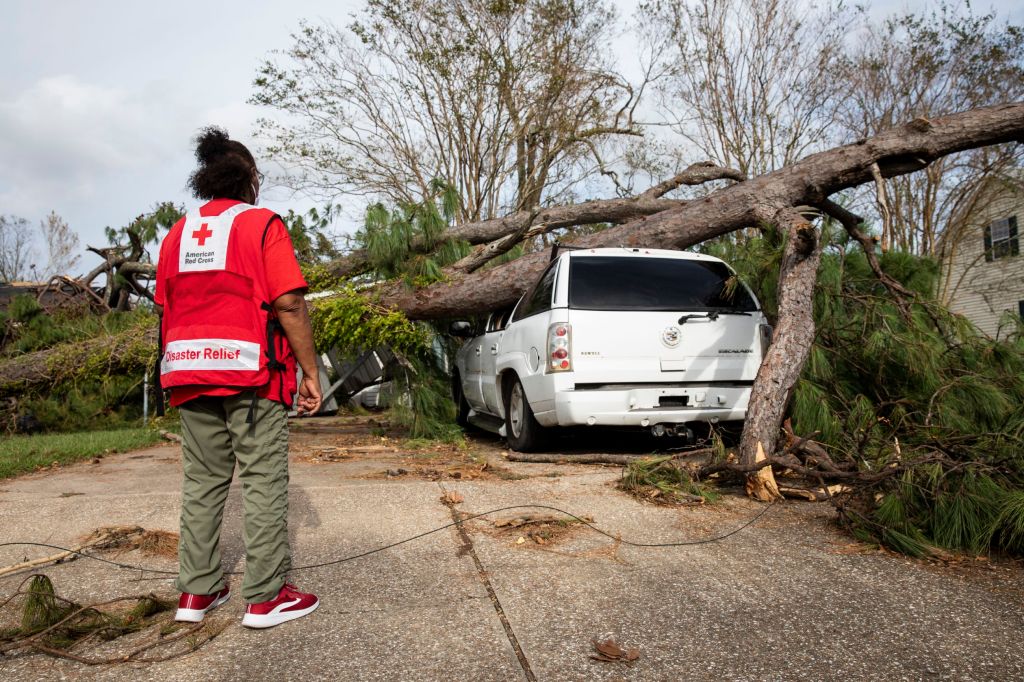
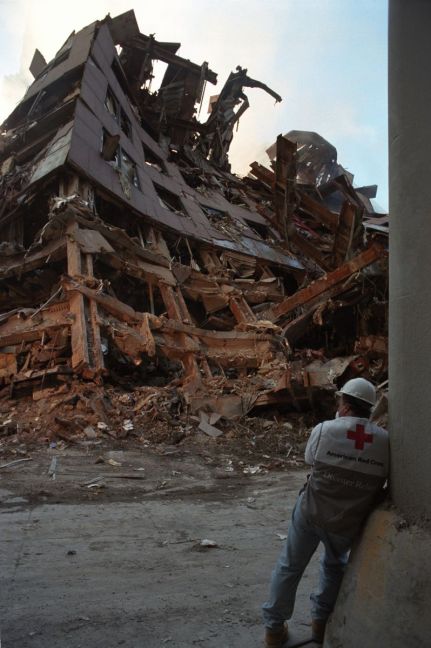
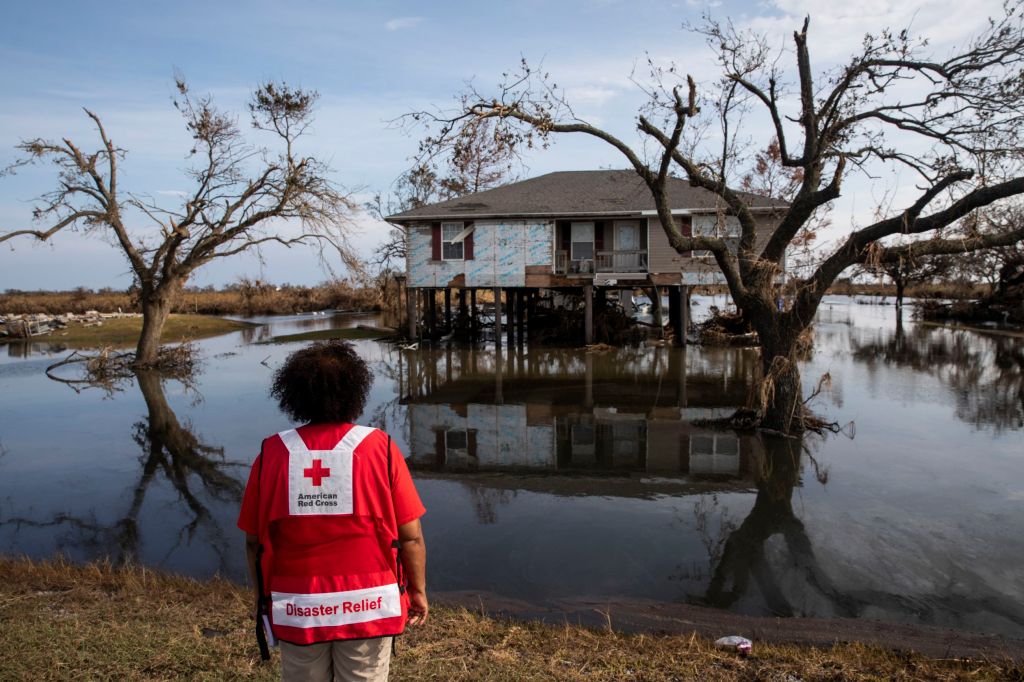
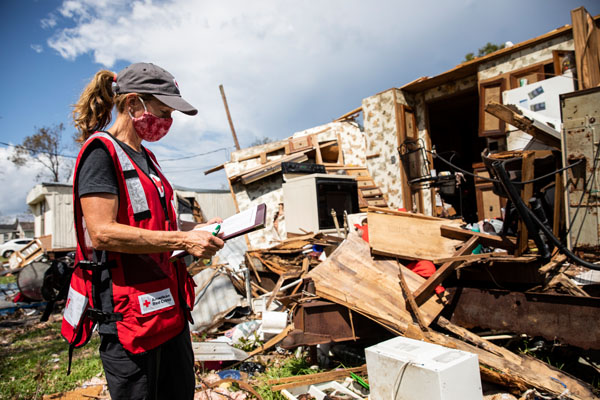
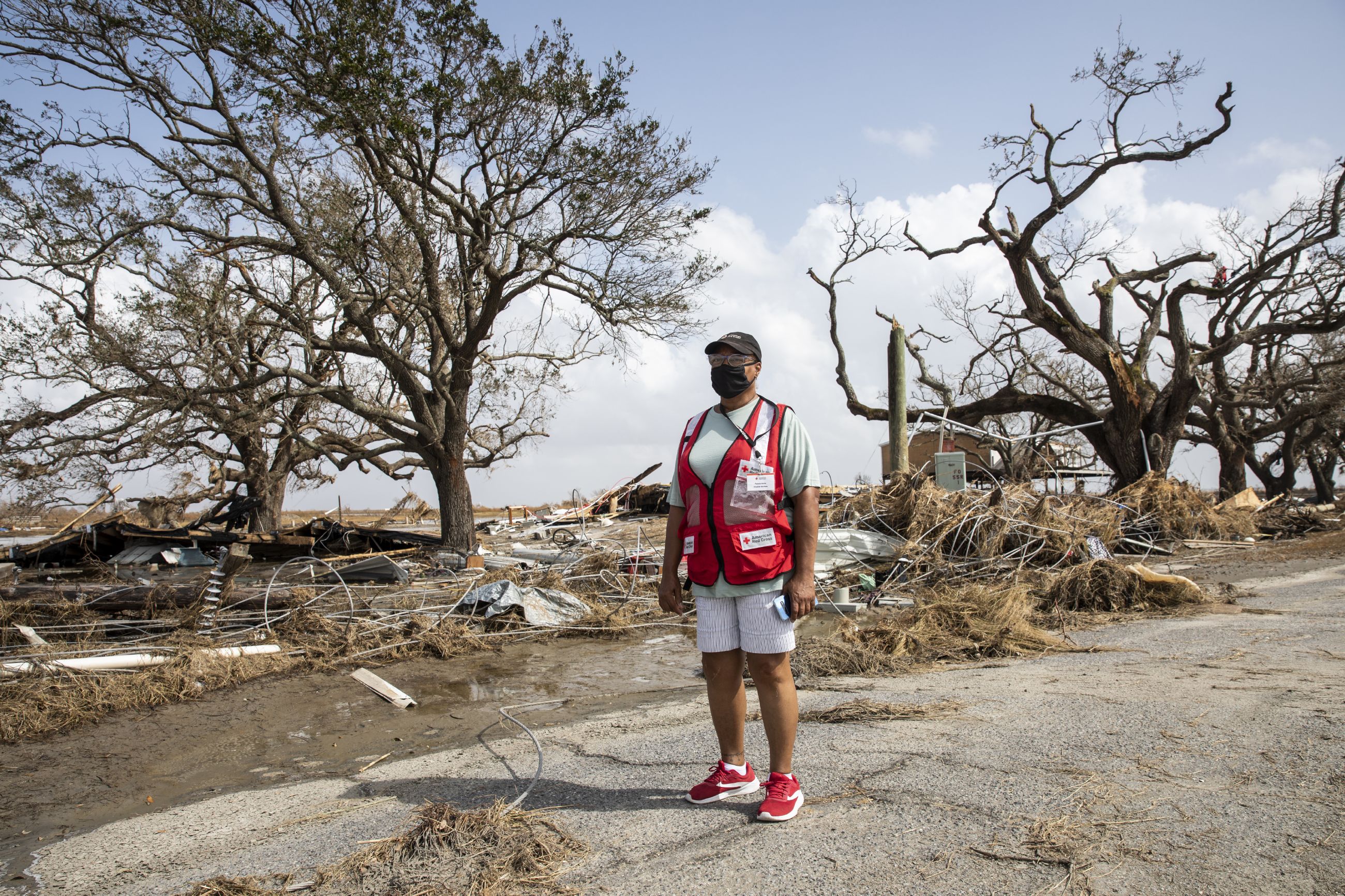
August 30, 2020. Cameron, Louisiana Pamela Harris of the American Red Cross looks out on a home destroyed by Hurricane Laura in Cameron Parish, LA, one of the hardest hit areas, on Sunday, August 30, 2020. Photo by Scott Dalton/American Red Cross

Especially consider necessities for seniors, children, and those with special needs. John pointed out that emergency supply kits don’t have to be expensive and can be gathered from items already owned. In addition to daily supplies, have copies of important documents and contact information for doctors, family, and close friends. He also said to think about your home and, if you had to evacuate in under two minutes, could you?

John also said, “Information is key in any disaster. Knowing what could happen and how to keep informed are the main things people need and want.”

Ensuring seniors are prepared

As older adults are more vulnerable during a disaster, the Red Cross especially encourages seniors to prepare, and that everyone ask older adults in their lives if they need help, whether relatives, neighbors, or fellow seniors.

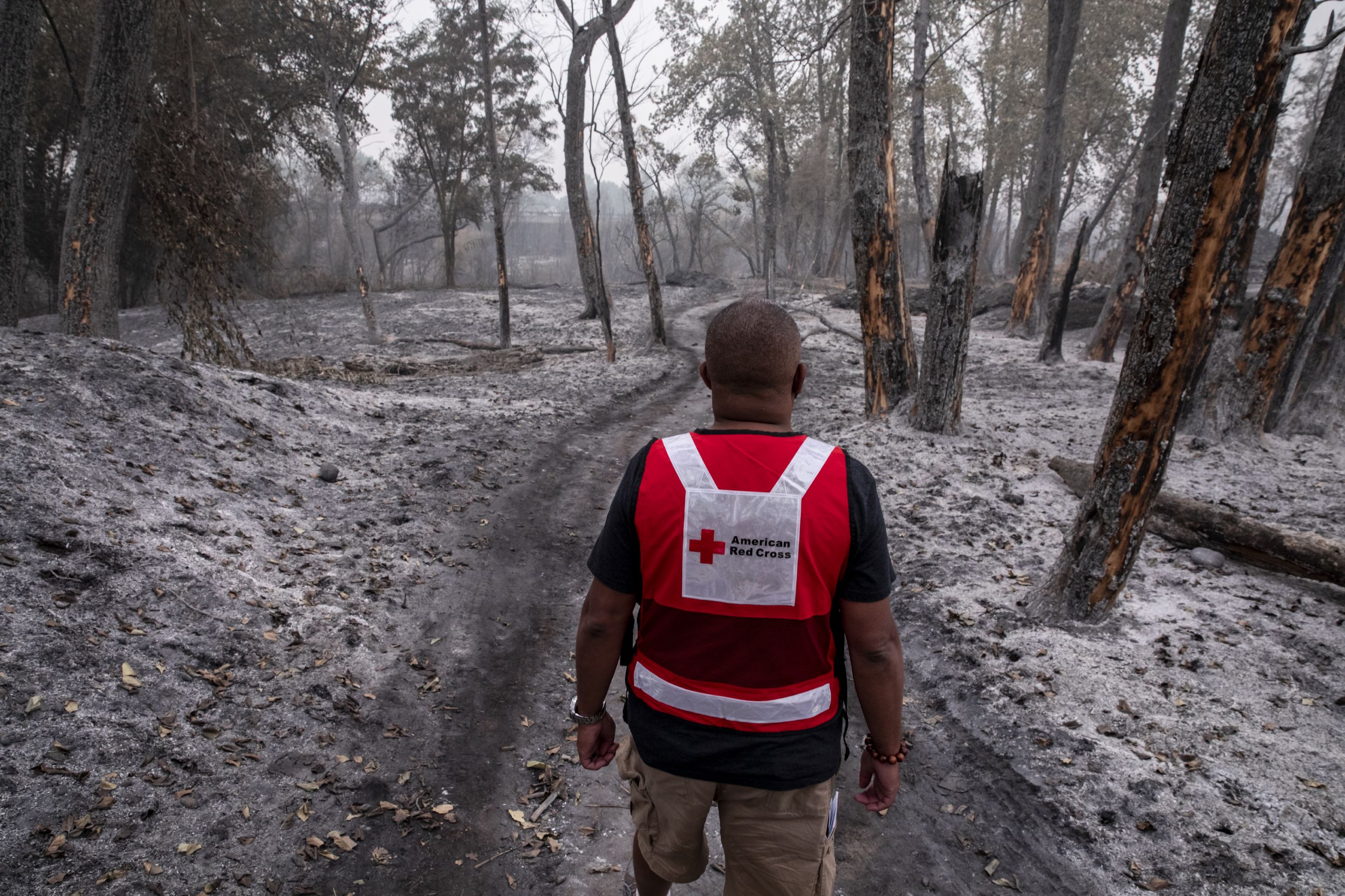
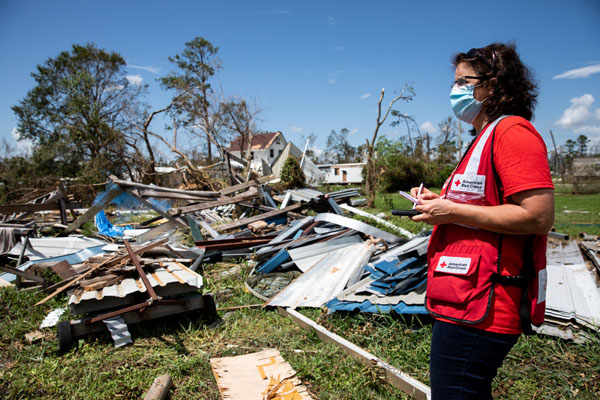
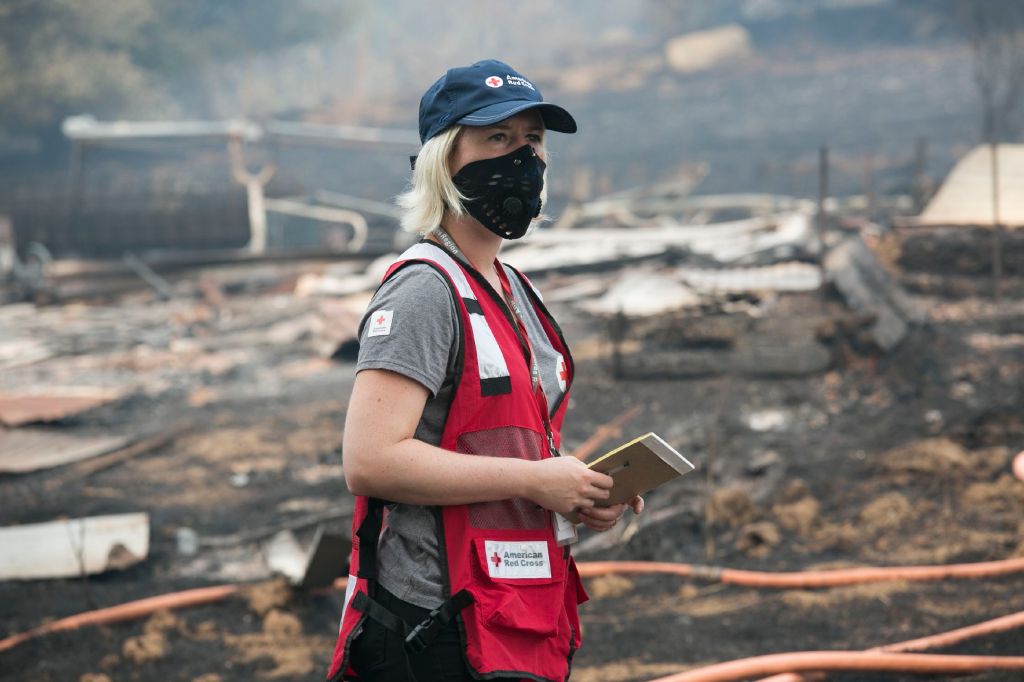
August 24, 2020. Vacaville, California. LNU Complex Fire burn zone on Pleasants Valley Road in Vacaville, California. Red Cross volunteer Jillian Robertson explores the burned area, stepping over discarded fire hoses that had been left behind. Photos by Dennis Drenner/American Red Cross

In addition to preparing supplies, seniors should maintain and grow communications and social networks. “In any emergency,” John said, “having someone to check on you or that you can check on is key. It’s the buddy system.”

For help preparing, please visit Emergency Preparedness for Older Adults, How to Prepare for Emergencies, and COVID-19 Safety Tips. Red Cross apps are available here.

Red Cross responds to disasters locally and across the country

By Eric Alves, American Red Cross of Northern Ohio

August 31, 2020- Disasters do not stop. Regardless of weather, time of year or even a pandemic, disasters do not pause and consider what else is occurring before affecting lives.

While disasters do not stop, neither does the American Red Cross in responding to disasters and assisting residents affected.

As if a pandemic wasn’t a large enough concern, the 2020 disaster season has been very active, with the Red Cross currently responding to the California wildfires and to the Gulf Coast following Hurricane Laura.

In the Red Cross’ disaster relief efforts in California, Louisiana and Texas, the Red Cross has deployed more than 1,900 trained disasters workers, including 24 from the Northern Ohio Region, to help the more than 25,800 affected residents by providing emergency lodging and along with partner organizations, have provided more than 47,000 meals and snacks.

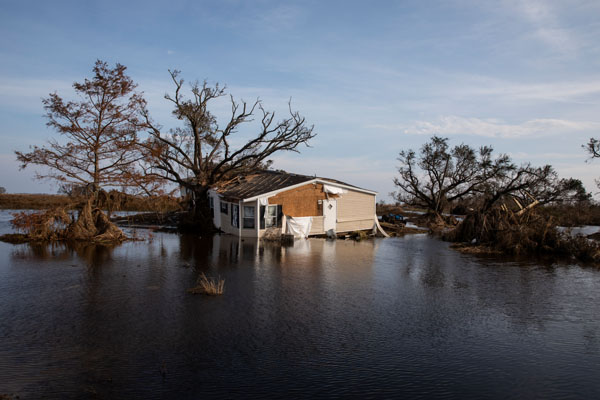
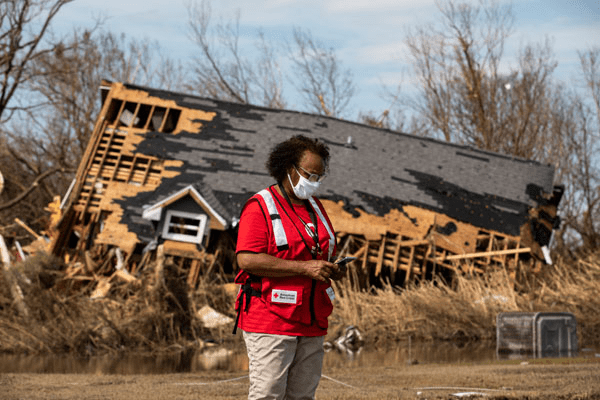
Homes destroyed by Hurricane Laura in Cameron Parish, LA, one of the hardest hit areas, on Sunday, August 30, 2020.

In Texas and Louisiana, the Red Cross is working with the World Central Kitchen, an organization founded by celebrity chef José Andrés, the Salvation Army and the Southern Baptist Convention to set up kitchens, which are able to serve tens of thousands of meals each day.

Along with deploying across the country, the Red Cross of Northern Ohio remains active back home assisting residents following local disasters, such as home fires.

Over the weekend, the Red Cross of Northern Ohio assisted 38 adults, 12 children and provided more than $10,500 in financial assistance for lodging and other necessities following disasters in Ashtabula, Cuyahoga, Harrison, Lucas, Stark, Summit and Wayne counties.

To date during Fiscal Year 2021, which began on July 1, the Red Cross of Northern Ohio has assisted 463 adults, 302 children and has provided $162,995 in immediate financial assistance.

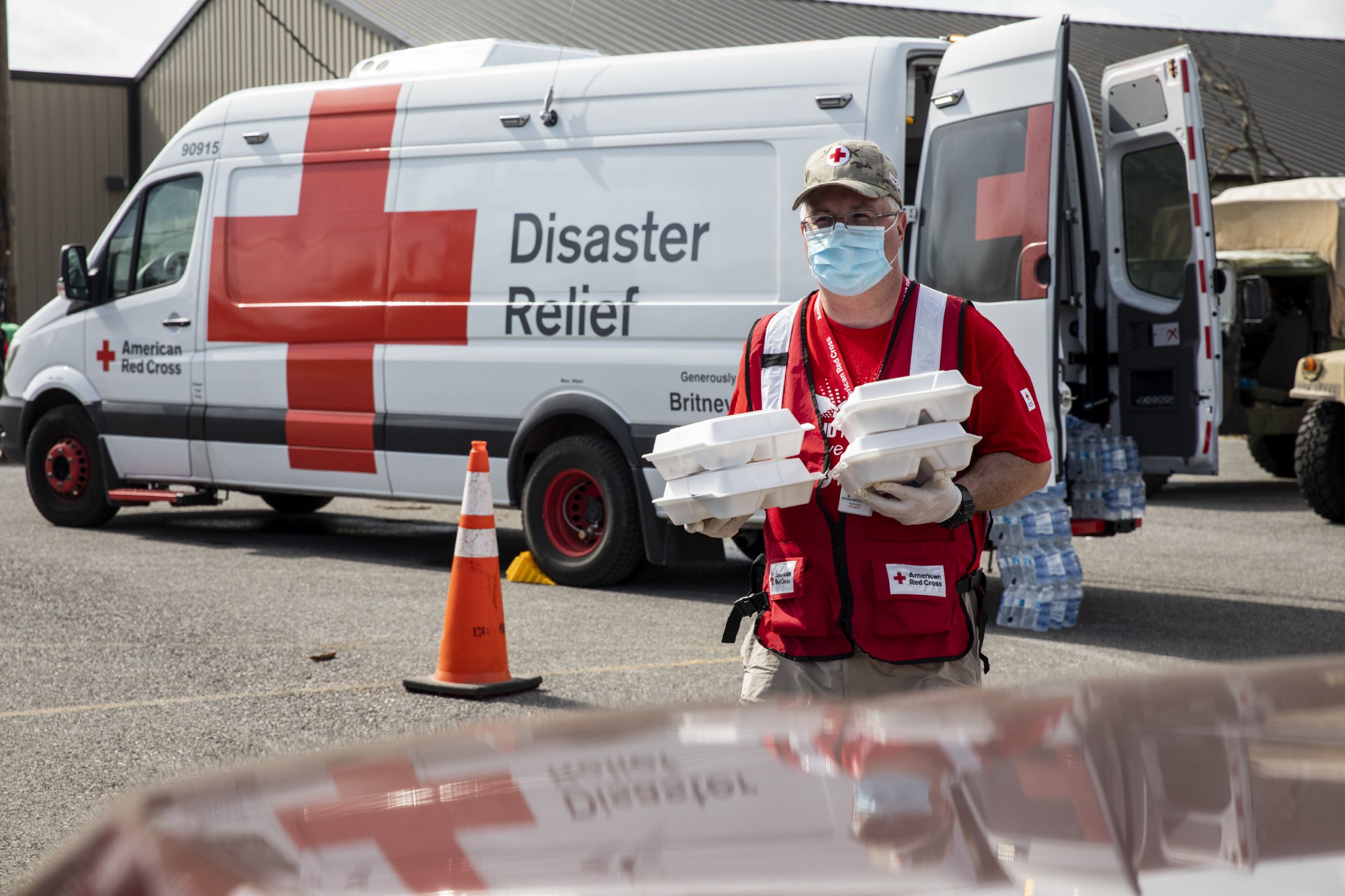
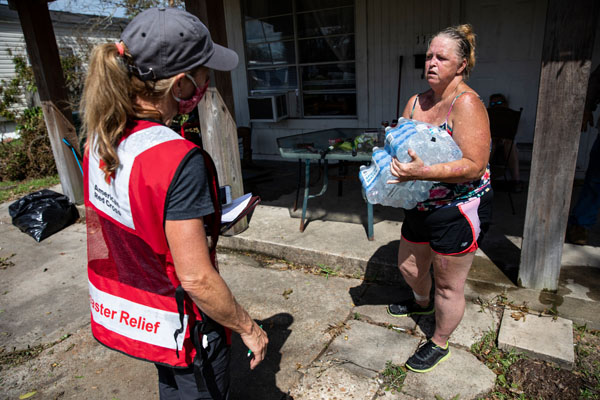
Carol Miller of the American Red Cross speaks with David Suarez after giving him a case of water, in an area that was badly damaged by Hurricane Laura in Westlake, LA

COVID-19 has not changed the Red Cross mission, and we are still providing the same types of support as we always have.

To help keep people safe, we are following guidance from CDC and public health authorities — and have put in place additional precautions. Some of these plans include social distancing protocols, face coverings, health screenings, and opening additional shelters that can support fewer people than normal so that we can ensure social distancing protocols.

Ensuring people have a safe place to stay during a disaster is a critical part of the Red Cross mission, but how we support sheltering efforts may be different in each community, depending on local emergency operations plans.

The Red Cross is in need of healthy individuals who want to assist their local communities and respond to disasters. For more information and to see high-demand volunteer opportunities, visit redcross.org/volunteertoday.

Unable to deploy? You can still make a difference in the lives of people impacted by disasters. Visit redcross.org or call 800-RED-CROSS to make a donation.

Donations enable the Red Cross to prepare for, respond to and help people recover from this disaster. This includes providing food, shelter, relief supplies, emotional support and other assistance.

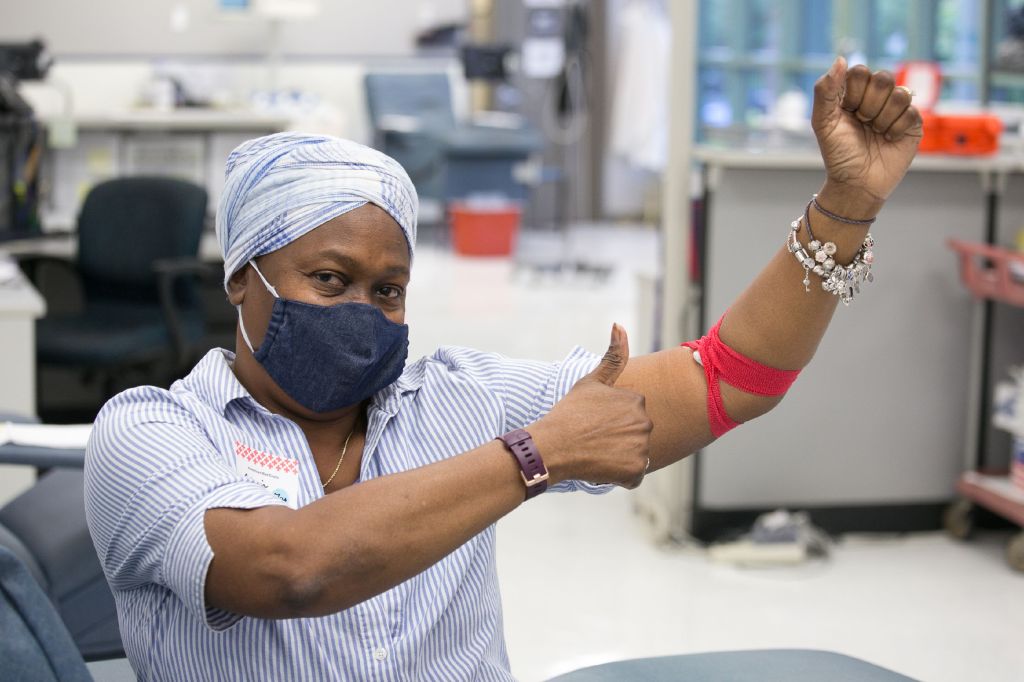
Husband and wife make convalescent plasma donation a family affair

By Sue Wilson, American Red Cross volunteer

August 28, 2020- You may have heard the term “convalescent plasma” as a potential treatment for COVID-19 (coronavirus) and are curious about it.

Simply put, convalescent plasma comes from patients who have recovered from the coronavirus. Plasma is the part of blood that remains after red and white blood cells are removed. It is rich in proteins and antibodies. Hospitals and research labs around the country are working to see if these antibodies can help the immune system fight COVID-19.

The American Red Cross has been collecting convalescent plasma from donors throughout the country who have recovered from COVID-19 for months. But this week, the FDA issued an Emergency Use Authorization for convalescent plasma as a treatment for COVID-19 research.

“The donation process on-site was effortless for me and hopefully, my plasma will help others,”

Ron Baumberger

In Northeast Ohio, husband and wife Ron and Elinor Baumberger are answering the call to donate convalescent plasma after they both recovered from COVID-19. Ron donated this past Friday, and Elinor plans to donate next week.

Ron is no stranger to serving his community. Upon his retirement in 2013 after 32 years with Sherwin-Williams, he immediately joined the Red Cross volunteer team as a Disaster Action Team member and is now the Region Logistics Lead. During his time with the Red Cross, Ron has responded to over 200 local fires, flooding, helped at shelters and warming centers, and provided a host of other services. It’s no surprise that after years of donating his time and talent to the Red Cross, that when he and his wife Elinor came down with COVID-19, they would also want to donate their plasma once fully recovered. 

Ron and Elinor Baumberger

Ron considers himself lucky that he and his wife both had mild cases of COVID-19 that did not require hospitalization. They believe Elinor contracted the virus in January before it became widely known in the medical community. In June, the Red Cross began testing donated blood for COVID-19 antibodies. In July, Elinor donated blood, which tested positive for COVID-19 antibodies. 

In May, Ron came down with symptoms similar to Elinor’s. “I thought I was suffering from allergies or a sinus infection,” said Ron. “I found out I was exposed (through Elinore) to COVID-19 and started to identify my symptoms as fatigue, a minor sore throat, and loss of taste and smell.” His test came back positive. “Elinor had a worse case of it. But now, we have fully recovered with no post-illness symptoms.” 

“The donation process was quite simple,” Ron explained. “I registered from home, received a phone call to qualify me, selected my time and date, and the rest is history!” 

Ron said the entire process took about 90 minutes. “They explained the process, hooked me up and away we went! They continued to check on me periodically and answered any questions I had.” 

The Red Cross supplies close to 40% of the nation’s blood supply and is always in need of donors, but the pandemic has made the need especially dire. To learn more about blood donation or to find a blood drive or donation center near you, click HERE. The Red Cross is testing all blood donations for COVID-19 antibodies, and if your blood tests positive you may have the unique opportunity to help patients fighting the disease. Click here to learn more about convalescent plasma donations.

“The donation process on-site was effortless for me and hopefully, my plasma will help others,” said Ron.

Those who have received a verified  COVID-19 diagnosis, have fully recovered and have been symptom free for at least 14 days are urged to sign up to give convalescent plasma by completing the donor information form HERE.

Red Cross executive helped launch disaster financial assistance program for Hurricane Harvey in 2017

Part II of Todd’s reflections on his deployment three years agoClick here to read Pt. 1

By Todd James, Executive Director, American Red Cross of North Central Ohio

August 26, 2020 – Note: At the time of this posting, on Wednesday, August 26, 2020, Hurricane Laura was expected to gain major hurricane status – possibly category 4 – and make landfall in the same general area of the Gulf Coast ravaged by Hurricane Harvey in 2017. Six volunteers from Northern Ohio were deployed prior to Laura’s landfall.

Ten days after returning home from Austin, where I had been deployed to lead communications following Hurricane Harvey as part of the American Red Cross’ Public Affairs team, I got a call asking if I could go back to Texas to lead a team in Houston. I am blessed to have a very understanding, compassionate wife who said, as she always does, “People need help, you need to go.” So, I headed out for my third deployment in six weeks.

Todd James in Baton Rouge, Louisiana in 2017

Here’s the thing about being deployed: there are thousands of Red Cross responders who answer the call for help every day. Even though we come from all across the country, these operations often feel like a big family reunion. So many people I had worked with before and since were in Houston to help. And so much help was needed! Thousands of people were still staying in shelters, while hundreds of thousands were beginning the long road to recovery. 

3…2…1…Launch!

Thousands of Red Cross responders worked ceaselessly, providing shelter, food, comfort and much more, as they always do when disasters happen.

In the face of the unprecedented scope of the damage caused by Hurricane Harvey, the Red Cross was about to take a quantum leap forward in disaster response, launching the new Immediate Assistance Program (IAP). The IAP gives us a way to almost instantly verify people’s needs and provide immediate financial assistance so they can begin their recovery. Until now, this could mean days and, in large events, even weeks as Red Cross teams went house to house to verify damage and need, meet with families and provide financial help.

With the IAP, people apply with a phone call and with the help of technology and digital mapping, we verify their need and deposit help directly into their account or for pick up at their local Walmart. What a game changer! My team couldn’t have been any busier getting the information out so people could take advantage of this help.

Now, as you can imagine with any new technology like this being launched on this scale, there were some glitches. But thousands of people every day received the help they needed to get started on their recovery. In the first five months after Hurricane Harvey made landfall, 575,000 households received $230 million to use for help with groceries, gas, clothing, rent, bills and other needs for their families.

Since launching the IAP, the Red Cross has continued to improve the process. It’s now a regular part of our disaster response.

Outstanding in our field

A favorite story from my time in Texas happened one afternoon while my staff partner Matt and I were following one of our mobile feeding vehicles to get pictures and talk to the families they were helping. We received calls from our headquarters for interview requests to talk about the relief operation. So somewhere in the middle of rural south Texas, standing by a fenced-in pasture and surrounded by longhorn cattle, I was on my phone talking to a radio station in Maryland while Matt was on his phone being interviewed by a radio station in Phoenix, AZ. Welcome to the glamorous world of disaster Public Affairs!

After two weeks, I finished my deployment and returned home. But three years later, families and communities are still working to recover from the storm, and the Red Cross is still there supporting them. You can see a full report on our efforts at http://www.redcross.org/harveyrecoverygrants

Red Cross executive reflects upon Hurricane Harvey deployment

Disaster struck the Gulf Coast three years ago

By Todd James, Executive Director, American Red Cross of North Central Ohio

August 25, 2020- Note: At the time of this posting on Tuesday, August 25, the third anniversary of the landfall of Hurricane Harvey, Tropical Storm Laura was expected to gain major hurricane strength and target the same area along the Texas coast of the Gulf of Mexico on Thursday morning, August 27.   

Three days before Hurricane Harvey would make landfall, I returned home from a 10 day deployment in Hopkinsville, KY. The small town of a couple of thousand was the point of totality for the recent total eclipse and expected an influx of up to 300,000 visitors to witness the event, putting a severe strain on local resources in the case of an emergency. I had been home for a few days when I got the call to head to Houston. The next day, all travel into the area was suspended because of the storm. I was diverted to Baton Rouge, where American Red Cross teams were staging to deliver supplies and help when the conditions were safe to travel.

Todd James helping hand out water from an emergency response vehicle (ERV) outside of Sealy, TX

Austin City Limits

In Baton Rouge, hundreds of Red Cross responders waited and prepared as Harvey continued to batter Texas and Louisiana. In total, 60 inches of rain flooded Texas and Louisiana with 33 trillion gallons of water, creating unprecedented flooding and destruction. As the storm ended, I headed to Texas. But instead of Houston, I was sent to Austin to support the response. Thousands of families had been driven from the Gulf Coast and were headed north seeking safety, many to the Austin area. 

Todd and his team in Austin with Gail McGovern, President and CEO of the American Red Cross, when she came to Austin

I arrived in Austin and met the Public Affairs team I would be leading. Our job was to communicate critical information about what help was available, where to find safe shelter and to let the American people know how they could support our efforts. 

Harvey was my 21st deployment, but it was the first time I’ve seen our team set up a mega-shelter for more than a thousand people. In just a few days, a large, empty warehouse was turned into a clean, safe shelter for hundreds of families with a kids play area, tented shelters and an area for pets, an internet café, showers, a cafeteria, a medical area and other amenities to give displaced families the best care possible. It was an amazing effort!  And that was just a small part of the work done in response to this disaster. 

Todd helping 7 year old Carsyn Collins unload about 200 toys she collected and donated for kids in Houston

The Red Cross moved quickly to address people’s immediate needs after Hurricane Harvey with thousands of trained workers supporting emergency relief efforts by: 

  • providing more than 414,800 overnight shelter stays with partners
  • serving over 4.5 million meals and snacks with partners
  • making more than 127,000 health and mental health contacts
  • distributing more than 1.6 million relief items

providing more than $345 million in financial assistance to hundreds of thousands of households

 Little Ol’ Band from Texas        

There are a hundred stories to tell from this deployment. One of my favorites is the day my partner and I visited several shelters in the rural areas that were hit by the storm. One town we visited was LaGrange, TX. Being a rock n’ roll fan, I couldn’t head into town without playing LaGrange by ZZ Top at a very loud volume. Luckily, my partner was a fan too!

Todd with local volunteer Tom Hill at a warehouse in San Antonio

I spent 10 days in Austin, working with dedicated, passionate people doing all they could to give these families a sense of safety, comfort and hope while getting ready for the recovery effort to come. I didn’t know it then, but I would very soon be part of that effort.

Edited by Glenda Bogar, American Red Cross volunteer

Northern Ohio volunteers deploy across the country to assist residents in need

By Jim McIntyre, American Red Cross of Northern Ohio

August 24, 2020- Volunteers from Northern Ohio are preparing for the storms taking aim at the Gulf Coast and have responded to the current wildfires in California and the derecho that slammed the Midwest two weeks ago.

One of the joys of working with this team of volunteers is that several days ago we were strangers and in a short time we have become a team. We have no bosses. Everyone just seems to recognize each other’s strengths and everyone just naturally flows to what they do best to compliment the team. It is a beautiful thing to watch.”- John Lavelle, Northern Ohio volunteer

Three volunteers have deployed to California, 5 are providing relief to residents in Iowa, and 7 have been assigned to help with any tropical storm/hurricane relief efforts required because of Marco and Laura.

John Lavelle, a volunteer who is part of the Red Cross’ Iowa disaster response team, recently provided an update to the Northern Ohio Region about his experience:

“One of the first things you learn on deployment is that flexibility is paramount. Coming to Iowa, the original assignment was for feeding. However, after about two hours, the assignment became what they call a special strike force, where our primary mission was to find out what the residents needed and where to distribute the items.

One of our stops on Saturday (August 22) was a large apartment complex, which gave me tremendous appreciation for individuals who provide food to refugee camps in the hardest hit areas around the world. Trying to maintain organization and provide the items people needed at times overwhelmed us. Experience is by far the best teacher, and following this experience, the team came up with a plan as to what to do if a similar situation happens again.

One image that stands out to me was when a resident wanted a case of water and a large bag of 12 meals, both heavy objects. We told her we would hold one of the items for her until she came back, but she refused and placed the case of water on her head and carried the box of food in her arms. She made it appear as if she was born to do this.

One of the joys of working with this team of volunteers is that several days ago we were strangers and in a short time we have become a team. We have no bosses. Everyone just seems to recognize each other’s strengths and everyone just naturally flows to what they do best to compliment the team. It is a beautiful thing to watch.”

In addition, several volunteers responded to seven home fires in Northern Ohio over the weekend, providing immediate financial assistance to more than 30 children and adults.

August 17, 2020. Veterans Memorial Colosseum Red Cross operated shelter. Cedar Rapids, Iowa. Red Cross nurse, Helen Caves of Indiana, talked with shelter client Grace about her health conditions and the state of her home while providing her a safe place to rest. Photo by Dennis Drenner/American Red Cross

Additional volunteers are needed to train for disaster responses, specifically to respond to home fires locally and to  staff shelters during national disaster responses. Licensed health care professionals are also needed to help people in disaster shelters.

People in good health and who are willing and able to receive free Red Cross training and can deploy for up to two weeks can visit www.redcross.org/volunteertoday, or can call 1-800-RED CROSS. The number one priority of the American Red Cross is the health and safety of our employees, volunteers, blood donors and recipients, and the people we serve, and we have implemented several measures, in accordance with CDC guidelines, to protect our workers and those who need our assistance.

Even during pandemic, Northern Ohio volunteers deploy to help those affected by disasters

By Eric Alves, American Red Cross of Northern Ohio

August 21, 2020- For the past six months, we have faced a new reality due to the COVID-19 pandemic. We have learned to make kitchen tables into offices and classrooms, learned to celebrate birthdays by standing in our front yards and wave as well-wishers drive by and we have even learned to make wearing masks when shopping or eating at a restaurant our new normal. However, one thing that has not changed, despite the pandemic – disasters do not stop, which means the American Red Cross will be there to support residents and communities affected.

This year’s disaster season has already been historically active. In any year, this is a cause for concern, but with a pandemic, the stakes are increased as the logistics are more difficult and there is an extra layer of safety that needs to be taken into consideration.

John Lavelle: “The tall building is our headquarters, the stained glass window is by Grant Wood, this is one of Cedar Rapids pride and joys.”

While the Red Cross continues to follow CDC guidelines, as well as implementing addtional protocols to keep disaster workers and residents safe, it is thanks to our selfless volunteers that we can continue to perform our mission.

Photo credit- John Lavelle, American Red Cross volunteer
Last week, a derecho devastated parts of Iowa. To assist with the Red Cross response, the Northern Ohio Region deployed 5 disaster volunteers. One of the volunteers that deployed was John Lavelle. John is from Avon Lake and a member of the North Central Ohio Chapter.

While in Iowa, John provided his thoughts and observation on the Red Cross’ disaster response:

“The area of disaster is so large that my job is to go out and find people that need help. We get connected that people have been given no assistance and my task is to go out and find them. I’m mostly working with isolated trailer parks and the destruction to them is immense. We find people living in tents and our immediate objective is to get them housing.”

Are you healthy and willing to travel, when necessary, to lend a helping hand? Visit redcross.org/volunteertoday for more information and to apply to become a volunteer.

August 17, 2020. Veterans Memorial Colosseum Red Cross operated shelter. Cedar Rapids, Iowa. After a long day, shelter client Grace takes a nap knowing she is supported and cared for. Photo by Dennis Drenner/American Red Cross

Are you unable to deploy but you have an interest to help local communities and residents in need? Don’t worry! We have positions like blood donor ambassador that will allow you to spread the Red Cross’ mission and help others while being close to home.

Why celebrate World Humanitarian Day?

By Doug Bardwell, American Red Cross volunteer

August 19, 2020- If you watch or read world news, you undoubtedly know there are millions of people who live in conditions that we would consider “intolerable.” Those who strive every day to prevent and alleviate this human suffering, without regard to race, creed, sex, color or nationality, are humanitarians, and those are the ones honored each August 19th.

Every volunteer with the American Red Cross is a humanitarian. Here in Northern Ohio, our volunteers respond every day to local disasters, such as home fires, to help residents in need and provide comfort and support.

Our volunteers even deploy across the country to help provide humanitarian assistance. During the early hurricane and wildfire season in 2020, Northern Ohio has deployed more than 10 disaster volunteers to assist affected communities.

The Problem

You don’t have to listen to the news very long to comprehend all the challenges in the world today:

  • Armed conflicts are killing innocent civilians without regard to international conventions
  • Infectious diseases are becoming more prevalent and harder to contain
  • Lack of employment, housing, nutrition and medical supplies are all worldwide concerns
  • Climate change has decimated crop growing regions and endangered coastal areas with flooding
  • Authoritarian leaders have pillaged country’s coffers and jailed those who dare to protest

The Need

According to the 2020 United Nations (UN) Global Humanitarian Overview, responding to these needs is going to require an unprecedented effort.

  • 166,500,000 People are in need worldwide
  • 108,800,000 People have been targeted for aid by the UN. (Some countries will not allow UN aid)
  • $29,700,000,000 Required to meet their needs
  • $15,960,000,000 Funding received from UN members
  • $13,740,000,000 Yes, that’s a $13-billion shortfall for meeting the anticipated needs this year.

That’s a crisis in itself…

But, that’s not all

The above numbers represent day-to-day requirements for those in need worldwide. What they don’t include are disasters, which the Red Cross forecasts will be increasing each year due to climate change.

That is where the Red Cross comes in. Helping people prepare for disasters, responding immediately after disasters, and helping people reconnect and rebuild lives in the aftermath are all specialties of the Red Cross.

August 17, 2020. Veterans Memorial Colosseum Red Cross operated shelter. Cedar Rapids, Iowa. Fried chicken and vegetables is the ultimate comfort meal, served to shelter client Brian by volunteer Robert. Photo by Dennis Drenner/American Red Cross

Moreover, the Red Cross supplies humanitarians, more than 90% of whom are volunteers, who give of their time and talents to provide hope and comfort to others in their time of need.

Across the United States, nearly 372,000 volunteers give a little or give a lot of their time to be on-call for the next home fire, flooding event or other emergency. Won’t you consider becoming part of this country’s largest humanitarian organization? Explore the opportunities you might be qualified for by clicking here.  And remember to celebrate all the humanitarians actively working around the world each August 19.

Get emergency answers from your pocket with Red Cross apps

By Jason Copsey, American Red Cross volunteer

August 17, 2020- Preparation is the key to staying safe when disaster strikes. The American Red Cross continually promotes disaster preparedness measures, and offers a wide range of resources to help everyone stay as safe as possible during disaster season.

Red Cross mobile safety apps are powerful tools designed to place potentially life-saving resources in the palm of your hand. These free, easy to use mobile apps offer services that range from day to day useful information such as scheduling blood donations and common first aid, to disaster response information to keep you safe when you need it most.

The Emergency app is particularly helpful during disaster season, when weather is at its worst. Early warning is one of the most critical elements of any preparedness plan. With the Emergency app, users can monitor more than 35 different severe weather and emergency alerts.  The app features expert advice on what to do in case of hurricanes, earthquakes, floods, tornadoes, home fires, wildfires and more.

The Emergency app’s Family Safe feature allows users to notify loved ones in an affected area of an impending emergency or high-risk event. Recipients receive alert details, including specific safety recommendations, and can respond to indicate they are either safe or in need of assistance. This feature works even if the recipient has not downloaded the Emergency app.

Tennessee Tornadoes 2020

March 4, 2020. Nashville, Tennessee. Northern Ohio Red Cross volunteer, Doug Bardwell, reviews the damage caused by the destructive tornado on this neighborhood. Photo by Scott Dalton/American Red Cross

The app also provides emergency first aid detail for heart attacks, heat-related emergencies, water safety information and more. Preloaded content ensures users can access guidance even if connectivity is lost.

The free Emergency App is available at redcross.org/apps. Or, you can text: “GETEMERGENCY” to 90999.

Other Red Cross mobile apps include disaster-specific tools for users who live in geographies where certain risks are more common. These apps include Tornado, Flood, Hurricane and Earthquake. Each of these offer English and Spanish language options and are available at redcross.org/apps.

To learn more about the free mobile apps offered by the Red Cross, visit https://www.redcross.org/get-help/how-to-prepare-for-emergencies/mobile-apps.html.

International Youth Day 2020: Youth Engagement for Global Action

By Olivia Wyles, American Red Cross volunteer

August 12, 2020- Many deserve recognition right now for contributions they are making in their communities amidst current daily unpredictabilities. But on Aug. 12, we recognize all youth change makers, near and far. International Youth Day has been recognized by the United Nations since 1999, and this year’s theme is Youth Engagement for Global Action. Thanks to continuous advancements in technology, having a global voice for action is more possible than ever, and young people everywhere are taking advantage of it.

From volunteering their time with local organizations in high school and college, to attending rallies for causes they believe in, to using their social media accounts as a platform to spread messages about global issues,  young people today have a great desire to create social change both locally and globally. One issue that local youths have taken on in the past is called the “Measles Initiative” at Gilmour Academy in Gates Mills, Ohio.

“The Measles Initiative” at this school was inspired by the American Red Cross Measles and Rubella Initiative, which is able to use a $2 donation to save the life of a child by providing vaccinations all around the world. By 2017, the young group at Gilmour Academy had already raised $30,000 to provide thousands of children with vaccinations that would allow them to grow up to one day make their own marks on the world.

Measles & Rubella Immunization Campaign Kenya 2018

September 27, 2018. Nairobi, Kenya. Prince Osinachi receives a measles-rubella vaccine in Nairobi, Kenya. The Red Cross has educated me and my neighbors about the importance of our children receiving vaccinations. My son was 4 months late receiving one of his measles doses, so I was afraid of taking him to the health center but the volunteer convinced me to go, says Prince’s mother, Lydia Odinga. Lydia received a visit from Red Cross volunteer, Felista Njenga, who helps ensure kids in the dense urban community receive lifesaving vaccines such as those for measles and rubella. I volunteer because, as a mother, my desire is to have a healthier community free of diseases, says Felista. Local Red Cross volunteers go door-to-door to identify children who are missing routine immunizations, update vaccination records at local health centers, encourage parents and caregivers to have their children vaccinated, and follow up with families to confirm receipt of the recommended vaccinations. Each year in Kenya, more than 350,000 children miss their scheduled routine vaccinations leaving them vulnerable to vaccine-preventable diseases such as measles and rubella. The American Red Cross and the Kenya Red Cross have been working together to strengthen community-level routine immunization systems in both rural and urban counties. Measles is one of the most contagious and severe childhood diseases. Every day, it takes the lives of hundreds of children around the world. Even if a child survives, measles can cause permanent disabilities, such as blindness or brain damage. But there is hope. Since 2001, the American Red Cross and our partners in the Measles & Rubella Initiative have vaccinated more than 2 billion children around the globe. The Red Cross plays a pivotal role in vaccination campaigns worldwide: local volunteers use mass media, rallies, door-to-door visits and educational entertainment to reach families who do not have access to routine health services.
Measles is one of the most contagious childhood diseases in the world. Measles was eliminated from the United States in 2000. However, it continues to kill hundreds of thousands worldwide per year, according to the World Health Organization (WHO). Accessibility to vaccinations is crucial, since even if a child survives after having the disease, they will most likely have permanent disabilities such as brain damage, hearing loss, deafness and more. Over 20.3 million lives have been saved thanks to measles vaccinations, and efforts like the “Measles Initiative” from Gilmour Academy students keep that number rising. The overwhelming majority of cases occur in children, and the students at Gilmour Academy have made a great impact as young change makers protecting their future fellow change makers from this deadly disease.

Mexico Earthquake Resiliency Program 2020

Worldwide cases of measles have decreased significantly over the years thanks to lifesaving and cost-effective vaccinations. If you’re interested in celebrating International Youth Day 2020 by donating to the Measles and Rubella Initiative to provide vaccinations to children around the world, click here for more information.

Edited by Glenda Bogar, American Red Cross volunteer