If you had 4,100 hours to do whatever you wanted, what would you do? If it helps, that’s almost 175 days. Would you take a vacation? Or a few? Catch up on sleep? Finally read all those books on your nightstand?
American Red Cross Northern Ohio volunteer Sharon Nicastro took her hours and spent them helping others. In fact, she took exactly 4,172 hours working to assist the military and their families as a Red Cross Service to the Armed Forces and International Services (SAF/IS) volunteer. During a virtual ceremony on Martin Luther King Jr., Day this past February, Sharon was awarded the President’s Lifetime Achievement Award, a civil award bestowed by the President of the United States. Also called the Presidents Call to Service Award, a volunteer must give 4,000 hours or more over a lifetime of volunteering to receive this prestigious award.
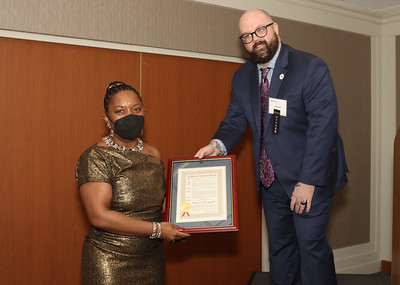
Admiral Mike Parks, CEO of the American Red Cross Northern Ohio Region, presents Sharon Nicastro with the President’s Lifetime Achievement Award
During the ceremony Koby Langley, Senior Vice President, Red Cross International Services and Service to the Armed Forces, said “This level of achievement represents a person who’s dedicated their entire life to improving the world around them. They’ve dedicated themselves to being a humanitarian, to help others in need.”
Sharon Nicastro volunteers at the Cleveland VA Medical Center on Pearl Harbor Day (Photo taken prior to COVID-19)
With how busy life seems to be for everyone these days, many may wonder why Sharon has spent so much time in serving others. She says her lifelong commitment began with her father, who encouraged his children to volunteer. “If dad went to the clambake to help, all us kids went to the clambake to help,” said Sharon. For Sharon and her family, it wasn’t a question of will you help but why wouldn’t you?
During her time as an SAF/IS volunteer, Sharon has supported military families during deployments and emergencies. She has also helped our nation’s veterans after their service ends. Sharon has taught CPR and hands only CPR classes in Northern Ohio and volunteers at the VA Medical Center in Cleveland. “Sharon is an inspiring woman to work with. Her dedication to support service members, veterans and their families is humbling,” said Jessica Tischler, SAF/IS Regional Program Manager. “She is also a force multiplier as she engages and leads new volunteers in delivering services and works with community partners. Winston Churchill said ‘We make a living by what we get. We make a life by what we give’ and that encompasses what Sharon has shared with the Red Cross.”
Sharon Nicastro and volunteer Jackie Otte teach a CPR class in Cleveland. (Photo taken prior to COVID-19)
The Northern Ohio Region is incredibly fortunate to have Sharon Nicastro on our team. We congratulate her on this outstanding achievement. And we look forward to what she does next because, of course, Sharon doesn’t plan to stop volunteering anytime soon!
If Sharon has inspired you the way she inspires all of us, learn how you can become a Red Cross volunteer and start working your way to that 4,000-hour milestone, at RedCross.org/VolunteerToday.
Good news is on the horizon: If it’s time to “spring ahead” one hour on Saturday night, can spring be far behind?
Good news right away: You can protect your home and family now by “turning and testing” Saturday night.
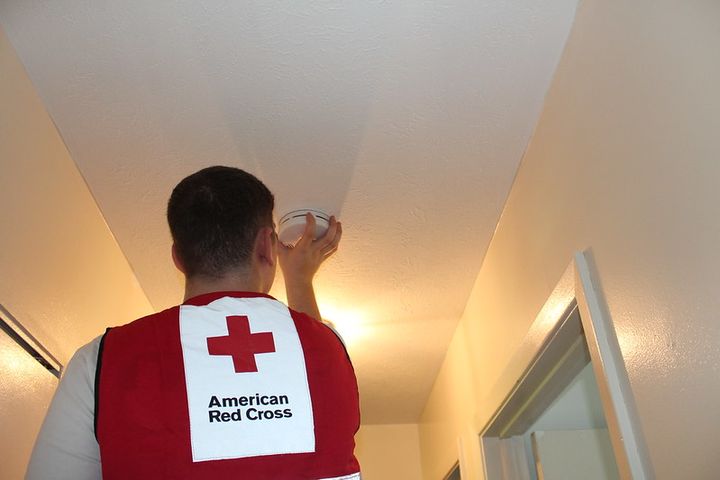
American Red Cross volunteers like John Muni, a retired firefighter in Medina County, are urging everyone across northern Ohio to test the batteries in their smoke alarms this weekend, before they turn their clocks ahead one hour to stay in step with their neighbors.
“Smoke alarms are our silent sentinels, our sleepless watchers to alert us to a disaster nobody wants –- a home fire,” John said.
Fox 8 reporter Todd Meany interviews Red Cross volunteer John Muni
“Just since the first of the year, our Red Cross Disaster Action Teams have responded to more than 250 home fires across northern Ohio, bringing comfort, support and immediate assistance to 1,000 families who were living through a nightmare,” John said. “It’s been a rough start to the year, and we don’t want more folks to go through that.”
That’s the purpose of the fall and spring “Turn and Test” campaigns nationwide, because home fires are the nation’s most frequent disaster.
The Red Cross wants people to take three simple steps:
Install smoke alarms. If you don’t have smoke alarms, install them. At least, put one on every level of your home, inside bedrooms and outside sleeping areas. If you have an alarm that’s more than 10 years old, replace it; smoke detection strips wear out.
Check smoke alarm batteries. This is “Turn and Test.” Push the test button on each alarm and replace batteries, if needed. It’s a good time to check carbon monoxide detectors too.
Practice an escape plan. Make sure everyone in your household knows how to get out of every room and how to get out of the home in less than two minutes.
In May, the Red Cross will resume its “Sound the Alarm” campaign, working with partners to install free smoke alarms in homes and to brief residents on fire safety and escape planning. The campaign had to be adjusted during 2020 and 2021 because of COVID-19.
This year, the Northern Ohio Region of the Red Cross has a goal to install more than 7,200 free smoke alarms and make more than 3,000 homes safer. Local fire departments, civic groups and workplace teams will provide the volunteer manpower for these important efforts.
“Sound the Alarm” is a national Red Cross program similar to one that started in Cleveland in 1992 as a partnership between the city’s fire department and the local Red Cross chapter. Since 2014, the campaign has installed more than 2.2 million(!) smoke alarms across the country that have saved more than 1,200 lives.
For more information, including safety tips and free resources, visit redcross.org/homefires or download the free Red Cross Emergency app by searching for “American Red Cross” in app stores.
One of the definitions of courage you’ll find in the Oxford Dictionary is “strength in the face of pain or grief.”
Most people can say they’ve exhibited courage at least a few times in their life. Not as many can say that every day for the past year, just simply facing the day has been an act of courage.
Lynn Decker, Wadsworth School District Head Nurse
If you asked Lynn Decker about it, she’d probably tell you that was an overstatement. But after hearing her story about her fight against breast cancer and her unwavering commitment to the students and staff of the Wadsworth City School District, there was no question that Lynn embodied the true meaning of courage.
Lynn is the District Nurse for Wadsworth City Schools. She’s been a nurse for a long time, working in the ICU at Summa Akron City Hospital for more than a decade. In 2014, Lynn joined the district and the world of school nursing. “I thought it was just Band-Aids and ice packs; no big deal,” she said of the job, but as she quickly found, it was a lot more than that. It was much more critical care than she’d first anticipated, which Lynn says was a good thing, as that’s been her “bread and butter” throughout her career.
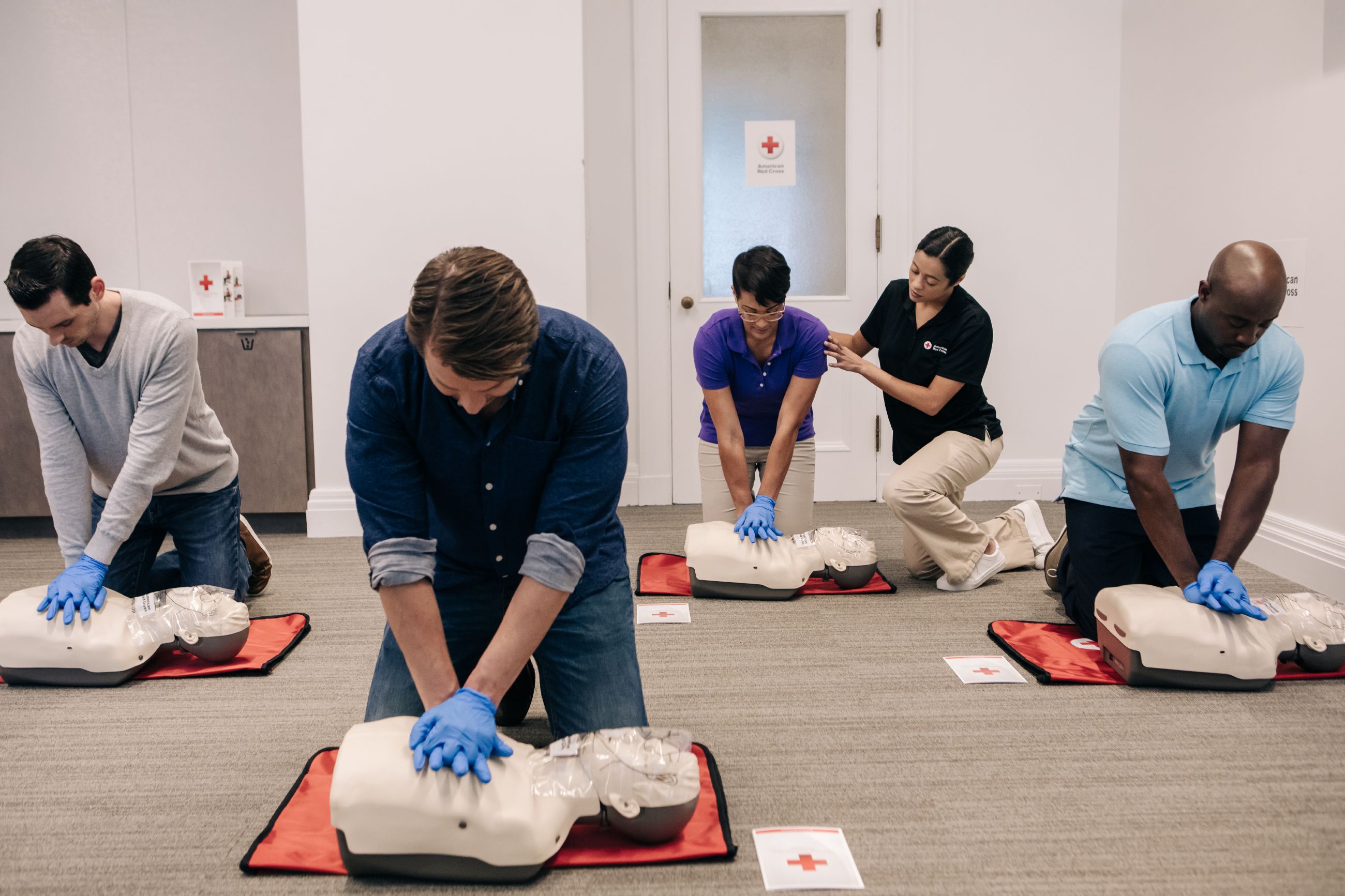
As the head of eight school nurses, Lynn says she quickly realized that there were several “areas of improvement” that needed to be addressed, one of those being CPR training. “I decided to get my certificate over at the Red Cross to become a certified instructor so I could help employees here, and also train coaches and administrators in CPR.”
June 22, 2018. Washington, DC. CPR stock photos by Roy Cox for the American Red Cross.
Throughout her years in the Wadsworth School District, Lynn trained dozens of her fellow employees in CPR, but only recently started training 8th grade students as well. “We realized how important it is for kids of a young age to learn CPR, and actually found that they are much easier to teach.” And they’re interested in learning, Lynn says: “They love it! They get super excited when we’re coming in with the mannequins and the mock AED machines and more.”
And then, a setback.
It was about a year ago that Lynn was diagnosed with breast cancer, and in the middle of a pandemic, no less. “When the entire world is shutting down and you’re worried about hospital care and being able to get your surgery and your chemo, but still being part of running the district.” In spite of the diagnosis and facing a double mastectomy, Lynn still was concerned about her students and her staff in Wadsworth. “People still have to be taken care of and we need to be sure that our students and our faculty are safe.”
After finishing her chemo treatments and her surgery in May, Lynn was visiting her parents’ home for a small get together at their pool in the backyard a little more than a month later, in July last year. A neighbor had fallen into the pool and gone under the water. Without regard for herself and how she was feeling after her treatments, Lynn deployed her Red Cross training and did everything she could to help that family friend.
Unfortunately, there was no helping that friend. He eventually passed away. It was an experience Lynn says she’ll never forget and a real world reminder of how important her training is and how important it is that she pass along what she learned through the Red Cross.
Today, Lynn’s treatments continue. And Lynn continues to provide an invaluable, potentially life-saving skill set to her colleagues and her students alike. Additionally, she’s become an advocate for early and regular health screenings and now helps others in similar situations as hers face their diagnoses head on, with strength and with courage.
Last month the blood supply was in “crisis.” This month it’s rated “vulnerable.” Neither of those are optimal – the latter being only incrementally better. Bottom line = we still need everyone to donate if they are able.
Photo Credit: Doug Bardwell, Red Cross Volunteer
With relaxation of COVID-19 restrictions, doctors are once again allowing elective surgery. Don’t associate “elective” with just things as tummy tucks and facelifts.
Elective means it can be scheduled in advance instead of being scheduled as an emergency. Some heart surgeries, including bypass and valve surgeries, as well as some cancer surgeries or biopsies are scheduled electively. When elective surgeries are delayed for too long, life-threatening emergencies can occur.
Since issuing its first-ever blood crisis alert, severe winter weather has further complicated efforts to rebuild the Red Cross blood supply. So far in 2022, approximately 600 blood drives have been canceled across the country due to winter storms, forcing nearly 20,000 blood and platelet donations to go uncollected.
Photo Credit: Doug Bardwell, Red Cross Volunteer
Don’t let the supply go back to “crisis” mode – make and keep those appointments. It’s quick and easy to find a location and time near you at redcrossblood.org.
If you have either type O positive or O negative – you are needed most urgently: o Type O positive is the most transfused blood type and can be transfused to Rh-positive patients of any blood type. o Type O negative is the universal blood type and what emergency room personnel reach for when there is no time to determine the blood type of patients in the most serious situations.
Platelet donations are also urgently needed. Platelets are the clotting portion of blood, which must be transfused within five days of donation. Nearly half of all platelet donations are given to patients undergoing cancer treatments.
Need more motivation???
For drives March 1-31: All who come to give blood or platelets will get a $10 e-gift card, thanks to Fanatics, world’s largest collection of officially licensed sports gear.
Plus, donors will also automatically be entered for a chance to win a trip for two to the 2022 MLB® All-Star Game® in Los Angeles, California, when you come to give March 1-31. The package includes two tickets to 2022 MLB® All-Star Saturday, the 2022 Home Run Derby and the 2022 MLB® All-Star Game®, round-trip airfare to Los Angeles, four-night hotel accommodations (July 16-20, 2022), plus a $750 gift card for expenses. Details available at rcblood.org/team.
Edited by Glenda Bogar, American Red Cross volunteer
Annual H. Peter Burg Community Leader award also presented
By the American Red Cross and Ryan Lang, Red Cross Volunteer
Two police officers, an off-duty firefighter, an assistant middle school principal, a municipal recreation worker, a vacationing teenager and a professional model will be honored for bravery and acts of heroism, at the 26th annual Acts of Courage awards, presented by the American Red Cross of Greater Akron and the Mahoning Valley.
The annual dinner and award ceremony will take place on Thursday, March 3, 2022, at the Hilton Akron/Fairlawn, 3180 W. Market Street, Akron, Ohio 44333.
Bernett L. Williams, H. Peter Burg Community Leader Award recipient
As a special feature of the Acts of Courage awards, the Red Cross takes an opportunity to present a community member, who has spent a lifetime pursuing good deeds, with the H. Peter Burg Community Leader award. This year, the award will be presented to Bernett L. Williams, Vice President External Affairs at Akron Children’s Hospital.
Acts of Courage Award Winners:
LaDonya Williams, Acts of Courage Award Recipient
LaDonya S. Williams, day care provider and model, Akron, Ohio While sitting at a traffic light at V. Odom and Raymond St., a motorist careened wildly down the street, crashing into the car in-front of LaDonya Williams and her father, off-duty Akron Police Department detective, Donny Williams.
A woman leapt out of the vehicle, screaming that her 7-month-old baby was choking. Working quickly, LaDonya pulled the 7-month old child out of the car and successfully performed infant abdominal thrusts, taught by the American Red Cross.
LaDonya, who in addition to being a licensed day care worker, is a professional model, and was supposed to be in Chicago on a modeling job, but canceled at the last minute. It was a decision that may have saved that baby’s life.
Tim Haas, Acts of Courage Award Recipient
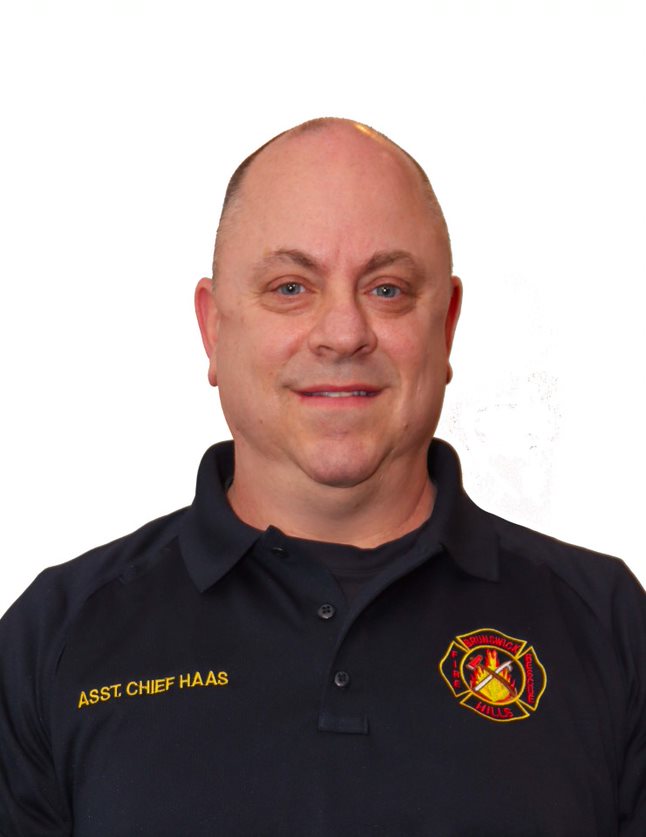
Tim Haas – Asst. Chief, Brunswick Hills Fire Department On just the second day of a family vacation to Mexico, Brunswick resident Tim Haas played the hero. While at the main pool of the resort where the family was staying, Hass, saw a 2 year-old girl being taken out of the pool.
The child had drowned. She was not breathing and had no pulse. Tim utilized his extensive training and performed CPR until she was revived, about two minutes later. Emergency personnel at the resort then responded, and later told Haas the girl was “doing well.”
Anthony Hermann, Assistant Principal, Barberton Local Schools Eighth grade Assistant Principal Anthony Hermann was helping clean up on a Taco Tuesday during lunch at Barberton Middle School. As students were getting ready to return to class, Mr. Hermann was called on to use the first aid training he and other administrators are required to learn.
Anthony Hermann, Acts of Courage Award Recipient
A student was choking on his meal and unable to verbalize his distress. Mr. Hermann could tell immediately what was wrong and moved into action. As he patted the child’s back, trying to dislodge the food that was blocking his airway, the student passed out.
As the situation unfolded, Mr. Hermann called for the room to be cleared and began to perform abdominal thrusts to dislodge the food. Eventually, the student regained consciousness.
John Doyle, Acts of Courage Award Recipient
John Doyle, Recreation Supervisor, City of Macedonia During Macedonia’s SummerFest 5K in 2021, Recreation Supervisor John Doyle was clearing the trails toward the end of the run and noticed a man face down on the trail. Recognizing him as the runner who had just passed him, John immediately radioed for EMS and approached the man. After performing multiple rounds of CPR, several other workers arrived with an AED and LUCAS device.
The runner regained his pulse and was breathing before being taken to the hospital.
Officer Lenny Kunka, Officer Kyle Auckland – Kent Police Department A 14-year-old girl was babysitting a 1-year-old around 8 a.m. on a Saturday morning, when she heard someone trying to get inside. Unable to get away, she hid in a bathroom and bravely called 911. Through whispered exchanges, she spoke with dispatch.
Kent Police Officers Kyle Auckland and Lenny Kunka, Acts of Courage Award Recipients
Two Kent police officers, officer Lenny Kunka and officer Kyle Auckland, responded to the call. Almost immediate shots were fired by the intruder. Officer Kunka was shot in the hand. Officer Auckland’s bullet-resistant vest saved his life when he was shot in the chest. Both officers have recovered.
The suspect was subdued and arrested.
Travis Shrout, College Student, Stow, Ohio While vacationing in Topsail, North Carolina, 19-year-old Stow resident Travis Shrout went swimming. While at the beach, he noticed a mother and young child in distress in the water.
Travis Shrout, Acts of Courage Award Recipient
Travis pursued them using his body board. He first reached the mother and gave her the body board. He then swam toward the boy, who was struggling to stay above the waves some 10-yards away. Travis used his Red Cross lifeguard training to calm and rescue the boy, navigating both mother and son out of the rip current and safely to shore.
My first Acts of Courage Awards as a Red Cross Board Member:
Working in radio news for the past six years in Akron, I’m very familiar with the Red Cross Acts of Courage event. In fact, I’ve covered a lot of these heroes in the news over that time.
Acts of Courage Awards (Photo credit: Debbie Chitester, Red Cross)
But this year was my first in-person Acts of Courage event as a Red Cross board member, and the experience was even more rewarding that I could have imagined.
Prior to Thursday night’s ceremony, I had the chance to meet several of this year’s heroes and hear their stories firsthand. That was a few weeks ago, and as emotionally affected as I was then, I figured I was prepared to keep my composure during the main event.
I was not.
Hearing these stories from the men and woman that lived them was once again an emotional experience for me. LaDonya’s selflessness, Tim’s training in action, Anthony’s sense of duty to his student, John’s quick reaction, Lenny and Kyle’s bond, and Travis’ maturity and composure… Every single story moved me as if I was hearing them again for the first time.
These folks are heroes. They represent the best parts of our community and the Red Cross is proud to recognize them for their extraordinary acts of courage.
Bernett L. Williams, H. Peter Burg Award recipient with Ryan Lang, Red Cross Board Member (Photo credit: Debbie Chitester, Red Cross)
And then there was Bernett L. Williams, this year’s H. Peter Burg Award recipient, who was presented the award by her two sons, Todd and Jacob; two impressive young men who spoke so highly of their mother.
Bernett L. Williams and her sons Todd and Jacob (Photo credit: Debbie Chitester, Red Cross)
Bernett’s resume and long list of contributions to the community speak for themselves, but from where I was sitting, it was the testimony of her sons that truly spoke to Bernett’s character and her impact on the people around her. The way those young men carried themselves and spoke of their mother was beyond impressive and as the son of a remarkable woman myself, I could feel the pride swelling within them.
From her work with Akron Children’s Hospital to her leadership role in the Akron Urban League to the Akron-Canton Regional Foodbank and the Women’s Endowment Fund, Leadership Akron, Summit for Kids, and the list goes on, Bernett is the epitome of selflessness in the community.
The H. Peter Burg Community Leadership Award was made for Bernett L. Williams.
I was honored to be there last night and I’m honored to represent the Red Cross of Greater Akron and the Mahoning Valley, if only from my small seat at a very large and distinguished table.
Red Cross volunteer Ben Weisbrod responds to a hotel fire in Parma
As always, volunteers, staff and donors have been stepping up, but we could use your help. Throughout March, the Red Cross honors those who make its mission possible during the annual Red Cross Month celebration—a national tradition started nearly 80 years ago when Franklin D. Roosevelt issued the first national Red Cross Month proclamation. Each U.S. president since has also issued a proclamation.
“When emergencies strike, our community rallies together to help families and individuals when it matters most,” said Tim O’Toole, the Regional Disaster Officer for the Northern Ohio Region. “We honor this dedication during our Red Cross Month celebration, and we invite everyone to join us by turning their compassion into action by joining our response teams. We need help both here locally and to also send teams across the nation to major disasters.”
Help can’t wait during emergencies. Over the last 12 months—between 2/23/2021 and 2/23/2022—Northern Ohio Disaster Action Teams responded over 1,100 times to help families in need in our region, the vast majority of them victims of home fires. Just this past week our teams were in Harrison County assisting victims of flooding as shown in this video.
Nationally, the Red Cross has responded to more than 10,000 home fires, helping more than 37,000 people, since January 1, 2022.
My experience as a Red Cross volunteer has been exceptionally rewarding, whether in communications, disaster response or assisting in another capacity. It is an honor to work alongside so many compassionate, capable people, helping those in need and seeing the appreciation and relief of those we assist.
Please consider joining the Red Cross Month celebration by volunteering. You can also provide financial support on Giving Day or any time.
Jessica Voorheis donates blood at the Emerald Event Center in Avon
Blood donors are needed. The American Red Cross blood supply remains incredibly vulnerable – especially as doctors begin to resume elective surgeries previously delayed by the Omicron variant. It’s critical that individuals schedule a blood or platelet donation immediately to help ensure patients get the care they need as soon as possible.
To make an appointment to give blood, visit RedCrossBlood.org, call 1-800-RED CROSS or download the Red Cross Blood Donor App. As a thank you, all who give in March will receive a $10 e-gift card, thanks to Fanatics. March blood donors will also have a chance to win a trip for two to the 2022 MLB® All-Star Game® in Los Angeles (terms apply; visit rcblood.org/team for details).
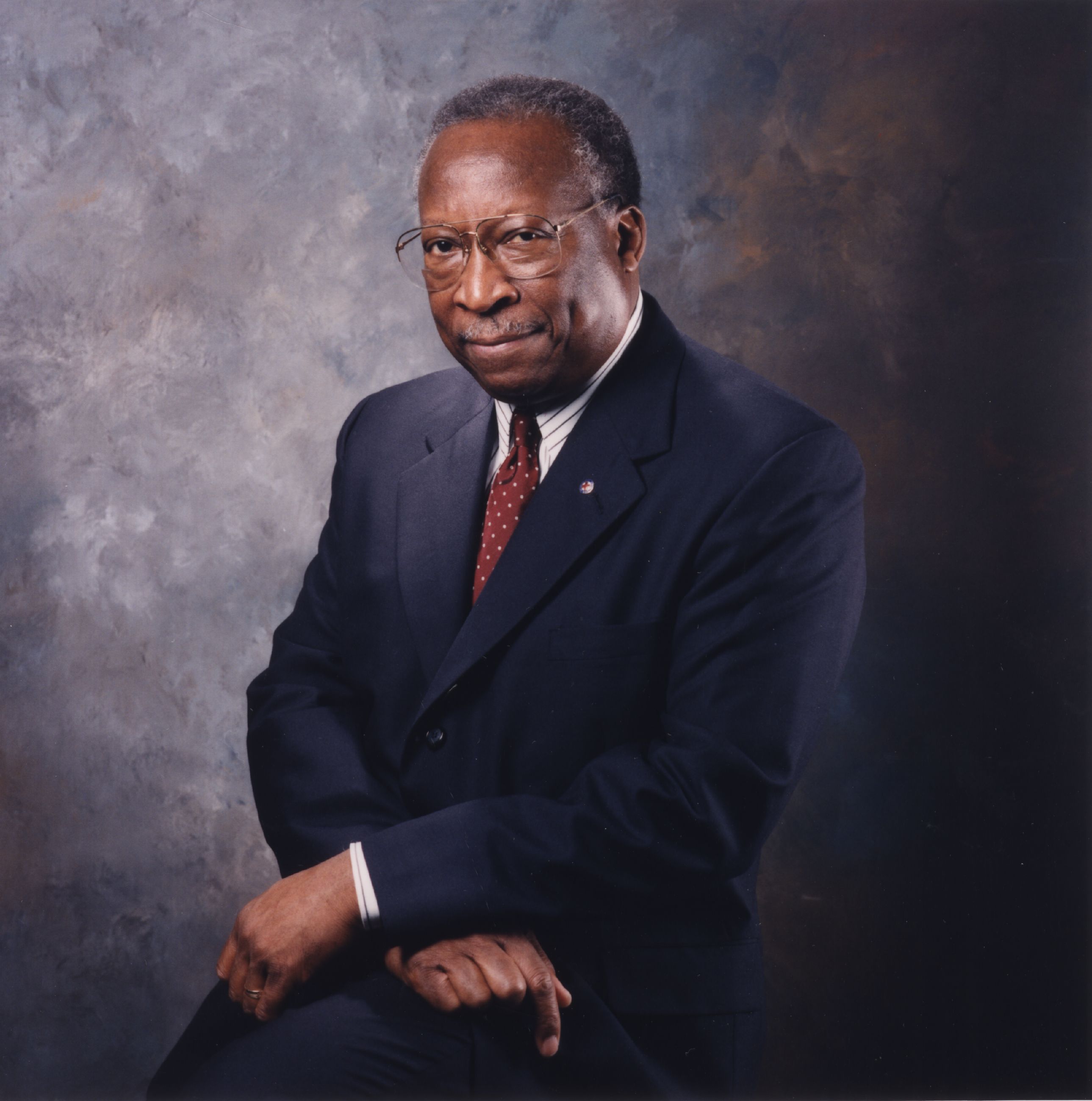
Northern Ohio has had their share of prominent African Americans: Olympian Jesse Owens, author Toni Morrison, US Representative Stephanie Tubbs Jones, inventor of the modern traffic light Garrett Morgan, and first black mayor of a major U.S. city Carl B Stokes. But, closest to the hearts of Northern Ohio Red Crosser’s is none other than our own Steve Bullock.
Steve Delano Bullock was the youngest of 22 children born to a sharecropper family in segregated North Carolina. He was in the U.S. Army in Vietnam in 1962 when he first volunteered with the Red Cross. He found a fit in the organization that upholds impartiality – not discriminating based on nationality, race, religion, class or political beliefs – as one of its fundamental principles.
– Steve Bullock, Photo credit: Daniel Cima/American Red Cross
Steve began his career with the organization in 1962, working as a caseworker on military installations. His work took him and his family to military posts throughout the United States, Europe, and Southeast Asia. Twenty years later, he became the Chief Executive Officer and Chapter Manager of the Greater Cleveland Chapter.
In Cleveland, he oversaw the launch of Operation Save-A-Life, which aimed to reduce injuries and deaths due to home fires by providing residents in at-risk neighborhoods with fire safety education and free smoke alarms and installations. That initiative has been adopted by the Red Cross nationwide and, as of the end of 2021, more than 2.2 million alarms have been installed and more than 1,200 lives have been saved.
– Northern Ohio Sound the Alarm installation event
Steve Bullock’s career with the American Red Cross spanned six decades. During that time, he has been one of the hundreds of thousands of volunteers and paid staff striving to help Americans and people around the world prevent, prepare for and respond to emergencies.
But there’s one thing no other Red Crosser will ever be able to claim: Steve was the first African American to sit at the helm of our nation’s premier humanitarian organization, when he was named Acting President of the national agency in Washington, DC.
“You’d be hard-pressed to find a more inspiring role model than Steve,” says Mike Parks, Regional CEO of the Red Cross in Northern Ohio. “It’s no wonder our humanitarian award is named in his honor. He has lived a life of service to mankind.”
Thank you, Steve Bullock, for your years of service to our military members, their families, and our mission.
If you feel a call to serve as Steve did, the Red Cross has a veritable wealth of opportunities for your talents. Start your journey here.
Despite a few days of above normal temperatures, winter is baaaack! The American Red Cross would like to share some useful tips to help your family pets get safely through the rest of this winter season.
The American Red Cross and the Humane Society of the United States recommend following these basic steps to keep your pets safe during Ohio’s long winter months:
Bring your pets inside, especially if you’ll be gone for several hours.
The American Society for the Prevention of Cruelty to Animals ® (ASPCA ®) reports if pets are left outdoors, they can freeze, become disoriented, lost, stolen, injured, or killed. In addition, don’t leave pets alone in a car during cold weather, as cars can act as refrigerators that hold in the cold and cause animals to freeze to death.
If pets cannot come indoors, make sure they are protected by a dry, draft free enclosure. Make it large enough to allow them to sit and lie down, but small enough to hold in the pet’s body heat.
Raise the enclosure floor a few inches off the ground and cover it with cedar shavings or straw. Turn the enclosure away from the wind and cover the doorway with waterproof burlap or heavy plastic.
Make sure your animals have access to non-frozen drinking water. If you keep food and water outside, make sure their access to food and water is not blocked by snow drifts, ice or other obstacles.
Salt and other chemicals used to melt snow and ice can irritate a pet’s paws. Wipe their paws with a damp towel before your pet licks them and irritates their mouth. The ASPCA adds that you can also use petroleum jelly or booties to protect sensitive paws. Use pet-friendly ice melt products.
If you make shelter space in your garage, shed or other secondary building, check for chemical spills and wipe up any you find before your pet can come in contact with it. Antifreeze (for example) is sweet and attracts pets, but it a deadly poison. Store antifreeze out of reach.
Move other animals or livestock to sheltered areas and make sure they have access to non-frozen drinking water. If the animals are outside, make sure their access to food and water is not blocked by snow drifts, ice, or other obstacles.
Photo of Tye, provided by Christy Peters
Take care of their coat and skin. To avoid itchy, flaking skin, the ASPCA recommends keeping your home humidified and towel dry your pet as soon as he or she comes inside. Pay special attention to paws and in-between the toes. Remove any snow from between foot pads. If possible, keep your dog’s coat longer in winter for warmth. If your dog is short-haired, consider getting a coat or sweater for your pet. Keep pet bathing to a minimum when it’s cold to avoid dry skin. If your pet needs a bath, use a moisturizing shampoo.
Know your pet’s limits outdoors. The American Veterinary Medical Association (AVMA) reports you should be aware of how your pet tolerates cold weather and adjust as needed. Consult your veterinarian if you need advice.
Check your engine. A warm vehicle engine can be an appealing heat source for outdoor and feral cats, but it’s deadly. Check underneath your car, bang on the hood, and honk the horn before starting the engine to make sure a cat hasn’t taken refuge on your engine.
Use space heaters with caution. The heater can burn your pet or be knocked over, possibly starting a home fire.
Watch for hypothermia. If your pet is whining, shivering, anxious, slower than usual or stops moving, seems weak or starts looking for warm places to burrow, get them back inside quickly because they are showing signs of hypothermia. Frostbite is harder to detect and may not be fully recognized until a few days after the damage is done. If you suspect your pet has hypothermia or frostbite, consult your veterinarian immediately.
Be prepared: Winter can bring blizzards and power outages. Prepare an emergency kit and include your pet in your plans. Have enough food, water, and medicine (including any prescription medications as well as heartworm and flea/tick preventives) on hand to get through at least five days.
Avoid walking on frozen water. Stay away from frozen ponds, lakes, and other water. You don’t know if the ice will support your pet’s weight and falling through the ice could be deadly.
Photo of Winnie provided by Chris Chmura
Can I bring my dog to a Red Cross shelter?
Most American Red Cross shelters cannot accept pets because of health and safety concerns and other considerations. Service animals that assist people with disabilities are allowed in Red Cross shelters. Know which friends, relatives, boarding facilities, animal shelters or veterinarians can care for your animals in an emergency.
Download the Red Cross Pet First Aid app to put veterinary advice for everyday pet emergencies in the palm of your hand. With videos, interactive quizzes and simple step-by step advice it’s never been easier to know Pet First Aid.
By Samantha Pudelski, American Red Cross volunteer
We’ve all seen the American Red Cross logo at one time or another in our lives. Many of us have seen it promoting a local blood donation drive being held that day as we drove down the road. We all know that blood is needed for us to live–but we may not always think of how many different individuals rely on blood donations, until we or someone we know needs it. In fact, in Northern Ohio the Red Cross provides blood for patients in more than 70 local hospitals in Cleveland, Akron, Youngstown and Toledo.
Platelet donors Al Whitney of Avon Lake and Vinton Smith of Gettysburg, PA
Who are some of the people who rely on blood donations? Below are just a few:
Cancer Patients
Cancer patients may need blood transfusions to implement platelets back into the body after treatments such as chemo or radiation therapy. Certain cancers can also affect a patient’s ability to produce their own platelets.
Trauma Patients
When a patient comes into an emergency department with a trauma injury and there’s no time to check the patient’s blood type, emergency providers use type O negative red blood cells and type AB plasma. O negative blood cells and AB plasma can be transfused into any patient, regardless of blood type. However, less than 7 percent of the population has type O negative blood, and only about 4 percent have type AB Blood. A constant flow of blood donors who have these blood types are critical to keep up with hospital demand, and to help emergency providers save lives.
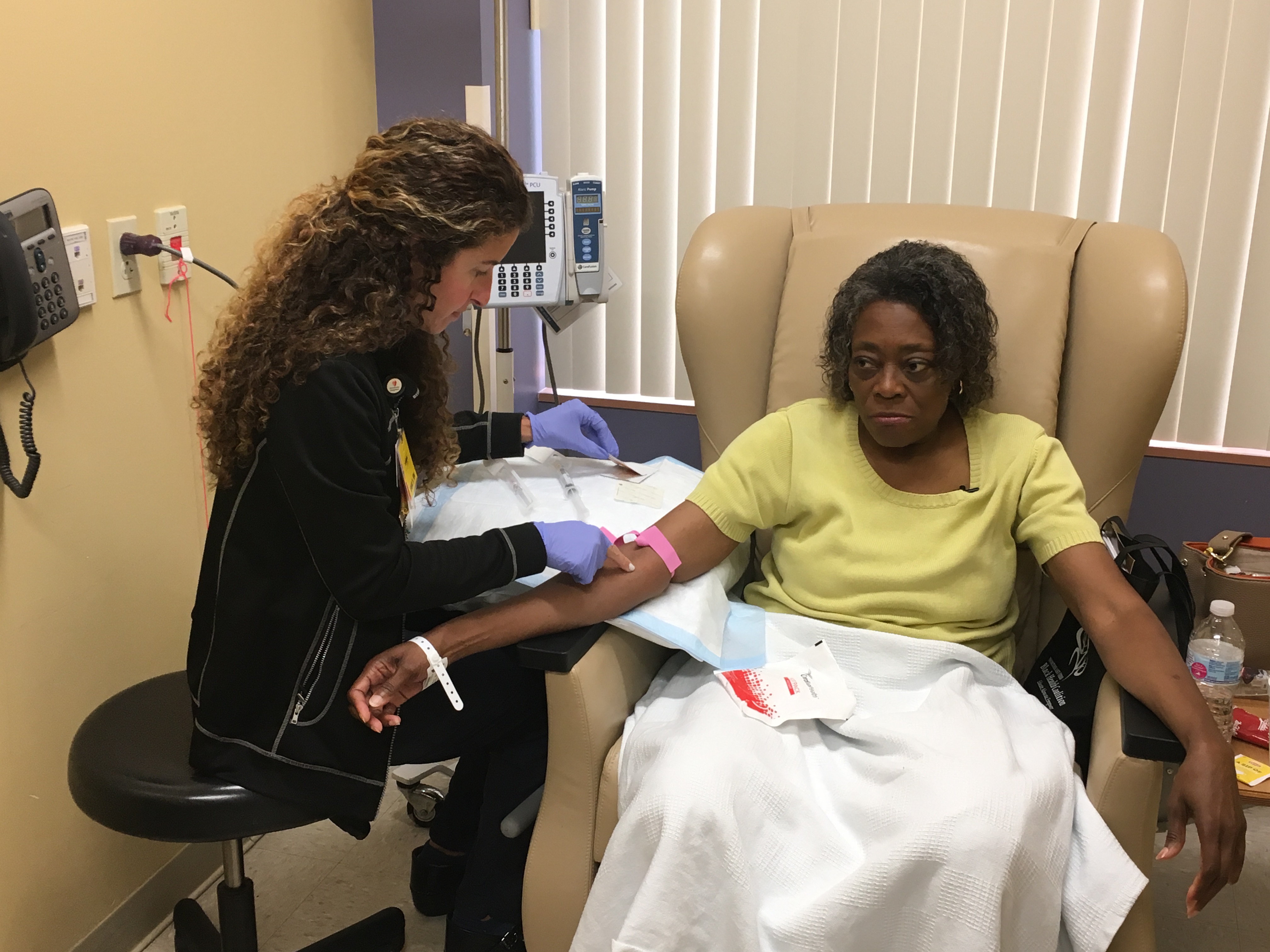
Glinda Dames-Fincher, of Mayfield Heights has lived with sickle cell disease for more than 60 years and receives regular red cell exchanges as part of her treatment.
Sickle Cell Patients
Sickle cell disease affects about 100,000 people in the United States, and causes red blood cells to harden and form a C-shape. When these cells harden, they can get caught in blood vessels and cause serious complications like respiratory conditions, organ failure, stroke or severe pain. While there is no cure for the disease, there is a critical treatment—blood transfusions.
Burn Patients
Burn patients may experience blood loss through surgery or anemia. These individuals may need blood transfusion to replace the blood or red blood cells lost.
Patients Who Have Major Surgeries
Patients who have a major surgical procedure may need a blood transfusion to replace any blood loss that occurred during their surgery.
Patients with Chronic Diseases
Patient with certain chronic diseases or disorders may require blood transfusions. Some may need blood transfusions throughout their lives.
The next time you see one of those signs, one of our advertisements or think about the Red Cross, take the next step. Schedule an appointment to donate blood. Your donation helps people in your community – and you never know if that person could be standing right beside you. To take that next step now, visit www.redcrossblood.org/give.html/find-drive to find an upcoming blood drive or donation site near you.
Edited by Glenda Bogar, American Red Cross volunteer
Flooding during the President’s Day weekend kept some Red Cross disaster workers busy across the Northern Ohio Region. Heavy rains in some parts of the region, along with melting snow caused flood damage that brought a Red Cross response to Lorain, Stark, Wayne and Harrison counties.
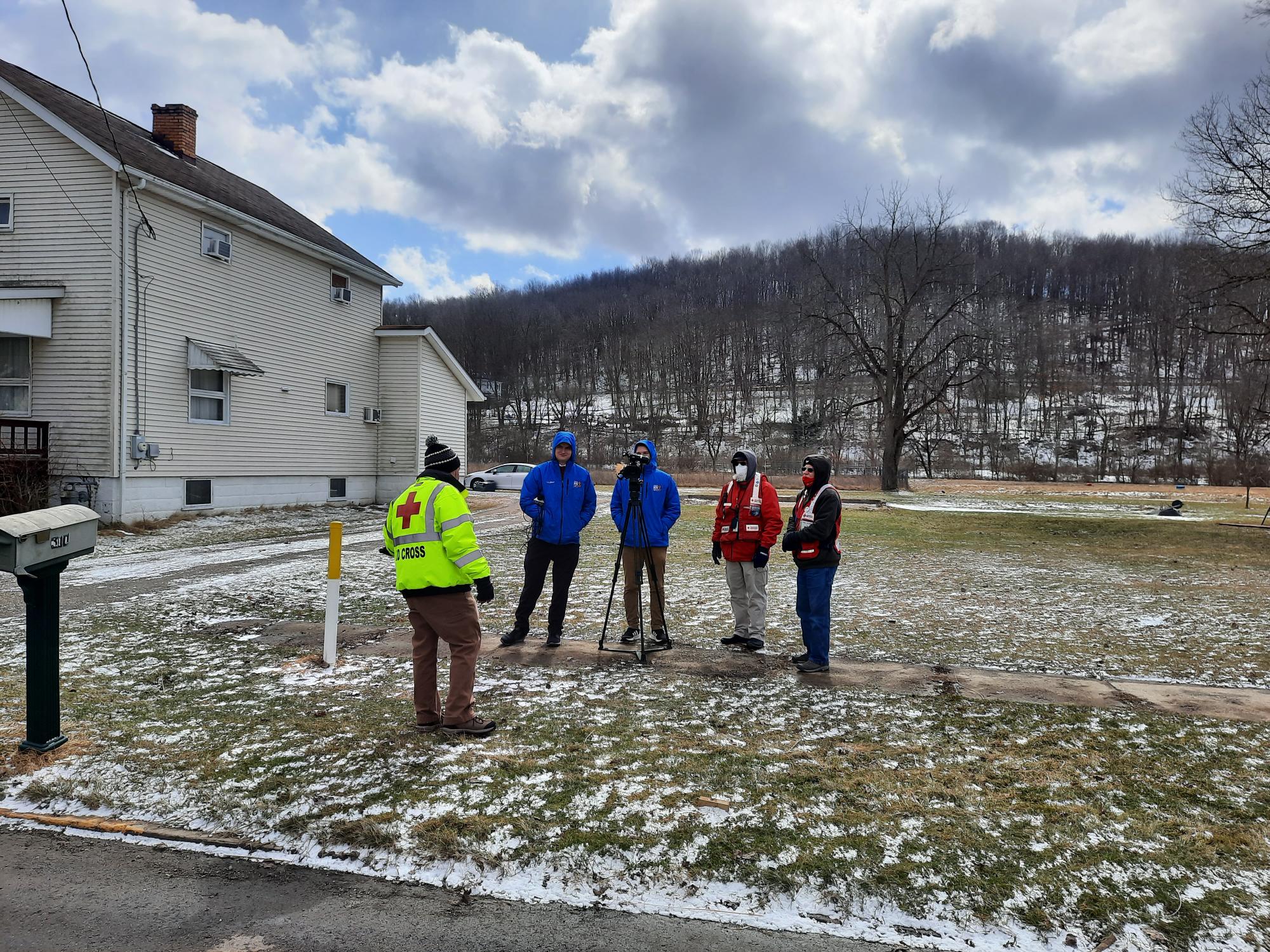
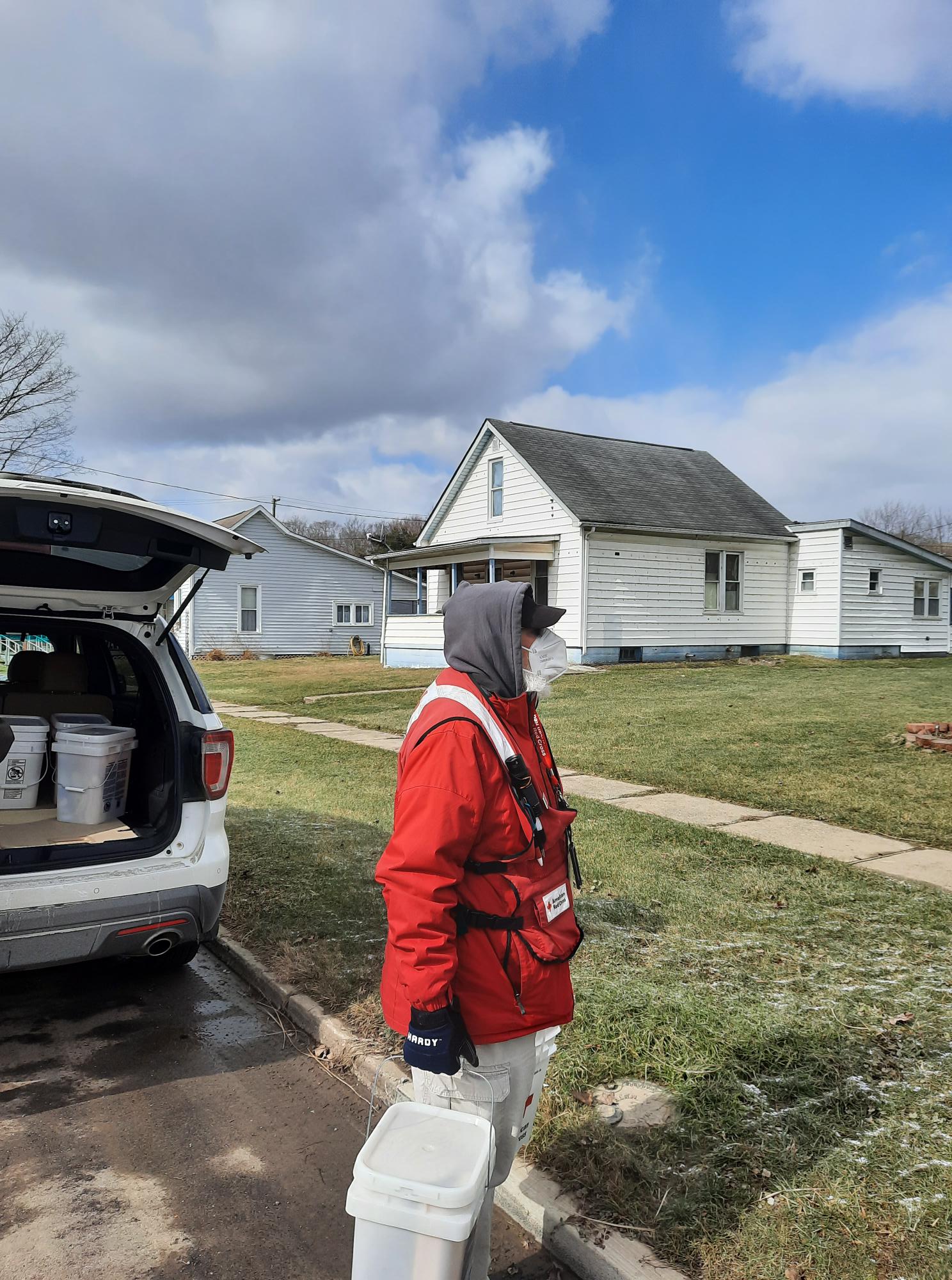
The village of Jewett in Harrison County was especially hard hit. Red Cross disaster program managers Tim Reichel and Mike Arthur were accompanied by volunteers Dan Best and Arden Tohill on Saturday, when they distributed clean-up kits to nearly two-dozen affected residences.
Jewett Flooding
“Those buckets have everything they need to get a good start,” Tim said during an interview with WTOV 9 news. “They’ve come out of their homes, they’ve welcomed us, we’ve gotten a few hugs along the way,” Tim continued. “It’s what we do and it’s a pleasure to do it.”
Weekend responses also included home fires in Cleveland, Akron, Wooster, and Masury, Ohio in Trumbull County. More than 60 children and adults received Red Cross assistance throughout Northern Ohio.
February has been a very busy month for Red Cross Disaster Action Teams. Responses are up more than 30% over February of 2021, and Red Cross caseworkers are continuing to help hundreds of people find a path to recovery.
While President’s Day is a federal holiday, the Red Cross remains ready to respond to emergencies, today and every day of the year.
“While many will be relaxing with family and friends, our teams remain vigilant,” said Tim O’Toole, Regional Disaster Officer.
Jewett Flooding
If you’d like to help neighbors in need following a home fire, flooding or some other disaster, visit redcross.org/volunteer to apply for a spot on our Disaster Action Teams. The Red Cross is also in need of trained medical and mental health professionals to assist people following disasters big and small. A virtual information session for licensed healthcare and mental healthcare providers will be held this Thursday, February 24, from 12:00 to 1:00 pm. To RSVP for this event, email neovolunteer@redcross.org, or call 216-431-3328. A Microsoft Teams meeting link will be emailed to you prior to the event. A conference call option will also be available.



















 NOHredcross