My first time donating blood – and why I can’t wait to do it again

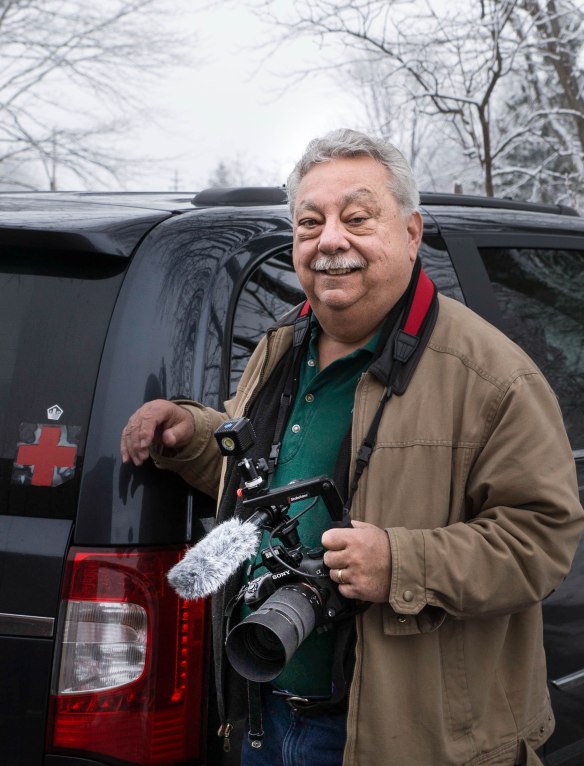
KyleBy: Kyle McPhillips, student at Bay High School

Most of my life, I’ve known right from wrong. I’ve known things I should do, and I definitely have been taught things I shouldn’t. I’ve learned by watching my parents, sister, grandparents, cousins, friends, reading and just hearing stories. I’ve learned how to be a better person by watching and listening to people around me.

I often hear how great my Great-Grandpa Kowalski was, and how great the world would be if we were all like him. He was Papa to my mom and her brothers and sisters, and a hero and best friend, especially to my grandma and my Uncle Andrew. He was in the Army, served in the war, lived his life to serve others, and donated blood any chance he could. Over his lifetime, I was told he gave countless gallons of blood.

The stories about my great-grandpa were in the back of my mind when Bay High had a blood drive. Also, one of my sister’s friends passed away from a rare blood disorder, ITP. These thoughts helped me realize that a few seconds of pain from getting poked by a needle would be worth it to help someone who really needed it. Who knows how many lives he saved over his years of donating blood, or how many people with ITP survived because of a blood donation?

Aside from wanting to do the right thing, I also found out that my blood type is O+, and that this blood type is in high demand. Because I’ve been fortunate to grow up healthy, I realized it’s also my responsibility to donate whenever I can.

Did you know that you can donate blood every 56 days? My first experience went really well. Our school had a blood drive, we all signed up, and it was as simple as missing a class or two and doing a good deed. The volunteer staff made me feel very comfortable. They knew it was my first time, as it was for many others there. After checking my iron level and getting me settled into a chair, they cleaned up the area of my arm, marked a “good vein” and then told me to look away while she inserted the needle. It wasn’t super comfortable, but it also wasn’t horrible either. After breaking my elbow and having stitches in my lip a couple times, this was easy in comparison.

I know there is so much pressure on kids today to do well in school, excel in sports, get good test scores and so much more, but things like the blood drive helped me realize that there’s more to life than many of those things, and that simply being a good person and helping others is most important of all. It’s also nice to know I’m helping someone who doesn’t even know me, and it’s a good feeling to do that and not expect anything in return, except some juice and cookies.

I told myself that 56 days after my first donation I was going to do it again. It’s been almost 70 days, and I haven’t been back because I’ve just been so busy with school activities. But, I can’t make excuses, because donating blood is as important, and maybe more important, than other things I am doing. I know my great-grandpa, who only got to spend three months with me before he died, is smiling knowing that I’m trying to walk in his footsteps.

Prevent and Alleviate: Providing Fire Safety Education to Everyone

You may think that preventing and alleviating human suffering in the face of emergencies – the two actions our mission charges us to do – is a tall order.

With over 4.5 million residents to educate and assist, it can be a little overwhelming.

And yet, when eating an elephant – take one bite at a time.

The first bite: teaching our young community members more about how to keep themselves (and their families) safe before, during and following a disaster.

We are proud to announce that we have hit our annual goal by teaching the pillowcase project, sponsored by Disney, to 2,892 local school-aged children!

The pillowcase project teaches kids about disasters that can happen here in Northeast Ohio, and what they and their families can do to prepare for and respond during an event. Home fire education is the most prevalent piece of this program, as we respond to an average of three home fires across Northeast Ohio each night.

During the program kids are taught about smoke alarms, what to do when a smoke alarm sounds, knowing exit strategies for each room, creating a family meeting spot and so much more.

But this education isn’t just for the children of our community.

We are dedicated to sharing these safety tips with everyone. That’s the second bite of the elephant.

Through Operation Save-A-Life we are helping families learn more about fire safety as well as providing the tools necessary to put that education into practice, should the time come.

As of March, 2016, we have installed over 8,844 smoke alarms in homes throughout Northeast Ohio.

That’s just 1,156 off from the stretch goal we gave ourselves in June, 2015. Our region currently leads the nation in number of smoke alarms installed.

We are very proud of what we have accomplished. And our dedicated work and planning is paying off. We see it in the success stories of families like this one from last summer, and this one from December.

Thank you, from the bottom of our hearts, to the Red Cross workforce who made those numbers happen. Thank you to those who continue to educate, install and provide hope to families and individuals in each of the communities that we serve.

You can eat an elephant – one bite at a time.

Thank you!!

Greater Cleveland Heroes Honored

A psychiatric nurse who puts his life on the line to treat his patients.

A FirstEnergy Meter Reader who used his first aid training to help a severely injured man.

A U. S. Army Colonel who commands a medical unit responsible for working in combat zones.

A Patient Navigator who helps adolescent and young adult patients recover from cancer.

A Coast Guard pilot who rescued a mariner after his sailboat was smashed on the Fairport Harbor break wall.

A Cleveland Police Detective and two Patrol Officers who administered life-saving aid to an injured man.

And a miniature horse who brings comfort and joy to hospitalized children.

The 2016 American Red Cross Greater Cleveland Hero Award winners were honored on Friday, March 11 during a luncheon ceremony at the First Merit Cleveland Convention Center.  More than 400 people helped pay tribute to the heroes.  They heard Regional CEO Mike Parks update Red Cross efforts to prevent and alleviate human suffering in the face of emergencies. And they saw a video featuring the heroes telling their stories.

Sara Shookman, co-anchor of the 6:00 PM and 11:00 PM news on WKYC TV 3 hosted the ceremony.  Channel 3 News covered the event, along with WOIO and Fox 8.

In addition to the hero honorees, Dr. Akram Boutros, President and CEO of The MetroHealth System was presented with the Community Leader Award.

Photo credit: Cal Pusateri/American Red Cross Volunteer

Here are the 2016 Greater Cleveland Heroes:

Thomas Huggins, Visiting Nurse Association

Psychiatric nurse Thomas (Thom) Huggins of the Visiting Nurse Association of Ohio goes above and beyond to help people who are in emotional or mental torment.  Even when they first refuse his help.

Thom visits their homes repeatedly until the patients begin to trust him and to believe him when he tells them that their medication will help, and that their condition is not a sign of weakness.  He knows that if a patient’s mental health and stability improve, the patient’s life will be better and the entire community will benefit.

His courage and compassion have allowed hundreds, if not thousands of individuals to continue their journey to healthy, safe, and independent living.

“To see the spark start to the return to their eyes, that they get it, and to see them feel relief from their symptoms,” says Thom, “What could I ever do that would be better than being a part of that?”

David Bailey, First Energy Corp.

Dave Bailey, a Meter Reader at First Energy, was just finishing up a job at a home in Concord Township when he was approached by another man with a look of horror on his face. The man was a carpenter who was working nearby and had severely injured his hand with a saw. Dave took control of the situation. He recalled the emergency first aid training he received as part of his job.  Dave told the man to keep pressure on the wound to help control the bleeding, and helped keep him calm while they waited for emergency medical personnel to arrive. Dave then activated the emergency lights on his truck to help guide the ambulance crew to their location.

Dave, who is preparing to retire after 15 years with First Energy, is grateful he was able to help a fellow human being in need.

Col. Thomas Dundon, DDS, Louis Stokes Cleveland VA Medical Center

Dr. Thomas Dundon is not only Chief of Dental Services at the Louis Stokes Cleveland VA Medical Center,  he is also a U. S. Army Colonel.  He has twice been deployed to war zones in the Middle East. Dr. Dundon has devoted his entire military and professional career to serving Army Reservists and Veterans, and is currently Commander of the 912th Dental Company.

Dr. Dundon was awarded the distinguished U.S. Army Bronze Star, a medal denoting meritorious achievement or service in a combat zone for his deployment in support of Operation Iraqi Freedom in 2008.  Through his leadership as the Dental Commander for the entire northern region of Iraq, Dr. Dundon helped more than 12,000 coalition forces and civilians receive quality dental care.

In addition to his military deployments, Dr. Dundon has led numerous dental teams on humanitarian missions to impoverished areas throughout the world, improving access to dental care for thousands of people.

Amelia Baffa, UH Rainbow Babies and Children’s Hospital

Adolescents and young adults with cancer can face unique challenges.  They are often caught between pediatric and adult oncology. The medical and social needs of these patients often differ from the needs of infants, younger children and adults.

Amelia Baffa recognizes the challenges these patients face as a Patient Navigator for teen and young adult cancer patients at the Angie Fowler Adolescent and Young Adult Cancer Institute at UH Rainbow Babies and Children’s Hospital.

She is nationally recognized for her efforts to develop fertility preservation programs for this age group.

Prior to her role as an adolescent and young adult (AYA) Patient Navigator, Amelia was a driving force behind the transformation of blood conservation at the hospital. The standards and guidelines she helped create limited unnecessary pediatric blood transfusions.  She then went on to help other children’s hospitals develop and implement similar programs.  The impact of her efforts has been significant across the country.

Harry Ramsey, United States Coast Guard

Winds were whipping up waves on Lake Erie after sunset on October 8th, when a distress call was received: a sailboat was in danger of smashing into the Fairport Harbor break wall. The seas were 6-9 feet with winds exceeding 20 knots, as a Coast Guard response boat, piloted by Boatswain’s Mate Harry Ramsey arrived. The sailboat did indeed hit the break wall and was taking on water. Despite the extremely challenging weather conditions, and the dangerous proximity to the break wall, Petty Officer Ramsey expertly maneuvered the Coast Guard vessel to rescue the boater from his sinking sailboat.  He executed the transfer flawlessly.

The Coast Guard credits Boatswain’s Mate Harry Ramsey’s bravery, professionalism, and dedication for saving the life of the boater, and preserving the lives of his crew.

Detective John Graves, Patrol Officer Theresa Cavett, Patrol Officer Matthew Cavanaugh, Cleveland Division of Police

Police aren’t often called to chase down someone in need of medical attention.  But it happened one night in December 2015, when Detective John Graves was the first on the scene of a serious car crash on Cleveland’s near west side. Witnesses said a bleeding man ran from the crash. Detective Graves spotted him and gave chase on foot, finally apprehending the man in a yard nearby. He had severe arm and leg wounds.  Arriving on the scene, Officer Matthew Cavanaugh applied a tourniquet to the injured leg, utilizing his recent first-aid training. Officer Theresa Cavett used the man’s belt as a tourniquet on his arm, and tried to keep him from going into shock. Emergency Medical personnel then took man to a nearby hospital, where doctors said a bullet had hit the man’s femoral artery, and that he would have died without the officers’ quick and competent medical attention.

Petie the Pony, Victory Gallop Therapeutic Riding School

Petie the Pony has been bringing joy into the lives of children for nearly 20 years.  He visits patients at Rainbow Babies and Children’s Hospital, offering a form of therapy that no doctor or drug can match.  His big brown eyes and his soft muzzle offer warmth and kindness to every child he meets.  He is never impatient, and always finds a way to break through the barrier of pain or sickness to bring joy to children.

Preparing Petie is no easy task.  His handlers Sue Miller, Kim Gustely and Toril Simon of Victory Gallop, a therapeutic horseback riding school, must go through a painstaking procedure to be sure he meets the hospital’s cleanliness standards.  Petie must then negotiate a revolving door and an elevator to access patient rooms.  But the visible joy he brings to a child who hasn’t smiled in weeks is a gift well worth the effort.

Combined Community and Red Cross Response to Brunswick Apartment Fires

Dozens of residents were forced from their homes this week in Brunswick, where two separate apartment building fires broke out within days of each other.  Both fires drew American Red Cross response.

Late Monday night, fire broke out at the Hickory Hill Apartments.  It drove residents from 24 units away from their homes.  More than 60 people were affected.

A four year-old girl died in the fire.  Six others were injured.

The Red Cross set up an area inside Hilkert Hall, on the campus of St. Ambrose Catholic Church nearby, to allow volunteers to assist the affected residents, who were given more than $9,000 collectively in financial assistance.  The money was to be used for lodging, food, clothing, and whatever the residents needed to help get them through the initial hours and days following the disaster.

In addition, neighbors brought clothes, food, household items and cash donations to the church, where the affected residents were invited to sort through the donations and take what they needed.

The Red Cross will provide follow-up assistance, such as referrals to other community agencies and mental health counseling  as needed.

Photo credit: Jim McIntyre/American Red Cross

The second fire in Brunswick occurred early Thursday morning, at the Laurel Hill Apartments, where one unit was destroyed and 11 others were damaged. Assistance totaling at least $3,500 was given to the affected residents.

There were no serious injuries reported.

The Red Cross offers free smoke alarm installation and fire safety information through the Operation Save-A-Life initiative.  You can learn more at redcross.org/neoosal.  

And donations for those affected by disasters big and small can always be made by calling 1-800 RED CROSS, or by logging onto redcross.org, or by sending the words RED CROSS via text message to 90999.

Turn and Test this weekend – SHARE THIS MESSAGE!

Daylight Saving Time occurs at 2:00 a.m. Sunday morning, March 13, and the Red Cross wants to remind everyone to TURN AND TEST  – turn your clocks ahead one hour and test your smoke alarms. If someone’s home is lacking smoke alarms visit our Operations Save-A-Life page to request a free smoke alarm installation. Residents should install smoke alarms on every level of the home, particularly inside bedrooms and outside sleeping areas. The alarms should be tested every month and the batteries replaced at least once a year, or according to the alarm manufacturer’s instructions.

Every household should develop a fire escape plan and practice it several times a year and at different times of the day. The plan should include two ways to get out of every room and a place to meet outside. Consider escape ladders for sleeping areas or homes with two stories or more.

Visit www.redcross.org/neoosal  and click on your county of residence to find out more about how to protect yourself and your loved ones from fire. Or, help your community by volunteering your time or making a donation today to Red Cross Disaster Relief by visiting redcross.org, calling 1-800-RED CROSS or texting the word REDCROSS to 90999 to make a $10 donation. Donations to Disaster Relief will be used to prepare for, respond to and help people recover from disasters big and small.

20th Annual Acts of Courage event in Akron a success!

We are so pleased to be able to honor those in our community who have acted courageously to save the life of another. Each of the stories we have presented at the annual Red Cross Acts of Courage in Summit, Portage, and Medina Counties over the past twenty years have inspired so many people to step up and do the same.

We continue to be amazed by these people.

This year the Red Cross presented the Acts of Courage award to ten individuals.  Whether saving a woman from a home fire, pulling a man from the wreckage of a car accident or performing an abdominal thrust to save a classmate, each of these honorees are so deserving of the recognition.

Here are their stories:

Colin Bues was recognized for performing abdominal thrusts to save the life of a classmate.

The self-described class clown, 9-year-old Weston Bauer was throwing cheese puffs into the air and catching them in his mouth during a classmate’s birthday party. One of these got lodged in his throat. Weston couldn’t breathe. He motioned that he was choking, but the other children thought he joking. Colin Bues, also 9-years-old, knew something was wrong. He ran to Weston and performed a quick abdominal thrust, the kind he had seen on a safety poster in the lunchroom at school. The puff went flying out of Weston’s mouth.

After confirming that Weston was okay, Colin threw the bag of cheese puffs in the trash. He was very pleased that he had helped his friend, but didn’t want it to happen again.

Edward Kocsis Jr. was recognized for saving a man following a car crash.

As Edward (Ed) Kocsis, Jr. and his fiancé were sitting at a red light, he noticed a car coming over the hill. It seemed like the driver was intent on rear-ending Ed, but at the last moment erratically pulled away. As the car drove past, Ed could see that the other driver was slumped over. The vehicle blew out a telephone pole and rolled.

“You see someone in trouble, and it’s just natural,” said Ed of his next move. “When you see something like that you don’t think, you just act.”

The driver side door was crushed, and through the window he could see that the driver’s head was twisted. Ed smelled fluid leaking on the hot engine. Carefully, he climbed in and pulled the bloody man out of the smoking car. Ed sat with him, cradling his head until first responders appeared.

Officer Brandon Bridgewater was recognized for saving multiple families and carrying a child from an apartment fire.

Three days into his career as a full-time Windham Police Officer, Brandon Bridgewater was first on the scene of an apartment building in flames. Running through the residence, he pounded on doors to wake residents. At one apartment, a startled mother and small child turned back for another child who was upstairs. Officer Bridgewater ran into the smoke filled apartment and carried the second child out into the cold night.

As they watched the flames, Officer Bridgewater kept the numerous, displaced families warm by bringing coffee from a nearby convenience store and letting the young and elderly wait in his cruiser until the Red Cross was on the scene to assist them.

Carolyn Hanson, and Kristin Dowling were recognized for performing CPR on a neighbor who had collapsed.

It began as a very unusual day for Carolyn Hanson. She had woken up with a backache on the morning of Dec. 30, 2014. When her husband suggested that they take a walk to work out the kinks on the nearby City of Stow Hike and Bike trail, she decided to take him up on it. Walking on the trail was something they did regularly, though not usually at that time.

On their way they met up with David Dluzyn, a neighbor who had just finished his morning run. As they were talking, David stopped suddenly and fell backwards – smack – on to the pavement. The couple called 911, and Carolyn began CPR. Neighbors began to come out to see what was happening. Carolyn, not knowing anything about David except for his name and that he lived somewhere close by, instructed one to look in David’s shoe where he had previously mentioned that he kept identifying information. After locating the slip of paper, the neighbor ran home to get his daughter, Kristin Dowling, who was also trained in CPR.

Kristen, who had received Red Cross training as a lifeguard, and Carolyn began to trade off doing compressions until the paramedics arrived.

David is recovering and continues to run on the trail.


Kizzy Spaulding was recognized for rescuing a woman from her burning home.

“You notice things,” said Kizzy Spaulding, an Akron-area postal worker. “Clients start to become family.”

As Kizzy walked her East Akron mail route, an unusual smell permeated the neighborhood. She noticed that one of her clients was not out working in her yard as was her daily routine. Kizzy sensed that something wasn’t right. She doubled-back and opened the client’s mail slot. She glanced through the small area and noticed the smell was coming from the home. She could see the elderly client holding her head and laying on a couch inside.

Kizzy began to call to the woman. She seemed dazed and did not respond. Fearing for her client, Kizzy pushed open the door and carried the slight woman outside. She called 911 before she returned to the house and doused the smoking stove.

Once first responders were on the scene, Kizzy picked up her mail pouch and returned to her route.

Scott Nelson and Bob Moore were recognized saving a man who was drowning in the freezing waters of the Ohio and Erie Canal.

It was well below freezing on January 9, 2015. Bob Moore and Scott Nelson were waiting for a car repair to be completed, and decided to find some place close to eat. They found a small establishment right on the Ohio & Erie Canal.

Inside they chatted with the owner, Stephen Risner, and made friends with his dog, Sam.

Shortly after ordering their food, a woman came into the lounge shouting that there was a man thrashing in the frozen canal. Scott and Bob ran out to see what was going on and found Sam, wet and whimpering, wandering the shores of the canal and barking for his owner. Stephen had fallen in while trying to rescue Sam from the water.

Scott waded into the water, while Bob retrieved a long extension cord from the car. After tossing the cord, the two were finally able to pull Stephen from the icy water.  First responders arrived on the scene and helped Stephen up the embankment and treated Scott, whose clothes were wet and cold.

Sam was put in a warm car.

Ashley Feldman was recognized for saving man who was had fallen outdoors during the polar vortex.

On one of the coldest mornings of 2015, Ashley Feldman was on her way to her job as a receptionist when she noticed something in the open field near the dog park at Liberty Park. The object struck her as odd, so she stopped to investigate.

It turned out to be an elderly man who had gone to the park to let his dog run. He had lost his footing in the deep snow and, having recently had replacement surgery in both knees, was unable to pull himself up.

Despite not being dressed for the frigid temperatures, Ashley ran to him. As she tried to provide him some warmth, he confided that he had been laying there for 45 minutes.

Kelli Chronister was recognized for performing CPR on a fellow bike rider during the Sweet Corn Challenge.

Kelli Chronister

In the July Sweet Corn Challenge bike ride, Kelli Chronister was riding behind a man who fell off his bike in the middle of the road at mile 22 of the 25 mile ride. She recognized a full-arrest heart attack and immediately started CPR. She continued for several minutes and as other cyclists and the police got to the scene, they took turns administering the CPR. When the emergency crews arrived they administered the defibrillator. The 52-year-old victim later learned that he had a serious heart condition that required surgery. The emergency people said that without that immediate help given by Kelli and others he would have died. Kellie teaches respiratory therapy at UA.

*   *   *   *   *

To commemorate twenty years of celebrating acts of heroism, we launched a CrowdRise campaign at the event to encourage community members to #GetAlarmed and be a hero in our community by supporting our smoke alarms initiative, Operation Save-A-Life.  Through donations given at the event we raised $2,015 which will help us install smoke alarms in nearly 67 homes! If you wish to donate, visit bit.ly/GetAlarmedSPM. We would also encourage you to share the message with your friends and family. Together we can help save lives.

This year’s event raised nearly $140,000. Proceeds from last night will assist us in providing Red Cross services throughout Summit, Portage, and Medina Counties.

rusleorach.jpg

In addition to recognizing the heroism of area residents at the event, we presented the H. Peter Burg Award to Leonard Foster, a community member who has been selfless in service to the community by demonstrating a lifelong commitment to humanitarian causes, charitable organizations and the vitality and welfare of the local community.

Smoke Alarms Save Lorain Family, Including Several Children

Photo credit: Jim McIntyre/American Red Cross

Operation Save-A-Life Lives Up To Its Name x 12

10 young children and two adults escaped a home fire in Lorain, Ohio on December 26, 2015, fleeing from the home on West 17th Street after family members heard the shrill sound of smoke alarms.

The alarms had been installed just two-weeks earlier by Red Cross volunteers and members of the Lorain Fire Department during a Fire Safety Walk.  Residents in the targeted neighborhood were offered valuable fire safety information along with free smoke alarms.  It’s part of the Red Cross initiative to reduce the number of deaths from home fires by 25%.

The smoke alarms in the W. 17th Street home sounded close to 11:00 PM.  Although most of the children were still awake, no one noticed the smoke coming from the heating ducts until they heard the alarms.  Nicole King, mother of the children, credited the alarms for alerting her family, and recalled the discussion about having an escape plan.  So did nine-year old Nigeria, who helped get his younger siblings out of the house and away from the danger, remembering to “get low and go.”   Nicole’s mother was also able to escape unharmed.

Once all family members were accounted for outside the house, Nicole called 9-1-1, and firefighters were able to quickly extinguish the fire, which had started in the basement furnace.  While damage to the home was minimal, the furnace was out of commission, and the Red Cross Disaster Team responded by providing the family with funding to pay for hotel rooms.

The 12 lives saved in Lorain are among the 69 lives credited to the Red Cross national Home Fire Campaign, launched in 2014 and modeled after Operation Save-A-Life, an initiative between the Greater Cleveland Chapter of the Red Cross and the city of Cleveland Division of Fire.  Since its inception in 1992, more than 160,000 smoke alarms have been installed in homes in the city of Cleveland.

The 2 smoke alarms installed in the home on West 17th Street in Lorain last December are among more than 8,400 alarms that have been installed by the Red Cross and its community partners in the Northeast Ohio Region since July 1st, 2015.

There were no working smoke alarms in the home prior to that.

If you would like a home fire safety inspection, valuable fire safety information and free smoke alarms installed in your home, visit the Northeast Ohio Region Operation Save-A-Life website, and find the link to your county.  Or click here for more information on how to volunteer, to help make your community safer.

Update: Kincaids Surpass 1,100 Smoke Alarms Installed

standing1

Earlene and Dick Kincaid with Heidi, their rescue dog                                                                               Photo credit: Jim  McIntyre/American Red Cross

Tuscarawas County Couple Help Create Safer Neighborhoods

Dick and Earlene Kincaid have been American Red Cross volunteers for nearly eight years. They have responded to hurricanes, tornadoes and floods in Texas, Massachusetts, Tennessee, Illinois, New York, New Jersey and Alabama as members of the Red Cross National Disaster Action Team, providing hot meals and comfort to thousands of people made suddenly homeless by extreme weather. Their most recent deployment was to Flint, Michigan in response to the water crisis there.

But the work they’ve done in their own backyard has made the biggest impact in the lives of their neighbors.

The Kincaids have installed more than 1,100 smoke alarms in homes in the Stark County and Muskingum Lakes Chapter since October 2015.  In a previous article, posted last December, it was noted that they had installed 750 alarms in fewer than three months. With more than 1,100 installations now to their credit, Dick and Earlene installed more than half the total annual number of smoke alarms for the entire Chapter, in fewer than six months!

Dick wields the drill and installs the alarms while Earlene provides valuable fire safety information to residents. She said, “Most of these people don’t have working smoke alarms, or they don’t have any at all.”   The Kincaids work mostly on weekends, when people are more likely to be home. They spend about 15 minutes in each home, installing alarms on each floor.  And they average about 100 installations a week.

Not bad for a couple who survived a motorcycle crash in 2007.

“I flew like a bird, but my landing sucked,” Dick says with a grin.  Earlene says she rolled better, suffering only a broken shoulder and some scrapes. Dick says he spent 18 days at the Cleveland Clinic, undergoing 5 surgeries to save his leg, and spent another 9 months in a hospital bed in the living room of their home in Magnolia, Ohio.

Dick retired from Timken as a steelworker that same year. Once he got back on his feet, Dick and Earlene Kincaid began their careers as Red Cross volunteers, responding to national disasters and local home fires. But their Operation Save-A-Life efforts are taking up most of their volunteer time now.

“We’ve had people who have had three little kids in a trailer home, and no smoke alarms.  They burn so fast,” Dick says.  “If we can save any lives at all, that’s good enough.”

Carbon Monoxide Kills, Alarms Save Lives


CO

Photo credit: Cal Pusateri/American Red Cross Volunteer

Winter has finally decided to show up. With it has come deep snow in most areas of our region, and cold temperatures.

Given the increase in the number of carbon monoxide emergencies during cold snaps (like in this story), we want to remind you to exercise caution when heating your home.

Carbon monoxide is an invisible, odorless and silent killer that, nationally, claims hundreds of lives each year. A threat year round, carbon monoxide poisoning tends to increase when storms and power outages force people to turn to unsafe alternative heat sources such as fuel-burning appliances, gas generators, camp stoves and charcoal grills and use them in confined spaces.

The best way to keep your family safe during this time is to install carbon monoxide alarms and learn how to reduce the risk of carbon monoxide poisoning.

“Every home should have at least one carbon monoxide alarm in addition to their smoke alarms,” said Tim O’Toole, Regional Disaster Officer of the Red Cross of Northeast Ohio. “If there is only one carbon monoxide detector, it should be in or near sleeping areas. Both carbon monoxide and smoke alarms are relatively inexpensive and easy-to-maintain devices that have been proven to save lives. There are even models that feature a combined smoke and carbon monoxide alarm.”

Follow these safety recommendations:

  • Furnaces and other natural gas fired appliances should be serviced once a year.
  • Install carbon monoxide alarms in central locations on every level of your home and outside sleeping areas (avoid corners where air does not circulate). Test the alarm every month.
  • Have heating systems (including chimneys and vents) inspected and serviced annually, checking for blockages, corrosion, and partial and complete disconnections.
  • Never use a generator, grill or camp stove inside a home, garage or basement.
  • Do not use gas appliances such as ranges, ovens or clothes dryers to heat your home.
  • Know the symptoms of carbon monoxide poisoning: headache, dizziness, weakness, nausea, vomiting, sleepiness, and confusion. If you suspect carbon monoxide poisoning, move quickly to a fresh air location, and then call 9-1-1.
  • Treat the alarm signal as a real emergency each time. If the alarm sounds and you are not experiencing any symptoms described above, press the reset button. If the alarm continues to sound, call the fire department.

Download the Red Cross First Aid App at redcross.org/apps to get access to life-saving information on what to do for common, everyday first aid emergencies.

For more Red Cross fire safety and preparedness information, visit redcross.org/homefires.

Two Hands, One Heart

Thirty-eight members of the Cleveland Sight Center’s Winners Club attended a Citizen Cardiopulmonary Resuscitation (CPR) course taught by Red Cross volunteers and staff members on Tuesday, February 9. The club is comprised of Sight Center clients who meet monthly for an activity or speaker.

Photo credit: Mary Williams/American Red Cross Staff Member

The Red Cross has a goal of having at least one person per household that can perform CPR, should an emergency situation arise. Statistics show that nearly 85% of cardiac arrest cases happen at home. Most people who survive a cardiac emergency are helped by someone performing CPR.

Most bystanders to a cardiac arrest will site one of two reasons why they didn’t help: they didn’t know how to perform CPR, or they were concerned about performing mouth-to-mouth.

The Citizen CPR course taught by the Red Cross is  hands only CPR. Because it can help save lives, many health organizations advocate performing chest compression even without breathing assistance.

Hands only CPR is very easy to learn. If you have 2 minutes and 13 seconds, right now, you can learn by watching the video below or clicking on this link to view the YouTube video:

To see a list of first aid and CPR courses in your area, visit www.redcross.org/take-a-class.