Patients counting on blood donors in the New Year

By Akash Mallady, American Red Cross volunteer

As we make our way through the first couple of weeks of the New Year, our “To Do” lists are no doubt full, maybe some with a few things that we should’ve taken care of in 2025. No judgements – we all have tasks we need to catch up on.

But when we’re making those lists and catching up on our tasks, are we keeping in mind the people who might need us the most?

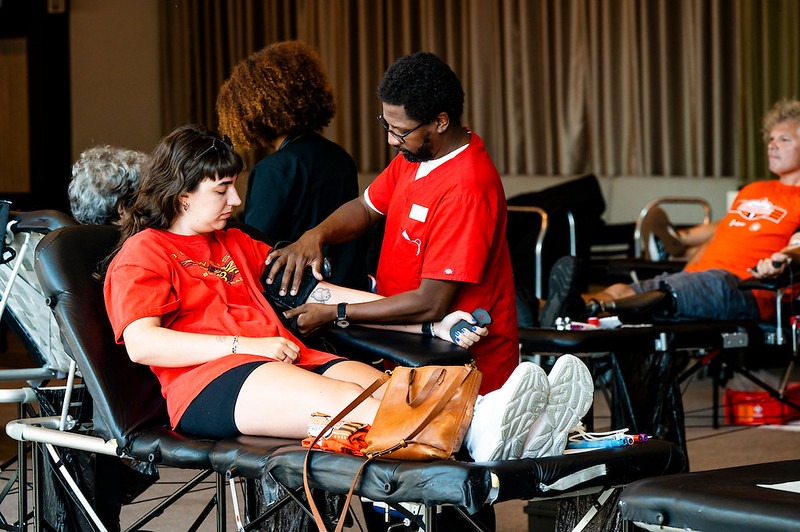
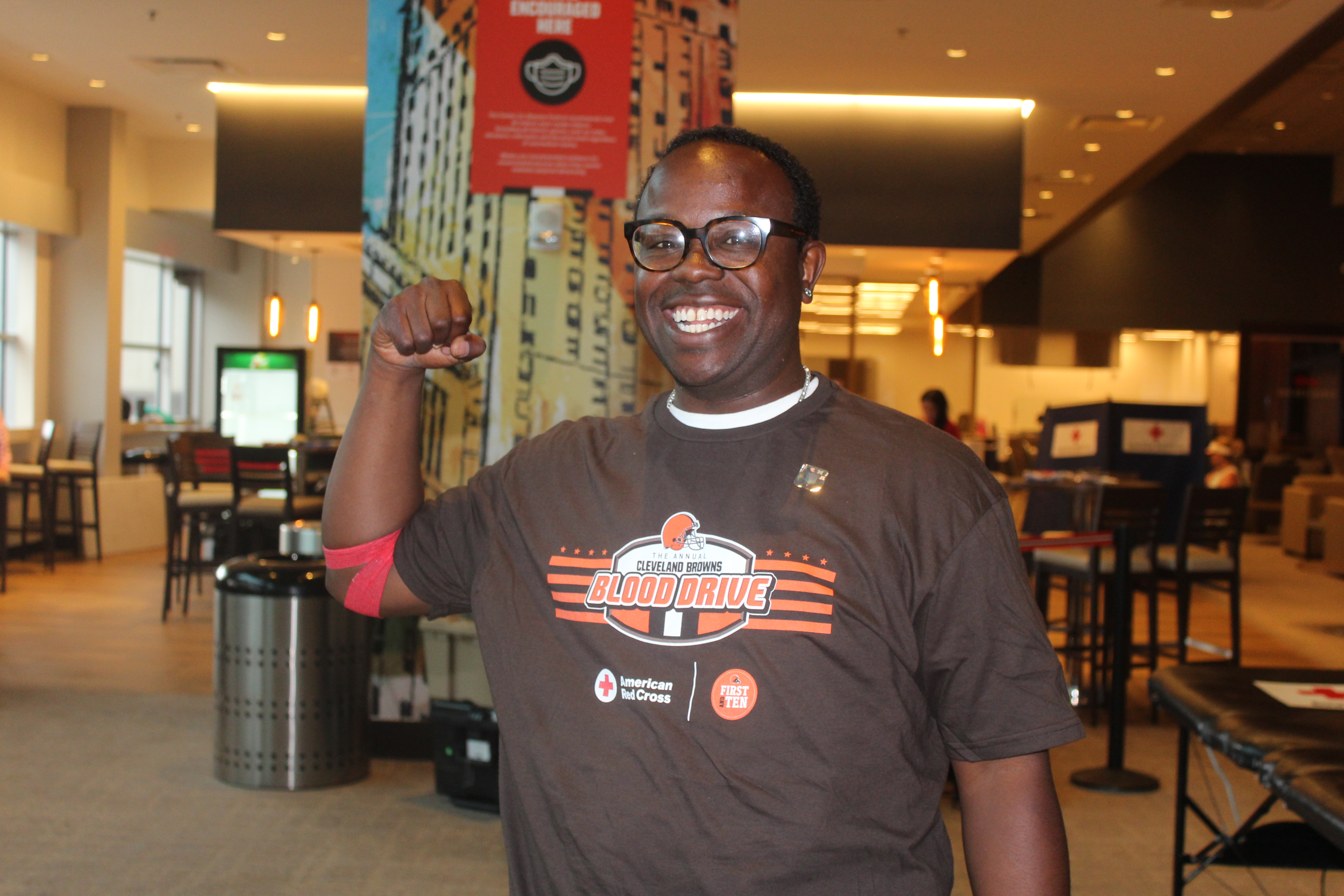
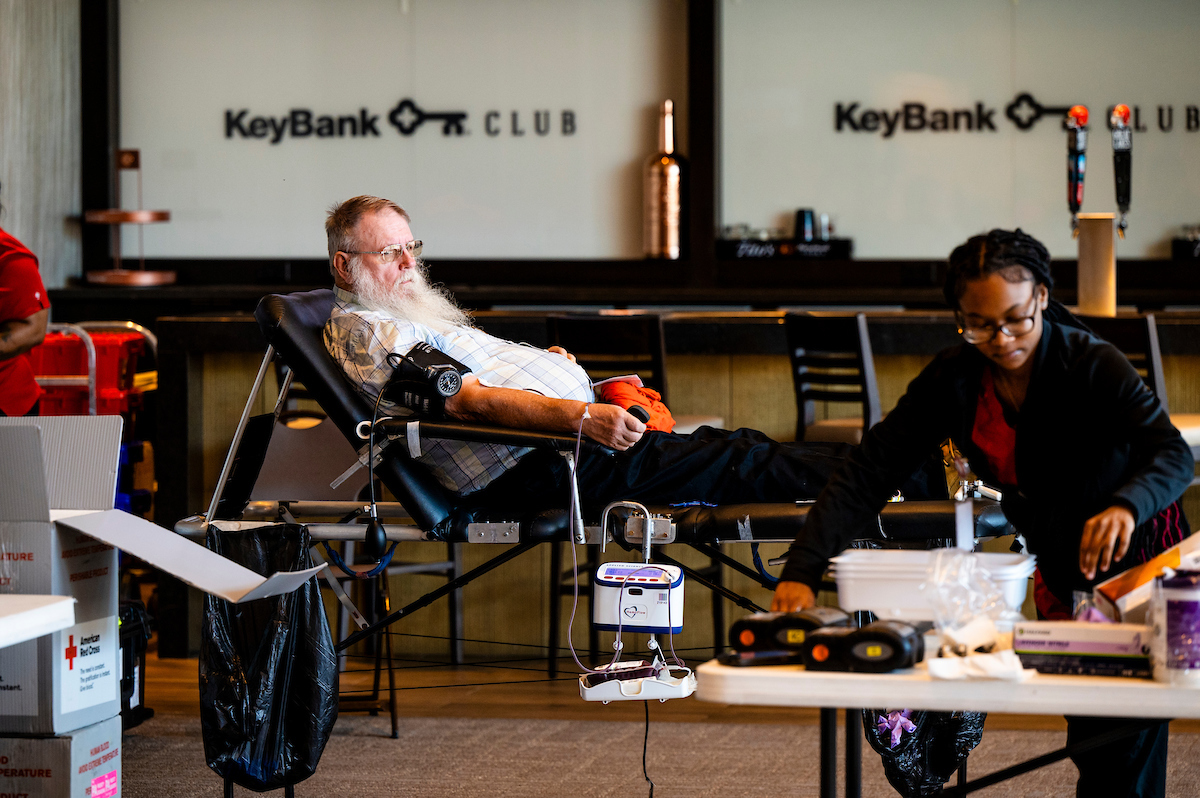
Browns Give Back hosted our annual First and Ten Blood Drive in the KeyBank Club of Cleveland Browns Stadium in partnership with the American Red Cross on July 27, 2024.

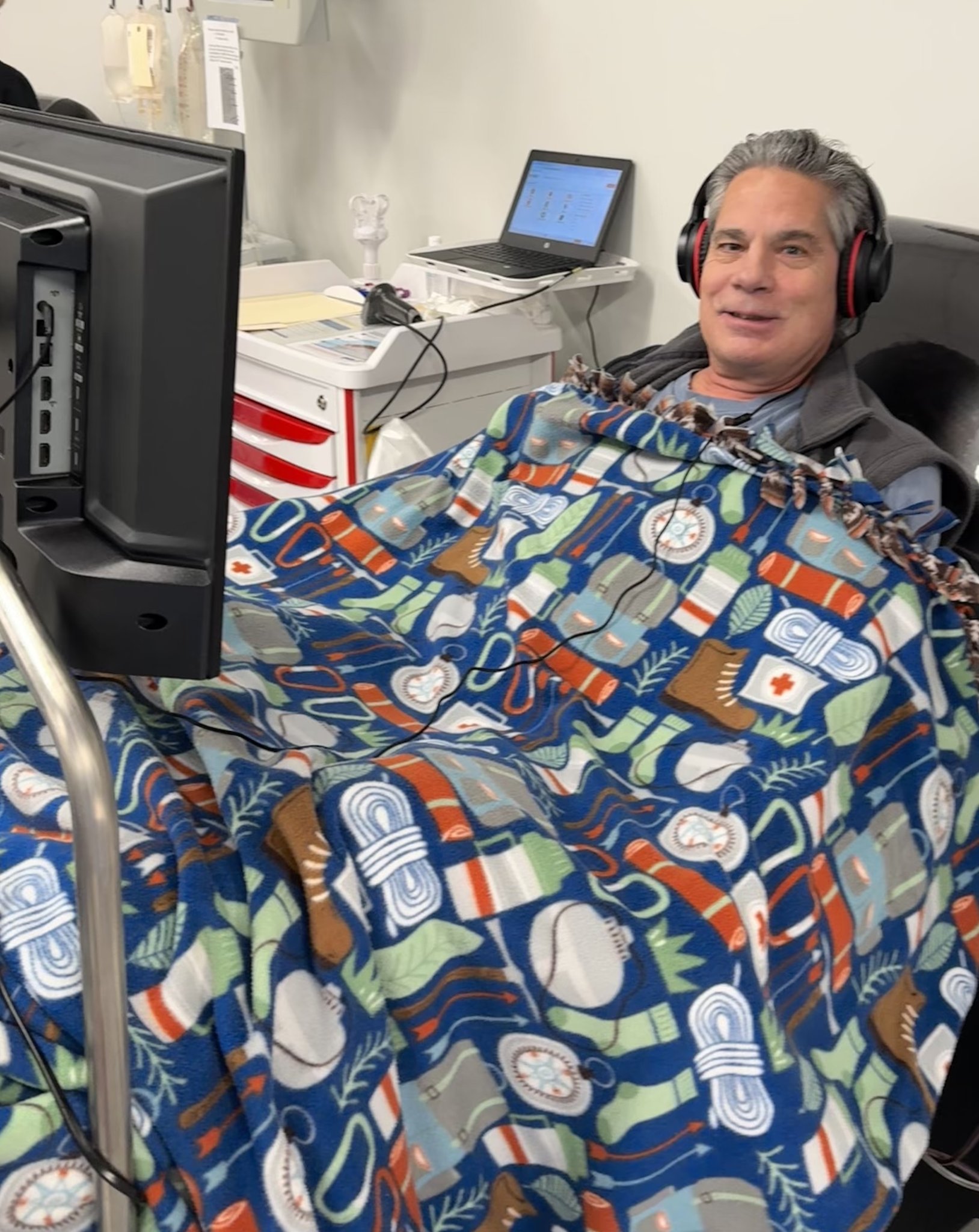
Coming off the holiday season, the American Red Cross is teetering on a blood shortage. For the better part of the past two months, we’ve been focusing on time with family and friends, gathering around the dinner tables and the Christmas trees, sharing in all the seasonal joy. For patients who rely on lifesaving blood transfusions, their holidays were likely a little bit different – spent more in hospital beds than around holiday tables.

A blood shortage isn’t just felt on a large scale, but also on a deeply personal level. Patients with conditions such as sickle cell disease, cancer, or chronic anemia depend on regular transfusions. These winter months can delay travel plans or slow down our routines, but they don’t delay clinic visits for patients who rely on these transfusions. Their need is constant, just like the need for blood.  

As we settle into 2026, the Red Cross is encouraging donors to schedule a blood donation appointment to ensure the blood supply remains stocked. You can make your appointment by:

1. using the Red Cross Blood Donor App
2. visiting RedCrossBlood.org
3. or calling 1-800-RED-CROSS

And, if you donate blood between now and the end of January, you are automatically entered for a chance to win a trip for two to Super Bowl LX in the San Francisco Bay Area, as our thank you for helping during the critical post-holiday time!

The winner and guest will get to enjoy Super Bowl LX in Santa Clara, CA, access to day-of in-stadium pregame activities, tickets to the official Super Bowl Experience, round-trip airfare, three-night hotel accommodations (Feb. 6-9, 2026), plus a $1,000 gift cardfor expenses.Click here for more details! 

The Red Cross and the Johnstown Flood 

A family story of survival 

By Liz Aslakson, American Red Cross volunteer

I’ve recently discovered a connection between my family and the Red Cross going back to the Johnstown Flood of May 31,1889 when Clara Barton’s Red Cross became a national life-saving organization whose efforts helped my great grandpa’s survival.  

Clara Barton, Library of Congress

I thought my ties with the Red Cross began when I became a lifeguard at 15. My service continued as a young spouse volunteering at an Army clinic on an infantry base in Vilseck, Germany before becoming a part of the Northern Ohio Chapter when my husband retired.  

However, the personal link goes back further and has a more profound impact than I realized. Now that we’ve moved back to my childhood hometown, I’ve had more opportunities to research my family’s roots, especially after inheriting ancestral documents, including a memoir 

The family account written by my Great Uncle Andrew described life in Johnstown Pennsylvania at the turn of the 20th century and focused quite a bit on his dad, my Great Grandpa Stefan Furst. 

Though I heard family stories as a kid, I had vague notions of the immigrant experience during the turn of the 20th century when relatives from all sides of my family left Czechoslovakia.  

Like many migrants from Eastern Europe at the time, they first settled in the Appalachian Mountains outside of Pittsburg in Fayette and Cambria Counties. They worked in the coal mines before moving to Cleveland for better pay and working conditions in factories.  

My dad also told us kids his grandpa survived the Johnstown Flood and that his mother, Margaret, grew up under the constant threat of a disaster, as there were more floods after 1889.  

The Furst Family Johnstown, PA Stephen and Elizabeth sitting middle, Maragret and Andrew standing left

In my continued research online, I found out that my great grandpa arrived from Slovakia in 1884, at age seven. However, I couldn’t find records of parents or siblings that might have come with him. So, this summer I went to Appalachia using the paper trail left to me to uncover more information about where my family first lived in America. 

My first stop took me to Uniontown’s history room in Fayette County where a researcher pointed out a chair that Clara Barton had used when helping displaced people after the Johnstown Flood in neighboring Cambria County. Historic rains and the breaking of the poorly maintained South Fork Fishing Dam destroyed the city of 30,000, taking more than 2,200 lives. 

The “Angel of the Battlefield” from 25 years earlier during the Civil War was in her D.C. office when she learned of the horrific tragedy. At 67 years old, Clara Barton quickly gathered a team of 50 nurses and doctors, and with a load of supplies, arrived in Johnstown five days later. 

The Red Cross remained in Johnstown for six months, providing supplies, temporary shelter, medical care, reuniting families, and finding homes for orphans.  

My great grandpa was twelve at the time of the flood. If any other family members were with him, there are no indications of survival –just the account of his dad written by Andrew. 

In addition, not only were records destroyed, but in the wake of devastation, “journalists” falsely accused immigrants of looting which resulted in vigilante violence and lynchings. From resources I read like David McCullagh’s book, The Johnstown Flooddetailing the immigrant experience in the flood’s aftermath, I imagine my own remaining relative laid low.  

Nevertheless, my great grandpa did make it out alive due to the Red Cross and other relief efforts assisting anyone in need, regardless of their ethnic derivation.  

As I stood in the Uniontown library this summer, looking at the chair, it dawned on me that my great grandpa likely stood in front of Clara Barton as she sat on that simple wooden seat, providing him food and shelter as she did for 1000’s of other destitute people after that flood. 

In the following years, my great grandpa lived in a neighboring town. But once he turned 18, he moved back to Johnstown when he met his wife, Elizabeth, and they went on to have six kids. 

Additionally, though he worked in the coal mines for a few years, the citizens of Cambria County elected my great grandpa constable, often times a lifetime position. He then worked for his community until his sudden death in 1916 at the age of 38.  

A couple of years later, my Great Grandma Elizabeth remarried a widower and soon after they moved to Cleveland’s Slavic Village with their children. My Grandma Margaret and Great Uncle Andrew also went on to have their own families, with Andrew living to 100 years old. 

Although my great grandpa had a short life, he lived through tremendous change and survived devastation with help from people like Clara Barton. 

In sum, though my writing involves historical research, this family project has further opened my eyes to the significance of details and numbers when reading old documents, as well as the relief efforts associated with major tragedies.  

I not only understand how the Johnstown Flood became the impetus of the Red Cross becoming an international relief organization but have gained a deeper gratitude for all individual relief efforts 136 years ago as they ensured my family’s survival. 

I also feel more fortunate to be part of the organization that saved my great grandpa. From working in that little clinic in Germany as a new Army wife to my hometown of Cleveland as part of the Service to Armed Forces, I’m proud to be a Red Cross volunteer.  

Red Cross volunteers – true humanitarians

By Jim McIntyre, American Red Cross volunteer

“The best way to find yourself is to lose yourself in the service of others.”    

That sentiment of Mahatma Ghandi is fitting recognition for World Humanitarian Day, celebrated each year on August 19. American Red Cross volunteers are repeatedly in the service of others. 

Jim McIntrye (right) in Ft. Meyers, Florida, with another Red Cross volunteer from Northern Ohio

From organizing drives to collect lifesaving blood to assisting families who have been chased from their homes by fire, volunteers are the lifeblood of the Red Cross – the world’s premier humanitarian organization.   

I have witnessed the kindness and compassion of countless Red Cross volunteers in the past ten years, and not only in the Northern Ohio Region. Thousands of Red Cross volunteers deploy to areas across the country after disaster strikes, to help provide shelter, meals, and emotional support to people during their darkest hours. 

In 2016, in the wake of the devastation caused by Hurricane Matthew in North Carolina, I attended a birthday party arranged by Red Cross volunteers for a child whose family was taking refuge in a shelter. A year later, I accompanied Red Cross volunteers in Texas who were bringing warm meals and drinking water to residents at their homes following the flooding caused by Hurricane Harvey. I witnessed Red Cross spiritual care volunteers comfort folks following a mass shooting in Dayton, Ohio in 2019. In 2022, I watched Red Cross volunteers maneuver a disaster response truck through the rubble created by Hurricane Ian at Ft. Myers Beach to bring residents help.  And two years ago, I saw Red Cross volunteers effectively collaborate with aid workers from several other agencies to help residents of Lahaina, Maui in the aftermath of deadly wildfires. 

September 4, 2023. Yankeetown, Florida.
Red Cross disaster responder Mahogany Coward hands relief supplies to Joseph Hill of Yankeetown, Florida.
Photo by Scott Dalton/American Red Cross

True humanitarians. 

“Everyone can be a humanitarian. All it takes is one act to help someone else.” — Valerie Amos, former United Nations Under-Secretary-General for Humanitarian Affairs. 

If you have an interest in obtaining the skills needed to help people affected by large disasters across the country, visit the Red Cross website to learn more.  And if helping neighbors closer to home appeals to your humanitarianism, visit this page.  

It’s never to late to become a humanitarian. Author C.S. Lewis once said, “You can’t go back and change the beginning, but you can start where you are and change the ending.”  

Mike’s Thanksgiving message

By Mike Parks, Rear Admiral (Retired) U.S. Coast Guard
Regional CEO American Red Cross of Northern Ohio

Cynthia and Mike Parks

Friends and family of the American Red Cross of Northern Ohio—greetings!!!  This week our nation will celebrate Thanksgiving Day.  Throughout the years, Thanksgiving has always been one of my favorite holidays—family & friends, food & football, feasting & fellowship–what’s not to like (especially if you’re alliterative)?? 

As I’ve enjoyed more Thanksgivings over the years, I’ve come to truly appreciate the real meaning of this national holiday filled with so many traditions—that is giving thanks and sharing gratitude!!  We have so much to for which to be grateful!! 

I hope everyone can take some time during this holiday week to reflect on our blessings and share our gratitude.  Every day so many people rely on the support and services provided by the American Red Cross.  For those who will be continuing to serve our communities over the holiday—thank you for your sacrifice!! 

So, wherever this Thanksgiving holiday finds you, please know I’m grateful for you!  I wish you and your loved ones a most wonderfully memorable and Happy Thanksgiving!!  Please stay safe and well—enjoy this special time!!  Best wishes… Mike

Posted by Ryan Lang, Red Cross board member and volunteer

Northern Ohio Red Crossers deliver relief where hurricane survivors need it

Husband and wife team-up to respond to storms far from home

By EILENE E. GUY, American Red Cross volunteer

Jeff and Laura Mann were on what you would call a “mission of mercy” when I reached them by phone, headed for the hospital in flood-ravaged Asheville, N.C., to pick up specialized medical equipment for a baby in an American Red Cross shelter in Burnsville, another hour away.

Jeff Mann, inside the Red Cross disaster vehicle, hands supplies to wife Laura in Burnsville, North Carolina

The couple are what the Red Cross calls a “fulfillment team.” Jeff says they’re “a store on wheels.”

They deliver consumables like toilet tissue, paper towels and baby formula as well as essentials like pillows, blankets, and special need items to shelters in northwestern North Carolina, where the number of storm refugees continued to grow.

When we talked, a week after Hurricane Helene swept from the Gulf to the East Coast, the Manns were still seeing helicopters – some ferrying evacuees to shelters and others airlifting food and water to isolated communities.

Jeff, a retired YMCA executive director, is a veteran disaster responder. “This is my 15th, 16th (response) – I don’t know,” he told me with a chuckle. He’s served in evacuation shelters, warehouses, supply units. “I’m quite a rover… wherever I’m needed.”

Jeff Mann was interviewed by news reporters at the Akron Canton Airport before his deployment to Guam in response to Typhoon Mawar 2023

Laura, on the other hand, is on her first deployment. She’s been on the board of the Heartland, Stark, Muskingum Lakes chapter of the Red Cross for years and taken lots of disaster response training. But this is the first time her work as a CPA has allowed her to take off for two weeks.

She’s excited to be helping bring relief to a region devastated by hurricane winds and unprecedented flooding. It’s a plus that she’s working with her husband.

“Laura and I are bonding,” Jeff offered. “It’s our 39th anniversary this week,” Laura explained. “This is a good marriage test.” They both laughed comfortably.

The couple, who call Louisville, Ohio, in Stark County home, are finding conditions in mountainous North Carolina challenging. Many roads, even if passable, are one lane where downed trees have been hacked back just enough so Jeff can squeeze his box truck through. Cell phone service and GPS are spotty.

“We were headed for the hospital in Asheville the first time and GPS died at the edge of town,” Laura recalled. “There were no streetlights and we didn’t have a clue. We just had to figure it out.”

Laura Mann at a Red Cross warehouse

A typical day has them at a Red Cross warehouse in Greenville, S.C., at 7 in the morning to load up, with a list of special orders to be picked up at local big-box stores. Then they head north to Asheville and on to shelters as far as Boone, another two hours away.

“We go up one side of the (Blue Ridge) mountains and back down the other,” Laura said. They were still in the truck, on the way back to Greenville, when we chatted at 9 o’clock in the evening last week.   

The Manns are among the more than 2,000 trained Red Cross disaster responders providing shelter, food, emotional support, replacement medical devices and prescriptions, and other urgent needs to storm victims across five states. At the same time, some 200 Red Cross reunification staff have fielded thousands of requests for help locating loved ones.

Red Crossers and our partners have given out nearly 480,000 meals and snacks in shelters and from mobile feeding trucks. With partner organizations, they’ve provided more than 35,000 overnight stays.

None of this disaster response, which will go on for months as the Red Cross helps individuals and families plan the next steps in their recovery, would be possible without the generosity of the American people. Please consider making a financial donation by going to redcross.org, calling 1-800-RED-CROSS.

If you’d like to get trained and become part of the hands-on relief effort, as Jeff and Laura Mann are doing, visit NEOvolunteer@redcross.org or call 216-431-3328 to learn about all the different roles that might interest you.

Being prepared for extreme weather

Hurricanes aren’t the only disaster to prepare for

By Eilene Guy, American Red Cross volunteer

Here we are on August 1st, the beginning of high season for hurricanes.

Are you ready?

I know, I know. Here in northern Ohio, we’re lucky: We don’t suffer the way they do on the Gulf and Atlantic coasts, where 2024 has already started to be a memorable hurricane year.

But that’s not to say we’re immune from summer/fall disasters: tornadoes, flash flooding, even human-caused emergencies.

So, it’s a good time to review American Red Cross preparedness advice:

  • Build a kit of things you’ll need to grab if the unexpected occurs;
  • Have an evacuation plan that you’ve reviewed with your family recently;
  • Stay informed about your community’s risks and how local officials will alert you with important information. Plus, download the free Red Cross Emergency app for weather alerts and more safety tips.

But there’s one more thing you can do right now: Get ready to be a disaster responder.

Joe Guilfoyle of Cleveland did that: After he retired from teaching and coaching, “I wanted to do something that had meaning, purpose. That would help people.” So, he linked up with the Red Cross.

“Most of my training was virtual,” he said. “The (training) programs were spot on,” so when Hurricane Ian hit Florida in September 2022, he felt ready to go.

“Ian was very destructive,” he said. “People lost everything. To see so much devastation was heartbreaking… It’s a great thing to be involved with helping people.

“One other thing I didn’t expect: Working with the other volunteers. You meet some tremendous people.”

“Today, the Red Cross is responding to more large disasters – almost twice as many – than we did a decade ago,” said Jessi Caruso, who manages disaster volunteer engagement across the northern Ohio region. “With natural disasters coming at us one right after another, we need more volunteers trained and ready to support families who are suddenly in need.

“We’re committed to being sure that volunteers have a positive experience. By connecting with new volunteers in advance, we can answer questions and share the knowledge and training that will make for a good fit.”

Disaster volunteers provide shelter, comfort, hot meals, health services and recovery support across the country. There are also roles in logistics, transportation, damage assessment (That’s what Joe did.), volunteer support, lodging and liaison with other response partners. Some jobs can even be done remotely, by people who can’t leave home.

The Red Cross is always looking for new volunteers who are team-oriented and want to make an immediate difference. That’s why taking the free on-line training is so important.

“They’ve put a step-by-step plan together, to respond to these situations,” Joe Guilfoyle said. “They can bring folks together from all over to get the job done.”

If you’d like to be ready to help those near home or across the country who have been hit by a disaster, visit redcross.org/volunteertoday. If you need help filling out the volunteer application, send an email to  NEOVolunteer@redcross.org, or call 216-431-3328.

Mike’s 2024 Memorial Day message

By Michael N. Parks, Regional CEO, American Red Cross of Northern Ohio
Rear Admiral, United States Coast Guard (Retired)

Friends and family of the American Red Cross of Northern Ohio – this weekend, we recognize and celebrate Memorial Day—the national holiday when we remember and honor those service men and women who paid the ultimate sacrifice in the defense of our nation’s freedom.  I recently attended an event when trivia questions were asked about Memorial Day.   I was amazed, and admittedly disappointed, by the lack of basic knowledge about this important holiday.  As members and supporters of the American Red Cross, I feel strongly that we should understand the importance of this day of remembrance since our organization’s history is inextricably linked to the history of Memorial Day.  With that as a preamble, I’d like to share the following “Did you know?” thoughts:

Mike Parks

+  Memorial Day was originally known as Decoration Day, honoring those who died during the Civil War.

+  Memorial Day was first celebrated on May 30, 1868.

+  Memorial Day’s birthplace was in Waterloo, New York (although there’s still debate about this, Congress declared it so in 1966).

+  Memorial Day’s first official speech was given by General James Garfield to a crowd of 5,000 at Arlington Cemetery.

+  Memorial Day was originally observed on the 30th of May until it was changed in 1968 to be observed the last Monday in May.

+  Memorial Day became a national federal holiday by an act of Congress in 1971.

+  Memorial Day is the occasion when gravesites in Arlington Cemetery, and veteran’s cemeteries around the country, are decorated with American flags.

+  Memorial Day events typically include the playing of “Taps,” a 24-note bugle call originated in 1862. 

+  Memorial Day is different than Veterans Day (no apostrophe & observed on November 11th) in that it honors those who have fallen while in service of our nation.

My final “Did you know?” is the National Moment of Remembrance Act designates 3:00 p.m. local time on Memorial Day each year as a moment of silent remembrance across the United States of America.  Please take 45 seconds to watch the below video.  I wish each of you and yours a memorable Memorial Day and God Bless America!!  Best regards…Mike

The beeps are annoying – but they help save lives

Volunteers, partners make families safer with Sound the Alarm events

More than 1,500 people in Northern Ohio can sleep more peacefully, knowing that if a fire occurs in their home, they’ll be warned by working smoke alarms installed by the American Red Cross, its volunteers, and its partners.

Having working smoke alarms reduces the risk of serious injury or death due to home fire by half.  That’s why each spring, the Red Cross of Northern Ohio embarks on the Sound the Alarm Initiative, a three-week effort to install smoke alarms and share vital home fire safety information with residents in vulnerable neighborhoods.

This year, Sound the Alarm events began on April 20th and continued through May 4th.  During that time, 1,846 free smoke alarms were installed in homes throughout the region, making 719 homes and the 1,530 people who live in them safer.

“Sound the Alarm is a signature event, not only in the Northern Ohio Region, but throughout the country,” said Mike Parks, Regional CEO. “It’s baked into the DNA of the Red Cross mission, which is to prevent and alleviate human suffering.”

The effort to install smoke alarms and teach residents how to prevent home fires and create escape plans for their families began in Cleveland in 1992, in partnership with the Cleveland Division of Fire. The program became the Home Fire Campaign when it was rolled out nationwide by the Red Cross in 2014. 

Sound the Alarm is an integral part of the Home Fire Campaign.

“We could not install the number of smoke alarms, or make as many homes and families safer without the help of volunteers,” said Emily Probst, Regional Disaster Officer for the Red Cross of Northern Ohio. “This year, more than 300 volunteers donated over 1,000 hours to help more than a dozen communities become more resilient.”

The alarms are installed at no charge to residents – but they are not free to the Red Cross.  Donors and sponsors help defray the cost of the alarms.

“The generosity of our donors and the support of our sponsors make our lifesaving mission possible,” said Michelle Polinko, Regional Chief Development Officer.  “We are so fortunate to have so many people who are dedicated to the mission of the Red Cross, and who want to help save lives.”

This year, Sound the Alarm sponsors included Buckeye Broadband, Enbridge, First Energy, Goodyear and Westfield.

To date, 2,117 lives have been saved across the country, thanks to the efforts of Red Cross volunteers, partners and supporters who have visited homes across the country, installing smoke alarms and making families safer.

While the Sound the Alarm initiative runs each spring, residents can request smoke alarms for their homes any time by visiting soundthealarm.org/noh.

Sound the Alarm events were held in Cleveland, Lorain, Akron, Canton, Massillon, Toledo, Tiffin, Austintown, East Palestine, Orrville, and Monroe, Michigan.

See more photos of many of the Sound the Alarm Events in our photo albums here

Beat the January blues by helping Red Cross overcome blood emergency

By Christy Peters, Regional Communications Manager

After avoiding it for a week and complaining about for much longer, I spent yesterday afternoon taking down and putting away my holiday decorations. It’s one of my least favorite things to do, for multiple reasons. It’s a tedious process because I have a lot of stuff and I can never remember what goes in which box. That leads to a not-so-fun game of decoration box packing Tetris that I never win.

Christy Peters, Red Cross Regional Communications Manager and blood donor

But I mostly put the task off because the first few weeks of January are my least favorite time of the year. I love everything about Christmas and packing everything up reminds me it’s over and I have to get back into a routine…back to work, waking up on time and not eating and drinking everything in sight! 

It turns out, I’m not alone. The “January blues” is a legitimate phenomenon felt by many, for almost all the reasons above. But this general malaise extends beyond diehard holiday lovers like me. January is also one of the most difficult times for the Red Cross to collect enough blood for patients. In fact, the organization is experiencing an emergency blood shortage as the nation faces the lowest number of people giving blood in 20 years.

Over the last 20 years, the number of people donating blood to the Red Cross has fallen by about 40%. When fewer people donate blood, even small disruptions to blood donations – such as the nearly 7,000-unit shortfall in blood donations the Red Cross experienced between Christmas and New Year’s Day alone – can have a huge impact on the availability of blood products and dramatic consequences for those in need of emergency blood transfusion. 

Blood products are currently going to hospitals faster than blood donations are coming in, and in recent weeks, the Red Cross has had to limit distributions of type O blood products – among the most transfused blood types – to hospitals. In Northern Ohio, more than 500 units of blood are needed every day to meet the needs of patients at more than 70 local hospitals.

The Red Cross is urging eligible donors to make an appointment to give blood now and in the coming weeks to help alleviate the shortage and ensure lifesaving medical procedures are not delayed. By giving blood for the first time, for the first time in a long time or just giving one more time this year than last, you can make a lifesaving impact.

To find a blood drive near you, download the Red Cross Blood Donor App, visit RedCrossBlood.org or call 1-800-RED CROSS (1-800-733-2767). All who come to give blood, platelets or plasma in January will automatically be entered for a chance to win a trip for two to Super Bowl LVIII in Las Vegas. Plus, helping save a life is probably the best antidote for the January blues!

Posted by Ryan Lang, Red Cross board member and volunteer

Three Northern Ohio companies aid in disaster response through annual giving

By Tim Poe, American Red Cross volunteer

As an American Red Cross volunteer, I have seen the need and effectiveness our disaster relief services. When families are affected by a disaster—whether a single-family home fire or large-scale event—they need immediate assistance, as “Help can’t wait.” And the need for services has never been greater and continues to increase.

August 31, 2023. Horseshoe Beach, Florida. A Red Cross emergency response vehicle drives through the devastated community of Horseshoe Beach, Florida. Red Cross volunteers are delivering food and supplies in hard-hit neighborhoods after Hurricane Idalia. As a result of the climate crisis, hurricanes are becoming more intense and more destructive with increased rainfall and higher storm surges. Photo by Scott Dalton/American Red Cross

Here in Northern Ohio, we recently reported that, following severe storms, the Red Cross assisted 62 families, providing more than $42,500 in financial aid, in a single week. And last July, the Red Cross conducted its largest sheltering operation in the region since 2004.

Nationwide, we experienced 15 billion-dollar disasters in the first half of 2023, a new record, and the Red Cross is responding to nearly twice the number of large disasters than it did a decade ago.

When disaster strikes, the Red Cross’ ability to immediately respond is thanks to generous donations, including funding from members of the Annual Disaster Giving Program (ADGP). Three of these members are based in Northern Ohio. The J.M. Smucker Company, Marathon Petroleum Foundation, Inc., and FirstEnergy Corporation aid through the Annual Disaster Giving Program.

The J.M. Smucker Company became a Red Cross Disaster Responder in 2017 and went on to become an ADGP supporter in 2019. It currently contributes at the $500,000 level. On its Community Resources web page, The J.M. Smucker Company says, “Major tragedies are a heartbreaking reality, and it is critical our communities have the resources to recover and rebuild. Through our partnerships, including with the Red Cross, United Way and Habitat for Humanity, we have helped support these efforts with product and financial donations. Our employees have also stepped up, volunteering time and effort to help their neighbors in need.”

Marathon Petroleum Foundation, Inc., has been an ADGP supporter since 2020 and currently contributes at the $250,000 level. In its 2022 Sustainability Report, Marathon Petroleum said, “MPC’s disaster response support considers immediate humanitarian needs, as well as long-term recovery in affected communities. As an added form of support in times of high-impact emergencies, MPC activates a special employee donation matching program separate from our company matching gift program, enabling employee donations to make a greater impact in times of crisis.” It donated over $1.2 million to disaster recovery efforts in 2022.

FirstEnergy became a Disaster Responder Partner in 2021 and has since been an ADGP partner at the $250,000 level. The company’s Community Preparedness web page says, “The FirstEnergy Foundation’s contributions to local nonprofit organizations help strengthen the social and economic fabric of our communities.” Its priorities include “Improving the quality of life in our communities and supporting key safety initiatives.” FirstEnergy is also proud of its employee volunteers.

Thanks to the ADGP members and other donors, the Red Cross has the resources, personnel and training to respond, even as needs increase.

“The generous support of the members of ADGP allows the Red Cross to provide services such as preparedness programs, response to disasters and client recovery planning,” said Barb Thomas, senior disaster program manager for the Red Cross’ Northern Ohio region. “The American Red Cross could not meet the mission of alleviating human suffering in the face of disasters without the members of ADGP as community partners and donors.”

Learn more about the Annual Disaster Giving Program and how these year-round contributions help meet the needs of disaster survivors.

Edited by Glenda Bogar, American Red Cross volunteer

Posted by Ryan Lang, American Red Cross board member and volunteer