Mike Parks recalls Red Cross response to 9/11 attacks

By Mike Parks, Rear Admiral, US Coast Guard (Retired)
Regional CEO, American Red Cross of Northern Ohio

Family and Friends of the Northern Ohio Red Cross:  This Saturday, we commemorate the 20th anniversary of the 9/11 terrorist attacks on our nation.  Now known as Patriot Day, it’s a time to remember the victims and honor the brave responders.  Literally within minutes of Flight 11 crashing into the north tower of the World Trade Center, the Red Cross began mobilizing to provide immediate aid—aid that continued for years.
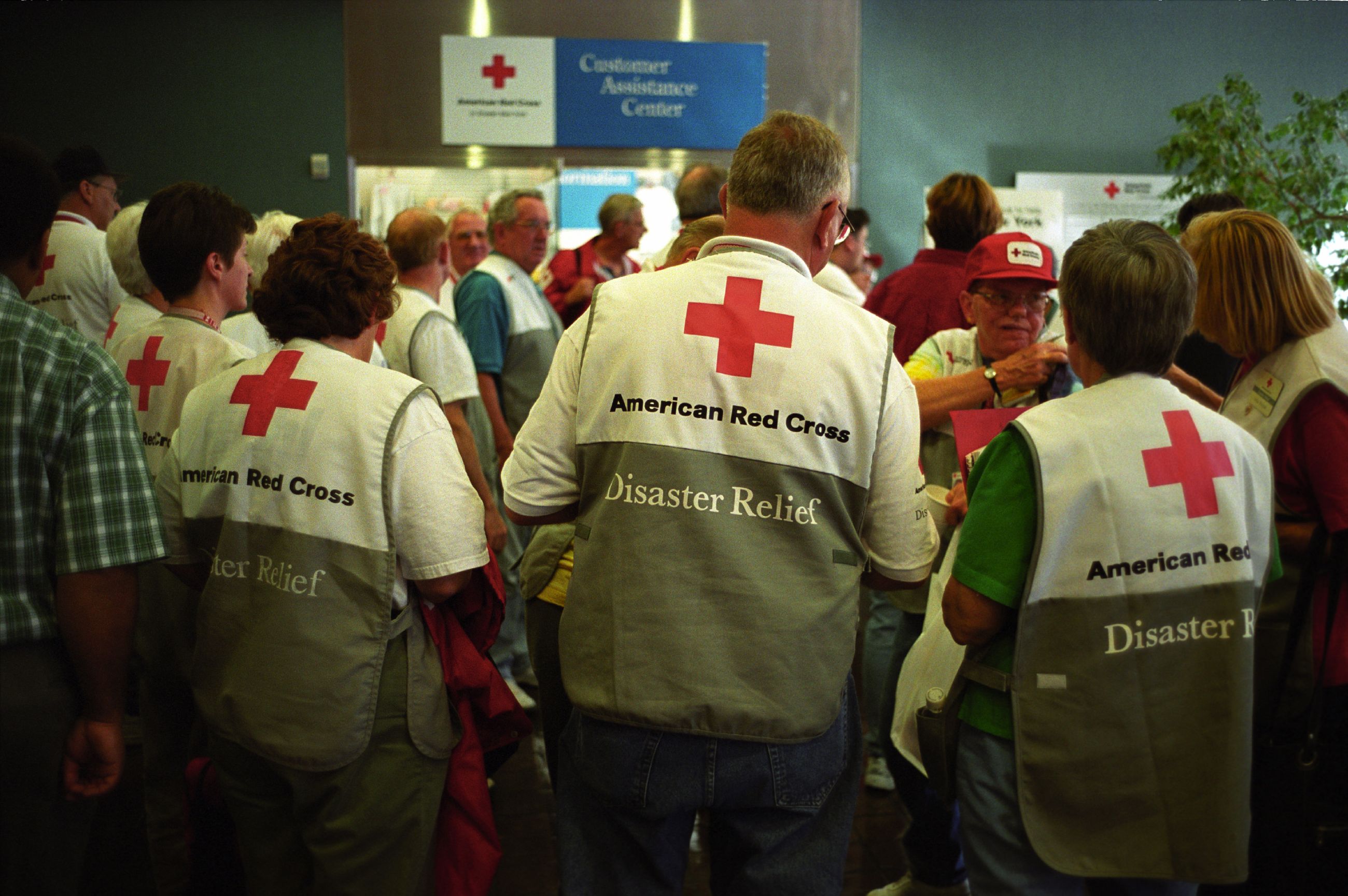
September 12, 2001. New York City, New York. American Red Cross volunteers receive a briefing at the site of an assistance center near the scene of the World Trade Center collapse. Photo by Daniel Cima/American Red Cross

Our massive relief and recovery efforts were funded by nearly $1.1 billion in generous donations, which were used to help more than 59,000 families affected by the terrorist attacks.  The Red Cross provided hundreds of millions of dollars in financial assistance to families that lost loved ones, injured survivors, first responders, residents of lower Manhattan who couldn’t return home, and workers who lost their jobs.  More than 57,000 Red Crossers from across the country (including several from Northern Ohio) served more than 14 million meals and snacks, opened dozens of shelters for people who were left stranded, and connected some 374,000 times with people to provide emotional support and health services.  Hundreds of thousands of individuals lined up to give blood as people from all walks of life showed up to help in any way they could.
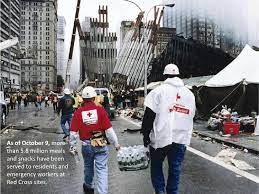
As we remember the terrible tragedy of September 11, 2001, we come together as members and supporters of the American Red Cross to mark this day in solemn remembrance and with a renewed commitment to serve those in the face of disasters.  Large scale disasters often bring a nation together—9/11 certainly did.  Here is a short video clip that helps make that point with its stark contrast.  My sincere hope and prayer is that our nation does not have to experience another tragedy like 9/11 to unite us in the pursuit of our precious freedom as Americans.  Thank you for your tireless support of our American Red Cross—the world’s premier humanitarian organization—as we honor those that perished and salute those who preceded us in service. 

Godspeed…Mike

Reflections from two Northern Ohio Red Cross responders will be posted here tomorrow, on the 20th anniversary of the 9/11 attacks.

September is National Preparedness Month: Get ready now

Emergencies more frequent, larger due to climate change

By Tim Poe, American Red Cross volunteer

During my time as a Disaster Action Team (DAT) member, I saw many levels of preparedness and their impact once a disaster happened, whether a fire, flood, tornado or other event. Families and communities who had prepared were much better able to respond and begin recovering than those who had not. The American Red Cross assists all in need but preparation makes a tremendous difference, especially as climate change causes more severe weather. The Red Cross Northern Ohio Region urges everyone to get ready.

While home fires remain the most frequent disaster in Northern Ohio, climate change is having an impact. Sustainable Cleveland’s Action Plan states, “… annual temperatures in the Midwest, including Northeast Ohio, have increased over the last several decades. Heat waves are becoming more frequent. Snow and ice are arriving later in the fall and are starting to melt earlier in the spring. Heavy downpours now occur twice as frequently as they did a century ago.”

For an additional perspective, I reached out to John Gareis, Regional Manager, Disaster Preparedness, Red Cross Northern Ohio Region. John said, “Disasters can happen anywhere, anytime. We urge people to prepare now and be ready if an emergency occurs in their home or in our local community.

“No one plans to be in a disaster,” John continued. “Unfortunately, so often we help families who have done nothing to prepare, and they rely on the Red Cross to help them get on their feet and begin piecing together their lives. Understanding the basics of being prepared, having a communication plan, and knowing what to do in an emergency does save lives. Helping people during disasters is at the heart of our mission, and climate change is a serious threat we are all facing. While we celebrate Emergency Preparedness awareness every September, being prepared should happen all year long. Help keep your loved ones safe — get Red Cross Ready today.”

HOW TO GET PREPARED

Help keep your family safe: 1) Get a Kit. 2) Make a Plan. 3) Be Informed.

  1. Build your emergency kit with a gallon of water per person, per day, non-perishable food, a flashlight, battery-powered radio, first aid kit, medications, supplies for infants or pets, a multi-purpose tool, personal hygiene items, copies of important papers, cell phone chargers, blankets, maps of the area and emergency contact information.
  2. Plan what to do in case you and your family are separated or evacuating. Coordinate your plan with your child’s school, your work and your community. Don’t forget your pets. If you need to evacuate, so does your pet. Know which pet-friendly hotels are in your area and where your pets can stay.
  3. Stay informed by knowing how local officials will contact you during a disaster and how to get important information.

Also consider your family’s needs and each person’s capabilities. Older adults and those with disabilities need a support network that can help in an emergency, especially during an evacuation or extended loss of power.

Speak with children about preparing for common emergencies, staying safe and what to expect before a disaster happens. The Red Cross has free programs and tools to help at redcross.org/youthprep.

Free Red Cross apps are also available.

Finally, help your community prepare and respond to disasters. You can do so by donating blood, learning lifesaving skills or volunteering with the Red Cross or other organization.

Edited by Glenda Bogar, American Red Cross volunteer

Take action this World Humanitarian Day

By Samantha Pudelski, Red Cross volunteer

August 19 is World Humanitarian Day, when we recognize those around the world who help people affected by global crises. In 2021, a record 235 million people required humanitarian assistance according to USAID. Life-threatening crises around the world such as hunger, poverty and conflict are intensifying due to forces such as climate change.

Northeast Ohio native Jenelle Eli, American Red Cross joins Ines and her neighbors in Morelos, Mexico in receiving humanitarian aid from the Red Cross in the wake of a 7.1 earthquake in 2018.

Organizations around the world, including the American Red Cross, International Federation of the Red Cross (IFRC) and Red Crescent Societies, provide humanitarian aid to help communities affected by intense storms, hurricanes and devastating wildfires that have increased in frequency, especially in the last few years. They also are working to provide climate-smart disaster risk reduction—helping communities reduce their risks, increase their resilience and prepare for emergencies that may happen in their region.

Annually, on average, natural hazards cause 67,000 deaths, affect 199 million people and drive 126 million individuals into poverty according to the IFRC. Climate change is causing the number of disasters to increase drastically—doubling the average number of disasters in the last 40 years.

April 7, 2020. Nassau, New Providence, Bahamas. The American Red Cross helped expand the Bahamas Red Cross home meal delivery program to include more people put at risk to food insecurity due to the COVID-19 outbreak causing government implemented lockdowns and 24-hour curfews.

You may be asking yourself, how can I help here in Ohio? There are a few things you can do:

  • Learn more about the effects of climate change and the work organizations like the Red Cross and IFRC are doing to help those who are impacted by disasters. Share what you learn with family and friends.
  • Donate to the Red Cross to help provide aid to victims of disasters and education to communities on how to prepare for future events.
  • Volunteer with the Red Cross in your community and/or consider becoming a member of the Disaster Action Team.

Read more about World Humanitarian Day here.

Edited by Glenda Bogar, American Red Cross volunteer

Local volunteers and blood donors needed for busy disaster season

Many weather experts predict a destructive wildfire and hurricane season this year. The American Red Cross needs volunteers to help people who are affected by these disasters.

“We’re preparing for another extremely busy disaster season, and it’s critical to have a trained, ready volunteer workforce to make sure we can provide relief at a moment’s notice,” said Mike Parks, Regional CEO, American Red Cross of Northern Ohio. “This year’s wildfire season is already very active and dangerous because of the severe drought and dry woodlands across the west. And experts are predicting we could see 10 or more hurricanes in the upcoming weeks.”

“We’re preparing for another extremely busy disaster season, and it’s critical to have a trained, ready volunteer workforce to make sure we can provide relief at a moment’s notice.”

Mike Parks, Regional CEO, American Red Cross of Northern Ohio

SHELTER VOLUNTEERS AND HEALTH PROFESSIONALS NEEDED

The Red Cross needs new volunteers to support disaster shelters. Volunteers will help with reception, registration, food distribution, dormitory, information collection and other vital tasks inside disaster shelters. Both entry and supervisory-level opportunities are available.

The Red Cross also needs volunteers who can work in disaster shelters to address people’s health needs and provide hands-on care in alignment with their professional licensure (registered nurse and licensed practical nurse/licensed vocational nurse). Daily observation and health screening for COVID-19-like illness among shelter residents may also be required. If you are an RN, LPN, LVN, APRN, NP, EMT, paramedic, MD/DO or PA with a current and unencumbered license, this position could be right for you.

Red Cross volunteer Dave Wagner looks out damage from the Dixie Fire on the outskirts of Greenville, CA, a small town that was devastated by the fire on Saturday, August 7, 2021. Many of the evacuated residents found shelter with the Red Cross in nearby Quincy and Susanville, CA.
Photo by Scott Dalton/American Red Cross

DISASTER ACTION TEAM MEMBER

Local Disaster Action Teams provide 24-hour emergency response to local disasters, particularly home fires, ensuring that those affected have access to resources for basic necessities such as food, shelter and clothing. If you are team-oriented and want to help your neighbor, the DAT responder may be just the thing for you.

Disaster Action Team members from Northern Ohio respond to a fire in Lakewood on Aug. 4, 2021.

At 1 p.m. today, the Red Cross will host a Facebook Live event where our experts will discuss the various volunteer roles and how you can get involved in helping families after disasters here locally and across the country. Tune in to learn more and get your volunteer questions answered.

Last year, the Northern Ohio Region provided immediate emergency assistance to more than 5,100 people after nearly 1,200 home fires and other disasters.

If you can’t join us this afternoon but are interested in helping your community when disasters occur, you can sign up online or contact our area offices at 216-431-3328 or neovolunteer@redcross.org.

BLOOD AND PLATELET DONORS NEEDED

Wildfires, record-breaking heat and a busy hurricane season can also impact the nation’s blood supply. On top of the toll extreme weather events take on the lives of millions, disasters can cause blood drive closures or prevent donors from being able to give safely. Eligible donors can help overcome the critical need for blood and ensure blood is readily available by making an appointment to give by using the Red Cross Blood Donor App, visiting RedCrossBlood.org, calling 1-800-RED CROSS (1-800-733-2767) or enabling the Blood Donor Skill on any Alexa Echo device.

What you need to do to prepare for a power outage

By: Sam Pudelski, American Red Cross Volunteer

We all know weather in Ohio is unpredictable. While it seems spring has finally sprung, just a few short weeks ago heavy rain and winds tore through Northern Ohio. According to American Red Cross reports, the morning after the storm, approximately 70,000 power outages were reported across the Region.

When there is a power outage, we hope it is a temporary inconvenience. But sometimes outages can last hours, if not days. It’s important to have a plan in place so when outages occur, you and your household members have what you need and know how to stay safe.

Photo by Talia Frenkel/American Red Cross

The Red Cross has put together some tips for how to help you do just that:

  • Create a support network by identifying people who can help you stay at home or evacuate during an extended power outage. Keep a paper copy of your contact list.
  • Stay connected and alert by signing up for alert systems and apps for text alerts. Make sure you have communication devices that you can use when the power goes out, like a crank or battery radio, non-corded home phone, battery chargers/batteries for cell phones.
  • Stock food and water that is non-perishable, and plan to use coolers and ice to extend food refrigeration when the power is out for an extended period. Make sure to stock two weeks of non-perishable food and thermometers to monitor perishable food temperatures.
  • Know and plan for your personal and medical needs that rely on electricity. Take inventory of your electrical needs, and consider both backup and non-power alternatives for lighting, communication, medical devices, medicine, cooking, garage doors, locks and elevators.
  • Plan for your pets by making sure you have enough food and water for them, too.
  • Install smoke alarms and carbon monoxide alarms. Make sure smoke alarms with battery backups are on every floor and outside sleeping areas. Make sure you have one carbon monoxide detector on each floor of your home.
  • Use current surge protectors on household electronics to keep them safe in case of a power surge.
  • Plan how to decide to stay or go in the event of a power outage. Discuss how you will safely evacuate to maintain needs such as power-dependent medical devices.

Download the free Red Cross emergency app

The app allows you to monitor conditions in your area and prepare your household in the event of an outage or other disaster. Additionally, you can check on loved ones to make sure they are safe and let them know you are safe. You can download the app on the Apple Store or Google Play, or you can text GETEMERGENCY to 90999.

While we all hope power outages or disasters will not strike, preparing can help you and your loved ones have a little more peace of mind in the event you are affected by one.

Edited By: Glenda Bogar, American Red Cross Volunteer

Severe weather can bloom during spring in Ohio

By: Chris Chmura, American Red Cross volunteer

If you live in Northern Ohio, you know that Mother Nature likes to remind us that we can get a snowstorm late in the season, have a possible tornado at any point or even have heavy rain going into spring (out West they call it mud season). The Rockies and High Plains just experienced several feet of snow, Chicago recently reported areas with 18 inches of snow and the Northeast continues to have a heavy cycle of snow.

The American Red Cross offers tips to prepare and keep you safe during severe weather events of any kind, during any season.

Tornado Safety

Know the difference. A tornado watch means a tornado is possible. A tornado warning means atornado is already occurring or will occur soon. Go to your safe place immediately. Watch for tornado danger signs: dark, often greenish clouds, a wall cloud, cloud of debris.

  • Know your community’s warning system. Many communities use sirens intended for outdoor warning purposes.
  • Identify a safe place in your home to gather – a basement, storm cellar or interior room on the lowest floor with no windows. A small, windowless interior room or hallway on the lowest level of a sturdy building is the safest alternative.
  • If you have time, move or secure items outside that can be picked up by the wind.
  • If you live in a mobile home, find a safe place in a nearby sturdy building. No mobile home is safe in a tornado. If you have access to a sturdy shelter or a vehicle, go to the shelter or building immediately, using your seat belt if driving.
  • If you are outside, seek shelter in a basement, shelter or sturdy building.
  • If you cannot quickly walk to a shelter, immediately get into a vehicle and try to drive to the closest sturdy shelter. Remember to buckle your seat belt.
  • Stay away from bridge/highway overpasses.
  • If strong winds and flying debris occurs while driving, pull over and park, keeping your seat belt on and engine running. Put your head down below the windows, covering your head with your hands and a blanket
  • Bring your companion animals indoors and maintain direct control of them.

Flooding Safety

Turn around, don’t drown. Stay off the roads. If you must drive and encounter a flooded roadway, turn around and go another way.

  • If you are caught on a flooded road and waters are rising rapidly around you, get out of the car quickly and move to higher ground. Most cars can be swept away by less than two feet of moving water.
  • Head for higher ground and stay there.
  • If your neighborhood is prone to flooding, be prepared to evacuate quickly if necessary.
  • Follow evacuation orders and do not attempt to return until officials say it is safe to do so.
  • Stay away from floodwaters. Beware of snakes, insects and other animals that may be in or around floodwaters and your home.
  • Keep children and pets away from hazardous sites and floodwater.
  • If power lines are down, do not step in puddles or standing water.

Winter Storm Safety

Be prepared for storms, even in spring. Have your disaster kit ready. Details about what should be included are on the Red Cross website. When the storm begins, listen to the advice of local officials and stay in a safe place until weather conditions improve and roads can be cleared.

STAY SAFE by following these steps:

  • Make sure you have enough heating fuel on hand.
  • Stay indoors and wear warm clothes. Layers of loose-fitting, lightweight, warm clothing will keep you warmer than a bulky sweater.
  • Check on relatives, neighbors and friends, particularly if they are elderly or if they live alone. Keep your vehicle’s gas tank full to keep the fuel line from freezing.
  • Be extremely careful if you have to shovel snow. Take frequent breaks and stay hydrated.
  • Watch for hypothermia and frostbite. Hypothermia symptoms include confusion, dizziness, exhaustion and severe shivering. Frostbite symptoms include numbness, flushed gray, white, blue or yellow skin discoloration, numbness, or waxy feeling skin.
  • Don’t forget your pets. Bring them indoors. If they can’t come inside, make sure they have enough shelter to keep them warm and that they can get to unfrozen water.
  • If possible, avoid driving in the storm. If you have to drive, have a window scraper, kitty litter or sand in case you get stuck, extra clothes and a Disaster Supplies Kit in your trunk. Fill the vehicle’s gas tank and clean the lights and windows to help you see.
  • Let someone know where you are going, the route you plan to take, and when you expect to get there. If your car gets stuck, help can be sent along your predetermined route.

Avoid Home Fire Danger 

Storms can result in a high number of home fires. To avoid fire danger, remember the following:

  • Never use a stove or oven to heat your home. If you are using a fireplace, use a glass or metal fire screen large enough to catch sparks and rolling logs
  • Place space heaters on a level, hard surface and keep anything flammable at least three feet away. Turn off space heaters and make sure fireplace embers are out before leaving the room or going to bed.
  • Use generators correctly – never operate a generator inside the home, including in the basement or garage.
  • Don’t hook a generator up to the home’s wiring. The safest thing to do is to connect the equipment you want to power directly to the outlets on the generator.
  • If your power is out, avoid using candles to prevent a fire.

Download our apps. Download the free Red Cross Emergency App to receive emergency alerts and information about what to do in case of severe weather or flooding, as well as locations of shelters. You can find it in smartphone app stores by searching for the American Red Cross or  going to redcross.org/apps.

Edited By: Glenda Bogar, American Red Cross Volunteer

When the world stopped, the Red Cross didn’t

Reflections on the response to the pandemic on the one-year anniversary

By Doug Bardwell, American Red Cross volunteer

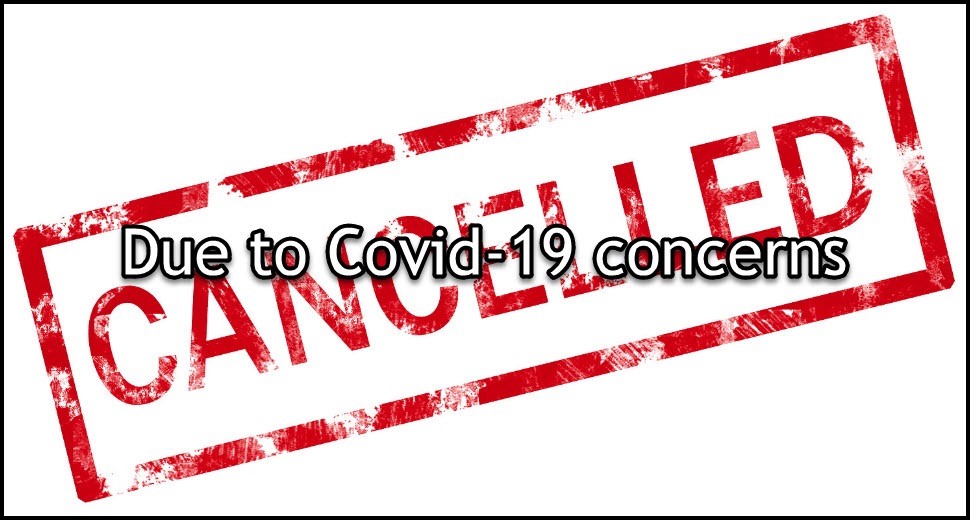
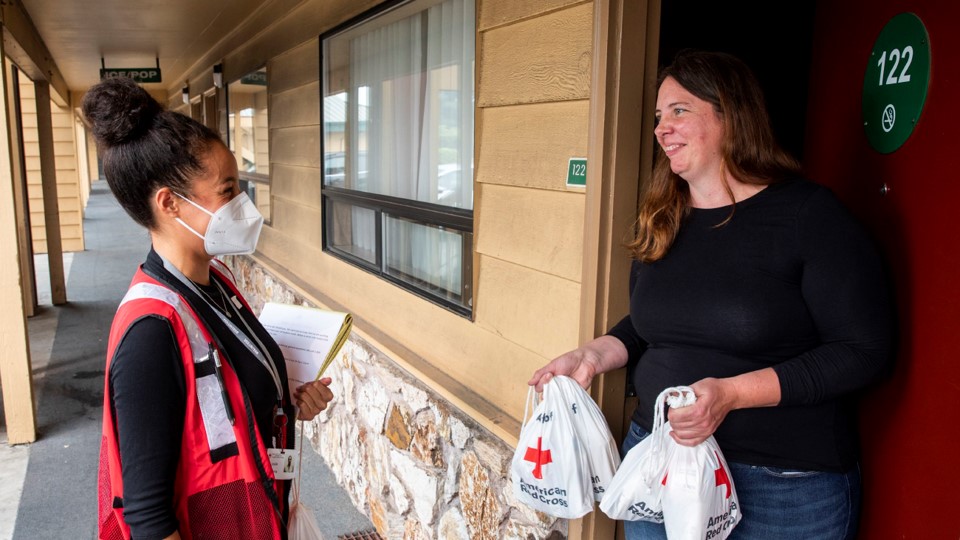
March 2020 would prove to be one of my most memorable volunteer months with the American Red Cross. Within weeks, the world began to see signs like this everywhere.

Everywhere, except at the Red Cross.

Let’s go back to March 1, 2020. This was the day the first case of COVID-19 was identified in the United States, in New York. By then, we had heard about the 400 Americans trapped on a ship in Japan, but we didn’t really consider that the virus was a U.S. problem at the time.

Two days later, everyone forgot about that story when multiple tornadoes ripped through central Tennessee, killing at least 25 people. I recall getting the call that morning and leaving immediately for Nashville to cover the details of the cleanup effort, the sheltering and feeding of hundreds of now homeless people and the mobilization of hundreds of truckloads of supplies.

As I drove home on March 10, New York Governor Cuomo had called on the National Guard to stop traffic around New Rochelle, where 108 cases had been discovered. COVID-19 was now a United States problem.

Just one day later, March 11, the WHO (World Health Organization) would declare this to be an official pandemic with more than 120,000 cases worldwide. That started a landslide of events, and before day’s end:

  • The NBA suspended the 2019-20 season until further notice
  • The NHL paused its 2019-20 season
  • The Dow Jones Industrial 30-day average plunged 20%, ending an 11-year bull market

But what didn’t come crashing to a stop…the Red Cross. 

That same day, President of the American Red Cross Gail McGovern, issued a long memo to all Red Cross volunteers.

In it, she detailed how we would be making all sorts of changes to our day-to-day operations, but what would not change, was our mission to deliver services to those in need.

Blood drives needed to be rescheduled as many businesses closed down, but the need for blood didn’t slow down. By finding larger venues where people could be scheduled and kept socially distanced, the flow of blood continued.

Fires and disasters didn’t stop, but our Humanitarian Services division devised new ways to house people in motels instead of congregate shelters, and our Disaster Action Teams learned to respond virtually using electronic funds transfers to get money quickly into the hands of those left homeless from fires and floods. 

As the rest of the world came to a virtual standstill one year ago today, the Red Cross quickly pivoted to maintain our services to those most in need. If you’d like to help, consider becoming a volunteer or make a contribution to the Red Cross to support our ongoing mission to alleviate human suffering in the face of emergencies. 

Edited by Glenda Bogar, Red Cross Volunteer

Red Cross disaster workers ring in new year helping others

By Eric Alves, American Red Cross of Northern Ohio

January 4, 2021- While many in Northern Ohio were celebrating the ushering in of 2021, and the Cleveland Browns returning to the NFL playoffs, disaster workers from the American Red Cross were active during the holiday weekend helping neighbors in need.

Despite the cold temperatures and the constant uncertainty surrounding the COVID-19 pandemic, Disaster Action Team (DAT) members took time out of their New Year’s celebrations this weekend (December 31-January 3) to virtually and socially distant respond to 16 incidents in Cuyahoga, Erie, Lake, Lorain, Lucas, Mahoning, Medina, Summit and Trumbull counties and assisted 51 individuals. In addition, the Red Cross provided the residents with more than $11,000 in financial assistance for immediate needs such as lodging, clothing and food.

“If it was not for the dedication and selflessness of our DAT members, we would not be able to fulfill the Red Cross’ mission,” said Renee Palagyi, senior disaster program manager. “Despite the pandemic, they continue to put weekends and holiday celebrations on hold to help a neighbor in need. The Red Cross of Northern Ohio is constantly grateful for our DAT members and everything they do.”

To date this year, the Red Cross of Northern Ohio has assisted 1,410 adults, 807 children and has provided more than $455,000 in immediate financial assistance.

Additional volunteers are needed to train for disaster responses, specifically to respond to home fires locally. People in good health and who are willing and able to receive free Red Cross training can visit www.redcross.org/volunteertoday, or can call 1-800-RED CROSS.

The number one priority of the Red Cross is the health and safety of our employees, volunteers, blood donors and recipients, and the people we serve, and we have implemented several measures, in accordance with CDC guidelines, to protect our workers and those who need our assistance.

If you are unable to volunteer but you would like to support the Red Cross’ disaster relief efforts, donate by visiting redcross.org, calling 800-RED CROSS or texting the word REDCROSS to 90999 to make a $10 donation.

As the largest humanitarian organization in the world, the Red Cross has the ability to use your donation to reach more people in need, more quickly. Your donation to the Red Cross helps provide food, shelter, relief supplies, emotional support, recovery planning and other assistance during disasters.

Any amount donated truly helps with their recovery.

Stuff happens…but the Red Cross still responds

By Doug Bardwell, American Red Cross volunteer 

December 11, 2020- Despite coronavirus, despite masks, despite quarantines, despite lockdowns, despite political controversy, despite all these things; one thing remained constant for the American Red Cross through most of 2020; the need to help others – which has always been the overall humanitarian effort for employees and volunteers based here in Northern Ohio.  

Disasters don’t take time off for COVID-19, so while the Red Cross has had to change methods, we still need to complete our mission.  Reviewing the numbers, it appears we have done just that.

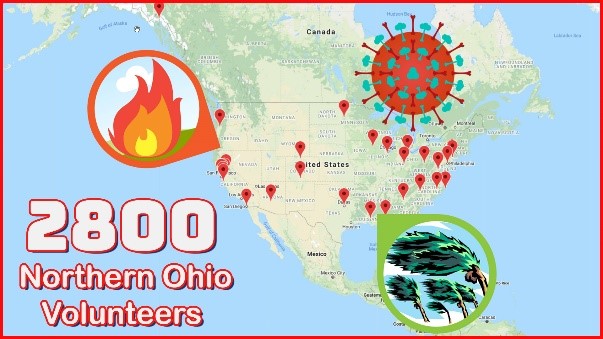
Luckily, Northern Ohio was spared from the huge disasters that plagued the West Coast and the Gulf Coast. However, due to the size of the disasters and the fact that they lasted so long, more than 100 Northern Ohio (NOH) volunteers left the comfort of their homes and headed west to battle the wildfires, while others provided shelter and comfort to those affected by hurricanes Laura, Sally, Beta and Zeta; all the while keeping everyone safe from COVID-19. They were among almost 2,800 volunteers who served in the region in FY 2020. 

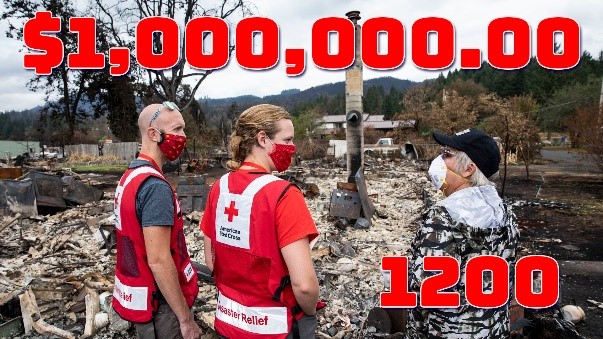
Here at home, Disaster Action Team members responded to nearly 1,200 local events – most of them home and apartment fires. More than a million dollars of financial aid was made immediately available to those who were experiencing possibly the worst days of their lives.

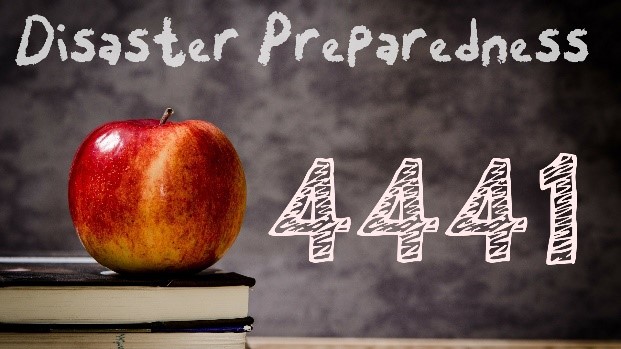
To help Ohioans save lives, a big part of Red Cross activities is teaching children and adults through community preparedness education.  In 2020, more than 10,500 people took part community wide. Age-appropriate disaster preparedness classes were offered to 4,441 3rd, 4th, and 5th-grade students.  

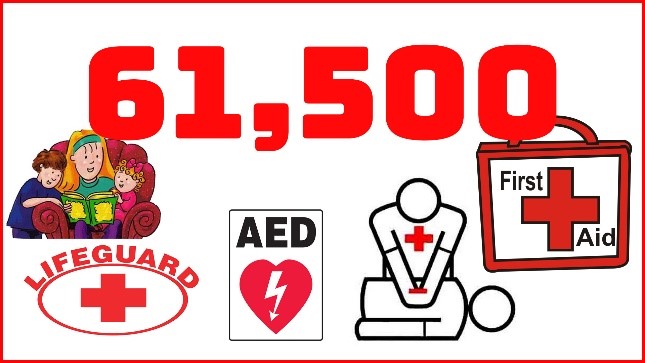
Being proactive, nearly 61,500 individuals completed potentially lifesaving classes from babysitting to lifeguarding, as well as CPR, first aid and the use of an AED.  

Our Service to the Armed Forces group completed 5,500 case services for military families and delivered “Get to Know Us” briefings to nearly 5,400 military members and their families before deploying from Northern Ohio. 

And if those numbers weren’t enough to impress, how about our Biomedical Services group which collected more than 168,700 units of blood in FY 2020 during hundreds of blood drives, using the best COVID protocols available.  

And from those donations, we’ve been able to create 506,000 life-supporting blood products to help patients in 80 hospitals across Northern Ohio.  In addition, we’ve recently been able to collect and distribute 40,000 convalescent plasma products. 

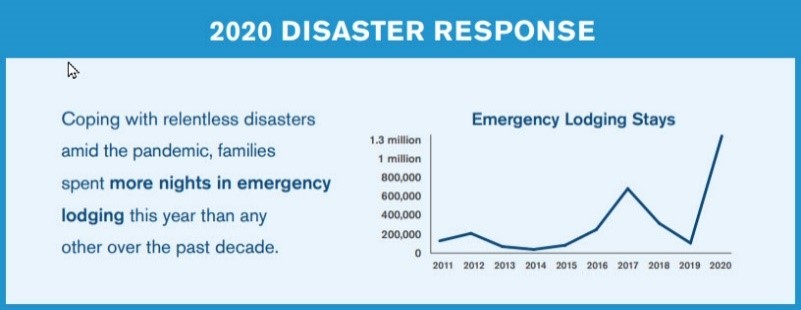
Nationally, the need is greater than ever, as shown on the graph above, and by some totals of our national response below. 

All these accomplishments are possible through the generous donation of time from our volunteers and the financial contributions of our generous donors.  If you’d like to be a part of this great humanitarian effort, consider volunteering or making a contribution before year end. 

Thanksgiving weekend disasters drive dozens from their homes

Red Cross workers kept busy during the holiday weekend

By Eric Alves, American Red Cross of Northern Ohio

November 30, 2020- In between second helpings and Thanksgiving leftovers, disaster workers from the Northern Ohio Region were active this holiday weekend assisting residents following several local disasters.

During the long holiday weekend, the Red Cross of Northern Ohio provided comfort and support, both virtually and socially distant, to 70 individuals who experienced a home fire, and provided more than $14,000 in financial assistance to aid those affected with immediate needs, such as food, lodging and clothing.

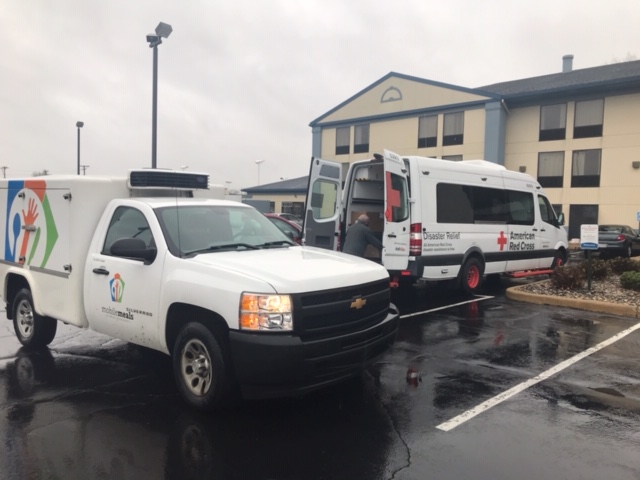
In addition to the weekend disasters, the Red Cross continued to assist 80 residents, and provided shelter at two hotels for more than 60 of the residents, following an apartment fire last Monday at the Oblate Residences apartment complex in west Toledo

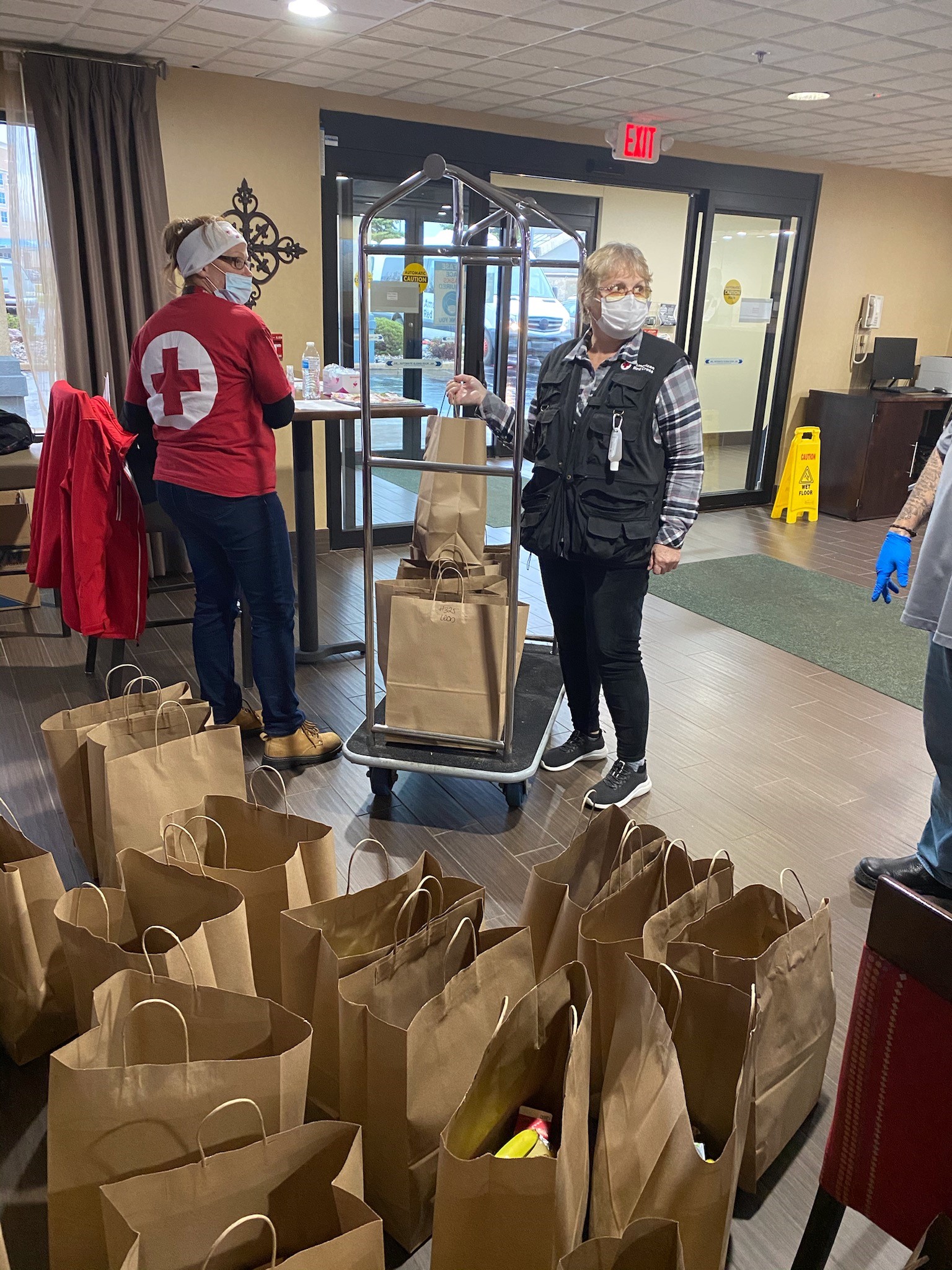
Red Cross disaster workers helping to provide meals to residents affected by the Oblate Residences fire

The residents were unable to be home for Thanksgiving due to the fire damaging the apartment building’s electrical system, and it could be several days before repairs are completed.

Partners like Mobile Meals of Toledo helped the Red Cross provide meals to the displaced residents.

Hotel rooms are being used, instead of more traditional congregate shelter space, to help mitigate the spread of COVID-19.  In addition, Red Cross workers are wearing face coverings and sanitizing their hands frequently, as well as adhering to social distancing guidelines.

For the fiscal year to date, the Red Cross of Northern Ohio has assisted 1,157 adults, 643 children and has provided more than $369,000 in immediate financial assistance.

As the largest humanitarian organization in the world, the Red Cross has the ability to use your donation to reach more people in need, more quickly. Your donation to the Red Cross helps provide food, shelter, relief supplies, emotional support, recovery planning and other assistance during disasters.

To help the Red Cross provide hope and comfort to individuals following a disaster, please visit redcross.org/donate to provide a financial donation. Any amount donated truly helps with their recovery.