Paul Wadowick: from lifelong blood donor to blood transfusion recipient

By Tim Poe, American Red Cross volunteer.

Our lives can change in a moment, posing difficulties, presenting challenges. In many of these instances, the American Red Cross is there to help, including providing life-saving blood when a transfusion is needed. Such was the case for Paul Wadowick of Ashtabula County. After he was diagnosed with blood cancer in the spring of 2021, Paul went from being a lifelong blood donor to being a blood recipient. Paul, who is also a Red Cross volunteer, was gracious enough to speak with me about his background and experience.

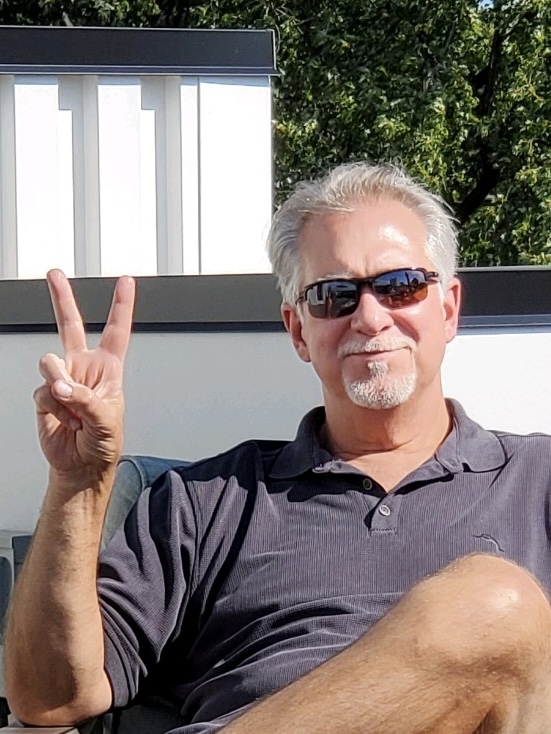
Paul Wadowick

Paul has dedicated himself to assisting others throughout his life, and his parents were an early inspiration. Paul became aware of blood donations in the 1950s when his father, a universal donor, had a capability test for another person’s open-heart surgery. His mother was also a donor. Paul followed suit, and from 1968 until 2021, donated 137 units (17 gallons + 1 unit) of blood, helping to save many lives in the process.

While donating blood in 2021, he became aware of a problem. As part of our services, Red Cross blood donors receive a mini-health screening, including a hemoglobin test. Paul’s iron level had dropped dramatically. Shortly thereafter, he was working as a Blood Donor Ambassador at another blood drive, took the hemoglobin test again, and knew he had to see doctors. He learned he had blood cancer and began undergoing chemotherapy.

In October 2021, Paul received a “High Chemo” 15-day treatment, where he received two units of  platelets, which are a component of blood. He recalled hearing how a donor of whole blood can save many lives. It then hit him that his was now one of those lives.

Thankfully, Paul’s cancer is in remission, and he continues his volunteer work with the Red Cross, mainly as a Blood Donor Ambassador, in addition to other community service.

Paul’s sense of responsibility and service is lifelong. As the third oldest in a family of 10, he assisted in the care of younger siblings and household chores. He was also class “dean” in his high-school seminary, volunteered in a long-term hospital, and found his calling in social work. After earning his degree and certification, Paul spent decades as a social worker, mostly at a long-term-care facility, while continuing his community service, including with the Boy Scouts. Paul and his wife, Denise, raised two sons.

After retiring in November 2015, Paul became a Red Cross volunteer in January 2016. He is also a member of the Knights of Columbus and credits his faith for his perseverance, gifts, and outlook.

Melissa Papini, a Red Cross Blood Services Account Manager, pointed out that Paul has been a Blood Program Leader with the Knights of Columbus for almost four years, recruiting over 400 donors and collecting 382 units of lifesaving blood.

Paul cited several favorite experiences as a Red Cross volunteer, especially photographing volunteer recognition celebrations, smoke alarm installations, and blood drive events in ways that tell a story. He also enjoys coaching and easing blood donors through the process and sending them home with a “Thank You.” And while he can no longer donate blood, he is happy to help recruit, organize, and bring in donations from others.

For anyone considering donating blood, Paul asks,  “What would you do if you needed blood?” and reminds us that we may find ourselves, like he did, in a position where we or a loved one need it.

To schedule a donation, please visit www.redcrossblood.org.

American Red Cross Acts of Courage ’25

Honoring ordinary people who’ve done extraordinary things

The 29th Annual American Red Cross Acts of Courage event was a night to remember. As it does every year, the awards ceremony kicked off with the H. Peter Burg Award recipient. The American Red Cross of Greater Akron and the Mahoning Valley proudly presents the H. Peter Burg Award each year to one or more individuals who best exemplify leadership in the community, compassion for its people and dedication to the humanitarian mission of the Red Cross.

Kathleen Paydo, Ron Paydo – 2025 H. Peter Burg Award recipient, Rachel Stine – Executive Director of Greater Akron and the Mahoning Valley

Ron Paydo, market president for The Huntington National Bank in the Akron Canton area, has been named the recipient of the 2025 H. Peter Burg Community Leadership Award. Paydo, who serves on the American Red Cross of Greater Akron and Mahoning Valley board, was selected by a committee of past award winners. Ron is the epitome of what the H. Peter Burg Award represents and is a pillar of his community.  

In 2025, the Red Cross is honoring Heroes to Blood – individuals, organizations, or corporations that have gone above and beyond to aid in the collection of our nation’s blood supply. The inaugural recipients of the Heroes to Blood award were: 

Ryan Lang, Ruby Dailey, Tara Silva – Greater Akron and Mahoning Valley Board Chair

Ruby Dailey 

Ruby’s extensive volunteer work with the American Red Cross has made her a beloved figure in her community. Since retiring, Ruby has donated over seven gallons of blood and actively supports blood drives. Her warm personality and genuine care for others create a welcoming environment for donors. Even well into her 90's, Ruby still contributes, from homemade treats to personalized interactions, and has significantly enhanced the blood donation experience for so many others.

Charla Martin-Bloodsaw – Hero to Blood

Charla Martin-Bloodsaw

Charla is being recognized for her tireless efforts in promoting minority blood donations and sickle cell awareness in Summit County. Through organizing blood drives, educating the community, and participating in sickle cell activities, Charla has made a significant impact. Her dedication to raising awareness and encouraging blood and plasma donations has helped save countless lives and support those affected by sickle cell disease.

The Red Cross values the health and well-being of our blood donors. During the month of March, the Red Cross will expand its health offerings to include A1C screening, a test commonly used to screen for prediabetes and diabetes, for all donors who make a successful blood, platelet or plasma donation. Understanding our own health is the foundation for helping prevent chronic illness and a blood donation can be a part of that journey.

The 2025 Acts of Courage Award recipients include a group of women who saved a runner from an attacker in the park, a military veteran whose quick thinking helped save his neighbor’s life, and a teacher who saved a choking student, TWICE! 

Kendra Santiago – Acts of Courage Award recipient

Kendra Santiago

Dominos employee Kendra Santiago was taking an order over the phone when the man she was talking to suddenly went quiet. Kendra decided to deliver the pizza herself so she could check on the customer. When she arrived, she found him having a seizure and not breathing. Kendra called 911 and stayed with the customer and his wife until help arrived.

Samantha Wilson – Acts of Courage Award recipient

Samantha Wilson

While monitoring the cafeteria during lunch at Suffield Elementary School, Samantha Wilson noticed a student choking. She immediately began performing stomach thrusts on the student and finally dislodged the food after several attempts.

Ryan Lang, Daureatha Hython – Acts of Courage Award recipient, Tara Silva

Daureatha Hython

While driving home from work late one night, Daureatha Hython saw a car accident on I-77. She stopped to help and found the driver of the vehicle wedged against the steering wheel with no pulse. Daureatha, and other motorists who had stopped, moved the victim and began CPR. They were able to revive the person before paramedics arrived to transport them to the hospital.

Dave Parsons – Acts of Courage Award recipient, friend Aaron

Dave Parsons

Dave Parsons was helping his friend Aaron clear trees on his property when one of the trees fell on Aaron, trapping him on his tractor. Dave rushed to help and saw Aaron was severely injured and bleeding. Dave used a ratchet strap to create a makeshift tourniquet and applied it to Aaron’s injury. He then called 911 and stayed with Aaron until help arrived.

Donna McFadden, Susan Victor, Laura Rufe – Acts of Courage Awards recipients

Donna McFadden, Laura Rufe, and Susan Victor 

While walking together in Cascade Valley Metro Park Donna McFadden, Laura Rufe and Susan Victor witnessed a woman being attacked. They called 911 and then confronted the assailant, hitting him on the head with a rock so the victim could escape. Donna, Laura and Susan stayed with the victim until the authorities arrived and arrested the attacker.

Veronica Graves, Madelyn Stys, Reagan MacTavish – Acts of Courage Award recipients

Reagan MacTavish, Veronica Graves and Madelyn Stys

When a participant in an Aqua Aerobics class at the Wadsworth YMCA suffered a cardiac arrest, lifeguards Reagan MacTavish, Veronica Graves and Madelyn Stys jumped into action. Reagan alerted other staff and began rescue efforts, including CPR. Veronica and Madelyn assisted Reagan also performing CPR and using an AED. The member was transported to the hospital and recovered.

To nominate individuals for heroic Acts of Courage, click here!

American Red Cross remains committed to helping everyone as needs increase

By Tim Poe, American Red Cross volunteer

Portrait of Clara Barton, founder of the American Red Cross.

She was bent over, sobbing, frustrated, nearly everything in her family’s apartment destroyed. We sat in an American Red Cross vehicle outside a partially burned apartment complex. It was near the beginning of the school year, and she had recently purchased books, school supplies and clothes for her children. Unfortunately, her neighbor, whom I had helped earlier, had a moment of carelessness. Like most renters I assisted, especially those in lower-income areas, she did not have renter’s insurance. But we were there. One of my favorite moments as a Red Cross volunteer was handing her an aid packet, a lifeline, and seeing her frustration and despair turn to gratitude and resilience. Her family would have a place to stay, would eat, and her children’s clothes and school supplies would be replaced. Her race, gender, legal status, religion, beliefs, class and orientation didn’t matter. She needed help, and the Red Cross provided.

Scenes like this play out an average of three times per day in Northern Ohio, and about 65,000 times per year nationally. Similarly, someone in the U.S. needs blood every two seconds, while U.S. Armed Forces members, veterans and their families receive assistance daily. Our services have never, nor will ever, be contingent on anything other than if someone needs our help.

As March is Red Cross Month, we would like to reiterate that helping everyone has been a core principle since our founding in 1881 and remains central to our Fundamental Values of
humanity, impartiality, neutrality, independence, voluntary service, unity and universality. Clara Barton, who faced discrimination as a woman, believed in “perfectly equal rights–human rights,” and instilled those values in the Red Cross from the outset.

For the past 144 years, the Red Cross remained committed to helping those in need, bringing out the best of humanity in times of crisis.

February 25, 2025. Pike County, Kentucky.
American Red Cross volunteer, Tony Susi, comforts Tina Roberts after she lost her entire home in Eastern Kentucky after devastating floods hit her community just over a week ago.

Red Crossers are on the ground across Kentucky, assessing damage, working with community partners and local emergency management, and providing hot meals, a safe place to stay and other support to residents impacted by flooding.

Photo by Scott Dalton/American Red Cross

The need for Red Cross services and the commitment to help everyone has never been greater. The climate crisis is having a tremendous impact, as the Red Cross is responding to nearly twice as many large disasters as a decade ago, and they are increasing. Additionally, the climate crisis is taking a heavier toll on frontline communities, including low-income families, older adults, communities of color and people with disabilities.

The Red Cross is responding to these challenges through strengthening partner networks;
improving disaster relief capacity; enhancing our engagement with diverse communities, including offering information in Spanish; reaching out to diverse blood donors; continuing our Sickle Cell initiative; and adding health screenings for blood donors at different times throughout the year, currently including screening for Sickle Cell trait and, this month, A1C.

We could use your help. If you can donate blood, give financially or volunteer, your assistance has a tremendous impact. And no matter who you are, please reach out if disaster strikes, as the Red Cross continues its commitment to helping all.

Edited by Glenda Bogar, Red Cross volunteer

Posted by Ryan Lang, Red Cross board member and volunteer

Diverse blood supply is more important than ever

By Eilene E. Guy, American Red Cross volunteer

Volunteers are the lifeblood of the American Red Cross. And by extension, volunteers provide lifesaving blood and blood products to millions of people across the nation every year.

This chain of generosity begins at the local level, at an average of 500 blood drives and blood center collections every day. Last year, the Red Cross sent more than 6.3 million blood products to some 2,500 hospitals and other health care facilities.

But in the past two decades, the number of Red Cross blood donors has fallen by about 40%, with a significant drop among those between 16 and 22. As our national population ages and becomes more diverse, building the next generation of donors is critical.  

The University of Akron alumni chapter of Delta Sigma Theta, a sorority of scores of African American women, is helping meet that need by sponsoring blood drives.

Earlier this month, their event netted 30 units of blood, which will go to treat as many as 90 patients.

Drives like these are vital to maintain a stable supply of blood for trauma victims, surgery and cancer patients, fragile newborns and those with medical conditions such as Sickle Cell Disease (SCD). This hereditary condition can be life threatening: It leads to anemia (shortage of red blood cells), causing fatigue, organ damage and periodic severe pain, known as a sickle cell crisis.

Blood transfusions from donors of the same or similar ethnicity and blood type are the most effective way to treat a sickle cell crisis. Since most people with SCD are of African descent, blood from Black donors is the gold standard for treatment. In fact, one in three African American blood donors is a match for a patient with sickle cell disease.

As a northern Ohio district manager for Red Cross blood services, Sabrina Spikes works to recruit and educate a larger, broader base of blood donors, including the Black and African American, Latino and LGBTQ+ communities.

“It’s a testament to the work of Delta Sigma Theta that they sponsor at the University of Akron,” she told me. “We need to have diverse partners, to do more education.”

Education is two-pronged:

  • Reaching more people from all racial and ethnic groups to explain the importance of a diverse blood supply. “We know the number one reason people don’t donate blood is that they haven’t been asked,” she said. “We need to explain why a diverse blood supply is important.”
  • Preparing potential donors to have a successful donation experience, by getting them to drink plenty of water and eat iron-rich foods. “Cutting down on caffeinated beverages that slow the absorption of iron – coffee, tea, sodas – helps cut the deferral rate of donors, especially African American women,” she explained.    

To learn more about why a diverse blood supply is so important, tap here. And, to find where you can donate and to make an appointment, go to redcrossblood.org. Someone needs you!

Donate Blood in March and receive a free A1C screening

By: Kathryn Dean, American Red Cross volunteer

The American Red Cross of Northern Ohio is helping to bridge access to health care for blood donors by providing free A1C testing, commonly used to screen for diabetes and prediabetes, on all successful blood, platelet and plasma donations in March.

One-third of people lack access to regular primary care in the U.S., where diabetes affects 1 in 10 people and nearly a quarter of those living with it have been undiagnosed, according to the Centers for Disease Control and Prevention (CDC). The free A1C screening aims to help address this gap by empowering blood donors with valuable information to maintain their health and well-being.

What is the hemoglobin A1C test?  This is a common laboratory blood test that doctors use to help diagnose diabetes or prediabetes. Unlike a blood glucose test (or blood sugar test) which provides an instant snapshot of your current blood sugar levels, A1C reflects the average blood sugar levels of an individual over the past 3 months. This gives doctors a better idea of where your blood sugar typically lies, outside of the daily fluctuations.

Why is this important for me? It is estimated that there are over 8.7 million people in the U.S. living with undiagnosed prediabetes or diabetes. Type 2 diabetes accounts for over 90% of all cases and often remains symptomless until damage has been done. Untreated diabetes can lead to plaque build-up in the blood vessels which in turn puts you at greater risk for a stroke or heart attack. The eyes, kidneys, nerves, and skin are particularly vulnerable to the effects of decreased blood flow due to high glucose levels in the blood.  Fortunately, prediabetes is reversible with lifestyle changes, so early detection is key.

Blood donor, Audrey Savage
Photo by Michelle Frankfurter for the American Red Cross

How should I prepare for my donation?  No fasting is required for the A1C test or any other special preparation. Just be sure you are feeling well on the day of donation by getting enough rest, staying hydrated, and eating a well-balanced meal.

When will I get my results? You can expect your results within one to two weeks of your donation. Results will be posted on the Red Cross Donor App or through your donor’s account at RedCrossBlood.org.

What do my results mean?  An A1C test result of 5.7% or above will require follow-up with your primary care physician. Your doctor will be able to diagnose and guide you through an appropriate treatment plan. 

To learn more about the A1C test, pre-diabetes and diabetes, check out this informational page at the Red Cross website HERE. Download the Red Cross Blood Donor App HERE to schedule your next donation and view your donation history and test results.

World Cancer Day: The power of platelets and other blood products

By Ryan Lang, American Red Cross board member and volunteer

I was just a small child when my mom was diagnosed with breast cancer. In fact, most of my childhood she was in remission. That is, until she wasn’t. I was 12 or 13 when it came back more aggressively. I was 16 when she eventually passed away.

Rosalie and Ryan Lang

Trips to the doctor’s office and hospital were commonplace throughout my early teen years. No one doctor visit really stood out. What did stand out were the times my father and my aunts and uncles went to donate platelets on behalf of my mother. I was young and naive and thought they were specifically for mom. I later realized they were donating to replenish the supply of platelets.

Due to their short shelf life, hospitals require a consistent supply of platelets. That’s why donors like my dad, aunts and uncles, and you are critical to helping the American Red Cross replenish that supply.

February 4 is World Cancer Day, a day that touches many of us who have either had the disease or know someone who has fought the tough battle against it. Almost two million new cases may occur this year, according to experts, and blood products will be important for many of these patients in their fight against cancer.

Blood is so important during their treatment that patients fighting cancer use nearly one quarter of the nation’s blood supply — more than patients fighting any other disease. The Red Cross asks you to schedule a time to donate blood now to help cancer patients and so many others.

CANCER PATIENTS NEED BLOOD — THE FACTS

  • One in three people will be diagnosed with cancer during their lifetime.
  • Many of these patients, especially those undergoing chemotherapy, will likely have a need for blood products.
  • In fact, about six blood products are needed every minute to help someone going through cancer treatment.
  • Low blood count is a major side effect of cancer treatment. Some types of chemotherapy can damage bone marrow, reducing red blood cell and platelet production and putting a person at risk for life-threatening infections or bleeding.
  • The cancer itself can cause the need for blood and platelet transfusions by causing internal bleeding or preventing the patient’s body from producing blood cells.
Grady, Krista, Ed, and Dylan Fink

My friend Dylan and his family know the importance of blood and platelet donors. At just 14- years-old, Dylan was diagnosed with non-Hodgkin lymphoma. He’s in remission now, but that hasn’t stopped him and his family from paying it forward and organizing their own blood drives through the Red Cross.

Some cancer patients require more blood products than others. That was the case with Casey, who discovered she had cancer when she was ten weeks pregnant. She said, “Giving blood helps not just the person receiving it, by helping with their disease, but it truly helps that person’s family and friends as well.”

To find out more about donating platelets, click here. And, to schedule your appointment to give blood, visit RedCrossBlood.org, call 1-800-RED CROSS or download the free Red Cross Blood App.

Posted by Ryan Lang, Red Cross board member and volunteer

Resolve to volunteer in 2025

By EILENE E. GUY, American Red Cross volunteer

As we slide toward the beginning of a new year — Can it really be almost 2025?! — many of us look to a new year’s resolution.

Self improvement, better money management, leaving bad habits behind. All of them fine goals, aimed at personal satisfaction.

But how about joy? How about excitement?

Red Cross volunteer Jeff Mann of Stark County, left, during a 2022 deployment to Alaska in response to extreme weather.

That’s what hundreds of thousands of American Red Cross volunteers say they get from their chosen activities.

Here, I could quote from the hundreds of volunteers I’ve interviewed as a Red Cross disaster public affairs volunteer and now as a volunteer blogger.

But let me be personal: Every time I put a Red Cross activity on my calendar, I feel the joy, the excitement of knowing that my time will be spent helping my fellow man (or woman, or kid!).

Eilene Guy’s first disaster deployment in response to wildfires at Grant’s Pass, OR, in August 2002 with the late Bud Crick, twice nominated for a Pulitzer prize. “I figured if I could work with folks like that, the Red Cross was for me,” said Eilene.

To me, volunteering isn’t an obligation, although “giving back” is a worthy sentiment. Volunteering lifts me up, knowing I can fill a role no one else is filling. I get to choose my activity, my time commitment and my location (at home or away).

I didn’t step forward to the Red Cross 35-plus years ago. I was asked.

So now I’m asking you: Please resolve to volunteer for one of the many roles that make the Red Cross the foremost humanitarian service organization in our nation.

Teach kids how to swim, how to prepare for disaster or how to babysit. Teach adults first aid, CPR and the use of an AED. Get trained for one of the many roles in a major disaster response. (The Red Cross is responding to almost twice as many large disasters as we did a decade ago.) Donate blood or advocate for folks who suffer from Sickle Cell Disease. Become part of a chapter office staff in your community.

Here in northern Ohio, we need to expand the ranks for several key services:

Disaster Action Team: DAT members help families in their communities after a home fire or other disaster. They provide emotional support, emergency financial assistance and information to help families begin to recover.

Hero Care Network: Caseworkers support members of the military, their families and our veterans, providing free, confidential emergency communications and critical services to military families all over the world.

Blood Donor Ambassadors: These folks greet donors at blood drives, get them registered, answer questions and help them at the refreshment table after their donation.

Blood Transportation Specialists: These volunteers deliver blood from our testing and processing facilities to hospitals across northern Ohio. This is a great opportunity for anyone who enjoys driving, meeting new people and being part of a lifesaving chain of medical support.

If these activities don’t ring your bell, there are lots of other ways to engage with the Red Cross that can add joy, excitement, even good old self improvement, to your 2025. Check out Redcross.org/volunteer to explore all the options.

And please have a healthy, safe and joyous new year!

Don’t Be the Griswolds

By Mary Falconer-Williams, American Red Cross volunteer

Introduction by Ryan Lang, American Red Cross board member and volunteer

When Clark Griswold’s dad was teaching him everything he knew about exterior illumination, perhaps a lesson on safeguarding his home during the holidays was in order. Anyone who’s seen the classic “National Lampoon’s Christmas Vacation” knows that everything that can go wrong, does go wrong for the Griswolds. But maybe, if Clark had been better prepared with tips from the American Red Cross, things may have gone more smoothly for him.

When you are decorating for the holidays, it’s so tempting – I know! – to load up one plug beyond its capacity. Why would they make it so you can daisy chain a set of lights if they didn’t mean for you to do so? And if I just need the wire to stretch one foot more, why can’t I just plug a power strip into a power strip into the extension cord?

The U.S. Fire Administration states on its website, “In 2021, an estimated 24,200 residential building electrical fires were reported to United States fire departments.”

Additionally, the National Fire Protection Agency indicates that December is the leading month for home fires in the U.S. According to them an annual average of 155 home fires were the result of Christmas tree fires, with electrical distribution or lighting equipment involved in more than two in five home Christmas tree fires.

Another way to make to protect yourself from home fires? You’re your home safely during cold weather. According to the National Fire Protection Association (NFPA), space heaters are most often responsible for home heating fires. Follow these tips on how to safely heat your home:

● If you must use a space heater, never leave it unattended. Place it on a level, hard, and nonflammable surface, such as a ceramic tile floor. Don’t place it on rugs and carpets, or near bedding and drapes.
● Plug space heater power cords directly into outlets — never into an extension cord. Turn the space heater off every time you leave the room or go to sleep.
● Keep children, pets, and anything that can burn at least three feet away from heating equipment.
● Never use a cooking range or oven to heat your home.
● Never leave a fire burning in the fireplace unattended. Make sure any embers in the fireplace are extinguished before going to bed or leaving home. Use a glass or metal fire screen to keep embers in the fireplace.
● Have furnaces, chimneys, fireplaces, wood, and coal stoves inspected annually by a professional and cleaned if necessary.

The NFPA also indicates that Christmas Day and Christmas Eve were the second and third-leading days of the year for home cooking fires, respectively, in 2022. So, as you’re putting the fixings for your holiday meal on the stove, keep these tips in mind:

● Stand by your pan. If you leave the kitchen, turn the burner off.
● What you are cooking. Fires start when the heat is too high. If you see any smoke or the grease starts to boil, turn the burner off.
● Turn pot handles toward the back of the stove so that no one can bump them or pull them over.
● Keep a pan lid or baking sheet nearby. Use it to cover the pan if it catches on fire. This will put out the fire.
● Installing smoke alarms can help save lives, but make sure it is 10 feet or more away from your cooking surface.

RED CROSS TIPS to help protect your family this season, and year-round: test your smoke alarms monthly and practice your home fire escape plan until everyone can escape in less than two minutes — the amount of time you may have to get out of a burning home before it’s too late.

Posted by Ryan Lang, Red Cross board member and volunteer

Local teacher inspires students to give the gift of life through blood donations

By Kathryn Dean, American Red Cross volunteer

It’s already nearing mid-December and with the holiday season in full swing, the spirit of giving is on many of our hearts and minds. As we grow older, we learn to appreciate the fulfillment that giving to others brings. This year, as we consider ways to give back, either through gifts, service, or charity, let’s remember one other significant way that we can help – by giving the gift of life through blood donations.

Merrylou Windhorst and St. Vincent – St. Mary High school teacher Heidi Tripp

Merrylou Windhorst knows the importance of giving back to the community. She has been doing it throughout her almost 80 years of life (she’ll reach her milestone birthday on Christmas day this year).As a teacher at St. Vincent – St. Mary High School (St. V’s) in Akron and now as a volunteer for the last 50 years, Merrylou has been mentoring students and organizing blood drives through the American Red Cross, giving back to the community that she loves.

Merrylou started out as a student at Our Lady of Elms Catholic school. After graduation, she stayed on as religious sister at the Elms for 11 years before feeling called to do something else. That something else was to become a mother and a teacher, and thus starting her work at St. V’s. During her tenure, she worked as a health and physical education teacher, as well as teaching theology and coaching softball.

Her interest in health and well-being led her to start a program at St. V’s about 40 years ago that she still leads and is still going strong today, the Future Medics program. Recently she has expanded the program to include students from her alma mater, Our Lady of the Elms. In it, students who have an interest in the medical field meet up once a month and learn about career options and hear from alumni who have found success in medicine. Students also help to run three blood drives per school year, something that she brought to the school over 20 years ago.

“As a teacher I’ve always said ‘don’t just think of yourself as a ME, turn the M upside down and it becomes a W, becomes WE’… and that’s kind of what I have done as a teacher and especially at Future Medics and at blood drives. It’s time to give to other people.”

High school students who are 16, with a parent’s permission, can donate blood. Students can also volunteer to work at the blood drives. Either way, they earn service hours for graduation, an important part of the culture at St. V’s. Merrylou is so proud of her students and their willingness to go above and beyond for their community.

“I’m always honored and amazed at these young people at age 16, and it’s gotta be scary to roll up their sleeve and give blood.”

She said with the students help, they often make or exceed their donation goals. Their next blood drive is scheduled for Jan. 22 at the school and is open to the public.

“You think about, when can you save a life? How can we ever in our life, other when you stop and give CPR to somebody on the side of the road, who can say, ‘I’ve saved lives?’”

Recently Merrylou received recognition from the Red Cross for her over 20 years of service in organizing blood drives.

If you’re considering donating and giving the gift of life this holiday season, join us at the annual holiday blood drive at the Sheraton Suites in Cuyahoga Falls on Dec. 17 from 7am-7pm. There will be refreshments and raffles all day, and all donors will receive a free, long-sleeved Red Cross T-shirt!

Edited by Glenda Bogar, Red Cross volunteer

Posted by Ryan Lang, Red Cross board member and volunteer

Celebrating Veteran Moms: A Heartfelt Baby Shower

By Jill Patterson, Senior Regional Philanthropy Officer and Tiffany Circle Staff Lead

The American Red Cross Northern Ohio Tiffany Circle Women’s Leadership Society, in collaboration with Red Cross Service to the Armed Forces, recently hosted a memorable event with the Cleveland VA Medical Center at their Parma location. This special occasion, known as “A Very Merry Baby Shower,” was dedicated to honoring and supporting our women veteran Moms-to-Be.

The event was a beautiful partnership between the Tiffany Circle, the VA, Blue Star Moms, and the Auxiliary Moms. Together, they created a welcoming and supportive environment, providing baby bundles filled with essential items such as diapers, wipes, bottles, bath wash, Desitin, pacifiers, blankets, onesies, and much more. These thoughtful gifts were a testament to the community’s commitment to caring for our veteran mothers.

Our expectant mothers were treated like VIPs throughout the event.  One of the highlights was the Mind and Body Workshop, presented by Red Cross volunteer Jackie Otte. This workshop offered valuable relaxation and breathing techniques, equipping the moms with skills that will be beneficial both now and in the future.

Upon arrival, each guest received a raffle ticket, giving them a chance to win beautifully crafted diaper cakes and a variety of $25 gift cards, other miscellaneous baby items and a stroller, all generously donated by supporters. Additionally, there was a grab table featuring hand-knitted blankets and outfits, as well as a table filled with gender-specific clothing. The moms were encouraged to take anything they needed from these tables, ensuring they left with plenty of useful items for their new arrivals.

“A Very Merry Baby Shower” was more than just an event; it was a heartfelt expression of gratitude and support for our women veterans. It brought together different parts of the community to celebrate and assist those who have served our country, making it a truly special day for everyone involved.