
You may think that preventing and alleviating human suffering in the face of emergencies – the two actions our mission charges us to do – is a tall order.
With over 4.5 million residents to educate and assist, it can be a little overwhelming.
And yet, when eating an elephant – take one bite at a time.
The first bite: teaching our young community members more about how to keep themselves (and their families) safe before, during and following a disaster.
We are proud to announce that we have hit our annual goal by teaching the pillowcase project, sponsored by Disney, to 2,892 local school-aged children!
The pillowcase project teaches kids about disasters that can happen here in Northeast Ohio, and what they and their families can do to prepare for and respond during an event. Home fire education is the most prevalent piece of this program, as we respond to an average of three home fires across Northeast Ohio each night.
During the program kids are taught about smoke alarms, what to do when a smoke alarm sounds, knowing exit strategies for each room, creating a family meeting spot and so much more.
But this education isn’t just for the children of our community.
We are dedicated to sharing these safety tips with everyone. That’s the second bite of the elephant.
Through Operation Save-A-Life we are helping families learn more about fire safety as well as providing the tools necessary to put that education into practice, should the time come.
As of March, 2016, we have installed over 8,844 smoke alarms in homes throughout Northeast Ohio.
That’s just 1,156 off from the stretch goal we gave ourselves in June, 2015. Our region currently leads the nation in number of smoke alarms installed.
We are very proud of what we have accomplished. And our dedicated work and planning is paying off. We see it in the success stories of families like this one from last summer, and this one from December.
Thank you, from the bottom of our hearts, to the Red Cross workforce who made those numbers happen. Thank you to those who continue to educate, install and provide hope to families and individuals in each of the communities that we serve.
You can eat an elephant – one bite at a time.
Thank you!!


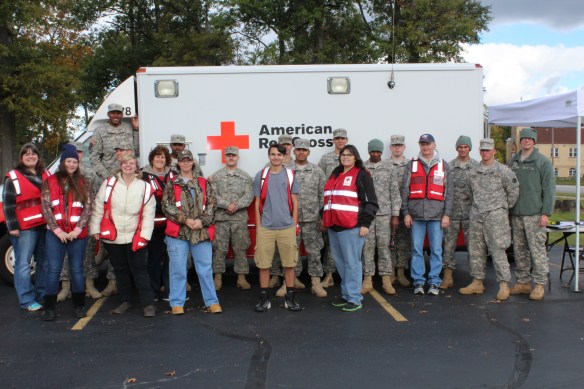
 On the First Day of Christmas, the Red Cross recommends that you install a SMOKE ALARM. Smoke alarms should be installed on every level of a home; outside bedrooms on the ceiling or high on the wall, at the top of open stairways and at the bottom of enclosed stairs and near (but not in) the kitchen. It is important to check your Smoke Alarms every month and replace their batteries when Daylight Savings Time begins in the spring and ends in the fall.
 On the Second Day of Christmas, the Red Cross recommends that you install a CARBON MONOXIDE (CO2) ALARM. Carbon Monoxide Alarms should be placed in hallways throughout the home. They should also be placed in recreational vehicles and on boats.
 On the Third Day of Christmas, the Red Cross recommends that you install a FIRE EXTINGUISHER. Install A-B-C type Fire Extinguishers in the home and teach all household members how to use them.
 On the Fourth Day of Christmas, the Red Cross recommends that you install a FIRE ESCAPE LADDER. Homes with more than one floor should have at least one Fire Escape Ladder stored on all floors, other than ground level. Store these ladders where they are easily accessible.
 On the Fifth Day of Christmas, the Red Cross recommends that you assemble a
  On the Sixth Day of Christmas, the Red Cross recommends that you assemble a
  On the Seventh Day of Christmas, the Red Cross recommends that you acquire a WEATHER RADIO. As the voice of the National Weather Service, a Weather Radio provides continuous broadcasts of the latest weather information directly from a National Weather Service Forecast Office. During severe weather routine broadcasting is interrupted and special watch and warning messages are issued.
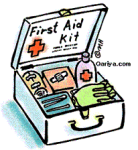 On the Eighth Day of Christmas, the Red Cross recommends that you get a
  On the Ninth Day of Christmas, the Red Cross recommends that you attend
  On the Tenth Day of Christmas, the Red Cross recommends that you purchase HOUSE NUMBERS. Each home should have its number posted clearly on the front door, over the doorway, or elsewhere on the front so emergency responders can easily locate it. Lives and property can be saved simply by using adequate house numbers placed where emergency workers can find them. You can purchase numbers at your local hardware store.
 On the Eleventh Day of Christmas, the Red Cross recommends that you purchase a FLASHLIGHT. As simple as a Flashlight is, it can become a very important tool to use during and after a disaster. Every family disaster supplies kit should contain a flashlight and spare batteries.
 On the Twelfth Day of Christmas, the Red Cross recommends that you create an
  There is nothing more frustrating (or hilarious, depending on how you view it) than going through your 72-hour kit and seeing a huge pack of newborn diapers intended to fit your 15-month-old toddler.
