The Red Cross remembers September 11

By Renee Palagyi, senior program manager, Disaster Cycle Services

Note from the Regional CEO: As we begin this day, 9/11—Patriots Day, I can’t help but remember the 3000+ people who perished on that fateful day 19 years ago.  My thoughts and prayers go out to the countless first responders and others, including Red Crossers, who sacrificed to render aid to those in need.  I’m sure we all remember where we were when we heard the news of the attacks on our nation.  As I think back to the people I called immediately, my wife & my mom, I encourage all of us to take a moment today to call those same people, if they’re still with us, and just tell them how much they mean to us.  Thanks for all you do!!  Please stay safe and well–enjoy your weekends.  Best regards…Mike

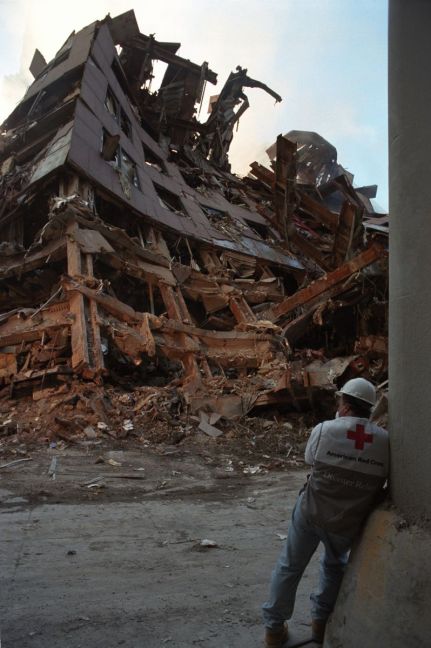
September 11, 2020- Today marks the 19th anniversary of one of the most infamous tragedies in American history: September 11, 2001.

Following the attacks on the Twin Towers and the Pentagon, along with Flight 93, the American Red Cross did what the Red Cross does when individuals are in need: support first responders, provide the world class Red Cross comfort and help individuals get back on their feet.
Immediately, the Red Cross:

  • Activated 6,000 Red Cross volunteers
  • Opened 13 Red Cross shelters
  • Sent disaster mental health workers to shelters, crash sites, airports and hospitals
  • Set up a mental health hotline
  • Opened respite centers for firefighters, police officers, port authority workers and others
  • Received 1 million calls on the blood donation line (the previous record in one day was 3,000 calls)
  • Every chapter in the nation supported stranded passengers at airports as air space was shut down
  • Launched the Family Registration Web, a predecessor to today’s redcross.org/safeandwell
  • Sent teams of Red Cross workers door-to-door in the Restricted Zone for families who had chosen to stay
  • After one year, the Red Cross had served 14 million meals for disaster workers and victims, mental health services for more than 237,000 people, and health services for 131,000 people.

To learn more about the Red Cross’ response following September 11, please read the following previous blog articles of reflection and rememberance:


10 Tips to Stay Safe this Labor Day Weekend

By Samantha Pudelski, American Red Cross volunteer

September 4, 2020- This year’s Labor Day plans may look a little different this year due to the COVID-19 pandemic. Whether you are staying home or venturing out, here are a few tips to enjoy the holiday weekend from the American Red Cross Northern Ohio Region.

First things first: make sure you follow the guidance of state and local public health officials with any activities you have planned. Whether it is a backyard barbeque or spending the day in the Cuyahoga Valley National Park, make sure you know what the latest COVID-19 guidelines for the area are.

Water Safety

If you choose to hang out this weekend on Lake Erie, at the pool or on any of our Northern Ohio waterways, make sure to swim only in designated areas that are supervised by a lifeguard. Make sure to maintain social distancing, both in and out of the water, between you and anyone who doesn’t live with you.

  1. Wear face coverings on land, especially when physical distancing is difficult. Do not wear them in the water as it may be difficult to breathe.
  2. Don’t share goggles, nose clips, snorkels, equipment or other personal items.
  3. Make sure to wear a properly fitted U.S. Coast Guard-approved life jacket while boating and have young children or inexperienced swimmers wear one around the water.
  4. A kiddie or inflatable pool can be a great alternative to going to a public place to enjoy the water. There should always be an adult supervising when children are in and around the pool. When swim time is over, make sure to drain the water from the pool and flip it over.
  5. Make sure to always supervise kids in or around water and avoid distractions. In group situations, designate a water watcher whose sole responsibility is to oversee the activity in the water until the next water watcher takes over.

Make sure you’re prepared by taking our free Water Safety for Parents and Caregivers online course and visit our Water Safety for Kids site for videos, activities and quizzes.

Heat Safety

Photo by Andrea Piacquadio on Pexels.com

While forecast for this weekend looks picture perfect, it’s always important to be mindful of the warm temperatures and the dangers that the summer sizzle can bring. Here are a few tips to always remember:

  1. Never leave children or pets alone in a vehicle. Temperatures inside a vehicle can reach dangerous levels within minutes.
  2. Drink plenty of fluids throughout the day even if you do not feel thirsty.
  3. Wear loose-fitting, lightweight, light-colored clothing. Dark colors absorb the sun’s rays, making you feel warmer.
  4. Keep your pets hydrated and cool too! Check on them frequently to make sure they are not suffering stress from the heat.
  5. Avoid strenuous exercise and activities during the hottest parts of the day when it’s hot out.

The American Red Cross First Aid app is a great resource to always have on your phone for information on how to treat heat emergencies.

Be sure to also take a virtual Be Red Cross Ready class to learn valuable preparedness information. Visit NOHRedCross.org/calendar for more information.

Being prepared is the first step to endure and recover from disaster

By Tim Poe, American Red Cross volunteer

September 1, 2020- September is National Preparedness Month, and this year’s events have underscored the importance of being prepared for a disaster in Northern Ohio as everywhere. The American Red Cross is also focusing on the needs of seniors in disaster preparation, as new research from the Red Cross Scientific Advisory Council and the American Academy of Nursing  finds that, “Older adults are more vulnerable and experience more casualties after a natural disaster compared to other age groups experiencing similar events.”

While Northern Ohio rarely faces large-scale disasters, we do face home fires, flooding, and tornadoes, among other events. In addition, the COVID-19 pandemic has demonstrated that all of us need to be ready.

To discuss preparedness for Northern Ohioans and the needs of seniors, I spoke with John Gareis, the Red Cross’s Regional Manager for Individual Community and Disaster Preparedness for Northern Ohio. John has a wealth of experience in preparing for and recovering from disasters of all types.

Preparation and lessons from COVID-19

John emphasized that in any disaster, including a pandemic, the needs remain the same: food, shelter, clothing, information, and emotional support. “Taking steps to prepare, before any emergency event would happen, is key,” he said. This is especially important for seniors.

John said the COVID-19 pandemic taught us to better prepare for emergencies. He pointed out that many were caught off guard, causing shortages of everyday staples. “People began to hoard and stock up on items taken for granted in everyday life,” he said.

We can learn from this, however. John recommended that every household prepare an emergency kit or supplies based on what is used every day. While having enough for at least three days is good, he said, supplies for one to two weeks is better.

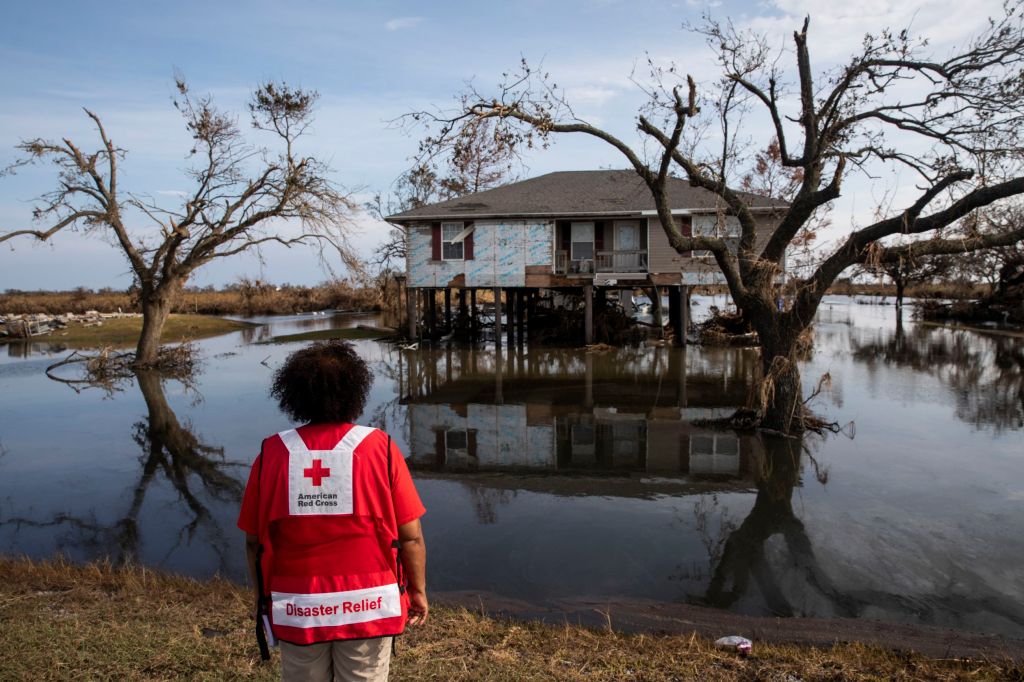
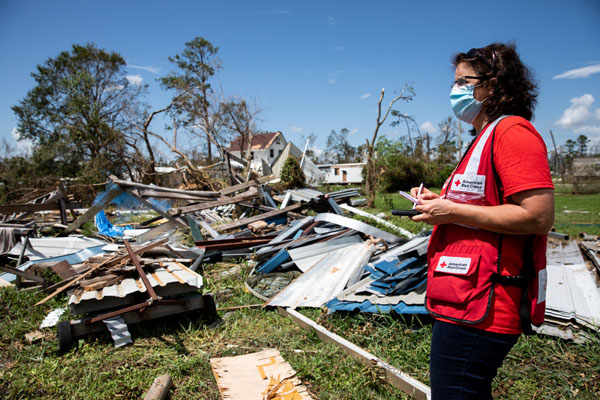
August 30, 2020. Cameron, Louisiana Pamela Harris of the American Red Cross looks out on a home destroyed by Hurricane Laura in Cameron Parish, LA, one of the hardest hit areas, on Sunday, August 30, 2020. Photo by Scott Dalton/American Red Cross

Especially consider necessities for seniors, children, and those with special needs. John pointed out that emergency supply kits don’t have to be expensive and can be gathered from items already owned. In addition to daily supplies, have copies of important documents and contact information for doctors, family, and close friends. He also said to think about your home and, if you had to evacuate in under two minutes, could you?

John also said, “Information is key in any disaster. Knowing what could happen and how to keep informed are the main things people need and want.”

Ensuring seniors are prepared

As older adults are more vulnerable during a disaster, the Red Cross especially encourages seniors to prepare, and that everyone ask older adults in their lives if they need help, whether relatives, neighbors, or fellow seniors.

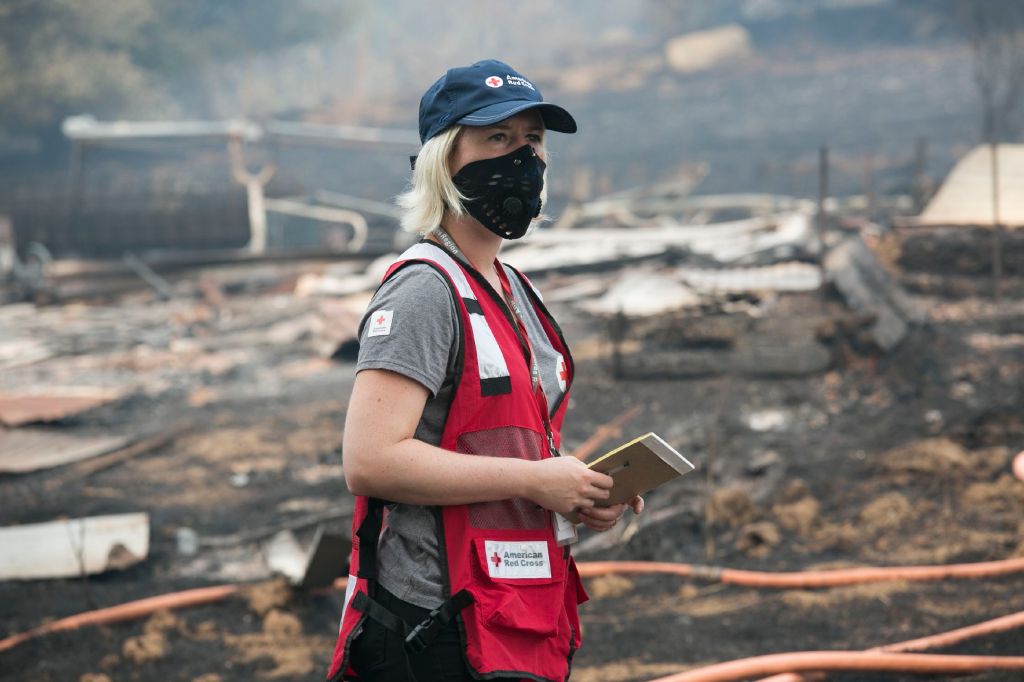
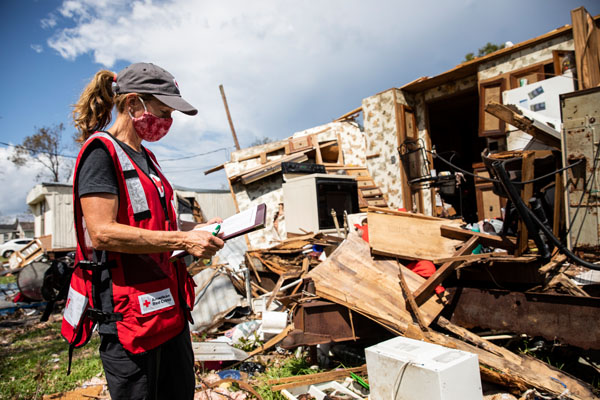
August 24, 2020. Vacaville, California. LNU Complex Fire burn zone on Pleasants Valley Road in Vacaville, California. Red Cross volunteer Jillian Robertson explores the burned area, stepping over discarded fire hoses that had been left behind. Photos by Dennis Drenner/American Red Cross

In addition to preparing supplies, seniors should maintain and grow communications and social networks. “In any emergency,” John said, “having someone to check on you or that you can check on is key. It’s the buddy system.”

For help preparing, please visit Emergency Preparedness for Older Adults, How to Prepare for Emergencies, and COVID-19 Safety Tips. Red Cross apps are available here.

Red Cross responds to disasters locally and across the country

By Eric Alves, American Red Cross of Northern Ohio

August 31, 2020- Disasters do not stop. Regardless of weather, time of year or even a pandemic, disasters do not pause and consider what else is occurring before affecting lives.

While disasters do not stop, neither does the American Red Cross in responding to disasters and assisting residents affected.

As if a pandemic wasn’t a large enough concern, the 2020 disaster season has been very active, with the Red Cross currently responding to the California wildfires and to the Gulf Coast following Hurricane Laura.

In the Red Cross’ disaster relief efforts in California, Louisiana and Texas, the Red Cross has deployed more than 1,900 trained disasters workers, including 24 from the Northern Ohio Region, to help the more than 25,800 affected residents by providing emergency lodging and along with partner organizations, have provided more than 47,000 meals and snacks.

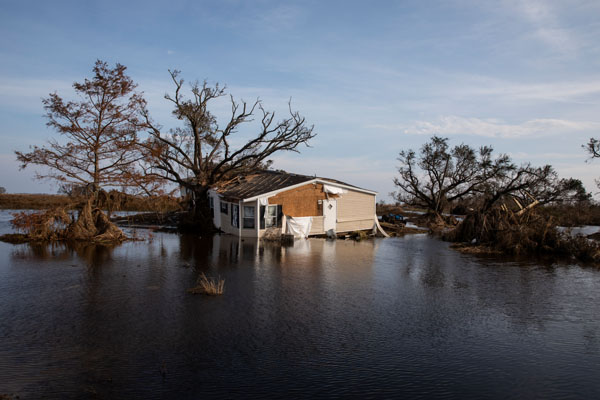
Homes destroyed by Hurricane Laura in Cameron Parish, LA, one of the hardest hit areas, on Sunday, August 30, 2020.

In Texas and Louisiana, the Red Cross is working with the World Central Kitchen, an organization founded by celebrity chef José Andrés, the Salvation Army and the Southern Baptist Convention to set up kitchens, which are able to serve tens of thousands of meals each day.

Along with deploying across the country, the Red Cross of Northern Ohio remains active back home assisting residents following local disasters, such as home fires.

Over the weekend, the Red Cross of Northern Ohio assisted 38 adults, 12 children and provided more than $10,500 in financial assistance for lodging and other necessities following disasters in Ashtabula, Cuyahoga, Harrison, Lucas, Stark, Summit and Wayne counties.

To date during Fiscal Year 2021, which began on July 1, the Red Cross of Northern Ohio has assisted 463 adults, 302 children and has provided $162,995 in immediate financial assistance.

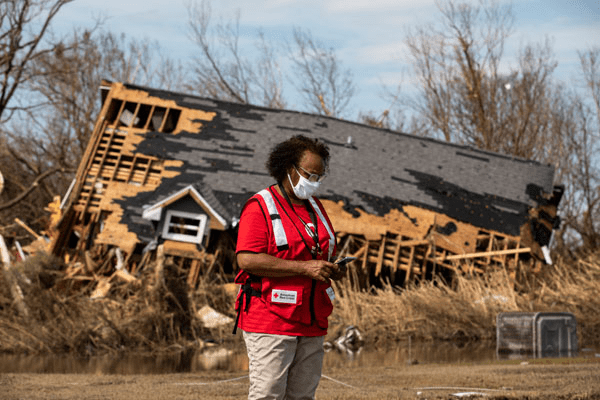
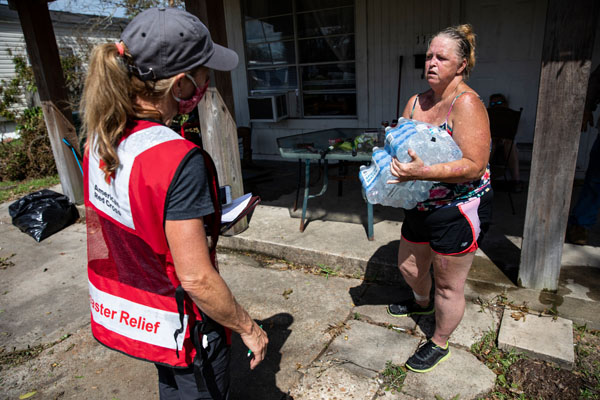
Carol Miller of the American Red Cross speaks with David Suarez after giving him a case of water, in an area that was badly damaged by Hurricane Laura in Westlake, LA

COVID-19 has not changed the Red Cross mission, and we are still providing the same types of support as we always have.

To help keep people safe, we are following guidance from CDC and public health authorities — and have put in place additional precautions. Some of these plans include social distancing protocols, face coverings, health screenings, and opening additional shelters that can support fewer people than normal so that we can ensure social distancing protocols.

Ensuring people have a safe place to stay during a disaster is a critical part of the Red Cross mission, but how we support sheltering efforts may be different in each community, depending on local emergency operations plans.

The Red Cross is in need of healthy individuals who want to assist their local communities and respond to disasters. For more information and to see high-demand volunteer opportunities, visit redcross.org/volunteertoday.

Unable to deploy? You can still make a difference in the lives of people impacted by disasters. Visit redcross.org or call 800-RED-CROSS to make a donation.

Donations enable the Red Cross to prepare for, respond to and help people recover from this disaster. This includes providing food, shelter, relief supplies, emotional support and other assistance.

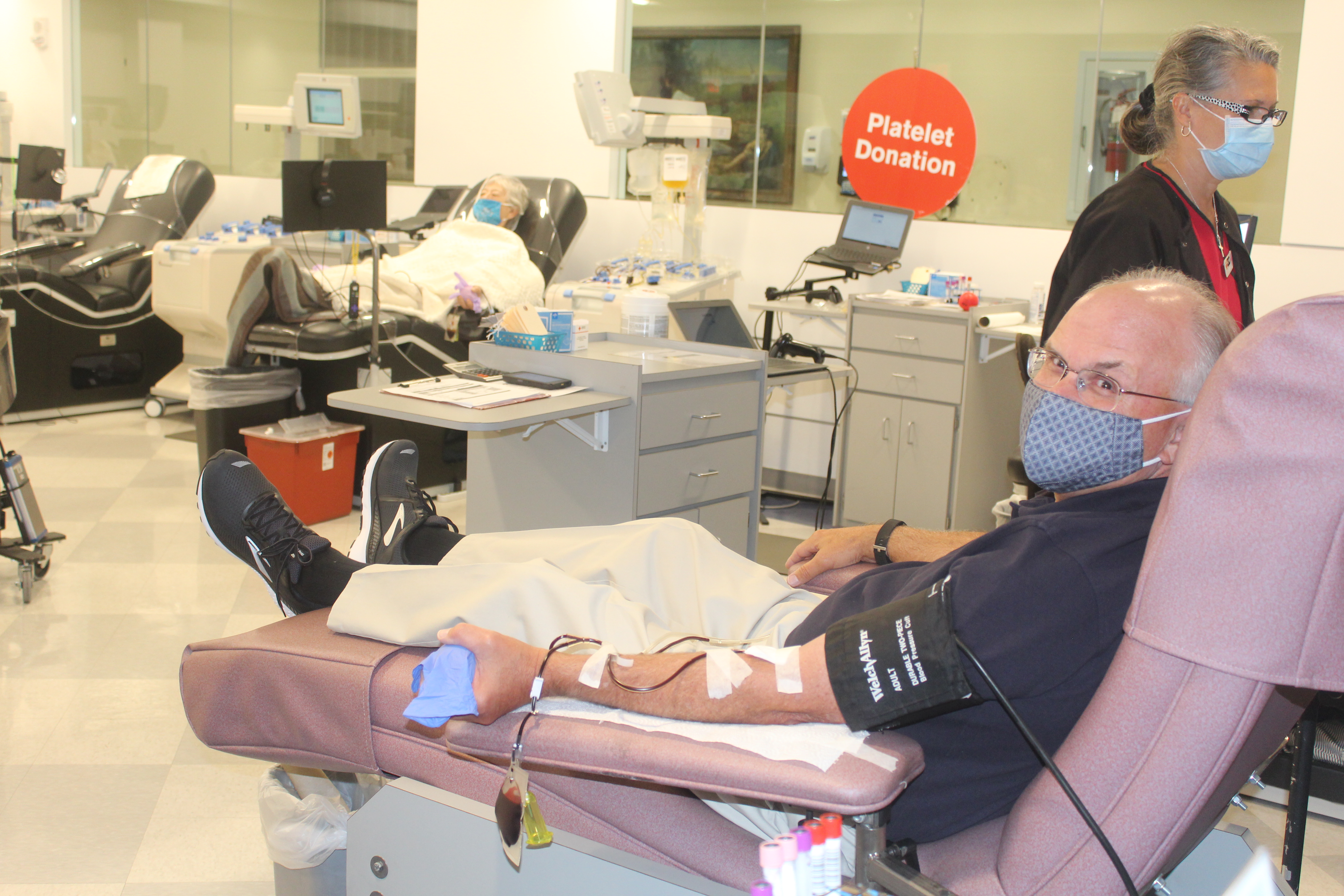
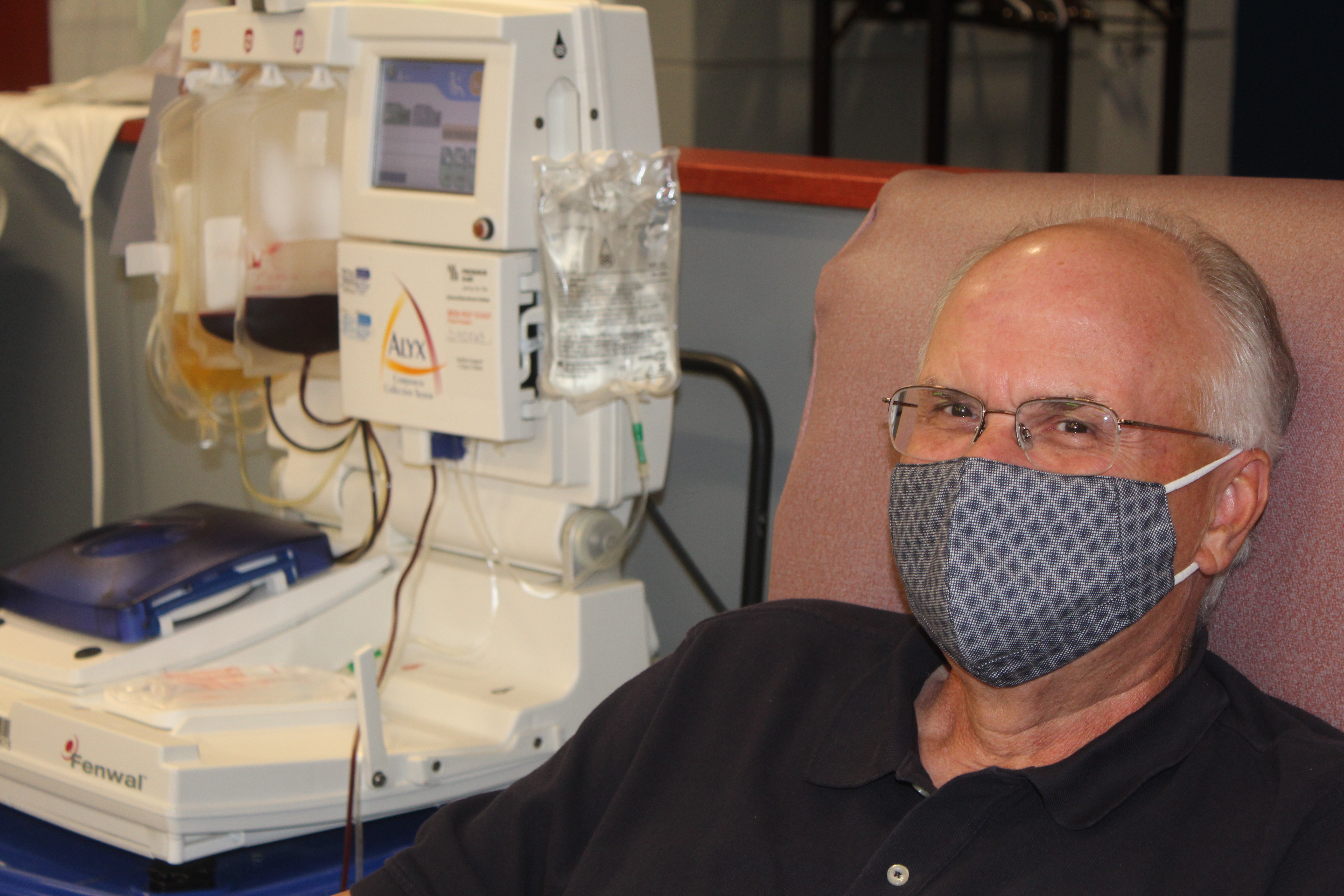
Husband and wife make convalescent plasma donation a family affair

By Sue Wilson, American Red Cross volunteer

August 28, 2020- You may have heard the term “convalescent plasma” as a potential treatment for COVID-19 (coronavirus) and are curious about it.

Simply put, convalescent plasma comes from patients who have recovered from the coronavirus. Plasma is the part of blood that remains after red and white blood cells are removed. It is rich in proteins and antibodies. Hospitals and research labs around the country are working to see if these antibodies can help the immune system fight COVID-19.

The American Red Cross has been collecting convalescent plasma from donors throughout the country who have recovered from COVID-19 for months. But this week, the FDA issued an Emergency Use Authorization for convalescent plasma as a treatment for COVID-19 research.

“The donation process on-site was effortless for me and hopefully, my plasma will help others,”

Ron Baumberger

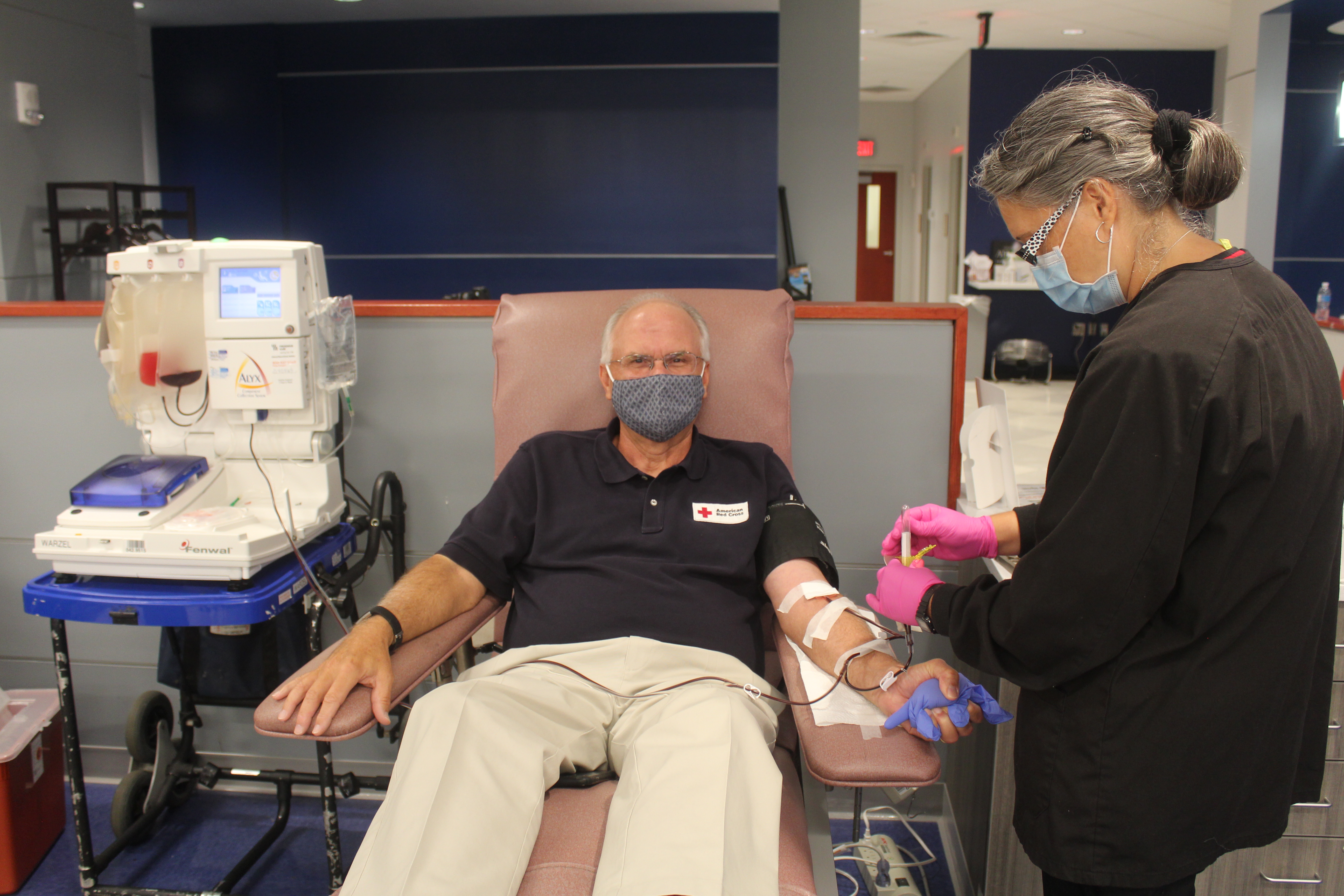
In Northeast Ohio, husband and wife Ron and Elinor Baumberger are answering the call to donate convalescent plasma after they both recovered from COVID-19. Ron donated this past Friday, and Elinor plans to donate next week.

Ron is no stranger to serving his community. Upon his retirement in 2013 after 32 years with Sherwin-Williams, he immediately joined the Red Cross volunteer team as a Disaster Action Team member and is now the Region Logistics Lead. During his time with the Red Cross, Ron has responded to over 200 local fires, flooding, helped at shelters and warming centers, and provided a host of other services. It’s no surprise that after years of donating his time and talent to the Red Cross, that when he and his wife Elinor came down with COVID-19, they would also want to donate their plasma once fully recovered. 

Ron and Elinor Baumberger

Ron considers himself lucky that he and his wife both had mild cases of COVID-19 that did not require hospitalization. They believe Elinor contracted the virus in January before it became widely known in the medical community. In June, the Red Cross began testing donated blood for COVID-19 antibodies. In July, Elinor donated blood, which tested positive for COVID-19 antibodies. 

In May, Ron came down with symptoms similar to Elinor’s. “I thought I was suffering from allergies or a sinus infection,” said Ron. “I found out I was exposed (through Elinore) to COVID-19 and started to identify my symptoms as fatigue, a minor sore throat, and loss of taste and smell.” His test came back positive. “Elinor had a worse case of it. But now, we have fully recovered with no post-illness symptoms.” 

“The donation process was quite simple,” Ron explained. “I registered from home, received a phone call to qualify me, selected my time and date, and the rest is history!” 

Ron said the entire process took about 90 minutes. “They explained the process, hooked me up and away we went! They continued to check on me periodically and answered any questions I had.” 

The Red Cross supplies close to 40% of the nation’s blood supply and is always in need of donors, but the pandemic has made the need especially dire. To learn more about blood donation or to find a blood drive or donation center near you, click HERE. The Red Cross is testing all blood donations for COVID-19 antibodies, and if your blood tests positive you may have the unique opportunity to help patients fighting the disease. Click here to learn more about convalescent plasma donations.

“The donation process on-site was effortless for me and hopefully, my plasma will help others,” said Ron.

Those who have received a verified  COVID-19 diagnosis, have fully recovered and have been symptom free for at least 14 days are urged to sign up to give convalescent plasma by completing the donor information form HERE.

Northern Ohio volunteers deploy across the country to assist residents in need

By Jim McIntyre, American Red Cross of Northern Ohio

August 24, 2020- Volunteers from Northern Ohio are preparing for the storms taking aim at the Gulf Coast and have responded to the current wildfires in California and the derecho that slammed the Midwest two weeks ago.

One of the joys of working with this team of volunteers is that several days ago we were strangers and in a short time we have become a team. We have no bosses. Everyone just seems to recognize each other’s strengths and everyone just naturally flows to what they do best to compliment the team. It is a beautiful thing to watch.”- John Lavelle, Northern Ohio volunteer

Three volunteers have deployed to California, 5 are providing relief to residents in Iowa, and 7 have been assigned to help with any tropical storm/hurricane relief efforts required because of Marco and Laura.

John Lavelle, a volunteer who is part of the Red Cross’ Iowa disaster response team, recently provided an update to the Northern Ohio Region about his experience:

“One of the first things you learn on deployment is that flexibility is paramount. Coming to Iowa, the original assignment was for feeding. However, after about two hours, the assignment became what they call a special strike force, where our primary mission was to find out what the residents needed and where to distribute the items.

One of our stops on Saturday (August 22) was a large apartment complex, which gave me tremendous appreciation for individuals who provide food to refugee camps in the hardest hit areas around the world. Trying to maintain organization and provide the items people needed at times overwhelmed us. Experience is by far the best teacher, and following this experience, the team came up with a plan as to what to do if a similar situation happens again.

One image that stands out to me was when a resident wanted a case of water and a large bag of 12 meals, both heavy objects. We told her we would hold one of the items for her until she came back, but she refused and placed the case of water on her head and carried the box of food in her arms. She made it appear as if she was born to do this.

One of the joys of working with this team of volunteers is that several days ago we were strangers and in a short time we have become a team. We have no bosses. Everyone just seems to recognize each other’s strengths and everyone just naturally flows to what they do best to compliment the team. It is a beautiful thing to watch.”

In addition, several volunteers responded to seven home fires in Northern Ohio over the weekend, providing immediate financial assistance to more than 30 children and adults.

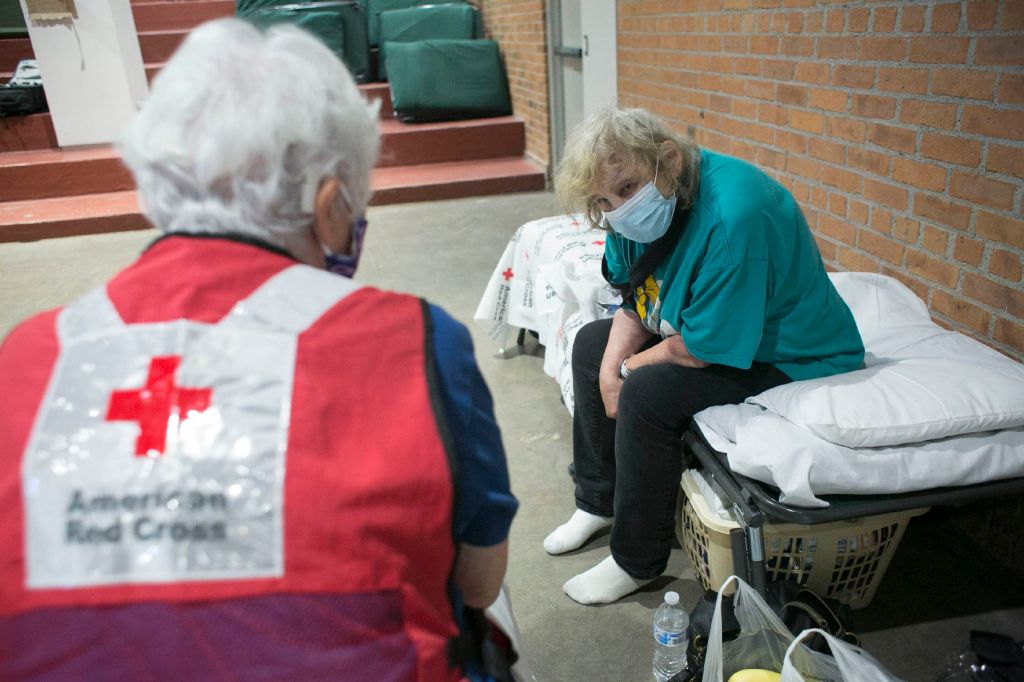
August 17, 2020. Veterans Memorial Colosseum Red Cross operated shelter. Cedar Rapids, Iowa. Red Cross nurse, Helen Caves of Indiana, talked with shelter client Grace about her health conditions and the state of her home while providing her a safe place to rest. Photo by Dennis Drenner/American Red Cross

Additional volunteers are needed to train for disaster responses, specifically to respond to home fires locally and to  staff shelters during national disaster responses. Licensed health care professionals are also needed to help people in disaster shelters.

People in good health and who are willing and able to receive free Red Cross training and can deploy for up to two weeks can visit www.redcross.org/volunteertoday, or can call 1-800-RED CROSS. The number one priority of the American Red Cross is the health and safety of our employees, volunteers, blood donors and recipients, and the people we serve, and we have implemented several measures, in accordance with CDC guidelines, to protect our workers and those who need our assistance.

Why celebrate World Humanitarian Day?

By Doug Bardwell, American Red Cross volunteer

August 19, 2020- If you watch or read world news, you undoubtedly know there are millions of people who live in conditions that we would consider “intolerable.” Those who strive every day to prevent and alleviate this human suffering, without regard to race, creed, sex, color or nationality, are humanitarians, and those are the ones honored each August 19th.

Every volunteer with the American Red Cross is a humanitarian. Here in Northern Ohio, our volunteers respond every day to local disasters, such as home fires, to help residents in need and provide comfort and support.

Our volunteers even deploy across the country to help provide humanitarian assistance. During the early hurricane and wildfire season in 2020, Northern Ohio has deployed more than 10 disaster volunteers to assist affected communities.

The Problem

You don’t have to listen to the news very long to comprehend all the challenges in the world today:

  • Armed conflicts are killing innocent civilians without regard to international conventions
  • Infectious diseases are becoming more prevalent and harder to contain
  • Lack of employment, housing, nutrition and medical supplies are all worldwide concerns
  • Climate change has decimated crop growing regions and endangered coastal areas with flooding
  • Authoritarian leaders have pillaged country’s coffers and jailed those who dare to protest

The Need

According to the 2020 United Nations (UN) Global Humanitarian Overview, responding to these needs is going to require an unprecedented effort.

  • 166,500,000 People are in need worldwide
  • 108,800,000 People have been targeted for aid by the UN. (Some countries will not allow UN aid)
  • $29,700,000,000 Required to meet their needs
  • $15,960,000,000 Funding received from UN members
  • $13,740,000,000 Yes, that’s a $13-billion shortfall for meeting the anticipated needs this year.

That’s a crisis in itself…

But, that’s not all

The above numbers represent day-to-day requirements for those in need worldwide. What they don’t include are disasters, which the Red Cross forecasts will be increasing each year due to climate change.

That is where the Red Cross comes in. Helping people prepare for disasters, responding immediately after disasters, and helping people reconnect and rebuild lives in the aftermath are all specialties of the Red Cross.

August 17, 2020. Veterans Memorial Colosseum Red Cross operated shelter. Cedar Rapids, Iowa. Fried chicken and vegetables is the ultimate comfort meal, served to shelter client Brian by volunteer Robert. Photo by Dennis Drenner/American Red Cross

Moreover, the Red Cross supplies humanitarians, more than 90% of whom are volunteers, who give of their time and talents to provide hope and comfort to others in their time of need.

Across the United States, nearly 372,000 volunteers give a little or give a lot of their time to be on-call for the next home fire, flooding event or other emergency. Won’t you consider becoming part of this country’s largest humanitarian organization? Explore the opportunities you might be qualified for by clicking here.  And remember to celebrate all the humanitarians actively working around the world each August 19.

Get emergency answers from your pocket with Red Cross apps

By Jason Copsey, American Red Cross volunteer

August 17, 2020- Preparation is the key to staying safe when disaster strikes. The American Red Cross continually promotes disaster preparedness measures, and offers a wide range of resources to help everyone stay as safe as possible during disaster season.

Red Cross mobile safety apps are powerful tools designed to place potentially life-saving resources in the palm of your hand. These free, easy to use mobile apps offer services that range from day to day useful information such as scheduling blood donations and common first aid, to disaster response information to keep you safe when you need it most.

The Emergency app is particularly helpful during disaster season, when weather is at its worst. Early warning is one of the most critical elements of any preparedness plan. With the Emergency app, users can monitor more than 35 different severe weather and emergency alerts.  The app features expert advice on what to do in case of hurricanes, earthquakes, floods, tornadoes, home fires, wildfires and more.

The Emergency app’s Family Safe feature allows users to notify loved ones in an affected area of an impending emergency or high-risk event. Recipients receive alert details, including specific safety recommendations, and can respond to indicate they are either safe or in need of assistance. This feature works even if the recipient has not downloaded the Emergency app.

Tennessee Tornadoes 2020

March 4, 2020. Nashville, Tennessee. Northern Ohio Red Cross volunteer, Doug Bardwell, reviews the damage caused by the destructive tornado on this neighborhood. Photo by Scott Dalton/American Red Cross

The app also provides emergency first aid detail for heart attacks, heat-related emergencies, water safety information and more. Preloaded content ensures users can access guidance even if connectivity is lost.

The free Emergency App is available at redcross.org/apps. Or, you can text: “GETEMERGENCY” to 90999.

Other Red Cross mobile apps include disaster-specific tools for users who live in geographies where certain risks are more common. These apps include Tornado, Flood, Hurricane and Earthquake. Each of these offer English and Spanish language options and are available at redcross.org/apps.

To learn more about the free mobile apps offered by the Red Cross, visit https://www.redcross.org/get-help/how-to-prepare-for-emergencies/mobile-apps.html.

This is what a socially distant response looks like

By Eric Alves, American Red Cross of Northern Ohio

August 10, 2020- This summer has been unlike any other. We have canceled vacation plans, avoided the pools due to safety concerns and we are even wearing masks and keeping our distance when visiting family and friends. However, one thing that has not changed, despite the coronavirus, is that emergencies still occur and the American Red Cross will be there to assist residents in need.

50210689657_ce6aecaa98_o (1)

Resident Kim Lane speaks with Red Cross Disaster Action Team member Jan Cooper

On Sunday, August 9, the Red Cross of Northern Ohio responded to a condo fire in Westlake that affected 15 residents. While the response was similar to past responses, it was also quite different.

The residents affected by the fire received immediate financial assistance, a cornerstone of Red Cross disaster response.  Those displaced by the Courtyard Condominium fire received a total of nearly $2,800 for a hotel room, food, and other immediate needs.

There were no hugs or handshakes, but the comfort the Red Cross is known for was there. Following CDC and Red Cross guidelines, Northern Ohio Disaster Action Team members wore masks, washed hands frequently, and kept their distance as much as possible.

Resident Kim Lane, upon receiving financial assistance to help her find a safe place to stay, said “It’s all very helpful. This will help with tonight (Sunday) and tomorrow. It takes a load off.  I’m very grateful.”

Jennifer Easton, who also received assistance with her husband Matthew said, “I wasn’t aware the Red Cross did this (aiding people affected by home fires.) I know they go to floods and hurricanes, but this is a revelation.”

Here is a video showing how the Red Cross maintained social distance during the response:

In addition to the Westlake response, over the weekend, the Red Cross of Northern Ohio assisted 24 residents and provided $5,760 in immediate financial assistance.

Since July 1, the Red Cross has assisted 307 adults, 220 children and has provided more than $111,000 in immediate financial assistance.

50209892198_6cf2712197_o

The Red Cross is in need of healthy individuals who want to assist their local communities and respond to disasters like the Westlake fire. For more information and to see high-demand volunteer opportunities, visit redcross.org/volunteertoday.

To see more photos from the Westlake socially distant response, visit our Flickr page.

Updated hurricane forecast highlights the need for volunteers to help people who have to flee their homes

By Tim Poe, American Red Cross volunteer

August 7, 2020- The National Oceanic and Atmospheric Administration (NOAA) is predicting an “extremely active” hurricane season with the potential to be one of the busiest on record, according to the agency’s annual August update.

Hurricane Hanna 2020

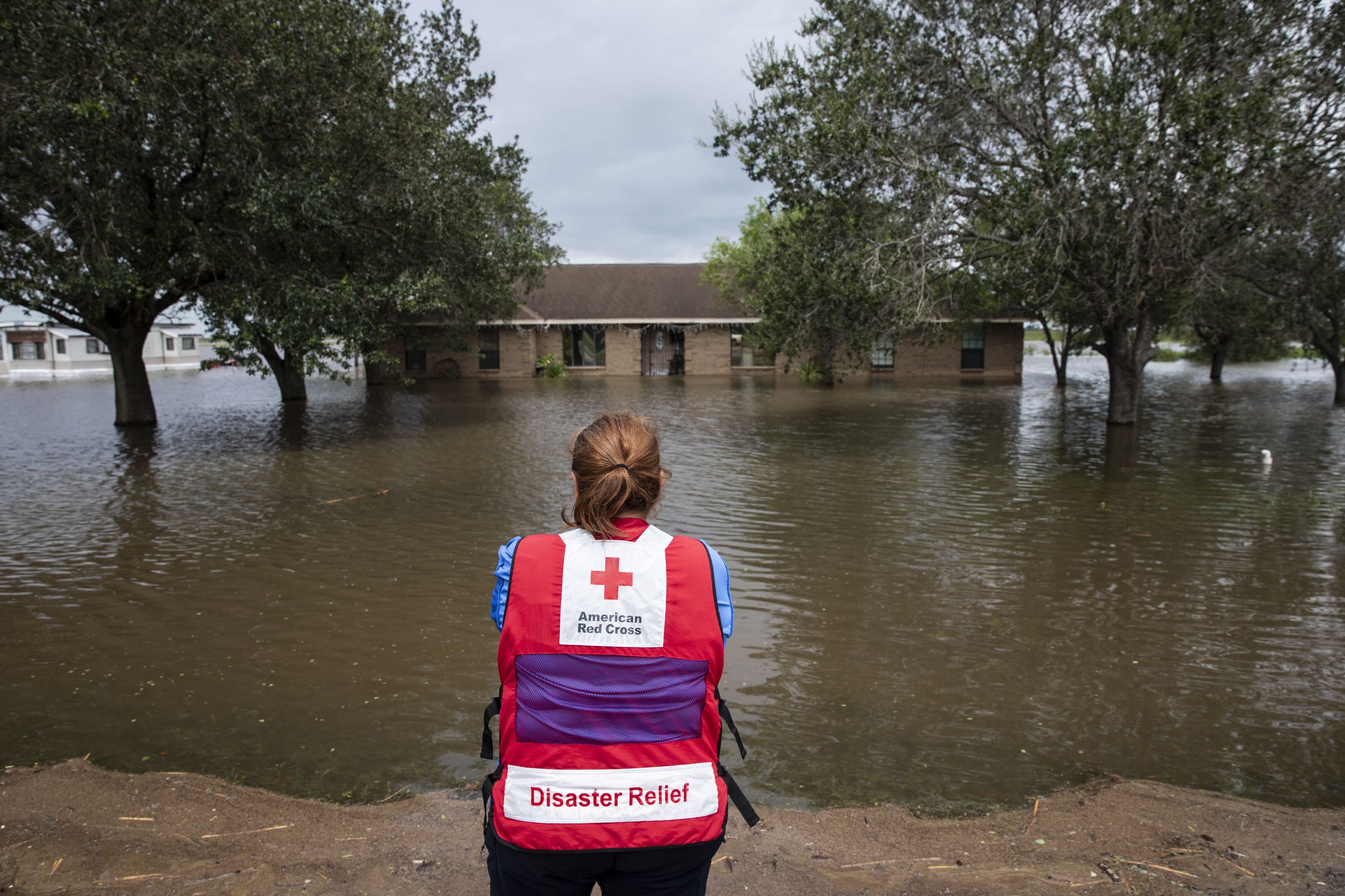
July 28, 2020. Edcouch, Texas Carol Holm of the American Red Cross surveys flooding caused by Hurricane Hanna, in Edcouch, TX on Tuesday July 28, 2020. Photo by Scott Dalton/American Red Cross

In order to prepare, the Northern Ohio Region of the American Red Cross is seeking volunteers able to train as shelter service or disaster health supervisors and associates. They must also be willing to deploy.

Already, 12 Northern Ohio volunteers responded to Hurricane Isaias, most of whom are physically deployed.

According to this press release, the NOAA now expects 19-25 named storms for the season, which ends November 30. 7-11 are anticipated to become hurricanes, including 3-6 major hurricanes with winds of 111 mph or greater.

This year’s storms are also expected to be stronger and longer-lived than average. While the outlook does not forecast landfall, we must be ready.

Whether you are a current Red Cross volunteer or interested in becoming one, please consider applying for the following positions. If you have any family members or friends who may be interested, please speak to them as well.

Shelter Services

As always, the Red Cross is committed to providing safe shelter following a disaster and is taking steps to keep shelter residents, volunteers, and staff safe during the pandemic, including using non-traditional shelters where possible. No matter the type of shelter used, volunteers are needed to help staff reception, registration, feeding, dormitory, information collection, and other vital tasks to help those impacted by a disaster. Associate and supervisory level opportunities are available.

Disaster Health Services

The Red Cross needs licensed medical professionals for a number of volunteer roles. These include:

  • Helping assess people’s health and providing hands-on care in alignment with professional licensure (RN and LPN/LVN).
  • Assisting with daily living activities, personal assistance services, providing health education, and helping to replace medications, durable medical equipment, or consumable medical supplies.
  • And possibly performing daily observation and health screening for COVID-19-like illness among shelter residents.

Both supervisory and associate positions are available. If you are an RN, LPN, LVN, APRN, NP, EMT, paramedic, MD/DO, or PA with an active, current, and unencumbered license, please consider volunteering. Ancillary roles are available locally for Certified Nursing Assistants, Certified Home Health Aides, student nurses, and medical students. RNs supervise all clinical tasks.

Hurricane Hanna 2020

July 28, 2020. Edcouch, Texas Juanita Casanova of the American Red Cross surveys flooding caused by Hurricane Hanna, on the outskirts of Edcouch, TX on Tuesday July 28, 2020. Photo by Scott Dalton/American Red Cross

If you are able to help or would like more information, please go to redcross.org/volunteertoday. The Red Cross covers travel and training expenses.