Full Circle: A Hurricane survivor joins the Red Cross mission to help others 

By: Kathryn Dean, American Red Cross volunteer 

In 1996, two hurricanes made landfall in North Carolina: Hurricane Bertha, a category 2 storm, followed 8 weeks later by Hurricane Fran, a category 3 storm.  The combined damages produced by these storms in North Carolina totaled over 2.5 billion dollars and caused the evacuations of over a million people.  
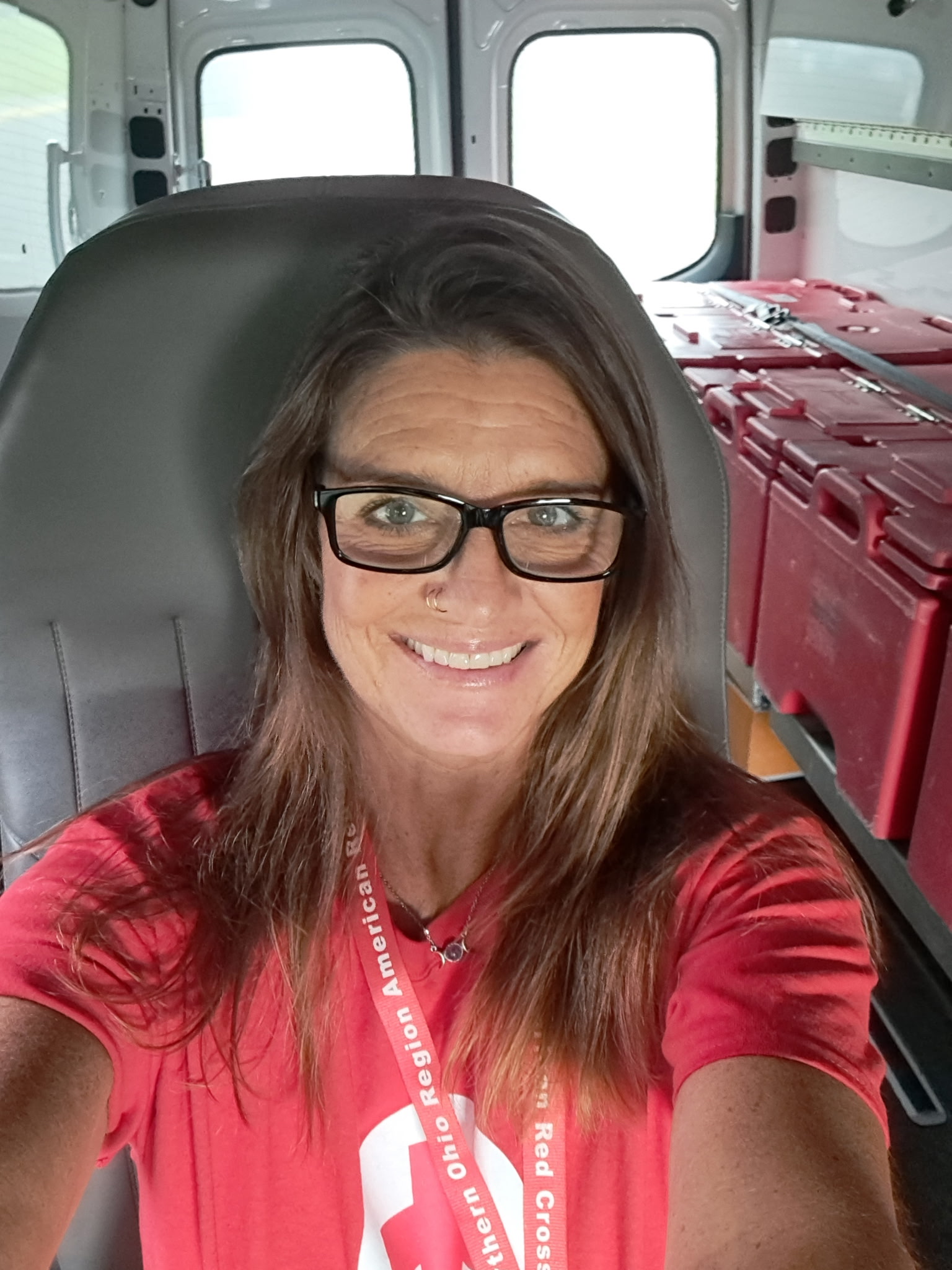
Natalie Whitmer, American Red Cross volunteer

Natalie Whitmer, an American Red Cross volunteer based out of Canton, Ohio, was one of those evacuees.  She was living in North Carolina at the time and experienced firsthand being displaced to an evacuation shelter run by the Red Cross.   

Following the storms, she and her husband returned home to assess the damage. “We found that the front half of our mobile home was destroyed.  That’s where my daughter’s bedroom was, so a lot of their clothing and their bedding and all of that stuff was lost.”  Natalie explained. 

The Red Cross had also deployed ERV vehicles, or Emergency Response Vehicles, which drove through their neighborhood and provided food and water after the storm. 

 “They had set up an office, and they just asked the address, where we lived, what happened, what I’m missing, what I need help with, and they gave me a voucher to be able to go and get diapers and clothing for my children, which was amazing…I think it was like six weeks we were without water and electricity.”  

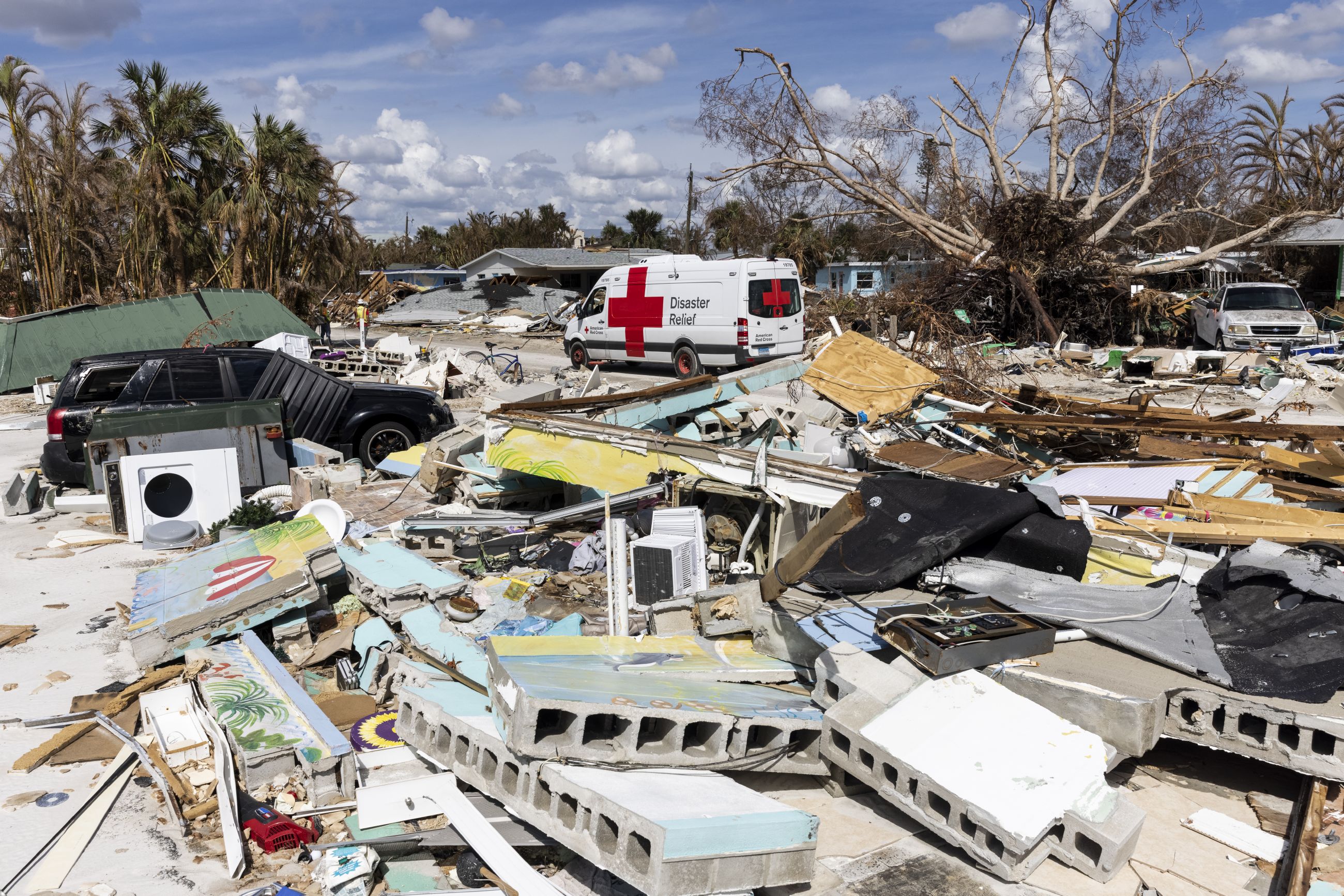
Her story came full circle when in 2024, now Red Cross volunteer, she was deployed to another pair of hurricanes, Helene & Milton, that hit within a 2-week timespan.  There she manned a Red Cross ERV and supervised an evacuation shelter.  Regarding that time, she reflected, “It’s amazing that I’m (now) on this end of it (and) able to do the same.” 

Since joining the Red Cross in 2023, Natalie has deployed multiple times to a variety of disasters, assisting in sheltering, feeding, and other vital roles.  She also now works as a Casework Supervisor Coordinator for the Northeast Ohio Chapter. 

“It’s extremely fulfilling and it’s just so comforting knowing that we have an organization out here that has all of this to offer,” she said.  “I never knew Red Cross had so much until I started working with them, and it just blows my mind. It’s just an absolutely beautiful organization, their mission and everything, and the people that run it, all the volunteers.” 

This holiday season, consider giving back to others by donating your time as a volunteer.  Click HERE to find out more about becoming a Red Cross Volunteer and all of the opportunities available at the Northern Ohio Chapter. 

Canada wildfires: One Northern Ohio Red Cross volunteer’s deployment story

By Ryan Lang, American Red Cross

As part of the global Red Cross and Red Crescent movement, national societies often support disaster response in neighboring countries. The American and Canadian Red Cross have a long history of this kind of collaboration, including sending volunteers to support sheltering and other disaster response work.

This summer, the American Red Cross deployed more than 115 trained disaster volunteers to help the Canadian Red Cross’s effort amidst the worst wildfire season in the country in the past 30 years.

Northern Ohio volunteer Paul Hiszem (second from right) with other Red Cross and Canadian Red Cross volunteers providing relief during the Manitoba wildfires, July 2025.

One of those volunteers is Paul Hiszem, from the Northern Ohio Region. Paul’s been a Red Cross volunteer for about five years and has been on nearly a dozen deployments. This one, however, was slightly different.

“We were expecting about 4,000 residents, but we only got about 400,” Paul said of the shelter he was working at in Winnipeg. “Residents of the affected communities were being evacuated by plane.”

Residents from outside Manitoba may not have had damage to their home, but were in mandatory evacuation zones, so they hopped on small planes and were taken to Winnipeg, where Paul and other Canadian Red Cross and American Red Cross volunteers and shelter workers were waiting for them.

“A vast majority of the people we were working with were indigenous,” Paul said. “Some of them didn’t speak English. Emotionally, that was a big challenge because they’d been away from home for so long. We interacted some, trying to keep them apprised of different schedules and things, but it was different, a different setup than a lot of the shelters I’ve worked before.”

With more than 100 volunteers joining the massive relief operation, it marked the largest support effort on behalf of the American Red Cross in Canada. Prior to this summer, in 2016, the American Red Cross supported relief efforts when an Alberta wildfire forced more than 88,000 residents of Fort McMurray and surrounding areas to leave their homes in search of safety.

Canadian Red Cross volunteers are no strangers to supporting disaster relief efforts in the U.S., either. In recent years, 56 Canadian Red Cross volunteers have deployed to disasters across the United States. The American and Canadian Red Cross are two of the 191 Red Cross and Red Crescent Societies that make up the International Federation of Red Cross and Red Crescent Societies (IFRC), the world’s largest humanitarian network. Often referred to as National Societies, their roles differ country by country, but they are all united by our Fundamental Principles and all strive for the good of humanity.

And that’s what Paul is doing as a volunteer – striving for the good of humanity and working to prevent and alleviate human suffering in emergencies. Hear more of Paul’s story on the latest episode of our Be a Hero podcast here. And click here to sign up to be a disaster volunteer.  

One year after Maui wildfires, remembering the importance of help and hope

By Tim Poe, American Red Cross volunteer

Today, August 8th marks the one-year anniversary of the Maui wildfires, the deadliest U.S. wildfire in over a century. Most of the town of Lahaina was devastated. 3,710 homes were destroyed or made unlivable, and the confirmed death toll is now 102. As always, the American Red Cross quickly responded to the disaster and worked with partner organizations to bring much needed assistance.

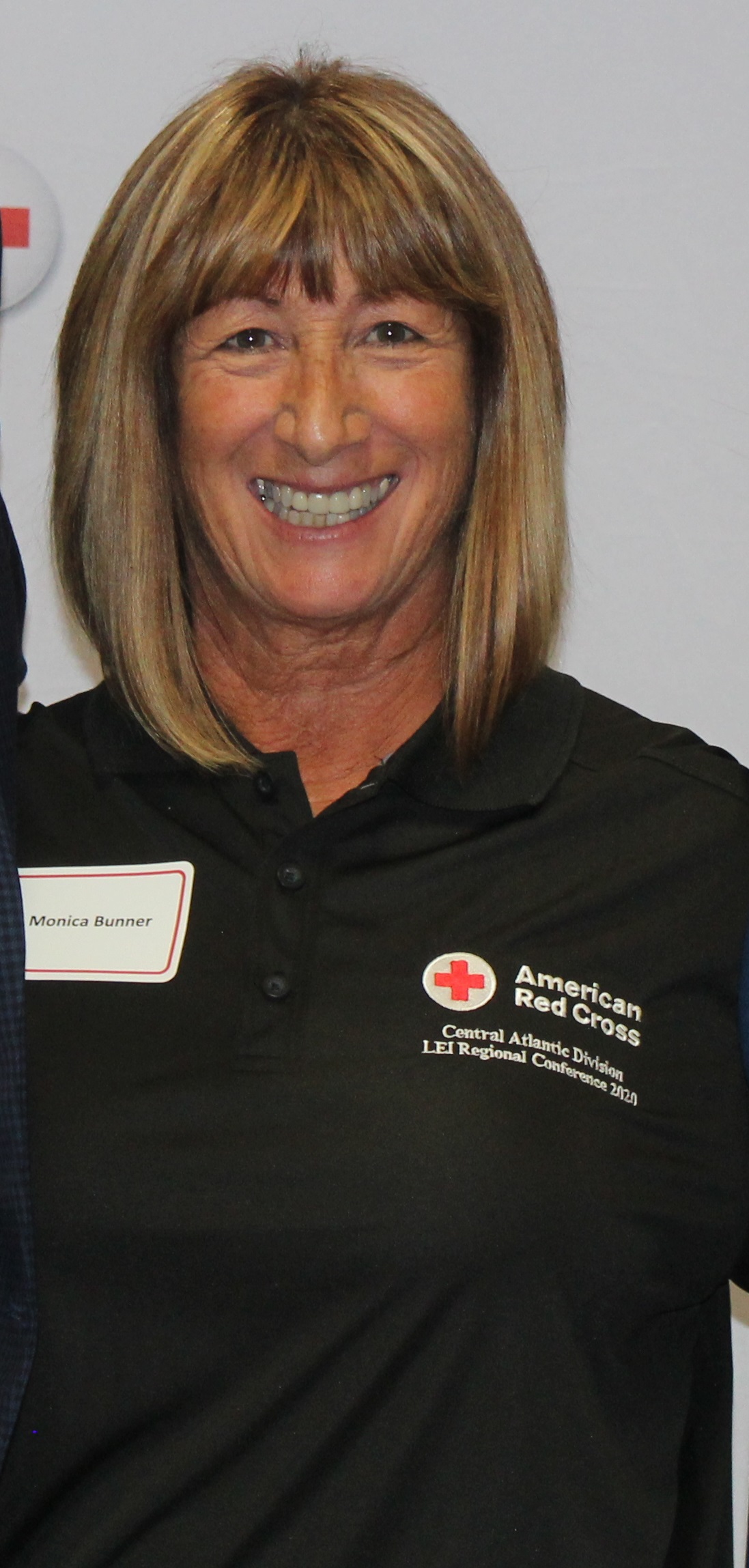
Several workers from the Northern Ohio Region joined the disaster relief operation on Maui, including Regional CEO Mike Parks, Regional Disaster Officer Emily Probst, Disaster Program Manager Tim Reichel, and Regional Communications Director Jim McIntyre. Several regional volunteers deployed as well, including IT specialist Randy Liang and Medina-based volunteer Monica Bunner.

Photos, from top left: Ohio Representative Dave Joyce and Mike Parks, Emily Probst, Tim Reichel, Jim McIntyre and Monica Bunner

For the anniversary, I spoke with Monica, who deployed to Maui for three weeks in late August and early September 2023, serving in the Disaster Recovery Operation headquarters as a Community Engagement and Partnership Manager.

Since she began volunteering with the Red Cross in 2017, Monica has deployed to several national disasters and serves as a disaster responder among other roles here in Ohio. Even with such experience, she had seen nothing quite like the Maui wildfires’ aftermath.

Randy Liang and Monica Bunner

Seeing the area following the disaster was a bittersweet experience for Monica. She had been to Maui several times before, mostly for relaxation, and knew the community. “I felt I really needed to be there to help,” she said.

And help was desperately needed. Monica said that the level of devastation was so widespread, and that the disaster unfolded with such speed that many of those affected were dazed, shocked, confused, and did not know how to proceed.

There was an immediate need for Monica to put her experience and organizational skills to work. Hawaii-based Red Cross personnel worked closely with those deployed from across the U.S., and the Red Cross coordinated with partner relief organizations and community representatives.

Monica said engaging and working with community leaders was critical, as Maui’s population is exceptionally diverse. (Maui County states its cultural heritages include Hawaiian, Japanese, Caucasian, Filipino, Chinese, Korean, Tongan, Samoan, and others.) As some groups were unfamiliar with Red Cross services and the commitment to help everyone following a disaster, Monica said ensuring all those impacted knew they had somewhere to turn for help was important, and she made sure to take time for everyone.

Each day, Monica had a stark reminder of the devastation. The shelter and headquarters were on opposite sides of Lahaina, and with each commute she saw the fire’s remnants and the growing memorials to the many lost lives.

And each day, Monica also saw the importance of Red Cross services. She and other Red Cross personnel took part in helping people find food, shelter, and supplies, locate loved ones, get critical information, receive financial assistance, connect with partner organizations, and find friendly, helpful faces and smiles. And most importantly, through all this, they helped people find hope. Monica said there is, “Definitely hope. Always hope.”

Watch this video on the one-year anniversary of the Red Cross response to the Maui Wildfires:

Finally, disasters occur each day, including Tropical Storm Debby, the current Park Fire, and home fires. Please consider volunteering or supporting the Red Cross.

Editor’s note: Hurricane Debby’s torrential rains are exacerbating the national blood shortage announced by the Red Cross on Monday.

Debby’s devastating flooding, power outages and travel hazards have forced the cancellation of blood drives in the Southeast, causing hundreds of lifesaving blood products to go uncollected when more donations are so desperately needed.

Tuesday’s tornadoes in Northeast Ohio also resulted in cancelled blood drives on Wednesday, resulting in about 130 donations going uncollected.

Even as we work to overcome this blood shortage, the Red Cross is providing food, shelter and comfort to communities affected by the hurricane in the Southeast and wildfires in the West. And disaster workers in Northeast Ohio continue responding to requests for assistance from residents whose homes suffered structural damage.

People urgently need aid now. You can help by making an appointment to give blood or platelets or financial donation by visiting redcross.org or calling 1-800-RED CROSS (800- 733-2767).

Posted by Ryan Lang, American Red Cross volunteer

This Giving Day #HelpCantWait: Help the American Red Cross deliver vital assistance

Red Cross Assisted 3,255 community members in Northern Ohio between July and February

By Tim Poe, American Red Cross volunteer

I first visited the American Red Cross’s Cleveland office on a bitterly cold day in February 2018 and began training as a new Disaster Action Team (DAT) volunteer. A few days later I was in a Red Cross vehicle with one of the most astonishing, kindest people I have met, heading to assist a family following a home fire. As we were providing the family with supplies, financial assistance, and information needed to begin recovering, the Cleveland Fire Department was extinguishing a large fire on the other side of town. We arrived shortly after, meeting a large family as water from fire hoses streamed from the home, the smell of smoke still heavy within. As before, we provided comfort, information, and the support this devastated family would need to recover.

I soon learned such a day is typical for Northern Ohio Red Cross disaster responders. I saw firsthand, how needed and effective the assistance is, and, how it helps families begin recovering from one of their life’s most difficult events. I also discovered that when people care enough to give–whether financial support or time–how much it helps those impacted.

I have also seen how vital Blood Services, Services to the Armed Forces, smoke alarm installations, and lifesaving training are.

March 22nd is American Red Cross Giving Day, part of Red Cross month, and we ask you to consider joining with others in the community to help continue the Red Cross mission.

And as disasters increase, your help is greatly needed.

To see how busy our region’s Disaster Action Team has been, I reached out to Emily Probst, Senior Disaster Program Manager, and Barb Thomas, Regional Recovery Manager, for the Red Cross’s Northern Ohio Region.

Red Cross volunteer Mark Dietrich responding to a home fire in Conneaut, Ohio

Between July 1, 2022 and February 28, 2023, Northern Ohio DAT members responded to 769 events, opened 1,214 cases, and assisted 3,255 people. Emily added that the team has responded to three apartment fires just in the last few weeks and praised their dedication, saying, “We could not do what we do without the DAT volunteers and their commitment to delivering mission at all hours of the day.”

While most disasters in our region are home fires–736 of the 769 events–the team also assisted following other disasters, including the train derailment and chemical spill in East Palestine.

East Palestine resident Michelle Massey took refuge in a Red Cross shelter for several days following the derailment of a train in February

In addition to financial support, you can help by:
– Donating blood. You will also receive a $10 Visa prepaid card throughout March and be automatically entered for a chance to win a $3,000 Visa prepaid card. Please visit
redcrossblood.org for details and to schedule a donation.
– Learning lifesaving skills by taking a class.
– And volunteering, which I have found to be an exceptionally rewarding experience.

However you wish to contribute, please consider taking part in Giving Day, as donor and volunteer support is vital. Please visit redcross.org/GivingDay or the links above, because #HelpCantWait.

Edited by Glenda Bogar, American Red Cross volunteer

Posted by Ryan Lang, Red Cross Board Member and volunteer

International Women’s Day: Women and the Red Cross

By Eilene Guy, American Red Cross volunteer

March 8 is International Women’s Day, when we focus on the leadership, expertise, nurturing and down-and-dirty sweat labor that women contribute around the world, 365 days a year.

Coincidentally, Women’s Day falls in March – Red Cross Month – when we focus on the wide range of humanitarian services that Red Crossers contribute around the world, 12 months a year.

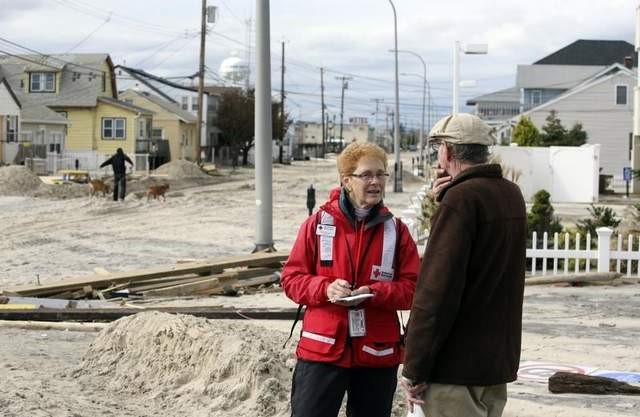
Red Cross volunteer Eilene Guy speaks with a resident of seaside Heights, New Jersey who refused to evacuate during Superstorm Sandy in 2012.

I’m proud to be part of the American Red Cross, which was launched by a woman, is headed by women, and values the talents and dedication of women at every level.

Women like my friend, Red Crosser extraordinaire Winnie Romeril. A volunteer for nearly 30 years, she has taught first aid and CPR, coached International Humanitarian Law classes, and served as a bilingual communicator at disasters all over the United States and across the world:

Sri Lanka and the Maldives; Peru; Haiti, carrying cash from the Red Cross to kick-start earthquake relief efforts with the Haitian Red Cross; the Philippines, where she even helped build a hanging bridge to get relief supplies to a remote village; Canada; Puerto Rico after Hurricane Maria.

She’s been posted to the International Federation of Red Cross and Red Crescent Societies in Geneva, Switzerland, to tell how the Red Cross brings hope across the world, and to Sierra Leone in Africa at the height of the Ebola outbreak, representing the World Health Organization.

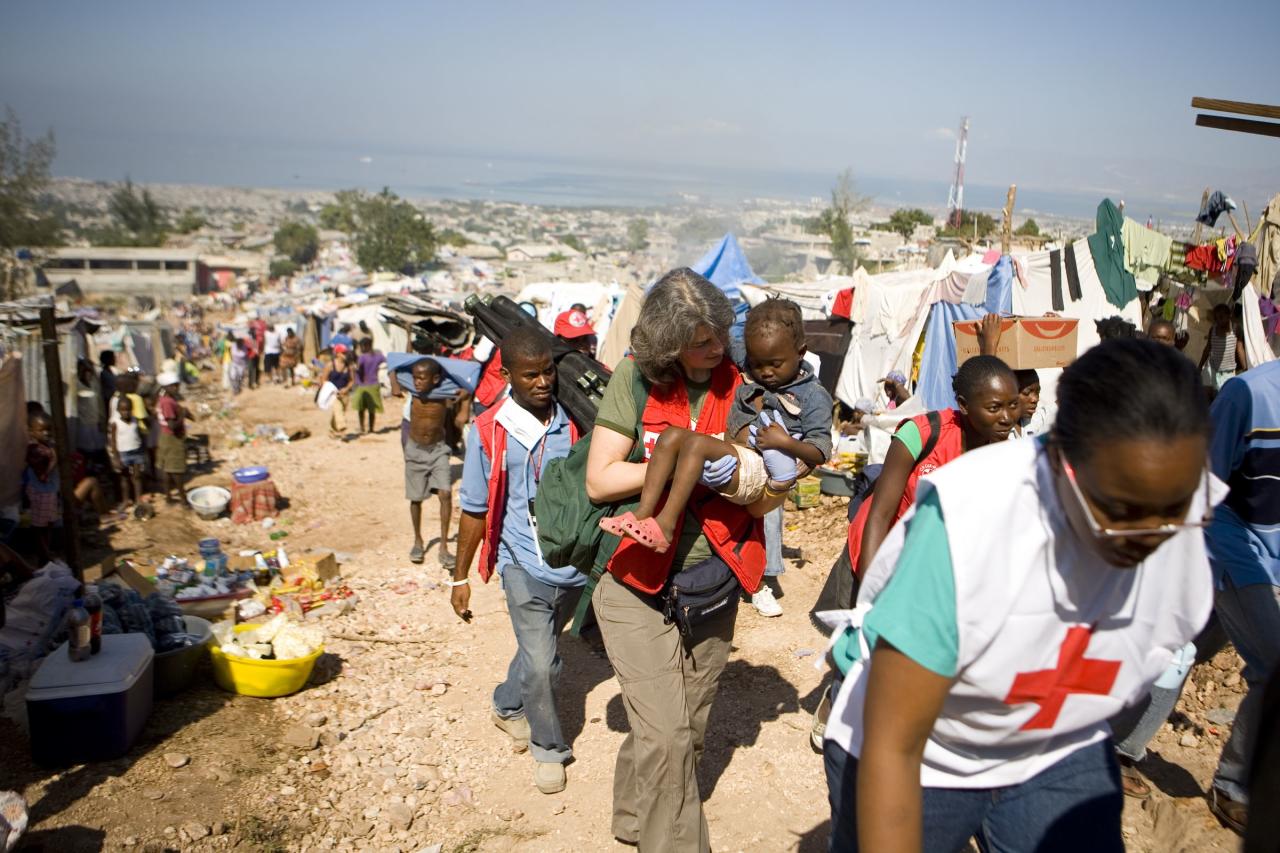
Winnie Romeril, a Red Cross disaster response volunteer, carries a child in Croix Desprez towards a First Aid Post.

Winnie’s courage and skill reminds me of Clara Barton, who started out as a teacher, became one of the first women to work in the U.S. Patent Office, and then took to the battlefields of the Civil War, ministering to the wounded and suffering on both sides of the conflict.

After attending to civilians during the Franco-Prussian War in Europe, she returned to the United States to found the Red Cross, which for more than 130 years has mobilized women – and men – to help prepare for, prevent and respond to emergencies.

Currently, two-thirds of our Red Cross volunteers are women, nearly 70 percent of the paid workforce is women and nearly half of the executive ranks are women.

Bonnie McElveen-Hunter, chairman of the board, and Gail McGovern, president and CEO, top the leadership team.

It’s no small job to head a $2.65 billion organization that Americans rely on to respond to more than 60,000 natural and human-caused disasters a year; collect and test some 40 percent of the nation’s lifesaving blood supply; train millions of people in first aid, CPR, AED, water safety and youth preparedness; and provide more than half a million services to our men and women in the armed forces.

People like me are the hands and heart of the Red Cross too: donating blood, responding to disasters, helping install smoke alarms to make neighborhoods safer, providing leadership at the chapter level and keeping my first aid, CPR and AED skills up to date.

I’m happy to celebrate International Women’s Day by focusing on women – past and present – who provide vital services. I know it happens all over the world every day, in actions big and small.

To investigate what you – woman or man! – can do, please check out redcross.org during Red Cross Month.

Posted by Ryan Lang, Red Cross Board Member and volunteer


Monica Bunner finds meaning, adventure, and fuel for the soul as a Red Cross volunteer

By Tim Poe, American Red Cross volunteer

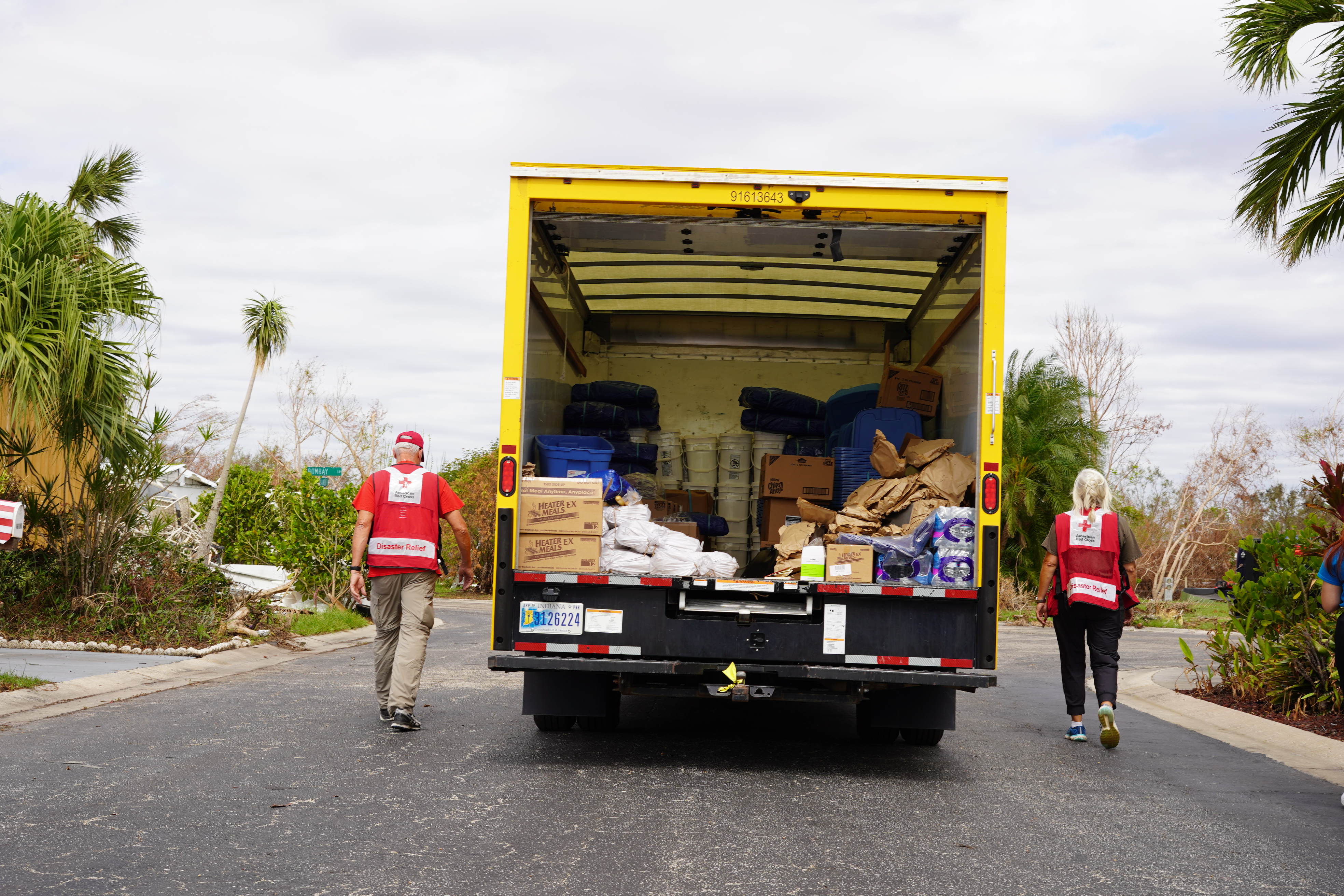
A truck navigates through areas devastated by Hurricane Ian, some previously inaccessible, arriving at a Florida camp. People of all ages and backgrounds wait, others emerge from their homes. Many are migrant workers. American Red Cross personnel, among them Monica Bunner, had worked with community members to ensure those here, like all who needed aid, receive it.

Monica Bunner, American Red Cross volunteer, in Florida after Hurricane Ian

As Monica opens the truck’s doors to distribute supplies from the Red Cross and partner organizations, she notes people’s expressions. Faces convey the realization they have not been forgotten; that people care. Monica describes the feeling as what Red Cross founder Clara Barton must have experienced caring for soldiers—, as fuel for the soul.

This was during Monica Bunner’s third deployment of 2022; her second to Florida after Hurricane Ian. She estimates she has deployed around 20 times since joining the Red Cross in 2017. Based in the Greater Akron and the Mahoning Valley chapter, she also serves in several capacities here in Northern Ohio.

I am often awed by the dedication, caring, competence, and experience of fellow Red Cross volunteers and staff. I recently spoke with Monica, who brings a lifetime of volunteerism, caring, and dedication to her work with the Red Cross.

Monica has volunteered throughout her life. Even before joining the Red Cross, her activities included helping people in women’s shelters, caring for animals, working with national organizations, and serving on local zoning boards. Her work helping animals is what brought her to the Red Cross.

In the aftermath of Hurricane Harvey, Monica was deployed with an animal welfare organization where she worked alongside Red Cross volunteers and decided to join.

Monica Bunner, Red Cross volunteer

Monica has since helped a tremendous number of people in many roles, including the three 2022 deployments. The first was to Puerto Rico in a disaster technology capacity role, where she assisted with flooding and helped prepare for the upcoming hurricane season.

Shortly after Ian, Monica deployed to Florida to supervise family reunification efforts. She spoke of the intensity of helping families reach loved ones, many of whom had medical issues. As several areas were not reachable, she worked with search and rescue personnel, a realtor, and others to help locate people. Monica described connecting the dots and reunifying a family as elating and sharing in the joy.

After taking a short break to celebrate her 32nd wedding anniversary, Monica returned to Florida and worked with community partnerships and engagement, particularly with Latino communities, as she is bilingual. She, her team, and partner organizations worked to reach those in need who may not have realized assistance was available. This deployment was when she brought supplies to the camp.

Monica said adventure has always been part of her approach to life, as well as a love of learning, and the Red Cross offers both. She said her Red Cross work is an opportunity to go out and do good with like-minded and like-hearted people. It also offers the ability to align belief with actions and fuel the soul.

For those interested in volunteering, Monica pointed out there are opportunities for all ages and backgrounds, but to be flexible as each deployment is different, and to “Go for it!” Visit redcross.org/volunteertoday to learn more.

Edited by Glenda Bogar, Red Cross volunteer

Posted by Ryan Lang, Red Cross board member and volunteer

Northern Ohio volunteer delivered supplies and hope in the wake of Hurricane Ian

By Michael deVulpillieres, American Red Cross

Destruction was everywhere as a large truck with an American Red Cross logo taped to its side made its way slowly through Coastal Estates, a small Fort Myers neighborhood lined with single family homes, most either wiped out entirely or badly damaged by Hurricane Ian.

On one side of the street, a stray cat wandered inside a blown-out manufactured home. A few doors down, the driver paused at the sight of a metal roof wrapped around a palm tree.

“Within 30 minutes, we had five feet of water here,” Reba Fennessy told Red Cross volunteers Lisa Mize and David Tolander. “It was so scary.”

American Red Cross volunteers David Tolander of Iowa and Lisa Mize of Huron, Ohio deliver relief supplies to a small neighborhood in Fort Myers, Florida, hit hard by Hurricane Ian. Photo credit: Michael deVulpillieres, American Red Cross

Mize, who is from Huron, Ohio, and Tolander, from Waterloo, Iowa, first met a week earlier after arriving in Southwest Florida to be part of the hurricane relief efforts. They were assigned to deliver supplies together in some of the hardest hit parts of the state.

Their presence meant more than the much-needed free relief items like tarps, bins, brooms, rakes, batteries, bleach and trash bags that filled their truck. Mize and Tolander also represented the reassurance that help would continue to be available as long as needed.

“We’re here where the Gulf (of Mexico) meets the Bay (of the Caloosahatchee River), so we got a double whammy,” Catherine Casby said. The storm surge, pushed by 160-mile-an-hour winds, destroyed so many of the homes around hers. Though damaged, her small house is still standing.

Catherine Casby, a resident of Fort Myers, Fla., hit hard by Hurricane Ian, speaks with Red Cross volunteer Lisa Mize. Photo Credit: Michael deVulpillieres, American Red Cross

Casby spends her days clearing debris, cleaning up inside, and keeping an eye on her neighbors. “We look after each other,” she said of her tight-knit community. In fact, the night Ian made landfall, Casby braved the winds and flood waters to check on residents next door, injuring her leg in the process.

While Mize, who works as a nurse back home, was handing out supplies, she asked Casby about her noticeable limp. Casby said she spent a few days in the hospital after the storm and is slowly recovering.

“That’s the hardest part, the stories,” Mize said of the physical and emotional scars left by Ian. Yet during her Red Cross deployment, Mize has learned how to “laugh and smile, even in the worst of it.” Her positive disposition and sense of humor lifted the spirits of those around her.

“The people are so appreciative of seeing anyone here,” Tolander said. “Many told us the Red Cross was the first and only people they’ve seen (helping).”

Fennessy recalled how, a week after landfall, the Red Cross was in Coastal Estates providing warm meals. “It made us feel that someone cared,” she said, her voice breaking up with emotion.

Before accepting some cleanup supplies from the truck, Fennessy looked up at Mize in the back of the vehicle and said, “If I could come up there, I’d give you a hug.” Mize promptly climbed down to share an embrace.

Despite having just met a week earlier, Mize and Tolander talked and joked as if they’d known each other for years. There was a seamlessness about the way they worked together.

“We’ve clicked really well,” said Mize, who recently joined the Red Cross. “This is my first deployment. But Dave has been on a lot, so he’s taught me quite a bit.” She paused. “He taught me that it’s OK to cry sometimes.”

American Red Cross relief is free to anyone with disaster-caused needs, thanks to the generosity of the American people. To become a trained disaster volunteer, like Mize and Tolander, go to redcross.org/volunteer or call 1-800-REDCROSS.

If you would like to support the Hurricane Ian response financially, visit redcross.org or CruzRojaAmericana.org, text the words IAN to 90999 to make a $10 donation, or call 1-800-HELP NOW.

Edited by Eilene Guy, American Red Cross volunteer
Posted by Ryan Lang, American Red Cross board member and volunteer

Former NEO Board member now volunteering in Florida to help neighbors deal with Hurricane Ian aftermath

By Betty Adams, American Red Cross volunteer

After learning that most of his Fort Myers-area neighbors were safe following the storm surge from Hurricane Ian, Brad Roller, a recent transplant from Cleveland, wanted to help the American Red Cross help others wherever he could.

Former Northeast Ohio Chapter board member Brad Roller. Photo Credit: Selena Hardy, American Red Cross

So he signed up as what the Red Cross calls an event-based volunteer, and immediately found himself with a Red Cross feeding team in a vehicle packed with hot food for people in the hard-hit region.

“Today’s my first day on the job,” Roller said. “I’ve never done feeding before, but I’m a very experienced eater.”

“He’s going to be great,” said Katherine Reilly, one of the two regular feeding team volunteers, as they finished securing insulated food containers, water and snacks in the vehicle.

“He’s going to see a lot of people in one of the most devastated areas of Fort Myers,” his new teammate, Travis Lindsay, said. “We’re going to Fort Myers Beach and a lot of folks there are grateful we’re there helping them.

“There’s no other source of food on that island other than us and the World Kitchen. So we’ll be meetin’ and greetin’ those folks and giving them food so they can back to cleaning up their houses.”

Back in Northeast Ohio, Roller was a Red Cross disaster action team member for years as well as a Northeast Ohio Chapter board member. Now living much farther south, he and his family had minimal damage from the storm. “I’ve seen the devastation on TV, and my motivation is to help where I can help,” he said.

Ft. Myers Beach after Hurricane Ida

Roller and his family had prepared for the hurricane. “I sat looking out my sliding glass doors watching things blowing all over the place. We were enough inland that we didn’t feel too threatened, but we were prepared to go into a safe room if our 160-mile-an-hour glass didn’t hold. Fortunately, everything did, and we just had minor damage, but it was pretty ferocious.”

Roller was one of six event-based volunteers scheduled of help with mobile feeding the day he joined the relief effort. The Red Cross welcomes spontaneous local volunteers, who receive a background screening and abbreviated training for tasks across the operation to help those still working to recover from historic wind and water damage across Florida.

To become a trained disaster volunteer, go to redcross.org/volunteer or call 1-800-REDCROSS.

American Red Cross relief is free to anyone with disaster-caused needs, thanks to the generosity of the American people. If you would like to support the Hurricane Ian response financially, visit redcross.org or CruzRojaAmericana.org, text the words IAN to 90999 to make a $10 donation, or call 1-800-HELP NOW.

Northern Ohio volunteer helps reunite families separated by Hurricane Ian

By Diane Weber, American Red Cross volunteer

“Hello. Red Cross? I can’t reach my parents!” 

The call comes in, and Monica Bunner of Medina and the American Red Cross Reunification Team get to work. They begin with an interview of the missing person’s family. Where do the missing persons live? When did you last hear from them? More questions follow:  Do they know their neighbors?  Do they attend a house of worship? Are they part of an organization such as Knights of Columbus? Are there places they like to frequent?  

Monica Bunner, Red Cross volunteer, Reunification Regional Program Lead

In this case, the parents had recently bought a home in Rotonda West, a golf community on the coast in central Florida. The son did not know the neighbors’ names, and a call to the golf clubhouse did not yield a connection. But Monica and her colleague, Tammy Miner of Maysville, Washington spotted a lead in their interview – the missing couple had just bought a home. A search of public records yielded the name of the realtor. On a hunch that the realtor lived in the area or perhaps remained in contact with the couple, Monica called the realtor. The realtor not only lived within driving distance, but he was also willing to drive to the couple’s home.  

The realtor reported that the couple were doing well but had no electricity or cell service to contact the family. The couple drove to a nearby town and reconnected with a very relieved son. 

Such is the daily experience for reunification workers Monica. Most of these requests are resolved with just a few phone calls.  

She explained the process: 

  • Calls for reunification assistance are typically initiated through the 1-800-RED CROSS portal, although some requests come from people who see the reunification team working in the field and tell them of their own missing persons. 
     
  • The requests are then vetted according to urgency, with priority going to people with medical issues or physical or mental disabilities or veterans. Unaccompanied minors are given immediate priority, as are requests from immediate family members. Friends searching for friends or work acquaintances are coached with suggestions for their own searches.  
     
October 7, 2022. Punta Gorda, Florida. Red Cross disaster relief worker Lynette Nyman gets a hug from darling Ava who evacuated to her grandmother’s home to be safe from Hurricane Ian. Photo by Marko Kokic/American Red Cross
  • If the reunification team decides to open a case for the missing person, more information is gathered, such as the physical appearance of the person and why that person decided to remain in the area and not evacuate. 

    “That information helps us to understand the missing person more fully,” explained Monica. “We find out if the person is afraid to venture out into crowds or if they refused to leave their pets, for example. That will help us in our search for them.” 
  • The reunification team then presses for more information. Is the missing person part of an organization such as Knights of Columbus or American Legion? Does he/she have a favorite site to visit, such as a library or museum or even a favorite store or restaurant? Is he active on social media?  
     
  • If none of the telephone detective work yields the whereabouts of the missing person, the Reunification Field Team heads out to the neighborhood, first to the address of the missing person and then canvasing the neighbors, churches, organizations, and local shelters.  
October 11, 2022. Ft. Myers Beach, Florida. Red Cross volunteers drive through some of the areas in Fort Myers Beach, FL, that were hit hardest by Hurricane Ian’s devastating winds and storm surge. They took their emergency response vehicle into the community to deliver hot meals to residents who have only just begun their cleanup efforts since being let back on the island on Sunday. Photo by Scott Dalton/American Red Cross

Last week, a missing grandmother was located in a Florida shelter. 

“I’m well and happy as a clam,” she told her family when she was found. “I’m sitting in a shelter. I’m well fed, and I’m watching TV with my friends.”  

Another successful case for the reunification team. 

“It is addictive,” cautioned Monica. “When you’re able to tell the family that you have found their family member safe and sound and see the relief on their faces, it is worth all the effort to find them.” 

Edited by: Jim McIntyre, Red Cross Regional Communications Director

Needed: Health and Mental Health Professionals to Volunteer

By Eilene E. Guy, American Red Cross Volunteer

Home fires, floods, hurricanes, wildfires. When American Red Cross volunteers respond to these disasters, they offer shelter, food and compassion — as well as health and mental health attention.

The public generally doesn’t see the health and mental health services. For the most part, they don’t show up in coverage of urgent disaster responses. But they’re critical in the first hours and days of helping victims cope with their new reality.

Lost medications, destroyed medical equipment, missed doctor’s appointments, emerging conditions such as COVID or the flu. These are all pressing needs that trained medical professionals know how to meet. And they can administer first aid for victims as well as disaster workers.

Meanwhile, licensed mental health professionals address the emotional side of a disaster, triaging who needs a few sessions with a skilled listener and who needs to be referred to local mental health resources for extended care.

Faced with an almost unprecedented number of natural and human-caused disasters, the Red Cross has launched a targeted recruitment drive: Be One, Bring One. The goal is to enlist volunteers from the medical and mental health fields. Trisha Horvath, RN MSN, from Kirtland, Ohio, is one of the leaders of this drive.

Trisha Horvath, Red Cross Volunteer, RN MSN, from Kirtland, Ohio

“I think all nurses are humanitarians,” Trisha said. “That’s why they do what they do, to alleviate suffering.”

The reality is, the vast majority of licensed medical and mental health professionals don’t have flexibility in their work schedules to volunteer for disaster response, much as they might like to, she said.

So Trisha is helping the Red Cross “think outside the box.” They’re emphasizing the opportunities for virtual “deployments” and the rewards to volunteers in the form of resilience training and CEUs — not to mention the personal satisfaction of helping people in their most vulnerable situations.

The Red Cross is approaching graduate school students and faculty as well as non-traditional workplaces where health and mental health professionals are found, such as insurance companies. Many of these folks already work virtually, so they know how to engage with people remotely.

Gail Wernick, the Red Cross Northern Ohio regional volunteer services officer, emphasizes that volunteer shift scheduling is flexible for on-call and scheduled commitments. Typically, volunteers are expected to be available, as needed, for two weeks every three months.

Gail Wernick, Red Cross Northern Ohio Regional Volunteer Services Officer

Gail’s goal is to have a roster of 21 trained disaster health volunteers with active and unencumbered licenses: RNs, LPNs, Licensed Vocational Nurses, Nurse Practitioners, Advance Practice Nurses, Medical Doctors, Doctors of Osteopathy or Physician Assistants. Tap here for more information or to apply.

Trisha is particularly concerned about what she calls the “dearth of mental health volunteers.” There are currently half of the goal of 17 such volunteers on the Northern Ohio team.

The Be One, Bring One campaign is aimed at currently licensed mental health professionals holding a master’s degree as well as retired mental health professionals who were in good standing when they retired and held a license within five years of onboarding as a Disaster Mental Health volunteer. Tap here for more information and to apply.

“We really appreciate the generosity of our health services and mental health volunteers. Needless to say, when people are struggling to cope with a disaster — – anything from a home fire to a flood or tornado — – immediate health and mental health support can be just as essential as food and shelter,” said Barb Thomas, Northern Ohio regional recovery manager for the Red Cross.

If you’re someone who’d like to help turn tragedy into hope in a rewarding opportunity to share your time and talents, visit redcross.org/volunteer to explore the wide variety of roles you can play, at home or away. And thank you!