40-year blood donor nears 35 gallon mark

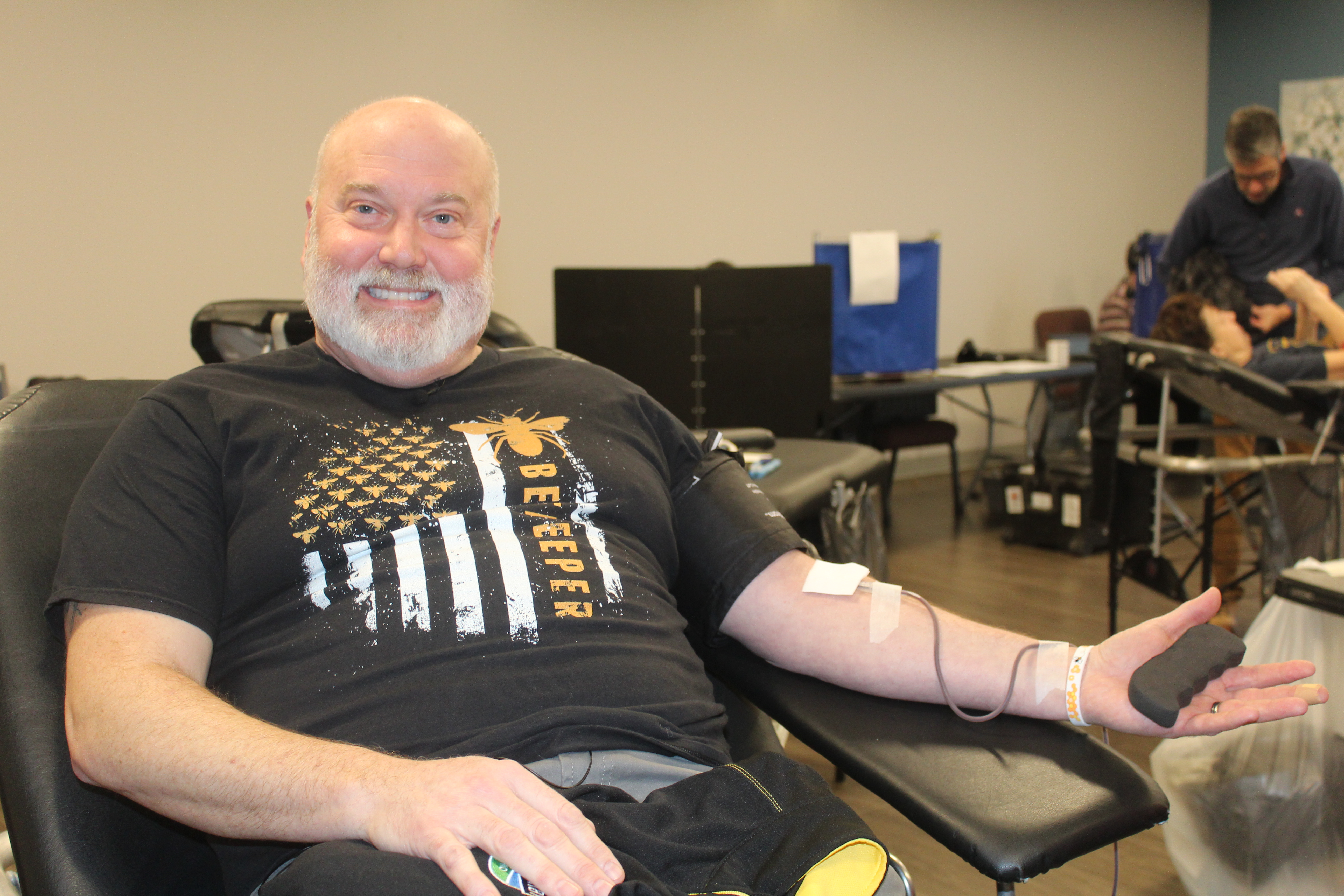
Gary Pfeiffer, of Wharton, Ohio, has donated nearly 35 gallons of blood. “I don’t make a big deal about it, it’s just another milestone for me. Once I got close, I started counting and keeping track,” said Pfeiffer.

Gary Pfeiffer, blood donor

Gary began donating blood more than 40 years ago, when a friend asked him if he had ever thought about it. When she suggested it to him, he thought that it would be something good to do, to help others.

He has donated at Red Cross blood drives throughout North Central Ohio, in Hardin County, Hancock County and Wyandot County.

And having O-positive blood, the most transfused type, Gary has had the opportunity to save many lives over the years. He has donated double red cells several times, which requires a longer wait time between donations.

Gary reached his 25-gallon donation a little over 9 gallons ago, at a drive in Upper Sandusky, Ohio. He says, “Christ gave His blood for everyone, the least I can do is help a few.” He plans on donating as long as he is able.

“I have gotten many little extras along the way, including my first pin, a set of 4 pins that when put together, make a red cross in the middle, a key chain, the document of my first donation, the original stick pin and gifts awarded with donations.”

“My wife made me a framed display of my pins, in the shape of a blood drop, which includes the stick pin, set of pins and key chain,” said Pfeiffer.

Pfeiffer Christmas tree

Gary and his wife Bettie create a different themed tree for Christmas every year. Last year, he said, “We chose to use my goal towards the 35 gallons of blood for our theme. Some drops are only partially viewable but there are 35 blood drops on the tree.”

Because his last donation was a Power Red donation (double red blood cells), Gary won’t be eligible to donate before this spring. But he plans to make his donation appointment as soon as he is eligible.

You can make an appointment to donate whole blood, Power Red or platelets by visiting redcrossblood.org, or by calling 1-800-RED CROSS. You can also make you appointment by downloading the Red Cross Blood Donor App.

Posted by Ryan Lang, Red Cross board member and volunteer

American Red Cross Taps Nursing Pool For New Blood Donor Ambassadors

By Ryan Lang, Red Cross board member and volunteer

Since the Civil War and the earliest days of the American Red Cross, nurses have been some of the biggest supporters of the mission. Red Cross founder Clara Barton was a nurse who risked her life supporting soldiers in the field. It is her legacy that all these years later inspires nursing students from colleges and universities across Northern Ohio to take part in the volunteer blood ambassador program. 

Dr. Mariann Harding of Kent State Tuscarawas is the Regional AS-L Coordinator with Kim Kroh, Executive Director, American Red Cross of Heartland, Stark and Muskingum Lakes

Dr. Mariann Harding, professor of nursing at Kent State University, Tuscarawas Campus, is coordinator for the Academic Service Leadership (ASL) program in Northern Ohio. ASL provides nursing students and nurses returning to college for their bachelor’s degree opportunities to volunteer in the local community.  Currently, about a hundred students participate in the program from Kent State University, both the Kent and Tuscarawas campuses, Case Western Reserve University, and the University of Akron.  

“Students in the Foundations of Nursing class have been volunteering as blood donor ambassadors for several years,” Dr. Harding said. “The donor ambassador experience has been a way to combine service with clinical-based learning.” 

Not only is the ASL program good for the community, Dr. Harding says it is also rewarding and beneficial for her students. “(They) enjoy giving back to the community and find volunteering a meaningful experience. They also learn about the donation process and the safeguards taken to protect the donated blood,” Dr. Harding added. “Many have given blood for the first time during their experience!” 

Kent State University Tuscarawas student, Penelope Cantu is a Red Cross Academic Service-Learning Blood Donor Ambassador volunteer.

Kent State University Tuscarawas student, Penelope Cantu, is a Red Cross ASL Blood Donor Ambassador volunteer. “Having the opportunity to volunteer at Red Cross blood drives has given me insight into how big of an impact blood drives are,” she said. “I had the pleasure of engaging with all kinds of people and listening to why they donate. Their stories helped me realize how much of a difference we all can make when we donate.” 

Find out more on the Blood Ambassador program and other volunteer opportunities here.

Local man donates blood for the first time in decades after LGBTQ+ restrictions lifted

By Kathryn Dean

Important changes to the U.S. Food and Drug Administration (FDA) guidelines regarding blood donations mean more LGBTQ+ community members are now eligible to donate blood.

Mark Fleischer, Blood Donor

This was great news for a local Northern Ohio man and former American Red Cross employee Mark Fleischer, who donated blood last week for the first time in over three decades. For eight years, Mark worked at the Red Cross, organizing and running blood drives. He currently does the same at the Willoughby Senior Center, and so is very familiar with the eligibility rules regarding blood donations.

Under the new guidelines adopted by the Red Cross on Aug. 7 of last year, donors are now asked a standardized set of eligibility questions, regardless of sexual orientation, sex, or gender. In addition, deferrals that previously restricted gay and bisexual men from donating have now been lifted and eligibility is decided on a case-by-case basis.

As a gay man, Mark was previously restricted from donating due to rules in place since the 1980’s, aimed at preventing the spread of HIV. Risks associated with HIV are now addressed in the new, standardized questionnaire and are based on individual behaviors and health histories.

Mark said that he was pleasantly surprised to hear of the changes late last year and was eager to donate and support the cause that he holds so dear to his heart. He encourages those who have previously been given deferrals in the past to check with the Red Cross website for updated information on eligibility.

“People who may think that they’re not able to donate because of maybe a drug they are taking or because of a travel restriction . . . times have changed so I would encourage everybody to take a look because you never know. That was exactly the case for me,” Mark said.

He also wants people to know the benefits of donating blood, especially since an emergency blood shortage was declared by the Red Cross last week.

Mark Fleischer, Blood Donor

“By taking those few moments and donating, you really could be touching the lives of somebody that maybe you don’t know, but it’s a gift that you can give through that donation. It doesn’t take a lot of time and it’s really, really, rewarding. I’m really excited about it,” Mark said. “That’s what I want to encourage people to do and not just gay men, but everybody. Whatever your sexuality is, whatever your gender, whatever your race. Roll your sleeve up, come on out, and help give the gift of life. I can’t encourage people enough to do that.”

Those who would like more information on this topic are encouraged to visit the Red Cross LGBTQ+ Donors page for detailed guidance and answers to many common questions.

For more information on donating, visit the Red Cross Give Blood page. During the month of January, all donors will be automatically entered to win a trip for two to Super Bowl LVIII in Las Vegas.

Edited by Glenda Bogar, Red Cross volunteer

Posted by Ryan Lang, Red Cross board member and volunteer
Beat the January blues by helping Red Cross overcome blood emergency

By Christy Peters, Regional Communications Manager

After avoiding it for a week and complaining about for much longer, I spent yesterday afternoon taking down and putting away my holiday decorations. It’s one of my least favorite things to do, for multiple reasons. It’s a tedious process because I have a lot of stuff and I can never remember what goes in which box. That leads to a not-so-fun game of decoration box packing Tetris that I never win.

Christy Peters, Red Cross Regional Communications Manager and blood donor

But I mostly put the task off because the first few weeks of January are my least favorite time of the year. I love everything about Christmas and packing everything up reminds me it’s over and I have to get back into a routine…back to work, waking up on time and not eating and drinking everything in sight! 

It turns out, I’m not alone. The “January blues” is a legitimate phenomenon felt by many, for almost all the reasons above. But this general malaise extends beyond diehard holiday lovers like me. January is also one of the most difficult times for the Red Cross to collect enough blood for patients. In fact, the organization is experiencing an emergency blood shortage as the nation faces the lowest number of people giving blood in 20 years.

Over the last 20 years, the number of people donating blood to the Red Cross has fallen by about 40%. When fewer people donate blood, even small disruptions to blood donations – such as the nearly 7,000-unit shortfall in blood donations the Red Cross experienced between Christmas and New Year’s Day alone – can have a huge impact on the availability of blood products and dramatic consequences for those in need of emergency blood transfusion. 

Blood products are currently going to hospitals faster than blood donations are coming in, and in recent weeks, the Red Cross has had to limit distributions of type O blood products – among the most transfused blood types – to hospitals. In Northern Ohio, more than 500 units of blood are needed every day to meet the needs of patients at more than 70 local hospitals.

The Red Cross is urging eligible donors to make an appointment to give blood now and in the coming weeks to help alleviate the shortage and ensure lifesaving medical procedures are not delayed. By giving blood for the first time, for the first time in a long time or just giving one more time this year than last, you can make a lifesaving impact.

To find a blood drive near you, download the Red Cross Blood Donor App, visit RedCrossBlood.org or call 1-800-RED CROSS (1-800-733-2767). All who come to give blood, platelets or plasma in January will automatically be entered for a chance to win a trip for two to Super Bowl LVIII in Las Vegas. Plus, helping save a life is probably the best antidote for the January blues!

Posted by Ryan Lang, Red Cross board member and volunteer
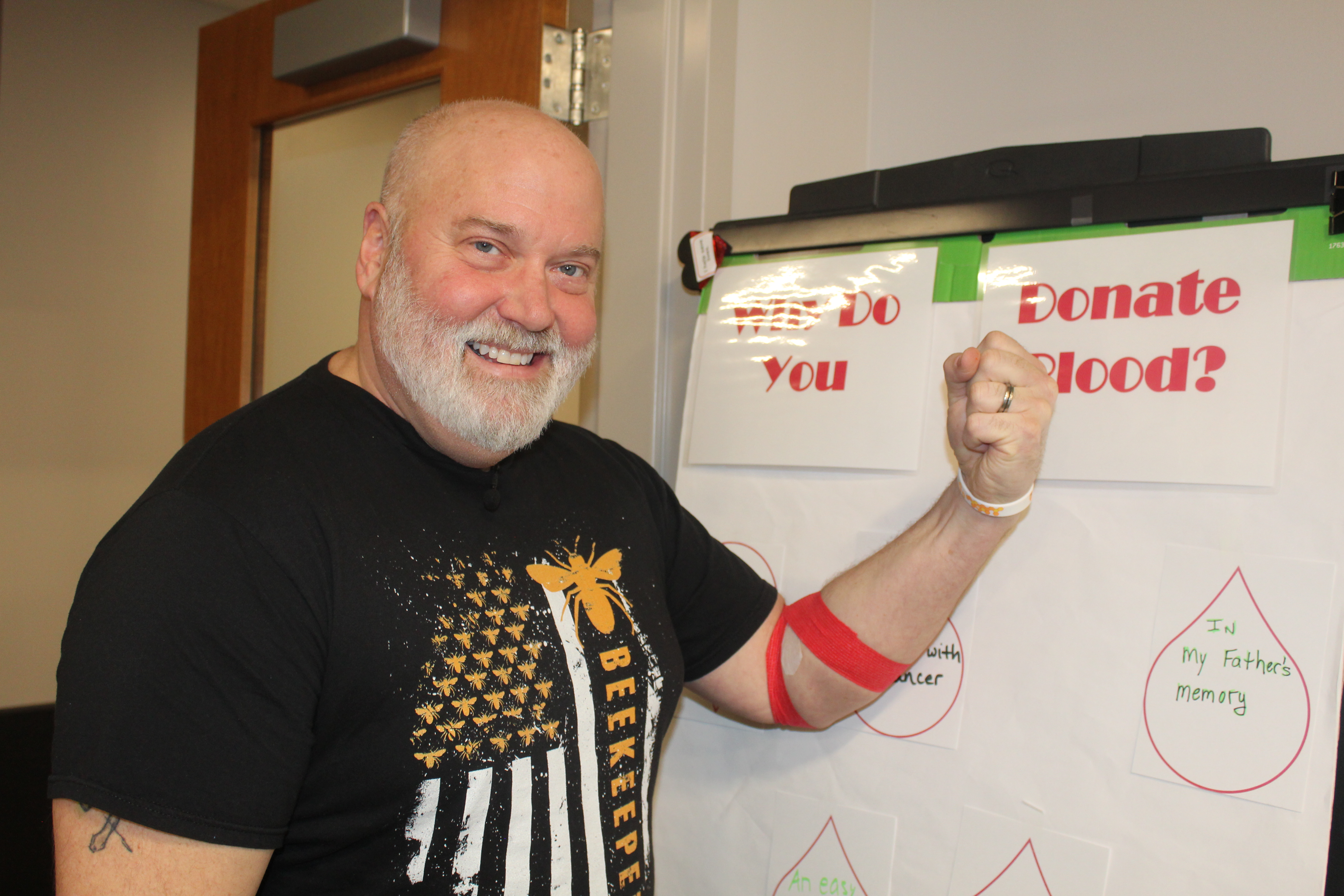
Give blood and go Browns!

January 5, 20204 – January is National Blood Donor Month and once again the American Red Cross and the National Football League are teaming up to help patients in need by urging individuals to kick off 2024 with a blood or platelet donation.

Those who come to give from January 1-31, 2024, will automatically be entered to win a trip for two to Super Bowl LVIII in Las Vegas to thank you for helping during the critical post-holiday time. The winner and guest will get to enjoy Super Bowl LVIII in Las Vegas, access to day-of in-stadium pre-game activities, tickets to the official Super Bowl Experience, round-trip airfare to Las Vegas, three-night hotel accommodations (February 9-12, 2024), plus a $1,000 gift card for expenses.

Terms apply; visit RedCrossBlood.org/SuperBowl for more information.

And for only the second time since 2002, there’s a chance to see the Cleveland Browns in the Super Bowl.

The Browns clinched a post-season appearance – only the third since 1999 – when they beat the New York Jets to win a wild card spot on Thursday night, December 28.  And while post-season football has been a rare occurrence for the Browns, the need for blood is a constant.  Every two seconds, someone in this country needs a blood transfusion.

Right now, there is a critical need for all blood types ─ especially type O ─ after the busy holiday season. This time of year is challenging when it comes to collecting enough blood and platelets to meet patient need. Winter weather and an increase in illnesses like the flu can affect blood donor turnout. However, the need for donations still exists. Patients are still counting on blood being available despite these challenges.

Donors are urged to schedule an appointment now. Schedule your next blood, platelet or plasma donation by using the Red Cross Blood Donor App, visiting RedCrossBlood.org or calling 1-800-RED CROSS (1-800-733-2767).

Volunteers – the MVPs of the American Red Cross

By Samantha Pudelski, American Red Cross volunteer

2023 was another successful year for meeting the mission of the American Red Cross in Northern Ohio, and it couldn’t have been done without the support of our volunteers. More than 1,500 volunteers reported contributing 58,000 hours in the Northern Ohio Region and on disaster relief operations since July 1, 2023 (Fiscal Year 2024).

Volunteers and staff at the Red Cross of Greater Akron and the Mahoning Valley

As we reflect on 2023 and look forward to the new year, some of the leaders in the Northern Ohio Region shared their gratitude for our volunteer workforce for giving their time, expertise and talent to help our community this past year.

“The individuals who volunteer for our mission are truly some of the most dedicated people I have ever encountered. They provide so much more than a hug or a handshake. They provide hope to people on truly their darkest day. That is invaluable.” – Rachel D’Attoma, Executive Director, Red Cross of Greater Akron and Mahoning Valley.

“Working alongside our volunteers is one of the greatest privileges of my career. Thank you for all you do to make our mission so impactful!” – Rachel Hepner-Zawodny, Executive Director, Red Cross of Western Lake Erie.

Volunteers Rick McCullough and Al Irwin

“Our volunteer family is the heart and soul of the Red Cross. Every day, they give of themselves to those who need help in our communities. I want to thank every one of our volunteers for the amazing work they do and the compassion they show to those who need our help. It is truly and honor to work beside such amazing men and women.” – Todd James, Executive Director, Red Cross of North Central Ohio.

“The best part of my job is working with our incredible volunteers. It is an honor and privilege to work alongside of them, and because of them, our mission is delivered each and every day!” – Kimberly Kroh, Executive Director, Red Cross of Heartland, Stark and Muskingum Lakes.

“One of the most important things I’ve learned since joining the Red Cross, and has now been firmly ingrained in me, is the critical importance of our volunteers! If it weren’t for our tremendous volunteer workforce, there would be no American Red Cross. Pure and simple—they are the “lifeblood” of the world’s premier humanitarian organization! I am inspired by our Red Cross volunteers each and every day—they are a true blessing!” – Mike Parks, Chief Executive Officer, Red Cross of Northern Ohio.

Volunteers providing meals for residents forced to stay in a shelter last summer

90% of the Red Cross workforce are volunteers and serve in roles at blood drives and our blood donation centers, supporting our regional work, responding to disasters and more. If you are interested in volunteering with the Red Cross, visit our website here.

Read more about the impact made by our volunteers at our Year-in-Review page here.

Happy birthday, Clara!

By Eilene E. Guy, American Red Cross volunteer

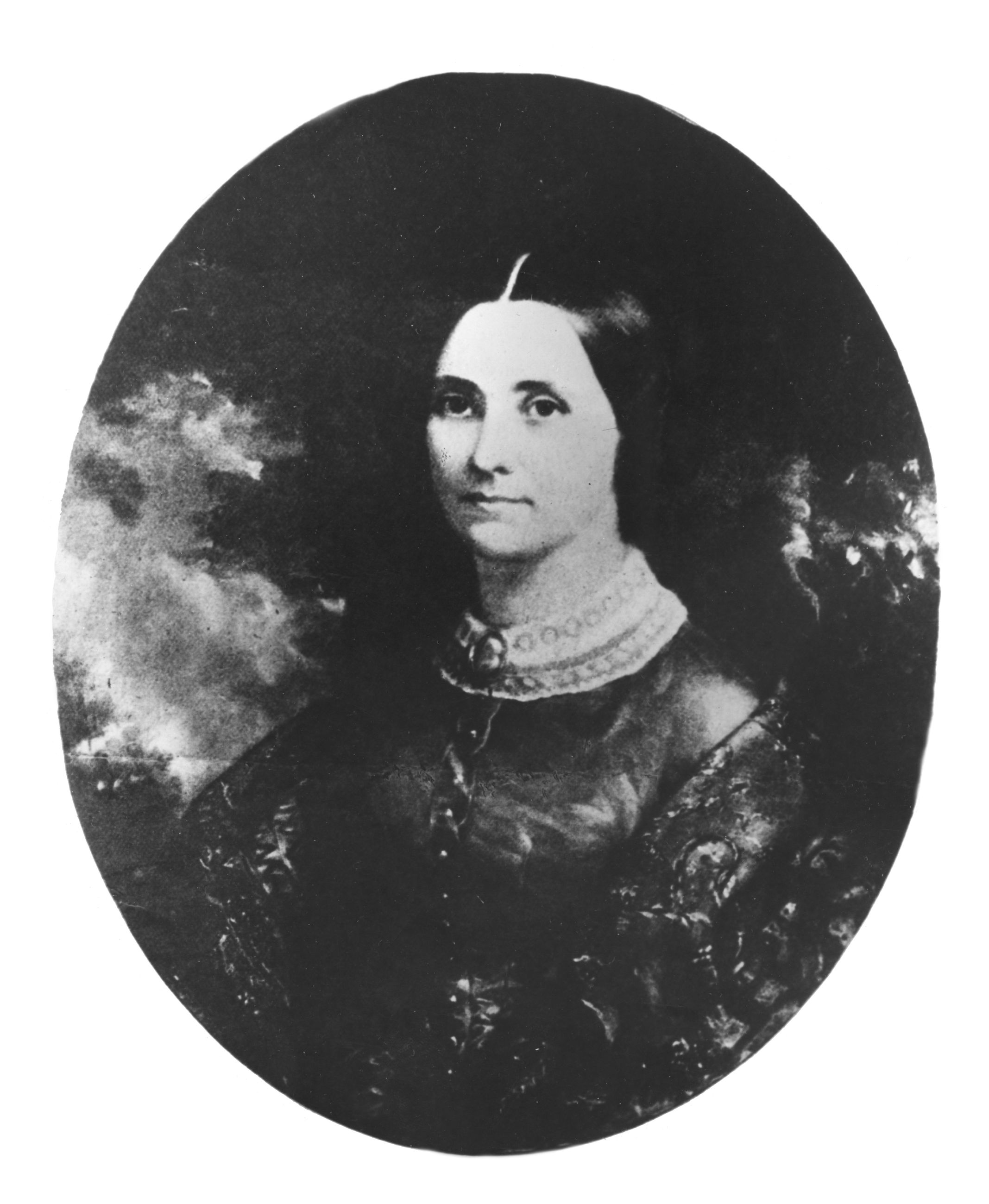
Clara Barton was born on Dec. 25, 1821, 202 years ago today. What a gift she turned out to be!

National Gallery, Washington, DC. Henry Inman’s portrait of Clara Barton.

Clara was a trailblazer throughout her life, but her most impactful legacy is the organization she founded in 1881, the American Red Cross.

Although she never married or had children, her “baby” has moved millions of people to give their time and talents to help even more millions of people prevent, prepare for, respond to, and recover from emergencies.

One of the things I admire about Clara was her ability to adapt. That “semper Gumby” (forever flexible) ethos guides the organization to this day.

In 1882, Clara sent her right-hand man, Julian Hubbell, to assess damage from floods along the Ohio and Mississippi rivers and provide relief. Clara managed fundraising, including $3,000 from the German Red Cross.

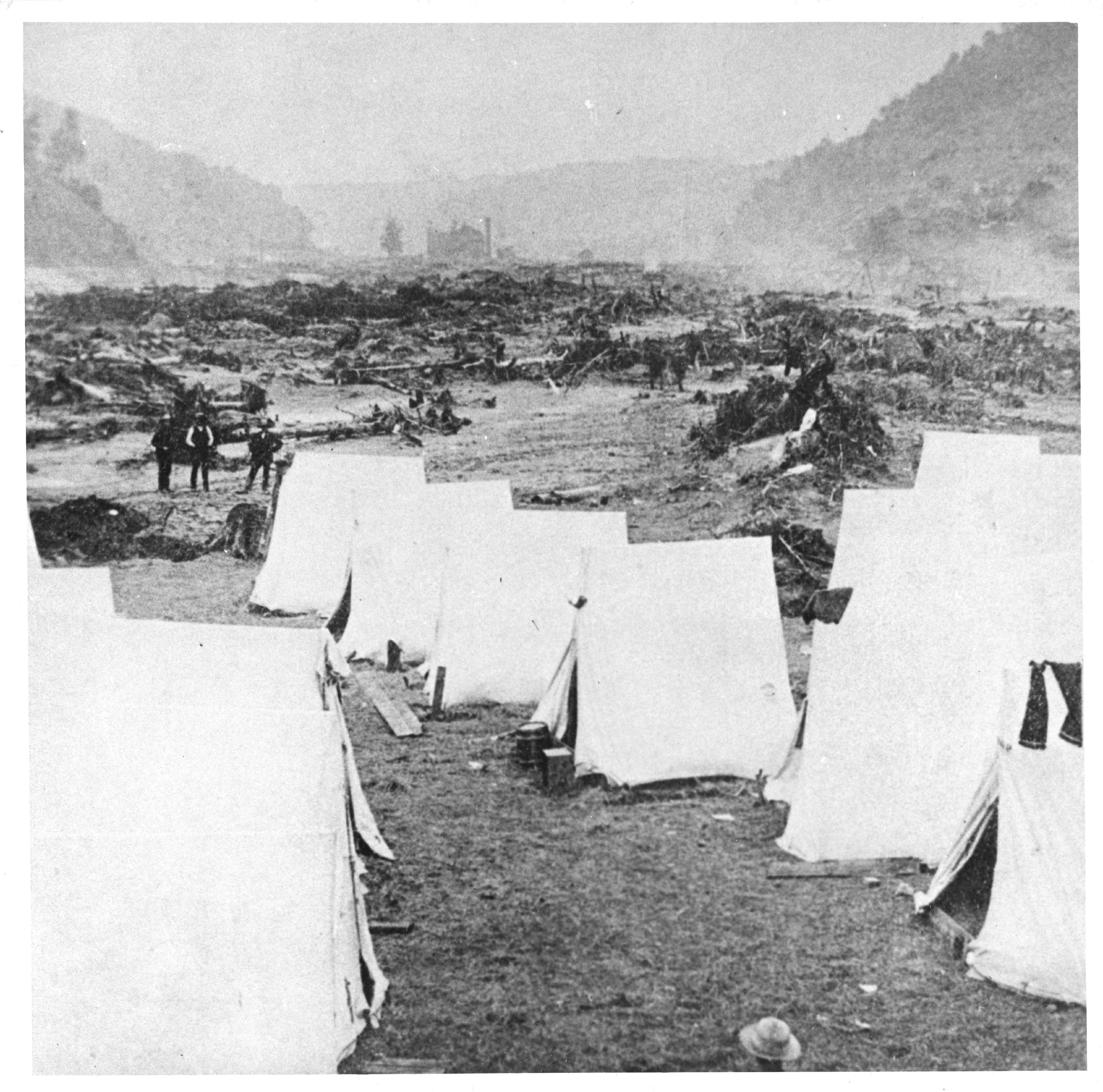
1889. Johnstown, Pennsylvania. Upon her arrival in Johnstown, Miss Barton immediately set up Red Cross headquarters in a tent on Prospect Hill overlooking the stricken valley. Another Red Cross faction, from Philadelphia, headed by a Dr. Pancoast, also arrived and set up hospital facilities in tents.

The flood wasn’t a large-scale disaster, but it did reveal the need for preparedness. Up to that time, Clara had run the Red Cross as a centralized operation, dispatching funds and relief management after emergencies.

Recognizing the need to localize, Clara had Hubbell work with mayors and business owners in Louisville, Cincinnati, and St. Louis to start local chapters, the first of what is now a national network of some 230 chapters recruiting volunteers and financial support.

Within a few decades, Red Cross chapters were popping up all over northern Ohio. In
fact, one of the most influential early supporters of the fledgling Red Cross was
Cleveland-born Mable Boardman, who traveled the country promoting volunteerism.

Across the decades, the Red Cross has followed Clara’s lead, adding programs to meet vital needs across a wide scope of American life:

  • Collecting nearly 40% of the blood needed to sustain trauma victims, support surgery patients and treat people with acute conditions from cancer to sickle cell disease.
  • Training volunteers to help victims of natural and manmade disasters with shelter, food, emergency medical and emotional support as well as guidance to plan their recovery.
  • Teaching lifesaving skills ranging from first aid and CPR to swimming and lifeguarding, to disaster preparation for children and adults. This year, the Red Cross launched a new online course, “Until Help Arrives,” to train bystanders to respond to opioid overdoses, severe bleeding, cardiac arrest and choking emergencies.
  • Installing millions of free smoke alarms in homes across the country to prevent home fire injuries and deaths.
  • Supporting our men and women in the military, and their families, with pre- and post-deployment preparedness, and morale and wellness support stateside and overseas. This year, Red Cross volunteers delivered emergency messages connecting more than 87,000 service members with their loved ones in times of family need.
  • Serving as a vehicle for Americans’ desire to contribute to disaster prevention and response around the world. This year, the American Red Cross helped support the international response to such disasters as earthquakes in Turkey and Syria, drought and hunger crises in Africa and flooding in Pakistan and Bangladesh.

Meanwhile, the organization is taking steps to minimize its environmental impact by shifting to more hybrid and electric vehicles, renewable energy sources and eco-friendly supplies.

Clara Barton recognized the importance of adapting to emerging needs. As such, I see her as one of the most consequential women in American history. She set the template for humanitarian service: During 2022, more than 275,000 people in America stepped up to volunteer.

And she established an organization that continues – more than 133 years later – to adjust to society’s new needs: More than half a million people downloaded Red Cross disaster preparedness apps on their phones during 2022.

If you’d like to learn more about the many ways Red Cross volunteers and donors live out Clara’s vision, visit redcross.org or cruzrojaamericana.org, or visit us on X at @RedCross.

Edited by Glenda Bogar, Red Cross volunteer

Posted by Ryan Lang, Red Cross board member and volunteer
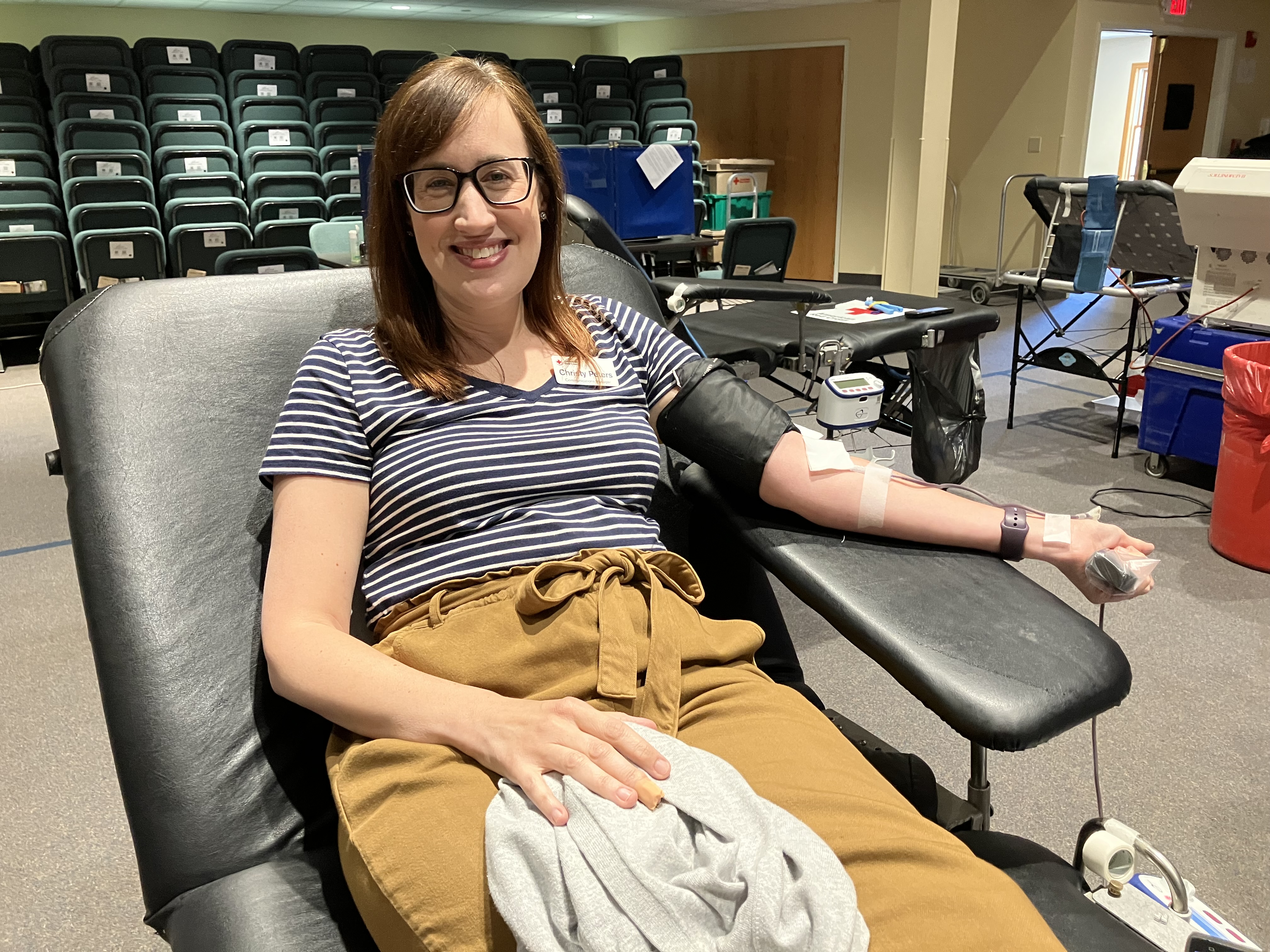
An intense, exhausting, grateful December

A personal account of getting through a tough time

By Tim Poe, American Red Cross volunteer

Streams of people, ambulances and occasionally a helicopter. In a parking lot and garage just beyond, cars arrive, depart, circle. Each time I look out the fourth-story window in my dad’s hospital room, I see this scene. Whether in the cerulean predawn, during the intense glow of short December days, or beneath pools of sodium light in long evenings, it continues. Lives impacted, whether through illness, tragedy, or disaster. Crises do not cease. I also watch the many who arrive to help, while others leave, often looking exhausted, and am grateful for them.

Tim Poe, Red Cross volunteer

The last few weeks have been a torrent of emotion, of worry, discussions, activity, seeking information, of varying between bleakness and optimism.

I am especially grateful to the doctors, nurses, and other medical professionals working to identify the cause of and cure my dad’s illness and address the complications that arise. And to the blood donors and blood services personnel who enabled a transfusion to be ready if needed. I take a mental note to schedule a blood donation.

I hear rhythms of footsteps, medical equipment rolling on wheeled carts, voices, a cacophony of whirs and beeps emerging from medical devices, approaching sirens (silenced just before arrival), PA announcements, and occasionally the music-box chime of “Lullaby and Good Night” announcing a new life. I imagine orchestrating all this into a symphony.

I think of the times I have been in that and other ERs and hospitals in the area, as an American Red Cross volunteer, a patient, a friend, and family member. And how grateful I am to have been able to help and receive it when needed.

I have previously written about seeing the results when bringing help to those in need as a Red Cross volunteer. The tears of relief, smiles returning to faces, human resilience being bolstered, people beginning to recover and move forward, and especially gratitude.

Linda, Tim, and Billy Poe

My goal with this article, before my dad’s illness, was to focus on how much your help is needed and the tremendous good it does. As we have recently written, the need for Red Cross services is tremendous and continues to increase, with the climate crisis, global instability, and other factors. We have also written about seeing the impact of your donations, whether through financial support, volunteering time, or donating blood.

But now I wanted to offer another perspective, that of a family member during a time of need. While my dad’s illness is not the result of a disaster—although having a blood transfusion ready was necessary—I am trying to show a little of the intensity and worry felt when in need of help, and the thankfulness and relief when help is received.

My dad is home now. Recovery will take some time, including doses of antibiotics every eight hours, which I am administering via an IV attached to a PICC line. As I write this, we are on day six of 10. Since my formal education is in literature and music, this is far outside my area of expertise. I’m experiencing a fair amount of anxiety and fatigue. My Red Cross experience helps, especially managing in times of crisis, but I have needed and found help, advice, expertise, wisdom, and kindness from medical professionals, friends, family members, and others in the Red Cross. Each instance has helped keep me going, to refocus, to help the optimism win out over the bleakness. And for that I am deeply grateful.

Through all this, my family and I have not done much for the holiday season. I did put up a Christmas tree, and there are a few decorations. I have not been able to attend celebrations, and there won’t be much to wrap and unwrap, but if all continues to improve, the season will be one of the most grateful, thanks to those who helped.

So when life regains some normalcy, I’m more resolute than ever to continue helping where and how I can, help with and encourage financial support, and schedule a blood donation .

Edited by Glenda Bogar, Red Cross volunteer

Posted by Ryan Lang, Red Cross board member and volunteer
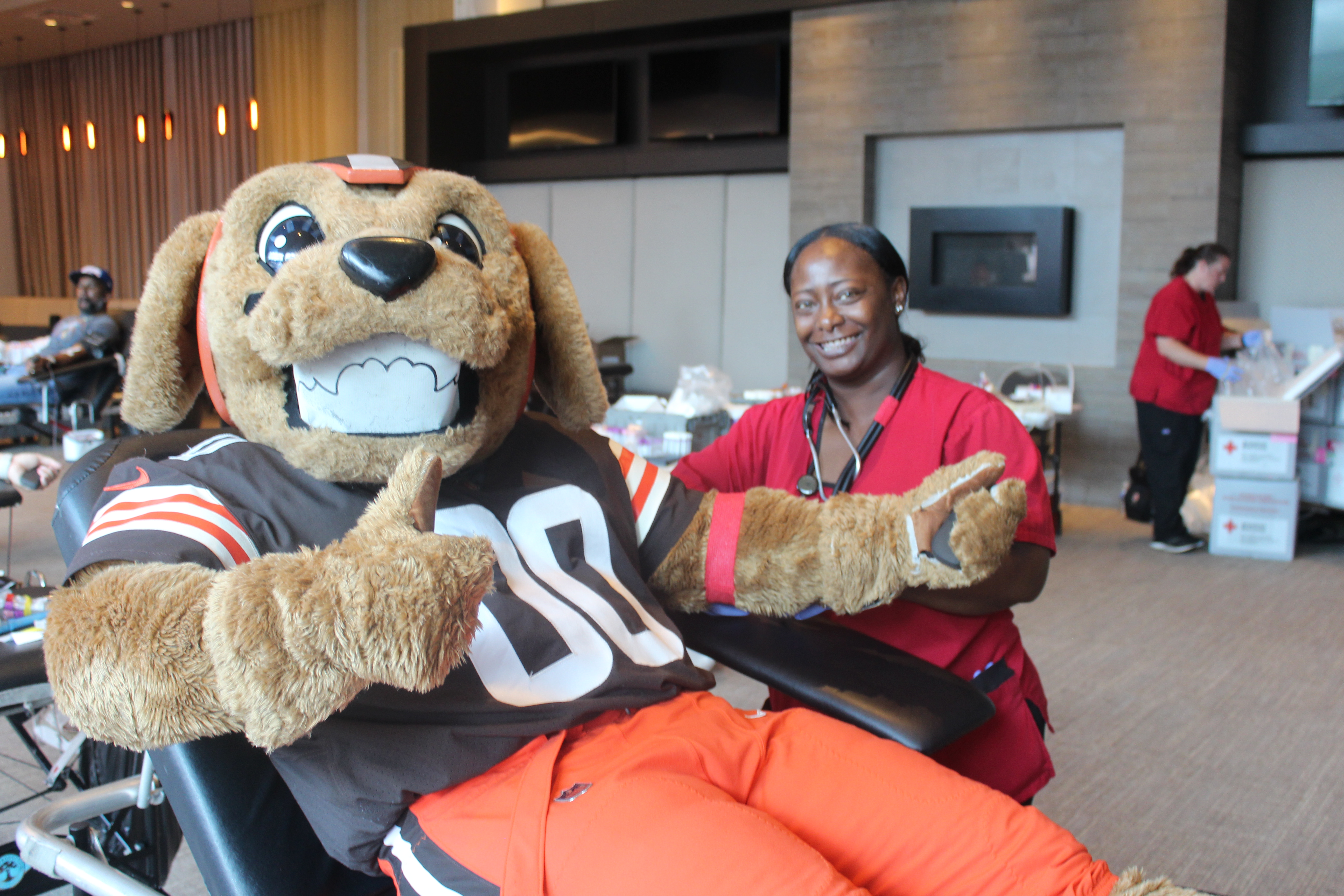
Wreaths Across America – honoring veterans at Toledo Memorial Park Cemetery

By Ryan Lang, American Red Cross board member and volunteer
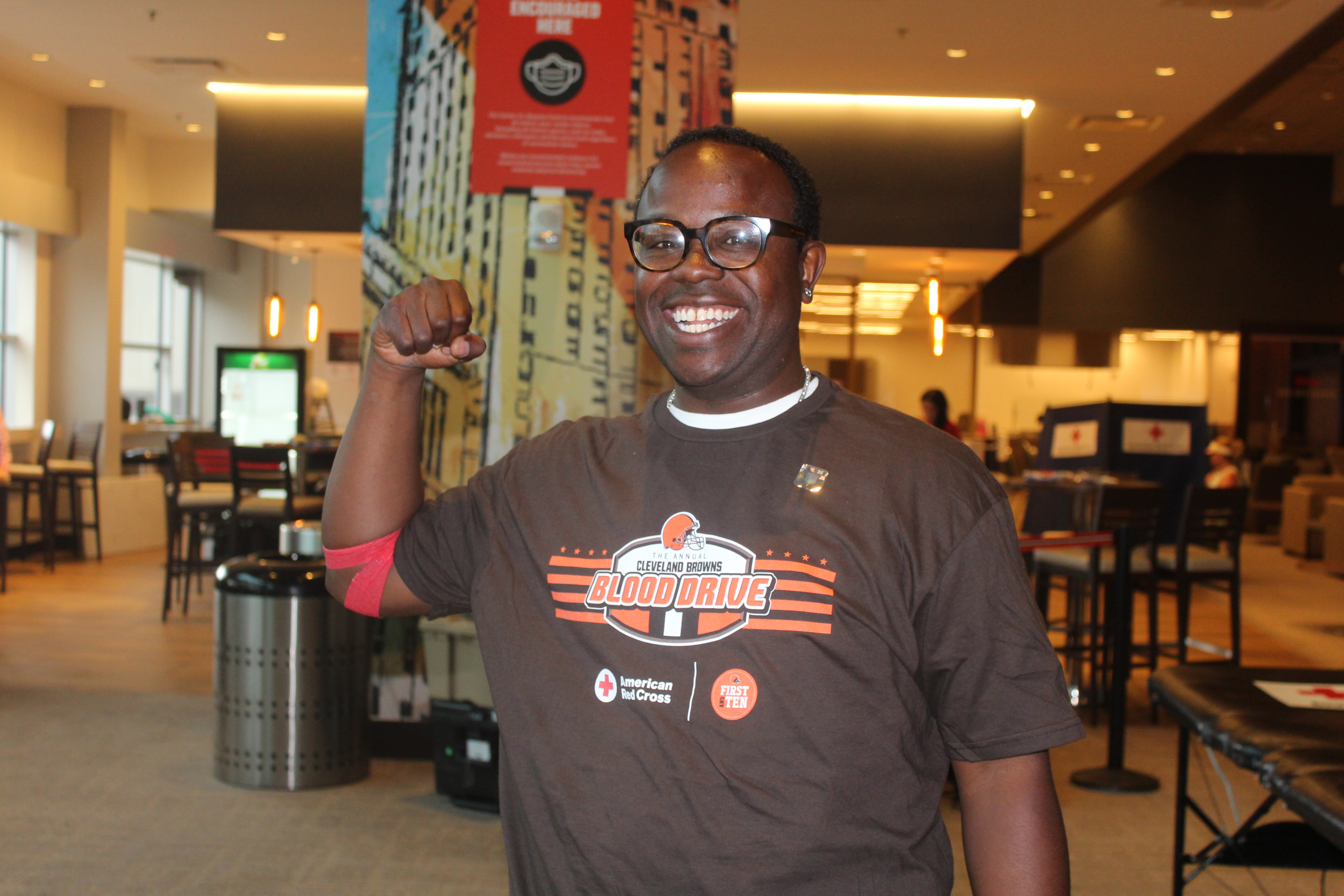
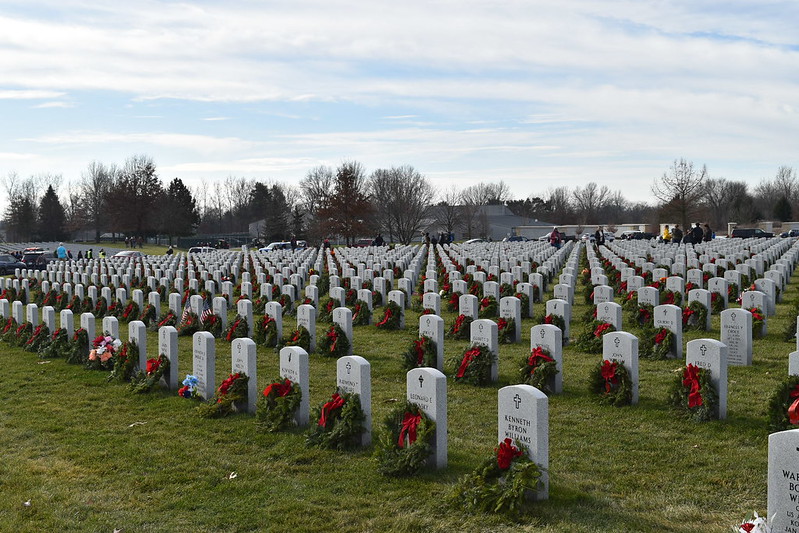
Photo credit Kathryn Dean, Red Cross volunteer

This past weekend, the American Red Cross of Northern Ohio assisted with the national program Wreaths Across America at the Ohio Western Reserve National Cemetery in Seville and Toledo Memorial Park Cemetery and Mausoleum in Sylvania, Ohio.

The annual program remembers and honors our fallen heroes at national cemeteries across the country by placing wreaths on veteran headstones on a certain day in December. The program’s been around since 2007, about 15 years after the first wreaths were donated to honor veterans buried at Arlington National Cemetery. Not long after, others showed interest in expanding the effort throughout the country.

Red Cross volunteer Nasir laying a wreath – Photo Credit Dawn Henderson

Volunteers from the Red Cross were providing material support for the services Saturday afternoon, along with the Boy Scouts of America. The mild weather helped boost the turnout for attendees and for volunteers.

Chad Holeko, Commander with the 180th Fighter Wing of the Ohio Air National Guard was this year’s keynote speaker. He invoked President John F. Kennedy during his speech, noting that it is not the words we choose to honor our military veterans, but the actions.

Red Cross volunteers at Wreaths Across America event in Toledo – Photo Dawn Henderson

After a brief remembrance ceremony, volunteers laid roughly 7,000 wreaths on the graves of fallen servicemen and women.

The Red Cross supports members of the military, veterans and their families in a variety of ways through our Service to the Armed Forces program. Volunteers from the Northern Ohio Region have been providing support for Wreaths Across America for several years. View photos from this year’s event here.

Posted by Ryan Lang, Red Cross board member and volunteer

Platelet donor understands impact of giving from both sides

By Kathryn Dean, American Red Cross volunteer

As the director of manufacturing at the American Red Cross blood lab in Cleveland, Darlene Morris has a unique perspective on the importance of donating blood products. Over her 30+ year career in the biomedical field, Darlene has experience both working in hospitals and in the blood centers where products such as blood, platelets and plasma are processed.

Darlene Morris, All-Star Platelet Donor

This unique perspective has allowed her to not only understand what goes into making the blood products, but to witness firsthand the good that they can do.

“It is important to always keep blood on the shelf because you never know when something is going to happen,” said Darlene. “I’ve seen lives saved, and that’s why it’s important to me.”

In her current role, she oversees all of the blood once it’s been collected and returned to the Red Cross at the Warzel Donation Center in Cleveland. There the collections are divided into their respective products and sent back to the hospitals to be used. This center is the third-highest manufacturing site in the country, producing over 700,000 products last year serving Northern Ohio and the Detroit and Fort Wayne regions in Michigan.

She is also an all-star platelet donor, giving donations of platelets about once every two weeks for the past several years. Platelet donations can be made with a wait time of only around seven days, versus a 56-day interval between standard blood donations.

Platelets are an important blood component that enable clotting when there is an injury or trauma. They are also important for cancer patients and others suffering from hematological conditions. Darlene notes that “between the (blood) products being available and improved procedures, now a lot of people survive.”

Darlene Morris, All-Star Platelet Donor

Darlene’s experiences have shaped her views of blood donations and the people they serve.

“For me, I feel like it’s been a privilege to be a part of the Red Cross,” she explained. “It’s been a blessing to me, and this has been the greatest career. It’s not just about me, it’s about everybody else that we help.”

Learn more about the different types of blood donations you can give this holiday season here.

To find a blood drive near you, click here and enter your zip code.

Edited by Glenda Bogar, Red Cross volunteer

Posted by Ryan Lang, Red Cross board member and volunteer