Wanted: AmeriCorps Workers for NEO American Red Cross Corps

americorps

WHO: Highly energized and passionate individuals who are prepared to serve full-time (including nights and weekends) to serve the mission of the American Red Cross

WHAT: Red Cross Corps (RCC) is a National AmeriCorps program with a goal of building capacity to deliver Preparedness Education across the country. Members will aim to reach 750 youth and 250 adults with Preparedness Education. In addition, each member will train 5 volunteers to help make Preparedness Education a sustainable community program.

WHEN: Members complete the program on August 11, 2017

WHERE:  Summit, Portage and Medina Counties Chapter
                  501 West Market St.
Akron, Ohio 44303

Click here for a full listing of American Red Cross AmeriCorps programs (National and State)

WHY: Red Cross Corps members will have an unique opportunity to impact their communities with life-saving preparedness education. By serving with the Red Cross, members are not only part of a national movement of service, but will also be connected to a humanitarian organization that strives to help people when they need it most!

Member Benefits:

  • Living allowance up to $14,000 (taxable) for 11 months of service
  • $5,775 Education Award. The Segal Education Award is good for seven years from the end of service and can be used to repay qualifiedstudent loans or for future education at eligible schools. National members age 55 and older at the time of service may be eligible to transfer the award to certain family members. Learn more about the Segal AmeriCorps Education Award.
  • Possible forbearance of qualified student loans. Note that interest continues to accrue. However accrued interest on qualifiedloans is eligible for payment by the National Service Trust.
  • Health plan benefits. Members are eligible to enroll in an Affordable Care Act compliant health plan.
  • Childcare benefits if you qualify. Learn more about our childcare benefits.

Plus, you will be following in the footsteps of our own Tim Reichel, Disaster Program Manager for the Stark County and Muskingum Lakes Chapter.


If you are interested in applying, please visit: http://www.myamericorps.gov

Power Outage Preparedness

That you are able to log onto this blog and read this article is a testament to the reliability of the company that supplies your electricity.  Unfortunately, stormy weather can knock out power, as it did Tuesday night for some 20,000 First Energy customers.

And as sweltering as the summer of 2016 has been, the demand for power has been great.  Sometimes, electrical equipment can be overloaded with so many air conditioners running.  That, too can cause power outages. While outages aren’t always predictable, it’s easy to be prepared and keep your loved ones safe during one.

HAVE A KIT

get-a-kitThe top items in your power outage kit should include water, a battery powered radio, flashlights, and extra batteries. It is important not to use candles during a power outage because they a more likely to start a fire. Other items include:

  • Medications (7-day supply) and required medical items
  • Family and emergency contact information
  • Extra cash
  • Non-cordless telephone
  • Full tank of gas

For more information on building a kit, check out our 72-hour kit blog post.

FOOD

Keep refrigerator and freezer doors closed as much as possible. Use perishable food from the refrigerator first, freezer items second and non-perishable food last. An unopened refrigerator will keep food cold for about 4 hours. A full freezer will keep the temperature for about 48 hours and a freezer half-full will stay cold for 24 hours.

ELECTRICAL EQUIPMENT

Turn off and unplug all unnecessary electrical equipment, including appliances, equipment or electronics you were using when the power went out. It is important to do this because when the power comes back on, surges or spikes can damage equipment. You can protect appliances that can’t be unplugged, like refrigerators and freezers, with a surge protector.

CAUTION: CARBON MONOXIDE KILLS                CO2

Never use a generator, grill, camp stove or other gasoline, propane, natural gas or charcoal-burning devices inside an enclosed area. Cooking in enclosed areas with alternate sources for electricity can lead to carbon monoxide poisoning, electric shock and fire. These tips below will help you prevent carbon monoxide poisoning:

  • Always locate unit away from doors, windows and vents that could allow carbon monoxide to come indoors.
  • Install carbon monoxide alarms in your to provide early warning of any accumulating carbon monoxide.
  • If you hear the carbon monoxide alarm sound, move to a fresh air outdoors or an open window or door. Call for help from that location and remain there until emergency personnel arrive to assist you.

For more information on what to do during a power outage please visit http://www.redcross.org/prepare/disaster/power-outage.

Get more information on surviving during this summer’s relentless heat here.  And download the Red Cross Emergency App, to monitor more than 35 different severe weather an emergency alerts, to help keep you and your family safe this summer and throughout the year.


Red Cross, Partners Help Euclid Residents Prepare for and Prevent Home Fires

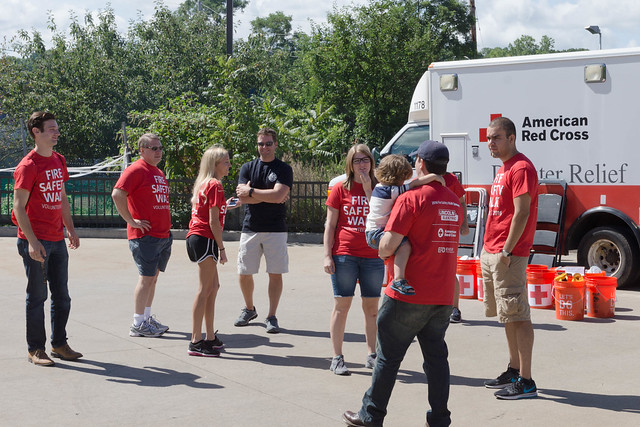
Lincoln Electric Volunteers, Euclid Fire Department Personnel Participate in Fire Safety Walk

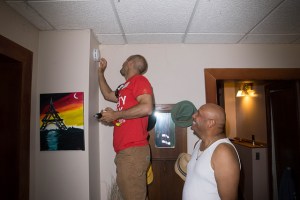
Nearly 100 homes in Euclid now have working smoke alarms, following one of the largest Fire Safety Walks ever held in Northeast Ohio.  283 smoke alarms were installed on Saturday, August 6, 2016, with the enthusiastic help of volunteers from Lincoln Electric and our partners at the Euclid Fire Department.

“We were able to get into 95 homes and install 283 alarms. That is approximately 3 per home,” said John Gareis, Regional Manager of Preparedness and Community Planning in Northeast Ohio.

install1Combined with a similar effort last summer involving Lincoln Electric volunteers and the Euclid Fire Department, almost 650 smoke alarms have been installed in that Euclid neighborhood as part of Operation Save-A-Life, the American Red Cross initiative in Northeast Ohio to reduce the number of casualties in home fires by 25%.  John Gareis continued, “While the total number of alarms is less than last summer, our targeted area has far fewer homes in them – making this install more efficient overall!”

As was the case last summer, Lincoln Electric CEO Chris Mapes worked alongside employees to install the smoke alarms, and to provide residents with valuable fire safety information.  And Mike Parks, Regional CEO of the Red Cross in Northeast Ohio contributed to the effort, along with Red Cross volunteers and staff.

ParksMapesGareis

Mike Parks, Chris Mapes and John Gareis

“The partnership between Lincoln Electric, Euclid Fire, and the American Red Cross is a winner to be sure and a model for others, not only in the Region but throughout the country,” Parks said.  “I know the event had an extremely positive impact, and will help prevent the loss of life due to home fires.”

Last year, more than 100 lives across the country were saved after smoke alarms were installed by the Red Cross and our partners.

Home fires remain the biggest disaster threat to individuals and families in the United States. There are three home fires, on average, in Northeast Ohio every night. Operation Save-A-Life, part of the national Red Cross Home Fire Campaign is in direct response to that dire threat, with the Red Cross committing to install 2.5 million free smoke alarms in neighborhoods at high risk for fires, and to educate those residents about fire prevention and preparedness.

More than 12,500 smoke alarms were installed in homes in Northeast Ohio last year.

If you would like a free fire safety inspection of your home, and free installation of smoke alarms, log onto redcross.org/neoosal.  You can also visit redcross.org/homefires to find out more about how to protect you and your family from fire. You can also become a Red Cross volunteer. And you can help by donating to Red Cross Disaster Relief by visiting redcross.org, calling 1-800-RED CROSS or texting the word REDCROSS to 90999 to make a $10 donation. Donations to Disaster Relief will be used to prepare for, respond to and help people recover from disasters big and small.

Euclid - Lincoln Fire Walk 2016

Click on the photo to see a gallery of pictures taken during the Euclid Fire Safety Walk.

Photo credit: Cal Pusateri, American Red Cross Communications Volunteer

Ring! Ring! Goes the Bell – Back to School Safety Tips

It’s almost time for the school bells to ring again and the American Red Cross has steps everyone can follow to help make the trip back to the classroom a safe one.

“Safety should be the top priority for all students, especially younger children and those heading to school for the first time,” said Tim O’Toole, Regional Disaster Officer for the region. “Whether riding, biking or walking to school, we want everyone to arrive and then return home safely.” 

Back to school_stop for bus tip.png

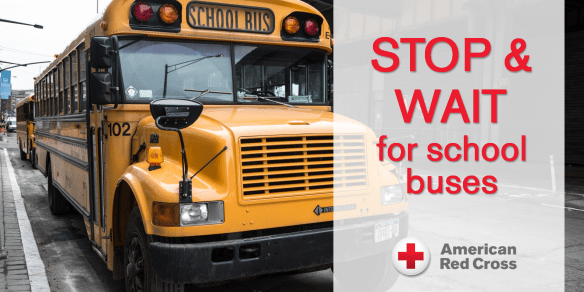
SCHOOL BUS SAFETY If children ride a bus to school, they should plan to get to their bus stop early and stand back from the curb while waiting for the bus to arrive. Other safety steps include:

  • Wait to board the bus until it has come to a complete stop and the driver or attendant has signaled to get on.
  • Tell children they should only board their bus – never an alternate one.
  • Always stay in clear view of the bus driver and never walk behind the bus.
  • Cross the street at the corner, obey traffic signals and stay in the crosswalk.
  • Never dart out into the street, or cross between parked cars.


GET TO SCHOOL SAFELY If children ride in a car to get to school, they should always wear a seat belt.

  • Younger children should use car seats or booster seats until the lap-shoulder belt fits properly (typically for children ages 8-12 and over 4’9”) and ride in the back seat until they are at least 13 years old.
  • If a teenager is driving to school, parents should mandate that he or she use seat belts. Drivers should not use their cell phone to text or make calls, and should avoid eating or drinking while driving.
  • Some students ride their bike to school. They should always wear a helmet and ride on the right in the same direction as the traffic is going.
  • When students are walking to school, they should only cross the street at an intersection. If possible, use a route with crossing guards.
  • Parents should walk young children to school, along with children taking new routes or attending new schools, at least for the first week to ensure they know how to get there safely. Arrange for the kids to walk to school with a friend or classmate.


WHAT DRIVERS SHOULD KNOW Drivers should know what the yellow and red bus signals mean and be aware that children are out walking or biking to school and slow down – especially in residential areas and school zones. Yellow flashing lights indicate the bus is getting ready to stop and motorists should slow down and be prepared to stop. Red flashing lights and an extended stop sign indicate the bus is stopped and children are getting on or off. Drivers in both directions must stop their vehicles and wait until the lights go off, the stop sign is back in place and the bus is moving before they can start driving again.

Parents should also make sure the child knows their phone number, address, how to get in touch with their parents at work, how to get in touch with another trusted adult and how to dial 9-1-1. They should also teach children not to talk to strangers or accept rides from someone they don’t know.

TAKE A FIRST AID CLASS Red Cross training can give someone the confidence and skills to help with everyday emergencies from paper cuts to school sports injuries. A variety of online and in-class courses are available at redcross.org/takeaclass. People can download the free Red Cross First Aid App (redcross.org/apps) for instant access to expert advice whenever and wherever needed.

Two Tips for Keeping Your Child’s Commute Safer this Week

This week is heating up in Northeast Ohio and that means hot-hot-hot! vehicles.

Here’s two tips for keeping your child’s commute safer during these steaming days:

For more reading, check out Sarah’s post on Red Cross Chat.

(And a special “Thank you” to Lt. Rick Edwards of the Akron Police Department for stopping by to talk with us.)

Video created and produced by Ryan McDivitt, American Red Cross Volunteer

More Than a Half-Century of Red Cross Service

By Anmol Nigam, American Red Cross Communications Volunteer

jay3

Photo credit: Paul Wadowick, American Red Cross Communications Volunteer

When Jay Rosenthal was in his youth he witnessed an event so provoking, he would later decide to spend over fifty years of his life to prevent a recurrence.

It was the 1950’s, and Jay was roughly twelve years old, enjoying a beautiful Fourth of July at a the cool waters of a local pool along with hundreds of other people from his area. A sudden downpour prompted a mass exit from the pool.

As the crowd emptied, Jay would recall an “announcement on the PA system about a lost three year-old boy.” The body of the boy was found in the pool. He could not swim. Jay watched as the lifeguards attempted without success to resuscitate the boy.

Jay remembers with sadness and says, “in the fifties CPR and AEDs were only something of the future.”

It was from that moment, Jay would devote his life to preventing the loss of life by learning how to save lives and by training others to be safe in and prepare for emergencies. Jay continues to help the people in his community by his fifty-three years of service to the American Red Cross.

Jay now helps staff the Lake to River Chapter headquarters in Youngstown and teaches CPR and first aid classes.

Karen Conklin, Executive Director of the Lake to River Chapter, is one of Jay’s biggest fans. “Jay comes here every day to volunteer. He is so valuable. If we can’t find something we ask him. He is a fabulous First Aid /CPR instructor but his passion is teaching kids to swim. Ask him if he has any idea how many children and adults he has taught. He might have 53 years in, but thousands can swim because of him.”

When he’s not volunteering for the Red Cross, Jay coordinating a “Learn-to-Swim” program in community schools.

When we asked Jay the secret to his commitment, his response was “it’s in the blood.”

Give Blood and #give10 with the Cleveland Browns

Team Encourages Volunteerism, Blood Donations as Training Camp Begins

Rain in Berea on Friday, July 29 did not dampen the spirits of Cleveland Browns fans who turned out for the opening of the 2016 training camp.  And once again, the Red Cross was invited to camp to encourage fans to give blood during the annual Cleveland Browns Blood Drive on Saturday, July 30.

IMG_1677

Browns Fan Becky Browand

We also invited fans to #give10.

The Browns’ #give10 initiative is meant to inspire fans to help their communities by volunteering for 10 hours each year.  And there’s no better place to begin volunteering than the American Red Cross.

“Red Cross volunteers help people in their darkest hour, following a fire, flood or other disaster that forces them from their homes,” said Pat Buckhold, Regional Volunteer Officer for the Northeast Ohio Region. “But there are many other opportunities to give back, by teaching First Aid/CPR, helping members of the military connect with their families, or offering behind the scenes support as a receptionist or caseworker.”

IMG_1680

Red Cross volunteer Carol Grant and Browns fan Susan Walter of Cleveland

Volunteers also help at blood drives, like the Browns Blood Drive being held at 13 separate sites in Northeast Ohio on Saturday, July 30.  Fans who attend Browns training camp can donate blood at the Berea Recreation Center, 451 Front Street from 8:00 am-2:00 pm. All presenting donors at each blood drive location will receive a commemorative Browns T-shirt (while supplies last) and have the chance to win great Browns-related prizes.

The blood drive couldn’t be more timely.  We are in the midst of a significant blood shortage and have issued a blood emergency declaration, calling for donors to give now. Call 1-800-RED CROSS (733-2767) or log onto redcrossblood.org to make an appointment to donate blood.

To become a Red Cross volunteer, go online and click on the volunteer tab, or call 216-431-3328.

And Go Browns!

Photo credit: Jim McIntyre/American Red Cross

Monkey Business Lightens Red Cross Disaster Responses

By EILENE E. GUY
American Red Cross volunteer

AKRON, July 28, 2016 – “Oso” the toy monkey reported for duty at the American Red Cross operations center in Akron, alongside disaster responders in connection with the Republican National Convention in nearby Cleveland.

Oso is a veteran Red Cross volunteer. “She’s been to one disaster in Indiana, three in Kentucky, one in Wenatchee, Washington, a flood in South Carolina and hands-on training sessions all over,” said Jim Aldridge, Oso’s “service human.” (Without him, Oso is mobility challenged.) Aldridge was one of several dozen volunteers who geared up, just in case anything happened in connection with the RNC that created a need for Red Cross services.

Photo credit: Mary Williams, American Red Cross

When Oso wasn’t peeking out of a pocket on the front of Aldridge’s bright red Red Cross vest, she was relaxing at the Disaster Services Technology desk, where Aldridge – an 18-year disaster responder from Lowell, Ind. – helped keep the response communications and computer networks operating.

Oso was born in Manitoba, Canada, lime green polyester fur with yellow felt paws and face. She joined Aldridge in 2014 as he finished a challenging assignment in Oso, Washington. “I had always been goofy in the Red Cross,” Aldridge admitted, so when a fellow Red Crosser handed him the long-limbed monkey, he took her on as his traveling companion.

Oso thrives on a high-octane disaster diet: “She loves Nutter Butters,” Aldridge said with a grin. And she’s been spotted hugging a cup of lukewarm Red Cross coffee.

Aldridge is pleased that his buddy’s never-failing smile lifts the spirits of disaster victims and Red Cross responders alike. She has followers across the country on an on-line Red Cross users group. “Oso, where are you, you little squirt,” a fan asked recently.

Now, Oso and Aldridge can add preparedness for the 2016 RNC to their joint Red Cross resume.


RNC Operation Ends in Cleveland

Whew!

That collective sigh of relief was offered up early Friday morning, following the conclusion of the Republican National Convention in Cleveland.

The convention, by nearly every measure, was a smashing success.

Following more than a year of preparation, the American Red Cross Crossroads Division, with a heavy Northeast Ohio regional presence, coordinated and lead the ARC involvement and support for the event.

Preparations included recruiting and training volunteers, securing potential shelter locations, staging assets like Emergency Response Vehicles in various locations, and renewing partnerships with various public safety entities and groups like the Southern Baptist Convention and the Salvation Army.

None of our services was needed.

Thankfully.

Red Cross workers underwent training during the operation that will be of benefit to those who will need our services during future disaster responses. And we increased our visibility in the community with news coverage of our preparations and social media messages about preparations, extreme heat safety, and the Red Cross Emergency App.

The Republican nominee wasn’t the only winner; the city of Cleveland shone, as evidenced by myriad media reports, almost universally positive.

For many Red Cross workers, the operation continues, with demobilization efforts.  We owe our volunteers our sincere gratitude for their dedication, which for one worker meant learning a totally new skill.

Pam2

Photo credit: Todd James/American Red Cross

Note: the article referenced above was written by Eilene Guy…a Red Cross volunteer.
If you would like to volunteer for the Red Cross, while we can’t guarantee you’ll learn how to drive a forklift, you can rest assured you will feel like you are giving back to your community. Visit our website to learn more about volunteer opportunities, and be prepared to help the Red Cross help those in need.


Training Lifts Red Cross Worker to New Heights

By EILENE E. GUY
American Red Cross volunteer

AKRON, July 17, 2016 – American Red Crosser Pam Williams is used to handling challenges.

In the last eight years, she has done some 25 disaster deployments all over the country.  As a government liaison, she sees to it that the Red Cross is working smoothly with whatever tribal, local, state and even federal agencies are also responding to a disaster.

“I haven’t severed diplomatic relations with a single state yet,” the slim, whitehaired volunteer from Akron, Ohio, said with a chuckle.

Williams admits it’s not always easy when “cranky politicians” take out their stress on her. She recalls with pride an episode that started with an angry emergency management director and his shelter manager who didn’t understand Red Cross policies. Williams went out of her way to patiently explain the “back story” of each and every procedure, adding hours to her days to smooth the local government-Red Cross relationship. Her reward: The shelter manager later wrote to her at home, asking how to become a Red Cross volunteer.

On the eve of what could be a busy assignment, as the Red Cross and its many partners get ready for the Republican National Convention, Williams seized a new challenge:  She took the training to become a forklift driver.

The Red Cross offers a staggering array of free courses, both on-line and hands-on, to teach disaster responders how to safely and effectively do their jobs – or jobs that they might just want to try.

“I know that we’re often short of forklift drivers, when a truck comes in with a load of supplies, and I thought ‘What the heck’,” Williams said, with an almost-mischievous smile. “You never know” when you might be able to fill a pressing need.

“It’s not necessarily hard to drive a forklift, but it’s nothing like driving a car,” she learned. With a zero-turning radius, “it feels like the back is going to slide right around in front of you. That took some getting used to.”

Using her light touch and attention to detail, Williams mastered the machine, much to the delight of her many male co-workers. “I didn’t hurt anybody. I didn’t damage any equipment or drop any loads,” she said with amused pleasure, “so it’s a good day!”

Now Williams’s car can sport a bumper sticker that proclaims: “My other ride is a forklift.”