NEO Volunteers join hundreds of others from across the country to help Hurricane Michael victims

Helping provide shelter, food and hope to those impacted by the storm

Five days after Hurricane Michael slammed into the southeast, thousands of people are living in dire conditions. The American Red Cross is with them, helping people in Florida, Georgia and Alabama as they struggle to get back on their feet.

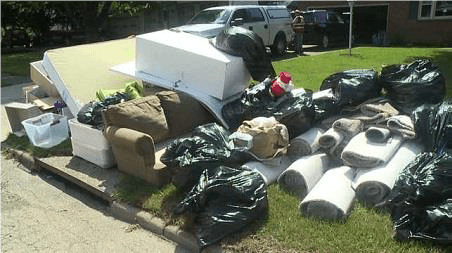
  • Home after home is destroyed, many people have lost everything. Many areas are still inaccessible.
  • The storm also damaged medical facilities, schools and businesses. Search and rescue efforts continue.
  • Hundreds of thousands have no power as temperatures hover in the high 80s.
  • In many areas, people have no water or sewer service and many that do have service are under boil advisories.


This slideshow requires JavaScript.

The Red Cross is doing all we can to get help to where it’s most needed, and we’re reaching more neighborhoods each day. We’re working around the clock with partners like the National Guard to move volunteers and supplies, and to support dozens of shelters where people can find comfort and refuge.

  • With the magnitude of destruction and many roads impassable, we know that getting help into some areas will be challenging for some time.
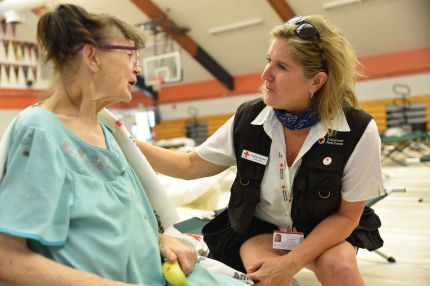
  • The Red Cross is providing shelter, food, health services and emotional support during this challenging situation.
  • Some shelters are being relocated to more comfortable and appropriate locations.
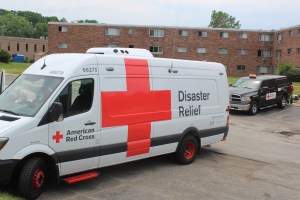
  • In some areas, emergency response vehicles are able to get through with meals and relief supplies.

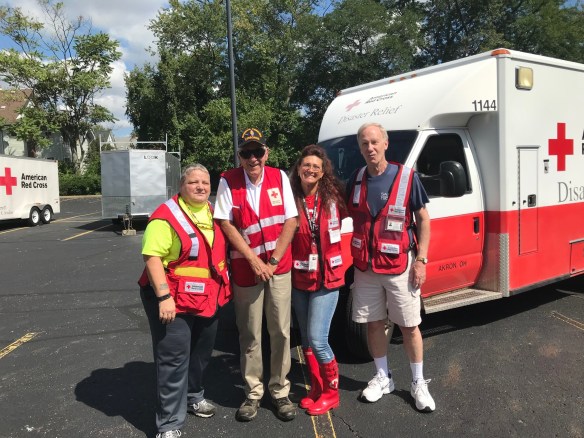
More than 1,300 Red Cross disaster workers have been assigned to the Hurricane Michael disaster relief operation, including 19 volunteers from Northeast Ohio. Visit our YouTube channel to see and hear comments from the volunteers pictured below.

Akron group

Volunteers Harry Pierdomenico, Tom Quinn, Teresa Greenlief and Cameron Fraser  Photo credit: Eric Alves/American Red Cross

  • This is a huge disaster, and the Red Cross is working closely with government and nonprofit partners to provide aid.
  • It will take time and require the resources from a large variety of organizations to help families and communities recover.
  • We are actively recruiting additional volunteers to help respond to disasters like Hurricane Michael, and to the home fires that occur, on average, three times every 24 hours in Northeast Ohio.  You can visit our volunteer page to begin the application process.

After two major hurricanes in less than a month, thousands of people are looking for help. The Red Cross depends on financial donations to fund our relief services. Help people affected by Hurricane Michael by visiting redcross.org, calling 1- 800-RED CROSS or texting the word MICHAEL to 90999 to make a $10 donation.

  • Donations enable the Red Cross to prepare for, respond to and help people recover from this disaster.

The Red Cross has a critical need for blood and platelet donations to help meet patient needs. This fall, Hurricane Michael and Hurricane Florence have forced the cancellation of about 200 blood drives, causing approximately 7,000 units of blood to go uncollected in the Southeast.

  • Low donor turnout is expected to continue in affected areas as communities recover.
  • The Red Cross asks eligible individuals to make an appointment today by using the Red Cross Blood Donor App, visiting org or calling 1-800-RED CROSS.


Volunteers provide disaster relief for hidden concerns

By: Eric Alves, Regional Communications Specialist, American Red Cross of Northeast Ohio

The American Red Cross continues to assist residents affected by hurricanes in the Southeast.  Among the disaster relief workers who are playing a role are mental health volunteers.

Red Cross mental health volunteers are a treasured group of individuals. They are all licensed independent health practitioners: psychiatrists, psychologists, counselors, social workers and psychiatric registered nurses.

California Wildfires 2018

In addition to being licensed professionally, mental health volunteers must take specialized Red Cross training in disaster mental health which, for the most part, is far different than what they do in their daily full-time jobs. The specialized training is based on many years of experience in disaster relief, from those who have lost precious mementos in a home fire to the victims of 9/11 and everyone in between.

Red Cross mental health volunteers provide immediate crisis management. They instruct clients in becoming more resilient and help them cope with the various emotions they may experience following their loss. While mental health volunteers do not do long-term counseling, if they determine a client would benefit from long-term intervention, they will make a referral to a proper mental health specialist. They will not refer the client to themselves or to any other member of the team.

California Wildfires 2017

“Many victims and survivors do not recognize the need for intervention or do not want to be judged or labeled if they are struggling with recovery,” said Renee Palagyi, senior program manager of disaster cycle services for the American Red Cross of Northeast Ohio. “Our disaster mental health volunteers can help them to recognize the normal and destigmatize the need for counseling.”

Northeast Ohio is particularly fortunate to have some of the finest and most experienced mental health volunteers. They never fail to step up as needed even though the majority have full-time positions or time-consuming private practices.

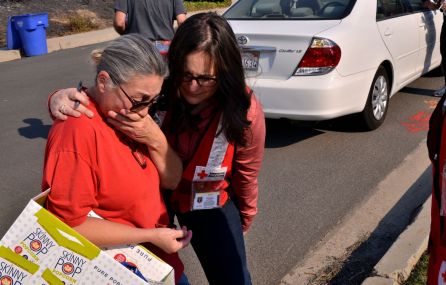
Edgardo Padin, a mental health volunteer from Northeast Ohio, deployed to assist in the 2018 California wildfires. Recently, he discussed his experience assisting individuals who lost their homes with their mental health needs.

Tennessee Wildfires 2016

While it is easy to see the physical damage that a home fire or a hurricane can cause, it is not often as easy to see the internal effects a disaster can have on an individual. On World Mental Health Day, it is important to recognize the disaster mental health volunteers who assist with disaster relief efforts to ensure everyone’s needs are met.

For more information on the Red Cross’ disaster mental health services or to become a volunteer, visit redcross.org/volunteer.

Reflecting on Las Vegas one year later

NEO staffer looks back on emotional assignment

By Renee Palagyi, Senior Regional Disaster Program Manager

One year ago, headlines told of the “worst mass shooting in modern American history.” More than 500 people were wounded and 59 were killed when a lone gunman rained a barrage of bullets on the 22,000 people attending the Route 91 Country Music Festival. Many hundreds were also injured  as they ran for cover, suffering broken bones, crushing injuries as others fell on top of them, scrapes and bruises as they jammed into small spaces, torn muscles and tendons as they lifted others over fences, raw hands and feet as they crawled through broken glass and debris on the field.

IMG_5432

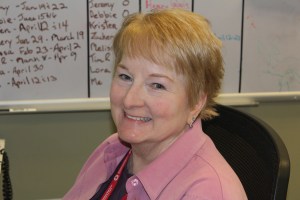
Renee Palagyi

Two days later, I flew to Las Vegas where I was assigned to lead health services for the American Red Cross in the Family Assistance Center at the Las Vegas Convention Center. Over the next 19 days, the teams assisted more than 4,400 people at the center with everything from replacing a lost driver’s license to wrapping an ankle with an elastic bandage, taking information to find a lost pair of glasses to facilitating a referral to an orthopedic surgeon.

  • Most people have no idea that the Red Cross is present and assisting in these tragedies but we are there, from Sandy Hook to Pulse nightclub, from the Boston Marathon to Marjorie Stoneman Douglas High School in Parkland, Florida.
  • Red Cross engages volunteers, including licensed medical and mental health professionals who are specially trained in mass casualty. Our organization is highly regarded as “the authority” on managing the aftermath.
  • Assisting the survivors of mass casualty and the families of the deceased is not only the hardest work we do—mentally and physically exhausting—it is the most rewarding.

I worked with a young man who was in severe pain from a bullet lodged against a nerve in his elbow. He did not want to return to California for surgery until the coroner released his father’s body so that they could “go home together just the way we came here together.”

I met a young couple who were badly bruised and scraped from crawling along the ground to escape bullets coming from what seemed like every direction. They were wearing Cleveland Indians ball caps and we talked about our mutual love of the team. They told me they had run to apartments near the field and began pounding on every door hoping someone would offer shelter. Ultimately, a door opened and there stood a man wearing Yankees apparel. The young woman laughed and said, “We figured it was better than nothing!”

A young father of two toddlers had been to the center the previous day and received assistance for his wife who was hospitalized. He returned, as many did, and sat at a table in the open area drinking a cup of coffee. I walked over to see if there was anything he needed and he looked up with tears in his eyes as he reached for my hand. As I sat down, he told me the doctors had run tests that morning and determined his wife had no brain wave activity. In his words, “I hoped someone here could tell me what to tell the girls.” One of our incredible mental health volunteers was with him for most of the day and made arrangements to go with a casework volunteer back to the home to be with him during that painful discussion.

I have dozens of stories of the people we met and helped in that short time. I think of many of those people now and marvel at their strength and their willingness to allow us to comfort them. I think, too, of how our team grew stronger each day and found the moments that were the hardest brought us closer together. How, at the end of 12 or more hours of hearing the most painful stories and looking into those still-frightened faces, we found friendship within our team and were able to continue our work.

The Red Cross Family Assistance Center closed the doors on a Friday night and the community-supported Vegas Strong Resiliency Center opened the next morning. Like other centers that have opened post-tragedy, it will probably be open as place of comfort and support for the next three to five years.

I was among the last five staff members to leave the center that Friday night. I flew back to Cleveland on Saturday where my husband met me at the airport and we went immediately to our daughter’s home as she hosted a neighborhood chili cook-off. After being immersed in grief for so many days, seeing a group of happy people, getting hugs from my grandchildren and other family members seemed surreal. I realized that I was beginning to heal as I had helped others begin to heal.

If you are interested in volunteering with the Red Cross to help victims after an emergency, you can apply here.  See and hear Renee tell her story in this video.

Hurricane Maria One Year Later: Worker Looks Back and Recalls People’s Resilience

Editors Note: Jorge Martinez, Regional COO of the American Red Cross of Northeast Ohio, deployed to Puerto Rico in the immediate aftermath of Hurricane Maria.

By Jorge Martinez, COO, Red Cross, Northeast Ohio Region

jorgePR

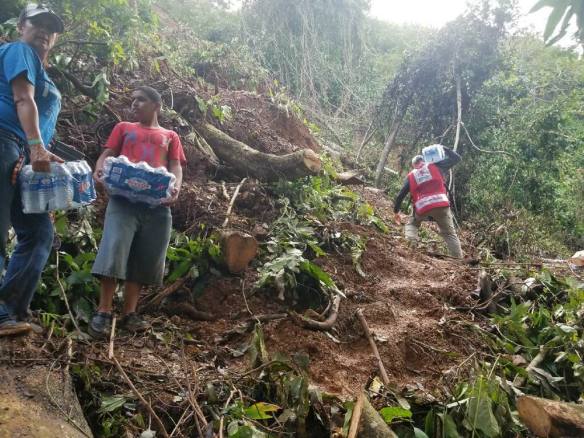
Jorge Martinez carries a case of water to residents stranded by Hurricane Maria in Puerto Rico


So how is Puerto Rico doing one year after the devastation caused by Hurricane Maria?  The short answer is, “Well, I really don’t know.  But I think do!”

When I came back last October, having spent a few weeks on the ground in Puerto Rico, I shared a story about a wonderful lady who had welcomed her neighbor into her humble home and simply wanted some tarps to protect her elderly neighbor’s belongings, since the house had no roof.  In that story I also mentioned my friend Brad and the many other Red Cross volunteers like him who were serving with so much compassion and love… always putting the needs of others before self.  (Click here for a link to that story.)  This helps answer the question, “How is Puerto Rico doing?” The story that follows also helps answer that question.

On October 8th last year, I was in a hot, destroyed place called Ensenada, Puerto Rico.  Ensenada is on the southern coast of the southwest corner of the island… and like every other place on the island, it had been devastated.  There were a lot of people with a lot of need in the area who hadn’t been helped yet, so we brought two crews and two large trucks full of supplies.  We set up shop in a large government convention center and delivered supplies to hundreds of families.  And of course, the temperature felt like a thousand degrees!

I was carrying some supplies for a sweet old lady to her car so that she could sustain herself, for a few days anyway.  She reminded me a lot of my own grandmother, who had passed away many years before.  We were chatting on the walk to her car; it’s amazing how you can connect with people when you strip away all the artificial barriers we create.  It’s beautiful!  As we were approaching her car she said, “You know, mijo (ME-HO – Spanish for “my son”), God tests us.  But any time he does, he sends an angel and today you’re my angel.”

Fortunately, I was wearing sunglasses.

When I landed in Puerto Rico on September 28, 2017 we were on one of the first flights following the hurricane.  At that point, planes could only land during the day because there were no navigational instruments since there was no power.  As you could imagine, the dark, steamy airport was full of people who were trying to get out.  As we came through the jetway, the crowd started clapping and thanking us.  It was a humbling moment but it speaks to the power of our brand… what we stand for… what we represent.  And at that particular point it was hope!  And that matters.  In times of need, hope matters.

I read the news and see the advances that are happening in Puerto Rico.  I also note the setbacks.  The truth is, at least how I see it, Puerto Rico will not be back to “normal” for many years.  But that’s OK.  Puerto Ricans are resilient, warm, caring and extremely communal.  And so is the Red Cross.  I haven’t been back, but I know that our long-term recovery teams, comprised primarily of volunteers, are on the ground humbly carrying out the king’s work and will be there for quite some time.  That’s hopeful; that’s comforting.

So, how’s Puerto Rico doing?  Well, probably not so good.  But they’re doing great!

It’s Not Over – Florence Flooding Continues in the Carolinas

The threat from Hurricane Florence is far from over as rivers continue to rise in the Carolinas and extremely dangerous flooding is still occurring. Getting help into affected areas is challenging, and will be for some time.  One of the four crews deployed in an Emergency Response Vehicle from Northeast Ohio had to spend the night in a fire house in Marion, South Carolina on Monday, after rising waters cut off their return route.

Some Red Cross workers are finding creative ways to deliver relief to residents stranded by floodwaters, as you can see in this video.

  • Some 18 counties in North Carolina are still under evacuation orders and water rescues are continuing.
  • Nearly 1,000 roads are closed and as many as 220,000 people are without power. Many gas stations are still closed due to power outages and a lack of fuel.

This is a heartbreaking and dangerous situation, and the American Red Cross is working around the clock to provide safe shelter and comfort for the hundreds of thousands of people impacted.

  • The Red Cross is mobilizing more than 140 emergency response vehicles, including 4 from Northeast Ohio, and more than 110 trailers of equipment and supplies, including meals and enough cots and blankets for more than 100,000 people.
  • The Red Cross is working with the National Guard, U.S. Army and other partners to transport disaster workers and supplies to areas in need. On Tuesday, about 40 Red Cross volunteers were flown on military helicopters into areas cut off by flood waters.
  • The Red Cross is working with dozens of partners to support feeding, sheltering, transportation and other disaster services.

Due to Hurricane Florence, nearly 200 blood drives have been forced to cancel, resulting in over 5,200 uncollected blood and platelet donations.

  • We expect additional blood drive cancellations over the coming days, with fewer blood and platelet donors available to give at drives in and around affected areas due to flooding and poor weather conditions.

About 2,800 Red Cross disaster workers, including about four dozen from Northeast Ohio, have been mobilized to help feed, shelter, and support people affected by Florence and the subsequent flooding.

To help support the disaster relief operation, Fox 8 in Cleveland will be broadcasting live reports on Thursday, September 20, from 6:00 am to 7:30 pm.  The station will be promoting a Hurricane Florence disaster relief hotline number, giving viewers the chance to make a donation over the phone.  Donations can also be made online at 1-800 RED CROSS, or by texting the word REDCROSS to 90999 for a $10 donation.

Hurricane Florence Hits Coast – Red Cross Volunteers Respond

More than two dozen volunteers  from NEO deployed to disaster relief operation

The American Red Cross is helping people in multiple states as Hurricane Florence pummels the Carolinas with strong winds, heavy rain and dangerous tidal surges. Twice the size of Louisiana, Florence is inundating communities and leaving hundreds of thousands without power.


Residents of Wilson, North Carolina take refuge in a Red Cross shelter.   
                                    Photo credit: Danial Cima/American Red Cross

As Hurricane Florence comes ashore, the Red Cross is providing safe shelter and comfort for evacuees across six states. More than 20,000 people sought refuge in more than 200 Red Cross and community shelters Thursday night to escape the storm’s wrath. View some of their stories here.

As of midnight, 14,000 people were in 124 shelters in North Carolina, and 5,600 people in 59 shelters in South Carolina. An additional 430 people stayed in 23 shelters in Virginia, Georgia, Tennessee and Maryland.

Akron Volunteers 4

Red Cross volunteers Linda Taylor, Bob Schneider, Teresa Greenlief and Cameron Fraser prepare to depart Akron in Emergency Response Vehicles.  Photo credit: Mary Williams/American Red Cross

About 2,000 Red Cross disaster workers from all over the country have been mobilized to help shelter, feed and support people affected by Florence, including 29 from Northeast OhioFour Emergency Response Vehicles based in Northeast Ohio departed from Cleveland, Akron and Canton today, staffed by two-person crews.  They have been assigned to meet in Macon, Georgia.

Susie&Sue

Volunteers Susie Muetzel and Sue Wisdom prepare to depart Cleveland in an ERV.  Photo credit: Jim McIntyre/American Red Cross

Working with partners, the Red Cross has served 47,000 meals and snacks in North Carolina and South Carolina. To bolster relief efforts, the Red Cross is mobilizing nearly 100 emergency response vehicles and more than 120 trailers of equipment and supplies, including 100,000 ready-to-eat meals and enough cots and blankets for more than 42,000 people.

See photos of local media coverage here.

HOW YOU CAN HELP The Red Cross depends on financial donations to be able to provide disaster relief immediately. Help people affected by Hurricane Florence by visiting redcross.org, calling 1- 800-RED CROSS or texting the word FLORENCE to 90999 to make a $10 donation.

Donations enable the Red Cross to prepare for, respond to and help people recover from this disaster.

The Red Cross honors donor intent. Donors can designate their donation to Hurricane Florence relief efforts by choosing that option when donating on redcross.org or on 1-800-RED CROSS.

PLEASE GIVE BLOOD More than 140 blood drives have been canceled through early next week due to Hurricane Florence, resulting in over 4,200 uncollected blood and platelet donations. Eligible donors in unaffected areas are urged to make an appointment now to give blood or platelets to help maintain the nation’s blood supply. There is a critical need to platelet and type O blood donations. Appointments can be made by using the Red Cross Blood Donor App, visiting redcrossblood.org or calling 1-800-RED CROSS (1-800-733-2767).


Psychologist Deploys to California to Assist Wildfire Victims

His expertise with PTSD counselling helped residents cope with losses

edgardo photo (2)

Disaster Mental Health volunteer Edgardo Padin

Edgardo Padin is a clinical psychologist who helps treat veterans in the Northeast Ohio VA Healthcare System. This experience made him a valuable member of the volunteer team that responded to the wildfires in California this summer.

This was Ed’s first deployment as an American Red Cross disaster mental health worker. He wasn’t quite sure what his role would be, as he explained in an interview recorded shortly before he left for California.

Shortly after arriving, Ed found himself in a Red Cross shelter, counseling people who had just lost their homes and all of their belongings.

“I did a lot of talking to people,” he said. “I calmed them down and gave them some idea of what was happening by showing them how the fire was going on my iPad. Information was really important to them.”

Ed said that while he did provide a lot of mental health services, it wasn’t the only thing he did during his 10-day deployment.

“We had a Norovirus outbreak that we just had to work at and maintain so that it wouldn’t spread throughout the entire shelter,” he explained. “We collaborated with the University of Santa Cruz, which sent EMTs to help us. They worked 24-hour shifts just like we did.”

Emily Probst, the Regional Workforce Engagement Manager of the Red Cross Northeast Ohio Region, said Ed’s skills made him a very valuable volunteer.

“We are so thankful that Ed offered his immense expertise to help people affected by this crisis,” she said. “I have no doubt his work in California made a difference in the lives of the people he touched.”

Volunteers are needed every day to respond to local disasters like home fires and to deploy to wildfires, hurricanes and other national disasters. Visit redcross.org/neo and click on Volunteers at the top of the page to volunteer to help people in need.

In an interview upon his return, Ed said his first deployment as a Red Cross volunteer was a gratifying experience. “In the end, I felt like I did something that was wonderful. I did something that was helpful. It was a great adventure, and I certainly would do it again.”


First Anniversary of Hurricane Harvey

By: Mary Williams, American Red Cross

Hurricane Harvey 2017It was hot and ridiculously muggy.
And that was inside, with the A/C blasting.

The location? Houston, TX just a few weeks after Hurricane Harvey dumped over 33 trillion gallons of water on the city.

I was sitting under a cot inside the George R. Brown Convention Center, playing Batman with a small boy just a few months younger than my own son back home in Ohio. His parents were talking to a reporter from Belgium, who had traveled from where he was stationed in Canada. His father, an Air Force veteran, was talking about the repairs he had just completed on their rental home.

He paused.

“That was just my last day off before the storm.”

At that time, life had come to be measured in before and after.

For some, life continues to be measured that way.

Hurricane Harvey 2017

Buildings, communities and lives that were built over decades were destroyed in just a few terrible days by Harvey, and rebuilding will be neither quick nor easy. It will take time for people to heal, rebuild and recover, and the Red Cross continues to work to bring that day closer. We are one of many partners supporting the federal and state-managed recovery program.

Houston2

Watch this video, featuring three residents who are trying to recover from the losses caused by the storm.

The Red Cross has spent, or has made commitments to spend more than $400 million on emergency relief and recovery assistance for families affected by Hurricane Harvey, and anticipates committing about $120 million more in donated dollars to to support individuals and families needing additional help, as well as to provide longer-term recovery services in affected communities. And, 91 cents of every dollar received for Hurricane Harvey will be spent on our services to people affected by Hurricane Harvey.

Through the generosity of our donors, the Red Cross will be providing this assistance to those in greatest need, and there is no obligation or requirement to pay it back at any time.

Additionally, the Red Cross will help support a network of non-profit partners that have expertise in recovery services. Through a grant system, we aim to help households across all the damaged counties address the range of recovery needs. The Red Cross will support the provision of housing repair and rebuilding services to help thousands of households still living in temporary housing. Also, we will likely support behavioral health services across the affected counties, with a focus on the needs of children and youth suffering from multiple housing and school transitions, as well as the uncertainty about returning home. In addition, the Red Cross may help to fund other recovery services such as Long-Term Recovery Committees, financial counseling and programs aimed at helping people with disabilities, the elderly and underserved, low-income communities.

Hurricane Harvey 2017

To help people affected by disaster big and small visit redcross.org/donate.

Flood Safety Tips Timely as Casework Continues in Boardman

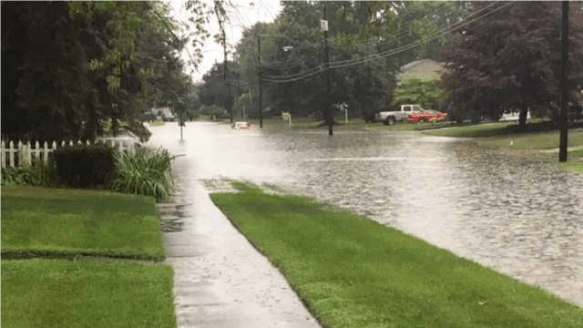
BOARDMAN, Ohio – In the 10 days since torrential rains caused localized flooding in this Mahoning County community, American Red Cross workers have helped 115 residents with immediate financial assistance.  And the disaster responders continue reaching out to residents in the area who may have been affected by the unexpected flood waters.

boardman flooding2

Three dozen cases have been opened so far, with a total of $12,788 dollars committed to help residents clean-up their homes and make them livable again.  More than two dozen cleaning kits, containing mops, brooms, bleach and other cleaning supplies have been distributed.

boardman flooding 3

Photo credit:  Kristen Gallagher/American Red Cross

“Most use the money we offer them to buy additional cleaning supplies,” said Renee Palagyi, Senior Regional Disaster Program Manager for the Red Cross of Northeast Ohio. “Some pay for laundry services, for steam-cleaning upholstery, that kind of thing,” she said.

Like most Northeast Ohioans, Renee encountered heavy rain on her ride into work Tuesday morning.  With the damage done by the flooding in Boardman in mind, she shared flood safety information with the rest of the Regional staff in her daily report.

Staying Safe Indoors

  • Turn off the power and water mains if instructed to do so by local authorities.
  • Boil tap water until water sources have been declared safe.
  • Avoid contact with floodwater. It may be contaminated with sewage or contain dangerous insects or animals.
  • Continue listening to local area radio, NOAA radio or TV stations for the latest information and updates.
  • Don’t use gas or electrical appliances that have been flooded.
  • Dispose of any food that comes into contact with flood water .


Staying Safe Outdoors

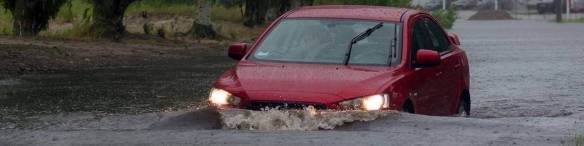
  • Don’t walk, swim or drive through floodwater. Just six inches of fast-flowing water can knock you over and two feet will float a car.
  • If caught on a flooded road with rapidly rising waters, get out of the car quickly and move to higher ground.

    image

  • Don’t walk on beaches or riverbanks.
  • Don’t allow children to play in or near flood water.
  • Avoid contact with floodwater. It may be contaminated with sewage or contain dangerous insects or animals.
  • Stay out of areas subject to flooding. Underpasses, dips, low spots, canyons, washes, etc. can become filled with water.

“I think everyone needs a reminder to follow the tips the Red Cross espouses,” she said. “It’s too easy to think we’re invulnerable, and we’re not.”

NEO Shelter Closes

The longest-running shelter operation in Northeast Ohio in recent memory has ended.

For 11 nights, residents of the Loganberry Ridge Apartments in Richmond Heights spentIMG_6247 the overnights away from their homes, with some of their neighbors and American Red Cross workers as they waited for their homes to be deemed safe enough to reoccupy.  A fire on July 20, 2018 forced them from their apartments, and repairs kept them away until July 31.
IMG_6280

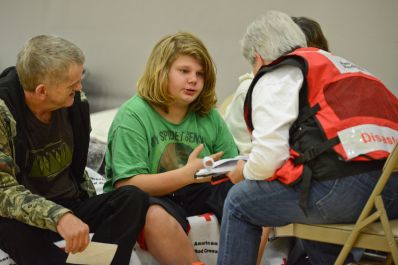
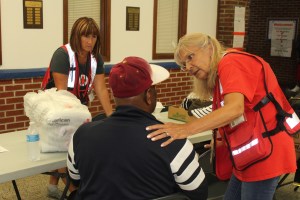
Red Cross volunteers Monica Bunner, left, and Sue Wisdom with a shelter resident


During that time, more than 50 Red Cross volunteers staffed the shelter, 24 hours a day.  The shelter operation began at Richmond Heights High School, where officials were able to move quickly to help accommodate nine residents the first night.  Due to previously scheduled school activities, the shelter location moved to the Christian Assembly Church on nearby Chardon Road, where an average of seven residents took shelter for the next nine nights.

“We operated a shelter for seven days in 2006, when the Grand River flooded in Painesville,” said Debbie Chitester, who has worked for the Red Cross in Northeast Ohio for more than 25 years.  She served as Director of Operations for the Richmond Heights shelter.  “We made sure the residents were safe, and tried to give them a home away from home.”

“Every one of my needs have been met,” said Tracy Foster, one of the Richmond Heights residents who stayed in the shelter. “I’ve had plenty of water, plenty of sandwiches, lunch, breakfast and dinner.”  Tracy was featured in a video on day three of the shelter operation.

Almost 1,000 meals and snacks were served during the 11-night shelter operation.  The cost of food and water, logistics, technology, and immediate financial assistance the Red Cross committed to giving residents affected by the fire totaled nearly $11,000.  The funds for assisting victims of disasters are only available because of the generosity of donors, and the power of volunteers, who mobilize every time disaster strikes in Northeast Ohio and across the country.  You can donate to the Red Cross or volunteer to help your neighbors during their darkest hours by visiting redcross.org/neo.

See more photos from the shelter operation here.