
A volunteer profile will post here each day during National Volunteer Week
By Mark Sitch, American Red Cross volunteer
April 11, 2019- Volunteers are the lifeblood of the American Red Cross. But not many can say they have over five decades of service. In line with National Volunteer Week, we found a super committed volunteer in Tab Alden, who serves in the Lake to River Chapter. So naturally, I had some questions about her resilient service.
What was your profession before your volunteer career?
I was a bus driver for the Maplewood and Champion school districts in Trumbull County transporting and working with mentally challenged children and adults. I was also a workshop specialist for the developmental disabilities workshop program.

Tab Alden at the Cleveland VA Medical Center during the Christmas season 2017
How did you first become involved with the Red Cross?
I became involved while working with a CB radio group doing the communications between the Red Cross teams at football games in Warren.
What are some of the Red Cross services you’ve been involved with?
After my CB radio operator stint, I received certification to treat basic and advanced first aid and taught as an instructor and later was added as a receptionist. I currently serve our chapter as volunteer coordinator and all around go-to person in our office.
What do you like best about your volunteer experience?
Meeting new people and learning new methods of helping wherever I can. I’m presently learning the ins and outs of DAT (disaster action teams).

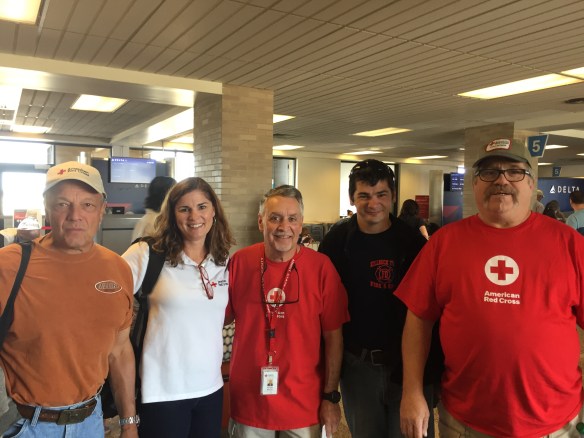
Tab Alden with fellow Lake to River Chapter volunteers
Why should one consider volunteering for the Red Cross?
If someone is willing to give their time and energy for volunteering, there’s not a better place to learn what the Red Cross can do for you. You must be committed to giving your heart and soul to do what is asked and have patience.
What do others say about Tab’s volunteer service?
The executive director of the Lake to River Chapter, Karen Conklin, offered these comments about Tab’s demeanor: “Lucky me, the first day I walked into the Red Cross in 2010, the first smiling and familiar face to greet me with a hug was Tab! She made me feel at home because she was a volunteer when I was CEO for another organization.” Karen added, “For me, Tab is not just an amazing volunteer but also a good friend and my go-to when something needs done.”
The Lake to River Red Cross is blessed they have such a dedicated volunteer they can count on every day!
For more information and to learn of volunteering opportunities with the Red Cross of Northeast Ohio, visit redcross.org/volunteer or call 216-431-3328.
Edited by Glenda Bogar, American Red Cross volunteer.
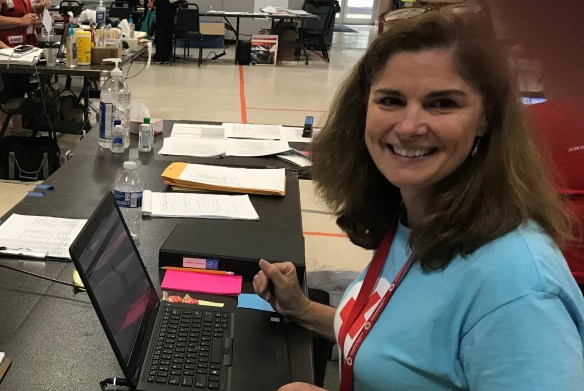



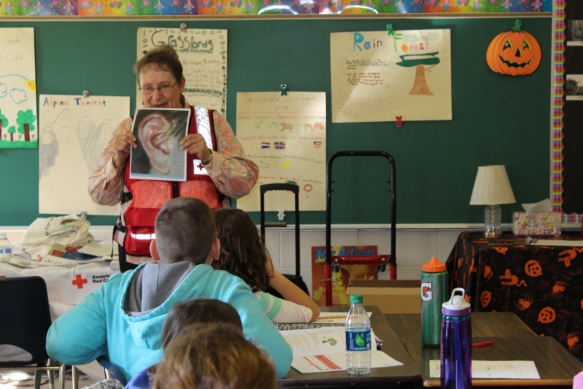

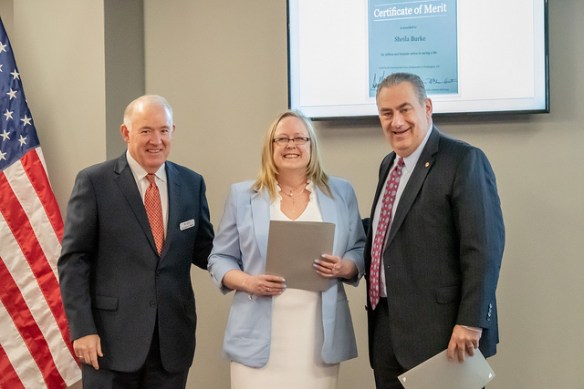
 After graduating and while she was looking for full-time work in her field, her husband suggested she pursue volunteer work. The Red Cross’ Northeastern New York Chapter Albany office was close to their home. She began to volunteer for their home fire campaign, assisting with the region’s Sound the Alarm events.
 “I would love to deploy and get into the dirty work to help those in need—and personally be there with the victims,” she said.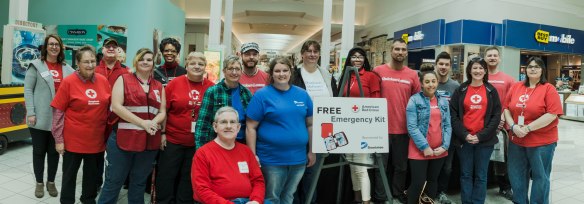
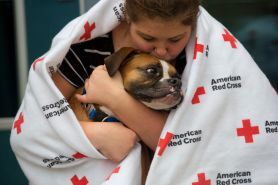
 member in an emergency. But first aid for your pet? It may not be something you think about until you find your dog ate that dark chocolate bar you left out on the counter. Or your bug-swatting cat got stung by the bee he was playing with.
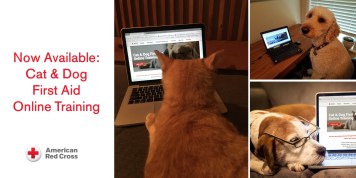 their own pace. It takes approximately 30 minutes to complete the course. Participants can stop and pick up where they left off if the course can’t be completed in one sitting. The interactive course includes:
 veterinarian or animal poison control expert before giving to your pet), ice pack, disposable gloves, blunt end scissors, tweezers, antibiotic ointment, oral syringe or turkey baster, liquid dish washing detergent (for bathing), towels, flashlight, alcohol wipes and artificial tear gel.
 Every eight minutes, the Red Cross helps someone affected by a disaster. Last year, Red Cross disaster workers—90 percent of whom were volunteers—helped millions of people during a second consecutive year of record wildfires, hurricanes, tragic shootings and other large crises—all while responding day and night to home fires in communities across the country.


