National Dog Day: A look at American Red Cross’ pet programs

By Kathryn Dean, American Red Cross volunteer

Every year on August 26, National Dog Day is recognized in the U.S. and globally as a way to celebrate dogs and the positive impact they have in the lives of people. The American Red Cross celebrates dog ownership and offers many services that support our canine companion friends. Read on to find out more! 
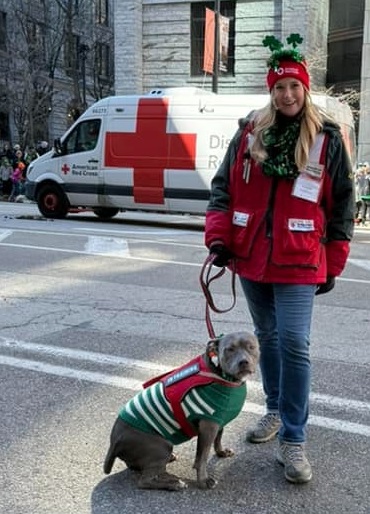
Megan Winans, American Red Cross, and Athena

Pet First Aid App – Would you know what to do if your pet had a medical emergency?  The Red Cross makes it easy with their free Pet First Aid App, available for download in both the Google Play and Apple App Stores, or text “GETPET” to 90999. This user-friendly app covers a wide range of potential emergency scenarios, specifically tailored for your dog (or cat!). From the basics of airway, breathing and circulation checks, to step-by-step CPR and first aid instructions, this app has you covered.  Scenarios include drowning, car accidents, burns, falls, poisoning and much, much more. It also includes an emergency vet locator,  preventative care tips and quizzes to brush up on your safety knowledge.   

Cat and Dog First Aid Course – So you’ve downloaded the Pet First Aid App, but still want to take your knowledge a step further with formal training. That is possible through the Red Cross Cat and Dog First Aid Course. Learn pet CPR and first aid and become certified to provide care in an all online, self-paced course that only takes around 35 minutes to complete. This paid course covers the basics of normal vital signs and what to do in an emergency, including wounds, bleeding, seizures and cardiac arrest. In addition, you will learn preventative care tips to help keep your pet safe. Click HERE to learn more about the course and to register! 

Animal Visitation Program (AVP):  Red Cross volunteers and their certified service dogs work in conjunction with the Service to the Armed Forces (SAF) program to offer canine visitation to both active-duty military members and veterans within the VA medical system or on bases here in Northern Ohio and around the world. Approved therapy dogs provide comfort, love and encouragement to service members who are deployed or away from home. To learn more about volunteering in this capacity, click HERE

Disaster Response:  The Red Cross deploys to disasters all over the U.S., from fires, to floods, to hurricanes and more. In addition to relieving human suffering, special teams are assigned to assisting families with any pet needs that may arise, including finding pet friendly shelters, providing access to resources such as food, cages, blankets and vaccines. In Northern Ohio, the Red Cross works in partnership with Faithful Companions, a pet cremation service for pets who unfortunately lost their lives in fires or other disasters, free of charge. 

To keep pets safe and prepare for evacuation during disasters, Megan Winans, a Red Cross employee who serves as Pet Liaison for National Level 4+ Deployments and also serves as the Divisional/Regional Pet Champion, offered these great tips: “I always encourage everyone I know to make sure they have a go bag ready ahead of time for not only themselves and their human family members, but a go bag for their pets too. Items such as extra food, water, medications, bowls, leashes, collars, a cage and copies of important documents are all very helpful to have together in one spot to grab as you go.”  

To learn more about disaster preparedness with pets, click HERE

Edited by Glenda Bogar, Red Cross volunteer

Red Cross volunteers – true humanitarians

By Jim McIntyre, American Red Cross volunteer

“The best way to find yourself is to lose yourself in the service of others.”    

That sentiment of Mahatma Ghandi is fitting recognition for World Humanitarian Day, celebrated each year on August 19. American Red Cross volunteers are repeatedly in the service of others. 

Jim McIntrye (right) in Ft. Meyers, Florida, with another Red Cross volunteer from Northern Ohio

From organizing drives to collect lifesaving blood to assisting families who have been chased from their homes by fire, volunteers are the lifeblood of the Red Cross – the world’s premier humanitarian organization.   

I have witnessed the kindness and compassion of countless Red Cross volunteers in the past ten years, and not only in the Northern Ohio Region. Thousands of Red Cross volunteers deploy to areas across the country after disaster strikes, to help provide shelter, meals, and emotional support to people during their darkest hours. 

In 2016, in the wake of the devastation caused by Hurricane Matthew in North Carolina, I attended a birthday party arranged by Red Cross volunteers for a child whose family was taking refuge in a shelter. A year later, I accompanied Red Cross volunteers in Texas who were bringing warm meals and drinking water to residents at their homes following the flooding caused by Hurricane Harvey. I witnessed Red Cross spiritual care volunteers comfort folks following a mass shooting in Dayton, Ohio in 2019. In 2022, I watched Red Cross volunteers maneuver a disaster response truck through the rubble created by Hurricane Ian at Ft. Myers Beach to bring residents help.  And two years ago, I saw Red Cross volunteers effectively collaborate with aid workers from several other agencies to help residents of Lahaina, Maui in the aftermath of deadly wildfires. 

September 4, 2023. Yankeetown, Florida.
Red Cross disaster responder Mahogany Coward hands relief supplies to Joseph Hill of Yankeetown, Florida.
Photo by Scott Dalton/American Red Cross

True humanitarians. 

“Everyone can be a humanitarian. All it takes is one act to help someone else.” — Valerie Amos, former United Nations Under-Secretary-General for Humanitarian Affairs. 

If you have an interest in obtaining the skills needed to help people affected by large disasters across the country, visit the Red Cross website to learn more.  And if helping neighbors closer to home appeals to your humanitarianism, visit this page.  

It’s never to late to become a humanitarian. Author C.S. Lewis once said, “You can’t go back and change the beginning, but you can start where you are and change the ending.”  

Red Cross youth and young adult volunteer roles offer invaluable experience for individuals like Maddie Frank

By Tim Poe, American Red Cross volunteer

Before American Red Cross Youth Volunteer Maddie Frank arrived for her first shift as Blood Donor Ambassador, she had already recruited a new blood donor, her dad. As Maddie was not yet old enough for her license, her dad drove, deciding to give blood on the way. After her dad downloaded the Blood Donor App, Maddie said, “It was fascinating and fun to watch the blood donation’s progress with him,” culminating in the location where it helped save a life.  

Maddie Frank, Red Cross volunteer

Maddie has been volunteering since January of this year and has already made a tremendous impact. Beginning with Totes for Hope, she has taken on several roles, including Blood Donor Ambassador, Youth Advocate, and Volunteer Services Youth Engagement Lead.  

Red Cross Youth and Young Adult volunteer opportunities and Red Cross Clubs are excellent ways giving people like Maddie can assist their communities, gain tremendous experience, develop leadership and public speaking skills, build resumes, make lasting friendships, and help make the world better.   

There are many Red Cross volunteer opportunities for young people, depending on age. In fact, nationally, as many as 25% of our volunteers are age 24 and younger. For instance, individuals 13 and over can volunteer at blood drives; additional adult supervision is required for those 13-15. Prepare with Pedro presenters can be at least 14. While you must be at least 18 for most disaster relief roles, those ages 16-17 can help support logistics, inventory, and preparation in their region. And young adults (ages 18-24) may be involved in College Red Cross Clubs or hold an adult volunteer position. 

Maddie told me how she has grown up in an atmosphere of helping others and has always enjoyed doing so. Her schools have had service hour requirements, she began working with Totes of Hope for services project at her church, her dad coaches, and her mom helps at a food bank.  

Maddie said she greatly enjoys helping and interacting with people, is looking to become a nurse, and her work as a Red Cross volunteer has helped. Maddie said, “I really enjoy interacting with the donors, seeing their milestones, and working with the other volunteers and staff, as everyone is very kind.” Maddie also said the experience is helping her get a sense of working in a medical field. She has also found several fellow volunteers are studying to become medical professionals, including nurses, and share their experiences. 

In addition to aiding the Red Cross, Maddie has assisted with several programs to help others, is a member of her school’s medical club, enjoys playing basketball, and will soon begin her Junior year at Wash Jesuit High School. 

I asked Maddie what she would tell someone her age interested in becoming a Red Cross volunteer. She said, “Starting out as a blood donor ambassador is really beneficial, as you get to meet people, including those in medical fields, and see what blood drive are like. And you get to see your impact.” 

Keep your kids safe as they head back to school

It’s getting closer… Yes, it is almost time… Time for the kids to go back to school! And while parents all across Northern Ohio collectively exhale that sigh of relief, knowing that their “break” from the summer mayhem is on the horizon, there are still things to think about. Most notably back to school safety! With that, the American Red Cross offers ways to help keep your students safe as they return to school for the upcoming year.

If your student is younger or going to school for the first time, teach them:

  • Their phone number, address, how to get in touch with their parents at work, how to get in touch with another trusted adult and how to dial 911.
  • Not to talk to strangers or accept rides from someone they don’t know.

If your child walks to school, teach them to:

  • Walk on the sidewalk. If no sidewalk is available, walk facing traffic.
  • Stop and look left, then right and left again to see if cars are coming.
  • Cross the street at the corner, obey traffic signals and stay in the crosswalk.
  • Never run out into the street or cross between parked cars.

If your student takes the bus to school, teach them to:

  • Get to their bus stop early and stand away from the curb while waiting for the bus to arrive.
  • Board the bus only after it has come to a complete stop and the driver or attendant has instructed them to get on. And only board their bus, never an alternate one.
  • Stay in clear view of the bus driver and never walk behind the bus.

If your student rides their bike to school, teach them to:

  • Always wear a helmet.
  • Ride on the right in the same direction as the traffic is going.

If you drive your child to school, make sure to:

  • Always use seat belts. Younger children should use car seats or booster seats until the lap-shoulder belt fits properly (typically for children ages 8-12 and over 4’9”), and ride in the back seat until they are at least 13 years old.

If you have a teenager driving to school, make sure they:

  • Use seat belts.
  • Don’t use their cell phone to text or make calls and avoid eating or drinking while driving.

If you are considering getting your student a cell phone:

  • Download the free Red Cross First Aid and Emergency apps to give them access to first aid tips for common emergencies and full weather alerts. Find the apps in smartphone app stores by searching for the American Red Cross or going to redcross.org/apps.

DRIVERS, SLOW DOWN! Drivers should slow down as children head back to school. Know that yellow flashing lights indicate a school bus is getting ready to stop ─ motorists should slow down and be prepared to stop. Red flashing lights and an extended stop sign indicate the bus is stopped and children are getting on or off.

Motorists must stop when they are behind a bus, meeting the bus or approaching an intersection where a bus is stopped. Motorists following or traveling alongside a school bus must also stop until the red lights have stopped flashing, the stop arm is withdrawn, and all children have reached safety. This includes two and four-lane highways. If physical barriers such as grassy medians, guide rails or concrete median barriers separate oncoming traffic from the bus, motorists in the opposing lanes may proceed without stopping. Do not proceed until all the children have reached a place of safety.

Red Cross, Avon Lake mayor team up to send smoke alarms to West Virginia

By Todd James, American Red Cross

In my nearly 20 years with the American Red Cross, I have seen many times how our chapters across the country work together to deliver help where it’s needed. I’ve worked side by side with disaster responders from many cities, states, and even other countries. But it’s not only in disaster response that the Red Cross uses our national network of chapters to provide help. I recently had the opportunity to be a part of helping homes in West Virginia receive free smoke alarms as part of our Home Fire Campaign.  

It all started with a conversation between Joe Matuscak, a member of the North Central Ohio Chapter Board of Directors and Mark Spaetzel, the mayor of Avon Lake in Lorain County. Mayor Spaetzel asked Joe about the Home Fire Campaign, specifically how we provide free smoke alarms and preparedness education for families.  

Charleston, West Virginia high school students repairing homes

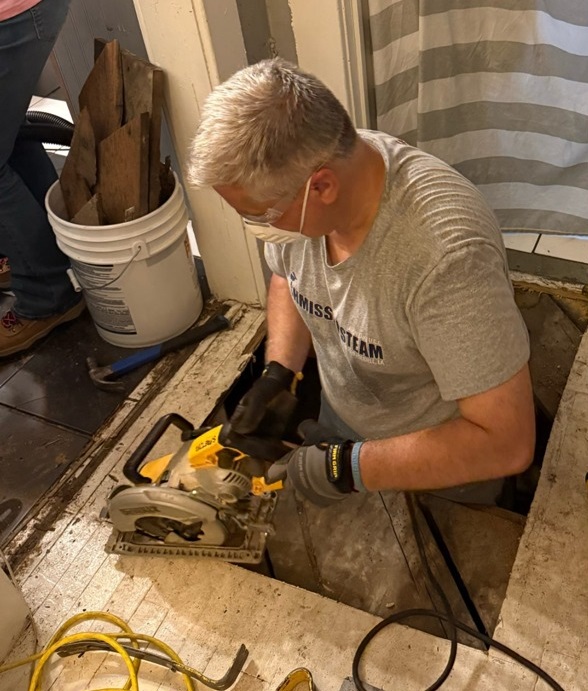
A couple of weeks after that initial conversation, the mayor was in Charleston, West Virginia as part of a mission project with the United Church of Christ. He was one of 31 adults that accompanied 85 high school students to Charleston to assist the Appalachian Service Project in providing home repairs and help to low-income families in the area.  

As a construction manager for the project, Mark oversaw nine sites that teams were working on. He noticed that many of the homes did not have working smoke alarms and knew that, for many of these families, the cost of purchasing new alarms was not a cost they could afford. Recalling their recent conversation, Mayor Spaetzel called Joe Matuscak and asked him if there was anything the Red Cross could do to help.  

Joe immediately called me and explained the situation. I told him we would do everything we could to make sure those homes would receive smoke alarms and the safety they provide. I’ve worked on disasters with several members of the Central Appalachian Region team in West Virginia, so I reached out to one of my contacts who quickly put me in touch with Angela Akers, the Community Disaster Program Manager for the Charleston area. I called Angela and explained the situation and within a couple of hours, she had spoken to the mayor, arranged to sign his team up as a Home Fire Campaign partner and provided the smoke alarms and training the team needed to install the alarms and educate families on being prepared for home fires.  

Mayor Spaetzel said he wasn’t sure at first if making the call to Joe would help. “You think about big organizations and the bureaucracy involved and you don’t know if it’s going to work,” he said. “But this was seamless, and it was so easy. The training was quick and clear, and the Red Cross team made it easy and simple to help these families. I know the families appreciated it, because they didn’t currently have working smoke alarms and many of them had never had them.” 

Mayor Spaetzel said that in his position, fire safety and prevention are always on his mind and he’s looking forward to working with the North Central Ohio Chapter to make sure families in Avon Lake know about the Home Fire Campaign and have access to the program.  

Being a part of the Red Cross family means having family members across the country who are ready to help whenever it’s needed, wherever the call comes from. For more information about the Home Fire Campaign, visit redcross.org/NOH.