Keep your kids safe as they head back to school

It’s getting closer… Yes, it is almost time… Time for the kids to go back to school! And while parents all across Northern Ohio collectively exhale that sigh of relief, knowing that their “break” from the summer mayhem is on the horizon, there are still things to think about. Most notably back to school safety! With that, the American Red Cross offers ways to help keep your students safe as they return to school for the upcoming year.

If your student is younger or going to school for the first time, teach them:

  • Their phone number, address, how to get in touch with their parents at work, how to get in touch with another trusted adult and how to dial 911.
  • Not to talk to strangers or accept rides from someone they don’t know.

If your child walks to school, teach them to:

  • Walk on the sidewalk. If no sidewalk is available, walk facing traffic.
  • Stop and look left, then right and left again to see if cars are coming.
  • Cross the street at the corner, obey traffic signals and stay in the crosswalk.
  • Never run out into the street or cross between parked cars.

If your student takes the bus to school, teach them to:

  • Get to their bus stop early and stand away from the curb while waiting for the bus to arrive.
  • Board the bus only after it has come to a complete stop and the driver or attendant has instructed them to get on. And only board their bus, never an alternate one.
  • Stay in clear view of the bus driver and never walk behind the bus.

If your student rides their bike to school, teach them to:

  • Always wear a helmet.
  • Ride on the right in the same direction as the traffic is going.

If you drive your child to school, make sure to:

  • Always use seat belts. Younger children should use car seats or booster seats until the lap-shoulder belt fits properly (typically for children ages 8-12 and over 4’9”), and ride in the back seat until they are at least 13 years old.

If you have a teenager driving to school, make sure they:

  • Use seat belts.
  • Don’t use their cell phone to text or make calls and avoid eating or drinking while driving.

If you are considering getting your student a cell phone:

  • Download the free Red Cross First Aid and Emergency apps to give them access to first aid tips for common emergencies and full weather alerts. Find the apps in smartphone app stores by searching for the American Red Cross or going to redcross.org/apps.

DRIVERS, SLOW DOWN! Drivers should slow down as children head back to school. Know that yellow flashing lights indicate a school bus is getting ready to stop ─ motorists should slow down and be prepared to stop. Red flashing lights and an extended stop sign indicate the bus is stopped and children are getting on or off.

Motorists must stop when they are behind a bus, meeting the bus or approaching an intersection where a bus is stopped. Motorists following or traveling alongside a school bus must also stop until the red lights have stopped flashing, the stop arm is withdrawn, and all children have reached safety. This includes two and four-lane highways. If physical barriers such as grassy medians, guide rails or concrete median barriers separate oncoming traffic from the bus, motorists in the opposing lanes may proceed without stopping. Do not proceed until all the children have reached a place of safety.

Celebrate summer safely: Fourth of July safety tips and more

By Ryan Lang, American Red Cross

The Fourth of July weekend is upon us and the Red Cross is reminding residents of Northern Ohio and beyond to play it safe, especially when it comes to fireworks. Generally, we advise to leave the fancy fireworks displays to the professionals – it’s the best way to ensure everyone has a safe and enjoyable time celebrating Independence Day.

If you are planning a home fireworks display, here are a few tips:

  • Never give fireworks to small children, and never throw or point a firework toward people, animals, vehicles, structures or flammable materials.
  • Always follow the instructions on the packaging.
  • Keep a supply of water close by.
  • Make sure the person lighting fireworks always wears eye protection.
  • Light only one firework at a time and never attempt to relight “a dud.”
  • Store fireworks in a cool, dry place away from children and pets.
  • Never use fireworks around pets, keep pets indoors. Exposure to lit fireworks can potentially result in severe burns or trauma, and many pets are also fearful of loud noises and can become lost, scared or disoriented.

In addition to fireworks safety, water safety is a top priority during the holiday and throughout the summer. Between trips the pool, the beach, the lake, etc., water safety is important for the entire family, especially when kids are involved. Here are a few water safety tips for you and your family:

  • Everyone should learn to swim. Classes are available for both children and adults.
  • Prevent unsupervised access to water. Always designate a “water watcher” to keep a close, constant eye on everyone in and around the water until the next water watcher takes over.
  • Avoid distractions when supervising children. If a child is missing, check the water first. Drowning behavior is typically fast and silent. Unless rescued, a drowning person will last only 20 to 60 seconds before submerging.
  • Reach or throw, don’t go! In the event of an emergency, reach or throw an object out to the person in trouble and tell them to grab on. Don’t go in! You could become a victim yourself. Without putting yourself in danger, rescue and remove the person from the water. Have someone call 911 if needed.
  • Download the Red Cross Swim app for safety tips, kid-friendly videos and activities, and take the free Water Safety for Parents and Caregivers online course.

 For more summertime safety tips, including ways to beat the heat, visit redcross.org.

Don’t Be the Griswolds

By Mary Falconer-Williams, American Red Cross volunteer

Introduction by Ryan Lang, American Red Cross board member and volunteer

When Clark Griswold’s dad was teaching him everything he knew about exterior illumination, perhaps a lesson on safeguarding his home during the holidays was in order. Anyone who’s seen the classic “National Lampoon’s Christmas Vacation” knows that everything that can go wrong, does go wrong for the Griswolds. But maybe, if Clark had been better prepared with tips from the American Red Cross, things may have gone more smoothly for him.

When you are decorating for the holidays, it’s so tempting – I know! – to load up one plug beyond its capacity. Why would they make it so you can daisy chain a set of lights if they didn’t mean for you to do so? And if I just need the wire to stretch one foot more, why can’t I just plug a power strip into a power strip into the extension cord?

The U.S. Fire Administration states on its website, “In 2021, an estimated 24,200 residential building electrical fires were reported to United States fire departments.”

Additionally, the National Fire Protection Agency indicates that December is the leading month for home fires in the U.S. According to them an annual average of 155 home fires were the result of Christmas tree fires, with electrical distribution or lighting equipment involved in more than two in five home Christmas tree fires.

Another way to make to protect yourself from home fires? You’re your home safely during cold weather. According to the National Fire Protection Association (NFPA), space heaters are most often responsible for home heating fires. Follow these tips on how to safely heat your home:

● If you must use a space heater, never leave it unattended. Place it on a level, hard, and nonflammable surface, such as a ceramic tile floor. Don’t place it on rugs and carpets, or near bedding and drapes.
● Plug space heater power cords directly into outlets — never into an extension cord. Turn the space heater off every time you leave the room or go to sleep.
● Keep children, pets, and anything that can burn at least three feet away from heating equipment.
● Never use a cooking range or oven to heat your home.
● Never leave a fire burning in the fireplace unattended. Make sure any embers in the fireplace are extinguished before going to bed or leaving home. Use a glass or metal fire screen to keep embers in the fireplace.
● Have furnaces, chimneys, fireplaces, wood, and coal stoves inspected annually by a professional and cleaned if necessary.

The NFPA also indicates that Christmas Day and Christmas Eve were the second and third-leading days of the year for home cooking fires, respectively, in 2022. So, as you’re putting the fixings for your holiday meal on the stove, keep these tips in mind:

● Stand by your pan. If you leave the kitchen, turn the burner off.
● What you are cooking. Fires start when the heat is too high. If you see any smoke or the grease starts to boil, turn the burner off.
● Turn pot handles toward the back of the stove so that no one can bump them or pull them over.
● Keep a pan lid or baking sheet nearby. Use it to cover the pan if it catches on fire. This will put out the fire.
● Installing smoke alarms can help save lives, but make sure it is 10 feet or more away from your cooking surface.

RED CROSS TIPS to help protect your family this season, and year-round: test your smoke alarms monthly and practice your home fire escape plan until everyone can escape in less than two minutes — the amount of time you may have to get out of a burning home before it’s too late.

Posted by Ryan Lang, Red Cross board member and volunteer

Four ways to stay safe this 4th of July

By Samantha Pudelski, American Red Cross volunteer

Fourth of July plans usually include fireworks, barbeques, and spending time near
water to stay cool in the warm July sun. Whether you plan to do all of these things or
just one of them, the American Red Cross wants you to enjoy a safe and fun fourth of
July holiday. Think of these four areas of safety this holiday weekend:

  1. Fireworks Safety
     The safest way to enjoy fireworks is by attending a public firework show that
    is put on by professionals.
     If you are planning to set off fireworks at home, make sure to:
    o Light fireworks at a safe distance from people, animals, structures,
    vehicles or anything that is flammable. Do not point or throw
    fireworks anyone or anything.
    o Never give fireworks to small children.
    o Follow the instructions on the fireworks packaging.
    o Have a supply of water close as a precaution.
    o If you the person lighting the fireworks, wear eye protection.
    o Only light one firework at a time. Never attempt to relight a “dud.”
    o Store fireworks away from children and pets, in a cool, dry place.
     There are many free community fireworks displays throughout Northern
    Ohio planned for the July 4 th weekend. Visit your city’s website for details or
    the links below to find fireworks displays near you.
    o Northern Ohio area fireworks
    o Youngstown area fireworks
    o Northwest Ohio, Southeast Michigan area fireworks

  2. Water Safety
     Anyone near water, whether it is a pool, lake, water park or other body of
    water, should know how to swim.
     At minimum, everyone should have water competency, meaning they can
    enter the water, take a breath, stay afloat, change positions, swim for a
    distance and get out of the water safely.
     Always swim in an area where lifeguards are on duty.
     Get out of the water at the first sign of thunder or lightning. Stay indoors and
    away from water at least 30 minutes after the last streak of lightning or roar
    of thunder.
     Watch children in or near the water closely and constantly.
     Pools and spas should be fenced with adequate, four-sided fencing.
     Children and inexperienced swimmers should wear a properly fitted U.S.
    Coast Guard-approved life jacket. Everyone on a boat should wear a life
    jacket, regardless of their ability to swim.

 If swimming in an open body of water, such as a lake, river or ocean, make
sure to swim with a buddy and walk carefully into open waters.
 If you get caught in a rip current, stay calm and try not to panic. Signal to
those on shore that you need help. Swim parallel to the shore until free of the
current and then swim towards the shore.

  1. Grilling Safety
     Grilling sparks more then 10,000 home fires each year.
     Always supervise a barbeque grill when it’s being used.
     Never grill indoors or in any enclosed area.
     Make sure people and pets stay away from the grill.
     Keep the grill away from the house, deck, tree branches or anything that
    could catch fire.
     Never add charcoal-started fluid to coals that have already been lit.

  2. Heat Safety
     Stay hydrated – drink enough water to help prevent heat illness.
     Make a plan to stay cool during the hottest parts of the day.
     Gather emergency supplies – create a kit for your home and when you’re on
    the go.
     Learn how to recognize and respond to heat illness. Learn CPR and first aid.

Bonus Number 5: Have some Free Time this Fourth of July? Donate Blood and
See a Movie


This July, The Red Cross, has teamed up with Universal Pictures’ new film,
TWISTERS to help avoid a summer blood shortage. Anyone who comes to give blood
or platelets with the Red Cross between July 1 and July 31 will get a Fandango Movie
Ticket via email. Learn more about the partnership and get more details here.

Posted by Ryan Lang, American Red Cross board member and volunteer

7 Tips To Keep Your Holiday Season Safe, Merry and Bright

By Sam Pudelski, Red Cross volunteer

The holiday season is upon us and for some, decorations are already trimming their homes. While December is known as the most wonderful time of the year, it’s also the peak time for home fires. 

The American Red Cross has put together some simple safety tips to help protect your home and family.

  • Opt for battery-operated candles. If you do use candles, never leave burning candles unattended and keep them away from anything that can burn. Make sure to keep candles out of reach of children and pets.
  • Inspect all holiday light cords to make sure they aren’t broken or frayed. Avoid stringing too many strands of lights together. You should not have more than three light strings per extension cord.
  • Make sure all outdoor decorations are made for outdoor use. Fasten lights securely to your home, trees and bushes. If you’re using any metal fasteners, like hooks or nails, make sure they are insulated to help prevent electrocution or fire hazard.
  • If you have an artificial tree or garland, check for a fire-resistant label. Keep them away from fireplaces, radiators and other sources of heat. Never use electric lights on metallic trees.
  • If you plan to get a live tree, test its needles to make sure it is fresh. Bend the needles on the tree up and down to make sure no needles fall off. Make sure to water the tree regularly to prevent it from drying out.
  • Don’t hang stockings or decorations on the mantel if you plan to light the fireplace.
  • Install smoke alarms on every level of your home and outside each sleeping area. Test your alarms once a month and replace the batteries at least once per year. Additionally, you should practice your two-minute fire safety plan with everyone in your household.

If you cannot afford smoke alarms or aren’t physically able to install one, the Red Cross may be able to help. You can request a smoke alarm from the Northern Ohio Region of the Red Cross here.

Tips to Help Keep This Halloween a Treat

By Sam Pudelski, American Red Cross volunteer

It’s Halloween season here in Northern Ohio, and while kids are prepping to get tons of treats, adults should also prepare to make the evening a safe and fun event. Here are 10 things to keep in mind when trick-or-treating this holiday.

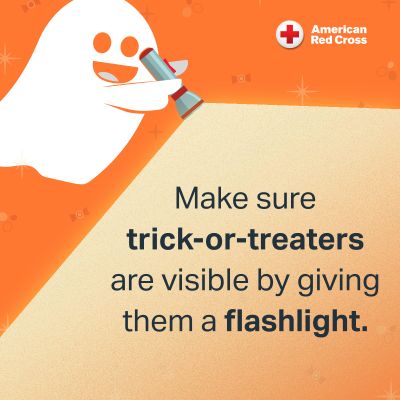
  1. Make sure trick-or-treaters can see and be seen. Use face makeup instead of masks, which can make it hard to see when wearing them. Make sure trick-or-treaters can be seen be using a flashlight to light their way, adding reflective tape to costumes and trick-or-treat bags and wearing light-colored clothing.
  2. Use costumes that are flame-resistant.
  3. Never let children trick-or-treat alone. A parent or responsible adult should accompany young children door-to-door. Make sure adults know where kids are going and do not get too far ahead.
  4. Be cautious around animals, especially dogs.
  5. Walk, don’t run from door to door. Avoid walking in the street and stick to sidewalks. If no sidewalk is available, walk at the edge of the roadway, facing traffic. When crossing the street, stop and look both ways. Don’t cross between parked cars. If trick-or-treating in a city, do not take alleyways.
  6. If you are driving, use extra caution. Kids may forget to look both ways before crossing amongst all of the excitement.
  7. Only visit homes that have a porch light on. Accept treats at the door and never go inside a home. Before eating goodies, make sure adults check all of them, removing loose candy, open packages and any choking hazards. Throw away any items with brand names you are not familiar with.

If you are handing out goodies at your home for trick-or-treaters:

  • Light the area well so visitors can see where they are walking.
  • Clear obstacles someone can trip over. Sweep leaves from steps and sidewalks.
  • Use caution when carving pumpkins. Adults should do the carving, and young kids should draw the face on the pumpkins instead of doing the carving. Do not use a candle to light a pumpkin. Opt for a flashlight or glowstick instead.

With these tips, we hope you all have a safe and fun Halloween! For more tips on first aid, weather alerts and more, download our American Red Cross apps by searching for the Red Cross in your app store or visiting redcross.org/apps.

Tips to stay safe this Labor Day weekend

By Samatha Pudelski, American Red Cross volunteer

Labor Day weekend is here and in Northern Ohio, there is no shortage of activities
to celebrate with friends and family. Whether you are headed to Lake Erie, our local
parks or taking a road trip, the American Red Cross of Northern Ohio wants you to
have a safe, fun holiday weekend. Keep in mind the following tips when you’re out
and about:

Hitting the Road:

Whether you are headed out across town or on a road trip, these simple tips will
help keep you safe.

  1. Don’t drink and drive. Make sure to have a designated driver, use public
    transportation or a ride share service to get around safely.
  2. If you are driving, make sure to get adequate rest to remain alert. Make sure
    to give your full attention to the road and avoid using cell phones while
    driving.
  3. Follow the rules of the road. Use your seat belts, observe speed limits and be
    cautious when driving in inclement weather.
  4. Use caution in work zones.
  5. Keep a safe distance from other vehicles.

Water Activities

If you are planning to hit the beach, spend some time on the lake or river or going to
a water park, here are a few safety tips to maximize your fun in the sun.

  1. If you plan to swim, swim in areas where lifeguards are on duty. Make sure to
    follow all of their instructions.
  2. If you are swimming in an ocean, lake or river, remember that swimming in
    these environments is different than a pool, and require a higher level of
    swimming skill.
  3. Protect your skin in the sun. Make sure to use SPF 30 sunscreen and reply
    every two hours or after swimming. Consider wearing protective clothing
    and a hat.
  4. Adults should keep an eye on kids they are with. If they are less than four feet
    tall or cannot swim, make sure they wear a U.S. Coast Guard approved life
    jacket.
  5. If you are caught in a rip current, try not to panic. Signal to those on shore
    that you need assistance. Swim parallel to the short until you are out of the
    current – do not try to swim against the current. Once you are free, swim
    towards the shore.

Spending Time in the Great Outdoors

  1. Be aware of the level of ability of those in your group when hiking or doing
    other activities. Sprains and falls are some of the most common injuries
    hikers may face.
  2. Make sure to stay well hydrated – plan ahead and bring extra water to drink
    throughout the day.
  3. If you are going to an area where there may not be a good cell signal, share
    your travel plans with a family member or friend.
  4. Pack a first aid kit, insect repellent, sunscreen and any personal medications
    needed.
  5. Take a Red Cross First Aid/CPR course so you are prepared if someone needs
    help.

Finally, did you know that the Red Cross has several free apps to help you and your
loved ones safe? Check out the Red Cross Emergency App, the Red Cross Swim app
and the Red Cross First Aid app to get the vital information you need. Search for the
American Red Cross in your app store or visit redcross.org/apps.

Posted by Ryan Lang, American Red Cross board member and volunteer

Tips to ensure a safe and fun Halloween

By Ryan Lang, Red Cross board member and volunteer

Spooky season is here and soon our streets will be lined with trick-or-treaters looking for Halloween handouts. With that in mind, the American Red Cross has compiled a list of tips for parents to help keep kids safe while enjoying the holiday, especially as we continue to navigate the pandemic.

  1. Make sure trick-or-treaters can see and be seen. Give kids a flashlight to light their way and consider adding reflective tape to costumes and trick-or-treat bags.
  2. Plan the trick-or-treat route in advance and make sure adults know where their children are going. A parent or responsible adult should accompany young children door-to-door. 
  3. It’s not only vampires and monsters people have to look out for. Be cautious around animals, especially dogs.
  4. Walk only on the sidewalks, not in the street. Avoid running. Look both ways before crossing the street, and cross only at the corner. Don’t cross between parked cars.
  5. Only visit homes that have a porch light on, and never go inside.
  6. Make sure a grown-up checks the goodies before eating. Make sure to remove loose candy, open packages and choking hazards. Discard any items with brand names that you are not familiar with.
  7. Make your cloth mask part of your costume. A costume mask is not a safe substitute for a cloth mask. Avoid wearing a costume mask over a cloth mask as it can make breathing difficult.
  8. Plan outdoor activities and avoid indoor events where the risk of virus transmission is higher.
  9. Bring hand sanitizer with you while trick-or-treating and use it after touching objects or other people. Wash your hands when you get home.
  10. Avoid trick-or-treating in large groups, and social distance from others around the neighborhood.

For those planning to welcome trick-or-treaters to their homes, follow these safety steps:

  • Give out treats outdoors, if possible.
  • Avoid direct contact with trick-or-treaters by setting up an area with individually bagged treats for kids to take. Wash your hands before handling treats.
  • Maintain social distancing and wear a cloth mask.
  • Light the area well so young visitors can see.
  • Sweep leaves from your sidewalks and steps. Clear your porch or front yard of obstacles someone could trip over.

Trick or treat dates and times vary; in Northeast Ohio, check here and in Northwest Ohio, here. You can also visit your city’s website for specific information.

Download the free Red Cross First Aid app for instant access to expert advice in case your ghost, goblin or superhero has a mishap. Use the Emergency app for weather alerts and to let others know you are safe if severe weather occurs. Find these and all of the Red Cross apps in smartphone app stores by searching for the American Red Cross or going to redcross.org/apps. 

As many students head back to school, Red Cross offers important safety tips

By Christy Peters, American Red Cross Regional Communications Manager

If you’re out this weekend, making a quick Target or Wal-Mart run, be prepared to witness a strange phenomenon – the panicked, school supplies shopping parent. We’ll be wide eyed and shaky, searching for a plastic folder, with three holes but no prongs, in a specific color that 500 other parents have also been looking for since school supply lists came out. That’s right folks, it’s back to school time!

My son will be in first grade this year, so I’m slightly less nervous than I was when he started his academic journey last year as a kindergartener. Of all my fears (and there were many) one of the biggest was him riding the bus. Watching him climb on and sit in that huge seat was enough to send me into a full-on panic attack. Unfortunately, so was watching the many drivers who sped past the bus as it was slowing down to get him or didn’t stop at all.

The American Red Cross Northern Ohio Region wants everyone to stay safe as students head back to school. Below are several reminders for riders, walkers and those of us sharing the roads and sidewalks with them. Take a moment to review these important tips and go over them with your kids returning to school.

CELL PHONES A DISTRACTION The National Safety Council (NSC) reports distracted walking can be dangerous, even deadly. Teach your students the following:
– Don’t text or talk on your phone while walking. If you must text, move out of the way of others and stop on the sidewalk.
– Never cross the street while using an electronic device.
– Do not walk with headphones in your ears.
Drivers can be distracted too. Never use a phone while driving. Help keep children
safe by eliminating all distractions.

TAKING THE BUS
– Students should get to their bus stop early and stand away from the curb while waiting for the bus to arrive. Young children should be supervised.
– Board the bus only after it has come to a complete stop and the driver or attendant instructs them to get on. They should only board their bus, never an alternate one.
– All students should stay in clear view of the bus driver and never walk behind the bus.

WALKING TO SCHOOL
– Cross the street at the corner, obeying traffic signals and staying in the crosswalk.
– Never run out into the street or cross between parked cars.
– Use a route along which the school has placed crossing guards.
– Parents, walk with young children and those taking new routes or attending new schools, for the first week to ensure they know how to get there safely. Arrange for the kids to walk to school with a friend or classmate.

GOING BY CAR
– Everyone should always wear a seat belt.
– Younger children should use car seats or booster seats until the lap-shoulder belt fits properly (typically for children ages 8-12 and over 4’9”), and ride in the back seat until they are at least 13 years old.
– If a teenager is going to drive to school, parents should mandate that they use seat
belts.

RIDING A BIKE There may be more young people on bikes as the school bells ring. They should:
– Wear a properly fitted helmet and bright clothing.
– Ride on the right side of the road, with traffic, in a single file.
– Come to a complete stop before crossing the street; walk bikes across the street.
– Stay alert and avoid distracted riding.

SLOW DOWN Drivers should slow down, especially in residential areas and school zones, and know what the yellow and red bus signals mean. Yellow flashing lights indicate the bus is getting ready to stop, that motorists should slow down and be prepared to stop. Red flashing lights and an extended stop sign indicate the bus is stopped and children are getting on or off.

Motorists must stop when they are behind a bus, meeting the bus or approaching an intersection where a bus is stopped. Motorists following or traveling alongside a school bus must also stop until the red lights have stopped flashing, the stop arm is withdrawn, and all children have reached safety. This includes two and four-lane highways. If physical barriers such as grassy medians, guide rails or concrete median barriers separate oncoming traffic from the bus, motorists in the opposing lanes may proceed without stopping.

KEEP LITTLE ONES SAFE Keeping all students safe is the primary concern for everyone, but there are special steps for parents of younger kids and those going to school for the first time:
– Make sure the child knows their phone number, address, how to get in touch with their
parents at work, how to get in touch with another trusted adult and how to call 911.
– Teach children not to talk to strangers or accept rides from someone they don’t know.

Finally, download the free Red Cross First Aid app for instant access to information on handling the most common first aid emergencies. You can find it by searching for ‘American Red Cross’ in your app store or at redcross.org/apps. Learn and practice First Aid and CPR/AED skills by taking a course (redcross.org/takeaclass) so you can help save a life.

Posted by Ryan Lang, American Red Cross Volunteer


Get the most out of your summer with Red Cross safety tips

By Ryan Lang, American Red Cross volunteer 

Summer: a time for family gatherings, swimming, grilling, and many more events that have become staples of the season. Whatever your plans are, the American Red Cross Northern Ohio Region has some resources you can use to help you, and even your four-legged friends, have a safe summer. 

July 30, 2014. City of Myrtle Beach Parks and Recreation, South Carolina. Julieth Martinez, 4, enjoying her swim lesson as part of the Centennial campaign. Photo by Connie Harvey/American Red Cross

WATER SAFETY

Every day, an average of 11 people die in the U.S. from unintentional drowning — and one in five of those are children 14 or younger according to the Centers for Disease Control and Prevention (CDC). The Red Cross wants everyone to know critical safety knowledge and skills that could save your life in and around the water. We encourage families to build confidence in the water by learning to be safe, making good choices, learning to swim and how to handle emergencies.
· Preventing unsupervised access to water, providing constant, active adult supervision and knowing how
to swim are critical layers of protection to help prevent drowning.
· Classes to learn how to swim are available for both children and adults. Check the map for Learn-to-Swim providers in your community. Everyone should learn first aid and CPR too, so they know what to do in an emergency.
· Download the Red Cross Swim app (https://www.redcross.org/get-help/how-to-prepare-for-emergencies/types-of-emergencies/water-safety/swim-safety.html), sponsored by The ZAC Foundation, for safety tips, kid-friendly videos and activities, and take the free Water Safety for Parents and Caregivers online course in English or in Spanish.
· It’s best to swim in a lifeguarded area. Always designate a “water watcher” whose sole responsibility is to keep a close eye and constant attention on everyone in and around the water until the next water watcher takes over.
· Drowning behavior is typically fast and silent. Unless rescued, a drowning person will last only 20 to 60 seconds before submerging. Reach or throw, don’t go! In the event of an emergency, reach or throw an object to the person in trouble. Don’t go in! You could become a victim yourself.

CAMPING SAFETY

If a camping trip is in your plans, know the level of ability of the people in your group and the environment around you. Plan accordingly.
· Pack a first aid kit to handle insect stings, sprains, cuts and bruises and other injuries that could happen to someone in your group. Take a Red Cross First Aid and CPR course and download the First Aid app so that you will know what to do in case help is delayed. You’ll learn how to treat severe wounds, broken bones, bites and stings and more.
· Sprains and falls are some of the most common misfortunes travelers may face. Falls are the biggest threat, many due to poor decision-making, lack of skill or not being properly prepared. Dehydration is also a danger. Plan ahead for these dangers.
· Share your travel plans and locations with a family member, neighbor or friend.
· Bring nutritious food items and water, light-weight clothing to layer and supplies for any pets.


GRILLING SAFETY

More than three-quarters of U.S. adults have used a grill — yet, grilling sparks more than 10,000 home fires on average each year. To avoid this, the Red Cross offers these grilling safety tips:
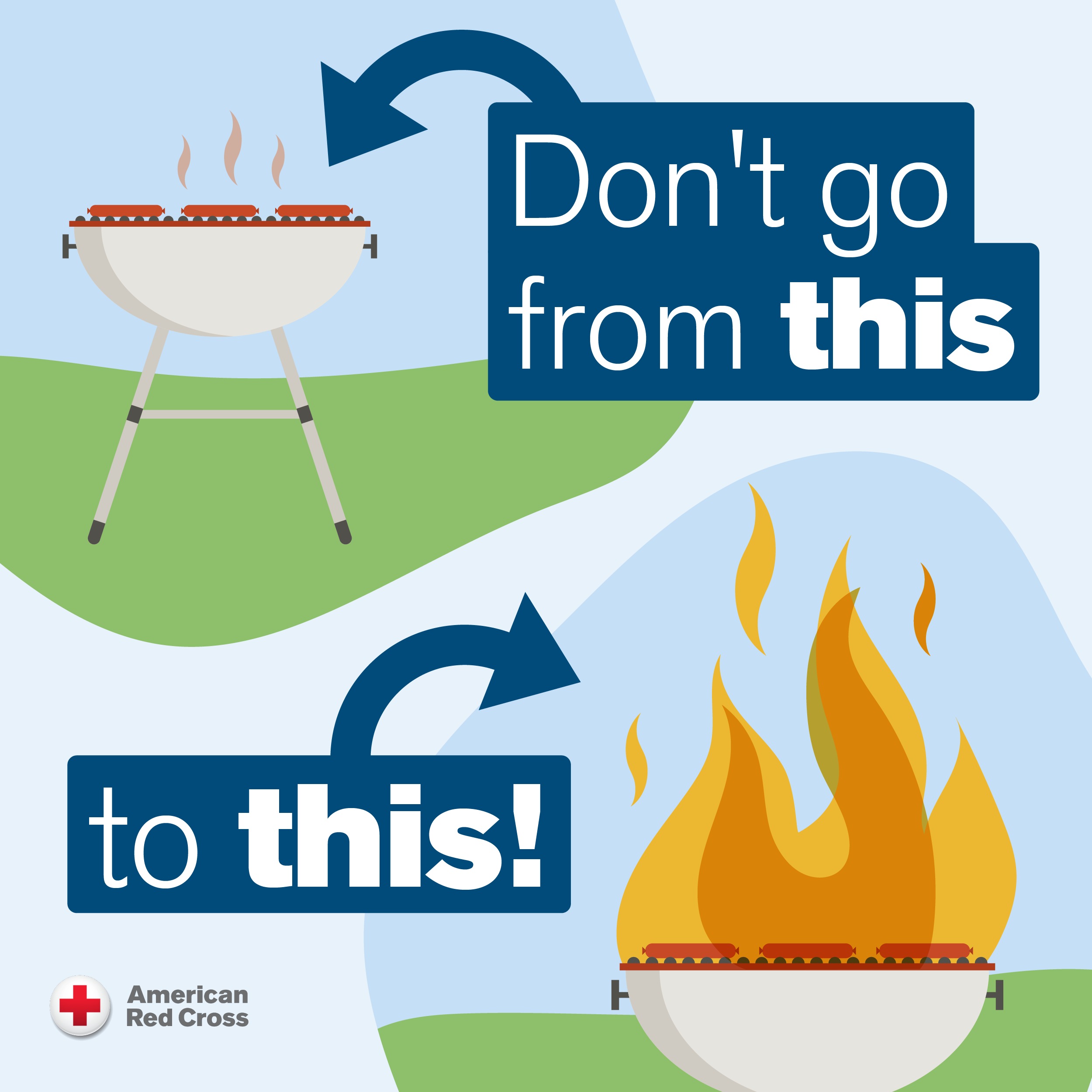
· Always supervise a barbecue grill when in use. Don’t add charcoal starter fluid when coals have already been ignited.
· Never grill indoors — not in the house, camper, tent or any enclosed area.
· Make sure everyone, including pets, stays away from the grill.
· Keep the grill out in the open, away from the house, deck, tree branches or anything that could catch fire.
· Use the long-handled tools especially made for cooking on the grill to help keep the chef safe.

PET SAFETY

Summer’s heat can be dangerous for your family pets. Follow these steps to take to help ensure your pet stays safe this summer.
· Don’t leave your pet in a hot vehicle, even for a few minutes. The inside temperature of the car can quickly reach 120 degrees even with the windows cracked open.
· Animals can suffer heat stroke, a common problem for pets in the warmer weather. Dogs with short noses or snouts, like the boxer or bulldog, are especially prone to heat stroke, along with overweight pets, those with extremely thick fur or any pet with upper respiratory problems such as laryngeal paralysis or collapsing trachea.
· Some of the signs of heat stroke in your pet are heavy panting and being unable to calm down, even when lying down, brick red gum color, fast pulse rate and being unable to get up.
· If you suspect your pet has heat stroke, take their temperature rectally. If the temperature is above 105 degrees, cool the animal down. The easiest way to do this is by using the water hose. Stop cooling the animal when the temperature reaches 103 degrees.
· Bring your pet to the veterinarian as soon as possible as heat stroke can lead to severe organ dysfunction and damage. Download the Red Cross Pet First Aid app for instant access on how to treat heat stroke, other emergencies and general care for cats and dogs and take the Cat and Dog First Aid Online Training course.

FIREWORKS SAFETY

· Never give fireworks to small children, and never throw or point a firework toward people, animals, vehicles, structures or flammable materials. Always follow the instructions on the packaging. 

· Keep a supply of water close by as a precaution. 

· Make sure the person lighting fireworks always wears eye protection. 

· Light only one firework at a time and never attempt to relight a “dud.” 

· Store fireworks in a cool, dry place away from children and pets. 

It is important to note that fireworks laws have changed in Ohio. As of July 1st this year, Ohio residents can discharge consumer grade fireworks in the state on private property. Click here (https://com.ohio.gov/divisions-and-programs/state-fire-marshal/fireworks/guides-and-resources/fire-service+-faqs-for-ohios-new-fireworks-law#:~:text=Beginning%20July%201%2C%202022%2C%20Ohio,to%20discharge%20consumer%20grade%20fireworks) to see the full list of changes to fireworks laws in the state.