Red Cross youth and young adult volunteer roles offer invaluable experience for individuals like Maddie Frank

By Tim Poe, American Red Cross volunteer

Before American Red Cross Youth Volunteer Maddie Frank arrived for her first shift as Blood Donor Ambassador, she had already recruited a new blood donor, her dad. As Maddie was not yet old enough for her license, her dad drove, deciding to give blood on the way. After her dad downloaded the Blood Donor App, Maddie said, “It was fascinating and fun to watch the blood donation’s progress with him,” culminating in the location where it helped save a life.  

Maddie Frank, Red Cross volunteer

Maddie has been volunteering since January of this year and has already made a tremendous impact. Beginning with Totes for Hope, she has taken on several roles, including Blood Donor Ambassador, Youth Advocate, and Volunteer Services Youth Engagement Lead.  

Red Cross Youth and Young Adult volunteer opportunities and Red Cross Clubs are excellent ways giving people like Maddie can assist their communities, gain tremendous experience, develop leadership and public speaking skills, build resumes, make lasting friendships, and help make the world better.   

There are many Red Cross volunteer opportunities for young people, depending on age. In fact, nationally, as many as 25% of our volunteers are age 24 and younger. For instance, individuals 13 and over can volunteer at blood drives; additional adult supervision is required for those 13-15. Prepare with Pedro presenters can be at least 14. While you must be at least 18 for most disaster relief roles, those ages 16-17 can help support logistics, inventory, and preparation in their region. And young adults (ages 18-24) may be involved in College Red Cross Clubs or hold an adult volunteer position. 

Maddie told me how she has grown up in an atmosphere of helping others and has always enjoyed doing so. Her schools have had service hour requirements, she began working with Totes of Hope for services project at her church, her dad coaches, and her mom helps at a food bank.  

Maddie said she greatly enjoys helping and interacting with people, is looking to become a nurse, and her work as a Red Cross volunteer has helped. Maddie said, “I really enjoy interacting with the donors, seeing their milestones, and working with the other volunteers and staff, as everyone is very kind.” Maddie also said the experience is helping her get a sense of working in a medical field. She has also found several fellow volunteers are studying to become medical professionals, including nurses, and share their experiences. 

In addition to aiding the Red Cross, Maddie has assisted with several programs to help others, is a member of her school’s medical club, enjoys playing basketball, and will soon begin her Junior year at Wash Jesuit High School. 

I asked Maddie what she would tell someone her age interested in becoming a Red Cross volunteer. She said, “Starting out as a blood donor ambassador is really beneficial, as you get to meet people, including those in medical fields, and see what blood drive are like. And you get to see your impact.” 

Grateful mother encourages others to donate blood after experiencing hemorrhage during birth

By Kathryn Dean, American Red Cross volunteer

In some situations, it takes a village of people to save one persons life.”  – Dr. Kristin Gype 

Last August, 38 weeks pregnant with her second child, Dr. Kristin Gype went in to see her doctor for a routine checkup and ultrasound. Everything had been going smoothly with this pregnancy, but at this appointment, the staff noticed that her amniotic fluid appeared cloudy on the scan. As a precaution, her doctor recommended that she deliver within 24 hours.  

Dr. Kristin Gype and her daughter,

Feeling a bit unnerved at this unexpected turn of events, she called her husband, reluctantly gathered her belongings, and dropped her daughter off at her mother-in-law’s house.  As she hugged her daughter goodbye, Kristin had a powerful urge to squeeze her extra tight and hold on a little longer. 

A few years earlier, she had undergone a C-section with the birth of her daughter and was determined this time to try a natural birth. At the hospital, labor was induced and she received an epidural as she waited for her son to be born. Sometime overnight, they broke her water, and it was perfectly normal. She felt a wave of relief, but also a hint of frustration.

Later that morning, she noticed that her son’s fetal monitor was showing his heart rate dipping periodically into the 30s. A normal fetal heart rate is around 110 to 160 beats per minute. She was also feeling pain in her lower right abdomen. Despite the anesthesiologist administering more medicine, the pain persisted. 

Due to the low heart rate, it was determined that a C-section was necessary, and she went in for emergency surgery. Her son was born in under 90 seconds and was perfect and healthy, but she quickly realized something else was seriously wrong.   

Having attended many C-sections during her career as a nurse anesthetist, Kristin understood the subtle cues the medical staff were giving. She soon realized that she had uncontrolled bleeding and they were trying desperately to stop it.   

“I felt this impending doom,” she recalled. “I felt like I was dying…it truly felt cold and dark, and gloomy, and there was no control.” 

She began losing her ability to communicate coherently with her husband and staff.  At one point they informed her that a total hysterectomy was necessary to try to stop the bleed and she readily agreed. The next thing she knew she woke up in recovery in the ICU.   

After speaking to her doctor the next day, she learned that she had required a total of 52 units of blood during her surgery. To put that number into perspective, the average human body holds around 10 units or pints of blood. In addition, she estimates that up to 83 blood donors were required to produce all of the blood products she needed that day. 

Luckily, she suffered no long-term consequences from this traumatic incident. Today she has a new life perspective, realizing that she was literally saved from the brink by the generous blood donors who contribute to the crucial blood supply in our community.  

To give back, she has been donating her extra breast milk to the Ohio Milk Bank. “I went on to donate 3,500 oz of breast milk,” she proudly explained. “The milk bank providers said 1 ounce of breastmilk can give three meals to a newborn ICU patient.” 

Regarding her blood donors, she reflected, “Those people had a ripple effect. They kept me alive, kept these two babies’ mommy alive. I get to go to work and take care of people and keep them alive, and my breastmilk goes to critically ill babies.”   

“It seems so simple because putting a needle in your arm and donating a pack of units is so minor compared to the downstream effects of all those things. You give somebody another Christmas, give somebody another chance at life.” 

The American Red Cross is in critical need of blood donors. Just one hour of your time could save the life of a new mother or other critically ill patient. To donate, visit RedCrossBlood.org, or download the free American Red Cross Blood Donor App by clicking HERE.

Edited by Glenda Bogar, American Red Cross volunteer

Celebrate tattoos and schedule a blood donation this National Tattoo Day! 

By Tim Poe, American Red Cross volunteer

July 17 is National Tattoo Day, a day to “recognize the history, culture, and artists dedicated to etching ink permanently on the skin.” We also think it’s a fantastic time to schedule a blood donation as, despite some myths, having tattoos does not prevent you from donating blood.  

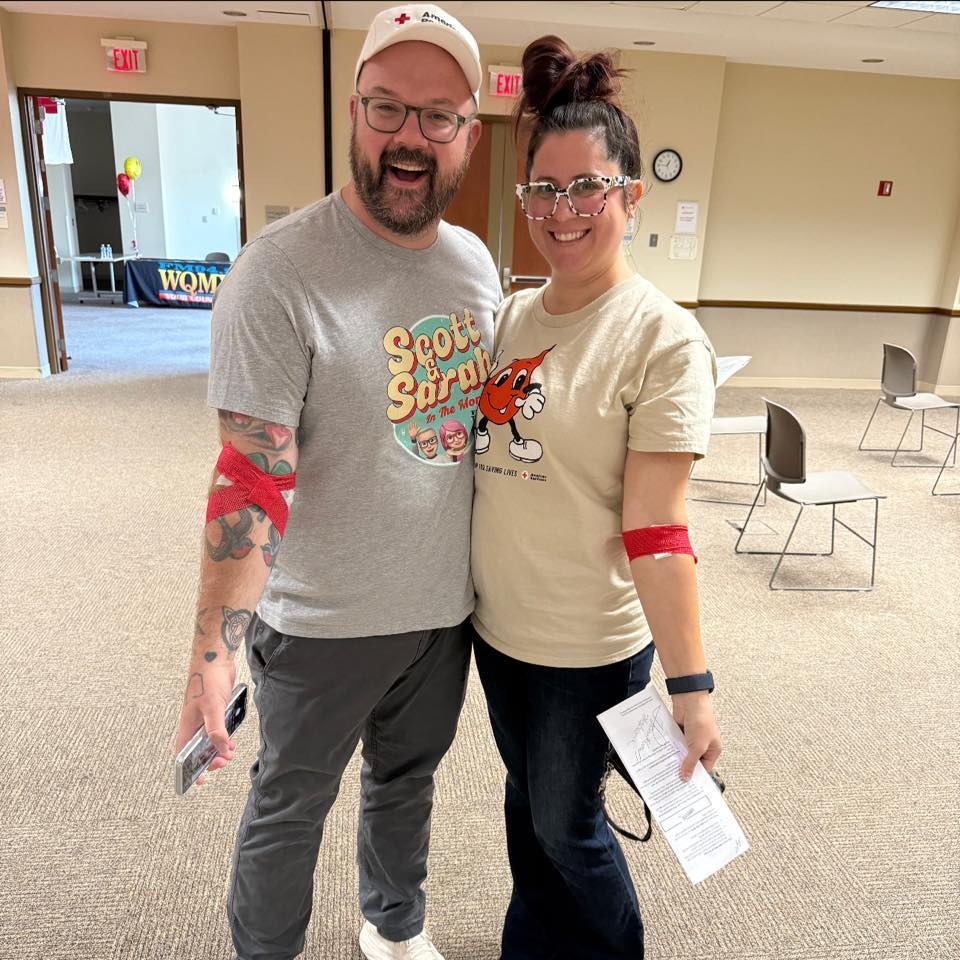
Ryan and Megan Lang, tattooed blood donors

Even if you do not have a tattoo, you’ve likely pondered possibilities. I am. Should I get an American Red Cross logo to commemorate my 7.5 years as a volunteer? Possibly. Or a fountain pin nib, for my love of writing? Granted, I mainly write on a laptop, but we need some artistic license. The pen could also be writing something, like a schwa! Yeah! Or a treble and bass clef, even a grand staff, to celebrate my love of music? That could mask some scars, too! Groovetastic! How about mascots of universities I attended? You have to admit, an Eagle-Penguin-Viking combo could be epic! Logos of previous employers? No, definitely not, especially the one with the common word ending. I’ve got it! All of them, being juggled by a jester! 

Now to bust a myth. Even if I went out and got these tattoos today, I could immediately donate blood if the tattoos were done at a state-regulated, licensed facility in Ohio or most other states. If done in one of the few states that do not regulate tattoo facilities, or by an unlicensed person, I’d only need to wait three months to ensure blood safety. (All blood donations are tested for hepatitis B and hepatitis C, but it is still important for people who may be infected with hepatitis viruses to not donate blood.) More about blood donor eligibility is available here

Also, the Red Cross is currently in need of blood donations and is offering additional ways to say thanks this summer. Those donating from July 15-31 will receive a Fandango movie ticket. Those donating in August can receive a free A1C test and, from August 1-28, a $15 gift card

Whether you have tattoos or not, enjoy celebrating them today, and consider scheduling a blood donation at RedCrossBlood.org or download the free blood donor app. After all, if you’re tattooed you don’t have a problem with needles. And a fun observation: many of the phlebotomists I’ve met have tattoos. Finally, please also read Christy Peters’ excellent post about her grandfather’s tattoos. 

Get a free pair of shades by goodr when you donate blood or platelets

By Kathryn Dean, American Red Cross Volunteer 

July is finally here, and summer has officially started. For many, this means vacations, cookouts, pool time, and fun with family and friends. For blood banks, this busy season can mean a time of fewer donors and a limited blood supply.   

Every two seconds, someone in the U.S. requires a blood transfusion. This equates to around 29,000 units of blood that are needed every day! Whether it be for cancer patients, accident victims, surgical patients, or new mothers, be a hero for a person in need by donating this precious, lifesaving gift. 

While all potential donors are asked to donate if they can, Type O is urgently needed at this time.   

Type O negative blood, often called the “universal donor,” can be safely transfused to anyone and is commonly used in emergencies when there is no time to determine blood type. With only around 7% of the U.S. population having Type O negative blood, it is often in short supply, even though the need for it is great. 

Special Promotion for donors 

Between July 1-14, consider taking time out of your schedule to donate blood, plasma or platelets, and look cool leaving with a free pair of American Red Cross x goodr “Just My Type” sunglasses, while supplies last! You will also receive a sticker with your blood type to personalize your glasses. Find out more about the promotion by clicking HERE

To donate, simply visit RedCrossBlood.org and enter your zip code or download the free Red Cross Blood Donor App by clicking HERE. Save time on the date of your donation by completing your pre-donation forms at RedCrossBlood.org/RapidPass or by using the Blood Donor App. 

Edited by Glenda Bogar, American Red Cross volunteer

Sonata in B Positive (B+)

A blood donor story told in the spirit of film noir

By Tim Poe, American Red Cross volunteer

Tim Poe, Red Cross volunteer and blood donor

I shut off the car’s engine and reached for the bottle. This was the place. Looking at the glass and sandstone medical building bristling in the late-July afternoon, I unscrewed the cap and took a long swig. This wasn’t some liver-pummeling swill, though, nor even a dainty-derby aperitif. It was the good stuff: water, straight from the tap. I knew I’d need it; they’d told me so. They also told me to get a good night’s sleep, but the ghosts of nexuses past, present, and future rattling chains at bebop tempo in my brain had other ideas. But I had slept some, had drank plenty of water, and was here to do some good. I stepped out of my dented ride and gazed at a sky blue enough to make Monet weep. But today’s theme was red. I headed toward the building, prepared to lose some blood.

I had plenty, after all, and others needed it. Today I was a blood donor.

Cots, computers, snacks, beverages, people bustling, many wearing shades of red. I’d found the room. A Blood Donor Ambassador welcomed me with a smile and scanned the fuzzy square on my phone. I had completed the RapidPass that morning.

The two donors preceding me said they always gave together, as often as possible. O negatives, universal donors. Today they were donating whole blood. Next time, Power Red. These two were cool. I was humbled, in the presence of greatness.

Another groovy person called me over, verified the information I had provided earlier, asked a few more questions, checked vitals, and drew blood to check my iron, a large drop of crimson emerging from a finger. My mind wandered from iron to the irony of my blood type, which sounded like a happiness mantra: “Be positive.” Better suited for a life coach or morning weather reporter, not a mug who’d spent his formative years breathing blue notes through saxophones followed by a lifetime thinking of novel ways to describe dusks, dawns, dramas, drunks, and dreams.

My mental meanderings paused; time to get on a cot. Even in summer, I’m pale, nearly translucent with easily visible veins, a phlebotomist’s joy. A groovetastic phlebotomist in a cerise shirt handed me a squeezy then worked a scanner, tubing, bags, and swabs with the deftness of Bill Evans pressing piano keys into song. The scent of iodine sent a jumbled reel of hospital memories rolling through my mind. But those were times of need. Now to give, help someone going through something similar. I wondered if that someone’s personality matched “be positive.”

The needle. A pinch, the frosty tubing turned garnet as my blood flowed into unseen bags below. I resisted the urge to peer over at them, instead squeezing the foam every few seconds, my other hand with the phone, taking a photo, then scrolling in hope of finding some good news.

Soon came beeps and the return of the phlebotomist. With a flurry of clips, tubes, samples, cotton, and a candy red bandage wrap, I was done. I stood up, walked to the snack table, selected a blueberry granola bar, a bottle of spring water, and awaited the slight light- headedness to subside.

Shortly later I walked back down the hall, proudly wearing my bandaged arm, greeting others, possibly with a little “be positive” swagger. Because today, I did some good. Today, I was a blood donor.

Posted by Ryan Lang, American Red Cross board member and volunteer

Recognizing blood donors on World Blood Donor Day

Increased need for donors during summer months

By Eilene E. Guy, American Red Cross volunteer

Why in the world would anybody willingly roll up a sleeve and take a needle jab, to give up a bag of precious blood?

“My mother, she gave I don’t know how many gallons,” one donor recently told me. This middle-aged daughter was honoring her late mother’s example of generosity.

Eilene E. Guy, Red Cross volunteer and blood donor

“Back in 1970, a friend of mine was going to have surgery, so I went to Cleveland to donate for him,” another donor recalled. With his donation the day we talked, that man was approaching his 35-gallon mark!

On this, World Blood Donor Day, the American Red Cross salutes the estimated 6.8 million people in the U.S. who donate blood. That yields about 13.6 million units (a “unit” of blood is about one pint) of whole blood and red blood cells a year.

That’s a whole lot of blood!

But consider: Every two seconds, someone in the U.S. needs blood or platelets. That amounts to some 29,000 units of red blood cells every day.

And this isn’t an option. Blood is saving the lives of critically injured emergency room patients, mothers and newborns experiencing complications of childbirth and folks having surgery. It’s sustaining hundreds of thousands of people undergoing chemotherapy treatment for cancer and tens of thousands who rely on blood transfusions to cope with the effects of sickle cell disease.

We’re fortunate to live in an age of modern medicine, but one challenge remains: There’s no way to “manufacture” blood.

So until that magic day, it’s a measure of our humanity that so many donors step forward to save the lives of others – in most cases, people they’ll never know.

The fact is, only about 3% of age-eligible people donate blood every year. That often leaves the supply agonizingly short. Over the last month, for example, the Red Cross collected about 20,000 fewer units of blood than needed to maintain a safe and stable national blood supply.

That’s worrisome, because blood donations typically drop during the summer months. At the same time, the need doesn’t stop.

Which brings us back to the source, blood donors.

I know from personal experience that it takes about an hour to go through the whole process: Screening to be sure I’m healthy and don’t have any disqualifications (The U.S. Food and Drug Administration decides what that would be, such as exposure to communicable diseases like malaria, or recent tattoos or piercings.); donating; and recovery (Water, juice and snacks are encouraged to jump-start the body’s replacement of the blood removed.)

You don’t need to know your blood type to make a blood donation. And if you think you’ve been disqualified, give it another try: You, or the rules, may have changed.

You can schedule your blood donation by using the free Blood Donor App, by visiting RedCrossBlood.org or by calling 1-800-RED CROSS (1-800-733-2767). 

On this World Blood Donor Day and every day, “bravo” to those who make the choice to save or sustain a life.

Edited by Glenda Bogar, Red Cross volunteer

Posted by Ryan Lang, Red Cross board member and volunteer

Give blood and get a free Cedar Point ticket

By Samantha Pudelski, American Red Cross volunteer

It’s almost summer, which means lots of time at the pool, summer barbeques, vacations and trips to Cedar Point. It’s also when blood donations tend to decline, as donors are busy with all of their summer activities. Unfortunately, the need for blood is constant in our community and across the country, and we need donors like you to help ensure those who need blood are able to receive it.

Every two seconds, someone in the U.S. needs blood. This includes accident and burn victims, heart surgery and organ transplant patients and those battling cancer.

This summer, the American Red Cross and Cedar Fair theme parks are teaming up again to encourage donors to help save lives this summer. All you need to do is donate blood at select blood drives through August 1st and you’ll receive a free Cedar Point ticket.*

To find a Cedar Point blood drive near you and schedule an appointment, visit RedCrossBlood.org and enter sponsor code “CEDARPOINT”. Appointments for these blood drives are highly encouraged.**

*All those who come to donate at select blood drives will receive one free ticket, valid for entry to Cedar Point, while supplies last. Tickets are valid during the 2024 season and other restrictions may apply. Check park website for information on capacity, open dates and hours.

**Donors without appointments are not guaranteed a Cedar Point ticket, as
supplies are limited.

Posted by Ryan Lang, Red Cross board member and volunteer

40-year blood donor nears 35 gallon mark

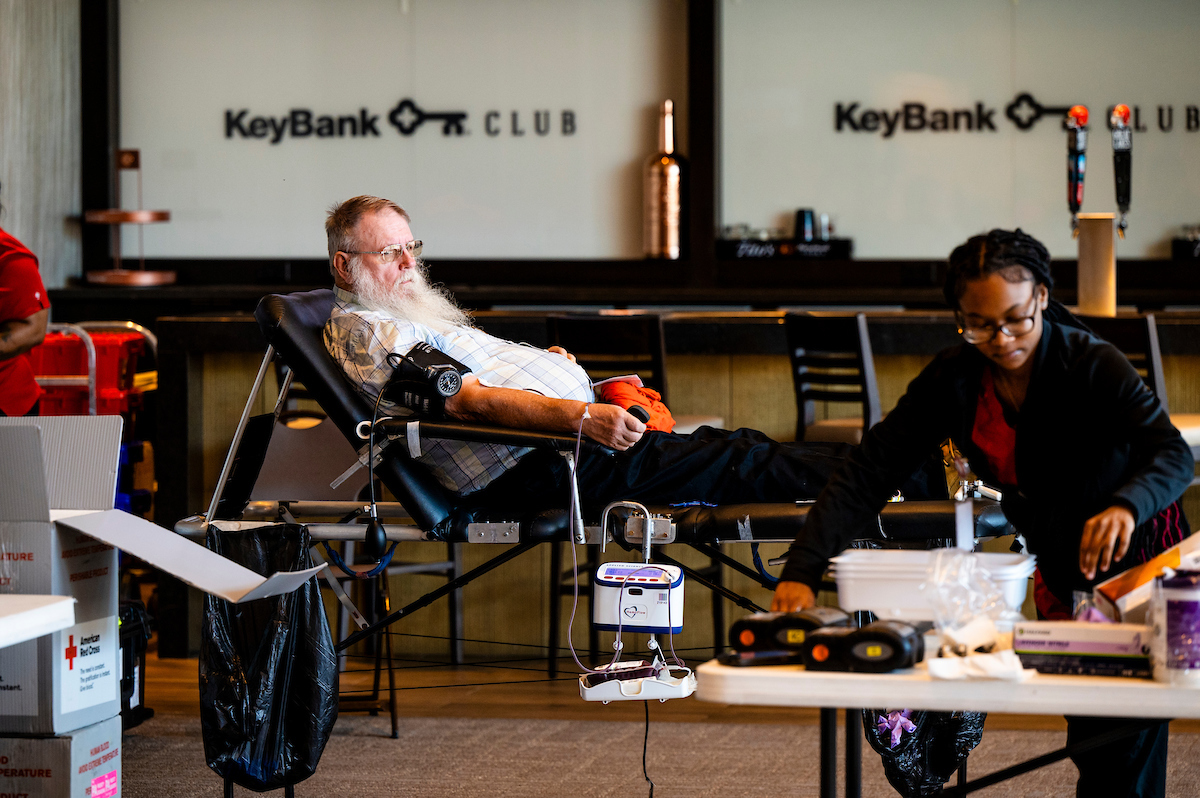
Gary Pfeiffer, of Wharton, Ohio, has donated nearly 35 gallons of blood. “I don’t make a big deal about it, it’s just another milestone for me. Once I got close, I started counting and keeping track,” said Pfeiffer.

Gary Pfeiffer, blood donor

Gary began donating blood more than 40 years ago, when a friend asked him if he had ever thought about it. When she suggested it to him, he thought that it would be something good to do, to help others.

He has donated at Red Cross blood drives throughout North Central Ohio, in Hardin County, Hancock County and Wyandot County.

And having O-positive blood, the most transfused type, Gary has had the opportunity to save many lives over the years. He has donated double red cells several times, which requires a longer wait time between donations.

Gary reached his 25-gallon donation a little over 9 gallons ago, at a drive in Upper Sandusky, Ohio. He says, “Christ gave His blood for everyone, the least I can do is help a few.” He plans on donating as long as he is able.

“I have gotten many little extras along the way, including my first pin, a set of 4 pins that when put together, make a red cross in the middle, a key chain, the document of my first donation, the original stick pin and gifts awarded with donations.”

“My wife made me a framed display of my pins, in the shape of a blood drop, which includes the stick pin, set of pins and key chain,” said Pfeiffer.

Pfeiffer Christmas tree

Gary and his wife Bettie create a different themed tree for Christmas every year. Last year, he said, “We chose to use my goal towards the 35 gallons of blood for our theme. Some drops are only partially viewable but there are 35 blood drops on the tree.”

Because his last donation was a Power Red donation (double red blood cells), Gary won’t be eligible to donate before this spring. But he plans to make his donation appointment as soon as he is eligible.

You can make an appointment to donate whole blood, Power Red or platelets by visiting redcrossblood.org, or by calling 1-800-RED CROSS. You can also make you appointment by downloading the Red Cross Blood Donor App.

Posted by Ryan Lang, Red Cross board member and volunteer

Beat the January blues by helping Red Cross overcome blood emergency

By Christy Peters, Regional Communications Manager

After avoiding it for a week and complaining about for much longer, I spent yesterday afternoon taking down and putting away my holiday decorations. It’s one of my least favorite things to do, for multiple reasons. It’s a tedious process because I have a lot of stuff and I can never remember what goes in which box. That leads to a not-so-fun game of decoration box packing Tetris that I never win.

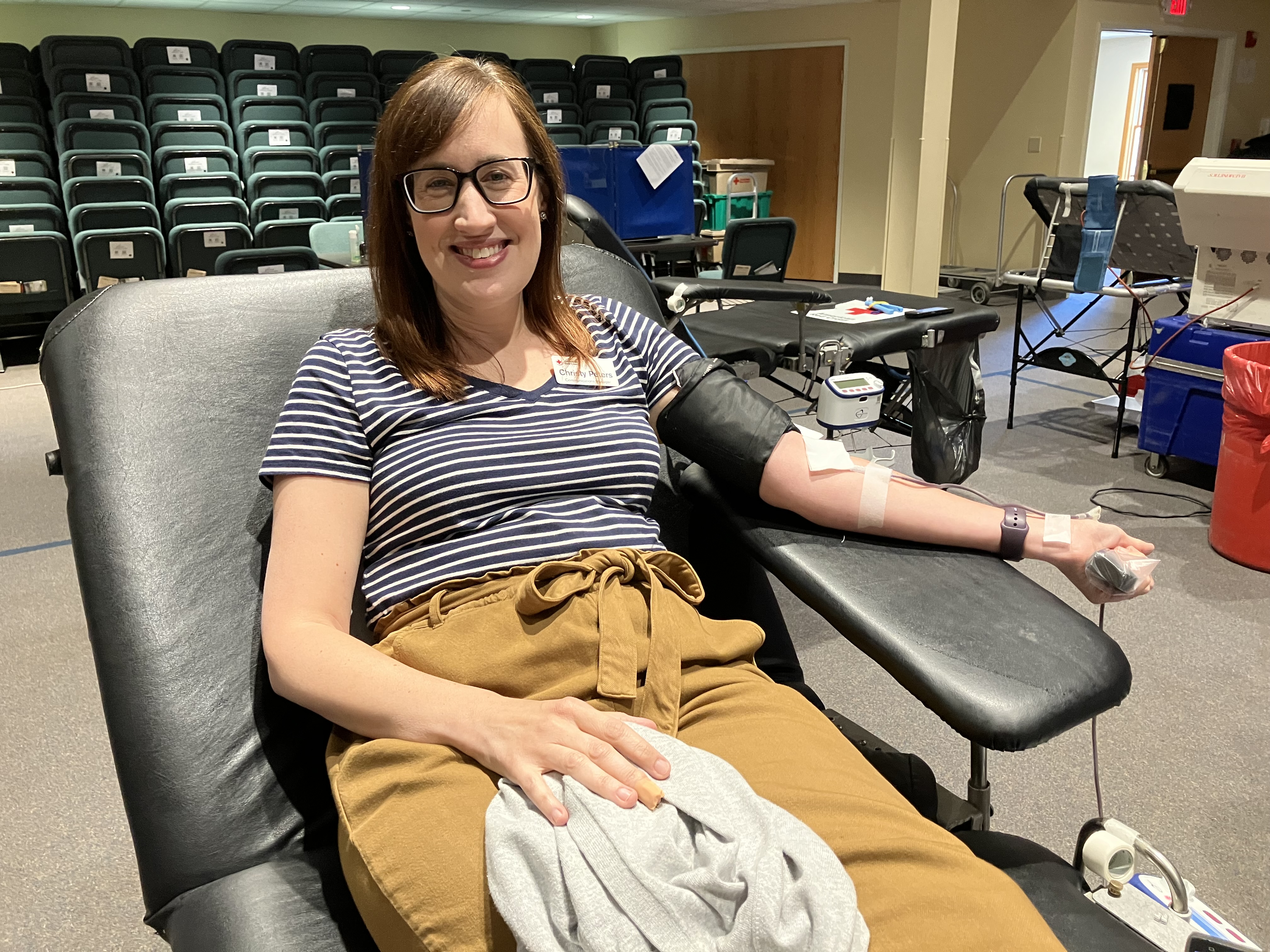
Christy Peters, Red Cross Regional Communications Manager and blood donor

But I mostly put the task off because the first few weeks of January are my least favorite time of the year. I love everything about Christmas and packing everything up reminds me it’s over and I have to get back into a routine…back to work, waking up on time and not eating and drinking everything in sight! 

It turns out, I’m not alone. The “January blues” is a legitimate phenomenon felt by many, for almost all the reasons above. But this general malaise extends beyond diehard holiday lovers like me. January is also one of the most difficult times for the Red Cross to collect enough blood for patients. In fact, the organization is experiencing an emergency blood shortage as the nation faces the lowest number of people giving blood in 20 years.

Over the last 20 years, the number of people donating blood to the Red Cross has fallen by about 40%. When fewer people donate blood, even small disruptions to blood donations – such as the nearly 7,000-unit shortfall in blood donations the Red Cross experienced between Christmas and New Year’s Day alone – can have a huge impact on the availability of blood products and dramatic consequences for those in need of emergency blood transfusion. 

Blood products are currently going to hospitals faster than blood donations are coming in, and in recent weeks, the Red Cross has had to limit distributions of type O blood products – among the most transfused blood types – to hospitals. In Northern Ohio, more than 500 units of blood are needed every day to meet the needs of patients at more than 70 local hospitals.

The Red Cross is urging eligible donors to make an appointment to give blood now and in the coming weeks to help alleviate the shortage and ensure lifesaving medical procedures are not delayed. By giving blood for the first time, for the first time in a long time or just giving one more time this year than last, you can make a lifesaving impact.

To find a blood drive near you, download the Red Cross Blood Donor App, visit RedCrossBlood.org or call 1-800-RED CROSS (1-800-733-2767). All who come to give blood, platelets or plasma in January will automatically be entered for a chance to win a trip for two to Super Bowl LVIII in Las Vegas. Plus, helping save a life is probably the best antidote for the January blues!

Posted by Ryan Lang, Red Cross board member and volunteer

An intense, exhausting, grateful December

A personal account of getting through a tough time

By Tim Poe, American Red Cross volunteer

Streams of people, ambulances and occasionally a helicopter. In a parking lot and garage just beyond, cars arrive, depart, circle. Each time I look out the fourth-story window in my dad’s hospital room, I see this scene. Whether in the cerulean predawn, during the intense glow of short December days, or beneath pools of sodium light in long evenings, it continues. Lives impacted, whether through illness, tragedy, or disaster. Crises do not cease. I also watch the many who arrive to help, while others leave, often looking exhausted, and am grateful for them.

Tim Poe, Red Cross volunteer

The last few weeks have been a torrent of emotion, of worry, discussions, activity, seeking information, of varying between bleakness and optimism.

I am especially grateful to the doctors, nurses, and other medical professionals working to identify the cause of and cure my dad’s illness and address the complications that arise. And to the blood donors and blood services personnel who enabled a transfusion to be ready if needed. I take a mental note to schedule a blood donation.

I hear rhythms of footsteps, medical equipment rolling on wheeled carts, voices, a cacophony of whirs and beeps emerging from medical devices, approaching sirens (silenced just before arrival), PA announcements, and occasionally the music-box chime of “Lullaby and Good Night” announcing a new life. I imagine orchestrating all this into a symphony.

I think of the times I have been in that and other ERs and hospitals in the area, as an American Red Cross volunteer, a patient, a friend, and family member. And how grateful I am to have been able to help and receive it when needed.

I have previously written about seeing the results when bringing help to those in need as a Red Cross volunteer. The tears of relief, smiles returning to faces, human resilience being bolstered, people beginning to recover and move forward, and especially gratitude.

Linda, Tim, and Billy Poe

My goal with this article, before my dad’s illness, was to focus on how much your help is needed and the tremendous good it does. As we have recently written, the need for Red Cross services is tremendous and continues to increase, with the climate crisis, global instability, and other factors. We have also written about seeing the impact of your donations, whether through financial support, volunteering time, or donating blood.

But now I wanted to offer another perspective, that of a family member during a time of need. While my dad’s illness is not the result of a disaster—although having a blood transfusion ready was necessary—I am trying to show a little of the intensity and worry felt when in need of help, and the thankfulness and relief when help is received.

My dad is home now. Recovery will take some time, including doses of antibiotics every eight hours, which I am administering via an IV attached to a PICC line. As I write this, we are on day six of 10. Since my formal education is in literature and music, this is far outside my area of expertise. I’m experiencing a fair amount of anxiety and fatigue. My Red Cross experience helps, especially managing in times of crisis, but I have needed and found help, advice, expertise, wisdom, and kindness from medical professionals, friends, family members, and others in the Red Cross. Each instance has helped keep me going, to refocus, to help the optimism win out over the bleakness. And for that I am deeply grateful.

Through all this, my family and I have not done much for the holiday season. I did put up a Christmas tree, and there are a few decorations. I have not been able to attend celebrations, and there won’t be much to wrap and unwrap, but if all continues to improve, the season will be one of the most grateful, thanks to those who helped.

So when life regains some normalcy, I’m more resolute than ever to continue helping where and how I can, help with and encourage financial support, and schedule a blood donation .

Edited by Glenda Bogar, Red Cross volunteer

Posted by Ryan Lang, Red Cross board member and volunteer