40-year blood donor nears 35 gallon mark

Gary Pfeiffer, of Wharton, Ohio, has donated nearly 35 gallons of blood. “I don’t make a big deal about it, it’s just another milestone for me. Once I got close, I started counting and keeping track,” said Pfeiffer.

Gary Pfeiffer, blood donor

Gary began donating blood more than 40 years ago, when a friend asked him if he had ever thought about it. When she suggested it to him, he thought that it would be something good to do, to help others.

He has donated at Red Cross blood drives throughout North Central Ohio, in Hardin County, Hancock County and Wyandot County.

And having O-positive blood, the most transfused type, Gary has had the opportunity to save many lives over the years. He has donated double red cells several times, which requires a longer wait time between donations.

Gary reached his 25-gallon donation a little over 9 gallons ago, at a drive in Upper Sandusky, Ohio. He says, “Christ gave His blood for everyone, the least I can do is help a few.” He plans on donating as long as he is able.

“I have gotten many little extras along the way, including my first pin, a set of 4 pins that when put together, make a red cross in the middle, a key chain, the document of my first donation, the original stick pin and gifts awarded with donations.”

“My wife made me a framed display of my pins, in the shape of a blood drop, which includes the stick pin, set of pins and key chain,” said Pfeiffer.

Pfeiffer Christmas tree

Gary and his wife Bettie create a different themed tree for Christmas every year. Last year, he said, “We chose to use my goal towards the 35 gallons of blood for our theme. Some drops are only partially viewable but there are 35 blood drops on the tree.”

Because his last donation was a Power Red donation (double red blood cells), Gary won’t be eligible to donate before this spring. But he plans to make his donation appointment as soon as he is eligible.

You can make an appointment to donate whole blood, Power Red or platelets by visiting redcrossblood.org, or by calling 1-800-RED CROSS. You can also make you appointment by downloading the Red Cross Blood Donor App.

Posted by Ryan Lang, Red Cross board member and volunteer
Beat the January blues by helping Red Cross overcome blood emergency

By Christy Peters, Regional Communications Manager

After avoiding it for a week and complaining about for much longer, I spent yesterday afternoon taking down and putting away my holiday decorations. It’s one of my least favorite things to do, for multiple reasons. It’s a tedious process because I have a lot of stuff and I can never remember what goes in which box. That leads to a not-so-fun game of decoration box packing Tetris that I never win.

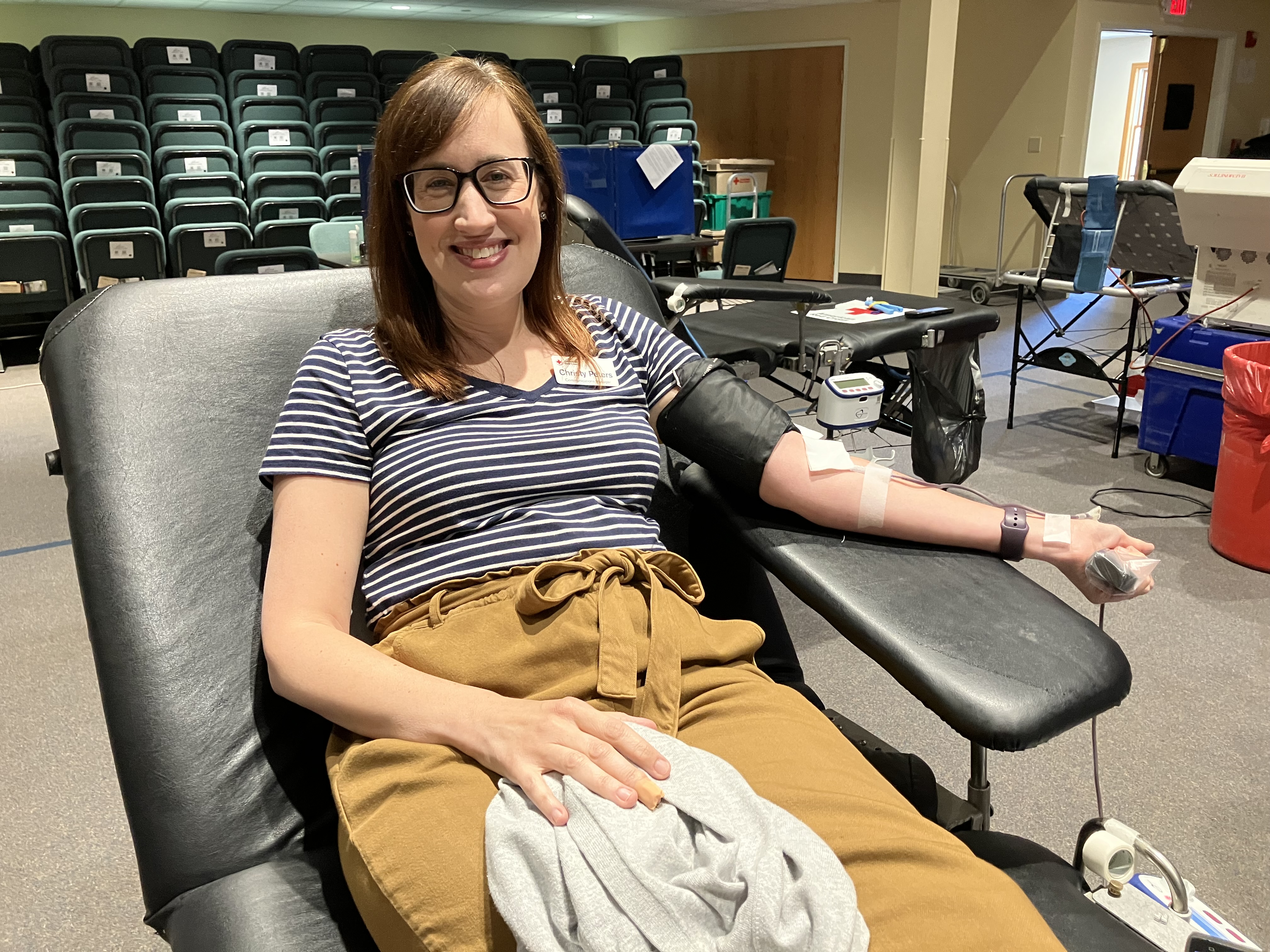
Christy Peters, Red Cross Regional Communications Manager and blood donor

But I mostly put the task off because the first few weeks of January are my least favorite time of the year. I love everything about Christmas and packing everything up reminds me it’s over and I have to get back into a routine…back to work, waking up on time and not eating and drinking everything in sight! 

It turns out, I’m not alone. The “January blues” is a legitimate phenomenon felt by many, for almost all the reasons above. But this general malaise extends beyond diehard holiday lovers like me. January is also one of the most difficult times for the Red Cross to collect enough blood for patients. In fact, the organization is experiencing an emergency blood shortage as the nation faces the lowest number of people giving blood in 20 years.

Over the last 20 years, the number of people donating blood to the Red Cross has fallen by about 40%. When fewer people donate blood, even small disruptions to blood donations – such as the nearly 7,000-unit shortfall in blood donations the Red Cross experienced between Christmas and New Year’s Day alone – can have a huge impact on the availability of blood products and dramatic consequences for those in need of emergency blood transfusion. 

Blood products are currently going to hospitals faster than blood donations are coming in, and in recent weeks, the Red Cross has had to limit distributions of type O blood products – among the most transfused blood types – to hospitals. In Northern Ohio, more than 500 units of blood are needed every day to meet the needs of patients at more than 70 local hospitals.

The Red Cross is urging eligible donors to make an appointment to give blood now and in the coming weeks to help alleviate the shortage and ensure lifesaving medical procedures are not delayed. By giving blood for the first time, for the first time in a long time or just giving one more time this year than last, you can make a lifesaving impact.

To find a blood drive near you, download the Red Cross Blood Donor App, visit RedCrossBlood.org or call 1-800-RED CROSS (1-800-733-2767). All who come to give blood, platelets or plasma in January will automatically be entered for a chance to win a trip for two to Super Bowl LVIII in Las Vegas. Plus, helping save a life is probably the best antidote for the January blues!

Posted by Ryan Lang, Red Cross board member and volunteer

An intense, exhausting, grateful December

A personal account of getting through a tough time

By Tim Poe, American Red Cross volunteer

Streams of people, ambulances and occasionally a helicopter. In a parking lot and garage just beyond, cars arrive, depart, circle. Each time I look out the fourth-story window in my dad’s hospital room, I see this scene. Whether in the cerulean predawn, during the intense glow of short December days, or beneath pools of sodium light in long evenings, it continues. Lives impacted, whether through illness, tragedy, or disaster. Crises do not cease. I also watch the many who arrive to help, while others leave, often looking exhausted, and am grateful for them.

Tim Poe, Red Cross volunteer

The last few weeks have been a torrent of emotion, of worry, discussions, activity, seeking information, of varying between bleakness and optimism.

I am especially grateful to the doctors, nurses, and other medical professionals working to identify the cause of and cure my dad’s illness and address the complications that arise. And to the blood donors and blood services personnel who enabled a transfusion to be ready if needed. I take a mental note to schedule a blood donation.

I hear rhythms of footsteps, medical equipment rolling on wheeled carts, voices, a cacophony of whirs and beeps emerging from medical devices, approaching sirens (silenced just before arrival), PA announcements, and occasionally the music-box chime of “Lullaby and Good Night” announcing a new life. I imagine orchestrating all this into a symphony.

I think of the times I have been in that and other ERs and hospitals in the area, as an American Red Cross volunteer, a patient, a friend, and family member. And how grateful I am to have been able to help and receive it when needed.

I have previously written about seeing the results when bringing help to those in need as a Red Cross volunteer. The tears of relief, smiles returning to faces, human resilience being bolstered, people beginning to recover and move forward, and especially gratitude.

Linda, Tim, and Billy Poe

My goal with this article, before my dad’s illness, was to focus on how much your help is needed and the tremendous good it does. As we have recently written, the need for Red Cross services is tremendous and continues to increase, with the climate crisis, global instability, and other factors. We have also written about seeing the impact of your donations, whether through financial support, volunteering time, or donating blood.

But now I wanted to offer another perspective, that of a family member during a time of need. While my dad’s illness is not the result of a disaster—although having a blood transfusion ready was necessary—I am trying to show a little of the intensity and worry felt when in need of help, and the thankfulness and relief when help is received.

My dad is home now. Recovery will take some time, including doses of antibiotics every eight hours, which I am administering via an IV attached to a PICC line. As I write this, we are on day six of 10. Since my formal education is in literature and music, this is far outside my area of expertise. I’m experiencing a fair amount of anxiety and fatigue. My Red Cross experience helps, especially managing in times of crisis, but I have needed and found help, advice, expertise, wisdom, and kindness from medical professionals, friends, family members, and others in the Red Cross. Each instance has helped keep me going, to refocus, to help the optimism win out over the bleakness. And for that I am deeply grateful.

Through all this, my family and I have not done much for the holiday season. I did put up a Christmas tree, and there are a few decorations. I have not been able to attend celebrations, and there won’t be much to wrap and unwrap, but if all continues to improve, the season will be one of the most grateful, thanks to those who helped.

So when life regains some normalcy, I’m more resolute than ever to continue helping where and how I can, help with and encourage financial support, and schedule a blood donation .

Edited by Glenda Bogar, Red Cross volunteer

Posted by Ryan Lang, Red Cross board member and volunteer

Gift giving made simple: donate blood this Holiday Season

By Tim Poe, American Red Cross volunteer

Editor’s note: This post has been updated with information on current donor incentives

Blood. It’s red, deep red, like a worldview when tediousness and life drama build and become epic. It’s also lifegiving, sustaining, and needed. Most of us only feel we need such a boost on occasion, but others—including trauma, leukemia, and kidney disease patients, those experiencing childbirth emergencies, and more—truly need it to keep living, right away.

And you know what? You have blood! Lots of it! About 1.5 gallons, just waiting to help. Even a paper cut will remind you it’s there. Yet a lot of people will need blood today, tomorrow, and next week. On average, someone in the U.S. needs blood every two seconds. So, schedule a time to donate some. You’ll feel good about yourself, get a cookie and juice, bring much needed light to the world (metaphorically), and potentially save a life (literally).

Thanks to Prime Video and their new film Candy Cane Lane, those who come to give now through Dec. 31 will automatically be entered for a chance to win a $1,000 Amazon.com Gift Card and a 65-inch Omni QLED Series Amazon Fire TV. (Details at RedCrossBlood.org/Amazon). In thanks for giving, we’re also offering a $10 Amazon.com Gift Card by email for those who come to give Dec. 1-17, and a long-sleeved Red Cross T-shirt Dec. 18-Jan. 5, while supplies last.

Did you know we decorate with red during the giving season because donating blood is among the greatest gifts of all? Okay, I made that up, but I like it and am sticking with it.

However awesome you believe yourself to be, you can be even more so. Just with a little less blood for a very short time. Your body will quickly make more; and remember, you have around a gallon and a half of the stuff. They won’t take anywhere near that much. Promise.

To take part in this much needed awesomeness and giving spirit, visit redcrossblood.org or download the free app. Here are the season’s blood drives in our area, where you’ll be among other fantastic, giving people, like Eilene, Don, and Doug.

Holiday Blood Drive, Sheraton Suites Akron/Cuyahoga Falls, 2022

American Red Cross Northern Ohio 2023 Holiday Blood Drives

December 12, 2023
Rocket Mortgage Fieldhouse
1 Center Court
Cleveland, OH 44115
8 a.m. – 2 p.m.
Make an appointment today!

December 15, 2023
Crocker Park
239 Market Street
Westlake, OH 44145
10:00 a.m. – 5:00 p.m.
Make an appointment today!

December 19, 2023
Sheraton Suites Akron/Cuyahoga Falls
1989 Front St.
Cuyahoga Falls, OH 44221
7 a.m. – 7 p.m.
Make an appointment today!

December 20, 2023
Hilton Garden Inn
8971 Wilcox Drive
Twinsburg, OH 44087
7 a.m. – 7 p.m.
Make an appointment today!

December 21, 2023
Packard Music Hall
1703 Mahoning Ave.
Warren, OH 44483
9 a.m. – 4 p.m.
Make an appointment today!

December 21, 2023
WNWO Holiday Blood Drive
Hilton Garden Inn Perrysburg
6165 Levis Commons Blvd.
Perrysburg, OH 43551
8 a.m. – 4 p.m.
Make an appointment today!

December 22, 2023
Stambaugh Auditorium
1000 Fifth Ave.
Youngstown, OH 44504
Make an appointment today!

Posted by Ryan Lang, Red Cross board member and volunteer

Cleveland Clinic blood drive hits milestone

3,000 donations made since 2019

Hundreds of Cleveland Clinic employees pass through the lower-level atrium in the Robert J. Tomsich Pathology and Laboratory Medicine Institute every day. Institute Communications Manager Gary Weiland saw the space as an ideal place to hold American Red Cross blood drives. The first one was held in April of 2019.

Dr. Zaher Otrock and Sheri Bova of Cleveland Clinic,, Jill Trupo and Bonnie Flenner of the Red Cross, and, Gary Weiland of Cleveland Clinic

Less than a year later, the COVID-19 pandemic began.

Many businesses and schools that had been used regularly for blood drives before the pandemic were shuttered, severely reducing the number of blood drives – and the number of blood donations – causing a nationwide blood shortage.

But Cleveland Clinic did not – COULD not – close, and with a robust health care workforce passing through the atrium every day, there was plenty of opportunity to collect much-needed blood in that space.

“At first it was quarterly,” Gary said of the blood drives being held there. “But when COVID hit, we began to schedule them every two weeks.”

“We can’t overemphasize the value of having Cleveland Clinic as a site for frequent blood drives,” said Bonnie Flenner, Regional Donor Services Executive for the Red Cross of Northern Ohio. “We are so grateful for their partnership, especially during the pandemic. It has truly made a difference in the lives of so many patients.”

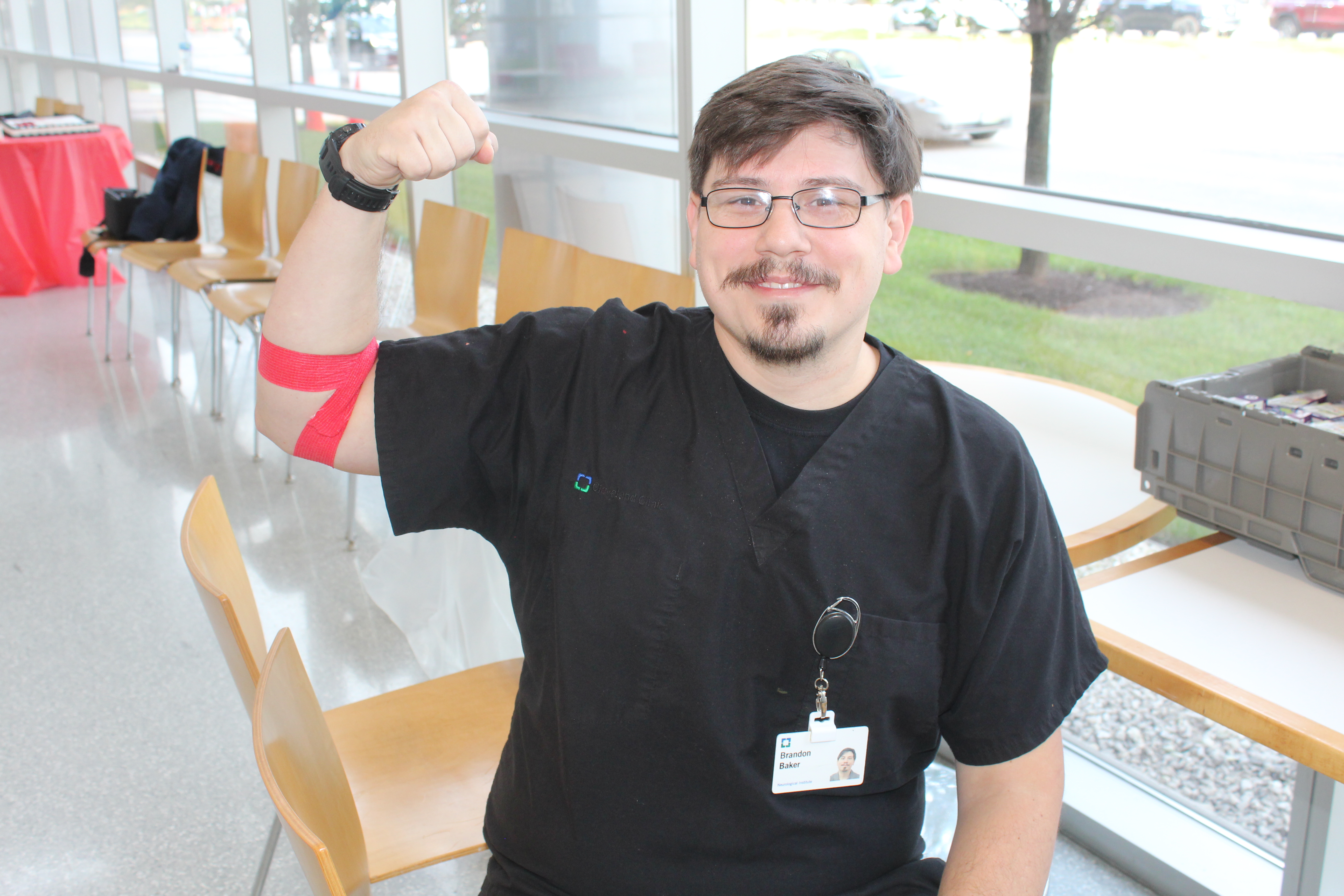
Since that first blood drive in 2019, more than 3,000 donations of blood have been collected, a milestone recently celebrated when Cleveland Clinic research coordinator Brandon Blake became the donor from whom the 3,000th donation was collected.

Brandon Blake, Cleveland Clinic Research Coordinator made the 3,000th donation

“I was shocked,” Brandon said upon learning of the milestone. “It’s like a baseball player getting his 3,000th hit. It’s pretty special.”

Brandon said he donates blood because it makes a difference. Dr. Zaher Otrock, head of Transfusion Medicine at Cleveland Clinic, couldn’t agree more.

“People with cancer and so many other conditions could not be treated without the blood they need to have every day,” he said.

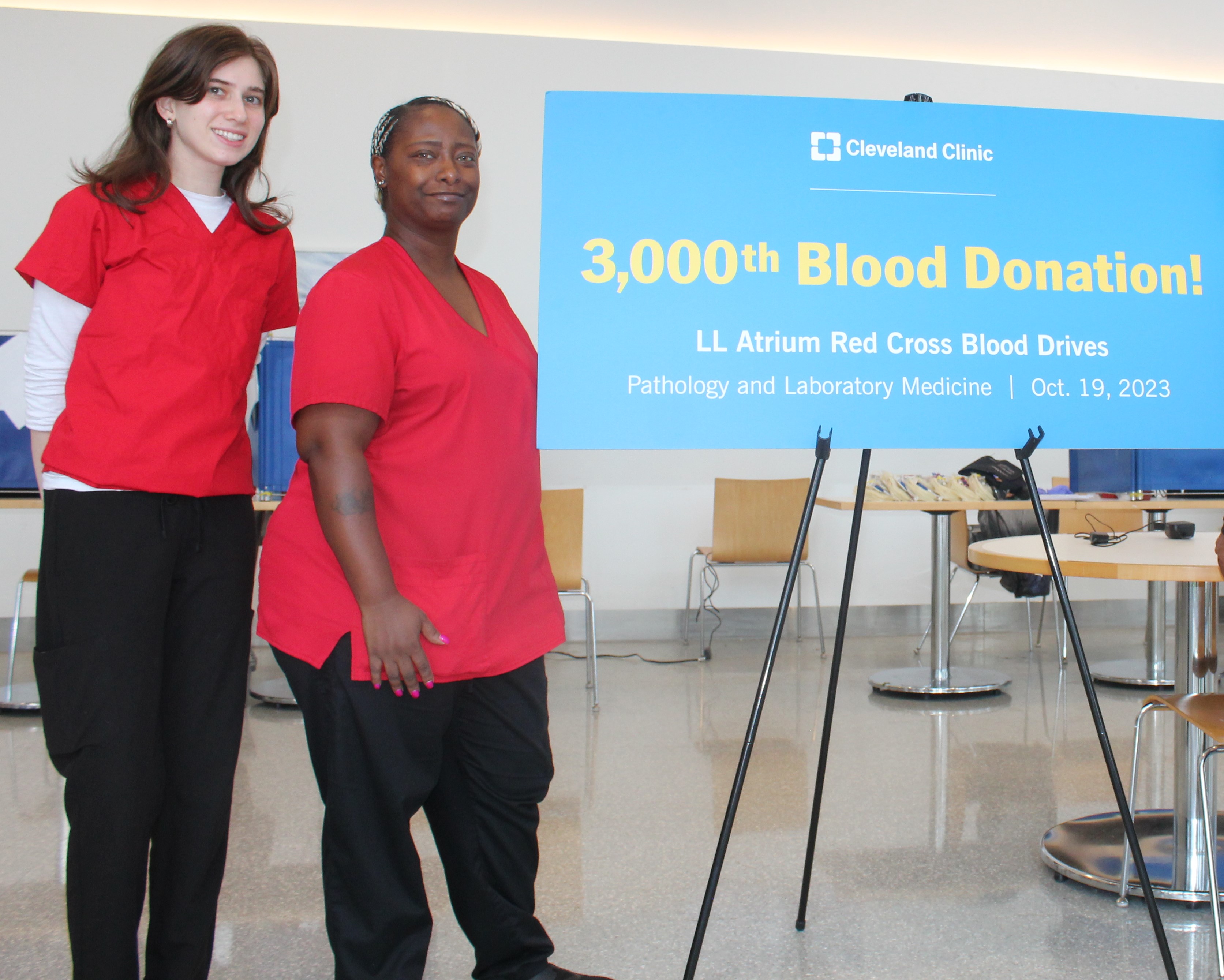
The Red Cross collections staff working at the blood drive that day included Shacriea Bost, Kary Conley, Makayla Williams, Devyn Mills and Alexis Bell. They posed for a photo, surrounding a sign created to mark the milestone event.

Red Cross phlebotomists Alexis Bell and Kary Conley

And donors that day got a special treat – beyond the cookies, snacks and juice boxes that are typically available following a blood donation. They were offered a piece of cake as well, also created to help celebrate the 3,000 th donation made at that blood drive site.

Companies, churches, civic groups and others interested in hosting a blood drive – or multiple blood drives – can learn more by visiting redcrossblood.org.

See more photos from the 3000th blood donation here.

Posted by Ryan Lang, Red Cross volunteer and board member

Edited by Glenda Bogar, Red Cross volunteer

Shedding light on Sickle Cell Disease

By Eilene E. Guy, American Red Cross volunteer

Sickle Cell Disease is hiding in plain sight, and La’Shardae Scott is determined to bring it into the spotlight.

Sickle Cell Disease (SCD) is the most common genetic blood disorder in the United States, afflicting some 100,000 people, primarily those of African descent. Every year, an estimated 1,000 babies are born with SCD.

During September, Sickle Cell Awareness Month, the American Red Cross is teaming up with SCD crusaders like La’Shardae to bring attention to this painful and life-threatening disorder.

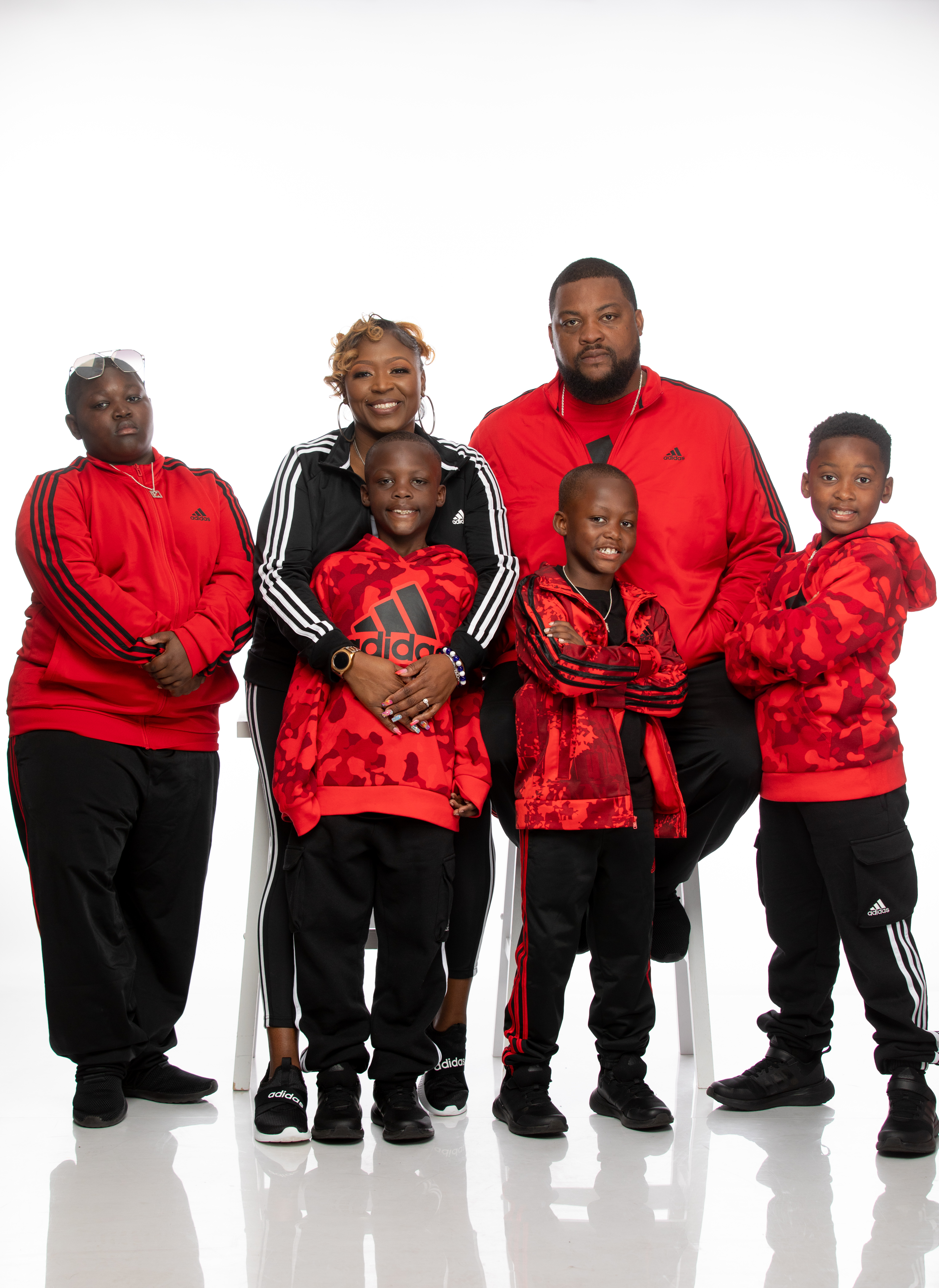
The Scott Family: Eric, La’Shardae, Emory, Evan, Eric and Liam

La’Shardae has launched the nonprofit Scott Center for Observation, Treatment and Transition in Oregon, Ohio, to minimize infant mortality in populations of color and help families and individuals with SCD transition successfully from pediatric to adult care.

She’s well aware that people of color have a fraught history with the medical establishment, which leads to poor doctor-patient relationships. Even today, misconceptions persist about Black people’s tolerance for pain.

“Patients born with this condition don’t look ill; they learn to manage their pain, but that doesn’t mean it isn’t real,” she said. “So when they finally seek help, they get dismissed as drug-seeking and that leads to further complications.”

Screening of newborns for SCD is now routine in all 50 states, but too often parents — confronted with the sudden notice that their baby has an incurable condition — don’t know how to handle that reality as the child grows, La’Shardae said.

At her house, she relies on medications, appropriate diet and “hydration, hydration, hydration” to keep her two SCD “warriors,” eight-year-old Emory and Evan, 7, thriving. At the same time, she advocates for them when they experience the acute pain and other side effects typical of SCD. But she knows the damaging effects accumulate.

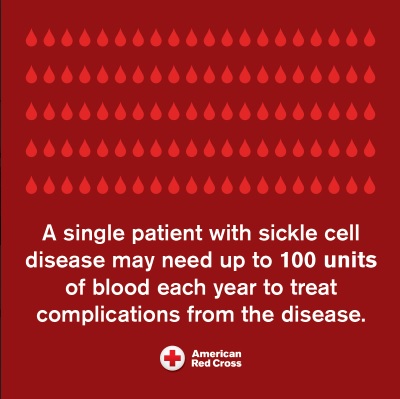
SCD causes red blood cells to take the shape of crescent moons or sickles. These misshapen cells don’t carry their full load of oxygen throughout the body, leading to anemia, pain “crises” and gradual damage to organs and tissues. Worse yet, the sickled cells tend to clump together, causing strokes.

Transfusions play a key role in “diluting” these defective cells in the blood stream, easing pain and slowing damage. Blood from one in three African American donors carries unique characteristics — antigens — that make it a close match for SCD patients.

This is where the Red Cross comes in. As supplier of more than 40% of the nation’s whole blood and blood products, the Red Cross needs a diverse donor population to meet the many unique transfusion needs.

Since launching its Sickle Cell Initiative in 2021, the Red Cross has seen a 60% increase in first- time African American blood donors to more than 45,000.

La’Shardae is working hard to boost that number. She uses social media platforms, Facebook Live and community presentations to educate and recruit. You can read all about her activities at scottcenteroh.org.

Her next event is the Scott Community Blood Drive in partnership with the Red Cross, from 9 a.m. to 2 p.m. Sept. 16 at 653 Miami St. in Toledo.

To register to give blood, go to redcrossblood.org, call 1-800-REDCROSS or use the free Red Cross blood donor app.

Edited by Glenda Bogar, Red Cross volunteer

Posted by Ryan Lang, Red Cross board member and volunteer

Help stop the bleed to save a life

By Sam Puldeski, American Red Cross volunteer

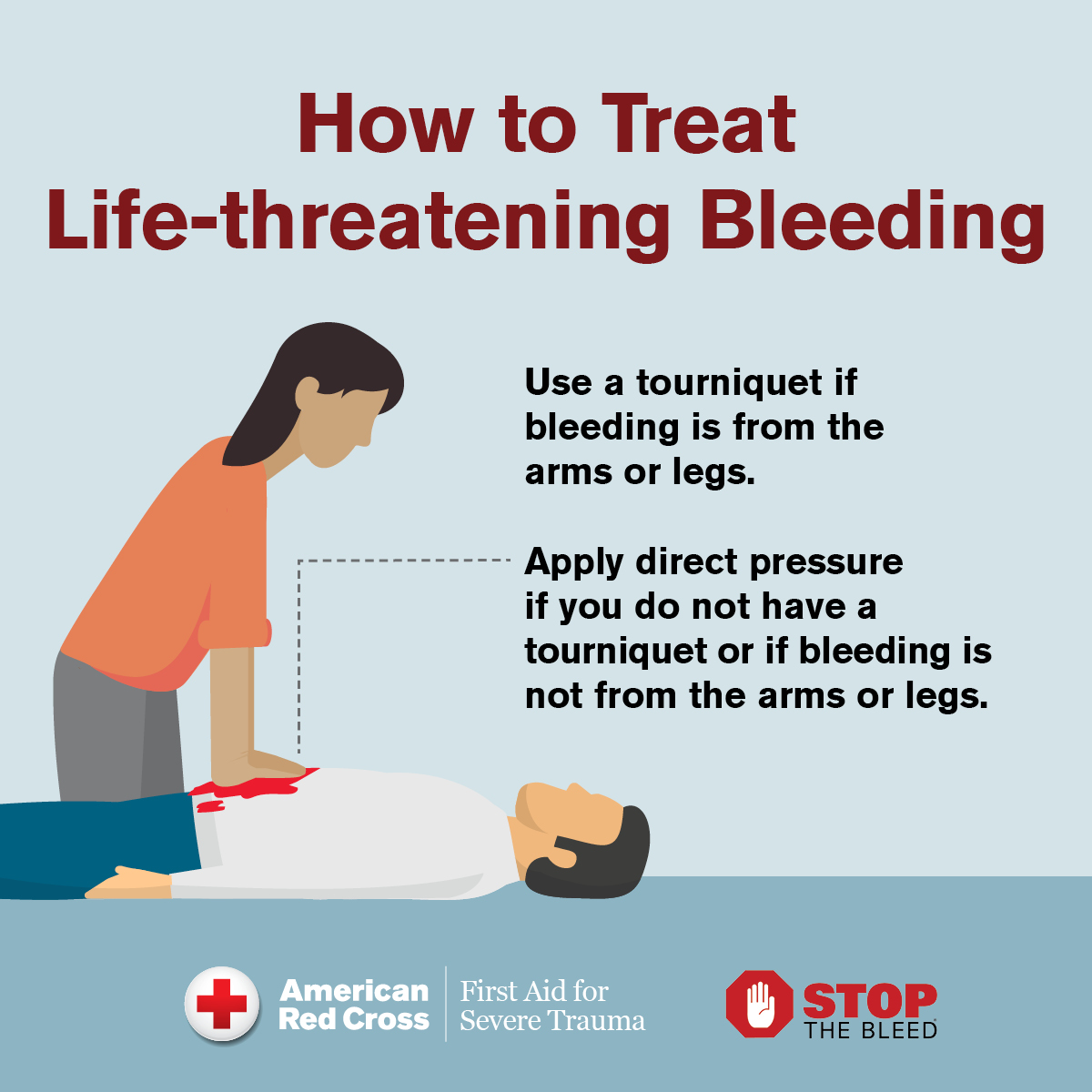
Did you know that someone with a serious injury can experience life-threatening blood loss within as little as five minutes? When someone is injured and severely bleeding, it is imperative that bystanders help to quickly stop the blood loss.

The American Red Cross has some tips and information to follow if someone around you is experiencing a life-threatening loss of blood.

  • A half can of soda is the approximate amount of blood loss that is life
    threatening in an adult. For children and infants, the amount is
    proportionately less.
  • If blood is flowing continuously, squirting or pooling, take action
    immediately with these steps.
    a. Call 911.
    b. Ask someone to find a bleeding control kit, which should include
    items like gloves, gauze and a tourniquet.
    c. Apply the tourniquet and wait for the medical professionals to arrive.
    – If the injury is in on the head or torso, apply direct pressure
    with your hands or knee using gloves if they are available.
  • If you don’t have a medical tourniquet on hand, apply direct pressure with
    your hands or knee. Research has shown that homemade or improvised
    tourniquets don’t work. It is recommended to use manufactured tourniquets
    over homemade options.

It’s important for everyone to know how to respond in these types of emergencies should they ever be in a situation when someone needs help. The Red Cross offers classes to help teach people of all ages how to respond in an emergency. Some classes offer online instruction while other classes can be found at a location near you.

You can sign up for a class (or two!) by visiting: https://www.redcross.org/local/ohio/take-a-class.

Edited by Glenda Bogar, American Red Cross volunteer

Giving blood gives time to those fighting cancer

By Sue Wilson, American Red Cross volunteer

February 4, 2021- If you or someone you love have gone through a health scare of any kind, you know firsthand how your perspective changes in the blink of an eye. When my husband got his cancer diagnosis, we were shocked. We thought there was a simple explanation for his symptoms. We thought the biopsy was a routine test they were doing along with some others. We were in a state of disbelief when the doctor said that not only was it cancer, but it was advanced. He died a year later.

Cancer has a way of making time an all-consuming obsession. The realization that every minute is important, every day should be cherished, and that time is a precious commodity is never far from my thoughts. 

When you think about fighting cancer, the first thing you may think of is chemotherapy, radiation or surgery. What so many don’t realize is that many cancer patients undergoing chemo will likely have a need for blood. In fact, five units of blood are needed every minute to help someone going through cancer treatment. Patients fighting cancer use nearly one quarter of the nation’s blood supply – more than patients fighting any other disease. And, yet, only 3% of people in the U.S. regularly donate blood.

You may not have put the two together before but giving blood can help patients fight cancer. There simply aren’t enough people regularly donating blood to meet the ongoing need. That’s the message the American Red Cross wants to spread.

We know that not everyone is eligible to donate blood, so a financial donation is also encouraged. By making a financial gift in any amount, you’re helping to give patients and their families time, resources and the hope they need to fight back.

My grief had me vacillating between a depressive despair that made me want to do nothing and a manic desire to do anything and everything to help others who were suffering. But I didn’t know where to start. Donating blood is a start. It’s a meaningful way to honor someone you love who is battling or has battled cancer. To learn more and to schedule a blood donation appointment, visit RedCrossBlood.org.

To make a financial gift, visit redcross.org/donate.

Edited by Glenda Bogar, American Red Cross volunteers

Help family, friends and neighbors by becoming a Red Cross Volunteer Transportation Specialist

By Chris Chmura, American Red Cross volunteer

September 21, 2020- We are all living in a new world with daily changes, challenges and a different pace in our professional and personal lives. Everyone has been pushed to change due to the COVID-19 pandemic.

One glaring fact is that millions of people have had their lives transformed into a daily struggle for life’s basic needs of food, shelter and, most importantly, their health. I have learned a deeper appreciation for these basic needs.

Chris Chmura

For years, I have donated blood to the American Red Cross to help others in need, feel like I was giving back and to follow my father’s lead with his years of donations. I wondered how I could increase my support by stepping into a more active role. I signed up to become a volunteer transportation specialist. 

Why this role? 

The Red Cross has many options for you to volunteer your time but the transportation specialist fit into my personal and professional schedule. Plus the position is fun! I enjoy going into various hospitals/labs, traveling throughout the city and working with people who are making a huge difference in millions of lives. My professional role is in the business world. So this volunteer position takes me into the dramatically different health profession. My respect has gone sky-high for the kind people who work around the clock at Red Cross labs and hospitals to process blood for people in need. I am amazed by the journey blood travels from a donor to the person who relies on it to save their life.  

My position started with some online training, driver shadowing and taking the leap to take over a shift. The Red Cross has an incredible network of support to help you succeed in this volunteer role. I hope you decide to sign up for this fulfilling experience. You can meet all types of people, learn about this lifesaving organization, expand your personal growth and feel the satisfaction of helping during this historic time. 

Do you have what it takes?

Are you a dependable, safe and courteous person who can help us make these important deliveries? Volunteer Transportation Specialists deliver lifesaving blood products from Red Cross distribution facilities to hospitals, using a Red Cross vehicle. We need you to commit to two to four shifts per month (or more if you can). Typical shifts are about four hours.

You’ll also need to meet these important qualifications:

  • Have a valid state driver’s license and proof of insurance
  • Have three years of driving experience and a clean driving record
  • Ability to lift up to 45 pounds

Apply to volunteer at: redcross.org/volunteertoday.

Edited by Glenda Bogar, American Red Cross volunteer


Got ink? You can still give blood

By Christy Peters, External Communications Manager, Northern Ohio Biomedical Services

July 17, 2020- In honor of National Tattoo Day today we’re debunking the myth that those with tattoos can’t give blood. On June 8, the American Red Cross implemented new changes to donor eligibility criteria that may make it even easier for those with tattoos to give!

tattoo


In most states, including Ohio, there is no waiting period to give blood if your tattoo was applied in a state-regulated facility. The District of Columbia, Georgia, Idaho, Maryland, Massachusetts, New Hampshire, New York, Pennsylvania, Utah and Wyoming do not regulate tattoo facilities. If you received a tattoo in one of these states, the waiting period to give has gone from 12 months to three months.

If you are an individual currently deferred with the Red Cross for a tattoo under the former policy, your donor record will be updated by the end of July to align with the new policy. If you would like to have your donor record updated prior to then, donors can contact the Red Cross Donor and Client Support Center at 1-866-236-3276 for more immediate action. Please be aware that deferrals cannot be removed onsite at our blood drives or donation centers.


The Red Cross currently has an urgent need for blood donors to help ensure patients receive the lifesaving blood products they need. Healthy, eligible donors are encouraged to make an appointment in the coming weeks. To schedule a time to give, download the free Red Cross Blood Donor App, visit RedCrossBlood.org, call 1-800-RED CROSS (1-800-733-2767) or enable the Blood Donor Skill on any Alexa Echo device. Donors are required to wear a face covering or mask while at the drive, in alignment with Centers for Disease Control and Prevention public guidance and recent local and state mandates. To learn more about donor eligibility, visit RedCrossBlood.org/eligibility.


Scared of needles? That is okay! You can help the Red Cross assist patients in need of lifesaving blood by becoming a volunteer blood donor ambassador at Red Cross blood drives. Visit redcross.org/volunteertoday to learn more and to apply.

Edited by Glenda Bogar, Red Cross volunteer