Red Cross continues to respond to Hurricane Michael disaster relief

By: Eric Alves, Regional Communication Specialist, American Red Cross of Northeast Ohio

This slideshow requires JavaScript.

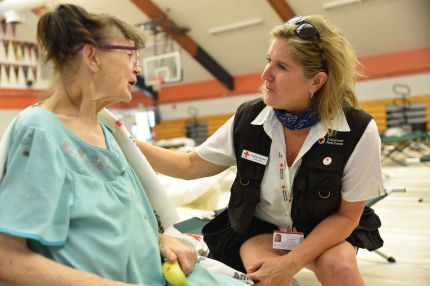
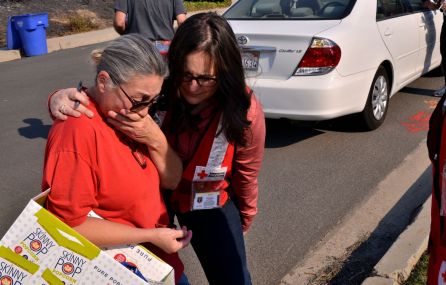
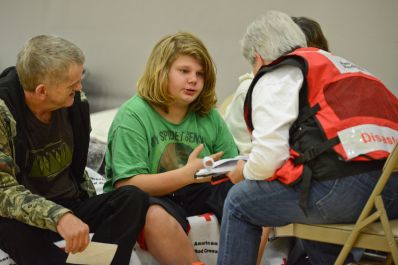
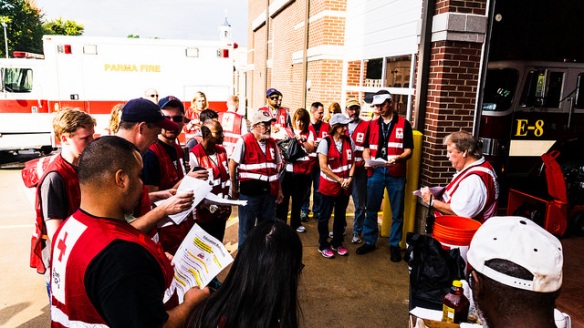
The American Red Cross has continued to respond to the Hurricane Michael disaster relief effort, with Northeast Ohio playing a significant role in the support.

On October 11, Hurricane Michael came ashore and made its way across Alabama, Florida and Georgia, leaving a wake of destruction in its path. Hurricane Michael was a Category 4 upon landfall, making it the third-strongest hurricane in U.S. history. It was also the strongest hurricane to hit the U.S. in 50 years. A week since the storm, tens of thousands of people are still dealing with the destruction.

As always, when there is a need for compassion and humanitarian support, the Red Cross has been helping those affected and will remain there as people begin to recover and rebuild. Some people are still living without power, running water and other basic necessities. Many schools and medical facilities are closed, roads are still blocked and several bridges have been damaged.

The Red Cross is working around the clock to get help where it’s most needed. The situation throughout the region remains challenging and staff and volunteers are doing all they can to provide shelter, food, water and relief supplies to people in need.

As of October 18, more than 1,840 people stayed in as many as 16 Red Cross and community evacuation centers across Florida and Georgia. In the week since the storm, the Red Cross and other organizations have provided more than 27,400 overnight stays in emergency shelters in total, with the Red Cross providing about 83 percent of the stays.

Across the three states, more than 1,600 Red Cross disaster workers, including 21 from Northeast Ohio, are on the ground to support relief efforts, such as serving more than 477,800 meals and snacks and distributing more than 36,600 relief items like cleanup kits, rakes, shovels, bleach, garbage bags and much more to help with the massive cleanup effort. In addition, volunteer mental health and health services professionals have provided 6,700 contacts to provide support and care to evacuees.

After two major hurricanes in less than a month, thousands of people are looking for help. If you are interested in assisting those in need, visit redcross.org/volunteer or contact our Volunteer Services Department directly at 216-431-3328 or NEOvolunteer@redcross.org.

If you are unable to provide support during a disaster relief effort, there are other ways you can assist right here in Northeast Ohio. The Red Cross depends on financial donations to fund our relief services. To donate, visit redcross.org/donate, call 1-800-RED CROSS or text REDCROSS to 90999 to make a $10 donation.

The Red Cross also has a critical need for blood and platelet donations to help meet patient needs. The Red Cross provides roughly 40 percent of the nation’s blood supply and Hurricanes Michael and Florence have forced the cancellation of about 250 blood drives, causing approximately 7,600 units of blood to go uncollected. The Red Cross is asking for eligible individuals to make an appointment to donate blood by using the Red Cross Blood Donor App, visiting redcrossblood.org or by calling 1-800-RED CROSS.

Add earthquake preparedness to your to-do list, even if you live in Ohio

By Doug Bardwell – American Red Cross Volunteer

Shake out

Held annually on the third Thursday of October, the ShakeOut International Day of Action is set for Thursday, October 18, 2018 at 10:18 a.m. During the self‐led drill, participants practice earthquake preparedness by learning to “Drop, Cover, and Hold On”. Endorsed by emergency officials and first responders, the safe response to an earthquake is to:

  • DROP where you are, onto your hands and knees. This position protects you from being knocked down and allows you to stay low and crawl to shelter if it’s nearby. If you have mobility issues, either lock the wheels of your wheelchair or stay seated, and bend over.
  • COVER your head and neck with one arm and hand. If a sturdy table or desk is nearby, crawl underneath it for shelter. If no shelter is nearby, crawl next to an interior wall, away from windows.
  • HOLD ON until the shaking stops. If you are under a table or desk for shelter, hold onto it with one hand and be ready to move with your shelter if it shifts.

Watch the video

Earthquakes in Ohio – really?  YES – REALLY

“People may say ‘Why do we need to practice earthquake drills in Ohio?’ We practice because Ohio does experience earthquakes,” said Sima Merick, executive director of the Ohio Emergency Management Agency . “Ohio has had four low-scale earthquakes so far this year. It is also good to know earthquake safety in the event you’ve traveled to another state or country where quakes can occur with higher magnitude and frequency.”

In January 1986, a 5.0-magnitude earthquake took place in Lake County, impacting most of northeastern Ohio. This was the first Ohio quake that caused injuries and to occur near a U.S. nuclear power plant. The 1986 quake ranks as the third largest in the state.

Ohio is on the periphery of the New Madrid Seismic Zone, an area in Missouri and adjacent states that was the site of the largest earthquake sequence to occur in U.S. history. Four great quakes were part of a series at New Madrid in 1811 and 1812. These events were felt throughout the eastern part of the country and were strong enough to topple chimneys in Cincinnati. In March of 1937, western Ohio experienced a 5.4-magnitude quake that knocked down or damaged every chimney in Anna (Shelby County). So much damage was caused to the local school that it had to be torn down.

For more information, or to register yourself, your company or your organization, visit the Great Central U.S. ShakeOut website for Ohio.  Two million Ohioans have already registered.

Also, check out the Red Cross Earthquake App where you can monitor relatives out of town and get the latest alerts.  Available for Android and iOS phones. In the app’s toolkit, you can notify relatives that you are safe, and locate open Red Cross shelters.


NEO Volunteers join hundreds of others from across the country to help Hurricane Michael victims

Helping provide shelter, food and hope to those impacted by the storm

Five days after Hurricane Michael slammed into the southeast, thousands of people are living in dire conditions. The American Red Cross is with them, helping people in Florida, Georgia and Alabama as they struggle to get back on their feet.

  • Home after home is destroyed, many people have lost everything. Many areas are still inaccessible.
  • The storm also damaged medical facilities, schools and businesses. Search and rescue efforts continue.
  • Hundreds of thousands have no power as temperatures hover in the high 80s.
  • In many areas, people have no water or sewer service and many that do have service are under boil advisories.


This slideshow requires JavaScript.

The Red Cross is doing all we can to get help to where it’s most needed, and we’re reaching more neighborhoods each day. We’re working around the clock with partners like the National Guard to move volunteers and supplies, and to support dozens of shelters where people can find comfort and refuge.

  • With the magnitude of destruction and many roads impassable, we know that getting help into some areas will be challenging for some time.
  • The Red Cross is providing shelter, food, health services and emotional support during this challenging situation.
  • Some shelters are being relocated to more comfortable and appropriate locations.
  • In some areas, emergency response vehicles are able to get through with meals and relief supplies.

More than 1,300 Red Cross disaster workers have been assigned to the Hurricane Michael disaster relief operation, including 19 volunteers from Northeast Ohio. Visit our YouTube channel to see and hear comments from the volunteers pictured below.

Akron group

Volunteers Harry Pierdomenico, Tom Quinn, Teresa Greenlief and Cameron Fraser  Photo credit: Eric Alves/American Red Cross

  • This is a huge disaster, and the Red Cross is working closely with government and nonprofit partners to provide aid.
  • It will take time and require the resources from a large variety of organizations to help families and communities recover.
  • We are actively recruiting additional volunteers to help respond to disasters like Hurricane Michael, and to the home fires that occur, on average, three times every 24 hours in Northeast Ohio.  You can visit our volunteer page to begin the application process.

After two major hurricanes in less than a month, thousands of people are looking for help. The Red Cross depends on financial donations to fund our relief services. Help people affected by Hurricane Michael by visiting redcross.org, calling 1- 800-RED CROSS or texting the word MICHAEL to 90999 to make a $10 donation.

  • Donations enable the Red Cross to prepare for, respond to and help people recover from this disaster.

The Red Cross has a critical need for blood and platelet donations to help meet patient needs. This fall, Hurricane Michael and Hurricane Florence have forced the cancellation of about 200 blood drives, causing approximately 7,000 units of blood to go uncollected in the Southeast.

  • Low donor turnout is expected to continue in affected areas as communities recover.
  • The Red Cross asks eligible individuals to make an appointment today by using the Red Cross Blood Donor App, visiting org or calling 1-800-RED CROSS.


Volunteers provide disaster relief for hidden concerns

By: Eric Alves, Regional Communications Specialist, American Red Cross of Northeast Ohio

The American Red Cross continues to assist residents affected by hurricanes in the Southeast.  Among the disaster relief workers who are playing a role are mental health volunteers.

Red Cross mental health volunteers are a treasured group of individuals. They are all licensed independent health practitioners: psychiatrists, psychologists, counselors, social workers and psychiatric registered nurses.

California Wildfires 2018

In addition to being licensed professionally, mental health volunteers must take specialized Red Cross training in disaster mental health which, for the most part, is far different than what they do in their daily full-time jobs. The specialized training is based on many years of experience in disaster relief, from those who have lost precious mementos in a home fire to the victims of 9/11 and everyone in between.

Red Cross mental health volunteers provide immediate crisis management. They instruct clients in becoming more resilient and help them cope with the various emotions they may experience following their loss. While mental health volunteers do not do long-term counseling, if they determine a client would benefit from long-term intervention, they will make a referral to a proper mental health specialist. They will not refer the client to themselves or to any other member of the team.

California Wildfires 2017

“Many victims and survivors do not recognize the need for intervention or do not want to be judged or labeled if they are struggling with recovery,” said Renee Palagyi, senior program manager of disaster cycle services for the American Red Cross of Northeast Ohio. “Our disaster mental health volunteers can help them to recognize the normal and destigmatize the need for counseling.”

Northeast Ohio is particularly fortunate to have some of the finest and most experienced mental health volunteers. They never fail to step up as needed even though the majority have full-time positions or time-consuming private practices.

Edgardo Padin, a mental health volunteer from Northeast Ohio, deployed to assist in the 2018 California wildfires. Recently, he discussed his experience assisting individuals who lost their homes with their mental health needs.

Tennessee Wildfires 2016

While it is easy to see the physical damage that a home fire or a hurricane can cause, it is not often as easy to see the internal effects a disaster can have on an individual. On World Mental Health Day, it is important to recognize the disaster mental health volunteers who assist with disaster relief efforts to ensure everyone’s needs are met.

For more information on the Red Cross’ disaster mental health services or to become a volunteer, visit redcross.org/volunteer.

Don’t be a statistic: It’s National Fire Prevention Week

By Doug Bardwell, American Red Cross Volunteer

A home can be rebuilt. Human lives, pets and mementos can’t.

For those with insurance, a home fire a major disruption. For those without insurance, it’s devastating. The good news is that most home fires are preventable.

As a member of the American Red Cross Disaster Action Team, I’ve seen numerous fires that didn’t have to happen:

  • A kitchen fire was caused by unattended grease left in a pan on the burner; another was caused by loose papers left too close to the gas burner; and a third by a plastic highchair overhanging an electrical element.
  • Overloaded electrical outlets and faulty wiring contributed to the loss of a beautiful century home.
  • An unattended burning candle and a young child playing alone in the home displaced two families.

I could go on, but the good news is that no lives were lost. However, with a modicum of prevention, they could have all been avoided.

Here are 10 simple tips to share with members of your family during National Fire Prevention Week:

  1. Make sure to have working smoke alarms and replace the entire unit if it’s more than 10 years old. Even with a good battery, the sensor in an old alarm wears out in 10 years.
  2. Create an escape plan and make sure every child and adult knows that they must be outside within two minutes of hearing the alarm. Practice the plan with your children so they know the official meeting place outside.
  3. Never smoke in bed or when extremely tired or intoxicated.
  4. Keep matches and lighters away from children.
  5. Keep lit candles away from flammables, children and pets.
  6. Take care that nothing can blow over or into your kitchen gas burners.
  7. Keep frying pan handles turned away from the front edge of the stove so they aren’t tipped by children or pets.
  8. Electric space heaters can easily start fires if clothes or newspapers are tossed on top of them.
  9. Keep a working fire extinguisher handy and know how to use it.
  10. Keep gas cans outside if possible; but, never in a basement or near a furnace or water heater.

Calvin Coolidge, 30th president of the United States, recognized the huge loss caused by fires, both to property and human life. To address the problem, he proclaimed the first Fire Prevention Week in 1926, with the hope it would become an annual event.

He wrote:

“While efforts should be made constantly to reduce fire destruction to a minimum, in pursuance of a well-established precedent, one week is set aside each year during which the urgent need of preventing fires is forcibly stressed.

“If every individual will adopt and practice the simple precautionary measures advocated as fire prevention safeguards, fire hazards and their consequences will be materially reduced.”

Make Calvin proud, and use caution to avoid unnecessary fires.

For more resources, visit the American Red Cross Home Fire Safety page for videos, tips and mobile apps to help you safeguard your family.

On October 6, volunteers from the Red Cross, Parma CERT, Hope World Wide Ministries and the Parma Fire Department held a Sound the Alarm home fire safety and smoke alarm installation event. The volunteers installed 171 smoke alarms making 61 home safer.

To view photos from the Parma Sound the Alarm event, visit our Flickr page. Furthermore, to learn more about home fire safety and to request a smoke alarm, visit the American Red Cross Northeast Ohio Home Fire Campaign page.

44422565744_da06a1da48_z

44232526955_9b50d6928c_z

Lake Erie/Heartland heroes celebrated in Mansfield

By: Eric Alves, Regional Communications Specialist, American Red Cross of Northeast Ohio

Ten heroes were honored for their bravery in the American Red Cross Lake Erie/Heartland Chapter. On October 4, the Chevy Network and Graham Chevrolet presented the Hero Awards to benefit the American Red Cross and to recognize the extraordinary acts, passion, courage and dedication of the volunteers. The event was held at The Renaissance Theatre in Mansfield.

The event commenced with Matti Lynn Chrisman, Miss Ohio 2008, singing the national anthem and Air National Guard 179th Airlift Wing Commander Colonel Allison Miller providing a video message honoring the efforts and actions by the award recipients.

Ten individuals were awarded, and these are the stories of those honored:

Tracy M. Dodson, Call to Action Hero- While at the Wayne County Fair, Tracy witnessed a person in line in front of her go into cardiac arrest. Tracy, a nurse, administered CPR and continued CPR after the Red Cross First Aid Team arrived. Due to her rapid identification and quick action in stressful conditions, the individual regained a heartbeat and was conscious by the time the rescue squad arrived.

IMG_5334

Dr. Edward Adkins, Health Professional Hero- Dr. Atkins has been a primary care physician for more than 30 years. Along with providing quality, compassionate care to his patients in Ohio, Dr. Adkins does mission trips to third world countries to help heal individuals in dire need of health care. Dr. Adkins has provided care to individuals in Africa and he also traveled to Haiti in the aftermath of the 2010 earthquake.

IMG_5294

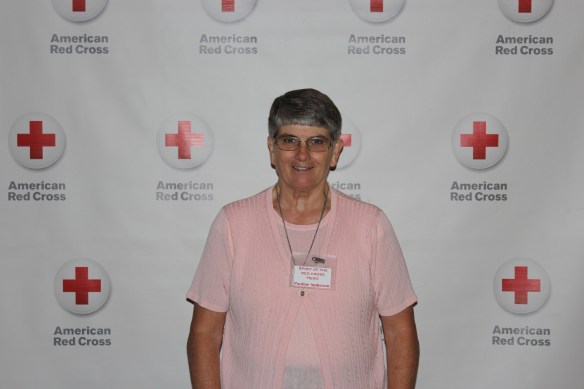
Pauline Anderson, Spirit of the Red Cross Hero- Since 2006, Pauline’s quarterly blood drives have collected 1,956 blood donations, and will easily clear the 2,000 mark this year. These drives may have helped save nearly 6,000 lives. Pauline’s extraordinary work as a Blood Drive Coordinator began in 2001, when her step daughter put on a blood drive honoring the life of her mother, who passed away from leukemia a year earlier.

IMG_5288

Hunter Woodruff, Call to Action Hero- Hunter, while driving home from his job, had noticed a car trapped in flood water in Mansfield. Without thinking twice, Hunter pulled over and jumped into the flood water. Due to Hunter’s quick action, the driver of the sinking car was saved.

Officer Ryan Garner, A Presence to Remember- Officer Ryan Garner, a Mansfield K-9 officer, was a fixture of the community. Officer Garner had a passion for being a police officer and was dedicated to not only helping his fellow officers, but also helping individuals in need. Officer Garner passed away from lung cancer in May 2018.

 Officer John Fuller, Police Hero- Officer John Fuller was the first community policing officer in Mansfield, as well as the community’s first bike patrol officer. Officer Fuller was committed to bridging the gap between the police and the community. His love for the community was evident by his interactions with children and their families. Following the 9/11 terrorist attacks, Officer Fuller took personal time and traveled to New York City to help locate individuals trapped in the rubble.

img_5261.jpg

Merris Welge, Community Educator Hero- Merris has volunteered his time educating the community through the North Central Ohio SCORE organization for 22 years. SCORE is a mentoring program that provides free counseling, advice and resources to people who are in business or who wish to start a business.

IMG_5254

Jan Wendling, Military Inspiration Hero- Jan, a Mansfield resident, served as a tank commander for the Marine Corps during the Vietnam War. Following his return from the war, Jan served as a Mansfield police officer and helped develop the Mansfield Vietnam War Memorial.

IMG_5248

Missy Houghton, Animal Advocate Hero- Missy is the passionate director of the Humane Society of Richland County. She is making a difference locally through education and action. One animal Missy helped save was a cat named Vandy. Vandy arrived as a kitten with severe burns, missing an ear and an exposed skull. Missy was able to contact the Horizon Animal Hospital, which performed a skin graft surgery in April 2017. Vandy survived and has made appearances at Humane Society fundraisers.

IMG_5371

The event was managed by Lake Erie/Heartland Chapter volunteer board member Luke Beekman, who also produced a video honoring the award winners, which was shown during the event.

To view photos from the Chevy Network and Graham Chevrolet Hero Awards, visit our Flickr page.

Emergency Preparedness for your Pets

By Sue Wilson, American Red Cross Board Member & Communications Volunteer Partner

When Hurricane Katrina hit New Orleans years ago, it was reported that more than 10,000 people refused evacuation because they didn’t want to leave their pets behind. Some of those people, and their pets, became casualties. When reporters asked survivors who didn’t evacuate why they would risk their lives for their pets, they said things like, “They are part of my family.” Or, “My pet is my kid; would you leave your kid behind?”

It’s a situation many animal lovers understand. And a situation many community leaders have considered to save lives of both pets and people.

The truth is, if it’s not safe for you to stay home, it’s not safe for your pet either. As we recognize World Animal Day (October 4), we recommend that as you make your emergency plans for your family in the event of a home fire, weather emergency or any disaster that might require you to leave your home, it is important that you include arrangements for your pet in those plans.

arc-volunteer-pat-kerns-and-lila-a-residents-dog

Red Cross volunteer Pat Kern with Lila in a shelter in North Carolina. Photo by Jim McIntyre/American Red Cross

While the American Red Cross has historically not allowed pets in shelters, mainly for health and sanitation reasons, they work with local and regional animal agencies that operate shelters that would keep pets and their people if not together then nearby. In our area, the Red Cross works with an organization called CARE.

“If we had a shelter opened, we would rely upon them to set up a pet shelter adjacent to the evacuation shelter,” said Debbie Chitester, disaster program manager for the Summit, Portage and Medina Counties Chapter “They have the equipment, supplies and volunteers to do that.”

Debbie also encourages people to have a plan for their pets.

California Wildfires 2018

Jordan, age 8, was able to be with his pets at a shelter in California last summer.
Photo by Virginia Becker/American Red Cross

“Think ahead to family or friends who may be able to take care of your pet,” she explained. “Talk with a vet or a boarding facility ahead of time to see if they have a plan and would be able to accept your pet,” she suggests. If a pet owner does not have any other place to take their pets, she said the Red Cross would activate the CARE team to set up a shelter for them. You can call your local Red Cross office to ask what shelters  are available for your pet if needed.

As you put your emergency plan and supply kit together for your family,make sure you have a separate one for your pet. Your pet emergency kit should include:

  • Sturdy leashes, harnesses and/or carriers to transport pets safely and ensure that they can’t escape.
  • Food, drinking water, bowls, cat litter/pan and a manual can opener if your pet eats canned food. Use plastic/waterproof bins to keep dry food dry and free of mold or bugs.
  • Medications and copies of medical records stored in a waterproof container.
  • A first aid kit.
  • Current photos of you with your pet(s) in case they get lost. Since many pets look alike, this will help eliminate mistaken identity and confusion.
  • Information on feeding schedules, medical conditions, behavioral problems, and the name and number of your veterinarian in case you have to foster or board your pets.
  • Pet beds and toys, if easily transportable.

Knowing you have a plan for your family, including your beloved pet(s), will give you peace of mind should a situation ever arise where you need  to evacuate your home. Click HERE for more information about preparing pets (and people) for emergencies.

Reflecting on Las Vegas one year later

NEO staffer looks back on emotional assignment

By Renee Palagyi, Senior Regional Disaster Program Manager

One year ago, headlines told of the “worst mass shooting in modern American history.” More than 500 people were wounded and 59 were killed when a lone gunman rained a barrage of bullets on the 22,000 people attending the Route 91 Country Music Festival. Many hundreds were also injured  as they ran for cover, suffering broken bones, crushing injuries as others fell on top of them, scrapes and bruises as they jammed into small spaces, torn muscles and tendons as they lifted others over fences, raw hands and feet as they crawled through broken glass and debris on the field.

IMG_5432

Renee Palagyi

Two days later, I flew to Las Vegas where I was assigned to lead health services for the American Red Cross in the Family Assistance Center at the Las Vegas Convention Center. Over the next 19 days, the teams assisted more than 4,400 people at the center with everything from replacing a lost driver’s license to wrapping an ankle with an elastic bandage, taking information to find a lost pair of glasses to facilitating a referral to an orthopedic surgeon.

  • Most people have no idea that the Red Cross is present and assisting in these tragedies but we are there, from Sandy Hook to Pulse nightclub, from the Boston Marathon to Marjorie Stoneman Douglas High School in Parkland, Florida.
  • Red Cross engages volunteers, including licensed medical and mental health professionals who are specially trained in mass casualty. Our organization is highly regarded as “the authority” on managing the aftermath.
  • Assisting the survivors of mass casualty and the families of the deceased is not only the hardest work we do—mentally and physically exhausting—it is the most rewarding.

I worked with a young man who was in severe pain from a bullet lodged against a nerve in his elbow. He did not want to return to California for surgery until the coroner released his father’s body so that they could “go home together just the way we came here together.”

I met a young couple who were badly bruised and scraped from crawling along the ground to escape bullets coming from what seemed like every direction. They were wearing Cleveland Indians ball caps and we talked about our mutual love of the team. They told me they had run to apartments near the field and began pounding on every door hoping someone would offer shelter. Ultimately, a door opened and there stood a man wearing Yankees apparel. The young woman laughed and said, “We figured it was better than nothing!”

A young father of two toddlers had been to the center the previous day and received assistance for his wife who was hospitalized. He returned, as many did, and sat at a table in the open area drinking a cup of coffee. I walked over to see if there was anything he needed and he looked up with tears in his eyes as he reached for my hand. As I sat down, he told me the doctors had run tests that morning and determined his wife had no brain wave activity. In his words, “I hoped someone here could tell me what to tell the girls.” One of our incredible mental health volunteers was with him for most of the day and made arrangements to go with a casework volunteer back to the home to be with him during that painful discussion.

I have dozens of stories of the people we met and helped in that short time. I think of many of those people now and marvel at their strength and their willingness to allow us to comfort them. I think, too, of how our team grew stronger each day and found the moments that were the hardest brought us closer together. How, at the end of 12 or more hours of hearing the most painful stories and looking into those still-frightened faces, we found friendship within our team and were able to continue our work.

The Red Cross Family Assistance Center closed the doors on a Friday night and the community-supported Vegas Strong Resiliency Center opened the next morning. Like other centers that have opened post-tragedy, it will probably be open as place of comfort and support for the next three to five years.

I was among the last five staff members to leave the center that Friday night. I flew back to Cleveland on Saturday where my husband met me at the airport and we went immediately to our daughter’s home as she hosted a neighborhood chili cook-off. After being immersed in grief for so many days, seeing a group of happy people, getting hugs from my grandchildren and other family members seemed surreal. I realized that I was beginning to heal as I had helped others begin to heal.

If you are interested in volunteering with the Red Cross to help victims after an emergency, you can apply here.  See and hear Renee tell her story in this video.

Partnering with KeyBank to teach hands-only CPR

By: Eric Alves, Regional Communications Specialist, American Red Cross of Northeast Ohio

 Earlier this week, the American Red Cross teamed up with KeyBank to train interested employees on how to administer hands-only CPR.

The training was held in Key Tower in downtown Cleveland. Patricia Buckhold, a former Red Cross regional volunteer services officer and current volunteer, conducted the training.

43102118020_86a58eb21b_z

More than 30 KeyBank employees took part in the training. During two 30-minute sessions, participants watched a video and listened to Pat discuss the proper technique for hands-only CPR. Participants were also given the opportunity to put their training into action by using compression tools, in the shape of a Red Cross emergency response vehicle, to help reinforce their training in a hands-on approach.

“I think there’s a lot of interest in people knowing what to do in an emergency, and this is a good way to start their education,” said Katie Rothstein, KeyBank’s onsite health promotion specialist.

If you are interested in having the Red Cross conduct a hands-only CPR training for members of your organization, you may submit a request. The Red Cross also provides a wide array of training for individuals, such as CPR training, babysitting and child care training, and swimming lessons. To learn more about upcoming training courses,  . To schedule a training, call 1-800-Red Cross (1-800-733-2767) or visit redcross.org/take-a-class.

29977832777_e53a753093_z

To view more photos from the training, visit our Flickr page.


Ronald J. Warzel Blood Donation Center relocates

Now in the Regional Headquarters building across the street

By Christy Peters, Manager, External Communications, Northern Ohio Blood Region

As part of the continuing effort to provide the best service and experience to our dedicated donors, the Northern Ohio Blood Services Region of the American Red Cross recently relocated its Ronald J. Warzel Donation Center. Formerly housed at 3636 Euclid Ave., the donation center has is now located in the Northeast Ohio Regional headquarters building at 3747 Euclid Ave. The new site officially opened Aug. 30, 2018 and many donors have already stopped by the newly renovated space.

The new site continues to offer Red Cross donors the opportunity to give whole blood, platelets or plasma. The site is open seven days a week and offers more flexible hours than a mobile site, for donors who may need early morning or late evening appointments. Currently, the Red Cross has a critical need for platelet and type O blood donations. Hundreds of blood drives have been forced to cancel due to Hurricane Florence, resulting in over 6,000 uncollected blood and platelet donations. Donors of all types are need to recover donations canceled by the storm.

The Northern Ohio Blood Services Region is excited to share the new and improved Ronald J. Warzel Donation Center with the community. Donors are encouraged to make an appointment to give at redcrossblood.org, by downloading the Red Cross Blood Donor App or calling 1-800-RED CROSS (1-800-733-2767).

Here are some photos from the grand opening of the Ronald J. Warzel Donation Center. To see more photos from the center opening, please visit our Flickr page:

29537987537_322010cc1c_z

Regional CEO Mike Parks donates blood during the grand opening of the Ronald J. Warzel Donation Center

29538001147_658e5304fa_z

Donors give blood in the new Ronald J. Warzel Donation Center in Cleveland

44914544441_7c49a5a420_z

Ronald J. Warzel Donation Center staff

44929134231_b55eb9c2e9_z

Ronald Warzel accepts a commemorative photograph of the grand opening of the new blood donation center from Greater Cleveland Chapter Chairman Christopher Mapes