Back to school safety tips

Almost everyone is back at school by now, and most students are back to the classroom after months of virtual learning. The American Red Cross wants to make sure your student is safe as they head back to school for the upcoming year

“Parents and kids are both eager to get back to normal and return to the classroom for the new school year,” said Mike Parks, Regional CEO, American Red Cross of Northern Ohio. “But don’t forget to make safety a top priority.”

The Red Cross offers these steps to help make the trip back to the classroom a safe one.

  1. If your student rides a bus to school, they should plan to get to their bus stop early and stand away from the curb while waiting for the bus to arrive.
  2. Students should board the bus only after it has come to a complete stop and the driver or attendant has instructed them to get on. They should only board their bus, never an alternate one.
  3. All students should stay in clear view of the bus driver and never walk behind the bus.
  4. Cross the street at the corner, obey traffic signals and stay in the crosswalk.
  5. Never dart out into the street or cross between parked cars.
  6. If children go to school in a car, they should always wear a seat belt. Younger children should use car seats or booster seats until the lap-shoulder belt fits properly (typically for children ages 8-12 and over 4’9”), and ride in the back seat until they are at least 13 years old.
  7. If a teenager is going to drive to school, parents should mandate that they use seat belts. Drivers should not use their cell phone to text or make calls, and avoid eating or drinking while driving.
  8. Some students ride their bike to school. They should always wear a helmet and ride on the right, in the same direction as the traffic is going.
  9. When children are walking to school, they should only cross the street at an intersection, and use a route along which the school has placed crossing guards.
  10. Parents should walk young children to school, along with children taking new routes or attending new schools, at least for the first week to ensure they know how to get there safely. Arrange for students to walk to school with a friend or classmate.

In addition, parents of younger kids and those headed to school for the first time, should also take a few special steps. Make sure the child knows their phone number, address, how to get in touch with their parents at work, how to get in touch with another trusted adult and how to dial 911. Teach children not to talk to strangers or accept rides from someone they don’t know.

DRIVERS, SLOW DOWN!

Drivers should be aware that children are out walking or biking to school and slow down, especially in residential areas and school zones. Motorists should know what the yellow and red bus signals mean. Yellow flashing lights indicate the bus is getting ready to stop and motorists should slow down and be prepared to stop. Red flashing lights and an extended stop sign indicate the bus is stopped and children are getting on or off.

Motorists must stop when they are behind a bus, meeting the bus or approaching an intersection where a bus is stopped. Motorists following or traveling alongside a school bus must also stop until the red lights have stopped flashing, the stop arm is withdrawn, and all children have reached safety. This includes two and four-lane highways. If physical barriers such as grassy medians, guide rails or concrete median barriers separate oncoming traffic from the bus, motorists in the opposing lanes may proceed without stopping. Do not proceed until all the children have reached a place of safety.

PREPARE FOR EMERGENCIES Know what the emergency plan is at your child’s school in case a disaster or an unforeseen event occurs. Develop a family emergency plan so everyone will know who to contact and where to go if something happens while children are at school and parents are at work. Details are available at redcross.org/prepare.

TAKE A FIRST AID CLASS The Red Cross First Aid App provides instant access to information on handling the most common first aid emergencies whether it be before, during or after school. Download the app for free by searching for ‘American Red Cross’ in your app store or at redcross.org/apps. Learn and practice first aid and CPR skills by taking a course (redcross.org/takeaclass) so you can help save a life.

“This is something I am proud of!”

Blood and platelet donor reaches a milestone

By Chris Chmura, American Red Cross volunteer

It’s not every day you meet a real hero…

The American Red Cross would like to thank Paul Giltz for 75 lifesaving donations.

We consider Paul a hero. 

Paul Giltz

“All my life I have heard stories of people who rushed into burning buildings or lifted cars off people with their bare hands to save the lives of complete strangers. When they are given awards they almost always say, ‘I’m no hero, something had to be done and I did it.’ I have never been called upon to do something like that. The American Red Cross is awarding me for donating 75 times! I am no hero. But I came to realize that I was saving the lives of complete strangers just as those others have. By now, perhaps dozens of strangers were given another chance by my donations. This is a good feeling, this is something I AM PROUD OF!” – Paul Giltz

Paul started his commitment and Red Cross journey while attending college. His inspiration to donate comes from people that have passed in his life, personally knowing he is helping others and from those who can’t donate. Paul has friends who cannot donate due to health reasons and veterans who have been advised not to donate. He views his donation as a tribute to these important people in his life. 

His 75 donations have been made in different ways, but he now prefers to donate platelets. Paul’s schedule allows him to take the time needed to donate platelets (and watch a movie!). Why? He has learned that this type of donation is easier on his system personally. 

He prefers to make his donations at the Executive Parkway Red Cross donation center in Toledo because of the supportive, friendly staff. Paul schedules his appointments using the Red Cross app or in person during a donation. “I know that a lot of people don’t have a flexible schedule or have the time like myself.”

Paul received an American Red Cross milestone pin to celebrate his 75th donation, which included 83 units to help make a true difference in the lives of others.

Facts About Blood Needs

  • Every 2 seconds someone in the U.S. needs blood and or platelets. 
  • Approximately 36,000 units of red blood cells are needed every day in the U. S. 
  • Nearly 7,000 units of platelets and 10,000 units of plasma are needed daily in the U.S. 
  • Less than 38 percent of the population is eligible to give blood or platelets.
  • Nearly 21 million blood components are transfused each year in the U.S.
  • Sickle cell disease affects 90,000 to 100,000 people in the U.S. About 1,000 babies are born with the disease each year. Sickle cell patients can require blood transfusions throughout their lives.
  • The average red blood cell transfusion is approximately 3 units.
  • A single car accident victim can require as many as 100 units of blood.
  • Blood and platelets cannot be manufactured; they can only come from volunteer donors.
  • The blood type most often requested by hospitals is type O.
  • One donation can potentially save up to three lives.

    Have you considered donating to the American Red Cross? We have multiple ways for you to support us through various donations and volunteering. For more information, visit RedCrossBlood.org or RedCross.org/volunteer.

Edited by Glenda Bogar, American Red Cross volunteer

Excessive heat a reminder to enjoy the end of summer safely

Although fall is right around the corner, you’d never know it from the recent high temperatures we’ve been experiencing in northern Ohio. Many people don’t realize excessive heat causes more deaths than all other weather events. As many of us squeeze in our final summer activities in the coming weeks, remember to stay safe when temperatures rise.

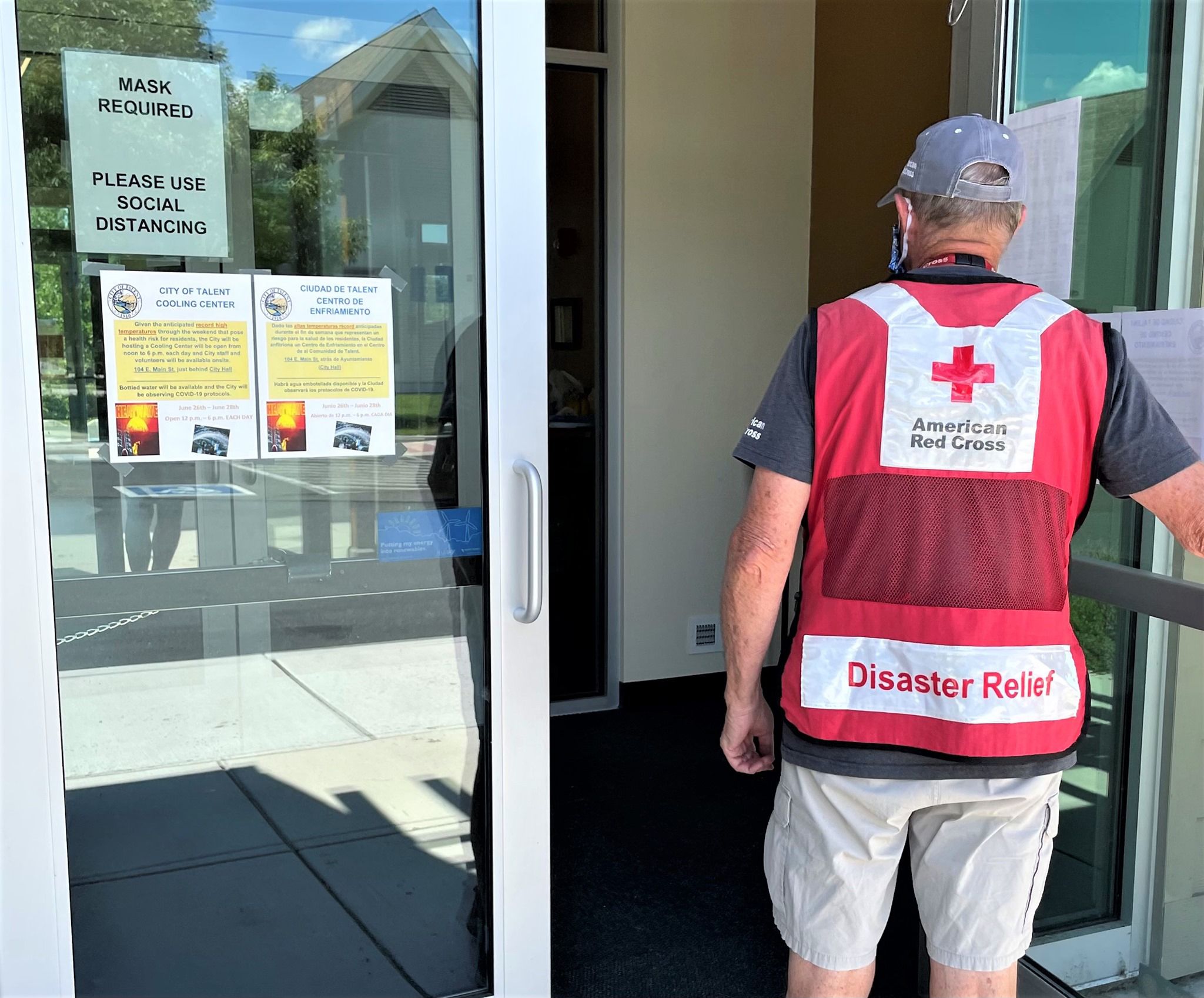
June 27, 2021. Talent, Oregon. Red Cross volunteer Chuck Albin delivering water and snacks to a cooling center in Talent, Oregon. Photo by Patty Albin/American Red Cross

Hot cars can be deadly so never leave children or pets in your vehicle. The inside temperature of the car can quickly reach 120 degrees. Check on family, friends and neighbors who do not have air conditioning, who spend much of their time alone or who are more likely to be affected by the heat. If someone doesn’t have air conditioning, they should seek relief from the heat during the warmest part of the day in places such as schools, libraries, theaters and malls.

And, don’t forget your pets! Read our recent blog on how to protect your pets during extreme heat. Also, download the Red Cross Pet First Aid app so you’re prepared in a pet emergency.

Extreme heat can often lead to thunderstorms and power outages. If thunder roars, go indoors! Watch for darkening skies, lightning flashes or increasing wind. If you can hear thunder, you are close enough to be in danger from lightning. Postpone outdoor activities if thunderstorms are likely to occur. If a severe thunderstorm warning is issued, take shelter in a substantial building or in a vehicle with the windows closed. If you are in a building, keep away from windows. Get out of mobile homes as they can blow over in high winds and do not take a bath, shower or use plumbing.

Wishing everyone a safe and enjoyable end of summer!

Northern Ohio volunteers respond to disasters at home and across the country

Busy weekend highlights need for additional volunteers

Over the weekend, disaster action team members from the American Red Cross Northern Ohio Region responded to local events and traveled across the country to assist those affected by national disasters. Locally, nine incidents occurred, affecting more than two dozen individuals. The Red Cross provided more than $7,000 in immediate assistance.

Fire damaged home in East Cleveland – Photo credit: David Huey, American Red Cross volunteer

As of today, 12 Red Cross workers from Northern Ohio have been deployed to a variety of national disaster responses, with a majority in California for the ongoing wildfire response. As tropical depressions like Grace and Henri are expected to continue in the coming weeks and wildfires continue to burn, the need for more volunteers is urgent.

Brigit Jackson is a nurse from Wooster who deployed to Portola, California to assist those affected by the Dixie Fire. She’s a nurse serving as a disaster health volunteer. In a message this morning, Brigit notes the winds have shifted southwest and more evacuations are expected.

Portola, California – Photo Credit: Brigit Jackson, American Red Cross Volunteer

“Just a little update! The smoke is dense today and it smells like burning wood/fire. Air quality is terrible. The Red Cross shelter in Quincy is probably being evacuated today as the fire is getting too close. We only have 3 nurses in this section of the disaster response operation. There are so many fires and not enough nurses. Most of the roads are closed, so travel is not easy.”

The Red Cross needs new volunteers to support disaster shelters. Volunteers will help with reception, registration, food distribution, dormitory, information collection and other vital tasks inside disaster shelters. And, like Brigit, the Red Cross also needs volunteers who can work in disaster shelters to address people’s health needs and provide hands-on care in alignment with their professional licensure (registered nurse and licensed practical nurse/licensed vocational nurse). Daily observation and health screening for COVID-19-like illness among shelter residents may also be required. If you are an RN, LPN, LVN, APRN, NP, EMT, paramedic, MD/DO or PA with a current and unencumbered license, this position could be right for you.

To learn more, please visit RedCross.org/volunteer.

Take action this World Humanitarian Day

By Samantha Pudelski, Red Cross volunteer

August 19 is World Humanitarian Day, when we recognize those around the world who help people affected by global crises. In 2021, a record 235 million people required humanitarian assistance according to USAID. Life-threatening crises around the world such as hunger, poverty and conflict are intensifying due to forces such as climate change.

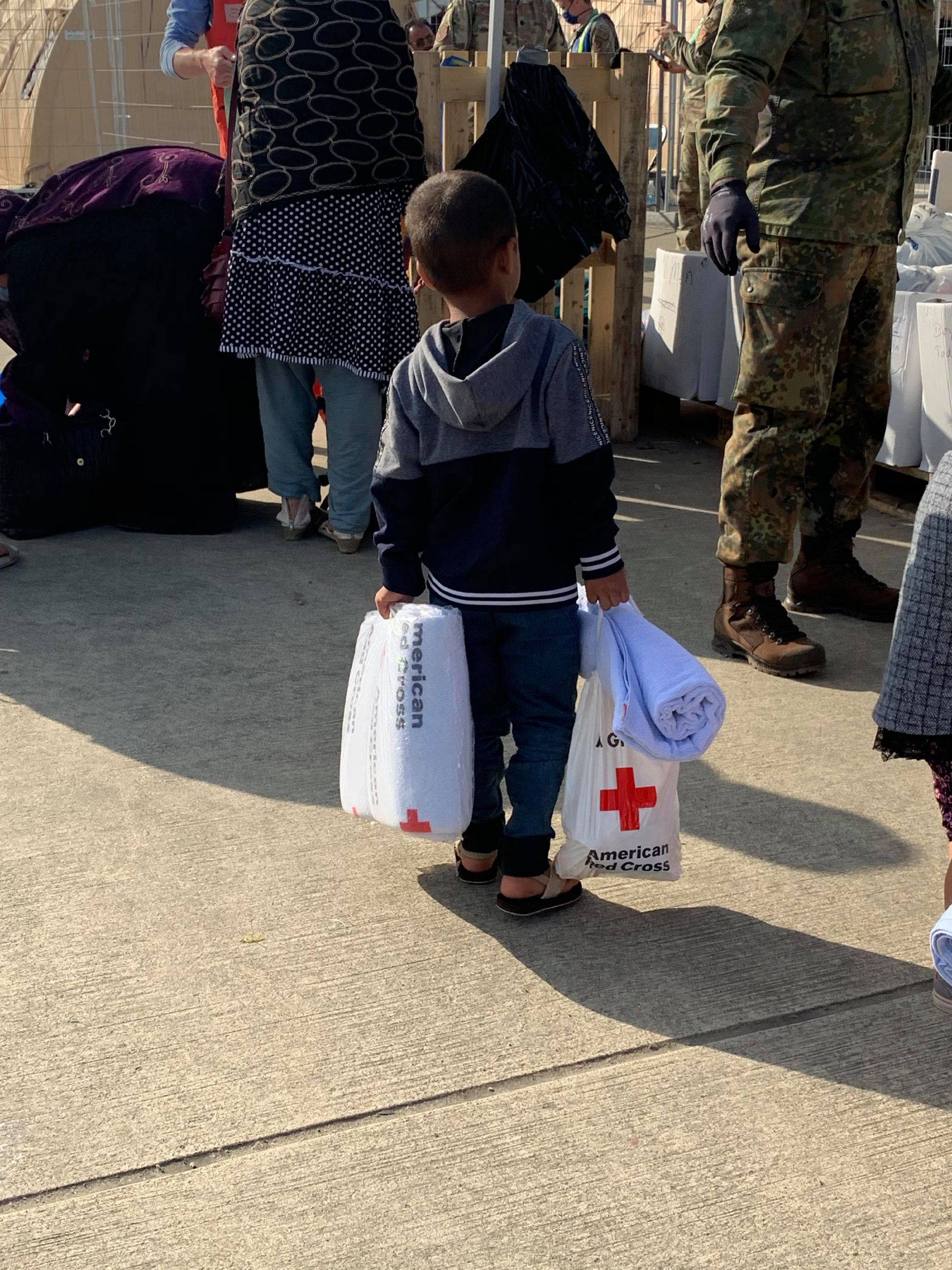
Northeast Ohio native Jenelle Eli, American Red Cross joins Ines and her neighbors in Morelos, Mexico in receiving humanitarian aid from the Red Cross in the wake of a 7.1 earthquake in 2018.

Organizations around the world, including the American Red Cross, International Federation of the Red Cross (IFRC) and Red Crescent Societies, provide humanitarian aid to help communities affected by intense storms, hurricanes and devastating wildfires that have increased in frequency, especially in the last few years. They also are working to provide climate-smart disaster risk reduction—helping communities reduce their risks, increase their resilience and prepare for emergencies that may happen in their region.

Annually, on average, natural hazards cause 67,000 deaths, affect 199 million people and drive 126 million individuals into poverty according to the IFRC. Climate change is causing the number of disasters to increase drastically—doubling the average number of disasters in the last 40 years.

April 7, 2020. Nassau, New Providence, Bahamas. The American Red Cross helped expand the Bahamas Red Cross home meal delivery program to include more people put at risk to food insecurity due to the COVID-19 outbreak causing government implemented lockdowns and 24-hour curfews.

You may be asking yourself, how can I help here in Ohio? There are a few things you can do:

  • Learn more about the effects of climate change and the work organizations like the Red Cross and IFRC are doing to help those who are impacted by disasters. Share what you learn with family and friends.
  • Donate to the Red Cross to help provide aid to victims of disasters and education to communities on how to prepare for future events.
  • Volunteer with the Red Cross in your community and/or consider becoming a member of the Disaster Action Team.

Read more about World Humanitarian Day here.

Edited by Glenda Bogar, American Red Cross volunteer

Disaster volunteers respond to storm damage, flash flooding

Stormy summer weather prompted calls for assistance from the Northern Ohio Region of the American Red Cross during the weekend of August 13-15.

A family of five received assistance on Friday, after experiencing storm damage at their home in Toledo.

Flash floods in Elyria affected more than two dozen people, who received assistance totaling more than $4,400. The affected residents were able to use the funding to find safe shelter, buy food, clothing, and any other assistance they needed.

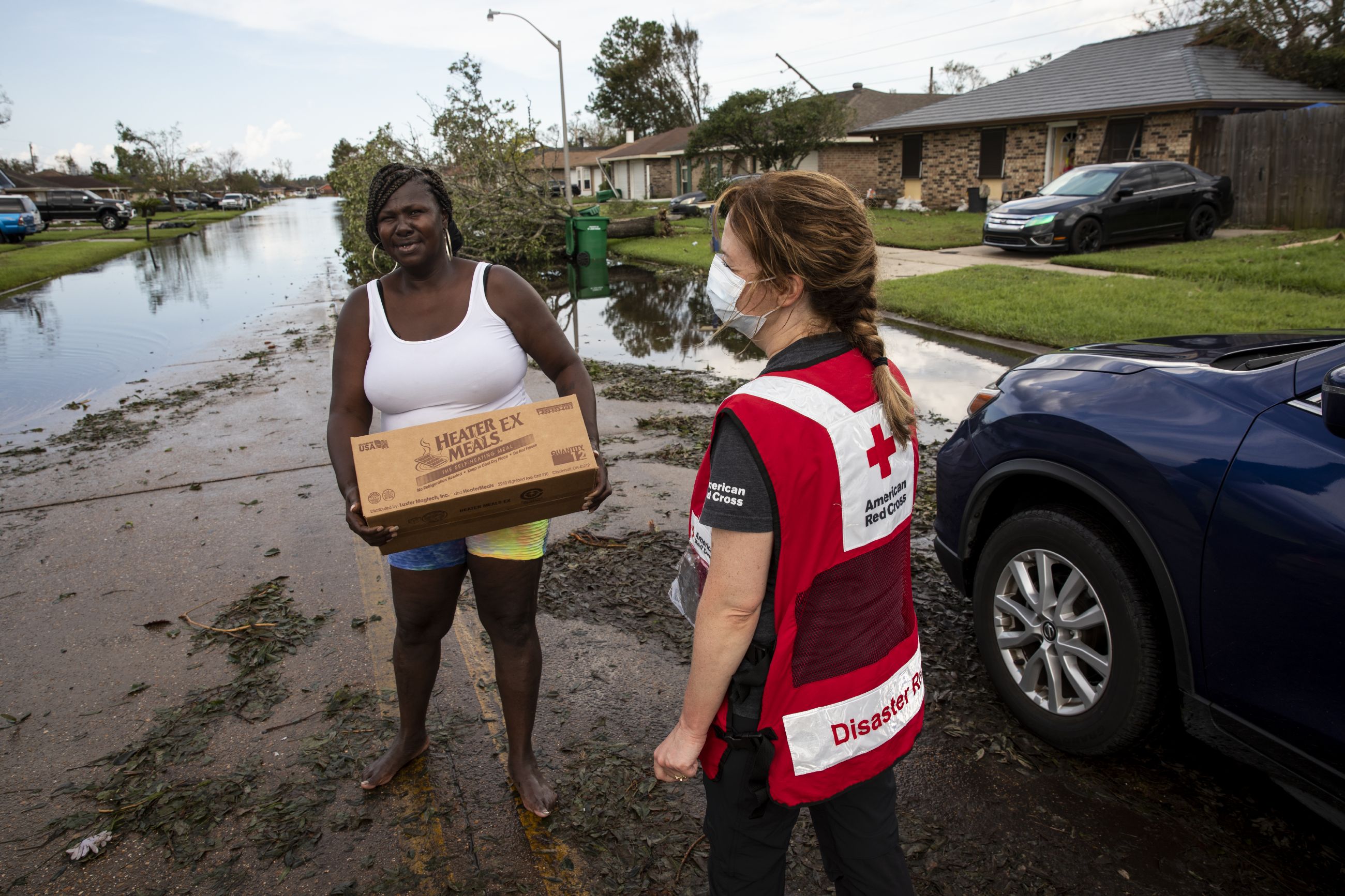
March 28, 2021. Ohatchee, Alabama. American Red Cross canvassing the area to provide assistance to all those affected by the devastating spring storms in and around Birmingham, Alabama. Photo by Jaka Vinsek/American Red Cross

Disaster assistance over the weekend was also provided to 10 adults and children who were forced from their homes by fire. Volunteers assisted fire-stricken residents in Cuyahoga, Summit, Portage, Ashtabula, and Monroe County, Michigan.

Andy Garcia – Photo credit: Meg Brinkman, Red Cross volunteer

In an effort to prevent fatal home fires, volunteers in Hancock County helped install smoke alarms and provided home fire safety information to residents in Findlay on Saturday. The effort was organized by Ben Garcia of Findlay, as his Eagle Scout project. Ben is a member of Troop #319 in Findlay. Teams of scouts and volunteers recruited by Ben were joined by local Red Cross volunteers to visit residents in Riverview Terrace and the surrounding neighborhood to install smoke alarms and teach residents about what to do in case a fire breaks out.  

22 homes were made safer, as Ben and the rest of the volunteers installed 49 smoke alarms.

Accompanying Ben were his father, Andy Garcia (pictured here), his mother and his brother.

If your home needs the protection of working smoke alarms, visit our Home Faire Campaign page to request a visit from trained Red Cross volunteers who can provide free smoke alarms, install them, and offer vital home fire safety information.

Local volunteers and blood donors needed for busy disaster season

Many weather experts predict a destructive wildfire and hurricane season this year. The American Red Cross needs volunteers to help people who are affected by these disasters.

“We’re preparing for another extremely busy disaster season, and it’s critical to have a trained, ready volunteer workforce to make sure we can provide relief at a moment’s notice,” said Mike Parks, Regional CEO, American Red Cross of Northern Ohio. “This year’s wildfire season is already very active and dangerous because of the severe drought and dry woodlands across the west. And experts are predicting we could see 10 or more hurricanes in the upcoming weeks.”

“We’re preparing for another extremely busy disaster season, and it’s critical to have a trained, ready volunteer workforce to make sure we can provide relief at a moment’s notice.”

Mike Parks, Regional CEO, American Red Cross of Northern Ohio

SHELTER VOLUNTEERS AND HEALTH PROFESSIONALS NEEDED

The Red Cross needs new volunteers to support disaster shelters. Volunteers will help with reception, registration, food distribution, dormitory, information collection and other vital tasks inside disaster shelters. Both entry and supervisory-level opportunities are available.

The Red Cross also needs volunteers who can work in disaster shelters to address people’s health needs and provide hands-on care in alignment with their professional licensure (registered nurse and licensed practical nurse/licensed vocational nurse). Daily observation and health screening for COVID-19-like illness among shelter residents may also be required. If you are an RN, LPN, LVN, APRN, NP, EMT, paramedic, MD/DO or PA with a current and unencumbered license, this position could be right for you.

Red Cross volunteer Dave Wagner looks out damage from the Dixie Fire on the outskirts of Greenville, CA, a small town that was devastated by the fire on Saturday, August 7, 2021. Many of the evacuated residents found shelter with the Red Cross in nearby Quincy and Susanville, CA.
Photo by Scott Dalton/American Red Cross

DISASTER ACTION TEAM MEMBER

Local Disaster Action Teams provide 24-hour emergency response to local disasters, particularly home fires, ensuring that those affected have access to resources for basic necessities such as food, shelter and clothing. If you are team-oriented and want to help your neighbor, the DAT responder may be just the thing for you.

Disaster Action Team members from Northern Ohio respond to a fire in Lakewood on Aug. 4, 2021.

At 1 p.m. today, the Red Cross will host a Facebook Live event where our experts will discuss the various volunteer roles and how you can get involved in helping families after disasters here locally and across the country. Tune in to learn more and get your volunteer questions answered.

Last year, the Northern Ohio Region provided immediate emergency assistance to more than 5,100 people after nearly 1,200 home fires and other disasters.

If you can’t join us this afternoon but are interested in helping your community when disasters occur, you can sign up online or contact our area offices at 216-431-3328 or neovolunteer@redcross.org.

BLOOD AND PLATELET DONORS NEEDED

Wildfires, record-breaking heat and a busy hurricane season can also impact the nation’s blood supply. On top of the toll extreme weather events take on the lives of millions, disasters can cause blood drive closures or prevent donors from being able to give safely. Eligible donors can help overcome the critical need for blood and ensure blood is readily available by making an appointment to give by using the Red Cross Blood Donor App, visiting RedCrossBlood.org, calling 1-800-RED CROSS (1-800-733-2767) or enabling the Blood Donor Skill on any Alexa Echo device.

Keep an eye on your pets in this heat

By Eilene E. Guy, American Red Cross volunteer

Here we are, still in the dog days of summer. If you’re not sweating out heat and humidity today, you’re likely to again before we slide into the cooler days of fall.

But what about our furry friends, our dogs and cats? Do they sweat the misery of hot, humid weather?

Actually, dogs and cats do sweat to cool off. And their fur acts as insulation.

But pets rely on us, “their people,” to behave like the “alpha animals” in their lives and protect them from the worst of summer.

“The American Red Cross focuses on the welfare of human beings, but we know how important pets are to people,” said Dr. Eve Schaming,  veterinarian at Sagamore Hills Animal Hospital in Summit County.  “That’s why we want to help folks prevent heat-related issues with their animals.”

Provide plenty of fresh water. To avoid pet heat exhaustion, make sure your pets have plenty of cool, fresh water and access to shade all day long.

Never leave your pet in the car. And no, cracking the window open or parking in the shade doesn’t count! The inside of a vehicle can reach 120 degrees in a matter of minutes, which puts an animal in real danger.

And watch the humidity. Just like humans, our pets sweat or pant to cool off, but high humidity slows that process down.

The Red Cross offers these steps to treat heat stroke in dogs:

  • Get your animal out of direct heat.
  • Check for signs of shock, which include: collapse, body temperature of more than 104, bloody diarrhea or vomit, stupor, seizures or coma, excessive panting or difficulty breathing, increased heart rate, salivation.
  • Take your dog’s temperature.
  • Spray your dog with cool water and then retake its temperature.
  • Put water-soaked towels on the dog’s head, neck, feet, chest and abdomen; turn on a fan an point it in the dog’s direction; rub isopropyl alcohol (70%) on the foot pads, but don’t use large quantities.
  • Take your dog to the nearest veterinarian. The effects of heat stroke may not show up right away.

Pay special attention to older animals and to dogs with shorter noses (like pugs, boxers and bulldogs). They’re at greater risk for heat stroke.

Protect your pet’s paws from hot surfaces. Walk your pet in the grass or the shade whenever possible. If the pavement is too hot for your bare feet, it’s too hot for your pet’s paws! If it needs to go outside on a hard surface to “do its business,” try wetting the surface with a hose or water bottle to help cool it off.

Don’t overdo outdoor exercise. Often, dogs don’t know when they need a break, so it’s up to us, “their people,” to stop for regular shaded breaks and offer water. Try to plan your walks, hikes or runs during the cooler times of day. (Better for you too!)

Whether it’s hot or not, check with your vet to see if your pets should be taking heartworm prevention medication. Heartworm disease, which is transmitted by mosquitoes, can be fatal to both dogs and cats.

The Humane Society of the United States says fleas and ticks are another summer threat. Only use flea and tick treatments recommended by your vet; some over-the-counter product can be toxic, even when used according to directions.

You can have first aid advice for everyday pet emergencies at your fingertips by downloading the Red Cross Pet First Aid App from smartphone app stores by searching for the American Red Cross or by going to redcross.org/apps.

Pet owners can also access the Red Cross Cat and Dog First Aid online course on a desktop or tablet at redcross.org/catdogfirstaid. The 35-minute course covers:

  • How to determine a pet’s normal vital signs so you can spot something that’s out of the ordinary;
  • Step-by-step instructions for what to do if a pet is choking, needs CPR, has a wound or is having a seizure; and
  • Information on preventative care, health and tips for a pet’s well-being.

My neighbor’s dog, Nap, thanks you. And so does my son’s cat, Spike.

During National Immunization Awareness Month, ensure your vaccinations are up to date

By Tim Poe, American Red Cross volunteer

Some moments remain in memory with surprising detail. While recent, I suspect receiving the COVID-19 vaccine will remain in mine. Not so much for the injections themselves but for the relief, plans and hope they brought. Even after the first shot, I looked forward to seeing friends, attending family gatherings, hearing live music, traveling and everyday things like grocery shopping without risk assessments. While the Delta variant and vaccine hesitancy are delaying these plans, I cling to a cautious optimism, am grateful that many have some defense against the virus, and am in awe at how quickly and effectively science and knowledge respond to grave threats.

I realize how fortunate I am to have grown up without risk of measles, polio, tetanus and several other diseases, thanks to immunizations. Many are not so fortunate. This is something that the American Red Cross and partner organizations are continuously working to remedy. I am also reminded that we must keep up with our vaccinations. Since August is National Immunization Awareness month, now is an excellent time to ensure your and your family’s vaccinations are up to date.

In addition to the COVID-19 vaccine, other immunizations are needed, especially as many resume pre-pandemic behaviors. Gatherings carry influenza risk, especially in fall and winter, so do not forget your flu shot this year. Travel is also booming, and those traveling abroad should be properly immunized for the destination. (For more information on travel preparedness, read this blog.)

The Centers for Disease Control and Prevention (CDC) states that all adults need vaccines for COVID-19, influenza, Td or Tdap (tetanus) and others, depending on circumstances. In addition, routine vaccinations throughout childhood help prevent 14 diseases. In fact, the CDC says, “among children born from 1994-2018, vaccinations will prevent an estimated 936,000 early deaths, 8 million hospitalizations and 419 million illnesses.”

Vaccine effectiveness and the need for vigilance is especially clear with measles and rubella (German measles). Measles, an exceptionally contagious and severe childhood disease, surged in 2019, though an effective vaccine exists. The World Health Organization (WHO) reports that global measles cases increased to 869,770 in 2019 with 207,500 deaths. While cases were lower in 2020, the WHO says the pandemic disrupted vaccination and prevention efforts. As of November 2020, it estimates “more than 94 million people were at risk of missing vaccines due to paused measles campaigns in 26 countries.”

September 27, 2018. Nairobi, Kenya. Prince Osinachi sits in a Red Cross volunteer’s arms after receiving routine immunizations in Nairobi, Kenya.

The Red Cross and its partners in the Measles & Rubella Initiative are working to create a world free of these diseases. The vaccine is safe, effective and one of the most cost-effective health interventions available. Since 2001, the initiative has vaccinated 2 billion children, preventing over 23 million measles-related deaths. Learn more here. Please consider donating if you can help with this effort.

Your doctor and county board of health can help with vaccinations. For more information on vaccination clinics at the Cuyahoga County Board of Health, CLICK HERE. If you need a COVID-19 vaccine, visit the CDC’s website.

Edited by Glenda Bogar, Red Cross volunteer

Three R’s plus a dose of Three C’s

Cover up, Caution around traffic, Car seats

By Doug Bardwell, Red Cross volunteer

As of this writing, Cleveland, Akron, and Massillon have declared that all returning students will be required to wear masks until further notice. With the Delta variant as dangerous as it is, that’s the only way to protect those too young to be vaccinated.

But that’s not all

The virus isn’t the only thing parents and caretakers need to be aware of. Accordingly, the American Red Cross has issued a list of ten tips to help make this school year a safe one.

  1. If your student rides a bus to school, they should plan to get to their bus stop early and stand away from the curb while waiting for the bus to arrive. 
  2. Students should board the bus only after it has come to a complete stop and the driver or attendant has instructed them to get on. They should only board their bus, never an alternate one.
  3. All students should stay in clear view of the bus driver and never walk behind the bus. 
  4. Cross the street at the corner, obey traffic signals and stay in the crosswalk.
  5. Never dart out into the street or cross between parked cars.
  6. If children go to school in a car, they should always wear a seat belt. Younger children should use car seats or booster seats until the lap-shoulder belt fits properly (typically for children ages 8-12 and over 4’9”), and ride in the back seat until they are at least 13 years old.
  7. If a teenager is going to drive to school, parents should mandate that they use seat belts. Drivers should not use their cell phone to text or make calls, and avoid eating or drinking while driving.
  8. Some students ride their bike to school. They should always wear a helmet and ride on the right, in the same direction as the traffic is going. 
  9. When children are walking to school, they should only cross the street at an intersection, and use a route along which the school has placed crossing guards. 
  10. Parents should walk young children to school, along with children taking new routes or attending new schools, at least for the first week to ensure they know how to get there safely. Arrange for students to walk to school with a friend or classmate.

“Parents and kids are both eager to get back to normal and return to the classroom as a new school year starts,” said Mike Parks, Regional CEO, Red Cross of Northern Ohio. “But don’t forget to make safety a top priority.”

While most people realize that the Red Cross responds to disasters, we try equally hard to promote safety at home, at work, and at school; so your donations are always welcome.