Top Ten Fire Safety Tip List

For Home and Work

The biggest disaster threat in the United States isn’t tornado, hurricane or flood: it is fire. The American Red Cross responds to nearly 70,000 disasters every year.  Most are home fires.  In Northeast Ohio, Red Cross workers and volunteers help an average of 3 families, victims of home fires every night.

Mike Parks, Chief Executive of the American Red Cross, Northeast Ohio Region recently appeared on WKYC Channel 3 to help the station kick-off its Safety Week activities.  Station management has a genuine concern for the well-being of the Channel 3 workforce, so they turned to the Red Cross during National Preparedness Month to help improve worker readiness in the face of an emergency.

During Mike’s visit to the station on Monday, September 14, the fire alarm was sounded.  Employees were not warned in advance.  The exercise was meant to assess their reaction. Hosts Michael Cardamone and Hollie Giangreco vacated the premises promptly, along with the studio crew and support staff.  Mike then went on the air with station President and General Manager Micki Byrnes to explain the importance of responding immediately to a fire alarm, and to credit the employees who evacuated without hesitation.

“This is something all companies should be doing,” he said.  “All organizations should have a plan in place.”

Fire prevention and escape plans aren’t just for the workplace: every home should have a plan as well.

Here is a Top Ten list of Fire Safety Tips:

  1. Install smoke alarms on every floor
  2. Change the batteries at least once a year, and install a new one if the low-battery alarm chirps
  3. Test alarms once a month
  4. Teach children what a smoke alarm sounds like and what to do if they hear it
  5. Establish at least two escape routes from your home
  6. Consider emergency escape ladders for rooms on the second floor and above
  7. Select a meeting spot where your family can safely gather after escaping
  8. Practice your escape plan twice a year: time each drill until every family member can escape within two minutes
  9. Make an emergency kit. Get the basics from our previous blog posting here.
  10. Visit redcross.org to find out more about how to protect you and your family from fire

Every year, the Red Cross spends an average of $370 million helping people and communities prepare for, respond to, and recover from nearly 70,000 disasters across the country and around the world. Help people affected by disasters like home fires and countless other crises by making a donation to support Red Cross Disaster Relief. Visit redcross.org, call 1-800-RED CROSS or text REDCROSS to 90999 to make a $10 donation towards disaster relief.

And be watching Channel 3 News for more coverage of National Preparedness Month. Employees are being offered classes in First Aid and CPR through the American Red Cross.

Support Our Armed Forces With Holiday Mail for Heroes

We are collecting cards for our annual Holiday Mail for Heroes. The program provides cards of thanks and support to the members of the Armed Forces, veterans and their families.

Holiday Mailbox

The five chapters in Northeast Ohio are collecting the cards which will then be distributed locally to service members, their families, and veterans through area VA service locations, VFWs, and other military organizations. The cards may be delivered individually, included in care packages or displayed at common venues in military installations and hospitals.

A few rules:

  • The Red Cross does not provide cards to sign. Instead, please feel free to make cards or use any favorites that you have on hand.
  • In order to make cards as meaningful as possible for a wide audience, we recommend that you use generic titles such as “Dear Service Member,/Veteran/ Military Family Member” when writing the cards.
  • Cards should not contain glitter because some cards may end up at the bedside of a wounded service member and the glitter could aggravate existing health issues.
  • Please do not seal in individual envelopes. It is easier for our volunteers to screen and sort the cards if they aren’t individually sealed in envelopes.
  • Individual cards can be dropped off or mailed to the Red Cross chapters in a large envelope or mailing box.
  • We ask that people not enclose any items with the holiday cards. Any items enclosed with the holiday cards will be removed, including photos and other gifts. If you wish to provide financial support for Red Cross services to the military, please donate online.
  • Chapters cannot accept cards after November 30 – we still need time for our volunteers to sort and deliver!

You can mail or drop cards off (between 9 a.m. and 4 p.m.) to the following locations:

Greater Cleveland Chapter
3747 Euclid Avenue
Cleveland, OH 44115

Lake Erie/Heartland Chapter
244 West South Street
Wooster, OH 44691

Elyria Office
2929 West River Rd. N.
Elyria, OH 44035

Mansfield Office
39 N. Park Street
Mansfield, OH 44902

Lake to River Chapter
3530 Belmont Avenue
Suite 7
Youngstown, OH 44505

Ashtabula County Office
433 Center St
Ashtabula, OH 44004

Jefferson County Office
81 Talbott Drive
Wintersville, OH 43953

Stark County & Muskingum Lakes Chapter
408 9th Street, SW
Canton, OH 44707

Muskingum Lakes Office
1451 4th St. NW
New Philadelphia, OH 44663

Summit, Portage, and Medina Counties Chapter
501 West Market Street
Akron, OH 44303

How can you get involved in the Holiday Mail program beyond mailing a card?

Word of Mouth: Host a card signing party as part of your Thanksgiving Celebration!

Social Media: Connect with fellow card senders through social media channels and help us get the word out through Facebook and Twitter. Be sure to use the hashtag #holidaymail.

Help Sort and Deliver Cards: If you are interested in helping sort and deliver cards, please contact Jessica Tischler at 216-426-7525 to see how you can help.

Regional CEO Remembers 9-11

Like most Americans, Mike Parks, Chief Executive Officer for the American Red Cross, Northeast Ohio Region has poignant memories of the events of September 11, 2001.

Unlike most Americans, Mike attained the rank of Rear Admiral while serving with the United States Coast Guard, and was the commanding officer of a Coast Guard Cutter when the attacks on the World Trade Center, the Pentagon, and United Airlines Flight 93 occured.

Mike was asked to share his memories on the 14th anniversary of the attacks at the annual USO of Northern Ohio Golf Outing and Clambake at Sweetbriar Golf Club in Avon Lake.  He also offered his observations about how the U. S has changed since that day.

You can see and hear Mike deliver his remarks here.

Services to the Armed Forces is a primary focus of the Red Cross.  You can learn more about those services at http://www.redcross.org/what-we-do/support-military-families.

This slideshow requires JavaScript.

Preparing the Community (And the Volunteer Jobs that go with it)

By: Debra, Regional Volunteer Specialist

September is Preparedness Month and throughout Northeast Ohio the Red Cross is asking that individuals, families, and businesses to be Red Cross Ready.  Red Crossers know that preparedness begins with them; by taking a few simple preparedness steps they help save themselves and their family when an emergency strikes and are taking action to bolster their resilience should the unthinkable happen.  From July 2014 through June 2015 the Red Cross of Northeast Ohio responded to 967 incidents across 22 counties, providing comfort and hope to those affected.

Red Cross volunteers expand on this promotion for preparedness through their actions of volunteering;  passionately sharing resource information with members of their community, to help change behavior and reduce the risk of injury and loss due to an emergency. 

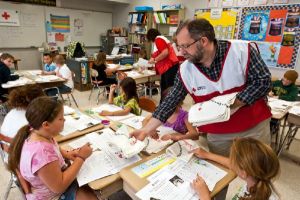
Three years ago The Pillowcase Project was implemented in Red Cross regions nationwide. The program, which was developed after Hurricane Katerina and through support from Disney, focuses on reaching young students (3rd-5th grade) and sharing preparedness resources and resiliency techniques.  Volunteer Pillowcase Project Instructors complete a training course that hones their preparedness knowledge and presentation skills and readies them to conduct classroom instruction and interactive activities in schools, summer camps, youth programs and after-school settings.  The program empowers students to act as advocates for disaster preparedness in their homes and communities, as well as teaches them how to use coping skills to help manage stress during emergencies and in everyday situations.
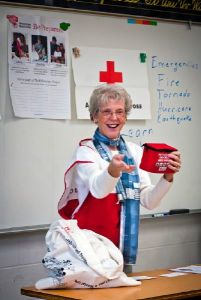
Community Disaster Education (CDE) Presenters continue to encourage adult community members, organizations and agencies by promoting and conducting public speaking and/or booth support on how to prevent and prepared for emergencies. Preparing the nearly 4.5 million residents Northeast Ohio home is no small feat, but Red Cross volunteers participate in many community outreach events across our area, helping to educate over 75,000 individuals annually.

If you are interested in volunteering to prepare your community in either of these capacities, please visit our website: www.redcross.org/neo and click on Volunteer on the left side of the screen. You will be dropped directly into the application process. You may also call 216-431-3328 or email, NEOvolunteer@redcross.org.

Be Prepared For A Mobile Emergency

Get Your Emergency Car Kit Ready To Go

get-a-kit

Being prepared means being equipped with the proper supplies you may need in the event of an emergency or disaster, no matter where you go.  Labor Day marks the unofficial end of summer. Now is the time to put together a Disaster Supplies Kit to carry in the trunk of your car.  Heavy autumn rains can cause flooded roadways, and winter will be here in Northeast Ohio before we know it.  With it comes the certainty of hazardous driving conditions. No one wants to be stranded without the proper supplies.

Here is a list of the minimum basic supplies you should pack in your vehicle emergency kit:

  • High protein snacks
  • Water, enough that each person has one gallon per day
  • First Aid Kit
  • A flashlight and extra batteries
  • Battery-powered or hand-cranked radio, preferably NOAA Weather Radio  -emergency-radio
  • Emergency blanket
  • A whistle, to attract the attention of rescue personnel
  • An emergency contact card with names and phone numbers, and important documents or information you may need
  • Extra prescription medications

The Red Cross store sells a wide variety of emergency supplies, from compact Safety Tubes to Starter Kits to kits containing enough supplies to help 4 people survive a 3 day emergency.

bigkit

In addition, always let someone know your destination, your route, and when you expect to arrive. If your car gets stuck along the way, help can be sent along your predetermined route.

It’s also helpful to find out what disasters may occur in the place where you are traveling, especially if you have never encountered such disasters before.  Find out how you would best get information in the event of a disaster (Red Cross Emergency apps, local radio stations, emergency alert systems).

flood-app

Pay attention to the weather forecast for your destination. Travel and weather web sites can help you avoid storms and other regional challenges that could impact your safety.

And keep an eye on your gas gauge.  Don’t let your vehicle’s gas tank get too low, especially with prices as low as they are at many gas stations in Northeast Ohio!

Be prepared for an emergency, no matter where you go.  Be Red Cross Ready!

Protecting every member of your family with your 72-hour kit

FamilyThere is nothing more frustrating (or hilarious, depending on how you view it) than going through your 72-hour kit and seeing a huge pack of newborn diapers intended to fit your 15-month-old toddler.

That teensy, tiny diaper simply isn’t going to cut it.

If you are the parent or care-giver to an infant or toddler, you will need to go through your 72-hour emergency kit quarterly to keep up with your ever growing child.

For those who haven’t built a 72-hour kit, yet, here are some items you will need in addition to your family’s regular kit:

  • 96 oz of water (about ¾ of a gallon) will cover a 72-hour span. Keep in mind, infants may drink up 32 oz a day when mixed with formula. If you are breastfeeding, keep more on hand for you to drink to in order to keep up your supply.
  • POWDERED Formula. Make sure that you have enough to cover the number of bottles and ounces that your baby drinks during the day, times three.
  • Bottles and nipples (make sure they are the right size of nipple for your child!) The more you have in your kit, the less washing and sterilizing you will have to do.
  • A large pack of diapers.
  • Baby wipes.
  • Diaper rash ointment.
  • Re-sealable gallon bags (for soiled clothes and diapers).
  • Clothing:
    • 3-5 onsies.
    • 3-5 footed pajamas.
    • 6-10 pairs of socks.
  • Burp cloths.
  • 3-5 receiving blankets.
  • 1-2 fleece (or heavier) blankets.
  • Toys, teething rings or other items to occupy attention.
  • Copy of Immunization Record in the family files.
  • Add to the first aid kit:
    • Teething gel.
    • Infant acetaminophen.
    • Infant ibuprofen.
    • Bulb syringe.
    • Hand sanitizer.

When you go through your kit (quarterly!) be sure to pay attention to your diaper sizes, clothing sizes, nipple sizes and amount of formula on hand (if needed).

Don’t forget about your pets! In the event of a disaster they will have supply needs as well. Here are some tips to keep your four-legged family members safe during a disaster:

  • Store extra food, water, bowls, litter box, medicine, first aid supplies and health records for each animal with your 72-hour kit.
  • Leashes and pet carriers should be together and accessible.
  • Before disaster strikes, identify pet-friendly places to stay within a 50-mile radius. Keep your pet with you if at all possible during a disaster.
  • Have current health/vaccination records, proof of ownership and brand or microchip identification.

To ensure that all members of your family are safe during a disaster, download the Red Cross First Aid apps available for people or pets. For more information on building a 72-hour kit, check out redcross.org!

Be Prepared: Now’s the Time

Building the Perfect 72 Hour Kit: 30 Items You Should Have Ready To Go

September 1, 2015                                                        

September is Red Cross Preparedness Month. You never know when a disaster might occur, so it’s important to be prepared for anything and everything. To help you, we have created a list of 30 items…one for each day of the month…that should be together and ready to go to help you survive for 72 hours—the length of time everyone should be self-sufficient during a large-scale disaster.

11 | Water: It’s the essence of life, and you’ll need plenty of it. The rule of thumb is one gallon per person per day, and enough for three days. For a family of four, that’s 12 gallons. It wouldn’t hurt to toss in some instant drink packets to add a little flavor. And if you really want to be safe, you could add a water purification pump to your kit in case you run out of bottled water, since tap and well water often get contaminated during disasters.

2 2 | Food: In many disasters, gas and electric are often knocked out, meaning you can’t cook or refrigerate food, so plan on having a selection of canned and/or ready-to-eat foods on hand. A big jar of peanut butter is a popular start. Cans of veggies, beans, peanuts, soups and tuna also work. (Keep in mind that canned foods do expire, so rotate your stock once or twice a year. And don’t forget a can opener!) Granola bars, protein bars and energy bars are good options. Or, you can purchase emergency food rations, which aren’t gourmet, but provide you with the needed nutrients and have a shelf life of five years. Eating food helps improve your mood.

33 | First aid kit / medical supplies: This is vital. Disasters are an injury waiting to happen and a breeding ground for germs. The Red Cross offers everything from basic kits to the extreme.

4 | Flashlight: When the electricity’s out and the sun goes down, it gets dark. Very dark. That means without a flashlight you’re a stubbed toe just waiting to4 happen. With the invention of LED lighting, flashlights are now small and powerful, so get one. Or two. You might also want to consider a flashlight that stands up and transforms into a lantern for general room lighting, or a headlamp that you can wear to free up your hands or to read in bed. The Red Cross Store offers a wide variety of lights, including lights that are powered by a hand crank and even lights that are activated by water.

55 | Radio: When a disaster strikes, keeping abreast of the latest news and weather is a must. Also, cranking up the tunes occasionally can help battle stress. But radios don’t work without electricity and can gobble up batteries, so make it a radio with a hand crank that generates its own power. The Red Cross Store has a variety of options, including ones that doubles as a flashlight and cell phone charger.

66 | Batteries: During a disaster, when the electricity is out, batteries are power—in many ways. So stock up on extras. And not just flashlight batteries, but some for cell phones, radios, two-way radios and whatever else needs power. Leaving the extra batteries in their original packaging, by the way, is a good way to help keep them fresh.

77 | Medications: A week’s worth of prescription medications are, of course, a must since these are usually vital to good health or maybe even survival. But don’t skimp on other basic medicines. Getting through a disaster is tough, and having a headache or upset stomach is only going to make it tougher, so create a mini-medicine cabinet with anything you typically need for a headache, upset stomach, menstrual cramps, diarrhea and whatever ails you.

88 | Cleaning supplies, part one: Disasters are dirty, so having something to clean up with is a huge help. A container of Clorox wipes is great to wipe down surfaces and kill germs—which spread like wildfire during disasters. Household bleach and rags also work well.

99 | Cleaning supplies, part two: Disasters are dirty, so having something to clean yourself with is next to godliness. Soap and a washcloth are ideal, if you can find a shower or running water. If not, baby wipes are a great alternative. They do a great job of getting rid of the grime and usually leave you smelling fresh as a daisy. Keeping a bottle of hand santizer handy is also a wise idea—getting sick isn’t a great way to deal with a disaster.

1010 | Sanitation and personal hygiene kit: Think of your bathroom and all that’s in it. A roll of toilet paper is a must. Toothbrush and toothpaste, razor, deodorant, shampoo and body wash. Travel-sized toiletries are just right. For women, don’t forget three days worth of tampons or pads.


14
11 | Duct tape:
It’s the universal tool, or as comedian Red Green calls it, the handyman’s secret weapon. You can hang strips from the ceiling to serve as flypaper; make a bandage in a pinch; hold together just about anything; spin it and make a clothesline; reseal food packages; repair shoes or broken eyeglasses; write a note on it; the list goes on.

1112 | Towels: Towels aren’t quite duct tape when it comes to multiple utilitarian functions, but they can serve many purposes other than drying off after a sponge bath or getting caught out in the rain. You can roll them up and use them as pillows, wrap them around you to help keep you warm, sit on them as an extra layer of padding or while pretending you’re at the beach,mop up spills or wipe off sweat.

map13 | Maps of the area: It’s old-school, true, but you’ll be glad you have them when your smartphone dies. Just for the record, Google maps aren’t available in paper. Try your local bookstore.


1214 | Copies of personal documents:
If your home or car is damaged, you’ll want copies of insurance policies in hand. It’s also helpful to have extra copies of bank records and Social Security card to reestablish accounts. Also consider credit card numbers to cancel the cards if they’re lost or destroyed, birth certificates, passports, driver’s license, car registration. Don’t pack the originals, though, just copies. And keep them in a waterproof container.

1515 | Cash: ATMs don’t work without electricity, so forget that quick trip to the money machine up the street. Credit card machines also don’t work without electricity either, so you’ll quickly Discover your MasterCard got a Visa and has left town on the American Express. The only currency that works during a disaster is cash. Pack away about $150, which should be enough to get you through a few days, although make sure it’s a collection of small bills since the one convenient store that’s open probably isn’t going to be able to make change for a $50.

1616 | Bedding: Unless the disasters happen during the dog days of summer, chances are it will get anywhere from nippy to bone-chilling cold at some point, so make sure you have something that is going to keep you warm and dry at night, like blankets or sleeping bags. Emergency space blankets are also a nice alternative, as they are light and pack small but are made of materials that keep in body heat so you stay warm. A good night’s sleep is the best way to deal with a tough situation.

1717 | Clothing: There’s nothing quite like living and sleeping in the same clothes for several days—for you or the people around you. To make everyone happy, pack a complete change of clothing. Pick shirts with long sleeves. (You can roll up long sleeves in hot weather, but you can’t pull down short sleeves in cold weather.) Also consider adding a hat and rain gear. And make sure you have sturdy shoes since the most common injuries during disasters are foot cuts.

1818 | Mess kits: One of the most important pieces in surviving a disaster is eating. Food improves your mood. And while your food selection during a disaster may not be gourmet, that doesn’t mean it has to be uncivilized. You can still eat off of plates using knives and forks and spoons. OK, the plates may be paper and the utensils plastic, but it’s better than eating out of a can. Don’t forget paper towels. And insulated mugs also work well since you can use them for hot soup or cold drinks.

1919 | Family and emergency contact information: For most people these days, this is kept in their cell phones. Don’t risk your phone dying. Keep names and phone numbers of family members, doctors, pharmacies, insurance agents, anyone who you may need to contact in a notebook. It’s old-school, yes, but in a disaster when the power is out you often have to resort back to how things were done in the 1970s–before there were smart phones, the Internet and quite possibly fire.

2920 | Baby supplies: Going through a disaster is tough. Going through a disaster with an upset baby is a double disaster. Many parents already keep a baby bag, but if not make sure you have enough diapers and food to make it through three days, along with baby powder, wipes, pacifiers and whatever else your baby needs.

21 | Miscellaneous items: Safety pins, Velcro strips, bobby pins, rubber bands, super glue, carabiners. It’s amazing how often you need these things. Just toss some in a small bag or container and you’ll be good to go.23

22 | Sharpies: They’ll write on anything. Label plates and cups so the kids don’t argue over which one is theirs. Write on a piece of duct tape and you can leave a note anywhere. Put your name on your disaster kit and anything (and everything) else.

23 | Storage: Ziploc baggies can hold leftovers as well as keep papers or cell phones dry. Garbage bags not only provide a place for trash, but they can double as ponchos if it’s raining, an extra layer to keep you warm or a tarp if you’re sitting on wet ground. Storage containers can hold items when you’re preparing your disaster kit, and then be used as bowls to eat out of or a place to store leftovers. Plastic grocery bags are great to hold wet clothes or washcloths, or you can use the handles and string them up with some rope for out-of-the-way storage space.

2424 | Snacks: A little snack is a welcome relief during a disaster. Hard candy such as butterscotch candies and peppermints are ideal for disaster kits, since they won’t melt and taste good.25

25 | Two-way radios: During many disasters, cell phone service tends to go out along with the electricity, so a great way to keep in contact with family members is to share a couple of two-way radios. They’re small, relatively inexpensive and have a range of up to 50 miles.

2626 | Work gloves: Most disasters leave behind a mess, meaning you may have to move dirty or dangerous debris. Gloves can also double as hand warmers on cold days, pot holders if you’re cooking on a camp stove, even fly swatters if you have good hand-eye coordination.

27 | An extra set of car and house keys: When a disaster hits, you may not have time to grab your keys, so keep an extra set in your bag.

10543627_10202384639359181_6743445317021780746_n28 | Pet supplies: Don’t forget the dog and cat. Plan for three days of pet food and supplies, as well as extra water for your pets. A toy or two also helps. If you have a cat, aluminum roasting pans are inexpensive and make great makeshift litter boxes. For dogs, pack an extra leash and clean-up bags. If you can’t grab a crate, make sure you have a blanket for your pets to sleep on. It also helps to have photos of your pets in case you become separated. Medical records also help.

20
29 | Entertainment:
TVs, the Xbox, DVD players—none of these things work when the electricity’s out, so unless you’re a musician or stand-up comedian, the kids are going to need something to keep them entertained. Crayons, pencils and paper work with smaller kids. Card games and puzzle books might work for older kids. Don’t forget to bring reading material for yourself.

3030 | A multi-purpose tool: These amazing little devices go beyond the basic pocket knife by including such handy tools as a can opener, scissors, a saw, pliers, screwdrivers, tweezers and files. You’ll find yourself using this more than you think.

Remembering Hurricane Katrina

image

Ten years ago, the costliest natural disaster in the history of the United States, Hurricane Katrina barreled its way onto land, causing devastation from Florida to Texas.  And the Red Cross launched the largest disaster response in its 134 year history, involving more than 245,000 disaster workers and volunteers who helped millions of people with shelter, food and funds to help them get back on their feet.

John Gareis and Tony Rivera of the Northeast Ohio Region of the Red Cross were among the relief workers dispatched to the hurricane-affected region.  They were featured this week in a story about the 10th anniversary of hurricane Katrina, aired by WKYC channel 3.

As noted in the story, the Red Cross established the Safe and Well website to let family and friends know you’re OK after a disaster.  And to help children be better prepared for future disasters, the Pillowcase Project was launched.  It teaches students in third, fourth and fifth grades how to create a disaster kit by packing essential items into a pillowcase for swift escape and easy transport in the face of emergencies.

If you are a registered volunteer who has taken the Disaster Services Overview course and are interested in presenting a Pillowcase Project to children, please call John Gareis at 216-431-3219 or email him at John.Gareis@redcross.org.  If you are not a volunteer yet, log onto redcross.org/volunteer to get started.

And as we note the tenth anniversary of hurricane Katrina, millions of people in Florida and along the Gulf Coast are breathing a bit easier, as all tropical storm warnings and watches were dropped following the weakening of what once was tropical storm Erika.  But it serves as a reminder that this is peak season for hurricanes, and the Red Cross is ready to assist, whenever and wherever needed.

Why I Volunteer: Disaster Mental Health

By: Christine, a Red Cross Volunteer in Boston (but calls NEO her hometown)

A colleague of mine, another therapist, always talks to clients about “shipwreck experiences”: those moments of tragedy where we are pushed to our limits, but learn something about ourselves and are moved to grow. That’s more than a feel-good saying or a pop-psychology mantra. In fact, it is at the core of the theory of post-traumatic growth, a counterpart to the idea of post-traumatic stress, and something that’s been found to happen more commonly than previously believed.

But how do people grow when everything around them seems to be lost? There are many pieces to that puzzle, but one of them is the support of the community. It is that support, which the Red Cross gives, and that Disaster Relief volunteers are trained to provide. These are the community responders you see on the news during times of tragedy. Perhaps they are setting up cots in gymnasiums, or preparing meals out of a truck. They are also the ones at the home fire in the middle of the night, handing out blankets and water.

My own background is in providing mental health services, and as a psychologist I work every day with people who have experienced loss – but usually months and years after the fact. When I was in grad school a professor of mine spoke to our class about the Red Cross’ Disaster Mental Health (DMH) services. This was in the years immediately following 9/11, and there were many stories about psychologists, social workers, and mental health counselors who had worked Ground Zero.

A key point, he said, was that we would unfortunately have to wait to volunteer till we were licensed and could practice independently. So, I finished my clinical training, graduated, did more coursework and training to get licensed, and in the process sort of forgot about it all.

On April 15, 2013, I was getting home just after 3 p.m. from volunteering at Mile 13 of the Boston Marathon. I didn’t understand the words I was reading when a friend texted asking me about explosions. Throughout the next hour I had people, having seen my excited posts about heading off to volunteer and my close-up shots of the course, trying to text and Facebook me about where I was and if I was ok. I, myself, was trying to keep my cool as I texted the family of friends who were supposed to be crossing the finish line. I am still grateful that all of my friends and their families were safe, but it was a long, few hours. A mini-shipwreck experience, if you will.

The next day I looked into the Red Cross DMH training. Things were chaotic, and I didn’t hear back from the coordinator. It got set aside as I dealt with people already in my practice that had been affected by the bombing. But this time I didn’t forget, and finally I made the time to apply this summer.

When I was ready, the process was actually quite easy – go through your local Red Cross website, you can walk through the process of signing up. My trainings were mostly online, and volunteer coordinators helped me along the way. I’ll actually do my last training soon, and then I’ll start attending update meetings as the year goes on. I’ll be able to give my schedule of when I can volunteer for common incidents (like house fires) and be on call for larger incidents.

Through the trainings I learned more about the Red Cross and its mission, the role of Disaster Relief, and the specifics of being a DMH volunteer. The coolest thing I learned? That there are people, mostly retirees, that are called DOVEs (Disaster Operations Volunteer Escapees) who travel the US in RVs, and wait to be called upon to travel to disaster sites. My husband is not yet aware that I am going to push for this in our retirement. Please don’t ruin the surprise!

Christine_Williams_rdax_225x150

A photo of the author from her “grown-up” job.

Operation Save-A-Life Volunteers Help Protect Euclid Residents From Home Fires

A neighborhood in Euclid is measurably safer today, after volunteers from the American Red Cross Greater Cleveland Chapter teamed up with employees from Lincoln Electric and the Euclid Fire Department to educate, check smoke alarms, replace old batteries, and install new alarms where needed.

It was the largest one-day installation event in the history of the Northeast Ohio Region.

Part of the Red Cross Operation Save-A-Life program, the Euclid Fire Safety Walk targeted homes on five streets west and north of Euclid High School on E. 222nd Street.  10 teams of volunteers fanned out across the neighborhood to go door-to-door, sharing fire safety information with nearly 700 households.

The enthusiastic volunteers were briefed by John Gareis, Regional Training Coordinator for the Northeast Ohio region of the Red Cross. Leading the dozens of volunteers from Lincoln Electric was CEO, Chris Mapes, who offered a prayer prior to the start of the walk, as volunteers gathered at the Euclid Fire Department.  Team leaders were chosen, team members were assigned, and the volunteers were dispatched, many working for several hours to make sure every house in the neighborhood was covered.

“Because smoke alarms cut the risk of death from fire in half, the efforts of the volunteers will help prevent human suffering,” according to Mike Parks, CEO of the Northeast Ohio Region.  Mike also joined volunteers, asking residents to take two simple steps that can save lives: check their existing smoke alarms and practice fire drills with their families.

Chris and Mike both worked diligently to determine fire safety needs and install smoke alarms when needed.  After seeing a group of children playing on Westport Ave., Chris traveled to the nearest Dairy Queen and bought Dilly Bars, taking them back to the kids who were grateful for the cool treats on a warm, sunny summer day.

Fire experts agree that people may have as little as two minutes to escape a burning home before it’s too late.  But a recent national survey shows more than 60% of Americans mistakenly believe they have five minutes or more to get out of a burning home.  And nearly 20% think they have at least 10 minutes to escape.  The poll also shows fewer than one in five families with children have actually practiced a home fire drill, and that nearly 70% of parents think their children would know what to do or how to escape a burning home with little help.  Those are some of the potentially deadly myths that were dispelled during the Fire Safety Walk.

This slideshow requires JavaScript.

By the end of the day, 354 new smoke alarms had been installed, and many more existing alarms had fresh batteries, thanks to the dedication and enthusiasm of the volunteers from the Red Cross and Lincoln Electric.

The goal for fiscal year 2016 is to install 10,000 smoke detectors in the 22 county Northeast Ohio region, and we’re right on target:  by the end of September (the end of the first quarter of FY ’16) 2,585 smoke alarms had been installed.

If you would like to volunteer, or learn more about volunteer opportunities, visit www.redcross.org/volunteer.