Beat the January blues by helping Red Cross overcome blood emergency

By Christy Peters, Regional Communications Manager

After avoiding it for a week and complaining about for much longer, I spent yesterday afternoon taking down and putting away my holiday decorations. It’s one of my least favorite things to do, for multiple reasons. It’s a tedious process because I have a lot of stuff and I can never remember what goes in which box. That leads to a not-so-fun game of decoration box packing Tetris that I never win.

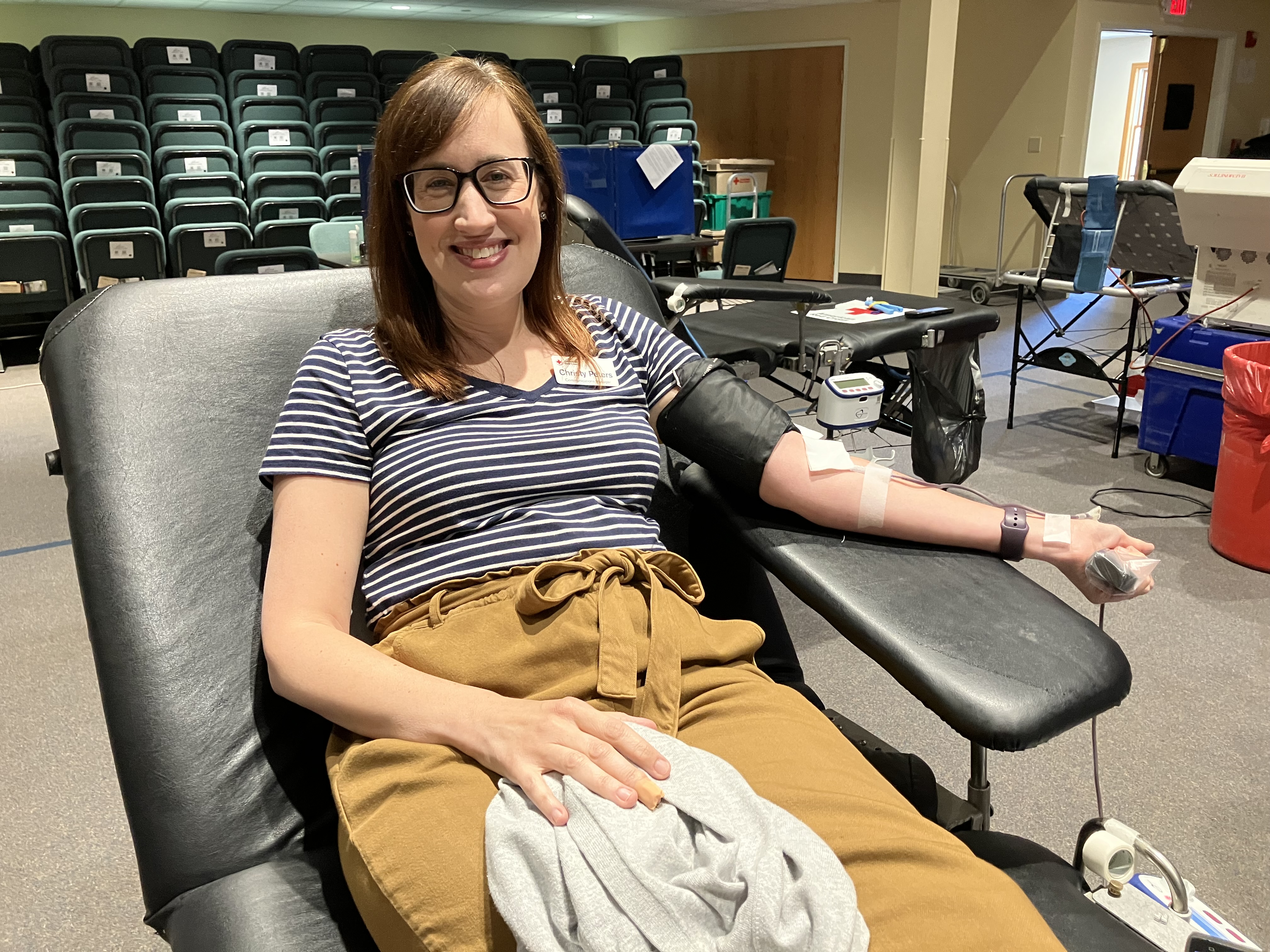
Christy Peters, Red Cross Regional Communications Manager and blood donor

But I mostly put the task off because the first few weeks of January are my least favorite time of the year. I love everything about Christmas and packing everything up reminds me it’s over and I have to get back into a routine…back to work, waking up on time and not eating and drinking everything in sight! 

It turns out, I’m not alone. The “January blues” is a legitimate phenomenon felt by many, for almost all the reasons above. But this general malaise extends beyond diehard holiday lovers like me. January is also one of the most difficult times for the Red Cross to collect enough blood for patients. In fact, the organization is experiencing an emergency blood shortage as the nation faces the lowest number of people giving blood in 20 years.

Over the last 20 years, the number of people donating blood to the Red Cross has fallen by about 40%. When fewer people donate blood, even small disruptions to blood donations – such as the nearly 7,000-unit shortfall in blood donations the Red Cross experienced between Christmas and New Year’s Day alone – can have a huge impact on the availability of blood products and dramatic consequences for those in need of emergency blood transfusion. 

Blood products are currently going to hospitals faster than blood donations are coming in, and in recent weeks, the Red Cross has had to limit distributions of type O blood products – among the most transfused blood types – to hospitals. In Northern Ohio, more than 500 units of blood are needed every day to meet the needs of patients at more than 70 local hospitals.

The Red Cross is urging eligible donors to make an appointment to give blood now and in the coming weeks to help alleviate the shortage and ensure lifesaving medical procedures are not delayed. By giving blood for the first time, for the first time in a long time or just giving one more time this year than last, you can make a lifesaving impact.

To find a blood drive near you, download the Red Cross Blood Donor App, visit RedCrossBlood.org or call 1-800-RED CROSS (1-800-733-2767). All who come to give blood, platelets or plasma in January will automatically be entered for a chance to win a trip for two to Super Bowl LVIII in Las Vegas. Plus, helping save a life is probably the best antidote for the January blues!

Posted by Ryan Lang, Red Cross board member and volunteer

Three Northern Ohio companies aid in disaster response through annual giving

By Tim Poe, American Red Cross volunteer

As an American Red Cross volunteer, I have seen the need and effectiveness our disaster relief services. When families are affected by a disaster—whether a single-family home fire or large-scale event—they need immediate assistance, as “Help can’t wait.” And the need for services has never been greater and continues to increase.

August 31, 2023. Horseshoe Beach, Florida. A Red Cross emergency response vehicle drives through the devastated community of Horseshoe Beach, Florida. Red Cross volunteers are delivering food and supplies in hard-hit neighborhoods after Hurricane Idalia. As a result of the climate crisis, hurricanes are becoming more intense and more destructive with increased rainfall and higher storm surges. Photo by Scott Dalton/American Red Cross

Here in Northern Ohio, we recently reported that, following severe storms, the Red Cross assisted 62 families, providing more than $42,500 in financial aid, in a single week. And last July, the Red Cross conducted its largest sheltering operation in the region since 2004.

Nationwide, we experienced 15 billion-dollar disasters in the first half of 2023, a new record, and the Red Cross is responding to nearly twice the number of large disasters than it did a decade ago.

When disaster strikes, the Red Cross’ ability to immediately respond is thanks to generous donations, including funding from members of the Annual Disaster Giving Program (ADGP). Three of these members are based in Northern Ohio. The J.M. Smucker Company, Marathon Petroleum Foundation, Inc., and FirstEnergy Corporation aid through the Annual Disaster Giving Program.

The J.M. Smucker Company became a Red Cross Disaster Responder in 2017 and went on to become an ADGP supporter in 2019. It currently contributes at the $500,000 level. On its Community Resources web page, The J.M. Smucker Company says, “Major tragedies are a heartbreaking reality, and it is critical our communities have the resources to recover and rebuild. Through our partnerships, including with the Red Cross, United Way and Habitat for Humanity, we have helped support these efforts with product and financial donations. Our employees have also stepped up, volunteering time and effort to help their neighbors in need.”

Marathon Petroleum Foundation, Inc., has been an ADGP supporter since 2020 and currently contributes at the $250,000 level. In its 2022 Sustainability Report, Marathon Petroleum said, “MPC’s disaster response support considers immediate humanitarian needs, as well as long-term recovery in affected communities. As an added form of support in times of high-impact emergencies, MPC activates a special employee donation matching program separate from our company matching gift program, enabling employee donations to make a greater impact in times of crisis.” It donated over $1.2 million to disaster recovery efforts in 2022.

FirstEnergy became a Disaster Responder Partner in 2021 and has since been an ADGP partner at the $250,000 level. The company’s Community Preparedness web page says, “The FirstEnergy Foundation’s contributions to local nonprofit organizations help strengthen the social and economic fabric of our communities.” Its priorities include “Improving the quality of life in our communities and supporting key safety initiatives.” FirstEnergy is also proud of its employee volunteers.

Thanks to the ADGP members and other donors, the Red Cross has the resources, personnel and training to respond, even as needs increase.

“The generous support of the members of ADGP allows the Red Cross to provide services such as preparedness programs, response to disasters and client recovery planning,” said Barb Thomas, senior disaster program manager for the Red Cross’ Northern Ohio region. “The American Red Cross could not meet the mission of alleviating human suffering in the face of disasters without the members of ADGP as community partners and donors.”

Learn more about the Annual Disaster Giving Program and how these year-round contributions help meet the needs of disaster survivors.

Edited by Glenda Bogar, American Red Cross volunteer

Posted by Ryan Lang, American Red Cross board member and volunteer

Sound the Alarm campaign installs more than 1,500 free smoke alarms in Northern Ohio

When people think of the American Red Cross responding to disasters, they often imagine the aftermath of a massive hurricane or deadly tornado. Trees uprooted and tossed aside, homes with missing roofs or destroyed by floodwaters. But it’s not the large-scale disasters that keep Red Cross volunteers busy day in and day out. Home fires are the most frequent disaster in the country, claiming seven lives every day in the U.S. In Northern Ohio, the Red Cross responds to more than three home fires, on average, every 24 hours.

As part of the national Sound the Alarm campaign, Red Cross staff, volunteers and community partners set aside specific weeks throughout the year to focus on educating residents about home fire safety and installing free smoke alarms where they are needed. From April 22 to May 12 staff and volunteers in northern Ohio, in partnership with local fire departments, held Sound the Alarm events in 11 communities across the region. They included:

  • Sandusky
  • Uhrichsville
  • Cleveland
  • Medina
  • Hubbard
  • Warrensville
  • Toledo
  • Findlay
  • Henry County
  • Newcomerstown
  • Willoughby Hills

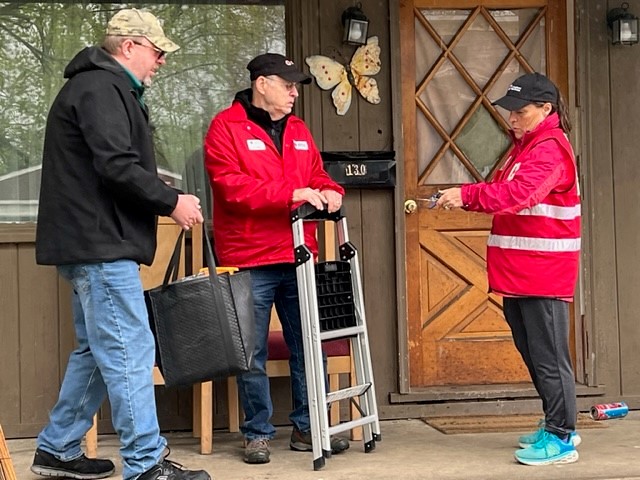
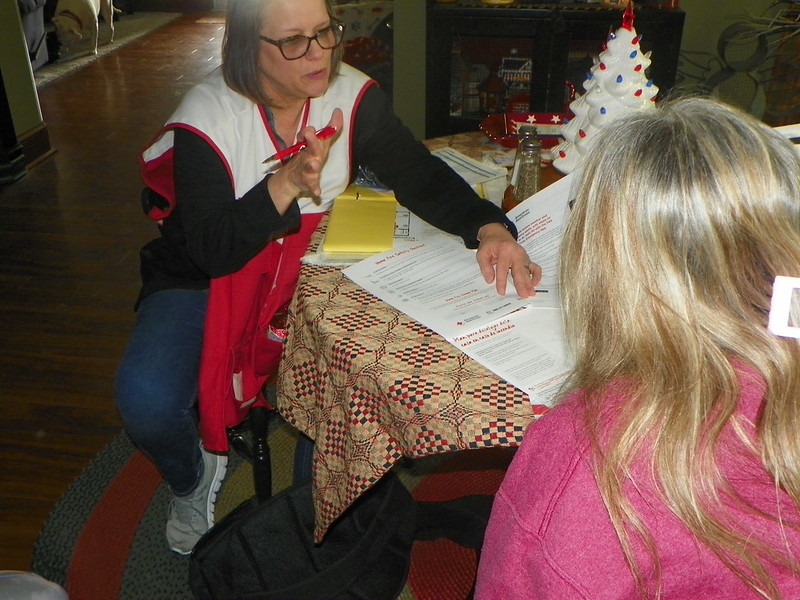
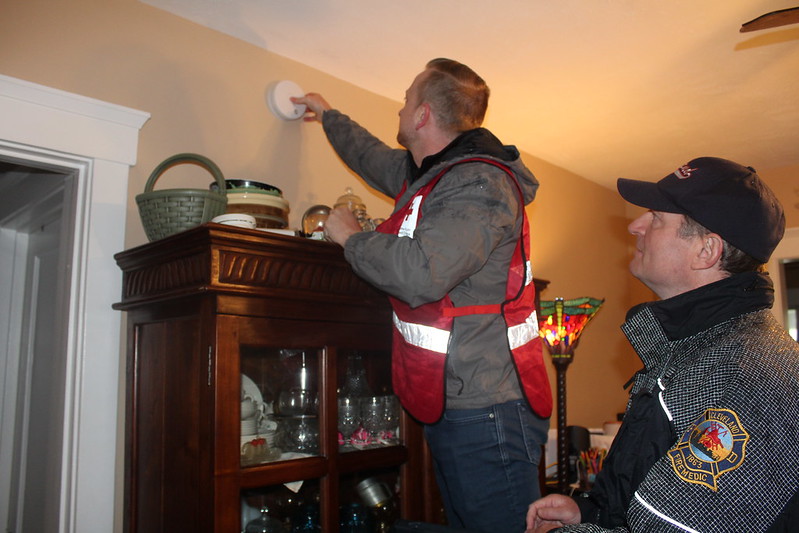
During these events, volunteers met with local families to install free smoke alarms, helped them create a two-minute fire escape plan and shared safety information on home fires and other local disaster risks. In Northern Ohio, more than 600 homes were made safer, with over 1,500 smoke alarms installed.

For those who do have smoke alarms, the Red Cross recommends testing smoke alarms each month and practicing your escape plan until everyone can get out in less than two minutes. It’s also important to teach children what smoke alarms sound like and what to do in an emergency.

While certain weeks of the year are designated as Sound the Alarm events, the Red Cross is working every day to help prepare communities for disasters like home fires.  If you or someone you know needs smoke alarms, visit the Sound the Alarm page to find out how to request an appointment with one of our teams. You can partner with the Red Cross and donate to this lifesaving work. Without the financial support of generous donors, the Sound the Alarm campaign would not be possible.

Check out more photos from our Sound the Alarm events on Flickr. Thank you to everyone who joined us this year and we look forward to seeing you all again soon at a Sound the Alarm event near you!

Tragedy often inspires charity

By J.D. Brink, American Red Cross volunteer

Pauline Skaff first volunteered for the Red Cross the week of 9/11.

Like many people after that tragically fateful day, she felt the need to do something. And she has been doing it for 22 years now. More impressive than that, she is 94 years old.

Pauline Skaff, Red Cross volunteer, 2008

“People were lined up around the block,” Pauline said, describing the scene at the Red Cross the week following the September 11th terrorist attacks. Obviously, she wasn’t the only person motivated to help her fellow Americans. “But I didn’t know if they were going to let me do it. She really put me through the ringer,” Pauline said of the then manager of Toledo’s Executive Parkway location.

Volunteering is not an automatic process. The Red Cross vigorously screens their volunteers. Being trusted with the public’s blood and private information is a high bar to pass.

Five more volunteers started at the same time she did. And Pauline is the only one still there every week, like clockwork. “I’ve outlasted them all,” she said proudly.

Pauline Skaff works the reception desk every Tuesday, checking people in to donate blood. She gave up her usual Thursday shift to make room for University of Toledo medical students who wanted to volunteer during the COVID-19 pandemic. She stands ready to pick up that slack again, though, whenever they may need her.

And she hasn’t just worked the desk these many years.

“I don’t know how many gallons I’ve given all together.” But Pauline does know that she has pins marking her 2 gallon, 4 gallon, and 8 gallon accomplishments. “My doctor doesn’t want me to give anymore though. I guess being 94, that’s a good idea,” she laughed.

She also had to think about how many jobs she’s retired from. Before becoming a dedicated Red Cross volunteer, she worked at the University of Toledo bookstore for eight years. One day after that, her daughter asked her to temp for one day as a receptionist at the WLQR radio station. She worked there for seven more years. “The last job I retired from was at the Board of Elections,” she said, where she oversaw absentee ballots, especially for overseas military voters. It seems service has always been a part of Pauline Skaff’s life.

Posted by Ryan Lang, Red Cross board member and volunteer

Day of service in Newcomerstown

Neighborhood where family perished in home fire made safer

Dozens of residents in Newcomerstown, Ohio are safer in their homes, after Red Cross and community volunteers banded together on Saturday to install free smoke alarms and share home fire safety information.

The effort targeted the neighborhood where six people died – four children and their parents – in a fire on the day after Christmas. Investigators found no evidence of smoke alarms in the home.

Newcomerstown Mayor Patrick Cadle and five village council members gathered with about two dozen Red Cross volunteers, some coming from as far away as Cleveland, for a brief training session prior to splitting into teams of three or four and going door to door on several streets in the neighborhood.

Newcomerstown Mayor Patrick Cadle

“I was unaware that the Red Cross did this,” said Mayor Cadle, referring to the Red Cross Home Fire Campaign, which includes making homes safer with the installation of free smoke alarms.

“If I had known they didn’t have smoke alarms I would have contacted you for them,” said Kitty Clay, who lives on Spaulding Avenue, next door to the home that burned. She said she and other neighbors were outside for several hours, watching firefighters battle the blaze. “There was nothing we could do,” she said.

Village Councilmember Michael Wise shares home fire safety information with Spaulding Avenue resident Kitty Clay

Village Council member Michael Wise was on the team that inspected Kitty’s home on Saturday. He made sure there was a working smoke alarm on every level of the home. It was one of 52 homes made safer that day, as 136 smoke alarms were installed.

“We’re not stopping there,” said Tim O’Toole, Regional Disaster Officer for the Red Cross of Northern Ohio. “We plan to come back in April, when we include Newcomerstown as part of our Sound the Alarm event,” he said. Sound the Alarm is an annual campaign that targets neighborhoods at high risk for home fires nationwide for home fire safety visits and smoke alarm installations.

“This is just the beginning,” said Elizabeth Cante, Disaster Program Specialist with the Heartland, Stark and Muskingum Lakes Chapter. “We will also be helping students at the elementary school whose classmates lost their friends with preparedness education. Our job has only just begun.”

See more photos from the day of service in Newcomerstown here.

Visit soundthealarm.org/noh for more information on how to make your home safer, and to request free smoke alarms.

Another life saved in Northern Ohio, after a smoke alarm alerts Akron man

Shawn Spaulding had just returned to his home in Akron on Saturday, April 30th, after a long day of work.  The private security guard was unwinding on his living room couch when the smoke alarm in the next room sounded.  Fire had erupted behind a wall on the second floor of his home, and the smoke was starting to fill the entire house.

“I knew it was a situation beyond my control,” he said just a few days after the incident.  He called 911 and evacuated the home.

Akron firefighters responded within minutes and were able to save the home, but not before significant damage had been done.  Despite the damage, Shawn’s most treasured possessions were spared.

“I don’t know what I would have done if I lost my military records and piano.”

Children’s toys filled a pack n’ play in the dining room of the home, and more toys were seen on the front porch.  They belong to Shawn’s 3-year old granddaughter Jemeara, who lives with her grandfather but was under someone else’s care and was not home the night of the fire.

The smoke alarm that alerted Shawn to the fire had been installed about a year earlier by Akron firefighters, through a partnership with the Red Cross.  The two firefighters who installed the alarm, Lieutenant Joe Falkenstein and firefighter Steve Dort returned to the home to check on Mr. Spaulding, who is now among 1,331people whose lives have been saved since 2014 as a result of the American Red Cross home fire campaign.

Akron firefighter Steve Dort, left, Shawn Spaulding and fire Lt.. Joe Falkenstein

“It saves lives,” Shawn said of the smoke alarm program. “It really does.”

To request a smoke alarm in the Akron area, residents can call 330-535-2030.  Elsewhere throughout Northern Ohio, you can visit soundthealarm.org/noh to learn how to request smoke alarms for your home.

Supporter offers $500,000 matching grant to help families

Funding to help Red Cross prepare residents for and respond to disasters

The Sam J. Frankino Foundation of Cleveland has announced a $500,000 matching grant to the American Red Cross of Northern Ohio.  The announcement was made during an event last month, commemorating the 30th anniversary of a program designed to make homes safer, by providing and installing free smoke alarms and offering residents valuable fire safety information.

The funds generated by the grant will be used to help the Red Cross and its partners, including the Cleveland Division of Fire, continue to install smoke alarms in homes considered at high risk for fires.  The money will also help residents who suffer a home fire, by providing the Red Cross the means by which to offer immediate financial assistance and additional help when it’s needed.

“We want to help people prepare for disasters like home fires and natural disasters like tornadoes,” said Lorraine Frankino-Dodero, executive director of the foundation and a member of the board of directors of the Red Cross of Northeast Ohio. “The Red Cross offers such valuable assistance to people during their darkest hours, it makes sense to ensure the resources are there, when they are most needed.”

Lorraine Dodero, in the Emergency Response Vehicle funded by a 2018 grant from the Sam J. Frankino Foundation.

“The Sam J. Frankino Foundation has been a generous supporter of the Red Cross in Greater Cleveland for decades,” said Mike Parks, Regional CEO of the Red Cross of Northern Ohio.  “Thanks to Lorraine’s kind and giving heart, the Red Cross will be able to help people prepare for and recover from disasters for years to come.”

You can double the impact of your donation by making a contribution to the American Red Cross here.

Sound the Alarm kicks off in Northern Ohio and Southeast Michigan

Volunteers and partners work to make homes safer and save lives

The 2022 Sound the Alarm campaign is in full swing in the American Red Cross Northern Ohio Region. Home fire safety and smoke alarm installation events took place on Saturday, May 7 in Fostoria, Ohio and Monroe, Michigan – which is part of the Northern Ohio Region.

Volunteer Jim Marciniak tests an alarm he installed in a home in Monroe, Michigan

35 volunteers helped make three-dozen homes safer in both communities, by installing nearly 90 free smoke alarms and sharing valuable home fire safety information with residents.

Additional Sound the Alarm events will be taking place in the next few weeks in Cleveland’s Collinwood and Old Brooklyn neighborhoods, Garfield Heights, Akron, Lorain, Wooster Township, Chippewa Township, and Napoleon, Ohio.

Volunteer Mark Sigler installs an alarm in a home in Fostoria,Ohio

Volunteers are always welcome to help us make homes safer. Visit SoundTheAlarm.org/NOH and scroll down the page to “Volunteer/Find an Event” to view the times and locations of upcoming Sound the Alarm events.

See more photos from Saturday’s Sound the Alarm events in our photo albums here https://www.flickr.com/photos/redcrossneo/albums/72177720298780173 and here: https://www.flickr.com/photos/redcrossneo/albums/72177720298775949

Northern Ohio Red Cross volunteer finds the path to yes, no matter the challenge

The first in a series of volunteer profiles during National Volunteer Week

By Tim Poe, American Red Cross volunteer

Deb Day, Red Cross volunteer and Toby

The American Red Cross has many outstanding volunteers in Northern Ohio, and we
are proud to profile a few for Volunteer Week. Today we are featuring Deb Day, a
community volunteer leader in the Heartland, Stark and Muskingum Lakes (HSML)
chapter.

Since joining the Red Cross in 2017, Deb has helped a tremendous number of people recover from disasters—both in Ohio and throughout the U.S. She frequently assists during blood drives and has taken a key role in several Red Cross initiatives.

Deb Day, Red Cross volunteer

Deb brings a lifetime of learning and experience to the Red Cross. She retired from a public education career almost seven years ago, where she coached, taught and served as a guidance counselor. Her interests and hobbies include the outdoors, travelling , and sports. Deb has always loved helping others and seeking adventure.

“Now that I have the time to volunteer,” she said, “I truly enjoy helping out whether it is deploying to disasters, working as a blood donor ambassador, or working at the local food pantry.”

Deb first joined in 2017, after seeing a Red Cross call for volunteers during coverage of Hurricane Harvey.

Deb was soon assisting those impacted by the hurricane. She said her deployment started with “hurry up and wait” but soon changed to needing to be flexible, avoiding frustration, and getting the job done. Deb served in an Emergency Response Vehicle (ERV), feeding those in a community about 45 minutes away from the kitchen in Sugar Land. “We were the first to leave and the last to come home,” she said.

Deb also saw the best of humanity. “Amidst all the destruction was hope and determination,” she said. “A community came together to look out for one another. It was a time when I could provide food, hugs, words of comfort, and a shoulder to cry on. It was remarkable!” She also spoke of the warm, welcoming the Southern Baptist kitchen volunteers and how “Red Cross deployments create families whose members stay in touch for life.”

Antique Day Parade, 10-10-21

Of course, most of Deb’s work is in her home chapter. In addition to helping with daily responses and initiatives, she assisted following the tornado in Shelby and flooding in the Wooster area. Speaking very highly of her fellow volunteers and staff members, Deb remarked how everyone in their small but mighty group pitched in and served the needs of the community, something which they consistently achieve.

“I truly appreciate everyone’s dedication to their community and the Red Cross,” Deb said. Whether Sound the Alarm, community assistance, disaster response, training, or meetings, “volunteers and staff find the path to ‘YES’ no matter the challenge.” And while the pandemic has been difficult, the Red Cross has not wavered in its humanitarian commitment to those in need.

“I am amazed and so thankful for everyone affiliated with the Red Cross,” she said.

Edited by Glenda Bogar, American Red Cross volunteer

Red Cross disaster response teams active in early April

One-hundred residents of Northern Ohio received Red Cross assistance during the past week, April 4-10, as volunteers responded to two-dozen home fires.

Five of the fires affected multiple-family homes.

Cleveland Fire

“Our volunteer disaster responders have been very busy, and we are grateful that they answer the call, no matter when or where it happens,” said Tim O’Toole, Regional Disaster Officer. “They are true humanitarians. We could not respond to the needs of people in crisis without our volunteers.”

Immediate financial assistance totaling more than $22,700 was given to the affected residents. The money can be used for a hotel room, to replace clothing or other lost items, for meals or for whatever each resident prioritizes as a need.

In addition, Red Cross volunteer caseworkers reach out to the affected families to connect residents with additional community resources, as they try to move forward with their lives following the loss of their homes and possessions.

And if needed, Red Cross health and mental health volunteers are available to provide assistance as well.

The Red Cross never requires payment for the services provided to people who have experienced a disaster like a home fire. Such assistance is made possible through the generous donations of supporters. To help the next family that is forced by fire to flee their home, visit redcross.org/donate. You can also text REDCROSS to 90999 to make a $10 donation, or call 1-800-HELP NOW (1-800-435-7669) to make a donation on the phone.