
Story and photos by Doug Bardwell, American Red Cross volunteer
January 25, 2019 – I thought I might go to Houston for Hurricane Harvey in 2017. I didn’t. I got a mission card (for expenses) and was on standby for Hawaii’s Kilauea volcano in 2018, but we weren’t needed there either. That’s how it can go with national disaster deployments.
So, I was wondering if the third time was the charm, as I drove to downtown Cleveland to Red Cross regional headquarters to pick up my mission card for the California wildfires.
The Camp Fire had started on November 8 and wasn’t contained until the end of November—after obliterating the majority of Concow, Magalia and Paradise, California.

I didn’t have to wonder long, as my plane reservations were confirmed two days later. I was scheduled to leave Saturday, December 29. After typical winter weather delays and cancellations, I finally arrived in Sacramento, and checked into the hotel at 1 a.m.
Sunday morning, I was picked up at the hotel and processed at the Yuba City Red Cross regional office before heading for the shelter in Chico, Ca., roughly 1-1/2 hours north of Sacramento. We’d be working at the Silver Dollar Fairgrounds, where more than 700 residents were staying in three men, women and family dorms, as well as a combination of camping tents, cars and RVs.

Some staff were being housed about 60 minutes outside town in a series of hotels but I stayed in the staff shelter, just 12 minutes from the fairgrounds. Our shelter was a series of tents, set up on the Chico Airport grounds.
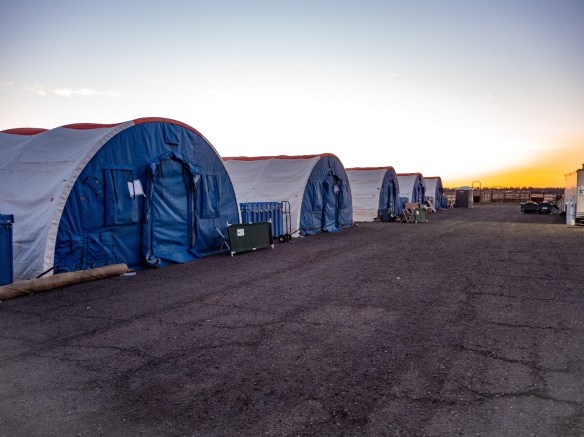
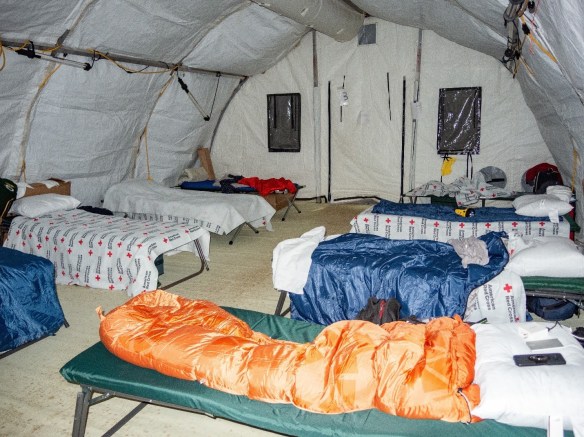
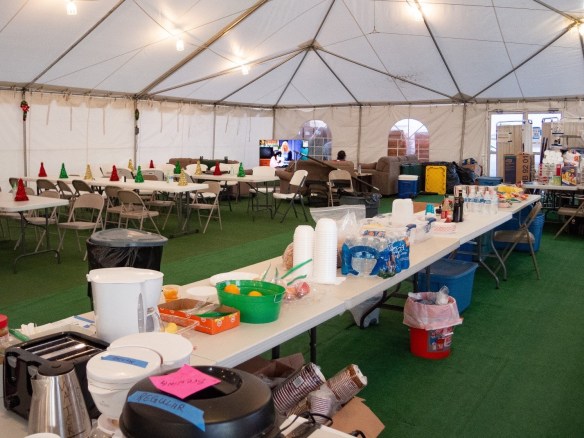
A large circus tent was our home away from home for everything but sleeping and showering. Showers were in a trailer, but hot water was in ample supply—most of the time. The staff tent handled registration, feeding and supplies. Two large screen TVs provided a choice of entertainment and a dozen sofas were there to relax on. Internet bandwidth was amazingly good for those who preferred to stream their own entertainment or keep up with social media.
My first day, I had a chance encounter while standing and looking at the fairground’s small waterfall, just inside the main gate. I could sense someone behind me and turned to see a tall gentleman, one of the evacuees people referred to as “Buckeye.” When he discovered I was also from Ohio, I got the biggest bear hug I’ve ever received. Turns out his family is from Warrensville Heights.
At the fairgrounds, almost 200 Red Cross volunteers, working 12-1/2-hour shifts, and numerous community partners, provided a host of services to the residents. The ultimate goal was to get everyone transitioned into permanent housing. In the best of circumstances, this can be difficult but the city of Chico already had a housing shortage. Luckily, the U.S. Department of Housing and Urban Development (HUD) committed to assisting those who couldn’t qualify for Federal Emergency Management Agency (FEMA) housing.

As people stayed at the fairgrounds, they each received three meals a day, a cot, blankets and a large, fluffy pillow. Paradise Equipment had a laundry trailer on site and everyone was entitled to free laundry service. They could just drop off a bag of clothes and pick it up later in the day—washed, dried and folded. Health needs were addressed for people and their pets. Residents received a range of health services as well as mental and spiritual counseling. Pets were vaccinated, fed and walked by a local pet relief organization.

By the numbers, here’s what was going on 60 days into the Camp Fire disaster.
The Red Cross continues to provide shelter, meals and conversation for almost 700 evacuees, who are having trouble processing the idea of having lost everything. Not only are their houses gone, in many cases, they’ve also lost their jobs, their churches, schools, restaurants, social clubs and their friends.
If you’d care to donate, you can do it online at RedCross.org or by calling 1-800-HELP NOW.
Editor’s note: During his deployment, Doug escorted documentary filmmaker Nancy Hamilton of Golden Eagle Films through the shelter compound. She spoke with some of the shelter residents and offers her impression of the operation at the end of the video, which has been posted on Facebook.
Article edited by Glenda Bogar, American Red Cross volunteer.
 During the weekend of January 11-13, the Red Cross of Northeast Ohio responded to 10 home fires in Columbiana, Cuyahoga, Erie, Lorain, Mahoning, Trumbull and Wayne counties. The team assisted 39 adults and 12 children who were affected and distributed more than $8,000 in immediate financial assistance.
 Renee Palagyi, Senior Disaster Program Manager for the Red Cross of Northeast Ohio, said, “I’m amazed that these people continue to get out of bed in the middle of the night to provide help and hugs to those in need. How do you not stand in awe of them?”
 Why Is This Position So Important?
 The Red Cross runs on a fiscal year calendar that runs from July to June. The first six months of FY ’19 were especially active for the Red Cross responding to local disasters and assisting residents in need in the region.
 those in need. Without the tremendous dedication of our volunteers, the Red Cross would not be able to serve the 22 counties and 4.5 million residents of Northeast Ohio. Volunteers make up 90 percent of our workforce. Our volunteers are truly the face of the Red Cross.
 In its 20th year, the Annual Toy Giveaway is an event where 200 children were invited to enjoy festive cheer and take home new toys and goodies. The event aims to make the holidays a little more cheerful for community members who have been the victims of various disasters.
 Ellen Braun, a volunteer who has assisted with the toy drive over the last few years explained, “It’s all about giving back. The holidays are about kids and family. I just wish I could help more!”
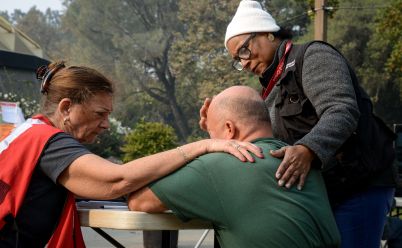 During the weekend of December 14-16, the Red Cross of Northeast Ohio responded to seven incidents occurring in four of the five chapters in the region. The incidents occurred in Cuyahoga, Jefferson, Mahoning, Richland, Summit and Trumbull counties, resulting in 18 individuals receiving assistance and the distribution of more than $4,000 in immediate financial assistance.
 Camp Fire in California was under our Integrated Care Team,” stated Renee Palagyi, senior disaster program manager. “Integrated Care Team allows a family to have two or three key contact people from Red Cross who are available for an in-person visit and follow-up phone calls. Assistance included a relatively small amount of money to be used for any death-related or other expenses they may encounter. More importantly, we provided a local touch, both through our caseworker and our disaster mental health professional. In talking with these women, they were incredibly grateful to receive my call and to know that they would have someone specifically assigned to talk with them over the next several weeks as they work through pain I can’t begin to imagine.”
 During the weekend of December 7-9, 2018, the Red Cross responded to 10 incidents in Cuyahoga, Huron, Mahoning and Stark Counties, with disasters ranging from a carbon monoxide leak to home fires. The response included assisting 23 adults and 15 children and distributing more than $7,000 in immediate financial assistance.
 On average, the Red Cross responds to three home fires every 24-hours. The Red Cross wants to ensure everyone in Northeast Ohio remains safe, which is why the Red Cross developed the home fire campaign, where volunteers go door-to-door to install free smoke alarms and help families create home fire escape plans. In 2018, the Red Cross installed 17,546 smoke alarms in Northeast Ohio. To learn more about home fire safety and tips to help keep your family safe during a home fire, visit
  In 2018, disasters were felt across the country. In California, massive wildfires scorched more than 8.5 million acres, resulting in some of the most destructive wildfires in state history for a second year in a row. Six major hurricanes impacted the United States, devastating communities across nine states and U.S. territories in just three months’ time. Red Cross volunteers also responded with support and crisis counseling to communities affected by six tragic shootings, including those in Parkland, Florida; Pittsburgh, Pennsylvania; and Thousand Oaks, California.
 NOHredcross