
By Doug Bardwell , American Red Cross volunteer
February 6, 2019- The American Red Cross is well-known for the lifesaving training it makes available across the country. Classes are available for adult, child and infant CPR, First Aid and use of an Automated External Defibrillator (AED). Special classes are also offered for health/rescue workers, child care, babysitters and lifeguards.
If you see a teen or adult suddenly collapse, Hands-Only CPR is the recommended form of cardiopulmonary resuscitation (CPR). It not only increases the likelihood of surviving breathing and cardiac emergencies that occur outside of medical settings, but it’s simple to learn and easy to remember.
 To make learning easier, one year ago, the Red Cross introduced new CPR manikins affectionately called Big Red. The manikins help students get immediate feedback if they are performing the CPR technique correctly.
“Good CPR is a skill that almost anyone can do, but using the correct technique can be the difference between life and death for a person in cardiac arrest,” said Richard N. Bradley, M.D., FACEP, member of the American Red Cross Scientific Advisory Council, and chair of its Resuscitation Sub-Council. “The unique technology in the Big Red manikin enhances an amazing tool to improve students’ ability to learn the right way to provide lifesaving assistance.”
Anyone can master the technique
Before performing CPR, remember these few important steps:
- Look around and make sure the scene is safe for yourself and the victim.
- Tap the person on the shoulder and shout “Are you okay?” Look for signs of rhythmic, normal breathing.
- If none, call or have someone call 911, and then begin CPR.
Performing Hands-Only CPR:
- Kneel beside the person who needs help.
- Place the heel of one hand on the center of the chest.
- Place the heel of the other hand on top of the first hand, then lace your fingers together.
- Position your body so that your shoulders are directly over your hand and keep your arms straight.
- Push hard, push fast. Use your body weight to help you administer compressions that are at least 2 inches deep and delivered at a rate of at least 100 compressions per minute. (Just be sure to let the victim’s chest rise completely between compressions.)
- Keep pushing. Continue Hands-Only CPR until you see obvious signs of life (like breathing), another trained responder or EMS professional can take over, you’re too exhausted to continue, an AED becomes available, or the scene becomes unsafe.
This short video will give you the proper technique:
Yes, anyone can do it.
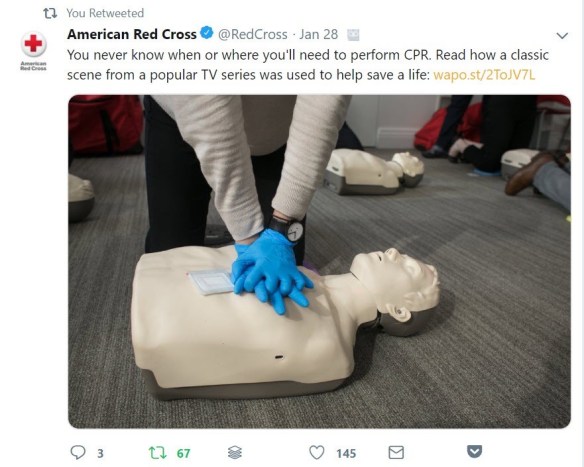
In a recent Washington Post article, the writer tells the story of Cross Scott, a mechanic, who encountered a woman who had stopped breathing. He decided to administer CPR while waiting for the rescue squad to arrive. Having never taken a CPR course, he did recall watching Michael Scott learning how to do CPR on an episode of “The Office.” Within a minute, the woman began to breathe again.
You can watch the humorous, but lifesaving TV clip here:
Find a class and sign up today
To be a genuine asset to family, friends and your neighbors, consider signing up for a Red Cross class. With multiple opportunities each week, it’s easy to find one near you at a convenient time.
Classes can be done online, in person or a blended class using both online and in-person sessions. By taking part of the instruction online, you’ll spend less time in class, but have the advantage of reviewing anything that may have been unclear in the online materials.
Red Cross volunteers can get a voucher to cover the cost of the course. Inquire at your local chapter office.
How to do Hands-Only CPR
https://www.redcross.org/take-a-class/cpr/performing-cpr/hands-only-cpr
http://www.redcross.org/prepare/hands-only-cpr video
http://www.redcross.org/take-a-class/cpr/cpr-training take a class: online, in person, blended
Hands-Only CPR page
Edited by Glenda Bogar, American Red Cross volunteer
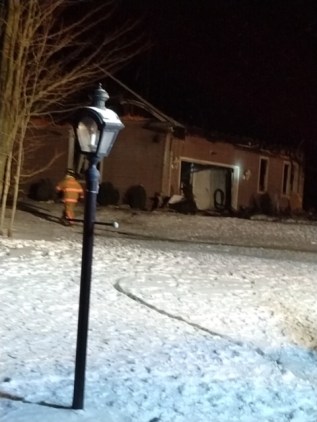
 One of the incidents the disaster team responded to was a
 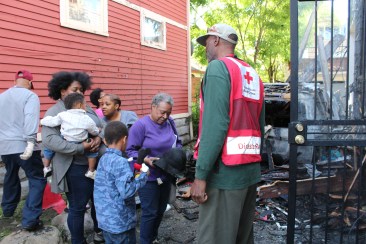 during an industrial fire, where snacks and beverages were handed out to support approximately 30 first responders.






 With wind chill this weekend potentially being as low as -30 degrees, homes all across Northeast Ohio will certainly have their heating sources working to their full potential. While it is nice to be warm and cozy inside of our homes, it is also important to heat our homes safely.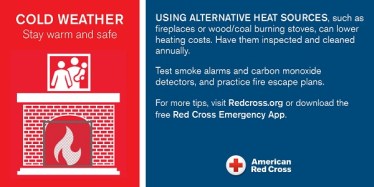
 You can also download the Red Cross Emergency App for instant access to weather alerts for their area and where loved ones live. Expert medical guidance and a hospital locator are included in the First Aid App in case travelers encounter any mishaps. Both apps and more are available to download for free in app stores or at
  to prevent a blood shortage from continuing throughout winter and affecting patient care. The Red Cross collected more than 27,000 fewer blood and platelet donations the weeks of Christmas and New Year’s than needed to sustain a sufficient blood supply, as busy holiday schedules kept many donors away.
 NOHredcross